Takács String Quartet celebrates its 50th season

Mutual respect, love of music and supportive audiences inspire the players

By Peter Alexander Sept. 12 at 9:14 p.m.

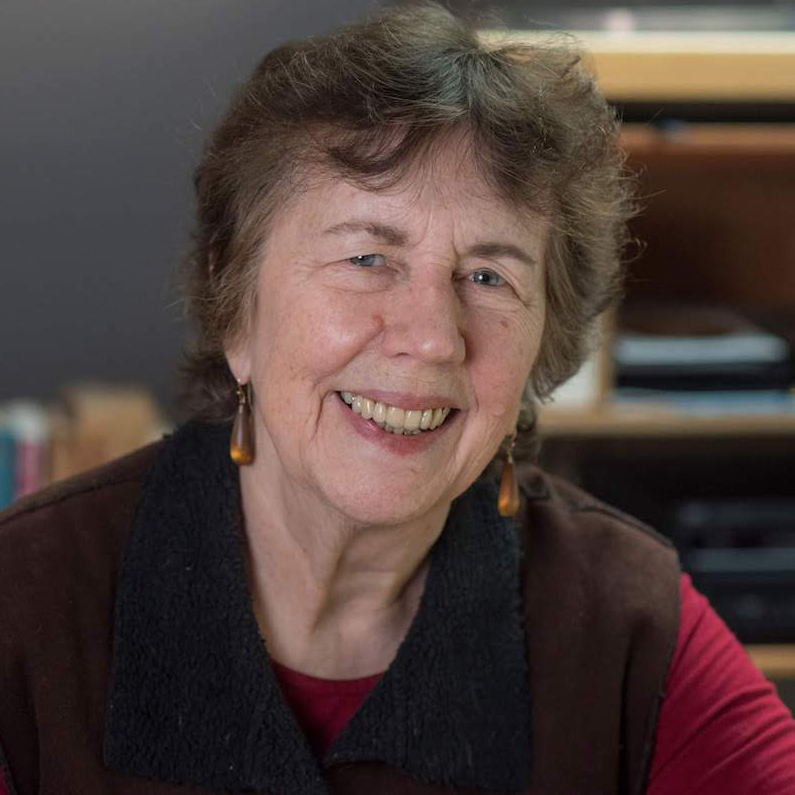
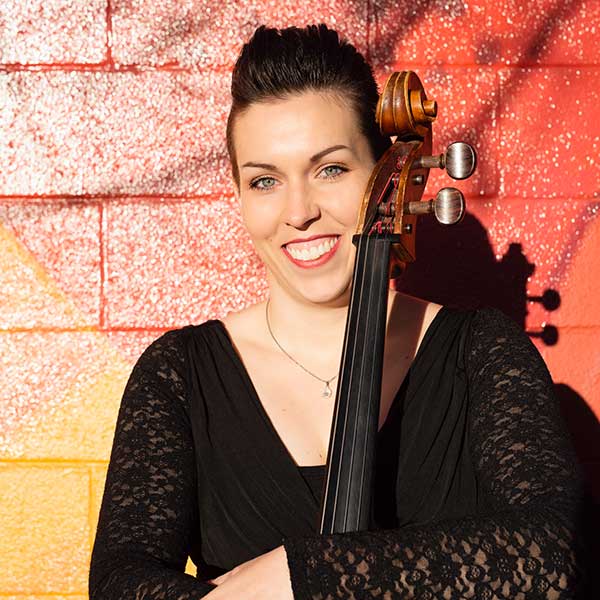
Fifty years is a long time in any job, but that is the landmark that András Fejér, cellist of the world renowned Takács Quartet, is approaching as the quartet enters its fiftieth season, 
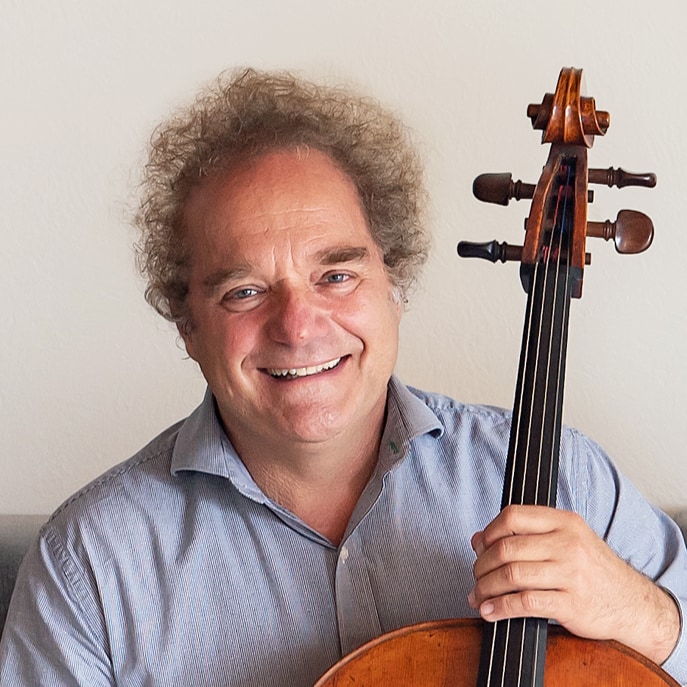
András Fejér

The Takács String Quartet was founded in Budapest in September 1975—49 years ago—and has been in residence at the CU College of Music since 1983. The only original member of the quartet still with the group, Fejér is now 70, but he shows no sign of seeking a quiet retirement.

“I’m loving it,” he says about playing in the quartet and continuing the group’s busy concert schedule around the world. “I feel passionate about it, and I cannot imagine doing anything else.”

Fejér and the other members of the quartet—first violinist Edward Dusinberre, second violinist Harumi Rhodes and violist Richard O’Neill—will take the stage at Grusin Music Hall Sunday and Monday (4 p.m. Sept. 15 and 7:30 p.m. Sept. 16) for a standard string quartet program—a 20th century quartet by Leoš Janáček, sandwiched between classical-era works by Joseph Haydn and Beethoven (see full program below). This is a standard Takács program, and Fejér says they have no special plans for the half-century celebration.

“We just do what we are trying to do—classics nicely mixed with contemporary pieces,” he says. “We try to play them as much as we can. It’s a heartwarming mission.”
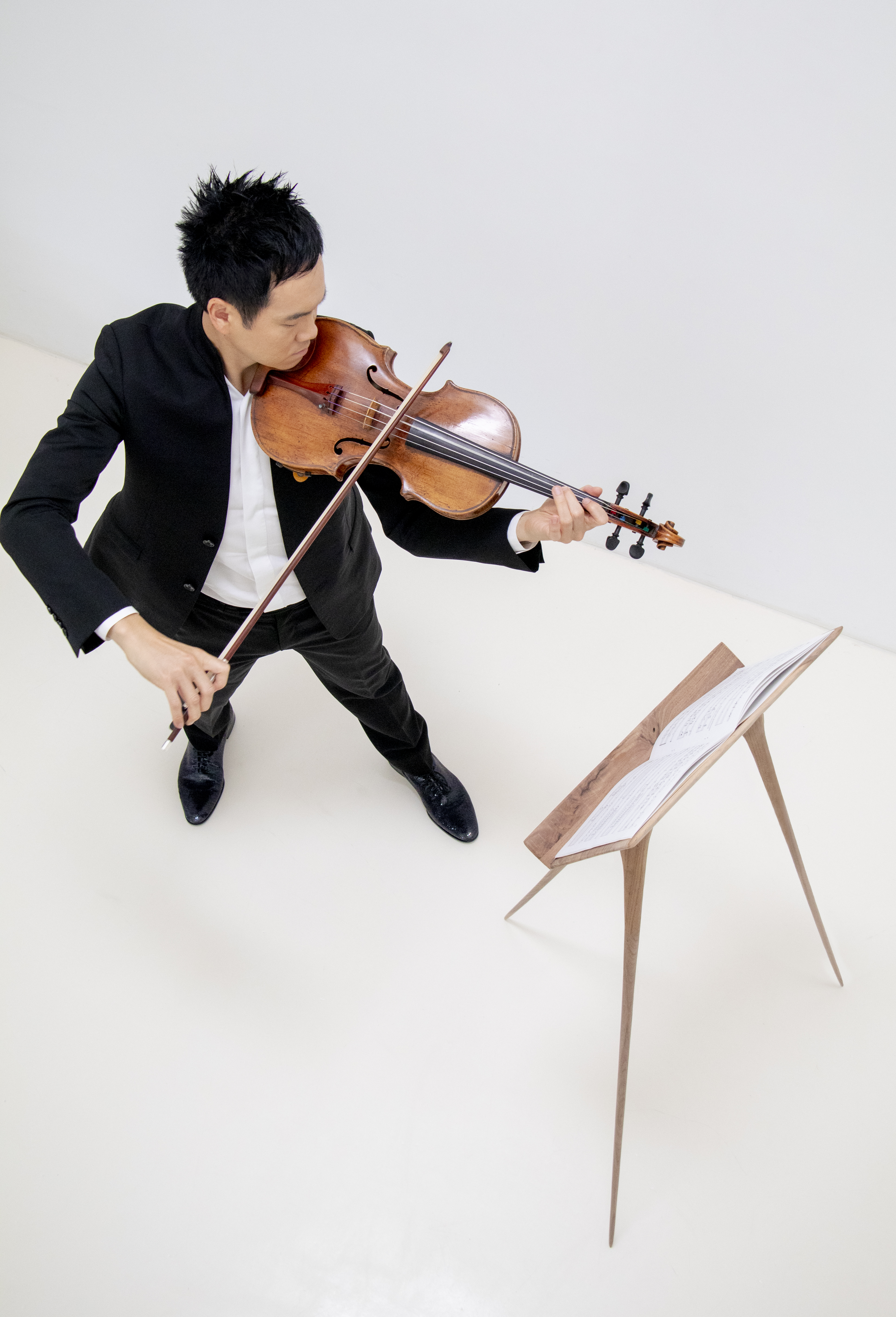
Richard O’Neill

The newest member of the quartet, O’Neill feels the same way about the busy life in a world-traveling quartet. “The greatest luxury is getting to do what we do,” he says. “I really love travel, even in the worst scenarios. There are things that can go wrong nowadays, but I still get excited to pack my suitcase and go out the door.”

If he likes anything more than travel, it’s playing for the Boulder audience. “The community here is such a unique community and (Boulder is) such an incredibly beautiful place,” he says. “Every concert we’re backstage at Grusin I really like hearing all the people (in the audience) excited to be together.”

O’Neill noticed the musicians’ connection with their audience from his very first Boulder home concerts with the Takács in 2021, but the relationship has not changed over Fejér’s years in the quartet. “We found it extremely supportive here (in 1983), with a wonderfully enthusiastic audience, and that’s how we feel until this day,” he says. “We got the support and the love of the audience, and the way it makes you feel, it’s a wonderful reaction with the audience.”

With all the personnel changes over 50 years—two first violinists, two second violinists, now three violists with the one cellist—the Takács has maintained its place among the top quartets in the world. That’s not because they have one authoritative way of doing things. Fejér identifies their defining quality more in the integrity of their approach to the music. 

“The quality is the combination of expressivity, character and technique,” he says. “There are many ways to interpret the same phrase, many ways to interpret any page of any piece. We are listening to new ideas, because we feel it keeps the process fresh. As our wonderful teacher in Budapest put it, nobody has a letter from Haydn or Beethoven.
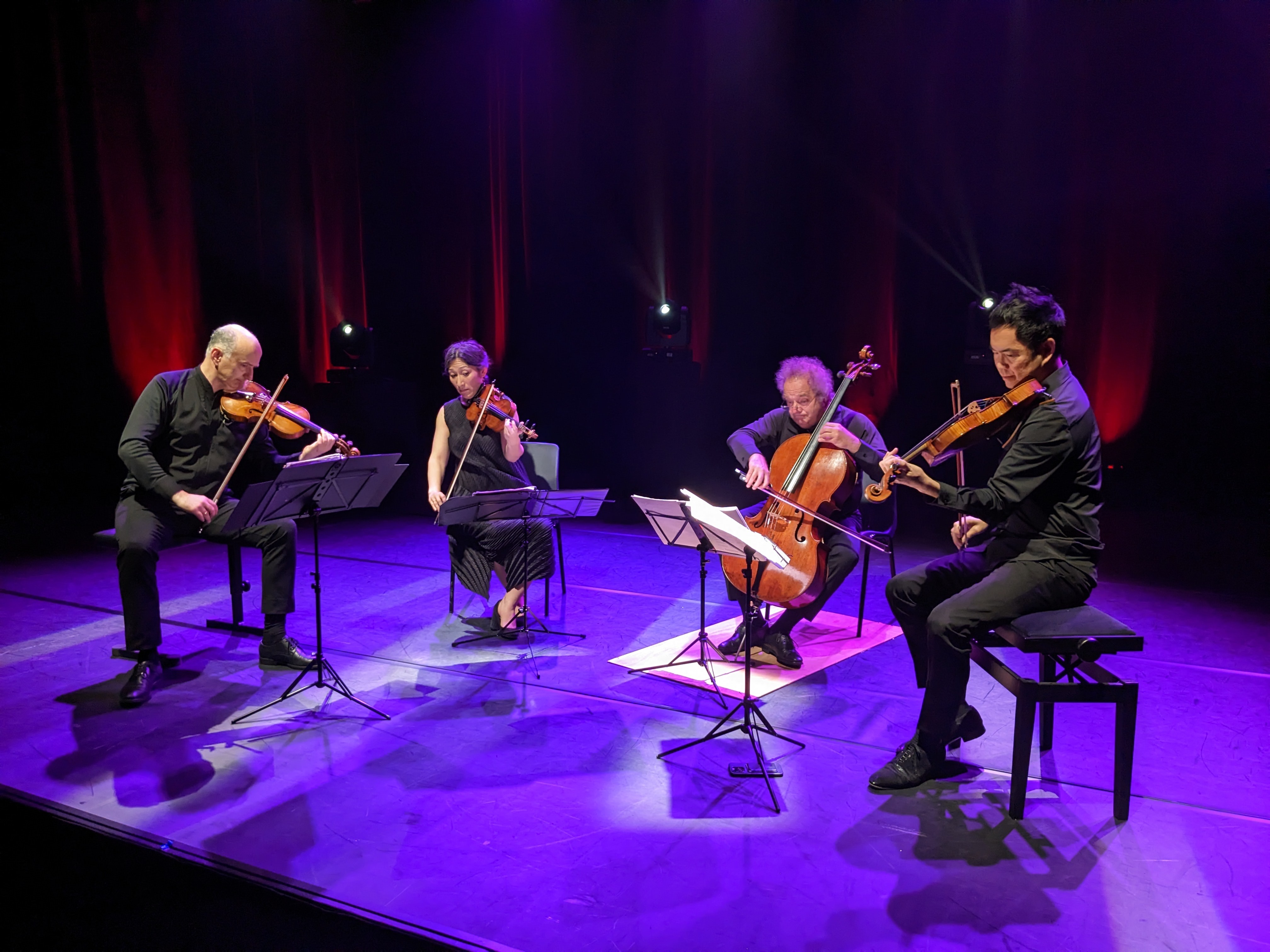
Takács String Quartet. Photo by Ian Malkin.

“We are honest, and being honest gives you a major conviction. As long as the message rings true, the audience is happy and immersed in the performance.”

That does not mean that the players always agree. “We had our fair share of arguments, especially when we were young and unwise,” he says. “But the moment we realized that there are many ways, what we can do is (say) ‘OK, in New York we try your idea, and then at Berkeley we will try my idea,‘ and then we will settle down with something. Everybody‘s happy, and then we all have a good giggle afterwards. It‘s great fun.”

O’Neill learned from the outset that every member is included in those conversations, no matter how long they have been with the group. “András could probably pull the seniority card on me, (but) he never does that,” he says.

“What I really love about the Takács is that if any one of us have a reservation, musical or personal about something that we’re doing, the quartet won’t do it. I really respect that. We’re all very distinct individuals, and of course we have our differences, but we respect each other. I think that‘s the magic combination.

“There‘s nothing like being in a group where you really get to know everyone like family,” he says. So whenever the Takács “family” walks onstage, you know they are doing what they love doing together. 

And they love the music. Of the first piece on the current program, Haydn’s Quartet in C Major, op. 54 no. 2, O’Neill says, “I have never played (the piece before), but it’s like vaudeville for music. The humor is so palpable and overt, and I love it. With Mozart, humor is either tinged with sadness or hidden in refinement, but with Haydn it’s unabashed. It’s just flat out funny. It‘s an amazing work.”

Janáček’s Quartet No. 1, however, is not humorous. Known as “The Kreutzer Sonata,” it is based on the Tolstoy novella of that name about a man who kills his wife for having an affair with a violinist with whom she plays Beethoven’s “Kreutzer” Sonata. Written by a composer of many great operas, the quartet is almost operatic in its drama and intensity.

“We adore both quartets (by Janáček),” Fejér says. “The language, the harmonies, the technical realization is so specific to Janáček. You can recognize his music right away. We are talking about murder and jealousy and seemingly idyllic music. We have everything in between idyllic and ‘I’ll kill you!’”

The final piece is one of the most loved works for string quartet, Beethoven’s Quartet in F Major, op. 59 no. 1, one of three quartets Beethoven wrote for the Russian ambassador in Vienna, Count Razumovsky. Originally regarded as audaciously long and difficult, all three are now accepted in the standard repertoire and loved by audiences.

The first of the set is in the key of F major, which in works like the Pastoral Symphony, the Symphony No. 8 and the Romance for violin, inspired some of Beethoven’s most lyrical and melodic music. That quality is evident from the very beginning of the quartet, with a long theme from the cello playing in its richest register. 

“When you start with a cello solo, how can you go wrong?” O’Neill says. “I love the piece very much.”

But equal to the music on the program is the survival of the Takács Quartet over the past 49 years, which few chamber music ensembles have matched and for which the Boulder audience shows its appreciation every year and every concert. Fejér gives what may be the best explanation for that when he says “We are like kids on the playground, enjoying the toys. 

“We are totally involved and just enjoying ourselves.”

# # # # #

Takács String Quartet

  • Haydn: String Quartet in C Major, op. 54 no. 2
  • Leoš Janáček: String Quartet No. 1, (“The Kreutzer Sonata”)
  • Beethoven: String Quartet in F Major, op. 59 no. 1 (“Razumovsky”)

4 p.m. Sunday, Sept 15 and 7:30 p.m. Monday, Sept. 16
Grusin Music Hall
Live Stream: 4 p.m Sunday, Sept. 15 until 11 p.m. Monday, Sept.

In-person and livestream TICKETS

Other fall concerts

Takács String Quartet

  • Beethoven: String Quartet in A minor, op. 132
  • Other works TBA

4 p.m. Sunday, Oct. 13 and 7:30 p.m. Monday, Nov. 4
Live Stream: 4 p.m. Sunday, Oct. 13 through Monday, Oct. 21

In-person and livestream TICKETS

Quartet Integra

4 p.m. Sunday, Nov. 3 and 7:30 p.m. Monday, Oct. 14
Live Stream: 4 p.m. Sunday, Nov. 3 through Monday, Nov. 11

In-person and livestream TICKETS
Brilliant concert of all-women composers at CMF 

Premiere by Gabriela Lena Frank, Concerto by Joan Tower showcase the Festival Orchestra

By Peter Alexander July 22 at 12:15 a.m.

The Colorado Music Festival Orchestra and conductor Peter Oundjian hit the jackpot last night (July 21) with a program of three pieces by women composers. 

All three works, by Florence Price, Gabriela Lena Franck and Joan Tower, were performed memorably. Both living composers—Frank and Tower—were present and spoke to the audience.

The concert opened with Price’s Adoration, a piece that she originally wrote for organ in 1951 and that here was performed in a setting for string orchestra. Played tenderly by the Festival Orchestra strings, it is almost too soothing and gentle to serve as an opener. Oundjian and the players thoroughly embraced the mood, creating a comforting start to a program that soon turned adventurous.

Frank’s Kachkaniraqmi (“I still exist” in the Quechua language of her Peruvian forebears) was commissioned by CMF as a concerto for string quartet and string orchestra, written for Boulder’s Takács Quartet and the CMF Orchestra. As an introduction by Oundjian, Frank and Takács violinist Harumi Rhodes spelled out, the commission emerged from a suggestion by CMF contributor and long-time patron Chris Christoffersen for a concerto for the Takács, and then from a friendship between Frank and Rhodes.

Gabriela Lena Frank

Kachkaniraqmi is a piece of great imagination and creativity. Frank refuses to cozy up to the listener with easy tunes and catchy ideas. In fact, Kachkaniraqmi sounds like no other piece I have heard, but it makes great use of string timbres and textures. It opens with highly individual, sometimes quirky gestures for the solo violist and orchestral violas before moving into a fuller texture. At places, the strings sound like a single instrument, leaping across a large range from top to bottom, and at other times like a large organ moving in full orchestral chords.

The middle section, or second movement, presents a rushing, incessant forward drive. All texture and motion, this portion of the concerto is not hummable, but identifiable musical ideas can be followed as they are passed from section to section over an unrelenting rhythmic foundation. This driven middle section settles into a more contemplative final portion that explores different techniques of string playing to create a startling range of sounds and gentling moods as the music moves toward silence.

Kachkaniraqmi is a remarkable creation, an intriguing piece that I expect will reveal more and more as one listens to it again and again. I hope that the Takács will take the score well beyond Boulder and introduce it to the wider musical world.

The concert concluded with a stunningly complex and difficult piece, Joan Tower’s Concerto for Orchestra. Composed in 1991 for the New York Philharmonic, Chicago Symphony and St. Louis Symphony, it has had modest success in the intervening 33 years. “This piece should be played everywhere!” Oundjian said in his introductory comments, standing onstage with the composer. 

Joan Tower

Tower noted that it is a difficult piece to conduct—on top of being very difficult to play—which may be one barrier, but the CMF Orchestra’s performance showed what musical fireworks it sets off when played at the highest level. Clearly, Oundjian had mastered all the shifting meters and tricky rhythms, and the CMF players responded with a virtuoso display.

As expected, there are many solos in the course of the score’s 25+ minutes, for horn, for English horn, for tuba, but more stunning are the intricate passages for whole sections—trumpets, woodwinds, a tricky motive passed up and down from trumpets to horns and back. Often played at a breakneck pace, these are the most virtuosic passages of the concerto, and they were played with precision and confidence by the CMF orchestra.

Other noteworthy moments included a cello section solo that gives a lyrical contrast to the more driving and excitable portions of the score, with the cellos at times divided into parts to create full chords, and at other times reduced to two eloquent solo players. A later softening and lowering of temperature allows two violinists to come forward, before the rhythmic frenzy starts again. 

As Tower promised, the percussion players are kept busy, running from instrument to instrument, culminating with a viciously fast running beat by several drums that requires extreme concentration to keep together. This exciting moment, played with perfect precision, leads to a final crashing chord—and inevitably, wild enthusiasm from the audience.

They were still cheering as I gathered my things and snuck out the side door.

Under Oundjan’s leadership, the CMF has established itself as a forward-looking summer festival that all Boulder should support. His thoughtful programming, his embrace of living composers, and the commissioning of new pieces are admirable and exciting. A concert of works by three women, two of them present for the performance, is a perfect illustration of his vision of the festival. On this occasion, it was brilliantly realized.

Correction: Misspellings of string as “sting“ in paragraph six and viciously as “viscously” in paragraph 12 corrected 7/22.

Colorado Music Festival continues July 23 to August 4

Guest soloists and a Mahler symphony bring 2024 festival to a close

By Peter Alexander July 18 at 3:20 p.m.

The remaining two weeks of the Colorado Music Festival (CMF) will see a series of guest artists—soloists, conductors and chamber musicians—and culminate with a Mahler symphony.

Peter Oundjian, artistic director of the Colorado Music Festival. Photo by Geremy Kornreich.

Ending the summer with Mahler has become a tradition at CMF. “It’s quite conscious,” artistic director and conductor Peter Oundjian says. “We did the Third (Symphony), we did the Fifth. The season of ’21 we ended with Beethoven, because couldn’t have a Mahler symphony”—due to onstage seating restrictions during COVID—but otherwise, Oundjian has made Mahler the preferred festival finale.

Before the season-ending concert Aug. 4, CMF still has intriguing programs of both orchestral and chamber music. Next Tuesday (7:30 p.m. July 23; full programs listed below), the Robert Mann Chamber Music Series continues with a concert by members of the Festival Orchestra. The program will include one of the most loved pieces by Mendelssohn, his String Octet in E-flat, written when the composer was only 16.

Danish String Quartet. Photo by Caroline Bittencourt.

One week later on July 30, the guest chamber group the Danish String Quartet closes the chamber music series with a diverse program of pieces and movements both familiar and unfamiliar. The Danish Quartet, known for creative programming, was originally scheduled in 2021, but due to COVID restrictions had to wait for the 2022 festival.

This summer’s program opens with the minuet from Joseph Haydn’s late quartet Op. 77 no. 2, followed by Three Pieces for String Quartet by Stravinsky and Three Melodies by the 17th-century blind Celtic harpist Turlough O’Carolan. An early divertimento by Mozart and the Third String Quartet by Shostakovich complete the program.

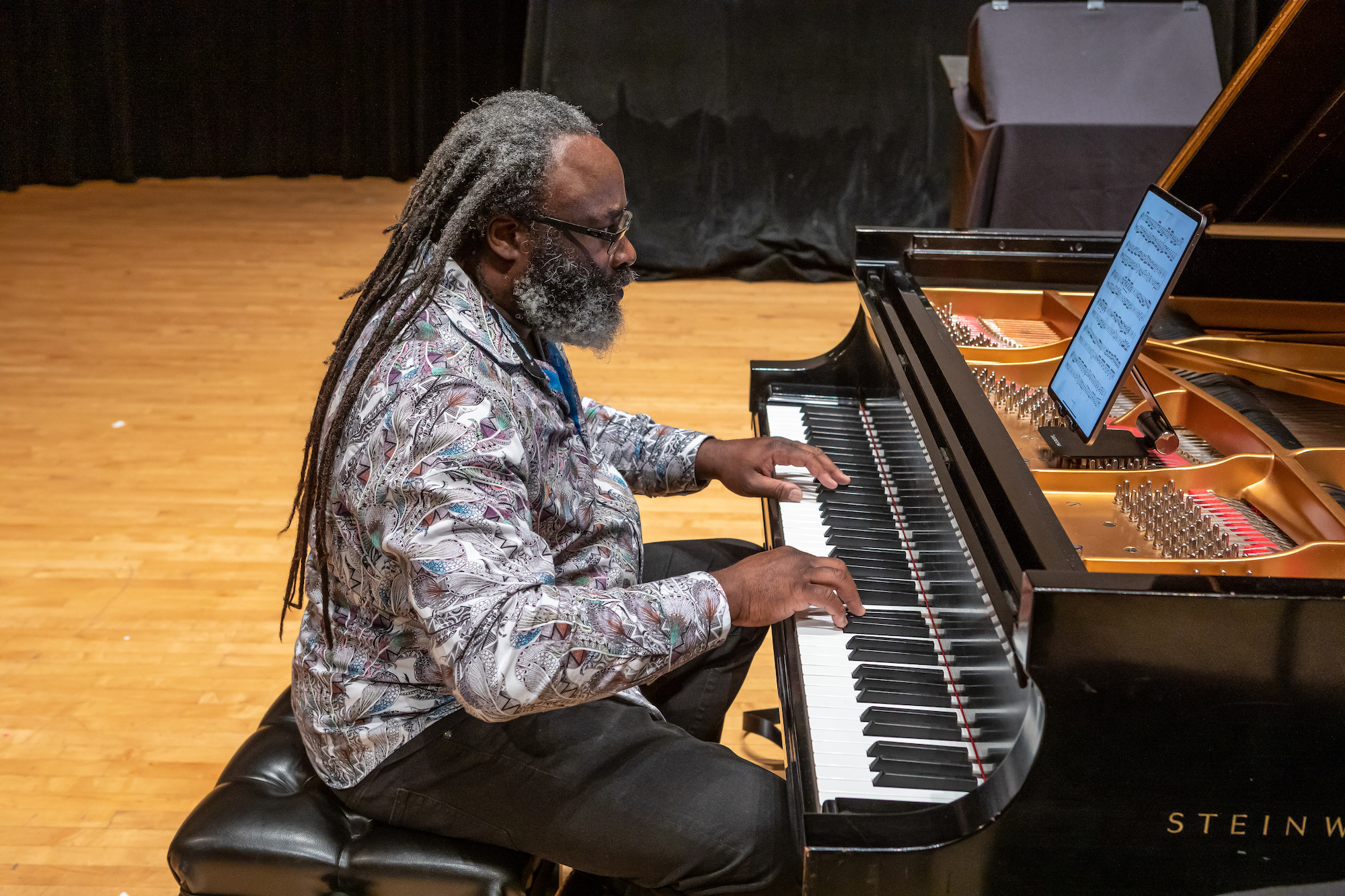
Awadagin Pratt

Pianist Awadagin Pratt will be the guest soloist for the Festival Orchestra concerts July 25 and 26. The first African-American pianist to win the Naumburg International Piano Competition, Pratt has had a protean career, performing with most major American orchestras, appearing on six continents, at the White House by invitation from presidents Clinton and Obama, and on Sesame Street.

Described in the Washington Post as “one of the great and distinctive pianists of our time,” Pratt is known for highly individual artistry and concert dress. A pianist of prodigious technique, he plays a wide ranging repertoire. For his appearance with Oundjian and the Festival Orchestra, Pratt will play a Keyboard Concerto by J.S. Bach and Rounds for piano and string orchestra by Jessie Montgomery. The program will also feature a staple of the large orchestra repertoire, Rimsky-Korsakov’s Scheherazade.

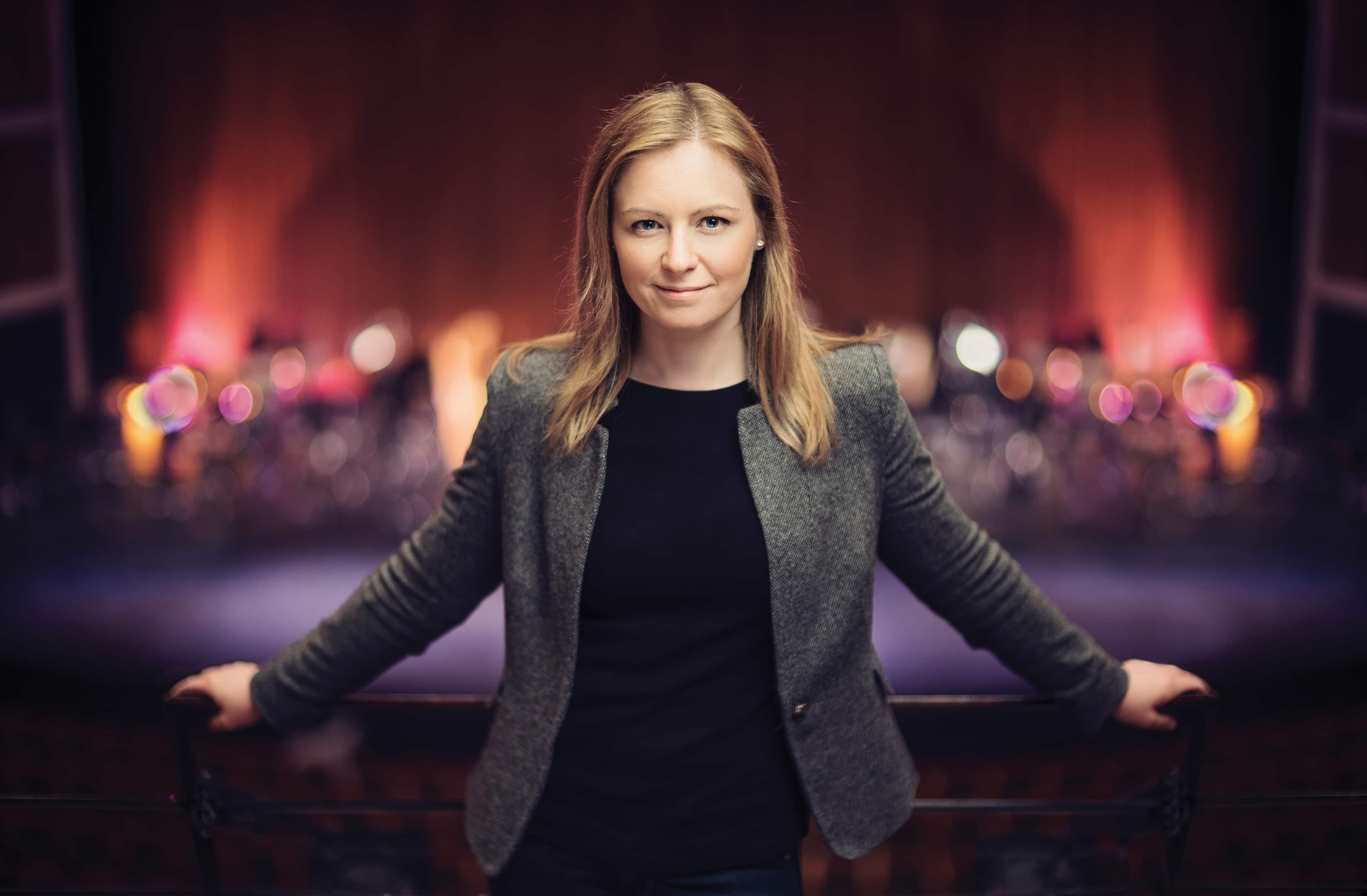
Gemma New. Photo by Anthony Chang.

Two guest artists and a guest conductor will be featured on the Chamber Orchestra concert July 28. Conductor Gemma New, hailed as “one of the brightest rising stars in the conducting firmament” by the St. Louis Post Dispatch, is a native of New Zealand where she leads the New Zealand Symphony. She comes to Colorado on her way to conduct the BBC Proms in London Aug. 16.

The program will feature the piano duo of Christina and Michelle Naughton as guest soloists, performing Mozart’s Concerto in E-flat Major for Two Pianos, K365. Other works on the all-Mozart program are Eine kleine Nachtmusik and the “Haffner” Symphony, No. 35 in D major.

The next Festival Orchestra concert brings another outstanding soloist to Chautauqua: violinist Augustin Hadelich, who has become a CMF favorite since his first appearance at the festival in 2018. He appeared from Oundjian’s home by live stream during the COVID-canceled 2020 season, and returned as artist-in-residence in 2021.

Augustin Hadelich. Photo by Suxiao Yang.

This season he will play the Tchaikovsky Violin Concerto (Aug. 1 and 2) on a program that also includes Two Mountain Scenes by Kevin Puts and Dvořák’s Symphony No. 7 in D minor. The latter, Oundjian says, “is for a lot of people Dvořák’s true masterpiece.

“Obviously the Ninth Symphony (the ‘New World’) is fantastic and the Eighth is so exquisitely beautiful, but Seven is the piece that made him famous. The premiere in London (1885) was kind of an epic moment for him. I have conducted it in a lot of different places, and orchestras love to play it. They know how magnificent it is.”

Puts’s Two Mountain Scenes was commissioned by the New  York Philharmonic and Bravo Vail! “It’s a real showpiece for orchestra, quite original but not forbidding,” Oundjian says. “You’d think living in Colorado it would be performed more often. It’s a wonderful piece!”

The final concert of the 2024 festival, Sunday, Aug 6, features the final guest artist, soprano Karina Gauvin.  A Canadian soprano who has performed with orchestras from San Francisco to Rotterdam, she will sing Ravel’s Shéhérazade and the final movement of the festival-closing Fourth Symphony of Mahler. And in another form of delight, the concert will open with Johann Strauss Jr.s spirited Overture to Die Fledermaus.

Karina Gauvin. Photo by Michael Slobodian.

Following the pattern of ending the festival with Mahler, it was the Fourth that  generated the rest of the program. Oundjian says that work “is in some ways the most fascinating narrative of all (of Mahler’s) symphonies. It’s like poetry. It also has a chamber quality that is very different from all the other Mahler symphonies.

“There’s something both playful and heavenly about the first movement, and something devilish about the second movement, with its falsely tuned violin that represents the devil. And typical of Mahler scherzo movements, where you have trio sections that are very beautiful and elegant. And then a slow movement, you think, ‘OK, this is the most beautiful music that’s ever been written’!”

The finale the gives the whole symphony the character of childish delight. A setting of a poem describing life in heaven, with everyone living “in sweetest peace” and enjoying endless banquets, it is one of Mahler’s most beguiling movements. It is, Oundjian says, a “wonderful image of heaven in this child-like voice, speaking to us from another place.

“I wanted to put (Ravel’s) Scheherazade with the Fourth Symphony. I think Scheherazade is staggering, with orchestration, the colors, harmonies, the way he uses the vocal line and shapes the vocal line. It’s just magnificent. And then to start it with Fledermaus is pure heaven!”

# # # # #

Colorado Music Festival, Peter Oundjian, music director
Remaining concerts, July 23–Aug. 4, 2024
All performances in Chautauqua Auditorium

Robert Mann Chamber Music Series
Colorado Music Festival musicians

  • Joseph Haydn, String Quartet in C Major, op. 20 no. 
  • Claude Debussy, Sonata for flute, viola and harp
  • Felix Mendelssohn, String Octet in E-flat Major, op. 20

7:30 p.m. Tuesday, July 23

Festival Orchestra Concert
Festival Orchestra, Peter Oundjian, conductor
With Awadagin Pratt, piano

  • J.S. Bach: Keyboard Concerto in A major, S1055 
  • Jessie Montgomery: Rounds for piano and string orchestra (2022)
  • Rimsky-Korsakov: Scheherazade

7:30 p.m. Thursday, July 25
6:30 p.m. Friday, July 26

Festival Chamber Orchestra Concert
Chamber Orchestra, Gemma New, conductor
With Christina and Michelle Naughton, piano duo

  • Mozart: Eine kleine Nachtmusik, K525
    —Concerto in E-flat Major for Two Pianos, K365
    —Symphony No. 35 in D major, K385 (“Haffner”)

6:30 p.m. Sunday, July 28

Robert Mann Chamber Music Series
Danish String Quartet 

  • Joseph Haydn: String Quartet, op. 77 no. 2: III, Andante
  • Stravinsky: Three Pieces for String Quartet
  • Turlough O’Carolan: Three Melodies
  • Mozart: Divertimento in F major, K138
  • Shostakovich: String Quartet No. 3 in F major, op. 73

7:30 p.m. Tuesday, July 30

Festival Orchestra Concert
Festival Orchestra, Peter Oundjian, conductor
With Augustin Hadelich, violin

  • Kevin Puts: Two Mountain Scenes (2007)
  • Tchaikovsky: Violin Concerto in D Major, op. 35
  • Dvořák: Symphony No. 7 in D minor, op. 70 

7:30 p.m. Thursday, Aug. 1
6:30 p.m. Friday, Aug. 2

Festival Finale Concert
Festival Orchestra, Peter Oundjian, conductor
With Karina Gauvin, soprano

  • Johann Strauss: Overture to Die Fledermaus
  • Ravel: Shéhérazade
  • Mahler: Symphony No. 4 in G major

6:30 p.m. Sunday, Aug. 4

Tickets for individual concerts can be purchased from the Chautauqua Box Office.

Quirky, delicious and profound program at CMF

Quintets by Nielsen and Schubert on chamber series

By Peter Alexander July 17 at 12:15 a.m.

Last night’s chamber music concert at the Colorado Music Festival (July 16) offered the kind of program that makes the festival such a valuable cultural asset.

The program comprised two quintets, both treasures of the chamber repertoire, one of them a rarity in concert, the other a deeply loved and profound gem. The first was the Quintet for Winds by the Danish composer Carl Nielsen, the other the Quintet in C major for strings by Schubert. The opportunity to hear both on the same program is most unusual. It is what CMF, with its deep roster of top professional players, can offer its audiences that few other venues can match.

Nielsen’s Wind Quintet is a quirky and delicious piece that is seldom heard in concert. Indeed, one of the joys of the concert was hearing a piece live that is rarely found outside recordings, and it is a testament to the quality of the players from the CMF Orchestra that a genuinely tricky piece seemed, not quite easy but comfortable to play. As an amateur clarinetist I was blown away by Louis DeMartino’s rich, warm clarinet sound, but the other players—Vivian Cumplido Wilson, flute; Zac Hammond, oboe and English horn; Wenmin Zhang, bassoon; and Roy Femenella, horn—were also consistently terrific.

The performance was marked by impeccable precision within the ensemble. The give and take between the parts, within a changeable texture marked by frequent imitation between instruments, was handled brilliantly. Such a level of ensemble is not easily reached with an informal group assembled for a single concert.

One of the challenges of the wind quintet genre is finding the right balance with five very different instruments. Matching a flute with a horn, or a clarinet with an oboe, requires careful listening, and it is a challenge that the CMF players consistently overcame. Not once did I hear a player covered, or obscured by a different tone quality.

String players face a different challenge, especially when they have a limited time to form an ensemble. While they can match each others’ sounds more easily than the winds, and thereby create a unified tone quality, much like an organ, within that harmonized sound small deviations of style become more perceptible. Indeed, there are elements of style that can only be polished when players have known each other over time. (Boulder audiences know this quality from the resident Takács Quartet, who will be featured on Sunday’s CMF Orchestra concert; see the CMF calendar for details and tickets.) 

There were occasional smudged passages, and moments of interpretive uncertainty in last night’s Schubert, both signs of a temporary ensemble. Likewise, the dance-like third movement seemed briefly to be pulling ever so slightly apart, and the thick chords at the movement’s opening were not always ideally balanced.

But it is the positive side of the ledger that dominated. The long slow crescendo at the start of the slow movement built beautifully, and the Finale had great unity of ensemble and well executed group rubato, creating a deeply expressive musical flow and a strong ending. The individual players—Kevin Lin and Kate Arndt, violin; DJ Cheek, viola; Austin Huntington and Britton Riley, cello—all performed beautifully, and the audience showed appreciation with a standing ovation at concert’s end.

Finally, I have to note that the Chautauqua Auditorium was well under half full. The audience, while appreciative, was far less than the delightful and fulfilling program deserved. Do yourself a favor: look up the chamber concerts on the CMF calendar. You will find rare and rich rewards among them.

Two operas worth a trip into the mountains

Pirates and desperados at Central City Opera

By Peter Alexander July 16 at 3:48 p.m.

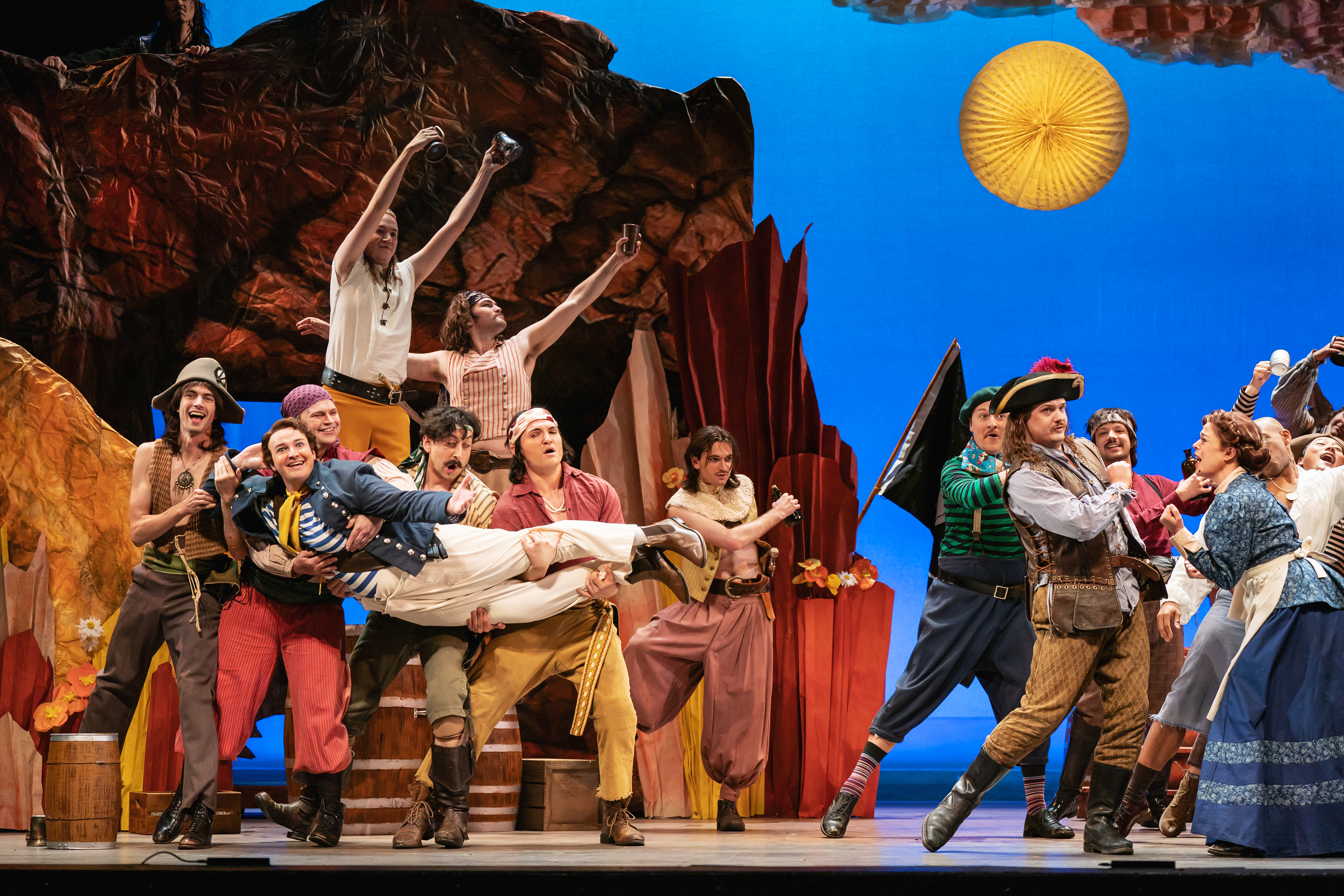
Central City Opera’s performance of Gilbert & Sullivan’s Pirates of Penzance (July 13) started with a delightful, well nuanced reading of the Overture, and from there went from one entertaining moment to another. 

The Pirates of Penzance holding Frederic, the heartthrob hero. Image by Amanda Tipton Photography

The cast conveyed the silly and satirical spirit of the popular G&S operetta. Even 145 years later, their soft-hearted pirates, ineffectual police, sentimental lovers and ridiculous misunderstandings—all delightful skewerings of British stereotypes in 1879—can still delight audiences, even as far removed from Albion as in a Colorado mining town that was barely 20 years old when Pirates premiered in New York City.

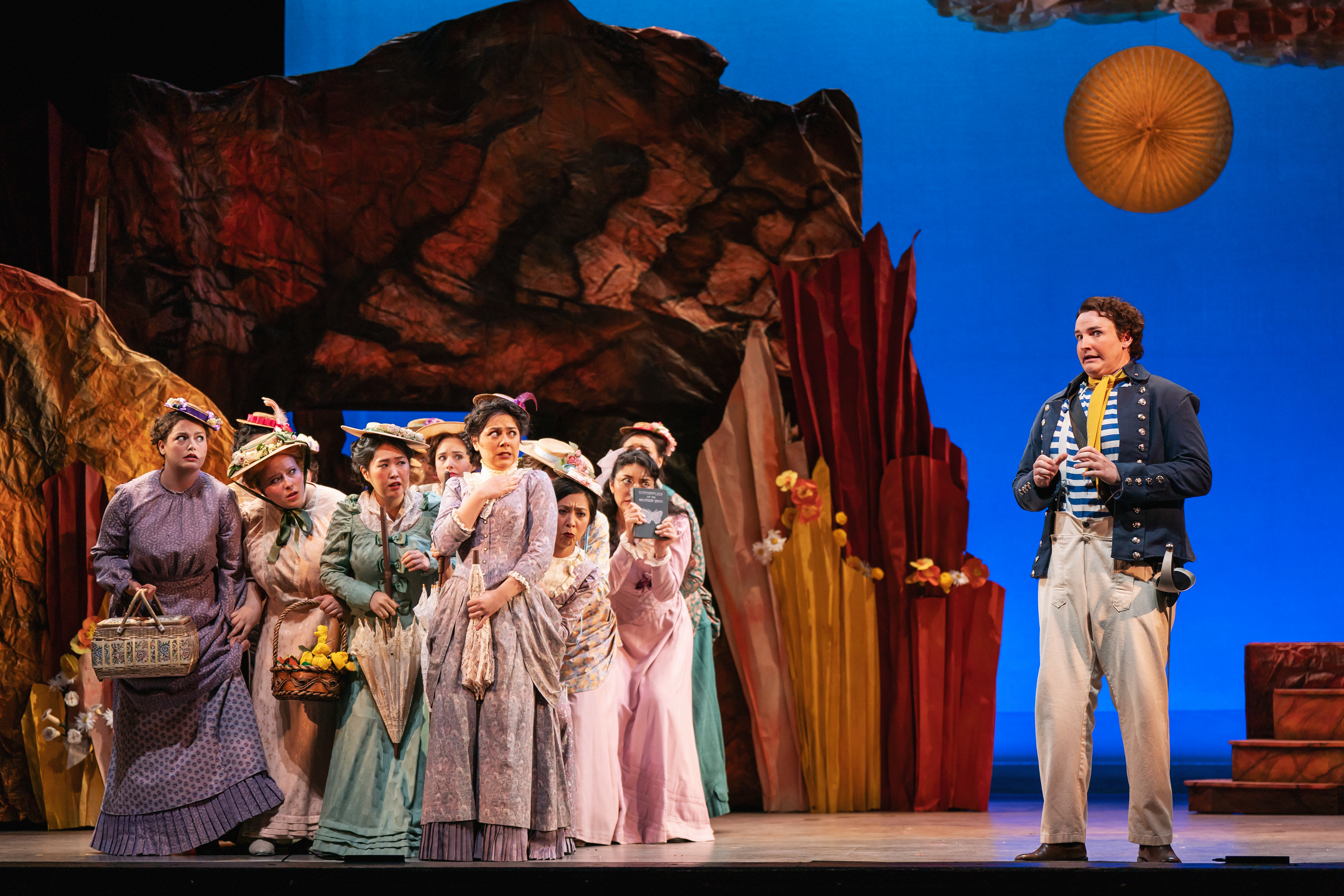
The attractive and practical stage settings from Papermoon Opera Productions, known for their creative use of paper in building scenery, worked well on Central City’s small stage, leaving space for pirates, police and Major General Stanley’s many daughters to move about. Direction by Kyle Lang both honored and departed appropriately from the traditions of G&S comedy. Some of the shtick preserved in traditional English productions was replaced by more up to date shtick—such as young women competing to provide CPR and mouth-to-mouth on the heatthrob hero. 

The Major General daughters and Frederic (Chris Mosz) in Pirates of Penzance. Image by Amanda Tipton Photography

Lang handled the three groups of characters well, including enjoyable moments when the chorus burst off the stage into the audience or entered through the back of the house. There was a little too much of the daughters moving here and there in a tight clump, a consequence of the small stage at CCO, but otherwise the handling of the the different groups contributed well to the comedy.

If at times the humor was overacted, it never crossed the line into gross parody—quite. The greatest flaw was the uneven adoption of a British accent, noticeable only on certain words. Especially ripe for modification was the vowel sound “o” as “eeow” as in “Altheeow” or “You may geeow.” Even this simplified Biritishism was unevenly applied, with some actors (Jennifer DeDominici as the nursemaid Ruth) applying it thicker than others (Alex DeSocio as the Pirate King). Used consistently it might have been a useful class distinction (working class vs. nobility, as the pirates turn out to be), but English class accents are more varied than non-English casts are likely to convey. It was noticeable, but distracted little from enjoyment of the comedy.

The cast was full of strong comic-opera voices. Pirate King DeSocio has a robust voice and, like most of the cast and chorus, sang with clear diction. His stage movements were fluid, no doubt due to Lang’s choreography as well as stage direction. 

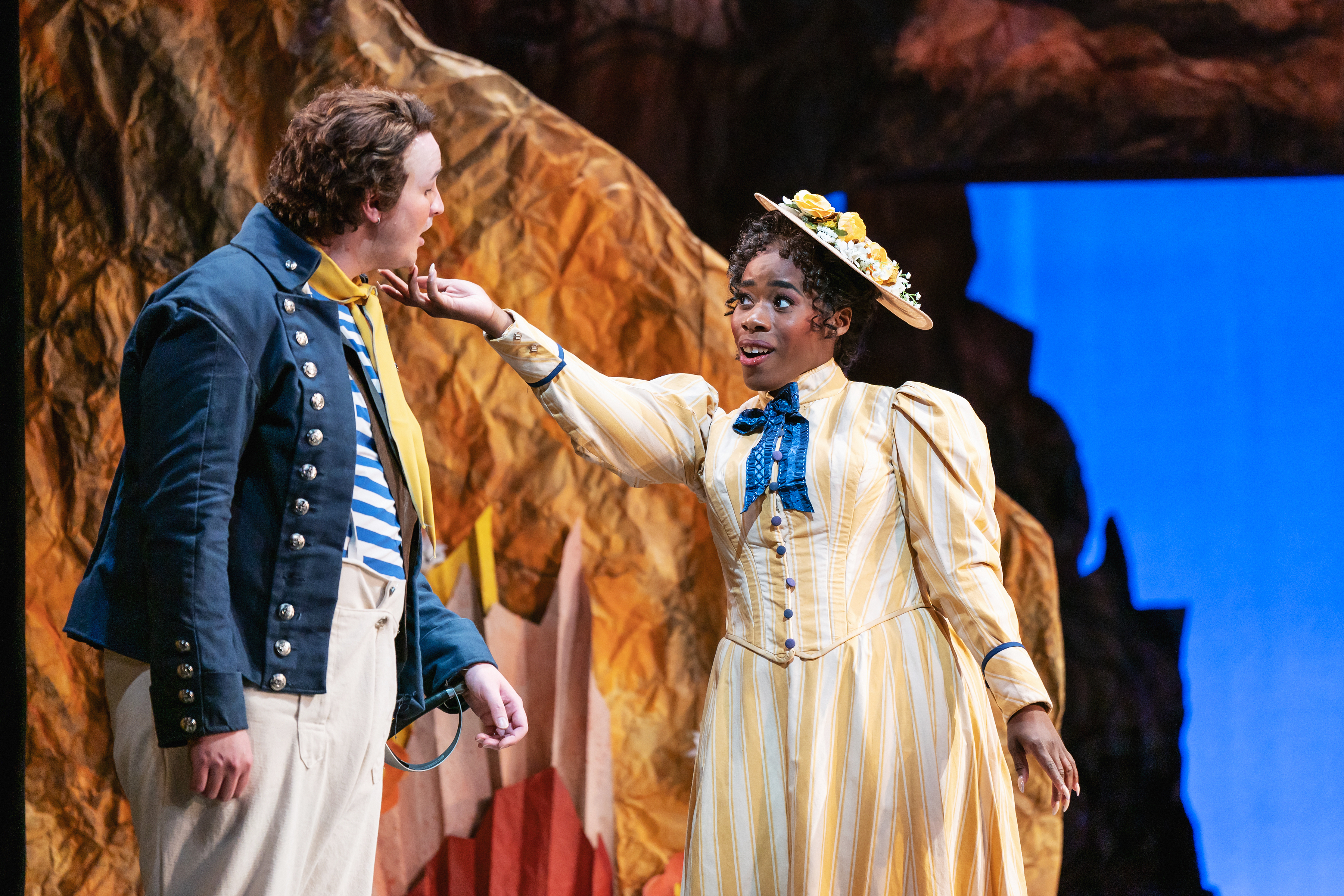
Frederic (Chris Mosz) and Mabel (Jasmine Habersham). Image by Amanda Tipton Photography

As the romantic lead Frederic, Chris Mosz sang with a strong but edgy tenor sound and a rapid vibrato that cut through orchestra and chorus. His voice was more than powerful enough for the small Central City house, but more tenderness would be welcome.

Jasmine Habersham handled Mabel’s coloratura flights with firm accuracy. Her bright, clear voice came on a little too forcefully at first, but in the second act melted nicely into the warm, lyrical passages. Her “Poor Wand’ring One,” one of the highlights of any performance, was especially lovely, first smooth then popping the top notes.

Adelmo Guidarelli as the pompous Major General. Image by Amanda Tipton Photography

As Ruth, DeDominici is fairly young, and as presented onstage far too attractive, for the joke about her age (supposedly 47) to work. When Frederic first sees the General’s daughters, he exclaims that she misled him in saying she was attractive (“I’ve been told so,” she says coyly). Otherwise, she was effective and funny as the hard-of-hearing nursemaid whose error in apprenticing Frederic to a pirate rather than a nautical pilot launches the whole plot.

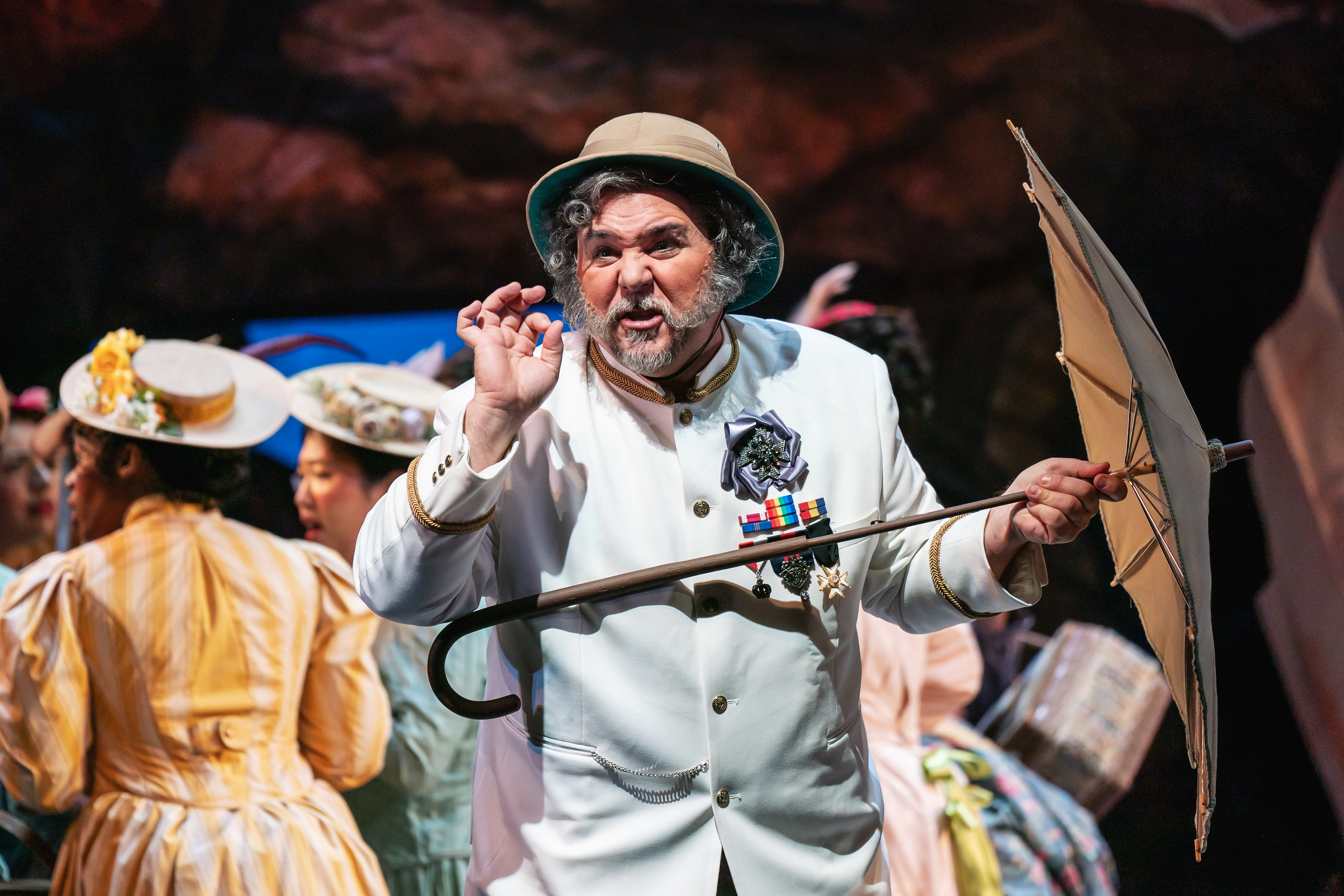
Baritone Adelmo Guidarelli was an appropriately self-important Major General. He was first-rate at everything the role requires: pomposity, patter song and comic timing. Milking it for all it was worth, he breezed through the accelerated reprise of his well known patter song (“I am the Very Model of the Modern Major General”; one cannot complain about dropped final consonants at that speed!), and weeped equally comically in the second act.

Andrew Harris and his bumbling bobbies. Image by Amanda Tipton Photography

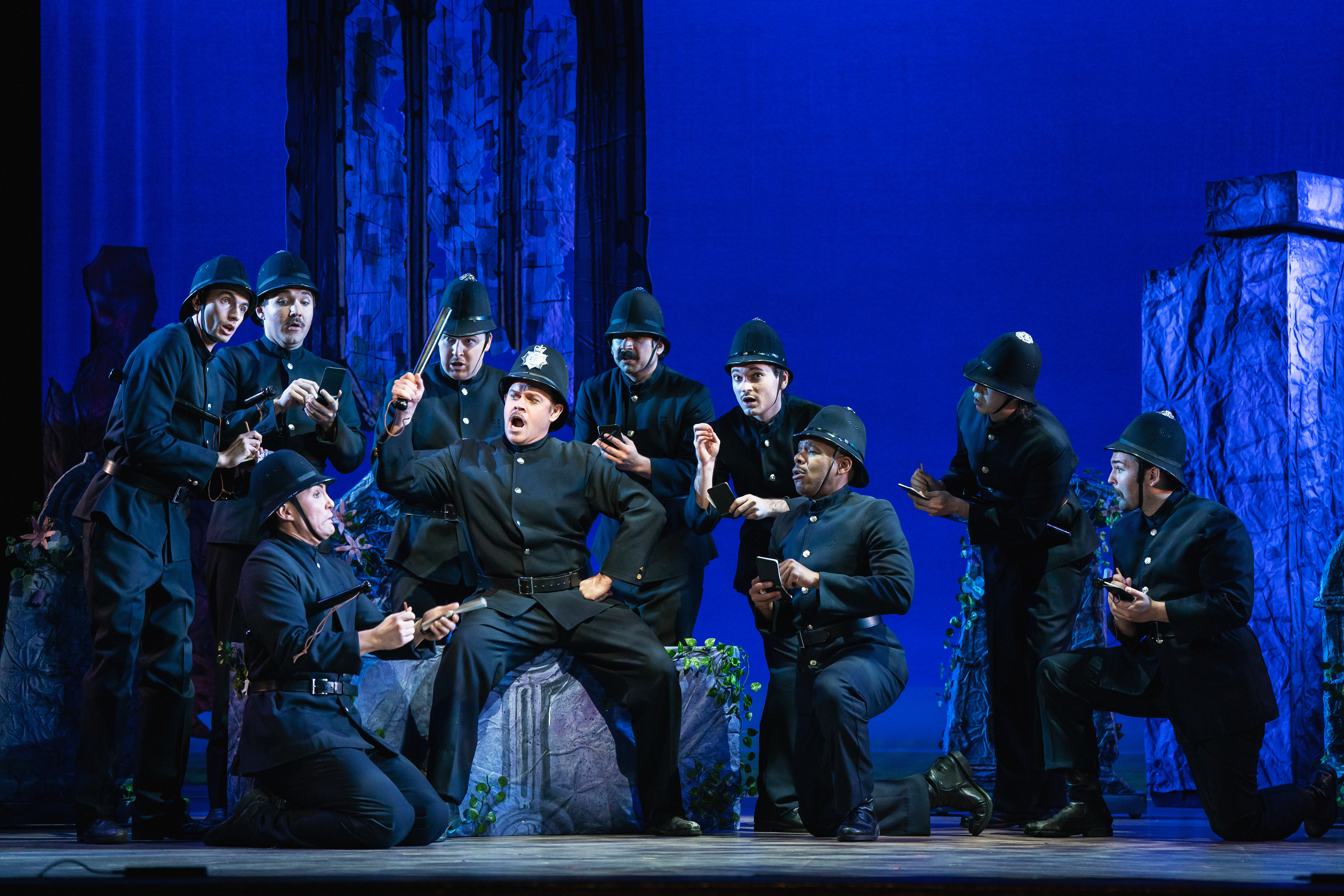
Andrew Harris’s booming bass made a powerful effect as the bombastic, if less than dauntless Sargeant of Police. The policeman’s chorus added their own touch of humor, waddling in and out and about, singing as forcefully as required. The entire chorus—pirates, daughters and police—deserve mention for their musical performance filling the house at times, or dissolving into softer moments. 

The small orchestra under Brandon Eldredge was excellent from the overture on, supporting but never drowning the singers. Tempos were brisk, but only in the Major General’s encore breakneck.

If you are a fan of light opera, you will want to see CCO’s Pirates of Penzance. You can’t do better than to see Gilbert & Sullivan in an opera house built in their lifetimes. But if you go, be warned: repairs on I-70 create massive slowdowns and outright stoppages between Denver and Idaho Springs. Choose another route into the mountains. 

# # # # # 

Gilbert and Sullivan’s hapless pirates are tenderhearted, and as it turns out so are the gritty goldminers in Puccini’s Fanciulla del West (Girl of the Golden West).

The romanticized story, based on wild west myths and set in a location Puccini never saw, has the miners singing sentimental songs about home and wanting to see “mama” again, and in the end forgiving the outlaw Ramerrez, removing the noose from his neck and allowing him to walk away with Minnie, the love of his life—and theirs.

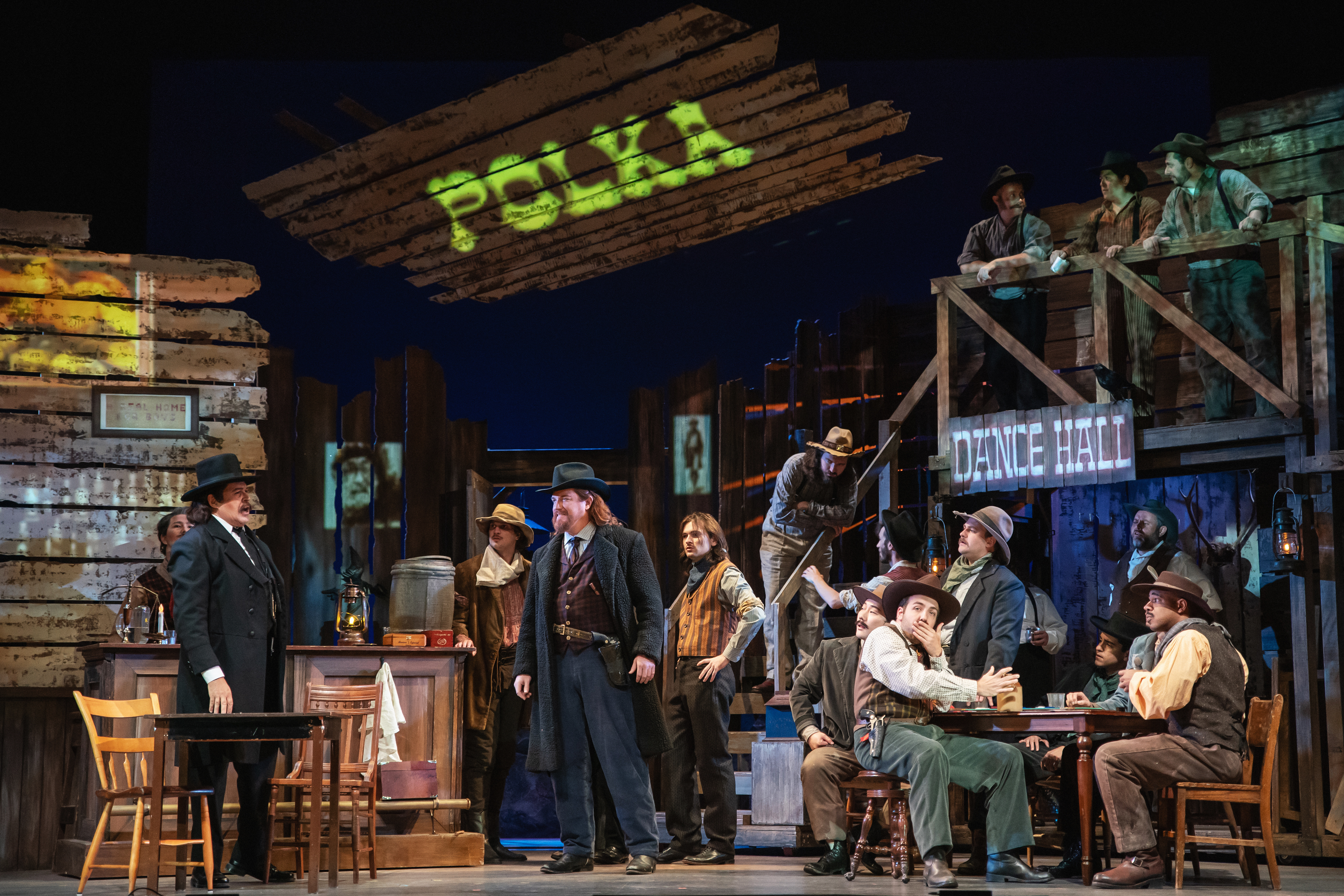
Jack Rance (Grant Youngblood, L) and Wells Fargo agent Ashby (Christopher Job, R) in the Polka Saloon. Image by Amanda Tipton Photography

With a strong cast and thoughtful production, CCO’s Fanciulla is well worth the trip into the mountains. Transferred from the California gold fields to Central City in the 1860s, the revised setting makes perfect sense with only the slightest of changes in the text (Ramerrez and Minnie are “returning to California” instead of “leaving California” at the end). Occasional projections suggest the Central City location.

The sets by Papermoon Opera Production are refreshingly downscale and simple, much closer to the reality of a mining camp than the large-scale sets major opera companies often choose to provide. Made largely with paper and cardboard, the sets are evocative of a time and place the people in Central City know well, having models right outside the theater. Minnie’s Polka saloon is appropriately ramshackle, as is her cabin, and the final scene is placed, as written, in a forest. The simplified sets, based in goldfield reality, helped bring the drama to the fore.

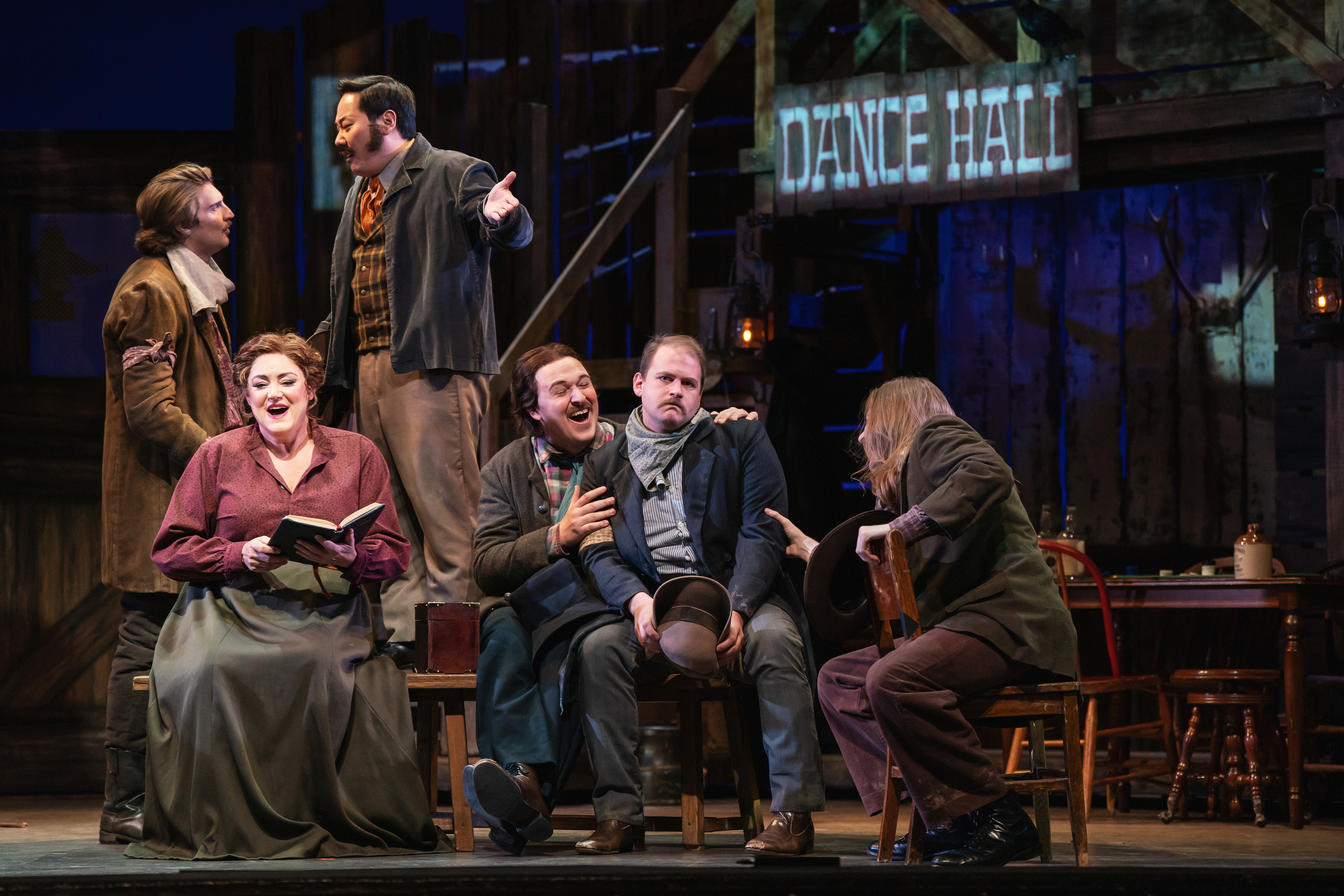
Minnie (Kara Shay Thomson) reading the Bible to the miners. Image by Amanda Tipton Photography

In the title role of Minnie, the “Fanciulla” who commands the Polka saloon, Kara Shay Thomson offered a large, powerful voice. Hers is the critical role, controlling the plot throughout; she is the one Puccini heroine who is never a victim but survives by being the strongest character in town. She was superb throughout.

At her best Thomson produced a bright, shining soprano, only occasionally sliding into the top notes. Her Bible-reading scene with the miners was well modulated, gentle or soaring as needed. In Act II she was girlish with her lover Ramerrez and defiant before the Sheriff Jack Rance, always in control musically and dramatically. Her brief scene in the final act, when she faces down Rance again and persuades the miners to release the outlaw Ramerrez for her, she continued to dominate the action.

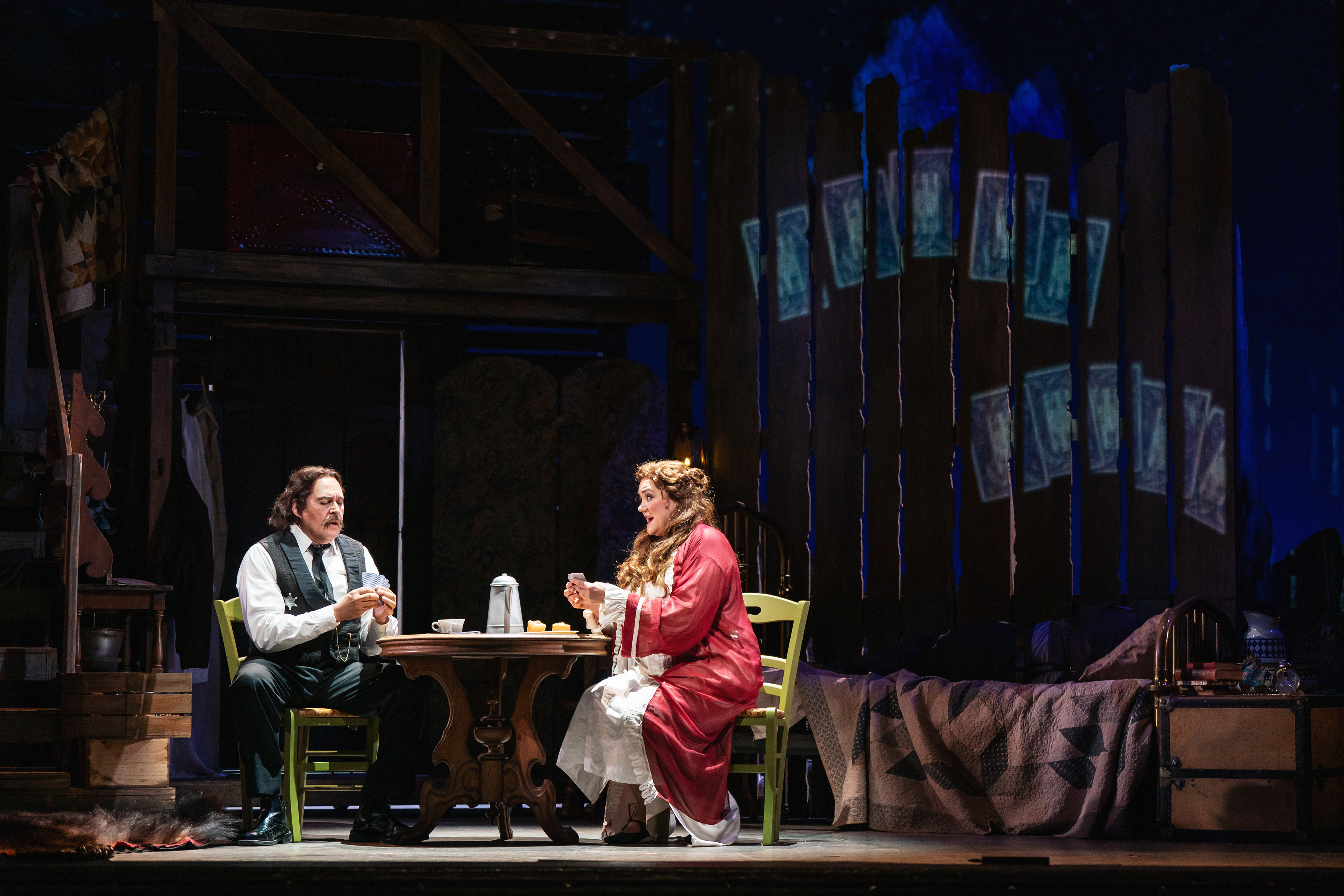
The fatal card game: Rance (Grant Youngblood) and Minnie (Kara Shay Thomson). Image by Amanda Tipton Photography

As Rance, baritone Grant Youngblood filled the stock role—spurned lover, blustering villain—effectively. In the standard black hat and suit he was every inch the bullying lawman, showing his obsession with Minnie any time he was onstage. He made the second act showdown a dramatic highpoint, and sang solidly throughout. 

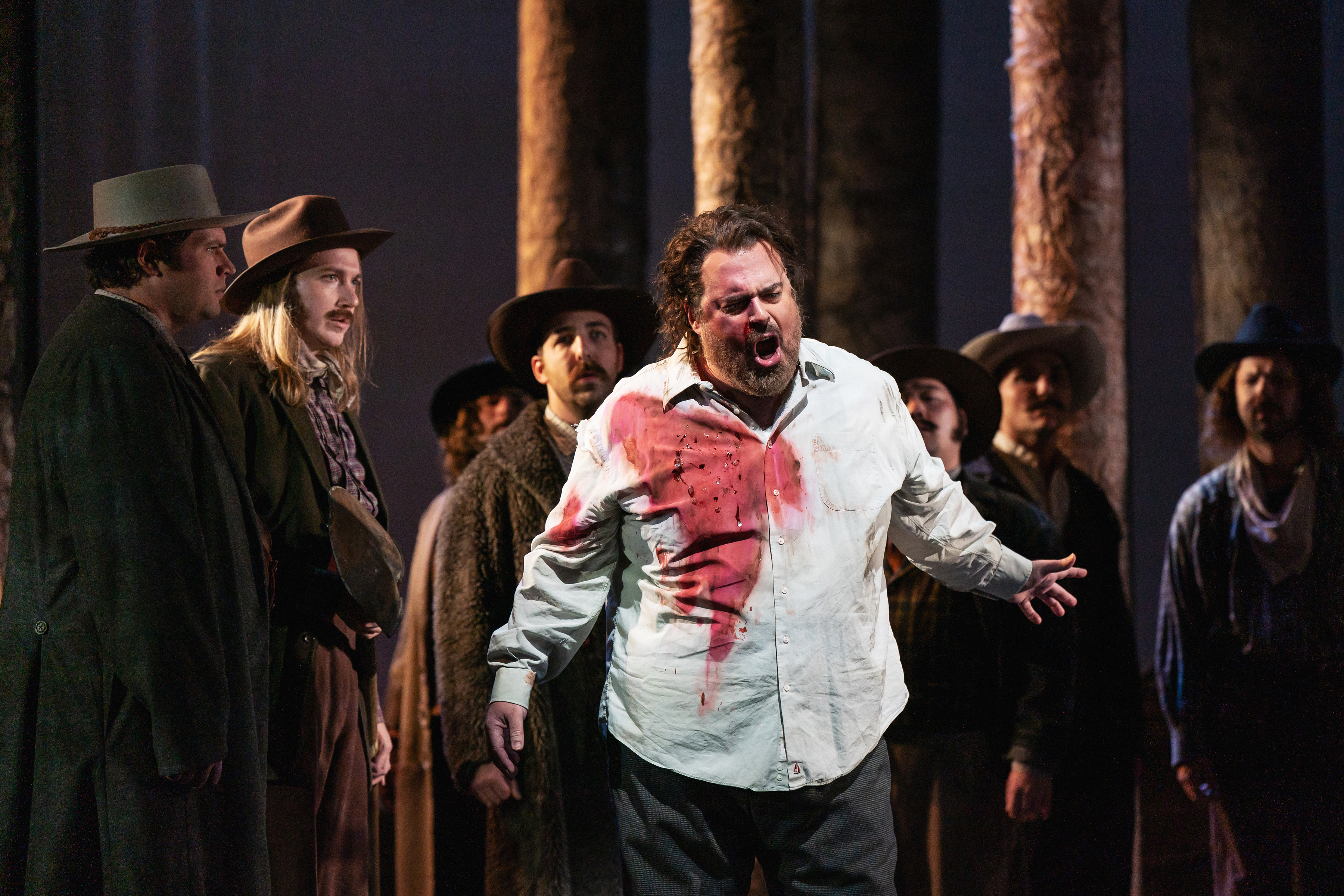
As lead tenor Dick Johnson/Ramerrez—the last of the three corners of the love triangle to enter the stage—Jonathan Burton expressed more with this singing than his acting. He was able to belt out the soaring climaxes of his individual numbers with a ringing tone, and conveyed musically his growing love for Minnie. His one aria, “Che’lla mi creda libero e lontano,” the keystone of the final act, was warmly received. His stage presence was not always assured, however, and he relied too often on an artless grin to make himself look guiltless.

Supporting roles were all filled ably. At the performance I saw (July 14), apprentice artist Nicholas Lin filled in capably as Nick, the bartender-of-all-trades. Christopher Job used his deep bass and a gritty sound to create the menacing character of Ashby, the Wells Fargo agent who only wants to catch the bandit.  Matthew Cossack sang expressively as Sonora, the most sympathetic of the miners.

Jonathan Burton as Johnson/Ramerrez, singing his final-act aria. Image by Amanda Tipton Photography

A special word should go to Steele Fitzwater and apprentice artist Xochitl Hernandez as the couple Billy Jackrabbit and Wowkle. Too often portrayed as racist, native American stereotypes, here they were characters with dignity. In this production directed by Fenlon Lamb, Billy is a white man who has had a child by an Indian woman, an historically viable and interesting choice that puts a more subtle spin on characters traditionally based on narrow, hidebound notions of the American Indian. Both sang well.

Lamb’s direction made good use of the space available, like Pirates expanding briefly into the house. The action was clear, and the second act conveyed the rising tension powerfully. The card game—one of Puccini’s greatest moments of suspense, created with the simplest of musical means—was exquisitely melodramatic. The chorus—all men, naturally—generated excitement in the final act, filling the hall with sound. Conductor Andrew Bisantz led the outstanding CCO orchestra with a fine feeling for the ebb and flow of Puccini’s flexible musical fabric.

__________

Both Pirates of Penzance and Fanciulla del West continue in repertory through the remainder of the Central City Opera summer season, which ends August 4. The calendar is listed HERE, and tickets may be purchased through the CCO Web page.

The production of Kurt Weill’s Street Scene, originally scheduled to open July 13, will open Wednesday, July 17. A review will appear next week.

Colorado Music Festival opens 2024 summer season Friday

Commissioned premiere and birthday celebrations are early highlights

By Peter Alexander July 1 at 6:27 p.m.

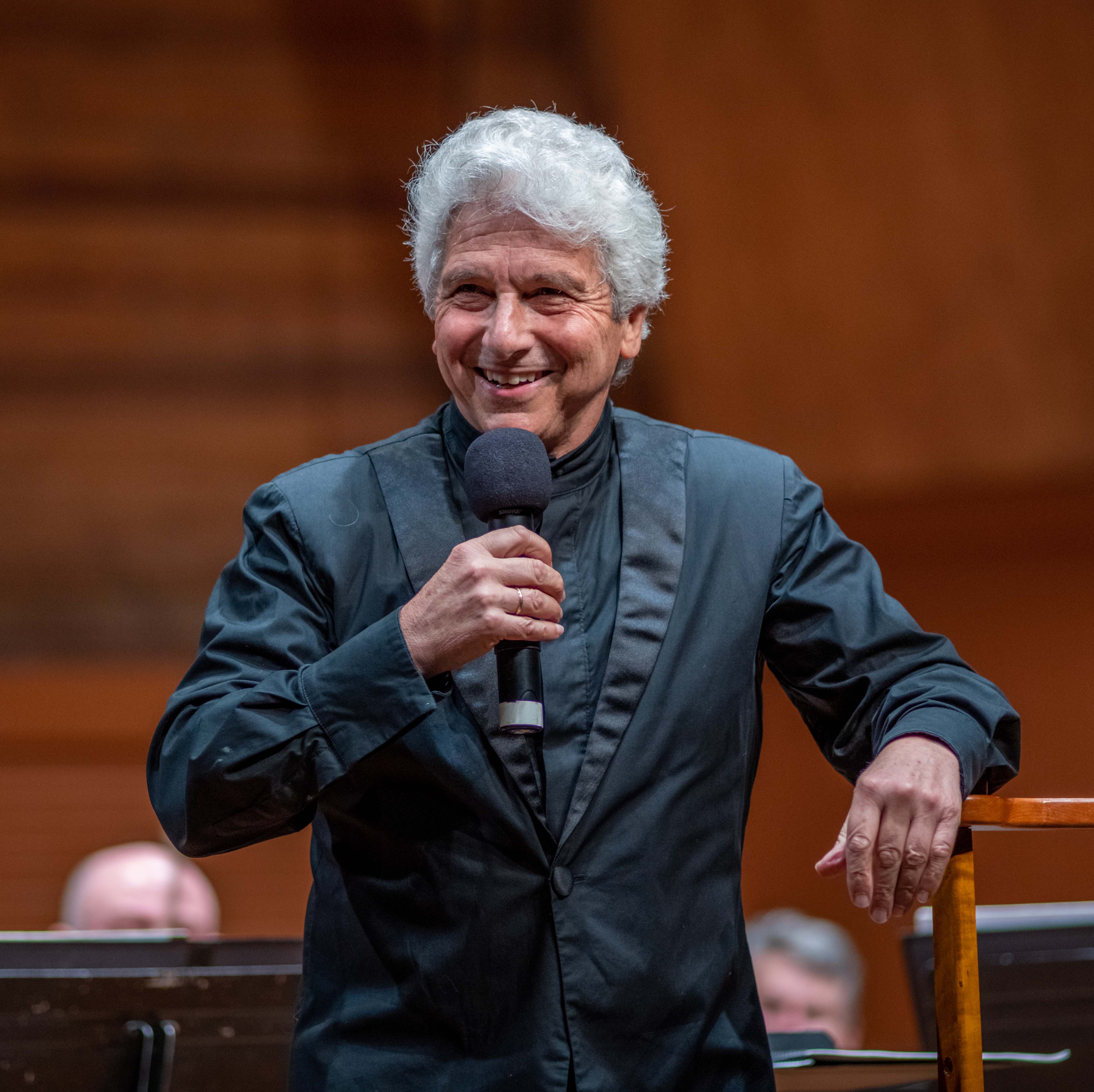
Peter Oundjian at Chautauqua.

Peter Oundjian, artistic director of the Colorado Music Festival (CMF), is brimming with excitement for the coming summer concert season.

“I love every program because I programmed them all!” he says. Nevertheless, when pressed he points to two concerts in the first weeks of the CMF season as especially interesting for audiences.

“One is the world premier of the Gabriela Lena Frank string quartet concerto with the Takács Quartet (6:30 p.m. Sunday, July 21; see full programs July 5–12 below). On that program we’re also playing what I consider to be one of the great American masterpieces of the past five years, the Concerto for Orchestra by Joan Tower.

“The other one is the week before, where I am celebrating the birthdays of Schoenberg and Bruckner with arguably the most beautiful piece that either of them ever wrote (Schoenberg’s Verklärte Nacht and Bruckner’s Fourth Symphony; 6:30 pm. Sunday, July 14). On a Sunday evening, to listen to these two glorious pieces will be beautiful and also a healing experience.”

The festival opens Friday and Sunday (July 5 and  7) with three pieces selected for variety and compatibility. The opening piece, Anna Clyne’s Masquerade was written for the BBC Symphony and premiered at the Last Night of the Proms in London in 2013. That will be followed by Dvořák’s Cello Concerto, one of the pieces the Czech composer wrote while living in the United States.

Alisa Weilserstein

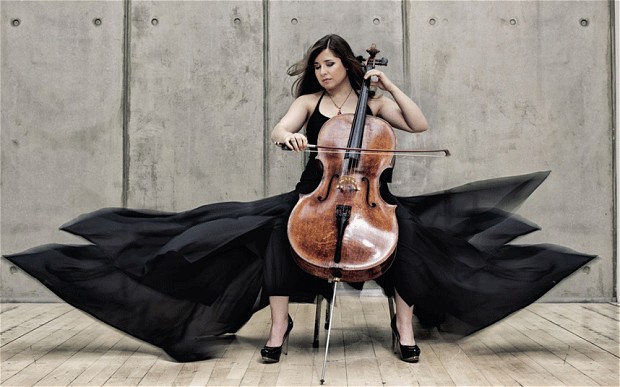
Featured soloist for the concerto will be cellist Alisa Weilerstein, whom Oundjian calls “one of the great cellists in the history of the instrument, and an amazing musician. . . . Her Dvořák is spectacular,” he says. “It’s maybe (Dvořák’s) most profound work, because it’s so moving.”

To close the program Oundjian wanted something that would not compete with the intensity of the concerto. “I wanted to have a celebration in the second half,” he says. “I wanted everyone to feel great,” and for that he chose Mendelssohn’s “Italian” Symphony, certainly one of the most cheerful and ebullient pieces in the orchestral repertoire.

The opening week also features the CMF’s annual Family Concert Sunday morning at 10:30 a.m. (July 7), with some light orchestral pieces mixed with some fun, including a piece based on Dr. Seuss’s Green Eggs and Ham. Tuesday sees the first of the summer’s Robert Mann Chamber Music Series concerts, named for the late violinist and founding member of the Juilliard String Quartet. The series will continue the following three Tuesdays at 7:30 p.m.

Festival Orchestra Thursday and Friday pairs, at 7:30 and 6:30 p.m. respectively, start the first week with violinist Vadim Gluzman playing Prokofiev’s Second Violin Concerto, and the iconic 20th-century masterpiece, The Rite of Spring by Stravinsky (July 11 and 12). The program will open with the exhilarating Short Ride in a Fast Machine by the American composer John Adams, who was CMF composer-in-residence in 2022.

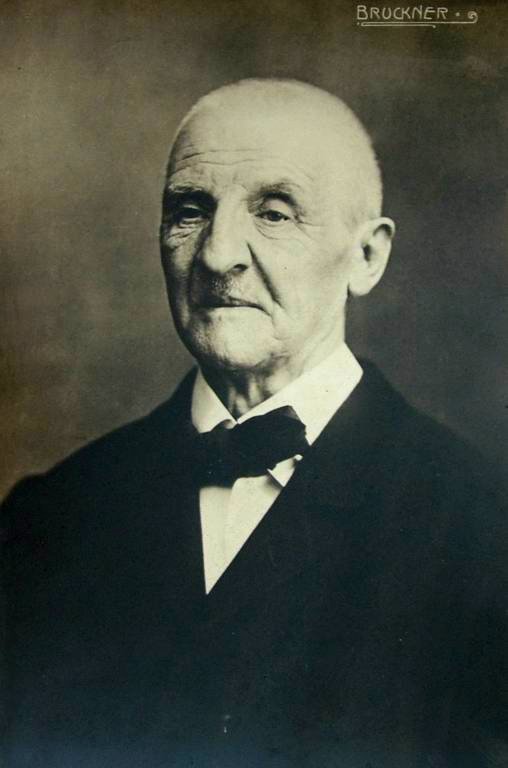
Anton Bruckner

“I did the (July 14) program because it’s the 150th birthday of Schoenberg and the 200th of Bruckner, and I wanted to acknowledge that,” Oundjian says. “I decided, let’s do it in one evening and make it a beautiful experience for everybody! The music is very spiritual (and) both pieces are fantastic to play, in that gorgeous acoustic at Chautauqua.”

The two composers took Wagner’s music and turned in different directions—Bruckner more conservatively by putting Wagner’s sound into the traditional form of the symphony, Schoenberg, born 50 years later, by pushing beyond Wagner’s harmonic freedom and the limits of tonality. 

Arnold Schoenberg

“Bruckner’s Fourth Symphony is probably the most accessible (of his nine symphonies), because it’s fairly compact,” Oundjian says. “It has stunning themes and glorious horn solos, and you really hear the power of the orchestra. I find the music exquisitely beautiful and contemplative. It’s almost surreal in its staggering beauty, to me.”

If you think of Schoenberg only as a thorny modernist, you are missing the earlier works that followed much closer to Wagner than his later works. “Verklärte Nacht is basically like late Wagner, with its glorious string sound,” Oundjian says. “It’s a beautiful string orchestra piece.”

Pianist Olga Kern returns to CMF for concerts July 18 and 19. She will play Rachmaninoff’s Piano Concerto No. 2, which she played at CMF in 2013. The concert, under the direction of Norwegian guest conductor Rune Bergmann, will also feature Prayer by Canadian composer Vivian Fung—a work that had its premiere with a “virtual orchestra” of Canadian musicians during the COVID-19 pandemic—and Edvard Grieg’s Suites from music for the play Peer Gynt, narrated by Kabin Thomas.

Gabriela Lena Frank

When he was looking for a new work to commission for the 2024 festival, Oundjian thought of a concerto for the Takács Quartet. “I said to (the quartet members), if we were to have a quartet concerto, who would you be interested in approaching, and without hesitation Gabriela’s name came up,” he says. “She  is a wonderful composer, Peruvian-American, and a very particular voice.”

Frank will be present for the July 21 premiere, as will Joan Tower, whose Concerto for Orchestra is on the same program.

Frank has written in her program notes, “Kachkanaraqmi, or ‘I still exist’ in the indigenous Quechua language of my Peruvian forbearers, speaks to the resilience, even insistence, of a racial soul through the generations. In this four-movement work, a brief pastoral Andean prelude, a moody mountain soliloquy, a romp of thieving winds, and a lyrical child’s wake utilize the sonorous possibilities of a concerto grosso for string quartet and string orchestra . . . Throughout, re-imaginings of age-old indigenous motifs and rhythms proliferate.”

Joan Tower

The premiere will be part of a concert of all-women composers, opening with Adoration by Florence Price, an early-20th-century African American composer whose works were forgotten for many years but recently have been rediscovered. Written in 1951, Adoration was originally for organ solo but has been arranged posthumously for various ensembles..

Joan Tower’s Concerto for Orchestra was commissioned jointly by the Chicago, St. Louis and New York orchestras, all of whom gave premieres but never played it again. “They always say this about compositions: Getting a commission is hard enough, but try to get second performances,” Oundjian says. “It’s one of those things that has really intrigued me, over my entire career: Let’s find out what’s just premiered in the last few years but has been undeservedly ignored.”

He discovered Tower’s Concerto for Orchestra when he was asked to conduct it in Iceland. “I said, ‘I don’t know that piece!’ I just loved it. It is so dramatic and so beautiful. There are two passages that are some of the most stunning contrapuntal harmony that I know in contemporary music. 

“It has tremendous drive and brilliance, and it demands everything from the orchestra.”

# # # # #

Colorado Music Festival, Peter Oundjian, music director
July 5–21, 2024
All performances in Chautauqua Auditorium

Opening Night
Festival Orchestra, Peter Oundjian, conductor
With Alisa Weilerstein, cello

  • Anna Clyne: Masquerade (2013)
  • Dvořák: Cello Concerto in B minor
  • Mendelssohn: Symphony No. 4 in A major (“Italian”)

6:30 p.m. Friday and Sunday, July 5 and 7

Family Concert: Green Eggs and Ham
Festival Orchestra, Jacob Joyce, conductor 
With Really Inventive Stuff and Jennifer DeDominici, mezzo-soprano

  • Glinka: Overture to Ruslan and Ludmilla
  • Daniel Dorff: Three Fun Fables
  • Mendelssohn: Overture to A Midsummer Night’s Dream
  • Rob Kapilow: Green Eggs and Ham

10:30 a.m. Sunday, July 7

Robert Mann Chamber Music Series
Colorado Music Festival musicians 

  • Ernst von Dohnányi: Sextet in C Major
  • Beethoven: “Duet with two Obligato Eyeglasses” in E-flat major for viola and cello, WoO 32
  • Schumann: Piano Quartet in E-flat Major, op. 47

7:30 p.m. Tuesday, July 9

Festival Orchestra Concert
Festival Orchestra, Peter Oundjian, conductor
With Vadim Gluzman, violin

  • John Adams: Short Ride in a Fast Machine
  • Prokofiev: Violin Concerto No. 2 
  • Stravinsky: Rite of Spring

7:30 p.m. Thursday July 11
6:30 p.m. Friday, July 12 

Bruckner Bicentennial Concert
Festival Orchestra, Peter Oundjian, conductor

  • Arnold Schoenberg: Verklärte Nacht (“Transfigured night”), op. 4
  • Anton Bruckner: Symphony No. 4 (“Romantic”)

6:30 p.m. Sunday, July 14

Robert Mann Chamber Music Series
Colorado Music Festival musicians

  • Carl Nielsen: Wind Quintet, op. 43
  • Schubert: String Quintet in C Major, D956

7:30 p.m. Tuesday, July 16

Festival Orchestra Concert
Festival Orchestra, Rune Bergmann, conductor
With Olga Kern, piano, and Kabin Thomas, narrator

  • Vivian Fung: Prayer
  • Rachmaninoff: Piano Concerto No. 2, op. 18
  • Edvard Grieg: Suites from Peer Gynt

7:30 p.m. Thursday, July 18
6:30 p.m. Friday, July 19

Festival Chamber Orchestra Concert
Festival Orchestra, Peter Oundjian, conductor
With the Takács Quartet and Gabriela Lena Frank, composer 

  • Florence Price: Adoration
  • Gabriela Lena Frank: Kachkanaraqmi (“I still exist”; world premiere)
  • Joan Tower: Concerto for Orchestra

6:30 p.m. Sunday, July 21

Tickets for individual concerts are available through the Chautauqua Box Office Web page.

Two new resources for music parents and audiences

A Web page packed with info, and a music camp for kids

By Peter Alexander June 20 at 2:20 p.m.

Stephanie Bonjack wanted to support her son’s interest in music.

“I wanted to know what are the opportunities for my son, and for kids in general in this region,” she says. “And I’m not the only one who was curious about these things.”

Stephanie Bonjack

As the music librarian at the CU College of Music, she had plenty of contacts in the music world, “but it frustrates me when the only reliable source is word of mouth,” she says. She had also recently joined the chorus of Boulder’s Seicento Baroque Ensemble and was interested in knowing about other Baroque and early music performing groups in the area. 

“After the pandemic I got it in my head that I would really like to go hear all of the major performing ensembles in the region, and experience them in their major performance venues” she says. “The question is, ‘What are they?’ I have friends who are professional musicians and they can rattle off a few things, but being a librarian, I want to see the list!”

Not finding a reliable list, she decided to make her own, “Music on the Front Range,” which now appears on the Web page of the CU University Libraries. Links are provided to a wide variety of styles and types of performing groups, from opera to barbershop and from professional orchestras to community groups, in addition to a list of “Local Classical News” sources (including this blog) on the home page.

This listing serves both as a resource for finding groups of different levels that you might wish to join, and also groups whose performances you might wish to attend, The full list of performing categories included on the site comprises opera, choirs, orchestras, bands, early music, chamber groups, youth, barbershop, community singing and community playing.

Bonjack admits that she was surprised, not only by the number of performing groups, but by the popularity of some specific areas. “I was really surprised by the pervasiveness of barbershop ensembles,” she says. There are no fewer than 13 barbershop groups for men and women, in addition to nine student-run groups at CU.

Among the other things that stood out to Bonjack, she says, “I was impressed by how many specific ensembles there are for LGBTQ members of the community. (Nine groups are listed on the “Community Singing” page.) I love that there is a professional handbell ensemble in Denver, the Rocky Mountain Ringers. I also found it fascinating under the community singing sections, how many sacred ensembles exist that are not attached to places of worship.

While Bonjack was making her list, Katarina Pliego was also thinking about young musicians—in her case, about the music training she got when she started playing cello, and the relative deficiencies of music education in this country.

Katarina Pliego

Pliego grew up in Slovenia, where she had two cello lessons, orchestra and two music theory classes every week, all provided by the state. “Everyone plays and has really good music education,” she says.

After she left Slovenia, she came to the United Sates and studied cello at the University of Northern Colorado in Greeley. “I came here, and I was like, how do undergrads not know music theory?” she asks. “How are you not learning about what the relative minor scale is? I knew that when I was twelve. Oh my gosh, am I so grateful for that now!”

Like Bonjack, Pliego decided to fill the gap she saw, at least for a few young students in the Northern Colorado area. “I saw a need,” Pliego says. “I taught music at Front Range Community College for seven years, and I saw how some students don’t realize everything that they should know to be musicians.

“I started thinking, we really need to teach kids music theory, we need to teach them more about music history. There are all of these camps that are orchestra camps, but there’s nothing like the camp that I grew up going to. (We) need to have music theory for kids, to understand why they’re playing scales, how the scales are working. So I just went for it.”

This year’s edition of the camp, “LoCo Music Lab,” concluded June 8, but Pliego plans to continue the camp in future years. Described as a “musicianship camp,” LoCo Music Lab included lessons, ensembles, music theory, music history, masterclasses and other workshops, including a presentation on performance anxiety.

For this first year, the camp was available to a limited number of students, and was open on a first-come, first-served basis without audition. It was offered to three groups: Grades 1–6 violin, viola, cello and guitar; Grades 1–6 choir; and Grades 7–12 violin, viola, cello and guitar (see the full schedule of this year’s camp on the LoCo Music Lab Web page.)

“I reached out to my friends and explained what my vision is, and they were like, absolutely, this sounds great,” Pliego says. “I wanted to start smaller, see how it goes and take it from there.”

MahlerFest 2024 explores connections 

Mountains, friendship, and wide-ranging influences celebrated

By Peter Alexander May 14 at 1 p.m.

Colorado MahlerFest 2024 comes to Boulder this week, but it might offer a little more than you expect.

Founded in 1988 to bring Mahler’s music to Boulder and the Front Range, in recent years it has expanded its programming way beyond one Austrian composer of big symphonies. And this year, the programming is so diverse—Mahler, Richard Strauss, Schubert, Schoenberg . . . and Jimi Hendrix?—that you might be hard pressed to find the unifying element. (See the festival event schedule below.)

Mahler in the Mountains

The title of this year’s festival—“Mahler and the Mountains”—only offers a hint. But the festival’s music director, Kenneth Woods, has the answer: “We’re trying to explore the idea of connection,” he says. “‘Mahler and the Mountains’ is one very important one. [You also have] Mahler and Richard Strauss, this idea of friendship, and then Mahler and Schubert is the other really good one.”

Bringing in Hendrix might seem like a radical departure (more on that later), but one continuing feature of MahlerFest is the performance of one of Mahler’s symphonies on the final concert. This year it will be the Fourth Symphony on Sunday’s Stan Ruttenberg Memorial Concert (3:30 p.m. May 19, at Macky Auditorium). Sharing the program will be the Prelude to Wagner’s Die Meistersinger and Strauss’s Metamorphosen for 23 strings.

Composed 1899-1900, the Fourth has the smallest orchestra and is in some ways the simplest of Mahler’s symphonies. Expecting a complex and massive work like the Second and Third symphonies, early audiences were disappointed, but more recently the attractive melodies and the joyful finale have made the Fourth a popular entry point for listeners new to Mahler’s music.

“It’s such a gorgeous piece, such a counterbalance to almost everything else he wrote,” Woods says. “It’s so classical, it’s so delicate, it’s so intimate and personal, he reveals something in this piece that he doesn’t show anywhere else. He’s branching out into a much more contrapuntal style (and) using the orchestra one part at a time. It gives it that beautiful transparency that’s not like anything before it.”

Woods says he picked the Meistersinger Prelude for the program because both Mahler and Strauss were heavily influenced by Wagner, and because it features the brass section that the Fourth Symphony barely uses. “We wanted to bring the brass with us to the end of the festival,” he says. “We like our brass section!”

Kenneth Woods with theMahlerFest Orchestra. Photo by Keith Bobo.

Less known than Strauss’s major tone poems and operas, Metamorphosen was one of the composer’s last pieces. And it is one of Woods’s favorites. “I think it might be his greatest work,” he says. “To me, Metamorphosen is the culmination of [Strauss’s] fluidity of musical thought. I don’t  think music could go any further in that direction.”

This year’s MahlerFest also includes an orchestral concert on Saturday (7:30 p.m. May 18, also in Macky). The featured orchestral work connects Mahler, the mountains and Strauss: the Alpensinfonie (Alpine Symphony) that Strauss wrote, in part as a memorial to Mahler. This piece is another of Wood’s favorites, although he has never conducted it before. “I’ve been trying to get a chance to conduct this piece for as long as I can remember,” he says. “I’ve been told ‘No!’ by orchestra managers more times for Alpine Symphony than for any other piece.”

Alphorns. Photo by Christo Vlahos.

The problem is that the Alpine Symphony not only calls for a huge orchestra, running up the costs for organizations that perform it, it also includes alphorns in E-flat that are especially hard to find. These are the long, curved, wooden trumpet-like instruments associated with the Swiss Alps. Because they have no valves, they cannot be transposed. Fortunately, MahlerFest’s provider of alphorns, Salzburger Echo, was able to supply properly pitched alphorns at the last minute so that the festival did not have to improvise a solution. 

“MahlerFest is the perfect place to do (the Alpine Symphony),” Woods says. “To do it here with the Rockies in the background is just magical. It’s an amazing piece, with a strong connection to Mahler. (Strauss) had the idea of something Alpine for over 10 years, but it was only after Mahler died that he started writing as kind of an homage.”

Richard Strauss and Mahler, 1908

Mahler loved the mountains and often hiked in the alps. Strauss’s score describes such an excursion, including a thunderstorm on the summit, but Woods says it stands for much more. “It’s a clear metaphor for the arc of life,” he says, “that striving that it takes to get to a summit, and the fact that none of us get to stay there—we all have to come down eventually.”

Filling out the program is another piece standing for Mahler’s connections to other composers:  his arrangement for full string orchestra of Schubert’s String Quartet in D minor, known as “Death and the Maiden.” Woods points out that arrangements of chamber music, and especially string quartets, for larger ensembles were common in the early 20th century.

“Mahler was in that generation, post Wagner, where everything is getting bigger and bigger,” he explains. “He gets the idea to take some string quartets and arrange them for large string orchestra. It makes it into a different piece in a way and reveals different aspects of the piece. I’m a big fan of (arrangements), and Mahler was, too.”

Other arrangements featured earlier in the festival are not larger, but smaller than the original. During and after World War I, musical resources were strained, and composers were writing pieces for smaller and smaller groups, like Prokofiev’s “Classical” Symphony (1917) and Stravinsky’s Histoire du Soldat (Soldier’s Tale, 1924). Arnold Schoenberg and others started making chamber arrangements of symphonies and other large orchestral pieces by Mahler. 

Richard Strauss

Wednesday’s opening night concert (7:30 p.m. May 15 at Mountain View Methodist Church) will include several of those Mahler arrangements, including movements from the Fourth Symphony, as well as with a chamber version of Wagner’s Siegfried Idyll and Richard Strauss’s revered Four Last Songs. On Thursday, a free concert at the Boulder Public Library Canyon Theater will feature the MahlerFest Brass Quintet playing original works for brass and, yes, a Mahler arrangement.

Friday evening (May 17) brings the most outré part of MahlerFest, including the works furthest removed from Mahler’s orbit. There will be two performances that evening at the Roots Music Project, 4747 Pearl St. in Boulder. The first performance, at 7 p.m., will feature string players from the MahlerFest Orchestra and the Tallā Rouge Duo, a Persian-Cajun fusion viola duo.

The centerpiece of the program will be Schoenberg’s string sextet Verklärte Nacht—a deeply Romantic and descriptive piece still well within Mahler’s orbit. The rest of the program will comprise various ethnic-oriented pieces by Hawaiian/Kanaka Maoli composer Anne Leilehua Lanzilotti, folk/jazz violinist Karl Mitze, and bluesy fiddle pieces by African-American composer Coleridge-Taylor Perkinson.

Starting at 9 p.m., the evening’s second event strays furthest from Mahler and the late 19th century, and brings us back to Jimi Hendrix. Titled “Electric Liederabend: Hendrix Meets Mahler,” the performance will juxtapose one of America’s most creative rock musicians with the composer of big symphonies . 

Woods will showcase his electric guitar and arranging skills, performing his own versions of Mahler—or at least music derived from Mahler—with a small combo. His 9 Reasons: A Meditation on Mahler’s Ninth Symphony will open the program, which also includes his arrangement of music from Elgar’s Cello Concerto and Mahler’s Der Abschied (The farewell).

Jimi Hendrix

Hendrix has his own place on the program, with “Machine Gun” and “Up from the Skies.” There is no mention of “Purple Haze,” but Woods says there could always be an encore. “‘Purple Haze’ is the first song I learned on the guitar,” he says. “When I got my first electric, I bought the ‘How to Play Jimi Hendrix’ book, and ‘Purple Haze’ was the first one I learned.”

While Hendrix once mentioned Mahler as an influence, to most listeners there’s little obvious musical connection between them. However, Woods likes to look deeper into the personalities of the two artists. “I wanted to showcase Jimi’s later development a little bit more, as he got more into the metaphysics and more complicated musical ideas,” he says.

And in the symphonic world, metaphysics and complexity naturally lead to Mahler.

A full schedule of events, including workshops, open rehearsals and pre-concert discussions, with artists’ bios and links for sales for ticketed events, is available on the MahlerFest Web page.

# # # # #

“Mahler & the Mountains”
Mahlerfest 37

Opening Night: “Visions of Childhood”
MahlerFest Chamber Orchestra, Kenneth Woods, conductor
With April Fredrick, soprano, and David Taylor, bass trombone

  • Mahler: Mahlerei, Concertino for bass trombone and chamber orchestra, arr. Schnyder/Horowitz (from Symphony No 4, Scherzo)
  • Richard Strauss: Vier letzte Lieder (Four last songs), arr. Ledger
  • Mahler: Symphony No. 4, First movement, arr. Kenneth Woods
  • Wagner: Siegfried Idyll, arr. Woods
  • Humperdinck: Hänsel und Gretel, “Der kleine Sandmann” (The little sandman) and “Abendsegen” (Evening blessing), arr. Woods
  • Schubert: Die Forelle (The trout), song and variations, arr. Woods
  • Mahler: Des Knaben Wonderhorn, Das irdische Leben (The earthly life), arr. Woods
  • Schubert: Der Tod und das Mädchen (Death and the maiden), song and variations, arr. Woods
  • Mahler: Symphony No. 4, Fourth movement, arr. Stein

7:30 p.m. Wednesday, May 15
Mountain View United Methodist Church, Boulder

Mountains of Brass
MahlerFest Orchestra Brass Quintet
Daniel Kelly and Richard Adams, trumpet; Lydia Van Dreel, horn; Lucas Borges, trombone; and Jesse Orth, tuba

  • Anthony Barfield: Gravity
  • David LeRoy Biller: Little Piece for Brass Quintet (world premiere)
  • Victor Ewald: Quintet No. 3 in D-flat
  • Mahler: Die zwei blauen Augen (The two blue eyes), arr. Michael Drennan
  • Jimi Hendrix: “Angel,” arr. David LeRoy Biller
  • Joan Tower: Copperware
  • Morley Calvert: “Suite from the Monteregian Hills”

3 p.m. Thursday, May 16
Canyon Theater, Boulder Public Library
FREE

Transfigured Night: Schoenberg & More

Members of MahlerFest Orchestra and Tallā Rouge Duo
Alan Snow, Caroline Chin and Sophia Szokolay, violin; Lauren Spalding and Aria Cheregosha, viola; Kenneth Woods and Parry Harp, cello

  • Karl Mitze: Seesaw
  • Anne Leilehua Lanzilotti: Silhouette, Mirror
  • Coleridge-Taylor Perkinson: Blue/s Forms
    Louisiana Blues Strut
  • Schoenberg: Verklärte Nacht (Transfigured Night)

7 p.m. Friday, May 17
Roots Music Project, 4747 Pearl St., V3A, Boulder

Electric Liederabend: Hendrix Meets Mahler
Kenneth Woods, guitar and vocals; David LeRoy Biiler, bass and guitar; Michael Karcher-Young, bass and drums; Michael Baker, drums

  • Mahler: 9 Reasons: A Meditation on Mahler’s Ninth Symphony, arr. Woods
  • Woods: Life/Time
  • Elgar: Malvern Hills Melancholy, arr. Woods from the Cello Concerto in E minor
  • Jimi Hendrix: “Machine Gun”
    —“Up from the Skies/Third stone from the Sun”
  • Mahler: Der Abschied (The farewell), arr. Woods

9 p.m. Friday, May 17
Roots Music Project, 4747 Pearl St., V3A, Boulder

Symposium
Speakers: Jeremy Barham, Joseph Horowitz, Aaron Cohen, Matthew Mugmon, Nick Pfefferkorn and Kenneth Woods

9:30 a.m.–5 p.m., Saturday, May 18
Mountain View United Methodist Church
FREE and live-streamed on YouTube

Strauss and Schubert
MahlerFest Orchestra, Kenneth Woods, conductor

  • Schubert: String Quartet in D minor (“Death and the Maiden”), arr. Mahler
  • Richard Strauss: Eine Alpensinfonie, op. 64

7:30 p.m. Saturday, May 18
Macky Auditorium

Stan Ruttenberg Memorial Concert
MahlerFest Orchestra, Kenneth Woods, conductor
With April Fredrick, soprano

  • Wagner: Prelude to Die Meistersinger von Nürnberg
  • Richard Strauss: Metamorphosen
  • Mahler: Symphony No. 4 in G major

3:30 p.m. Sunday, May 19
Macky Auditorium

Tickets for the full festival or individual ticketed events available HERE

CORRECTIONS: The original version of this story stated that MahlerFest had to use extensions to pitch the alphorns in the proper key. After this story was written, the festival was able to obtain horns pitched in E-flat, as reflected in the later version of the story. And due to an editing error, the Friday night concerts (May 17) were originally listed in the article as taking place on Thursday, May 16. Sharpsandflatirons regrets the error.

Boulder Chamber Orchestra presents student soloists

Teachers Association Concerto competition winners will perform with BCO Saturday

By Peter Alexander May 8 at 3:30 p.m.

The Boulder Chamber Orchestra (BCO) will present winners of the 2024 Colorado Music Teachers Association (CMSTA) Concerto Competition on a concert program Saturday (May 11; details below).

Conductor Bahman Saless with the Boulder Chamber Orchestra

The winners in four categories—Piano Elementary, Piano Junior, Piano Senior, and Percussion and Winds—will each play the concerto movement that was required for the competition, with the orchestra (see the concert program below). The BCO music director, Bahman Saless, will conduct.

An annual event, the CMSTA Concerto Competition has three piano categories that are held every year. There are vocal and instrumental categories in alternating years: strings and voice in odd-numbered years, and winds/percussion (one category) in even-numbered years. The competition is for pre-college students up to age 19.

The 2024 competition was held in March, with videos submitted online. A panel of three judges—Saless; Hye-Jung Hong, piano faculty from Missouri State University; and Jason Shafer, principal clarinet of the Colorado Symphony—selected the winners.

The four categories and winners are:
—Piano, elementary: Aiden Chan
—Piano, junior: Bobby Yuan
—Piano, senior: Mercedes Maeda
—Percussion and winds: Alexander Zhao, bassoon

The BCO has set up an online auction to raise funds for the concert. The “Colorado Young Stars Award Fund” auction will run through Friday (May 10).

This year marks the first time that the BCO worked with the CSMTA to support the competition and present the winners. In a written communication, Saless commented, “We are looking forward to many years of continued collaboration and hopefully building community support and excitement in the Boulder area.”

# # # # #

CSMTA Concerto Competition Winners’ Concert
Boulder Chamber Orchestras, Bahman Saless, conductor

  • Haydn: Keyboard Concerto in D major, Hob.XVIII:11. Mvt. I, Vivace (Piano, Elementary)
    -Aiden Chan, piano
  • Mozart: Piano Concerto No. 12 in A major, K414, Mvt. I, Allegro (Piano, Junior)
    -Bobby Yuan, piano
  • Mendelssohn: Piano Concerto No. 1 in G minor, Mvt. I, Molto allegro con fuoco (arr. by Cord Garben (Piano, Senior)
    -Mercedes Maeda, piano
  • Vivaldi: Bassoon Concerto in D minor, RV481, Mvt. I, Allegro (Percussion and winds)
    -Alexander Zhao, bassoon

8 p.m. Saturday, May 11
Boulder Seventh Day Adventist Church

TICKETS

Season closing events in Boulder and Longmont

Programs feature piano quartet, acrobatics and film music

By Peter Alexander May 1 at 4:38 p.m.

The Boulder Piano Quartet presents it’s final concert of the 2023-24 season Friday featuring music by Dvořák and the 19th-century French musical prodigy Mélanie Hélène Bonis Domange, known as Mel Bonis (7 p.m. May 3 at the Academy University Hill; further details below).

This will be the fourth and final performance this concert season to feature a guest violinist with the Quartet, appearing in place of their former violinist Chas Wetherbee, who died in 2023. The guest violinist for this performance will be Hilary Castle Green. 

Mel Bonis

This program is the second time that the Boulder Quartet has played music by Bonis, who is virtually unknown in the United States. About a year ago in May 2023, they played her Second Piano Quartet. This year they are playing her First Quartet in B-flat major.

Born in 1858, Bonis taught herself to play piano and entered the Paris Conservatory at 16. She was in the same class with Debussy, and studied composition with Cesar Franck. At the time women were not expected to be composers, and Bonis was urged by her parents to marry an older businessman. Because he didn’t like music, she gave up composing for a number of years. 

Later she met a former classmate who encouraged her and connected her with publishers, which led her to begin writing music again. She wrote the First Piano Quartet soon after, in 1901. When the composer Camille Saint-Saëns heard the Quartet, he is supposed to have said “I never thought a woman could write such music.” After her husband died in 1918, Bonis devoted herself to music.

Dvořák won the Australian State Prize for composition—in effect a grant to allow artists the time for creative work—in 1875. At 34 years of age he was still relatively unknown to the larger musical world, even though he had written four symphonies, seven string quartets, three operas, and other works. During that year he wrote a number of larger pieces, including his Symphony No. 5, his Serenade for Strings and the Piano Quartet No. 1 in D major. 

The Quartet is in the standard classical chamber-music structure of three movements, arranged fast, slow, fast. Unlike other quartets of the time, the piano is not placed separate from, or against the strings, as if it were a chamber concerto. Instead the four parts are more fully integrated. Though only three movements, the Quartet is an expansive work. It was not performed for nearly five years, however, having its premiere in Prague in 1880. 

# # # # #

Boulder Piano Quartet: Matthew Dane, viola, Thomas Heinrich, cello, and David Korevaar, piano, with guest violin Hilary Castle Green

  • Mel Bonis: Piano Quartet No. 1 in B-flat major
  • Dvořák: Piano Quartet No. 1 in D major, op. 23

7 p.m. Friday, May 3, Academy Chapel Hall, Academy University Hill
Admission free with advance reservations

# # # # #

The Boulder Philharmonic will continue its relationship with the performing group Cirque de la Symphonie with two performances Saturday in Macky Auditorium (2 and 7:30 p.m. May 4; details below).

Classical music’s answer to Cirque du Soleil, Cirque de la Symphonie presents aerialists, jugglers, ribbon dancers, acrobats, contortionists and other acts to the accompaniment of classical music performed live on stage. Macky Auditorium will be especially rigged for the aerial acts, and the front of the stage reserved for other performers. The performance of selected short classics will be conducted by Renee Gilliland, associate director of orchestras at CU Boulder.

Renee Gilliland

This will be the fifth time that the Boulder Phil has hosted Cirque de la Symphonie at Macky. Their last previous appearance was in 2018. While limited tickets are still available for both scheduled performances Saturday, previous Cirque performances have sold out.

Gilliland earned a Doctor of Musical Arts in orchestral conducting and literature from CU Boulder, a Master of Music in viola performance with an outside area in conducting from the Indiana University Jacobs School of Music, and a Bachelor of Music in music education and certificate of violin performance from the University of Texas at Austin Butler School of Music. She was also awarded an Artist Diploma in orchestral conducting from the University of Denver where she was assistant conductor of the Lamont School of Music Symphony and Opera Theater orchestras.

She was formerly music director of the CU Anschutz Medical Orchestra and associate conductor of the Denver Philharmonic.

# # # # #

“Cirque Returns”
Boulder Philharmonic Orchestra, Renee Gilliland, conductor
With Cirque de la Symphonie

  • Dvořák: Carnival Overture, op. 92 (orchestra only)
  • Ary Barroso: Aquarela do Brasil
  • Brahms: Symphony No. 3 in F Major, III. Poco Allegretto
  • Bizet: Carmen Suite No. 1, Les Toreadores
    Carmen Suite No. 2, Danse Bohème
  • Mendelssohn: Symphony No. 4 in A major (“Italian”), IV. Saltarello (orchestra only)
  • Rimsky-Korsakov: Capriccio Espagnol, Scena e canto gitano
    —Fandango asturiano
  • Tchaikovsky: Swan Lake Suite, Danse des petits cygnes
  • Mikhail Glinka: Overture to Ruslan and Lyudmila (orchestra only)
  • Rimsky-Korsakov: The Snow Maiden Suite, Danse des Bouffons
  • Leroy Anderson: Bugler’s Holiday
  • Smetana: The Bartered Bride, “Dance of the Comedians” (orchestra only)
  • Johann Strauss, Jr.: Thunder and Lightning” Polka
  • Tchaikovsky: Swan Lake Suite, Valse
  • Bizet: Carmen Suite No. 1, Les Toreadores

2 p.m. and 7:30 p.m. Saturday, May 4
Macky Auditorium

TICKETS

NOTE: Indications of which pieces are played by the orchestra alone without Cirque performance added 5/2.

# # # # #

The Longmont Symphony Orchestra (LSO) concludes its 2023-24 concert season Saturday (May 4) with “A Tribute to John Williams,” featuring the music of one of Hollywood’s greatest film composers.

John Williams

The Pops Concert, at 7 p.m. in Longmont’s Vance Brand Civic Auditorium, will be under the direction of the LSO’s music director, Elliot Moore. The program will include music from the soundtracks for Star Wars, Jurassic Park, E.T. and Harry Potter, among other popular films.

With more than 1100 tickets already sold, there are only a few seats left at time of posting. Because of the size of crowd expected, the LSO advises attendees to arrive early. Overflow parking from the Skyline High School lot will be available at the Timberline School lot,  on Mountain View Avenue.

# # # # #

Tribute to John Williams
Longmont Symphony Orchestra, Elliot Moore, conductor

  • Music of John Williams

7 p.m. Saturday, May 4
Vance Brand Civic Auditorium, Longmont

Limited seats available HERE