
Two entertaining comedies and a grim story from the home front at Central City
By Peter Alexander July 15 at 1:52 p.m.
Central City Opera (CCO) opened their summer season June 28 with a brisk and bubbly production of Rossini’s 1816 comedy The Barber of Seville. The summer’s other stylistically varied productions have now opened: The Knock, a 21st-century tale of life on the home front during the Iraq war, composed in 2020 by Alessandra Verbalov with libretto by Deborah Brevoort, on July 5; and the 1959 Broadway hit Once Upon a Mattress by Mary Rodgers and Marshall Barer, on July 12.
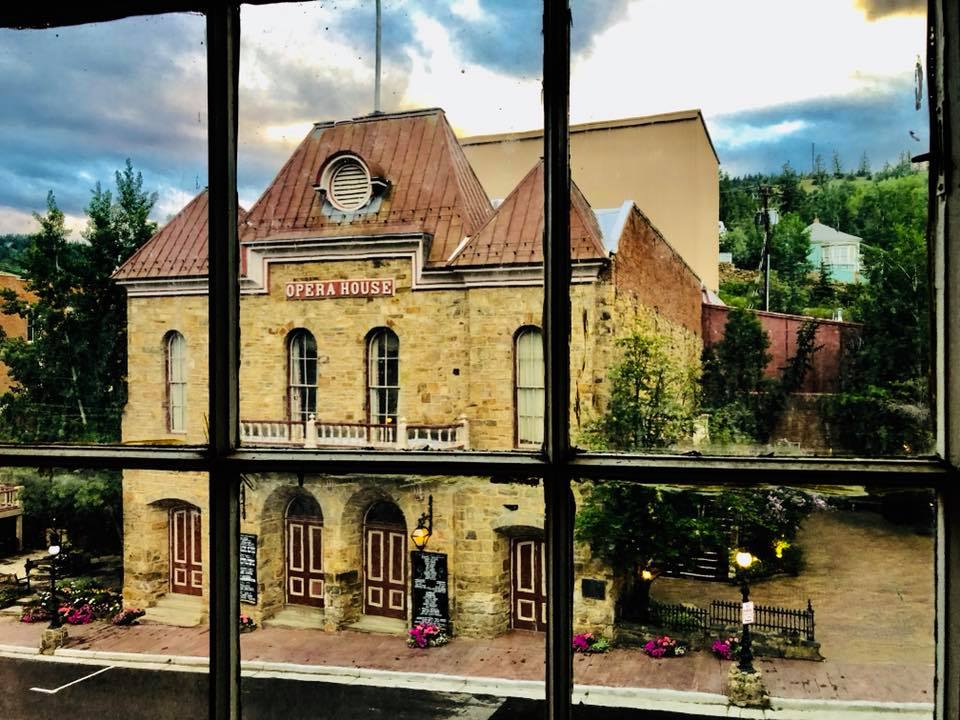
The Barber of Seville is presented with brilliantly colorful sets and costumes that belong to the Opera Theatre of St. Louis. Eric Sean Fogel’s Director’s Notes say that Barber has been placed “in 1930s Spain,” but that concept is almost irrelevant since it hardly touches the story. Stage design by Andrew Boyce reveals Rossini’s raucous comedy dressed up in bright, tropical colors—all yellow and pink on stage, plus a bright red sofa in the form of Rolling-Stones-reminiscent lips.
Costume design is by Lynly Saunders. She describes Barber as an opera “where you can really let loose,” and let loose she does. From police in 1930s-style uniforms—the one period reference that is unmistakable—each with one incongruously colorful sleeve, and giant sunflowers instead of rifles, to ridiculously overpuffed balloon pants and a garishly non-matched coat (or is it “power clashing”?), the costumes reveal a designer gleefully run wild. The crescendo of colors culminates with a joyful competition of surprise costume reveals by Almaviva and Rosina just before opera’s end. I can’t imagine anyone not being delighted by the over-the-top riot of colors.
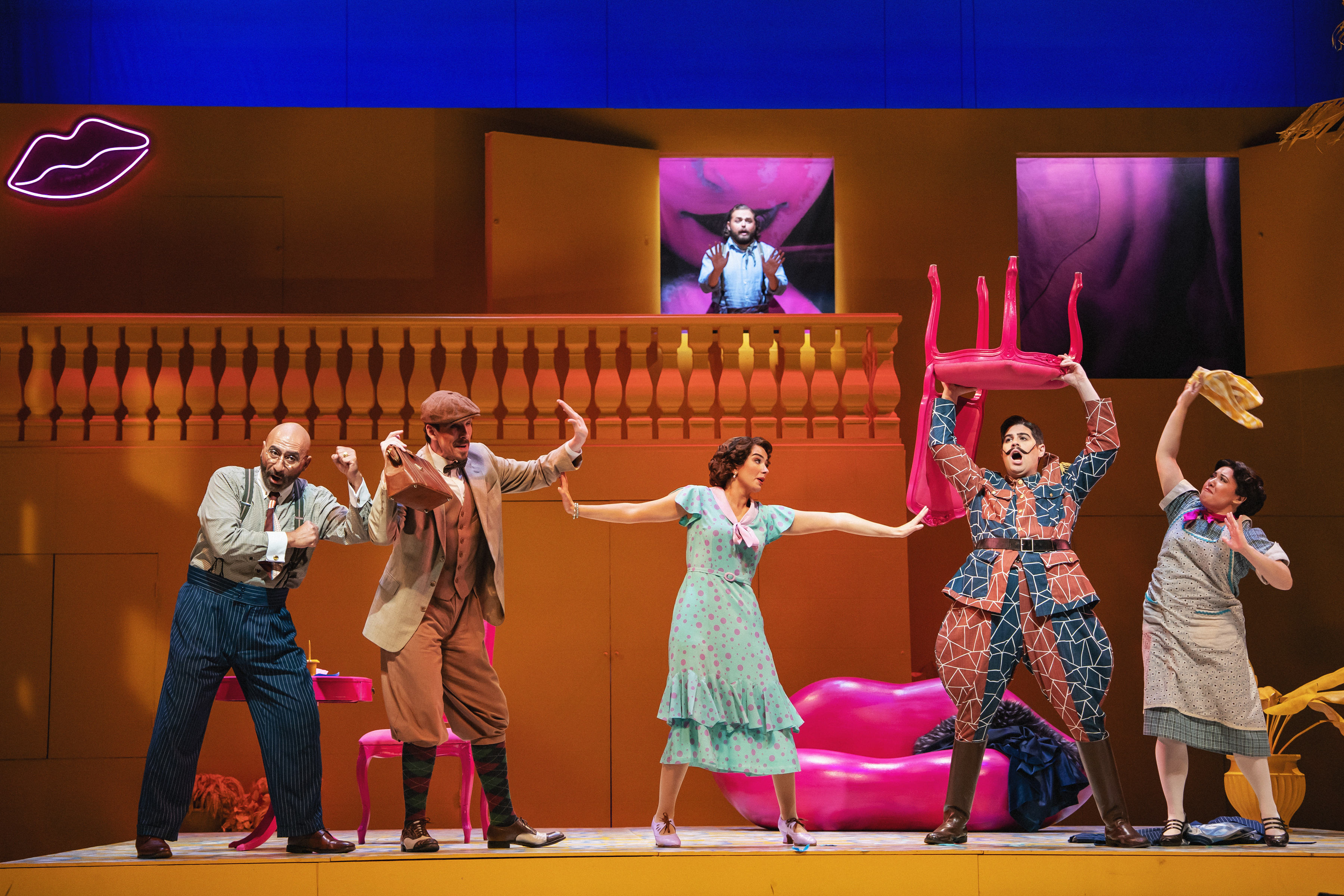
Stage director Fogel does not shy away from pure farce, but as a cast member reminded me, Barber of Seville is supposed to be farce. There are multiple doors, people popping in and out unexpectedly, pratfalls, a piano wider than the stage, and even a collapsing chair. Whether the manic silliness ever crosses a line will be a matter of individual taste. For me it pushed the line, but the hilarity was irresistible from beginning to end.
The vocally strong cast embraced the production’s style with exuberant energy. As Almaviva, Andrew Morstein had difficulty negotiating registers at the outset and sounded strained at top volume, but was comfortable and sang with expression in his gentler moments. He got stronger across the evening, managing Rossini’s leaps and runs with increasing security, and finished as a winning romantic lead.
Luke Sutliff made a terrific Figaro, filling the theater with his voice and his personality. As Fogel observes in his notes, Figaro is the barber of the title, but the young lovers Almaviva and Rosina want to capture our attention. The direction and Sutliff’s performance make Figaro both the factotum who gets things done in Seville and the mainspring of the opera’s action, as he should be.
Ashraf Sewailum, known locally from previous performances at Central City, the University of Colorado Eklund Opera Company, and numerous concert appearances in Boulder, was brilliantly blustering and periodically baffled as Dr. Bartolo. His full bass voice easily filled Central City’s house. Both his musical phrasing and comic timing made him one of the stars of the show.
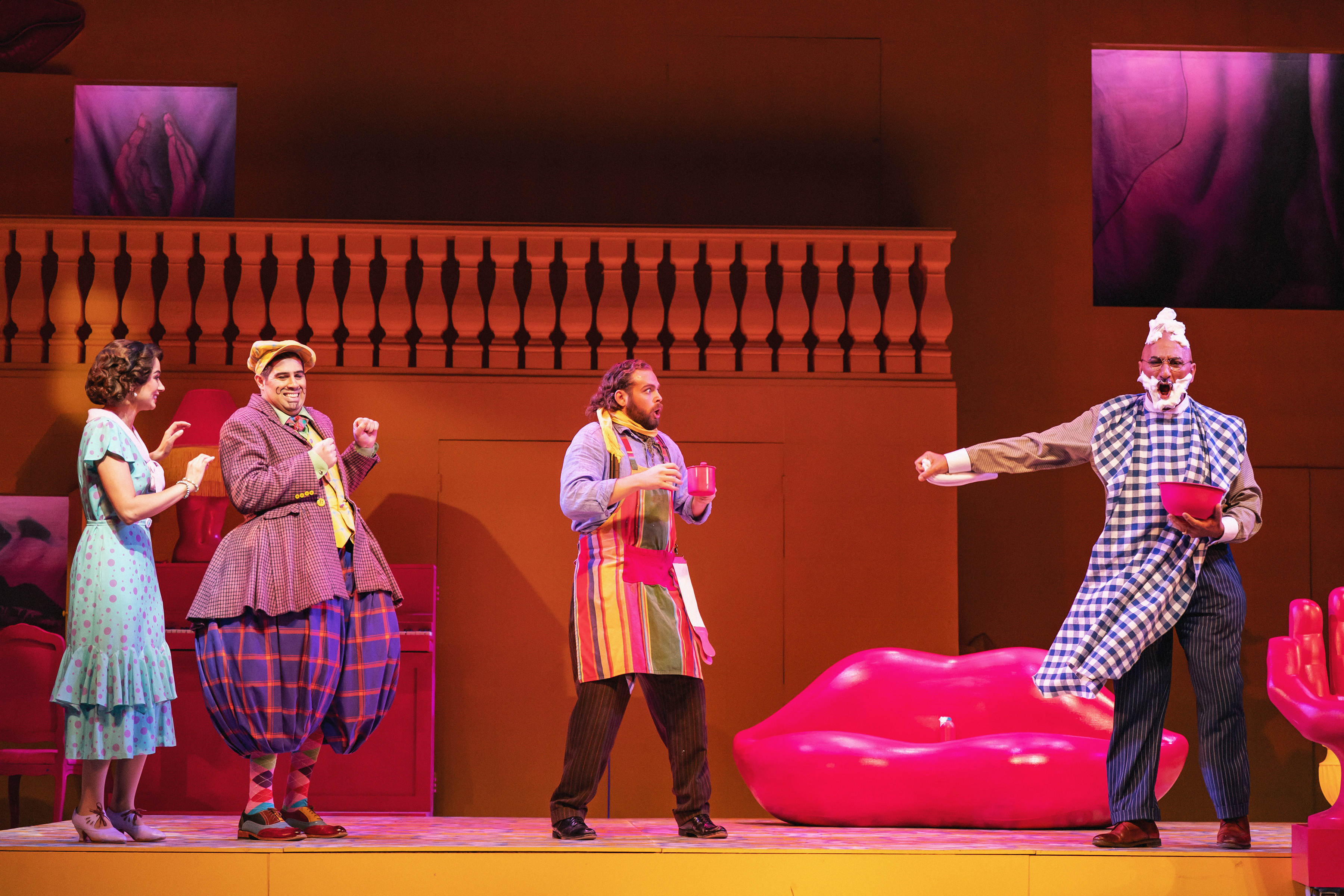
Mezzo-soprano Lisa Marie Rogali lent her strong, resonant lower register and bright, sweet upper notes to the role of Rosina. Her melting lyricism and confidence in the coloratura passages made her trademark aria “Una voce poco fa” a highlight. Happily she captured the strength and determination of the character, avoiding cliches of the submissive ward and previewing the independent countess of Mozart’s Marriage of Figaro.
Stefan Egerstrom humorously portrayed Don Basilio as a purse-carrying, prancing dandy. His on-target performance was one of the keystones of the interpretation of Barber as farce. Equally fit for her comic role was Laura Corina Sanders as Berta, the unruly servant. She took full advantage of the possibilities the over-the-top production style offered her character.
Louis Lohraseb, who has conducted opera in Rome, Hamburg, Dresden and Berlin, made his Central City Opera debut leading Barber. Under his baton, the orchestra played with stylish restraint, never overpowering the singers. The overture was bright and energetic, despite a few soggy moments.
# # # # #
Nestled between two comedies, Aleksandra Vrebelov’s The Knock tackles the deeply serious question of the hidden pain and tragedies of war. During the 2003–11 Iraq war, American military wives endure a long night of suspense when they are cut off from communication with their husbands in Fallujah. The title refers to the dreaded knock on the door, when a military officer will officially notify one of them of her husband’s death.
Vrebalov’s score was receiving only its second full stage production, since the planned premiere at the 2020 Glimerglass Festival had to be presented on film, due to COVID. The performance at Central City was a fitting regional premiere, as The Knock is set in and around Ft. Carson, Colorado.
Born in Serbia, Vrebalov directly experienced the horrors of war during the 1998–99 Kosovo War and the devastating NATO bombing of her hometown of Novi Sad. This experience stands behind several of her most successful pieces.
In The Knock, her subtle music expresses the rising tension among the military wives at home through steady background chords and ostinato patterns that increase in intensity. A sharp and expressive score, it signals the buildup of despair and fear without resorting to bombast.
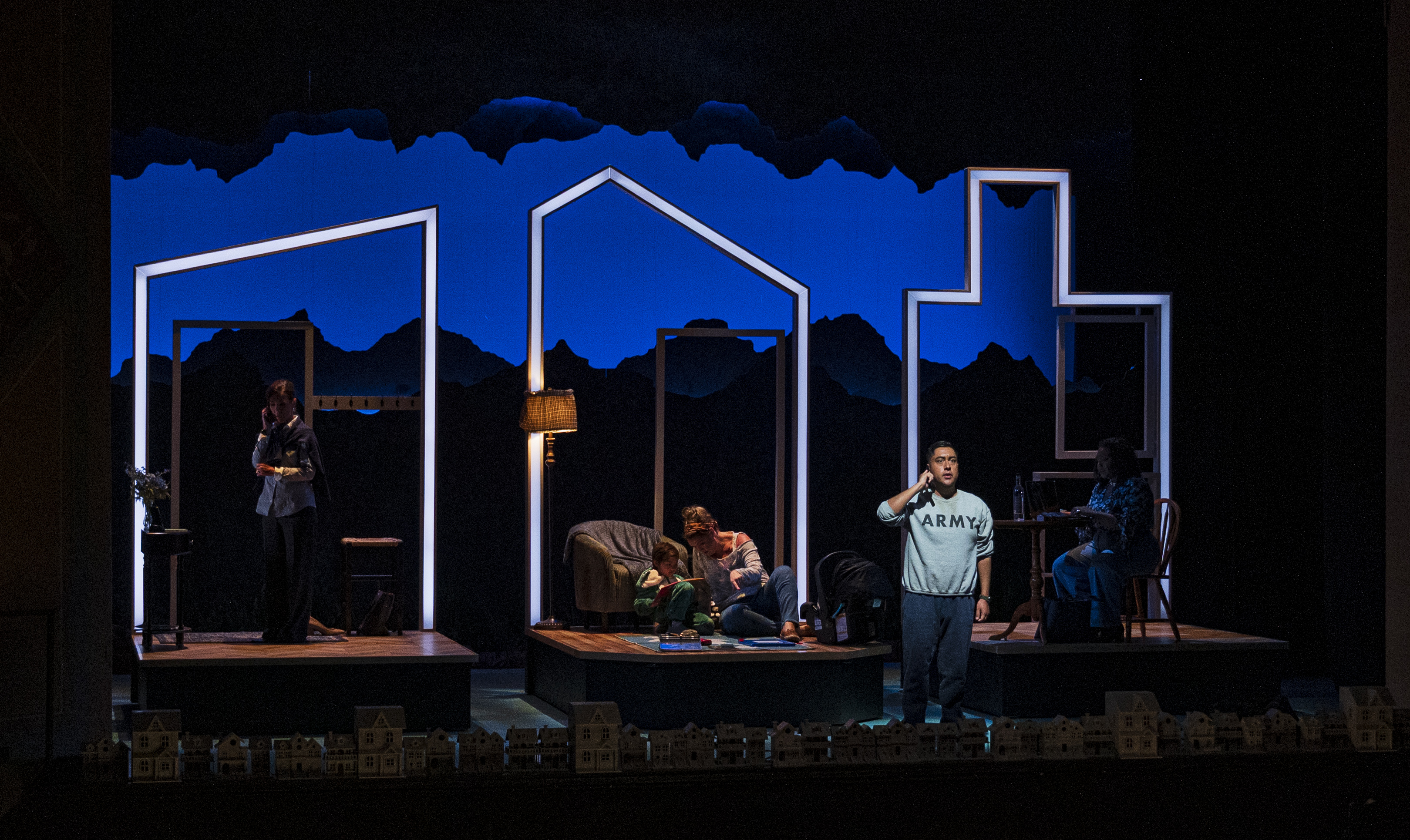
The evocative set by Lawrence E. Moten III comprises brightly lit outlines of three houses, those of Jo, Aisha, and an unnamed other military wife. A row of tiny houses across the front of the stage, sometimes lit from inside, represent the larger community of military families. In the back, the outline of Colorado mountains can be seen against a deep blue late-evening sky that is symbolically lit with stars at show’s end.
Three characters dominate the action. Joella “Jo” Jenner is a young wife and mother of two who is undergoing her first nighttime vigil waiting for word from the battlefield. Portraying a nearly one-dimensional character—the mother terrified for herself and her children—Mary-Hollis Hundley ably expresses Jo’s unease and her fragility.
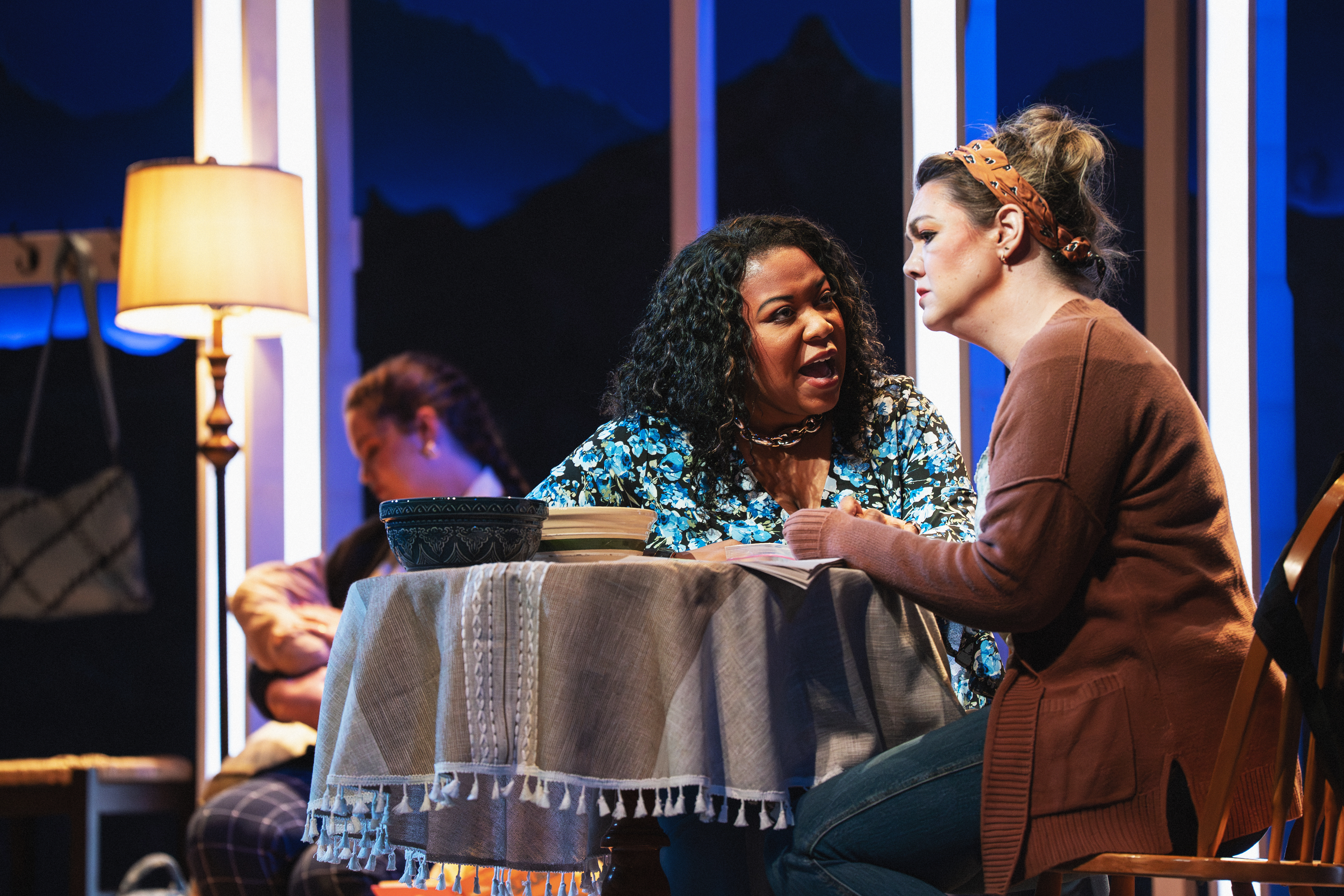
Paired with Jo is Aishah McNair, a more experienced military wife who tries to offer support and perspective to the young mother. Cierra Byrd gave Aishah depth, especially near the end when launching the number “When the person you love is far away,” which blooms into an ensemble number. Her warm, smokey contralto complimented Hundley’s more delicate soprano throughout their scenes together.
Lt. Roberto Gonzalez is a young soldier tormented by being stationed in the U.S. while his comrades face combat. He has been tapped to deliver the mournful news—the knock—for the first time, leaving him nervously trying to fulfill the duties as described in the manual.
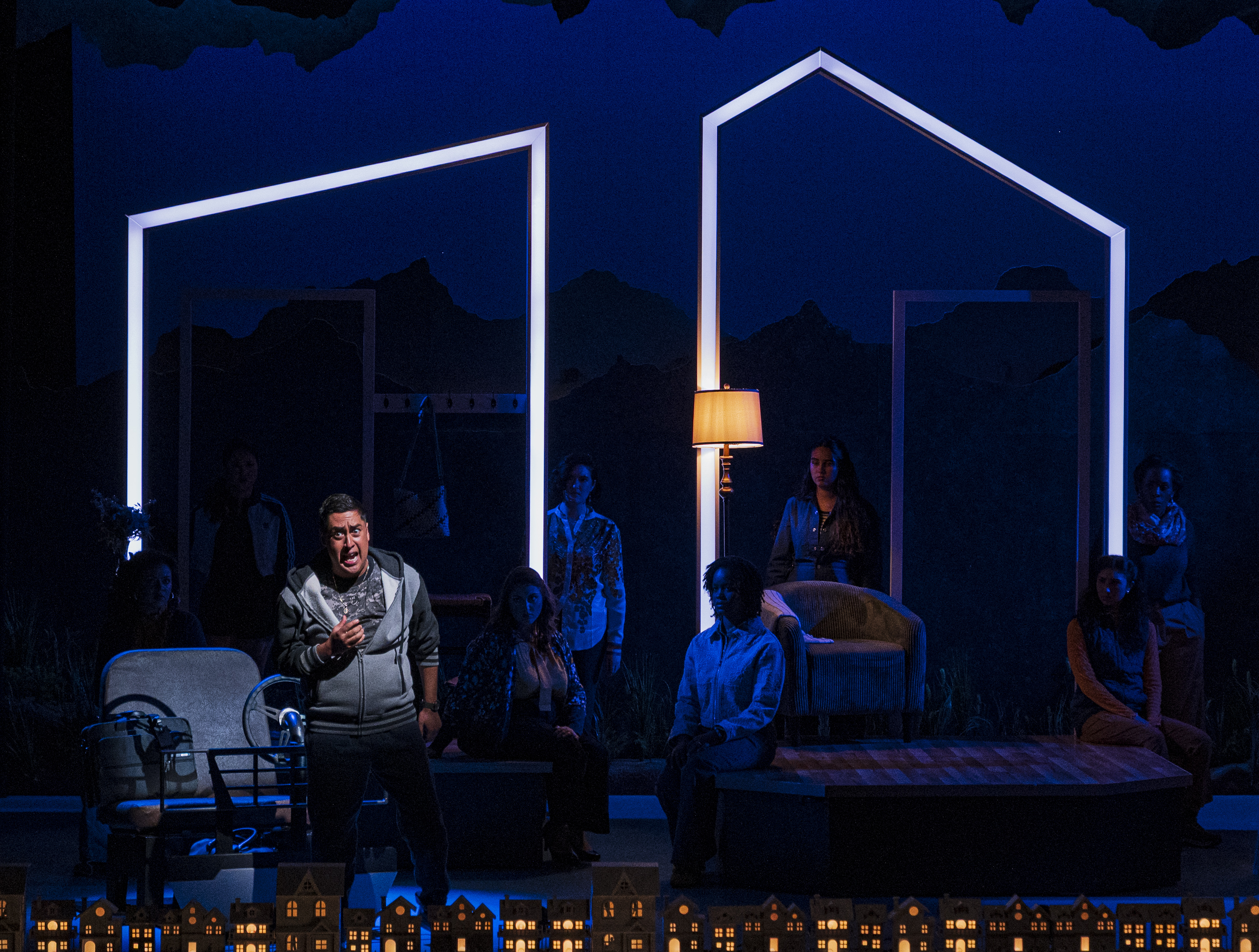
Baritone Armando Contreras overplayed Gonzalez’s stress, staying at a high volume and almost shouting his way through parts of the role. His repeated invocations of the Virgin de Guadalupe were more than needed, since his sincere faith and apprehension are evident from the start. His lovely singing in the concluding ensembles, when Lt. Gonzalez relaxes into tender feelings for the women he confronts, show that he has a wider range of expression and styles than are heard for most of the opera.
Conductor David Bloom managed the mixed chamber ensemble in the pit comfortably, keeping the music moving through the rather extreme emotional ups and downs of the characters. Moritz’s stage direction effectively kept the action clear, as it moved from separate houses, to one house where the wives gathered, to scenes of Lt. Gonzalez facing his fears while traveling cross country.
The poignant conclusion of the opera—with one wife facing a devastating development and the others embracing relief—provides music that expresses both sentiments, or as the text has it, “Joy and Sorrow.” And the concluding lines describing the folded flag that every war widow receives, “Blue and Stars are All that will Remain,” remind us eloquently of the show’s central point, that the ripples of war’s tragedies spread across society. It is a sobering moment in a powerful piece.
# # # # #
Once Upon a Mattress, which opened Saturday (July 12), was the first full-length Broadway show by Mary Rodgers, daughter of the famed Broadway composer Richard Rodgers who was half of the musical-comedy teams of Rodgers & Hart and Rodgers & Hammerstein. Growing up in so musical an environment, Mary Rodgers naturally took to composing as a teenager, and had a very successful career writing music for children’s records, musicals and reviews, and was the author of several children’s books.
Her one big Broadway hit, Once Upon a Mattress opened in 1959 and perfectly fits the mold of 1940s and ‘50s musicals. It offers ample opportunities for catchy songs, quirky characters, a heavy dose of theatrical silliness, and a thoroughly happy ending. The music is never compelling or deeply memorable, but it is never less than pleasant. The book is full of gags and jokes that elicited hearty laughter from the audience on Saturday.
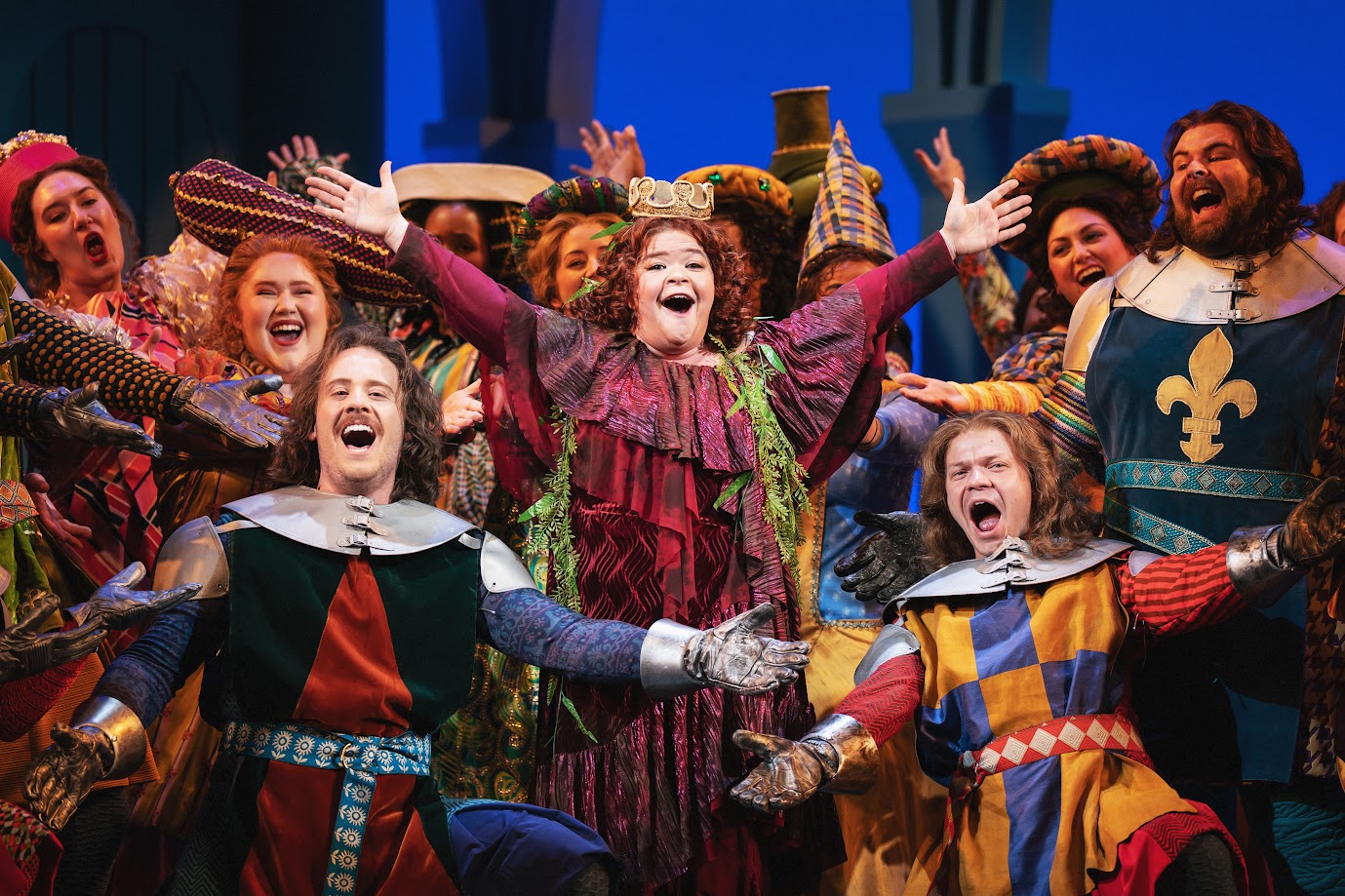
The plot skates cheerfully on the surface of the Hans Christian Anderson tale of “The Princess and the Pea,” with a goofy young Prince dominated by a despotic mother who will only allow him to marry a proper princess. In the meantime, no one in the kingdom—or is it queendom, since his father is mute?—is allowed to marry until the timid Prince Dauntless the Drab is wed to a suitably, queen-approved mate.
A hopeful candidate shows up in the form of Princess Winifred the Woebegone from a marshy realm—the Broadway debut role of Carol Burnett in 1959. Queen Aggravain has imposed a test on every potential bride, which all have failed. For Winifred she devises the pea under 20 mattresses (actually 14 at Central City), with the expected result.
All of these more or less stereotyped characters were portrayed with the broad humor the show wants. Everyone in the cast had a suitably lyrical musical theater voice, capable of crooning all the ballads and other musical numbers of the score. There are a few solo numbers and many duets and ensemble numbers, all well handled by the consistency solid cast.
Margaret Gawrysiak was everything you could want for Queen Aggravain—imperious, haughty, comically unyielding and too eager by half to rule out potential brides. Michael Kuhn was an ideal Prince, completely under the sway of his controlling mother, with just the right touch of modern nerdiness thrown in. Marissa Rosen made an especially strong impression as Princess Winifred, with just enough of her own nerdiness to captivate Dauntless. She projected the latent athleticism fitting for a princes who, in a moment shocking to the court, “swam the moat” and entered trailing tangles of weeds.
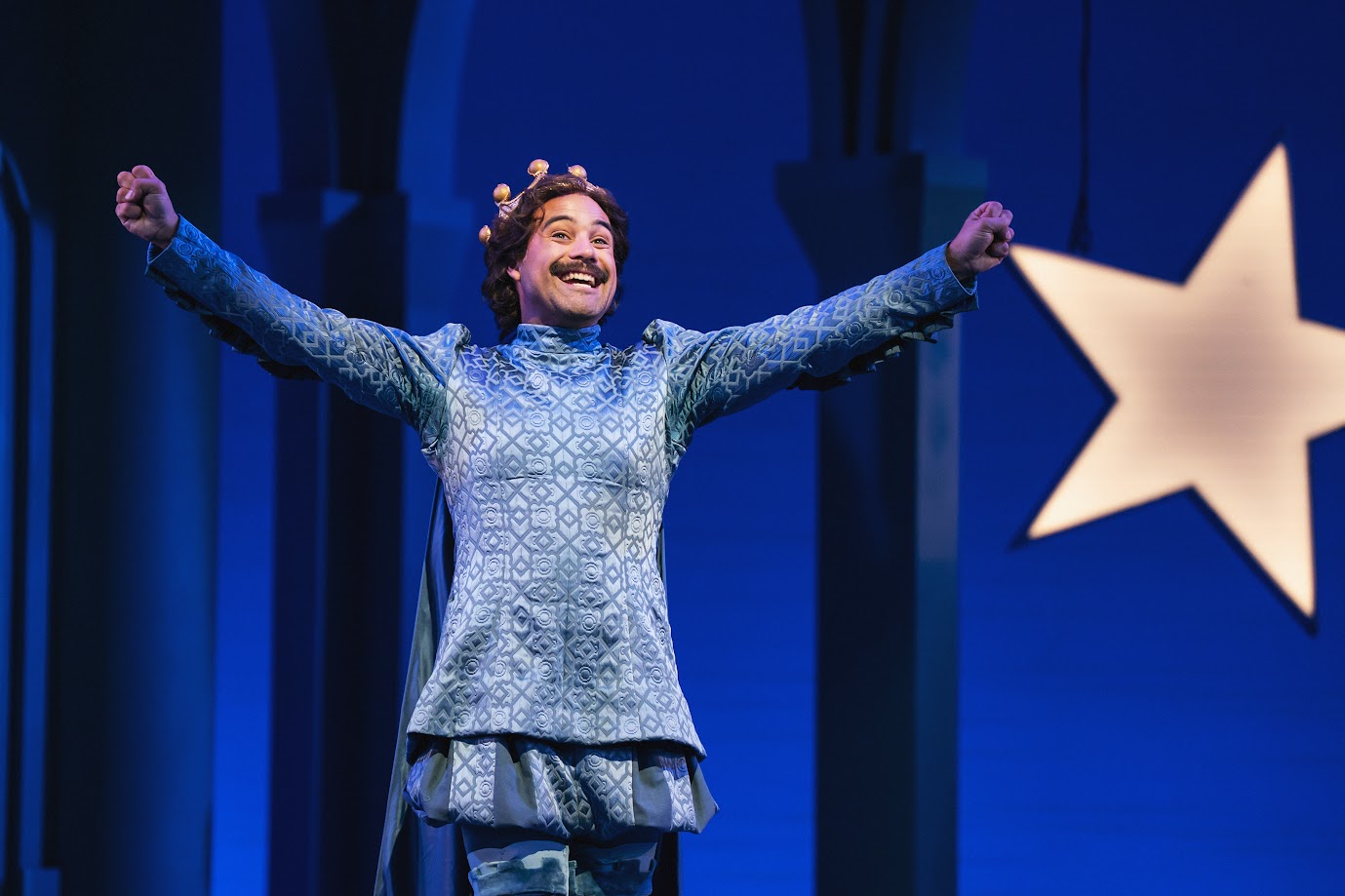
As the Jester and Minstrel, Alex Mansoori and Bernard Holcomb were well matched stage buddies, either bantering or singing together. Jason Zacher made good use of his short appearances as a wizard who does parlor tricks at random moments. The on-again, off-again couple of Sir Harry and Lady Larken, who have a growing reason for the ban on marriage to be lifted. The couple were well portrayed by Schyler Vargas, who had fun with Sir Harry’s sense of importance, and Véronique Filloux, fittingly flighty as Lady Larken. Together they captured all the traditional nuances of the couple who are happiest while quarreling.
Special mention must be made of Andrew Small, who delighted in his CCO debut as the mute King Sextimus, who has an unfulfilled taste for the ladies in waiting at the court. The son of a musician who played in the CCO orchestra in the 1980s, Small first attended the opera when he was 10, leading to a career on stage. He wrote for the program that performing at CCO is “a deeply meaningful, full-circle moment.”
Seated at the very back of the house I could not always hear the voices over the orchestra. Out from under the balcony and closer to the stage, the sound was probably better. In all other respects conductor Kelly Kuo led a stylish and energetic performance.
The scenic design by Andrew Boyce fits the classic Broadway ambience perfectly, walls and arches suggesting a cartoonish court. The costumes by Elivia Bovenzi Blitz are standard theater-medieval—colors and fabrics no one saw in the middle ages, but pleasantly evocative of make-believe realms.
The stage direction by Alison Fritz, the artistic director of CCO, kept the show moving seamlessly. John Heginbotham’s choreography was handled smoothly by all of the acting/singing/dancing members of the large cast.
Those who love Broadway will relish the opportunity to attend a professional production of Once Upon a Mattress, performed with full orchestra and Broadway-worthy voices. If that’s your dish, go for it! If not, the farcical Barber of Seville and deeply thoughtful The Knock are equally worth a trip into the mountains.
NOTE: Performances of all three shows at Central City continue through the month and into August. The full schedule is listed below.
# # # # #
Central City Opera
Remainder of the 2025 Summer Festival Season
All performances in the Central City Opera House, Central City, Colo.
Rossini: The Barber of Seville
7:30 p.m. Saturday, July 19
2 p.m. Tuesday, July 15; Friday, July 25; Saturday, July 26; Wednesday, July 30; Sunday, Aug. 3
Aleksandra Verbalov: The Knock
7:30 p.m. Saturday, Aug. 2
2 p.m. Sunday, July 19; Tuesday, July 22
Mary Rodgers and Marshall Barer: Once Upon a Mattress
7:30 p.m. Saturday, July 26
2 p.m. Wednesday, July 16; Friday, July 18; Sunday, July 20; Wednesday, July 23; Sunday, July 27; Tuesday, July 29 Friday, Aug. 1; Saturday, Aug. 2
Tickets for all remaining performances are available on the CCO Web Page.















 Sharps & Flatirons