GRACE NOTES: Brahms 2nd twice and drummers, all on Saturday

Boulder and Longmont symphonies at home, Kodo at Mackey

By Peter Alexander Feb. 12 at 11:15 a.m.
The Boulder Symphony joins with the Niwot High School Symphony Orchestra for a performance of the spirited Danzón No. 2 of Arturo Márquez Saturday and Sunday (Jan. 15 and 16; details below) at the Dairy Arts Center.

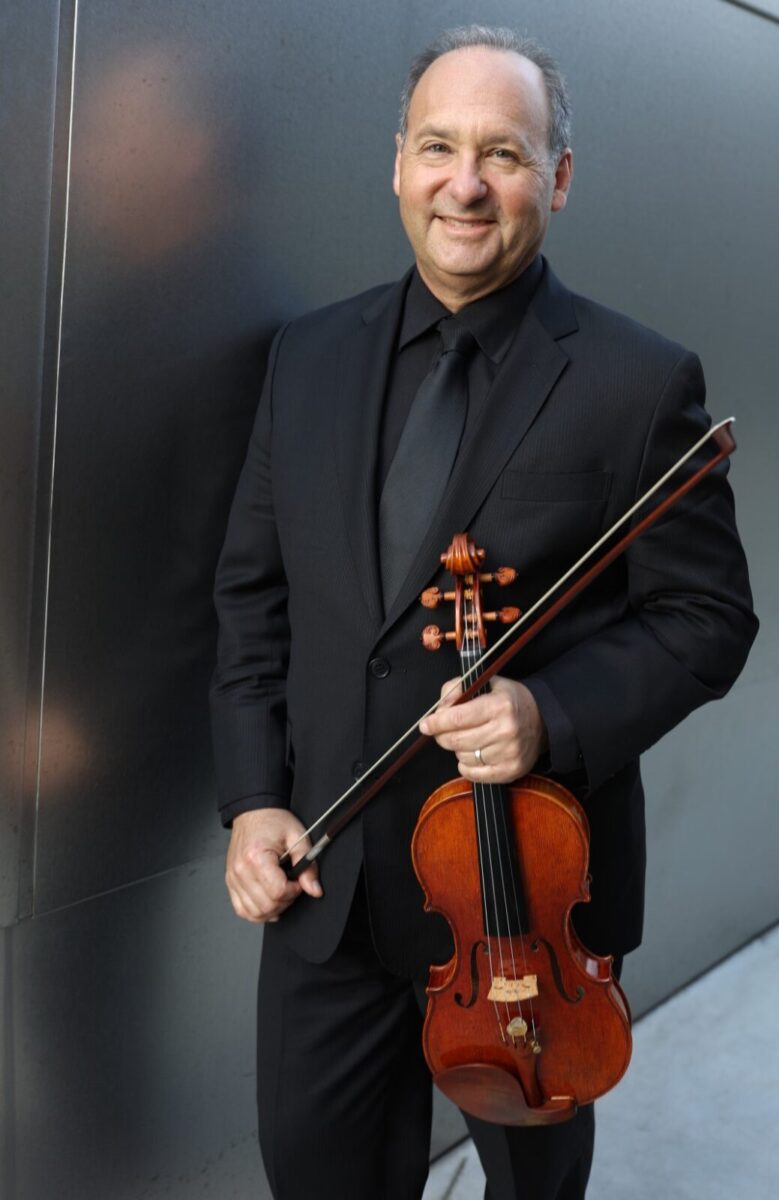
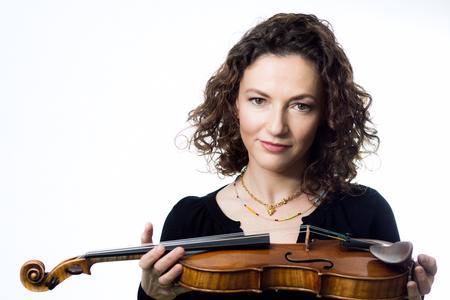
Other works on the program, performed by the Boulder symphony, will be a Concerto for Violin titled “Paths to Dignity” by Lucas Richman, featuring violinist Mitchell Newman; and Brahms’s Symphony No. 2 in D major. Devin Patrick Hughes will conduct.

Richman has had an extensive career as a conductor. He currently leads the Bangor Symphony Orchestra in Bangor, Maine, and was previously music director of the Knoxville Symphony in Tennessee. He has also conducted scores for a number of films, including the Grammy-nominated score for The Village

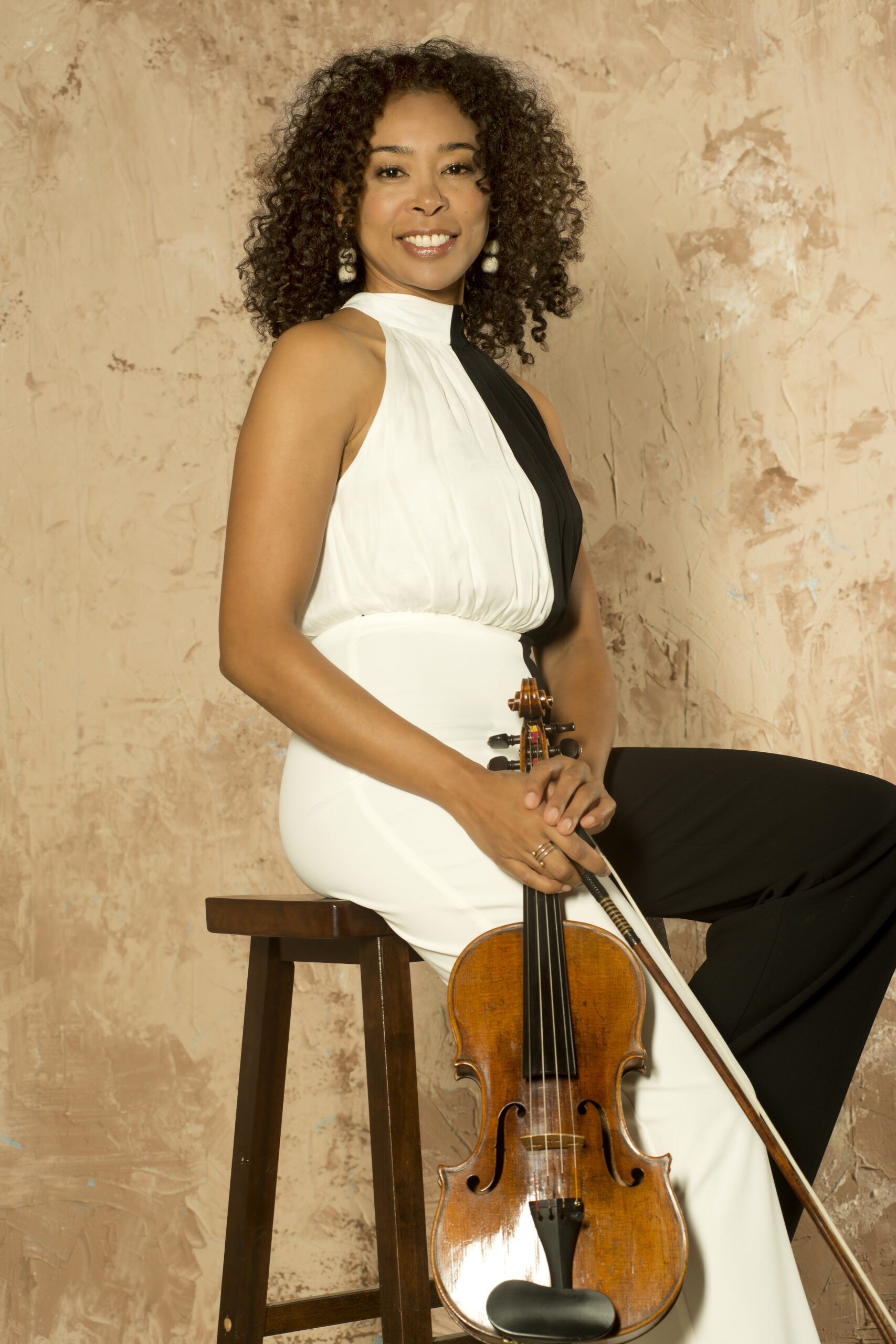
Mitchell Newman

As a composer, he wrote Behold the Bold Umbrellaphant based on poetry by Jack Prelutsky, which the Longmont Symphony presented with Prelutsky in 2018. His Violin Concerto “Paths to Dignity” was inspired by the lives of homeless people and composed for Newman, a longtime advocate for the homeless and member of the violin section of the Los Angeles Philharmonic. 

The concerto has four movements that share a seven-note motive representing the word “DIGNITY.” The first movement, titled “Our Stories,” uses various instruments to represent homeless persons who are answered in turn by the violin. The second movement, “Fever Dreams/Move,” describes the disturbed dreams of a veteran suffering from PTSD who is living on the streets.

The third movement, “Shelter for My Child,” uses a musical representation of the Hebrew word “Tzadek,” which means “justice.” The finale, “Finding Home,” reiterates the “Tzadek” motive and concludes with variations on the “DIGNITY” theme.

An activist in bringing music to underserved communities, Newman was named a mental health hero by the California State Senate, and founded “Coming Home to Music,” a program that brings classical music to the homeless. He retired from the L.A. Phil in 2020 and currently teaches at Temple University.

# # # # #

“Harmony for Humanity”
Boulder Symphony, Devin Patrick Hughes, conductor
With Mitchell Newman, violin
Featuring the Niwot High School Symphony Orchestra

  • Arturo Márquez: Danzón No. 2
  • Lucas Richman: “Paths to Dignity” Concerto for Violin
  • Brahms: Symphony No. 2 in D major

7:30 p.m. Saturday Feb. 15, and 2 p.m. Sunday, Feb. 16
Dairy Arts Center

TICKETS

# # # # #

Also on Saturday, the Longmont Symphony Orchestra (LSO) offers a program titled “The Light after the Storm” (7 p.m. Feb. 15, details below) in which a vivid musical storm, the last of the Four Sea Interludes from the opera Peter Grimes by Benjamin Britten, leads to the sunny skies of Brahms’s Second Symphony.
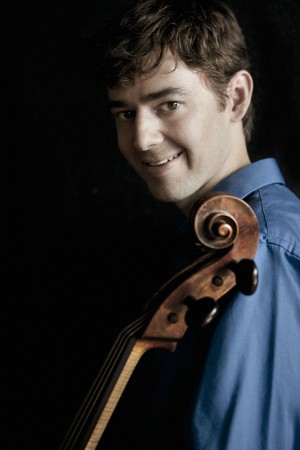
Clancy Newman. Photo by Lisa-Marie Mazzucco

Between these two contrasting works on the program is the Cello Concerto of Sir Edward Elgar, which will be performed by Clancy Newman. The LSO will be conducted by Elliot Moore.

Britten was inspired to write Peter Grimes while he was in exile from England as a conscientious objector living in the United States during World War II. While in the U.S., he read George Crabbe’s narrative poem The Borough, which describes a village on the east coast of England and its colorful inhabitants. The poem inspired Britten not only to write an opera based on the solitary Grimes, one of Crabbe’s most distinctive characters, but also to return to England. He finished the opera after his return, in 1943.

Peter Grimes was premiered to great acclaim in June 1945, shortly after the end of the war in Europe. The Four Sea Interludes—“Dawn,” “Sunday Morning,” “Moonlight” and “Storm”—are taken from the interludes Britten wrote to fill scene changes during the opera, and they contain some of the most vividly descriptive music he ever composed.

Written shortly after World War I, the Cello Concerto was Elgar’s last completed major work. The first performance was under-rehearsed and considered a failure, but later the Concerto became one of the staples of the cello repertoire. It achieved a higher level of popularity when it was famously recorded by cellist Jacqueline du Prè in 1965.

A composer and a cellist, Newman has appeared with the LSO once before, in November, 2023.  The winner of the International Naumburg Competition in 2001 and an Avery Fisher Career Grant in 2004, he has performed as a soloist, with the Chamber Music Society of Lincoln Center and Musicians from Marlboro.

# # # # #

“The Light after the Storm”
Longmont Symphony, Elliot Moore, conductor
With Clancy Newman, cello

  • Benjamin Britten: Four Sea Interludes from Peter Grimes
  • Elgar: Cello Concerto
  • Brahms: Symphony No. 2 in D major

7 p.m. Saturday, Feb. 15
Vance Brand Civic Auditorium, Longmont

TICKETS

# # # # #

Kodō, the renowned taiko drumming ensemble from Japan, will present a program from their current “One Earth Tour 2025” at 7:30 p.m. Saturday, Feb. 15, at Macky Auditorium.

The performance is part of the Artist Series from CU Presents. Limited seats are available.

The Japanese word “kodo” has a double meaning that reflects the group’s ethos. It can mean “heartbeat,” which suggests the primal role of rhythm, but as written with different characters, it means both “drum” and “child.” The program title “Warabe” also refers to a child or children, or can refer to children’s songs. Or as the group’s program notes state, the performers are “forever children of the drum at heart.”

The “Warabe” program refers back to the repertoire and the aesthetics of the earliest incarnation of Kodō, when they were first formed out of another drumming ensemble in the 1980s. After several years of touring, they founded a village on Sado Island, off the west coast of Japan near the city of Niigata. Since their three sold-out performances at the 1984 Olympic Arts Festival in Los Angeles, Kodō has been recognized as a global phenomenon.

Today Kodō has its own cultural foundation and a North American organization known as  Kodō Arts Sphere America. In addition to their world-wide performances, they present workshop tours that open the world of taiko drumming to ever larger audiences.

# # # # # 

Kodō: One Earth Tour 2025
“Warabe”
Kodō, Yuichiro Funabashi, director
Dance arrangements by Koki Miura

  • Yuta Sumiyoshi: Koe
  • Miyake (arr. by Kodō)
  • Masayasu Maeda: Niwaka
  • Motofumi Yamaguchi: Hae
  • Sumiyoshi: Uminari
  • Koki Miura: Shinka
  • Maeda: Okoshi|Reo Kitabayashi: Dokuso
  • Ryotaro Leo Ikenaga: Inochi
  • Kenta Nakagome: O-daiko (arr. Kodō)
  • Yatai-bayashi (traditional, arr. Kodō)

7:30 p.m. Saturday, Feb. 15
Macky Auditorium

TICKETS (Limited seats available)
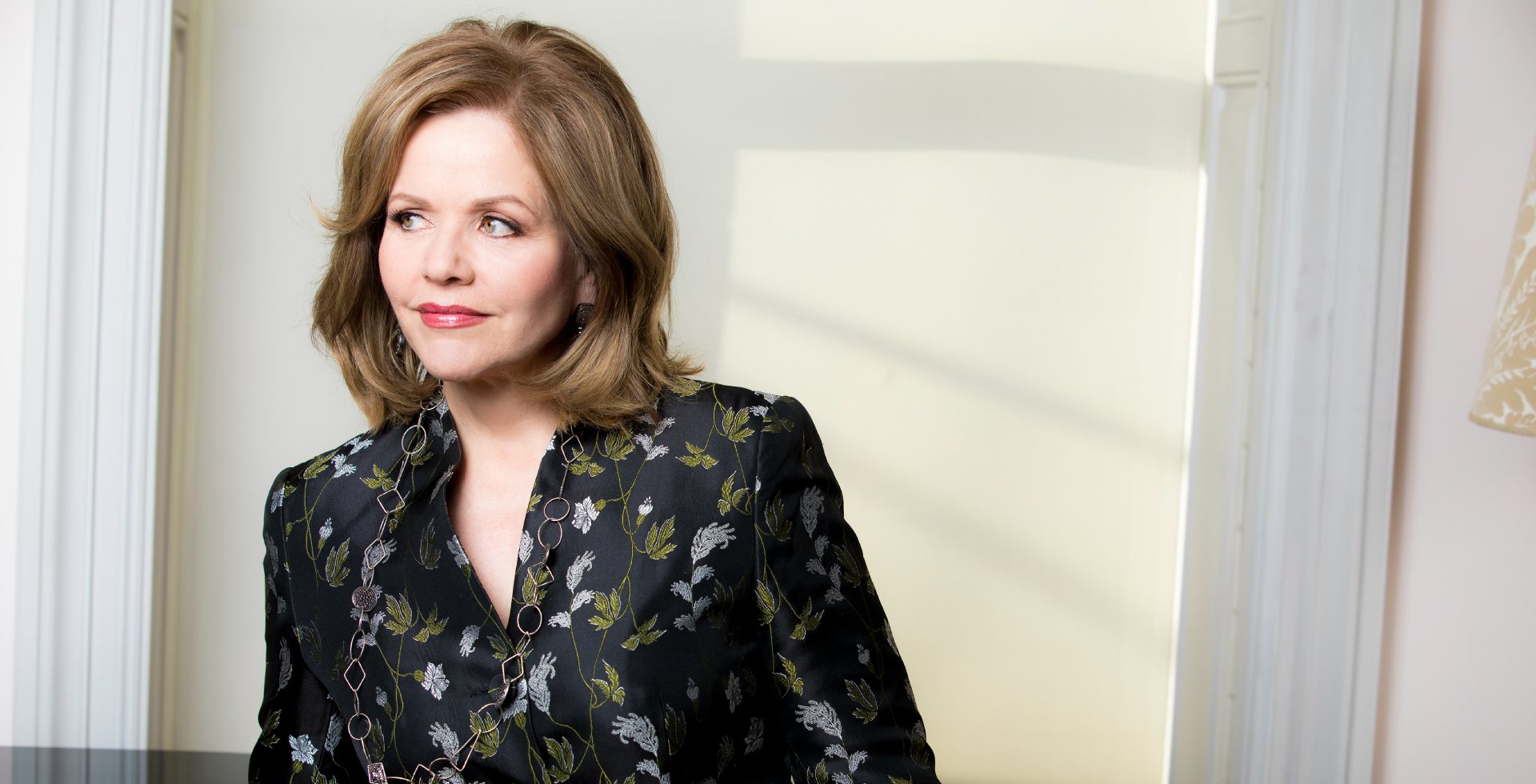
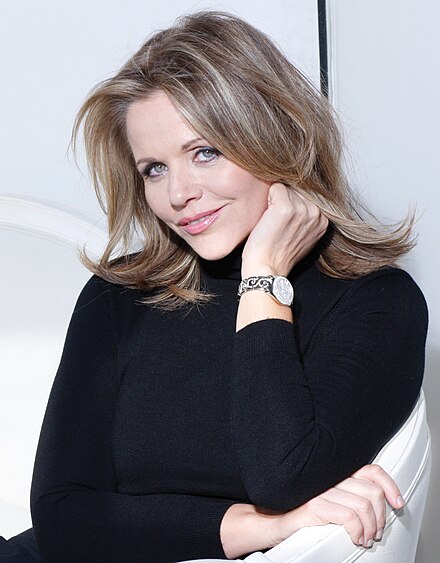
Renée Fleming presents a musical tribute to the natural world

“Voice of Nature” will feature songs and a film from National Geographic

By Peter Alexander Jan. 22 at 5:50 p.m.

Soprano Renée Fleming

Soprano Renée Fleming will come to Macky Auditorium next week (7:30 p.m. Friday, Jan. 31) to present a program that she developed while cut off from her professional life during the COVID pandemic of 2020–21.

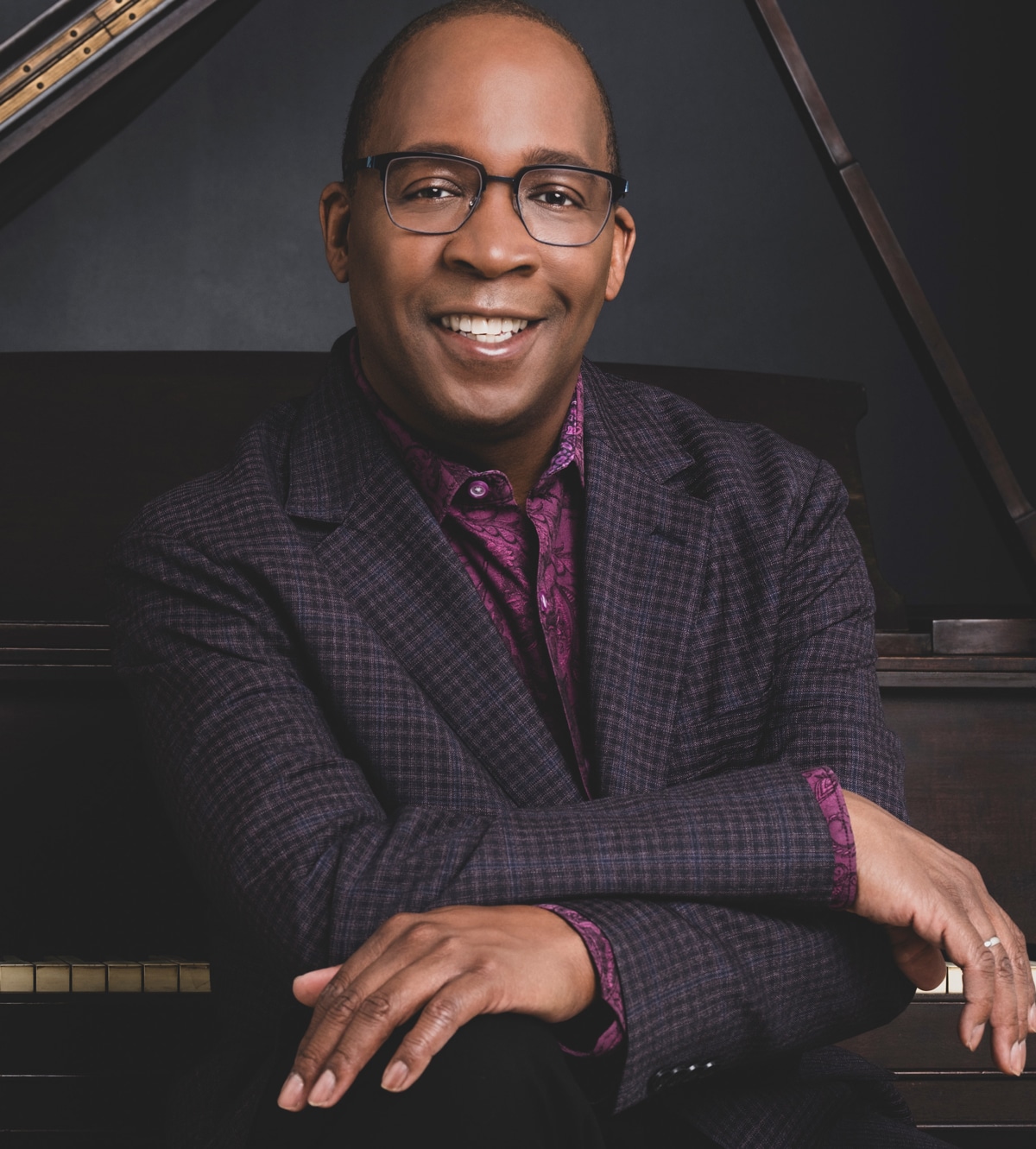
Collaborative pianist Howard Watkins

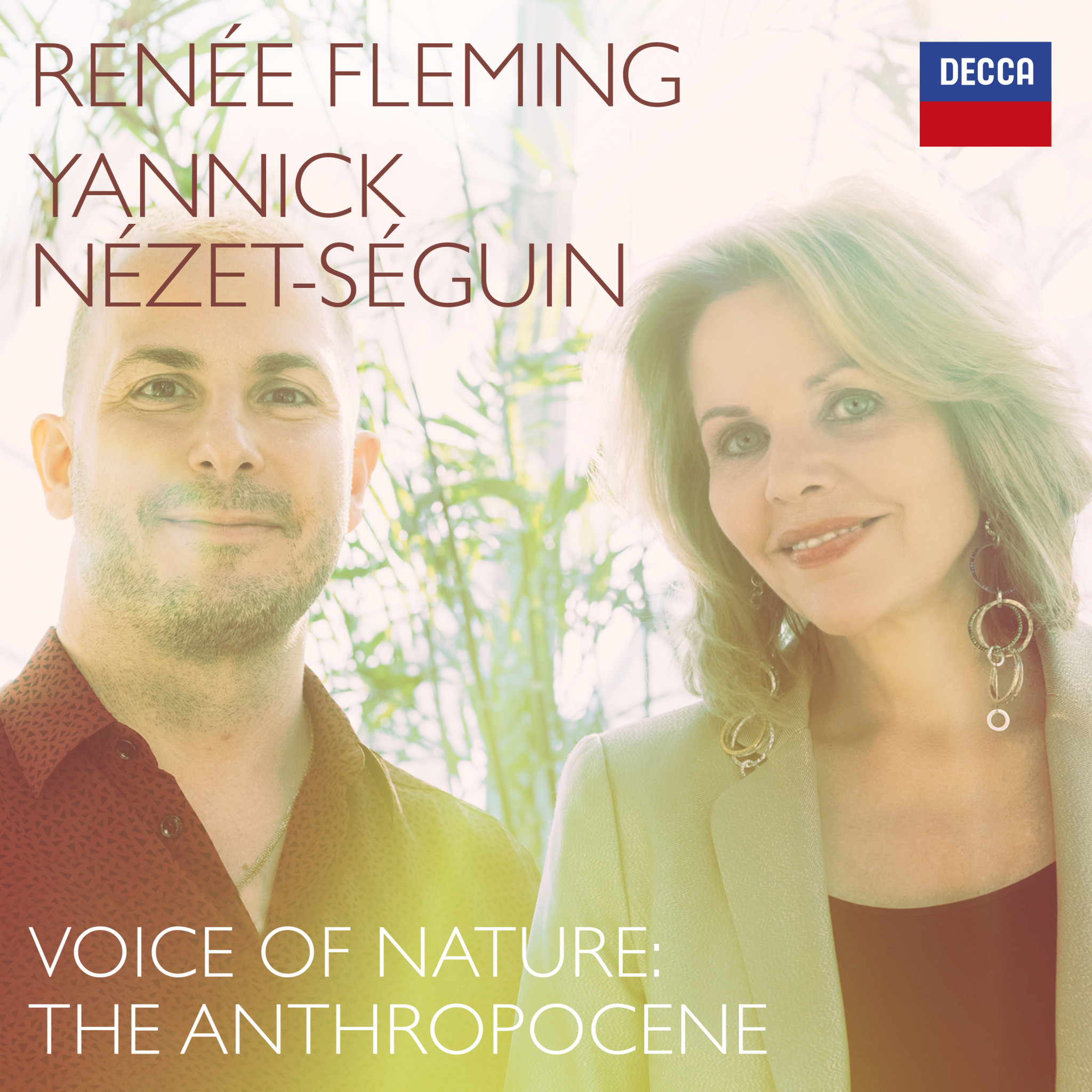
Titled “Voice of Nature: The Anthropocene,” the concert features Fleming and pianist Howard Watkins. The repertoire draws on a Grammy-winning album of the same title that Fleming recorded in 2023 with Yannick Nézet-Séguin, music director of the Metropolitan Opera, as pianist, and features songs that mention or reflect on the natural world. Part of the program will be accompanied by a film produced by the National Geographic Society.

“During the pandemic, the most comforting and healing activity for me was just being outside,” Fleming says. “Walking every day, gardening—to the point that I didn’t even want to come in. I always found it interesting that art song, especially the 19th century, also the 18th century and early 20th century, uses poetry that brought nature into the conversation about any aspect of the human condition. I found that interesting, in comparison with new works, which very often never mention nature.”

In that context, she worked with Nézet-Séguin to put together an album of songs that celebrate the consoling and healing power of nature. She decided to commission new songs from three living composers—Kevin Puts, Nico Muhly and Caroline Shaw—to bring the program up to today, and combine them with selected pieces from the extant song literature.

Yannick Nézet-Séguin and Renée Fleming on their album cover

“It was really fun to put the program together,” Fleming says. For the 19th-century art songs, “obviously I had to find things I thought would suit Yannick (Nézet-Séguin), give him enough of an interesting program that he would want to play it. And also because Yannick is French-Canadian, (the French) language works beautifully for him.”

The result is an album that features some very lovely but unfamiliar songs by Gabriel Fauré and Reynaldo Hahn, both French composers of the early 20th century, and also songs by Liszt and the Norwegian composer Edvard Grieg. “I just chose beautiful music that has powerful poetry and stuff I hadn’t performed before,” Fleming says. “I had performed Grieg, I had not performed Hahn at all, and I was thrilled to put Fauré” on the program.

The next step occurred when the album won a Grammy. Fleming decided to take a version of the program on tour, but with some additions. “Rather than just doing ‘Voice of Nature,’ the album, I added some more popular things that I’ve recorded and never perform, like a Björk song and a selection from Lord of the Rings,” Fleming explains. She also added songs by Burt Bacharach and Jerome Kern, and one of the most popular operatic arias in her repertoire, “O mio babbino caro” from Puccini’s Gianni Schicchi.

The final musical addition is a recording Fleming made of Jackson Browne’s “Before the Deluge” together with the Grammy winning folk singer/fiddler and opera composer Rhiannon GIddens, multi-Grammy winning bluegrass singer/fiddler Alison Krauss, and Nézet-Séguin, in an arrangement by composer Caroline Shaw. The recording will be played about halfway through the concert intermission.

Once she committed to the tour, Fleming had another idea: “I thought, let’s take this on the road but I’d like to have film with it,” she says. “I said, I’d really like to do something that shows the planet and encourages us to protect it.

“I happened to meet someone who worked with National Geographic at a dinner party. I was telling him about it and he said ‘I can introduce you to the head of National Geographic.’ So I had a two minute Zoom call with the CEO (Michael Ulica), and he said, ‘We’re looking for influencers and we’ll make your film.’ They did it in about three weeks and I’ve been touring it ever since, because it’s a beautiful piece.”

Fleming says that her devotion to nature and the planet dates back a long way. “When I was a teenager I saw a film that had a huge impact on me,” she says. “The film came out in the ‘70s, Soylent Green. 

“The scene that really had a powerful effect on me was the one in which Edward G. Robinson, who was dying of cancer, (played a scientist who) had signed up for end of life care, and was looking at beautiful pictures of earth, and none of that existed anymore. I thought, ‘How could that possibly ever happen?’ And here we are, later in my life—if we don’t get a handle on this, I think we’re ultimately talking about the destruction of us on the planet.”

In an artist’s statement on the “Voice of Nature” program, Fleming writes: “Thankfully, the stunning natural world depicted in (the National Geographic) film still exists, unlike that movie scene so upsetting to my younger self. In blending these beautiful images with music, my hope is, in some small way, to rekindle your appreciation of nature, and encourage any efforts you can make to protect the planet we share.”

# # # # #

“Voice of Nature: The Anthropocene”
Renée Fleming, soprano, and Howard Watkins, piano

  • Hazel Dickens: “Pretty bird” 
  • Handel: “Care Selve” from Atalanta 
  • Nico Muhly: “Endless Space” 
  • Joseph Canteloube: “Bailero” from Songs of the Auvergne 
  • Maria Schneider: “Our Finch Feeder” from Winter Morning Walks 
  • Björk: “All is Full of Love”
  • Heitor Villa-Lobos: “Epílogo” from Floresta do Amazonas (piano solo) 
  • Howard Shore: “Twilight and Shadow” from Lord of the Rings 
  • Kevin Puts: “Evening” 
  • Curtis Green: “Red Mountains Sometimes Cry” 
  • Burt Bacharach: “What the World Needs Now” 
    To be played halfway through the intermission—:
  • Recording of Jackson Browne: “Before the Deluge” (arr. by Caroline Shaw) by Rhiannon Giddens, Alison Krauss, Renée Fleming; with Yannick Nézet-Séguin, piano 
  • Gabriel Fauré: “Au Bord De L’eau” 
    —“Les Berceaux” 
  • Edvard Grieg: “Lauf Der Welt” 
    —“Zur Rosenzeit” 
  • Puccini: “O mio babbino caro” from Gianni Schicchi 
  • Jerome Kern: “All the Things You Are” 
  • Andrew Lippa: “The Diva” 

7:30 p.m. Friday, Jan. 31
Macky Auditorium

NOTE: Very few tickets are left for this performance. You can check availability HERE.

GRACE NOTES: From Brahms to Taylor Swift

Mini Chamber concert in Boulder and Groovin’ in Longmont

By Peter Alexander Nov. 19 at 11:40 p.m.

The Boulder Chamber Orchestra (BCO)will present “Mini-Chamber 2,” the second of its chamber music programs for the 2024–25 season, Saturday (7:30 p.m. Nov. 23; details below).

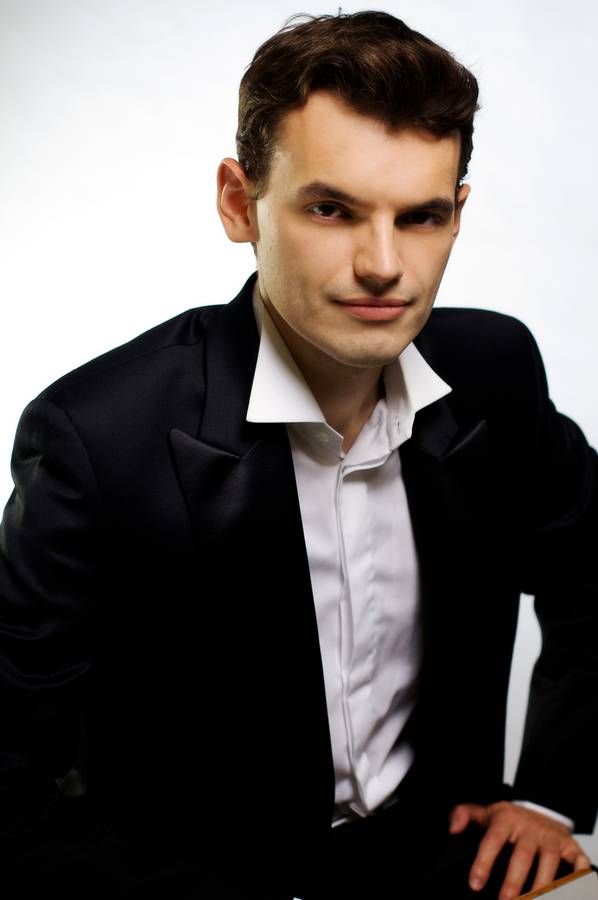
The program features guest pianist Adam Żukiewicz performing quintets for piano and strings by Brahms and Théodore Dubois with members of the BCO string sections. Żukiewicz appeared on a Mini-Chamber concert last spring, and will be the soloist with the orchestra when they perform in New York in Zankel Hall at Carnegie Hall next spring.

Dubois was a prominent French composer in the late 19th and early 20th centuries. After winning the Prix de Rome in1861, he became organist and choirmaster at several churches in Paris and was professor of harmony at the Paris Conservatory 1871–91 and composition until 1896. He became director of the Conservatory in 1896, but had to resign from the position over his hostility to the adventurous student works of Ravel.

Adam Żukiewicz

Dubois was as conservative in his compositions as he was as a leader of the Conservatoire. He wrote orchestral chamber and choral works. most of which have disappeared from the standard repertoire, while his theoretical books are still used for teaching.

Brahms wrote in Piano Quintet in F minor over a number of years, first as a string quintet, then as a sonata for two pianos. The first version dates to 1861, and the final form, the Quintet for piano and strings, was completed in 1864 and premiered in 1868. Widely considered one of the great works of chamber music from the 19th century, it comprises four movements that last around 45 minutes in performance.

A native of Poland, Żukiewicz has studied at the Royal Academy of Music in London and the Jacobs School of Music at Indiana University, and holds a doctorate from the University of Toronto, where he also served on the faculty. He won first prize both the 2011 Canada Trust Music Competition and the 2012 Shean Piano Competition in Canada, and was a medalist at several other contests. Since 2018 he has been a judge for the Steinway Piano Competition.

# # # # #

Boulder Chamber Orchestra: Mini-Chamber 2
Adam Żukiewicz, piano, with members of the BCO

  • Théodore Dubois: Piano Quintet in F major
  • Brahms: Piano Quintet in F minor, op. 34

7:30 p.m. Saturday, Nov. 23
Boulder Adventist Church

TICKETS

# # # # #

The Boulder Philharmonic Orchestra will repeat its “Groove” concert, first presented at Planet Bluegrass in September, next Monday at the Dickens Opera House in Longmont (6:30 p.m. Nov. 25).

The concert is one in the Boulder Phil’s new “Shift” series, designed to bring the orchestra’s musicians into informal spaces and present them in smaller groups. Each program in the “Shift” series will be presented first at Planet Bluegrass in Lyons, and then taken to smaller venues in Longmont and Boulder.  

“Groove” features the Boulder Philharmonic String Quartet, principal players from each of the orchestra’s string sections. The program includes music by pop sensations from Lizzo to Taylor Swift alongside pieces by living composers including Philip Glass and Jessie Montgomery. And neither a pop sensation nor living, Vivaldi shows up on the program with one piece as well. 

# # # # #

“Groove”
Boulder Philharmonic String Quartet: Ryan Jacobsen and Hilary Castle-Green, violin; Stephanie Mientka, viola; and Amanda Laborete, cello

  • Takashi Yoshimatsu: Atomic Hearts Club Quartet, Movement I
  • Justin Bieber: “Peaches” (arr. Alice Hong)
  • Dinuk Wijeratne:Two Pop Songs on Antique Poems: “Letter from the afterlife”
  • Carlos Simon: “Loop”
  • Michael Begay: “Forest Fires”
  • Lizzo: “ Good As Hell” (arr. Alice Hong)
  • Jessie Montgomery: “VooDoo Dolls”
  • Philip Glass: String Quartet No. 3: VI “Mishima/Closing”
  • Taylor Swift: “All Too Well” (arr. Alice Hong)
  • Wijeratne: Two Pop Songs on Antique Poems: “I will not let you go”
  • Ed Sheeran: “Shape of You” (arr. Alice Hong)
  • Due Lipa: “Dance the Night” (arr. Zack Reaves)
  • Jessica Meyer: “Get into the NOW”: III. “Go Big or Go Home”
  • Vivaldi: Summer: Movement III (arr. Naughtin)

6:30 pm. Monday, Nov. 25
Dickens Opera House, Longmont

TICKETS

GRACE NOTES: Opening nights, orchestral and choral

Longmont Symphony, Ars Nova Singers launch 2024-25 seasons

By Peter Alexander Oct. 1 at 4:55 p.m.

The Longmont Symphony Orchestra (LSO)and conductor Elliot Moore open “Sound in Motion,” their 2024–25 concert season, Saturday evening (7 p.m. Oct. 5; details below) with two American works and a orchestral showpiece.

Breaking from the pattern of previous seasons, the opening night concert will be held at the Longmont High School Auditorium. An abbreviated version of the same program will be presented Sunday afternoon at 4 p.m. at Frederick High School. 

All remaining LSO concerts during the season, including the Christmas-season Nutcrackers, will be held in the usual venue of Vance Brand Civic Auditorium.

Pianist Spencer Myer

Soloist for the Longmont HS performance will be pianist Spencer Myer, a faculty member at the Indiana University Jacobs School of Music, who will play George Gershwin’s Concerto in F for piano. The program begins with the Overture to another American masterpiece, Bernstein’s musical stage work Candide. Ending the program is Ravel’s familiar orchestration of Mussorgsky’s Pictures at an Exhibition.

Bernstein’s Candide was originally composed in 1956 for Broadway, although today it is considered an operetta rather than a musical. The original show was not a success on dramatic grounds, in spite of the brilliant music Bernstein wrote, including the popular coloratura soprano aria “Glitter and Be Gay.” Various revisions of the original show have included textual contributions by lyricist Richard Wilbur plus Lillian Hellman, Stephen Sondheim, Dorothy Parker, John LaTouche and Bernstein himself. 

Today the operetta is gaining ground among opera companies, but regardless of its fluctuating fate, the Overture has been a popular program number from the beginning. Full of brilliant flourishes, delightful tunes and heady syncopations, it is the ideal concert opener.

Gershwin’s Piano Concerto was commissioned by the conductor Walter Damrosch, who attended the Feb. 12, 1924 premiere of Rhapsody in Blue. The very next day Damrosch contacted Gershwin to ask him for a piano concerto, which he was able to complete over a period of three months in the summer of 1925.

Audiences have always liked the concerto, which is today considered one of the essentials of the American music repertoire. The score incorporates jazz elements, but is much closer to the traditional format of a concerto with orchestra than is the Rhapsody. It appears on concert programs, has been featured in films, has been recorded by numerous pianists, and has even been featured in ice skating routines.

The program closes with the Mussorgsky/Ravel Pictures at at Exhibition, one of the best known and most loved showpieces for orchestra. 

The program for the performance in Frederick will include the Overture to Candide and Pictures at an Exhibition only. 

# # # # #

Opening Night
Longmont Symphony Orchestra, Elliot Moore, conductor
With Spencer Myer, piano

  • Leonard Bernstein: Overture to Candide
  • George Gershwin: Piano Concerto in F
  • Mussorgsky: Pictures at at Exhibition (arr. Ravel)

7 p.m. Saturday, Oct. 5
Longmont High School Auditorium

Encore performance: 4 p.m. Sunday, Oct. 6
Frederick High School Auditorium
(same program minus the Gershwin Concerto)

TICKETS

# # # # #

Boulder’s Ars Nova Singers embark on a season of “Contrasts” this weekend with a concert titled “Here/There.”

The opening concert, “Here/There,” will be presented Sunday at the Diary Arts Center in Boulder (4 p.m. Oct. 6; details below). The program features music from here and there not only geographically—that is, from different parts of the world—but also chronologically, from both the present (here) and the past (there). Featured composers include Henry Purcell, Anton Bruckner, Benjamin Britten, and György Ligeti, as well as contemporary women composers Sheena Phillips and Dale Trumbore. 

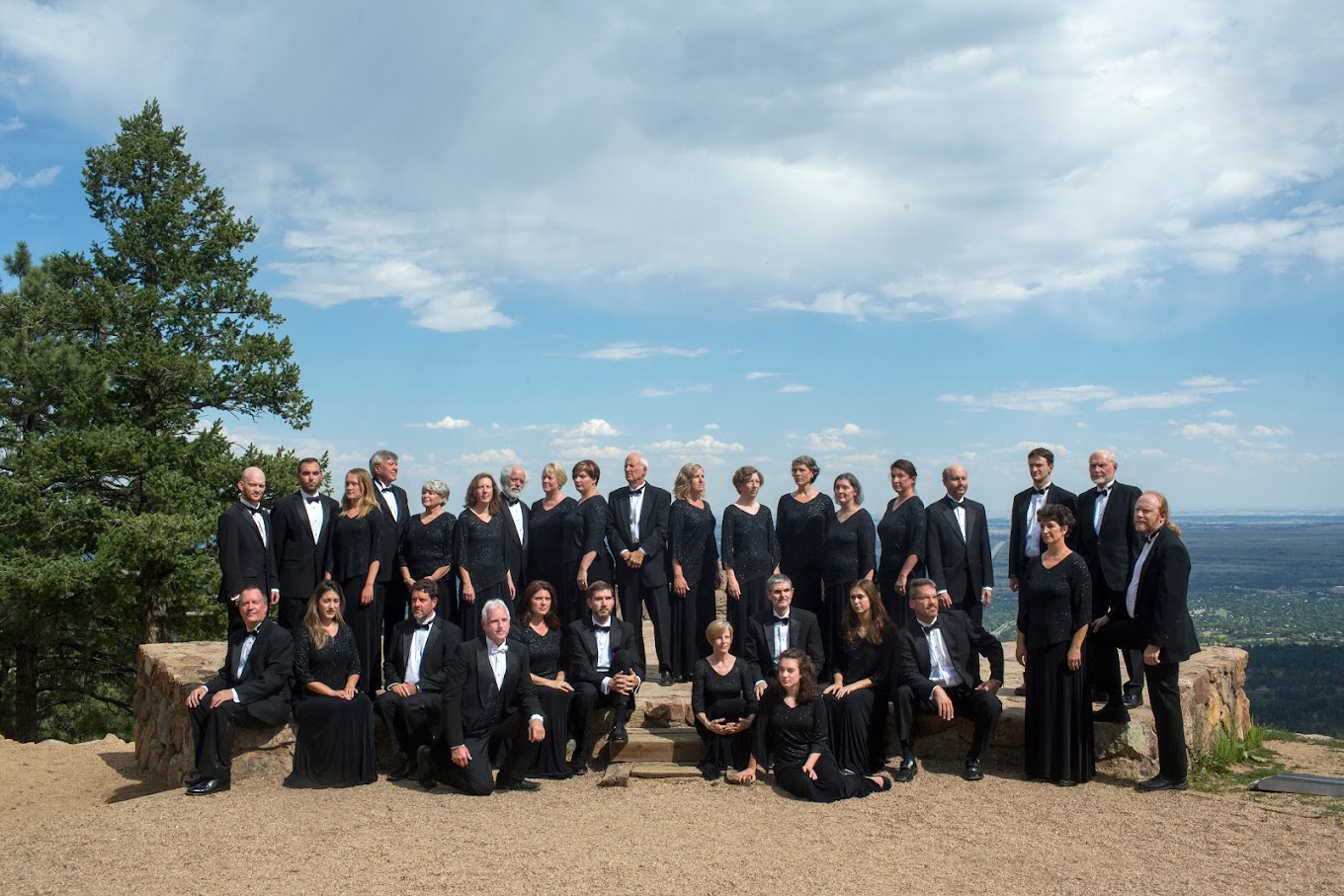
Ars Nova Singers. Conductor Thomas Morgan kneeling front left.

Conductor Tom Morgan wrote in a news release, “Dark and light, motion and stasis, intimate and universal, deeply familiar and refreshingly new—our season searches for the balance point in all of these.” In addition to “Here/There,” the season includes concerts titled “Light/Shadow,” “Lost/Found,” “Science/Fantasy” and “Time/Eternity” (see the full season HERE).

Although the choir’s name—Ars Nova, or “new art”—refers in history to a musical style from the 14th century, the group has specialized in a broader range of music, specifically the Renaissance and the 20th and 21st centuries. For this program there is no music from the Renaissance, but the old is represented by “Music for a While” by the English Baroque composer Henry Purcell (1659–1695).

There is a rare—for Ars Nova Singers—piece from the late Romantic period, Anton Bruckner’s Os justii (The mouth of the righteous) composed in 1879. A sacred motet setting of a text from Gregorian chant, it was written for the choirmaster at St. Florian Abbey, one of the largest monasteries in Austria.  

Other works on the program range from the early 20th century—Ravel’s Trois beaux oiseaux (Three beautiful birds)— right up to today with works by the living American composers Frank Ticheli, Jake Runestad and Dale Trumbore, among others (full program listed below).

The performance, a benefit celebrating the past and future of Ars Nova Singers, will be preceded by a 3 p.m. reception in the Dairy Arts Center lobby.

Ars Nova Singers bill themselves as “an auditioned vocal group specializing in a cappella music of the Renaissance and the 20th/21st centuries” that aims “to delight, inspire, and enlighten our audiences.”

# # # # #

Here/There
Ars Nova Singers, Thomas Morgan, conductor

  • Henry Purcell: “Music for a While”
  • Dale Trumbore: “Love is a sickness”
  • Bruckner: Os justi (The mouth of the righteous)
  • Ravel: Trois beaux oiseaux (Three beautiful birds)
  • Luigi Denza: “Call Me Back” (arr. Morgan)
  • György Ligeti: Lux aeterna (Eternal light)
  • Sam Henderson: “Moonswept”
  • Sheena Philips: “Circle of Life”
  • Sarah Quartel: “Sing, My Child”
  • Frank Ticheli: “Earth Song”
  • Jake Runestad: “Let My Love Be Heard”
  • Britten: “Advance Democracy”

4 p.m. Sunday, Oct. 6
Gordon Gamm Theater, Dairy Arts Center

TICKETS 

Grace Notes: Bach, Timbres, Sphere and a Groove

Programs outside the norm, from the 18th to the 21st centuries

By Peter Alexander Sept. 18 at 10:05 p.m.

The Boulder Bach Festival (BBF) and guest artists will take audiences back to 18th-century Venice in a program entitled “Anonimo Veneziano” (Anonymous Venetian) 4 p.m. Saturday, Sept. 21, at the Dairy Arts Center in Boulder.

The program, with the BBF’s music director/violinist Zachary Carretin and the COmpass REsonance ensemble (CORE Ensemble), will feature violinist Nurit Pacht from NewYork, harpsichordist Chris Holman from Cincinnati, and theorbist Keith Barnhart, an historical plucked instruments specialist who is also the BBF’s educational coordinator.

Nurit Pacht

The program opens with the famous Adagio attributed to 18th-century Italian composer Tomaso Albinoni and featured in many film scores. In fact, the Adagio was composed by 20th-century Italian musicologist Remo Giazotto. A scholar of Albinoni’s music Giazotto claimed that the Adagio was based on a fragment of an Albononi trio sonata that he found on a manuscript that has since mysteriously disappeared. 

The remainder of the program will be filled out with genuine Albinoni works, the complete Sinfonie e Concerti a cinque (Sinfonias and concertos for five instruments), op. 2, that were published in Venice in 1700. This important collection is rarely performed complete. The BBF performance, which will  be played without intermission, is expected to take approximately 75 minutes.

 Pacht holds a degree in historical performance from the Juilliard school and is known as a specialist in both music by living composers, including works written for her, and music of the Baroque. She was a top prize winner in the Irving Klein International Music Competition in California, the Tibor Varga International Violin Competition in Switzerland, and the Kingsville International Music Competition in Texas. She has toured widely in Europe and the United States. She teaches privately in New York City.

# # # # #

Anonimo Veneziano
Boulder Bach Festival CORE Ensemble, Zachary Carrettin, conductor/violinist
With Nurit Pracht, violin, Chris Holman, harpsichord, and Keith Barnhart, theorbo

  • Remo Giazotto: “Adagio in G minor by Tomaso Albononi”
  • Tomaso Albinoni: Sinfonie e Concerti, op. 2

4 p.m. Saturday, Sept. 21
Dairy Arts Center Gordon Gamm Theater

TICKETS

# # # # #

The Boulder Chamber Orchestra’s (BCO)chamber concert titled “Mixed Timbres,” postponed from last April due to the power outage caused by high winds, will be presented at 7:30 p.m. Saturday, Sept. 21, in the Boulder Seventh-Day Adventist Church.

The concert will feature the BCO’s 2023-24 artist-in-residence, pianist Hsing-ay Hsu, performing with two members of the orchestra—cellist Julian Bennett and clarinetist Kellan Toohey. All four works on the program use the ensemble of piano, clarinet and cello, a mix of timbres that has a limited but interesting repertoire.

Hsing-ay Hsu

Beethoven’s Op. 11 is one of the earliest works for the combination. It is sometimes known as the “Gassenhauer Trio,” taken from the popularity of the theme that Beethoven uses for variations in the final movement. In Vienna, a Gassenhauer (from Gasse, an alleyway) referred to a simple song that was so popular that it was heard all over town. The theme Beethoven used was taken from a popular music theater work, L’amor marinaro (Seafaring love) by Joseph Weigl.

Brahms’s Trio op. 114 is one of four chamber works the composer wrote for the clarinetist Richard Mühlfeld in the last years of his life. Brahms’s admiration for Mühlfeld’s playing was reflected in the comment of one of the composer’s friends who wrote that in the Trio, “it is as though the instruments were in love with each other.”

Like Brahms’s Trio, Fauré’s D minor Trio was one of his last compositions. Although Fauré originally planned the Trio for piano, clarinet and cello, it was published as a traditional piano trio, with violin in place of the clarinet. The BCO performance of the first movement restores the instrumentation that Fauré first imagined for the trio.

Emily Rutherford’s “Morning Dance” for piano, clarinet and cello was commissioned by Toohey in 2017. A native of Colorado, Rutherford is a graduate of Westmont College in Santa Barbara, Calif., and the Longy School of Music in Los Angeles.

# # # # #

“Mixed Timbres”
Hsing-ay Hsu, BCO Artist in residence, piano
With Boulder Chamber Orchestra members Kellan Toohey, clarinet, and Julian Bennett, cello

  • Gabriel Fauré: Piano Trio in D minor, I. Allegro ma non troppo
  • Beethoven: Trio in B-flat major for piano, clarinet and cello, op. 11
  • Brahms: Trio in B-flat for piano, clarinet and cello, op. 114
  • Emily Rutherford: Morning Dances

7:30 p.m. Saturday, Sept. 21
Boulder Seventh-Day Adventist Church, 345 Mapleton Ave.

TICKETS

# # # # #

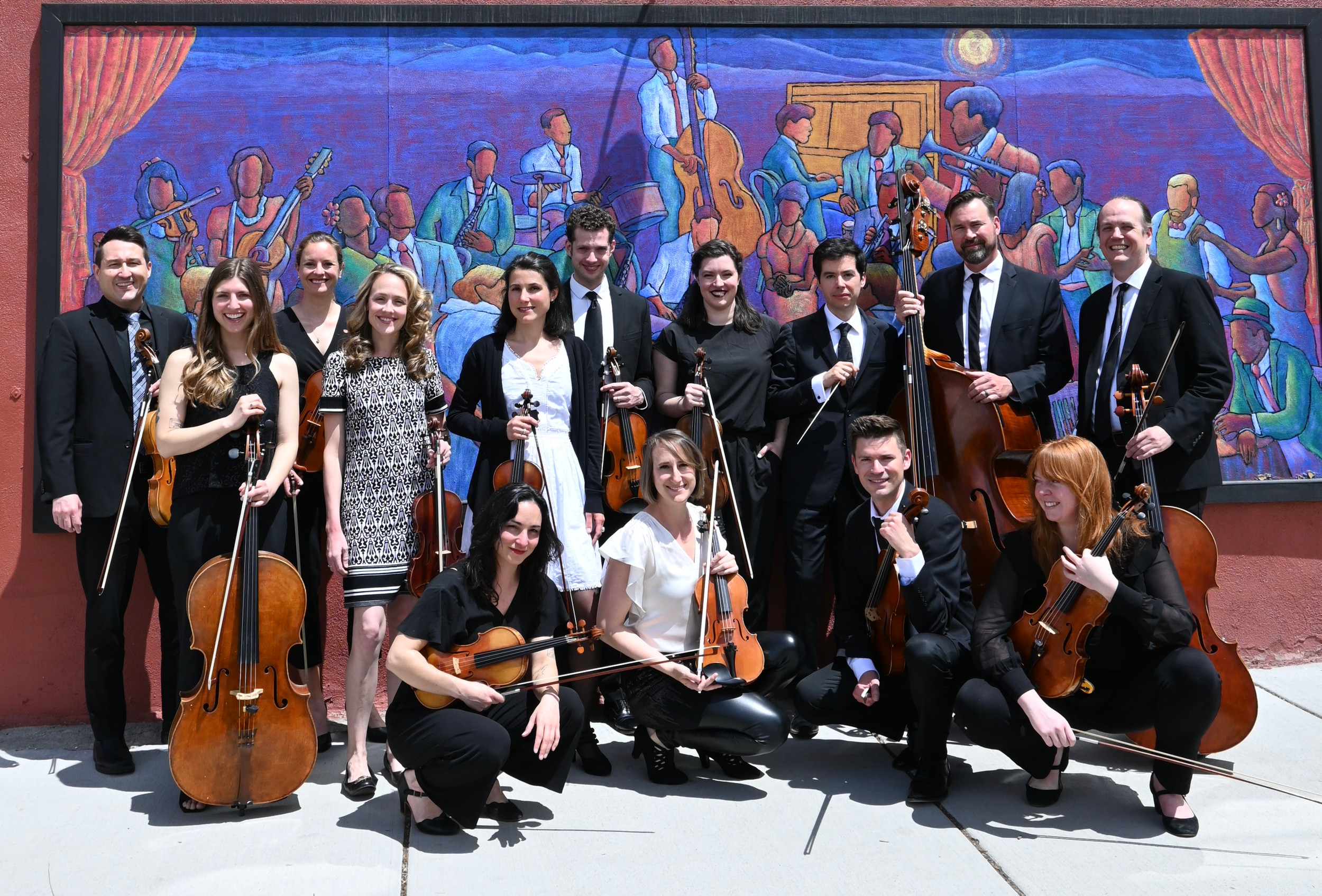
The Sphere Ensemble, a 14-member string ensemble, will celebrate the 100th anniversary of the premiere of Gershwin’s Rhapsody in Blue in 1924 with performances of their own all-strings arrangement of the Rhapsody.

The program, presented Saturday in Boulder and Sunday in Denver (Sept. 21 and 22; details below), will also include works by other jazz musicians including James P. Johnson, Hazel Scott and Winton Marsalis. Also on the program are arrangements of music from the Squirrel Nut Zippers, The Turtles and Andrew Bird; and pieces by Shostakovich, Stephen Foster and the classical-era composer Christoph Willibald Gluck, among others. 

Sphere Ensemble

In addition to the live performances, a live stream will be available from 7:30 p.m. Saturday, Sept. 21 through 10 p.m. Sunday, Sept. 29. 

This kind of eclectic programming, mixing sources and genres, is typical of the Sphere Ensemble, often in arrangements made by members of the ensemble. The “About” page on their Website explains, “We prioritize music by composers that are often overlooked in classical music programs. . . . From classical to classic rock, from baroque to hip hop, Sphere always chooses music that excites us.”

# # # # #

“Bridges”
Sphere Ensemble

  • Aldemaro Romero: Fuga con Pajarillo
  • Dmitri Shostakovich: Prelude and Fugue in D-flat Major (arr. Chris Jusell)
  • Stephen Foster: “Jeanie with the Light Brown Hair” (arr. Alex Vittal)
  • Squirrel Nut Zippers: The Ghost of Stephen Foster (arr. Sarah Whitnah)
  • Andrew Bird: Orpheo Looks Back (arr. Sarah Whitnah)
  • C.W. Gluck: Orfée et Eurydice, Danses des Ombres Heureuses
  • Brenda Holloway: You’ve Made Me So Very Happy (arr. David Short)
  • The Turtles: Happy Together (arr. Dave Short)
  • James Price Johnson: Charleston (arr. Alex Vittal)
  • Hazel Scott: “Idyll” (arr. Sarah Whitnah)
  • Wynton Marsalis: “At the Octoroon Balls”
    —“Rampart St. Rowhouse Rag”
  • George Gershwin: Rhapsody in Blue (arr. Alex Vittal)

7:30 p.m. Saturday, Sept. 21
Nomad Playhouse, 1410 Quince Ave., Boulder

3 p.m. Sunday, Nov. 22
Truss House, 3400 Atkins Ct., Denver

Livestream: 7:30 p.m. Saturday, Sept. 21–10 p.m. Sunday, Sept. 29

In-person and livestream TICKETS

# # # # #

The Boulder Philharmonic Orchestra will have a new series of intimate performances during the 2024-25 season, designed to bring their musicians into more informal spaces and give audiences the opportunity to hear them in smaller groups.

The repertoire will be a little different from the Macky concerts, too, featuring music by pop sensations from Lizzo to Taylor Swift alongside pieces by living composers including Philip Glass and Jessie Montgomery. And just for fun, they might throw in some Vivaldi as well.

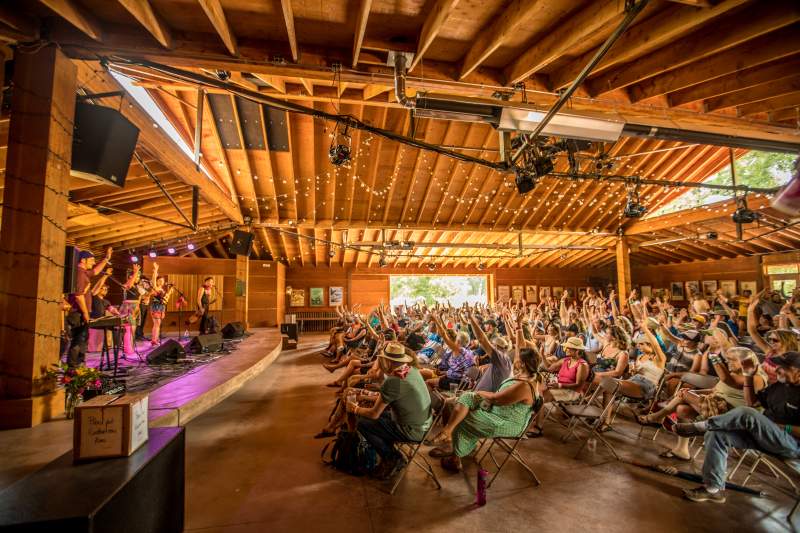
These concerts, collectively the “Shift” series, will feature several different programs, each presented first at Planet Bluegrass in Lyons and then taken to small venues in Longmont and Boulder. The first program, played by a string quartet of principal players from the orchestra, opens next Wednesday at Planet Bluegrass (7 p.m. Sept. 25; details below). Titled “Groove,” it will be repeated at the Dickens Opera House in Longmont at 6:30 p.m.Monday, Nov. 25.

Wildflower Pavilion at Planet Bluegrass, Lyons

The second program, also for string quartet, is titled “Americana: Redefined” and will be presented in October and February. A third program featuring a brass quintet from the orchestra, “Brass & Brews,” will be presented in October and April;  see the Boulder Phil Web page for details on all currently scheduled performances.

Mimi Kruger, the Boulder Phil’s executive director, said, “The idea is that people can get to know our musicians and these composers and connect in a different way. These are obviously smaller venues, but also a little bit more casual.”

She said that discussions about ways to showcase the individual musicians of the orchestra led them to look for new venues. “The idea came up to launch it through Planet Bluegrass (because) they have a series at the Wildflower Pavilion,” she said. “We’re doing all three there, but we also wanted to take them to other venues, so the first two will get repeated at Dickens Opera House in Longmont—that’s a great little place!”

The Phil’s Web page says pretty much the same thing, in more promotional language: “The Shift Series lifts the facade of the stereotypical orchestral concert . . . in unique venues along the Front Range.”

Kruger recommends watching for future announcements, as further performances are under consideration, featuring the orchestra’s woodwind players. 

# # # # #

“GROOVE”
Boulder Philharmonic string players: Ryan Jacobsen and Hilary Castle-Green, violin; Stephanie Mientka, viola; and Amanda Laborete, cello

  • Takashi Yoshimatsu: Atomic Hearts Club Quartet, Movement I
  • Justin Bieber: “Peaches” (arr. Alice Hong) 3’
  • Dinuk Wijeratne:Two Pop Songs on Antique Poems: “Letter from the afterlife”
  • Carlos Simon: Loop
  • Michael Begay: “Forest Fires”
  • Lizzo: “ Good As Hell” (arr. Alice Hong)
  • Jessie Montgomery: “VooDoo Dolls
  • Philip Glass: String Quartet No. 3: VI “Mishima/Closing” 4’
  • Taylor Swift: All Too Well” (arr. Alice Hong)
  • Wijeratne: Two Pop Songs on Antique Poems: “I will not let you go
  • Ed Sheeran: “Shape of You” (arr. Alice Hong)
  • Due Lipa: “Dance the Night” (arr. Zack Reaves)
  • Jessica Meyer: “Get into the NOW”: III. “Go Big or Go Home”
  • Vivaldi: Summer: Moment III (arr. Naughtin)

7 p.m. Monday, Sept. 25
Planet Bluegrass, Lyons, Colo.

TICKETS

6:30 Monday, Nov. 25
Dickens Opera House, Longmont Como.

TICKETS

Colorado Music Festival opens 2024 summer season Friday

Commissioned premiere and birthday celebrations are early highlights

By Peter Alexander July 1 at 6:27 p.m.

Peter Oundjian at Chautauqua.

Peter Oundjian, artistic director of the Colorado Music Festival (CMF), is brimming with excitement for the coming summer concert season.

“I love every program because I programmed them all!” he says. Nevertheless, when pressed he points to two concerts in the first weeks of the CMF season as especially interesting for audiences.

“One is the world premier of the Gabriela Lena Frank string quartet concerto with the Takács Quartet (6:30 p.m. Sunday, July 21; see full programs July 5–12 below). On that program we’re also playing what I consider to be one of the great American masterpieces of the past five years, the Concerto for Orchestra by Joan Tower.

“The other one is the week before, where I am celebrating the birthdays of Schoenberg and Bruckner with arguably the most beautiful piece that either of them ever wrote (Schoenberg’s Verklärte Nacht and Bruckner’s Fourth Symphony; 6:30 pm. Sunday, July 14). On a Sunday evening, to listen to these two glorious pieces will be beautiful and also a healing experience.”

The festival opens Friday and Sunday (July 5 and  7) with three pieces selected for variety and compatibility. The opening piece, Anna Clyne’s Masquerade was written for the BBC Symphony and premiered at the Last Night of the Proms in London in 2013. That will be followed by Dvořák’s Cello Concerto, one of the pieces the Czech composer wrote while living in the United States.

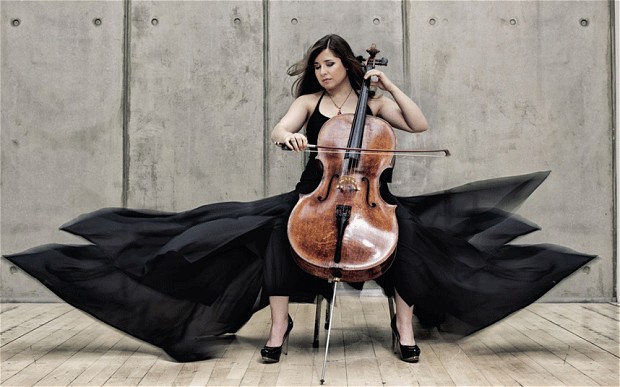
Alisa Weilserstein

Featured soloist for the concerto will be cellist Alisa Weilerstein, whom Oundjian calls “one of the great cellists in the history of the instrument, and an amazing musician. . . . Her Dvořák is spectacular,” he says. “It’s maybe (Dvořák’s) most profound work, because it’s so moving.”

To close the program Oundjian wanted something that would not compete with the intensity of the concerto. “I wanted to have a celebration in the second half,” he says. “I wanted everyone to feel great,” and for that he chose Mendelssohn’s “Italian” Symphony, certainly one of the most cheerful and ebullient pieces in the orchestral repertoire.

The opening week also features the CMF’s annual Family Concert Sunday morning at 10:30 a.m. (July 7), with some light orchestral pieces mixed with some fun, including a piece based on Dr. Seuss’s Green Eggs and Ham. Tuesday sees the first of the summer’s Robert Mann Chamber Music Series concerts, named for the late violinist and founding member of the Juilliard String Quartet. The series will continue the following three Tuesdays at 7:30 p.m.

Festival Orchestra Thursday and Friday pairs, at 7:30 and 6:30 p.m. respectively, start the first week with violinist Vadim Gluzman playing Prokofiev’s Second Violin Concerto, and the iconic 20th-century masterpiece, The Rite of Spring by Stravinsky (July 11 and 12). The program will open with the exhilarating Short Ride in a Fast Machine by the American composer John Adams, who was CMF composer-in-residence in 2022.

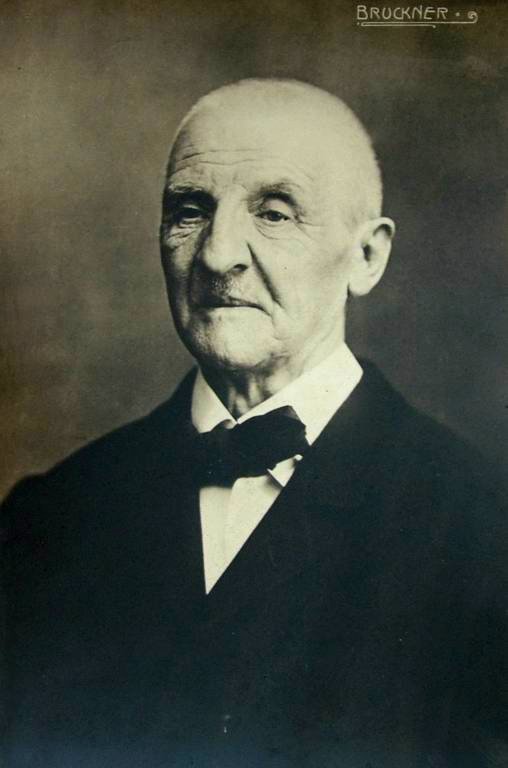
Anton Bruckner

“I did the (July 14) program because it’s the 150th birthday of Schoenberg and the 200th of Bruckner, and I wanted to acknowledge that,” Oundjian says. “I decided, let’s do it in one evening and make it a beautiful experience for everybody! The music is very spiritual (and) both pieces are fantastic to play, in that gorgeous acoustic at Chautauqua.”

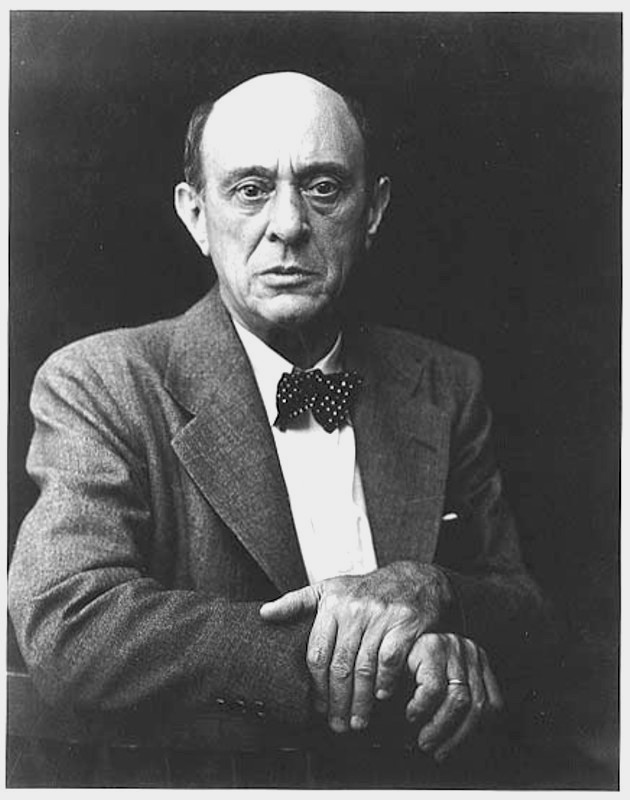
The two composers took Wagner’s music and turned in different directions—Bruckner more conservatively by putting Wagner’s sound into the traditional form of the symphony, Schoenberg, born 50 years later, by pushing beyond Wagner’s harmonic freedom and the limits of tonality. 

Arnold Schoenberg

“Bruckner’s Fourth Symphony is probably the most accessible (of his nine symphonies), because it’s fairly compact,” Oundjian says. “It has stunning themes and glorious horn solos, and you really hear the power of the orchestra. I find the music exquisitely beautiful and contemplative. It’s almost surreal in its staggering beauty, to me.”

If you think of Schoenberg only as a thorny modernist, you are missing the earlier works that followed much closer to Wagner than his later works. “Verklärte Nacht is basically like late Wagner, with its glorious string sound,” Oundjian says. “It’s a beautiful string orchestra piece.”

Pianist Olga Kern returns to CMF for concerts July 18 and 19. She will play Rachmaninoff’s Piano Concerto No. 2, which she played at CMF in 2013. The concert, under the direction of Norwegian guest conductor Rune Bergmann, will also feature Prayer by Canadian composer Vivian Fung—a work that had its premiere with a “virtual orchestra” of Canadian musicians during the COVID-19 pandemic—and Edvard Grieg’s Suites from music for the play Peer Gynt, narrated by Kabin Thomas.

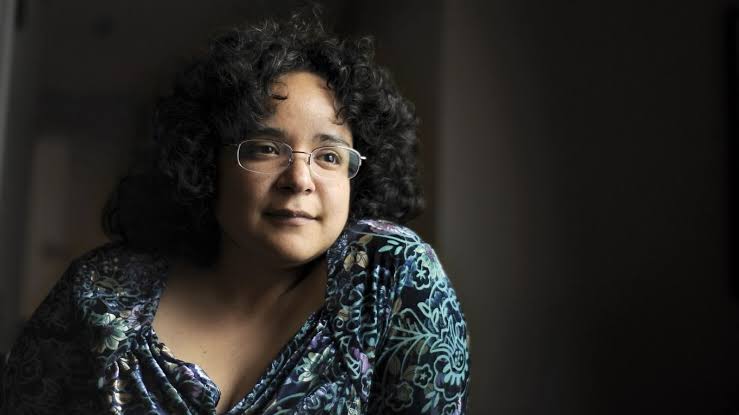
Gabriela Lena Frank

When he was looking for a new work to commission for the 2024 festival, Oundjian thought of a concerto for the Takács Quartet. “I said to (the quartet members), if we were to have a quartet concerto, who would you be interested in approaching, and without hesitation Gabriela’s name came up,” he says. “She  is a wonderful composer, Peruvian-American, and a very particular voice.”

Frank will be present for the July 21 premiere, as will Joan Tower, whose Concerto for Orchestra is on the same program.

Frank has written in her program notes, “Kachkanaraqmi, or ‘I still exist’ in the indigenous Quechua language of my Peruvian forbearers, speaks to the resilience, even insistence, of a racial soul through the generations. In this four-movement work, a brief pastoral Andean prelude, a moody mountain soliloquy, a romp of thieving winds, and a lyrical child’s wake utilize the sonorous possibilities of a concerto grosso for string quartet and string orchestra . . . Throughout, re-imaginings of age-old indigenous motifs and rhythms proliferate.”

Joan Tower

The premiere will be part of a concert of all-women composers, opening with Adoration by Florence Price, an early-20th-century African American composer whose works were forgotten for many years but recently have been rediscovered. Written in 1951, Adoration was originally for organ solo but has been arranged posthumously for various ensembles..

Joan Tower’s Concerto for Orchestra was commissioned jointly by the Chicago, St. Louis and New York orchestras, all of whom gave premieres but never played it again. “They always say this about compositions: Getting a commission is hard enough, but try to get second performances,” Oundjian says. “It’s one of those things that has really intrigued me, over my entire career: Let’s find out what’s just premiered in the last few years but has been undeservedly ignored.”

He discovered Tower’s Concerto for Orchestra when he was asked to conduct it in Iceland. “I said, ‘I don’t know that piece!’ I just loved it. It is so dramatic and so beautiful. There are two passages that are some of the most stunning contrapuntal harmony that I know in contemporary music. 

“It has tremendous drive and brilliance, and it demands everything from the orchestra.”

# # # # #

Colorado Music Festival, Peter Oundjian, music director
July 5–21, 2024
All performances in Chautauqua Auditorium

Opening Night
Festival Orchestra, Peter Oundjian, conductor
With Alisa Weilerstein, cello

  • Anna Clyne: Masquerade (2013)
  • Dvořák: Cello Concerto in B minor
  • Mendelssohn: Symphony No. 4 in A major (“Italian”)

6:30 p.m. Friday and Sunday, July 5 and 7

Family Concert: Green Eggs and Ham
Festival Orchestra, Jacob Joyce, conductor 
With Really Inventive Stuff and Jennifer DeDominici, mezzo-soprano

  • Glinka: Overture to Ruslan and Ludmilla
  • Daniel Dorff: Three Fun Fables
  • Mendelssohn: Overture to A Midsummer Night’s Dream
  • Rob Kapilow: Green Eggs and Ham

10:30 a.m. Sunday, July 7

Robert Mann Chamber Music Series
Colorado Music Festival musicians 

  • Ernst von Dohnányi: Sextet in C Major
  • Beethoven: “Duet with two Obligato Eyeglasses” in E-flat major for viola and cello, WoO 32
  • Schumann: Piano Quartet in E-flat Major, op. 47

7:30 p.m. Tuesday, July 9

Festival Orchestra Concert
Festival Orchestra, Peter Oundjian, conductor
With Vadim Gluzman, violin

  • John Adams: Short Ride in a Fast Machine
  • Prokofiev: Violin Concerto No. 2 
  • Stravinsky: Rite of Spring

7:30 p.m. Thursday July 11
6:30 p.m. Friday, July 12 

Bruckner Bicentennial Concert
Festival Orchestra, Peter Oundjian, conductor

  • Arnold Schoenberg: Verklärte Nacht (“Transfigured night”), op. 4
  • Anton Bruckner: Symphony No. 4 (“Romantic”)

6:30 p.m. Sunday, July 14

Robert Mann Chamber Music Series
Colorado Music Festival musicians

  • Carl Nielsen: Wind Quintet, op. 43
  • Schubert: String Quintet in C Major, D956

7:30 p.m. Tuesday, July 16

Festival Orchestra Concert
Festival Orchestra, Rune Bergmann, conductor
With Olga Kern, piano, and Kabin Thomas, narrator

  • Vivian Fung: Prayer
  • Rachmaninoff: Piano Concerto No. 2, op. 18
  • Edvard Grieg: Suites from Peer Gynt

7:30 p.m. Thursday, July 18
6:30 p.m. Friday, July 19

Festival Chamber Orchestra Concert
Festival Orchestra, Peter Oundjian, conductor
With the Takács Quartet and Gabriela Lena Frank, composer 

  • Florence Price: Adoration
  • Gabriela Lena Frank: Kachkanaraqmi (“I still exist”; world premiere)
  • Joan Tower: Concerto for Orchestra

6:30 p.m. Sunday, July 21

Tickets for individual concerts are available through the Chautauqua Box Office Web page.

Longmont Symphony’s Mahler performance is SOLD OUT

“Mahler at the Museum,” Saturday, March 16

By Peter Alexander March 13 at 5:25 p.m.

The Longmont Symphony and conductor Elliot Moore will present the last of their concerts at the Longmont Museum’s Stewart Auditorium for the 2023–24 season, a sold-out “Mahler at the Museum” performance, Saturday (March 16).

The program features a chamber version of Mahler’s Das Lied von der Erde for orchestra with alto (or baritone) and tenor soloists. Based on German translations of Chinese poems, the score was completed in 1909, near the end of the composer’s life. Although Mahler called it “A Symphony for Tenor, Alto (or baritone) Voice and Orchestra,” he did not give it a number as a symphony, supposedly because he feared that when he wrote his Ninth it would be his last symphony, as had been the case with Beethoven. 

Ironically, his next symphony, Number 9, was in fact the last symphony he completed.

# # # # #

“Mahler at the Museum”
Longmont Symphony, Elliot Moore, conductor
With Abigail Nims, mezzo-soprano, and Matthew Plenk, tenor

  • Mahler: Das Lied von der Erde (chamber version)

7 p.m. Saturday, March 16
Stewart Auditorium, Longmont Museum

SOLD OUT

Takács Quartet features music by Zimbabwean/ Japanese composer Nokuthula Ngwenyama

Haydn and Dvořák complete program for March 10 and 11

By Peter Alexander March 5 at 5:08 p.m.

The violist and composer Nokuthula Ngwenyama burst onto the classical musical scene in 1993, when she won the Primrose International Viola Competition at the age of 16.

Nokuthula Ngwenyama

Ngwenyama followed that distinction by winning the Young Concert Artist International Auditions the following year, and later an Avery Fisher Career Grant. An American of Ndebele (Zimbabwean) and Japanese descent, she attended the Coburn School of Performing Arts in Los Angeles and the Curtis Institute in Philadelphia. She later attended the Paris Conservatory as a Fulbright Scholar.

With concerts Sunday and Monday (March 10 and 11; details below), the Takács Quartet brings her Flow to Boulder audiences on a program that also includes works by Haydn and Dvořák. The performance will be presented for an in-person audience and by streaming with tickets available here.

The Takács presented the premiere of Flow in Berkeley last fall and have made it a part of their touring repertoire since. Flow was commissioned by the Takács and the presenter Cal Performances after their second violinist, Harumi Rhodes, got to know Ngwenyama at the Marlboro Music Festival in Vermont.

The quartet’s request was for a piece “inspired by the natural world.” Taking the request very seriously, Ngwenyama writes in her program notes that she “researched a wide array of subjects,” including “the life cycle, carbon reclamation, environmental protection, animal communication, starling murmurations, our last universal common ancestor (LUCA), black hole collisions and the sub-atomic realm.”

In conclusion, she writes, “Everything in nature flows and develops through time. Flow can be expressed mathematically, psychologically, physically, visually, and, now, via string quartet.  . . . Enjoy and go with the flow, we only know what we know.” Her extensive notes include NASA diagrams of the expansion of the universe over 13.77 billion years.

Flow is in four movements, arranged in an essentially traditional order: Prelude, Lento, Quark Scherzo, and Finale. The progression of movements is loosely linked in Ngwenyama’s notes to the development of the universe through time.

Takács Quartet. Image by Amanda Tipton Photography

Haydn’s “Sunrise” Quartet is among the composer’s last works in a genre that he created and defined. It was published in 1797, the fourth in a set of six quartets, opus 76. The title comes from the beginning of the first movement, with a sustained chord and a rising line in the first violin that suggests the sun rising above the horizon. That musical idea is developed throughout the movement, which is followed by the usual slow movement, a minuet and an energetic finale.

Sometimes called the “Slavonic Quartet,” Dvořák’s Quartet in E-flat major was written for and dedicated to violinist Jean Becker and the Florentine Quartet, a professional ensemble active in the composer’s time. Dvořák had attracted attention with the publication of his Slavonic Dances for two pianos, and Becker specifically asked for a quartet in the same style, based on folk-dance idioms. 

The most conspicuously “Slavonic” elements are heard in the second movement which is labelled “Dumka,” a type of movement derived from Ukrainian folk music that alternates between melancholy and exuberant sections; and the finale, which uses a rapid Czech dance called the skočná.

* * * * *

Takács Quartet

  • Haydn: String Quartet in B-flat major, op. 76 no. 4 (“Sunrise”) 
  • Nokuthula Ngwenyama: String Quartet Flow 
  • Dvořák: String Quartet No. 10 in E-flat major, op. 51

4 p.m. Sunday, March 10
7:30 p.m. Monday, March 11
Grusin Music Hall

In-person and streaming TICKETS HERE

NOTE: Minor typos corrected March 7.

Boulder Chamber Orchestra strings present “Virtuosity!” with Richard O’Neill

Takács Quartet violist plays music by Telemann and Piazzolla Saturday

By Peter Alexander Feb. 29 at 11:07 p.m.

Violist Richard O’Neill has a wide-ranging background, both geographically and musically.

Richard O’Neill

For example, when he plays as soloist with the Boulder Chamber Orchestra Saturday (7:30 p.m. March 2; details below), he polished one of his pieces by playing with members of Germany’s distinguished early-music ensemble Musica Antiqua Köln, and the other he researched near the docks in Buenos Aires, Argentina.

The first would be the Concerto in G major for viola by the prolific Baroque composer Georg Philipp Telemann; the other is the “Grand Tango,” originally for cello, by Argentine bandoneon player and band leader Astor Piazzolla. Other works on the program, featuring the BCO strings under music director Bahman Saless, are Valse Triste by early 20th-century Czech composer Oskar Nedbal, and Beethoven’s Grosse Fuge (Great fugue), originally the finale of the composer’s String Quartet in B-flat, op. 130.

Two more different composers than Telemann and Piazzolla would be hard to imagine. And yet, O’Neill says, they are not incompatible. “They’re very contrasting, probably on polar opposite ends of the musical timeline,” O’Neill says. “But they share some commonalities—most of all the spirit of the dance.”

The Telemann is the first known true viola concerto, and it is a piece that O’Neill plays often. “I think it’s a gorgeous, amazing piece,” he says.

Georg Philipp Telemann

O’Neill recorded the concerto in 2008 when he was asked to make a recording with members of Musica Antiqua Köln. It was definitely a learning experience for O’Neill, giving him an opportunity to work with a Baroque-style bow that has much less tension on the bow hairs, and to improvise in Baroque music. 

The latter did not come naturally, he admits. “I remember them asking me, ‘play a cadenza, be free! Do whatever you like!’” O’Neill says. “I did something, and it was free for sure! I was stopped and it was like, ‘Who are you, Yo-Yo Ma?’ But it was all said with a smile.

“One thing I learned, things were a lot different when performers and composers were the same person. And it was amazing how prolific (Telemann) was. A lot of times you look at the score and it’s very bare, but in some ways it has everything you need—you just have to understand what you’re going to do.”

His approach to Piazzolla’s music was very different. O’Neill first heard Piazolla’s music when he was a 15-year-old student in Las Vegas, and the Cuarteto Latinoamericano played Piazzolla’s “Four, for Tango.” “I was completely blown away!” he says.

“I had never heard anything like this. It was so rhythmic, so fun, the instruments were doing all of these cool, weird effects like percussive effects and (playing) behind the bridge. I was, ‘what is going on there?’ I found the Kronos (Quartet) recording and listened to it all the time. I fell in love with Piazzolla.”

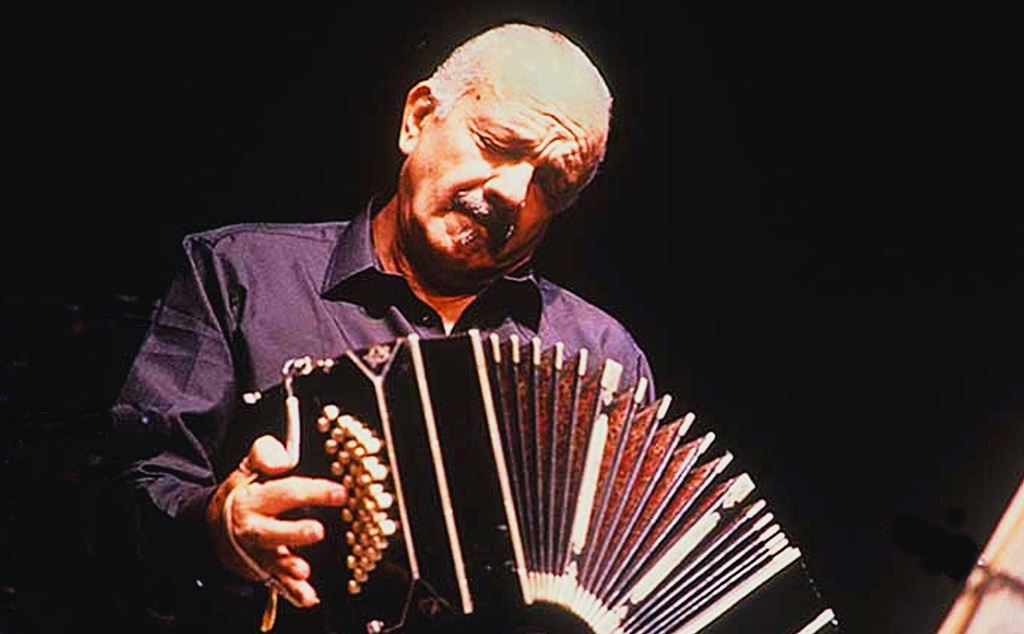
Astor Piazzolla

Later he had the chance to study Piazzolla’s musical origins up close. He was in Buenos Aires, and saw an opportunity to learn more. “I wanted to see what the tango was about,” he says.

“I went down to the docks (in Buenos Aires), where the Argentinian tango was originally from. I was shocked to find out it wasn’t the Parisian version of tango, which is Romantic and dignified. It was actually really rough.  I went to a few tango shows in cafes, but it was mainly the vibe of Buenos Aires that changed me.”

Piazzolla originally wrote the “Grand Tango” for the cellist Mstislav Rostropovich, but the viola arrangement that O’Neill plays fits the instrument very well. “Piazzolla wrote a lot of the (original cello) part very high,” he explains—meaning he can play it at the same pitch on the viola. 

O’Neill loves both pieces he is playing on BCO’s program, but it is the Piazzolla that gets him excited. “The music is just so incredible and evocative,” he says. “It’s almost like it’s so rhythmic that you can’t help being swept away by it.”

Nedbal’s Valse triste is from the ballet Pohadka o Honzov (known in English as the Tale of Simple Johnny). It was composed in 1902 for orchestra, but Nedbal later arranged the Valse for string quartet, in which form it has become especially popular. Trained as a violinist and a composition student of Dvořák, Nedbal was principal conductor of the Czech Philharmonic 1896–1906. 

When Beethoven wrote his String Quartet in B-flat in 1825, he provided an unusual finale: an extensive double fugue that takes up to 16 minutes in performance. That movement was criticized at the time for its complexity and for being “a confusion of Babel.” Since then, however, its standing has risen, to the point that Stravinsky famously said that it “will be contemporary forever.”

Beethoven’s publisher was afraid that such a difficult finale would hinder sales of the quartet, so Beethoven wrote a shorter movement that appeared with the String Quartet in B-flat. He then published the Grosse Fuge separately in 1827. Today it is hailed as one of the composers greatest compositions.

# # # # #

“Virtuosity!”
Boulder Chamber Orchestra, Bahman Saless, conductor
With Richard O’Neill, viola

  • Oskar Nedbal: Valse Triste
  • Telemann: Concerto in G for viola and orchestra
  • Astor Piazzolla: Grand Tango
  • Beethoven: Grosse Fugue, op. 133

7:30 p.m. Saturday, March 2
Seventh-Day Adventist Church, 345 Mapleton, Boulder

TICKETS

Quartet named for a national park in Canada will perform Sunday and Monday at CU

Jasper Quartet will play lyrical pieces by Dvorak, Schumann and Grażyna Bacewicz

By Peter Alexander Feb. 15 at 4:30 p.m.

The Takács Quartet concert series will feature a guest ensemble Sunday and Monday (4 p.m. Feb. 18 and 7 :30 p.m. Feb. 19; details below) that is named for a place none of them have ever visited.

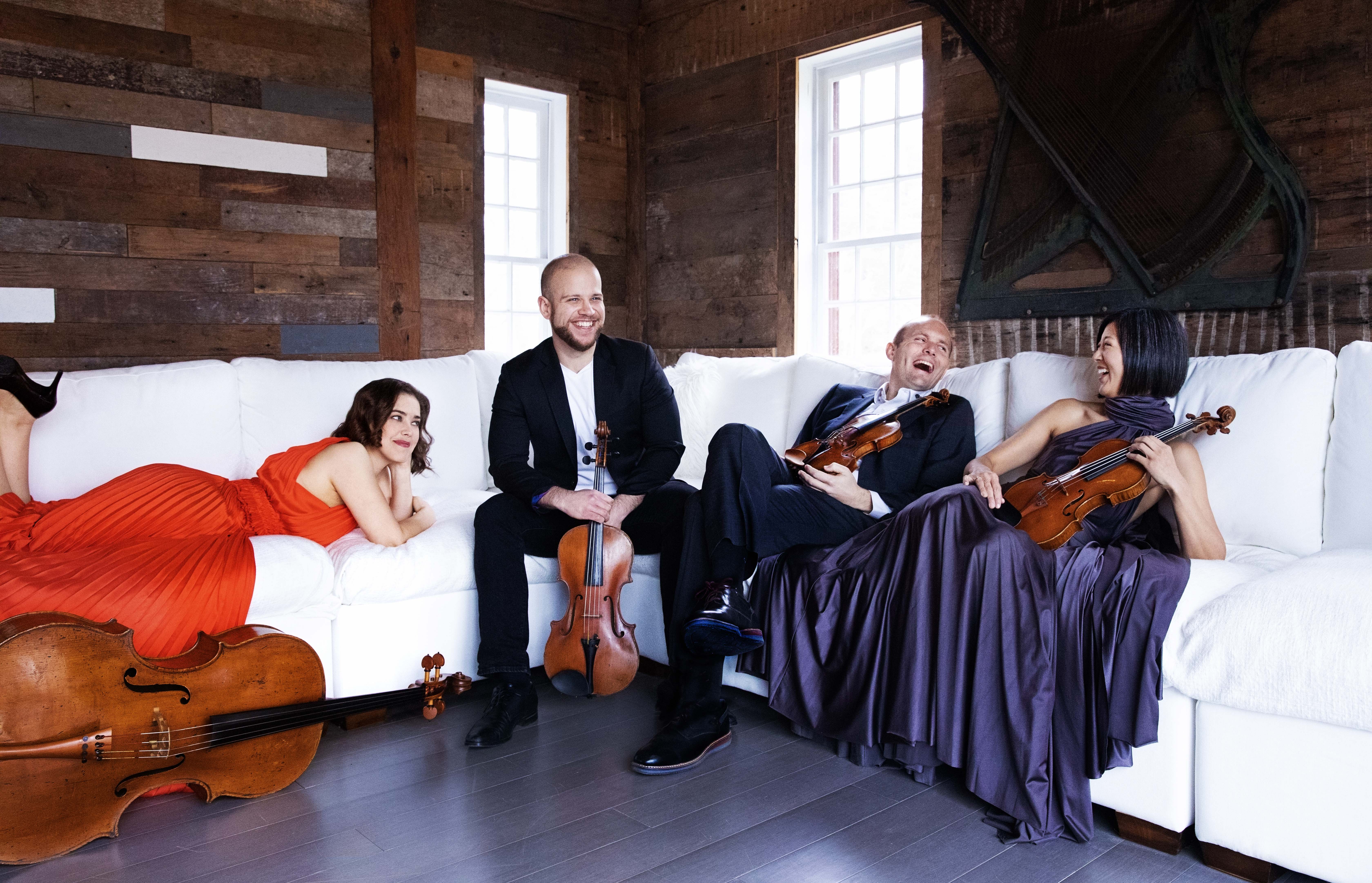
Jasper String Quartet

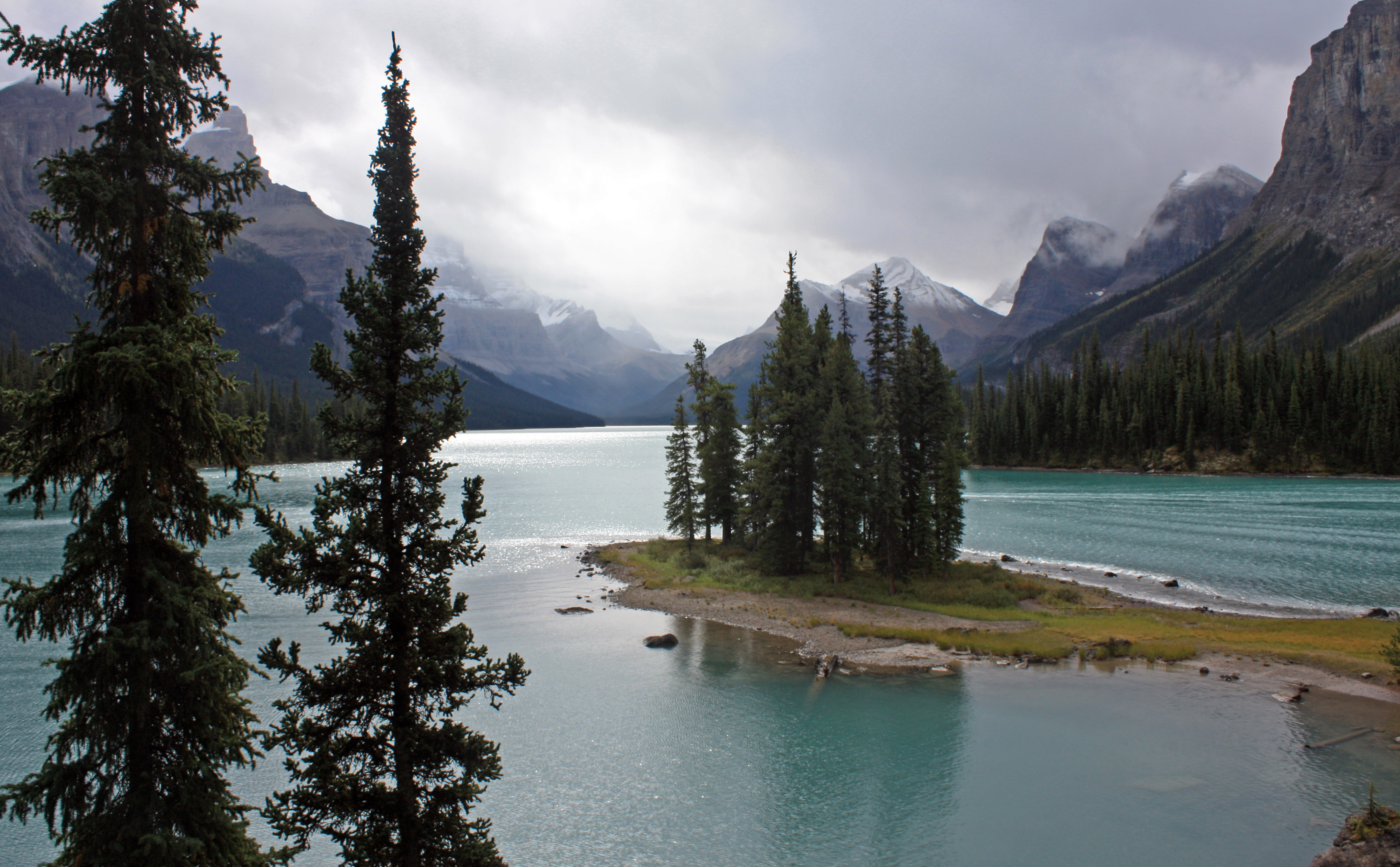
The Jasper String Quartet is named for the national park in Canada that they have only seen in photos—and a poster in at least one of their homes. “When we started the quartet it was quite difficult to think of a good name,” explains cellist Rachel Henderson Freivogel.

Spirit Island in Jasper National Park, Canada, the most celebrated view in the park. Photo by Peter Alexander

“We thought about things that we really liked to do, and one was being outside in a beautiful place. Our violist at the time said ‘What about Jasper? That’s a really beautiful place!’ And we loved the name, and we wanted to evoke natural beauty. It was easy to pronounce and just felt right to us. The closest we have been is Banff (about 180 miles south of Jasper)—although we do have a big poster of Jasper in my house.”

It is likely they haven’t had time to get to the Canadian park because they are too busy with their music. The professional quartet-in-residence at Temple University’s Center for Gifted Young Musicians, they have released eight albums. Earlier they were graduate quartet-in-residence at Rice University and Yale University with the Tokyo String Quartet, they have won top prizes and numerous chamber music competitions, and were the first ensemble chosen for Yale School of Music’s Horatio Parker Memorial Prize. They are currently in the eighth season of Jasper Chamber Concerts, a performance series founded by the quartet that is currently live-streamed from Philadelphia.

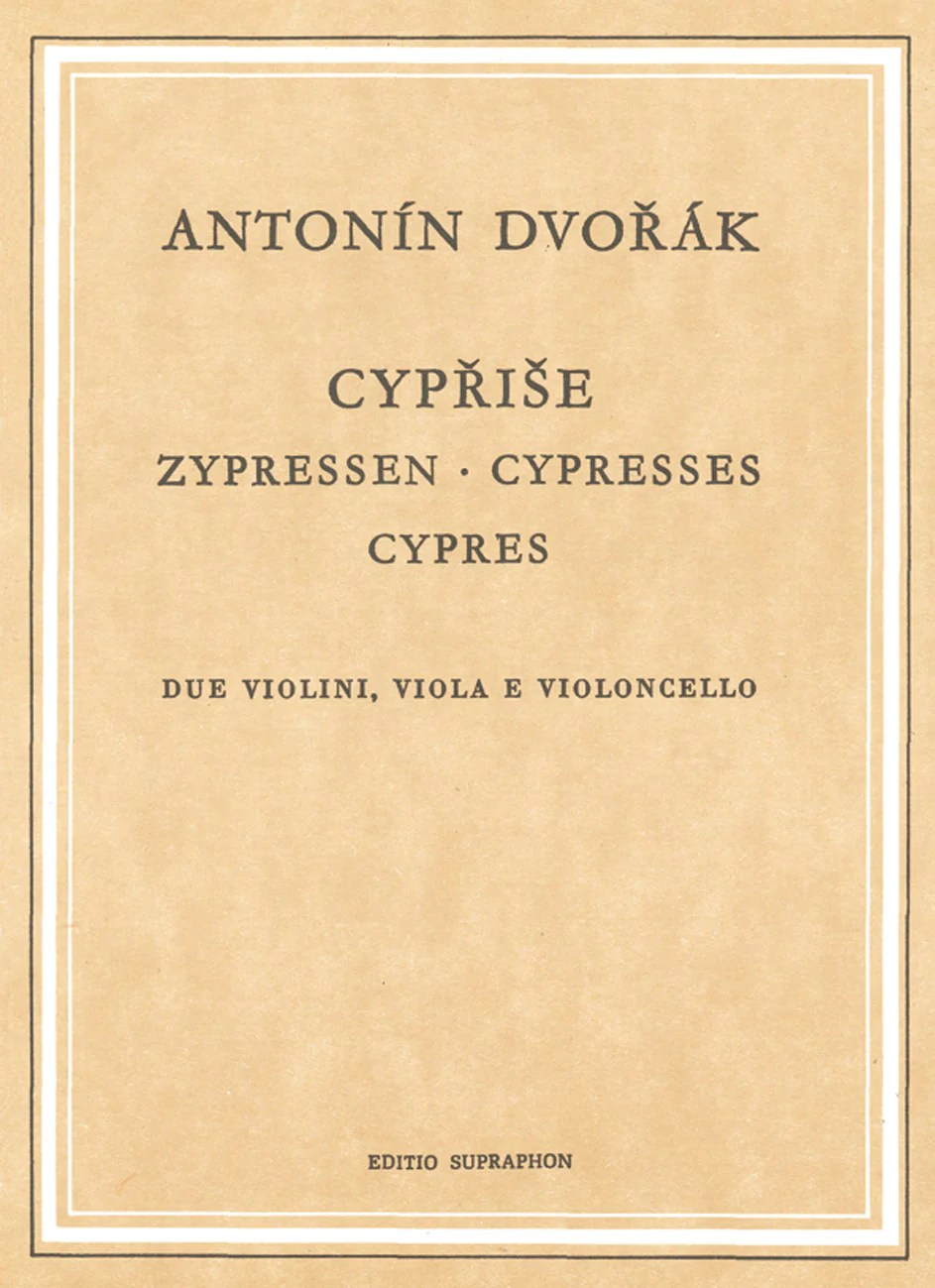
Their program in Boulder exemplifies the Jasper Quartet’s creative approach to programming. It opens with selections from Dvořák’s Cypresses, a set of love songs that the composer set for string quartet. That will be followed by the Quartet No. 4 by the Lithuanian/Polish composer Grażyna Bacewicz, and Schumann’s Quartet No. 1 in A minor.

This specific program evolved from the idea of a concert centered on lyricism, or an expression of love in music. “The Cypresses fit very well into that, since they’re settings of love songs,” Freivogel says. “The Bacewicz string quartet is based somewhat on folk tunes. The second  movement is incredibly lyrical, and I think there’s love there, also. And the third movement [of Schumann’s quartet] is just a beautiful love song.

“We try to pick pieces that really speak to each other in an interesting way. And [these pieces] all work together really well.”

Dvořák arranged 12 out of 18 songs in the original Cypresses cycle for string quartet. Of those 12, the Jasper will play six movements. “It made sense for us to play six of them because of the length of the other pieces,” Freivogel says. “We wanted to create a set that went together and had some contrast in it, because all of them are very, very beautiful. The ones that we selected have a natural flow. Some are very smooth and slow, and others are more exciting.”

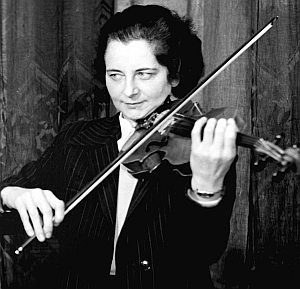
Grażyna Bacewicz

Bacewicz is likely the least known composer on the program. “We’ve been wanting to play her music for quite a long time,” Freivogel says. “This is the first program that we constructed with her music, but we would really like to play more of it.

“The first quartet is a piece that our quartet teaches a lot. We got to know this piece by working on it with some great students, and really loved the piece and wanted to play it. It’s very approachable, and there’s a lot of lyricism in the first and second movements. And then the third movement is a very exciting kind of neo-classic dance that goes and goes.”

Schumann wrote three string quartets in 1841–42, a time when he was devoting himself to writing chamber music. The Op. 41 set of three quartets was dedicated to Mendelssohn, but was given as a birthday present to Schumann’s wife, Clara.

“In addition to the slow movement—and I speak for the quartet—I just love Schumann’s style of writing and the beauty in it,” Freivogel says. “You can hear in the first movement how the conversation flows around the quartet. It’s done in such a beautiful way. And seeing it live in person, there’s an energy in the room. You see how we are communicating with each other and having this conversation, and the language is about human feelings.

“I think that that comes through in a joyful and wonderful way.”

# # # # #

Jasper String Quartet
J Freivogel and Karen Kim, violins; Andrew Gonzalez, viola; and Rachel Henderson Freivogel, cello

  • Dvořák: Selections from Cypresses
    I. “I Know that on My Love to Thee”
    II. “Death Reigns in Many a Human Breast”
    III. “When Thy Sweet Glances Fall on Me”
    IX. “Thou Only, Dear One”
    XI. “Nature Lies Peaceful in Slumber and Dreaming” 
    XII. “You Ask Why My Songs”
  • Grażyna Bacewicz: String Quartet No. 4 (1951)
  • Schumann: String Quartet No. 1 in A minor, op. 41 no. 1

4 p.m., Sunday, Feb. 18 and 7:30 p.m., Monday, Feb. 19
Grusin Music Hall

In-person and streaming tickets HERE