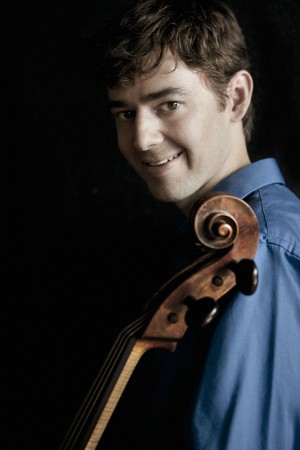
CMF Co-Commission, guests at the festival

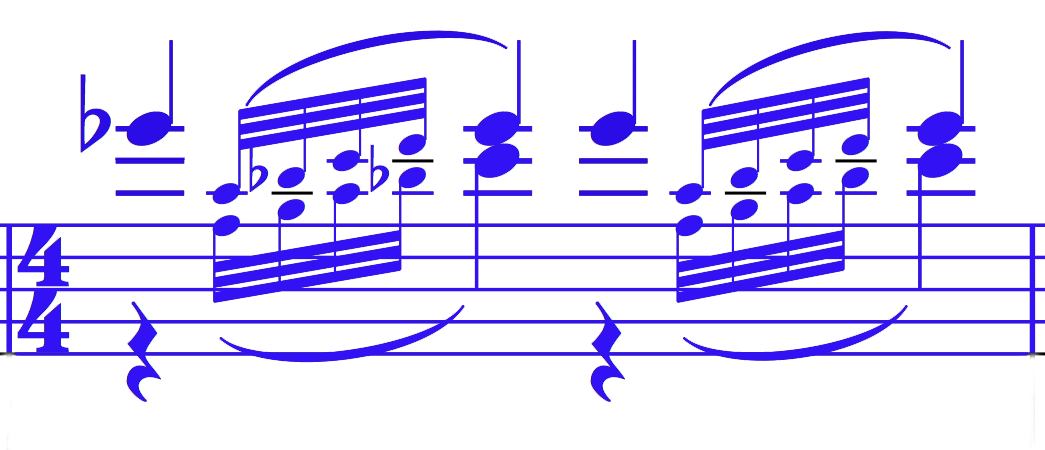
Eric Whitacre’s Murmur features violinist Anne Akiko Myers

By Peter Alexander July 13 at 9 a.m.

Peter Oundjian often speaks in superlatives.
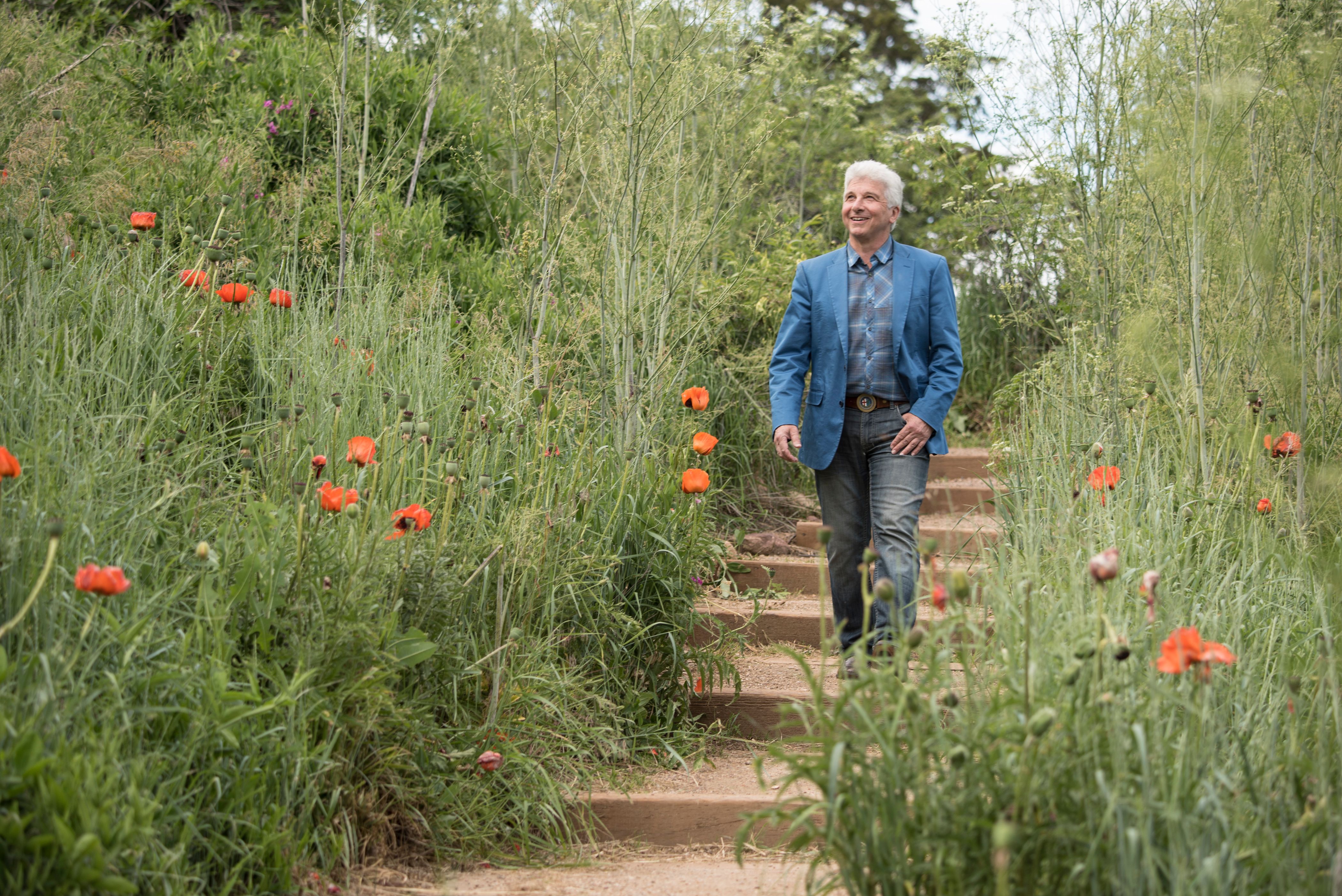
CMF Music Director Peter Oundjian

The music director of the Colorado Music Festival (CMF) says that the next two weeks of the festival (July 15–July 25) includes one of the composer’s “greatest pieces,” an overture that is “absolutely exquisite,” maybe “the most beautiful melody ever written,” and “an exquisite symphony” that is “as close to perfection as you can imagine!” 

You might think he loved the music he will conduct.  

Such enthusiasm tends to be contagious, and usually extends to both musicians and audiences. To find out for yourself, go to the festival’s Web page for tickets. (The full program of concerts for those dates is listed below.)
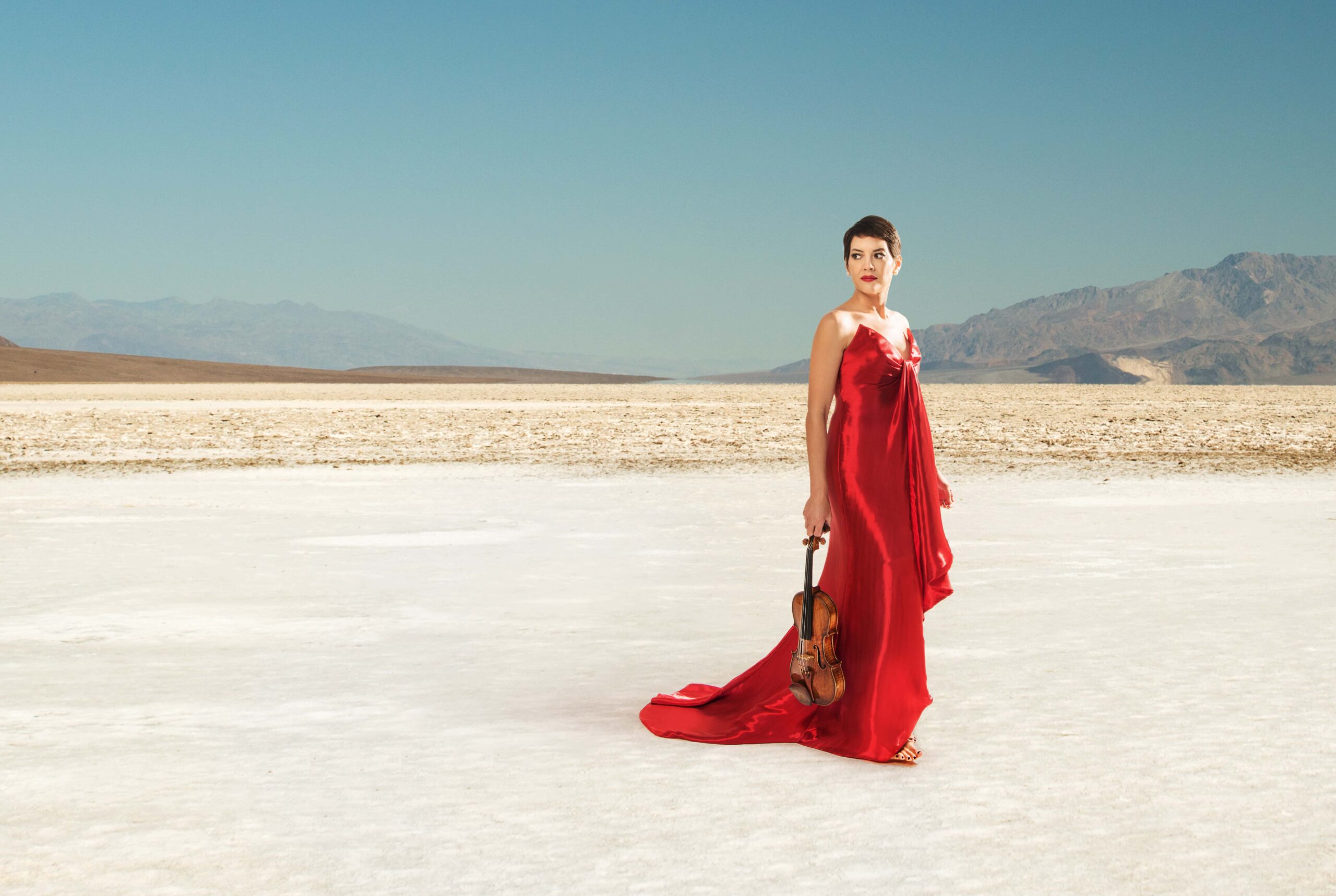
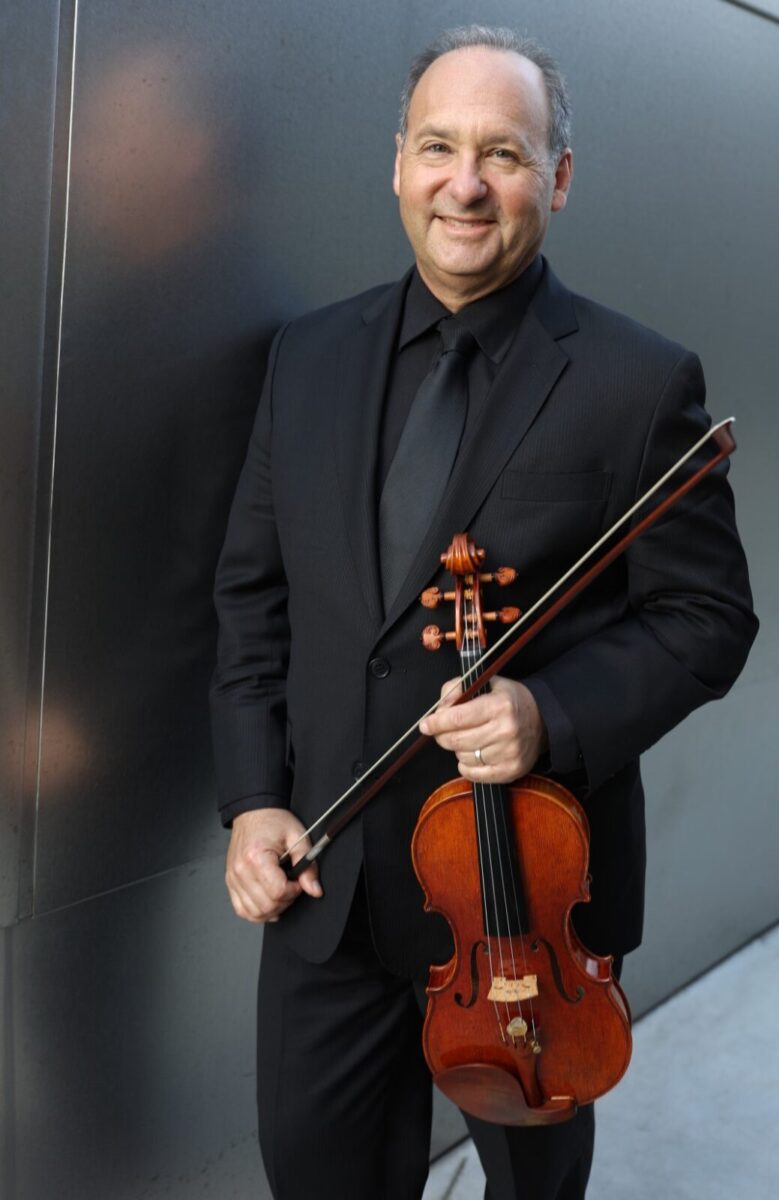
Violinist Anne Akiko Myers. Photo by David Zentz.

The next Festival Orchestra concert on Thursday and Friday evenings (7:30 p.m. July 17 and 6:30 p.m. July 18) features a work co-commissioned by the CMF from composer Eric Whitacre, who is best known for his choral music. Oundjian explained that he met with Whitacre in Los Angeles, “and we had a wonderful chat. I asked him what he was up to, and he already had this plan to write something for (violinist) Anne Akiko Meyers. At that point we said, ‘Let’s do it at the festival!’
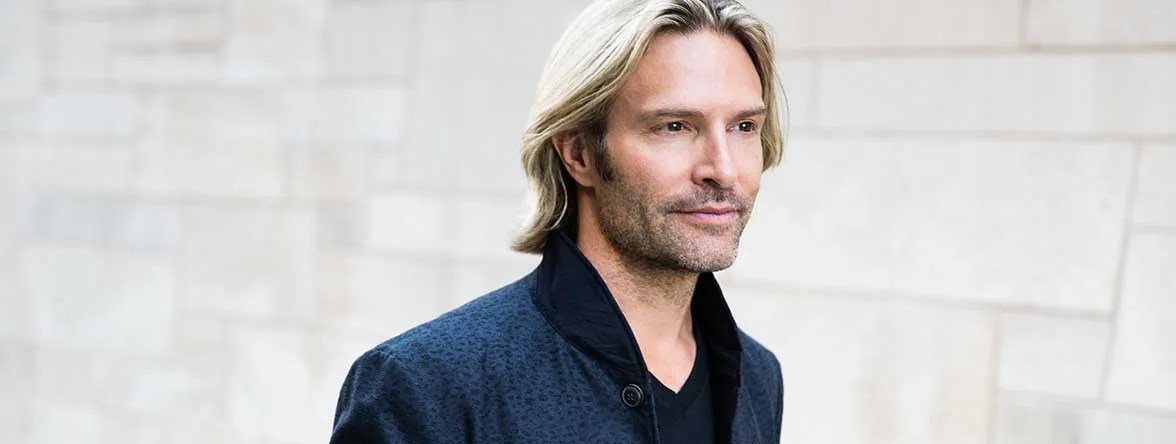
Composer Eric Whitacre

“It’s a short, very tender piece, only for strings. It ended up being a memorial to everyone who lost so much in the fires (in Los Angeles the past January). So it’s a very touching piece.”

The program opens with Aaron Copland’s Appalachian Spring, one of the most loved pieces of American concert music. “That’s still one of (Copland’s) great pieces,” Oundjian says. “It epitomizes what we think of as the great middle-20th-century American music.”

After intermission, the program features two works inspired by Shakespeare, and two very different pairs of lovers. First is Berlioz’s Overture to the opera Béatrice et Bénédict, based on the taunting, bickering “merry war” between the two characters in the comedy Much Ado about Nothing. That will be followed by Tchaikovsky’s Fantasy Overture inspired by the tragic teenaged lovers of Romeo and Juliet.

“The second half is one of my favorite little moments (of the summer), because it’s two completely contrasting couples,” Oundjian says. “The Berlioz is absolutely exquisite. And you might think you’ve heard (Tchaikovsky’s Romeo and Juliet) too many times, and then you hear it again, and Oh My God! Is it the most beautiful melody every written?”
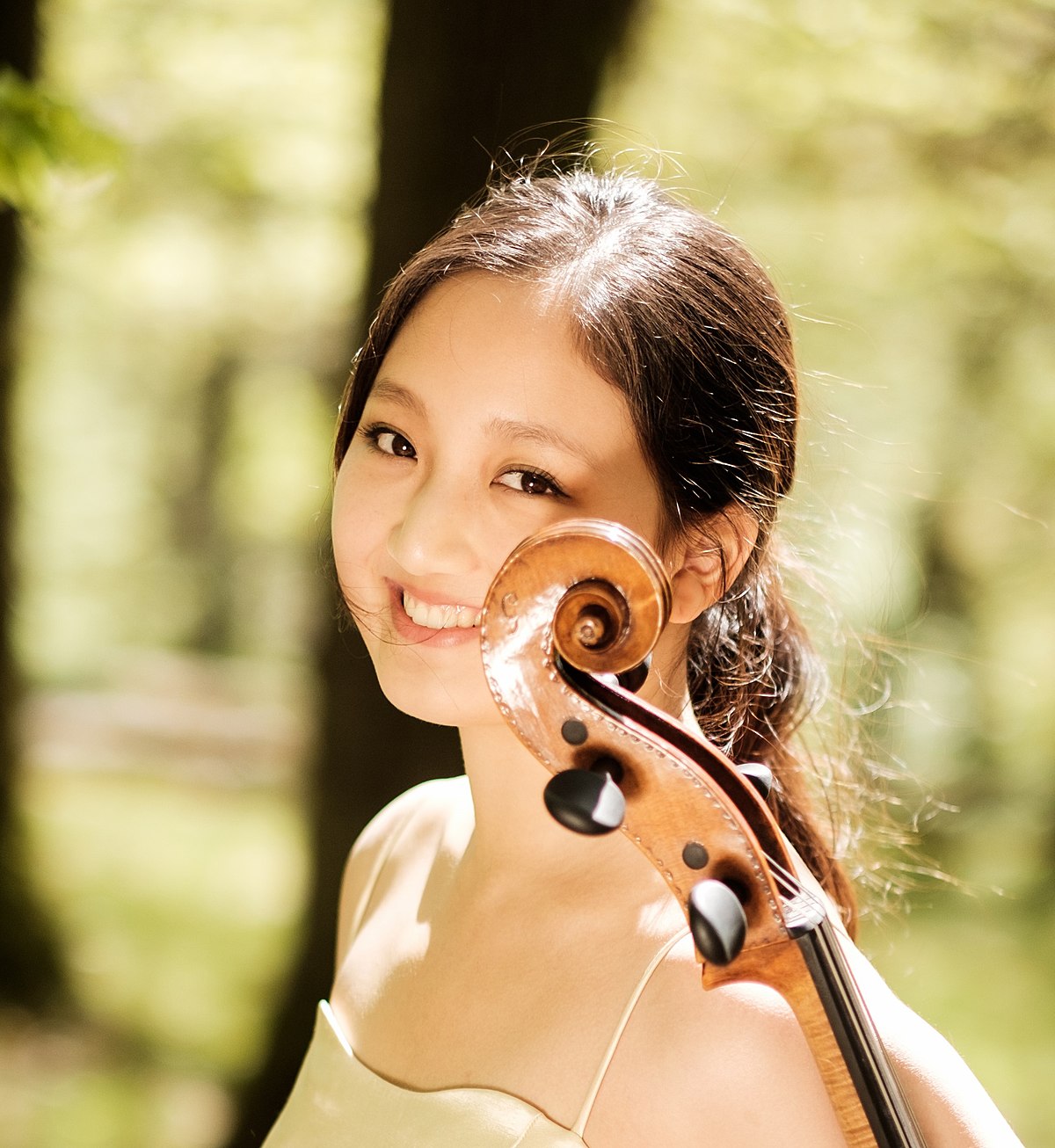
Cellist Hayoung Choi

On the following Sunday, guest conductor Maurice Cohn will lead the orchestra with South Korean/German cellist Hayoung Choi playing Tchaikovsky’s Variations on a Rococo Theme. One of Tchaikovsky’s most popular orchestral works, the Variations were inspired by the style of Mozart. Also on the program is Gli uccelli (The Birds), a suite for small orchestra that, like the Tchaikovsky, was inspired by music of an earlier age—in this case pieces evoking the sounds of birds from the 17th and 18th centuries.

Another guest conductor, Ryan Bancroft of the BBC National Orchestra of Wales and the Royal Stockholm Philharmonic, will lead the CMF orchestra at the end of the following week (7:30 p.m. Thursday, July 24, and 6:30 p.m. Friday, July 25). South Korean pianist Yeol Eum Son will play Beethoven’s Piano Concerto No. 3 in C minor on a program that also includes the Fairy Tale Poem by Russian composer Sofia Gubaidulina, a musical fantasy based on a children’s story.
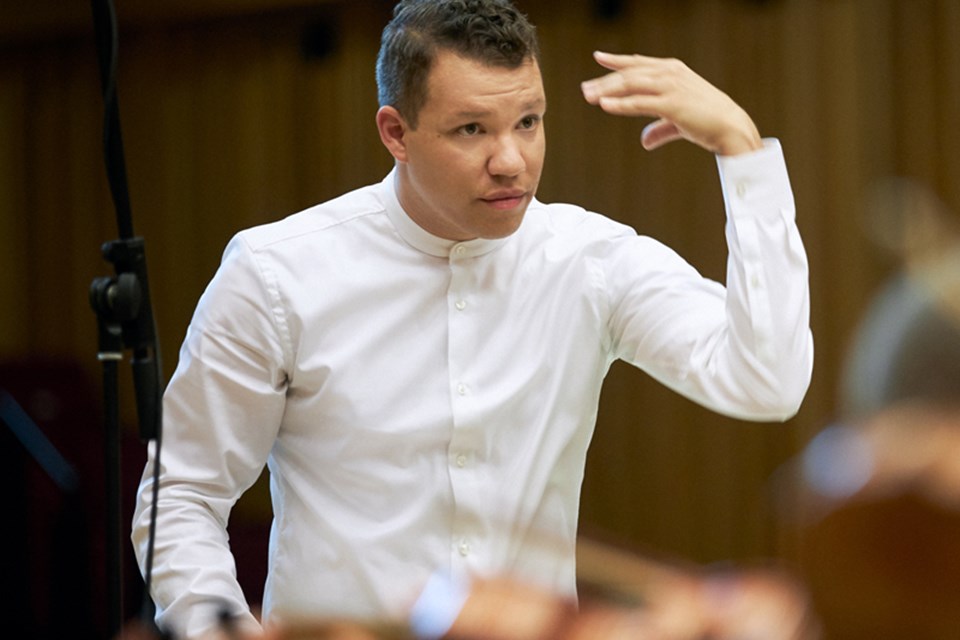
Ryan Bancroft. Photo by Benjamin Ealovega

Gubaidulina’s score portrays the tale of a piece of chalk that dreams of drawing castles and gardens, in spite of being confined to writing words and numbers in a school classroom. At the end, the dream comes true when a boy carries the last little piece of chalk home in his pants pocket.

The program concludes with a more deeply serious Russian work, Shostakovich’s Symphony No. 10. Like many of the composer’s works, the symphony contains esoteric musical symbols, including a musical anagram on letters of the composer’s name, and another musical anagram spelling ELMIRA, which the composer himself noted is similar to a theme from Mahler’s bleak Lied von der Erde (Song of the earth).

Oundjian returns to conduct the Festival Orchestra on Sunday, July 27. Chinese classical guitarist Xuefei Yang will play Joaquin Rodrigo’s Concerto de Aranjuez. Oundjian and the orchestra will play the Dances of Galánta, based on folk dances by the Hungarian composer Zoltán Kodály, and Schubert’s early Symphony No. 5.

“Schubert 5 is an exquisite symphony,” Oundjian says. “Nobody plays Schubert symphonies except maybe the ‘Unfinished,’ but Schubert 5—ah! It’s as close to perfection as you can imagine. If you think about how often pianists play the piano sonatas, or string quartets play the quartets, or the Trout Quintet, the symphonies kind of get ignored.”

Guitarist Xuefei Yang

Not ignored is the Concerto de Aranjuez, arguably the most popular concerto for classical guitar. “I love Concerto de Aranjuez” is Oundjian’s judgment. We haven’t done it in years, so it’s time. And an amazing guitarist, Xuefei Yang. Oh my god what a musician!”

Between the Festival Orchestra concerts there will be Tuesday chamber music concerts by the Brentano String Quartet with music by Schubert and Brahms (7:30 p.m. July 15), and CMF musicians with music by Mozart and Dvořák (7:30p.m. July 22). The full programs and ticket information are listed below.

# # # # #

Colorado Music Festival, Peter Oundjian, music director
Tuesday, July 15–Sunday, July 25
All performances in Chautauqua Auditorium

Chamber Music Concert
Brentano String Quartet

  • Schubert: Quartet in A minor, D804 (“Rosamunde”)
  • Anton Webern: Five Movements for String Quartet, op. 5
  • Brahms: String Quartet No. 3 in B-flat major, op. 67

7:30 p.m. Tuesday, July 15

Festival Orchestra Concert
Peter Oundjian, conductor
With Anne Akiko Meyers, violin

  • Copland: Appalachian Spring
  • Eric Whitacre: Murmur (CMF co-commission)
  • Ravel: Tzigane
  • Berlioz: Overture to Béatrice et Bénédict
  • Tchaikovsky: Romeo and Juliet Fantasy Overture

7:30 p.m. Thursday, July 17
6:30 p.m. Friday, July 18

Festival Orchestra Concert
Maurice Cohn, conductor
With Hayoung Choi, cello

  • Respighi: Gli uccelli (The birds)
  • Tchaikovsky: Variations on a Rococo Theme, op. 33
  • Beethoven: Symphony No. 1 in C major, op. 21

6:30 p.m. Sunday, July 20

Chamber Music Concert
Colorado Music Festival musicians

  • Nico Muhly: Doublespeak (2012)
  • Mozart: Quintet for piano and winds in E-flat major, K452
  • Dvořák: String Quintet No. 3 in E-flat major, op. 97

7:30 p.m. Tuesday, July 22

Festival Orchestra Concert
Ryan Bancroft, conductor
With Yeol Eum Son, piano

  • Sofia Gubaidulina: Fairytale Poem (Märchenpoem, 1971)
  • Beethoven: Piano Concerto No. 3 in C minor, op. 37
  • Shostakovich: Symphony No. 10

7:30 p.m. Thursday, July 24
6:30 P.M. Friday, July 25

Festival Orchestra Concert
Peter Oundjian, conductor
With Xuefei Yang, guitar

  • Zoltán Kodály: Dances of Galánta
  • Joaquin Rodrigo: Concerto de Aranjuez
  • Schubert: Symphony No. 5 in B-flat major, D485

6:30 p.m. Sunday, July 27

Tickets to all concerts available through the CMF Web page

GRACE NOTES: Brahms 2nd twice and drummers, all on Saturday

Boulder and Longmont symphonies at home, Kodo at Mackey

By Peter Alexander Feb. 12 at 11:15 a.m.

The Boulder Symphony joins with the Niwot High School Symphony Orchestra for a performance of the spirited Danzón No. 2 of Arturo Márquez Saturday and Sunday (Jan. 15 and 16; details below) at the Dairy Arts Center.

Other works on the program, performed by the Boulder symphony, will be a Concerto for Violin titled “Paths to Dignity” by Lucas Richman, featuring violinist Mitchell Newman; and Brahms’s Symphony No. 2 in D major. Devin Patrick Hughes will conduct.

Richman has had an extensive career as a conductor. He currently leads the Bangor Symphony Orchestra in Bangor, Maine, and was previously music director of the Knoxville Symphony in Tennessee. He has also conducted scores for a number of films, including the Grammy-nominated score for The Village

Mitchell Newman

As a composer, he wrote Behold the Bold Umbrellaphant based on poetry by Jack Prelutsky, which the Longmont Symphony presented with Prelutsky in 2018. His Violin Concerto “Paths to Dignity” was inspired by the lives of homeless people and composed for Newman, a longtime advocate for the homeless and member of the violin section of the Los Angeles Philharmonic. 

The concerto has four movements that share a seven-note motive representing the word “DIGNITY.” The first movement, titled “Our Stories,” uses various instruments to represent homeless persons who are answered in turn by the violin. The second movement, “Fever Dreams/Move,” describes the disturbed dreams of a veteran suffering from PTSD who is living on the streets.

The third movement, “Shelter for My Child,” uses a musical representation of the Hebrew word “Tzadek,” which means “justice.” The finale, “Finding Home,” reiterates the “Tzadek” motive and concludes with variations on the “DIGNITY” theme.

An activist in bringing music to underserved communities, Newman was named a mental health hero by the California State Senate, and founded “Coming Home to Music,” a program that brings classical music to the homeless. He retired from the L.A. Phil in 2020 and currently teaches at Temple University.

# # # # #

“Harmony for Humanity”
Boulder Symphony, Devin Patrick Hughes, conductor
With Mitchell Newman, violin
Featuring the Niwot High School Symphony Orchestra

  • Arturo Márquez: Danzón No. 2
  • Lucas Richman: “Paths to Dignity” Concerto for Violin
  • Brahms: Symphony No. 2 in D major

7:30 p.m. Saturday Feb. 15, and 2 p.m. Sunday, Feb. 16
Dairy Arts Center

TICKETS

# # # # #

Also on Saturday, the Longmont Symphony Orchestra (LSO) offers a program titled “The Light after the Storm” (7 p.m. Feb. 15, details below) in which a vivid musical storm, the last of the Four Sea Interludes from the opera Peter Grimes by Benjamin Britten, leads to the sunny skies of Brahms’s Second Symphony.

Clancy Newman. Photo by Lisa-Marie Mazzucco

Between these two contrasting works on the program is the Cello Concerto of Sir Edward Elgar, which will be performed by Clancy Newman. The LSO will be conducted by Elliot Moore.

Britten was inspired to write Peter Grimes while he was in exile from England as a conscientious objector living in the United States during World War II. While in the U.S., he read George Crabbe’s narrative poem The Borough, which describes a village on the east coast of England and its colorful inhabitants. The poem inspired Britten not only to write an opera based on the solitary Grimes, one of Crabbe’s most distinctive characters, but also to return to England. He finished the opera after his return, in 1943.

Peter Grimes was premiered to great acclaim in June 1945, shortly after the end of the war in Europe. The Four Sea Interludes—“Dawn,” “Sunday Morning,” “Moonlight” and “Storm”—are taken from the interludes Britten wrote to fill scene changes during the opera, and they contain some of the most vividly descriptive music he ever composed.

Written shortly after World War I, the Cello Concerto was Elgar’s last completed major work. The first performance was under-rehearsed and considered a failure, but later the Concerto became one of the staples of the cello repertoire. It achieved a higher level of popularity when it was famously recorded by cellist Jacqueline du Prè in 1965.

A composer and a cellist, Newman has appeared with the LSO once before, in November, 2023.  The winner of the International Naumburg Competition in 2001 and an Avery Fisher Career Grant in 2004, he has performed as a soloist, with the Chamber Music Society of Lincoln Center and Musicians from Marlboro.

# # # # #

“The Light after the Storm”
Longmont Symphony, Elliot Moore, conductor
With Clancy Newman, cello

  • Benjamin Britten: Four Sea Interludes from Peter Grimes
  • Elgar: Cello Concerto
  • Brahms: Symphony No. 2 in D major

7 p.m. Saturday, Feb. 15
Vance Brand Civic Auditorium, Longmont

TICKETS

# # # # #

Kodō, the renowned taiko drumming ensemble from Japan, will present a program from their current “One Earth Tour 2025” at 7:30 p.m. Saturday, Feb. 15, at Macky Auditorium.

The performance is part of the Artist Series from CU Presents. Limited seats are available.

The Japanese word “kodo” has a double meaning that reflects the group’s ethos. It can mean “heartbeat,” which suggests the primal role of rhythm, but as written with different characters, it means both “drum” and “child.” The program title “Warabe” also refers to a child or children, or can refer to children’s songs. Or as the group’s program notes state, the performers are “forever children of the drum at heart.”

The “Warabe” program refers back to the repertoire and the aesthetics of the earliest incarnation of Kodō, when they were first formed out of another drumming ensemble in the 1980s. After several years of touring, they founded a village on Sado Island, off the west coast of Japan near the city of Niigata. Since their three sold-out performances at the 1984 Olympic Arts Festival in Los Angeles, Kodō has been recognized as a global phenomenon.

Today Kodō has its own cultural foundation and a North American organization known as  Kodō Arts Sphere America. In addition to their world-wide performances, they present workshop tours that open the world of taiko drumming to ever larger audiences.

# # # # # 

Kodō: One Earth Tour 2025
“Warabe”
Kodō, Yuichiro Funabashi, director
Dance arrangements by Koki Miura

  • Yuta Sumiyoshi: Koe
  • Miyake (arr. by Kodō)
  • Masayasu Maeda: Niwaka
  • Motofumi Yamaguchi: Hae
  • Sumiyoshi: Uminari
  • Koki Miura: Shinka
  • Maeda: Okoshi|Reo Kitabayashi: Dokuso
  • Ryotaro Leo Ikenaga: Inochi
  • Kenta Nakagome: O-daiko (arr. Kodō)
  • Yatai-bayashi (traditional, arr. Kodō)

7:30 p.m. Saturday, Feb. 15
Macky Auditorium

TICKETS (Limited seats available)