Well shaped performance of “the greatest First Symphony”
By Peter Alexander July 11 at 12:24 a.m.
The world premiere of an engaging concerto for saxophone by American composer Joan Tower topped the bill at the Colorado Music Festival last night (July 10).
The Festival Orchestra was conducted by CMF music director Peter Oundjian, with Steven Banks as saxophone soloist. Tower was present for the premiere performance of her new score, and spoke briefly before the performance.
Titled Love Returns, the score is derived from a piece for solo piano titled Love Letter that Tower wrote in memory of her late husband after his death in 2022. Poignant, well constructed and emotionally coherent, Love Returns should become part of the concert repertoire for saxophone.
The first of the work’s six movements starts tenderly, with beautiful string sounds providing a warm embrace for the soloist. Over the next three movements, the music grows in intensity, reaching an uneasy high point built from nervous swirls in the saxophone. The Fifth movement is a solo cadenza, developing jumpy fragments of scales.
A virtuosic series of edgy passages leads into the final movement, where the nervous swirls loosen and return to the calm of the work’s opening. This creates a perceptible expressive arc, while the gentle ending suggests a moment of acceptance before the music settles into silence.
With a sweet tone and flawless technique, Banks gave an exemplary performance. The fluidity of his rapid passagework was remarkable, and he moved smoothly through all the shifts of mood and style. He has the ability to fade to silence in even the highest register. If recorded, his performance would create the standard for this valuable new work.
The concert opened with Aaron Copland’s Outdoor Overture, a strongly profiled work written for students at the High School of Music and Art in New York. To recognize the work’s origin, Oundjiuan turned over the podium to the CMF’s young assistant conductor Stefano Boccaci, who lead a bracing performance.
Copland’s alternating sections of vigor and delicacy were well marked. As appropriate for a school piece, all sections of the orchestra have opportunities to step forward. The bright trumpet solos of principal Jeffrey Work were acknowledged at the end, but every section earned recognition.
The concert ended with Brahms Symphony No. 1, which Oundjian likes to call “the greatest first symphony ever written.” Before the performance, he also noted that Brahms took 21 years to complete the symphony, during which time he progressed from a callow young musician to an experienced composer of international rank.
Oundjian and the Festival Orchestra gave a well shaped, controlled performance. The tense introduction to the first movement promised the drama to come. Throughout the engrossing first movement, the music surged from the tiniest pianissimos to full Brahmsian fortes. Oundjian convincingly varied the tempo to match the expressive needs of the score.
The slow second movement was carefully played but never came alive. The third movement projected relaxed good cheer, especially in the strolling music played by the woodwinds. Drama came to the fore again in the finale, which Oundjian built carefully to the climax. I heard bravos and cries of “Oh My God” at the end, signaling how well the symphony reached the audience.
The program will be repeated at 6:30 tonight (July 11) at the Chautauqua Auditorium. Tickets are available through the CMF Web Page.
The Academy University Hill presents free concert Sunday
By Peter Alexander Nov. 26 at 5:40 p.m.
A musical trio assembled for the occasion—called, fittingly, “The Ad Hoc Trio”—will perform three works by Brahms and Mozart on a free concert at The Academy University Hill Sunday (7 p.m. Dec. 1; details below).
The retirement community does not charge admission for performances held in their Chapel Hall at 883 10th St. in Boulder, but audience members are asked to RSVP in advance HERE.
Sunday’s performers will be CU Boulder College of Music faculty member Erika Eckert, viola; Boulder resident Stephen Trainor, clarinet; and Grinnell College (Iowa) faculty member Eugene Gaub, piano. They will play a trio by Mozart and two sonatas by Brahms, one each performed by viola with piano, and clarinet with piano.
In 1890 Brahms had decided to give up composition, but the following year he heard the clarinetist Richard Mühlfeld. He was so impressed with Mühlfeld’s playing that he changed his mind and wrote two sonatas for him, as well as a trio and quintet with clarinet. The last chamber music Brahms wrote, the sonatas effectively opened the door for later composers’ sonatas for clarinet and piano.
After completing the sonatas, Brahms later arranged them for viola instead of clarinet, making minor alterations to fit the instrument. These versions are rightly known as sonatas for viola and piano, but it is rare to hear both instruments playing these works on the same program. Eckert and Trainor decided to split the two op. 120 sonatas between them, so that the audience has a rare opportunity to hear both instruments in some of Brahms’ most notable chamber music.
Mozart wrote his “Kegelstatt” Trio for his piano student Franziska von Jaquin and the clarinet virtuoso Anton Stadler, for whom he also wrote the Clarinet Concerto and other works. Mozart took the viola part with his two friends in the first performance of the trio, in von Jacquin’s home in 1786. The name “Kegelstatt” means the place where skittles, one of Mozart’s favorite games, is played.
The Ad Hoc Trio Erika Eckert, viola; Stephen Trainor, clarinet; and Eugene Gaub, piano
Brahms: Sonata for clarinet and piano in F minor, op. 120 no. 1 —Sonata for viola and piano in E-flat major, op. 120 no. 2
Mozart: Trio in E-flat major for clarinet, viola and piano, K498 (“Kegelstatt”)
7 p.m. Sunday, Dec. 1 Chapel Hall, Academy University Hill 883 10th St., Boulder
Mini Chamber concert in Boulder and Groovin’ in Longmont
By Peter Alexander Nov. 19 at 11:40 p.m.
The Boulder Chamber Orchestra (BCO)will present “Mini-Chamber 2,” the second of its chamber music programs for the 2024–25 season, Saturday (7:30 p.m. Nov. 23; details below).
The program features guest pianist Adam Żukiewicz performing quintets for piano and strings by Brahms and Théodore Dubois with members of the BCO string sections. Żukiewicz appeared on a Mini-Chamber concert last spring, and will be the soloist with the orchestra when they perform in New York in Zankel Hall at Carnegie Hall next spring.
Dubois was a prominent French composer in the late 19th and early 20th centuries. After winning the Prix de Rome in1861, he became organist and choirmaster at several churches in Paris and was professor of harmony at the Paris Conservatory 1871–91 and composition until 1896. He became director of the Conservatory in 1896, but had to resign from the position over his hostility to the adventurous student works of Ravel.
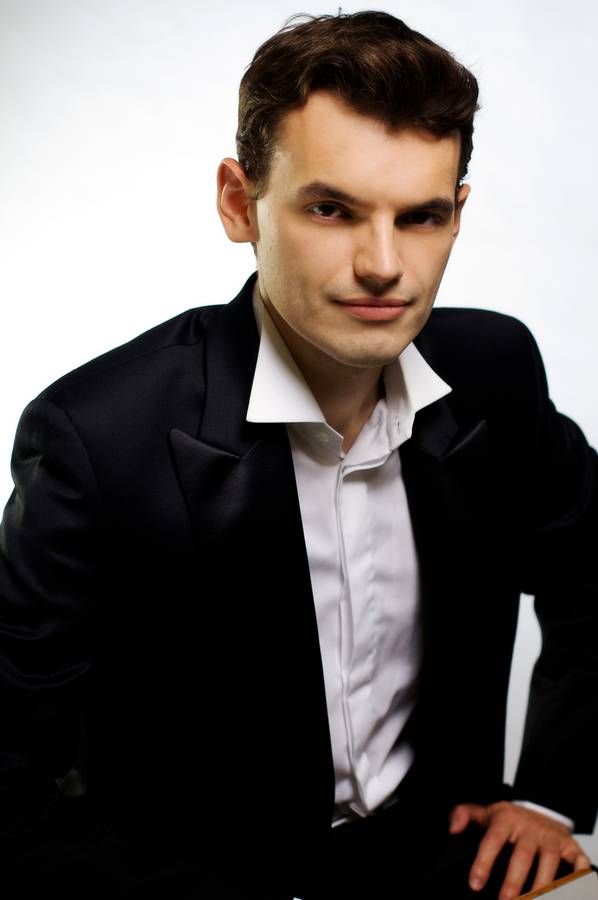
Adam Żukiewicz
Dubois was as conservative in his compositions as he was as a leader of the Conservatoire. He wrote orchestral chamber and choral works. most of which have disappeared from the standard repertoire, while his theoretical books are still used for teaching.
Brahms wrote in Piano Quintet in F minor over a number of years, first as a string quintet, then as a sonata for two pianos. The first version dates to 1861, and the final form, the Quintet for piano and strings, was completed in 1864 and premiered in 1868. Widely considered one of the great works of chamber music from the 19th century, it comprises four movements that last around 45 minutes in performance.
A native of Poland, Żukiewicz has studied at the Royal Academy of Music in London and the Jacobs School of Music at Indiana University, and holds a doctorate from the University of Toronto, where he also served on the faculty. He won first prize both the 2011 Canada Trust Music Competition and the 2012 Shean Piano Competition in Canada, and was a medalist at several other contests. Since 2018 he has been a judge for the Steinway Piano Competition.
# # # # #
Boulder Chamber Orchestra: Mini-Chamber 2 Adam Żukiewicz, piano, with members of the BCO
Théodore Dubois: Piano Quintet in F major
Brahms: Piano Quintet in F minor, op. 34
7:30 p.m. Saturday, Nov. 23 Boulder Adventist Church
The Boulder Philharmonic Orchestra will repeat its “Groove” concert, first presented at Planet Bluegrass in September, next Monday at the Dickens Opera House in Longmont (6:30 p.m. Nov. 25).
The concert is one in the Boulder Phil’s new “Shift” series, designed to bring the orchestra’s musicians into informal spaces and present them in smaller groups. Each program in the “Shift” series will be presented first at Planet Bluegrass in Lyons, and then taken to smaller venues in Longmont and Boulder.
“Groove” features the Boulder Philharmonic String Quartet, principal players from each of the orchestra’s string sections. The program includes music by pop sensations from Lizzo to Taylor Swift alongside pieces by living composers including Philip Glass and Jessie Montgomery. And neither a pop sensation nor living, Vivaldi shows up on the program with one piece as well.
# # # # #
“Groove” Boulder Philharmonic String Quartet: Ryan Jacobsen and Hilary Castle-Green, violin; Stephanie Mientka, viola; and Amanda Laborete, cello
Takashi Yoshimatsu: Atomic Hearts Club Quartet, Movement I
Justin Bieber: “Peaches” (arr. Alice Hong)
Dinuk Wijeratne:Two Pop Songs on Antique Poems: “Letter from the afterlife”
Carlos Simon: “Loop”
Michael Begay: “Forest Fires”
Lizzo: “ Good As Hell” (arr. Alice Hong)
Jessie Montgomery: “VooDoo Dolls”
Philip Glass: String Quartet No. 3: VI “Mishima/Closing”
Taylor Swift: “All Too Well” (arr. Alice Hong)
Wijeratne: Two Pop Songs on Antique Poems: “I will not let you go”
Ed Sheeran: “Shape of You” (arr. Alice Hong)
Due Lipa: “Dance the Night” (arr. Zack Reaves)
Jessica Meyer: “Get into the NOW”: III. “Go Big or Go Home”
Vivaldi: Summer: Movement III (arr. Naughtin)
6:30 pm. Monday, Nov. 25 Dickens Opera House, Longmont
Prize-winning quartet from Japan will play Haydn, Ligeti and Brahms
By Peter Alexander Oct. 30 at 4:55 p.m.
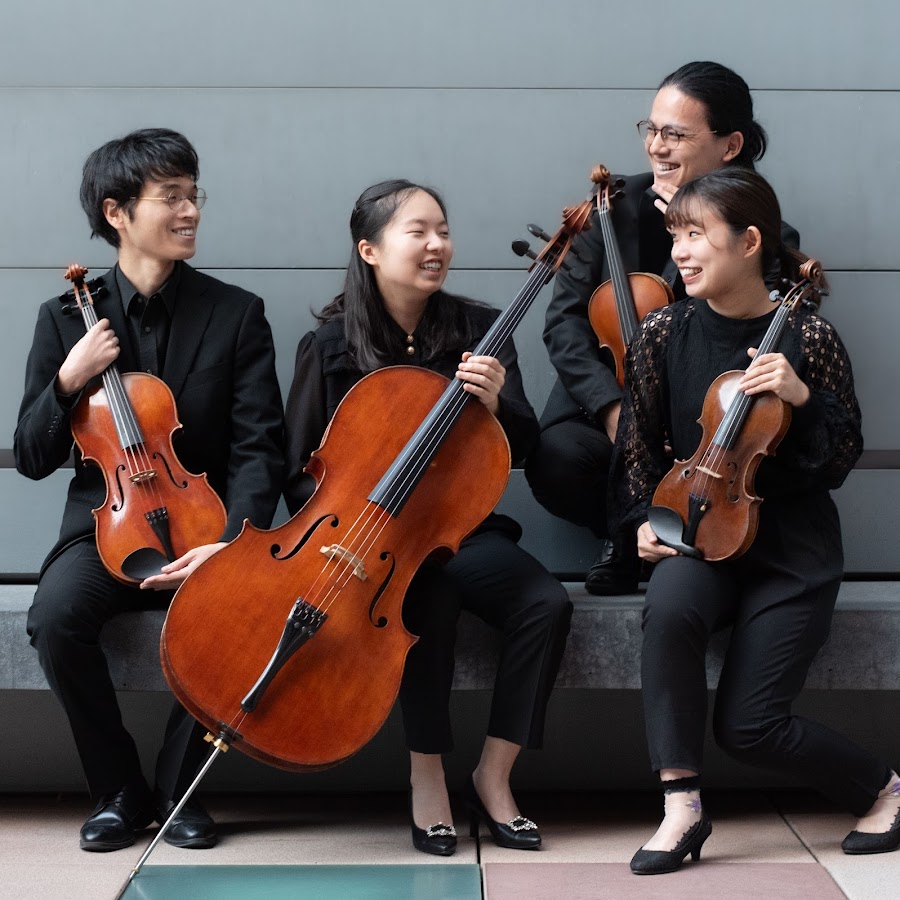
Quartet Integra, the 2024 guest ensemble on the Takács Quartet’s campus concert series at CU Boulder, will perform in Grusin Music Hall Sunday afternoon and Monday evening (4 p.m. Nov. 3 and 7:30 p.m. Nov. 4; details below).
Following a traditional program format of classical-contemporary-Romantic works, they will perform Haydn’s String Quartet in B minor, op. 33 no. 1, György Ligeti’s String Quartet No. 2 and Brahms’s String Quartet No. 3 in B-flat major. Tickets are available for both in-person and online attendance.
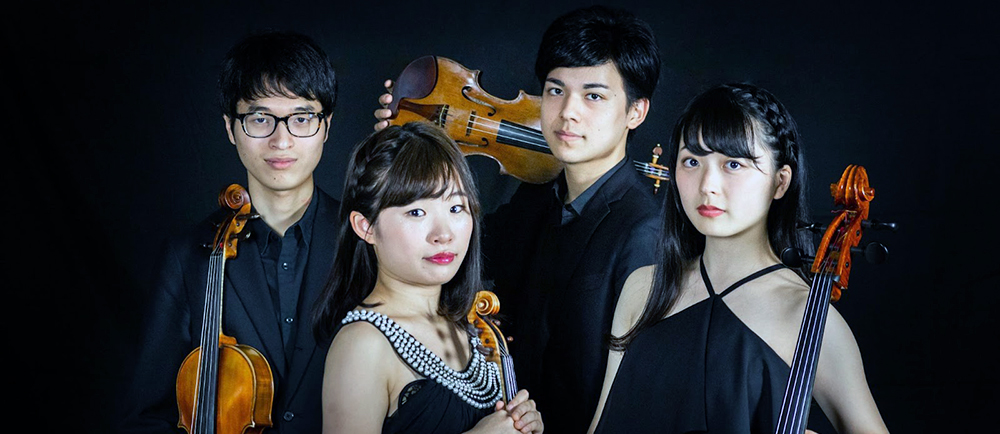
Quartet Integra
The Quartet Integra—violinists Kyoka Misawa and Rinato Kikuno, violist Itsuki Yamamoto and cellist Ye Un Park—formed in 2015 and began their studies at the Toho Gakuen School of Music in Tokyo. They continued their academic work as a quartet as Fellows at the Suntory Hall Chamber Music Academy. They are currently enrolled in the Chamber Ensemble-in-Residence Program at the Colburn School in Los Angeles.
The Quartet won Second Prize and the Audience Award at the 2022 ARD International Music Competition, First Prize at the 2021 Bartók World Competition, and First Prize, the Prize of Beethoven and Grand Prix Award at the 2019 Akiyoshidai Music Competition. Upcoming performances include a New York debut at the Schneider Concert series at the New School, a contemporary recital at Boston Court, a recital as part of the Discovery Series at the La Jolla Music Society and the ECHO Chamber Music Series in El Cajon, California, among others.
Past festival performances include the Suntory Chamber Music Garden Festival, the Kanazawa, Hukuyama and Takefu International Festivals. Quartet Integra has commissioned many new works from Japanese composers and given more than a dozen world premieres.
In 1779 Haydn’s employer, Prince Nicolaus Esterhazy, granted the composer the right to sell his works to publishers. One of the first sets of works where Haydn took advantage of that freedom was his set of six string quartets, composed in 1781 and known as Op. 33. Haydn wrote to a number of amateur musicians inviting them to subscribe to manuscript copies of the quartets, which he said were written “von einer Neu, gantz besonderer Art” (a new and entirely special way).
There is disagreement whether the six quartets truly represent a “new way” of composition, or the phrase was just salesmanship by Haydn. Either way, the set is regarded as one of Haydn’s major works defining the classical style. In addition to the manuscript parts Haydn offered, the quartets were published separately in Vienna, Berlin and London. Consequently, they were widely known, and may have been the inspiration for the six quartets Mozart wrote 1782–85 and dedicated to Haydn.
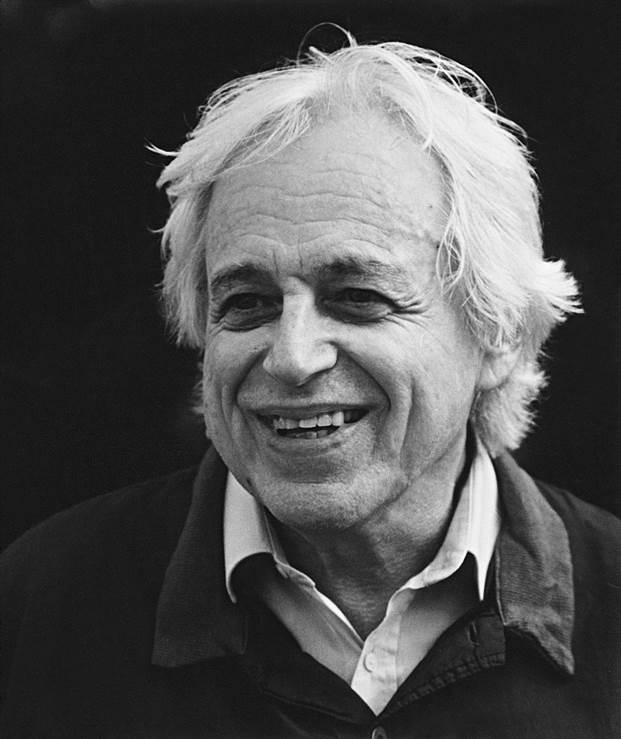
György Ligeti
The second of Hungarian composer György Ligeti’s four string quartets was written in 1968 and dedicated to the La Salle Quartet, who played in the premiere in 1969. The five movements share related material but represent five different styles of musical motion, from gentle lyricism to mechanical pizzicato to fast and aggressive, and other stops in between.
Brahms composed three string quartets that have survived, as well as a large number of early quartets that he destroyed. The one known as his Third Quartet, composed in 1875, was dedicated to Theodor Wilhelm Engelmann, an amateur cellist, in spite of which it contains no major themes or solos for the cello. Later Brahms wrote to Engelmann, “This quartet rather resembles your wife—very dainty but brilliant.”
It is one of Brahms’s most animated and cheerful works. The first and fourth movements are particularly playful, full of bouncing, propulsive rhythms. The central movements—a wistful slow movement and an agitated waltz movement—are move serious in mood.
# # # # #
Quartet Integra
Haydn: String Quartet in B minor, op. 33 no. 1
György Ligeti: String Quartet No. 2
Brahms: String Quartet No. 3, op. 67
4 p.m. Sunday, Nov. 3 and 7:30p.m. Monday, Nov. 4 Grusin Music Hall
It’s spring and thoughts at the Boulder Philharmonic turn to romance.
Their next concert under music director Michael Butterman, titled in fact “Spring Romance,” features a fleet and evocative musical meditation on the season, D’un matin de printemps (Of a spring morning) by Lili Boulanger.
Also on the program to be performed Saturday (April 27; details below) at Macky Auditorium, Spanish/Mallorcan violinist Francisco Fullana will perform Saint-Saëns’s Violin Concerto No. 3 with the orchestra. The program concludes with Tchaikovsky’s Symphony No. 5.
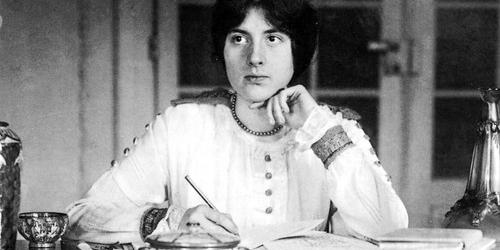
Lili Boulanger
The younger sister of the famous music teacher Nadia Boulanger, Lili died at the tragically young age of 24. The first female winner of the Prix de Rome composition prize, Lili showed precocious musical talent as young as four, when she accompanied her older sister to classes at the Paris Conservatoire. Long overshadowed by Nadia’s success, Lili and her music have become more prominent in recent years.
Written in 1918, D’un matin de printemps was one of the last works she completed. It was written in versions for solo violin, flute, and piano, for piano trio, and for orchestra. The score’s origin as a solo piece is reflected in passages traded among first chair string players.
A native of Mallorca, a Spanish island in the Mediterranean, Fullana won an Avery Fisher Career Grant in 2018. A versatile performer, he performs both 19th-century Romantic repertoire with major orchestras world wide, and early music that he has played as artist-in-residence with the ensemble Apollo’s Fire.
Dedicated to and premiered by the Spanish virtuoso Pablo de Sarasate, Saint-Saëns’s Third Concerto is one of his most frequently performed pieces for violin and orchestra. Characterized by colorful themes and virtuoso flourishes, it has often been chosen by young violinists as a debut concerto. The most striking moment comes at the beginning of the finale, when the violinist plays a recitative-like passage before proceeding to an energetic main theme.
One of the composer’s most popular works, Tchaikovsky’s Fifth Symphony is also one of his most emotionally wrought symphonies. Often gripped with insecurity, Tchaikovsky initially thought the Fifth Symphony was a failure. “There is something repellant about it,” he wrote. After Brahms heard it and praised the symphony, however, Tchaikovsky wrote “I have started to love it again.”
The symphony’s dramatic progression has suggested to many listeners that there is an underlying story, or program. The composer, however, insisted that the Fifth—unlike the Fourth and Sixth symphonies—was not programmatic. Regardless of what any listener hears within the score’s drama, however, its emotional force has made it one of the most popular pieces in the orchestral repertoire.
# # # # #
“Spring Romance” Boulder Philharmonic Orchestra, Michael Butterman, conductor With Francisco Fullana, violin
Lili Boulanger: D’un matin de printemps (Of a spring morning)
While the Boulder Philharmonic is thinking about Spring, the Boulder Chorale and conductor Vicki Burrichter are musically off to Mexico for a Fiesta de las Luces (Festival of lights).
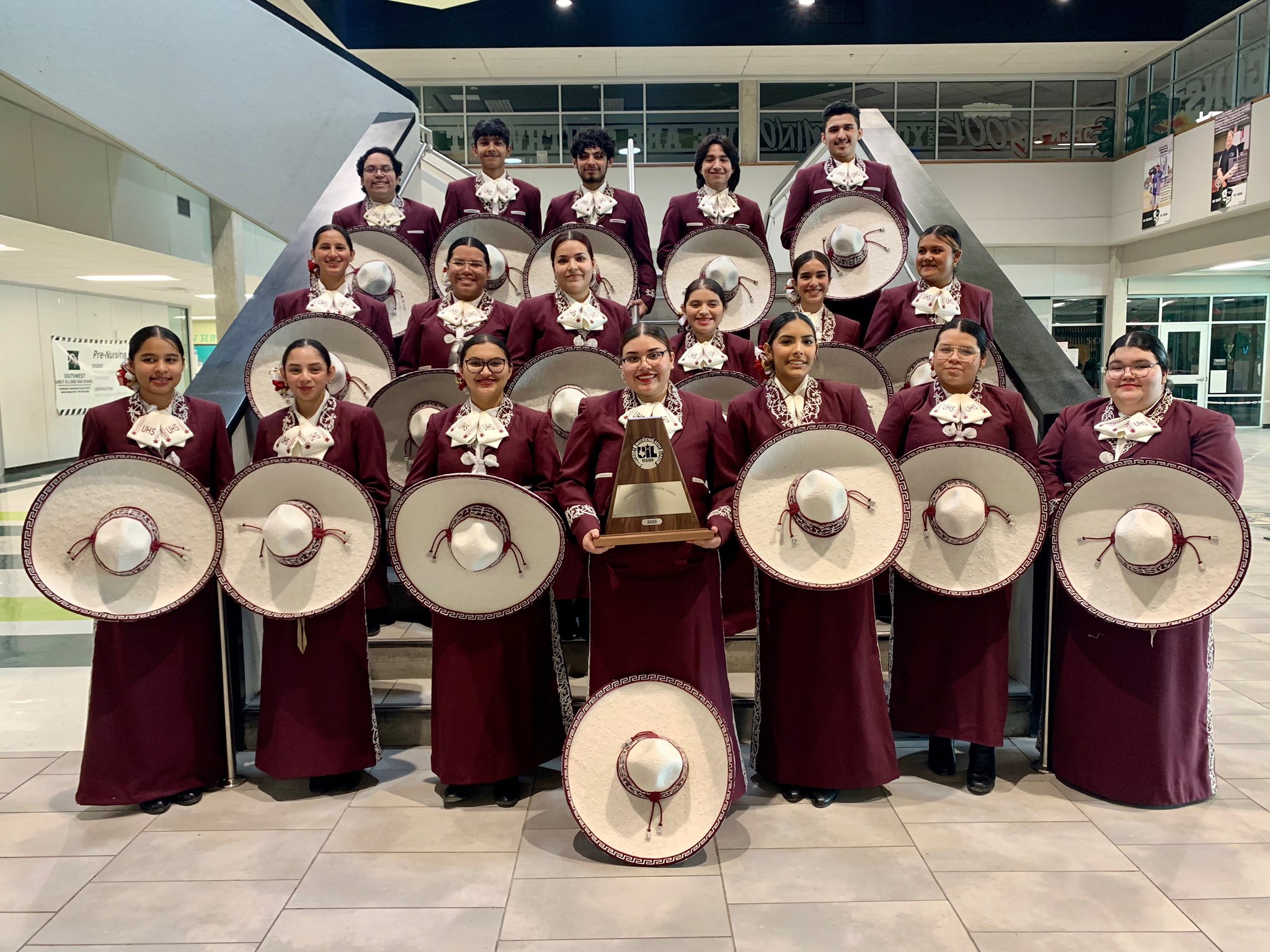
Their next program, to be presented Saturday and Sunday in Boulder and Longmont (April 27 and 28; see below) features Los Coyotes, an award-winning Mariachi Band from Uvalde, Texas, High School, as well as the Boulder Chorale’s children’s choir Bel Canto. The program is a celebration of Mexican culture in music, including both Mariachi music and other Mexican songs.
Los Coyotes, Uvalde High School, Texas
Founded in 1999, Los Coyotes won the Texas University Interscholastic League (UIL) Mariachi Championship in 2023. The outcome of the championship included a powerful feature article in Rolling Stone Magazine one year ago. The article brought out, among other things, the consoling impact of Mariachi music in Uvalde after the school shooting of 2022, and how a small program had grown into state champions under their current director, Albert Martinez.
As part of their visit to Colorado to perform with the Boulder Chorale, Los Coyotes have presented a workshop for local Mariachi students at Longmont’s Skyline High School, and have other appearances planned in addition to their concerts with the Boulder Chorale. Their full schedule is available HERE.
Each performance listed below will be preceded at 3:30 p.m. by a presentation by Burrichter and Martinez.
# # # # #
Fiesta de las Luces: Songs of Mexico Boulder Chorale, Vicki Burrichter, conductor With Los Coyotes, Mariachi band from Uvalde, Texas, High School, Albert Martinez, director; and the Boulder Children’s Choir Bel Canto
Program of Mariachi music and Mexican songs arranged for chorus
4 p.m. Saturday, April 27 at First United Methodist Church, Boulder 4 p.m. Sunday, April 28, at Vance Brand Civic Auditorium, Longmont
The Takács Quartet wraps up their 2023–24 season of campus concerts Sunday and Monday (April 28 and 29; see details below). This was the quartet’s 49th season.
The Sunday performance is sold out, but a few tickets are still available at the time of posting for Monday’s performance, and tickets are also available for the livestream of Sunday’s concert, which will be available online through Monday, May 6.
The program comes from the heart of the Classical/Romantic repertoire, opening with string quartets by Haydn and Schubert. To close out the concert, two additional CU music faculty members—violist Erika Eckert and cellist Meta Weiss—join the quartet to perform Brahms’s String Sextet in G major.
Most of Haydn’s string quartets were published in sets of six, which was the standard for most printed music at the time. Each published set generally has an opus number for the full set, with works numbered 1–6 within the set. The Quartet in D minor, op. 42, is an exception, however, as it stands alone as a single work issued as op. 42.
It has been speculated that because it is a relatively simple quartet, Op. 42 might have been part of a planned set of three shorter works that were commissioned by two Spanish nobles, but never completed. It is in the standard four movements, in the order Andante ed innocentemente (walking speed and innocently), Minuet—Trio, Adagio and Presto.
Schubert’s String Quartet in B-flat was written in 1814, when the composer was only 17. It was never published during Schubert’s lifetime, so when it finally came out in 1863, it was given the late opus number of 168, even though it was an early work. Schubert wrote the quartet very quickly, completing the first movement in only four and a half hours, and the entire quartet in nine days. With such speed, it is not surprising that it is one of seven quartets Schubert completed in little more than a year.
Takács Quartet. Image by Amanda Tipton Photography.
All his life Brahms was wary of being compared to Beethoven. That likely why it took him 14 years to complete his first symphony, published when he was in his 40s, and why he destroyed his first 20 attempts at writing a string quartet. It is also sometimes speculated that he completed his two string sextets before his three quartets because they were not easily compared Beethoven’s masterful string quartets.
In any case, the Sextet in G major was written when Brahms was living comfortably near the resort town of Baden-Baden. The first movement contains a musical reference to the first name of the singer Agathe von Siebold, to whom Brahms had been briefly engaged some years before. Her significance to the composer is indicated by the fact that when he finished that movement, her wrote in a letter, “Here I have freed myself from my last love.”
Surprisingly, the Sextet was first performed in Boston in October 1866, a month before the European premiere in Zurich.
# # # # #
Takács Quartet With Erika Eckert, viola, and Meta Weiss, cello
Haydn: String Quartet in D minor, Op. 42
Schubert: String Quartet in B-flat Major, D112
Brahms: String Sextet No. 2 in G Major, Op. 36
4 p.m. Sunday, April 28 SOLD OUT 7:30 p.m. Monday, April 29
Grusin Music Hall, CU Imig Music Building
TICKETS for live performances and for online stream of Sunday’s performance
A personal reflection in the form of a concert review.
By Peter Alexander
Last night, the Boulder Philharmonic played a concert.
They played music by Brahms and Charles Denler, the last accompanied by photographs by John Fielder. That was what was on the program, but before the announced program began, they also played the “Nimrod” variation from Edward Elgar’s Enigma Variations as a moment of solace for all of us who were feeling battered by the fierce winds blowing across our world, and as a moment of tribute to those suffering after the atrocities in Paris.
And presumably, since Paris was not even mentioned, for others around the world who are suffering in these terrible times—in Lebanon, in Syria, across Europe, in Africa, and in our own country.
One of the most beautiful four minutes of music I know, “Nimrod” is as fine an offering of solace as musicians could make. It was followed by a long period of silence, as conductor Michael Butterman and members of the orchestra held their positions from the final note. And after a smattering of applause—I will take it as an expression of gratitude for the gesture, rather than anything so routine as reward for the performance—Butterman spoke some touching and very appropriate words about how we all are feeling today.
As one of those affected by the events of the past 36 hours, the past week, the past year, I was both thankful for the opportunity to hear music lovingly played, and aware what a tiny thing a concert is in the world we now live in. Sometimes, just getting on with life is the best thing that we can do—literally the best of many choices. In that respect, the people of Paris may be an example for us all. But sometimes, too, it feels insufficient.
While “Nimrod” was sounding, the familiar words of Leonard Bernstein were projected above the orchestra: ““This will be our reply to violence: to make music more intensely, more beautifully, more devotedly than ever before.”
Sadly, these words are familiar because they seem to be quoted more and more often in these times. They are beautiful, but at some point, they are no longer enough. We will either find a way to get beyond the expression of our ideals and find a way to make a world that will accept difference, one that will make room for all of the world’s children—those of any God you prefer—or this grand experiment of human culture and civilization will come to an end.
It was a meaningful coincidence that the program opened with Brahms’s Schicksalslied (Song of destiny), performed by the orchestra with the Boulder Chorale in celebration of the group’s 50th anniversary. A setting of a poem by Friedrich Hölderlin, the work contrasts the peace of Elysium with human life, where we suffer the batterings of forces we cannot control. The central choral section, essentially a musical depiction of life in a world of chaos, is followed by music that seems to offer comfort and hope.
It turns out Boulder Phil could not have selected a better message for Nov. 14, 2015.
After a satisfying and meaningful performance of Brahms, Butterman and the orchestra turned their attention to music that strives for the same peace that Brahms suggests at the end of the Schicksalslied. The concert premiere of Denler’s Portraits in Season offered meditative music for piano supported and gently amplified by the orchestra. With the composer playing the solo piano part, the performance created a fitting mood of calm and contemplation.
Denler explained before the performance that the piece was not really about the seasons, but about the passages of life and the pleasure that one can find from growing older. This too seemed to fit the mood of the first half of the concert. The beautiful photography of John Fielder projected above the orchestra, and the quotes from Henry David Thoreau that appeared on some slides, added greatly to the pleasure of the occasion, and provided still more food for reflection.
The concert concluded with a mostly satisfying performance of Brahms’s Second Symphony. Here the key of D major casts a layer of light and serenity over the entire work. The audience responded with warmth.
Candles and flowers outside La Belle Equipe restaurant in Paris, Nov. 14, 2015.
Leaving the concert hall, one re-enters a world that is not as safe or well ordered as a Brahms symphony. On a personal note, I was all the more thoughtful about humanity’s capacity for inflicting horror because just the day before—near the same time as the attacks in Paris—I happened to visit the site of one of the worst tragedies in our own country’s history: the Sand Creek Massacre by U.S. volunteers of Cheyenne and Arapahoe women, children, and men who were flying the stars and stripes and a white flag.
Suffering, it seems, is ageless. So as we enjoy the best fruits that human culture has to offer, whether it be in the music of Johannes Brahms and Charles Denler, or the photos of John Fielder, or whatever art, music and literature you may enjoy in the coming weeks, we should all take the time to reflect on how precious and fragile is the world we imagine that we live in. If we fail to do so, we may pay a terrible price.




 Sharps & Flatirons