GRACE NOTES: THE HOLIDAYS MARCH ON

Pinocchio, Winter reveries, Messiah and Swingin’ Brass

By Peter Alexander Dec. 10 at 2:50 p.m.

Boulder Opera Company will present four performances of The Adventures of Pinocchio by English composer Jonathan Dove over the coming weekend (Dec. 14 and 15; details below).

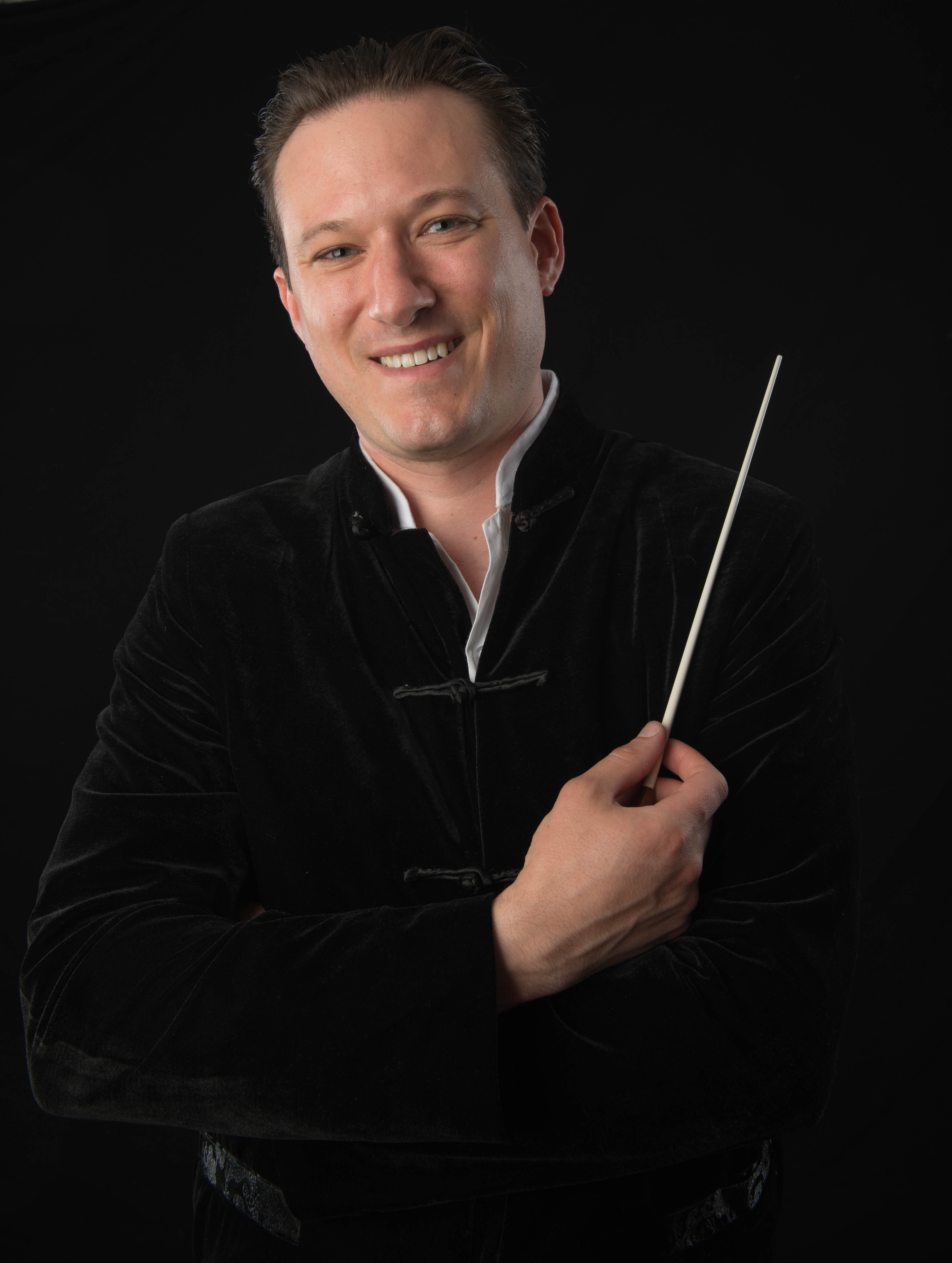
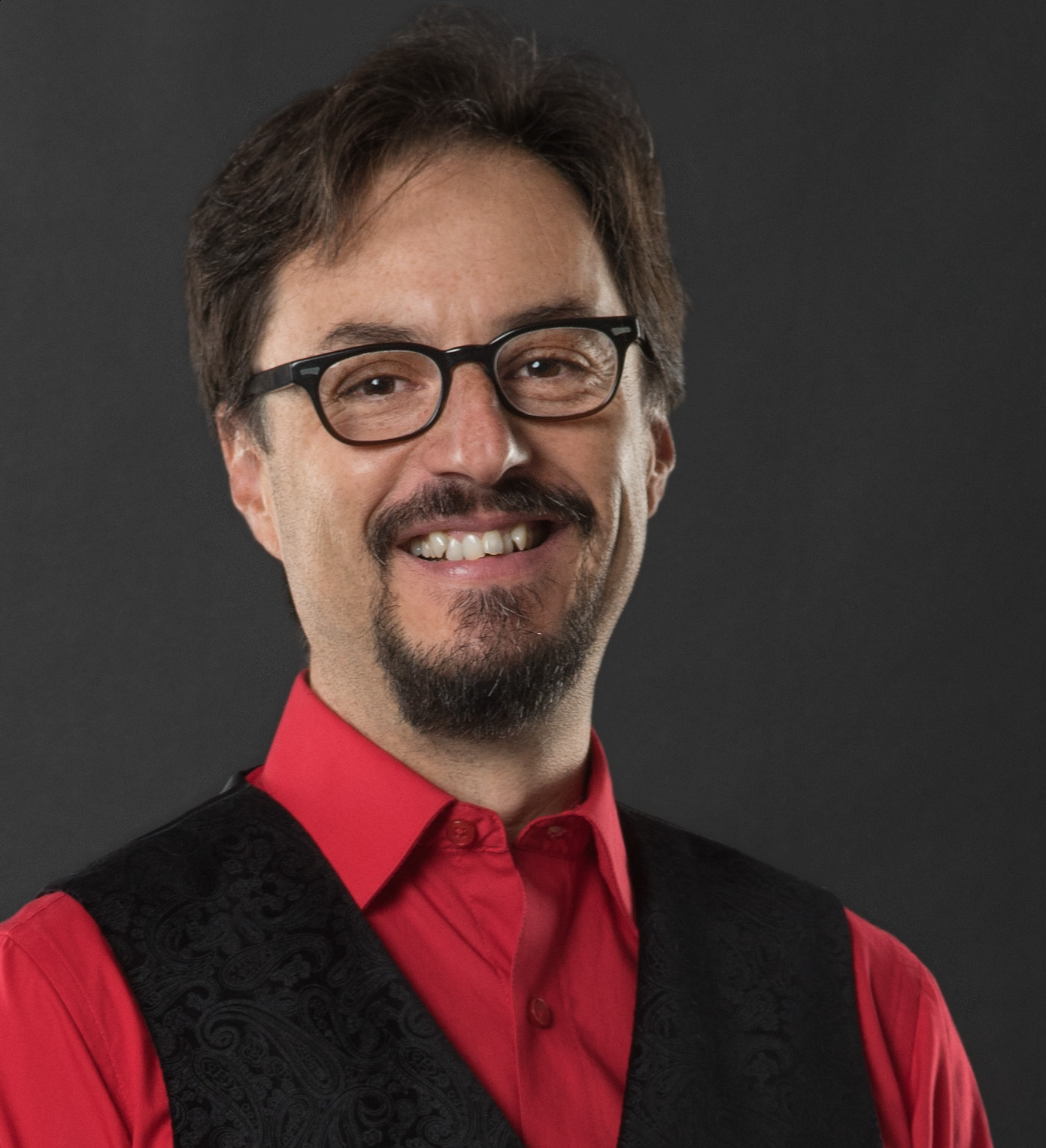
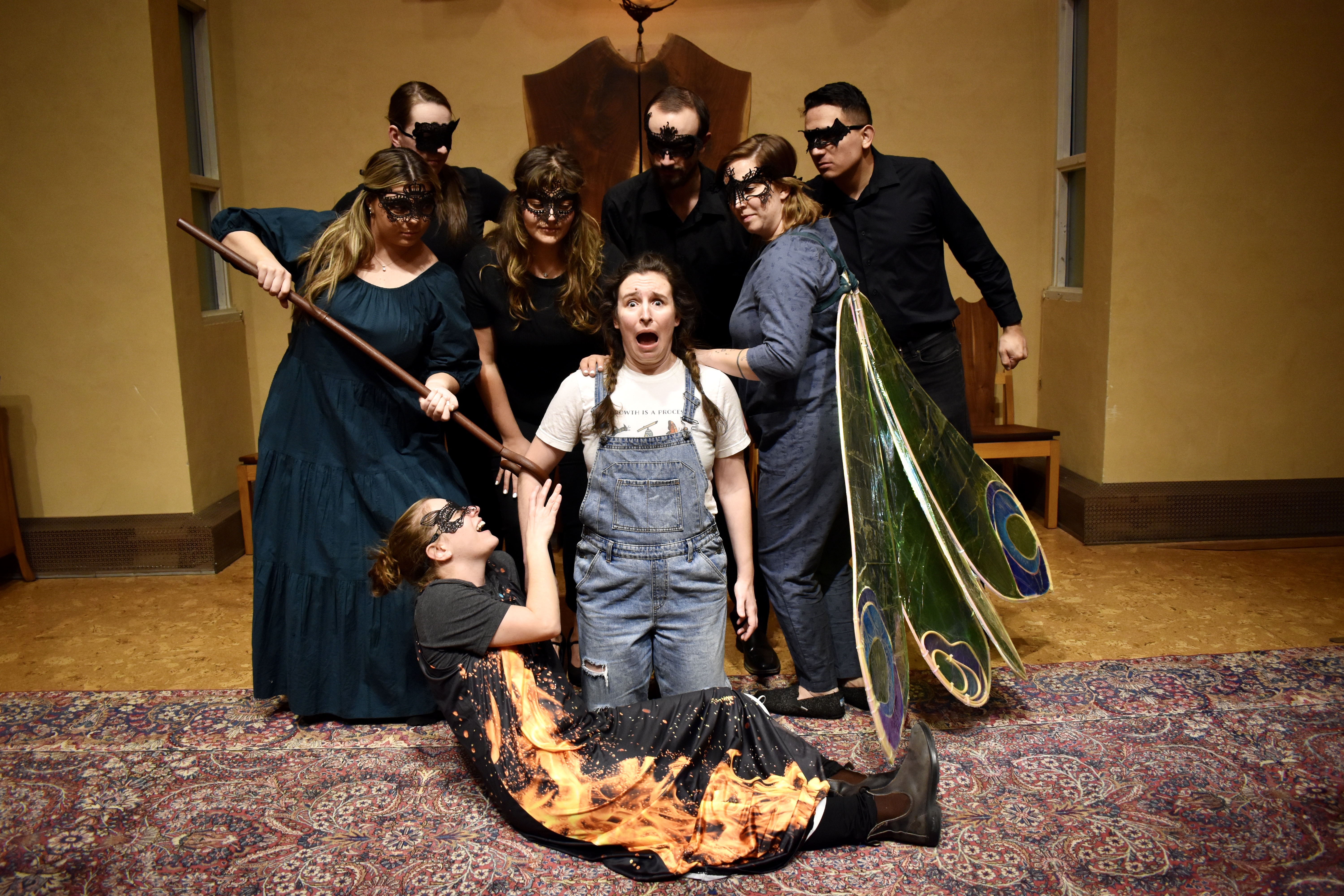
Based on the familiar book by Italian author Carlo Collodi, Dove’s one-hour opera tells the story of the wooden puppet who becomes a boy in 20 brief scenes that range from Gepetto’s hut to the Blue Fairy’s cottage, Funland and the inside of a big fish. Described by Boulder Opera as “A magical opera for all ages,” The Adventures of Pinocchio will be accompanied by an ensemble orchestra led by music director Mario Barbosa, and stage directed by Zane Alcorn.

Zane Alcorn

In the company’s press release, Alcorn is quoted saying “Pinocchio is is a coming-of age story meant to subtly teach children how selfishness will always harm you. Whenever Pinocchio makes a selfish choice like skipping school, lying or going to Funland, he is punished rather quickly, but when he helps the community and saves this father, this leads to the ultimate reward, becoming a real boy.”

The moral of the story is, he says, “those who help others help themselves.”

Dove is highly regarded composer of operas, choral works and instrumental music. His opera Flight, based on the real-life experiences of a refugee trapped in the Charles DeGaulle Airport in Paris for 18 years, has been widely performed around the world, including a premiere at the Glyndebourne Festival, at the Opera theatre of St. Louis, Des Moines Metro Opera, Seattle Opera and the Museum of Flight in Washington, D.C.

The Adventures of Pinocchio was commissioned by Opera North and Sadler’s Wells and first performed in Leeds, U.K., Dec. 21, 2007. It has subsequently been performed by Minnesota Opera as well as companies in Germany, South Korea and Russia.

# # # # # 

Boulder Opera
Mario Barbosa, conductor, and Zane Alcorn, stage director

  • Jonathan Dove: The Adventures of Pinocchio

2 and 4 p.m. Saturday, Dec. 14
1 and 3 p.m. Sunday, Dec. 15
eTown Hall

TICKETS

All the constituent groups of the Boulder Chorale will come together to perform “Winter Reverie,” this year’s edition of their annual Holidays program, Saturday and Sunday in Boulder (Dec. 14 and 15; details below). 

Also appearing with the Chorale will be the Boulder Philharmonic String Quartet: Yenlik Weiss and Reagan Kane, violin; Lee Anderson, viola; and Kimberlee Hanto, cello.

In addition to the full Concert Chorale and the adult Chamber Chorale, the performance will feature all four age groups from the Boulder Children’s Chorale: Bel Canto, Volante, Prima Voce and Piccolini. They will each sing alone and together, including a concluding piece with the full adult Concert Chorale. 
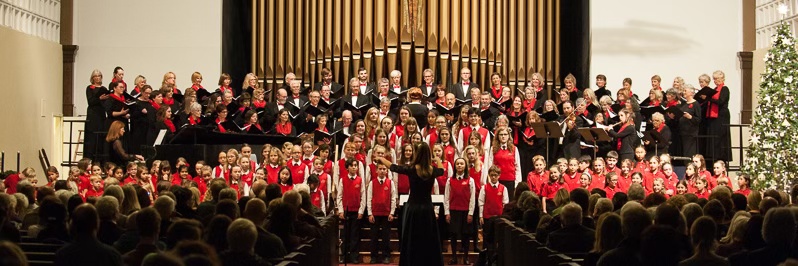
Boulder Chorale and Children’s Chorales at a previous holidays program. Photo by Glenn Ross.

The program opens with the combined children’s groups performing an arrangement of Leroy Anderson’s evergreen Holiday favorite, “Sleigh Ride.” Other performances by the children’s groups include the Jewish traditional song “Maoz Tzur,” “Winter Dreams’ by the prolific composer PINKZEBRA, and the youngest singers performing “Chrissimas Day” with auxiliary percussion accompaniment. 

The adult Chamber Chorale will perform Morten Lauridsen’s setting of the James Agee text “Sure on this Shining Night” and the Magnificat setting of Latvian composer Ēriks Ešenvalds. In addition to traditional holiday numbers, the program also features works by CU faculty member Daniel Kellog and Norwegian composer Ole Gjeilo. The program concludes with the combined adult and children’s ensembles performing in English and Spanish David Kantor’s “Night of Silence/Noche de Silencio,” which incorporates the familiar carol “Silent Night.” Audience members will be invited to sing along.

The director of the adult choirs and co-artistic director of the Boulder Chorale is Vicki Burrichter. Guest director for this concert is Larisa Dreger. Co-artistic director Nathan Wubbena is director of the Children’s Chorale and leads Bel Canto, the oldest children’s group. Directors of the other children’s groups are Anna Robinson, Prima Voce; Larisa Dreger, Volante; and Melody Sebald, Piccolini.

# # # # #

“Winter Reverie”
Boulder Chorale and children’s chorales, Vicki Burrichter and Nathan Wubbena, co-artistic directors
With the Boulder Philharmonic String Quartet and collaborative pianists Susan Olenwine, Caitlin Strickland, Matthew Sebald, Margaret Schraff and Joanna Lynden

  • Leroy Anderson: “Sleigh Ride” (arr. Hawley Ades)
  • Jewish Traditional: “Maoz Tzur” (arr. Matt Podd)
  • Mary Donnelly and George L.O. Strid: “Winter’s Beauty”
  • Christina Witten Thomas: “Snow Song”
  • PINKZEBRA: “Winter Dreams”
  • Morten Lauridsen: “Sure on This Shining Night”
  • Ēriks Ešenvalds: Magnificat
  • English Traditional: “Chrissimas Day” (arr. Shirley W. McRae)
  • Irish Traditional: “Frosty Weather” (arr. Margaret Scharff)
  • French Traditional: “Pat-a-Pan” (arr. Andy Beck)
  • Andrew Parr: “Winter’s Stillness”
  • Jewish Traditional: “Hanerot Halalu: These Chanukah lights we kindle” (arr. Becky Slage Mayo)
  • Daniel Kellog: “Sim Shalom
  • Ola Gjeilo: “Ecce Novum”
    “Tundra”
  • David Kantor: “Night of Silence” (arr. Nathan Wubbena)

3 p.m. Saturday, Dec. 14 and 5 p.m. Sunday, Dec. 15
First United Methodist Church, Boulder
Livestream 5 p.m. Sunday, Dec. 15

In person and livestream TICKETS

The Longmont Symphony Orchestra (LSO) will perform Handel’s Messiah for their annual Holiday “Candlelight Concert” on Saturday (4 p.m. Dec. 14), in the Vance Brand Civic Auditorium. Elliot Moore will conduct.

A longstanding seasonal offering from the LSO, the “Candlelight Concert” has presented Handel’s oratorio in some years, including 2019 and 2022. The latter year also featured a Messiah singalong for audience members to sing the popular choral numbers with the LSO. In other years they have offered “A Baroque Christmas” or other Holiday-themed performances. 

Although not strictly a Christmas piece, since the entire oratorio goes through the Easter story and the Resurrection, Messiah is undoubtedly one of the most popular pieces of the Christmas season. The first section tells the Christmas story in music that has touched audiences since the first performance in Dublin in 1742. 

# # # # #

Candlelight Concert
Longmont Symphony Orchestra and Longmont Chorale, Elliot Moore, conductor
With Julianne Davis, soprano; Elijah English, countertenor; Charles Moore, tenor; and Andy Konopak, bass-baritone

  • Handel: Messiah

4 p.m. Saturday, Dec. 14
Vance Brand Civic Auditorium

TICKETS 

The Boston Brass brings their Holiday show, “Christmas Bells are Swingin’,” to Macky Auditorium at 7:30 p.m. Saturday, Dec. 14. They will be joined for the performance by the Brass All-Stars Big Band, an ensemble recruited by the Boston Brass from local musicians, including members of the CU College of Music Faculty.

Founded in 1986, the Boston Brass performs brass quintet arrangements of classical music and jazz standards as well as original works for brass. They have toured throughout the United States and to more than 30 countries world wide. In addition to they quintet performances, they also perform with orchestras, bands and jazz bands.
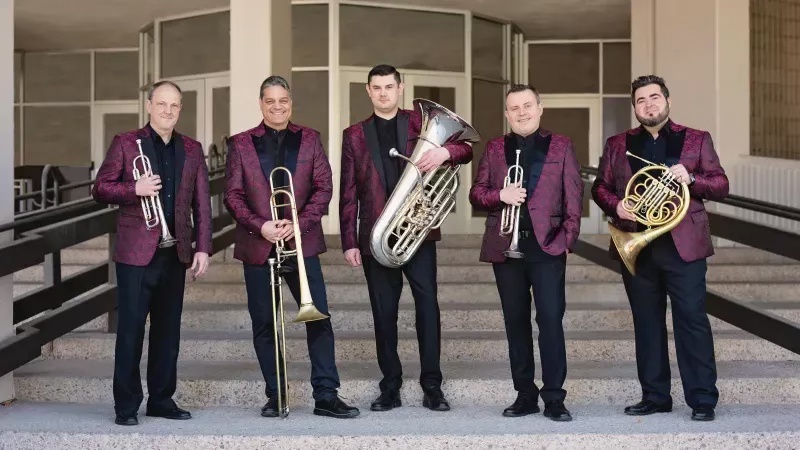
Boston Brass

Their numerous recordings include one released in 2007 with the same title as their Macky program—“Christmas Bells are Swingin’”—recorded with the Syracuse University Wind ensemble. Pieces on both the CD and the Macky concert program include arrangements of three dances from The Nutcracker, the Sousa-carol blend “Jingle Bells Forever,” and Irving Berlin’s “White Christmas.”

Other works on the concert program are Stan Kenton’s arrangement of “Joy to the World” and several familiar Christmas Carols, including “God Rest Ye Merry Gentlemen,” “Angels We Have Heard on High,” and “The Holy and the Ivy.”

The Boston Brass’s latest album, titled “Joe’s Tango,” features the world premiere of Five Cities Concerto by Jorge Machain. Recorded with the University of Nevada-Las Vegas Wind Orchestra, the album also features New York Philharmonic trombonist Joe Alessi performing with the Boston brass.  

# # # # #

“Christmas Bells are Swingin’”
Boston Brass and Brass All-Stars Big Band

  • Anon.: “God Rest Ye Merry Gentlemen” (arr. Ralph Carmichael)
  • John Henry Hopkins, Jr.: “We Three Kings of Orient Are” (arr. Carmichael)
  • Traditional: “Angels We Have Heard on High” (arr. Carmichael)
  • Tchaikovsky: Dances from The Nutcracker (arr. J.D.Shaw)
  • Robert W. Smith: “Jingle Bells Forever” (arr. Shaw)
  • “The Grinch” (arr. William Russell)
  • “Ho, Ho, Ho” (arr. Rick DeJonge)
  • Traditional: The Twelve Days of Christmas (arr. Carmichael)
  • Leroy Anderson: “Sleigh Ride” (arr. Shaw)
  • Jack Rollins: “Frosty the Snowman” (arr. Shaw)
  • Franz Xaver Gruber: “Silent Night” (arr. Chris Castellanos)
  • Anon.: “Good King Wenceslas” (arr. Carmichael)
  • Henry Gauntlett: “Once in Royal David’s City” (arr. Carmichael)
  • Traditional: “The Holly and the Ivy” (arr. Carmichael)
  • David Cutler: “Faithful”
  • Irving Berlin: “White Christmas” (arr. Shaw)
  • Anon.: “Greensleeves” (arr. Shaw)

7:30 p.m. Saturday, Dec. 14
Macky Auditorium

TICKETS

Grace Notes: Short Operas and Beethoven Symphonies

Boulder Opera’s “Operatizers,” Boulder and Longmont symphonies’ Beethoven 3 and 9

By Peter Alexander April 17 at 4:30 p.m.

The Boulder Symphony will present Beethoven’s Symphony No. 3—known as the “Eroica”—along with Grieg’s Piano Concerto and the “Lullaby” for string orchestra by George Gershwin Friday evening (7:30 p.m. April 19; details below).

Devin Patrick Hughes will conduct. Soloist for the Grieg Concerto will be Canadian pianist Lorraine Min, who has toured and performed extensively in North and South America, Europe and Asia. 

Originally written as a composition exercise on the piano, Gershwin’s “Lullaby” was arranged by the composer for string quartet. He later incorporated the tune into his 1922 musical, Blue Monday. The show was not a success, and it was not until 1967 that it became better known in performances by the Juilliard String Quartet. Today, performances by full orchestral string sections are common.

Grieg composed his Piano Concerto over the summer of 1868, during a vacation in the village of Søllerød, now part of København, Denmark. Although Grieg was never fully satisfied with the score, the concerto has remained one of his most popular pieces. A review of the premiere praised the concerto as “all Norway in its infinite variety and unity,” and fancifully described the  second movement as “a lonely mountain-girt tarn that lies dreaming of infinity.”

Beethoven’s Third Symphony is one of those musical works that are often described as a turning point in music history. It is nearly twice as long as any previous symphony, and indeed heroic in scope and feeling.

Beethoven’s title page to his Third Symphony, with “Bonaparte” forcefully scratched out

When he wrote it, Beethoven famously titled the symphony “Bonaparte” in honor of Napoleon, but scratched out the dedication in his manuscript when the French general crowned himself emperor. It was published in 1806 with the title “Heroic Symphony . . . composed to celebrate the memory of a great man.”

In place of a traditional slow introduction, Beethoven starts the symphony with two brash chords and spins out a lengthy movement starting with only the notes of the tonic E-flat chord. The second movement is an intense funeral march, a much more dramatic and powerful movement than his audience would have expected. In place of the normal minuet, Beethoven composed a rambunctious scherzo. 

In these first three movement, the realm of the symphony has been expanded. The finale is more typical of the times, a set of variations on a theme from Beethoven’s ballet The Creatures of Prometheus. But even here, the number of variations, a fugue on the theme and a section of development represent an extension beyond the normal variation finale of the time. Again, Beethoven expanded the scope of the symphony.

# # # # #

Boulder Symphony, Devin Patrick Hughes, conductor
With Lorraine Min, piano

  • Gershwin: “Lullaby” for string orchestra
  • Grieg: Piano Concerto in A minor
  • Beethoven: Symphony No. 3 in E-flat major, op. 55 (“Eroica”)

7:30 p.m. Friday, April 19
Grace Commons Church

TICKETS

# # # # #

Boulder Opera opens the door on “North American storytelling” with “Operatizers,” a program of five short operas by composers from American master Samuel Barber to contemporary operatic star composer Jake Heggie to Ft. Collins-based composer/songwriter Ilan Blanck.

Subjects of the opera include a parody of television soap operas to various meditations on modern love. Performances Saturday and Sunday (7 p.m. April 20 and 3 p.m. April 21 at the Diary Arts Center) will feature a “Maestro’s Reception” at intermission where audience members can meet cast members and directors and ask questions about the productions. 

Composer Ilan Blanck

The five operas and their plots are described on the Boulder Opera Web page:

  • Avow by Mark Adamo imagines a conflicted bride, her avid mother, the haunted groom, the ghost of his father, and a celebrant who really should make better efforts to remember which ceremony he’s performing.
  • At the Statue of Venus by Jake Heggie tells the story of an attractive woman waiting in a museum by the statue of the goddess of love to meet a man she has never seen before. Will he like her? Will she like him? We all know Mr. Right doesn’t exist – or does he?
  • A Hand of Bridge by Samuel Barber consists of two unhappily married couples playing a hand of bridge, during which each character has a brief aria expressing his or her inner desires.
  • Gallantry by Douglas Moore is parody of hospital soap operas with commercial interruptions.
  • Spare Room with a Shag Rug by lan Blanck is written in English and Spanish, plus a touch of Yiddish, paying homage to the composer’s own Mexican-Jewish heritage.

# # # # #

“Operatizers”
Boulder Opera Company

  • Mark Adamo: Avow
  • Jake Heggie: At the Statue of Venus
  • Samuel Barber: A Hand of Bridge
  • Douglas Moore: Gallantry
  • Ilan Blanck: Spare Room with a Shag Rug

7 p.m. Saturday, April 20
3 p.m. Sunday, April 21
Dairy Arts Center

TICKETS, including add-on tickets for the Maestro’s Reception at intermission

# # # # #

The Longmont Symphony Orchestra (LSO) and conductor Elliot Moore conclude their cycle of all nine Beethoven symphonies Saturday (7 p.m. Vance Brand Civic Auditorium; details below) with the massive Ninth Symphony, one of the symphonic icons of the 19th century.

The Longmont Chorale joins the LSO for this performance. Soloists will be soprano Dawna Rae Warren, mezzo-soprano Gloria Palermo, tenor Javier Abreu and bass-baritone Michael Leyte-Vidal. The LSO has performed the full Beethoven cycle over the past five seasons, starting in April, 2018.

Vaughan Williams wrote his Serenade to Music, based on a text by Shakespeare, as a tribute to conductor Henry Wood. Scored for orchestra and 16 vocal soloists, it was later arranged for orchestra with four soloists and chorus. Since the first performance in 1938, it has been loved by singers and audiences both for the sheer beauty of the vocal writing and the harmonies.

Elliot Moore

Beethoven’s Ninth Symphony, the first by a major composer with chorus in addition to orchestra, is one of the most performed and most loved works in the classical repertoire. It was composed in 1822-24, and first performed in Vienna May 7, 1824. 

The orchestra was led by Austrian composer and violinist Michael Umlauf with Beethoven, stone deaf by that time, standing at his side. In one famous anecdote, the composer was unable to hear the cheers of the audience at the end of the performance and the alto soloist, Caroline Ungar, had to take him by the hand and turn him around to see the enthusiasm of the listeners.

The choral last movement uses a text by German poet Friedrich Schiller that celebrates the brotherhood of men: “All men shall become brothers, wherever the gentle wings [of joy] hover. . . . Every creature drinks in joy at nature’s breast.” Because of this message of universal love, the symphony has been performed for many special occasions in history, including the original opening Wagner’s Bayreuth Festspielhaus (festival hall) and for its reopening after World War II, in 1989 to celebrate the fall of the Berlin Wall, and for the opening of the 1988 Winter Olympics in Japan, and other ceremonial occasions.

Performances of the Ninth Symphony are almost always considered special occasions, and almost always sell out. In addition to its popularity, the symphony has influenced composers from Dvořák to Bartók, and especially the symphonies by the Austrian composer Anton Bruckner.

# # # # #

Beethoven Cycle: Symphony No. 9
Longmont Symphony, Elliot Moore, conductor
With the Longmont Chorale, Nathan Wubbena, conductor 
Soprano Dawna Rae Warren, mezzo-soprano Gloria Palermo, tenor Javier Abreu and bass-baritone Michael Leyte-Vidal

  • Vaughan Williams: Serenade to Music
  • Beethoven: Symphony No. 9 in D minor (“Choral”)

7 p.m. Saturday, April 20
Vance Brand Civic Auditorium

TICKETS (Note: This concert is close to selling out. Availability of tickets cannot be guaranteed.)

Boulder Opera children’s performance is sold out

Free Sunday performance at the Boulder Public Library is full

By Peter Alexander Jan. 24 at 3:10 p.m.

Chris Pratorius Gómez

Boulder Opera’s upcoming performance of the children’s opera Xochitl and The Flowers by Chris Pratorius Gómez is sold out.

That is, all of the tickets for this free performance have been claimed. One of three children’s operas Pratorius Gómez wrote for the Hands-On-Opera project of Opera Parallèle in San Francisco, Xochitl and The Flowers is a bilingual opera sung in both Spanish and English. The plot is based on true events that took place in San Francisco’s Mission neighborhood, about an immigrant family’s determination to put down roots while preserving their native heritage. 

The performance will include an explanation of opera and the plot and an art activity for children making cutout flowers. 

While this performance is already full, Boulder Opera has plans to tour Xochitl and The Flowers next season.

# # # # #

Boulder Opera—SOLD OUT

  • Chris Pratorius Gómez: Xochitl and The Flowers

3 p.m. Sunday, Jan. 28
Boulder Public Library Canyon Theater

SOLD OUT: Free tickets have all been claimed

GRACE NOTES: Chamber music, orchestras, operas and chorus, all in one weekend

Piano Quartet returns with guest violinist, Pro Musica plays world premiere

By Peter Alexander Oct. 26 at 6:35 p.m.

The Boulder Piano Quartet, one of Boulder’s most creative musical groups, has been silent since the untimely death of violinist Chas Wetherbee last year. 

For the coming season, they will have four concerts with four different guest violinists who are at least informally auditioning to take the quartet’s empty seat. The first program—Friday night at the Academy in Boulder (7 p.m. Oct. 27, 970 Aurora Ave., Boulder)—will feature violinist Hilary Castle Green, who teaches strings at the Shining Mountain Waldorf School in Boulder. 

Green maintains a private virtual teaching studio based in New York and is also a faculty member at Bow and Heart, a program dedicated to providing ensemble opportunities to string students in New York City. She has performed extensively on the east coast, including appearances at Carnegie Hall, Lincoln Center’s Avery Fisher and Alice Tully halls, and Bargemusic.

Friday’s program offers two works: the Piano Quartet in A major by Brahms, and the “Spanish” Quartet for piano and strings by Louise Héritte-Viardot.  The granddaughter of renowned tenor and singing instructor Manuel Garcia and the niece of soprano Maria Malibran, Héritte-Viardot came from a renowned musical family. She was a composer, largely of chamber music, as well as singer, pianist and conductor.

Remaining concerts by the quartet during the 2023–24 concert season will be Dec. 15 with violinist Jubal Fulks from the University of Northern Colorado; Jan. 19; and May 3, all at the Academy. Performances at the Academy are free with prior registration. You may register for Friday’s concert HERE.

# # # # #

Boulder Piano Quartet
Hilary Castle Green guest violinist; Matthew Dane, viola; Thomas Heinrich, cello; and David Korevaar, piano

  • Louise Héritte-Viardot: Quartet No. 2 in D major for piano and strings (“Spanish Quartet)
  • Brahms: Quartet in A major for piano and strings

7 pm. Friday, Oct. 27
The Academy, Boulder

Free with reservation, available HERE 

# # # # #

The Boulder Symphony will present its first “Curiosity Concert” of the season Saturday (3 p.m. Oct. 28) at the group’s home base, Grace Commons Church at 1820 15th St. in Boulder. Devin Patrick Hughes will conduct the program that ranges from Mozart to Bille Eilish. 

The orchestra’s “Curiosity Concerts” are family-oriented programs designed to provide an introduction to music for young listeners. The Boulder Symphony offers a “Curiosity Concert” in the fall, and another in the spring, the latter scheduled for 3 p.m. Saturday, March 23, 2024.

Titled “Perfectly Imperfect,” Saturday’s performance is a program of the classical music education producer Extra Crispy Creatives. With music ranging from Mozart to Billie Eilish, “Perfectly Imperfect” explores “what makes Earth’s music the best in the galaxy.” The performance with full orchestra and an alien named “Blip” will last approximately 45 minutes.

# # # # #

Fall Curiosity Concert: “Perfectly Imperfect”
Boulder Symphony, Devin Patrick Hughes, conductor
Production of Extra Crispy Creatives

Program includes original music and arrangements from:

  • Sia: “Cheap Thrills”
  • Mozart: Symphony No. 40 in G minor
  • Rossini: Overture to William Tell
  • Richard Strauss: Also sprach Zarathustra
  • Billie Eilish: “Bad Guy”

3 p.m. Saturday, Oct. 28
Grace Commons Church, 1820 15th St., Boulder

TICKETS

# # # # #

Boulder Chorale will explore the music of the Nordic countries in their season-opening “Nordic Lights” concert, at 4 p.m. Saturday and Sunday (Oct. 28 and 29 at First United Methodist Church). Under the direction of Vicki Burrichter, the concert will feature Ola Gjeilo’s Sunrise Mass and other choral works from Nordic countries.

The music of Scandinavia stands somewhat apart from the mainstream of classical concert music. While the names of Edvard Grieg, Jan Sibelius and Carl Nielsen are known, there are many younger composers writing music today, particularly choral music, who are not well known outside of their home countries. 

One of those successful young Scandinavian composers, Gjeilo grew up and first studied music in Norway. Later a graduate of both the Royal College of Music in London and the Juilliard School in New York, he currently lives in Manhattan, where he works as a freelance composer.

His Sunrise Mass is in four movements that evoke aspects of the rising sun rather than movements of the traditional mass. The movements are titled “The Spheres,” “Sunrise,” “The City” and “Identity.”

# # # # #

“Nordic Lights”
Bouder Chorale, Vicki Burrichter, conductor

  • Ola Gjeilo: Sunrise Mass
  • Other choral works from Nordic traditions

4 p.m. Saturday, Oct. 28, and Sunday, Oct. 29
First United Methodist Church, 1421 Spruce St., Boulder

TICKETS

# # # # #

Boulder Opera will present one of the best known and most popular of operas from the 18th, or any, century Saturday and Sunday (7 p.m. Oct. 28 and 3 p.m. Oct. 29) at the Dairy Arts Center: Mozart’s Magic Flute.

First performed in 1791, the last year of Mozart’s life, The Magic Flute is based on Masonic ideals and symbolism. It features Tamino, a young prince who gets caught up in a conflict between the Queen of the Night and Sarastro, respectively representing evil and wisdom. Tamino is initiated into Sarastro’s temple in a scene that reflects traditional Masonic initiation rites. In the end, he is paired with Pamina, the daughter of the Queen of the Night who rejects her mother in order to embrace Sarastro’s wisdom.

Other characters in the opera include Tamino’s sidekick Papageno, a simple but good-hearted birdcatcher; his mate-to-be Papagena; the malicious slave Monostatos; a trio of ladies who serve the Queen of the Night; and a trio of young boys who represent goodness and innocence.

In spite of the serious aspects of the plot, The Magic Flute is broadly comic, especially the role of Papageno. The libretto was written by Emanuel Schikaneder, a multi-talented comic actor, singer and impresario who was Mozart’s Masonic brother in a lodge in Vienna, and who played the role of Papageno in the original production at Vienna’s Theater an der Wien.

Boulder Opera will present The Magic Flute in a family-friendly production that will feature an orchestra on stage in the Dairy Arts Center’s Gordon Gamm Theater. It will be sung in the original German with English titles. The performance will be conducted by Steven Aguiló-Arbues. The stage director is Madeleine Snow.

# # # # #

Boulder Opera
Steven Aguiló-Arbues, conductor
Madeleine Snow, stage director

  • W.A. Mozart: The Magic Flute

7 p.m. Saturday, Oct. 28
3 p.m.Sunday, Oct. 29
Gordon Gamm Theater, Dairy Arts Center

TICKETS

# # # # #

Conductor Cynthia Katsarelis is back in Colorado, visiting from her position as professor of conducting at Notre Dame University in South Bend, Ind., to lead the Colorado Pro Musical Chamber Orchestra (CPM)in their opening concert of the 2023-24 season.

Titled “Passione!” the program includes a symphony by Haydn with that nickname, as well as the world premiere of a new piece by CU composition student Jessie Lausé and Mozart’s “Turkish” Violin Concerto played but the CPM’s concertmaster, Stacy Lesartre.

Lausé’s Stretch in Periphery was the winner of the most recent CU-PMC composition competition, a contest started by the PMC which every year premieres a work that is selected by Katsarelis and the CU composition faculty from among submissions by their students. The winner receives a performance by PMC and an award of $1000.

PMC’s program notes explain that Lausé’s score “uses color, improvisatory devices, and traditional harmonies that ‘push out’ into spicy dissonances, to tell a story of the last four years, both autobiographically and in our common life here in the US. It is dedicated to ‘anyone who lives their lives in the margins’.”

Haydn’s Symphony No. 49 is one of a group of symphonies written in the 1760s that have been associated with a literary movement known as Sturm und Drang (“storm and stress“). The works associated with that title are generally in a minor key with a lot of  forceful rhythmic activity creating an anxious—or “stormy”—mood. 

Mozart’s Violin Concerto No. 5 has the nickname “Turkish” from a march section that interrupts the minuet finale. The march uses cymbals and other percussion instruments that give it a quality that was conventionally known as alla turca (in a Turkish style) in the late 18th century. The style was popular in operas of the time and was used to evoke the music of the Middle Eastern countries as an exotic element.

In addition to her role with PMC, Lesartre is concertmaster of the Cheyenne Symphony and has played with the Houston and the Colorado symphonies. She is also a member of the Amber Quartet and teaches private violin students and chamber music in Colorado.

Because of her recent appointment out of state, Katsarelis has announced that she will leave PMC at the end of this program year. She will return to Colorado for all three planned concerts, including Handel’s Messiah Dec. 2 (7:30 p.m., Mountain View Methodist) and a concert featuring guitarist Nicoló Spera April 6 (7:30 p.m., Mountain View Methodist).

# # # # #

“Passione!”
Pro Musica Colorado ChamberOrchestra
Cynthia Katsarelis, conductor, with Stacy Lesartre, violin

  • Jessie Lausé: Stretch in Periphery (world premiere)
  • W.A. Mozart: Violin Concerto No. 5 in A major, K219 (“Turkish”)
  • Joseph Haydn: Symphony No 49 n F minor (“Passione”)

7:30 p.m. Saturday, Oct. 18
Mountain View Methodist Church, 355 Ponca Place, Boulder

TICKETS

First Colorado Puppet Opera Festival presents world premiere

Boulder Opera part of collaboration presenting Colorado Sky in Broomfield and Boulder

By Peter Alexander May 31 at 2:00 p.m.

It’s one of those “only in Boulder” things.

The re-introduction of wolves in Colorado, advanced by the narrow passage of Proposition 114 in 2020, led to the composition of an opera. Not just an opera, though: a puppet opera about wolves for families with children ages three and up.

The world premiere production of the new work, Colorado Sky, will be presented Saturday at the Broomfield Auditorium in Broomfield and Sunday at the Dairy Arts Center in Boulder as part of what is billed as “the first Colorado Puppet Opera Festival” (June 3 and 4; details below). The music for Colorado Sky was composed by recent CU grad Ben Morris to a libretto by playwright Laura Fuentes.

The story of the opera is about Sky, a re-introduced wolf cub who must make new friends and adapt to his new home. It is presented through shadow puppetry and brought to musical life by three singers, Claire MaCahan, Brandon Tyler Padgett and Sabina Balsamo. The performance will accompanied by the Lirios Strung Quartet, the current string quartet in residence at the CU College of Music.

Conductor Nicholas Carthy, opera music director at CU, wrote about Colorado Sky, “It encompasses everything that opera and modern music need to be. It’s tuneful, it’s accessible, the words are wonderful, the story’s great.”

The opera is 35 minutes in length. Following each performance there will be a 30-minute puppet-making workshop. The production is presented by Art Song Colorado, working in collaboration with the Sohap Ensemble, Boulder Opera, and the Broomfield Council on the Arts and Humanities.

A jazz pianist a well as composer, Ben Morris is assistant professor of composition at Stephen F. Austin University in Nacogdoches, Texas. His Hill of Three Wishes was premiered by Pro Musica Colorado Chamber Orchestra and conductor Cynthia Katsarelis last November. 

Librettist and playwright Laura Fuentes lives in Baltimore. She has had a commission from Washington National Opera and participated in College Light Opera Company’s New Works program, and her plays have been recognized in several new works programs and festivals.

# # # # #

Colorado Puppet Opera Festival
Art Song Colorado, in collaboration with Sohap Ensemble, Boulder Opera,
and the Broomfield Council on the Arts and Humanities
Nicholas Carthy, conductor

Ben Morris and Laura Fuentes: Colorado Sky (world premiere; puppet opera)

6 p.m. Saturday, June 3, Broomfield Auditorium, Broomfield
TICKETS

1 and 3 p.m. Sunday, June 4, Dairy Arts Center, Boulder
TICKETS

Young girl yearns for luxury at Boulder Opera

Massenet’s Manon Saturday and Sunday at the Dairy

By Izzy Fincher Feb. 14 at 1:30 p.m.

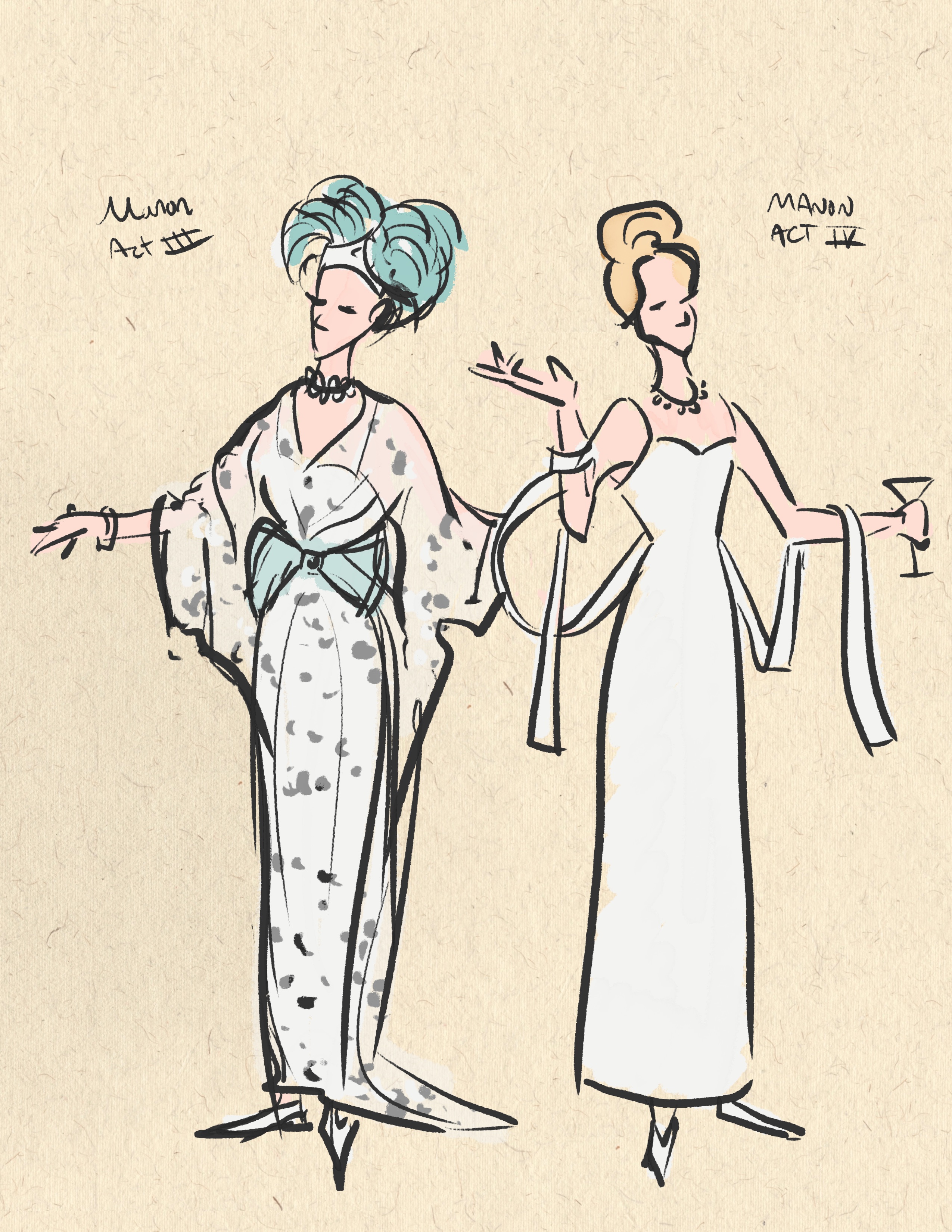
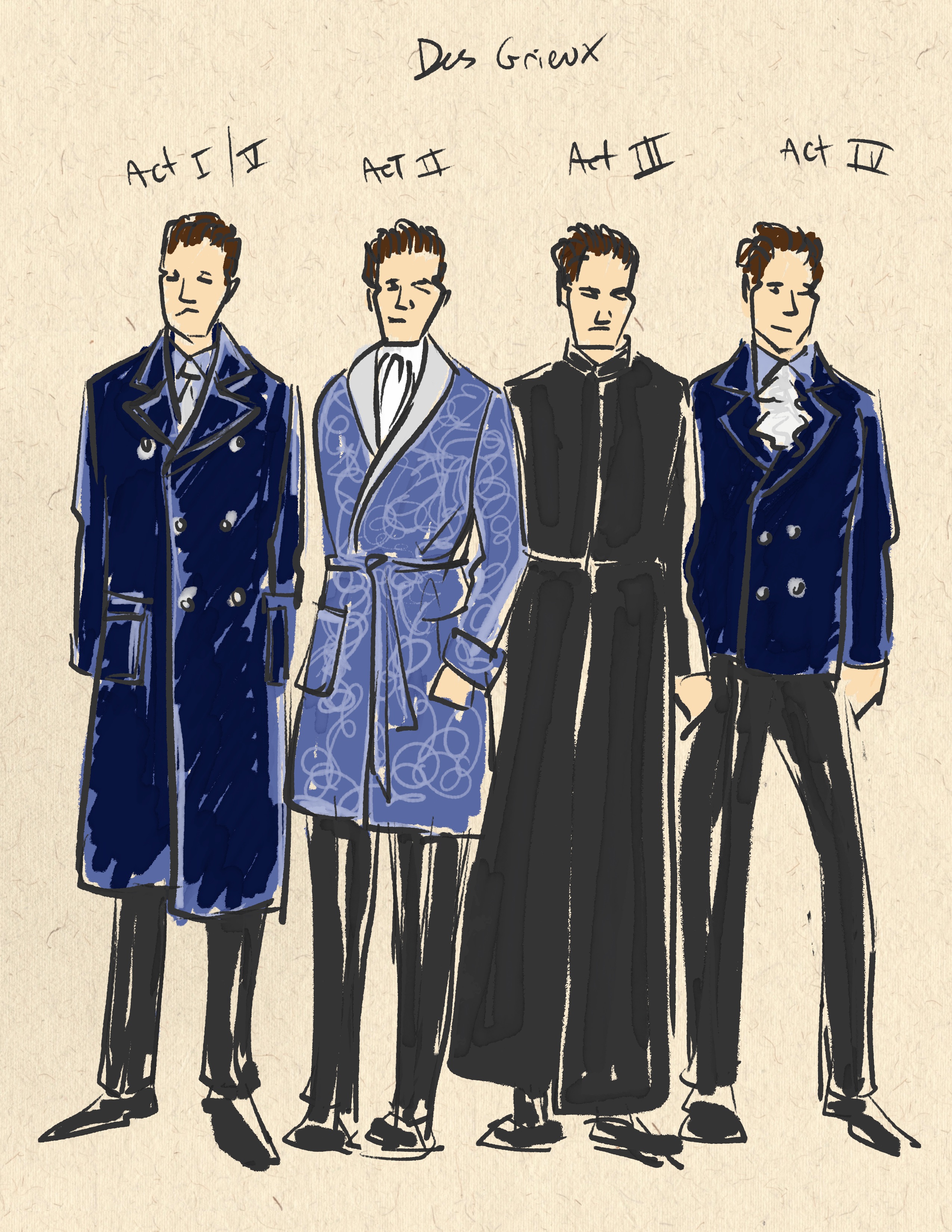
Costume rendering by
Alyssa Rider

“It has never been a matter of wonder to me that human resolutions are liable to change; one passion gives them birth, another may destroy them,” wrote L’Abbé Prévost in his classic novel Manon Lescaut from 1731. 

Manon, a young French girl, is tormented by dreams of grandeur, yearning for a life filled with luxury and wealth in early eighteenth-century Paris. But as she climbs the social ladder, she soon finds herself torn between the power of true love and her own self-destructive greed.

Costume rendering by
Alyssa Rider

The tragic tale of Manon will take the stage for Boulder Opera at the Dairy Arts Center. The company will present Jules Massenet’s opera Manon based on the novel Saturday and Sunday, Feb. 18 and 19 (details below), with Amy Maples as Manon and Cody Laun as Des Greiux, under stage director Gene Roberts and conductor Steven Aguiló-Arbues.

The modernized production, set in the 1960s, aims for a fresh take on the classic.

“In certain ways, the excesses and heavy drug use of the 1960s can serve as a mirror for the original time period,” Laun says. “The opera is a cautionary tale of what will happen if you take this to excess. I think [the different eras] parallel each other well. The nostalgia and the familiarity will help to draw people in.”

Costume rendering by
Alyssa Rider

Originally set at the height of the Belle Époque (beautiful epoch; 1871–1914) in Paris, productions of Massenet’s Manon are often quite lavish. For the extravagant, stylish haute couture, women wear ornate dresses crafted to exaggerate the S-shaped Edwardian silhouette, while men don sleek tailored sack suits.

In contrast, Boulder Opera’s production will be more toned down with colorful, vintage fashion. This era certainly has its draw—as shown with Jean Aurel’s 1968 film Manon 70, starring Catherine Deneuve, set in the swinging ‘60s in Paris. 

In any era, Massenet’s opera holds its own with the vibrant music and dynamic storytelling. The opera, which debuted at Paris’ Opéra-Comique in 1884, has become one of the composer’s greatest and most enduring successes for a reason.

“In his musical language and storytelling, Massenet uses lots of lush textures and rubato for the expressive shaping of phrases,” conductor Aguiló-Arbues says. “His music is full of charm and speaks directly to the [audience].

“The music is almost cinematic. The overarching, sweeping ideas and characterizations paint the scenes in a very emotional, grandiose way.”

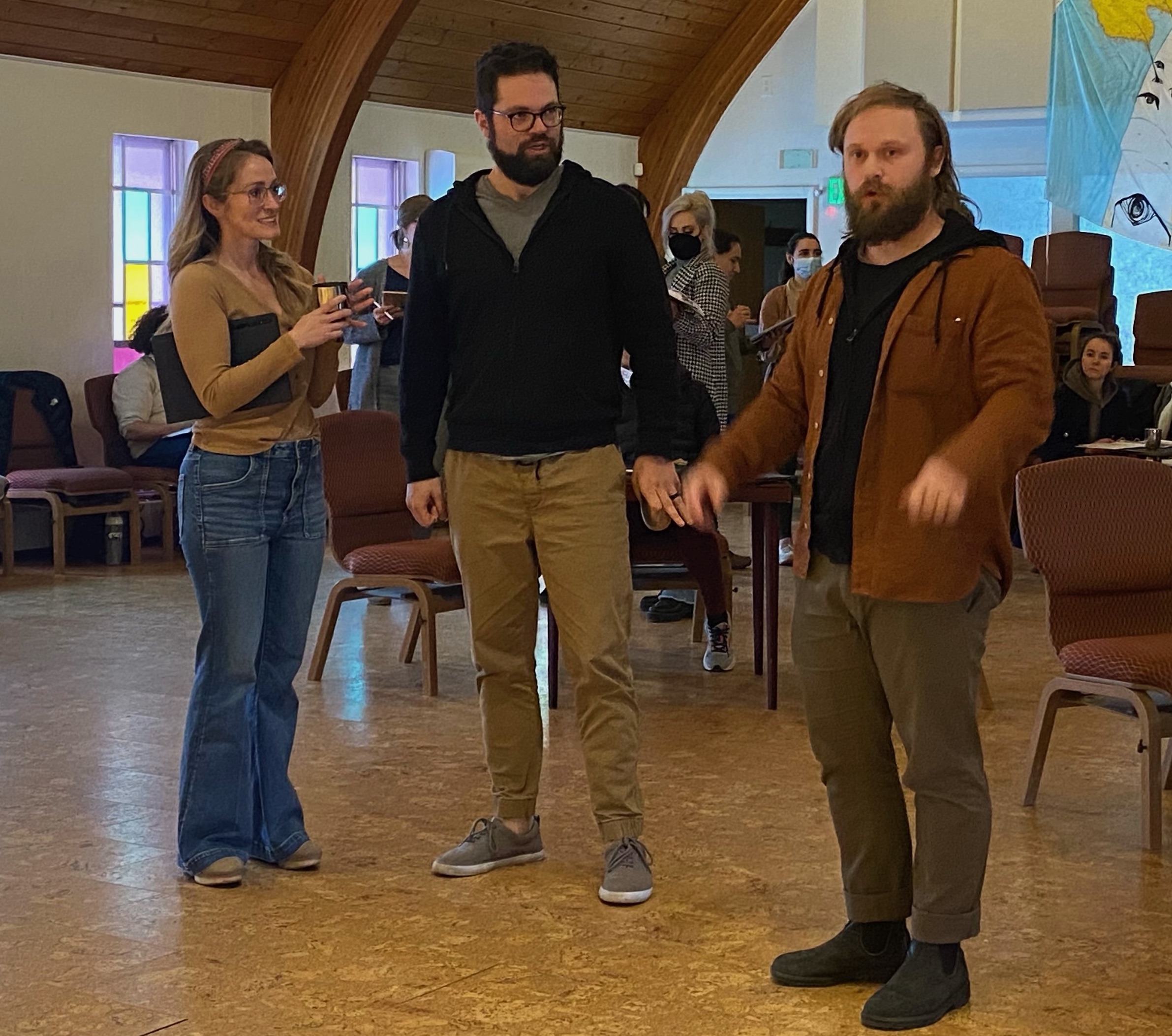
Amy Maples (Manon), Cody Laun (Des Grieux) and Nick Navarre (Guillot) rehearsing Manon

The opera depicts the passionate relationship of Manon and Des Grieux, her on-and-off-and-on-again lover. While Manon aspires to have social status and wealth, Des Grieux dreams of a simple, happy life with his partner. A dissatisfied Manon soon gives in to her greed, and the couple’s conflicting dreams pull them apart, eventually leading to their downfall.

“Manon is that wild card friend who is always flying on the seat of her pants, barreling into life fearlessly,” Maples says. “She’s a ‘yes’ person.”

It can be easy to play into the role of Manon as the femme fatale, a seductive, manipulative woman who uses her beauty and charm to ensnare men like Des Grieux and De Brétigny, her other love interest. However, Maples hopes to dig deeper into Manon’s motivations and backstory, to help the audience see Manon as a more sympathetic character.  

“At first, I didn’t sympathize with her,” Maples says. “I just thought she was selfish. But then I realized that underneath all of her desire for wealth is actually a drive for significance in the world. For me, that opened up my heart to her a little more.”

During the opera, Manon is only 15 years old. This can be easy to forget, considering the sophistication of the role, which requires a mature virtuoso soprano. The vocally demanding part has even been described as “the French Isolde” by American opera singer Beverly Sills. 

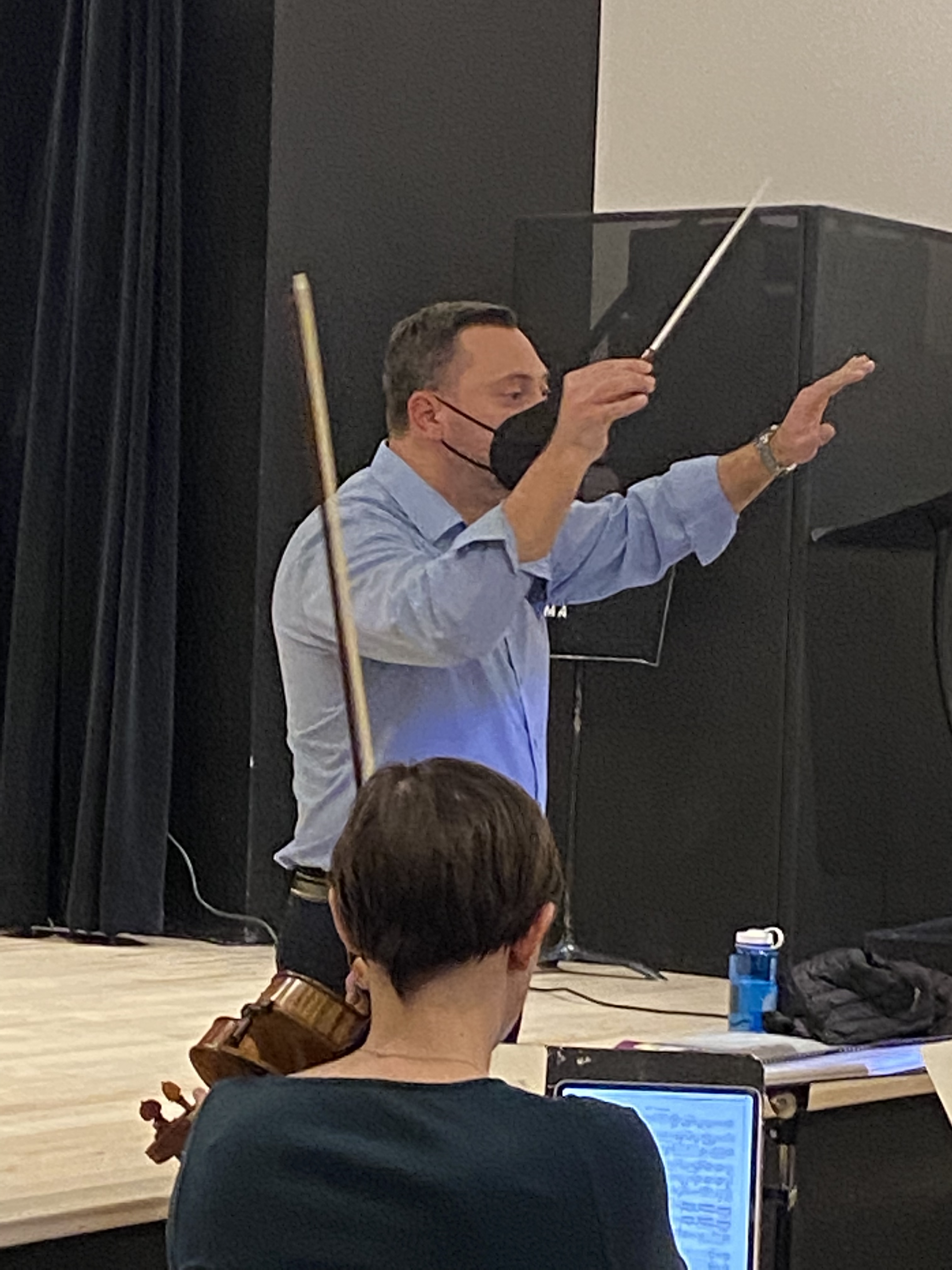
Steven Aguiló-Arbues, conductor

Manon’s arias call for light agility, as in “Je suis encore tout étourdie” (I’m still all dazed), virtuosic power with sparking high notes during her time with the Parisian aristocracy, as well as delicate sensibility, as in the mournful “Adieu, notre petite table” (Farewell to our little table).

Her duets with Des Grieux need to be convincing yet not melodramatic, as the two fall suddenly into an all-consuming love.

“There is lots of imitative music between Manon and Des Grieux, where one will echo the other’s theme or finish it for them,” Laun says. “This shows how their relationship is sweet on one hand, but it is also a little codependent and unhealthy. They can’t live well without each other.”

Throughout the opera, Massenet relies on leitmotifs like this to characterize each protagonist and express their turbulent emotional states. Combining Wagner’s concept of musical drama with the lyricism of the Italian operatic tradition and the expressiveness of French grand opera, Massenet showcases his compelling, distinctive style.

Thus, Massenet’s music draws the audience into the lover’s misadventures and heartbreak. As Manon barrels headfirst toward her inevitable downfall, the audience begins to sympathize with the misguided young girl—even though, in the end, she only has herself to blame for the personal tragedies she faces.

“This shows how people should have the freedom to delight,” Laun says, “but it’s also a cautionary tale of (the need for) temperance and discernment, because getting too carried away can lead to one’s own destruction.”

# # # # #

Jules Massnet: Manon
Boulder Opera
Gene Roberts, stage director, and Steven Aguiló-Arbues, conductor 

7 p.m. Saturday, Feb. 18
3 p.m. Sunday, Feb. 19
The Dairy Arts Center

TICKETS

Boulder Opera presents “Hansel & Gretel” on Family Series

Holiday favorite will be abridged for younger audiences and sung in English

By Izzy Fincher Dec. 6 at 12 noon

Engelbert Humperdinck’s Hansel and Gretel has been a beloved Christmas-time opera for more than a century. Based on the Brothers Grimm classic fairytale, the opera tells an uplifting story of overcoming hardships and the importance of family.

This December, Boulder Opera will present an abridged, hour-long production of Hansel and Gretel, sung in English. The singers will be accompanied by pianist Aric Vihmeister and cellist Mathieu D’Ordine.

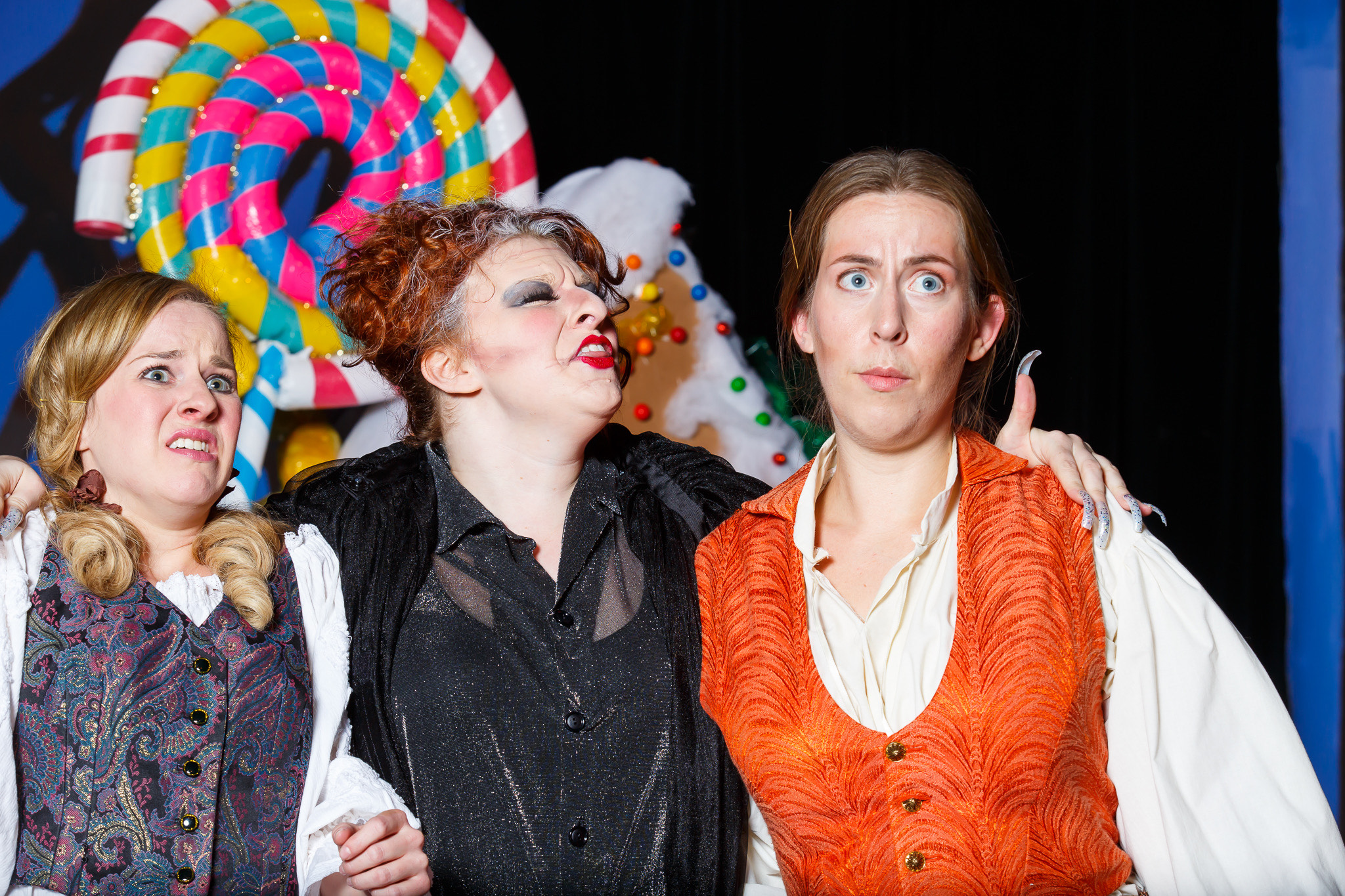
Boulder Opera’s 2014 production of Hansel & Gretel, with Lindsay French (Gretel), Corinne Denny (the Witch) and Genevieve Baglio (Hansel).

The performance will be followed by a Q&A session, hosted by director Brandon Tyler Padgett. As a part of their Family Series, Boulder Opera aims to make this interactive, shorter performance more accessible and engaging for younger audiences.

Boulder Opera executive director Dianela Acosta also plays the Witch in the opera

“We want to give young children access to classical music as a stepping stone to engage with this craft,” says Padgett, who will also be playing the role of Hansel and Gretel’s father.

“We want to develop the next generation of opera lovers,” Dianela Acosta, the executive artistic director of Boulder Opera, says. “The best way to do this is to start at an early age, so [attending operas] becomes a habit.”

To be more family-friendly, the production will highlight the light-hearted, magical aspects of Humperdinck’s fairytale opera, while deemphasizing the darker, more mature themes of poverty and domestic abuse. 

“Our focus is on the overarching positive themes within the story—the familial bond of Hansel and Gretel and the natural elements in the world that have benevolent or caring features and want good people to prosper,” Padgett says. “We want to (bring out) the aspects of hope and good over evil.”

Director Brandon Tyler Padgett also plays the role of the Father

Padgett’s goals for Boulder Opera’s production align with the original purpose of the opera, as a small-scale holiday show for children. In 1889, the composer’s sister Adelheid Wette commissioned him to write a few songs for her children’s show, based loosely on the Brothers Grimm fairytale. Following the public’s enthusiastic response, Humperdinck and Wette decided to expand the show into a full two-hour-long opera, which premiered in Weimar in 1893 under the baton of Richard Strauss. 

To appeal to children, Wette decided on a more optimistic adaptation of the Grimm fairytale for her libretto, incorporating additional elements of German folklore. For example, in the forest, Hansel (portrayed here by Leslie Ratner) and Gretel (Melaina Mills) meet the gentle Sandman (Sabino Balsamo), a mythical character in European folklore who sends children to sleep by placing a grain of sand into their eyes and creates beautiful dreams.

After they fall asleep, Hansel and Gretel dream of being protected by 14 angels, which will be portrayed by a teen chorus from the Denver-Boulder area in flowing white costumes. The next morning, the sparkling, elegant Dew Fairy (Balsamo) appears, sprinkling magical dew to awaken the siblings from their peaceful slumber.

With these fantastical elements, Padgett aims to bring out the childlike wonder of Hansel and Gretel as they embark on their adventure, a feeling he hopes will draw the audience into their magical world. 

“Hansel and Gretel are always wondering,” Padgett says. “They’re always asking questions. They’re not only hungry for food but they’re also hungry for knowledge and for excitement. They want to be enchanted.”

Despite the fairytale elements, the opera does explore the darker themes of the Brothers Grimm fairytale, although in a less disturbing way. In the original fairytale, due to the shortage of food and the family’s poverty, the children’s stepmother persuades their father to leave Hansel and Gretel in the woods to die, so the couple don’t starve to death. Later, after being abandoned in the woods by their parents, the siblings, hungry and afraid, wander into the bloodthirsty witch’s magical gingerbread house.

In Humperdinck’s opera, the mother (Lauren Bumgarner) is presented as a more likable, yet complicated character. Filled with despair and frustration as her family starves, the mother sends Hansel and Gretel to the haunted forest to pick strawberries. Realizing her mistake, the mother and father later set off into the forest to save their children.

“One of the themes that children tend to have trouble with in this opera is that the parents have fault in this story,” Padgett says. “It’s not because they’re bad people — they are just humans in a desperate situation. So we try to show how desperate their situation is.”

After the performance, Padgett says this issue will be addressed further in the interactive Q&A session, which will offer children an opportunity to engage with the storyline and the music.

“We want to be able to start a dialogue with kids—not only about the beauty of classical music but also how it reflects real life and its problems,” Padgett says. “This can be a real starting place for a lot of human empathy.”

# # # # #

Engelbert Humperdinck: Hansel and Gretel
Boulder Opera, Brandon Tyler Padgett, director

7 p.m., Friday, Dec. 9
2 p.m. and 4 p.m., Sunday, Dec. 11, and Saturday, Dec. 17
4 p.m., Sunday, Dec. 18

The Dairy Arts Center Grace Gamm Theater

TICKETS

Grace Notes: Three classical organizations announce 2022–23 seasons

Boulder Chamber Orchestra, Pro Musica Colorado and Boulder Opera

By Peter Alexander Oct. 3 at 5:15 p.m.

With the 2022–23 concert season getting underway, Boulder’s many classical music organizations are getting their season schedules up on the Web. Here are three of the planned seasons for the coming year, from the Boulder Chamber Orchestra, starting Oct. 29; Pro Musica Colorado Chamber Orchestra, starting Nov. 19; and Boulder Opera., starting Dec. 9.

While the seasons include some pretty standard repertoire, including Beethoven and Mendelssohn symphonies and two different renderings of Mozart’s early Symphony in A major, K201, it will also offer pieces that are not standard. These include Beethoven’s Mass in C by the Boulder Chamber Orchestra and Boulder Chamber Chorale, and music by Florence Price and Caroline Shaw by the Pro Musica Colorado Chamber Orchestra.

Here are the respective seasons:

# # # # #

The Boulder Chamber Orchestra opens its season Oct. 29 without conductor Bahman Saless. Guest conductor Giancarlo De Lorenzo and violinist Loreto Gismondi, both from Italy, will perform a mostly Mozart concert featuring that composer’s Violin Concerto No. 4 in D major, K218, and Symphony No. 29 in A major, K201. Opening the concert will be Handel’s “Arrival of the Queen of Sheba” from the oratorio Solomon. 

This concert is part of an exchange between De Lorenzo and Saless, who previously conducted the Italian orchestra with which De Lorenzo is affiliated.

Other orchestral concerts during the year will be “A Gift of Music” on Saturday, December 17, with soprano Szilvia Shrantz, BCO bassist Kevin Sylves and holiday selections; and a performance of music by Beethoven, Brahms and Mendlessohn with violinist Edward Dusinberre on Saturday, Feb. 11, 2023. The season concludes with a performance of Beethoven’s Mass in C with the Boulder Chamber Chorale on Saturday, April 1. Saless will lead these performances.

Concerts by the Boulder Chamber Orchestra will take pace in the Seventh-day Adventist Church, 345 Mapleton Ave. Here is the full season schedule:

7:30 p.m. Saturday, Oct. 29
Boulder Chamber Orchestra with guest conductor Giancarlo De Lorenzo and Loreto Gismondi, violin

  • Handel: “Arrival of Queen of Sheba” from Solomon
  • Mozart: Violin Concerto No. 4 in D major, K218
  • Mozart: Symphony No. 29 in A major, K201

7:30 p.m. Saturday, Dec. 17
Boulder Chamber Orchestra, Bahman Saless, conductor, with Szilvia Shrantz, soprano, and Kevin Sylves, double bass

  • Handel: Selected arias
  • Henry Eccles: Sonata in G minor for double bass and strings
  • J.S. Bach: Concerto in D minor for two violins and orchestra 

7:30 p.m. Saturday, Feb.11
Boulder Chamber Orchestra, Bahman Saless, conductor, with Edward Dusinberre, violin

  • Beethoven: Overture to Egmont
  • Brahms: Violin Concerto
  • Mendelssohn: Symphony No. 4 in A major (“Italian”)

7:30 p.m. Saturday, April 1
Boulder Chamber Orchestra, Bahman Saless, conductor, with the Boulder Chamber Choir

Beethoven: Mass in C

TICKETS  

# # # # #

The Pro Musica Colorado Chamber Orchestra will celebrate its “Sweet 16th” concert season with three programs, presented Nov. 19, Jan. 28, and April 29.

The programs feature several works by women composers, including a woman of color and two living composers, in addition to classic works by Mozart and Beethoven, and a major work of the early 20th century by Arnold Schoenberg. All three performances will be at 7:30 p.m. in Pro Musica’s musical home, Mountain View United Methodist Church at 355 Ponca Place Boulder.

Performances by Pro Musica Colorado will be under the direction of their music director, Cynthia Katsarelis. 

The opening concert will feature pianist Jennifer Hayghe, the chair of the Roser Piano and Keyboard Program at CU-Boulder, playing the Piano Concerto in One Movement by Florence Price. The first female African American composer to have a symphony performed by a major orchestra, Price was well known in the 1930s and 1940s/ After fading from prominence, her name has recently been returning to concert programs.

Other soloists during the season will be cellist Meta Weiss, chamber music coordinator at CU-Boulder, and Takács Quartet members Harumi Rhodes, violin, and Richard O’Neiill, viola. Each concert will be preceded by a pre-concert talk at 6:30 p.m. Here is the full season’s schedule:

7:30 p.m. Saturday, Nov. 19
“Apotheosis of the Dance”
Pro Musical Colorado Chamber Orchestra, Cynthia Katsarelis, conductor, with Jennifer Hayghe, piano

  • Ben Morris: The Hill of Three Wishes
  • Florence Price: Piano Concerto in One Movement
  • Beethoven: Symphony No. 7 in A major, op. 92

7:30 p.m. Saturday, Jan. 28, 2023
“Through the Looking Glass”
Pro Musical Colorado Chamber Orchestra, Cynthia Katsarelis, conductor, with Meta Weiss, cello

  • Caroline Shaw: Entr’acte
  • Haydn: Cello Concerto in C major
  • Mozart: Symphony No. 29 in A major, K201

7:30 p.m. Saturday, April 29
“Transfigured Night”
Pro Musical Colorado Chamber Orchestra, Cynthia Katsarelis, conductor, with Harumi Rhodes, violin, and Richard O’Neill, viola

  • Jessie Lausé: World premiere
  • Mozart: Sinfonia Concertante for violin and viola in E-flat major, K364
  • Arnold Schoenberg: Verklärte Nacht

TICKETS  

# # # # #

Boulder Opera has announced their 11th season, featuring a family-themed production for the holiday season and a French Grand Opera early in 2023.

The first production of the season will be Engelbert Humperdinck’s Hansel and Gretel, which is a perennial holiday event for families with children in Germany and Austria. The Boulder opera production, scheduled for Dec. 9 through 18 at the Dairy Arts Center, will be presented in an abridged English version with narrator. 

Designed as an ideal introduction to opera, the performances will last only one hour, and include a Q&A session after each performance. The performance is suitable for children age three and up.

After the new year, Boulder Opera will present two performances of Manon by Jules Massenet, one of the classics of the French Grand Opera tradition. Performances will be Feb. 18 and 19 in the Dairy Arts Center. Here is the full schedule:

Engelbert Humperdinck: Hansel and Gretel
Boulder Opera, stage directed by Michael Travis Risner
Aric Vihmeisterr, piano, and Mathieu D’Ordine, cello

7 p.m. Friday, Dec. 9
2 and 4 p.m. Sunday, Dec. 11 and Saturday, Dec. 17
2 p.m. Sunday, Dec. 18
Grace Gamm Theater, Dairy Arts Center

TICKETS  

Jules Massenet: Manon
Boulder Opera, Steven Aguiló-Arbues, conductor, and Gene Roberts, stage director

7 p.m. Saturday, Feb. 18
3 p.m. Sunday, Feb. 19
Gordon Gamm Theater, Dairy Arts Center

TICKETS   

Boulder Opera to present Verdi’s ‘Il trovatore’

Performances will be at the Dairy Arts Center March 19 and 20. 

By Izzy Fincher March 15 at 12:15 p.m.

What is the secret to pulling off Verdi’s Il trovatore? According to the Italian tenor Enrico Caruso, it’s easy—as long as you have “four of the greatest singers in the world.”

As part of their 10th Anniversary Season, the Boulder Opera Company will present Il trovatore (The troubadour) March 19 and 20 at the Dairy Arts Center. With scenic projections, a reduced orchestra and a chorus, this four-act opera is one of the company’s most ambitious, large-scale productions to date. 

Azucena (Dianela Acosta) in the Boulder Opera production of Verdi’s Il trovatore

Il trovatore is a hard opera to present, with four principal roles that require large, dramatic voices and demanding vocal techniques. This is especially true for the lead female characters. The Romany woman Azucena (played by Dianela Acosta) needs a lyrical yet dramatic mezzo soprano with a large range, while noblewoman Leonora (Michelle Diggs-Thompson) needs a coloratura soprano voice that is both flexible and hefty. 

“Now that I have been singing for a while, I think that Verdi has kind of settled in my voice,” Diggs-Thompson says. “I don’t think I would have been able to pull off this role 20 years ago.”

Beyond this, the opera poses an artistic challenge—that of bringing to life an impossibly melodramatic storyline with twisted characters in a relatable way. Set in 16th-century war-torn Spain, this blood-curdling tale of revenge features burning babies, kidnapping, beheading, gypsy curses and death by poison.

Premiered in 1853, Il trovatore is a part of a group of three operas by Verdi, along with Rigoletto (1851) and La traviata (1853), that represented a fundamental shift in his dramatic style. Il trovatore is based on Spanish playwright Antonio García Gutiérrez’s first commercial success, El trovador (The troubadour) of 1836. 

For the adaptation, Verdi worked with prolific librettist Salvadore Cammarano, best known for Donizetti’s Lucia di Lammermoor. In his correspondence with Cammarano, Verdi urged the playwright to stay true to the sensationalism in the original play, stating “the more unusual and bizarre the better.” Initially, he wanted to call the opera La zingara (The Gypsy), in honor of Azucena, who is at the heart of the melodrama. 

The Count di Luna (Karl Butterman)

The plot centers around a twisted love triangle. In the kingdom of Aragon, Count Di Luna (Karl Butterman), a nobleman in the service of the prince, is madly in love with Leonora, one of the Queen’s noblewomen. But she is in love with another man: Manrico (Nathan Snyder), a troubadour and officer in the army of the Prince of Urgel and Azucena’s son, who is leading rebel forces against the monarchy.

“Manrico is a hot-head,” says Snyder. “Verdi writes him in such a bombastic way. It’s electrifying.”

“This story is so powerful (because) it deals with three faces of love,” stage director Gene Roberts says. “It deals with romantic love at the center of the story. It deals with the fierceness of a mother’s love and how that lasts over many years. But the one that seems to be the most powerful in this story and the undoing of everyone is obsessive love.”

But what drives the opera forward is a thirst for revenge, which is introduced in the convoluted backstory. Years ago, a Romany woman set a curse upon Di Luna’s infant brother, causing the child to become sick. The Count had the woman burned at the stake. To avenge her mother, the woman’s daughter—Azucena—kidnapped the infant and supposedly threw him into the fire. The Count swears to get his revenge, though this will ultimately destroy him and those he loves. 

“When you are really obsessed with the thought of vengeance, it colors everything, even love,” Roberts says. “Love can become really obsessive. If you can’t have it, no one can have it. Focusing on your vendetta, rather than forgiving those around you, can blind you from seeing those who are close to you.

“There are surprises in this story until the last eight measures of music.”

Manrico (Nathan Snyder center-right) confronts (L-R) the Count di Luna (Karl Butterman) and Ferrando (Allen Adair)

Despite the melodramatic plot, Il trovatore features some of Verdi’s most profound and innovative music. 

Verdi incorporates elements of Spanish music, such as flamenco rhythms and guitar-like textures, as well as Moorish and Romany music. There are numerous quotable melodies, including the iconic “Anvil Chorus” in Act II with clanging anvils, triangles, cymbals and drums, Azucena’s “Stride la vampa,” Manrico’s “Di quella pira” and Leonora’s “Miserere.”

“Verdi has this powerful way of completely melding the drama and the music,” Snyder says. “He puts it right into your face, and it’s a blast.”

# # # # #

Il trovatore
By Giuseppe Verdi and Salvadore Cammarano
Boulder Opera Company
Jorge Salazar, conductor; Gene Roberts, stage director
With Michelle Diggs-Thompson, Nathan Snyder, Karl Butterman and Dianela Acosta
Performed in Italian with English titles 

7 p.m. Saturday, March 19
3 p.m. Sunday, March 20
Gordon Gamm Theater, Dairy Arts Center

TICKETS

Boulder Opera presents a family show about a misbehaving child

Ravel’s L’enfant et les sortilèges will be at the Dairy Center Dec. 17–19

By Peter Alexander Dec. 14 at 10:15 p.m.

You cannot accuse the Boulder Opera Company of a lack of ambition.

Dianela Acosta

The small company under the direction of Dianela Acosta has presented such staples of the repertoire as Mozart’s Così fan tutte, Mascagni‘s Cavalleria rusticana and Puccini’s La Bohème, as well as operatic rarities by César Cui and Xavier Montsalvatge. That’s in addition to free opera in the park at Boulder‘s Bandshell, concert performances of arias, and outreach to local schools.

All on a small budget, which means the numbers of singers and other musicians, and the extent of the scenery must all be limited. Boulder Opera’s sets and costumes are generally bare bones, and the accompaniment may be only a piano, or piano with a handful of instruments. 

Acosta doesn’t let those limitations stop her. “If I had any hesitation, I wouldn’t have done anything,” she says. She and the crew always find a way to convey the story, and the singers she hires are young professionals whose skill and dedication overcome the musical obstacles. For 10 years Boulder Opera has been reaching a growing audience.

Their next production aimed at families is only about 50 minutes in length, but it is one of the most challenging works yet: Ravel’s L’enfant et les sortilèges (The child and the spells), about a child who misbehaves badly but provides a lesson about kindness and forgiveness. Performances will be Dec. 17 and 19 in the Grace Gamm Theater at the Dairy Arts Center (details below).

The libretto by renowned French writer Colette tells the story of a child who throws a temper tantrum, tearing pages from his schoolbooks and wallpaper from the walls, breaking china and kicking the furniture. The scene suddenly transforms to the garden outside, where animals and objects gang up for revenge, until the child performs a simple act of kindness and is forgiven.

“Finding a subject that was kid-friendly was one of our goals,” Acosta says. “There is this message of kindness at the end. It’s the idea of unconditional love. He is a child and you have to forgive him once he comes out of his tantrum.”

The cast of Boulder Opera’s production of Ravel’s L’enfant et les sortiléges. Jenna Clark (center) sings the role of Lenfant.

The score lists more than 20 different singing characters plus a chorus, and it calls for plenty of stage magic—a fire that comes to life, singing furniture, dishes, cats, squirrels, frogs, a dragonfly and a tree, characters from the torn wallpaper and the ripped book, and the transformation of the child’s room into a garden. Here, this must all be done by a cast of 10 and without extensive stage machinery. Costumes are expressive but not elaborate, to keep the changes fast and simple.

L’Enfant et les sortilèges is not done often because of the large cast and the scenery changes,” Acosta says. “As a small company it was a daunting project, but not only have we double cast”—that is, most singers perform more than one role—”most of the characters are also singing in the ensemble. We have a great creative team. Everyone has been very organized and they put their heads together to accomplish it.”

Acosta has been working mostly behind the scenes, so a lot of the challenges fell on the shoulders of stage director Dana Kinney. “You would think with a short production it wouldn’t be so complicated,” she says. “But there are so many characters, all the props, all the costume changes—a lot definitely goes into this production.”

Dana Kinney

While the stage at the Dairy has limited technical resources, Kinney found a silver lining to that, too. “Much as I would love to have a fly-in set of the room into this magical garden, there’s so much happening on stage, (this production) actually gives the audience a chance to focus on the action.”

She said the greatest challenge was a scene where a math teacher and numbers rise out of a book the child has ripped apart. “The music is so active that the action onstage (is) very active as well. That is probably a three-minute scene that took three hours to stage! It’s like the chaos of the child’s head while doing math homework is played out in real life.”

Her favorite scene may be one between two cats, who sing meeows but no real words. “A scene like that is the easiest, because you don’t have to think about the text,” she says. “You can create your own story, and that’s a fun thing to work on. (The singers) are doing all the cat mannerisms, on the floor, and they’re taking complete ownership. It has a lot of playfulness.”

For all of the challenges created by Ravel’s opera, Kinney has enjoyed working with the cast. “I’ve been fortunate to work with this group,” she says. “Everything I threw their way, they committed to 100 percent. They have tried everything while also incorporating their own vision of the characters.

“This is going to be a really, really fun production!”

# # # # #

Maurice Ravel: L’enfant et les sortilèges (The child and the spells)
Boulder Opera Company
Steven Aguiló-Arbues, conductor; Dana Kinney, stage director
Maggie Hinchcliffe, piano
Performed in French with English titles

7 p.m. Friday, Dec. 17, and Saturday, Dec. 18
1 and 4 p.m. Sunday, Dec. 19

Grace Gamm Theater, Dairy Arts Center
TICKETS 
NOTE: The Diary Arts Center requires masks in public indoor spaces, regardless of vaccination status.