Rare Beethoven at the Boulder Phil

MIssa Solemnis, “Magnum Opus” of great extent and significance, May 4

By Peter Alexander April 30 at 5:50 p.m.

Beethoven was a few years years late.

He promised his friend, pupil and patron Archduke Rudolf that he would write a solemn mass—Missa Solemnis—for the latter’s investiture in 1820 as the Archbishop of Olomouc. But the massive score was not finished in time. In fact, it was not performed until April 7, 1824—in St. Petersburg, under the sponsorship of another of Beethoven’s patrons, Russian Prince Gallitsin.

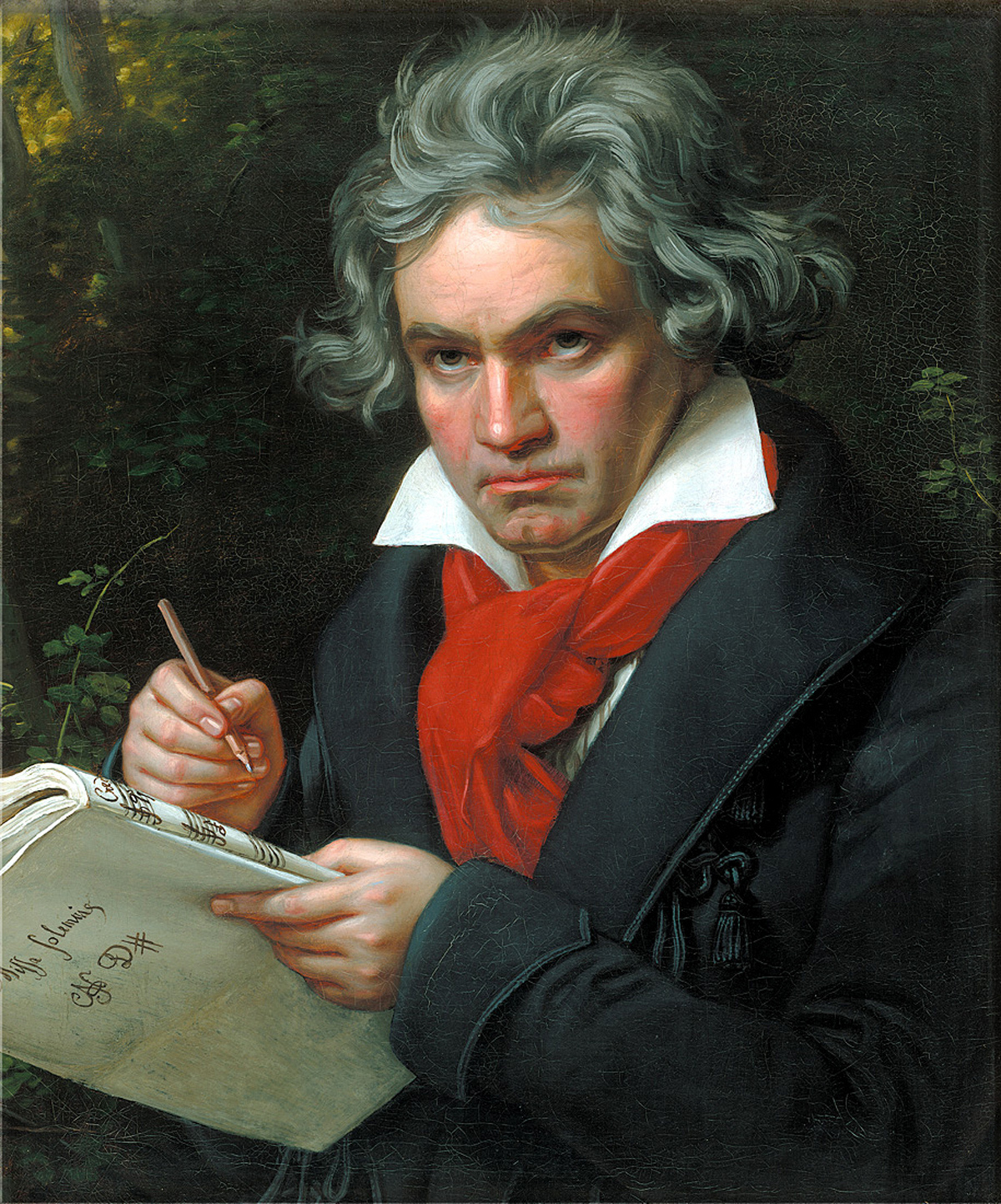
Portrait of Beethoven with the score to the Missa Solemnis

The size of the work, which takes 80 minutes to perform, and the difficulty of the choral parts remain obstacles to performances. So it is a noteworthy event that the Boulder Philharmonic and Boulder Chorale will join forces to present the Missa Solemnis Sunday at Macky Auditorium (4 p.m. May 3; details below).

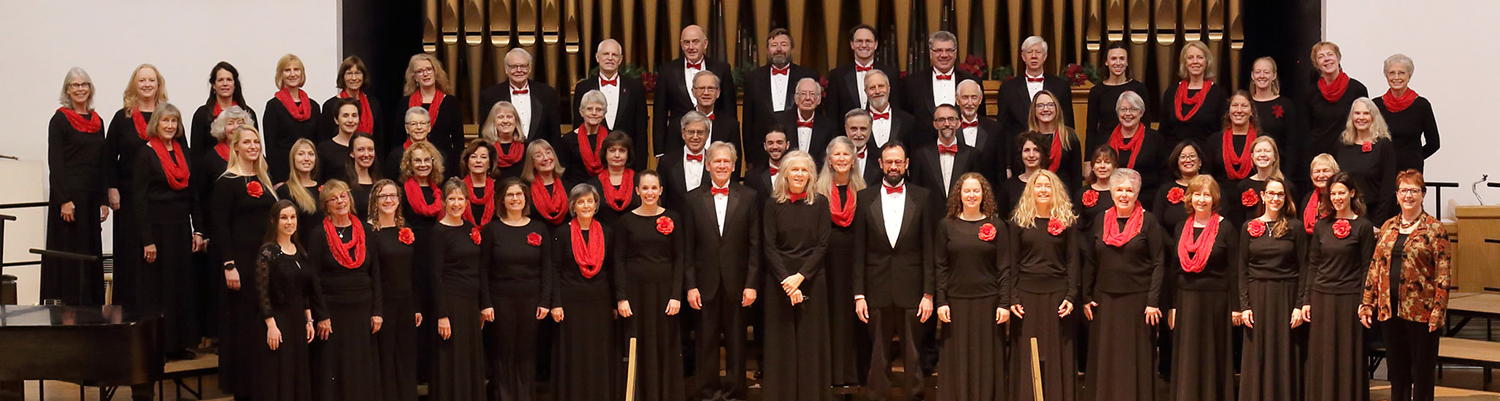
Michael Butterman, music director of the Boulder Phil, will conduct. The full 130-member Boulder Chorale has been rehearsed by director Vicki Burrichter. Soloists will be Tess Altiveros, soprano; Abigail Nims, mezzo soprano; Kameron Lopreore, tenor; and Pectin Chen, bass.

This is the first time either Butterman or Burrichter have presented the work. “I have personally wanted to do it for years and years,” Butterman says. “It’s a huge lift for (the chorus), so you have to have a partner that is up to it and is willing to take it on.

“I’ve been in touch with Vicki at the Boulder Chorale through the years, and this came up when she and I were talking. She said ‘I think we can do it. I want to do it!’”

For her part, Burrichter says that the Chorale is now ready for the challenge. “I wouldn’t have done this piece with them even five years ago,” she says, “but they are now at a place where they are very highly trained up. This is my 10th year with the Chorale, and we’ve been working very hard to get to an even higher level than when I started.”

Several aspects of the music present challenges to the chorus. They sing almost nonstop, with no breaks for solo arias or duets. Their parts cover a wide range from very high to low, with difficult, angular melody lines. The fugues are often difficult to sing, especially when each part has to project the theme independently of the others.

Burrichter identifies other challenges as well. “Yes, the tessituras (voice ranges) are high, especially for the sopranos,” she says. “But the constant change in dynamics (loud to very soft and vice versa) is probably the hardest thing. You have to always look ahead. I think also the hardest thing is getting the flow of the piece, because it is dramatically different from Bach or Mozart. Understanding why (Beethoven) wrote what he did, what he was trying to say—those are things that take a long time (for the singers) to integrate.”

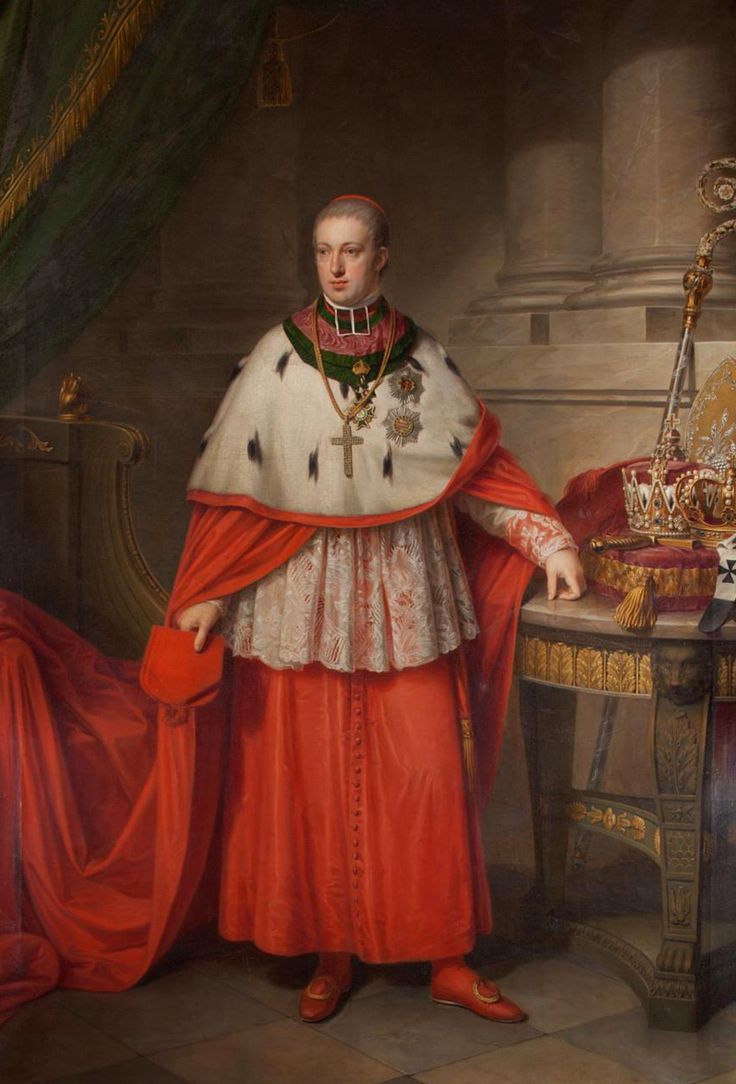
Beethoven’s pupil and friend, Archduke Rudolf of Austria, as Cardinal

“It is one of the most daunting works that I’ve ever put my mind to,” Butterman says. “I’m truly humbled by this piece. It seems so incredibly detailed, so dense, so masterful that I’m really in awe of this—written by someone who was probably profoundly deaf. It’s just staggering. The contrapuntal mastery that he displays over and over again, throughout the work, is astonishing.”

The use of counterpoint shows that Beethoven knew the traditions established in the mass settings by earlier composers. Other traditional gestures that he incorporated into the score include the use of fugue for certain texts, starting the Gloria with ascending joyful lines in the chorus, the use of traditional church modes, and the use of solo flute to represent the Holy Spirit. 

In other ways Beethoven added his own original ideas. One that is particularly powerful is the insertion of trumpets and drums suggesting military music right before the text Dona nobis pacem (Give us peace). Beethoven lived during a time of extended warfare across Europe, including the occupation of Vienna by French troops, giving the plea for peace special force.

Burrichter sees a relevance for that passage still. “Listen to how Beethoven changes the Dona nobis pacem, and how this relates to what’s happening in the world right now,” she says. “The message that Beethoven was trying to send in 1827 is just as relevant today.”

She also says “I think this piece has an unfair reputation as unsingable and an assault on the senses. What great composers do is demand great things of singers and instrumentalists. Beethoven was reaching for transcendence.” 

She advises the audience to “enter into the experience that Beethoven is trying to create. Enter into Beethoven’s world in the same way that you would one of his symphonies.”

But the last word on the Missa Solemnis should go to the composer. On the copy that he presented to his pupil and friend the Archbishop, Beethoven wrote “Von Herzen—Möge es wieder—Zu Herzen gehn!”

“From the heart—may it return to the heart!”

# # # # #

“Beethoven’s Magnum Opus”
Boulder Philharmonic, Michael Butterman conductor
With the Boulder Chorale, Vicki Burrichter, director
Tess Altiveros, soprano; Abigail Nims, mezzo soprano; Kameron Lopreore, tenor; and Pectin Chen, bass

  • Beethoven: Missa Solemnis, op. 123

4 p.m. Sunday, May 4, Macky Auditorium

TICKETS

GRACE NOTES: B-minor Mass and string quartet with guitar 

LSO presents Bach’s “Magnum Opus,” Takács Quartet partners with Nicoló Spera

By Peter Alexander April 9 at 5:20 p.m.

The Longmont Symphony Orchestra (LSO) and conductor Elliot Moore end their season with one of the most significant pieces by J.S. Bach, his monumental Mass in B minor.

The performance of this large-scale work will be Saturday evening at Vance Brand Civic Auditorium in Longmont (7 p.m. April 12; details below). Moore and the LSO will team up with the Boulder Chamber Chorale, a select group from the Boulder Chorale directed by Vicki Burrichter. Soloists will be soprano Dawna Rae Warren, countertenor Elijah English, tenor Joseph Gaines and baritone Andy Konopak.

Choral settings of the Mass ordinary—the five texts sung every week in Catholic church services, as opposed to texts that vary with the liturgical calendar—had a long history in Europe. However, Bach’s setting is too long to be easily incorporated into a normal service, which is why it is generally performed as a concert piece rather than a liturgical mass.

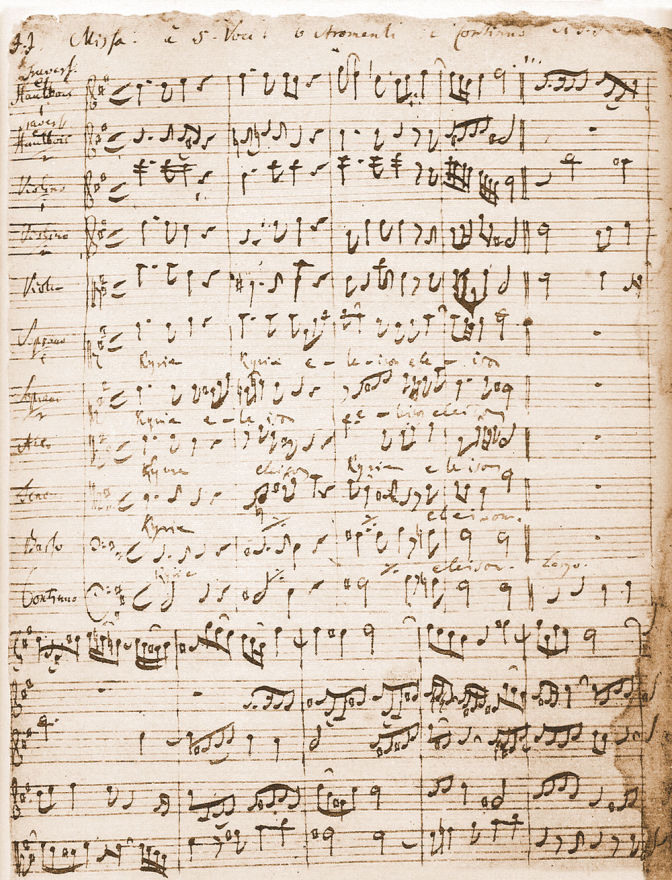
Bach’s manuscript of the B-minor Mass

The structure and composition history of the Mass are complicated. The final work as we know it today comprises the main sections of the Catholic Mass ordinary—Kyrie, Gloria, Credo, Sanctus and Agnus Dei—in 27 separate movements for orchestra, choir and soloists. Bach composed the first two portions of the Mass, Kyrie and Gloria, in 1733. These are the portions that are common to both Catholic and Lutheran services and were theoretically usable at the Lutheran Thomaskirche in Leipzig where Bach was employed. 

Bach presented those two movements to the incoming Elector of Saxony, a Catholic ruler, in 1733. He did not compose the remaining portions of the Mass, which were exclusive to the Catholic services, until  the final years of his life. Some of the music was newly composed, but other movements were reworkings of music from earlier cantatas and other works. 

It is remarkable that a piece written over so many years with many different sources would emerge as a unified work universally revered as one of Bach’s crowning achievements. But the entire B-minor Mass was probably never performed in Bach’s lifetime, and clearly would not have been suitable for a service in Bach’s church. It includes music written over 35 years of the composer’s lifetime, assembled and re-appropriated into a final form dictated by the structure of the Catholic Mass, by a resolutely Lutheran composer.

# # # # #

“A Magnum Opus”
Longmont Symphony Orchestra, Elliot Moore, conductor
With the Boulder Chamber Chorale, Vicki Burrichter, direcotr; Dawna Rae Warren, soprano; Elijah English, countertenor; Joseph Gaines, tenor; and Andy Konopak, baritone

  • J.S. Bach: Mass in B minor

7 p.m. Saturday, April 12
Vance Brand Civic Auditorium

TICKETS

# # # # #

The Takács Quartet and guitarist Nicoló Spera will come together over the weekend for concerts in Grusin Hall on the CU Campus (Sunday, April 13, and Monday, April 14; details below).

Their joint performance of the Quintet for guitar and string quartet by Giacomo Susani will be framed by two works from the standard string quartet repertoire, Haydn’s late Quartet in G major, op. 77 no. 1, written in 1799; and Dvořák’s Quartet in F major, op. 96, composed during the composer’s visit to the Czech immigrant community of Spillville, Iowa, in the summer of 1893.

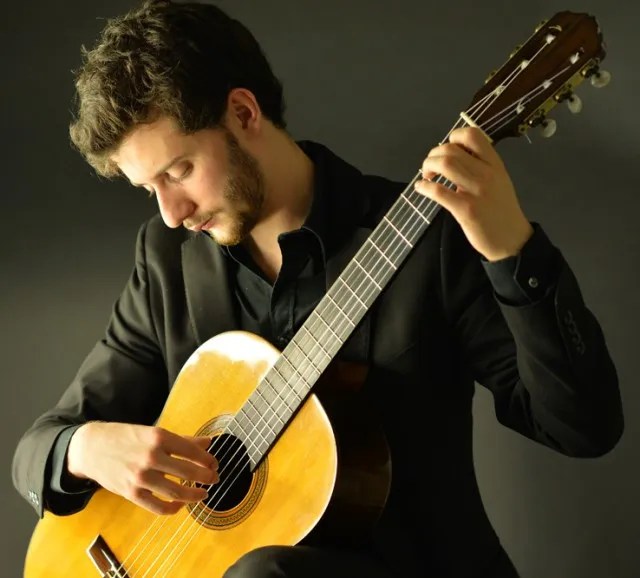
Giacomo Susani

Susani keeps very busy, with a performing career on guitar in Europe and the United States, a compositional career, and as artistic director of the Homenaje International Guitar Festival in Padova, Italy. As a performer he has released four recordings on the Naxos label. He conducted the world premier of his Concerto for 10-string guitar and orchestra in Boulder this past December, with Spera and the Boulder Chamber Orchestra. The Guitar Quintet was written in 2016.

Listeners may be familiar with the string and guitar quintets of Luiggi Boccherini, the best known but not the only works for that combination of instruments. There were several written in the 20th century, including one by Italian composer Mario Castelnuovo-Tedesco. That work is recognized in the last of Susani’s three movements, “Omaggio a Castelnuovo-Tedesco” (Homage to Castelnuovo-Tedesco). The first two movements are titled respectively “La Tempesta” (The storm) and “Liberamente, non trope lento” (Freely, not too slow).

At the age of 67 Haydn began a set of string quartets commissioned by the wealthy aristocratic patron and music lover Prince Lobkowitz. He completed two quartets of a likely set of six, but other projects intervened before he could complete a larger set. The two quartets were published as Op. 77 nos. 1 and 2, and were his final completed string quartets. He only completed two movements of another planned quartet, published in 1806 as Op. 103.

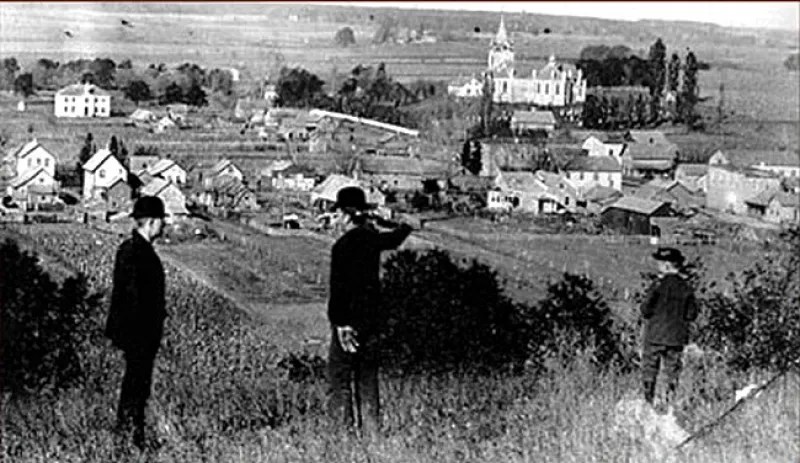
Spillville, Iowa, in 1895, shortly after Dvořák’s visit

Dvořák wrote many of  his best known pieces in the United States. He spent the years 1892–95 as director of the National Conservatory of Music in New York. Intrigued by the idea of a village of Czech immigrants on the Western plains, he spent an idyllic summer in the tiny village of Spillville, Iowa, in 1893. While in the United States he wrote his Symphony No. 9, “From the New World” and his Cello Concerto in New York, and a string quartet and string quintet, now known as the “American” Quartet and Quintet, in Spillville.

Spillville was very much a Czech community, with the people speaking Czech and observing Czech customs that Dvořák found congenial. He frequently played the organ at the local church, which is still standing, and made many friends in the community. 

Dvořák was deeply moved in Spillville, especially by the emptiness of the prairie, perhaps reflected in the Quartet’s melancholy slow movement, and the singing of birds, quoted in the scherzo. Attempts to connect the Quartet’s uncomplicated musical style to American influences have met skepticism. The composer himself once wrote, “I wanted to write something for once that was very melodious and straightforward . . . and that is why it all turned out so simply.

“And it’s good that it did.”

# # # # #

Takács Quartet with Nicoló Spera, guitar

  • Haydn: String Quartet in G Major, op. 77 no. 1
  • Giacomo Susani: Quintet for Guitar and String Quartet
  • Dvořák: String Quartet in F Major, op. 96 (“American”)

4 p.m. Sunday, April 13, and 7:30 p.m. Monday, April 14
Grusin Hall

In-person and streaming tickets HERE.

GRACE NOTES: THE HOLIDAYS MARCH ON

Pinocchio, Winter reveries, Messiah and Swingin’ Brass

By Peter Alexander Dec. 10 at 2:50 p.m.

Boulder Opera Company will present four performances of The Adventures of Pinocchio by English composer Jonathan Dove over the coming weekend (Dec. 14 and 15; details below).

Based on the familiar book by Italian author Carlo Collodi, Dove’s one-hour opera tells the story of the wooden puppet who becomes a boy in 20 brief scenes that range from Gepetto’s hut to the Blue Fairy’s cottage, Funland and the inside of a big fish. Described by Boulder Opera as “A magical opera for all ages,” The Adventures of Pinocchio will be accompanied by an ensemble orchestra led by music director Mario Barbosa, and stage directed by Zane Alcorn.

Zane Alcorn

In the company’s press release, Alcorn is quoted saying “Pinocchio is is a coming-of age story meant to subtly teach children how selfishness will always harm you. Whenever Pinocchio makes a selfish choice like skipping school, lying or going to Funland, he is punished rather quickly, but when he helps the community and saves this father, this leads to the ultimate reward, becoming a real boy.”

The moral of the story is, he says, “those who help others help themselves.”

Dove is highly regarded composer of operas, choral works and instrumental music. His opera Flight, based on the real-life experiences of a refugee trapped in the Charles DeGaulle Airport in Paris for 18 years, has been widely performed around the world, including a premiere at the Glyndebourne Festival, at the Opera theatre of St. Louis, Des Moines Metro Opera, Seattle Opera and the Museum of Flight in Washington, D.C.

The Adventures of Pinocchio was commissioned by Opera North and Sadler’s Wells and first performed in Leeds, U.K., Dec. 21, 2007. It has subsequently been performed by Minnesota Opera as well as companies in Germany, South Korea and Russia.

# # # # # 

Boulder Opera
Mario Barbosa, conductor, and Zane Alcorn, stage director

  • Jonathan Dove: The Adventures of Pinocchio

2 and 4 p.m. Saturday, Dec. 14
1 and 3 p.m. Sunday, Dec. 15
eTown Hall

TICKETS

All the constituent groups of the Boulder Chorale will come together to perform “Winter Reverie,” this year’s edition of their annual Holidays program, Saturday and Sunday in Boulder (Dec. 14 and 15; details below). 

Also appearing with the Chorale will be the Boulder Philharmonic String Quartet: Yenlik Weiss and Reagan Kane, violin; Lee Anderson, viola; and Kimberlee Hanto, cello.

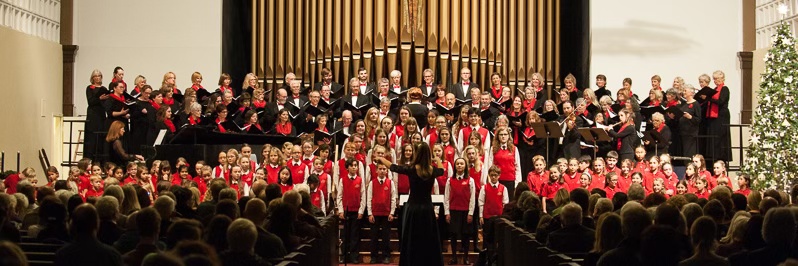
In addition to the full Concert Chorale and the adult Chamber Chorale, the performance will feature all four age groups from the Boulder Children’s Chorale: Bel Canto, Volante, Prima Voce and Piccolini. They will each sing alone and together, including a concluding piece with the full adult Concert Chorale. 

Boulder Chorale and Children’s Chorales at a previous holidays program. Photo by Glenn Ross.

The program opens with the combined children’s groups performing an arrangement of Leroy Anderson’s evergreen Holiday favorite, “Sleigh Ride.” Other performances by the children’s groups include the Jewish traditional song “Maoz Tzur,” “Winter Dreams’ by the prolific composer PINKZEBRA, and the youngest singers performing “Chrissimas Day” with auxiliary percussion accompaniment. 

The adult Chamber Chorale will perform Morten Lauridsen’s setting of the James Agee text “Sure on this Shining Night” and the Magnificat setting of Latvian composer Ēriks Ešenvalds. In addition to traditional holiday numbers, the program also features works by CU faculty member Daniel Kellog and Norwegian composer Ole Gjeilo. The program concludes with the combined adult and children’s ensembles performing in English and Spanish David Kantor’s “Night of Silence/Noche de Silencio,” which incorporates the familiar carol “Silent Night.” Audience members will be invited to sing along.

The director of the adult choirs and co-artistic director of the Boulder Chorale is Vicki Burrichter. Guest director for this concert is Larisa Dreger. Co-artistic director Nathan Wubbena is director of the Children’s Chorale and leads Bel Canto, the oldest children’s group. Directors of the other children’s groups are Anna Robinson, Prima Voce; Larisa Dreger, Volante; and Melody Sebald, Piccolini.

# # # # #

“Winter Reverie”
Boulder Chorale and children’s chorales, Vicki Burrichter and Nathan Wubbena, co-artistic directors
With the Boulder Philharmonic String Quartet and collaborative pianists Susan Olenwine, Caitlin Strickland, Matthew Sebald, Margaret Schraff and Joanna Lynden

  • Leroy Anderson: “Sleigh Ride” (arr. Hawley Ades)
  • Jewish Traditional: “Maoz Tzur” (arr. Matt Podd)
  • Mary Donnelly and George L.O. Strid: “Winter’s Beauty”
  • Christina Witten Thomas: “Snow Song”
  • PINKZEBRA: “Winter Dreams”
  • Morten Lauridsen: “Sure on This Shining Night”
  • Ēriks Ešenvalds: Magnificat
  • English Traditional: “Chrissimas Day” (arr. Shirley W. McRae)
  • Irish Traditional: “Frosty Weather” (arr. Margaret Scharff)
  • French Traditional: “Pat-a-Pan” (arr. Andy Beck)
  • Andrew Parr: “Winter’s Stillness”
  • Jewish Traditional: “Hanerot Halalu: These Chanukah lights we kindle” (arr. Becky Slage Mayo)
  • Daniel Kellog: “Sim Shalom
  • Ola Gjeilo: “Ecce Novum”
    “Tundra”
  • David Kantor: “Night of Silence” (arr. Nathan Wubbena)

3 p.m. Saturday, Dec. 14 and 5 p.m. Sunday, Dec. 15
First United Methodist Church, Boulder
Livestream 5 p.m. Sunday, Dec. 15

In person and livestream TICKETS

The Longmont Symphony Orchestra (LSO) will perform Handel’s Messiah for their annual Holiday “Candlelight Concert” on Saturday (4 p.m. Dec. 14), in the Vance Brand Civic Auditorium. Elliot Moore will conduct.

A longstanding seasonal offering from the LSO, the “Candlelight Concert” has presented Handel’s oratorio in some years, including 2019 and 2022. The latter year also featured a Messiah singalong for audience members to sing the popular choral numbers with the LSO. In other years they have offered “A Baroque Christmas” or other Holiday-themed performances. 

Although not strictly a Christmas piece, since the entire oratorio goes through the Easter story and the Resurrection, Messiah is undoubtedly one of the most popular pieces of the Christmas season. The first section tells the Christmas story in music that has touched audiences since the first performance in Dublin in 1742. 

# # # # #

Candlelight Concert
Longmont Symphony Orchestra and Longmont Chorale, Elliot Moore, conductor
With Julianne Davis, soprano; Elijah English, countertenor; Charles Moore, tenor; and Andy Konopak, bass-baritone

  • Handel: Messiah

4 p.m. Saturday, Dec. 14
Vance Brand Civic Auditorium

TICKETS 

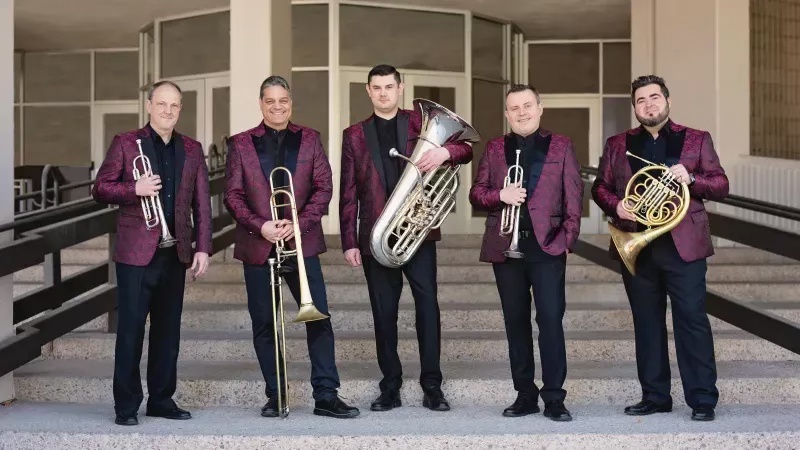
The Boston Brass brings their Holiday show, “Christmas Bells are Swingin’,” to Macky Auditorium at 7:30 p.m. Saturday, Dec. 14. They will be joined for the performance by the Brass All-Stars Big Band, an ensemble recruited by the Boston Brass from local musicians, including members of the CU College of Music Faculty.

Founded in 1986, the Boston Brass performs brass quintet arrangements of classical music and jazz standards as well as original works for brass. They have toured throughout the United States and to more than 30 countries world wide. In addition to they quintet performances, they also perform with orchestras, bands and jazz bands.

Boston Brass

Their numerous recordings include one released in 2007 with the same title as their Macky program—“Christmas Bells are Swingin’”—recorded with the Syracuse University Wind ensemble. Pieces on both the CD and the Macky concert program include arrangements of three dances from The Nutcracker, the Sousa-carol blend “Jingle Bells Forever,” and Irving Berlin’s “White Christmas.”

Other works on the concert program are Stan Kenton’s arrangement of “Joy to the World” and several familiar Christmas Carols, including “God Rest Ye Merry Gentlemen,” “Angels We Have Heard on High,” and “The Holy and the Ivy.”

The Boston Brass’s latest album, titled “Joe’s Tango,” features the world premiere of Five Cities Concerto by Jorge Machain. Recorded with the University of Nevada-Las Vegas Wind Orchestra, the album also features New York Philharmonic trombonist Joe Alessi performing with the Boston brass.  

# # # # #

“Christmas Bells are Swingin’”
Boston Brass and Brass All-Stars Big Band

  • Anon.: “God Rest Ye Merry Gentlemen” (arr. Ralph Carmichael)
  • John Henry Hopkins, Jr.: “We Three Kings of Orient Are” (arr. Carmichael)
  • Traditional: “Angels We Have Heard on High” (arr. Carmichael)
  • Tchaikovsky: Dances from The Nutcracker (arr. J.D.Shaw)
  • Robert W. Smith: “Jingle Bells Forever” (arr. Shaw)
  • “The Grinch” (arr. William Russell)
  • “Ho, Ho, Ho” (arr. Rick DeJonge)
  • Traditional: The Twelve Days of Christmas (arr. Carmichael)
  • Leroy Anderson: “Sleigh Ride” (arr. Shaw)
  • Jack Rollins: “Frosty the Snowman” (arr. Shaw)
  • Franz Xaver Gruber: “Silent Night” (arr. Chris Castellanos)
  • Anon.: “Good King Wenceslas” (arr. Carmichael)
  • Henry Gauntlett: “Once in Royal David’s City” (arr. Carmichael)
  • Traditional: “The Holly and the Ivy” (arr. Carmichael)
  • David Cutler: “Faithful”
  • Irving Berlin: “White Christmas” (arr. Shaw)
  • Anon.: “Greensleeves” (arr. Shaw)

7:30 p.m. Saturday, Dec. 14
Macky Auditorium

TICKETS

Music from Haydn to Mariachi on a busy weekend

Boulder Phil, Boulder Chorale and Takács Quartet 

By Peter Alexander April 25 at 10:05 p.m.

It’s spring and thoughts at the Boulder Philharmonic turn to romance.

Their next concert under music director Michael Butterman, titled in fact “Spring Romance,” features a fleet and evocative musical meditation on the season, D’un matin de printemps (Of a spring morning) by Lili Boulanger. 

Also on the program to be performed Saturday (April 27; details below) at Macky Auditorium, Spanish/Mallorcan violinist Francisco Fullana will perform Saint-Saëns’s Violin Concerto No. 3 with the orchestra. The program concludes with Tchaikovsky’s Symphony No. 5.

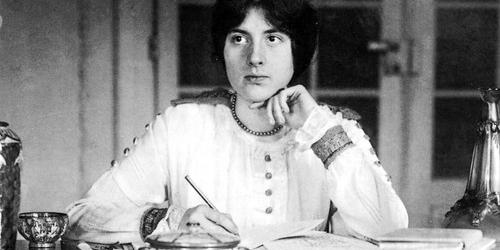
Lili Boulanger

The younger sister of the famous music teacher Nadia Boulanger, Lili died at the tragically young age of 24. The first female winner of the Prix de Rome composition prize, Lili showed precocious musical talent as young as four, when she accompanied her older sister to classes at the Paris Conservatoire. Long overshadowed by Nadia’s success, Lili and her music have become more prominent in recent years. 

Written in 1918, D’un matin de printemps was one of the last works she completed. It was written in versions for solo violin, flute, and piano, for piano trio, and for orchestra. The score’s origin as a solo piece is reflected in passages traded among first chair string players. 

A native of Mallorca, a Spanish island in the Mediterranean, Fullana won an Avery Fisher Career Grant in 2018. A versatile performer, he performs both 19th-century Romantic repertoire with major orchestras world wide, and early music that he has played as artist-in-residence with the ensemble Apollo’s Fire.

Dedicated to and premiered by the Spanish virtuoso Pablo de Sarasate, Saint-Saëns’s Third Concerto is one of his most frequently performed pieces for violin and orchestra. Characterized by colorful themes and virtuoso flourishes, it has often been chosen by young violinists as a debut concerto. The most striking moment comes at the beginning of the finale, when the violinist plays a recitative-like passage before proceeding to an energetic main theme.

One of the composer’s most popular works, Tchaikovsky’s Fifth Symphony is also one of his most emotionally wrought symphonies. Often gripped with insecurity, Tchaikovsky initially thought the Fifth Symphony was a failure. “There is something repellant about it,” he wrote. After Brahms heard it and praised the symphony, however, Tchaikovsky wrote “I have started to love it again.”

The symphony’s dramatic progression has suggested to many listeners that there is an underlying story, or program. The composer, however, insisted that the Fifth—unlike the Fourth and Sixth symphonies—was not programmatic. Regardless of what any listener hears within the score’s drama, however, its emotional force has made it one of the most popular pieces in the orchestral repertoire.

# # # # #

“Spring Romance”
Boulder Philharmonic Orchestra, Michael Butterman, conductor
With Francisco Fullana, violin

  • Lili Boulanger: D’un matin de printemps (Of a spring morning)
  • Saint-Saëns: Violin Concerto No. 3
  • Tchaikovsky: Symphony No. 5

7 p.m. Saturday, April 27
Macky Auditorium

TICKETS

# # # # #

While the Boulder Philharmonic is thinking about Spring, the Boulder Chorale and conductor Vicki Burrichter are musically off to Mexico for a Fiesta de las Luces (Festival of lights).

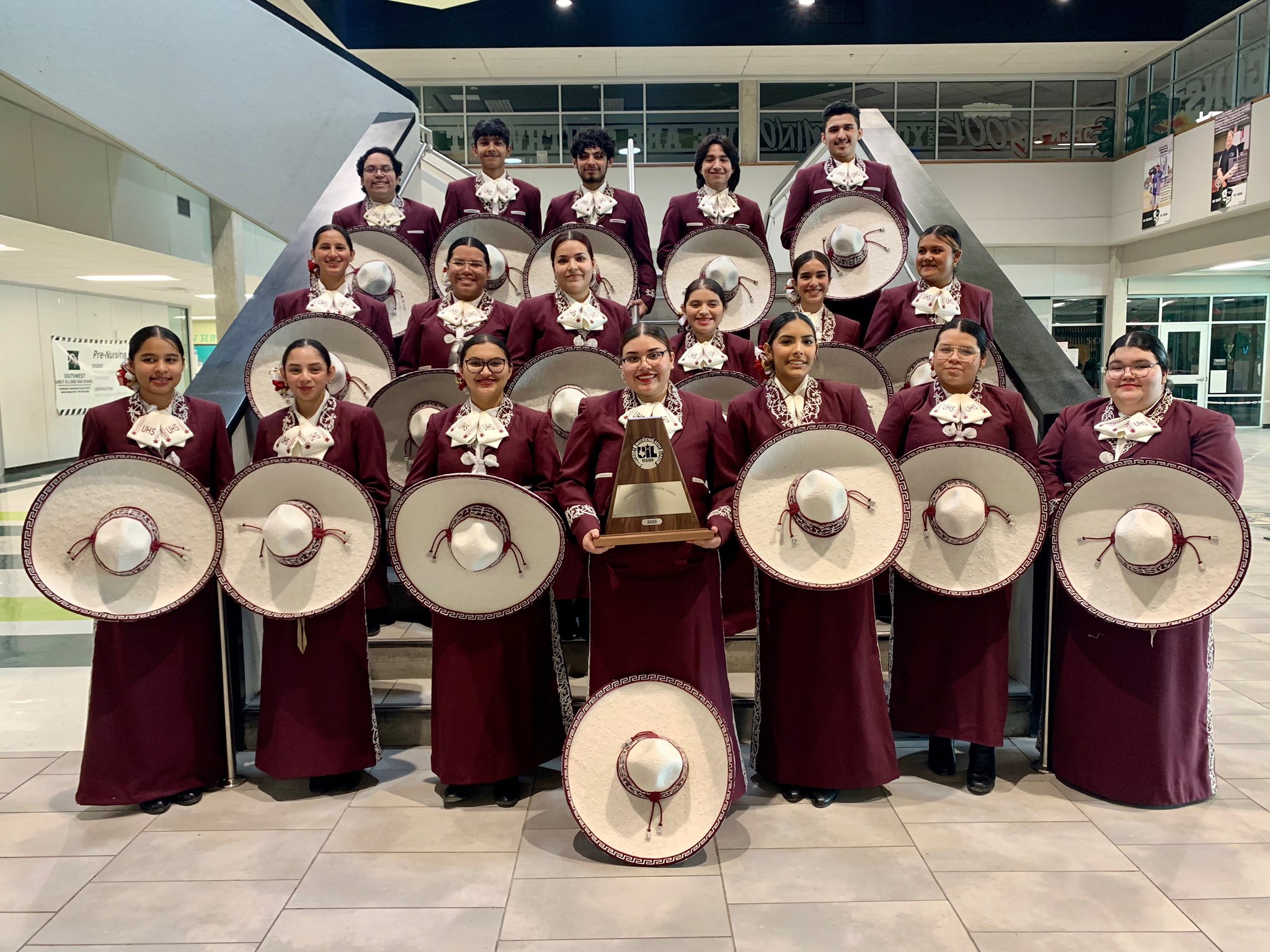
Their next program, to be presented Saturday and Sunday in Boulder and Longmont (April 27 and 28; see below) features Los Coyotes, an award-winning Mariachi Band from Uvalde, Texas, High School, as well as the Boulder Chorale’s children’s choir Bel Canto. The program is a celebration of Mexican culture in music, including both Mariachi music and other Mexican songs.

Los Coyotes, Uvalde High School, Texas

Founded in 1999, Los Coyotes won the Texas University Interscholastic League (UIL) Mariachi Championship in 2023. The outcome of the championship included a powerful feature article in Rolling Stone Magazine one year ago. The article brought out, among other things, the consoling impact of Mariachi music in Uvalde after the school shooting of 2022, and how a small program had grown into state champions under their current director, Albert Martinez.

As part of their visit to Colorado to perform with the Boulder Chorale, Los Coyotes have presented a workshop for local Mariachi students at Longmont’s Skyline High School, and have other appearances planned in addition to their concerts with the Boulder Chorale. Their full schedule is available HERE.

Each performance listed below will be preceded at 3:30 p.m. by a presentation by Burrichter and Martinez.

# # # # #

Fiesta de las Luces: Songs of Mexico
Boulder Chorale, Vicki Burrichter, conductor
With Los Coyotes, Mariachi band from Uvalde, Texas, High School, Albert Martinez, director;  and the Boulder Children’s Choir Bel Canto

Program of Mariachi music and Mexican songs arranged for chorus

4 p.m. Saturday, April 27 at First United Methodist Church, Boulder
4 p.m. Sunday, April 28, at Vance Brand Civic Auditorium, Longmont

TICKETS

# # # # #

The Takács Quartet wraps up their 2023–24 season of campus concerts Sunday and Monday (April 28 and 29; see details below). This was the quartet’s 49th season. 

The Sunday performance is sold out, but a few tickets are still available at the time of posting for Monday’s performance, and tickets are also available for the livestream of Sunday’s concert, which will be available online through Monday, May 6.

The program comes from the heart of the Classical/Romantic repertoire, opening with string quartets by Haydn and Schubert. To close out the concert, two additional CU music faculty members—violist Erika Eckert and cellist Meta Weiss—join the quartet to perform Brahms’s String Sextet in G major.

Most of Haydn’s string quartets were published in sets of six, which was the standard for most printed music at the time. Each published set generally has an opus number for the full set, with works numbered 1–6 within the set. The Quartet in D minor, op. 42, is an exception, however, as it stands alone as a single work issued as op. 42. 

It has been speculated that because it is a relatively simple quartet, Op. 42 might have been part of a planned set of three shorter works that were commissioned by two Spanish nobles, but never completed. It is in the standard four movements, in the order Andante ed innocentemente (walking speed and innocently), Minuet—Trio, Adagio and Presto.

Schubert’s String Quartet in B-flat was written in 1814, when the composer was only 17. It was never published during Schubert’s lifetime, so when it finally came out in 1863, it was given the late opus number of 168, even though it was an early work. Schubert wrote the quartet very quickly, completing the first movement in only four and a half hours, and the entire quartet in nine days. With such speed, it is not surprising that it is one of seven quartets Schubert completed in little more than a year.

Takács Quartet. Image by Amanda Tipton Photography.

All his life Brahms was wary of being compared to Beethoven. That likely why it took him 14 years to complete his first symphony, published when he was in his 40s, and why he destroyed his first 20 attempts at writing a string quartet. It is also sometimes speculated that he completed his two string sextets before his three quartets because they were not easily compared Beethoven’s masterful string quartets.

In any case, the Sextet in G major was written when Brahms was living comfortably near the resort town of Baden-Baden. The first movement contains a musical reference to the first name of the singer Agathe von Siebold, to whom Brahms had been briefly engaged some years before. Her significance to the composer is indicated by the fact that when he finished that movement, her wrote in a letter, “Here I have freed myself from my last love.”

Surprisingly, the Sextet was first performed in Boston in October 1866, a month before the European premiere in Zurich.

# # # # #

Takács Quartet
With Erika Eckert, viola, and Meta Weiss, cello

  • Haydn: String Quartet in D minor, Op. 42
  • Schubert: String Quartet in B-flat Major, D112
  • Brahms: String Sextet No. 2 in G Major, Op. 36

4 p.m. Sunday, April 28 SOLD OUT
7:30 p.m. Monday, April 29

Grusin Music Hall, CU Imig Music Building

TICKETS for live performances and for online stream of Sunday’s performance

GRACE NOTES: Holiday performances everywhere

Popular themes of the 2023 Holidays include the solstice and music of the Baroque

By Peter Alexander Nov. 29 at 2:41 p.m.

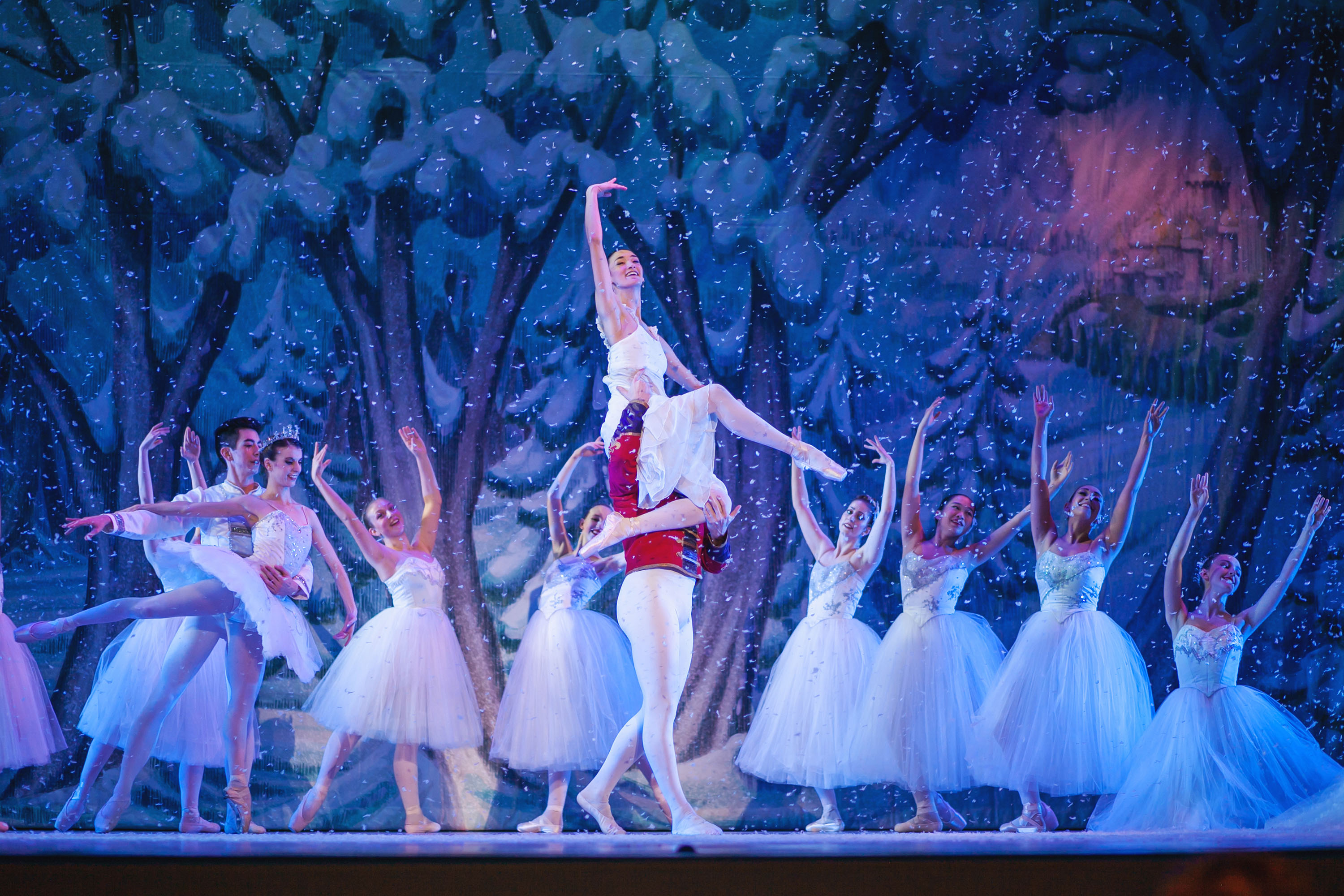
The Longmont Symphony and Boulder Ballet start their 2023 series of Nutcracker  performances Saturday afternoon (1 p.m. Dec. 2) at Vance Brand Civic Auditorium with their annual “Gentle Nutcracker.” 

A shortened, sensory-friendly performance designed for neurodiverse individuals, their families and caregivers, the “Gentle Nutcracker” is approximately 90 minutes in length. 

That special presentation will be followed by two full performances Saturday and Sunday of Tchaikovsky’s beloved ballet, with the Christmas party, the Nutcracker Prince, “The Dance of the Sugar Plum Fairy,” and all the other features that have made both the music and the ballet a Holiday favorite (4 p.m. Saturday, Dec. 2 and 2 p.m. Sunday, Dec. 3; details below).

NOTE At the time of writing, there are only a few seats left, mostly in the balcony. There is no guarantee that tickets will be available by the time this story appears.

– – –

Longmont Symphony Orchestra, Elliot Moore, conductor
Boulder Ballet

“Gentle Nutcracker”

1 p.m. Saturday, Dec. 2 NOW SOLD OUT
Vance Brand Civic Auditorium

TICKETS

Tchaikovsky: The Nutcracker Ballet

4 p.m. Saturday, Dec. 2
2 p.m. Sunday, Dec. 3
Vance Brand Civic Auditorium

TICKETS

* * * * *

Conductor Cynthia Katsarelis and the Pro Musica Colorado Chamber Orchestra will present the Christmas portion of Handel’s Messiah Saturday (7:30 p.m. Dec. 2) at Mountain View Methodist Church (details below).

In addition to the Christmas section, chorus and orchestra will perform the much loved “Hallelujah” chorus from Messiah. The program opens with “Adoration” by Florence Price and Mozart’s Divertimento in D major, K136.

The Christmas portion of Messiah is one of three major divisions of the work. It comprises 21 separate movements including the opening Overture, choruses including “For unto us a Child is Born” and “Glory to God,” recitatives, and arias for soprano, tenor and bass soloists. Pro Musica will be joined by the Boulder Chamber Chorale and soloists Jennifer Bird-Arvidsson, soprano; Nicole Asel, alto; Steven Soph, tenor; and Ashraf Sewailam, bass.

– – –

Pro Musica Colorado Chamber Orchestra, Cynthia Katsarelis, conductor
With the Boulder Chamber Chorale and Jennifer Bird-Arvidsson, soprano; Nicole Asel, alto; Steven Soph, tenor; and Ashraf Sewailam, bass

  • Florence Price: Adoration
  • W.A. Mozart: Divertimento in D major, K136 
  • G.F. Handel: Messiah, Part I
  • —“Hallelujah” chorus

7:30 p.m. Saturday, Dec. 2
Mountain View Methodist Church, 355 Ponca Place, Boulder

TICKETS

* * * * *

The CU College of Music presents its annual Holiday Festival this coming weekend, Friday through Sunday in Macky Auditorium (Dec. 8–10; details below).

One of the most popular Holiday events in Boulder, the Holiday Festival features numerous ensembles from the College of Music, each presenting their own selections. Featured groups in this year’s program are the Chamber singers, the Holiday Festival Chorus made up of singers from several groups in the college, the Holiday Festival Orchestra, the Trombone Choir, Holiday Festival Brass, Holiday Festival Jazz, and the West African Highlife Ensemble.

NOTE: At the time of writing, there are limited tickets available for the four performances of the Holiday Festival program. Performances generally sell out, so interested persons should check the CU Presents Web page for availability.

– – –

Holiday Festival, Donald McKinney, artistic director
CU College of Music Ensembles

Chamber Singers, Leila Heil, conductor
Noelle Romberger, graduate conductor

Holiday Festival Chorus
Galen Darrough, Raul Dominguez and Jessie Flasschoen, conductors 
Jun Young Na and Noelle Romberger, graduate conductors

Holiday Festival Orchestra, Gary Lewis, music director 
With Donald McKinney and Nelio Zamorano, conductors

Trombone Choir, Sterling Tanner, conductor

Holiday Festival Jazz, Brad Goode, director

Holiday Festival Brass, Lauren Milbourn, conductor

West African Highlife Ensemble, Maputo Mensah, director

7:30 p.m. Friday, Dec. 8
1 and 4 p.m. Saturday, Dec. 9
4 p.m. Sunday, Dec. 10
Macky Auditorium

TICKETS

* * * * *

Cellist Charles Lee, the principal cellist of the Boulder Philharmonic Orchestra, will join Ars Nova Singers and conductor Tom Morgan for “Evergreen,” the latest edition of their annual celebration of the winter solstice.

The program will be presented four times, once in Longmont (Saturday, Dec. 9), once in Denver (Sunday, Dec. 10) and twice in Boulder (Thursday and Friday, Dec. 14 and 15; times and locations below). The program includes music by the medieval Benedictine abyss Hildegard Bingen, the English Renaissance master William Byrd, and the north German early Baroque composer Heironymus Praetorius. 

Not to be confused with his better known younger contemporary Michael Praetorius, Heironymus is known for his elaborate multi-voices motets. Also on the program are more contemporary works by the living composers Eriks Esenvalds, Jocelyn Hagan and Taylor Scott Davis. 

In a written news release, Morgan sets the stage for this concert timed to nearly coincide with the solstice, writing: “Dark and light, motion and stasis, intimate and universal, deeply familiar and refreshingly new—our season searches for the balance point in all of these, through the power and majesty of the human voice.”

– – –
Ars Nova Singers, Tom Morgan, director
With Charles Lee, cello

“Evergreen”

  • Hildegard of Bingen: O frondens virga
  • Two 15th century English carols
  • Heoronymus Praetorius: In dulci jubilo (à 8)
  • William Byrd: O magnum mysterium
  • Ola Gjeilo: Serenity (O Magnum mysterium)
  • Andrea Casarrubios: Caminante
  • Taylor Scott Davis: Solstice
  • Eriks Esenvalds: Rivers of Light
  • Jocelyn Hagen: Mother’s Song
  • Dan Forrest: The Sun Never Says
  • Michael Head: The Little Road to Bethlehem
  • Arrangements of Holiday songs by Tom Morgan, Joanna Forbes, Alexander L’Estrange and others

7:30 p.m. Saturday, Dec. 9
United Church of Christ, 1500 9th Ave., Longmont

12:30 p.m. Sunday, Dec. 10
St. Paul Lutheran Church, 1660 Grant. St., Denver

7:30 p.m. Thursday, Dec. 14 and Friday, Dec. 15
Mountain View United Methodist Church, 355 Ponca Place, Boulder

TICKETS

* * * * *

CU Presents will round out the university’s holiday performances with Christmas with the Canadian Brass at 7:30 p.m. Tuesday, Dec. 13 in Macky Auditorium.

The Canadian Brass generally announce their program from the stage. Nonetheless, the Christmas set list is more predictable and will likely feature some Canadian Brass favorites, including “Ding Dong Merrily on High,” evergreen Holiday music including “White Christmas” and “Carol of the Bells,” and jazzy arrangements including “Glenn Miller Christmas.”

Founded in 1970, the Canadian Brass has been a recognized and esteemed part of the musical scene for more than 50 years. Touring world-wide, they have made the repertoire of chamber music for brass, and specifically brass quintets, widely appreciated. 

There is still one original member of the quintet, tubist Chuck Dellenbach, while other members have joined over the years. The most recent addition, making her Canadian Brass debut this year, is trumpet player Ashley Hall-Tighe, who first met the members of the Canadian Brass in 2001 as a student in their chamber music residency at the Music Academy of the West.

With more than 10 Christmas albums, the Canadian Brass are especially well known for their holiday performances. Their total recording history currently totals more than 130 albums and more than 2 million sold worldwide.

NOTE: At the time of writing, there are limited tickets available.

– – –

Canadian Brass

“Christmas with the Canadian Brass”

  • Program to be announced from the stage may include:
  • “Ding Dong Merrily on High” (arr. Henderson)
  • Gabrieli: Canzona per sonare No. 4
  • “White Christmas” (arr. Henderson)
  • Mykola Leondovich: “Carol of the Bells” (arr. McNeff)
  • Vince Guaraldi: “Christmas Time is Here” (arr. Ridenour)
  • Glenn Miller: “Glenn Miller Christmas” (arr. Dedrick)

7:30 p.m. Wednesday, Dec. 13
Macky Auditorium

TICKETS

* * * * *

The Longmont Symphony will look back to the 18th century for Candlelight: A Baroque Christmas at 4 p.m. Saturday, Dec. 16, in Vance Brand Civic Auditorium.

Under the direction of Elliot Moore, the featured work on the program will be the Gloria of Antonio Vivaldi. Composed around 1715, it is one of the Venetian composer’s most frequently performed works. Its 12 movements, divisions of the “Gloria” text from the Catholic Mass ordinary, call for chorus, orchestra, and soprano and alto soloists.

Celebrating the holiday season, the Candlelight Concert has long been a part of the Longmont Symphony’s season. There will be candles again this year, although the orchestra has announced that they will be battery-operated this year, rather than relying on a flame.

– – –

Longmont Symphony and Chorus, Elliot Moore, conductor

“Candlelight: A Baroque Christmas”

  • Corelli: Concerto Grosso
  • Handel: “Rejoice greatly” from Messiah
  • Scarlatti: Christmas Cantata for soprano and strings
  • Vivaldi: Gloria

4 p.m. Saturday, Dec. 16
Vance Brand Civic Auditorium

TICKETS

* * * * *

All the choirs of the Boulder Chorale and Boulder Children’s Chorale will join together to present “Season of Light,” their annual concert of music for the holidays, Saturday and Sunday (Dec. 16 and 17; details below).

The concert title refers to the tradition found in many different cultures to use light to counteract the dark of winter and forecast the return of the light in the weeks to come. In the words of the Boulder Chorale’s press information, the program “traces the history and development of many of the world’s most endearing holiday customs, all of which involve lighting up the winter season—from the burning Yule log, sparkling Christmas tree lights and candles in windows, to the lighting of luminaries (often called luminarias) in the American Southwest and the traditional ritual of the Hanukkah menorah.”

Tickets are available both at the door and through the Boulder Chorale Web page. The Sunday performance will also be presented through live streaming, available at the same Web page.

– – –

Boulder Chorale, Vicki Burrichter, artistic director
With Boulder Children’s Chorales, Nathan Wubbena, artistic director

“Season of Light”

Children’s Chorale Bel Canto
Nathan Wubbena, conductor

  • John Rutter: “Angels’ Carol”
  • Flory Jagoda: “Ocho Kandelikas” (arr. Joshua Jacobson)

Children’s Chorale Volante
Kiimberly Dunninger, conductor

  • Franklin J. Willis: “Be the Light “
  • Robert Cohen and Ronald Cadmus: “The Joy of Simple Things”

Chamber Chorale
Vicki Burrichter, conductor

  • John Newell: “Light of Heaven” (text based on the Buddhist vajra guru mantra)

Chamber Choir, Bel Canto and Volante
Nathan Wubbena, conductor

  • Ryan Main: “Go! Said the Star”

Children’s Choir Piccolini
Melody Sebald, conductor

  • “Winter Canon” (arr. Andy Beck)
  • John Henry Hopkins Jr.: “We Three Kings”

Children’s Choir Prima Voce
Anna Robinson, conductor

  • Ruth Ann Schram: “Winter Solstice”
  • “This Little Light of Mine” (arr. Masa Fukuda)

Concert Chorale
Vicki Burrichter, conductor

  • Enya and Nicky Ryan: “Amid the Falling Snow” (words by Roma Ryan, arr. Audry Snyder)
  • Craig Carnahan: “Dancing on the Edges of Time” (words by Rabindranath Tagore)
  • Stephanie K. Andrews : “On Compassion” (words by the 14th Dalai Lama Tenzin Gyatso)

Combined Choirs
Kim Dunninger and Vicki Burrichter, conductors

  • Benji Pasek and Justin Paul: “Do a Little Good” (from Spirited)
  • Franz Gruber/David Kantor: “Night of Silence” (includes “Silent Night”; arr. Nathan Wubbena; Spanish text by Cynthia Garcia-Barrera)

4 p.m. Saturday and Sunday, Dec. 16 and 17
First United Methodist Church, 1421 Spruce St., Boulder

TICKETS

* * * * *

The Boulder Chamber Orchestra will combine its holiday celebration with the music of Beethoven in a program featuring pianist Adam Zukiewicz.

Their “Holidays Celebration with Beethoven” will be at 7:30 p.m. Saturday, Dec. 16 in the Boulder Seventh-Day Adventist Church. Zukiewicz will perform Beethoven’s Piano Concerto No. 2 with the orchestra and conductor Bahmann Saless. 

Other works on the program are Mozart’s Overture to The Marriage of Figaro, conducted by Nadia Artman; Chocolats Symphoniques (Symphonic chocolates) by Maxime Goulet; and the world premiere of the Concerto for Flute and Orchestra by Sylvie Bodrova with the BCO’s principal flutist Cobus DuToit as soloist. 

Part of the reason for combining the holiday music with Beethoven is that the composer’s birthday is believed to be Dec. 16. The date is not certain, since the only documents record his baptism on Dec. 17, but the birthday is traditionally observed on Dec. 16. That would make Dec. 16, the date of the concert, the 253rd anniversary of his birth.

As it happens, the full 2023–24 season has three of Beethoven’s five piano concertos listed. the Third Concerto was played by Petar Klasan Sept. 1, and the Concerto No. 5 (“Emperor:) will be performed with the BCO by  Jennifer Hayghe Feb 3 (7:30 p.m., Boulder Seventh-Day Adventist Church).

Goulet’s Chocolats Symphoniques was previously performed by the BCO on their holidays concert in 2021. The work’s four movements refer to four different flavors of chocolate: “Caramel Chocolate,” “Dark Chocolate,” “Mint Chocolate” and “Coffee-infused Chocolate.”

– – –

Boulder Chamber Orchestra, Bahman Saless, conductor
With Cobus DuTois, flute, and Adam Zukiewicz, piano
Nadia Artman, conductor

“Holidays Celebration with Beethoven”

  • Mozart: Overture to The Marriage of Figaro
  • Maxime Goulet: Chocolats Symphoniques (Symphonic chocolates)
  • Sylvie Bodorova: Concerto for Flute and Orchestra (world premiere)
  • Beethoven: Concerto No. 2 for Piano and Orchestra

7:30 p.m. Saturday, Dec. 16
Boulder Seventh-Day Adventist Church, 345 Mapleton Avenue

TICKETS  

* * * * *

The Boulder Bach Festival (BBF) will present “Handel’s Messiah Reimagined” in their very own version, based on an edition created by music director Zachary Carrettin.

Messiah will be performed by a string orchestra from the BBF’s Compass Resonance (CORE) Ensemble with harpsichord and chamber organ continuo and a 16-voice choir. Five featured solo singers will also perform within the chorus. The entire performance will be presented without conductor.

The program also incudes two a cappella vocal works and a violin concerto b Antonio Vivaldi. The concerto will be played by BBF’s artistic director, Zachary Carrettin, with Baroque guitar continuo played by Keith Barnhart.

– – –

Boulder Bach Festival CORE ensemble
Mara Riley, soprano; Sarah Moyer, soprano; Claire McCahan, mezzo-soprano;
Daniel Hutchings, tenor; and Adam Ewing, baritone
With Zachary Carrettin, violin, and Keith Barnhart, Baroque guitar

“A Baroque Christmas: Handel’s Messiah Reimagined”

4 p.m. Sunday, Dec. 17

Gordon Gamm Theater, Dairy Arts Center, Boulder

TICKETS  

GRACE NOTES: Chamber music, orchestras, operas and chorus, all in one weekend

Piano Quartet returns with guest violinist, Pro Musica plays world premiere

By Peter Alexander Oct. 26 at 6:35 p.m.

The Boulder Piano Quartet, one of Boulder’s most creative musical groups, has been silent since the untimely death of violinist Chas Wetherbee last year. 

For the coming season, they will have four concerts with four different guest violinists who are at least informally auditioning to take the quartet’s empty seat. The first program—Friday night at the Academy in Boulder (7 p.m. Oct. 27, 970 Aurora Ave., Boulder)—will feature violinist Hilary Castle Green, who teaches strings at the Shining Mountain Waldorf School in Boulder. 

Green maintains a private virtual teaching studio based in New York and is also a faculty member at Bow and Heart, a program dedicated to providing ensemble opportunities to string students in New York City. She has performed extensively on the east coast, including appearances at Carnegie Hall, Lincoln Center’s Avery Fisher and Alice Tully halls, and Bargemusic.

Friday’s program offers two works: the Piano Quartet in A major by Brahms, and the “Spanish” Quartet for piano and strings by Louise Héritte-Viardot.  The granddaughter of renowned tenor and singing instructor Manuel Garcia and the niece of soprano Maria Malibran, Héritte-Viardot came from a renowned musical family. She was a composer, largely of chamber music, as well as singer, pianist and conductor.

Remaining concerts by the quartet during the 2023–24 concert season will be Dec. 15 with violinist Jubal Fulks from the University of Northern Colorado; Jan. 19; and May 3, all at the Academy. Performances at the Academy are free with prior registration. You may register for Friday’s concert HERE.

# # # # #

Boulder Piano Quartet
Hilary Castle Green guest violinist; Matthew Dane, viola; Thomas Heinrich, cello; and David Korevaar, piano

  • Louise Héritte-Viardot: Quartet No. 2 in D major for piano and strings (“Spanish Quartet)
  • Brahms: Quartet in A major for piano and strings

7 pm. Friday, Oct. 27
The Academy, Boulder

Free with reservation, available HERE 

# # # # #

The Boulder Symphony will present its first “Curiosity Concert” of the season Saturday (3 p.m. Oct. 28) at the group’s home base, Grace Commons Church at 1820 15th St. in Boulder. Devin Patrick Hughes will conduct the program that ranges from Mozart to Bille Eilish. 

The orchestra’s “Curiosity Concerts” are family-oriented programs designed to provide an introduction to music for young listeners. The Boulder Symphony offers a “Curiosity Concert” in the fall, and another in the spring, the latter scheduled for 3 p.m. Saturday, March 23, 2024.

Titled “Perfectly Imperfect,” Saturday’s performance is a program of the classical music education producer Extra Crispy Creatives. With music ranging from Mozart to Billie Eilish, “Perfectly Imperfect” explores “what makes Earth’s music the best in the galaxy.” The performance with full orchestra and an alien named “Blip” will last approximately 45 minutes.

# # # # #

Fall Curiosity Concert: “Perfectly Imperfect”
Boulder Symphony, Devin Patrick Hughes, conductor
Production of Extra Crispy Creatives

Program includes original music and arrangements from:

  • Sia: “Cheap Thrills”
  • Mozart: Symphony No. 40 in G minor
  • Rossini: Overture to William Tell
  • Richard Strauss: Also sprach Zarathustra
  • Billie Eilish: “Bad Guy”

3 p.m. Saturday, Oct. 28
Grace Commons Church, 1820 15th St., Boulder

TICKETS
# # # # #

Boulder Chorale will explore the music of the Nordic countries in their season-opening “Nordic Lights” concert, at 4 p.m. Saturday and Sunday (Oct. 28 and 29 at First United Methodist Church). Under the direction of Vicki Burrichter, the concert will feature Ola Gjeilo’s Sunrise Mass and other choral works from Nordic countries.

The music of Scandinavia stands somewhat apart from the mainstream of classical concert music. While the names of Edvard Grieg, Jan Sibelius and Carl Nielsen are known, there are many younger composers writing music today, particularly choral music, who are not well known outside of their home countries. 

One of those successful young Scandinavian composers, Gjeilo grew up and first studied music in Norway. Later a graduate of both the Royal College of Music in London and the Juilliard School in New York, he currently lives in Manhattan, where he works as a freelance composer.

His Sunrise Mass is in four movements that evoke aspects of the rising sun rather than movements of the traditional mass. The movements are titled “The Spheres,” “Sunrise,” “The City” and “Identity.”

# # # # #

“Nordic Lights”
Bouder Chorale, Vicki Burrichter, conductor

  • Ola Gjeilo: Sunrise Mass
  • Other choral works from Nordic traditions

4 p.m. Saturday, Oct. 28, and Sunday, Oct. 29
First United Methodist Church, 1421 Spruce St., Boulder

TICKETS
# # # # #

Boulder Opera will present one of the best known and most popular of operas from the 18th, or any, century Saturday and Sunday (7 p.m. Oct. 28 and 3 p.m. Oct. 29) at the Dairy Arts Center: Mozart’s Magic Flute.

First performed in 1791, the last year of Mozart’s life, The Magic Flute is based on Masonic ideals and symbolism. It features Tamino, a young prince who gets caught up in a conflict between the Queen of the Night and Sarastro, respectively representing evil and wisdom. Tamino is initiated into Sarastro’s temple in a scene that reflects traditional Masonic initiation rites. In the end, he is paired with Pamina, the daughter of the Queen of the Night who rejects her mother in order to embrace Sarastro’s wisdom.

Other characters in the opera include Tamino’s sidekick Papageno, a simple but good-hearted birdcatcher; his mate-to-be Papagena; the malicious slave Monostatos; a trio of ladies who serve the Queen of the Night; and a trio of young boys who represent goodness and innocence.

In spite of the serious aspects of the plot, The Magic Flute is broadly comic, especially the role of Papageno. The libretto was written by Emanuel Schikaneder, a multi-talented comic actor, singer and impresario who was Mozart’s Masonic brother in a lodge in Vienna, and who played the role of Papageno in the original production at Vienna’s Theater an der Wien.

Boulder Opera will present The Magic Flute in a family-friendly production that will feature an orchestra on stage in the Dairy Arts Center’s Gordon Gamm Theater. It will be sung in the original German with English titles. The performance will be conducted by Steven Aguiló-Arbues. The stage director is Madeleine Snow.

# # # # #

Boulder Opera
Steven Aguiló-Arbues, conductor
Madeleine Snow, stage director

  • W.A. Mozart: The Magic Flute

7 p.m. Saturday, Oct. 28
3 p.m.Sunday, Oct. 29
Gordon Gamm Theater, Dairy Arts Center

TICKETS

# # # # #

Conductor Cynthia Katsarelis is back in Colorado, visiting from her position as professor of conducting at Notre Dame University in South Bend, Ind., to lead the Colorado Pro Musical Chamber Orchestra (CPM)in their opening concert of the 2023-24 season.

Titled “Passione!” the program includes a symphony by Haydn with that nickname, as well as the world premiere of a new piece by CU composition student Jessie Lausé and Mozart’s “Turkish” Violin Concerto played but the CPM’s concertmaster, Stacy Lesartre.

Lausé’s Stretch in Periphery was the winner of the most recent CU-PMC composition competition, a contest started by the PMC which every year premieres a work that is selected by Katsarelis and the CU composition faculty from among submissions by their students. The winner receives a performance by PMC and an award of $1000.

PMC’s program notes explain that Lausé’s score “uses color, improvisatory devices, and traditional harmonies that ‘push out’ into spicy dissonances, to tell a story of the last four years, both autobiographically and in our common life here in the US. It is dedicated to ‘anyone who lives their lives in the margins’.”

Haydn’s Symphony No. 49 is one of a group of symphonies written in the 1760s that have been associated with a literary movement known as Sturm und Drang (“storm and stress“). The works associated with that title are generally in a minor key with a lot of  forceful rhythmic activity creating an anxious—or “stormy”—mood. 

Mozart’s Violin Concerto No. 5 has the nickname “Turkish” from a march section that interrupts the minuet finale. The march uses cymbals and other percussion instruments that give it a quality that was conventionally known as alla turca (in a Turkish style) in the late 18th century. The style was popular in operas of the time and was used to evoke the music of the Middle Eastern countries as an exotic element.

In addition to her role with PMC, Lesartre is concertmaster of the Cheyenne Symphony and has played with the Houston and the Colorado symphonies. She is also a member of the Amber Quartet and teaches private violin students and chamber music in Colorado.

Because of her recent appointment out of state, Katsarelis has announced that she will leave PMC at the end of this program year. She will return to Colorado for all three planned concerts, including Handel’s Messiah Dec. 2 (7:30 p.m., Mountain View Methodist) and a concert featuring guitarist Nicoló Spera April 6 (7:30 p.m., Mountain View Methodist).

# # # # #

“Passione!”
Pro Musica Colorado ChamberOrchestra
Cynthia Katsarelis, conductor, with Stacy Lesartre, violin

  • Jessie Lausé: Stretch in Periphery (world premiere)
  • W.A. Mozart: Violin Concerto No. 5 in A major, K219 (“Turkish”)
  • Joseph Haydn: Symphony No 49 n F minor (“Passione”)

7:30 p.m. Saturday, Oct. 18
Mountain View Methodist Church, 355 Ponca Place, Boulder

TICKETS
Grace Notes: Nation of Immigrants and Made in America

Boulder Chorale and the Longmont Symphony both strike American theme

By Peter Alexander March 15 at 1:43 p.m.

Taking inspiration from former president Obama’s description of America as “a nation of immigrants,” the Boulder Chorale will present a concert celebrating many of the cultures that have contributed to our national identity.

The concert, to be presented at 4 p.m. Saturday and Sunday at the First Methodist Church in Boulder (March 18 and 19), will be under the direction of Vicki Burrichter, artistic director of the Chorale. Violinist Leena Waite will play “Requiem for Ukraine” by Igor Loboda, and other guest artists will perform music from cultures around the world that have merged on the American continent.

Leena Waite

The program opens with an homage to America’s original inhabitants. “River of Living Waters” by Karen Marrolli, the director of music ministries at a Methodist church in Albuquerque, New Mexico, is based on a Lacquiparlé Dakota melody. That is followed by two songs from Great Britain that describe the journey from the old world to the new: “The Parting Glass” and “The Water is Wide.”

Other cultures celebrated in the program include those of India and China in Asia, and Mexico and Brazil in Latin America. The tour of cultures ends with music of Broadway by Leonard Bernstein, “Take Care of This House,” which is a reminder that Americans should, as Burrichter writes in her program notes, “work together to care for our collective home.” And finally a spiritual that remembers the enslaved people of our continent, Moses Hogan’s “My Soul’s Been Anchored in the Lord.”

“Not all of us have come here by choice,” Burrichter writes. “We hope that ending our concert with a spiritual shows our deep respect for . . . . (African-Americans’) innumerable contributions to American culture and life.”

# # # # #

“A Nation of Immigrants”
Boulder Chorale, Vicki Burrichter, conductor
With Leena Waite, violin
Ensemble of world musicians

Program includes:

  • Karen Marrolli: “Rivers of Living Water” (Lacquiparlé Dakota melody)
  • Traditional Scottish, arr. Desmond Early: “The Parting Glass”
  • Traditional British, arr. Craig Helala Johnson: “The Water is Wide”
  • Igor Loboda: “Requiem for Ukraine”
  • Leonard Bernstein: “Take Care of This House” from 1600 Pennsylvania Avenue
  • Moses Hogan: “My Soul’s Been Anchored in the Lord”
  • Additional repertoire from India, China, England, Mexico, and Brazil

4 p.m. Saturday and Sunday, March 18 and 19
First United Methodist Church, Boulder

TICKETS
 # # # # #

The Longmont Symphony will present the second of two concerts in the current season focusing on American music over the coming weekend, with performances Saturday and Sunday (March 18 and 19; details below) in the Stewart Auditorium of the Longmont Museum.

Titled “The Art of Influence—America: Part II” the program features works that reflect some of the influences that have shaped the sound of American music. Under the direction of conductor Elliot Moore, the orchestra will present the Colorado premiere of Cover the Walls by Ursula Kwong-Brown, Gershwin’s Lullaby, and Aron Copland’s jazzy Clarinet Concerto with soloist Jason Shafer. The program will be filled out by Maurice Ravel’s tribute to the French Baroque tradition, Le Tombeau de Couperin (The tomb of Couperin).

The versatile Kwong-Brown describes herself as “a composer, sound designer and arts technologist” who also is active as research scientist and political activist. A 2010 honors graduate of Columbia University in music and biology, she has had works performed across the United States and overseas. Her catalog includes music for orchestra, chamber ensembles, vocal and choral works, as well as sound design for dance and theater.

Jason Shafer

A graduate of the Eastman School of Music, Shafer is principal clarinet of the  Colorado Symphony and a member of the adjunct faculty at the University of Northern Colorado. He previously appeared with the LSO in 2021, when he performed Mozart’s Clarinet Concerto. Aaron Copland’s Concerto was commissioned by Benny Goodman, who played the premiere with the NBC Symphony and conductor Fritz Reiner. If not exactly a reflection of Goodman’s jazz style, the concerto is a tribute to his virtuosity.

Originally composed for piano and later orchestrated by the composer, Ravel’s Tombeau de Couperin was written during the difficult years of World War I. Described by the composer as an homage “less to Couperin himself than to French music of the eighteenth century” generally, the colorful orchestral suite includes movements titled Prélude, Forlane, Menuet and Rigaudon

# # # # #

“Made in American 2: The Art of Influence”
Longmont Symphony Orchestra, Elliot Moore, conductor
With Jason Shafer, clarinet

  • Ursula Kwong-Brown: Cover the Walls (Colorado premiere)
  • Copland: Concerto for Clarinet and String Orchestra with Harp and Piano
  • Gershwin:Lullaby
  • Ravel: Le Tombeau de Couperin (The Grave of Couperin)

7 p.m. Saturday, March 18, and 4 p.m. Sunday, March 19
Stewart Auditorium, Longmont Museum

TICKETS

From Nutcracker to a sing-along Messiah

A listing of Holiday performances by area musical organizations

By Peter Alexander

‘Tis the season, and the halls are alive with the sounds of Christmas.

The 2013 Holiday Festival by the College of Music in Macky Auditorium (Photo by Casey A. Cass/University of Colorado)

In the coming weeks, area musical organizations will offer performances ranging from The Nutcracker to Messiah, from Gregorian chant to Judy Collins, and from the Bach Christmas Oratorio to A Charlie Brown Christmas

In fact, the first Nutcrackers have already been completed, with more performances coming this weekend in Longmont (Dec. 3–4 with the Longmont Symphony and Boulder Ballet; see below for details, including links for tickets for all performances mentioned in this article). The Longmont performances include a “gentle Nutcracker,” an abridged, “sensory friendly” performance that welcomes neurodiverse audience members, their families and caregivers.

Boulder Ballet Nutcracker. Image by Amanda Tipton Photography

Other dance companies in the area offer The Nutcracker well into December and can easily be found on the Web; here I am listing the many musical groups in our area. This weekend the very popular CU Holiday Festival, with CU orchestras, bands and choirs starts the festivities on Friday at 7:30 in Macky Auditorium, with additional performances Saturday and Sunday (Dec 2–4). Check the Web page soon; some performances are close to selling out.

If you get enough “Rudolph” and “White Christmas” in the mall, several organizations offer alternative Holiday fare. Seicento Baroque Ensemble will present ”Noel: Christmas in the late Renaissance and early Baroque” over the coming weekend, Friday through Sunday (Dec. 2–4), in Denver, Boulder and Longmont. Ars Nova Singers will present their usual eclectic fare in the same cities over the following week (Dec. 9 & 11, 15 & 16). Their program, titled “Solstice,” includes Gregorian chant, Renaissance music based on chant, contemporary works for the time of solstice, and the premiere of director Tom Morgan’s own arrangement of the French carol “Un Flambeau, Jeanette, Isabella” (“Bring a torch, Jeanette, Isabella”).

The most wide-ranging program is surely that of The Boulder Bach Festival’s CORE (COmpass REsonance) Chamber Choir. Their “Christmas Across the Ages” program (Dec. 16 in the Broomfield Auditorium) offers exactly that, with selections from J.S. Bach’s Christmas Oratorio and Vince Guaraldi’s Charlie Brown Christmas, music by early American composer William Billings and songs by John Denver and Judy Collins. 

With their familiar penchant for embracing musical cultures around the world, the Boulder Chorale and conductor Vicki Burrichter will present “A Celtic Winter,” a program of traditional music performed with a Celtic ensemble led by Jessie Burns. The Boulder Chamber Orchestra offers “The Gift of Music” Dec. 17 (Boulder’s Seventh Day Adventist Church), including Handel arias sung by soprano Szilvia Schranz. Instrumental pieces will include Bach’s “Double” Violin Concerto in D minor, and Holiday selections.

If you wanted to hear Handel’s Messiah in Longmont, you will have to bring a score and sing along. The Longmont Symphony’s performance Dec. 17 is already sold out, but the Sing-Along Messiah Dec. 18 still has tickets available. The Boulder Philharmonic Brass will perform traditional songs of Christmas and Hanukkah at Mountain View Methodist Dec. 18. And with that, the musicians that I know about will pack up their cases and likely enjoy some eggnog. There are surely other events out there that have not come to my attention. With a little enterprise you can find those performances online, too.

# # # # #

CU Holiday Festival
CU College of Music orchestras, bands and choirs

  • Traditional music of the Holiday season

7:30 p.m. Friday, Dec. 2
1 and 4 p.m. Saturday, Dev. 3
4 p.m. Sunday, Dec. 4
Macky Auditorium

TICKETS

# # # # #

“Noel: Christmas in the late Renaissance an early Baroque”
Seicento Baroque Ensemble, Evanne Browne, artistic director
With Wesley Leffingwell, organ; and Joseph Howe, Baroque cello

  • Program includes music by Palestrina, Victoria, Sweelinck and Rossi.

7:30 p.m. Friday, Dec. 2, St. Paul, Lutheran Church, Denver
7:30 p.m. Saturday, Dec. 3. First United Methodist Church, Boulder
3 p.m. Sunday, Dec. 4, First Congregational Church, Longmont

TICKETS

# # # # #

The Nutcracker ballet
Longmont Symphony, Elliot Moore, conductor
With the Boulder Ballet

  • Tchaikovsky: The Nutcracker

1 p.m. Saturday, Dec. 3 (“Gentle” Nutcracker: abridged, “sensory friendly” performance))
4 p.m. Saturday, Dec. 3
2 p.m. Sunday, Dec. 4

TICKETS

# # # # #

“Solstice”
Ars Nova Singers, Tom Morgan, director
With John Gunther, saxophone

Program includes:

  • Gregorian Chant, Vox clara Ecce Intonat
  • Gabriel Jackson: Vox clara Ecce Intonat
  • Tomás Luis de Victoria: Ave regina caelorum
  • Bob Chilcott: The Shepherd’s Carol
  • Tom Morgan, arr: Un Flambeau, Jeanette, Isabella (premiere)

7:30 p.m. Friday, Dec. 9, First Congregational Church, Longmont
4 p.m. Sunday, Dec. 11, St. Paul Lutheran Church, Denver
7:30 p.m. Thursday, Dec. 15, Mountain View Methodist Church, Boulder
7:30 p.m. Friday, Dec. 16, First United Methodist Church, Boulder
LIVESTREAM: 4 p.m. Sunday, Dec. 11

TICKETS

# # # # #

Christmas Across the Ages”
Boulder Bach Festival CORE Chamber Choir
With Claire McCahan, mezzo-soprano, and Jeremy Reger, keyboards

Program includes:

  • John Tavener: “A Christmas Round”
  • William Billings: “A Virgin Unspotted”
  • —“Bethlehem” (While shepherd watched their flocks by night)
  • Jamaican folk tune: “An’ She Rock de Baby”
  • John Denver: “Aspenglow”
  • Judy Collins: “The Blizzard”
  • J.S. Bach: Selections from Christmas Oratorio
  • Vince Guaraldi: “Christmastime is Here” (From A Charlie Brown Christmas)

7:30 p.m. Friday, Dec. 16
Broomfield Auditorium

TICKETS

# # # # #

Longmont Symphony
Elliot Moore, conductor, with chorus and soloists

  • G.F. Handel: Messiah

4 p.m. Saturday, Dec. 17
Westview Presbyterian Church, Longmont

SOLD OUT

# # # # #

“The Gift of Music”
Boulder Chamber Orchestra, Bahman Saless, conductor
With Szilvia Schranz, soprano, and Kevin Sylves, double bass

  • G.F. Handel: Selected arias
  • Henry Eccles: Sonata in G minor for double bass and strings
  • J.S. Bach: Concerto in D minor for two violins and orchestra
  • Holiday selections

7:30 p.m. Saturday, Dec. 17
Seventh-Day Adventist Church, Boulder

TICKETS

 # # # # #

“Singalong Messiah
Longmont Symphony, Elliot Moore, conductor
With vocal soloists

  • G.F. Handel: Selections from Messiah

4 p.m. Sunday, Dec. 18
Westview Presbyterian Church, Longmont

TICKETS

 # # # # #

“Holiday Brass”
Boulder Philharmonic brass and percussion
Brian Buerkle, conductor

  • Program includes traditional songs of Christmas and Hanukkah.

4 p.m. Sunday, Dec. 18
Mountain View Methodist Church, Boulder

TICKETS

Two choral groups open their season over the weekend

Ars Nova and Boulder Chorale start 2022–23 with unusual programming

By Peter Alexander Nov. 3 at 10:20 p.m.

Two of Boulder’s choral organizations open their 2022–23 seasons this weekend. The programs by the Ars Nova Singers and the Boulder Chorale could hardly be more different—bizarrely chromatic music from the late Renaissance and music from Middle Eastern cultures, respectively—but they are similar in being well outside the mainstream of choral repertoire. 

If you search for stimulating and unusual musical experiences, as I do, you could have a busy weekend. Both programs look promising for the adventurous listener.

Ars Nova Singers and conductor Tom Morgan

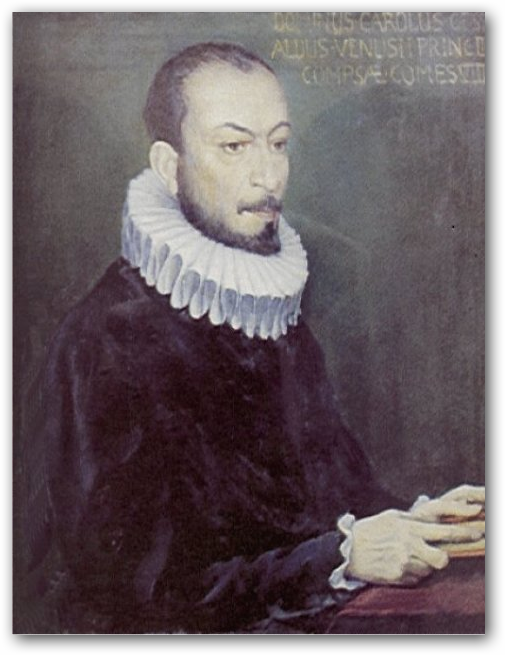
In a program titled “Wonder,” the Ars Nova Singers and conductor Tom Morgan will explore the music of Carlo Gesualdo de Venosa, Prince of Venosa and Count of Conza. Gesualdo has a secure place in music history because of the extraordinary chromaticism of the harmonic language in his madrigals, which is unlke any other music written at the time. Performances will be Friday, Saturday and Sunday in Boulder, Longmont and Denver (details below).

Carlo Gesualdo

Gesualdo’s notoriety in music history also derives from the fact that he killed his fist wife and her lover when her found them together. Although he was not charged with a crime, due to the circumstances, he felt a burden of guilt for the rest of his life, which may have contributed to the intensity of expression in the music he wrote. 

Ars Nova will perform seven of the madrigals from the last two collections Gesualdo wrote, Books 5 and 6, which were published in 1611. This was right at the transition from the Renaissance style of counterpoint to the more chord-based style of the early Baroque period.

“You just don’t hear some of these chords and changes [Gesualdo wrote] until the 20th century,” Morgan says. “It’s such fascinating music to me, and I think the singers enjoy it because you don’t have anything like it in the repertoire. And it’s a lot of fun to do.”

The chromaticism is most extreme in the slower sections of the madrigals, giving the singers the time to make the unexpected note and chord changes. The most extreme chord changes are associated with the most extreme emotions, whereas other parts of the madrigals are more straightforward, and may even move in a fairly brisk tempo.

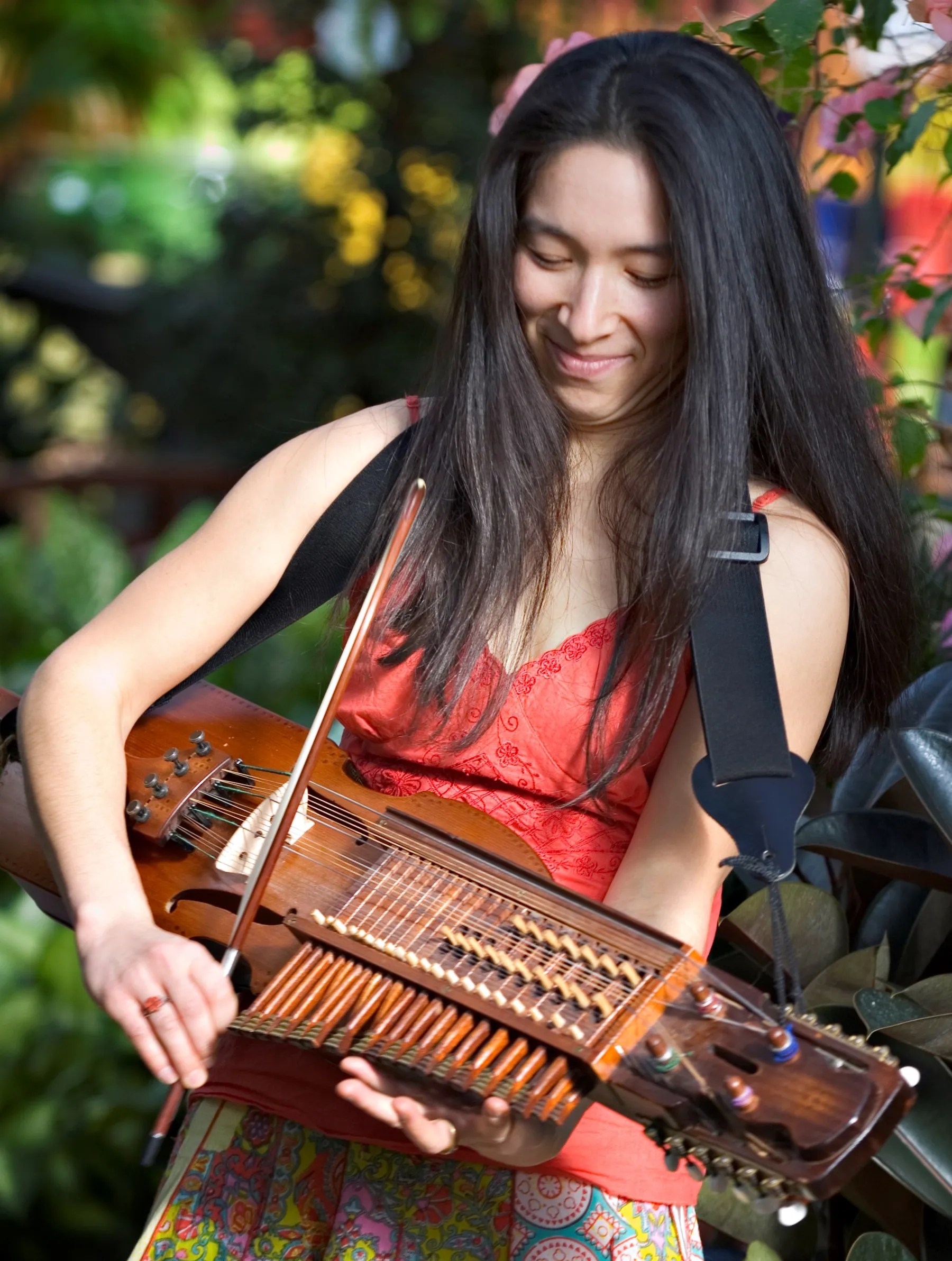
Sandra Wong and nyckelharpa

“It’s challenging for the singers,” Morgan says, “because the character of the music changes word to word. It’s fascinating how quickly the affect changes in the pieces.”

In spite of the extreme use of chromatic notes and chords, Morgan points out that in some ways, Gesualdo was not really a revolutionary composer. “He’s really clinging to the old imitative counterpoint [of the Renaissance era], but stretches the harmonic language as far as it would go.”

The constant shifting of chords gives the music an uneasy, ungrounded quality that can be tiring to listen to. “How to present Gesualdo is always a bit of a challenge,” Morgan says. “A straight-through listening of Book V or Book VI would be really hard for a modern audience. Too many in a row, the singer gets tired, [and] the listeners get overwhelmed.”

In order to give listeners a break, Morgan invited two instrumentalists—Ann Marie Morgan on viola da gamba and Sandra Wong on violin and the Swedish folk instrument the nyckelharpa—to play interludes in between the madrigals. “We’re doing little pairs of madrigals, and interspersing them with completely instrumental things,” Morgan explains. “Some are from [Gesualdo’s] era, some from slightly later.”

“That allows the ear to refresh and allows the mind to process things differently, and then you come back to Gesualdo. Ann Marie (Morgan) and Sondra (Wong) are both wonderful to work with, and by breaking (the madrigals) up into smaller chunks it’s better for both the singers and the audience.”

Boulder Chorale and conductor Vicki Burrichter

While Morgan is exploring challenging music of the past, conductor Vicki Burrichter and the Boulder Chorale continue their explorations of world music. In a program titled “Origins: The Fertile Crescent,” they will present music from across the Middle East, from Sephardic Jewish folk songs from Spain to Israel to Egypt, Tunisia and Afghanistan.

Performances will be Saturday and Sunday in Boulder, and will also be available by live stream on Sunday (details below).

An oud

Burrichter came to the subject for this concert by listening to the Trio Joubran, three Palestinian brothers from Nazareth who all perform on the oud—a stringed instrument from the Middle East that is the predecessor of the lute.

“The sound of the oud is magnificent—mysterious and deep,” Burrichter says. “The three of them playing together was beautiful. I listened to them a lot, and then I thought I should listen to more Arabic music. I’m very excited about it, but it’s the most nerve-racking concert I’ve ever done, because it’s so outside what I know about.”

Aside from her lack of background in the style, Burrichter had to adapt the music to an American choir. For one thing, the music does not have much harmony, and for another, it uses languages that hardly anyone in the choir knew. She tackled these issues first by hiring a guest band assembled and  led by David Hinojosa that includes percussion, violin, bass and an oud player, plus a singer, Catrene Payan, who is an Arabic-speaking Israeli. They will perform with the chorale and separately.

Catrene Payan

She also turned to Adam Waite, who has made arrangements for the Chorale in the past, to make versions of the songs for the chorale’s singers. And she asked Raouf Zaidan, who has sung with the group, to help coach the language. “He lives in two worlds,” Burrichter says. “He’s an Egyptian but also a Western opera singer. He was able to help the choir with the language.”

Many of the pieces on the program are well known in the Middle East, including some that have been sung by the most popular singers in their home countries. “When I showed Raouf what is in the concert, he said ‘These are songs everybody knows,’” she says. 

For example, she mentioned Oum Kulthum, an Egyptian singer who was called the Star of the East. “She is like a goddess figure there” Burrichter says. “She’s done ‘Lammaa Badda,’ and [Lebanese singer] Fairouz has done it. In the Middle East, everybody knows that song. And ‘El-Heelwa Dii’ is also extremely popular.”

Burrichter says that the melodies are not hard to sing, but there are nuances that are not easy for an American chorus. “We were trying to make it so that they could sing it, because they don’t speak the language, they don’t have experience with this music which is so very different from American music.

“We hope Arabic people or people from Israel who come to the concert will say, this is a group that tried their very best to represent and respect our culture. What I’m trying to do is for people to enter a cultural experience—the audience, the singers, everyone. 

“The most important thing in the end is not the language, it is the joy of it.”

# # # # #

“Wonder”
Ars Nova Singers, Tom Morgan, artistic director
With Sandra Wong, violin and nyckelharpa, and Ann Marie Morgan, viola da gamba

  • Carlo Gesualdo: Selections from Madrigals, Books 5 and 6
  • Instrumental music of the late Renaissance and early Baroque

7:30 p.m. Friday, Nov. 4
St. John’s Episcopal Church, 1419 Pine St., Boulder

7:30 p.m. Saturday, Nov. 5
Stewart Auditorium of the Longmont Museum

4 p.m. Sunday, Nov. 6
St. Paul Lutheran Church, 1600 Grant St., Denver

TICKETS

# # # # #

“Origins: The Fertile Crescent”
Boulder Concert and Chamber Chorales 
Vicki Burrichter, artistic director
With Catrene Payan, singer, and instruments led by David Hinojosa

  • Music of Arabic lands in the Middle East

4 p.m. Saturday, Nov. 5, and Sunday, Nov. 6
First United Methodist Church, 1421 Spruce St., Boulder

TICKETS for live performances and for live stream Sunday only

Grace Notes: Boulder’s Choral Groups’ 2022–23 Seasons

Ars Nova Singers, Boulder Chorale and Seicento lay out plans for 2022-23

By Peter Alexander Oct. 12 at 2:52 p.m.

The Ars Nova Singers, the Boulder Chorale and Seicento Baroque Ensemble—three of Boulder’s leading choral groups—have distinct qualities, in terms of repertoire and performance style. All three groups have now announced their concert schedules for the 2022–23 season:

# # # # #

Under director Tom Morgan, Ars Nova generally avoids the historical middle of standard repertoire, preferring music either side of the 18th and 19th centuries—the Renaissance or the 20th and 21st centuries. Their concerts are challenging to the singers, and can be equally so to audiences, but they are always interesting as well.

On Nov. 4 they will be the first of the three to present a concert this season (see time and place below). Their opening program is devoted to one of the most fascinating figures of the late Renaissance. Carlo Gesualdo, the Prince of Venosa and Count of Conza, was the composer of harmonically advanced, highly chromatic madrigals unlike anything else of their time. He was also known for having murdered his first wife and her lover when he found them together in bed, a fact that has not gone unnoticed in appreciation of his extreme music.

Performances of Gesualdo’s music are rare, as is often the case with Ars Nova programming, so this performance is worth noting.

One major event of the Ars Nova season will be the presentation in March of the world-touring British a cappella group Voces 8. Their two performances under Ars Nova’s auspices will be Wednesday March 1, 2023 in Macky Auditorium (7:30 p.m., details below) and Thursday, March 2, at St. John’s Cathedral in Denver (7:30 p.m.; tickets on sale Oct. 15). Please note that these are two separate programs. (details below).

Here is a full listing of the Ars Nova 2022–23 season:

“Wonder”
Ars Nova Singers, Tom Morgan, director
With Sandra Wong, violin and nyckelharpa, and Ann Marie Morgan, viola da gamba
Carlo Gesualdo: Madrigals from Books 5 and 6

  • 7:30 p.m. Friday, Nov. 4
    St. John Episcopal Church, 1419 Pine St., Boulder
  • 7:30 p.m. Saturday, Nov5
    Stewart Auditorium of the Longmont Museum
  • 4 p.m. Sunday, Nov. 6
    St. Paul’s Lutheran Church, 1600 Grant St., Denver 

“Solstice”
Ars Nova Singers, Tom Morgan, director
With John Gunther, woodwinds
Music for the Winter Solstice and Christmas

  • 7:30 p.m. Friday, Dec. 9
    First Congregational Church, 1500 9th Ave., Longmont
  • 4 p.m. Sunday, Dec. 11
    St. Paul’s Lutheran Church, 1600 Grant St., Denver

“Stardust”
Ars Nova Singers, Tom Morgan, director

  • 7:30 p.m. Friday, Feb 10, 2023
    First United Methodist Church, 1421 Spruce St, Boulder
  • 7:30 p.m. Saturday, Feb. 11, 2023
    Central Presbyterian Church, 1660 Sherman St., Denver

“Choral Dances”
Voces 8
Music by Byrd, Bach, Britten and Berlin

  • 7:30 pm. Wednesday, March 1
    Macky Auditorium

TICKETS 

“Lux Aeterna”
Voces 8
Music by Mendelssohn, Rachmaninoff and Monteverdi

  • 7:30 p.m. Thursday, March 2
    St. John’s Cathedral, 1350 n. Washington St., Denver

TICKETS available Oct. 15

“Reflections”
Ars Nova Singers, Tom Morgan, director
Music by Mahler, Thomas Jennefelt and Caroline Shaw

  • 7:30 p.m. Friday, April 21
    First United Methodist Church, 1421 Spruce St., Boulder
  • 7:30 p.m. Saturday, April 22
    Bethany Lutheran Church, 400 E. Hampden Ave. Cherry Hills Village
  • 7:30 p.m. Saturday, June 3
    TANK Center for Sonic Arts, 233 County Rd. 46, Rangely, Colo

(This program will also be performed on tour in Colorado and New Mexico.)

See more information on the Ars Nova Web page

CORRECTION: The two programs by Voices 8 March 1 and March 2 were originally listed incorrectly. The correct information is “Choral Dances” on March 1 and “Lux Aeterna” on March 2, as now shown above.

# # # # #

The Boulder Chorale is actually three different groups, and serves a role in music education as well as performance—in the words of the Web page, “for singers aged 5 to 85.” The Concert Chorale, the Chamber Chorale and the Children’s Chorale—the last divided by age into four different ensembles—perform separately as well as together. Under director Vicki Burrichter, the repertoire of the adult groups is eclectic, notably including world music, traditional styles from both European and non-European sources, and new works. As in the current season, their repertoire has often included work for chorus and orchestra.

Boulder Chorale opens their season Nov. 5, one day later than Ars Nova. Their opening weekends overlap, but you can easily plan to attend both. The chorale’s program is an example of their pursuit of world music. Titled “Origins: The Fertile Crescent,” the program highlights music from the Middle East and North Africa, including the Chorale’s own arrangements by Adam Waite of music from Israel, Afghanistan, Spain, Morocco and Syria.

Later in the year, the Chorale partners with the Longmont Symphony for performances of Handel’s Messiah (Dec. 17) and a Messiah  singalong (Dec. 18; details below); and with the Boulder Chamber Orchestra for performances of Beethoven’s Mass in C.

Here is the full listing of the Boulder Chorale 2022–23 season through April 2023:

“Origins: The Fertile Crescent”
Boulder Chorale, Vicki Burrichter, conductor, with Catrene Payan, vocalist, and Middle Eastern instrumental ensemble, David Hinojosa,leader

  • 4 pm. Saturday, Nov. 5, and Sunday, Nov. 6
    First United Methodist Church, 1421 Spruce Street, Boulder, CO

“A Celtic Winter”
Boulder Chamber Chorale and Concert Chorale, Vicki Burrichter, director, and Boulder Children’s Chorale, Nathan Wubbena, director

  • 4 p.m. Saturday, Dec. 10, and Sunday, Dec. 11
    First United Methodist Church, Boulder 1421 Spruce Street, Boulder, CO

Handel’s Messiah
Longmont Symphony, Elliot Moore, conductor
With the Boulder Chamber Chorale, Vicki Burrichter, director

  • 4 p.m. Dec. 17
    Westview Presbyterian Church, 1500 Hover St., Longmont

“Hallelujah! A Messiah singalong”
Longmont Symphony, Elliot Moore, conductor
With the Boulder Chamber Chorale, Vicki Burrichter, director

  • 4 p.m. Dec. 18
    Westview Presbyterian Church, 1500 Hover St., Longmont

“A Nation of Immigrants
Boulder Chorale, Vicki Burrichter, conductor

  • 4 p.m. Saturday, March 18, and Sunday, March 19
    First United Methodist Church, 1421 Spruce Street, Boulder, CO

Beethoven Mass in C
Boulder Chamber Orchestra, Bahman Saless, conductor
With the Boulder Chamber Chorale, Vicki Burrichter, director

  • 7:30 p.m. Saturday, April 1
    Boulder Adventist Church, 345 Mapleton Ave., Boulder

For more information on these and other concerts, visit the Boulder Chorale Web page.  

CORRECTION: The concert “Story of My life,“ previously listed here, was included by error. That is a performance by the Boulder Children’s Chorales, and has been removed from this listing. Also, clarification has been added as to which of the three chorales is performing in each of the concerts.

# # # # #

Seicento specializes in Baroque music of the 17th (“Seicento” in Italian) and 18th centuries performed with, to use the currently accepted language, “historically informed” performance practice, including period instruments. Today they are directed by the group’s founder, Evanne Browne.

Founded in 2011, Seicento launches its second decade in December with “Nöel: Christmas in the late Renaissance and Early Baroque” (December 2–4), a program that includes carols still familiar today as well as little known choral works. The major event of the season will take place in May, when Seicento will be joined by an orchestra of historical instrument performers to present Colorado’s first historically informed performance of J.S. Bach’s St. John Passion.

Here is the full listing of Seicento’s season:

“Nöel: Christmas in the late Renaissance and Early Baroque”
Seicento Baroque Ensemble, Evanne Browne, conductor

  • 7:30 p.m. Friday Dec. 2
    St. Paul Lutheran Church, 1600 Grant St., Denver
  • 7:30 p.m. Saturday, Dec. 3
    First United Methodist Church, 1421 Spruce St., Boulder
  • 3 p.m. Sunday, Dec. 4
    First Congregational United Church of Christ, 1500 9th Ave., Longmont

J.S. Bach’s St. John Passion (BWV 245)
Seicento Baroque Ensemble and historical instrument orchestra, Evanne Browne, conductor

  • 7 p.m. Friday, May 5
    Arvada United Methodist Church, 6750 Carr St., Arvada
  • 7 p.m. Saturday, May 6
    St. Paul Lutheran Church, 1600 Grant St., Denver
  • 3 p.m. Sunday, May 7
    Mountain View United Methodist Church, 355 Ponca Place, Boulder 

For more information, see Seicento’s Web page.