GRACE NOTES: Chamber music from the Baroque to 20th century

Events presented by The Academy, Boulder Bach and Boulder Chamber Orchestra

By Peter Alexander Oct. 16 at 10:33 a.m.

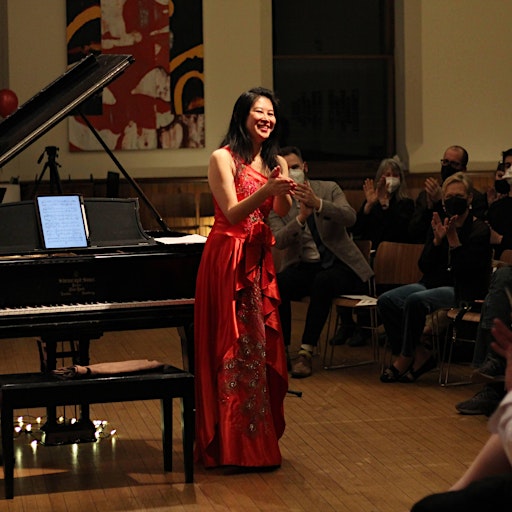
The Academy, University Hill will present pianist Eugene Gaub and violinist Nancy McFarland Gaub performing in their Chapel Hall Friday evening (7 p.m. Oct. 18; details below).

Their performance of works by Beethoven and César Franck will be free, but audience members are asked to RSVP in advance. Eugene Gaub will perform Beethoven’s late Piano Sonata No. 28 in A major op. 101, and together they will perform Franck’s Sonata in A major for violin and piano. 

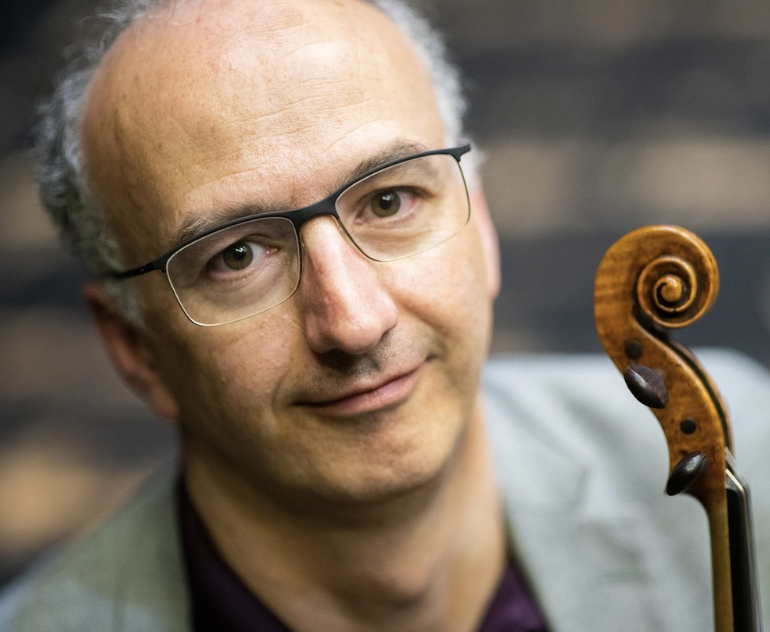
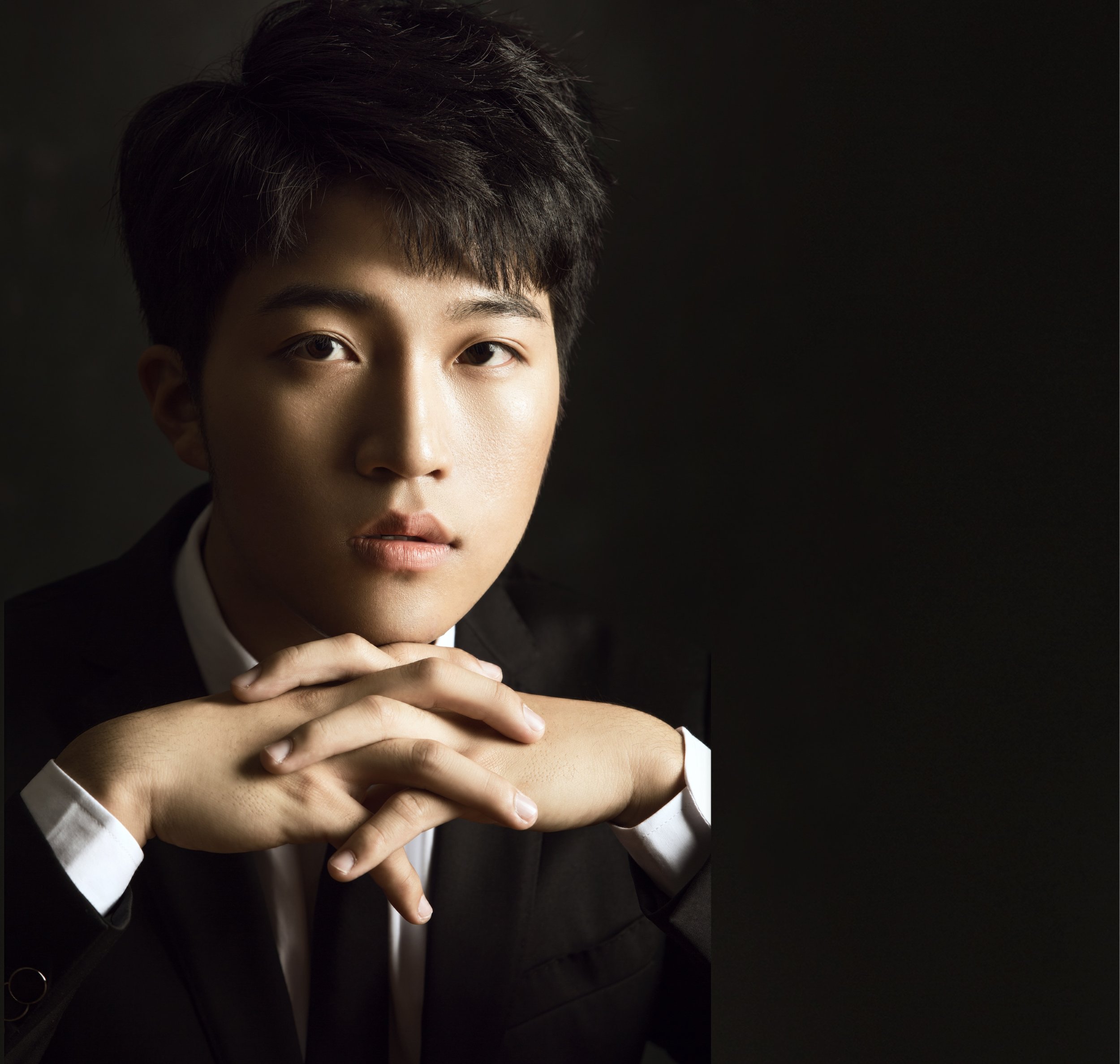
Eugene Gaub is emeritus professor of music at Grinnell College in Iowa, where he taught music theory and courses in music history from 1995 to 2022. A graduate of the Juilliard School, he holds a doctorate and performer’s certificate from the Eastman School of Music.

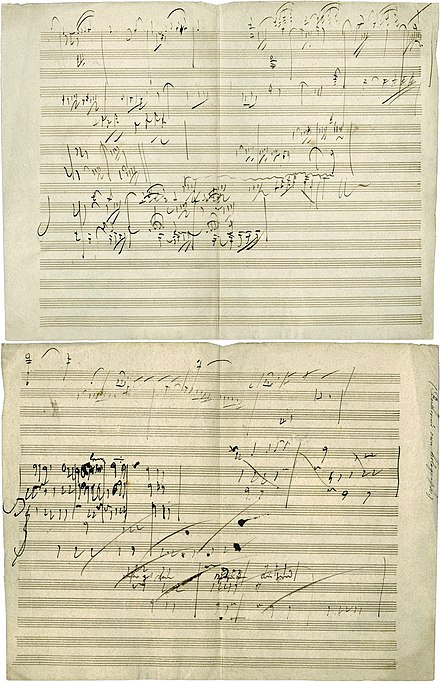
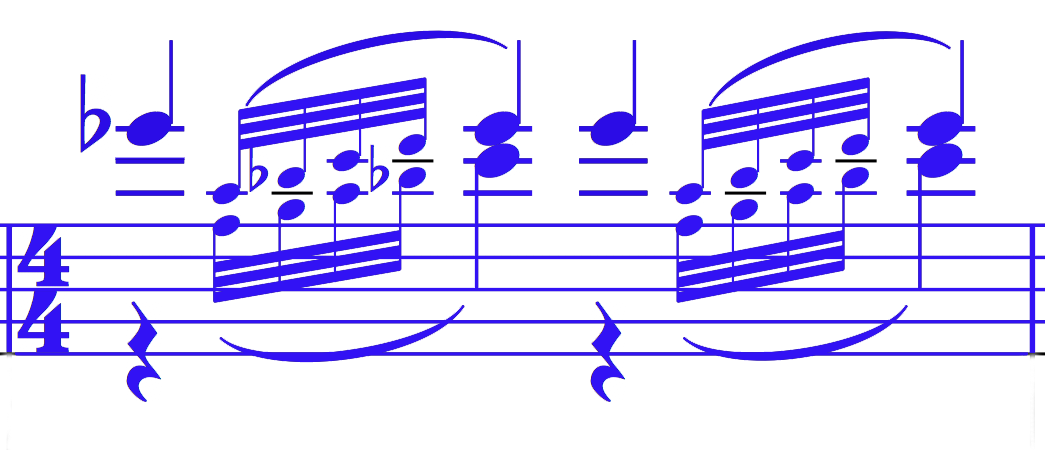
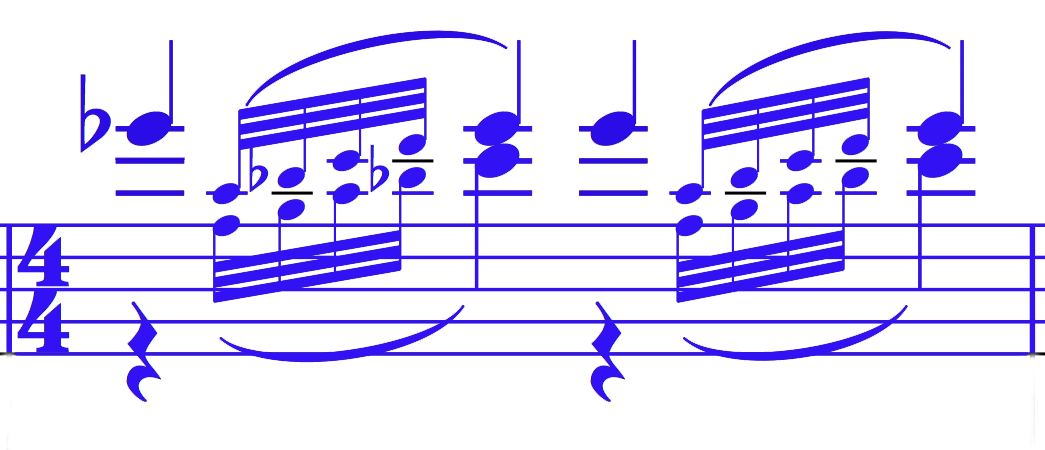
The manuscript of Beethoven’s Piano Sonata No. 28

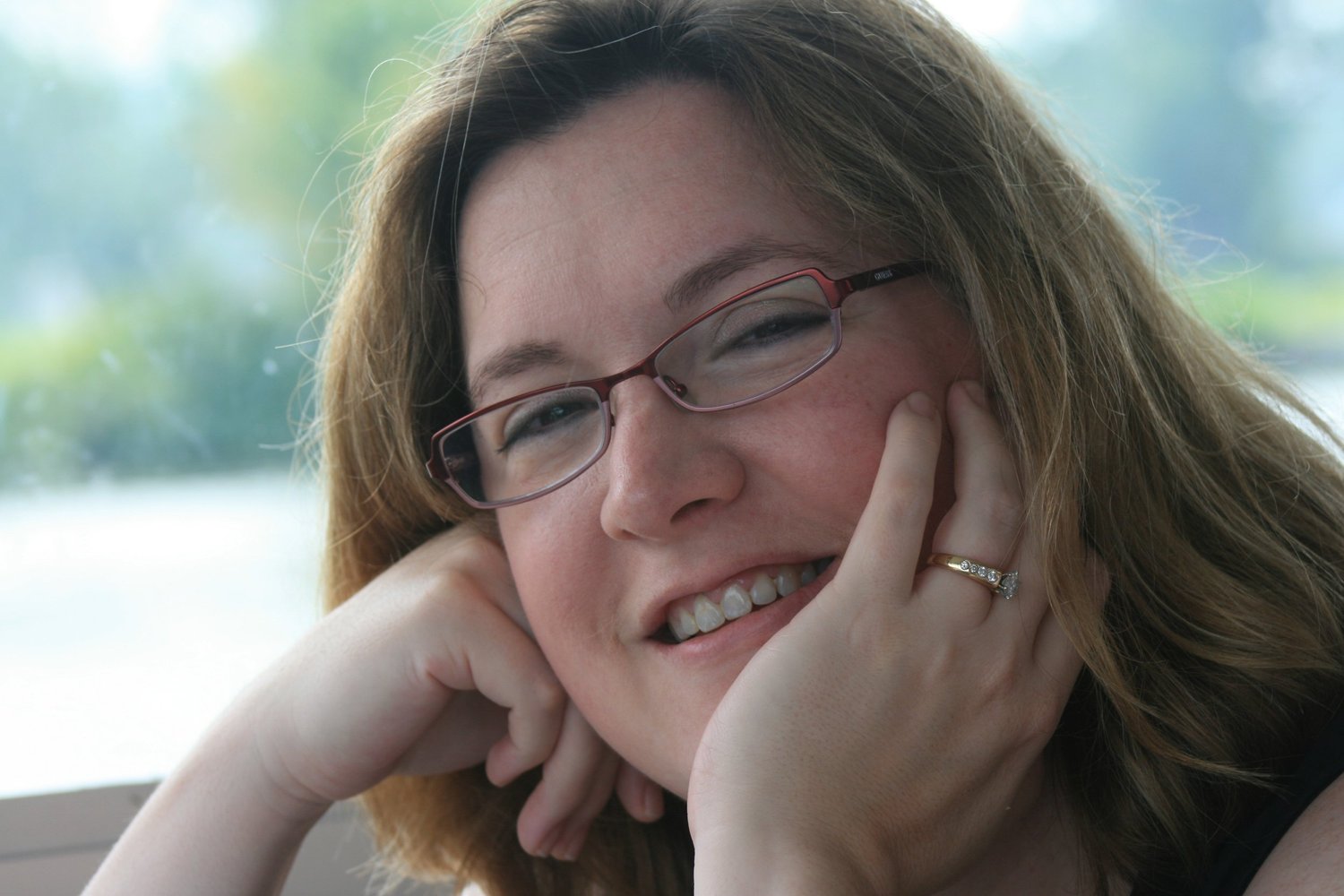
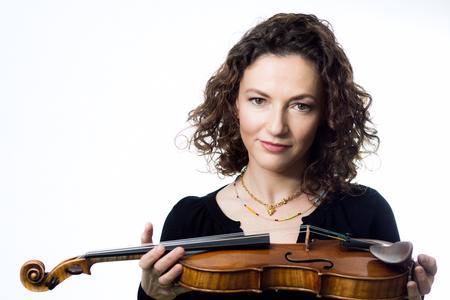
Throughout her career, violinist and composer Nancy McFarland Gaub has performed as a soloist, chamber and orchestral musician in the U.S., Europe and Africa. She also was an artist-in-residence and taught violin and chamber music at Grinnell College for 25 years.

Composed in 1816, Beethoven’s Piano Sonata No. 28 is considered the beginning of his third and final period of composition. The composer himself called the sonata “a series of impressions and reveries.” When he wrote the sonata he was almost totally deaf, only able to communicate with friends through the notebooks that he kept for the remainder of his life. This isolation may be the reason that, like the other late sonatas, No. 28 creates a sense of intimacy.

Franck wrote his Violin Sonata in 1886 as a wedding gift for the violinist Eugène Ysaÿe. The public premiere of the sonata, given by Ysaÿe with the pianist Marie-Léontine Bordes-Pène has become something of a legend. It was the last piece on a long program given at the Museum of Modern Painting in Brussels. By the time the performers started the Sonata, it was already dusk, but the museum did not allow artificial light. Ysaÿe and Bordes-Pène had to complete the performance from memory in the darkened room. 

From that auspicious beginning, the Sonata has become one of the most revered sonatas for violin and piano, and one of Franck’s best known works.

# # # # #

Eugene Gaub, piano, and Nancy McFarland Gaub, violin

  • Beethoven: Piano Sonata No. 28 in A major, op. 101
  • César Franck: Sonata in A major for violin and piano

7 p.m. Friday, Oct. 18
Chapel Hall, The Academy University Hill, Boulder

Free; RSVP HERE

# # # # #

The Boulder Bach Festival will present its COmpass REsonance (CORE) ensemble and guest artists in a program of music by relatively little known Baroque composers Saturday at the Dairy Arts Center (4 p.m. Oct. 19 in the Gordon Gamm Theater; details below).

Featured artists will be the festival’s director, violinist Zachary Carrettin and 10-string guitarist Keith Barnhart, a member of the CORE ensemble. They will be joined by Chris Holman, harpsichord; Joseph Howe, cello; and guest artist soprano Mara Riley.

With little known composers, the program provides an opportunity to explore an intriguing and idiosyncratic segment of music history. The performers will play and sing music of the early Baroque period, in a style known as the stile moderno (modern style) that represented a striking departure from the music of the late Renaissance. 

Many of the composers included on the program were themselves virtuoso performers, and their works expanded the possibilities of both instrumental and vocal music. The composers on the program are Alessandro Stradella, Nicola Matteis, Marco Uccellini, Johann Heinrich Schmelzer, Giuseppi Maria Jacchini, Silvia Leopold Weiss and Tarquinio Merula.

# # # # #

“Passion and Poetry“
Boulder Bach Festival CORE Ensemble, Zachary Carrettin, music director/violinist
With Keith Barnhart, 10-string guitar; Chris Holman, harpsichord; Joseph Howe, cello; and Mara Riley, soprano

  • Works by Alessandro Stradella, Nicola Matteis, Marco Uccellini, Johann Heinrich Schmelzer, Giuseppi Maria Jacchini, Silvia’s Leopold Weiss and Tarquinio Merula

4 p.m. Saturday, October 19
Gordon Gamm Theater, Dairy Arts Center

TICKETS

# # # # #

Boulder Chamber Orchestra’s Mini-Chamber I, their first concert of chamber music for the 2024–25 season, will feature music by Beethoven, British composer Frank Bridge, and French composer Lili Boulanger Saturday (7:30 p.m. Oct. 19 at the Boulder Adventist Church; details below).

The program is the first in a series of four Mini-Chamber performances that will be presented by the Boulder Chamber Orchestra (BCO). Three of the performances, including Oct. 19, will feature the BCO’s artist in residence for the current season, pianist Jennifer Hayghe. For the first program she will be joined by orchestra members Sarah Whitnah, violin, and Andrew Brown, cello, for a program of music for piano trio. 

English composer Frank Bridge is remembered today mostly as the teacher of Benjamin Britten, who honored the older composer with his “Variations on a Theme of Frank Bridge” for strings. Bridge wrote three sets of miniatures for piano trio, from which Hayghe has chosen four pieces for this program. They were written for one of Bridge’s violin students, but critics have suggested that they are too sophisticated to be considered “student works.” 

The younger sister of the music teacher Nadia Boulanger, Lili died at the tragically young age of 24. The first female winner of the Prix de Rome composition prize, Lili showed precocious musical talent as young as four, when she accompanied her older sister to classes at the Paris Conservatoire. Her music has recently become better known.

Jennifer Hayghe

Written in 1918, D’un matin de printemps (Of a spring morning) was one of the last works she completed. It was written in versions for solo violin, flute, and piano, for piano trio, and for orchestra. 

One of the most tuneful and frequently performed of Beethoven’s works, the Piano Trio Op. 97 is known as the “Archduke Trio.” It was dedicated to Archduke Rudolph of Austria, later the Archbishop of Olomouc (Olmütz) and a Catholic Cardinal. An amateur pianist, Rudolph was a patron and composition student of Beethoven, who dedicated several major works to him, including his Piano Concerto No. 5 (“Emperor”) and the Missa Solemnis.

The Trio was composed 1810–11, toward the end of Beethoven’s so-called “heroic” middle period of compositions. Written at a time when the composer was in unusually good spirits, the Trio has none of the angst or fierce drive of his Fifth Symphony and other music we associate with the more rebellious aspect of his character. It is composed in a traditional but expansive four-movement sonata form.

# # # # #

Mini-Chamber I
Jennifer Hayghe, piano, with members of the BCO

  • Frank Bridge: Miniatures for Piano Trio, Nos. III–IV–V–VIII
  • Lili Boulanger: D’un matin de printemps (Of a spring morning)
  • Beethoven: Piano Trio in B-flat major, op. 97 (“Archduke”)

7:30 p.m. Saturday, Oct. 19
Boulder Adventist Church

TICKETS

New and familiar works from the Boulder Chamber Orchestra

BCO launches 20th anniversary season that will take them to Carnegie Hall

By Peter Alexander Oct. 1 at 2:50 p.m.

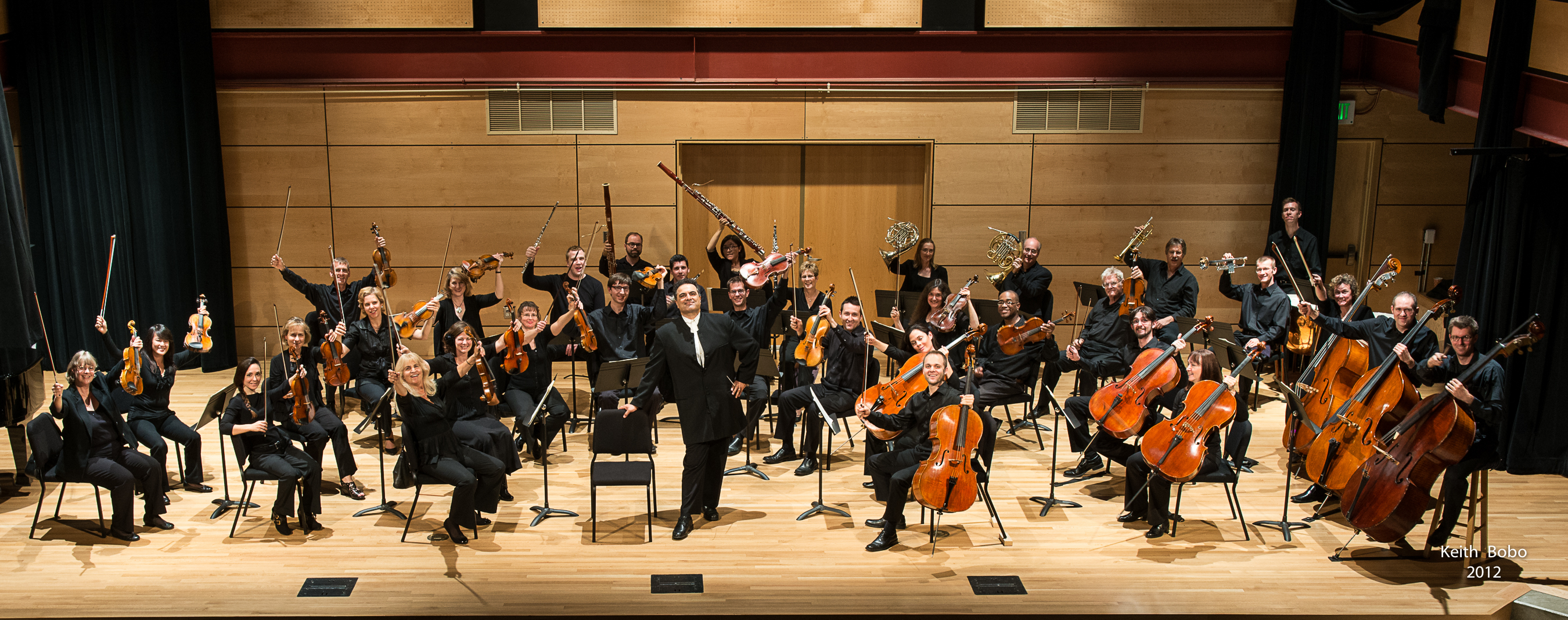
About 20 years ago, Bahman Saless was standing in a church basement, getting ready to conduct his first concert ever.

“We started with just an idea, and I had never conducted before. We only had two professional players (in the orchestra) and didn’t know who was going to come. It was a complete surprise—it was standing room only!”

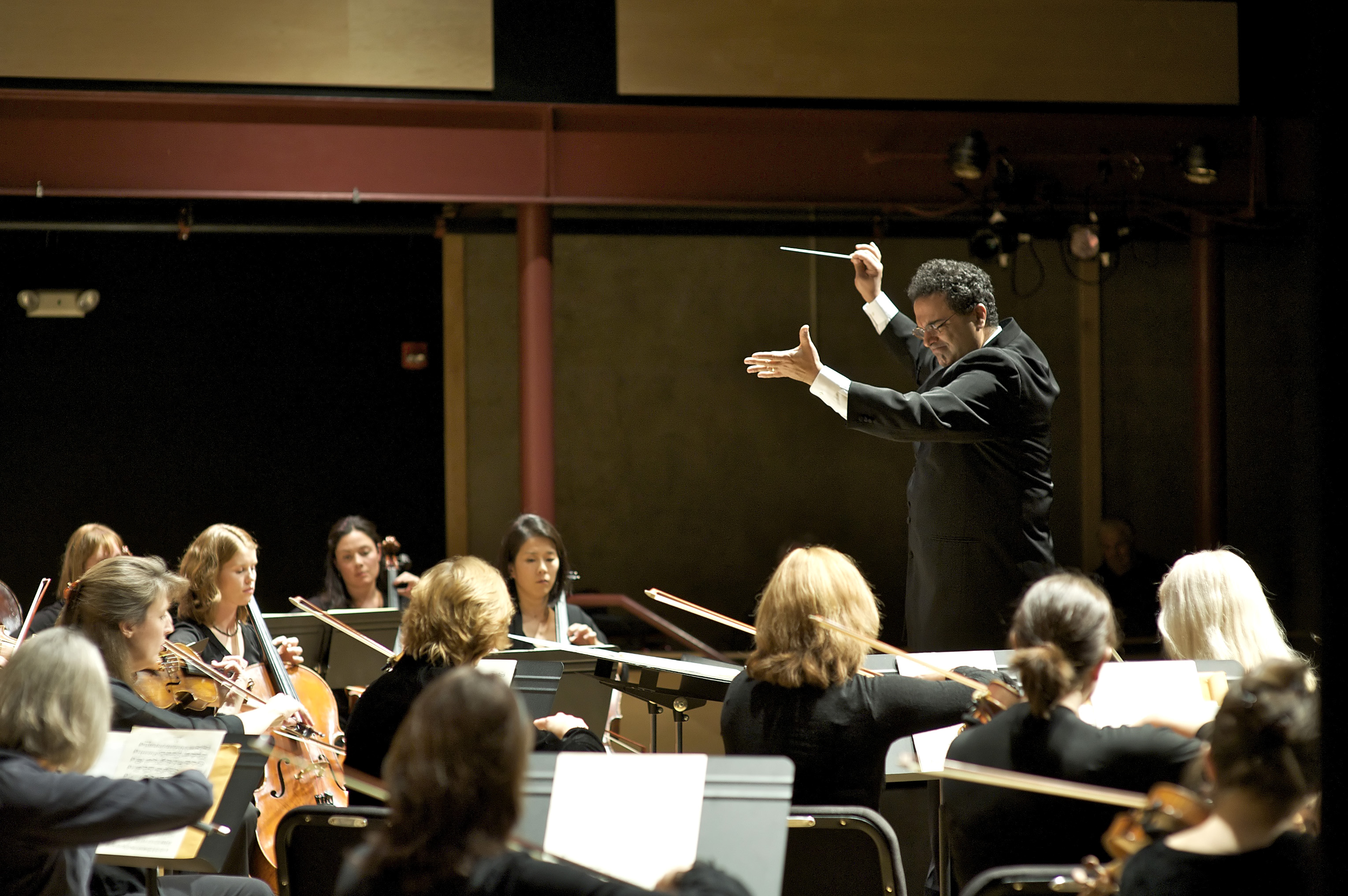
Bahman Saless leading the Boulder Chamber Orchestra

That successful idea, which became the Boulder Chamber Orchestra (BCO), celebrates its 20th anniversary this year, starting with a concert at the Boulder Adventist Church Sunday (7:30 p.m. Oct. 6; details below) and culminating with with a concert at Carnegie Hall in New York May 18 (7:30 p.m.; details HERE).

To open the anniversary year, Saless decided to write a piece celebrating Colorado, titled Ode to the Rocky Mountains. Although he has rarely programmed his own music before, he had several years of experience writing and scoring film music in Hollywood before he started the BCO.  “I did a lot of (uncredited) trailers for Hollywood films at Universal Studios,” he says.

To start the season, “I thought what’s better than something that celebrates Colorado?” Saless says. “I wrote a little piece that’s based on the two Colorado state songs, ‘Where the Columbine Grow’ and ‘Rocky Mountain High.’ It has five episodes that represent our own experience every time we go to the mountains.”

In the space of about five and half minutes, its five episode are: “Entering the Boulder Valley off Highway 36, heading West to the Mountains,” “Resting by the Brook in the Meadow,” “Playful Wildlife Amidst the Columbine,” “The Grand Landscape is to Behold,” and “Homeward Bound.”

The remainder of the opening concert program is all Beethoven: The Violin Concerto, featuring Edward Dusinberre of the Takács Quartet as soloist, and the Seventh Symphony. The concerto was chosen because Dusinberre had played with the orchestra before, and he suggested Beethoven for this concert. “He did the Brahms Concerto with us last year, and he did Mozart the previous year, so he’s going through the concerti,” Saless says.

Violinist Edward Dusinberre

Saless is especially thrilled to perform the Beethoven Concerto with Dusinberre. “It’s one of these pieces that I am very picky about who I would perform it with,” he says. “I think it requires a certain amount of maturity, no matter how good technically someone is. To play it with Ed is like a dream come true!”

As for the Seventh Symphony, Saless selected it to go on the Carnegie Hall program and then decided to open the season with it as well. “I wanted to do something (in New York) that I thought we could do really well, and would fit the programming (for the opening concert),” he says. “I thought, what could we do that I would feel comfortable, because I connect to it. If I’m going to go to Carnegie Hall and my legs are going to be shaking of nervousness, I need something that I could literally do in my sleep. So I picked Seven.”

He also wants the players to be comfortable. “If you’re going to perform in Carnegie Hall, you want a piece that you’ve already done during that season,” he says. “(That means) a smaller amount of preparation (later), and everybody feels less nervous.”

He also thinks you have to be a little bit crazy to perform the Seventh Symphony, but, he says, “I qualify!” Often noted for its dance-like rhythms, the Seventh Symphony is almost obsessive in repeating those rhythms. Saless calls it “borderline personality disorders in music, obsessive and frenetic.”

The powerful slow movement alternates a series of chords that underlay a mournful melody in a minor key with a bright theme in major. “It’s like (Beethoven) is trying to write a piece that is not a funeral march but sounds like one,” Saless says. “It’s kind of conflicted, and I find that very interesting.”

Saless faced a logistical complication in planning the season. As much as possible, he wanted to have the same players during the season as in New York. But he had to schedule around rehearsals and performance of the Colorado Ballet, because so many of his best players were also in their orchestra. 

“I have to literally set up my schedule based on Colorado Ballet,” he says. BCO’s musicians, like all orchestras in Boulder, are free-lance players and Colorado Ballet pays very well. And every ballet production has numerous rehearsals and performances, all of which had to be scheduled around.

The New York appearance was made possible by a sponsor who was willing to underwrite both the orchestra and piano soloist Adam Żukiewicz playing in New York. Żukiewicz, who appeared on one of the BCO’s Mini-Chamber Concerts in January, and returns for another chamber concert Nov. 23 (7:30 p.m.; see the BCO season schedule HERE) will play a concerto with the orchestra in Carnegie Hall.

# # # # #

“Titanic Journey”
Boulder Chamber Orchestra, Bahman Saless, conductor
With Edward Dusinberre, violin

  • Bahman Saless: Ode to the Rocky Mountains
  • Beethoven: Concerto in D major for violin and orchestra
    —Symphony No. 7 in A major

7:30 p.m. Sunday, Oct. 6
Boulder Adventist Church, 345 Mapleton Ave.

TICKETS

Grace Notes: Bach, Timbres, Sphere and a Groove

Programs outside the norm, from the 18th to the 21st centuries

By Peter Alexander Sept. 18 at 10:05 p.m.

The Boulder Bach Festival (BBF) and guest artists will take audiences back to 18th-century Venice in a program entitled “Anonimo Veneziano” (Anonymous Venetian) 4 p.m. Saturday, Sept. 21, at the Dairy Arts Center in Boulder.

The program, with the BBF’s music director/violinist Zachary Carretin and the COmpass REsonance ensemble (CORE Ensemble), will feature violinist Nurit Pacht from NewYork, harpsichordist Chris Holman from Cincinnati, and theorbist Keith Barnhart, an historical plucked instruments specialist who is also the BBF’s educational coordinator.

Nurit Pacht

The program opens with the famous Adagio attributed to 18th-century Italian composer Tomaso Albinoni and featured in many film scores. In fact, the Adagio was composed by 20th-century Italian musicologist Remo Giazotto. A scholar of Albinoni’s music Giazotto claimed that the Adagio was based on a fragment of an Albononi trio sonata that he found on a manuscript that has since mysteriously disappeared. 

The remainder of the program will be filled out with genuine Albinoni works, the complete Sinfonie e Concerti a cinque (Sinfonias and concertos for five instruments), op. 2, that were published in Venice in 1700. This important collection is rarely performed complete. The BBF performance, which will  be played without intermission, is expected to take approximately 75 minutes.

 Pacht holds a degree in historical performance from the Juilliard school and is known as a specialist in both music by living composers, including works written for her, and music of the Baroque. She was a top prize winner in the Irving Klein International Music Competition in California, the Tibor Varga International Violin Competition in Switzerland, and the Kingsville International Music Competition in Texas. She has toured widely in Europe and the United States. She teaches privately in New York City.

# # # # #

Anonimo Veneziano
Boulder Bach Festival CORE Ensemble, Zachary Carrettin, conductor/violinist
With Nurit Pracht, violin, Chris Holman, harpsichord, and Keith Barnhart, theorbo

  • Remo Giazotto: “Adagio in G minor by Tomaso Albononi”
  • Tomaso Albinoni: Sinfonie e Concerti, op. 2

4 p.m. Saturday, Sept. 21
Dairy Arts Center Gordon Gamm Theater

TICKETS

# # # # #

The Boulder Chamber Orchestra’s (BCO)chamber concert titled “Mixed Timbres,” postponed from last April due to the power outage caused by high winds, will be presented at 7:30 p.m. Saturday, Sept. 21, in the Boulder Seventh-Day Adventist Church.

The concert will feature the BCO’s 2023-24 artist-in-residence, pianist Hsing-ay Hsu, performing with two members of the orchestra—cellist Julian Bennett and clarinetist Kellan Toohey. All four works on the program use the ensemble of piano, clarinet and cello, a mix of timbres that has a limited but interesting repertoire.

Hsing-ay Hsu

Beethoven’s Op. 11 is one of the earliest works for the combination. It is sometimes known as the “Gassenhauer Trio,” taken from the popularity of the theme that Beethoven uses for variations in the final movement. In Vienna, a Gassenhauer (from Gasse, an alleyway) referred to a simple song that was so popular that it was heard all over town. The theme Beethoven used was taken from a popular music theater work, L’amor marinaro (Seafaring love) by Joseph Weigl.

Brahms’s Trio op. 114 is one of four chamber works the composer wrote for the clarinetist Richard Mühlfeld in the last years of his life. Brahms’s admiration for Mühlfeld’s playing was reflected in the comment of one of the composer’s friends who wrote that in the Trio, “it is as though the instruments were in love with each other.”

Like Brahms’s Trio, Fauré’s D minor Trio was one of his last compositions. Although Fauré originally planned the Trio for piano, clarinet and cello, it was published as a traditional piano trio, with violin in place of the clarinet. The BCO performance of the first movement restores the instrumentation that Fauré first imagined for the trio.

Emily Rutherford’s “Morning Dance” for piano, clarinet and cello was commissioned by Toohey in 2017. A native of Colorado, Rutherford is a graduate of Westmont College in Santa Barbara, Calif., and the Longy School of Music in Los Angeles.

# # # # #

“Mixed Timbres”
Hsing-ay Hsu, BCO Artist in residence, piano
With Boulder Chamber Orchestra members Kellan Toohey, clarinet, and Julian Bennett, cello

  • Gabriel Fauré: Piano Trio in D minor, I. Allegro ma non troppo
  • Beethoven: Trio in B-flat major for piano, clarinet and cello, op. 11
  • Brahms: Trio in B-flat for piano, clarinet and cello, op. 114
  • Emily Rutherford: Morning Dances

7:30 p.m. Saturday, Sept. 21
Boulder Seventh-Day Adventist Church, 345 Mapleton Ave.

TICKETS

# # # # #

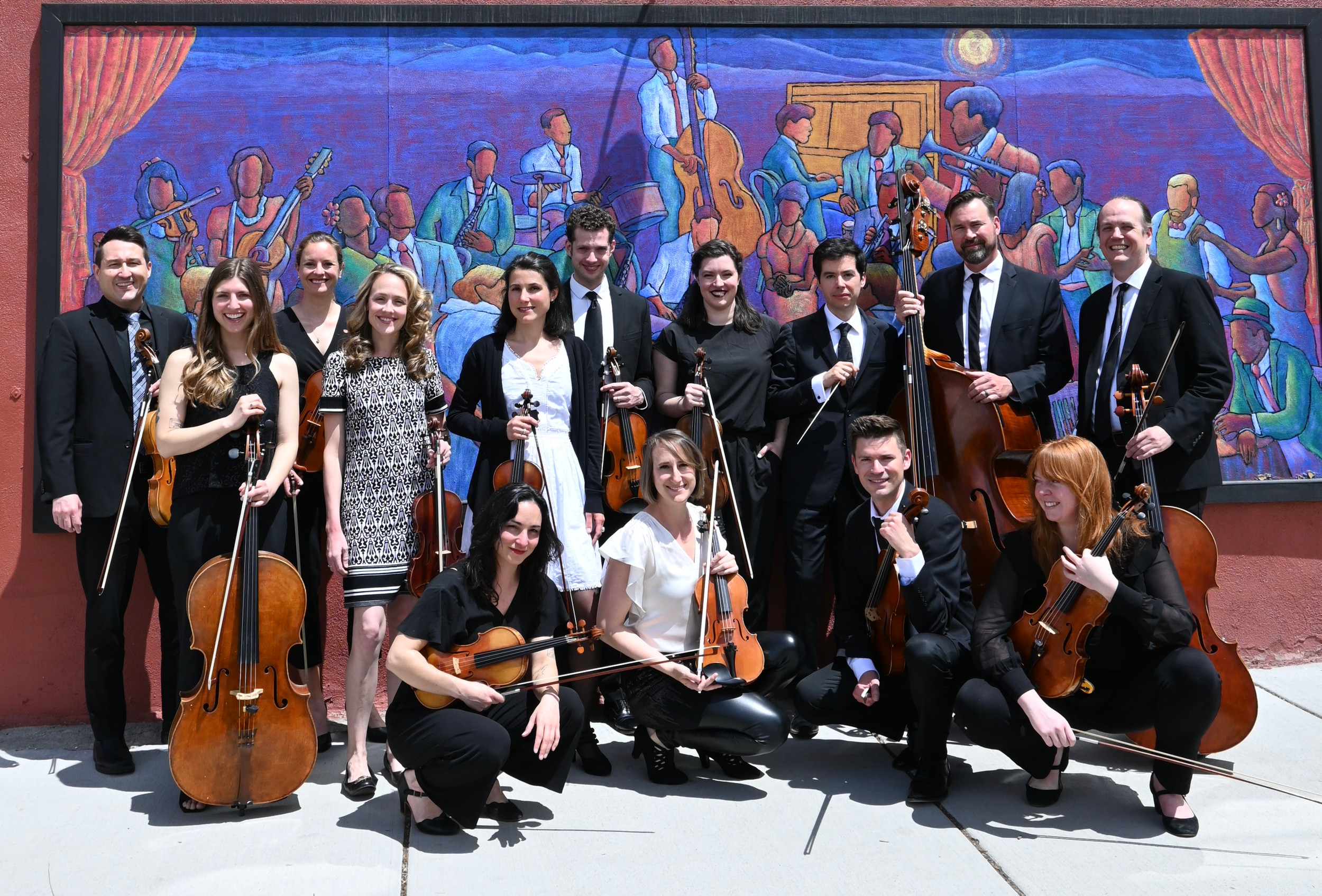
The Sphere Ensemble, a 14-member string ensemble, will celebrate the 100th anniversary of the premiere of Gershwin’s Rhapsody in Blue in 1924 with performances of their own all-strings arrangement of the Rhapsody.

The program, presented Saturday in Boulder and Sunday in Denver (Sept. 21 and 22; details below), will also include works by other jazz musicians including James P. Johnson, Hazel Scott and Winton Marsalis. Also on the program are arrangements of music from the Squirrel Nut Zippers, The Turtles and Andrew Bird; and pieces by Shostakovich, Stephen Foster and the classical-era composer Christoph Willibald Gluck, among others. 

Sphere Ensemble

In addition to the live performances, a live stream will be available from 7:30 p.m. Saturday, Sept. 21 through 10 p.m. Sunday, Sept. 29. 

This kind of eclectic programming, mixing sources and genres, is typical of the Sphere Ensemble, often in arrangements made by members of the ensemble. The “About” page on their Website explains, “We prioritize music by composers that are often overlooked in classical music programs. . . . From classical to classic rock, from baroque to hip hop, Sphere always chooses music that excites us.”

# # # # #

“Bridges”
Sphere Ensemble

  • Aldemaro Romero: Fuga con Pajarillo
  • Dmitri Shostakovich: Prelude and Fugue in D-flat Major (arr. Chris Jusell)
  • Stephen Foster: “Jeanie with the Light Brown Hair” (arr. Alex Vittal)
  • Squirrel Nut Zippers: The Ghost of Stephen Foster (arr. Sarah Whitnah)
  • Andrew Bird: Orpheo Looks Back (arr. Sarah Whitnah)
  • C.W. Gluck: Orfée et Eurydice, Danses des Ombres Heureuses
  • Brenda Holloway: You’ve Made Me So Very Happy (arr. David Short)
  • The Turtles: Happy Together (arr. Dave Short)
  • James Price Johnson: Charleston (arr. Alex Vittal)
  • Hazel Scott: “Idyll” (arr. Sarah Whitnah)
  • Wynton Marsalis: “At the Octoroon Balls”
    —“Rampart St. Rowhouse Rag”
  • George Gershwin: Rhapsody in Blue (arr. Alex Vittal)

7:30 p.m. Saturday, Sept. 21
Nomad Playhouse, 1410 Quince Ave., Boulder

3 p.m. Sunday, Nov. 22
Truss House, 3400 Atkins Ct., Denver

Livestream: 7:30 p.m. Saturday, Sept. 21–10 p.m. Sunday, Sept. 29

In-person and livestream TICKETS

# # # # #

The Boulder Philharmonic Orchestra will have a new series of intimate performances during the 2024-25 season, designed to bring their musicians into more informal spaces and give audiences the opportunity to hear them in smaller groups.

The repertoire will be a little different from the Macky concerts, too, featuring music by pop sensations from Lizzo to Taylor Swift alongside pieces by living composers including Philip Glass and Jessie Montgomery. And just for fun, they might throw in some Vivaldi as well.

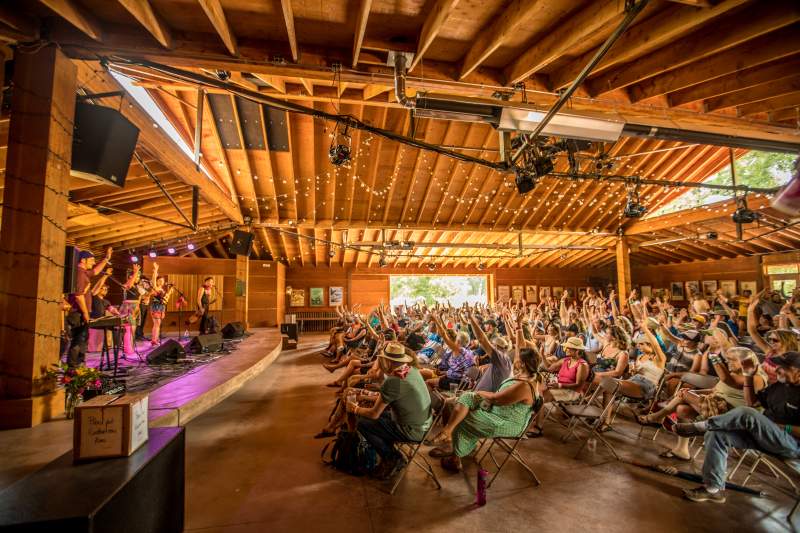
These concerts, collectively the “Shift” series, will feature several different programs, each presented first at Planet Bluegrass in Lyons and then taken to small venues in Longmont and Boulder. The first program, played by a string quartet of principal players from the orchestra, opens next Wednesday at Planet Bluegrass (7 p.m. Sept. 25; details below). Titled “Groove,” it will be repeated at the Dickens Opera House in Longmont at 6:30 p.m.Monday, Nov. 25.

Wildflower Pavilion at Planet Bluegrass, Lyons

The second program, also for string quartet, is titled “Americana: Redefined” and will be presented in October and February. A third program featuring a brass quintet from the orchestra, “Brass & Brews,” will be presented in October and April;  see the Boulder Phil Web page for details on all currently scheduled performances.

Mimi Kruger, the Boulder Phil’s executive director, said, “The idea is that people can get to know our musicians and these composers and connect in a different way. These are obviously smaller venues, but also a little bit more casual.”

She said that discussions about ways to showcase the individual musicians of the orchestra led them to look for new venues. “The idea came up to launch it through Planet Bluegrass (because) they have a series at the Wildflower Pavilion,” she said. “We’re doing all three there, but we also wanted to take them to other venues, so the first two will get repeated at Dickens Opera House in Longmont—that’s a great little place!”

The Phil’s Web page says pretty much the same thing, in more promotional language: “The Shift Series lifts the facade of the stereotypical orchestral concert . . . in unique venues along the Front Range.”

Kruger recommends watching for future announcements, as further performances are under consideration, featuring the orchestra’s woodwind players. 

# # # # #

“GROOVE”
Boulder Philharmonic string players: Ryan Jacobsen and Hilary Castle-Green, violin; Stephanie Mientka, viola; and Amanda Laborete, cello

  • Takashi Yoshimatsu: Atomic Hearts Club Quartet, Movement I
  • Justin Bieber: “Peaches” (arr. Alice Hong) 3’
  • Dinuk Wijeratne:Two Pop Songs on Antique Poems: “Letter from the afterlife”
  • Carlos Simon: Loop
  • Michael Begay: “Forest Fires”
  • Lizzo: “ Good As Hell” (arr. Alice Hong)
  • Jessie Montgomery: “VooDoo Dolls
  • Philip Glass: String Quartet No. 3: VI “Mishima/Closing” 4’
  • Taylor Swift: All Too Well” (arr. Alice Hong)
  • Wijeratne: Two Pop Songs on Antique Poems: “I will not let you go
  • Ed Sheeran: “Shape of You” (arr. Alice Hong)
  • Due Lipa: “Dance the Night” (arr. Zack Reaves)
  • Jessica Meyer: “Get into the NOW”: III. “Go Big or Go Home”
  • Vivaldi: Summer: Moment III (arr. Naughtin)

7 p.m. Monday, Sept. 25
Planet Bluegrass, Lyons, Colo.

TICKETS

6:30 Monday, Nov. 25
Dickens Opera House, Longmont Como.

TICKETS

Boulder Chamber Orchestra presents student soloists

Teachers Association Concerto competition winners will perform with BCO Saturday

By Peter Alexander May 8 at 3:30 p.m.

The Boulder Chamber Orchestra (BCO) will present winners of the 2024 Colorado Music Teachers Association (CMSTA) Concerto Competition on a concert program Saturday (May 11; details below).

Conductor Bahman Saless with the Boulder Chamber Orchestra

The winners in four categories—Piano Elementary, Piano Junior, Piano Senior, and Percussion and Winds—will each play the concerto movement that was required for the competition, with the orchestra (see the concert program below). The BCO music director, Bahman Saless, will conduct.

An annual event, the CMSTA Concerto Competition has three piano categories that are held every year. There are vocal and instrumental categories in alternating years: strings and voice in odd-numbered years, and winds/percussion (one category) in even-numbered years. The competition is for pre-college students up to age 19.

The 2024 competition was held in March, with videos submitted online. A panel of three judges—Saless; Hye-Jung Hong, piano faculty from Missouri State University; and Jason Shafer, principal clarinet of the Colorado Symphony—selected the winners.

The four categories and winners are:
—Piano, elementary: Aiden Chan
—Piano, junior: Bobby Yuan
—Piano, senior: Mercedes Maeda
—Percussion and winds: Alexander Zhao, bassoon

The BCO has set up an online auction to raise funds for the concert. The “Colorado Young Stars Award Fund” auction will run through Friday (May 10).

This year marks the first time that the BCO worked with the CSMTA to support the competition and present the winners. In a written communication, Saless commented, “We are looking forward to many years of continued collaboration and hopefully building community support and excitement in the Boulder area.”

# # # # #

CSMTA Concerto Competition Winners’ Concert
Boulder Chamber Orchestras, Bahman Saless, conductor

  • Haydn: Keyboard Concerto in D major, Hob.XVIII:11. Mvt. I, Vivace (Piano, Elementary)
    -Aiden Chan, piano
  • Mozart: Piano Concerto No. 12 in A major, K414, Mvt. I, Allegro (Piano, Junior)
    -Bobby Yuan, piano
  • Mendelssohn: Piano Concerto No. 1 in G minor, Mvt. I, Molto allegro con fuoco (arr. by Cord Garben (Piano, Senior)
    -Mercedes Maeda, piano
  • Vivaldi: Bassoon Concerto in D minor, RV481, Mvt. I, Allegro (Percussion and winds)
    -Alexander Zhao, bassoon

8 p.m. Saturday, May 11
Boulder Seventh Day Adventist Church

TICKETS

Works with piano, cello and clarinet on chamber program

Mini-Chamber 4 with pianist Hsing-ay Hsu and BCO members

By Peter Alexander April 2 at 11 a.m.

The Boulder Chamber Orchestra (BCO) will present their 2023-24 artist in residence, pianist Hsing-ay Hsu, performing with members of the orchestra on a mini-chamber concert Saturday (8 p.m. April 6; details below).

Pianist Hsing-ay Hsu

The performance, titled “Mixed Timbres,” will be the fourth and final mini-chamber concert of the 2023-24 season. The program features works for piano with clarinet and cello, with cellist Chas Bernard and clarinetist Kellan Toohey from the orchestra.

Beethoven’s Op. 11 is the earliest work on the program, and one of the earliest works for the combination of piano, clarinet and cello. It is sometimes known as the “Gassenhauer Trio,” taken from the popularity of the theme that Beethoven uses for variations in the final movement. In Vienna, a Gassenhauer (from Gasse, an alleyway) referred to a simple song that was so popular that it was heard all over town. 

The theme Beethoven used was taken from a popular music theater work, L’amor marinaro (Seafaring love) by Joseph Weigl. The same tune was used for variations by several other composers, including Paganini and Johann Nepomuk Hummel.

Brahms’s Trio op. 114 is one of four chamber works the composer wrote for clarinet in the last decade of his life. All were written for the clarinetist Richard Mühlfeld, whose playing inspired Brahms to resume composing after he had planned to stop writing new pieces. Brahms’s admiration for Mühlfeld’s playing was reflected in the comment of one of the composer’s friends who wrote that in the Trio, “it is as though the instruments were in love with each other.”

Like the Trio of Brahms, Fauré’s D minor Trio was one of his last compositions. Although Fauré originally planned the Trio for piano, clarinet and cello, it was published as a traditional piano trio, with violin in place of the clarinet. In that form it was premiered in 1922 by the leading piano trio of the time, that of Alfred Cortot, Jacques Thibaud and Pablo Casals. The BCO Mini-Chamber performance of the first movement restores the instrumentation that Fauré first imagined for the trio.

Emily Rutherford’s “Morning Dance” for piano, clarinet and cello was commissioned by BCO clarinetist Kellan Toohey in 2017. A native of Colorado, Rutherford is a graduate of Westmont College in Santa Barbara, Calif., and the Longy School of Music in Los Angeles. Her works have been performed in California and by Denver’s Stratus Chamber Orchestra.

# # # # #

“Mixed Timbres,” BCO Mini-Chamber 4
Hsing-ay Hsu, piano, Chas Bernard, cello, and Kellan Toohey, clarinet

  • Faure: Trio in D minor, I. Allegro ma non troppo 
  • Beethoven: Trio in B-flat for piano, clarinet and cello, op. 11
  • Brahms: Trio in A minor for piano, clarinet and cello op. 114
  • Emily Rutherford: “Morning Dance” (2017)

8 p.m. Saturday, April 6
Boulder Seventh-Day Adventist Church, 345 Mapleton Ave.

TICKETS

Boulder Chamber Orchestra strings present “Virtuosity!” with Richard O’Neill

Takács Quartet violist plays music by Telemann and Piazzolla Saturday

By Peter Alexander Feb. 29 at 11:07 p.m.

Violist Richard O’Neill has a wide-ranging background, both geographically and musically.

Richard O’Neill

For example, when he plays as soloist with the Boulder Chamber Orchestra Saturday (7:30 p.m. March 2; details below), he polished one of his pieces by playing with members of Germany’s distinguished early-music ensemble Musica Antiqua Köln, and the other he researched near the docks in Buenos Aires, Argentina.

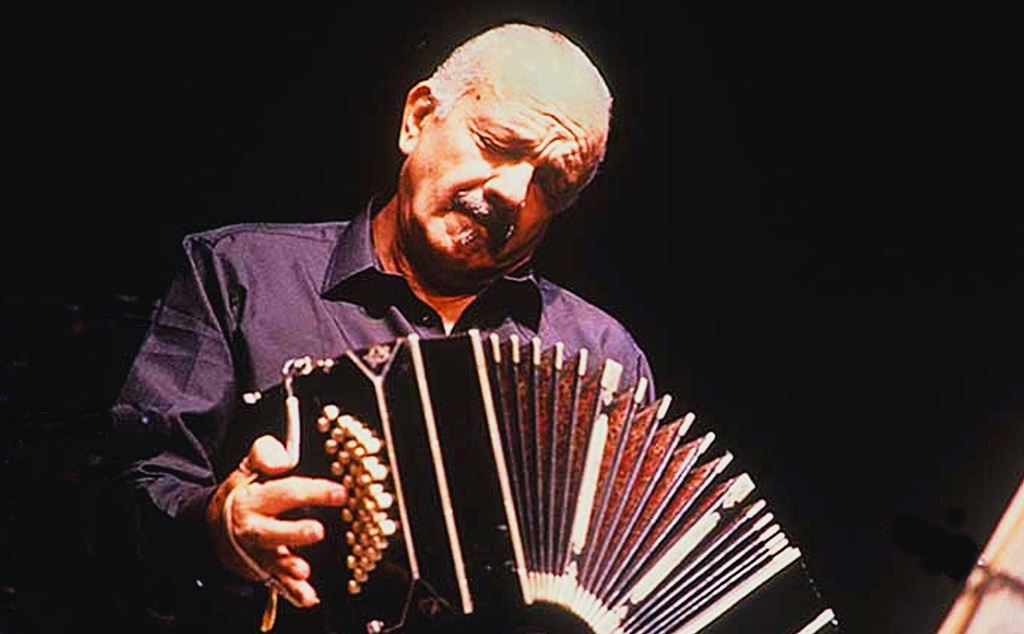
The first would be the Concerto in G major for viola by the prolific Baroque composer Georg Philipp Telemann; the other is the “Grand Tango,” originally for cello, by Argentine bandoneon player and band leader Astor Piazzolla. Other works on the program, featuring the BCO strings under music director Bahman Saless, are Valse Triste by early 20th-century Czech composer Oskar Nedbal, and Beethoven’s Grosse Fuge (Great fugue), originally the finale of the composer’s String Quartet in B-flat, op. 130.

Two more different composers than Telemann and Piazzolla would be hard to imagine. And yet, O’Neill says, they are not incompatible. “They’re very contrasting, probably on polar opposite ends of the musical timeline,” O’Neill says. “But they share some commonalities—most of all the spirit of the dance.”

The Telemann is the first known true viola concerto, and it is a piece that O’Neill plays often. “I think it’s a gorgeous, amazing piece,” he says.

Georg Philipp Telemann

O’Neill recorded the concerto in 2008 when he was asked to make a recording with members of Musica Antiqua Köln. It was definitely a learning experience for O’Neill, giving him an opportunity to work with a Baroque-style bow that has much less tension on the bow hairs, and to improvise in Baroque music. 

The latter did not come naturally, he admits. “I remember them asking me, ‘play a cadenza, be free! Do whatever you like!’” O’Neill says. “I did something, and it was free for sure! I was stopped and it was like, ‘Who are you, Yo-Yo Ma?’ But it was all said with a smile.

“One thing I learned, things were a lot different when performers and composers were the same person. And it was amazing how prolific (Telemann) was. A lot of times you look at the score and it’s very bare, but in some ways it has everything you need—you just have to understand what you’re going to do.”

His approach to Piazzolla’s music was very different. O’Neill first heard Piazolla’s music when he was a 15-year-old student in Las Vegas, and the Cuarteto Latinoamericano played Piazzolla’s “Four, for Tango.” “I was completely blown away!” he says.

“I had never heard anything like this. It was so rhythmic, so fun, the instruments were doing all of these cool, weird effects like percussive effects and (playing) behind the bridge. I was, ‘what is going on there?’ I found the Kronos (Quartet) recording and listened to it all the time. I fell in love with Piazzolla.”

Astor Piazzolla

Later he had the chance to study Piazzolla’s musical origins up close. He was in Buenos Aires, and saw an opportunity to learn more. “I wanted to see what the tango was about,” he says.

“I went down to the docks (in Buenos Aires), where the Argentinian tango was originally from. I was shocked to find out it wasn’t the Parisian version of tango, which is Romantic and dignified. It was actually really rough.  I went to a few tango shows in cafes, but it was mainly the vibe of Buenos Aires that changed me.”

Piazzolla originally wrote the “Grand Tango” for the cellist Mstislav Rostropovich, but the viola arrangement that O’Neill plays fits the instrument very well. “Piazzolla wrote a lot of the (original cello) part very high,” he explains—meaning he can play it at the same pitch on the viola. 

O’Neill loves both pieces he is playing on BCO’s program, but it is the Piazzolla that gets him excited. “The music is just so incredible and evocative,” he says. “It’s almost like it’s so rhythmic that you can’t help being swept away by it.”

Nedbal’s Valse triste is from the ballet Pohadka o Honzov (known in English as the Tale of Simple Johnny). It was composed in 1902 for orchestra, but Nedbal later arranged the Valse for string quartet, in which form it has become especially popular. Trained as a violinist and a composition student of Dvořák, Nedbal was principal conductor of the Czech Philharmonic 1896–1906. 

When Beethoven wrote his String Quartet in B-flat in 1825, he provided an unusual finale: an extensive double fugue that takes up to 16 minutes in performance. That movement was criticized at the time for its complexity and for being “a confusion of Babel.” Since then, however, its standing has risen, to the point that Stravinsky famously said that it “will be contemporary forever.”

Beethoven’s publisher was afraid that such a difficult finale would hinder sales of the quartet, so Beethoven wrote a shorter movement that appeared with the String Quartet in B-flat. He then published the Grosse Fuge separately in 1827. Today it is hailed as one of the composers greatest compositions.

# # # # #

“Virtuosity!”
Boulder Chamber Orchestra, Bahman Saless, conductor
With Richard O’Neill, viola

  • Oskar Nedbal: Valse Triste
  • Telemann: Concerto in G for viola and orchestra
  • Astor Piazzolla: Grand Tango
  • Beethoven: Grosse Fugue, op. 133

7:30 p.m. Saturday, March 2
Seventh-Day Adventist Church, 345 Mapleton, Boulder

TICKETS
Grace Notes: Chamber Music in Boulder, Tchaikovsky in Boulder and Longmont

Piano trios, Tchaikovsky 5 and two Romantic piano concertos on programs

By Peter Alexander Feb. 13 at 2:38 p.m.

The Boulder Symphony will be the first of two area orchestras to perform Tchaikovsky’s Fifth Symphony this weekend, as part of a program Friday and Saturday (Feb. 16 and 17; details below) that also features Rachmaninoff’s Third Piano Concerto played by Chinese pianist Jialin Yao.

The program opens with Conga del Fuego Nuevo (“New fire” conga) by Mexican composer Arturo Marquez. The son of a Mexican mariachi musician, Marquez studied in Mexico and the United States, where he earned an MFA in composition at the California Institute of Fine Arts. A Cuban carnival dance, the conga was the source of the “conga line” made popular in the U.S. by Xavier Cougat and other bandleaders.

Jialin Yao

Currently a student at the Juilliard School of Music, Yao won the 2023 International Keyboard Odyssiad® and Festival Competition. Boulder Symphony’s conductor, Devin Patrick Hughes, was quoted in the concert press release: “Jialin is a rockstar! He plays the Rachmaninoff 3 . . .  with ease, soulfulness, and a virtuosity that rivals any of the great pianists.”

Rachmaninoff wrote his Third Piano Concerto, considered one of the most virtuosic and challenging piano concertos, in 1909 and played the first performance in New York later that year. The initial reception was mixed at best, but Rachmaninoff gave a more successful second performance the following January conducted by Gustav Mahler. Today the concerto is widely accepted as one of the greatest and most demanding works in the piano repertoire. 

The work that audiences can hear twice this weekend, Tchaikovsky’s Fifth Symphony, was composed over the summer of 1888. In spite of powerful emotional currents, the composer did not give the symphony any program or explicit personal meaning. After the first performances, he wrote in a letter “I have come to the conclusion that [the symphony] is a failure. There is something repellent in it . . . which the public instinctively recognizes.”

In spite of that conclusion, the Fifth Symphony has become on of Tchaikovsky’s most performed orchestra works. The coincidence of two performances, by two different orchestras on the front range in a single weekend, is an indication of how successful the symphony has been with both conductors and audiences. 

The Boulder Symphony will also play the Symphony on Sunday as part of its GLOW Project, free concerts designed for people with dementia, neurological and developmental disabilities. That performance will consist of only the symphony, played with no intermission and lasting approximately 45 minutes. 

* * * * *

Boulder Symphony, Devin Patrick Hughes, conductor
With Jialin Yao, piano

  • Arturo Marquez: Conga del Fuego Nuevo (“New fire” conga)
  • Rachmaninoff: Piano Concerto No. 3 in D minor
  • Tchaikovsky: Symphony No. 5 in E minor

7:30 p.m. Friday and Saturday, Feb. 16 and 17
Gordon Gamm Auditorium, Dairy Arts Center

TICKETS

GLOW Concert
Boulder Symphony, Devin Patrick Hughes, conductor

  • Tchaikovsky: Symphony No. 5 in E minor

2 p.m. Sunday, Feb. 18
Gordon Gamm Auditorium, Dairy Arts Center

REGISTRATION

* * * * *

The weekend’s second performance of Tchaikovsky’s Fifth Symphony will be provided by the Longmont Symphony (LSO)and conductor Elliot Moore (7 p.m. Saturday, Feb. 17; details below).

The program, which includes Tchaikovsky’s Fantasy Overture Romeo and Juliet and the Piano Concerto No. 1 in B-flat minor played by Marika Bournaki, is billed as “Portrait of a Composer.” This is an annual series for the LSO and Moore, providing an opportunity to focus on the life and works of a single composer who is part of the orchestral tradition.

Marika Bournaki

Bournaki teaches piano as a faculty member of Shenandoah University in Winchester, Va. She was born in Montreal—leading to her being dubbed “the Celine Dion of classical”—and received bachelor’s and master’s degrees from the Juilliard School of Music. She was the subject of an award-winning documentary film, “I Am Not a Rockstar,” that covered her musical studies, staring when she was 12 and first took lessons at Juilliard, through the age of 20.

She has performed extensively with regional orchestras in the United States and Canada as well as in Switzerland, Russia and Romania. She is also an active chamber musician who has performed at Bargemusic in Brooklyn and the Cape Cod music festival, among other venues. Her educational activities have included programs that bring music to underserved populations in Canada.

Tchaikovsky’s First Piano Concerto had its premiere in 1875 in Boston played by Hans von Bülow. Nikolai Rubinstein, for whom it had been written, was first critical of the piece leading to the first performance being given outside of Russia. Rubinstein later changed his mind about the concerto, and performed it widely. 

Today it is one of the most popular piano concertos. In addition to frequent appearances on orchestral programs, it was used as the sporting anthem for the Russian Olympic Committee at the Beijing Winter Olympics in 2022, during the time that Russian athletes were banned from appearing under the Russian national flag. American pianist Van Cliburn famously won the 1958 Tchaikovsky Competition in Moscow playing the concerto.

Almost as popular as the Piano Concerto, Tchaikovsky’s Romeo and Juliet is one of several works by the composer inspired by Shakespeare. After a stormy beginning, the music breaks into a soaring love theme that has been used in films and television, from The Three Musketeers to SpongeBob SquarePants

The concert concludes with the Fifth Symphony, one of four by two different organizations over the weekend—yet another testament to Tchaikovsky’s place in the orchestral repertoire and in the hearts of audiences.

* * * * *

Tchaikovsky: A Portrait
Longmont Symphony Orchestra, Elliot Moore, conductor
With Marika Bournaki, piano

  • Tchaikovsky: Romeo and Juliet Fantasy-Overture
    Piano Concerto No. 1 in B-flat minor
    —Symphony No. 5 in E minor

7 p.m. Saturday, Feb. 17
Vance Brand Civic Auditorium

TICKETS

* * * * *

The Boulder Chamber Orchestra (BCO) will present their current artist-in-residence, pianist Hsing-Ay Hsu, in a program of piano trios, played with members of the orchestra.

The concert, Saturday at 7:30 p.m. (Feb. 17; details below), is the third in the BCO’s series of mini-chamber concerts of the 2023–24 concert season. The fourth mini-chamber concert, featuring works including trios for clarinet, cello and piano, will be at 7:30 pm. April 6. (See the BCO Web Page for details.)

Hsing-Ay Hsu

Born in China, Hsu has studied at Juilliard, the Yale School of Music, the Ravinia Steans Music Institute, and the Aspen and Tanglewood festivals. A Steinway artist, she won the silver medal of the William Kapell International Piano Competition and first prize of the Ima Hogg National Competition, as well as several artist grants and fellowships. She taught at the CU College of Music, where she was artistic director of the Pendulum New Music Series.

The piano trio emerged as a distinct genre out of domestic music-making in the early classical era, when it was known as an “accompanied piano sonata.” Originally, the piano part was written for women, who were thought to have time for practice, with men—who were not expected to master instruments—playing violin and cello parts to reinforce the melody and bass line of the piano part. 

It was Mozart who first created piano trios with three equal parts, starting around 1780, followed by Beethoven. By the time that Brahms wrote his second and third piano trios, in the late 19th century, it had become a recognized chamber music genre.

* * * * *

Mini-Chamber Concert 3: Triptych of Trios
Hsing-Ay Hsu, piano, and members of the BCO

  • J.S. Bach: Trio Sonata in G major, S1039 (arr. from trio sonata for two flutes and continuo)
  • Mozart: Piano Trio in G major, K564
  • Brahms: Piano Trio No. 3 in C minor, op. 101

7:30 p.m. Saturday, Feb. 17
Boulder Seventh-Day Adventist Church, 345 Mapleton Avenue

TICKETS

NOTE: Corrections were made on Feb. 13, clarifying details of the performances and correcting typos in the original story.

Boulder Chamber Orchestra offers small-scale Wagner, Beethoven’s “Emperor”

Pianist Jennifer Hayghe performs the first piece she ever heard

By Peter Alexander Jan. 30 at 9:45 p.m.

Pianist Jennifer Hayghe returns to one of the first pieces of music she ever heard when she performs Beethoven’ “Emperor” Concerto with the Boulder Chamber Orchestra and conductor Bahman Saless Saturday (7:30 p.m. Feb. 3; details below).

Jennifer Hayghe

“My mother was an artist and she would stay home and paint, and listen to records,” she says. “The record that she listened to the most was Arthur Rubinstein playing the ‘Emperor’ Concerto. I have know it since I was in utero!

In addition to the “Emperor”—Beethoven’s Piano Concerto No. 5 in E-flat major—the program features the Valse triste (Sad waltz) by Jean Sibelius, a melancholy piece that has often been used to create a mood for films and TV; and the only piece that Wagner wrote for small orchestra, his Siegfried Idyll.

While Hayghe admits that she doesn’t remember her earliest exposure to the concerto, she did study it in graduate school. “I think I’ve been playing this for over 30 years,” she says. “It’s very familiar to me, and it’s such a majestic piece. I’ve performed it both with chamber orchestra and with larger orchestras. I much prefer playing it with the smaller orchestra. It has a very different feel and a very different sound.

“As a pianist there are things that we have to do to project with full orchestra that you don’t have to do with chamber orchestra. So much of the piano part is really texture, as part of what the orchestra is doing. If you’re trying to create that texture with a larger orchestra, you’re playing very differently than you are if it’s a smaller orchestra and you’re able to blend in. I really enjoy playing it with the chamber orchestra.”

Bahman Saless. Photo by Keith Bobo

She particularly enjoys playing the concerto in Boulder, where she has so many friends. “I enjoy working with Bahman (Saless),” she says. “And the orchestra has lots of friends in it, so it will be a nice experience.”

One of Beethoven’s most popular pieces, the Fifth Piano Concerto has several unusual or unique aspects. “The remarkable thing in the first movement is that the piano starts, with fantastic virtuoso cadenzas, but never really gets to [play a cadenza] again,” Hayghe says. In most concertos, she explains, “the piano gets to do their big cadenza at the end of the first movement. But after [the opening cadenzas in the ‘Emperor’], the piano is reigned in, and much of the movement the piano is providing texture—all of that figuration up at the top of the piano.”

Continuing a description of the concerto, she points out that the second movement is a set of variations with some moments that sound improvised. It’s “very sublime,” she says, and “completely different from the first movement. Again, the piano is blending with the orchestra in this very textural way. The second movement then never really ends, it transitions with a half-step move into this joyful, joyous, energetic last movement.”

Finally, she says, “everybody has to watch out, and listen for that very unusual timpani and piano duet at the end of the last movement.

“I think one of the fantastic things about this piece is the way Beethoven deals with the dual nature of concerto, the fighting of the forces that concertos often are, and also the the ‘in concert’ part of it as well. You do hear a lot of moments of the piano and the orchestra playing against each other, and then those fantastic moments where they come together and the soloist is playing inside the orchestra, in a sense. I don’t think people are always aware of that.”

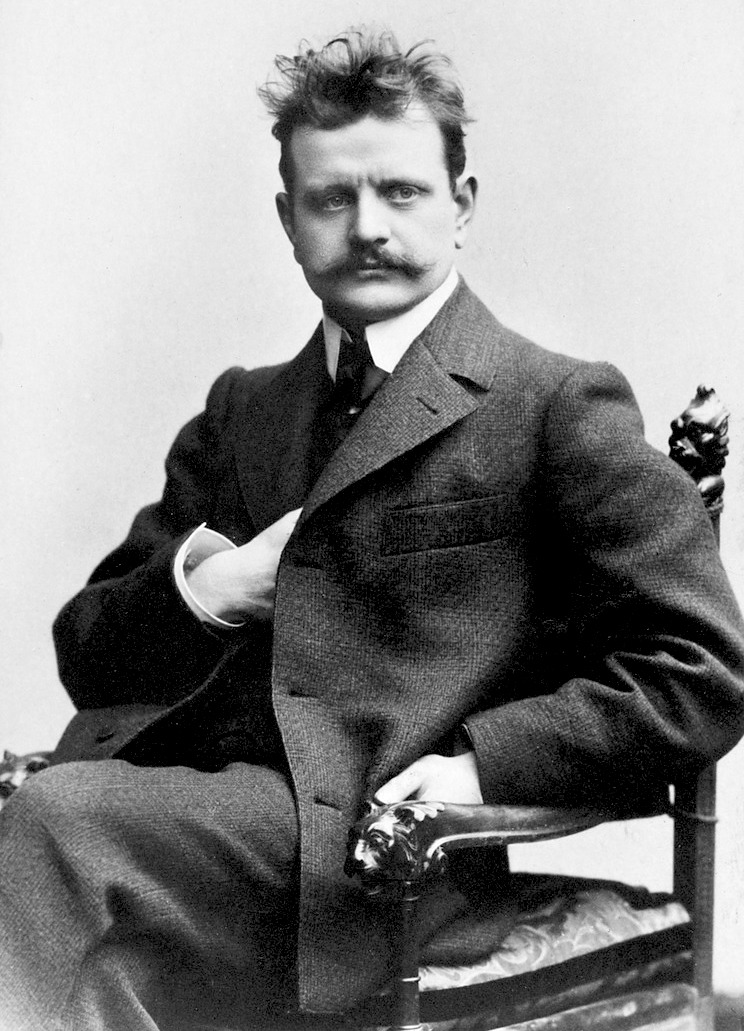
Jean Sibelius

Sibelius wrote Valse triste as part of music he wrote to accompany the play Kuolema (Death) by his brother-in-law, Arvid Järnefelt. In the play, it accompanies the last dance among spectral figures by a dying woman that ends when a door flies open and death stands on the threshold. This one piece proved more popular than the other movements written for the play, and has been performed alone in concert and used in film and TV, from Charlie Chaplin’s Great Dictator in 1940 to an episode of Twin Peaks in 1992.

Wagner wrote Siegfried Idyll as a birthday gift for his wife Cosima. It was first performed on the steps of their villa in Switzerland on Christmas morning, 1870. It was written as a celebration also of the birth of their son, named Siegfried, and the music was later used in part of Wagner’s 1876 music drama Siegfried. The score includes pieces of personal meaning to Wagner and Cosima, including the German lullaby “Schlaf, Kinder, schlaf” (Sleep little child, sleep) that was associated with their daughter. Originally scored for 13 players, Wagner later arranged it for a small orchestra of 35 players for publication. 

# # # # #

Boulder Chamber Orchestra, Bahman Saless, conductor
With Jennifer Hayghe, piano

  • Sibelius: Valse triste
  • Wagner: Siegfried Idyll
  • Beethoven: Piano Concerto No. 5 in E-flat major (“Emperor”)

7:30 p.m. Saturday, Feb. 3
Seventh Day Adventist Church, 345 Mapleton, Boulder

TICKETS
GRACE NOTES: Children and Chamber Music

LSO family concert, BCO mini-chamber concert Saturday

By Peter Alexander Jan. 16 at 9:35 p.m.

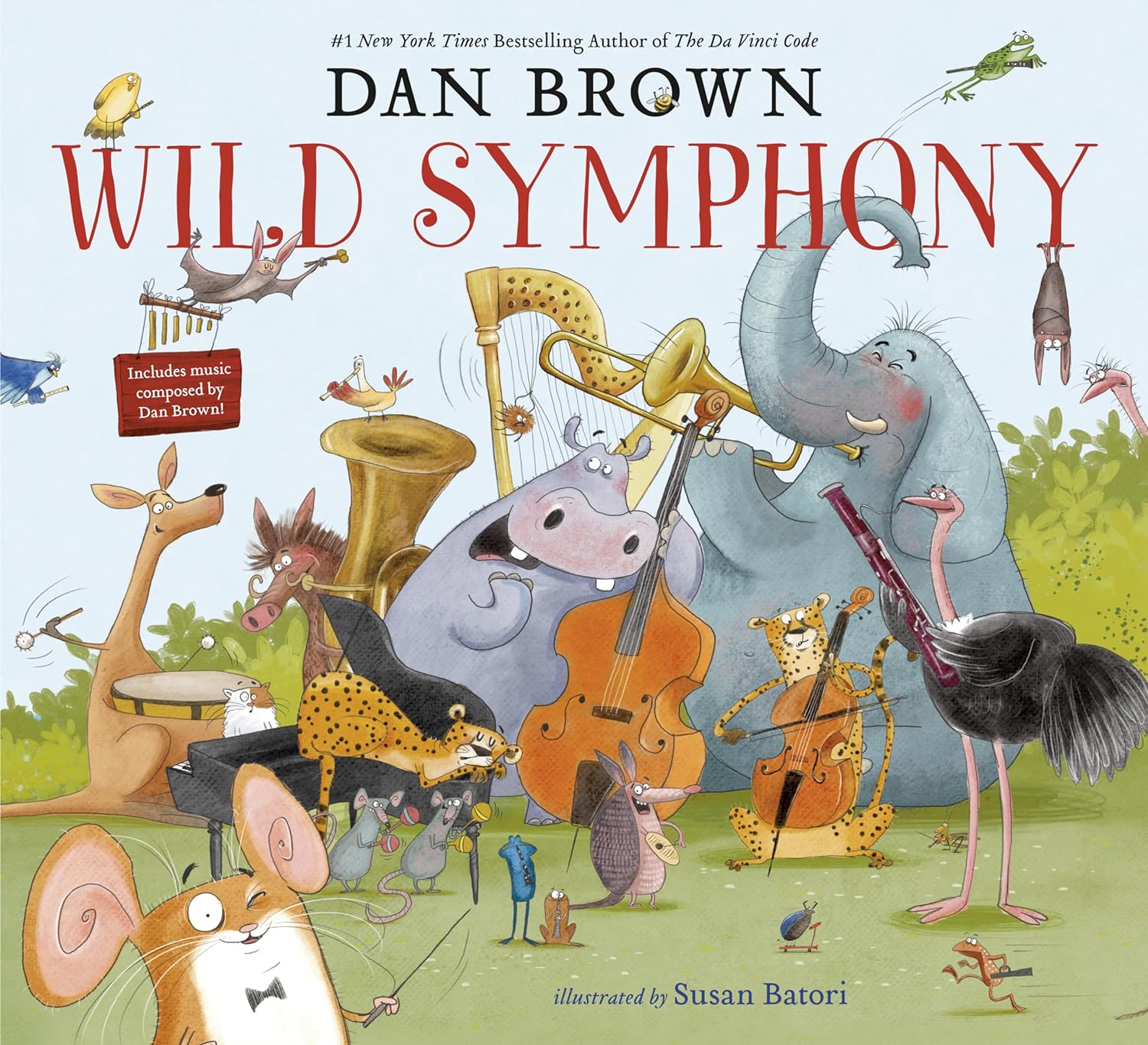
The Longmont Symphony Orchestra will introduce local families to musical animals including a bouncing kangaroo and a brilliant bat Saturday (4 p.m. Jan. 20) when they present the Wild Symphony by Dan Brown.

Yes, that’s the Dan Brown who wrote The da Vinci Code and other New York Times best-selling thrillers. The performance, under the direction of Elliot Moore, will feature Longmont native vocalist and attorney Cameron Grant as narrator. Wild Symphony has an accompanying children’s book, with colorful illustrations by Susan Batori.

The son of a math teacher and a church organist, Brown learned piano as a child and composed music before he wrote books. He says that he wrote the book to share his love of music with children. Each of the animals in the orchestra conducted by “Maestro Mouse” is associated with an instrument, and together they tell a story that includes portraits of the different animals and anagram puzzles on each page of the book. Among the 20 animals in the score are clumsy kittens, an anxious ostrich, dancing boars and busy beetles. 

A graduate of Niwot High School, Grant studied singing at Colorado College and sang with the Aspen Opera Theater, Colorado Symphony and Colorado Music Festival. After getting a law degree, he returned to Longmont where he practices in the field of real estate law.

# # # # #

Longmont Symphony Orchestra, Elliot Moore conductor,
with Cameron Grant, narrator

  • Dan Brown: Wild Symphony

4 p.m. Saturday, Jan 20
Vance Brand Civic Auditorium

TICKETS

The Boulder Chamber Orchestra (BCO) will present pianist Adam Żukiewicz, associate professor of piano at the University of Northern Colorado, in the second of their Mini-Chamber concerts of the 2023–24 season.

# # # # #

Titled “Adam Żukiewicz and Friends,” the concert will feature Żukiewicz playing quartets for piano and strings by Mozart and Brahms with members of the BCO, as well as Bartók’s popular Romanian Dances in their arrangement for piano and violin. The performance will be at 7:30 p.m. Saturday (Jan. 20) at the Boulder Seventh-Day Adventist Church. (See below for tickets.)

Adam Żukiewicz

A native of Poland, Żukiewicz has studied at the Royal Academy of Music in London and the Jacobs School of Music at Indiana University, and holds a doctorate from the University of Toronto, where he also served on the faculty. He won first prize both the 2011 Canada Trust Music Competition and the 2012 Shean Piano Competition in Canada, and was a medalist at several other contests. Since 2018 he has been a judge for the Steinway Piano Competition.

Mozart’s Piano Quartet in the turbulent key of G minor, one of the earliest works for that ensemble, was commissioned by the Viennese publisher Hoffmeister for sale to amateurs. Believing the work Mozart wrote was too difficult for amateur players, Hoffmeister canceled the rest of the order. Nevertheless, Mozart wrote another piano quartet several months later. 

When Brahms wrote his Piano Quartet in G minor nearly 100 years after Mozart’s Quartet in the same key, the quartet for piano and strings was a more established genre, even if not as common as string quartets and piano trios. The quartet is best known for its rousing “Rondo alla Zingarese” (Gypsy rondo) finale.

# # # # #

Boulder Chamber Orchestra Mini-chamber 2: Adam Żukiewicz and Friends
Members of the Boulder Chamber Orchestra with Adam Żukiewicz, piano

  • Mozart: Quartet in G minor for piano and strings, K478
  • Brahms: Quartet in G minor for piano and strings, op. 25
  • Bartók: Romanian Dances for piano and violin

7:30 p.m. Saturday, Jan. 20
Boulder Adventist Church

TICKETS

GRACE NOTES: Holiday performances everywhere

Popular themes of the 2023 Holidays include the solstice and music of the Baroque

By Peter Alexander Nov. 29 at 2:41 p.m.

The Longmont Symphony and Boulder Ballet start their 2023 series of Nutcracker  performances Saturday afternoon (1 p.m. Dec. 2) at Vance Brand Civic Auditorium with their annual “Gentle Nutcracker.” 

A shortened, sensory-friendly performance designed for neurodiverse individuals, their families and caregivers, the “Gentle Nutcracker” is approximately 90 minutes in length. 

That special presentation will be followed by two full performances Saturday and Sunday of Tchaikovsky’s beloved ballet, with the Christmas party, the Nutcracker Prince, “The Dance of the Sugar Plum Fairy,” and all the other features that have made both the music and the ballet a Holiday favorite (4 p.m. Saturday, Dec. 2 and 2 p.m. Sunday, Dec. 3; details below).

NOTE At the time of writing, there are only a few seats left, mostly in the balcony. There is no guarantee that tickets will be available by the time this story appears.

– – –

Longmont Symphony Orchestra, Elliot Moore, conductor
Boulder Ballet

“Gentle Nutcracker”

1 p.m. Saturday, Dec. 2 NOW SOLD OUT
Vance Brand Civic Auditorium

TICKETS

Tchaikovsky: The Nutcracker Ballet

4 p.m. Saturday, Dec. 2
2 p.m. Sunday, Dec. 3
Vance Brand Civic Auditorium

TICKETS

* * * * *

Conductor Cynthia Katsarelis and the Pro Musica Colorado Chamber Orchestra will present the Christmas portion of Handel’s Messiah Saturday (7:30 p.m. Dec. 2) at Mountain View Methodist Church (details below).

In addition to the Christmas section, chorus and orchestra will perform the much loved “Hallelujah” chorus from Messiah. The program opens with “Adoration” by Florence Price and Mozart’s Divertimento in D major, K136.

The Christmas portion of Messiah is one of three major divisions of the work. It comprises 21 separate movements including the opening Overture, choruses including “For unto us a Child is Born” and “Glory to God,” recitatives, and arias for soprano, tenor and bass soloists. Pro Musica will be joined by the Boulder Chamber Chorale and soloists Jennifer Bird-Arvidsson, soprano; Nicole Asel, alto; Steven Soph, tenor; and Ashraf Sewailam, bass.

– – –

Pro Musica Colorado Chamber Orchestra, Cynthia Katsarelis, conductor
With the Boulder Chamber Chorale and Jennifer Bird-Arvidsson, soprano; Nicole Asel, alto; Steven Soph, tenor; and Ashraf Sewailam, bass

  • Florence Price: Adoration
  • W.A. Mozart: Divertimento in D major, K136 
  • G.F. Handel: Messiah, Part I
  • —“Hallelujah” chorus

7:30 p.m. Saturday, Dec. 2
Mountain View Methodist Church, 355 Ponca Place, Boulder

TICKETS
* * * * *

The CU College of Music presents its annual Holiday Festival this coming weekend, Friday through Sunday in Macky Auditorium (Dec. 8–10; details below).

One of the most popular Holiday events in Boulder, the Holiday Festival features numerous ensembles from the College of Music, each presenting their own selections. Featured groups in this year’s program are the Chamber singers, the Holiday Festival Chorus made up of singers from several groups in the college, the Holiday Festival Orchestra, the Trombone Choir, Holiday Festival Brass, Holiday Festival Jazz, and the West African Highlife Ensemble.

NOTE: At the time of writing, there are limited tickets available for the four performances of the Holiday Festival program. Performances generally sell out, so interested persons should check the CU Presents Web page for availability.

– – –

Holiday Festival, Donald McKinney, artistic director
CU College of Music Ensembles

Chamber Singers, Leila Heil, conductor
Noelle Romberger, graduate conductor

Holiday Festival Chorus
Galen Darrough, Raul Dominguez and Jessie Flasschoen, conductors 
Jun Young Na and Noelle Romberger, graduate conductors

Holiday Festival Orchestra, Gary Lewis, music director 
With Donald McKinney and Nelio Zamorano, conductors

Trombone Choir, Sterling Tanner, conductor

Holiday Festival Jazz, Brad Goode, director

Holiday Festival Brass, Lauren Milbourn, conductor

West African Highlife Ensemble, Maputo Mensah, director

7:30 p.m. Friday, Dec. 8
1 and 4 p.m. Saturday, Dec. 9
4 p.m. Sunday, Dec. 10
Macky Auditorium

TICKETS

* * * * *

Cellist Charles Lee, the principal cellist of the Boulder Philharmonic Orchestra, will join Ars Nova Singers and conductor Tom Morgan for “Evergreen,” the latest edition of their annual celebration of the winter solstice.

The program will be presented four times, once in Longmont (Saturday, Dec. 9), once in Denver (Sunday, Dec. 10) and twice in Boulder (Thursday and Friday, Dec. 14 and 15; times and locations below). The program includes music by the medieval Benedictine abyss Hildegard Bingen, the English Renaissance master William Byrd, and the north German early Baroque composer Heironymus Praetorius. 

Not to be confused with his better known younger contemporary Michael Praetorius, Heironymus is known for his elaborate multi-voices motets. Also on the program are more contemporary works by the living composers Eriks Esenvalds, Jocelyn Hagan and Taylor Scott Davis. 

In a written news release, Morgan sets the stage for this concert timed to nearly coincide with the solstice, writing: “Dark and light, motion and stasis, intimate and universal, deeply familiar and refreshingly new—our season searches for the balance point in all of these, through the power and majesty of the human voice.”

– – –
Ars Nova Singers, Tom Morgan, director
With Charles Lee, cello

“Evergreen”

  • Hildegard of Bingen: O frondens virga
  • Two 15th century English carols
  • Heoronymus Praetorius: In dulci jubilo (à 8)
  • William Byrd: O magnum mysterium
  • Ola Gjeilo: Serenity (O Magnum mysterium)
  • Andrea Casarrubios: Caminante
  • Taylor Scott Davis: Solstice
  • Eriks Esenvalds: Rivers of Light
  • Jocelyn Hagen: Mother’s Song
  • Dan Forrest: The Sun Never Says
  • Michael Head: The Little Road to Bethlehem
  • Arrangements of Holiday songs by Tom Morgan, Joanna Forbes, Alexander L’Estrange and others

7:30 p.m. Saturday, Dec. 9
United Church of Christ, 1500 9th Ave., Longmont

12:30 p.m. Sunday, Dec. 10
St. Paul Lutheran Church, 1660 Grant. St., Denver

7:30 p.m. Thursday, Dec. 14 and Friday, Dec. 15
Mountain View United Methodist Church, 355 Ponca Place, Boulder

TICKETS
* * * * *

CU Presents will round out the university’s holiday performances with Christmas with the Canadian Brass at 7:30 p.m. Tuesday, Dec. 13 in Macky Auditorium.

The Canadian Brass generally announce their program from the stage. Nonetheless, the Christmas set list is more predictable and will likely feature some Canadian Brass favorites, including “Ding Dong Merrily on High,” evergreen Holiday music including “White Christmas” and “Carol of the Bells,” and jazzy arrangements including “Glenn Miller Christmas.”

Founded in 1970, the Canadian Brass has been a recognized and esteemed part of the musical scene for more than 50 years. Touring world-wide, they have made the repertoire of chamber music for brass, and specifically brass quintets, widely appreciated. 

There is still one original member of the quintet, tubist Chuck Dellenbach, while other members have joined over the years. The most recent addition, making her Canadian Brass debut this year, is trumpet player Ashley Hall-Tighe, who first met the members of the Canadian Brass in 2001 as a student in their chamber music residency at the Music Academy of the West.

With more than 10 Christmas albums, the Canadian Brass are especially well known for their holiday performances. Their total recording history currently totals more than 130 albums and more than 2 million sold worldwide.

NOTE: At the time of writing, there are limited tickets available.

– – –

Canadian Brass

“Christmas with the Canadian Brass”

  • Program to be announced from the stage may include:
  • “Ding Dong Merrily on High” (arr. Henderson)
  • Gabrieli: Canzona per sonare No. 4
  • “White Christmas” (arr. Henderson)
  • Mykola Leondovich: “Carol of the Bells” (arr. McNeff)
  • Vince Guaraldi: “Christmas Time is Here” (arr. Ridenour)
  • Glenn Miller: “Glenn Miller Christmas” (arr. Dedrick)

7:30 p.m. Wednesday, Dec. 13
Macky Auditorium

TICKETS

* * * * *

The Longmont Symphony will look back to the 18th century for Candlelight: A Baroque Christmas at 4 p.m. Saturday, Dec. 16, in Vance Brand Civic Auditorium.

Under the direction of Elliot Moore, the featured work on the program will be the Gloria of Antonio Vivaldi. Composed around 1715, it is one of the Venetian composer’s most frequently performed works. Its 12 movements, divisions of the “Gloria” text from the Catholic Mass ordinary, call for chorus, orchestra, and soprano and alto soloists.

Celebrating the holiday season, the Candlelight Concert has long been a part of the Longmont Symphony’s season. There will be candles again this year, although the orchestra has announced that they will be battery-operated this year, rather than relying on a flame.

– – –

Longmont Symphony and Chorus, Elliot Moore, conductor

“Candlelight: A Baroque Christmas”

  • Corelli: Concerto Grosso
  • Handel: “Rejoice greatly” from Messiah
  • Scarlatti: Christmas Cantata for soprano and strings
  • Vivaldi: Gloria

4 p.m. Saturday, Dec. 16
Vance Brand Civic Auditorium

TICKETS

* * * * *

All the choirs of the Boulder Chorale and Boulder Children’s Chorale will join together to present “Season of Light,” their annual concert of music for the holidays, Saturday and Sunday (Dec. 16 and 17; details below).

The concert title refers to the tradition found in many different cultures to use light to counteract the dark of winter and forecast the return of the light in the weeks to come. In the words of the Boulder Chorale’s press information, the program “traces the history and development of many of the world’s most endearing holiday customs, all of which involve lighting up the winter season—from the burning Yule log, sparkling Christmas tree lights and candles in windows, to the lighting of luminaries (often called luminarias) in the American Southwest and the traditional ritual of the Hanukkah menorah.”

Tickets are available both at the door and through the Boulder Chorale Web page. The Sunday performance will also be presented through live streaming, available at the same Web page.

– – –

Boulder Chorale, Vicki Burrichter, artistic director
With Boulder Children’s Chorales, Nathan Wubbena, artistic director

“Season of Light”

Children’s Chorale Bel Canto
Nathan Wubbena, conductor

  • John Rutter: “Angels’ Carol”
  • Flory Jagoda: “Ocho Kandelikas” (arr. Joshua Jacobson)

Children’s Chorale Volante
Kiimberly Dunninger, conductor

  • Franklin J. Willis: “Be the Light “
  • Robert Cohen and Ronald Cadmus: “The Joy of Simple Things”

Chamber Chorale
Vicki Burrichter, conductor

  • John Newell: “Light of Heaven” (text based on the Buddhist vajra guru mantra)

Chamber Choir, Bel Canto and Volante
Nathan Wubbena, conductor

  • Ryan Main: “Go! Said the Star”

Children’s Choir Piccolini
Melody Sebald, conductor

  • “Winter Canon” (arr. Andy Beck)
  • John Henry Hopkins Jr.: “We Three Kings”

Children’s Choir Prima Voce
Anna Robinson, conductor

  • Ruth Ann Schram: “Winter Solstice”
  • “This Little Light of Mine” (arr. Masa Fukuda)

Concert Chorale
Vicki Burrichter, conductor

  • Enya and Nicky Ryan: “Amid the Falling Snow” (words by Roma Ryan, arr. Audry Snyder)
  • Craig Carnahan: “Dancing on the Edges of Time” (words by Rabindranath Tagore)
  • Stephanie K. Andrews : “On Compassion” (words by the 14th Dalai Lama Tenzin Gyatso)

Combined Choirs
Kim Dunninger and Vicki Burrichter, conductors

  • Benji Pasek and Justin Paul: “Do a Little Good” (from Spirited)
  • Franz Gruber/David Kantor: “Night of Silence” (includes “Silent Night”; arr. Nathan Wubbena; Spanish text by Cynthia Garcia-Barrera)

4 p.m. Saturday and Sunday, Dec. 16 and 17
First United Methodist Church, 1421 Spruce St., Boulder

TICKETS
* * * * *

The Boulder Chamber Orchestra will combine its holiday celebration with the music of Beethoven in a program featuring pianist Adam Zukiewicz.

Their “Holidays Celebration with Beethoven” will be at 7:30 p.m. Saturday, Dec. 16 in the Boulder Seventh-Day Adventist Church. Zukiewicz will perform Beethoven’s Piano Concerto No. 2 with the orchestra and conductor Bahmann Saless. 

Other works on the program are Mozart’s Overture to The Marriage of Figaro, conducted by Nadia Artman; Chocolats Symphoniques (Symphonic chocolates) by Maxime Goulet; and the world premiere of the Concerto for Flute and Orchestra by Sylvie Bodrova with the BCO’s principal flutist Cobus DuToit as soloist. 

Part of the reason for combining the holiday music with Beethoven is that the composer’s birthday is believed to be Dec. 16. The date is not certain, since the only documents record his baptism on Dec. 17, but the birthday is traditionally observed on Dec. 16. That would make Dec. 16, the date of the concert, the 253rd anniversary of his birth.

As it happens, the full 2023–24 season has three of Beethoven’s five piano concertos listed. the Third Concerto was played by Petar Klasan Sept. 1, and the Concerto No. 5 (“Emperor:) will be performed with the BCO by  Jennifer Hayghe Feb 3 (7:30 p.m., Boulder Seventh-Day Adventist Church).

Goulet’s Chocolats Symphoniques was previously performed by the BCO on their holidays concert in 2021. The work’s four movements refer to four different flavors of chocolate: “Caramel Chocolate,” “Dark Chocolate,” “Mint Chocolate” and “Coffee-infused Chocolate.”

– – –

Boulder Chamber Orchestra, Bahman Saless, conductor
With Cobus DuTois, flute, and Adam Zukiewicz, piano
Nadia Artman, conductor

“Holidays Celebration with Beethoven”

  • Mozart: Overture to The Marriage of Figaro
  • Maxime Goulet: Chocolats Symphoniques (Symphonic chocolates)
  • Sylvie Bodorova: Concerto for Flute and Orchestra (world premiere)
  • Beethoven: Concerto No. 2 for Piano and Orchestra

7:30 p.m. Saturday, Dec. 16
Boulder Seventh-Day Adventist Church, 345 Mapleton Avenue

TICKETS  
* * * * *

The Boulder Bach Festival (BBF) will present “Handel’s Messiah Reimagined” in their very own version, based on an edition created by music director Zachary Carrettin.

Messiah will be performed by a string orchestra from the BBF’s Compass Resonance (CORE) Ensemble with harpsichord and chamber organ continuo and a 16-voice choir. Five featured solo singers will also perform within the chorus. The entire performance will be presented without conductor.

The program also incudes two a cappella vocal works and a violin concerto b Antonio Vivaldi. The concerto will be played by BBF’s artistic director, Zachary Carrettin, with Baroque guitar continuo played by Keith Barnhart.

– – –

Boulder Bach Festival CORE ensemble
Mara Riley, soprano; Sarah Moyer, soprano; Claire McCahan, mezzo-soprano;
Daniel Hutchings, tenor; and Adam Ewing, baritone
With Zachary Carrettin, violin, and Keith Barnhart, Baroque guitar

“A Baroque Christmas: Handel’s Messiah Reimagined”

4 p.m. Sunday, Dec. 17

Gordon Gamm Theater, Dairy Arts Center, Boulder

TICKETS