Boulder Bach Festival and the Dairy present orchestral program Sunday
By Peter Alexander April 3 at 5:25 p.m.
Co-presenters Boulder Bach Festival (BBF) and the Dairy Arts Center join together for an orchestral program of wide variety and styles, concluding the BBF’s 2024–25 concert season.
The program, titled “Wheel of Time,” will be performed Sunday in the Dairy’s Gordon Gamm Theater (4 p.m. April 6; details below). The performance features the BBF’s conductorless chamber orchestra, COmpass REsonance (CORE). Soloists will be the BBF’s music director, Zachary Carrettin, violin; Mina Gajic, piano; and Mara Riley, soprano and flute.
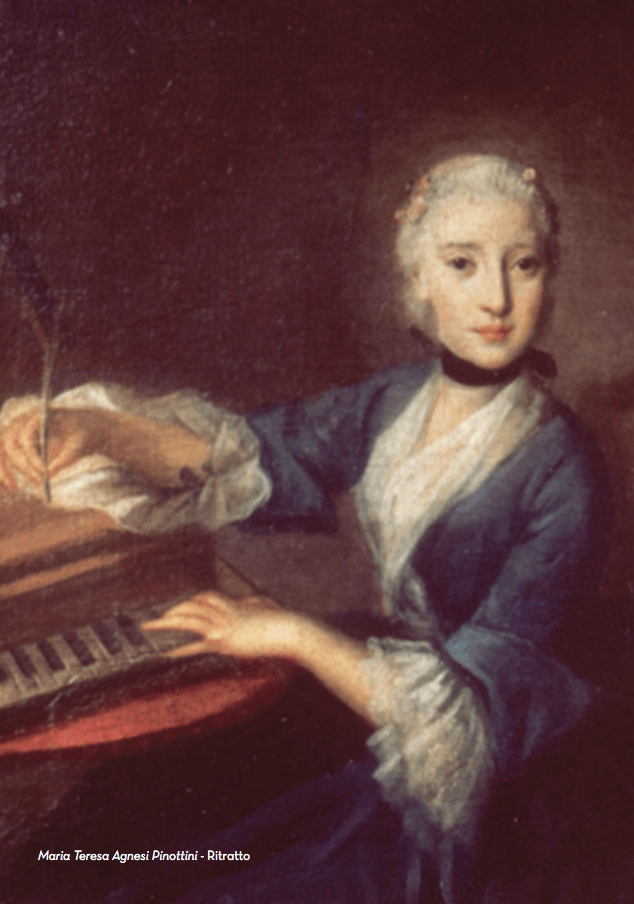
Maria Teresa Agnesi Pinottini
The program features works from the 18th to the 21st centuries, including the first Colorado performance of Overture for a Changing World by Carrettin. Riley will sing two arias, one a sonnet by Petrarch set by Maria Teresa Agnesi Pinottini, an 18th-century Italian composer, singer and harpsichordist; and the other from an opera by Vivaldi. Riley will also appear with CORE as the flute soloist in a performance of J.S. Bach’s Brandenburg Concerto No. 5.
The other work on the program is Ernest Bloch’s Concerto Grosso No. 1 for piano and string orchestra, featuring Gajic as soloist. Composed in 1925, the Concerto Grosso has an interesting origin. At the time, Bloch was director of the Cleveland Institute of Music, where many students were skeptical of “old” techniques in music, including classical forms and tonality.
Bloch decided to respond to their skepticism by writing a new piece that used a classical form, the concerto grosso, and tonality in a contemporary way. He gave the new piece to the school orchestra, who read it with interest. According to legend, after the reading, Bloch said to the students, “What do you think now?”
# # # # #
“Wheel of Time” Boulder Bach Festival COmpass REsonance, Zachary Carrettin, music director With Mara Riley, soprano and flute, and Mina Gajic, piano
Zachary Carrettin: Overture for a Changing World
Maria Teresa Adnesi: Non piangete
Ernest Bloch: Concerto Grosso No. 1 for piano and string orchestra
Vivaldi: Aria from La verity in cement (Truth in contention)
J.S. Bach: Brandenburg Concerto No. 5
4 p.m. Sunday, April 6, Gordon Gamm Theater, Dairy Arts Center
Boulder Bach’s CORE and the Takács Quartet fill the weekend
By Peter Alexander March 5 at 5:20 p.m.
COmpass REsonance (CORE), a string ensemble that began as the resident Baroque orchestra of the Boulder Bach Festival, will present a program of music by four women composers of the Baroque era on Saturday (4 p.m. March 8; details below).
Titled “The Feminine Divine,” the program features works by Barbara Strozzi (1619–1677), Elisabeth Jacquet de la Guerre (1665–1729), Francesca Caccini (1587–1641?), and Isabella Leonarda (1620–1704). The performance will be directed by Zachary Carrettin and feature soprano Sarah Moyer and mezzo-soprano Claire McCahan.
Other guest artists will be Minneapolis-based harpsichordist Tami Morse and cellist Joseph Howe, performing with members of CORE. Carrettin will perform as violinist.
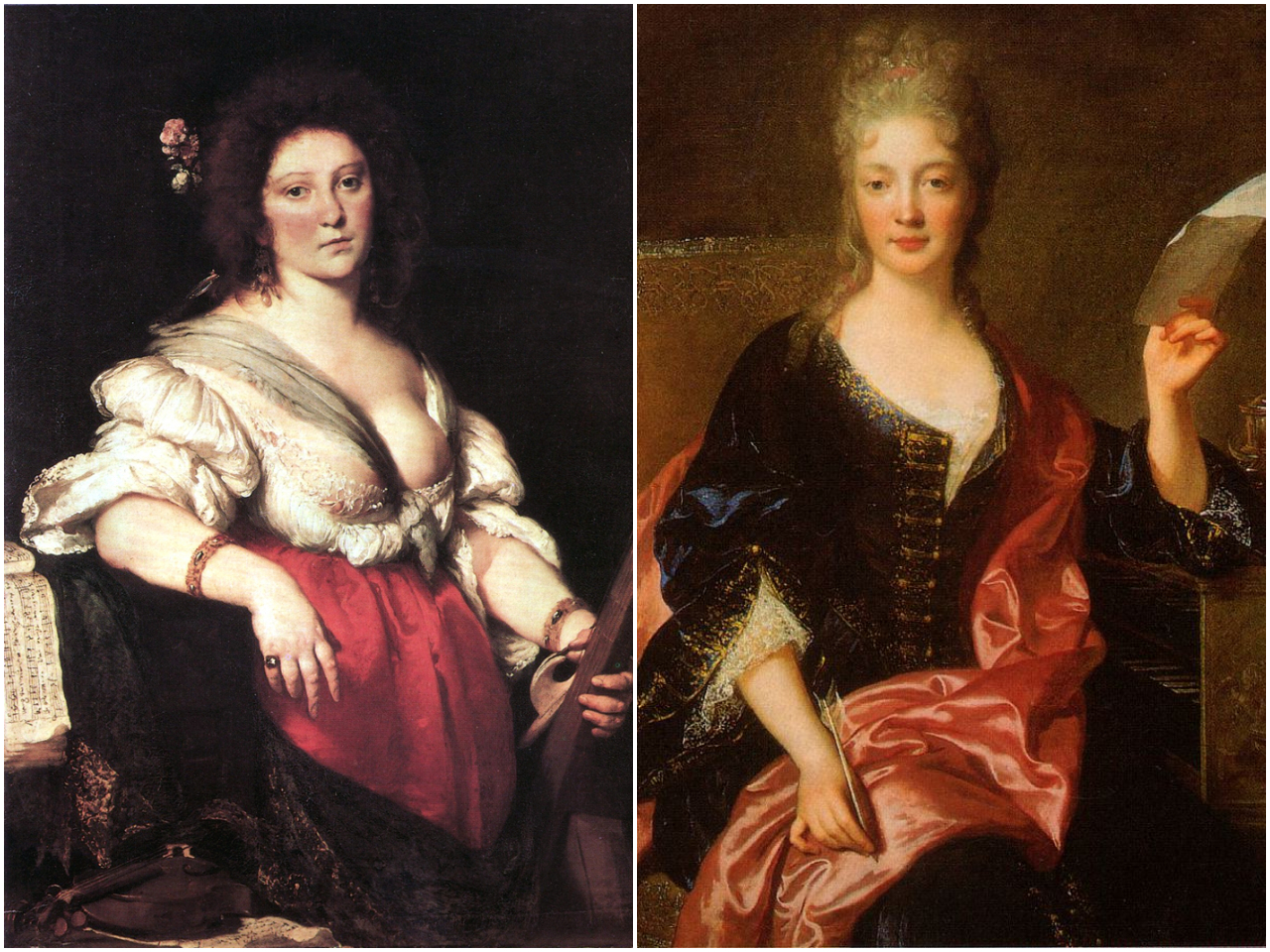
Composers Barbara Strozzi and Elisabeth Jacquet de la Guerre
The most renowned composer on the program, Strozzi published eight volumes of music during her lifetime, and at one point had more secular music in print than anyone else in Europe. She accomplished this as an independent artist, without the usual aristocratic support that most musicians of her era depended upon.
Strozzi first came to prominence as a singer, having been recognized for her virtuosity in her teens. Her first volumes of published music, titled Bizzarrie poetiche (poetic oddities), appeared before she turned 20. Although she dedicated her volumes of published music—all but one using secular texts—to prominent members of the nobility, she never received regular patronage from any of them.
Jacquet de la Guerre came from a family of musicians and instrument makers. An accomplished harpsichordist who performed at the French court of Louis XIV, she composed vocal music, including dramatic cantatas and songs, as well suites for harpsichord and sonatas for violin and harpsichord.
Francesca Caccini was the daughter of the important composer of early operas, Giulio Caccini. She spent most of her life in service to the Medici Court in Florence. Most of her music has disappeared, including several staged works written for the court. Today she is remembered as the first woman to write an opera, and for a collection of solo songs and duets with basso continuo.
The least known of the four women composers, Leonarda spent most of her life in an Ursuline convent in Novara, Italy. While living in the convent she wrote about 200 compositions, including vocal motets, and instrumental sonatas that are notable for their unusual structure of as many as 13 separate movements.
# # # # #
“The Feminine Divine” Compass Resonance Ensemble (“CORE”) Zachary Carrettinn, director and violin; Tami Morse, harpsichord; and Joseph Howe, cello With Sarah Moyer, soprano, and Claire McCahan, mezzo-soprano
Music by Barbara Strozzi, Elisabeth Jacquet de la Guerre, Francesca Caccini, and Isabella Leonarda
The world renowned Takács Quartet, comprising artists in residence and Christoffersen Fellows at CU-Boulder, is currently celebrating its 50th anniversary year.
Between teaching duties and an international touring schedule, they will present one of their campus concerts Sunday and Monday in Grusin Music Hall (March 9 and 10; details below). After 50 years, one of the original members of the Takács still plays with the quartet, cellist András Fejér. Currently performing with him are violinists Edward Dusinberre and Harumi Rhodes, and violist Richard O’Neill.
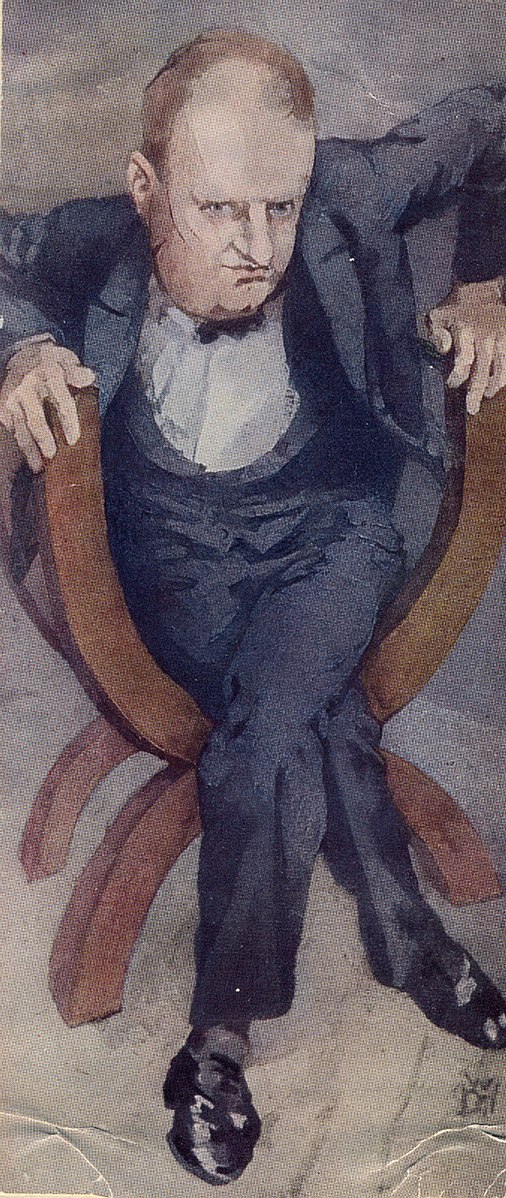
Paul Hindemith. Portrait by Rudolf Heinisch
Joining them for the March program, soprano and CU music faculty member Jennifer Bird-Arvidsson will perform Hindemith’s Four Songs, Melancholie, with the quartet. Bartók’s String Quartet No. 3 and Beethoven’s String Quartet in F major, op. 135, complete the program.
Hindemith served as a German soldier in the trenches near the end of Word War I. After the war he set four poems from a book by Christian Morgenstern titled Melancholie. The poems and the music reflect Hindemith’s feelings in the years after war, when he wrote to a friend “Everything is dreary and empty. I am deathly sad.” Hindemith dedicated Melancholie, one of his earliest and least known works, to a friend who died in the war.
As the last of his string quartets, Beethoven’s op. 135 comes from the opposite end of the composer’s life from Hindemith’s songs, and stands opposite to them in mood. Surprisingly one of Beethoven’s most cheerful and straightforward works—coming after other late quartets that explore unusual musical forms complex musical styles—Op. 135 shows the standard four movement layout for quartets, symphonies and other works.
Beethoven wrote to his publisher that this would be his last quartet, and headed the last movement “Der schwer gefasste Entschluss” (the difficult decision), suggesting that it was hard to give up a genre that he had explored throughout his life. Below that written title, the movement begins with three three-note motives that form its major themes. Under the musical notes, Beethoven wrote “Muss es seen? Es muss sein! Es muss sein!” (Must it be? It must be! It must be!)
The central piece on the program is Bartók, whose music has also played a central role in the 50-year history of the Takács Quartet, founded by four Hungarian string students. They have recorded the full set of six quartets twice and performed them frequently on tour. The shortest of Bartok’s quartets, the Third has a single movement divided into four parts that do, and don’t, recall the standard four-movement structure.
# # # # #
Takács Quartet With Jennifer Bird-Arvidsson, soprano
Artistic Director Evanne Browne conducts her last program with Seicento
By Peter Alexander April 24 at 6:20 p.m.
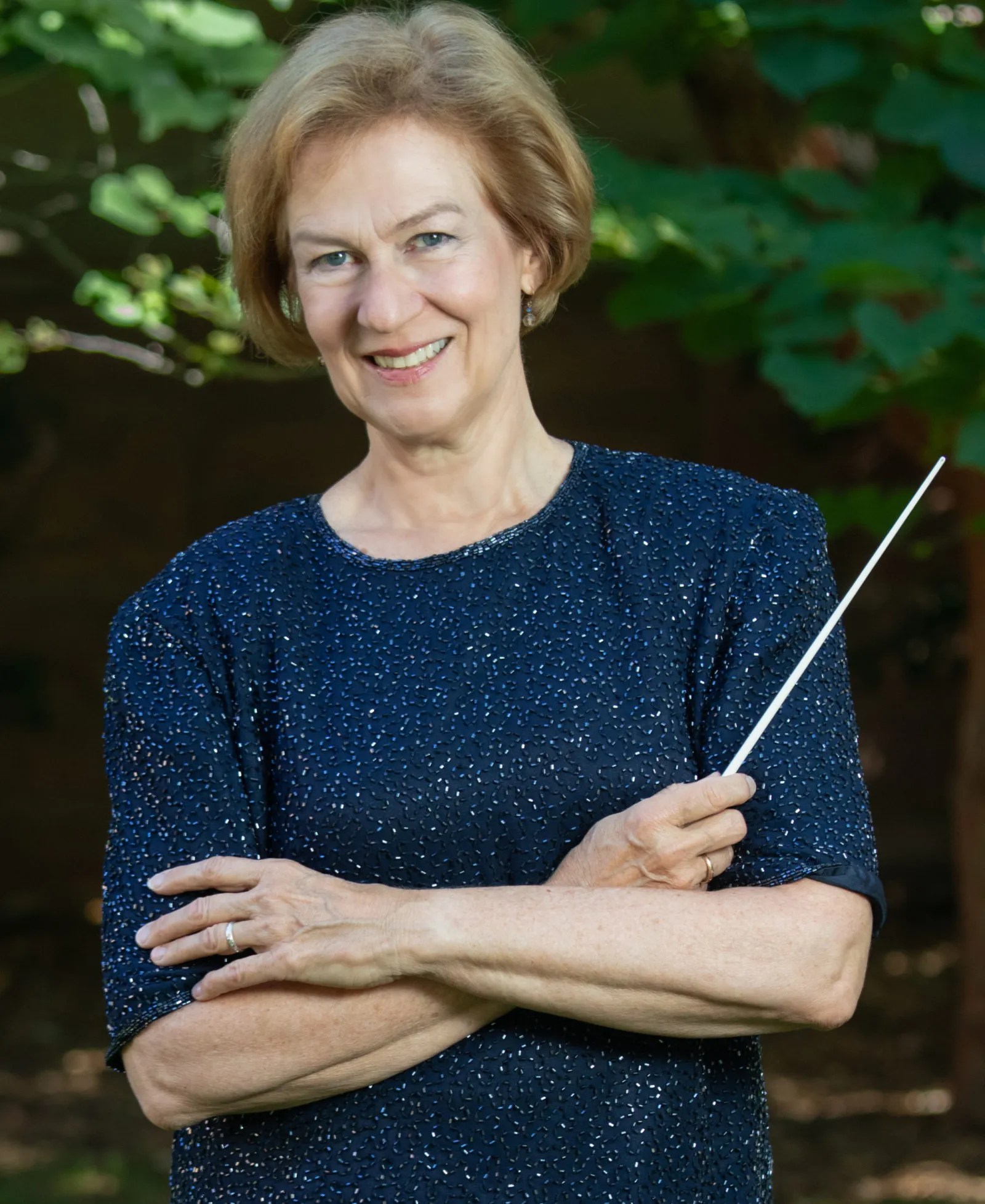
Evanne Browne
Evanne Browne, the first and the fourth director of Boulder’s Seicento Baroque Ensemble, will perform some of her favorite music for her last performances with the group, Friday through Sunday in Denver, Boulder and Longmont (April 26–28; details below).
Browne has announced that she will retire as Seicento’s artistic director following the concerts, which mark the end of the ensemble’s current season. A search is under way for her successor.
Browne founded Seicento in 2011 then left the group when she moved to the east coast in 2017. Two conductors later, she returned to Colorado, and has led the group for the past two years. She says the program was planned in advance and not specifically chosen for her last concert with Seicento. It might well have been, though, as the early years of the Baroque are Browne’s specialty.
“This is the era that I truly love—the early Italian Baroque,” she says. “This program is a passion of mine (and) was my specialty in my performing years.”
The music she is referring to comes from the period around 1600. The music of the Renaissance had mostly been written for choirs, but starting around 1600 music was written for solo singers with accompaniment of a bass line and simple chords played by keyboard or other stringed instruments. The emphasis in the solo singing was on expression of the text, with vocal lines that required extensive ornamentation.
“It is very virtuosic,” Browne explains. “It really is an approach that where, you have to fill in the blanks.”
To help promote understanding of the style, Browne has been working with four apprentice artists who will be featured on the program, sopranos Ann Jeffers and Andrea Weidemann, and mezzo-sopranos Emily Anderson and Gabrielle Razafinjatovo.
“I’ve done a lot of that kind of music as a soloist,” Browne says. “It is very virtuosic, and my goal in having the apprentice artists program (was) to pass that knowledge on.”
Because much of the expression in the early Baroque was supplied by ornaments that were not written out, that was where Browne started with the apprentice artists. She started by teaching the most common ornaments, and suggested recordings they should listen to. “They learned the cadential ornaments [for endings of phrases],” she explains. “Then we started filling in thirds, and filling in fourths, and it was so much fun to see them go, ‘Oh!’”
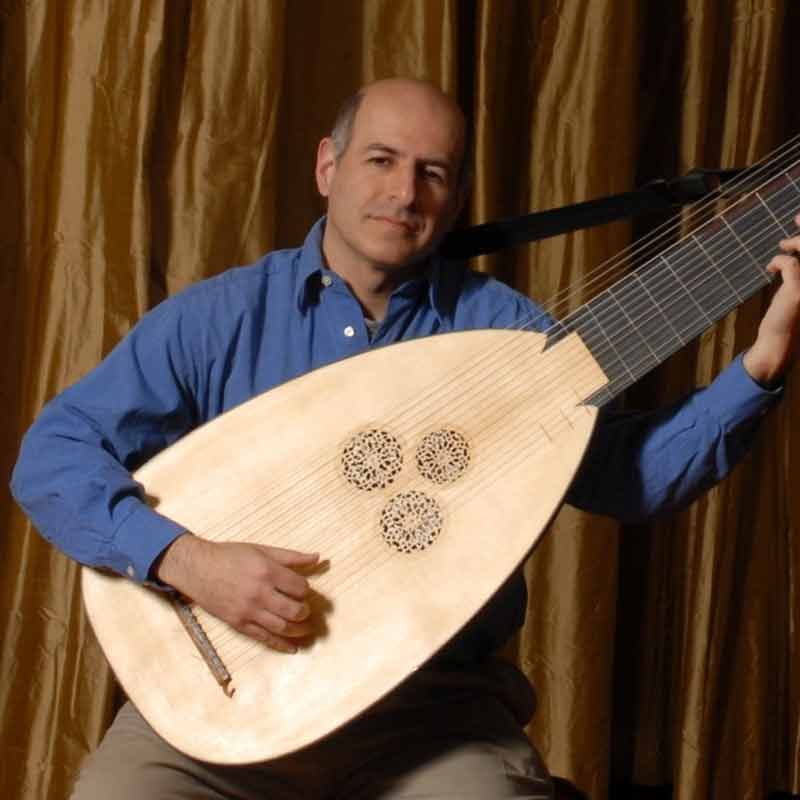
William Simms with theorbo
cornettos
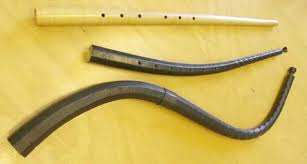
To make an interesting program for both solo artists and the Seciento chorus, Browne selected both solo pieces in a style called “monody”—ornamented solo voice with continuo accompaniment that will be sung by the apprentice artists—and music from the period for the full chorus, including madrigals and a mass setting by Frescobaldi. There are also instrumental pieces played by local performers on Baroque instruments and three guest artists—William Simms on theorbo (a large stringed lute that can play chordal accompaniments), Chuck Colburn on cornetto (a fingered wind instrument with a trumpet-like mouthpiece), and Webb Wiggins on harpsichord.
Browne singles out two portions of the program that bring together the Seicento chorus and the other performers. “Things that I think are spectacular are our set of variations on a tune, sometimes called ‘La Monica’,” she says. “This tune is anonymous, (and) appears in the early 1500s. It appears in France, it appears in Italy, it appears in England, and different composers take that same tune and set it for different instruments.”
Frescobaldi
The set is based around music by Frescobaldi that incorporates the tune within a choral mass. Seicento’s set begins with a unison performance of the tune, followed by the mass with different instrumental versions of the tune interspersed between the movements. “The Mass is gorgeous, it’s a double choir mass,“ Browne says.
Between movements, she explains, “William Simms is going to play variations on theorbo that were written by Piccini, our cornet player is going to do ornamentation on his own that shows what a performer would have done at the time, and then the violins have a Sonataby Marini that’s also a set of variations. I love this set!”
The final piece on the program, Venga dal ciel migliore (Come from the best heaven) by Giovanni Rovetta, also brings performers together. “That’s a highlight for me because it brings the violins and the soloists and the choir and all the continuo instruments (together), and the cornetto player’s going to be playing.
“It’s from that transitional time when a piece of music has choral sections that are punctuated by solo sections. The solo sections have all of the ornamentation, a lot of written out runs, and very challenging technical parts, and then the choir comes in and kind of repeats what they said.”
Browne emphasizes how the musical changes at the beginning of the Italian Baroque are still familiar to us today. “We’ve been calling this kind of a revolution in music,” she says. “This is when we change to the melody accompanied by harmonies, which is a big change from Renaissance music.”
Browne and Seicento at a performance earlier this season. Photo by Emily Bowman.
Ultimately, the importance of the “revolution” was in creating a texture and style of music that continues to this day. In fact, any time you turn on the radio you will hear a melody accompanied by harmonies, in popular songs, in jazz, in show tunes—almost anything you hear today,
As Browne wrote in her press release, “A lead melody supported by harmony and a prominent bass line is still the primary format of today’s music, from classical to jazz to rock and roll.”
And it all started around 1600.
# # # # #
“Prima Melodia: Birth of Baroque” Seicento Baroque Ensemble, Evanne Browne, conductor With sopranos Ann Jeffers and Andrea Weidemann, and mezzo-sopranos Emily Anderson and Gabrielle Razafinjatovo, Seicento apprentice artists. William Simms, theorbo, Chuck Colburn, cornetto, and Webb Wiggins, harpsichord, guest artists
Monteverdi: Movete al mio bel suon
Sigismondo d’India: Cruda Amarilli
Cipriano de Rore: Ancor che col partire
Riccardo Rognoni: Ancor che col partire
Alessandro Grandi: Laetamini vos o caeli
Monteverdi: Quel sguardo sdegnosetto
Francesca Caccini: Maria, dolce Maria
Monteverdi: O come sei gentile
Girolamo Frescobaldi: Toccata Settima in D minor, Book 2
Variations on a Melody: “Aria della Monica”:
Anonymous: Madre, non mi far monaca (unison)
Frescobaldi: “Kyrie” from Missa sopra l’aria della Monica (chorus)
Frescobaldi: “Gloria” from Missa sopra l’aria della Monica
Une jeune fillette (embellishments improvised on cornetto)
Frescobaldi: “Sanctus” and “Agnus Dei” from Missa sopra l’aria della Monica
Biagio Marini: “Sonata sopra la Monaca” (two violins and continuo)
Luzzasco Luzzaschi: Toccata in e minor
—O dolcezz’ amarissime d’amore
Giulio Caccini: Amor, io parto
Nicolò Corradini: Spargite flores
Giovanni Rovetta: Venga dal ciel migliore
7:30 p.m. Friday, April 26, St. Paul’s Lutheran Church, Denver 7:30 p.m. Saturday, April 27, Mountain View Methodist Church, Boulder 3 p.m. Sunday, April 28, United Church of Christ, Longmont
TICKETS, including live stream of Friday’s performance
Baroque Ensemble celebrates it 10th anniversary at the weekend
By Peter Alexander April 21 at 1:30 pm.
Boulder’s Seicento Baroque Ensemble celebrates its 10th anniversary this weekend (April 22–24) performing a piece that is both familiar—and not.
The piece is the Magnificat by J.S. Bach, which as the Magnificat in D is one of the most celebrated works of the Baroque master. But they will not perform that Magnificat, but a lesser known, earlier version in E-flat that has much of the same music, with interesting twists.
Artistic director Amanda Balestrieri with Seicento. Photo courtesy of Seicento.
Completing the program, titled “Magnificent Magnificats,” are two other settings of the same sacred Christian text, known as the Canticle of Mary. One is anonymous, although previously attributed to the German composer Dietrich Buxtehude, and the other is by the 17th-century French composer Marc-Antoine Charpentier. Performances will be Friday through Sunday in Longmont, Arvada and Boulder.



 Sharps & Flatirons