GRACE NOTES: Season-ending programs

BCO celebrates an anniversary, Ars Nova celebrates eternity

By Peter Alexander May 20 at 8:35 p.m.

NOTE: The following post covers events for the next two weeks. I will be traveling with the Longmont Concert Band for a performance in Carnegie Hall May 25 and not back in Colorado until June 1. —Ed.
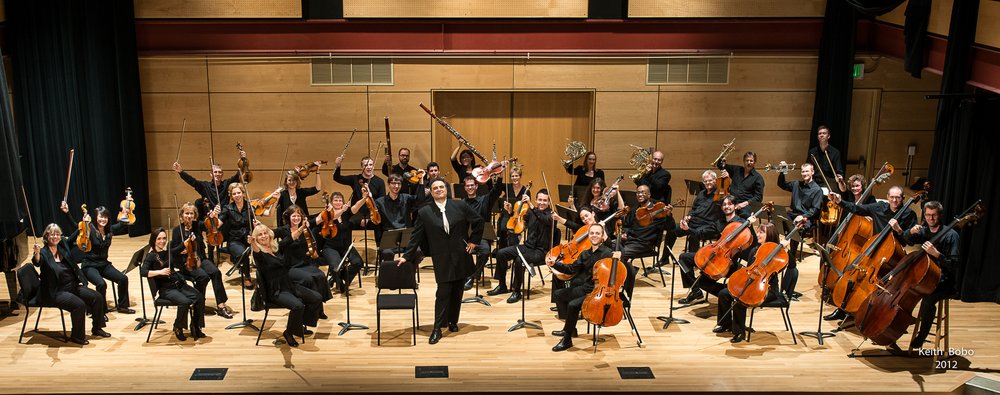
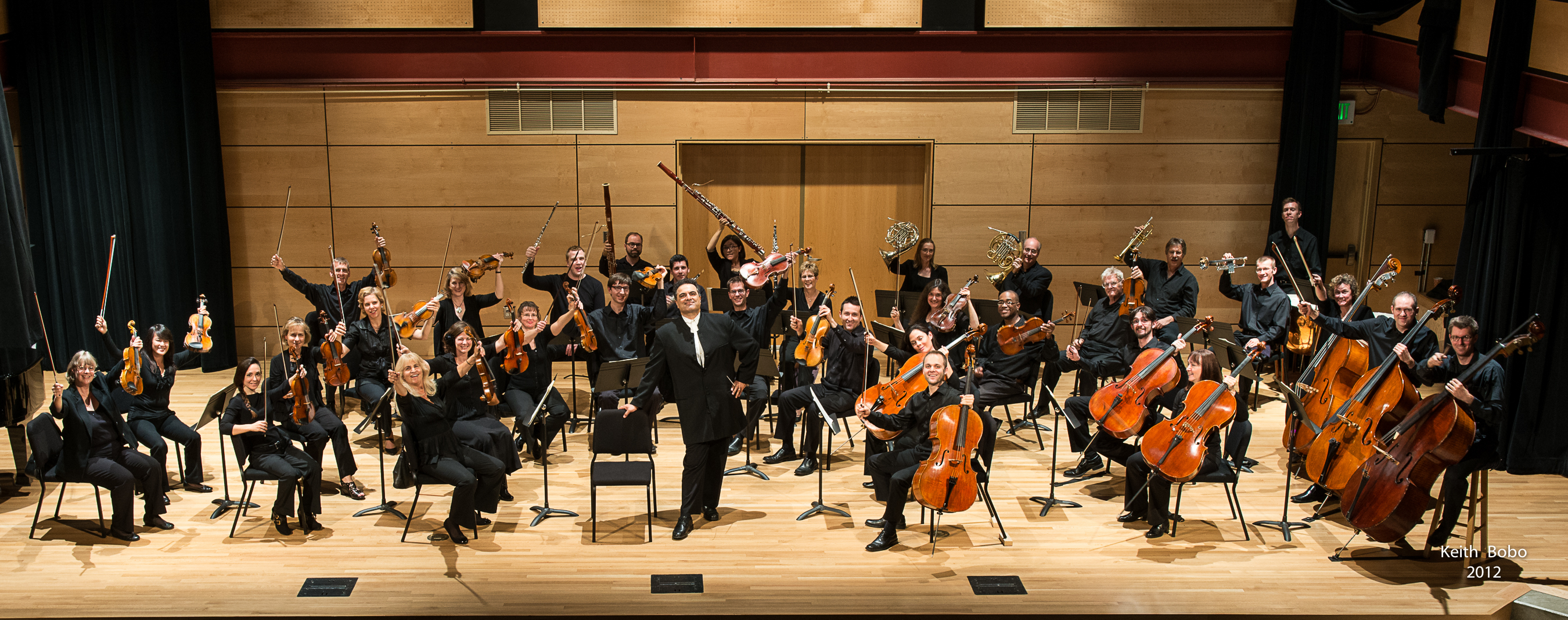
The Boulder Chamber Orchestra (BCO) and their conductor, Bahman Saless, wrap up their 20th-anniversary 2024–25 season with a “Grand Finale” in Macky Auditorium Saturday (7:30 p.m. May 24; details below).

Fresh back from a performance at Carnegie Hall’s Zankel Hall venue, the BCO will be joined by pianist Adam Zukiewicz and soprano Sylvia Schranz in a varied program, selected to celebrate the group’s anniversary. The program will be anchored by Saint-Saëns’ Piano Concerto No. 5 (“Egyptian’), which Zukewicz played a week ago in New York.
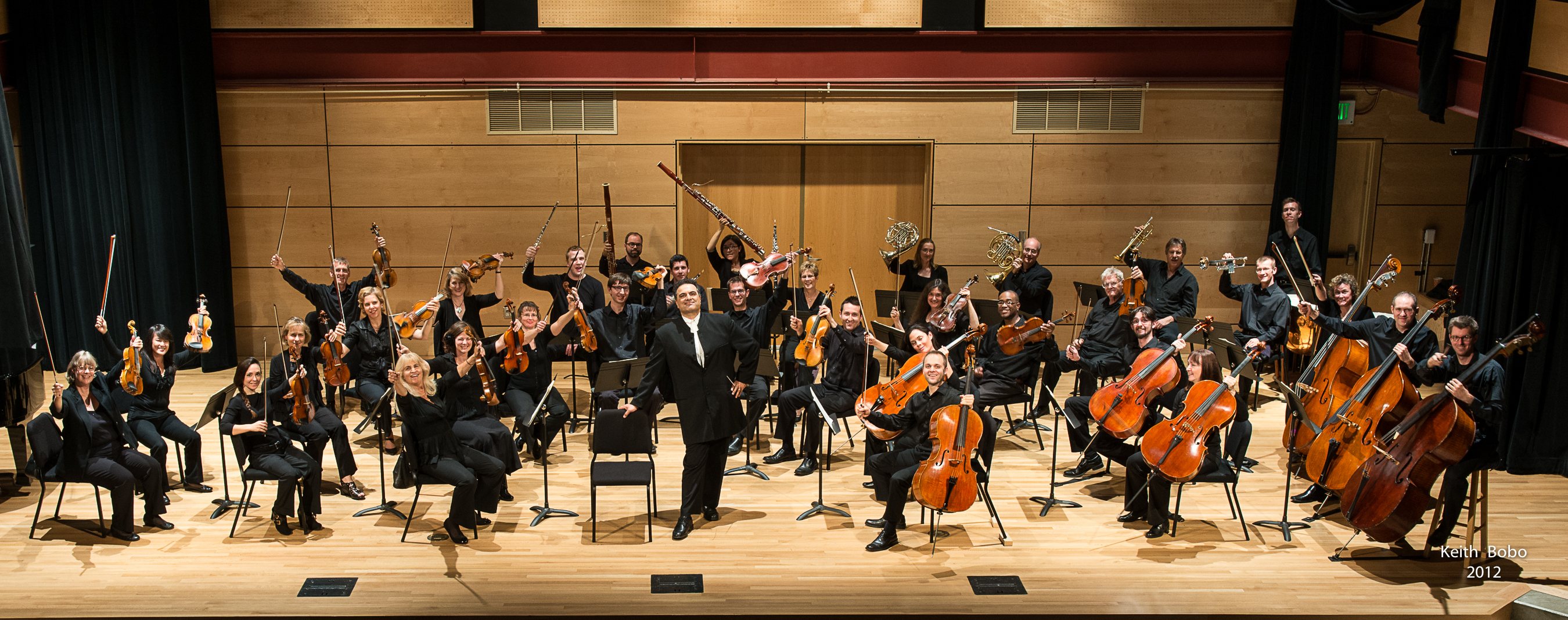
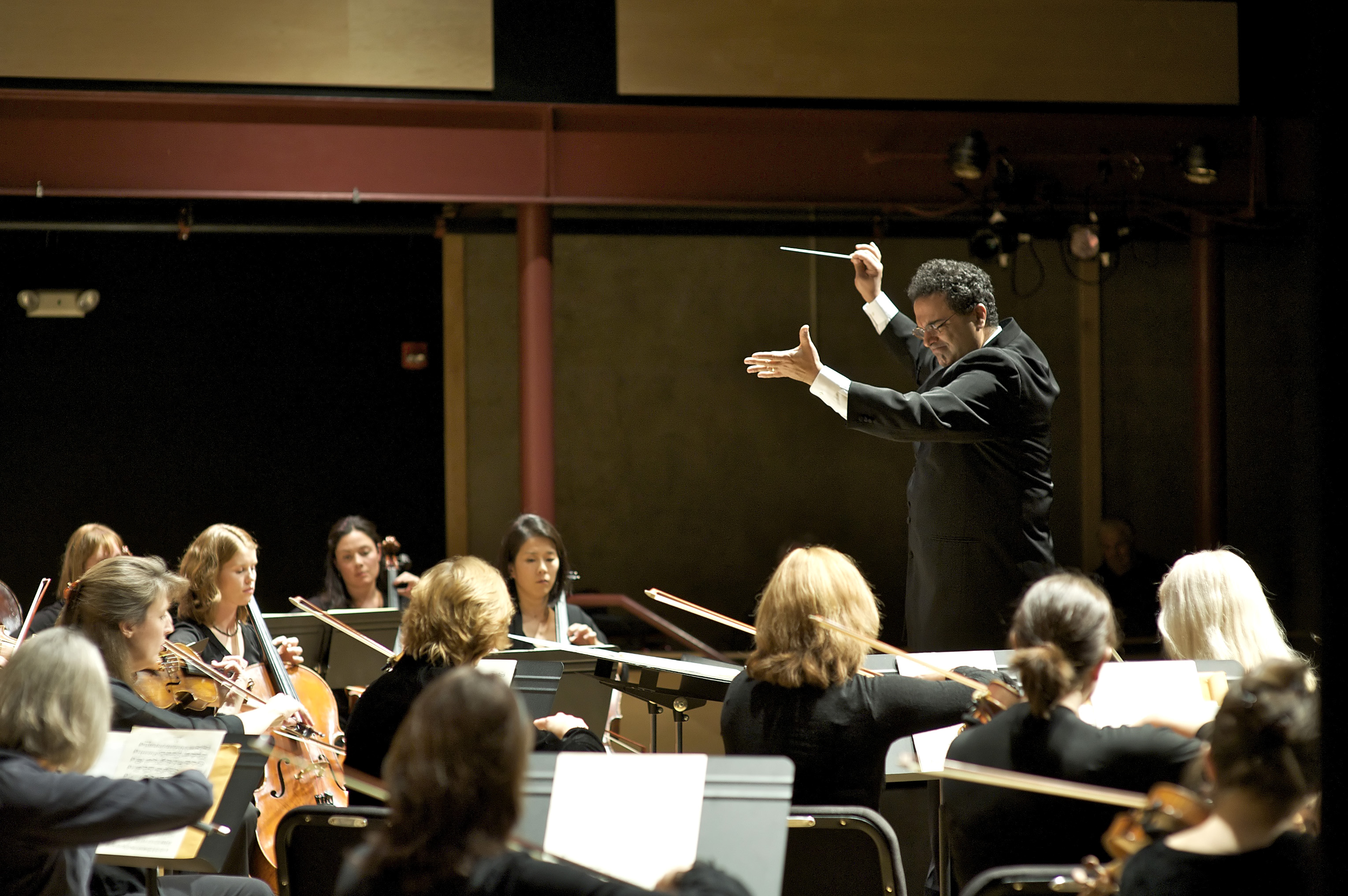
Boulder Chamber Orchestra and conductor Bahman Saless

A review of the New York concert said that BCO “could hold its own with any orchestra, anywhere,” and praised Zukiewicz’s “lively rendering” of the Concerto. Other works on Saturday’s program reflect the BCO’s eclectic programming over the past 20 years, ranging from Strauss waltzes to dances by Dvořák and Shostakovich, and a patriotic romp based on the National Anthem by the largely forgotten American composer Dudley Buck.

Saint-Saëns’ “Egyptian” Piano Concerto is a suitable choice for the BCO’s celebration, as it was written as a celebration of the composer’s own 50th-anniversary in 1896. Saint-Saëns wrote the concerto in Egypt, where he often spent his winter vacations. It features various exotic elements, particularly the slow movement that includes a song the composer heard sung by Nile boatmen.
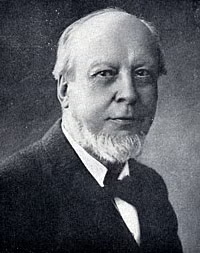
Dudley Buck

Trained as a pianist in Germany, Buck was a classmate of Edvard Grieg, Leoš Janáček and Arthur Sullivan. His Festival Overture on The American National Air began life as a set of Concert Variations on “The Star Spangled Banner” for solo organ. Though largely forgotten today, Buck was widely known in the late 19th century as a composer, organist and composer, and as the author of Buck’s New and Complete Dictionary of Musical Terms.

The Strauss waltzes recall the years that the BCO performed concerts during the Holidays that included music familiar from the popular Vienna Philharmonic New Year’s concert. On Saturday, these works will be the Overture to Die Fledermaus, the Emperor Waltz and Frühlingstimme (Voices of Spring) by Johann Strauss II. The program concludes with two Slavonic Dances by Dvořák (see full program below).

# # # # # 

“Grand Finale”
Boulder Chamber Orchestra, Bahman Saless, conductor
With Adam Zukiewicz, piano, and Sylvia Schranz, soprano

  • Dudley Buck: Festival Overture on the American National Air
  • Saint-Saëns: Piano Concerto No. 5 in F major (“Egyptian”)
  • Johann Strauss II: Overture to Die Fledermaus
  • Khachaturian: Waltz from Masquerade
  • Strauss: Emperor Waltz
  • Shostakovich: Waltz No. 2 from Suite for Jazz Orchestra
  • Strauss: Frühlingstimme (Voices of spring)
  • Dvořák: Slavonic Dances op. 72 no. 10 and op. 46 no. 8

7:30 p.m. Saturday, May 24, Macky Auditorium

TICKETS

# # # # #

Boulder’s ever adventurous Ars Nova Singers will present the last of their 2024–25 season concerts at the end of the month, with performances of significant a cappella works from the 20th century (Friday, May 30 in Longmont, Saturday, May 31 in Denver, and Sunday June 1 in Boulder; see times and concert details below).

Titled “Time/Eternity,” the program concludes a season characterized by programs that have embraced contrasts: “Here/There,” “Light/Shadow,” “Lost/Found” and “Science/Fantasy.” In each case, Ars Nova’s director Tom Morgan has found a creative and fun way to realize the two conflicting concepts in music, from pieces that were literally lost and and later rediscovered for “Lost/Found,” to a Victorian-era steampunk-inspired program for “Science/Fantasy.”
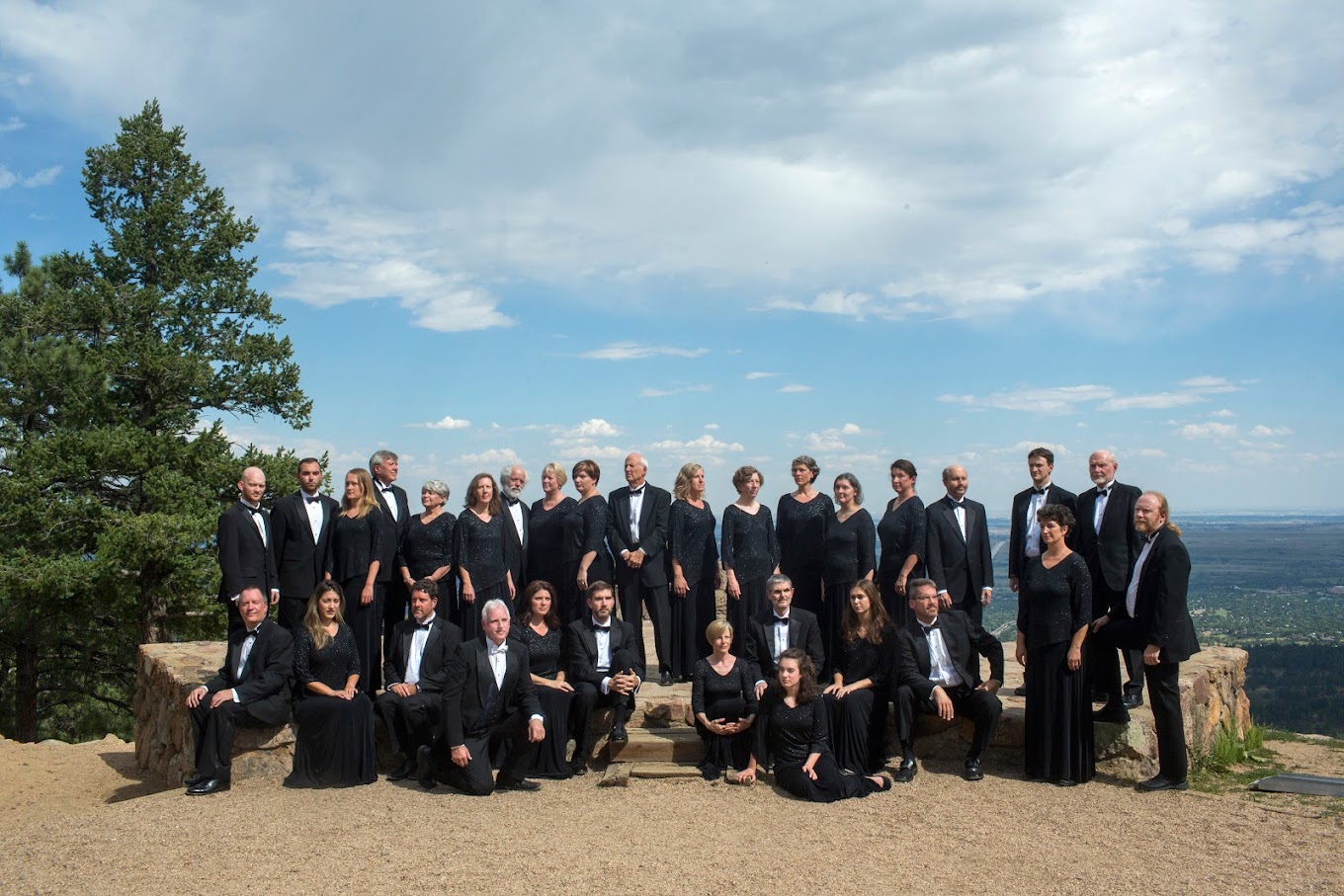
Ars Nova Singers with conductor Tom Morgan (kneeling, fourth from left)

For the current program, “Time/Eternity,” the program features two contemporary works modeled on church music dating back to at least the Renaissance, thus representing both eternity and modern time in each work. The first of these is the Mass for Double Chorus by Swiss composer Frank Martin. Written in 1922 and 1926, the Mass is a setting of the traditional five movements of the ordinary of the liturgical mass—that is, the texts that are sung at nearly every mass and not subject to variation across liturgical seasons.
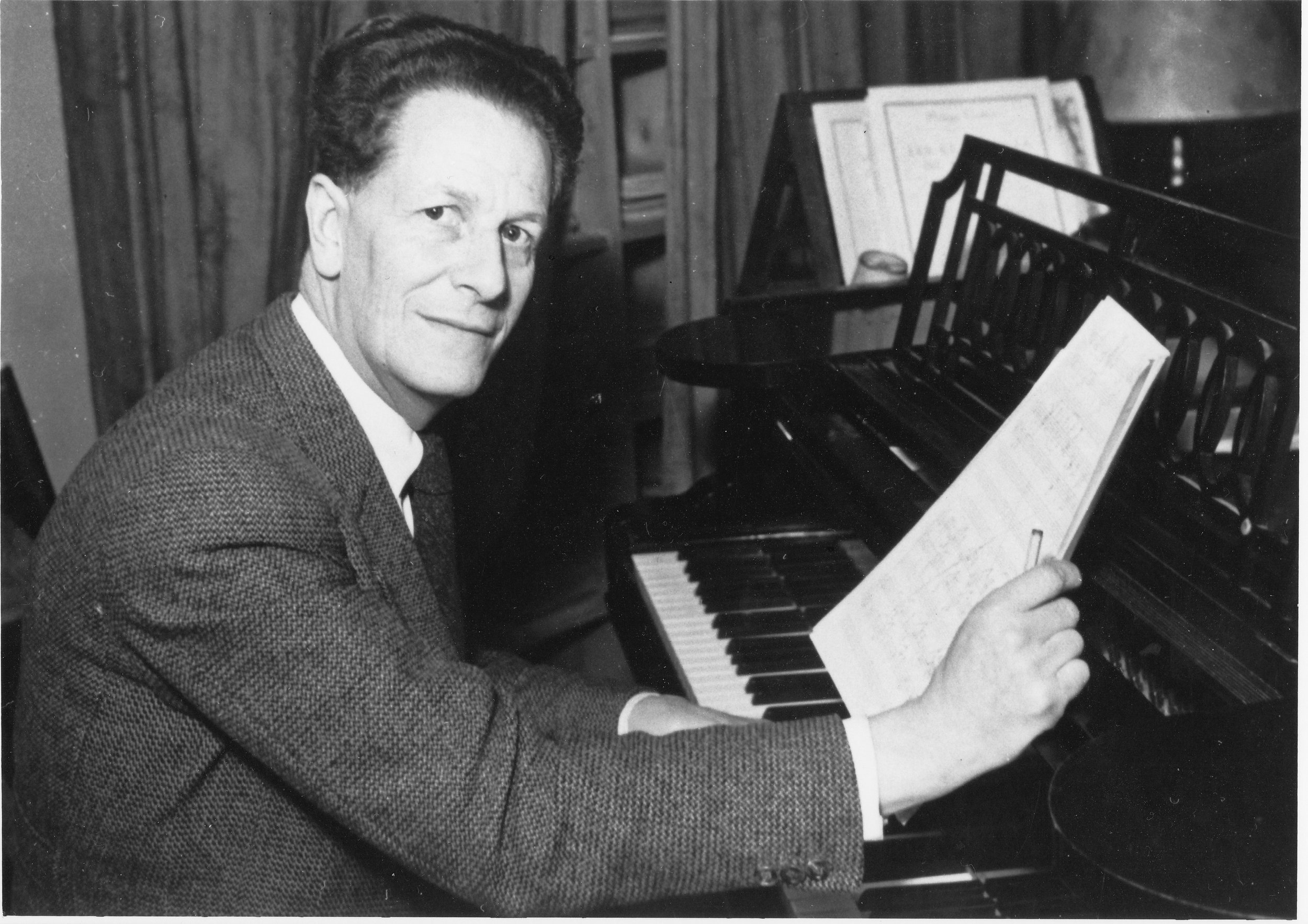
Composer Frank Martin

The Mass combines techniques typical of Renaissance mass settings, such as the use of a double chorus, fugal passages and imitative techniques across the choruses, together with modern stylistic elements that Martin was exploring. After he completed the Mass, Martin put the score away, considering it an early attempt at composition. He later consented to a performance in the 1960s, and today it is considered one of the most significant choral works of the 20th century.

The English composer Herbert Howells’ Requiem, written in 1932, is likewise based on traditional liturgical texts, in this case combined with other sacred texts from the Psalms and other sources. Although written for a single a cappella chorus, the Requiem sometimes divides the full chorus into two separate choirs. While using texts with a long liturgical history, the Requiem clearly has a musical style from the mid-20th century, using polytonality and chord clusters.

John Bawden, an active choral director and author of A Directory of Choral Music, wrote that “Howells’ music is much more complex than other choral music of the period. . . Long, unfolding melodies are seamlessly woven into the overall textures; the harmonic language is modal, chromatic, often dissonant and deliberately ambiguous. The overall style is free-flowing, impassioned and impressionistic, all of which gives Howells’ music a distinctive visionary quality.”

# # # # #

“Time/Eternity”
Ars Nova Singers, Tom Morgan, conductor

  • Frank Martin: Mass for Double Choir
  • Herbert Howells: Requiem

7:30 p.m. Friday, May 30
United Church of Christ, Longmont

7:30 p.m. Saturday, May 31
St. Paul Lutheran Church, Denver, and Livestream

7:30 p.m. Sunday, June 1
Mountain View United Methodist, Boulder

In-person and livestream TICKETS
GRACE NOTES: Chamber piano with strings, bassoons and student soloists

Piano Quartet at the Academy, Bassoon Quartet with Cantabile, BCO with competition winners

By Peter Alexander May 7 at 4:40 p.m.

The Boulder Piano Quartet—pianist David Korevaar with violinist Igor Pikayzen, violist Matthew Dane and cellist Thomas Heinrich—will present a free concert in Chapel Hall at the Academy University Hill Friday (7 p.m. May 9; details below).

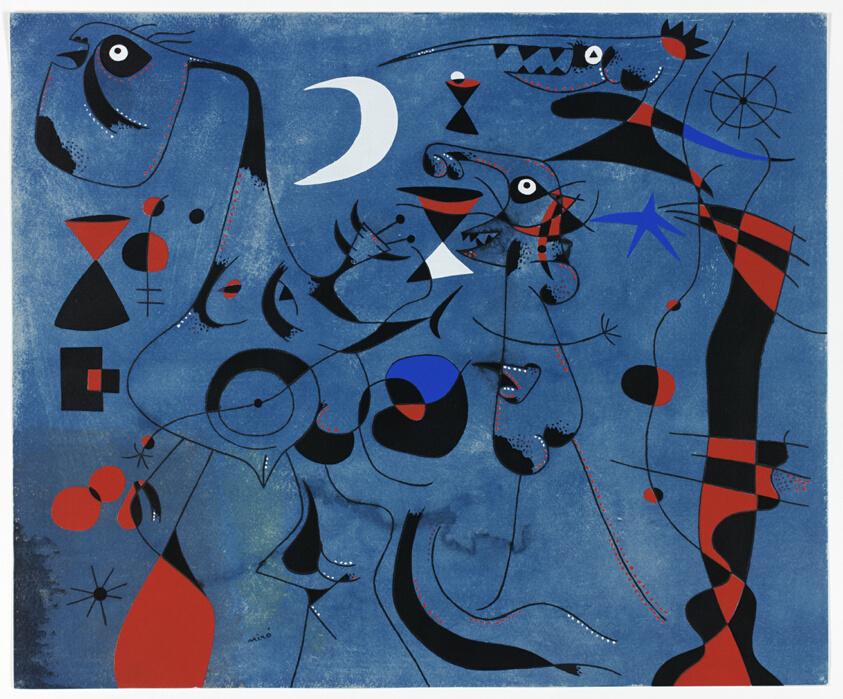
The central work on the program is the five-movement King of the Sun by Stephen Hartke, who is chair of composition at the Oberlin Conservatory. Written for the Los Angeles Piano Quartet, The King of the Sun was inspired by a series of five paintings by the Spanish painter Joan Miró. 

Miró: Characters in the night guided by the phosphorescent tracks of snails, Art Institute of Chicago

The five major movements of Hartke’s score are titled after the titles of the paintings: “Personages in the night guided by the phosphorescent tracks of snails,” “Dutch interior,” “Dancer listening to the organ in a gothic cathedral,” “The flames of the sun make the desert flower hysterical,” and “Personages and birds rejoicing at the arrival of night.” The third and fourth movements are  separated by a brief “Interlude,” leading Hartke to describe the piece as comprising “five and a half” movements. 

The title of the work, The King of the Sun, is a mistranslation of a 14th-century canon that is quoted in the second and fourth movements of Hartke’s score. The actual title of the canon is Le ray au soleil, which means the sun’s ray. The change of one letter—Le rey instead of Le ray—changes “The sun’s ray” into “The king of the sun.”

The program opens with Phantasy for Piano Quartet, written in 1910 by English composer Frank Bridge. It was commissioned by Walter Wilson Cobbett, who worked to promote the composition of British chamber pieces in the style of Fantasy, or Phantasy, a type of work that had flourished in Elizabethan times. Bridge was one of 11 British composers Cobbett commissioned to write a phantasy in 1910.

The final piece on the program is the Piano Quartet in E-flat major of Robert Schumann. It was composed in the summer of 1842, which became known as Schumann’s “year of chamber music.” He had mostly written piano music until 1840, a year in which he wrote 120 songs. The following year he wrote two symphonies, and then in 1842 he completed three string quartets, a piano trio, a piano quintet, and the Piano Quartet.

# # # # #

Boulder Piano Quartet
Igor Pikayzen, violin; Matthew Dane, viola; Thomas Heinrich, cello; and David Korevaar, piano

  • Frank Bridge: Phantasy for Piano Quartet
  • Stephen Hartke: The King of the Sun
  • Schumann: Piano Quartet in E-flat major, op. 47

7 p.m. Friday, May 9
Chapel Hall, The Academy University Hill, Boulder

Free

# # # # #

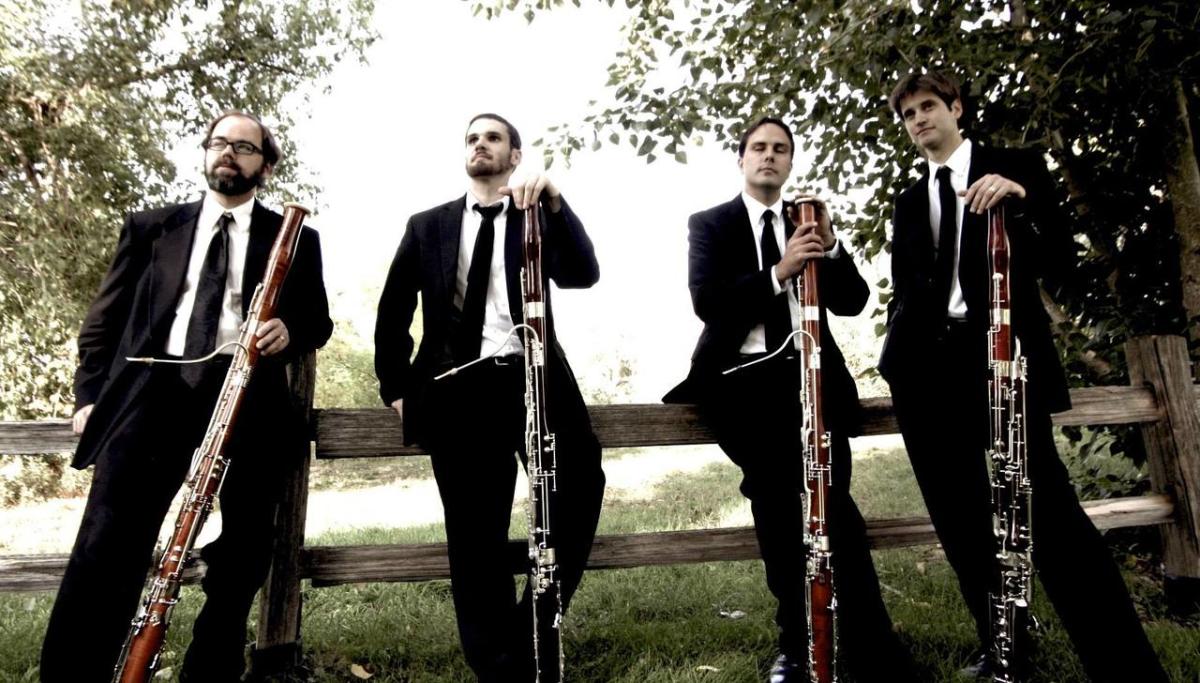
Quartets of all bassoons are a musical rarity—except in Boulder.

The Boulder Bassoon Quartet will present an unusual program of music for bassoon and chorus on a concert shared with Boulder’s Cantabile Singers, directed by Brian Stone, Friday and Sunday at the First Congregational Church (May 9 and 11; details below).

Boulder Bassoon Quartet

The program will be repeated at 3 p.m. Sunday, June 1, at the Boulder Bandshell

A centerpiece of the program will be the newly commissioned “I Shall Raise My Lantern” by Greg Simon. That work for chorus and bassoon quartet will be paired with “Three Earth Songs” by Bill Douglas. Other works on the program are a capella works for chorus by Ralph Vaughan Williams, Benjamin Britten, Craig Hella Johnson and Shawn Kirchner. 

The Sunday performance will be available online by a free live stream.

# # # # #

“The Beauty Around Us”
Cantabile Singers, Brian Stone, director, with the Boulder Bassoon Quartet

  • Greg Simon: “I Shall Raise My Lantern”
  • Bill Douglas: “Three Earth Songs”
  • Works by Ralph Vaughan Williams, Benjamin Britten, Craig Hella Johnson and Shawn Kirchner

7:30 p.m. Friday, May 9
3 p.m. Sunday, May 11
First Congregational Church, Boulder

3 p.m. Sunday, June 1, Boulder Band Shell

Tickets HERE

# # # # #

The Boulder Chamber Orchestra (BCO) will present the winners of the 2025 Colorado State Music Teachers Association (CSMTA) Concerto Competition as soloists on a concert program Saturday (8 p.m. May 10; details below).

The winners in four categories—Piano Elementary, Piano Junior, Piano Senior, and Strings/Harp—will each play the concerto movement that was required for the competition, with the orchestra (see the concert program below). BCO music director Bahman Saless will conduct.

Boulder Chamber Orchestra with conductor Bahman Saless

An annual event, the CSMTA Concerto Competition has three piano categories that are held every year: elementary, junior and senior. There are vocal and instrumental categories in alternating years: strings/harp and voice in odd-numbered years, and winds/percussion in even-numbered years. The competition is for pre-college students up to age 19.

This year’s competition was held in March, and had violin, cello and harp contests in the strings/harp category. Every instrument has one concerto movement specified as its competition repertoire. The judges for the 2025 competition were Saless; Mary Beth Rhodes-Woodruff, artistic director of the Santa Barbara (Calif.) Strings; and Kate Boyd, professor of piano at Butler University.

The winners who will appear with the BCO are:
—Piano elementary: Natalie Ouyang
—Piano, junior: Lucy (Yuze) Chen
—Piano, senior: Bobby Yuan
—Strings/Harp: Sadie Rhodes Han (violin)

This is the second year that the BCO has presented the CSMTA Concerto Competition winners as concert soloists.

# # # # #

CSMTA Concerto Competition Winners’ Concert
Boulder Chamber Orchestra, Bahman Saless, conductor

  • Haydn: Keyboard Concerto in C major, Hob. XVIII/5, I. Allegro moderato
    -Natalie Ouyang, piano
  • Mozart: Piano Concerto No. 21 in C major; K467, I. Allegro maestoso
    -Lucy (Yuze) Chen, piano
  • Schumann: Piano Concerto in A minor, op 54, I. Allegro affettuoso
    -Bobby Yuan, piano
  • Saint-Saëns: Introduction et Rondo Capriccioso
    -Sadie Rhodes Han, violin

8 p.m. Saturday, May 10, Boulder Adventist Church

TICKETS

Boulder Chamber Orchestra features “Boulder Celebrities”

Violinist Ed Dusinberre and violist Richard O’Neill will play Mozart

By Peter Alexander Feb. 27 at 5:15 p.m.

The Boulder Chamber Orchestra (BCO) traces the history of classical music on their next concert (7:30 p.m. Saturday, March 1; details below), with a concerto grosso from the Baroque era, music from the heart of the classical style, and a symphony pointing the way to the early Romantic era.

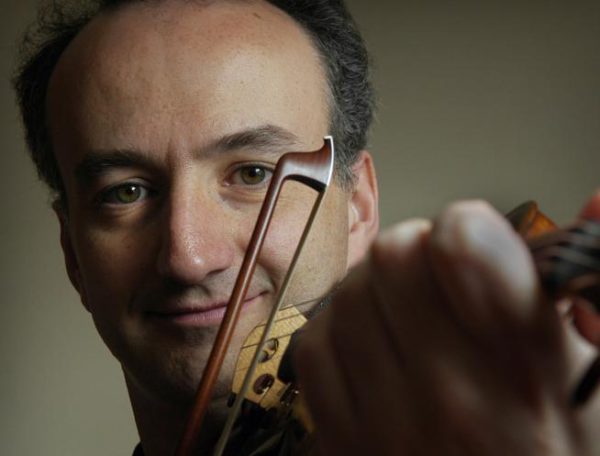
The concert under conductor Bahman Saless will feature violinist Edward Dusinberre and violist Richard O’Neill from the Takács Quartet playing Mozart’s exquisite Sinfonia Concertante for violin and viola with orchestra. Two of the superstars of the classical music world, Dusinberre and O’Neill are hailed in the concert’s title as “Boulder Celebrities.”

Edward Dusinberre

Works framing the Mozart are the Concerto Grosso in F major attributed to Handel, and Schubert’s Symphony No. 5 in B-flat major. All three are bright and cheerful works, giving the entire concert an uplifting spirit.

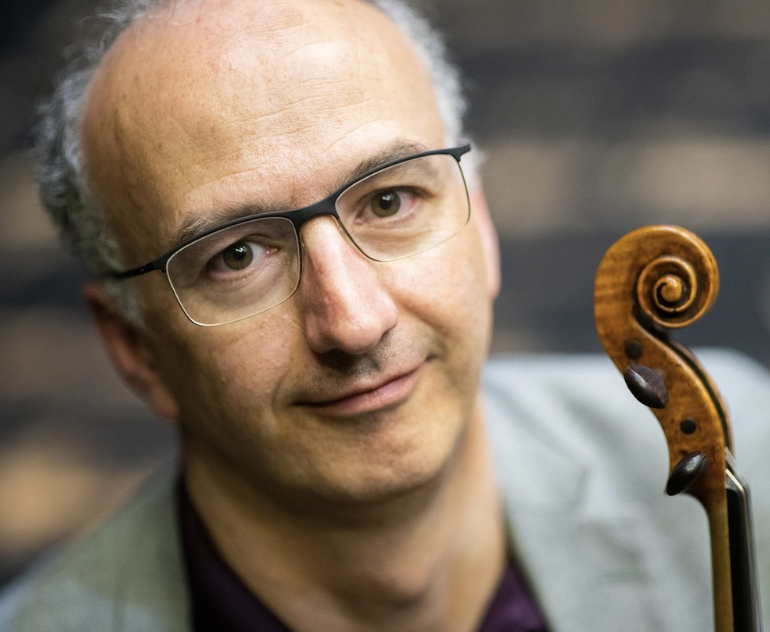
With its two soloists, the Mozart stands as the centerpiece of the program. Dusinberre and O’Neill know each other well, having played together in the Takács since the latter joined the group five years ago. In addition to their work in the quartet, they both have concert and recording careers as soloists and both have won a classical music Grammy. 

Mozart’s Sinfonia Concertante is one of the composer’s most loved pieces, and one that O’Neill has played many times. “For some violists it’s the reason they play the viola,” he says. “It’s such an amazing work, and it has been a lifetime dream for me, visiting it through different stages of my life. (There is) the joy of playing it over the years with different orchestras and different violinists, each having their own distinct views on the piece.”

He says he learns from every violinist he plays it with, but this is his first time with Dusinberre. And it’s a special experience playing with someone he knows so well from their work together in the Takács. 

“Part of the magic of being in a string quartet is that you spend so much time with your colleagues, and you get to know them under many different circumstances,” O’Neill says. “I’ve played (the Mozart) with brilliant soloists, but this time with Ed we’ve been able to dig into the more psychological aspects of the music, because we already know each other’s playing pretty well.”

Richard O’Neill

In other words, O’Neill and Dusinberre were able to skip past the early stages of getting to know a musical partner and get down to details right away. The quartet just returned to Boulder from a tour, but they were able to rehearse Mozart together on the road, O’Neill says. Now, “I’m really looking forward to working with the orchestra and Bahman (Saless),” he says.

One thing he urges the audience to tune into with the Sinfonia Concertante is how the two solo parts relate to one another. “Mozart pairs the violin and viola like they’re operatic characters,” he explains. “It’s like a conversation.

“The person that talks first often frames the way the conversation will go. In the first movement,  the violin says, then the viola says, and then the violin says and the viola says. There’s a lot of playful discussion, and then in the recapitulation—the viola says it first!”

The concerto grosso was a form common in the Baroque period, featuring a small group of soloists with orchestra. The Concerto Grosso in F features two oboes with a string orchestra. The soloists will be guest artist Ian Wisekal and BCO member Sophie Maeda. 

The Concerto is “attributed to Handel” because publishers of the time often printed and sold works that had been pirated, or changed the name of the composer, making authenticity uncertain. In the case of this concerto—which is certainly an authentic representative of the Baroque style—it has appeared under Handel’s name and as an anonymous composition.

Schubert wrote his Fifth Symphony in 1816, when he was 19 years old. It is the most classical of Schubert’s symphonies, having been written for a smaller orchestra, with one flute and no clarinets, trumpets or timpani. Schubert was infatuated with Mozart’s music, and wrote in his diary ”O Mozart, immortal Mozart!”

At the time he was unemployed, hanging out with a group of young artists, poets and musicians. The first reading of the symphony was given by this circle of friends in a private apartment, with the first public performance occurring 13 years after Schubert’s death.

The music of the symphony is often described as “Mozartian” in its gracefulness and melodiousness. It conforms closely to the standard four-movement structure of the classical period, with a minuet movement in third place. At the same time, the harmonic palette suggests the Romantic style to come, particularly in Schubert’s works of the remaining 12 years of his life.

But regarding the program’s title, the question of classical musicians being genuine “celebrities” might be debatable—but if it’s possible it would be in Boulder, where the Takács Quartet routinely sells out two performances of every program. 

Superstars or celebrities, Grammy winners both, Dusinberre and O’Neill are always worth hearing.

# # # # #

“Boulder Celebrities”
Boulder Chamber Orchestra, Bahman Saless, conductor
With Edward Dusinberre, violin, and Richard O’Neill, viola

  • Handel: Concerto Grosso in F major, op. 3 no. 4
  • Mozart: Sinfonia Concertante in E-flat major for violin and viola with orchestra, K364
  • Schubert: Symphony No. 5 in B-flat major, D485

7:30 p.m. Saturday, March 1
Boulder Adventist Church, 345 Mapleton Ave.

TICKETS

Boulder Chamber Orchestra changes Saturday’s program

Edvard Grieg’s Holberg Suite replaces Gerald Finzi Clarinet Concerto Jan. 25

By Peter Alexander Jan. 24 at 9:40 a.m.

The Boulder Chamber Orchestra has changed the planned program for their concert tomorrow (7:30 p.m. Saturday, Jan. 25).

The program as originally announced included the Gerald Finzi Clarinet Concerto performed by the orchestra’s principal clarinet player, Kellan Toohey. However, the orchestra has just announced that the Concerto has beed dropped from the program and replaced by the Holberg Suite by Edvard Grieg. The announcement states that “Kellan Toohey will not be performing on Saturday due to illness.”

# # # # #

“Strings Sensational”
Boulder Chamber Orchestra strings, Bahman Saless, conductor
With Kellan Toohey, clarinet

  • Grieg: Holberg Suite, op. 40
  • Dag Wirén: Serenade for Strings
  • Dvořák: Serenade for Strings

7:30 p.m. Saturday, Jan. 25
Boulder Adventist Church, 345 Mapleton Ave.

TICKETS

CORRECTION: The original post stated that no reason had been given for the change of program. After that was posted, a delayed email arrived in my inbox noting that Toohey would not appear “due to illness.” We apologize for the inaccurate earlier notice on this site.

Boulder Chamber Orchestra presents string serenades

Clarinetist Kellan Toohey plays Concerto by Gerald Finzi

By Peter Alexander Jan. 21 at 11:12 p.m.

The Boulder Chamber Orchestra will present a concert Saturday featuring their string section (7:30 p.m. Jan. 25; details below), playing one of the great masterworks for strings, Dvořák’s Serenade for Strings.

The concert, under the direction of Bahman Saless, will also feature clarinetist Kellan Toohey playing the Concerto for clarinet and strings by British composer Gerald Finzi. The program also includes the Serenade for Strings by 20th-century Swedish composer Dag Wirén. 

Kellan Toohey

Known mostly as a composer of songs and choral music, Finzi also wrote concertos for clarinet and cello, a Grand Fantasia and Toccata for piano and orchestra, and other instrumental pieces. 

The Clarinet Concerto was written in 1949 for the Three Choirs Festival located in turn in the English cities of Gloucester, Hereford and Worcester, with which Finzi had a long association. The concerto is in three movements, of which the Adagio second movement is the expressive core. The quick rondo finale incorporates an English folk song. Finzi himself conducted the premiere, performed in Hereford by the London Symphony strings and clarinetist Frederick Thurston.

Wirén studied at the Stockholm Conservatory 1926–31, and won a state award that allowed him to live and study in Paris for several years. He wrote a number of orchestral works, including five symphonies and other concert works. His music is generally accessible to audiences, mixing traditional elements with modernist and innovative impulses. 

His Serenade for Strings, composed just after his return to Sweden from Paris in 1937, is his most widely performed work. The composer wrote in his notes for the score, “The purpose of this little Serenade is simply to amuse and entertain, and if the listener, when the last note has faded, feels cheerful and happy, then I have reached my goal.”

Dvořák won the Austrian State Prize in music in 1875—the first of three times that he received that award and the support it offered young composers. It was those awards that gave Dvořák the freedom to purse his work as a composer. One of the judges of the competition was Brahms, who later became an important champion of Dvořák and introduced him to the German publisher N. Simrock. 

In the months after winning the award, Dvořák composed his Fifth Symphony, several pieces of chamber music, and the Serenade for Strings. The Serenade was completed in only 12 days in May, 1875, but not performed until December 1876. One of his most tuneful and cheerful works, the Serenade has remained popular since the first performances. Dvořák was proud enough of the work that he included it with his application for his third state award in 1877.

In addition to performing as the principal clarinetist of the BCO, Toohey also plays with the Fort Collins Symphony, the Wyoming Symphony and the Cheyenne Symphony. He holds a doctorate from CU Boulder and has recorded a CD of music for clarinet and piano by Colorado composers, Scenes from Home

# # # # #

“Strings Sensational”
Boulder Chamber Orchestra strings, Bahman Saless, conductor
With Kellan Toohey, clarinet

  • Dag Wirén: Serenade for Strings
  • Gerald Finzi: Concerto for Clarinet and string orchestra, op. 31
  • Dvořák: Serenade for Strings

7:30 p.m. Saturday, Jan. 25
Boulder Adventist Church, 345 Mapleton Ave.

TICKETS

GRACE NOTE: A Gift of Music

Boulder Chamber Orchestra presents word premiere concerto for guitar

By Peter Alexander Dec. 17 at 2:20 p.m.

The Boulder Chamber Orchestra (BCO) will present their annual Holiday “Gift of Music” featuring guitarist Nicolò Spera Saturday (7:30 p.m. Dec. 21) at the Boulder Adventist Church.

Nicolò Spera

Bahman Saless, artistic director of the BCO, will share conducting duties with Nadia Artman and Giacomo Susani. Spera will play the world premier of Susani’s Concerto for 10-string guitar and orchestra, titled Lungo il Po (Along the Po river), conducted by the composer.

The orchestra’s concertmaster, Annamaria Karacson, will be the featured soloist for the “Méditation” from Thaïs by Jules Massanet, with Saless conducting. He will also lead the orchestra in the program’s closing work, Dvořák’s Czech Suite. Nadia Artman will conduct the opening work on the program, the Prélude from Bizet’s Carmen.

Susani has an active career as a guitar soloist in Europe, and recently presented his Carnegie Hall debut in New York. He taught guitar at the Junior Department of the Royal Academy of Music in London 2019–23, and is currently artistic director of the Homenaje International Guitar Festival in Padua, Italy, and co-artistic director and teacher of the Residenze Erranti, an initiative that supports young artists by providing scholarships for masterclasses, workshops and other events in Milan and Padua.

Giacomo Susani

Susani has recorded four albums on the Stradivarius label. Performances this year included appearances in the UK, at the Paganini Guitar Festival and the Conservatorio G. Puccini in Gallarate, Italy. His Guitar Concerto Lungo di Po is one of several works he has written for guitar.

Lungo il Po is based on a book of the same title by Federica Pocaterra. It was commissioned by Spera, to whom it is dedicated. Susani believes that it is the first concerto written for the unusual 10-string guitar and orchestra. The music includes quoted fragments of the Lamento di Arianna by Claudio Monteverdi, one of the most famous laments of the early Baroque period. 

Dvořák wrote the Czech Suite in 1879 for the German publisher Fritz Simrock, who was the principal publisher for both Dvořák and Brahms. It comprises five movements, three of which are Czech folk dances: a polka, a soudedska—a type of slower dance in triple time—and a furiant—a fast and fiery dance that Dvořák used in several of his works.

A member of the CU College of Music faculty, Spera is known for playing both the six-string and 10-string guitars, as well as the Renaissance theorbo, a member of the lute family. He holds degrees from the Conservatory of Bolzano, Italy, and the Accademia Musical Chigiana in Siena, Italy, as well as as an artist diploma from the University of Denver and a doctorate from CU, Boulder. In addition to his teaching duties at CU, Spera appears frequently as a solo performer, both locally and internationally.

A native of Moscow, Russia, Artman has appeared as a guest conductor of the BCO in past seasons, and manages Artman Productions in Boulder.

# # # # #

“The Gift of Music”
Boulder Chamber Orchestra, Bahman Saless, conductor
With Nicolò Spera, guitar, and Annamaria Karacson, violin
Guest conductors Nadia Artman and Giacomo Susani

  • Bizet: Prélude to Carmen
  • Giacomo Susani: Concerto for 10-string guitar and orchestra, Lungo il Po (Along the Po river)
  • Jules Massanet: “Méditation” from Thaïs
  • Dvořák: Czech Suite, op. 39

7:30 p.m. Saturday, Dec. 21
Boulder Adventist Church, 345 Mapleton Ave., Boulder

TICKETS

GRACE NOTES: Curiosity entertains while the Baroque blooms

Boulder Symphony celebrates Día de los Muertos; BCO presents Vivaldi and Pergolesi

By Peter Alexander Oct. 29 at 9:40 p.m.

“The Creative Spirit,” the Fall Curiosity Concert of the Boulder Symphony, will be presented Saturday (3 p.m. Nov. 2) at Grace Commons.

The Boulder Symphony and director Devin Patrick Hughes will present two Curiosity Concerts as part of their 2024–25 season, one each in the fall and the spring. Curiosity Concerts are designed as interactive, educational experiences for family audiences. They typically use humorous characters, trivia and original stories to entertain as well as educate the audiences.

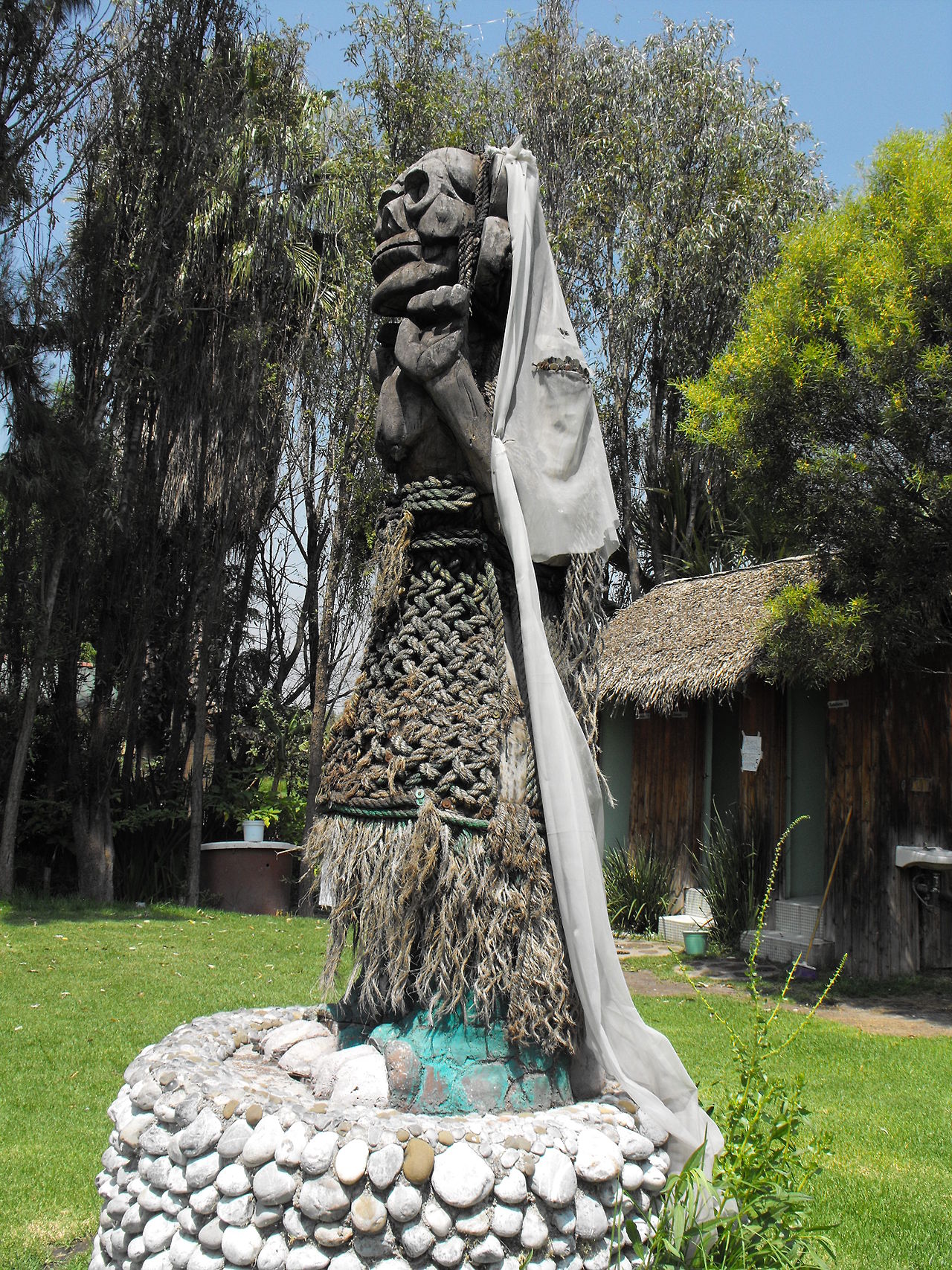
Statue of La Llorana at Xochimilco, Mexico. Photo by KatyaMSL.

The Fall Curiosity Concert, lasting 45 minutes, will celebrate La Día de los Muertos (Day of the Dead). Joining the Symphony for portions of the concert will be the Niwot High School Mariachi Ensemble and the Longmont Youth Symphony. 

The performance will tell the tale of a ghostly composer who reunites with a musical partner for the premiere of their final composition, only to discover that the piece was never finished. They turn to the audience for help completing the song before the ghostly composer vanishes again. 

The program will feature not only the imaginary composer’s new work but also familiar tunes including Radiohead’s “Creep,” Kate Bush’s “Running up the Hill” and “La Llorana” (The weeping woman), a Mexican folk song based on the legend of a woman weeping over the loss of her children, or her lover. The song has often been used for Día de los Muertos festivities.

The performance will also include music from the standard classical orchestra repertoire, including Beethoven’s Seventh Symphony and Arturo Márquez’s Dánzon No. 2.

# # # # #

Fall Curiosity Concert: The Creative Spirit
Boulder Symphony, Devin Patrick Hughes, conductor
With the Niwot High School Mariachi Ensemble and Longmont Youth Symphony

3 p.m. Saturday, Nov. 2, Grace Commons

TICKETS

# # # # #

The Boulder Chamber Orchestra (BCO) will present an all-Baroque program Saturday featuring violinist Zachary Carrettin, director of the Boulder Bach Festival playing concertos by Vivaldi, for violin solo and with other strings (7:30 p.m. Nov. 2 at the Boulder Adventist Church; details below). Other soloists for two of the concertos will be members of the BCO.

Also featured on the program are soprano Jennifer Ellis Kampani and mezzo-soprano Gabrielle Razafinjatovo performing the Stabat Mater of Giovanni Battista Pergolesi. The concert will be conducted by Bahman Saless, music director of the BCO.

Published as Op. 3, L’estro armonico is a set of 12 concertos by Vivaldi for stringed instruments. The set was published in Amsterdam in 1711, making it the first set of Vivaldi’s concertos to be printed. The concertos are organized in four sets of three concertos each, with each set containing first a concerto for four violins with strings; second for two violins, cello and strings; and third for solo violin and strings. 

Zachary Carrettin

The concertos were probably written for performance by students at the Ospedale della Pietà, the orphanage/music school where Vivaldi was employed as music teacher. Later the published edition was widely circulated in Europe and the concertos were performed as both church music and secular chamber pieces. At least six of the concertos were arranged in various settings by J.S. Bach.

The BCO performance will present two of the solo violin concertos with Carrettin as soloist, as well as one each for two violins and cello, and for four violins, with Carrettin joined by members of the orchestra as additional soloists. 

Pergolesi wrote his Stabat Mater in 1736, weeks before his untimely death at the age of only 26. The manuscript was preserved at the Benedictine Abbey of Monte Cassino in Italy, which was the site of brutal battles in World War II. After being nearly destroyed, the abbey was rebuilt after the war.

While many works attributed to Pergolesi were in fact written by others, due to the survival of the original manuscript the Stabat Mater is known to be his. The title literally means “The mother was standing.” The text is a 13th-century hymn to the Virgin Mary, describing her suffering during the crucifixion of Jesus. The hymn has been set by many European composers from the 15th century to the current day.

# # # # #

L’estro armonico
Boulder Chamber Orchestra, Bahman Saless, conductor
With Zachary Carrettin, violin; Brune Macary, Annamaria Karacson, Kina Ono, and Ava Pacheco, violins; Joey Howe, cello; Jennifer Ellis Kampani, soprano; and Gabrielle Razafinjatovo, mezzo-soprano

  • Vivaldi: Four concertos from L’estro armonico (The harmonic inspiration)
    Concerto No. 9 in D major for violin, RV230
    —Concerto No. 11 in D minor two violins and cello, RV565
    —Concerto  No. 6 in A minor for violin, RV 356
    —Concerto No. 10 in B minor for 4 violins, RV580
  • Pergolesi: Stabat Mater

7:30 p.m. Saturday, Nov. 2, Boulder Adventist Church

TICKETS

New and familiar works from the Boulder Chamber Orchestra

BCO launches 20th anniversary season that will take them to Carnegie Hall

By Peter Alexander Oct. 1 at 2:50 p.m.

About 20 years ago, Bahman Saless was standing in a church basement, getting ready to conduct his first concert ever.

“We started with just an idea, and I had never conducted before. We only had two professional players (in the orchestra) and didn’t know who was going to come. It was a complete surprise—it was standing room only!”

Bahman Saless leading the Boulder Chamber Orchestra

That successful idea, which became the Boulder Chamber Orchestra (BCO), celebrates its 20th anniversary this year, starting with a concert at the Boulder Adventist Church Sunday (7:30 p.m. Oct. 6; details below) and culminating with with a concert at Carnegie Hall in New York May 18 (7:30 p.m.; details HERE).

To open the anniversary year, Saless decided to write a piece celebrating Colorado, titled Ode to the Rocky Mountains. Although he has rarely programmed his own music before, he had several years of experience writing and scoring film music in Hollywood before he started the BCO.  “I did a lot of (uncredited) trailers for Hollywood films at Universal Studios,” he says.

To start the season, “I thought what’s better than something that celebrates Colorado?” Saless says. “I wrote a little piece that’s based on the two Colorado state songs, ‘Where the Columbine Grow’ and ‘Rocky Mountain High.’ It has five episodes that represent our own experience every time we go to the mountains.”

In the space of about five and half minutes, its five episode are: “Entering the Boulder Valley off Highway 36, heading West to the Mountains,” “Resting by the Brook in the Meadow,” “Playful Wildlife Amidst the Columbine,” “The Grand Landscape is to Behold,” and “Homeward Bound.”

The remainder of the opening concert program is all Beethoven: The Violin Concerto, featuring Edward Dusinberre of the Takács Quartet as soloist, and the Seventh Symphony. The concerto was chosen because Dusinberre had played with the orchestra before, and he suggested Beethoven for this concert. “He did the Brahms Concerto with us last year, and he did Mozart the previous year, so he’s going through the concerti,” Saless says.

Violinist Edward Dusinberre

Saless is especially thrilled to perform the Beethoven Concerto with Dusinberre. “It’s one of these pieces that I am very picky about who I would perform it with,” he says. “I think it requires a certain amount of maturity, no matter how good technically someone is. To play it with Ed is like a dream come true!”

As for the Seventh Symphony, Saless selected it to go on the Carnegie Hall program and then decided to open the season with it as well. “I wanted to do something (in New York) that I thought we could do really well, and would fit the programming (for the opening concert),” he says. “I thought, what could we do that I would feel comfortable, because I connect to it. If I’m going to go to Carnegie Hall and my legs are going to be shaking of nervousness, I need something that I could literally do in my sleep. So I picked Seven.”

He also wants the players to be comfortable. “If you’re going to perform in Carnegie Hall, you want a piece that you’ve already done during that season,” he says. “(That means) a smaller amount of preparation (later), and everybody feels less nervous.”

He also thinks you have to be a little bit crazy to perform the Seventh Symphony, but, he says, “I qualify!” Often noted for its dance-like rhythms, the Seventh Symphony is almost obsessive in repeating those rhythms. Saless calls it “borderline personality disorders in music, obsessive and frenetic.”

The powerful slow movement alternates a series of chords that underlay a mournful melody in a minor key with a bright theme in major. “It’s like (Beethoven) is trying to write a piece that is not a funeral march but sounds like one,” Saless says. “It’s kind of conflicted, and I find that very interesting.”

Saless faced a logistical complication in planning the season. As much as possible, he wanted to have the same players during the season as in New York. But he had to schedule around rehearsals and performance of the Colorado Ballet, because so many of his best players were also in their orchestra. 

“I have to literally set up my schedule based on Colorado Ballet,” he says. BCO’s musicians, like all orchestras in Boulder, are free-lance players and Colorado Ballet pays very well. And every ballet production has numerous rehearsals and performances, all of which had to be scheduled around.

The New York appearance was made possible by a sponsor who was willing to underwrite both the orchestra and piano soloist Adam Żukiewicz playing in New York. Żukiewicz, who appeared on one of the BCO’s Mini-Chamber Concerts in January, and returns for another chamber concert Nov. 23 (7:30 p.m.; see the BCO season schedule HERE) will play a concerto with the orchestra in Carnegie Hall.

# # # # #

“Titanic Journey”
Boulder Chamber Orchestra, Bahman Saless, conductor
With Edward Dusinberre, violin

  • Bahman Saless: Ode to the Rocky Mountains
  • Beethoven: Concerto in D major for violin and orchestra
    —Symphony No. 7 in A major

7:30 p.m. Sunday, Oct. 6
Boulder Adventist Church, 345 Mapleton Ave.

TICKETS

Boulder Chamber Orchestra presents student soloists

Teachers Association Concerto competition winners will perform with BCO Saturday

By Peter Alexander May 8 at 3:30 p.m.

The Boulder Chamber Orchestra (BCO) will present winners of the 2024 Colorado Music Teachers Association (CMSTA) Concerto Competition on a concert program Saturday (May 11; details below).

Conductor Bahman Saless with the Boulder Chamber Orchestra

The winners in four categories—Piano Elementary, Piano Junior, Piano Senior, and Percussion and Winds—will each play the concerto movement that was required for the competition, with the orchestra (see the concert program below). The BCO music director, Bahman Saless, will conduct.

An annual event, the CMSTA Concerto Competition has three piano categories that are held every year. There are vocal and instrumental categories in alternating years: strings and voice in odd-numbered years, and winds/percussion (one category) in even-numbered years. The competition is for pre-college students up to age 19.

The 2024 competition was held in March, with videos submitted online. A panel of three judges—Saless; Hye-Jung Hong, piano faculty from Missouri State University; and Jason Shafer, principal clarinet of the Colorado Symphony—selected the winners.

The four categories and winners are:
—Piano, elementary: Aiden Chan
—Piano, junior: Bobby Yuan
—Piano, senior: Mercedes Maeda
—Percussion and winds: Alexander Zhao, bassoon

The BCO has set up an online auction to raise funds for the concert. The “Colorado Young Stars Award Fund” auction will run through Friday (May 10).

This year marks the first time that the BCO worked with the CSMTA to support the competition and present the winners. In a written communication, Saless commented, “We are looking forward to many years of continued collaboration and hopefully building community support and excitement in the Boulder area.”

# # # # #

CSMTA Concerto Competition Winners’ Concert
Boulder Chamber Orchestras, Bahman Saless, conductor

  • Haydn: Keyboard Concerto in D major, Hob.XVIII:11. Mvt. I, Vivace (Piano, Elementary)
    -Aiden Chan, piano
  • Mozart: Piano Concerto No. 12 in A major, K414, Mvt. I, Allegro (Piano, Junior)
    -Bobby Yuan, piano
  • Mendelssohn: Piano Concerto No. 1 in G minor, Mvt. I, Molto allegro con fuoco (arr. by Cord Garben (Piano, Senior)
    -Mercedes Maeda, piano
  • Vivaldi: Bassoon Concerto in D minor, RV481, Mvt. I, Allegro (Percussion and winds)
    -Alexander Zhao, bassoon

8 p.m. Saturday, May 11
Boulder Seventh Day Adventist Church

TICKETS

Boulder Chamber Orchestra strings present “Virtuosity!” with Richard O’Neill

Takács Quartet violist plays music by Telemann and Piazzolla Saturday

By Peter Alexander Feb. 29 at 11:07 p.m.

Violist Richard O’Neill has a wide-ranging background, both geographically and musically.

Richard O’Neill

For example, when he plays as soloist with the Boulder Chamber Orchestra Saturday (7:30 p.m. March 2; details below), he polished one of his pieces by playing with members of Germany’s distinguished early-music ensemble Musica Antiqua Köln, and the other he researched near the docks in Buenos Aires, Argentina.

The first would be the Concerto in G major for viola by the prolific Baroque composer Georg Philipp Telemann; the other is the “Grand Tango,” originally for cello, by Argentine bandoneon player and band leader Astor Piazzolla. Other works on the program, featuring the BCO strings under music director Bahman Saless, are Valse Triste by early 20th-century Czech composer Oskar Nedbal, and Beethoven’s Grosse Fuge (Great fugue), originally the finale of the composer’s String Quartet in B-flat, op. 130.

Two more different composers than Telemann and Piazzolla would be hard to imagine. And yet, O’Neill says, they are not incompatible. “They’re very contrasting, probably on polar opposite ends of the musical timeline,” O’Neill says. “But they share some commonalities—most of all the spirit of the dance.”

The Telemann is the first known true viola concerto, and it is a piece that O’Neill plays often. “I think it’s a gorgeous, amazing piece,” he says.

Georg Philipp Telemann

O’Neill recorded the concerto in 2008 when he was asked to make a recording with members of Musica Antiqua Köln. It was definitely a learning experience for O’Neill, giving him an opportunity to work with a Baroque-style bow that has much less tension on the bow hairs, and to improvise in Baroque music. 

The latter did not come naturally, he admits. “I remember them asking me, ‘play a cadenza, be free! Do whatever you like!’” O’Neill says. “I did something, and it was free for sure! I was stopped and it was like, ‘Who are you, Yo-Yo Ma?’ But it was all said with a smile.

“One thing I learned, things were a lot different when performers and composers were the same person. And it was amazing how prolific (Telemann) was. A lot of times you look at the score and it’s very bare, but in some ways it has everything you need—you just have to understand what you’re going to do.”

His approach to Piazzolla’s music was very different. O’Neill first heard Piazolla’s music when he was a 15-year-old student in Las Vegas, and the Cuarteto Latinoamericano played Piazzolla’s “Four, for Tango.” “I was completely blown away!” he says.

“I had never heard anything like this. It was so rhythmic, so fun, the instruments were doing all of these cool, weird effects like percussive effects and (playing) behind the bridge. I was, ‘what is going on there?’ I found the Kronos (Quartet) recording and listened to it all the time. I fell in love with Piazzolla.”

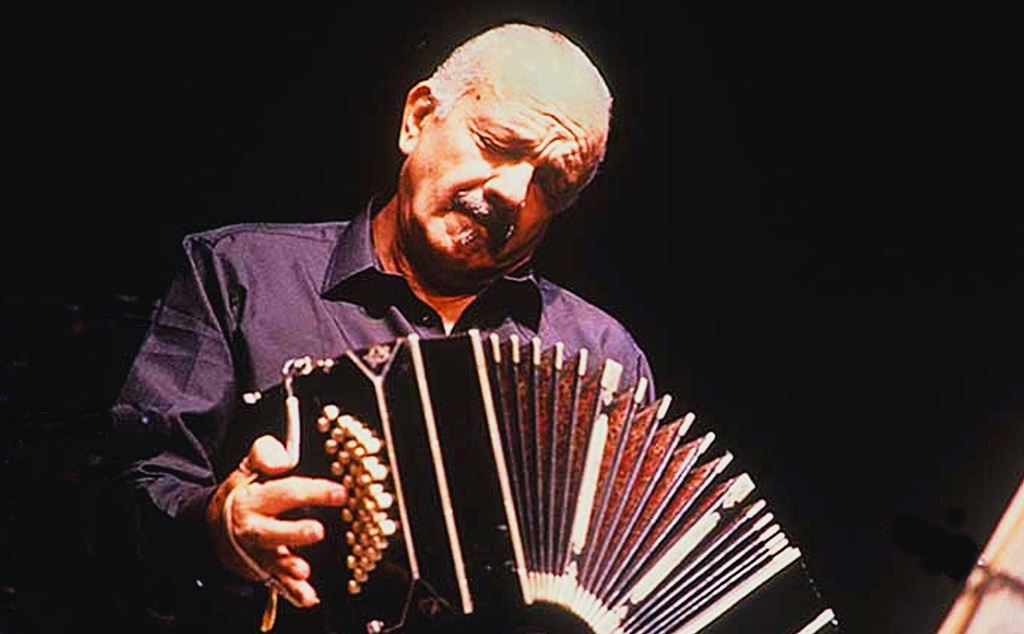
Astor Piazzolla

Later he had the chance to study Piazzolla’s musical origins up close. He was in Buenos Aires, and saw an opportunity to learn more. “I wanted to see what the tango was about,” he says.

“I went down to the docks (in Buenos Aires), where the Argentinian tango was originally from. I was shocked to find out it wasn’t the Parisian version of tango, which is Romantic and dignified. It was actually really rough.  I went to a few tango shows in cafes, but it was mainly the vibe of Buenos Aires that changed me.”

Piazzolla originally wrote the “Grand Tango” for the cellist Mstislav Rostropovich, but the viola arrangement that O’Neill plays fits the instrument very well. “Piazzolla wrote a lot of the (original cello) part very high,” he explains—meaning he can play it at the same pitch on the viola. 

O’Neill loves both pieces he is playing on BCO’s program, but it is the Piazzolla that gets him excited. “The music is just so incredible and evocative,” he says. “It’s almost like it’s so rhythmic that you can’t help being swept away by it.”

Nedbal’s Valse triste is from the ballet Pohadka o Honzov (known in English as the Tale of Simple Johnny). It was composed in 1902 for orchestra, but Nedbal later arranged the Valse for string quartet, in which form it has become especially popular. Trained as a violinist and a composition student of Dvořák, Nedbal was principal conductor of the Czech Philharmonic 1896–1906. 

When Beethoven wrote his String Quartet in B-flat in 1825, he provided an unusual finale: an extensive double fugue that takes up to 16 minutes in performance. That movement was criticized at the time for its complexity and for being “a confusion of Babel.” Since then, however, its standing has risen, to the point that Stravinsky famously said that it “will be contemporary forever.”

Beethoven’s publisher was afraid that such a difficult finale would hinder sales of the quartet, so Beethoven wrote a shorter movement that appeared with the String Quartet in B-flat. He then published the Grosse Fuge separately in 1827. Today it is hailed as one of the composers greatest compositions.

# # # # #

“Virtuosity!”
Boulder Chamber Orchestra, Bahman Saless, conductor
With Richard O’Neill, viola

  • Oskar Nedbal: Valse Triste
  • Telemann: Concerto in G for viola and orchestra
  • Astor Piazzolla: Grand Tango
  • Beethoven: Grosse Fugue, op. 133

7:30 p.m. Saturday, March 2
Seventh-Day Adventist Church, 345 Mapleton, Boulder

TICKETS