Boulder Chamber Orchestra strings present “Virtuosity!” with Richard O’Neill

Takács Quartet violist plays music by Telemann and Piazzolla Saturday

By Peter Alexander Feb. 29 at 11:07 p.m.

Violist Richard O’Neill has a wide-ranging background, both geographically and musically.

Richard O’Neill

For example, when he plays as soloist with the Boulder Chamber Orchestra Saturday (7:30 p.m. March 2; details below), he polished one of his pieces by playing with members of Germany’s distinguished early-music ensemble Musica Antiqua Köln, and the other he researched near the docks in Buenos Aires, Argentina.

The first would be the Concerto in G major for viola by the prolific Baroque composer Georg Philipp Telemann; the other is the “Grand Tango,” originally for cello, by Argentine bandoneon player and band leader Astor Piazzolla. Other works on the program, featuring the BCO strings under music director Bahman Saless, are Valse Triste by early 20th-century Czech composer Oskar Nedbal, and Beethoven’s Grosse Fuge (Great fugue), originally the finale of the composer’s String Quartet in B-flat, op. 130.

Two more different composers than Telemann and Piazzolla would be hard to imagine. And yet, O’Neill says, they are not incompatible. “They’re very contrasting, probably on polar opposite ends of the musical timeline,” O’Neill says. “But they share some commonalities—most of all the spirit of the dance.”

The Telemann is the first known true viola concerto, and it is a piece that O’Neill plays often. “I think it’s a gorgeous, amazing piece,” he says.

Georg Philipp Telemann

O’Neill recorded the concerto in 2008 when he was asked to make a recording with members of Musica Antiqua Köln. It was definitely a learning experience for O’Neill, giving him an opportunity to work with a Baroque-style bow that has much less tension on the bow hairs, and to improvise in Baroque music. 

The latter did not come naturally, he admits. “I remember them asking me, ‘play a cadenza, be free! Do whatever you like!’” O’Neill says. “I did something, and it was free for sure! I was stopped and it was like, ‘Who are you, Yo-Yo Ma?’ But it was all said with a smile.

“One thing I learned, things were a lot different when performers and composers were the same person. And it was amazing how prolific (Telemann) was. A lot of times you look at the score and it’s very bare, but in some ways it has everything you need—you just have to understand what you’re going to do.”

His approach to Piazzolla’s music was very different. O’Neill first heard Piazolla’s music when he was a 15-year-old student in Las Vegas, and the Cuarteto Latinoamericano played Piazzolla’s “Four, for Tango.” “I was completely blown away!” he says.

“I had never heard anything like this. It was so rhythmic, so fun, the instruments were doing all of these cool, weird effects like percussive effects and (playing) behind the bridge. I was, ‘what is going on there?’ I found the Kronos (Quartet) recording and listened to it all the time. I fell in love with Piazzolla.”
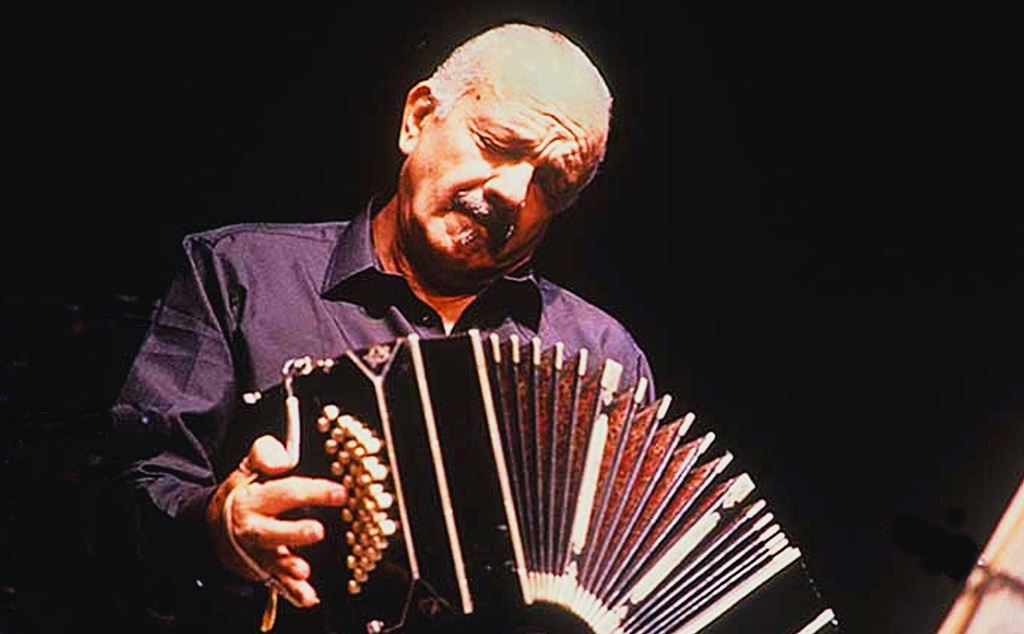
Astor Piazzolla

Later he had the chance to study Piazzolla’s musical origins up close. He was in Buenos Aires, and saw an opportunity to learn more. “I wanted to see what the tango was about,” he says.

“I went down to the docks (in Buenos Aires), where the Argentinian tango was originally from. I was shocked to find out it wasn’t the Parisian version of tango, which is Romantic and dignified. It was actually really rough.  I went to a few tango shows in cafes, but it was mainly the vibe of Buenos Aires that changed me.”

Piazzolla originally wrote the “Grand Tango” for the cellist Mstislav Rostropovich, but the viola arrangement that O’Neill plays fits the instrument very well. “Piazzolla wrote a lot of the (original cello) part very high,” he explains—meaning he can play it at the same pitch on the viola. 

O’Neill loves both pieces he is playing on BCO’s program, but it is the Piazzolla that gets him excited. “The music is just so incredible and evocative,” he says. “It’s almost like it’s so rhythmic that you can’t help being swept away by it.”

Nedbal’s Valse triste is from the ballet Pohadka o Honzov (known in English as the Tale of Simple Johnny). It was composed in 1902 for orchestra, but Nedbal later arranged the Valse for string quartet, in which form it has become especially popular. Trained as a violinist and a composition student of Dvořák, Nedbal was principal conductor of the Czech Philharmonic 1896–1906. 

When Beethoven wrote his String Quartet in B-flat in 1825, he provided an unusual finale: an extensive double fugue that takes up to 16 minutes in performance. That movement was criticized at the time for its complexity and for being “a confusion of Babel.” Since then, however, its standing has risen, to the point that Stravinsky famously said that it “will be contemporary forever.”

Beethoven’s publisher was afraid that such a difficult finale would hinder sales of the quartet, so Beethoven wrote a shorter movement that appeared with the String Quartet in B-flat. He then published the Grosse Fuge separately in 1827. Today it is hailed as one of the composers greatest compositions.

# # # # #

“Virtuosity!”
Boulder Chamber Orchestra, Bahman Saless, conductor
With Richard O’Neill, viola

  • Oskar Nedbal: Valse Triste
  • Telemann: Concerto in G for viola and orchestra
  • Astor Piazzolla: Grand Tango
  • Beethoven: Grosse Fugue, op. 133

7:30 p.m. Saturday, March 2
Seventh-Day Adventist Church, 345 Mapleton, Boulder
TICKETS

Bandoneon virtuoso will share program with Takács Quartet

Julien Labro will play with the Takács and perform solo, Sunday and Monday in Grusin Hall

By Peter Alexander April 13 at 9:30 p.m.

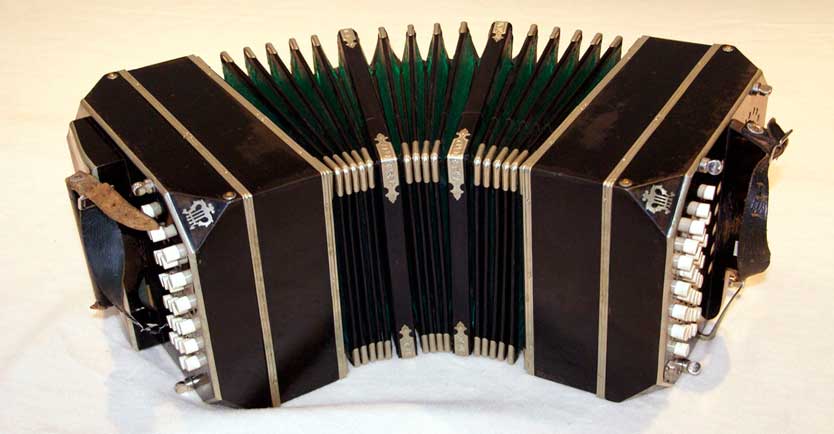
Bandoneon

Their next concert program takes the Takács Quartet outside the standard string quartet repertoire.

The performances Sunday and Monday (4 p.m. April 16, and 7:30 p.m. April 17; details below) will feature bandoneon virtuoso Julien Labro, who will play three works with the quartet and perform a solo set. The quartet will also play Ravel’s String Quartet in F major without Labro.

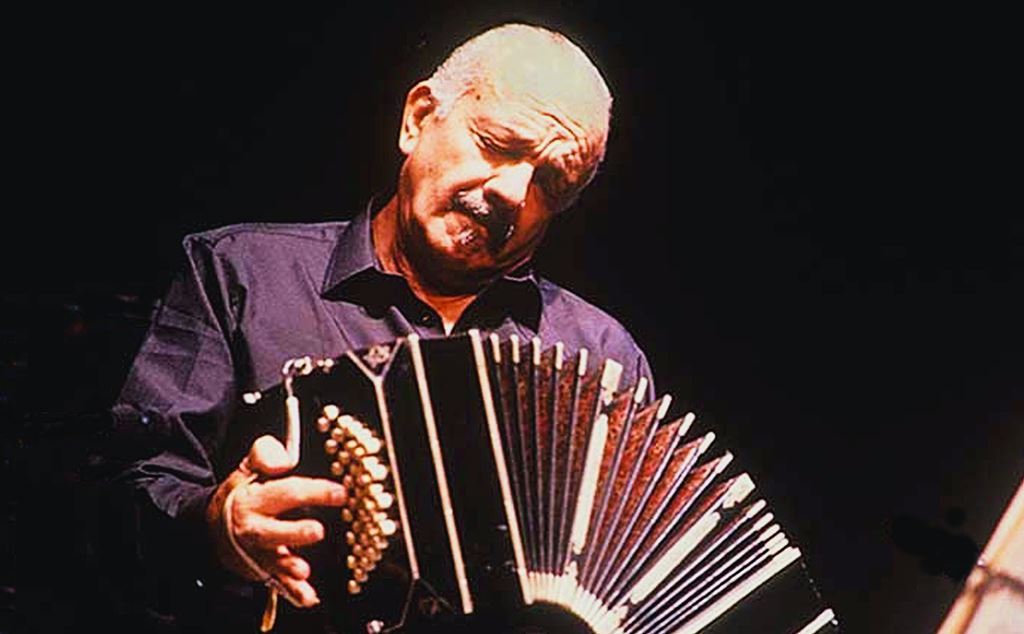
Astor Piazzolla with bandoneon

The bandoneon is a type of concertina, somewhat similar to the accordion. Like those more familiar instruments, sound is creating by opening and closing a bellows to force air across reeds. Pitch is controlled by buttons, similar to those of the button accordion. While it was invented in Germany in the 19th century, bandoneon is primarily associated today with the tango music of Argentina and Uruguay, and particularly the works of Astor Piazzolla.

Labro and the Takács were brought together by the musical consortium Music Accord, an American organization devoted to the commissioning and promotion of new chamber music. They have been playing together on tour for about a year. This is their first joint performance in Boulder.

The current program opens with Circles, a piece written for them by Bryce Dresner. A versatile and prolific composer of film music and a guitarist with the Rock Band the National, Dresner has collaborated with a wide variety of artists, from Kronos Quartet to Philip Glass to Taylor Swift.

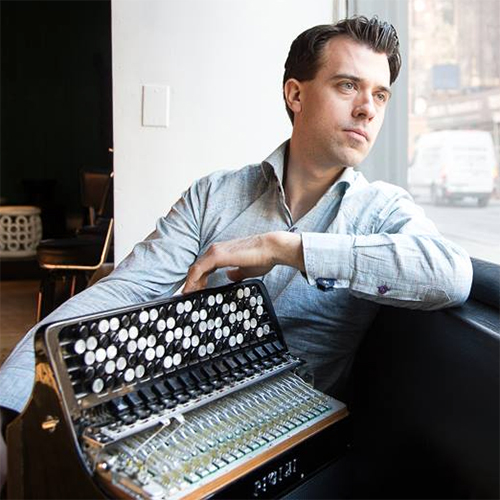
Julien Labro

Circles will be followed by Labro’s own Meditation #1, and then a set of pieces for bandoneon alone: a chorale tune by J.S. Bach, to illustrate the instrument’s background as a substitute for organ in small parishes in Germany; Minguito by Argentinian bandoneon player Dino Saluzzi; and Labro’s Astoración, a tribute to Piazzolla.

Astoración “involves myself playing with a tape that I made, with Piazzolla speaking about the tango and the bandoneon,” Labro explains. ”There is little bit of him playing, so we have this virtual duet between the tape and myself.”

After Labro’s solo set, the Takács returns for Ravel’s quartet, and the program ends with Clash by Brazilian-American composer Clarice Assad. A native of Brazil, Assad has been performing professionally since the age of seven. As a composer, she has been influenced by popular Brazilian culture and jazz, and studied composition with Michael Daugherty at the University of Michigan.

In her program notes, Assad describes Clash as an argument between two antagonists. “On one side we have a person who argues, throws violent insults, interrupts, and yells—and on the other side; another who either retaliates or retreats, appeals to guilt, pleads and indulges in oversentimentalism. These are constant themes in this work.”

The pieces for bandoneon and quartet—by Dresner, Labro and Assad—will be on a CD recording to be released by the Takács in the future. The recording is planned to include other works and piano improvisations by Assad as well as the collaborations with Labro.

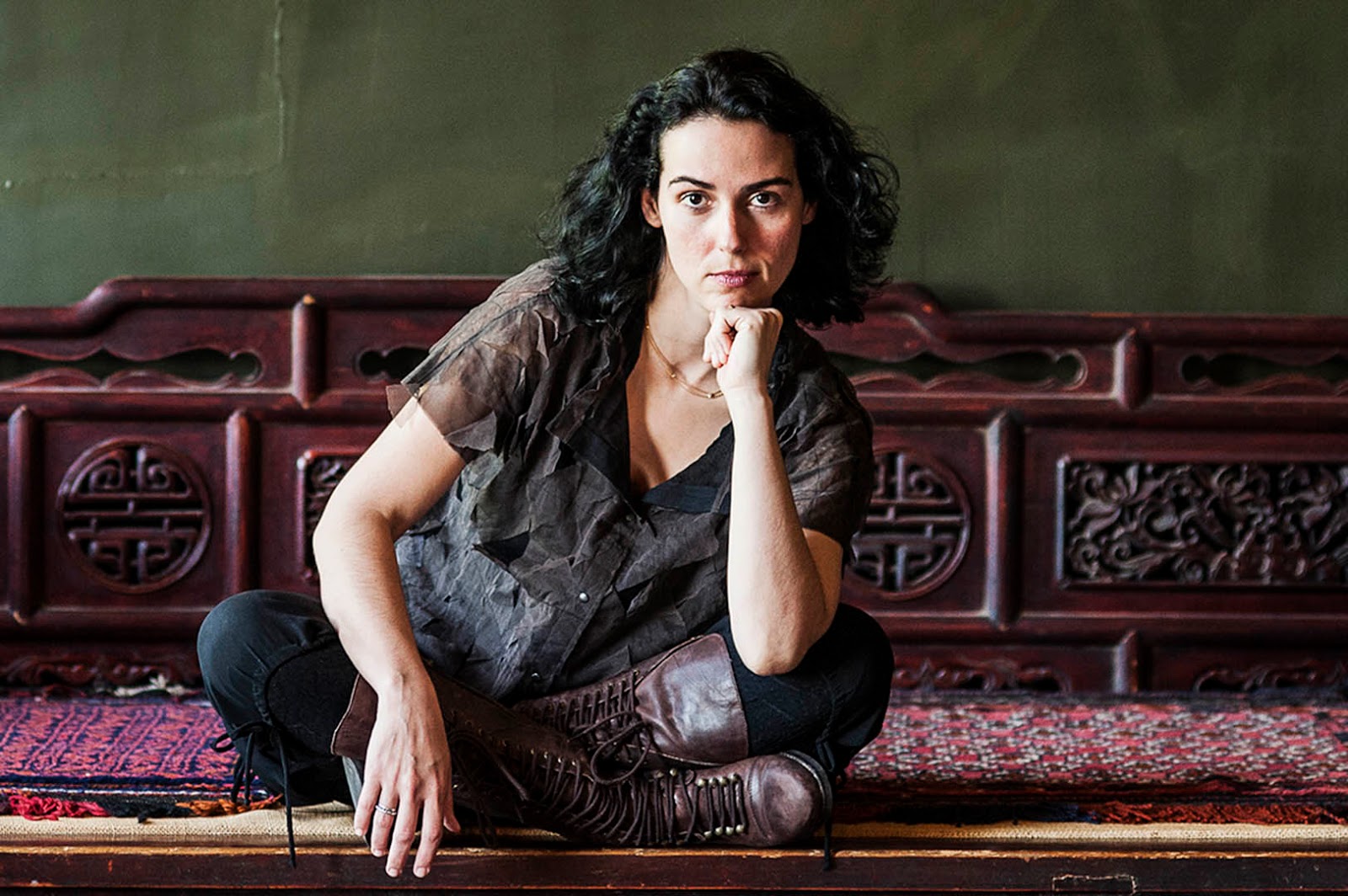
Composer Clarice Assad

“Being paired up with the Takács is a dream,” Labro says. “I pinch myself every time, because of the legacy that they carry. I’m grateful and I’m enjoying every concert. And now the fact that I get to play on their home turf is also cool. I’m really pleased that I get to see them where they hang out and play and teach.”

In fact, he enjoys not only the pieces they play together. Labro has been listening with attention to the Takács’s performances of the Ravel Quartet as well. “The work is incredible, but hearing them play is fantastic,” he says. “Ravel’s writing is outstanding—the colors, the timing—and players of that caliber and the musicianship they bring to it—always when I hear that piece, I wish Ravel had written more than one string quartet!

“Just be ready,” he advises.

Labro grew up in Paris. He first learned to play the accordion when he was nine, after hearing it on the television. When he was around 13, he says, “I discovered the music of Astor Piazzolla, and that experience led me to learn the bandoneon. Today I do play a fair amount of both instruments.”

He will use his solo set to introduce the bandoneon to the audience. “It’s not every day that you get to see an instrument like mine presented in a chamber music setting,” he explains.

Labro ends his conversation where he started, talking about how much he enjoys working with the Takács Quartet. “We’ve been having a lot of fun,” he says. “It’s been a joy, really, being able to make music with them. It’s been a lot of fun getting to know them outside of the music making, just spending time together. They obviously are amazing players, but they’re equally amazing people.

“Every time we step onstage I just cherish the event, because I know we’re going to have fun no matter what happens.”

# # # # #

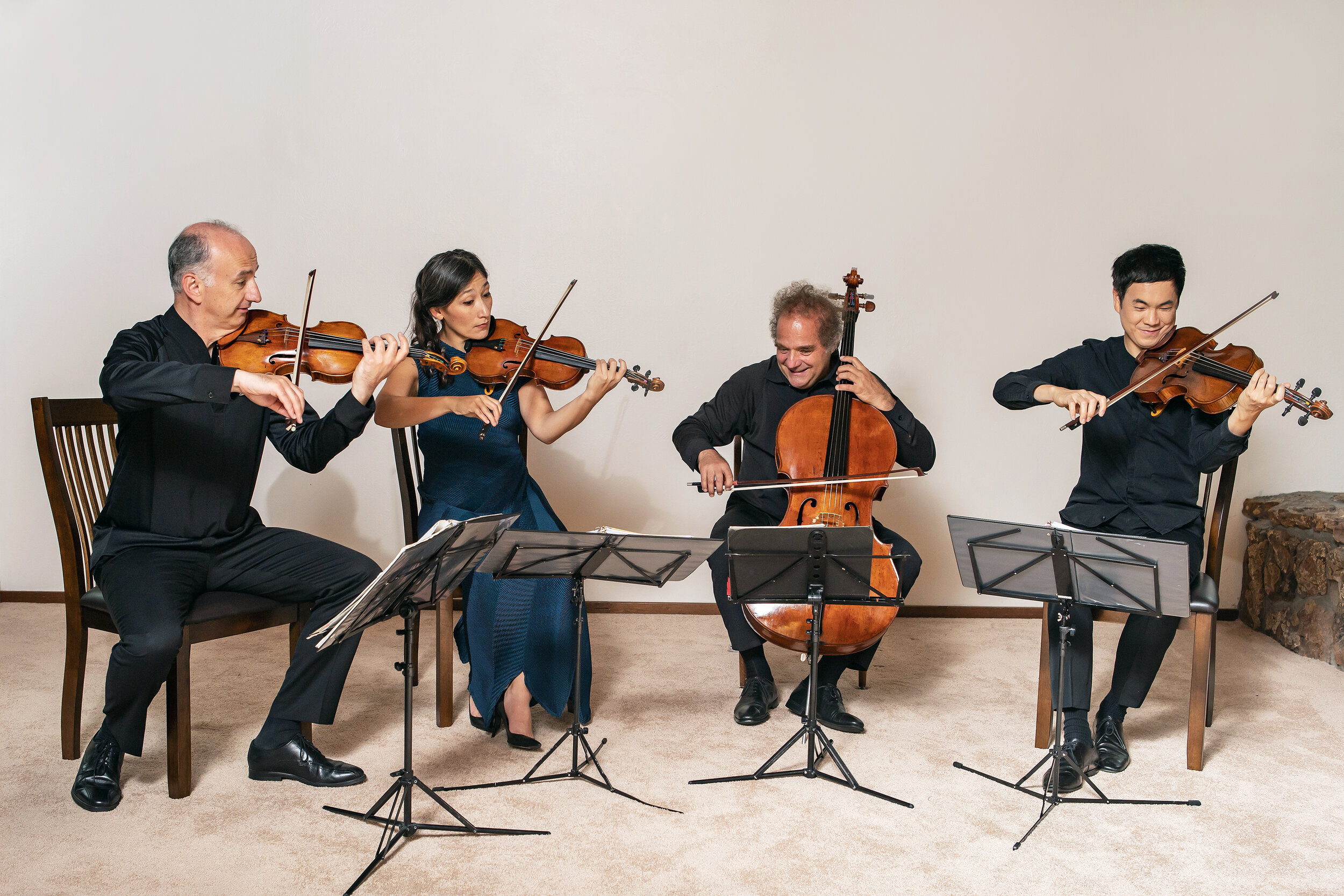
Takács Quartet by Amanda Tipton Photography

Takács Quartet with Julien Labro

  • Bryce Dessner: Circles
  • Julien Labro: Meditation #1
    (Julien Labro, bandoneon, with Takács Quartet)
  • Johann Sebastian Bach: Wachet auf, ruft uns die Stimme, S64
  • Dino Saluzzi: Minguito
  • Julien Labro: Astoración (with pre-recorded tape)
    (Julien Labro, bandoneon & accordina)
  • Maurice Ravel: String Quartet in F Major
    (Takács Quartet)
  • Clarice Assad: Clash
    (Julien Labro, bandoneon & accordina with Takács Quartet)

4 p.m. Sunday, April 16
7:30 p.m. Monday, April 17

Grusin Music Hall

TICKETS (in-person and digital)