Alison Moritz looks back and ahead

New artistic director at Central City has experience and hopes for CCO

By Peter Alexander March 22 at 6:20 p.m.

Alison Moritz’s career in opera started with a hot-air balloon.

The new artistic director of Central City Opera (CCO), Moritz saw her first opera in St. Louis when she was nine. It was Offenbach’s La belle Hélène, a very Parisian spoof of the the story of Helen of Troy. At nine, the innuendo did not make much of an impression. 

“I think the sexual politics went over my head,” she says. “I was just impressed by the hot-air balloon onstage!”

Alison Moritz: Destined for opera?

Balloon or no balloon, she might have been destined for a career in opera. That first experience really clicked with someone who says she was “an indoor kid [who] loved everything artistic. I was really obsessed with story and picture and music.”

Her first ambition was to be a film animator. “I did see an opera when I was nine, and the whole world just made sense to me,” she explains. “It just felt so magical and exceptional, but also incredibly familiar.”

That early sense of familiarity soon led to a near obsession with opera. “When I was in 8th grade I saw my first production of Traviata and I went back and saw it five times! My parents went with me to the first two performances, and after that they would drop me off in the parking lot and say, ’See you three and a half hours.’ 

“I used to say I had to work in opera because I couldn’t afford to see opera as much as I wanted to. I had to find a way to sit in—I never get tired of it.”

Her path into directing was not something that she saw from the outset, however. “Initially, it was not clear what my contribution [to opera] could be,” she says. “When you’re not a singer, at the time I was growing up, there were fewer roles for women in production, there were fewer roles for women in leadership.”

Moritz attended Washington University in St. Louis, where she studied music and art history. She did some work in art administration, and production work backstage, but she thought that might be a hobby and she would work in another field. An internship with Opera America gave her insight into the American opera scene, and while living in New York she attended all the opera and theater that she could afford in standing room.

A turning point came when a friend who went to some performances with her, but did not work in opera, told Moritz, “The way you think about this is someone’s job.”

“That was the first time that I thought maybe I could do this,” she says. “I was really lucky—I went back to school to get  a degree in opera stage direction at the Eastman School of Music. When I arrived there I knew a lot about opera but I had very little experience. And I’m proudly grateful that they saw potential in me, and fostered that.”

From Eastman her career as a stage director has only grown. Today, she can claim directing credits from Lyric Opera of Kansas City, the Glimmerglass Festival, Opera Omaha, Ravinia, Tanglewood, Portland Opera and Opera Colorado, among many others. 

Moritz says that she approaches her work principally through the music. “My job as a director is to really help contemporary audiences see what’s so special about the music,” she says. “It’s really key for the director to bring the story and the visuals and the relationships amongst people and ideas together, so that we’re making a case for these beautiful documents. That’s always been my approach.”

She believes that growing up a Midwesterner—“in a flyover state,” she says—affects her perspective on opera. “I’ve never had the point of view that the only great opera in America is in the largest coastal companies. They’re incredibly important, but to be able to produce things locally and regionally I think is important, and fundamental to what makes Central City such an exciting place to work and to watch opera.

“The other Midwestern thing about me is I’ve always been creative, but through the lens of pragmatism. I know the cost of wood when we’re building the set. We’ve got to make some nitty-gritty decisions in order to be able to make great art. The Midwesterner in me is always looking to see how long will this take to rehearse, how many days do we need to do X, Y and Z, and that keeps me pretty grounded.”

For the coming summer, Moritz already has long established engagements at Cincinnati and Glimerglass in upstate New York, but after this year her new job will mean she has to forego summer directing jobs outside Central City. “This year there’s a little bit of a time-share, [but] I’m really confident that I’ll be able to spend meaningful time with the audiences at the top of the mountain,” she says. “For future seasons, I will be at Central City the entire summer.”
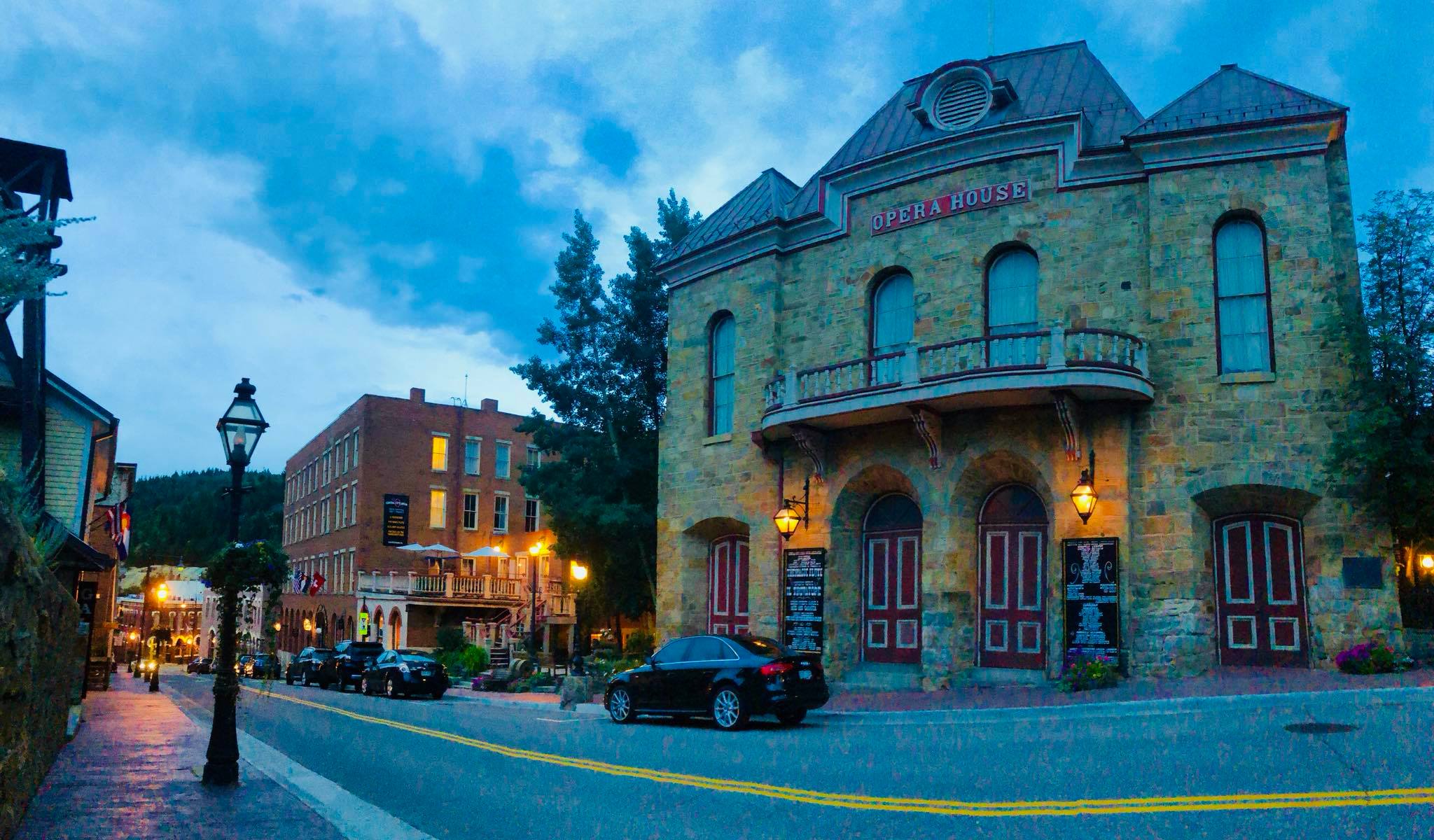
Central City Opera House. Photo by Ashraf Sewailam.

Looking ahead, Mortiz envisions creating cooperative relationships with other opera companies where she might have directing work outside of the Central City season. “I’m excited about the prospect of creating more co-productions [with other companies] and being able to bring the best of American opera here to Central City,” she says. “I’m really optimistic and excited about the future. I’m really happy to have my boots on the ground and to get to work. 

“We’re all very excited to re-imagine and to dream and continue creating a great atmosphere at Central City for both artists and audiences.”

NOTE: Information Central City Opera’s summer 2024 festival season can be found on the CCO Web page.
Alison Moritz appointed artistic director of Central City Opera

An experienced stage director, Moritz will direct one production per season

By Peter Alexander Feb. 20 at 6:10 p.m.

The Central City Opera has announced the appointment of the accomplished stage director Alison Moritz as their new artistic director.

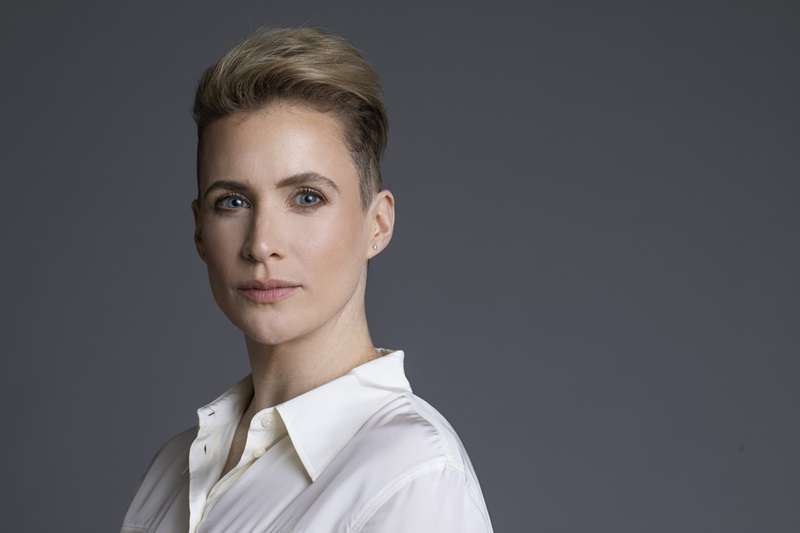
Alison Moritz

Moritz was selected after a national search led by Jonathan West, on behalf of Management Consultants for the Arts and CCO’s volunteer search committee, chaired by Joshua Navarro from the CCO board of directors. The position had been open since the summer of 2023.

In a written announcement, Moritz commented “I am deeply honored to join Central City Opera as the new artistic director. My previous experiences with the company have been incredibly rewarding, and I am excited to build upon that foundation as we embark on this new chapter together.”

CCO president and CEO Scott Finlay stated, “I’m thrilled to welcome Alison Moritz to Central City Opera as our new Artistic Director! Her talent and vision align perfectly with our goals, and I couldn’t be more excited to have her on board.”

Moritz has previously appeared as stage director at CCO, including the 2019 production of Puccini’s Madama Butterfly. As AD she will oversee the company’s artistic and production staff for the upcoming 2024 Festival (June 29–Aug. 4; see the CCO Web page for more information), and will direct one production per season starting with the 2025 Festival. 

Moritz’s recent productions have been described as “enchantingly cheeky” (Washington Post), “elegantly sexy” and “raw, funny, surreal, and disarmingly human” (Opera News). She has recently directed productions for Washington National Opera, Lyric Opera of Kansas City, the Glimmerglass Festival, Opera Omaha, Ravinia, Tanglewood, Bard Music Festival, and Portland Opera. Previous engagements have been on the directing staffs at Santa Fe Opera, Seattle Opera, Opera Theatre of St. Louis, Minnesota Opera, Atlanta Opera, and Wolf Trap Opera.

Moritz succeeds former AD Pamela Pantos, who was released from the position in July 2023, and Pelham (Pat) Pearce, who had been AD for 26 years when he left the post in 2022.

Ars Nova Singers present ‘Rebirth: Beyond the Renaissance’ Feb. 9 and 11

Rare performance of Thomas Tallis’s 40-voice motet Spem in alium

By Peter Alexander Feb. 6 at 11:30 p.m.

Sometime around the year 1570, the English composer Thomas Tallis wrote what some have called his “crowning achievement.”

The work in question is more often discussed than heard: Spem in alium, a motet in 40 voices, arranged in eight choirs of five voices each. Anyone who studies the music of Elizabethan England knows of this impressive work, but it is difficult to assemble the voices for a performance, and many have never heard it live.

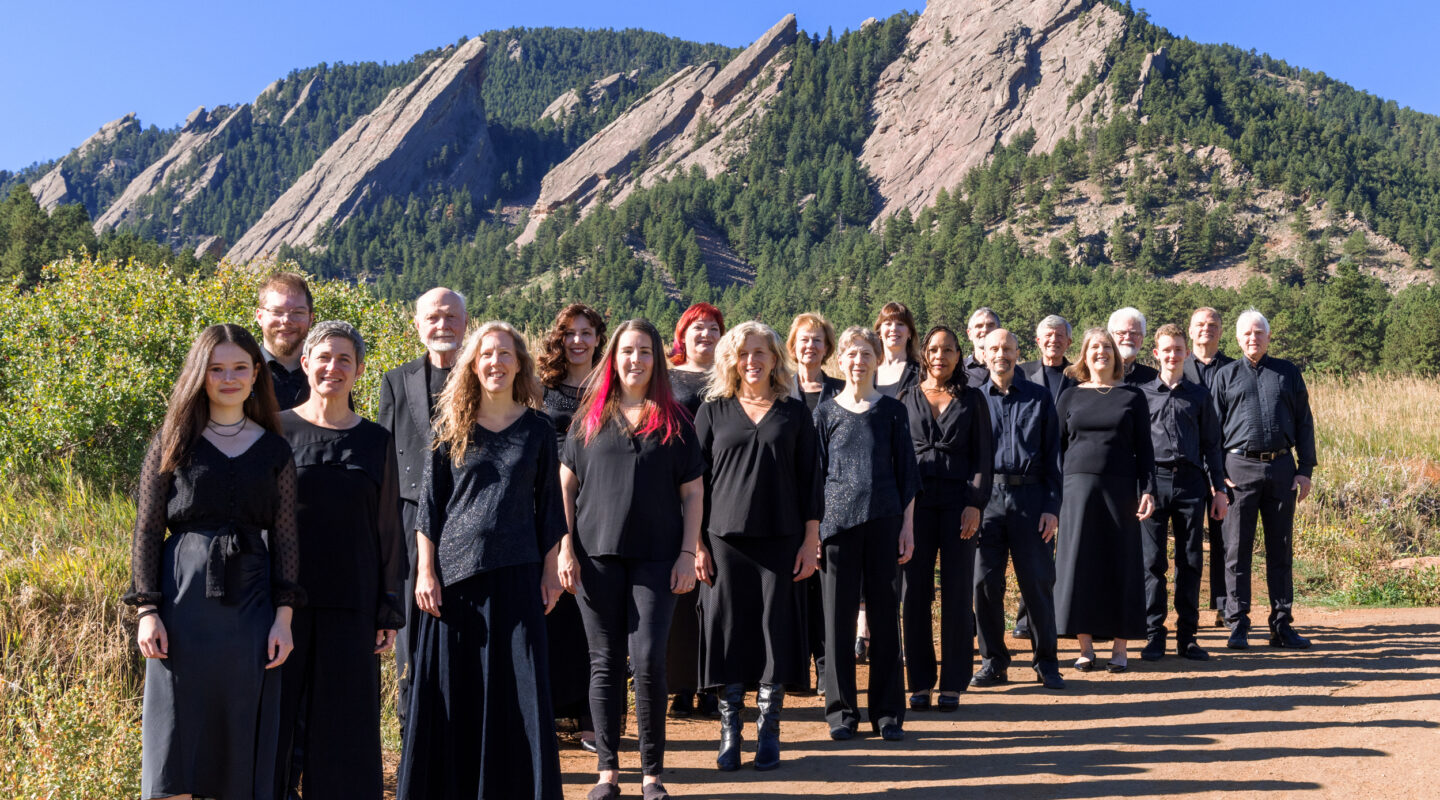
Ars Nova Singers

But now everyone in Boulder has the opportunity to experience this rare work in performance. Tom Morgan and the Ars Nova singers will perform Spem in alium Friday and Sunday in Boulder and Denver, respectively (Feb. 9 and 11; details and ticket information below). The full program, titled “Rebirth: Beyond the Renaissance,” also includes works by English composers William Byrd and Henry Purcell, music by Emilio de Cavalieri from a famously elaborate Medici family wedding in 1589, and the Mass in E-flat by the 19th-century German composer Josef Rheinberger.

This will actually be the seventh time that Morgan and Ars Nova have performed Tallis’s motet. The first time was in 1988, and they recorded the motet in 2001 on a CD titled Luminescence. Most recently they performed it in Boulder eight years ago. Only a few singers are still in the group from that performance, and a few have performed it elsewhere; performing it will be a new experience for the rest.

Manuscript of Thomas Tallis’s 40-part motet ’Spem in alium’

“I think that a group that can do it, should do every eight or 10 years at least, just because it’s a good stretch for the choir and it makes such a unique sound for the audience,” Morgan says. Because the 40 parts will each be taken by a single performer, “it does require a lot of independence on the part of the singers,” he says.

The 40 voices are divided into eight separate choirs of five voices each. “There’s a fair amount of historical context that this was originally done in an octagonal banqueting hall, so there was a choir in each of the eight bays,” Morgan says. “I think that was how Tallis conceived of it.

“Clearly he thought about it spatially. It moves from one side of the choir all the way across in a direct line to the other side. When the fortieth voice comes in and imitates that melody at the completion of the phrase, we reach the fortieth measure of the piece, and everybody comes in. It’s a very dramatic moment.”

The program moves chronologically from the late Renaissance forward. “The first half of this concert is all within about 20 years between about 1570 and 1590,” Morgan says. “Then (after intermission) we have Purcell, who is 100 years later.”

Two other pieces on the first half are worthy of attention. They were the final two pieces in the first book of choral music printed in England. Queen Elizabeth I had granted an exclusive right for music publishing to Tallis and his contemporary, William Byrd, and they ended the publication with what we might call puzzle pieces, one by each.

“They’re fascinating works,” Morgan says. “The first one (by Tallis, Miserere nostri) is a seven-voice canon. He derived it from one voice part, and then he does it two times slower, four times slower and eight times slower in three other parts.”  Three other parts combine in complex ways with those four, to make up the total of seven parts.

Byrd’s Diliges Dominum is complicated and interesting in an entirely different way. It is made up of four canons, in which pairs of singers hold a single copy of the music between them, looking at it from opposite sides. Each one reads it from the top to the bottom, as they are seeing the page, with their partner reading it in the opposite direction.

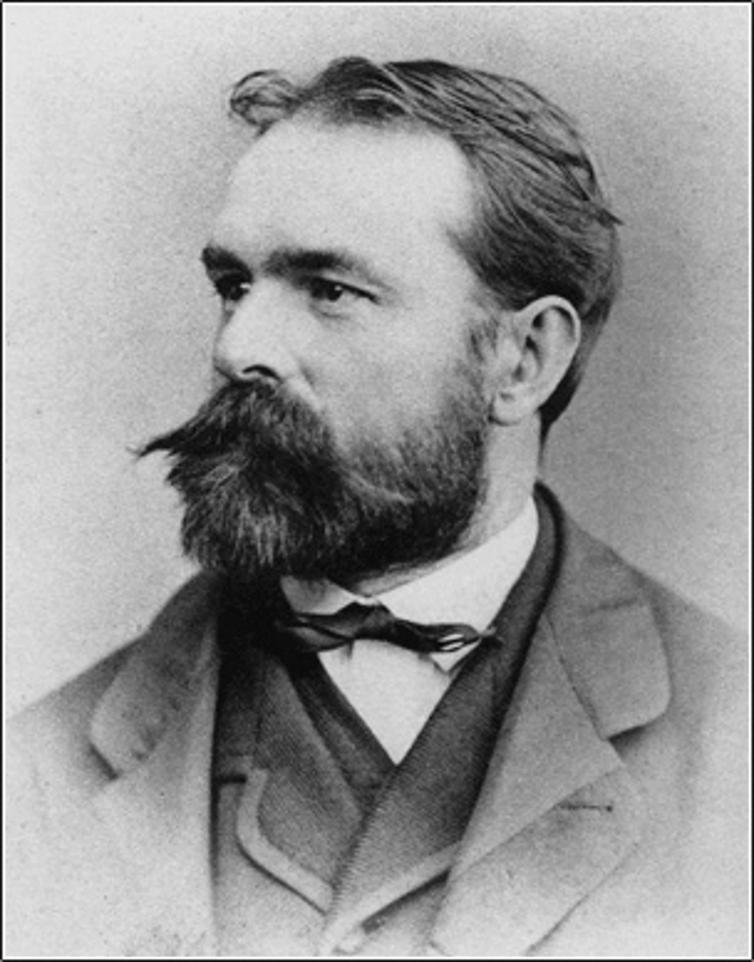
Josef Rheinberger

This sounds like some kind of compositional exercise, but, Morgan says, “what I like about both of these pieces is they don’t sound at all academic. They make lovely sounds—it’s really just sonically beautiful. That they are able to do that, given those strictures, is pretty amazing.”

Moving forward in time, the program ends firmly in the Romantic era with Rheinberger’s Mass in E-flat for double chorus, written in 1878. This is well outside of Ars Nova’s usual repertoire of either Renaissance or contemporary music. That might seem surprising, but “I’ve ways wanted to do this Mass because it’s a multi-voice piece, with two four-part choirs,” Morgan explains. 

“It has a lot of antiphonal chorus and a fair amount of imitation, so it does have a Renaissance feel, and yet it inhabits this 19th-century harmonic world which is so lush and wonderful!”

# # # # #

“Rebirth: Beyond the Renaissance”
Ars Nova Singers, Thomas Morgan, conductor
With Szilvia Schranz, soprano, Brian du Fresne, harpsichord, and soloists from the chorus

  • I. Thomas Tallis: Loquebantur
    —Lamentations of Jeremiah, Set I
  • II. Two Musical Puzzles from Cantiones Sacrae, (1575)
    Tallis: Miserere nostri
    William Byrd: Diliges Dominum
  • III. Music from a Royal Wedding (Florence 1589)
    Emilio de Cavalieri: O che nuovo miracolo
  • IV.Tallis: Spem in alium
  • V. Henry Purcell: “If music be the food of love”
    —“Hear my prayer O Lord”
  • VI. Josef Rheiberger: Mass in E-flat for double chorus

7:30 p.m. Friday, Feb. 9
Mountain View United Methodist Church, 355 Ponca Place, Boulder

2:30 p.m. Sunday, Feb. 11
Central Presbyterian Church, 1660 No. Sherman St.,Denver

TICKETS

NOTE 2/7: The date of Ars Nova’s last previous performance of Spem in alium has been corrected to eight years ago. The original version of this story incorrectly stated that it was six year ago.