Seicento Celebrates Women of the Renaissance

Program of ‘top-notch’ music by women from from 16th and 17th centuries

By Peter Alexander April 23 at 6:25 p.m.

The music only recently became available for the next concert program by Boulder’s Seicento Baroque Ensemble, but it’s 400 years old.

The program to be performed the coming weekend in Golden, Westminster and Boulder (Friday–Sunday April 25–27; details below) is titled “Renaissance Women” and features works by women composers of the 16th and 17th centuries. Most of them you have probably never heard of, including Maddalena Casulana, Sulpitia Lodovica Cesis and Vittoria Aleotti. Only a few—Francesca Caccini, Barbara Strozzi and Élisabeth Jacquet de La Guerre—are known at all to students of that era.

“Within the last five to 10 years there’s been an explosion of availability of scores by women composers of the Renaissance and Baroque periods,” Coreen Duffy, Seicento’s director, explains. “Up until now (those scores) were locked away, not published, and/or there were no modern editions available. So a lot of this music nobody knows about.
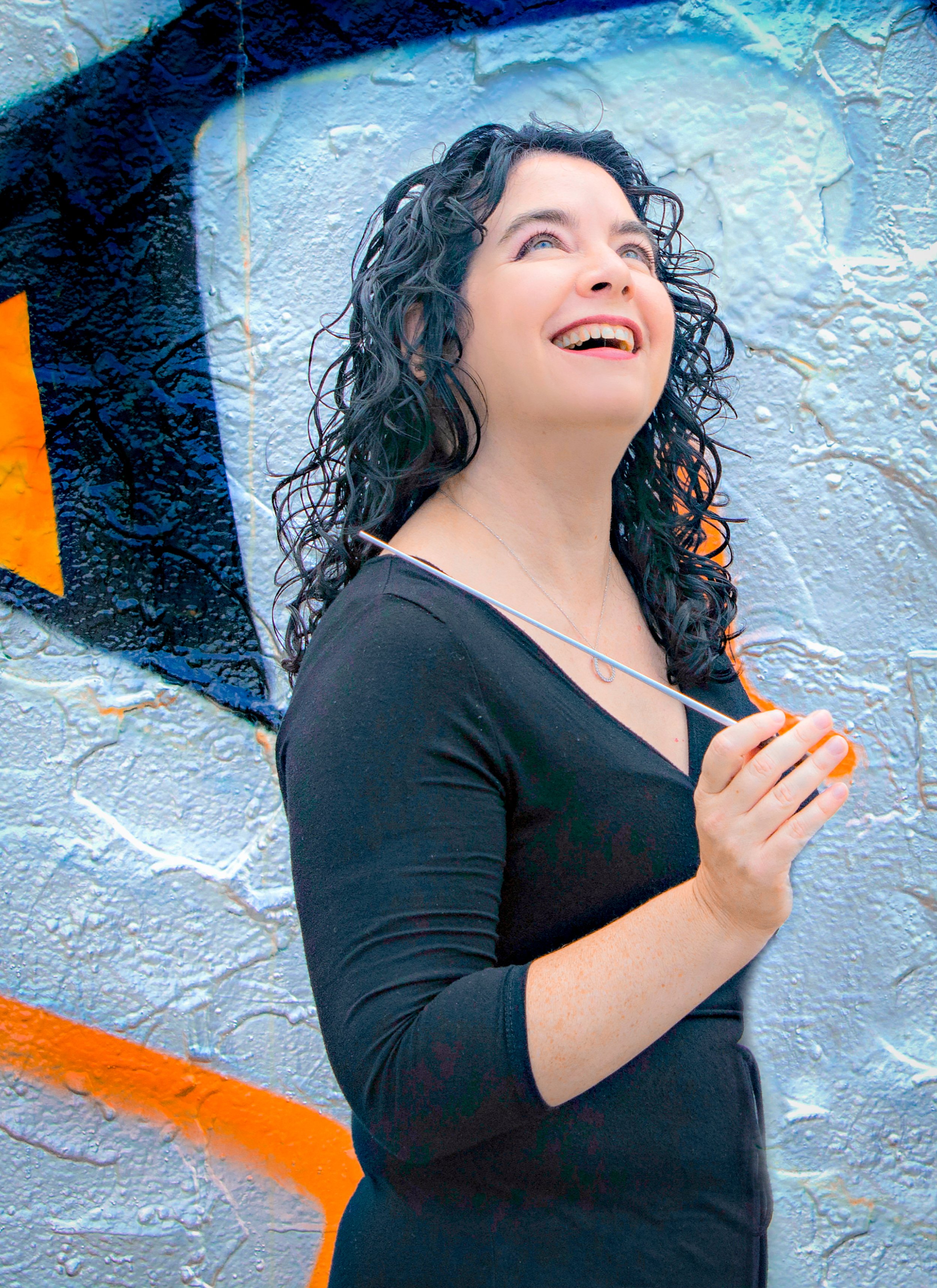
Coreen Duffy

“A lot of these composers I didn’t know about until I got the idea to start looking. Little by little this is coming to the surface now. So now is a great juncture to perform it, because some of it has been hardly performed in the last 400 years.”

The late Renaissance and early Baroque periods were a time of great cultural and musical flowering in Italy. Consequently it is no surprise that most of the composers—all but de la Guerre—are Italian. With the Italian nobility supporting the musical life of the time, Duffy says that nearly all of the Italian women composers fall into one of two groups. 

“Either they were in convents, or they were in the secular world and had connections that allowed them the kind of training they would need to become composers,” she says. Essentially that meant they were connected to one of the noble families such as the Medici, which would allow them to “gain the networking to get their music published and circulated,” Duffy says.

As for the convents, “a lot of these women ended up in convents not because they themselves chose that path, but because they were placed there by their families, to have a secure and safe life,” she says. “They’re writing sacred music, but they’re also writing secular music on poetry that is not devotional— some of it is a little racy. 

“For a lot of them the convent was like a little artists’ colony, a place where they had access to other trained musicians and singers who could perform this music that they were writing. So it was almost like a little sanctuary for them.”

In addition to the full Seicento choir the concert features performances by a smaller ensemble, the Seicento Sirene (Seicento Sirens), a small group of professional singers within Seicento. They emerged when the larger choir didn’t have time to learn all of the music Duffy had selected for the program.

“The idea came from them,” she says. “A couple of members said ’Hey, this music you picked is so good, we want to do it, we already know it, can we please do it?’ 
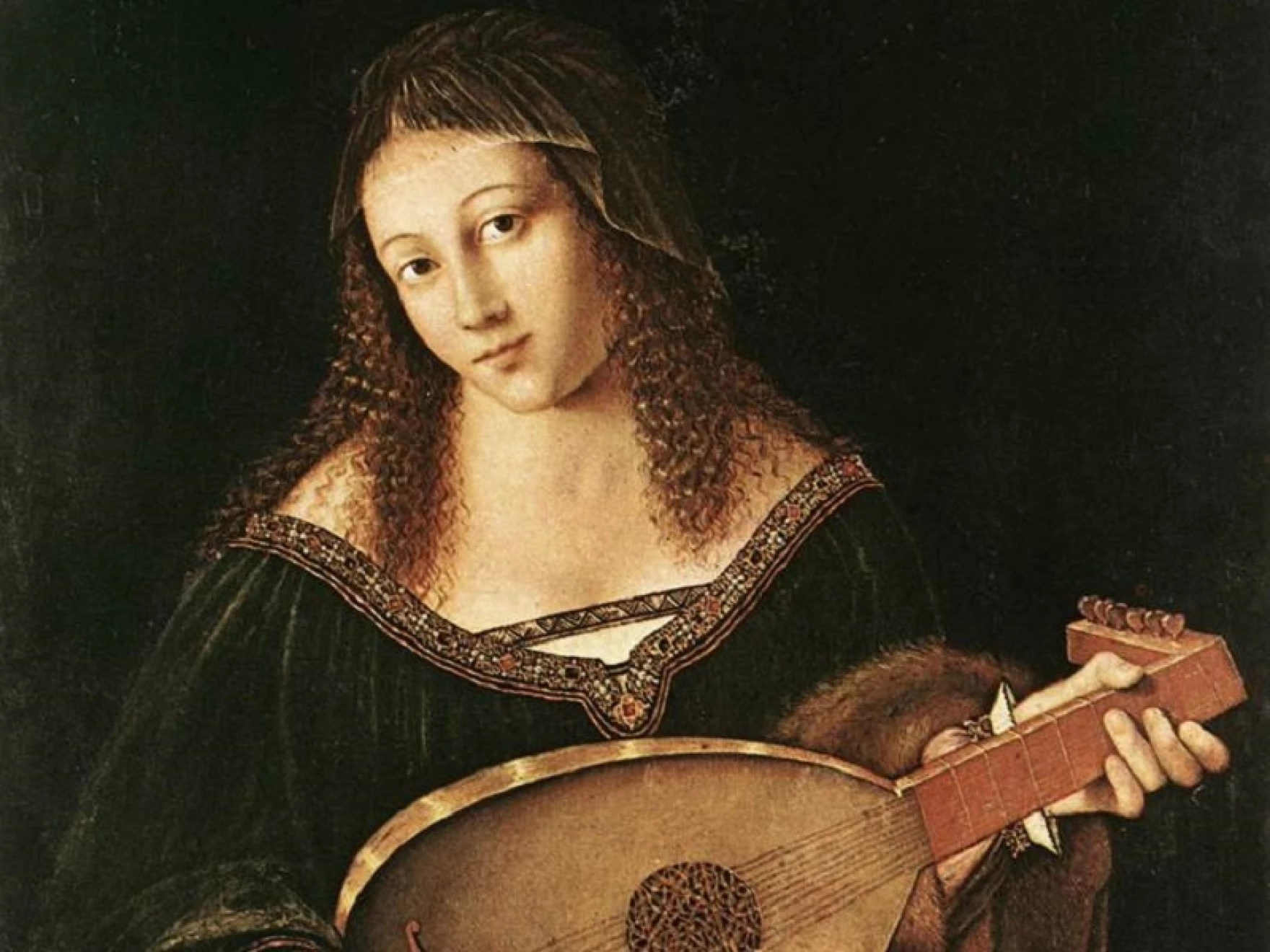
Maddalena Casulana

“I gave (the smaller group) a name, because once I heard how good they sounded, I was like, this is not a one-off. This will not be the last we hear from the Seicento Sirene. Just wait ’til folks hear them—their three selections are exquisite!”

One composer on the program stands out with six pieces. Though little-known today, Maddalena Casulana was the first woman in the history of European music to have an entire book of music published. Her Primo libro di madrigali (First book of madrigals) from 1568 is dedicated to Isabella de’ Medici, to gain her support. 

“I selected a bunch of (her music) because it’s so darn good,” Duffy says. “It’s gorgeous, all of the things to love about late 16th century music—the chromaticism, dissonance, extreme text painting, based on the Petrarchan style poetry that is full of double entendres and sexual innuendo. It’s everything you would want out of (her male contemporaries) Monteverdi, Gesualdo, Marenzio, all of these folks at the end of (the 16th) century who are doing so much cool stuff.”
Sulpitia Lodovica Cesis (allegedly)

When asked for another piece to call attention to, Duffy hesitates. “There’s so much I don’t even know how . . .” she starts, then says, “Another composer I never heard of until I started this is Cesis. We’re doing her Stabat Mater and that’s gorgeous. The Cozzolani selections are pretty sensational.”

And Barbara Strozzi’s Con le belle (With beautiful women) “is the Barqoue version of (The Clash’s) ’Should I Stay or Should I Go?’ Everyone knows what’s really going on, but the language is perfectly above board so it’s fine.”

But in the end, she says the whole program “is just brilliant. The poetry is brilliant, the music is top notch and these are gems that people haven’t heard. 

“It’s a nice opportunity to hear music that’s been waiting around for 400 years!”

# # # # #

“Renaissance Women”
Seicento Baroque Ensemble and Seicento Sirene, Coreen Duffy, conductor
With Jeremiah Otto, harpsichord, and Joe Gailey, theorbo
Kevin Wille, guest conductor

  • Sulpitia Lodovica Cesis: Stabat Mater
  • Maddalena Casulana: Amor per qual cagion (Love, why did you put me on this earth)
    Amor per qual cagion (harpsichord/theorbo in tabulation)
    Morir no può ‘l mio core (My heart cannot die)
  • Vittoria Aleotti: T’amo, mia vita (I love you, my life)
  • Chiara Margarita Cozzolani: Messa à 4, Kyrie and Agnus Dei
  • Élisabeth Jacquet de La Guerre: Chaconne in D major from Pièces de Clavecin, Book II
  • Barbara Strozzi: Chi brama in amore (Who yearns for love)
  • Francesca Caccini: S’io men vò morirò (If I leave, I die)
  • Anna Bon: Andante from Sonata in B-flat major, op. 2 no. 2
  • Rosa Giacinta Badalla: Aria from Vuò cercando
  • Casulana: Tu mi dicesti Amore (You told me, love)
    Come fiammeggia e splende (How it blazes and shines)
  • Aleotti: Io piango che’l mio pianto (I cry that my cry)
  • Isabella Leonarda: Regina Caeli (ed. Meredith Y. Bowen)
  • Casulana: O notte, o ciel’, o Mar (Oh night, oh sky, oh shores)
  • Strozzi: Con le belle non ci vuol fretta (With beautiful women you cannot hurry)
  • Leonarda: Domine ad adiuvandum (Lord, to help, ed. Henry Lebedinsky)

7:30 p.m. Friday, April 25, Calvary Church, Golden
7:30 p.m. Saturday, April 26, Westminster Presbyterian Church
2 pm. Sunday, April 27, Mountain View Methodist Church, Boulder

Livestream also available 2 p.m. Sunday, April 27

In-person and livestream tickets HERE

Ars Nova presents new works in “Shared Visions” 

Composers set poems that were in turn inspired by visual artworks

By Peter Alexander June 4 at 11:20 a.m.

Boulder’s Ars Nova Singers will present “Shared Visions,” a unique concert bringing together works by Colorado visual artists, poets and composers, this coming weekend.

Violinist Alex Gonzalez

Performances will be Friday in Longmont, Saturday in Denver and Sunday in Boulder (June  7, 8 and 9; details below). They will be led by Tom Morgan, Ars Nova’s music director, and assistant conductor Elizabeth Swanson. Violinist Alex Gonzalez from the CU, Boulder music faculty will be the featured soloist, playing the violin solo in a choral version of Ralph Vaughan Williams’s Lark Ascending and a solo part in one of the new pieces.

The new works to be presented this year are by composers Raul Dominguez, Leigha Amick, Paul Fowler, and Morgan.  In addition to those new works, Ars Nova will perform a set of choral works by composers ranging from Baroque-era master J.S. Bach to current CU Boulder composition faculty member Annika K. Socolofsky. 

Ars Nova has presented “Shared Visions” programs twice before, in 2016 and 2019. For each occasion, Ars Nova invited Colorado visual artists to offer works that are placed in an online gallery, which this year featured 24 visual artworks. Then, selected poets are invited to write new poems based on one or more of the visual artworks. The poems are then collected into an anthology, which this year contained 44 poems. 

In the final step, three invited composers and Morgan have the opportunity to select a poem from the anthology to set to music. Morgan always waits until the other composers have made their selections, so that he can make sure that the program has a variety of visual art works and poems.

Tom Morgan

Morgan said Ars Nova originally planned to present “Shared Visions” every three years, as they did in 2016 and 2019. However, COVID and the time required to put together the program—selecting artists and giving both the poets and the composers time to create new works—made that impractical. This time it was five years, and in future he plans to hold the event every four years.

He says the time and effort are definitely worthwhile. “The energy of getting the artists together is just really gratifying to see what happens,” he says. “Several of these people have gone on to work together in other ways.”

The composer Paul Fowler returns to the “Shared Visions” program. His “Yet Another Layer” was selected for the 2016 program, and will be repeated on Ars Nova’s general program this year. Leigha Amick may be familiar to Boulder audiences as well. A Boulder native and currently a graduate student at the Curtis Institute of Music, she won the 2022 “Resound Boulder” composition competition and her winning score, Gossamer Depths, was performed by the Boulder Philharmonic in 2023.

The 2024 “Shared Visions” performances will open with “The Rings of Your Heart” by Raul Dominguez. The text is “Holding Your Heart” by Rosemarry Wahtola Tromer, which opens with the lines “I want to trace the rings of your heart/the way I would trace tree rings—/not to count them/but to honor each season of you.” 

“Fractions” by Chris DeKnikker

The poem was inspired by perhaps the most unusual artwork selected this year, “Fractions” by woodworker Chris DeKnikker. Morgan saw his work at the Arvada Center and found it so striking that he thought it would be interesting to include for “Shared Visions.” “[DeKnikker’s] ecstatic,” he says. “As a woodworker, you never imagine that your work is going to end up being sung by 40 people! You don’t imagine the that chain of inspiration is going to happen, so he’s been very enthusiastic.”

Amick’s “Shattering Love” is based on a poem of the same name by nonbinary and transgender writer and activist Hayden Dansky. “I know nothing/more of love/than you,” they wrote. “I’ve felt its grip like you have.” The inspiration was “amethyst,” a colorful canvas by multimedia artist and performer Michiko Theurer, who is currently living and working in Boulder while completing a PhD in musicology at Stanford.

“amethyst” by Michiko Theurer

Morgan’s “Glimmer of Sun” includes a violin part for Gonzalez. “He’s a featured element in the piece that I wrote,” Morgan says. “That made it fun for me to write a violin part at that level.” The text by Erin Robertson is titled “Burning it Off” and describes the search for a glimmer of sun through a canopy of clouds, as depicted in Margaret Josey-Parker’s three-dimensional glazed clay piece “Riding It Out.”

The final new piece will be “Freedom Night” by Paul Fowler, based on a poem by Jennifer Gurney and a photograph by Raj Manickam, all with the same title. Inspired by Manickam’s dark and mysterious photo, Gurney wrote, “I am yearning/To be filled to the brim with/Effortless contentment.”

Both Gurney’s poem and Fowler’s score reflect Manickam’s aim to take more than snapshots. “I capture everything from sudden moments to everyday occurrences and translate them into fine yet relatable art,” he has written. “I strive to shine a light on the reality of the human experience through composition and honest storytelling.”

The original art works and the full text of the poems they inspired an be seen on Ars Nova’s Web page.

# # # # #

“FRUITION: Shared Visions”
Ars Nova Singers, Tom Morgan and Elizabeth Swanson, conductors
With Alex Gonzales, violin

  • Ralph Vaughan Williams: The Lark Ascending, arr. Paul Drayton
  • Paul Fowler “Yet Another Layer” (from Shared Visions 2016)
  • Eriks Esenvalds: “Trees” 
  • Annika K. Socolofsky: “Like a diamond”
  • Harry Dixon Loes: “This little light of mine,” arr. Moses Hogan,
  • Knut Nystedt: “Immortal Bach” (based on music by J.S. Bach)
  • J.S. Bach: Allemande from Partita No. 2 for solo violin
  • Hugo Alfven: “Aftonen” (Ensemble Singers)
  • Paul Mealor: “Upon a Bank” (Ensemble Singers)

SHARED VISIONS 2024:

  • Raul Dominguez: “The Rings of Your Heart”
    Visual Artist: Chris DeKnikker, “Fractions”
    Poet: Rosemerry Wahtola Trommer, “Holding Your Heart”
  • Leigha Amick: “Shattering Love”
    Visual Artist: Michiko Theurer, “amethyst”
    Poet: Hayden Dansky, “Shattering Love”
  • Tom Morgan: “A Glimmer of Sun” (with violin)
    Visual Artist: Margaret Josey-Parker, “Riding It Out”
    Poet: Erin Robertson, “Burning It Off”
  • Paul Fowler: “Freedom Night”
    Visual Artist: Raj Manickam, “Freedom Night”
    Poet: Jennifer Gurney, “Freedom Night

7:30 p.m. Friday, June 7, Longmont Museum, Longmont
7:30 p.m. Saturday, June 8, Central Presbyterian Church, 1600 Sherman St., Denver
7 p.m. Sunday, June 9, Dairy Arts Center, Boulder

TICKETS

CORRECTIONS: Typo corrected June 4. Corrected June 6: the name of Chris DeKnikker’s wood sculpture is “Fractions”; the original story incorrectly stated that the title was “The Rings of Your Heart.” And EDEN-Colorado students will not be participating in the performances listed here.