GRACE NOTES: Season-ending programs

BCO celebrates an anniversary, Ars Nova celebrates eternity

By Peter Alexander May 20 at 8:35 p.m.

NOTE: The following post covers events for the next two weeks. I will be traveling with the Longmont Concert Band for a performance in Carnegie Hall May 25 and not back in Colorado until June 1. —Ed.

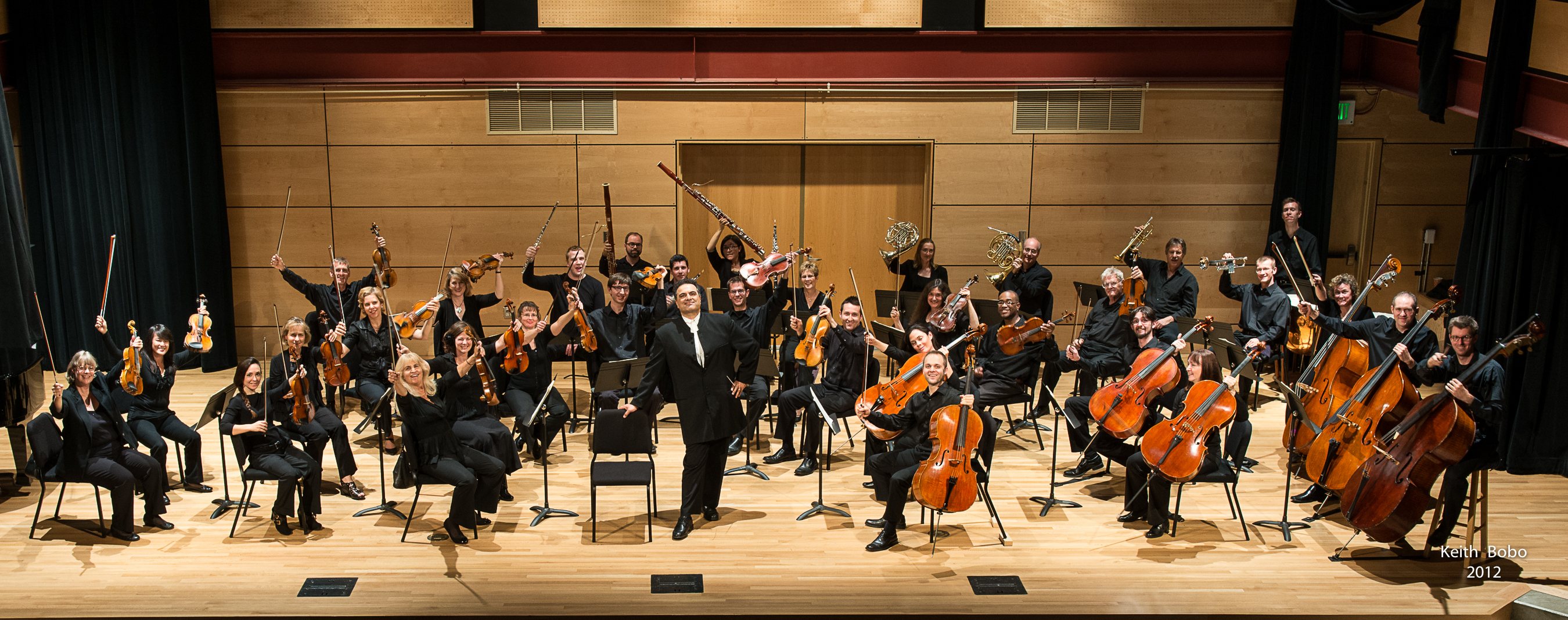
The Boulder Chamber Orchestra (BCO) and their conductor, Bahman Saless, wrap up their 20th-anniversary 2024–25 season with a “Grand Finale” in Macky Auditorium Saturday (7:30 p.m. May 24; details below).

Fresh back from a performance at Carnegie Hall’s Zankel Hall venue, the BCO will be joined by pianist Adam Zukiewicz and soprano Sylvia Schranz in a varied program, selected to celebrate the group’s anniversary. The program will be anchored by Saint-Saëns’ Piano Concerto No. 5 (“Egyptian’), which Zukewicz played a week ago in New York.

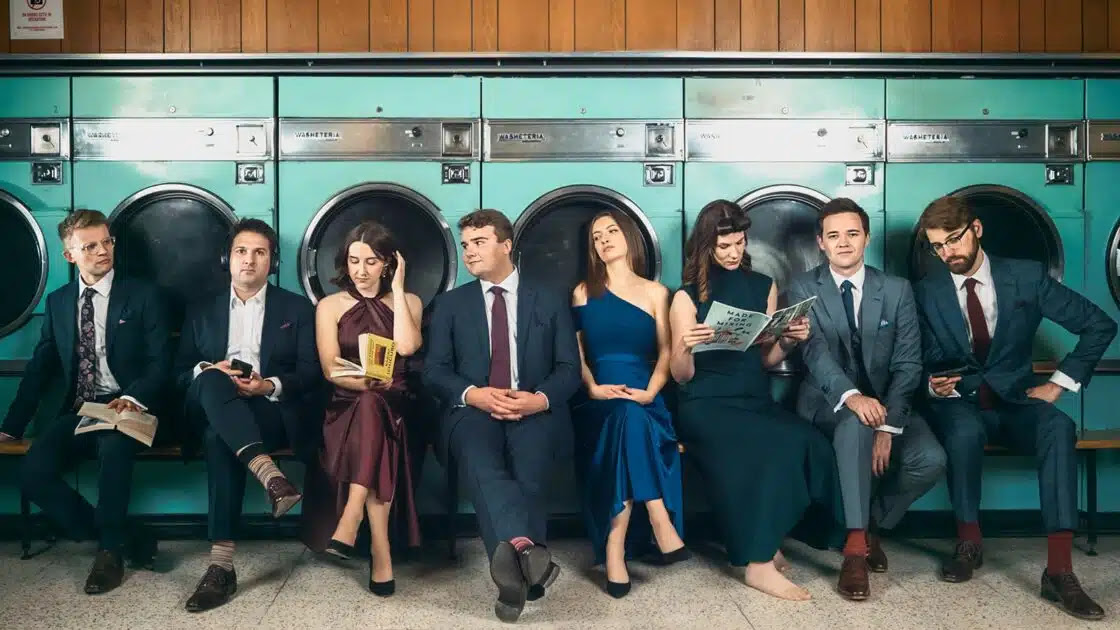
Boulder Chamber Orchestra and conductor Bahman Saless

A review of the New York concert said that BCO “could hold its own with any orchestra, anywhere,” and praised Zukiewicz’s “lively rendering” of the Concerto. Other works on Saturday’s program reflect the BCO’s eclectic programming over the past 20 years, ranging from Strauss waltzes to dances by Dvořák and Shostakovich, and a patriotic romp based on the National Anthem by the largely forgotten American composer Dudley Buck.

Saint-Saëns’ “Egyptian” Piano Concerto is a suitable choice for the BCO’s celebration, as it was written as a celebration of the composer’s own 50th-anniversary in 1896. Saint-Saëns wrote the concerto in Egypt, where he often spent his winter vacations. It features various exotic elements, particularly the slow movement that includes a song the composer heard sung by Nile boatmen.

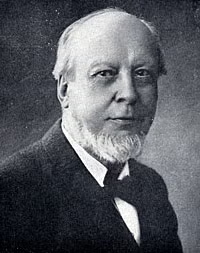
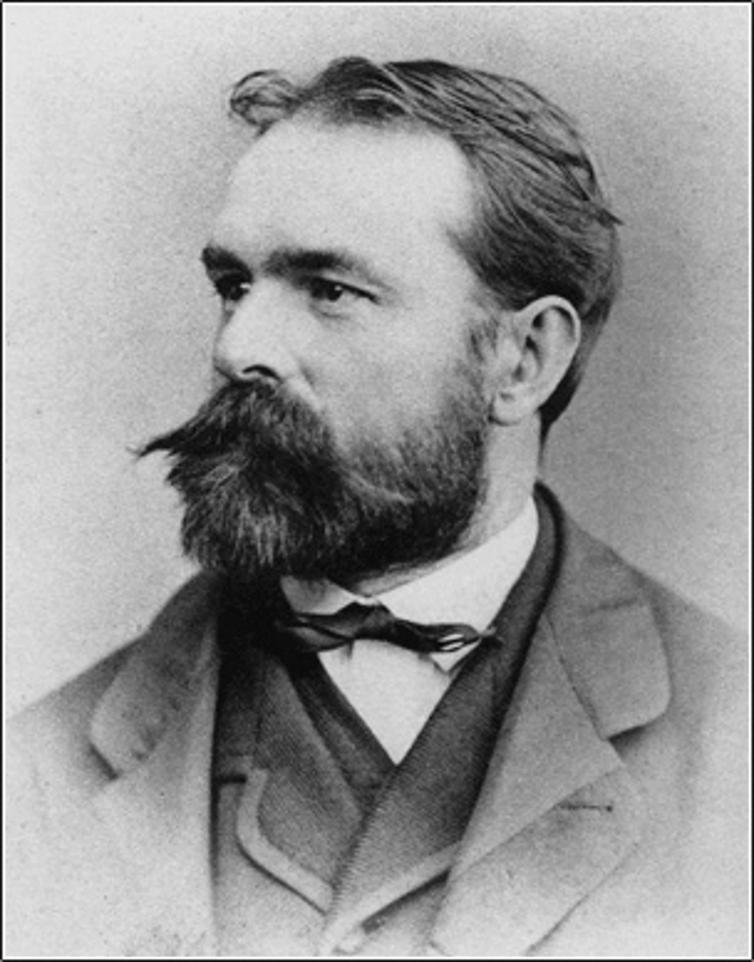
Dudley Buck

Trained as a pianist in Germany, Buck was a classmate of Edvard Grieg, Leoš Janáček and Arthur Sullivan. His Festival Overture on The American National Air began life as a set of Concert Variations on “The Star Spangled Banner” for solo organ. Though largely forgotten today, Buck was widely known in the late 19th century as a composer, organist and composer, and as the author of Buck’s New and Complete Dictionary of Musical Terms.

The Strauss waltzes recall the years that the BCO performed concerts during the Holidays that included music familiar from the popular Vienna Philharmonic New Year’s concert. On Saturday, these works will be the Overture to Die Fledermaus, the Emperor Waltz and Frühlingstimme (Voices of Spring) by Johann Strauss II. The program concludes with two Slavonic Dances by Dvořák (see full program below).

# # # # # 

“Grand Finale”
Boulder Chamber Orchestra, Bahman Saless, conductor
With Adam Zukiewicz, piano, and Sylvia Schranz, soprano

  • Dudley Buck: Festival Overture on the American National Air
  • Saint-Saëns: Piano Concerto No. 5 in F major (“Egyptian”)
  • Johann Strauss II: Overture to Die Fledermaus
  • Khachaturian: Waltz from Masquerade
  • Strauss: Emperor Waltz
  • Shostakovich: Waltz No. 2 from Suite for Jazz Orchestra
  • Strauss: Frühlingstimme (Voices of spring)
  • Dvořák: Slavonic Dances op. 72 no. 10 and op. 46 no. 8

7:30 p.m. Saturday, May 24, Macky Auditorium

TICKETS

# # # # #

Boulder’s ever adventurous Ars Nova Singers will present the last of their 2024–25 season concerts at the end of the month, with performances of significant a cappella works from the 20th century (Friday, May 30 in Longmont, Saturday, May 31 in Denver, and Sunday June 1 in Boulder; see times and concert details below).

Titled “Time/Eternity,” the program concludes a season characterized by programs that have embraced contrasts: “Here/There,” “Light/Shadow,” “Lost/Found” and “Science/Fantasy.” In each case, Ars Nova’s director Tom Morgan has found a creative and fun way to realize the two conflicting concepts in music, from pieces that were literally lost and and later rediscovered for “Lost/Found,” to a Victorian-era steampunk-inspired program for “Science/Fantasy.”

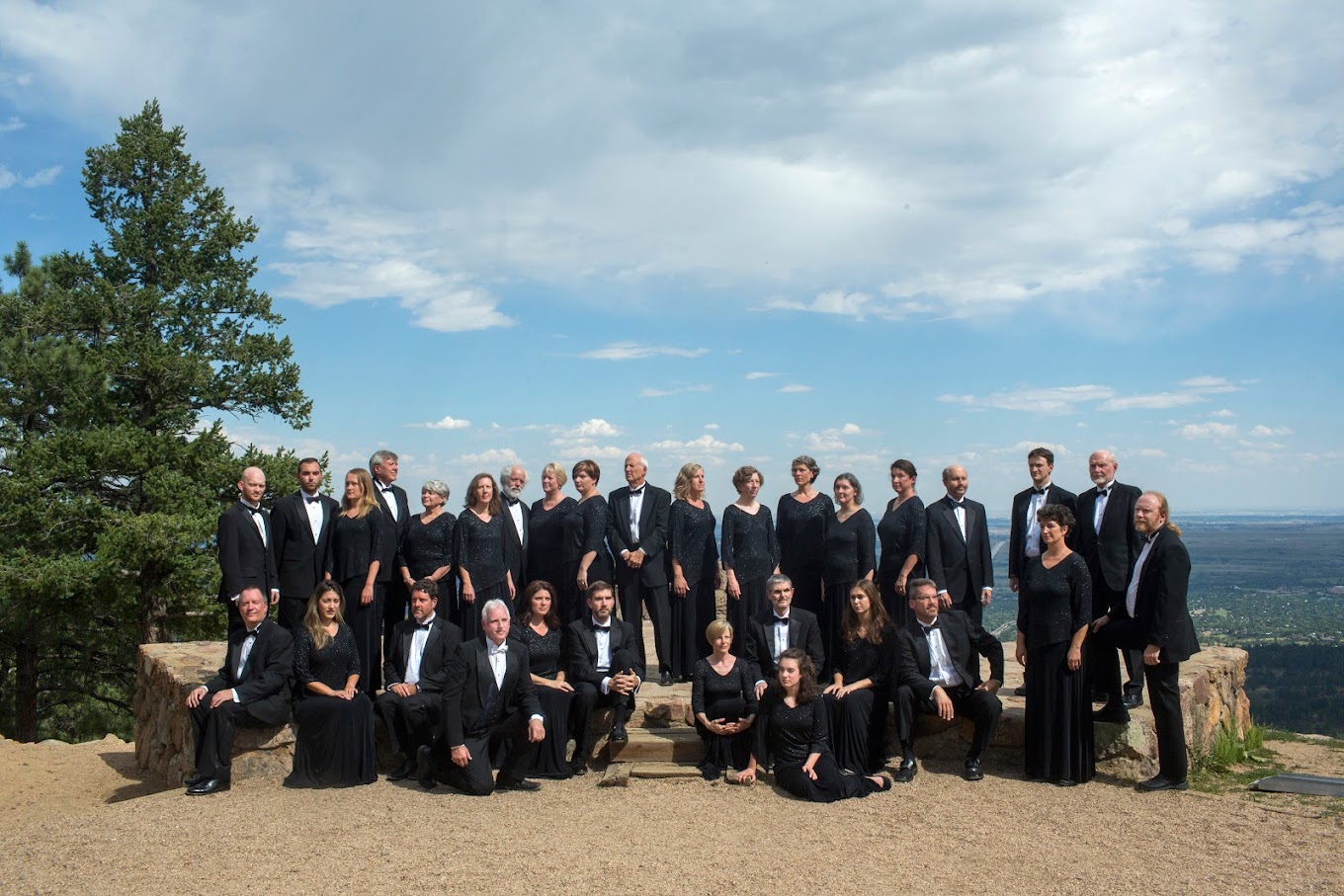
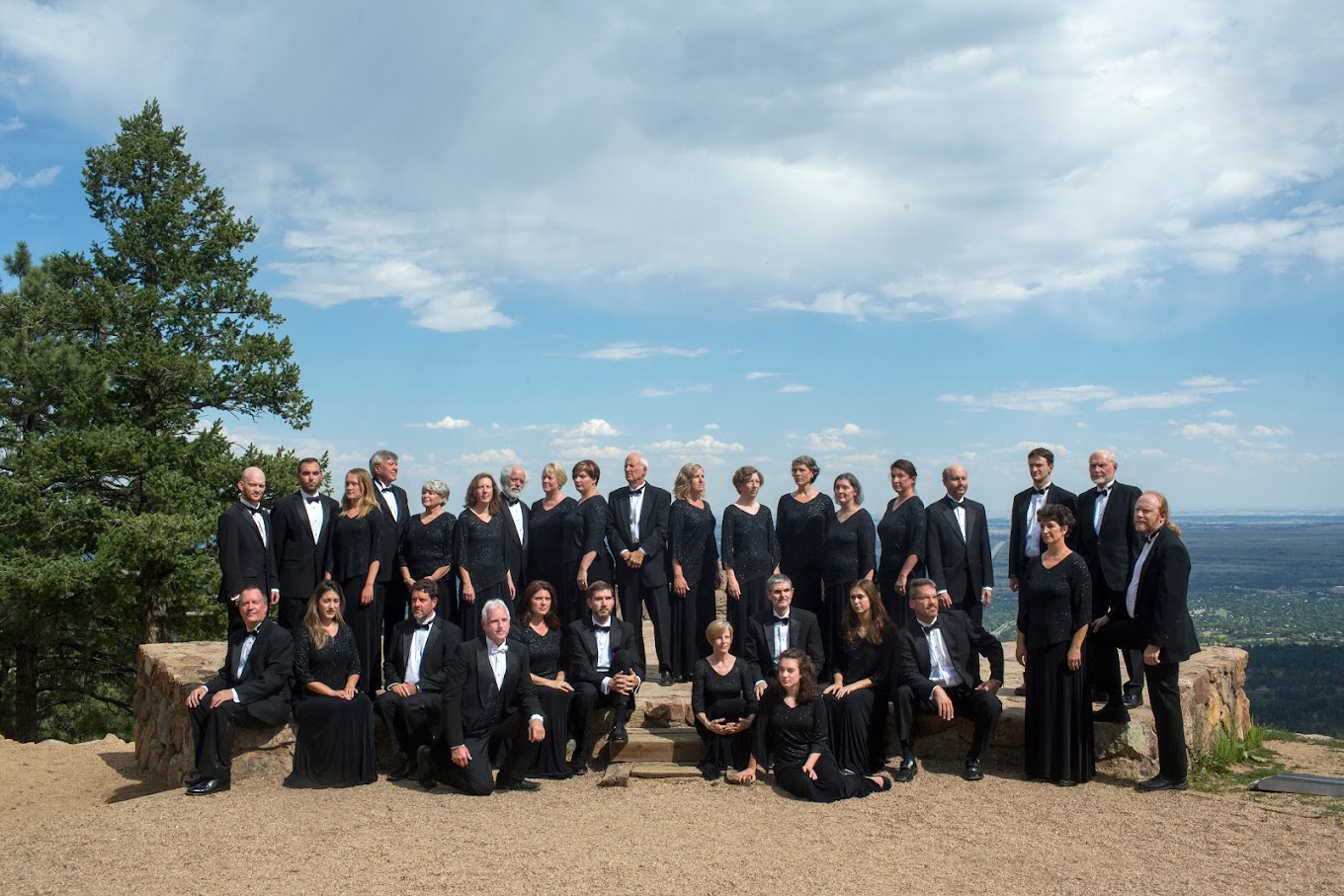
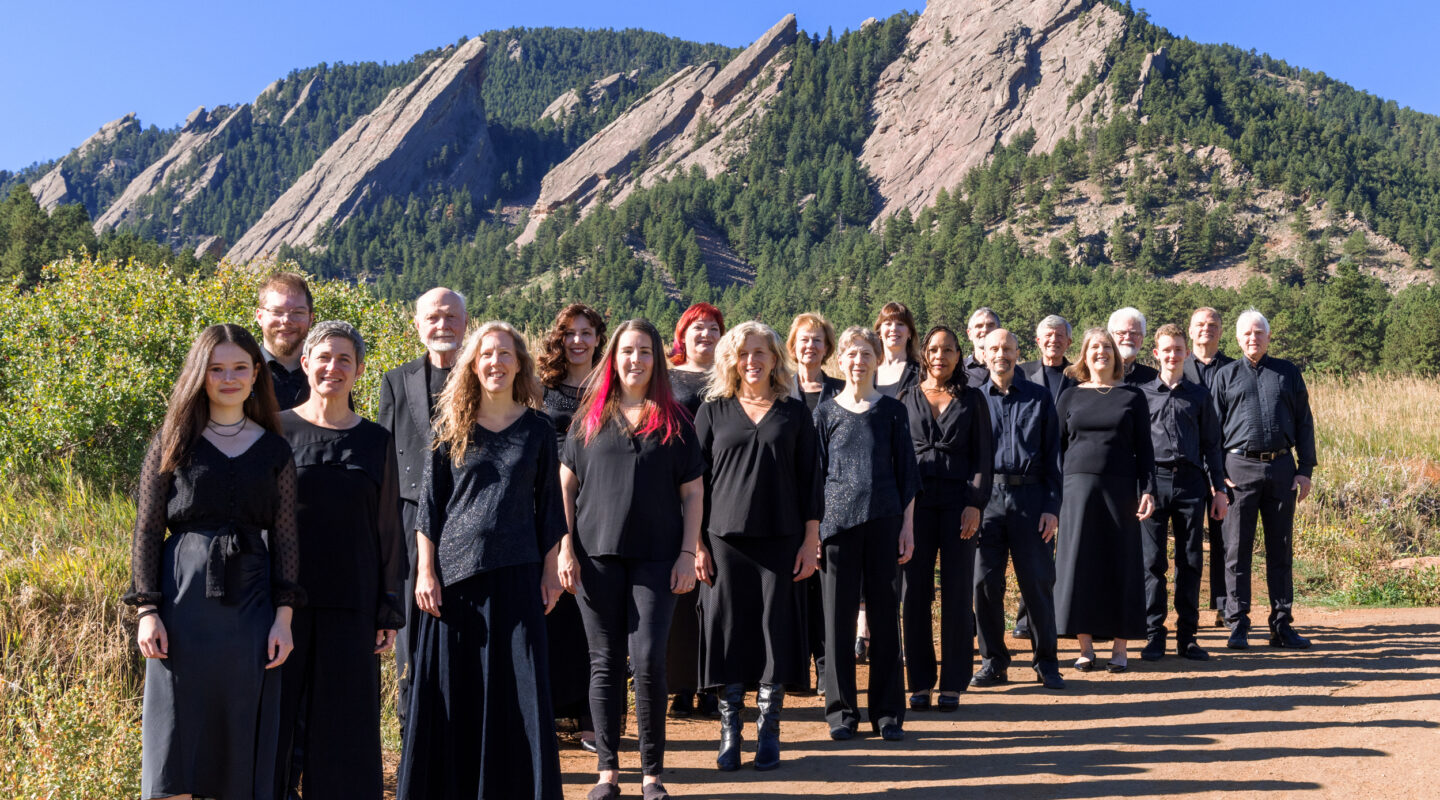
Ars Nova Singers with conductor Tom Morgan (kneeling, fourth from left)

For the current program, “Time/Eternity,” the program features two contemporary works modeled on church music dating back to at least the Renaissance, thus representing both eternity and modern time in each work. The first of these is the Mass for Double Chorus by Swiss composer Frank Martin. Written in 1922 and 1926, the Mass is a setting of the traditional five movements of the ordinary of the liturgical mass—that is, the texts that are sung at nearly every mass and not subject to variation across liturgical seasons.

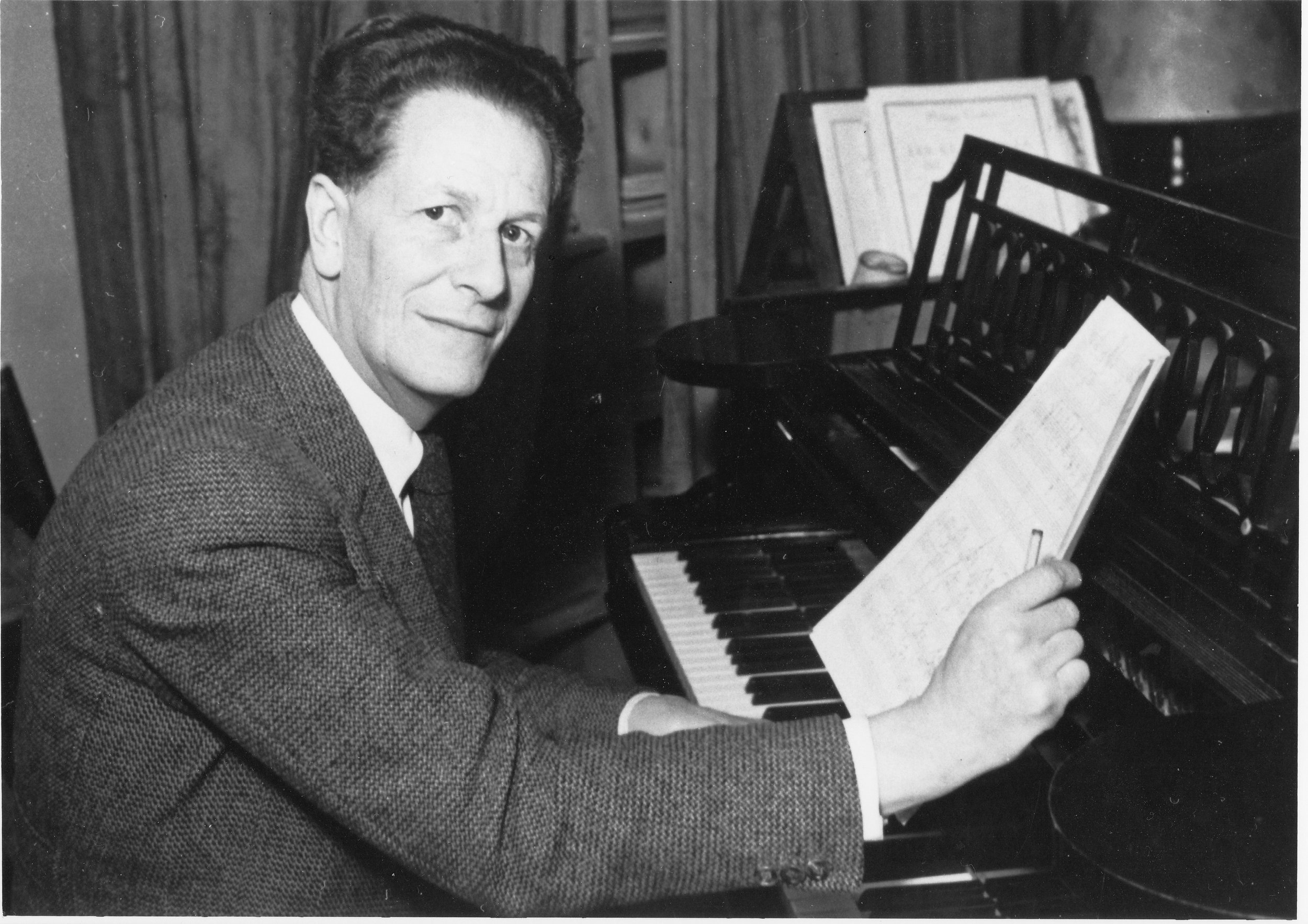
Composer Frank Martin

The Mass combines techniques typical of Renaissance mass settings, such as the use of a double chorus, fugal passages and imitative techniques across the choruses, together with modern stylistic elements that Martin was exploring. After he completed the Mass, Martin put the score away, considering it an early attempt at composition. He later consented to a performance in the 1960s, and today it is considered one of the most significant choral works of the 20th century.

The English composer Herbert Howells’ Requiem, written in 1932, is likewise based on traditional liturgical texts, in this case combined with other sacred texts from the Psalms and other sources. Although written for a single a cappella chorus, the Requiem sometimes divides the full chorus into two separate choirs. While using texts with a long liturgical history, the Requiem clearly has a musical style from the mid-20th century, using polytonality and chord clusters.

John Bawden, an active choral director and author of A Directory of Choral Music, wrote that “Howells’ music is much more complex than other choral music of the period. . . Long, unfolding melodies are seamlessly woven into the overall textures; the harmonic language is modal, chromatic, often dissonant and deliberately ambiguous. The overall style is free-flowing, impassioned and impressionistic, all of which gives Howells’ music a distinctive visionary quality.”

# # # # #

“Time/Eternity”
Ars Nova Singers, Tom Morgan, conductor

  • Frank Martin: Mass for Double Choir
  • Herbert Howells: Requiem

7:30 p.m. Friday, May 30
United Church of Christ, Longmont

7:30 p.m. Saturday, May 31
St. Paul Lutheran Church, Denver, and Livestream

7:30 p.m. Sunday, June 1
Mountain View United Methodist, Boulder

In-person and livestream TICKETS

Ars Nova Singers meet Steampunk

“Science/Fantasy” program in Lafayette, Denver and Longmont

By Peter Alexander 11:45 p.m. April 2

It all started at a wedding.

The next concert by Boulder’s adventurous Ars Nova Singers and conductor Thomas Morgan is a departure from the usual. Normally devoted to music of the Renaissance and contemporary times, they will perform music from the Victorian era and some contemporary works that refer to advances in technology from different eras. 

Steampunk fashion. Renee Roush, photo by Austin Welch Photography

That curious and interesting program, titled “Science/Fantasy,” will be presented three times, in Lafayette, Denver and Longmont over the coming weekend (April 4–6; details below). The performers will not be the full Arts Nova ensemble, but a smaller group of 11 singers. To bring out the unique nature of the program, they will wear “Steampunk” costumes borrowed from various sources, including the CU Costume Shop.

Steampunk, if you don’t know, is defined as “a sub-genre of science fiction that incorporates retro-futuristic technology and aesthetics inspired by, but not limited to, 19th-century industrial steam-powered machinery.” As such it is often connected to Victorian times and styles. (You can learn more about Steampunk HERE.)

The hallmarks of Steampunk style are gears, goggles, pocket watches and Victorian-style clothing: tailcoats with vests, high collars, top hats, cuffs and corsets—modified by individual taste and creativity. For the Ars Nova concerts, if you and a friend put together your own Steampunk outfits, there is a bonus: one ticket will admit two people in Steampunk costume.

But back to that wedding.

“I was invited a couple of years ago to a Steampunk wedding,” Morgan explains. “The entire bridal party and guests were encouraged to come (in costume), and it was so much fun. The environment suggested to me both Victorian music and music that has a rhythmic and industrial feel to it—anything related to flying machines, exploration—the whole era.”

Thomas Morgan sporting Steampunk fashion

The appeal of Steampunk style is not lost on Morgan, who will appear in his own costume. But he wants to clarify that the celebration of Victorian culture does not overlook the drawbacks of the era. “Clearly it was an age of exploitation by colonialists, the subjugation of races by other races and women by men,” he says. 

“But one of the interesting things about (Steampunk) is, it seeks to redeem the past rather than glorify it. Built into the ‘punk’ part of the word, which is more rebellious and anti-establishment, is looking at what would have happened in that era if things had been more egalitarian.”

The program includes works that are genuinely Victorian, specifically music by Hubert Parry, an English composer who lived during the Victorian era. “He certainly represents the height” of that era musically, Morgan says. His “There is an Old Belief” from Songs of Farewell forms “an encapsulation of the musical ethos of the time. The musical language is really beautiful. It gets close to Mahler in many ways, but for voices.”

From a little earlier in the 19th century are two madrigal-like works by Robert Lucas Pearsall, an English composer of choral music who lived much of his life on the European continent. Ars Nova has previously performed and recorded Pearsall’s “Lay a Garland,” which Morgan describes as “one of the really great eight-part choral pieces.”

The program also includes contemporary music that connects with Steampunk ideas. Morgan says that the opening piece, Jennifer Lucy Cook’s “Time,” “is a fast piece on the concept of time, (selected) because clockworks and gear-driven machines are very much a part of the Steampunk aesthetic.”

“Vessels” by Philip Glass comes from his music for the film Koyaanisqatsi, which visually as well as musically portrays the destruction of the natural world through industrialization, something that blighted many Victorian cities polluted by coal-burning factories. The program also includes music by Ralph Vaughan Williams and Francis Poulenc, among others.

The Victorian fascination with flying machines is represented by two pieces, “Leonardo Dreams of His Flying Machine” by Eric Whitacre and “The Campers at Kitty Hawk” by Michael Dellaira. Whitacre’s piece was written 25 years ago, at the start of the composer’s career, and has become one of his best known works for choir. 

Leonardo DaVinci’s sketches for a flying machine

“It’s a wonderful piece that we haven’t done in a long time,” Morgan says. “A lot of the Victorian writers were interested in Leonardo’s designs and some of those were recreated as people were learning how to fly.”

Morgan reached out to Whitacre about performing his piece in the context of the Steampunk program, and the composer recorded comments that will be played before the performance.

The Steampunk theme “gives us a whole opportunity to play with some of these things,” Morgan says. “We have a couple of staged things that the singers do during the performance.

“It’s an opportunity for us to have a little more fun, as well as mix in some repertoire that we don’t always get a chance to do.”

# # # # #

“Science/Fantasy”
Ars Nova Singers, Thomas Morgan, conductor

  • Jennifer Lucy Cook: “Time”
  • Philip Glass: “Vessels” from Koyaanisqatsi
  • Ralph Vaughan Williams: “The Vagabond”
  • Robert Lucas Pearsall: “Sir Patrick Spens”
    —“Lay a Garland”
  • Charles Hubert Hastings Parry: “There is an old belief” from Songs of Farewell
  • Francis Poulenc: “Sanglots,” from Banalités
  • Bob Chilcott: “Sun, Moon, Sea, and Stars”
  • Eric Whitacre: “Leonardo Dreams of His Flying Machine”
  • Michael Dellaira: “The Campers at Kitty Hawk” from USA Stories
  • Leslie Bricusse and Anthony Newley: “Pure Imagination” (arr. Yumiko Matsouka)

7:30 p.m. Friday, April 4, Center for Musical Arts, 200 E. Baseline, Lafayette
5 p.m. Saturday, April 5, St. Thomas Episcopal Church, 2201 Dexter St., Denver
3 p.m. Sunday, April 6, Stewart Auditorium, Longmont

TICKETS

Ars Nova welcomes pianist David Korevaar

“Lost/Found” features forgotten work by Enrique Granados

By Peter Alexander Feb. 4 at 6:15 p.m.

David Korevaar is an adventurer, in the mountains and on the piano.

Cases in point: A photo of Korevaar on the summit of 13,088-ft. Paiute Peak in the Indian Peaks Wilderness (below); and his performances with the Ars Nova Singers and conductor Tom Morgan this weekend. Friday and Saturday (Feb. 7 and 8, in Boulder and Cherry Hills Village; details below) he will play three pieces that are new for him and that you likely have not heard before.

David Korevaar on the summit of Paiute Peak. Photo courtesy of the pianist.

One piece on the program is virtually unknown: Cant de les estrelles (Song of the stars) by the  Spanish composer Enrique Granados, written for the unusual combination of piano with organ and choir. In fact, it is unusual enough that Ars Nova was only able to find two venues with a suitable piano and organ that were in tune with one another: Mountain View Methodist Church in Boulder (7:30 p.m. Friday) and Bethany Lutheran Church in Cherry Hills Village (7:30p.m. Saturday).

Cant de les estrelles had its premiere in Barcelona in 1911 on a concert Granados presented of his own music, and then disappeared for nearly a century. The manuscript suffered damage from fire, water and mold, but the music was re-discovered and performed in New York in 2007. When Morgan saw a score, he programmed the Cant de les estrelles on a program titled “Lost/Found,” along with other pieces that were never totally lost but that are obscure today.

One of those is by American composer Dominick Argento, a setting of the Wallace Stevens poem “Peter Quince at the Clavier,” a complex meditation on the power of music and the meaning of beauty. Once one of the leading modernist composers, Argento has fallen from fashion, and “Peter Quince at the Clavier” is not often performed today.

The third choral piece is Renouveau (Renewal) by Lili Boulanger, a celebration of spring that opens with the joyful words “Ladies and gentlemen, it is me—me, Springtime!”—a thought that is always welcome in February. Korevaar will play the piano parts on all three choral works, and add two of Granados’ solo piano pieces from Goyescas, a suite of pieces inspired by Goya’s paintings. The inclusion of the solo piano works is a bow to the 1911 concert that included the premieres of both the Cant de les estrelles and the Goyescas.

Enrique Granados

“The music is really gorgeous,” Korevaar says of Cant de les estrelles. “One of the reasons to come hear it live, is (that) it’s written for three separate mini choirs, essentially. You get antiphonal stuff happening between the piano in one place, the organ sound coming from somewhere else, and then singers in various places. You get sound from everywhere. It’s pretty spectacular.”

While Korevaar plays and records a highly varied repertoire, he claims no credit for discovering the Granados. “Tom Morgan gets full credit for this one,” he says.

Of the other works on the program, Korevaar calls particular attention to Argento’s piece. “There are not that many real concert works (composed specifically) for piano and choir,” he says. “Peter Quince at the Clavier is a real masterpiece. It’s a really marvelous piece.

“The poem itself is fascinating and complex. It has at its center a kind of gloss on the story of Susana and the elders, but it’s also a reflection on the power and meaning of music. Elissa Guralnick is going to be providing some commentary on the poem before we perform the piece.”

Argento called the piece a “sonatina for mixed chorus and piano concertante,” which describes the role of the piano part but also refers to the fact that the music is structured in four movements. The separate movements correspond to four separate sections in the poem, and also fit the outline of a small sonata, with an opening movement in a medium tempo, followed by a slow movement, a faster scherzo and a closing slow movement.

Lili Boulanger

Lili Boulanger was the younger sister of the famed French music teacher Nadia Boulanger and member of a musical family. The first woman to win the Prix de Rome composition award, she died tragically at only 24 and left relatively few finished compositions.

 “It’s  lovely little piece,” Korevaar says of Renouveau, composed when Boulanger was 17. “It’s a very charming poem about spring, and it’s kind of nice to have it in the middle of winter, because we get to have this moment of celebration of all the wonderful things about spring.” 

As a musical adventurer, Korevaar is excited about playing with Ars Nova. “The whole program is fascinating,” he says. “I want to call out Tom (Morgan), because he dreamed this up. I came into it with great enthusiasm and excitement because the music is so wonderful.

“It’s going to be a treat.”

# # # # #

“Lost/Found”
Ars Nova Singers, Tom Morgan, conductor
With David Korevaar, piano

  • Dominick Argento: Peter Quince at the Clavier
  • Lili Boulanger: Renouveau
  • Enrique Granados: Goyescas: Fandango de candil (Fandango by candlelight)
    —Goyescas: La Maja y el ruisenor (The maiden and the nightingale)
    Cant de les estrelles (Song of the stars)

7:30 p.m. Friday, Feb. 7
Mountain View United Methodist Church, 355 Ponca Place, Boulder

7:30 p.m. Saturday, Feb. 8
Bethany Lutheran Church, 4000 E.Hampden Blvd., Cherry Hills Village

In-person and Livestream tickets HERE.

GRACE NOTES: Holiday Music Here and There

Warning! The most popular shows are selling out

By Peter Alexander Dec. 4 at 4:50 p.m.

The CU-Boulder College of Music’s annual “Holiday Festival” has limited tickets still available for the four performances Friday through Sunday (Dec. 6–8 in Macky Auditorium; details below).

The annual holiday extravaganza features orchestras, bands, jazz ensembles and world music groups and individual performers from the School of Music, in addition to faculty and guests. Based on previous years, it is almost a certainty that the performances will sell out by the weekend. If you wish to attend, move fast!

# # # # #

“Holiday Festival”
Performers from the CU College of Music:
—Chamber Singers, Coreen Duffy, conductor
—Holiday Festival Chorus, Coreen Duffy and Elizabeth Swanson, conductors
—Holiday Festival Orchestra, Gary Lewis and Matthew Dockendorf, conductors
—Trumpet Ensemble, Ryan Gardner conductor
—Holiday Festival Jazz, Brad Goode, conductor
—Holiday Festival Brass, Elias Gillespie conductor
—West African Highlife Ensemble, Maputo Mensah, director
—Andrew Garland, baritone; Daniel Silver, clarinet; and Bobby Pace, carillon 

  • Program of selected music for the Holidays

7:30 p.m. Friday, Dec. 6 LIMITED TICKETS
1 p.m. and 4 p.m. Saturday 7 LIMITED TICKETS
4 p.m. Sunday, Dec. 8 LIMITED TICKETS

TICKETS

The “Gentle Nutcracker,” a sensory-friendly, abridged version of Tchaikovsky’s Nutcracker ballet presented by Boulder Ballet and the Longmont Symphony Orchestra (LSO) for individuals with special needs and their families, has limited tickets available for Saturday’s performance in Longmont’s Vance Brand Auditorium (1 p.m. Dec. 7; details below).

The same is true for one performance of the full Nutcracker ballet, Saturday at Vance Brand (4 p.m. Dec. 7). While Sunday’s performance is sold out, a few more tickets are available for Saturday.  All performances will be led by the LSO music director Elliot Moore.

# # # # #

Boulder Ballet with the Longmont Symphony, Elliot Moore, conductor

“Gentle Nutcracker”

1–2 p.m. Saturday, Dec. 7
Vance Brand Civic Auditorium

TICKETS 

The Nutcracker

4 p.m. Saturday, Dec. 7 LIMITED TICKETS
2 p.m. Sunday, Dec. 8 SOLD OUT 
Vance Brand Civic Auditorium

TICKETS

Ars Nova Singers will celebrate the winter solstice with “Light/Shadow,” a program featuring rarely heard seasonal music that welcomes the return of light after winter’s darkness. A series of four concerts in Denver, Boulder and Longmont opens Saturday at the St. Paul Community of Faith in Denver with conductor Tom Morgan (Dec. 7; full concert details below).

Additional performances will be Sunday, Dec. 8 in Longmont; Thursday Dec, 12 at Mountain View Methodist  church in Boulder; and Friday, Dec. 13, at First Church in Boulder. All performances are at 7:30 p.m. In addition to the Ars Nova Singers, the performances will feature violist Matthew Dane and flutist Christine Jennings.

Highlights of the program will include the Magnificat by the Estonian composer Arvo Pärt, featuring the composer’s “tintinnabuli” style. This style, which Pärt introduced in the 1970s, combines a chant-like voice moving in stepwise motion with a “tintinnabular voice” that moves mostly in arpeggios. One of Pärt’s most popular works, the Magnificat is characterized by its gentle lyricism and calm mood.

Also noteworthy on the program is the U.S. premiere of the Vocalise for viola and choir by the Bulgarian composer Emil Tabakov. Known as both a conductor and composer in Bulgaria, Tabakov has written extensively for large ensembles, including 10 symphonies and a Concerto of Orchestra as well as a number of concertos. In that respect, the restrained and meditative Vocalise is exceptional among his works. 

Also on the program are pieces by the African-American composer B.E. Boykin, Shira Cion, the American singer/songwriter/actress Sara Bareilles, and arrangements of seasonal music by Morgan.

# # # # #

“Light/Shadow”
Ars Nova Singers, Tom Morgan, conductor
With Matthew Dane, viola, and Christina Jennings, flute

  • Phillipe Verdelot: Beata es Virgo Maria
  • Anton Bruckner: Virga Jesse floruit
  • Joan Szymko: Illumina le tenebrae
  • B. E. Boykin: O magnum mysterium
  • Arvo Pärt: Magnificat
  • Emil Tabakov: Vocalise for solo voila and choir (U.S. premiere)
  • Abbie Betinis: “Be Like the Bird”
  • John Rutter: Musica Dei donum
  • Mykola Leontovych: “Carol of the Bells”
  • Italian Carol: Dormi, dormi (arr. Guy Turner)Israeli song: Ma navu (arr. Shira Cion)
  • “The Angels and the Shepherds” (arr. Paulus/Morgan)
  • Sara Bareilles/Ingrid Michaelson: “Winter Song” (arr. Morgan)
  • Traditional “The Holly and the Ivy” (arr. Morgan)

7:30 p.m. Saturday, Dec. 7
St. Paul Community of Faith, 1600 Grant St., Denver

7:30 pm. Sunday, Dec. 8
United Church of Christ, 1500 9th Ave., Longmont

7:30 p.m. Thursday, Dec. 12
Mountain View United Methodist, 355 Ponca Place, Boulder

7:30 p.m. Friday, Dec. 13
First Church, 1421 Spruce St., Boulder

TICKETS

NOTE: Matthew Dane is the correct name of the guest violist for this concert. The original posting had his name correctly in the text by misspelled as “Dance” in the program listing below.

GRACE NOTES: Opening nights, orchestral and choral

Longmont Symphony, Ars Nova Singers launch 2024-25 seasons

By Peter Alexander Oct. 1 at 4:55 p.m.

The Longmont Symphony Orchestra (LSO)and conductor Elliot Moore open “Sound in Motion,” their 2024–25 concert season, Saturday evening (7 p.m. Oct. 5; details below) with two American works and a orchestral showpiece.

Breaking from the pattern of previous seasons, the opening night concert will be held at the Longmont High School Auditorium. An abbreviated version of the same program will be presented Sunday afternoon at 4 p.m. at Frederick High School. 

All remaining LSO concerts during the season, including the Christmas-season Nutcrackers, will be held in the usual venue of Vance Brand Civic Auditorium.

Pianist Spencer Myer

Soloist for the Longmont HS performance will be pianist Spencer Myer, a faculty member at the Indiana University Jacobs School of Music, who will play George Gershwin’s Concerto in F for piano. The program begins with the Overture to another American masterpiece, Bernstein’s musical stage work Candide. Ending the program is Ravel’s familiar orchestration of Mussorgsky’s Pictures at an Exhibition.

Bernstein’s Candide was originally composed in 1956 for Broadway, although today it is considered an operetta rather than a musical. The original show was not a success on dramatic grounds, in spite of the brilliant music Bernstein wrote, including the popular coloratura soprano aria “Glitter and Be Gay.” Various revisions of the original show have included textual contributions by lyricist Richard Wilbur plus Lillian Hellman, Stephen Sondheim, Dorothy Parker, John LaTouche and Bernstein himself. 

Today the operetta is gaining ground among opera companies, but regardless of its fluctuating fate, the Overture has been a popular program number from the beginning. Full of brilliant flourishes, delightful tunes and heady syncopations, it is the ideal concert opener.

Gershwin’s Piano Concerto was commissioned by the conductor Walter Damrosch, who attended the Feb. 12, 1924 premiere of Rhapsody in Blue. The very next day Damrosch contacted Gershwin to ask him for a piano concerto, which he was able to complete over a period of three months in the summer of 1925.

Audiences have always liked the concerto, which is today considered one of the essentials of the American music repertoire. The score incorporates jazz elements, but is much closer to the traditional format of a concerto with orchestra than is the Rhapsody. It appears on concert programs, has been featured in films, has been recorded by numerous pianists, and has even been featured in ice skating routines.

The program closes with the Mussorgsky/Ravel Pictures at at Exhibition, one of the best known and most loved showpieces for orchestra. 

The program for the performance in Frederick will include the Overture to Candide and Pictures at an Exhibition only. 

# # # # #

Opening Night
Longmont Symphony Orchestra, Elliot Moore, conductor
With Spencer Myer, piano

  • Leonard Bernstein: Overture to Candide
  • George Gershwin: Piano Concerto in F
  • Mussorgsky: Pictures at at Exhibition (arr. Ravel)

7 p.m. Saturday, Oct. 5
Longmont High School Auditorium

Encore performance: 4 p.m. Sunday, Oct. 6
Frederick High School Auditorium
(same program minus the Gershwin Concerto)

TICKETS

# # # # #

Boulder’s Ars Nova Singers embark on a season of “Contrasts” this weekend with a concert titled “Here/There.”

The opening concert, “Here/There,” will be presented Sunday at the Diary Arts Center in Boulder (4 p.m. Oct. 6; details below). The program features music from here and there not only geographically—that is, from different parts of the world—but also chronologically, from both the present (here) and the past (there). Featured composers include Henry Purcell, Anton Bruckner, Benjamin Britten, and György Ligeti, as well as contemporary women composers Sheena Phillips and Dale Trumbore. 

Ars Nova Singers. Conductor Thomas Morgan kneeling front left.

Conductor Tom Morgan wrote in a news release, “Dark and light, motion and stasis, intimate and universal, deeply familiar and refreshingly new—our season searches for the balance point in all of these.” In addition to “Here/There,” the season includes concerts titled “Light/Shadow,” “Lost/Found,” “Science/Fantasy” and “Time/Eternity” (see the full season HERE).

Although the choir’s name—Ars Nova, or “new art”—refers in history to a musical style from the 14th century, the group has specialized in a broader range of music, specifically the Renaissance and the 20th and 21st centuries. For this program there is no music from the Renaissance, but the old is represented by “Music for a While” by the English Baroque composer Henry Purcell (1659–1695).

There is a rare—for Ars Nova Singers—piece from the late Romantic period, Anton Bruckner’s Os justii (The mouth of the righteous) composed in 1879. A sacred motet setting of a text from Gregorian chant, it was written for the choirmaster at St. Florian Abbey, one of the largest monasteries in Austria.  

Other works on the program range from the early 20th century—Ravel’s Trois beaux oiseaux (Three beautiful birds)— right up to today with works by the living American composers Frank Ticheli, Jake Runestad and Dale Trumbore, among others (full program listed below).

The performance, a benefit celebrating the past and future of Ars Nova Singers, will be preceded by a 3 p.m. reception in the Dairy Arts Center lobby.

Ars Nova Singers bill themselves as “an auditioned vocal group specializing in a cappella music of the Renaissance and the 20th/21st centuries” that aims “to delight, inspire, and enlighten our audiences.”

# # # # #

Here/There
Ars Nova Singers, Thomas Morgan, conductor

  • Henry Purcell: “Music for a While”
  • Dale Trumbore: “Love is a sickness”
  • Bruckner: Os justi (The mouth of the righteous)
  • Ravel: Trois beaux oiseaux (Three beautiful birds)
  • Luigi Denza: “Call Me Back” (arr. Morgan)
  • György Ligeti: Lux aeterna (Eternal light)
  • Sam Henderson: “Moonswept”
  • Sheena Philips: “Circle of Life”
  • Sarah Quartel: “Sing, My Child”
  • Frank Ticheli: “Earth Song”
  • Jake Runestad: “Let My Love Be Heard”
  • Britten: “Advance Democracy”

4 p.m. Sunday, Oct. 6
Gordon Gamm Theater, Dairy Arts Center

TICKETS 

Ars Nova presents new works in “Shared Visions” 

Composers set poems that were in turn inspired by visual artworks

By Peter Alexander June 4 at 11:20 a.m.

Boulder’s Ars Nova Singers will present “Shared Visions,” a unique concert bringing together works by Colorado visual artists, poets and composers, this coming weekend.

Violinist Alex Gonzalez

Performances will be Friday in Longmont, Saturday in Denver and Sunday in Boulder (June  7, 8 and 9; details below). They will be led by Tom Morgan, Ars Nova’s music director, and assistant conductor Elizabeth Swanson. Violinist Alex Gonzalez from the CU, Boulder music faculty will be the featured soloist, playing the violin solo in a choral version of Ralph Vaughan Williams’s Lark Ascending and a solo part in one of the new pieces.

The new works to be presented this year are by composers Raul Dominguez, Leigha Amick, Paul Fowler, and Morgan.  In addition to those new works, Ars Nova will perform a set of choral works by composers ranging from Baroque-era master J.S. Bach to current CU Boulder composition faculty member Annika K. Socolofsky. 

Ars Nova has presented “Shared Visions” programs twice before, in 2016 and 2019. For each occasion, Ars Nova invited Colorado visual artists to offer works that are placed in an online gallery, which this year featured 24 visual artworks. Then, selected poets are invited to write new poems based on one or more of the visual artworks. The poems are then collected into an anthology, which this year contained 44 poems. 

In the final step, three invited composers and Morgan have the opportunity to select a poem from the anthology to set to music. Morgan always waits until the other composers have made their selections, so that he can make sure that the program has a variety of visual art works and poems.

Tom Morgan

Morgan said Ars Nova originally planned to present “Shared Visions” every three years, as they did in 2016 and 2019. However, COVID and the time required to put together the program—selecting artists and giving both the poets and the composers time to create new works—made that impractical. This time it was five years, and in future he plans to hold the event every four years.

He says the time and effort are definitely worthwhile. “The energy of getting the artists together is just really gratifying to see what happens,” he says. “Several of these people have gone on to work together in other ways.”

The composer Paul Fowler returns to the “Shared Visions” program. His “Yet Another Layer” was selected for the 2016 program, and will be repeated on Ars Nova’s general program this year. Leigha Amick may be familiar to Boulder audiences as well. A Boulder native and currently a graduate student at the Curtis Institute of Music, she won the 2022 “Resound Boulder” composition competition and her winning score, Gossamer Depths, was performed by the Boulder Philharmonic in 2023.

The 2024 “Shared Visions” performances will open with “The Rings of Your Heart” by Raul Dominguez. The text is “Holding Your Heart” by Rosemarry Wahtola Tromer, which opens with the lines “I want to trace the rings of your heart/the way I would trace tree rings—/not to count them/but to honor each season of you.” 

“Fractions” by Chris DeKnikker

The poem was inspired by perhaps the most unusual artwork selected this year, “Fractions” by woodworker Chris DeKnikker. Morgan saw his work at the Arvada Center and found it so striking that he thought it would be interesting to include for “Shared Visions.” “[DeKnikker’s] ecstatic,” he says. “As a woodworker, you never imagine that your work is going to end up being sung by 40 people! You don’t imagine the that chain of inspiration is going to happen, so he’s been very enthusiastic.”

Amick’s “Shattering Love” is based on a poem of the same name by nonbinary and transgender writer and activist Hayden Dansky. “I know nothing/more of love/than you,” they wrote. “I’ve felt its grip like you have.” The inspiration was “amethyst,” a colorful canvas by multimedia artist and performer Michiko Theurer, who is currently living and working in Boulder while completing a PhD in musicology at Stanford.

“amethyst” by Michiko Theurer

Morgan’s “Glimmer of Sun” includes a violin part for Gonzalez. “He’s a featured element in the piece that I wrote,” Morgan says. “That made it fun for me to write a violin part at that level.” The text by Erin Robertson is titled “Burning it Off” and describes the search for a glimmer of sun through a canopy of clouds, as depicted in Margaret Josey-Parker’s three-dimensional glazed clay piece “Riding It Out.”

The final new piece will be “Freedom Night” by Paul Fowler, based on a poem by Jennifer Gurney and a photograph by Raj Manickam, all with the same title. Inspired by Manickam’s dark and mysterious photo, Gurney wrote, “I am yearning/To be filled to the brim with/Effortless contentment.”

Both Gurney’s poem and Fowler’s score reflect Manickam’s aim to take more than snapshots. “I capture everything from sudden moments to everyday occurrences and translate them into fine yet relatable art,” he has written. “I strive to shine a light on the reality of the human experience through composition and honest storytelling.”

The original art works and the full text of the poems they inspired an be seen on Ars Nova’s Web page.

# # # # #

“FRUITION: Shared Visions”
Ars Nova Singers, Tom Morgan and Elizabeth Swanson, conductors
With Alex Gonzales, violin

  • Ralph Vaughan Williams: The Lark Ascending, arr. Paul Drayton
  • Paul Fowler “Yet Another Layer” (from Shared Visions 2016)
  • Eriks Esenvalds: “Trees” 
  • Annika K. Socolofsky: “Like a diamond”
  • Harry Dixon Loes: “This little light of mine,” arr. Moses Hogan,
  • Knut Nystedt: “Immortal Bach” (based on music by J.S. Bach)
  • J.S. Bach: Allemande from Partita No. 2 for solo violin
  • Hugo Alfven: “Aftonen” (Ensemble Singers)
  • Paul Mealor: “Upon a Bank” (Ensemble Singers)

SHARED VISIONS 2024:

  • Raul Dominguez: “The Rings of Your Heart”
    Visual Artist: Chris DeKnikker, “Fractions”
    Poet: Rosemerry Wahtola Trommer, “Holding Your Heart”
  • Leigha Amick: “Shattering Love”
    Visual Artist: Michiko Theurer, “amethyst”
    Poet: Hayden Dansky, “Shattering Love”
  • Tom Morgan: “A Glimmer of Sun” (with violin)
    Visual Artist: Margaret Josey-Parker, “Riding It Out”
    Poet: Erin Robertson, “Burning It Off”
  • Paul Fowler: “Freedom Night”
    Visual Artist: Raj Manickam, “Freedom Night”
    Poet: Jennifer Gurney, “Freedom Night

7:30 p.m. Friday, June 7, Longmont Museum, Longmont
7:30 p.m. Saturday, June 8, Central Presbyterian Church, 1600 Sherman St., Denver
7 p.m. Sunday, June 9, Dairy Arts Center, Boulder

TICKETS

CORRECTIONS: Typo corrected June 4. Corrected June 6: the name of Chris DeKnikker’s wood sculpture is “Fractions”; the original story incorrectly stated that the title was “The Rings of Your Heart.” And EDEN-Colorado students will not be participating in the performances listed here.

Ars Nova features guest composer and conductor

Joan Szymko will lead her own works in Boulder and Cherry Hills Village

By Peter Alexander April 10 at 5:15 p.m.

Composer Joan Szymko has set to music poems by several of the leading poets of our times, including Mary Oliver and Wendell Berry. 

A conductor as well as composer, Szymko will lead Boulder’s Ars Nova Singers in performing her own works Friday in Boulder and Saturday in Cherry Hills Village (7:30 p.m. April 12 and 13; details below).

Joan Szymko

As a composer, Szymko does not limit her choice of texts to widely honored, prize-winning poets. As she herself points out, she also has set poems from the middle ages and by grade school students. Stressing the breadth of her inspiration, she has written, “My goal is to compose music that invites the audience in while challenging the notion that accessibility and musical integrity are incompatible concepts. 

“I have composed choral music to be performed with actors, poets, Taiko drummers, modern dancers, aerialists and accordion players. I have set texts by fourth graders and Pulitzer Prize winners, medieval mystics and contemporary poets. I am drawn to texts that invoke divine grace, speak to the universal yearning for good and that nurture a compassionate heart.”

Szymko grew up in Chicago and studied choral music at the Chicago Musical College at Roosevelt University and the University of Illinois at Urbana. She currently lives in Portland, Ore., where she served on the choral music faculty at Portland State University. She recently retired as artistic director of Portland’s Aurora Chorus, and holds workshops with choirs around the United States and abroad.

Her works have been commissioned by groups ranging from professional choruses to church and community choirs. They have been published by Oxford University Press, Walton Music, Roger Dean Publishing, and other leading publishers of choral music. 

The program that Ars Nova will present features Szymko’s “It is Happiness,” based on poems by Oliver including the much loved “Wild Geese,” as well as Berry’s popular “Peace of Wild Things,” a text by Teresa of Avila, and other diverse sources.

# # # # #

“Bloom”
Ars Nova Singers, Joan Szymko, guest conductor
With the CU Treble Choir and instrumental soloists

  • Joan Szymko: Vivos Voco (I call out to the living; text by Julian of Norwich)
  • —“How Did the Rose” (text by Kim Stafford)
  • Lo Lefached  (Be not afraid; text by Rebbe Nachman of Breslov)
  • —Nada te turbe (Let nothing disturb you; text by Teresa of Ávila)
  • —Invitation to Dance  (texts by Hafiz, adapted by Daniel Ladinsky)
  • —Where is the Door to the Tavern?
  • —Until
  • —The God Who Only Knows Four Words
  • Ubi Caritas (Where charity is)
  • It is Happiness (poetry by Mary Oliver)
  • —Be It Therefore Resolved (poetry by Kim Stafford)
  • —The Peace of Wild Things (poetry by Wendell Berry)
  • —Look Out (poetry by Wendell Berry)
  • —It Takes a Village
  • —We are All Bound Up Together (text by Frances Ellen Watkins Harper)

7:30 p.m. Friday, April 12
First United Methodist Church, Boulder

7:30 p.m. Saturday, April 13
Bethany Lutheran Church, Cherry Hills Village

TICKETS including livestream of Saturday’s performance

Ars Nova Singers present ‘Rebirth: Beyond the Renaissance’ Feb. 9 and 11

Rare performance of Thomas Tallis’s 40-voice motet Spem in alium

By Peter Alexander Feb. 6 at 11:30 p.m.

Sometime around the year 1570, the English composer Thomas Tallis wrote what some have called his “crowning achievement.”

The work in question is more often discussed than heard: Spem in alium, a motet in 40 voices, arranged in eight choirs of five voices each. Anyone who studies the music of Elizabethan England knows of this impressive work, but it is difficult to assemble the voices for a performance, and many have never heard it live.

Ars Nova Singers

But now everyone in Boulder has the opportunity to experience this rare work in performance. Tom Morgan and the Ars Nova singers will perform Spem in alium Friday and Sunday in Boulder and Denver, respectively (Feb. 9 and 11; details and ticket information below). The full program, titled “Rebirth: Beyond the Renaissance,” also includes works by English composers William Byrd and Henry Purcell, music by Emilio de Cavalieri from a famously elaborate Medici family wedding in 1589, and the Mass in E-flat by the 19th-century German composer Josef Rheinberger.

This will actually be the seventh time that Morgan and Ars Nova have performed Tallis’s motet. The first time was in 1988, and they recorded the motet in 2001 on a CD titled Luminescence. Most recently they performed it in Boulder eight years ago. Only a few singers are still in the group from that performance, and a few have performed it elsewhere; performing it will be a new experience for the rest.

Manuscript of Thomas Tallis’s 40-part motet ’Spem in alium’

“I think that a group that can do it, should do every eight or 10 years at least, just because it’s a good stretch for the choir and it makes such a unique sound for the audience,” Morgan says. Because the 40 parts will each be taken by a single performer, “it does require a lot of independence on the part of the singers,” he says.

The 40 voices are divided into eight separate choirs of five voices each. “There’s a fair amount of historical context that this was originally done in an octagonal banqueting hall, so there was a choir in each of the eight bays,” Morgan says. “I think that was how Tallis conceived of it.

“Clearly he thought about it spatially. It moves from one side of the choir all the way across in a direct line to the other side. When the fortieth voice comes in and imitates that melody at the completion of the phrase, we reach the fortieth measure of the piece, and everybody comes in. It’s a very dramatic moment.”

The program moves chronologically from the late Renaissance forward. “The first half of this concert is all within about 20 years between about 1570 and 1590,” Morgan says. “Then (after intermission) we have Purcell, who is 100 years later.”

Two other pieces on the first half are worthy of attention. They were the final two pieces in the first book of choral music printed in England. Queen Elizabeth I had granted an exclusive right for music publishing to Tallis and his contemporary, William Byrd, and they ended the publication with what we might call puzzle pieces, one by each.

“They’re fascinating works,” Morgan says. “The first one (by Tallis, Miserere nostri) is a seven-voice canon. He derived it from one voice part, and then he does it two times slower, four times slower and eight times slower in three other parts.”  Three other parts combine in complex ways with those four, to make up the total of seven parts.

Byrd’s Diliges Dominum is complicated and interesting in an entirely different way. It is made up of four canons, in which pairs of singers hold a single copy of the music between them, looking at it from opposite sides. Each one reads it from the top to the bottom, as they are seeing the page, with their partner reading it in the opposite direction.

Josef Rheinberger

This sounds like some kind of compositional exercise, but, Morgan says, “what I like about both of these pieces is they don’t sound at all academic. They make lovely sounds—it’s really just sonically beautiful. That they are able to do that, given those strictures, is pretty amazing.”

Moving forward in time, the program ends firmly in the Romantic era with Rheinberger’s Mass in E-flat for double chorus, written in 1878. This is well outside of Ars Nova’s usual repertoire of either Renaissance or contemporary music. That might seem surprising, but “I’ve ways wanted to do this Mass because it’s a multi-voice piece, with two four-part choirs,” Morgan explains. 

“It has a lot of antiphonal chorus and a fair amount of imitation, so it does have a Renaissance feel, and yet it inhabits this 19th-century harmonic world which is so lush and wonderful!”

# # # # #

“Rebirth: Beyond the Renaissance”
Ars Nova Singers, Thomas Morgan, conductor
With Szilvia Schranz, soprano, Brian du Fresne, harpsichord, and soloists from the chorus

  • I. Thomas Tallis: Loquebantur
    —Lamentations of Jeremiah, Set I
  • II. Two Musical Puzzles from Cantiones Sacrae, (1575)
    Tallis: Miserere nostri
    William Byrd: Diliges Dominum
  • III. Music from a Royal Wedding (Florence 1589)
    Emilio de Cavalieri: O che nuovo miracolo
  • IV.Tallis: Spem in alium
  • V. Henry Purcell: “If music be the food of love”
    —“Hear my prayer O Lord”
  • VI. Josef Rheiberger: Mass in E-flat for double chorus

7:30 p.m. Friday, Feb. 9
Mountain View United Methodist Church, 355 Ponca Place, Boulder

2:30 p.m. Sunday, Feb. 11
Central Presbyterian Church, 1660 No. Sherman St.,Denver

TICKETS

NOTE 2/7: The date of Ars Nova’s last previous performance of Spem in alium has been corrected to eight years ago. The original version of this story incorrectly stated that it was six year ago.

GRACE NOTES: Holiday performances everywhere

Popular themes of the 2023 Holidays include the solstice and music of the Baroque

By Peter Alexander Nov. 29 at 2:41 p.m.

The Longmont Symphony and Boulder Ballet start their 2023 series of Nutcracker  performances Saturday afternoon (1 p.m. Dec. 2) at Vance Brand Civic Auditorium with their annual “Gentle Nutcracker.” 

A shortened, sensory-friendly performance designed for neurodiverse individuals, their families and caregivers, the “Gentle Nutcracker” is approximately 90 minutes in length. 

That special presentation will be followed by two full performances Saturday and Sunday of Tchaikovsky’s beloved ballet, with the Christmas party, the Nutcracker Prince, “The Dance of the Sugar Plum Fairy,” and all the other features that have made both the music and the ballet a Holiday favorite (4 p.m. Saturday, Dec. 2 and 2 p.m. Sunday, Dec. 3; details below).

NOTE At the time of writing, there are only a few seats left, mostly in the balcony. There is no guarantee that tickets will be available by the time this story appears.

– – –

Longmont Symphony Orchestra, Elliot Moore, conductor
Boulder Ballet

“Gentle Nutcracker”

1 p.m. Saturday, Dec. 2 NOW SOLD OUT
Vance Brand Civic Auditorium

TICKETS

Tchaikovsky: The Nutcracker Ballet

4 p.m. Saturday, Dec. 2
2 p.m. Sunday, Dec. 3
Vance Brand Civic Auditorium

TICKETS

* * * * *

Conductor Cynthia Katsarelis and the Pro Musica Colorado Chamber Orchestra will present the Christmas portion of Handel’s Messiah Saturday (7:30 p.m. Dec. 2) at Mountain View Methodist Church (details below).

In addition to the Christmas section, chorus and orchestra will perform the much loved “Hallelujah” chorus from Messiah. The program opens with “Adoration” by Florence Price and Mozart’s Divertimento in D major, K136.

The Christmas portion of Messiah is one of three major divisions of the work. It comprises 21 separate movements including the opening Overture, choruses including “For unto us a Child is Born” and “Glory to God,” recitatives, and arias for soprano, tenor and bass soloists. Pro Musica will be joined by the Boulder Chamber Chorale and soloists Jennifer Bird-Arvidsson, soprano; Nicole Asel, alto; Steven Soph, tenor; and Ashraf Sewailam, bass.

– – –

Pro Musica Colorado Chamber Orchestra, Cynthia Katsarelis, conductor
With the Boulder Chamber Chorale and Jennifer Bird-Arvidsson, soprano; Nicole Asel, alto; Steven Soph, tenor; and Ashraf Sewailam, bass

  • Florence Price: Adoration
  • W.A. Mozart: Divertimento in D major, K136 
  • G.F. Handel: Messiah, Part I
  • —“Hallelujah” chorus

7:30 p.m. Saturday, Dec. 2
Mountain View Methodist Church, 355 Ponca Place, Boulder

TICKETS

* * * * *

The CU College of Music presents its annual Holiday Festival this coming weekend, Friday through Sunday in Macky Auditorium (Dec. 8–10; details below).

One of the most popular Holiday events in Boulder, the Holiday Festival features numerous ensembles from the College of Music, each presenting their own selections. Featured groups in this year’s program are the Chamber singers, the Holiday Festival Chorus made up of singers from several groups in the college, the Holiday Festival Orchestra, the Trombone Choir, Holiday Festival Brass, Holiday Festival Jazz, and the West African Highlife Ensemble.

NOTE: At the time of writing, there are limited tickets available for the four performances of the Holiday Festival program. Performances generally sell out, so interested persons should check the CU Presents Web page for availability.

– – –

Holiday Festival, Donald McKinney, artistic director
CU College of Music Ensembles

Chamber Singers, Leila Heil, conductor
Noelle Romberger, graduate conductor

Holiday Festival Chorus
Galen Darrough, Raul Dominguez and Jessie Flasschoen, conductors 
Jun Young Na and Noelle Romberger, graduate conductors

Holiday Festival Orchestra, Gary Lewis, music director 
With Donald McKinney and Nelio Zamorano, conductors

Trombone Choir, Sterling Tanner, conductor

Holiday Festival Jazz, Brad Goode, director

Holiday Festival Brass, Lauren Milbourn, conductor

West African Highlife Ensemble, Maputo Mensah, director

7:30 p.m. Friday, Dec. 8
1 and 4 p.m. Saturday, Dec. 9
4 p.m. Sunday, Dec. 10
Macky Auditorium

TICKETS

* * * * *

Cellist Charles Lee, the principal cellist of the Boulder Philharmonic Orchestra, will join Ars Nova Singers and conductor Tom Morgan for “Evergreen,” the latest edition of their annual celebration of the winter solstice.

The program will be presented four times, once in Longmont (Saturday, Dec. 9), once in Denver (Sunday, Dec. 10) and twice in Boulder (Thursday and Friday, Dec. 14 and 15; times and locations below). The program includes music by the medieval Benedictine abyss Hildegard Bingen, the English Renaissance master William Byrd, and the north German early Baroque composer Heironymus Praetorius. 

Not to be confused with his better known younger contemporary Michael Praetorius, Heironymus is known for his elaborate multi-voices motets. Also on the program are more contemporary works by the living composers Eriks Esenvalds, Jocelyn Hagan and Taylor Scott Davis. 

In a written news release, Morgan sets the stage for this concert timed to nearly coincide with the solstice, writing: “Dark and light, motion and stasis, intimate and universal, deeply familiar and refreshingly new—our season searches for the balance point in all of these, through the power and majesty of the human voice.”

– – –
Ars Nova Singers, Tom Morgan, director
With Charles Lee, cello

“Evergreen”

  • Hildegard of Bingen: O frondens virga
  • Two 15th century English carols
  • Heoronymus Praetorius: In dulci jubilo (à 8)
  • William Byrd: O magnum mysterium
  • Ola Gjeilo: Serenity (O Magnum mysterium)
  • Andrea Casarrubios: Caminante
  • Taylor Scott Davis: Solstice
  • Eriks Esenvalds: Rivers of Light
  • Jocelyn Hagen: Mother’s Song
  • Dan Forrest: The Sun Never Says
  • Michael Head: The Little Road to Bethlehem
  • Arrangements of Holiday songs by Tom Morgan, Joanna Forbes, Alexander L’Estrange and others

7:30 p.m. Saturday, Dec. 9
United Church of Christ, 1500 9th Ave., Longmont

12:30 p.m. Sunday, Dec. 10
St. Paul Lutheran Church, 1660 Grant. St., Denver

7:30 p.m. Thursday, Dec. 14 and Friday, Dec. 15
Mountain View United Methodist Church, 355 Ponca Place, Boulder

TICKETS

* * * * *

CU Presents will round out the university’s holiday performances with Christmas with the Canadian Brass at 7:30 p.m. Tuesday, Dec. 13 in Macky Auditorium.

The Canadian Brass generally announce their program from the stage. Nonetheless, the Christmas set list is more predictable and will likely feature some Canadian Brass favorites, including “Ding Dong Merrily on High,” evergreen Holiday music including “White Christmas” and “Carol of the Bells,” and jazzy arrangements including “Glenn Miller Christmas.”

Founded in 1970, the Canadian Brass has been a recognized and esteemed part of the musical scene for more than 50 years. Touring world-wide, they have made the repertoire of chamber music for brass, and specifically brass quintets, widely appreciated. 

There is still one original member of the quintet, tubist Chuck Dellenbach, while other members have joined over the years. The most recent addition, making her Canadian Brass debut this year, is trumpet player Ashley Hall-Tighe, who first met the members of the Canadian Brass in 2001 as a student in their chamber music residency at the Music Academy of the West.

With more than 10 Christmas albums, the Canadian Brass are especially well known for their holiday performances. Their total recording history currently totals more than 130 albums and more than 2 million sold worldwide.

NOTE: At the time of writing, there are limited tickets available.

– – –

Canadian Brass

“Christmas with the Canadian Brass”

  • Program to be announced from the stage may include:
  • “Ding Dong Merrily on High” (arr. Henderson)
  • Gabrieli: Canzona per sonare No. 4
  • “White Christmas” (arr. Henderson)
  • Mykola Leondovich: “Carol of the Bells” (arr. McNeff)
  • Vince Guaraldi: “Christmas Time is Here” (arr. Ridenour)
  • Glenn Miller: “Glenn Miller Christmas” (arr. Dedrick)

7:30 p.m. Wednesday, Dec. 13
Macky Auditorium

TICKETS

* * * * *

The Longmont Symphony will look back to the 18th century for Candlelight: A Baroque Christmas at 4 p.m. Saturday, Dec. 16, in Vance Brand Civic Auditorium.

Under the direction of Elliot Moore, the featured work on the program will be the Gloria of Antonio Vivaldi. Composed around 1715, it is one of the Venetian composer’s most frequently performed works. Its 12 movements, divisions of the “Gloria” text from the Catholic Mass ordinary, call for chorus, orchestra, and soprano and alto soloists.

Celebrating the holiday season, the Candlelight Concert has long been a part of the Longmont Symphony’s season. There will be candles again this year, although the orchestra has announced that they will be battery-operated this year, rather than relying on a flame.

– – –

Longmont Symphony and Chorus, Elliot Moore, conductor

“Candlelight: A Baroque Christmas”

  • Corelli: Concerto Grosso
  • Handel: “Rejoice greatly” from Messiah
  • Scarlatti: Christmas Cantata for soprano and strings
  • Vivaldi: Gloria

4 p.m. Saturday, Dec. 16
Vance Brand Civic Auditorium

TICKETS

* * * * *

All the choirs of the Boulder Chorale and Boulder Children’s Chorale will join together to present “Season of Light,” their annual concert of music for the holidays, Saturday and Sunday (Dec. 16 and 17; details below).

The concert title refers to the tradition found in many different cultures to use light to counteract the dark of winter and forecast the return of the light in the weeks to come. In the words of the Boulder Chorale’s press information, the program “traces the history and development of many of the world’s most endearing holiday customs, all of which involve lighting up the winter season—from the burning Yule log, sparkling Christmas tree lights and candles in windows, to the lighting of luminaries (often called luminarias) in the American Southwest and the traditional ritual of the Hanukkah menorah.”

Tickets are available both at the door and through the Boulder Chorale Web page. The Sunday performance will also be presented through live streaming, available at the same Web page.

– – –

Boulder Chorale, Vicki Burrichter, artistic director
With Boulder Children’s Chorales, Nathan Wubbena, artistic director

“Season of Light”

Children’s Chorale Bel Canto
Nathan Wubbena, conductor

  • John Rutter: “Angels’ Carol”
  • Flory Jagoda: “Ocho Kandelikas” (arr. Joshua Jacobson)

Children’s Chorale Volante
Kiimberly Dunninger, conductor

  • Franklin J. Willis: “Be the Light “
  • Robert Cohen and Ronald Cadmus: “The Joy of Simple Things”

Chamber Chorale
Vicki Burrichter, conductor

  • John Newell: “Light of Heaven” (text based on the Buddhist vajra guru mantra)

Chamber Choir, Bel Canto and Volante
Nathan Wubbena, conductor

  • Ryan Main: “Go! Said the Star”

Children’s Choir Piccolini
Melody Sebald, conductor

  • “Winter Canon” (arr. Andy Beck)
  • John Henry Hopkins Jr.: “We Three Kings”

Children’s Choir Prima Voce
Anna Robinson, conductor

  • Ruth Ann Schram: “Winter Solstice”
  • “This Little Light of Mine” (arr. Masa Fukuda)

Concert Chorale
Vicki Burrichter, conductor

  • Enya and Nicky Ryan: “Amid the Falling Snow” (words by Roma Ryan, arr. Audry Snyder)
  • Craig Carnahan: “Dancing on the Edges of Time” (words by Rabindranath Tagore)
  • Stephanie K. Andrews : “On Compassion” (words by the 14th Dalai Lama Tenzin Gyatso)

Combined Choirs
Kim Dunninger and Vicki Burrichter, conductors

  • Benji Pasek and Justin Paul: “Do a Little Good” (from Spirited)
  • Franz Gruber/David Kantor: “Night of Silence” (includes “Silent Night”; arr. Nathan Wubbena; Spanish text by Cynthia Garcia-Barrera)

4 p.m. Saturday and Sunday, Dec. 16 and 17
First United Methodist Church, 1421 Spruce St., Boulder

TICKETS

* * * * *

The Boulder Chamber Orchestra will combine its holiday celebration with the music of Beethoven in a program featuring pianist Adam Zukiewicz.

Their “Holidays Celebration with Beethoven” will be at 7:30 p.m. Saturday, Dec. 16 in the Boulder Seventh-Day Adventist Church. Zukiewicz will perform Beethoven’s Piano Concerto No. 2 with the orchestra and conductor Bahmann Saless. 

Other works on the program are Mozart’s Overture to The Marriage of Figaro, conducted by Nadia Artman; Chocolats Symphoniques (Symphonic chocolates) by Maxime Goulet; and the world premiere of the Concerto for Flute and Orchestra by Sylvie Bodrova with the BCO’s principal flutist Cobus DuToit as soloist. 

Part of the reason for combining the holiday music with Beethoven is that the composer’s birthday is believed to be Dec. 16. The date is not certain, since the only documents record his baptism on Dec. 17, but the birthday is traditionally observed on Dec. 16. That would make Dec. 16, the date of the concert, the 253rd anniversary of his birth.

As it happens, the full 2023–24 season has three of Beethoven’s five piano concertos listed. the Third Concerto was played by Petar Klasan Sept. 1, and the Concerto No. 5 (“Emperor:) will be performed with the BCO by  Jennifer Hayghe Feb 3 (7:30 p.m., Boulder Seventh-Day Adventist Church).

Goulet’s Chocolats Symphoniques was previously performed by the BCO on their holidays concert in 2021. The work’s four movements refer to four different flavors of chocolate: “Caramel Chocolate,” “Dark Chocolate,” “Mint Chocolate” and “Coffee-infused Chocolate.”

– – –

Boulder Chamber Orchestra, Bahman Saless, conductor
With Cobus DuTois, flute, and Adam Zukiewicz, piano
Nadia Artman, conductor

“Holidays Celebration with Beethoven”

  • Mozart: Overture to The Marriage of Figaro
  • Maxime Goulet: Chocolats Symphoniques (Symphonic chocolates)
  • Sylvie Bodorova: Concerto for Flute and Orchestra (world premiere)
  • Beethoven: Concerto No. 2 for Piano and Orchestra

7:30 p.m. Saturday, Dec. 16
Boulder Seventh-Day Adventist Church, 345 Mapleton Avenue

TICKETS  

* * * * *

The Boulder Bach Festival (BBF) will present “Handel’s Messiah Reimagined” in their very own version, based on an edition created by music director Zachary Carrettin.

Messiah will be performed by a string orchestra from the BBF’s Compass Resonance (CORE) Ensemble with harpsichord and chamber organ continuo and a 16-voice choir. Five featured solo singers will also perform within the chorus. The entire performance will be presented without conductor.

The program also incudes two a cappella vocal works and a violin concerto b Antonio Vivaldi. The concerto will be played by BBF’s artistic director, Zachary Carrettin, with Baroque guitar continuo played by Keith Barnhart.

– – –

Boulder Bach Festival CORE ensemble
Mara Riley, soprano; Sarah Moyer, soprano; Claire McCahan, mezzo-soprano;
Daniel Hutchings, tenor; and Adam Ewing, baritone
With Zachary Carrettin, violin, and Keith Barnhart, Baroque guitar

“A Baroque Christmas: Handel’s Messiah Reimagined”

4 p.m. Sunday, Dec. 17

Gordon Gamm Theater, Dairy Arts Center, Boulder

TICKETS  

English a capella group Voces8 at Macky March 1

“Choral Dances” concert sponsored by Boulder’s Ars Nova Singers

By Peter Alexander Feb. 27 at 3:30 p.m.

In 2005 brothers Paul and Barnaby Smith, who had both been choristers at Westminster Abbey, formed their own a capella vocal group. With eight members, they drew on their classical Latin learning and called the group Voces8 (Voices8).

Today the group tours internationally, commissions new works, has released more than a dozen recorded albums, has their own educational foundation, a composer-in-residence, and now has a Grammy nomination to their name. Comprising two sopranos, one alto, one countertenor, two tenors, a baritone and a bass, they perform a variety of styles from folk to pop, from music of the Renaissance to classic jazz, often in their own arrangements.

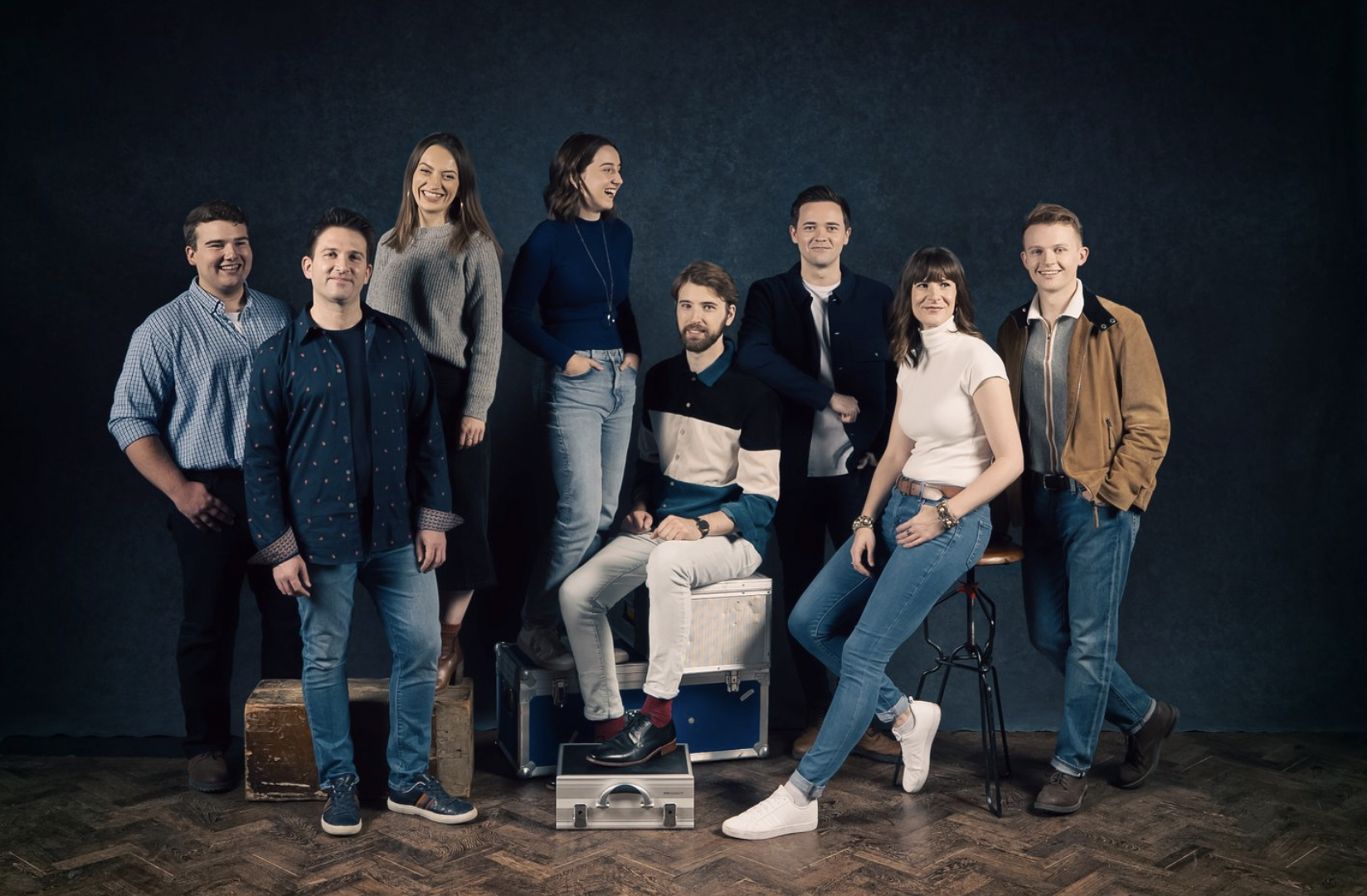
A promotional photo of the English a cappella group Voces8

Thanks to sponsorship by Boulder’s Ars Nova Singers, Voces8 will appear in Colorado this week: at 7:30 p.m. Wednesday at Macky Auditorium in Boulder and Thursday at St. John/s Cathedral in Denver (March 1 and 2). The Denver performance is sold out, but tickets for Wednesday’s Macky Auditorium performance are still available HERE.

Under the title “Choral Dances,” the Macky program offers what the group calls “a rare mix of ethereal and angelic,” and will include performances by Ars Nova, under the direction of Tom Morgan. Both groups will present music that reflects their individual traditions of performing music from the Renaissance to the current day.

Voces8 will open with a celebratory sacred piece from the Renaissance, “Buccinate in Neomenia Tuba” (Blow the trumpet when the moon is new) by Giovanni Croce. Characteristic of their eclectic programming, that will be followed by an eight-part motet by Mendelssohn (“Denn er hat seinen Engeln befohlen”—For He shall give his angels charge), music by group co-founder Paul Smith (“Nunc Dimittis”—Now depart) and the great cellist Pablo Casals (“O vos omnes”—O all ye).

“Drop, drop, slow tears,” one of the best known songs of the English Renaissance composer Orland Gibbons, is paired with a setting of “The deer’s cry,” a sacred poem also known as “St. Patrick’s Breastplate,” by Estonian composer Arvo Pärt. Ars Nova closes the first half of the concert with three pieces from their repertoire, by English Renaissance composer John Shepherd, late Renaissance Italian composer Carlo Gesualdo, and contemporary American composer Caroline Shaw.

In the second half of the concert Voces8 will sing one of their most popular numbers, a setting of Elgar’s famous “Nimrod” variation from The Enigma Variations to the text “Lux Aeterna” (Eternal light). Other composers on their program are Arthur Sullivan of Gilbert and Sullivan fame, and the great early Baroque composer Claudio Monteverdi. The program closes with another piece by Orlando Gibbons, the joyful “O Clap Your Hands.”

The group’s Voces8 Foundation is a registered charity in the United Kingdom. It was set up by Paul and Barnaby Smith in 2006 to develop the ensemble’s music education and outreach programs. Located in London, the foundation works with choral and small vocal groups in both performance and education. It presents workshops and masterclasses, and awards choral scholarships to young singers. There is a separate Voces8 USA Foundation.

# # # # #

Ars Nova Singers presents Voces8

“Choral Dances”

7:30 p.m. Wednesday, March 1
Macky Auditorium

TICKETS
“Lux Aeterna”

7:30 p.m. Thursday, March 2
St. John’s Cathedral, Denver—SOLD OUT