
Guest pianist Alessio Bax and soloists from orchestra in the spotlight
By Peter Alexander March 27 at 5:50 p.m.
Two works inspired by festivals will form bookends for the next Boulder Philharmonic concert, at 4 p.m. Sunday (March 30; details below), with a big, popular Romantic piano concerto in the center.
The Piano Concerto No. 2 by Rachmaninoff fills the central position. Guest artist Alessio Bax is the soloist and Michael Butterman will conduct.
The frame for the concerto will be provided by PIVOT by Anna Clyne, inspired by experiences at the Edinburgh Festival; and Stravinsky’s Petrushka, the brilliant score to a ballet that takes place during the Shrovetide festival in St. Petersburg, Russia.
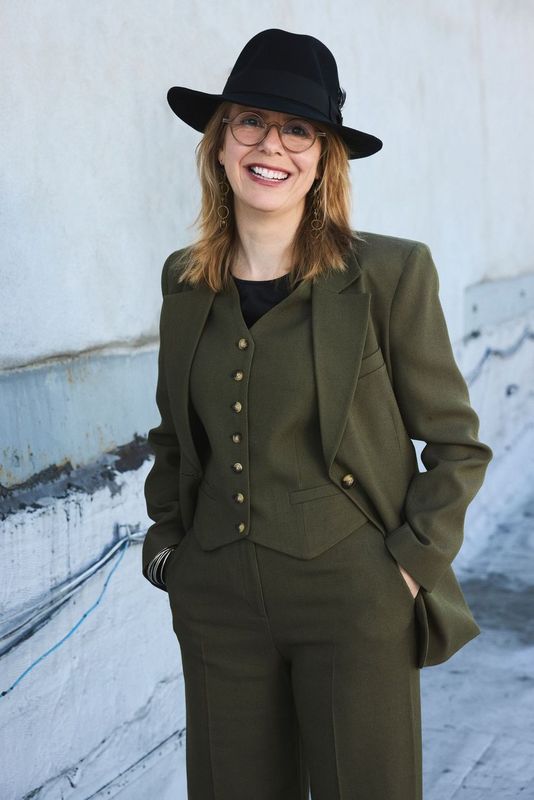
The common inspiration of a festival is what suggested to Butterman that Clyne and Stravinsky would make an effective framework for the program. “When we were thinking about programming Petrushka, it struck me that some of the swirling, calliope-like music in the opening section is kind of echoed in Anna Clyne’s PIVOT.
“It’s a piece that I’ve done once before, in Shreveport. You feel that you are walking through a space in which there are different happenings going on. You pass one, (with) a particular tempo and mood, and you turn around and you are facing something else entirely.”
The composer’s description of PIVOT closely matches Butterman’s. “It’s the idea of opening up doors as if you were going down a musical corridor,” she says. “You open one door and there’s a trapeze artist, and another there’s a lady singing an aria. PIVOT really takes you on lots of twists and turns in what’s actually a very short piece.”
It also reflects Clyne’s experience as an undergraduate student in Edinburgh in the 1990s, with a bit of history and folk music thrown in. “I really wanted to evoke a sense of celebration drawing on my experiences living in Edinburgh and being there during the festival,” she says. “Every nook and cranny becomes a venue, be it music, theater, comedy, dance—it’s every art form you can imagine.
“There’s a tune that I borrow called ‘The Flowers of Edinburgh,’ which is a traditional folk tune of Scottish lineage and also a tune that shows up in American folk music. PIVOT was co-commissioned between the Edinburgh International Festival and St. Louis Symphony, so I wanted to find music that brought those two countries together.”
The historical aspect comes from a pub where local musicians meet to share folk music. The pub is called The Royal Oak today, but 200 years ago it was called The Pivot. Thus the title both reflects the nature of the music and recalls the history of a musical venue in Edinburgh.
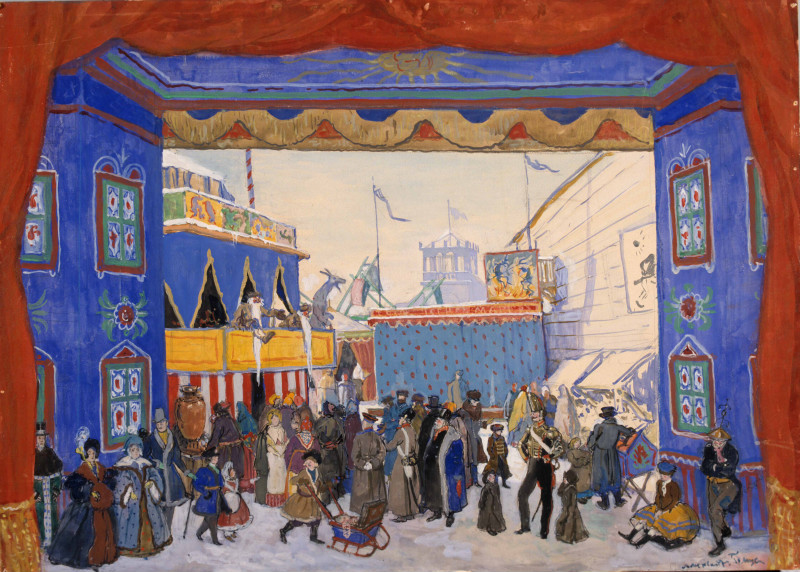
At the opposite end of the program, Stravinsky’s Petrushka is a brilliant, colorful description of the crowds at a Russian Shrovetide (Mardi Gras) festival with various dances—some using Russian folk tunes—as well as drunken revelers, organ grinders, a dancing bear, and most central to the story, a puppet theater with three puppets that dance at the command of a magician.
One of the puppets is Petrushka, who is killed by another puppet as the fair is closing for the night. As the ballet ends, night descends over the empty square. Petrushka’s ghost appears above the theater as the magician runs off in fear.
“This is really a piece in which you need to have a sense of what is happening and what Stravinsky is evoking,” Butterman says. “It works very well as concert music, but it really is a full ballet score. Understanding the dramatic context is critical.”
The score notably includes a major piano part in the orchestra. “It is the most virtuosic orchestral piano part that I can think of, in the whole repertoire,” Butterman says. “It’s absolutely critical to much of the piece.”
The Phil’s piano and keyboard position is currently vacant, and the solos in this case will be performed by Cody Garrison. A practicing dentist in Denver, Garrison works at Metropolitan State University as accompanist in the brass and woodwind departments. He also serves as pianist for Opera Colorado and staff accompanist for the Boulder Symphony, where he played Liszt’s Todtentanz (Dance of death) with the orchestra last season.
There are important solo parts for other members of the orchestra. Two in particular stand out in scenes for the three puppets: flute, which will be performed by visiting principal Hannah Tassler, and trumpet, which will be performed by principal player Leslie Scarpino.
The Rachmaninoff concerto is the most familiar piece on the program. It had a large impact on the composer’s career, since its success helped him overcome the failure of his First Symphony a few years before. Technically demanding of the pianist, the Concerto is also very tuneful and has become one of the most popular piano concertos in the standard repertoire.
“There’s no question why it’s so winning,” Butterman says. “It has lots and lots of virtuosity, and (Rachmaninoff) had the incredible gift for writing melodies that go straight to the heart, that have both a soaring, noble quality and more than a tinge of melancholy.”
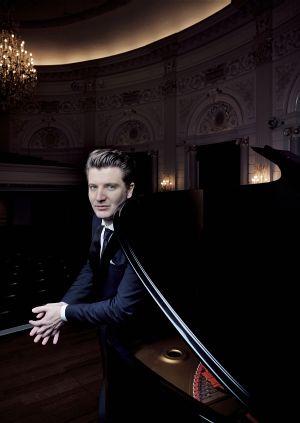
The soloist, Alessio Bax, began his career in Italy, but is distantly related to the English composer Arnold Bax. Butterman relishes working with him. “I did this very same piece with him last season in Shreveport, and I find him an elegant player, yet full of the kind of passion that you want in this piece. I feel like I know where he’s going with a phrase, so from my perspective, it was a dream to lock in with him.
“I thought it was a very effective and memorable performance, so I’m expecting we’ll have a similar experience in Boulder.”
# # # # #
Masterworks Concert
Boulder Philharmonic, Michael Butterman, conductor
With Alessio Bax, piano
Orchestra soloists Cody Garrison, piano; Hannah Tassler, flute; and Leslie Scarpino, trumpet
- Anna Clyne: PIVOT
- Rachmaninoff: Piano Concerto No. 2 in C minor
- Stravinsky: Petrushka (1947)
4 p.m. Sunday, March 30
Macky Auditorium
Correction: Typo corrected the headline, 3/28. The soloist’s name is Alessio Bax, not Max as spell corrector incorrectly changed it.




 Sharps & Flatirons