Changing of the guard at the Dairy

James Bailey, who transformed the Dairy Arts Center’s musical program, steps aside

By Peter Alexander

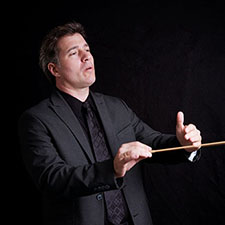
James Bailey, the music curator who has transformed the musical offerings at Boulder’s Dairy Arts Center, has stepped down from his position, effective May 1.

04-Dairy_Center_for_the_Arts

Dairy Arts Center

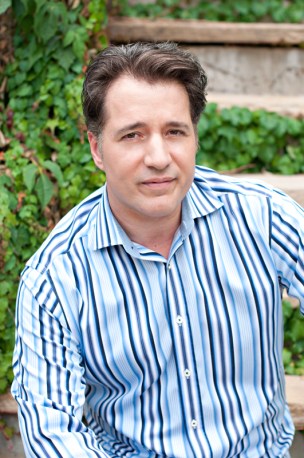
He will be replaced in the position by Sharon Park, a violinist and music administrator who has worked for and played in several of Boulder’s classical music organizations, including the Colorado Music Festival, the Boulder Bach Festival, the Boulder Philharmonic and the Boulder Chamber Orchestra. Park is a graduate of the New England Conservatory, the Juilliard School and the University of Colorado, Boulder.

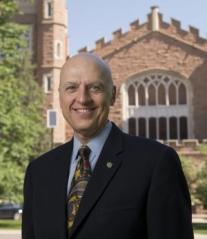
Bailey

James Bailey, outgoing curator of music for the Dairy Arts Center

After about two and a half years in the position, Bailey said he made the decision to step down just this year. “Over a period of weeks I got the feeling, ‘maybe it’s time for me to retire from this’, and open myself up to whatever happens next,” he says. “When I started looking at what’s involved with music at the Dairy, I realized that now is the time to do it, and to walk away and let that happen as it may.”

He has no specific career plans after leaving the Dairy. “It’s  business as usual for me into June,” he says. “I’ve got a couple of trips I’m taking. I probably won’t settle into ‘What am I going to do next?’ until mid-August.”

Speaking of his successor, Bailey says “I have complete confidence in Sharon. I know her as a musician and as an administrator, so I knew that she would be perfect for the job. I’m very glad she was available.”

Park

Sharon Park, new curator of music for the Dairy

“Its a huge honor to follow in Jim’s footsteps and carry on the platform he’s already created,” Park says. “Jim has been integral not only to music at the Dairy but in general in our community. I’m excited to carry on that platform that Jim has so wonderfully created for the past couple of years.

“One of the special things about the Dairy is that it really does break down the barriers of the traditional concert hall.”

In his time as music curator, Bailey took the Dairy from having almost no serious musical program to one of the most interesting and creative venues in Boulder, in part by focusing on things off the beaten path that no one else was doing. These have included world music, work by local composers, the combination of music and film, live music with dance, and jazz performed in a pure listening environment.

“I was very fortunate to meet Bill Obermeier (executive director of the Dairy Center) when I did,” he says. “We hit it off, we had the same vision, and we created it. We’ve gone from nothing to where we produce about 22 concerts a year.”

That same period has seen the renovation of the Diary, which now has a well designed entrance that provides about the best lobby space of any performance venue in Boulder.

Both Bailey and Park said that the current series at the Dairy—Soundscape, One Night Only, and Jazz at the Dairy—will continue for at least the coming year. But there are also some new developments planned as well.

“We’re starting a brand new series, which will be very exciting, called CU at the Dairy,” Bailey says. “This will involve faculty and graduate students from the University of Colorado.

“We have a new grand piano [a recent gift to the Dairy from the Louis and Elizabeth Tenenbaum Memorial Fund], and we have new sound equipment. And what won’t be noticed by the audiences is starting in late December we’re going to completely renovate the backstage area. The performers will be very happy about that!”

Park hints that there may be still more innovations to come. “Stay tuned!” she says. “There’s a lot of exciting things in the pipeline.”

Women in Classical Music: Some Good News, Some Bad News

“Blind” orchestral auditions have leveled the playing field.

By Peter Alexander

Missy.skyline

Missy Mazzoli was composer in residence with the Boulder Philharmonic in 2016

Sometimes a cliché is true.

For example, for women entering the field of classical music, there’s some good news and some bad news. Depending on the career goals, the prospects can be good, mixed, or troubled.

In a year when women’s status in society is daily in the news, this is a timely subject. For the purposes of this article, I will look at the orchestral scene, the most visible part of the classical music world and one where numbers are easily available.

First the good news: professional orchestras are filled with women today, a vast contrast to 40 or 50 years ago when orchestras were almost entirely male. This is now a viable career for the most talented women instrumentalists.

The bad news is that the picture is not nearly as rosy for women composers, who are not well represented on orchestral programs. And women conductors are no better off than composers.

The growing numbers of women in professional orchestras at every level can be traced to a single innovation that began around 1970: “blind auditions,” where competing candidates for open orchestral jobs play behind a screen. The selection committee does not know if it is hearing a man or a woman. The rapid change in the makeup of orchestras since 1970—casually visible and backed up by the numbers—is compelling evidence of the opposition women orchestral players faced before that innovation.
Susan.Slaughter

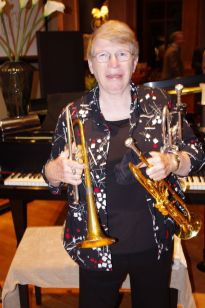
Susan Slaughter

Susan Slaughter, the first female principal trumpet player in the U.S. was interviewed in 2009 when she retired after 40 years in the St. Louis Symphony. In the article in the St. Louis Post Dispatch, she recalled that orchestras were not interested—until they heard her play. She wrote to 30 orchestras when she was starting out, and was invited to three auditions.

When she auditioned for St. Louis, one string player on the committee later admitted that he actually got up to go get coffee when she walked onstage. “He waited to hear a few notes, just for form’s sake,” the article said. “He said, ‘Your playing made me sit back down.’”
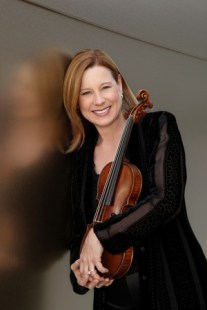
Los Angeles Philharmonic Orchestra Member Portraits Day 9

Elizabeth Baker

Violinist Elizabeth Baker, a member of the Los Angeles Philharmonic since 1987, has experienced auditions from both sides of the screen. She does not doubt the importance of blind auditions. “The screened rounds were the main reason why women were able to advance and realize positions in major symphony orchestras,” she says.

She has seen this in her own family. Her mother, Virginia Voigtlander Baker, was one of the first women in a principal string position in an American orchestra. She was engaged as assistant concertmaster of the San Francisco Symphony in 1972, shortly after the introduction of screened auditions, and held the position until 1993.

Baker’s belief is supported by scientific research. In an article titled “Orchestrating Impartiality,” published in 2000 in The American Economic Review, researchers Claudia Goldin and Cecilia Rouse concluded that “the screen increases—by 50 percent—the probability that a woman will be advanced from certain preliminary rounds and increases by severalfold the likelihood that a woman will be selected in the final round.” Their conclusion is backed up by 25 pages of charts, graphs and statistical studies.
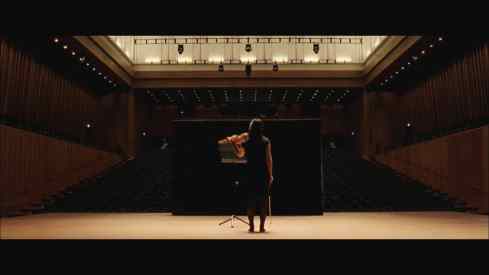
610612971

A violinist prepares to play an audition behind the screen.

The numbers are striking. According to the most recent information from the League of American Orchestras, the percentage of women instrumentalists has gone from 38.2% in 1978, the earliest year that these records were kept and already after the first screened auditions, to nearly 50% today. Some individual orchestras have up to 60% women.

The numbers are similar locally. Based on the rosters on their Web pages, approximately 44% of the Colorado Symphony and 58% of the Boulder Philharmonic is female. Significantly, the concertmaster of the Colorado Symphony is a woman, as are the assistant concertmaster and several principal players in the wind sections of the Boulder Phil.

The numbers were much lower before screened auditions were introduced. In the 1950s and ‘60s, orchestras were considered a male preserve. Older women instrumentalists often recall being explicitly told to get a college degree so they could teach, because “orchestra jobs are for men.”

Today blind auditions are just about universal in American orchestras. The Code of Ethical Audition Practices that professional orchestras follow does not specify screened auditions, although it does prohibit discrimination of the basis of sex, and they often are required in union contracts between orchestras and musicians.

# # # # #

Individual women composers have seen some well publicized successes recently. In December the Metropolitan Opera produced L’Amour de Loin by Finnish composer Kaija Saariaho to great acclaim—the first opera by a woman at the Met in 113 years. The Santa Fe Opera premiered Jennifer Higdon’s Cold Mountain in 2015, and Opera Colorado premiered Lori Laitman’s Scarlet Letter in 2016. But while such widely publicized events may open doors for other women, they do not tell the whole story.
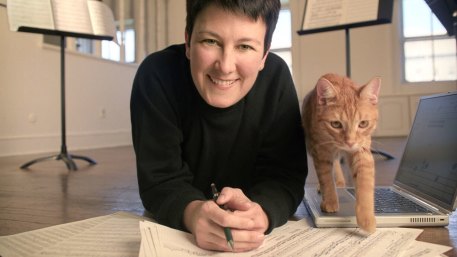
higdon_wide-cd87583ceddcb0d5b5f267516da7d0ed99b82584

Jennifer Higdon’s “Cold Mountain” was premiered at the Santa Fe Opera in 2015

For one thing, composers do not have the advantage of auditioning anonymously. Music directors and board committees know whose music they are choosing. “We’re completely at the mercy of the people who do the programming,” Higdon explains. “We have no control over our careers, basically, especially in the orchestral realm.”

A highly successful composer by any standard, Higdon is an exception, a Pulitzer prize winner with more than 200 performances every year. But that does not mean she has not met casual sexism in her career. People still tell her “I can’t believe a woman wrote that piece!” and she was even asked by a documentary filmmaker once if he could get a shot of her ironing.

“I was like, ‘What? Did I hear that correctly?’” she recalls.

Missy Mazzoli, a 2016 composer in residence with the Boulder Philharmonic, points out that women composers often cannot know when discrimination occurs. “It operates on different levels, a lot of which I would be the last person to be aware of,” she says. “I’m not behind closed doors where people are making decisions, but I think the numbers speak for themselves.”

What the numbers say depends on which ones do the speaking. In the 18th, 19th and early 20th centuries, the period that still forms the largest part of the classical repertoire, women were discouraged, when not actually prevented, from being composers. That is no longer the case, so while there is little music by women from the core of the classical repertoire, there is a great deal of newer music by women.

Statistics kept by the Baltimore Symphony reflect that discrepancy. They show that only 1.8% of all works performed by major orchestras in 2014–15 were by women. But when limited to works performed by living composers, that number jumped to 14.8%.
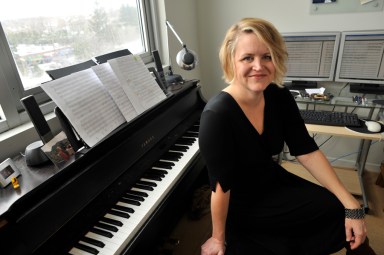
Kuster

Boulder native Kristin Kuster

Still, that remains a smaller share of the repertoire than the growing numbers of women composers would suggest. Kristin Kuster, a composer from Boulder who teaches at the University of Michigan, reacted when the figures were first released, writing, “These numbers are both abysmal and embarrassing, particularly in this day and age.”

She knows first-hand how many women are moving into composition. “We are seeing a gradual increase in the number of female composers applying to our undergraduate and graduate programs” at Michigan, she says today. And at last summer’s “Composing in the Wilderness” workshop in Alaska (covered in Boulder Weekly in October), open registration attracted five women and four men.

Local figures hover around the national averages. In the 11 seasons under conductor Michael Butterman (including the current season), the Boulder Philharmonic has played six pieces by six different female composers. That is approximately 3.2% of all the repertoire programmed on major concert performances, slightly above the 2014–15 single-season national average . Among living composers, it is 15%, almost exactly the national average.

That is a stark difference from the orchestra’s early years. In all of the recorded repertoire before Butterman, back to 1966, the percentage of women composers on concert programs was exactly 0—unless you count the 1995 “performance” of “Happy Birthday” by Mildred and Patty Hall.

For the Colorado Music Festival, it is more difficult to calculate percentages, because there are so many different genres and ways of listing programs. What can be gleaned from the records is that in the first 20 years of the festival, through 1996, there were seven works played by women—six of them by Betsy Jolas, who is also part of the upcoming 40th anniversary season.

More recently, Michael Christie’s 13 years with the festival featured nine works by seven women. Looking only at Festival Orchestra concerts that have full program listings in the record, three women make up 1.3% of all composers and 9.4% of living composers in the Christie era, below the national averages. For the CMF Chamber Orchestra in the same period, however, the figures are slightly above the national average: five women represent 2.5% and 17.9% respectively.

HannahLash1

“Click” Commission winner Hannah Lash

Since Christie left, the only works by women were Hannah Lash’s “Click” Commission winner in 2016, and the upcoming piece by Jolas.

The “Click” Commission choice is particularly interesting. The commission has been granted in five festival seasons between 2011 and ’17. The winners of the commission are selected by the public, who vote with their pocketbooks by making contributions.

In those five years, there have been 14 men and three women candidates. Of these, the voters selected three men and two women—Kuster in 2013 and Lash in 2016. This is a far higher rate than women have been programmed locally or nationally. Since there were two women candidates in 2013, voters have actually chosen a female composer every time one was available. This is a very small sample, but it suggests that, at least in Boulder, audiences are more willing than program committees and music directors to choose female composers.

This adds up to a mixed picture for female composers: progress, but well short of representation in proportion to the numbers of active composers. For her part, Kuster calls on everyone to be part of the solution. “We all have a responsibility to change our culture to be more inclusive, and to represent the reality that there is a vast diversity of musical voices to be heard,” she says.

# # # # #

The most prominent musicians at orchestral concerts are the soloists and conductors. For soloists, the rise of women in orchestral positions has been paralleled by women with solo careers, particularly violinists. The rosters of three of the largest artists management companies in New York—Columbia Artists, IMG and Opus 3—together list 37 violinists, of which 16, or 43.2%, are women. Female pianists fare less well, with 13 out of 59, or 22%.

But it is as conductors that women appear least successful. In this area, management rosters may slightly underrepresent women. The management companies represent 153 conductors and only 11 women, or 7.2% of the total, whereas the numbers of women in actual orchestral conducting positions are slightly higher.

The League of American Orchestras reports that among all conductors at league orchestras—including both music directors and assistants—14.6% are women, almost exactly the same rate at which women are included in orchestral programs. At the highest level, 9.2% of all music directors of LAO orchestras are women. However, the discouraging fact is that both numbers have changed very little over the past 10 years of league records, and throughout the same period there has been only one female music director in the top 24 U.S. orchestras by budget, Marin Alsop at the Baltimore Symphony.

Whatever numbers you look at, women are underrepresented at the top levels of the orchestral world. When asked about this, women refer over and over again to the same issues that face women in leadership positions in business and other fields: it is more difficult for women to be taken seriously as strong leaders.
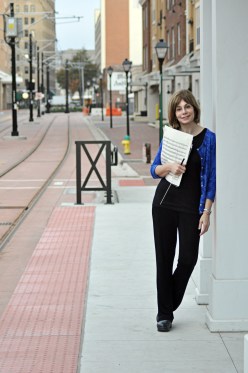
falletta.virginia2012.beloff

JoAnn Falletta

JoAnn Falletta, music director of the Buffalo Symphony and one of the senior women conductors today, explains it this way: “Probably the greatest factor is that [symphony] boards are run by people who believe very strongly in the status quo. And that means board members trusted generally in an older man, and I think that has lasted for decades.”

Beverly Everett, music director in Bismarck, N.D., and Bemidji, Minn., is well accepted in both communities, but says that in many cases boards’ “perception of leadership is someone who can go out and be buddy-buddy with someone on a golf course.” One position that she considered, she recalls, “I had a friend who knew some of the people on the board, and they told him flat out that they would not consider a woman.”

Laura Jackson, music director of the Reno Philharmonic, says the perception of a conductor is often even more narrow than that, of an older European male—a long-term prejudice in the U.S. that can hamper younger men as well as women. “The average person has in their mind a Toscanini, sort of an Einstein-looking character,” she says. “The young male conductors suffer from the stereotype as much as I do.”
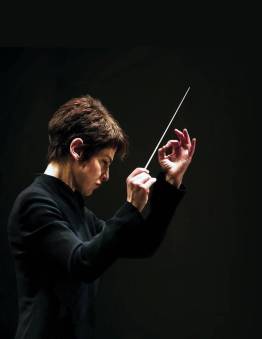
Laura Jackson conducting

Laura Jackson

The good news is that it is not usually the musicians in the orchestra who have a problem with women conductors. “Most people just want somebody competent on the podium, period,” Jackson says. “If you’re an iguana and you do what you do well, they’ll take it.”

She has seen more concern about the gender of the conductor from the public than from musicians. When she was a conducting fellow at Tanglewood, Mass., she says, “It was the patrons who said, ‘Do you realize how long it’s been since we had a female here? This is really freaky!’”

That perception in turn puts extra pressure on women conductors, who may be seen as representing all women. “It was scary because I felt like one false move, if anything was wrong, it would end up being blamed on my gender,” Jackson says.

Another challenge that is familiar to all women in all fields is the difficulty of being assertive—which goes against society’s expectations of girls and women. For example, Falletta had to learn at the outset not to be apologetic. “There can be a subtle sense of apology in what women say,” she says.

Jorge Mester, a conductor who was Falletta’s teacher and mentor when she was younger, puts it more bluntly. “It’s the teaching that little girls are given about being subservient,” he explains. “I said to her, ‘JoAnn, do you want to be a nice Catholic girl, or do you want to be a conductor?’”

In other words, women have to step outside the traditional social role to exert leadership—but if they are too assertive they run the risk of being perceived as shrill, or worse. “The most difficult thing is figuring out the window of leadership where you can be commanding and make a point passionately without being seen as angry, where you can be not seen as brittle and mean,” Jackson says.

Another challenge familiar to women in business is dress. “For any performer male or female, the way you look is very important,” Jackson says. “With a woman there are many extra layers to getting that right. If a man walks in and his shirt is a little wrinkled, he’s a disheveled genius. If a woman looks like that, she’s incompetent.”

“Concert dress is something men may not even think about,” Falletta adds. “With a woman, it seems to be more laden with social importance.”

Women like Falletta and Jackson and Everett have shown that women can be successful orchestral conductors. But is that career path one that is becoming more open to women generally? The evidence is mixed. As noted, the numbers recorded by the League of American Orchestras have been static for at least ten years. And individual experience varies widely.
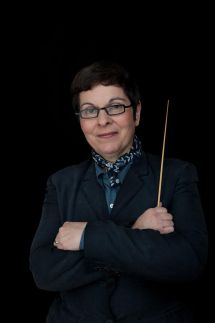
Photography by Glenn Ross. http://on.fb.me/16KNsgK

Cynthia Katsarelis

Cynthia Katsarelis, conductor of the Colorado Pro Musica Chamber Orchestra, is the only female orchestral conductor in the front range area. “When I was at the Peabody Conservatory, the conducting class was 50-50, male-female, all talented,” she observes. “At each new level of my career, there were fewer women. In top masterclasses and summer programs there would be fewer women. I would be the only woman at several professional auditions and now there are many music director searches where no women are auditioned.”

As it happens, that has been exactly the case in the most recent high-profile searches in this area.

In 2010, the Colorado Symphony had eight guest conductors, all European males, and hired Andrew Litton from that field. Six years later, Brett Mitchell was hired to replace Litton, without any other candidates appearing with the orchestra. Around the same time, two other men were hired in conducting positions, Associate Conductor Christopher Dragan and Assistant Conductor Andres Lopera.

In 2014, the Colorado Music Festival featured four official candidates to replace Michael Christie, all male. The two or three other names that were informally discussed were also male. The Longmont Symphony is currently searching for a new conductor, and once again all the finalists are male.

That’s the local picture, but it may not be broadly representative. Jackson believes more women are coming into the field. “In the past three years it’s like the floodgates are opening,” she says. “I think we are on the cusp. I think that I have probably done my last music director audition where I am the only woman.”

She sees some situations where being a woman may even be an advantage. “For an orchestra that needs a big change, when they see your résumé and see your picture, you are automatically that change, that clean slate,” she says. “That can put you in a category where people will ask, ‘Why not?’

“I think it’s going to be less and less of an issue.”

Falletta believes that the publicity around some recent high-profile women conductors helps. The Finnish conductor
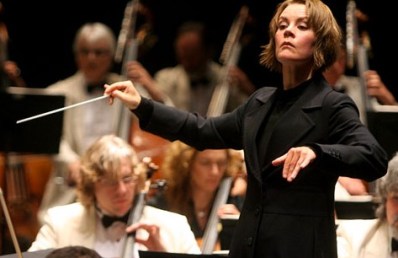
SusannaMalkki

Susanna Malkki conducted at the Metropolitan Opera in 2016

Susanna Malkki, chief conductor of the Helsinki Philharmonic who also who led Saariaho’s L’Amour de Loin at the Metropolitan Opera is one example. Another is Mirga Grazinyte-Tyla, new music director of the City of Birmingham Symphony in England. In 2013, Alsop became the first woman to conduct the BBC’s “Last Night of the Proms” in London.

“Once it’s happened on a high level, people are more open to it,” Falletta says. “All of us  tend to look to orchestras that are bigger than us as models. As they start to have more women on the podium—and more women composers, as well—I think smaller orchestras will do the same.”

At least the way is now open for women to learn the skills as conductors. University and conservatory programs are accepting women, and the Dallas Opera has made a 20-year commitment to its Linda and Mitch Hart Institute for Women Conductors. The League of American Orchestras has held special programs for women conductors, as did the Lucerne Festival in 2016.

In the end, it all comes down to fairness, and the opportunity of talented women to pursue the career of their choice. But Higdon has her own perspective on the whole issue, that opening doors to women is good for classical music generally.

“Young people don’t come to classical concerts because it looks so un-hip,” she says. “One reason is because there are so few women represented. They are used to women being part of the scene from popular music and hip-hop and everything else they listen to.

“If you want to be more hip and appeal to younger audiences, program more women!”

NOTE: An abridged version of this story appeared in Boulder Weekly.

Edited lightly to correct typos and clarify the numbers that are provided, 4/13.

Ajax Quartet chosen for Takacs Quartet residency

New graduate ensemble wins audition for two-year appointment at CU

By Peter Alexander

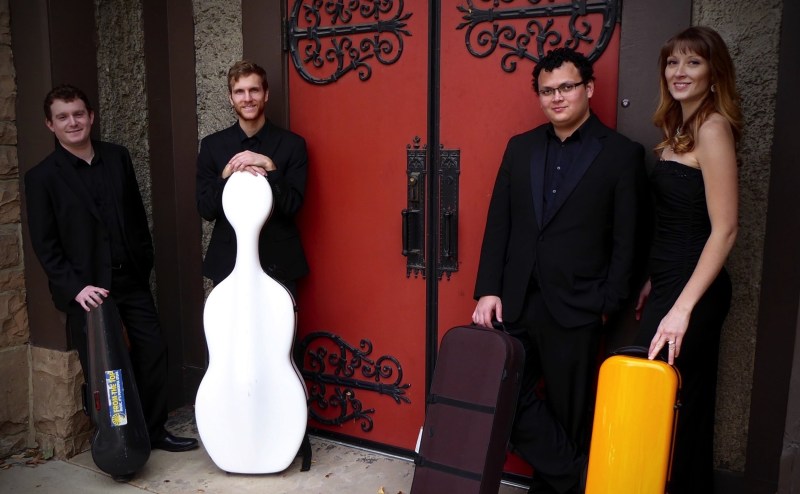
The Ajax Quartet, a string ensemble that is less than a year old, has won the audition to study with the Takacs String Quartet at the CU College of Music, starting in September. They will succeed the Altius Quartet in the highly coveted position as the designated graduate string quartet-in-residence at the college.

IMG_0177watermark

Ajax Quartet

The four members of the quartet—violinists Tom Yaron, Renée Hemsing-Patten, violist Mario Rivera and cellist Eric Haugen—came to the CU from different parts of the country. “There’s not any way we could have met up before CU,” Hemsing-Patten says.

“The faculty members, having auditioned all of us and knowing our playing, seemed to think we would play well together. So they introduced us to each other, and they were completely right! We hit it off right away.”

Only three weeks after they had starting working together, the Takacs asked the Ajax Quartet to play one piece for an event at The Academy. Members of the Takacs Quartet offered to coach the new group prior to that performance.

“We hadn’t even thought about auditioning for the Takacs program at that time,” Hemsing-Patten says. “But as things progressed over the fall semester, we just began to feel like everything was working out really well, and decided to go ahead and shoot for that. There was an official audition in early February.”

Having won the CU residency is the realization of a dream for the members of the quartet, she says. “I listened to recordings of them because my grandma was a violinist in quartets since I was a kid, so I’ve known who they are through my entire life. And I know the other guys have as well. It’s a dream to be able to work with them.

“We have all wanted to play in a quartet in different points in our lives, and have just never found the right group, so for us it’s something we’re really serious about pursuing.”

There will be opportunities to hear the Ajax Quartet in Boulder in the coming weeks, before their official performances as graduate quartet-in-residence next fall. At 4 p.m. Saturday, April 29, they will play a full concert at the Carillon, and at 7:30 p.m. Tuesday, May 9, they will share a concert at the Academy with the Altius String Quartet. For the second program, the Ajax Quartet will play Dvořák’s American String Quartet, and both groups together will play Mendelssohn’s popular Octet for Strings.

Both performances will be free and open to the public.

# # # # #

Ajax Quartet
4 p.m. Saturday, April 29
The Carillon, 2525 Taft Dr., Boulder

Ajax Quartet and Altius String Quartet|
7:30 p.m. Tuesday, May 9
The Academy, 970 Aurora Ave., Boulder
Dvořák: String Quartet in F major, Op. .96, “American” (Ajax Quartet)
Work TBD (Altius String Quartet)
Mendelssohn: Octet in E-flat major for strings

Both concerts are free.

CU College of Music adds Fourth Named Program

$2 million gift endows the Roser Piano and Keyboard Department

By Peter Alexander

The Roser Piano and Keyboard Department joins the Thompson Jazz Studies Program, the Ritter Family Classical Guitar Program and the Eklund Opera Program as one of four named programs at the University of Colorado, Boulder, College of Music.

Roser.2

Becky Roser. Photo by Patrick Campbell/University of Colorado.

The name is the result of a $2 million endowment created by Becky Roser, who has helped support the College of Music in a number of significant ways. She is currently the chair of the music+ campaign committee, a fundraising effort that aims to raise $50 million for the College of Music in advance of its centennial in 2020.

Roser’s is the first major gift to the music+ campaign since it’s public announcement earlier this year. Roser says the gift reflects her love of the piano from childhood. “My mom and dad bought me a piano back in 1951,” she said in a statement from the university. “I played that piano from the time I was young, and then my daughter Nicole played it, too.”

shayrobert

Robert Shay

“This is an individual of unique vision and leadership and commitment,” College of Music Dean Robert Shay says. “Becky was determined to make this happen, and it really comes from the heart, it comes from her passion, from her love for music generally, but I think her love for this College of Music in particular.

“I want to highlight from my perspective how much Becky means to all of us here in the college and how appreciative we feel of this very generous effort. These kind of funds really allow all of us, our faculty especially, to kind of dream big.”

Korevaar2

David Korevaar

David Korevaar, the Helen and Peter Weil Faculty Fellow and acting chair of the piano and keyboard department, says it will take some time for the faculty to realize what the gift will mean. “It’s a whole new world as far we’re concerned,” he says. “We’re all still sort of just getting our heads around this. We’re going to end up in a situation where we can be thinking more strategically, and thinking bigger than we’ve been able to think.

“We have this great feeling that Becky, who has been such a friend to the College of Music, is willing to make this amazing investment in keyboard. That’s just kind of a stunning, wonderful thing.”

Korevaar said that the faculty have discussed several opportunities that the funds would create. These include a summer piano festival in Boulder, residencies by distinguished keyboard artists that would include both teaching and performances, and increased support for scholarships and professional development for students. Such plans will develop over time, he says.

The statement from the university quoted Roser saying “It makes me happy and it brings me joy to be able to do this. An endowment goes on forever, and now more than ever, it’s important to have done this.”

Prior to heading the music+ campaign, Roser served on the College of Music Advisory Board, and led a fundraising program to refinish the pianos in the Grusin Music Hall and Chamber Hall.

The contribution to the piano and keyboard department is only the latest in a series of gifts from the Roser family to the CU Boulder campus. The Roser Visiting Artists Program brings artists, musicians, dancers and filmmakers to campus as guests. In 2009, the ATLAS Institute’s home on campus was named the Roser ATLAS Center in honor of a gift by Becky and her late husband Jim Roser.

Jean-Marie Zeitouni to step down as CMF Music Director after 2017 season

Peter Oundjian will be artistic advisor for 2018

By Peter Alexander

http://www.jaimehogge.com

Renowned conductor Peter Oundjian will be artistic advisor to the Colorado Music Festival for 2018. Photo by Jaime Hogge.

The Colorado Music Festival (CMF) has announced that this summer’s 40th-anniversary season will be Jean-Marie‘s Zeitouni’s last as music director.

Zeitouni took the position for the 2015 season with a three-year contract. He has decided not to seek renewal of the contract, and instead will have a three-year engagement as principal guest conductor, starting with the 2018 season.

Peter Oundjian, music director of the Toronto Symphony and the Royal Scottish National Orchestra, has been engaged by CMF as artistic advisor for the 2018 season. He will be responsible for programming the season and selecting the guest artists, and he will conduct two concerts during the summer.

He will visit Boulder this summer to meet with the musicians and others in the CMF organization.

A highly respected musician around the world, Oundjian rose to fame as a violinist, winning first prize at the International Violin Competition at Viña del Mar, Chile, in 1980, He was first violinist of the Tokyo String Quartet for 14 years, and since then he has conducted orchestras from the BBC Proms to New York, Berlin, Tel Aviv and Sydney.

Jean-MarieNew1

Jean-Marie Zeitouni

Zeitouni says that while the decision to step back from the position of music director was his alone, the fact that Oundjian was available in 2018 played a part in the timing. “When (CMF) was able to get Peter Oundjian I became more confident about (leaving the position of music director),” he says. “Peter is in a very select league of major conductors around the world. It’s a great coup for the organization.”

Elizabeth McGuire, executive director of CMF, says that the search the next music director “will be a private search. We want to utilize tactics that are employed by the top-tier orchestras, so we can attract the very highest quality applicants.”

There will be no announcement of an opening or solicitation of applications. Instead, McGuire says that CMF will work through a network of consultants to find the right person. Having someone in place for 2019 is a possibility, she says, but “what we want is to find the right fit, and if it’s going to take more than one season, that’s what it will do. In the meantime having someone like (Oundjian) is a terrific solution for us. He has agreed to advise us on the search, and we have other artistic consultants working on it.”

There will be none of the public audition concerts that were such a prominent part of the 2014 season, when Zeitouni was selected as music director, and none of the candidates or finalists will be announced. At this point, she said, no one has been either ruled in or out for the position, including Oundjian.

“Our contract with him purely is a one-year contract,” she says. “We’re not going to leave any stone unturned when it comes to the possibilities, but we have not had that conversation with him now.”

Peter Oundjian 2017-18 - 3 - credit Malcolm Cook

Peter Oundjian conducting the Toronto Symphony. Photo by Malcolm Cook.

Oundjian seems genuinely excited about his appointment at CMF. “I went online and looked at the incredible Chautauqua Hall,” he says. “And then I listened to some recordings of the orchestra, and they sounded wonderful, and I thought, well, this is fantastic! This is a place that has it’s own particular magic. I’ve been really impressed by how well it is run.”

While Boulder is not recognized as one of the world’s musical capitals, that’s not an issue. “Not everything has to be Berlin or New York,” Oundjian says. “You come to a certain point and you’re looking for things to engage you in a slightly different way. I think life should be a mosaic, and I love the mountains. I think Boulder is one of the most beautiful places I’ve ever been to.”

He says it is too early to say what his programming might be, but that is part of the excitement. “I’m open to pretty much anything and I can get enthusiastic about an awful lot of things,” he says. “There seems to be a tremendous amount of flexibility and interest in music of all periods (at CMF).

“I have a canvas that’s fairly open and I have a large palette of colors that I could apply to it. And that’s an exciting situation to be in.”

In the meantime, Zeitouni wants audiences to remember that the CMF has its 40th anniversary celebration this summer. “It’s a great celebration,” he says. “I want to welcome people and invite them for this summer. I worked very hard to put this season together, and I’m excited to perform it.

“I’m very happy with what we did the past two years at CMF. I grew to love the community and the openness of the people of Boulder. I really felt accepted and respected. It’s always been for me, and I have to say for my daughter, a very welcoming place.”

In spite of several recent major administrative changes at CMF, McGuire says emphatically that the departure of Zeitouni as music director does not present a problem for the ongoing success of the festival and the affiliated Center for Musical Arts. “We’re really excited about the future right now,” she says. “We’re financially in excellent shape, so we can say that it’s looking up.

“I think we’re dealing with this change beautifully. I’m happy to be part of it.”

Mixing things up on CD and at the Dairy

From Led Zeppelin to Haydn with the Altius Quartet

By Peter Alexander

The Altius Quartet likes to mix things up.

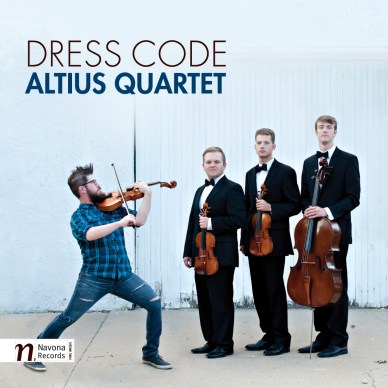
nv6078-dresscode-frontcoverThe string quartet in residence at the CU College of Music, Altius just released a new CD, Dress Code, which does just that, in original and unexpected ways. And they have a concert Saturday at the Dairy Arts Center, “The Many Faces of the Altius Quartet,” that aims in part for the same goal (details below).
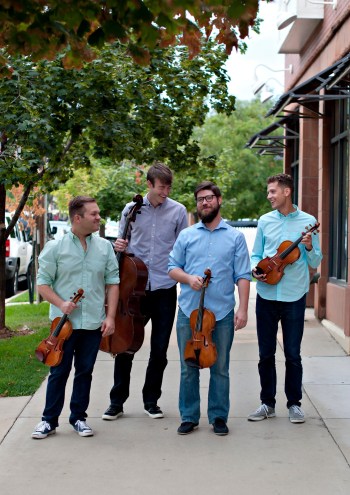
“Part of our identity from the getgo has been, how do we introduce people to classical music who otherwise wouldn’t set foot in a concert hall,” cellist Zachary Reaves says. “When we were still in college we would play shows in pubs, and we’d start with Led Zeppelin or whatever. We’d immediately follow it with a Haydn quartet. It was amazing how people’s reaction to Haydn was when they knew we also played Hendrix.”

Ever since the Kronos Quartet broke that ground in the 1970s, a lot of ensembles have mixed popular music with contemporary and standard classical pieces. Altius goes beyond that, in both the CD and the Dairy program, by scrambling the classical pieces in creative ways.

Take the play list for Dress Code. Just like their pub sets, it includes both Led Zeppelin and Haydn. But the Haydn Quartet—Op. 74 no. 1—is spread across the disc, with other pieces between the movements. Those other pieces include Led Zeppelin’s “Stairway to Heaven” as well as three rags by William Bolcom and other pop arrangements.

That description doesn’t quite do justice to the quirky and slyly subversive playlist. Apparent stylistic whiplash is better conveyed by the whole list—and even better by hearing the CD from beginning to end.

  1. Haydn: String Quartet in C major, op 74 no. 1, I. Allegro Moderato
  2. Dave Brubeck/Michael Jackson: Take it (arranged Reaves)
  3. William Bolcom: Graceful Ghost Rag
  4. Led Zeppelin: Stairway to Heaven (arr. Reaves)
  5. Haydn: String Quartet in C major, op. 74 no. 1, II Andantino grazioso
  6. Bolcom: Poltergeist Rag
  7. Haydn: String Quartet in C major, op. 74 no. 1, III Menuetto
  8. Bolcom: Incineratorag
  9. Ben E King: Stand by Me (arr. Reaves)
  10. Haydn: String Quartet in C major, op. 74 no. 1, IV Vivace
  11. a-ha: Take on Me (arr. Reaves)

Altius.1“The idea was that instead of putting all four movements of the Haydn together, for maybe a millennial to skip over, to intersperse it, while giving a taste of what a string quartet sounds like,” Reaves says. “In the arrangements, we try to sound like a classical ensemble, playing pieces that people are familiar with. Then, when they get used to that sound, listening to a Haydn quartet is not so weird.“
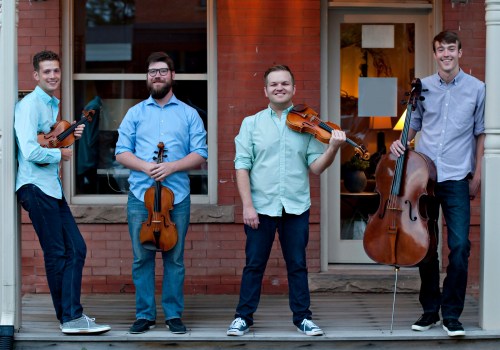
The same aesthetic applies in the program for the Dairy. In this case the most unorthodox program choice is a set of Beethoven scherzos, from three different string quartets: Op. 18 no. 6, Op. 59 no. 1 (“Razumovsky”) and Op. 131—one early quartet, one middle and one late.

This idea was hatched between Reaves and James Bailey, curator of the Dairy’s music series. “Bailey’s become a great friend,” Reaves says. “He and I will just talk about ‘What kind of weird things can we do?’ This program is a brainchild between him and me, showcasing how (Beethoven’s) style in general but also specifically his style in scherzos evolved over his entire career.”

The program also includes Through Fog, a piece written for the Altius Quartet by J.P. Merz, who was a masters composition student at CU when he wrote it. “We performed it at Carnegie Hall in November,” Reaves says. “It’s been a huge hit.”

For a portion of the concert, the members of Altius will be joined by violist Stephanie Mientka and cellist Matt Zalkind to perform three sextets: Atlantic Jigpipe by Mientka’s brother Gabriel; Reaves’s arrangement of Queen’s Bohemian Rhapsody; and Arnold Schoenberg’s Verklärte Nacht (Transfigured Night).

If the stylistic mix sounds disorienting, I should note that the decisive playing of the Altius moderates the stylistic dislocations. Played with conviction and stylistic clarity, Haydn and Queen sit comfortably together on the same stage.

This is in the quartet’s toolkit, no doubt because, as Reaves says: ”We all grew up listening to so many different kinds of music that it’s hard to pick one.” But it is also a mark of their solid training and great musicianship that Dress Code is an artistic success as well as a milestone in the young quartet’s career.

altius.2

Altius has been in Boulder for nearly three years, working with the Takacs Quartet. They will shortly complete their residency, but they plan to stay in the Boulder area as they pursue a career as a professional string quartet. “We’ve kind of fallen in love with area,” the quartet’s cellist, Zachary Reaves, explains. “Being close to the mountains, but aside from that, we’ve met a lot of great people here and made a lot of really good contacts.”

In addition to Dress Code, they have also recorded an album of music by Shostakovich, which will come out in the fall. In the meantime, they will celebrate the first album with a CD release party 7 p.m. Thursday, April 13, at Caffè Sole, 637R South Broadway in Boulder (Broadway and Table Mesa Drive).

# # # # #

Dress Code. Altius Quartet: Joshua Ulrich and Andrew Giordano, vioins; Andrew Krimm, viola; Zachary Reaves, cello. Navona Records NV6078

One Night Only: “The Many Faces of the Altius Quartet
7:30 p.m. Saturday, April 8, the Gordon Gamm Theater, Dairy Arts Center

Atlantic Jigpipe by Gabriel Mientka
3 Scherzos by Beethoven
Through Fog by J.P. Merz
Bohemian Rhapsody by Freddie Mercury
Verklärte Nacht by Arnold Schoenberg

Tickets


Pro Musica concerts, and season, culminate with Beethoven’s “Eroica”

From Creation to love and death to triumph in just three concerts

By Peter Alexander

Pro Musica

Pro Musica Colorado Chamber Orchestra

Cynthia Katsarelis first played Beethoven’s “Eroica” Symphony when she was 16. Since then she has played it, and conducted it, dozens of times, but she still feels she has more to learn.

“That’s what’s so great about great music,” she says. “Every time I look at it there’s something new that I discover.”

Photography by Glenn Ross. http://on.fb.me/16KNsgK

Cynthia Katsarelis. Photo by Glenn Ross.

Katsarelis’ latest opportunity to look at the “Eroica” comes this weekend, when it will be the culmination of not just a pair of concerts in Denver and Boulder (details below), but in fact the whole 2016–17 season of the Colorado Pro Musica Chamber Orchestra.

The Pro Musica’s season opened in October with a performance of Joseph Haydn’s Creation. A second concert in January paired a joyful symphony by Schubert with Shostakovich’s dark meditation on death in his 14th Symphony. And now Beethoven: in Katsarelis’s description of the season, “We started with creation, we went into love and death, and we come out in triumph.”

The concerts Friday and Saturday will open with the world premiere of a new piece by CU composition student Egemen Kesikli, Weltschmerz (world-weariness or world’s pain). Also on the program is Carl Nielsen’s neo-classical Flute Concert, performed by CU flute professor Christina Jennings. The concerts will end, after intermission, with Beethoven’s Symphony.

A piece about world weariness and resignation seems like a strange place to begin a concert titled “Triumph,” but Katsarelis thinks it fits right in. “It’s great because we get to kind of replay the arc of the season within the concert,” she says. “We are starting from pain, finding joy in the Nielsen, and overcoming in the Beethoven. It’s a microcosm of the season.”

kesliki

Egemen Kesliki

Weltschmerz was commission by Pro Musica Colorado. The CU composition faculty selected scores by several students, which they presented to Katsarelis. Based on the scores she saw, she selected Kesikli to write a new piece for the 2016–17 season.

“It’s a really beautiful piece,” she says. “It has some interesting effects—playing with the wooden part of the bow, raindrop effects that some players do with their left hand, violin parts that are written in eight different parts. It will have an interesting sound to it, and the piece has a nice arc to it.”

Nielsen is best known for his expansive, lushly Romantic symphonies, but Katsarelis stresses that the Flute Concerto is not like those works at all. “It’s really a charming, neo-classical piece,” she says.

gallery-Christina569f

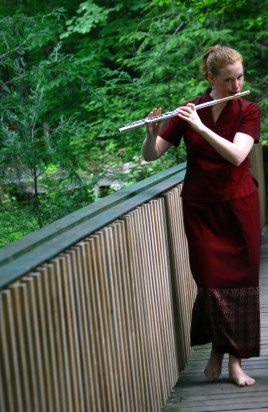
Christina Jennings

“I guess mercurial is the word for it. You think it might be a majestic piece, but then it has these charming 1/16-notes with off-beats in the accompaniment, and then it goes on to a really sweet melody. It covers a range of emotions, and does it rather quickly. So it’s very mercurial, but it’s fun.”

Beethoven’s Third Symphony is one of the best known works in the classical canon, and Katsarelis says it is one of the greatest symphonies ever written. It was longer and more powerful than any symphony written before. But what makes it great, Katsarelis says, is the way Beethoven’s personal struggles turned the symphony into a universal statement of triumph.

It was written soon after Beethoven discovered that he was going deaf, and that his deafness would only get worse. Rather than give in to thoughts of suicide, he turned his suffering into music that speaks of overcoming pain and hardship.

“He says it’s his art that keeps him alive,” Katsarelis explains. “He makes peace with the deafness, and out of that despair he enters his ‘Heroic’ period. The sense of Beethoven bringing the inspiration of heaven starts with the opening chords of the ‘Eroica’.”

bee1804_f1

Portrait of Beethoven by Joseph Mähler, painted around the time of the Eroica Symphony

It is also well known that Beethoven originally intended to dedicate the symphony to Napoleon, until he crowned himself emperor. Out of disillusionment, Beethoven violently removed the emperor’s name from the cover page. “When Beethoven scratched out the dedication to Napoleon and made it to ‘a great person,’ he turned it into something universal,” Katsarelis says.

The universality of the symphony’s message can also generate personal impact. “It gets personal, as certain pieces do,” Katsarelis says. “I was playing in an orchestra when my grandmother died. I missed one rehearsal, and when I got back we were doing the Eroica and the first thing we rehearsed was the funeral march.

“I see it personally, but I also see it universally. I think the personal connection helps me to see the universal.”

Katsarelis says that “everybody should come” to the concert, because the message of Beethoven’s music is still relevant today. “The triumph in Beethoven’s Eroica was more aspirational than accomplished, even when Beethoven wrote it,” she says.

“I think that taps into our aspirations today, and can really ignite our inspiration to strive for a better world, in just being the best that we can be.”

# # # # #

“Triumph”
Pro Musica Chamber Orchestra of Colorado
Cynthia Katsarelis, conductor, with Christina Jennings, flute

Egemen Kesikli: Weltschmerz (world premiere)
Carl Nielsen: Concerto for Flute
Beethoven: Symphony No. 3 in E-flat major, op. 55 (“Eroica”)

7:30 p.m. Friday, April 7, First Baptist Church, 1371 Grant St., Denver
7:30 p.m. Saturday, April 8, First United Methodist Church, 1412 Spruce St., Boulder
Pre-concert talk, 6:30 p.m. both evenings.

Tickets


Opening the door to classical music

World premiere, Berlioz’s fever dream and Liszt’s evocation of doom 

“The orchestra has a rich history and a great potential for the future.”

By Peter Alexander

Each of the four candidates for music director of the Longmont Symphony will conduct a concert during the 2016–17 season. When each candidate visits Longmont, I will take the opportunity to introduce him (and yes, they are all male). The questions will include serious questions about the job of a music director, but also questions that help introduce each of them to the reader. I hope this will give a clearer picture of the strengths of each candidate.

zc-conducting

Zachary Carrettin

The final candidate, Zachary Carrettin, will conduct the LSO on Saturday, April 8. The following works are on the program: A Longmont Overture by Kyle Kindred (world premiere); Violin Concerto Op. 61 by Beethoven, with Charles Wetherbee, violin soloist; and Symphony No. 8 in G major by Antonín Dvořák.

Here are his answers to the questions I asked:

What attracted you to the Longmont Symphony?

 The orchestra has a rich history in its city, 50 years, and a great potential for the future. In recent years, I’ve developed friendships in Longmont, initially through collaboration with the OUR Center and through attending events for A Woman’s Work, Arts Longmont and other organizations. Additionally, the Boulder Bach Festival and I started Bach in Longmont, a series at the Longmont Museum and Stewart Auditorium. Through all of these events I’ve met some of music enthusiasts in Longmont, and I really value these associations and relationships.

 How do you think about programming for a community orchestra? What would a season of the LSO with Zachary Carrettin look like?

 One should program the music the orchestra loves to play, and the music the audience will find interesting: moving, epic, poetic, fun and powerful. European composers from the 1700 to 1945 make up the bulk of our symphonic repertory, but there’s also amazing music by American composers. Spanish and Latin American orchestral music offers exotic colors, as does the music of French Impressionists. The Russian symphonists from Tchaikovsky to Stravinsky, Prokofiev and Shostakovich are as important in orchestral literature a the music of Beethoven and Brahms. When I program a concert, I always try to include something unique, something special. For example, on April 8 the Longmont Symphony and I will perform the world premiere of a new work celebrating the Longmont Symphony by composer Kyle Kindred.

zachary+carrettin

Photo by Courtney Lee

There have recently been alarm bells for classical music and orchestras, especially the larger orchestras that have had serious labor disputes. Do you think that these problems will affect community orchestras as well? And if not, what do you think are the challenges for the smaller  orchestras?

 The financial challenges of an orchestra depend on several factors, and one of those is he orchestra’s desire for growth. Any kind of growth in the budget, in the visibility in the community, in the programming costs money, and this balancing of revenue and expense is the challenge of any non-profit arts organization. I don’t think the challenges are quite as steep for the community orchestras as they are for the full time professional orchestras.

Developing new audiences while captivating the loyal core ticket subscribes is the challenge of our times. Marketing and public relations can help with this by focusing on the exotic nature of the orchestral concert experience. When we travel to foreign countries we eat the food, we hear the language, we experience the sights and sounds. Similarly, we might begin to think of advocating a concert tourism approach in marketing, where we seek to attract audiences of all ages to be a part of the depth and the wonder and the splendor of the symphonic art form, an art “ever-changing as a river flowing.” (That’s a quote from Borges.)

How do you balance and prepare for the various aspects of the conductor’s job: the musical requirements, the social demands with the public, and the diplomatic demands with contributors, the board and musicians?

 The schedule of study, administrative efforts and performance is not for the faint of heart! Yet it is a life journey and a constant workout for the body and the mind. All these disciplines intersect, and the success of an ensemble is dependent on these intersections. I can only say that I try my best, and I learn as much as I can in my many professional engagements. All of these different endeavors require slightly different tweaking of the skill sets.

When the organization is progressing, everyone is inspired and everyone has the energy to do the work at hand. When the conductor is in the community, working with the chamber of commerce, in the public schools and working with donors and seeking advertisement and underwriting, all of this involves multiple people who facilitate these relationships, and it can be quite fulfilling. Balancing all of these disciplines contributes to a conductor’s ability on the podium and relationship with the orchestra.

For example, one donor might want to hear 20th-century unknown works, another one to hear the war horses of the literature. One musician of the orchestra might want to play more Haydn, another one might not want to play anything before 1800. So I think listening to the voices of everyone is step one. Processing that information is step two. But a music director also has to have a strong sense of his or her skill set and vision, because if one only listens to everybody else, one is sacrificing his or her own talents and experience.

carrettin_boulderbachfestival_cropAbout you now: Where did you grow up?
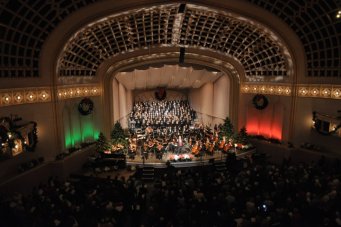
 I grew up primarily in Houston, Texas. I also lived in California, Illinois, Romania, Norway and Italy.

 Did you come from a musical family?

 Both my parents studied fine art, which is how they met—my mother was a recipient of a Fulbright study grant and lived in Venice, Italy, for a year, where my father was born and raised. My mom has been an English teacher for her career, and my father has spent most of his life working for restaurants. Both of them supported my musical endeavors wholeheartedly and with great sacrifice.

Who are your musical mentors?

 I admire conductor Carol Smith immensely. She ran the orchestral program at Sam Houston State University for 30 years. Her work ethic and strong commitment to nurturing young adult musicians have left a profound legacy.

My mentors also include Romanian conductor Dumitru Goia, who was assistant to Mravinsky in Lenningrad, decades ago. Another one of my mentors is the American conductor Donald Schleicher. But also the formidably exploratory violinists Kenneth Goldsmith and Sergiu Luca.

I also owe a debt of gratitude to the music magnet programs in the Houston Public Schools. My elementary school had 80 violin students, my middle school orchestra toured the state of Texas, my high school orchestra performed in Carnegie Hall—Dvorak Symphony No. 8, by the way!—and then I went on to pursue two degrees at Rice University, with additional studies in Illinois, Norway, Germany and Italy.

That said, I grew up playing fiddle contests at Texas rodeos, and played Tango Nuevo and have a love of Portuguese fado songs.

Are there any conductors today whose work you especially admire?

 One of the conductors who made the greatest impact on me was Rafael Frühbeck de Burgos, who never micro managed. He had an extraordinary sense of beauty of tone and expansiveness of line, and the greatest musicians responded to him attentively  and completely. Fresh out of graduate school I was in the Bergen Philharmonic and we toured Switzerland under the baton of de Burgos. I later learned that my teacher Ken Goldsmith had performed with de Burgos conducting, and Goldsmith’s teacher Nathan Milstein made recordings and performances with de Burgos, so I’m a third-generation violinist to perform symphonic literature with Maestro de Burgos.

Moving on the sillier questions: Do you have a favorite food or cuisine?

I don’t have a favorite cuisine. It depends on the weather and the season and all of that. My wife and I share a passion for exploring food together, from taco trucks to fish markets, to cheese shops to barbeque. In fact, once in Houston we ate three consecutive lunches on a quest to find the best barbeque restaurant in Houston. It turns out it’s in Longmont! It would be unfair to single one out—there are several that I have yet to enjoy. I will say that I’m particularly fond of the Rib House.

As you know, Colorado is an outdoor recreation state. Do you have a favorite activity outdoors? Or are you too busy shut up in your studio studying scores?

 I enjoy water skiing in the summer and cross-country skiing in the winter, but admittedly only a few days a year. More frequently I walk on mountain trails with my dog, and especially in the  summer months here on the front range we really enjoy that. He’s a 5-pound Chihuahua named Apple with loads of personality and he never seems to get tired of walking. As regards score study, it never ends, but life seems to. One must study and live.

Do you follow any sport or team?

The symphony orchestra is the supreme example of a team sport. It is extremely athletic, from controlling the breath to controlling the muscles, and requires endurance. The team members have an uncanny awareness of one another, and their collective sense of timing is extraordinary. And they have to be flexible in their role, as the nature of the music requires them to change their position or their role on a dime. This is thrilling to observe, especially in a live concert. Sometimes audiences respond with the kind of enthusiasm we see at football games. And finally the conductor might be considered a coach, but ultimately the instrumentalists in the orchestra are the ones who execute the plays.

Josh Bell, Quicksilver Baroque on the 2017–18 CU Presents Series

By Peter Alexander

Quicksilver

Quicksilver Baroque Ensemble

CU Presents, the performing arts series on the University of Colorado, Boulder campus, has announced several noteworthy classical music events as part of the 2017–18 season.

Josh Bell by Lisa Marie Mazzucco

Josh Bell. Photo by Lisa Marie Mazzocco.

Among these are a solo recital by award-winning violinist Joshua Bell Feb. 9, 2018, and a concert by the historically informed Quicksilver Baroque Ensemble April 20, 2018. The yet-to-be-selected winner of the 2017 Van Cliburn International Piano Competition will perform a solo recital Nov. 3, 2017. This year’s competition will be held in Ft. Worth, Tex., May 25–June 10.

Other Artist Series events in Macky Auditorium will include the Martha Graham Dance Company, Oct. 5, 2017; jazz and R&B vocalist Dianne Reeves Dec. 16, 2017; and Béla Fleck and Brooklyn Rider Jan. 20, 2018.

This season also features five concert pairs by the Takács Quartet and a performance by CU Boulder’s current graduate quartet-in-residence, the Altius Quartet. The Eklund Opera Program’s season features productions of Franz Lehár’s Merry Widow Oct. 27–29, the Stephen Sondheim musical Sweeney Todd March 16–18, and Handel’s Ariodante April 26–29.

The full CU Presents season is listed below. More information is available on the CU Presents Web page. Season ticket sales begin Monday, April 3 at 10 a.m., and single tickets will be available beginning Monday, Aug. 14. Tickets will be available here, or over the phone at 303-492-8008.

# # # # #

CU PRESENTS 2017–18 SEASON

Artist Series at Macky Auditorium

Martha Graham Dance Company
Thursday, Oct. 5, 2017

The Triplets of Belleville
Sunday, Oct. 15, 2017

Dianne Reeves

Dianne Reeves

Van Cliburn Gold Medal Winner
Friday, Nov. 3, 2017

Dianne Reeves 
Saturday, Dec. 16, 2017
Holiday Concert

Béla Fleck and Brooklyn Rider
Saturday, Jan. 20, 2018

Joshua Bell
Friday, Feb. 9, 2018

Ailey II
Saturday, Feb. 17, 2018

Lila Downs
Saturday, March 3, 2018

RUBBERBANDance
Saturday, March 24, 2018

Holiday_Concert.CC310

Holiday Festival in Macky Auditorium

Quicksilver Baroque Ensemble
Friday, April 20, 2018
Stile Moderno: 17th Century Italy

Holiday Festival
Friday, Dec. 8, 2017, 7:30 p.m.
Saturday, Dec. 9, 2017, 1 p.m.
Saturday, Dec. 9, 2017, 4 p.m.
Sunday, Dec. 10, 2017, 4 p.m.
Macky Auditorium

Eklund Opera Program

The Merry Widow
By Franz Lehár
(Sung in German with English surtitles)
Friday, Oct. 27, 2017, 7:30 p.m.
Saturday, Oct. 28, 2017, 7:30 p.m.
Sunday, Oct. 29, 2017, 2 p.m.
Macky Auditorium

Sweeney Todd
By Stephen Sondheim
Friday, March 16, 2018, 7:30 p.m.
Saturday, March 17, 2018, 7:30 p.m.
Sunday, March 18, 2018, 2 p.m.
Macky Auditorium

Ariodante
By George Frideric Handel
Thursday, April 26, 2018, 7:30 p.m.
Friday, April 27, 2018, 7:30 p.m.
Saturday, April 28, 2018, 7:30 p.m.
Sunday, April 29, 2018, 2 p.m.
Music Theatre, Imig Music Building

Takács Quartet

Takasce SQ

Takacs Quartet

Chamber Series (sold out by subscription)
Sunday, Sept. 24, 2017, 4 p.m.
Sunday, Oct. 29, 2017, 4 p.m.
Sunday, Jan. 21, 2018, 4 p.m. (Altius Quartet)
Sunday, Feb. 4, 2018, 4 p.m.
Sunday, March 11, 2018, 4 p.m.
Sunday, April 29, 2018, 4 p.m.
Grusin Music Hall

Encore Series (limited availability)
Monday, Sept. 25, 2017, 7:30 p.m.
Monday, Oct. 30, 2017, 7:30 p.m.
Monday, Jan. 22, 2018, 7:30 p.m. (Altius Quartet)
Sunday, Feb. 5, 2018, 7:30 p.m.
Monday, March 12, 2018, 7:30 p.m.
Monday, April 30, 2018, 7:30 p.m.
Grusin Music Hal