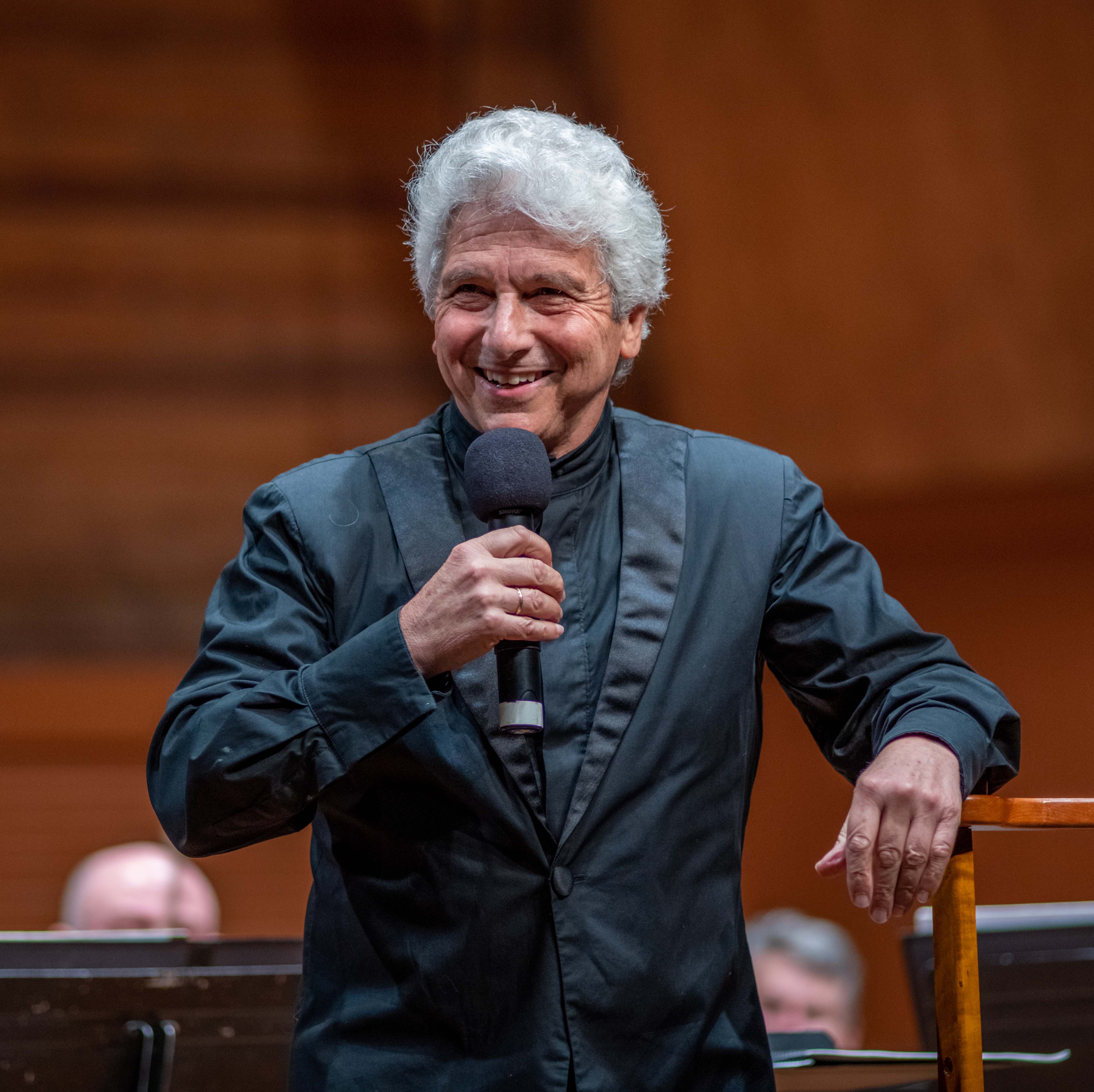
GRACE NOTES: Opening nights, orchestral and choral

Longmont Symphony, Ars Nova Singers launch 2024-25 seasons

By Peter Alexander Oct. 1 at 4:55 p.m.
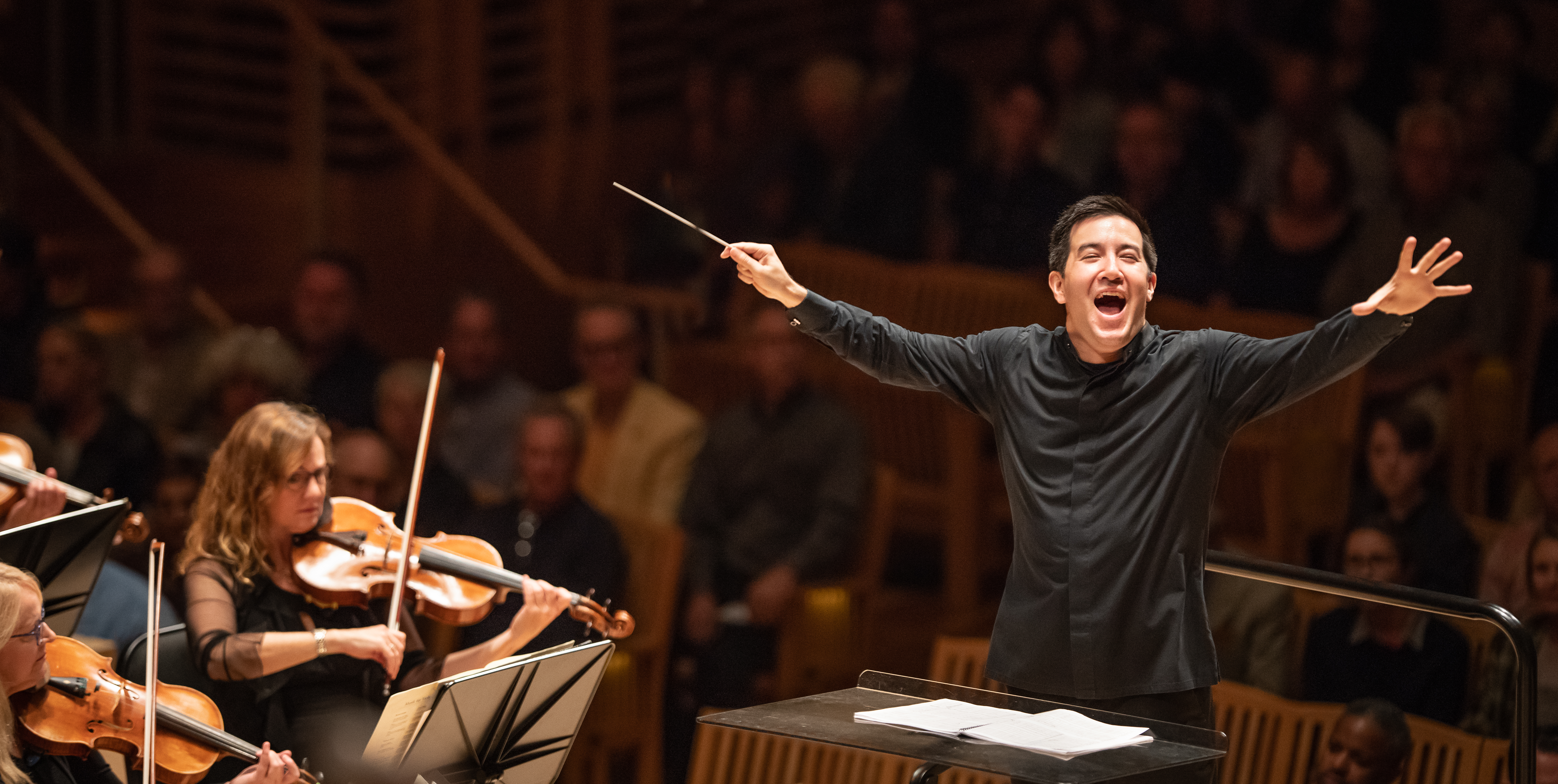
The Longmont Symphony Orchestra (LSO)and conductor Elliot Moore open “Sound in Motion,” their 2024–25 concert season, Saturday evening (7 p.m. Oct. 5; details below) with two American works and a orchestral showpiece.

Breaking from the pattern of previous seasons, the opening night concert will be held at the Longmont High School Auditorium. An abbreviated version of the same program will be presented Sunday afternoon at 4 p.m. at Frederick High School. 

All remaining LSO concerts during the season, including the Christmas-season Nutcrackers, will be held in the usual venue of Vance Brand Civic Auditorium.
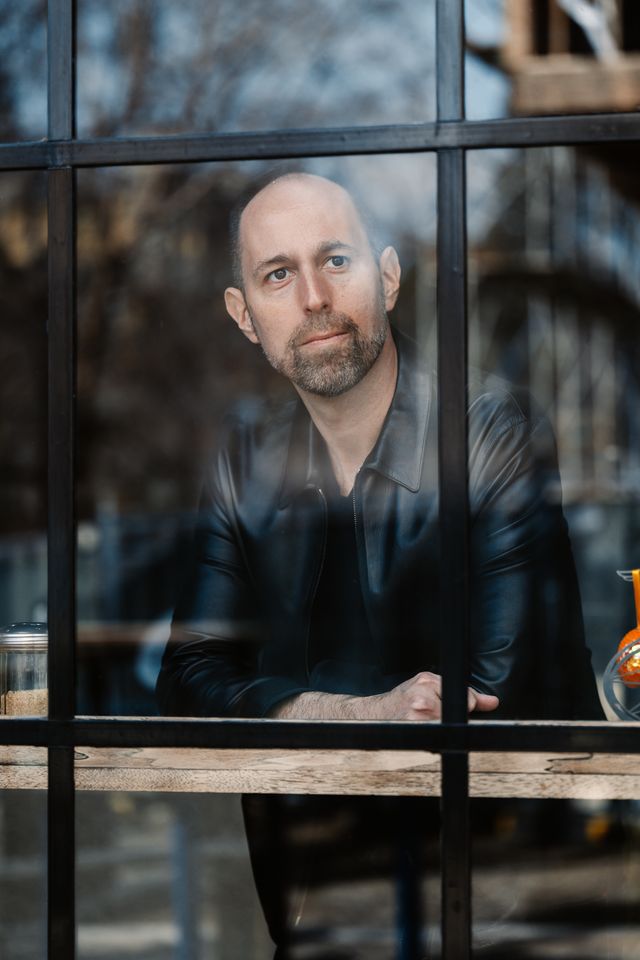
Pianist Spencer Myer

Soloist for the Longmont HS performance will be pianist Spencer Myer, a faculty member at the Indiana University Jacobs School of Music, who will play George Gershwin’s Concerto in F for piano. The program begins with the Overture to another American masterpiece, Bernstein’s musical stage work Candide. Ending the program is Ravel’s familiar orchestration of Mussorgsky’s Pictures at an Exhibition.

Bernstein’s Candide was originally composed in 1956 for Broadway, although today it is considered an operetta rather than a musical. The original show was not a success on dramatic grounds, in spite of the brilliant music Bernstein wrote, including the popular coloratura soprano aria “Glitter and Be Gay.” Various revisions of the original show have included textual contributions by lyricist Richard Wilbur plus Lillian Hellman, Stephen Sondheim, Dorothy Parker, John LaTouche and Bernstein himself. 

Today the operetta is gaining ground among opera companies, but regardless of its fluctuating fate, the Overture has been a popular program number from the beginning. Full of brilliant flourishes, delightful tunes and heady syncopations, it is the ideal concert opener.

Gershwin’s Piano Concerto was commissioned by the conductor Walter Damrosch, who attended the Feb. 12, 1924 premiere of Rhapsody in Blue. The very next day Damrosch contacted Gershwin to ask him for a piano concerto, which he was able to complete over a period of three months in the summer of 1925.

Audiences have always liked the concerto, which is today considered one of the essentials of the American music repertoire. The score incorporates jazz elements, but is much closer to the traditional format of a concerto with orchestra than is the Rhapsody. It appears on concert programs, has been featured in films, has been recorded by numerous pianists, and has even been featured in ice skating routines.

The program closes with the Mussorgsky/Ravel Pictures at at Exhibition, one of the best known and most loved showpieces for orchestra. 

The program for the performance in Frederick will include the Overture to Candide and Pictures at an Exhibition only. 

# # # # #

Opening Night
Longmont Symphony Orchestra, Elliot Moore, conductor
With Spencer Myer, piano

  • Leonard Bernstein: Overture to Candide
  • George Gershwin: Piano Concerto in F
  • Mussorgsky: Pictures at at Exhibition (arr. Ravel)

7 p.m. Saturday, Oct. 5
Longmont High School Auditorium

Encore performance: 4 p.m. Sunday, Oct. 6
Frederick High School Auditorium
(same program minus the Gershwin Concerto)

TICKETS

# # # # #

Boulder’s Ars Nova Singers embark on a season of “Contrasts” this weekend with a concert titled “Here/There.”

The opening concert, “Here/There,” will be presented Sunday at the Diary Arts Center in Boulder (4 p.m. Oct. 6; details below). The program features music from here and there not only geographically—that is, from different parts of the world—but also chronologically, from both the present (here) and the past (there). Featured composers include Henry Purcell, Anton Bruckner, Benjamin Britten, and György Ligeti, as well as contemporary women composers Sheena Phillips and Dale Trumbore. 
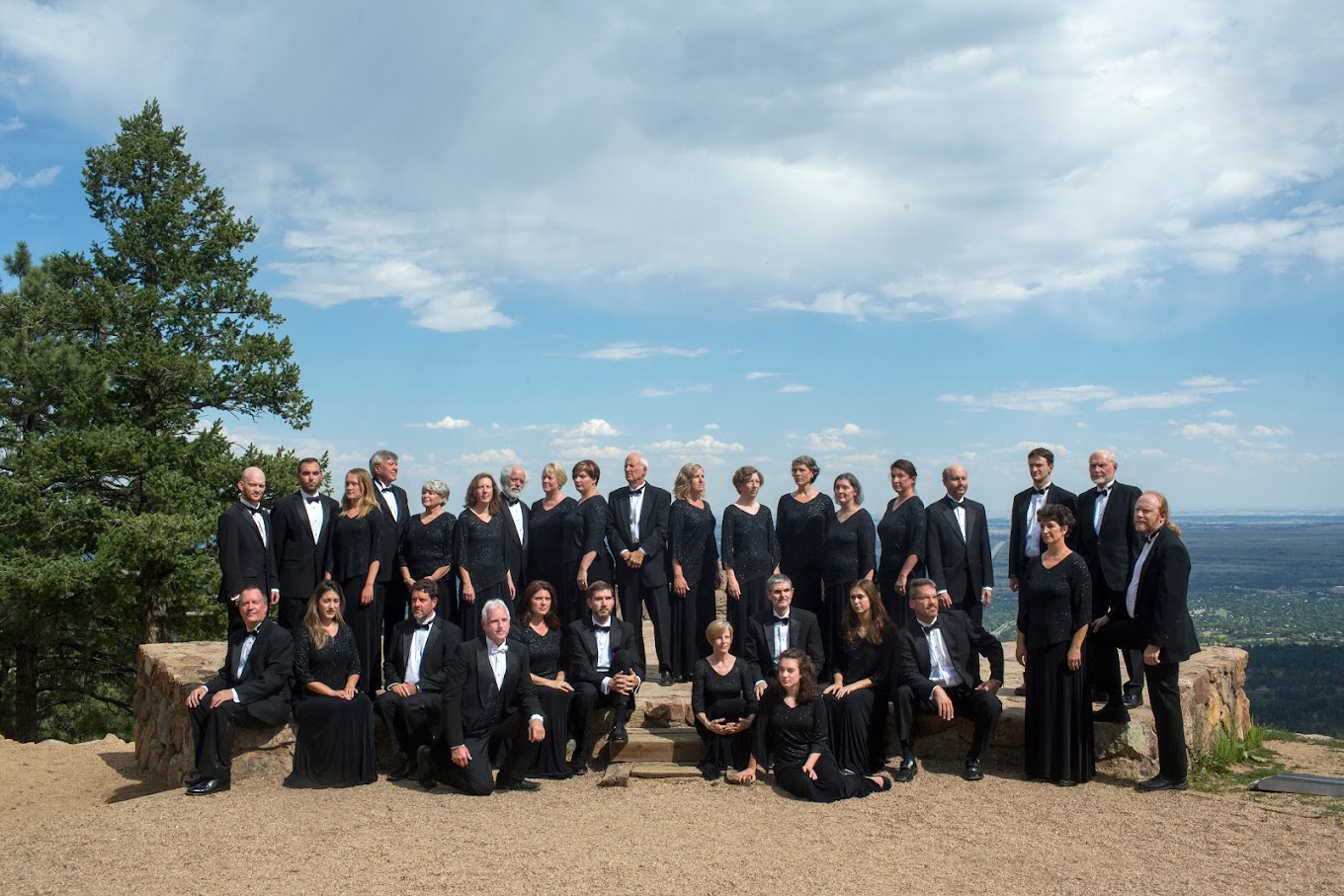
Ars Nova Singers. Conductor Thomas Morgan kneeling front left.

Conductor Tom Morgan wrote in a news release, “Dark and light, motion and stasis, intimate and universal, deeply familiar and refreshingly new—our season searches for the balance point in all of these.” In addition to “Here/There,” the season includes concerts titled “Light/Shadow,” “Lost/Found,” “Science/Fantasy” and “Time/Eternity” (see the full season HERE).

Although the choir’s name—Ars Nova, or “new art”—refers in history to a musical style from the 14th century, the group has specialized in a broader range of music, specifically the Renaissance and the 20th and 21st centuries. For this program there is no music from the Renaissance, but the old is represented by “Music for a While” by the English Baroque composer Henry Purcell (1659–1695).

There is a rare—for Ars Nova Singers—piece from the late Romantic period, Anton Bruckner’s Os justii (The mouth of the righteous) composed in 1879. A sacred motet setting of a text from Gregorian chant, it was written for the choirmaster at St. Florian Abbey, one of the largest monasteries in Austria.  

Other works on the program range from the early 20th century—Ravel’s Trois beaux oiseaux (Three beautiful birds)— right up to today with works by the living American composers Frank Ticheli, Jake Runestad and Dale Trumbore, among others (full program listed below).

The performance, a benefit celebrating the past and future of Ars Nova Singers, will be preceded by a 3 p.m. reception in the Dairy Arts Center lobby.

Ars Nova Singers bill themselves as “an auditioned vocal group specializing in a cappella music of the Renaissance and the 20th/21st centuries” that aims “to delight, inspire, and enlighten our audiences.”

# # # # #

Here/There
Ars Nova Singers, Thomas Morgan, conductor

  • Henry Purcell: “Music for a While”
  • Dale Trumbore: “Love is a sickness”
  • Bruckner: Os justi (The mouth of the righteous)
  • Ravel: Trois beaux oiseaux (Three beautiful birds)
  • Luigi Denza: “Call Me Back” (arr. Morgan)
  • György Ligeti: Lux aeterna (Eternal light)
  • Sam Henderson: “Moonswept”
  • Sheena Philips: “Circle of Life”
  • Sarah Quartel: “Sing, My Child”
  • Frank Ticheli: “Earth Song”
  • Jake Runestad: “Let My Love Be Heard”
  • Britten: “Advance Democracy”

4 p.m. Sunday, Oct. 6
Gordon Gamm Theater, Dairy Arts Center
TICKETS 

New and familiar works from the Boulder Chamber Orchestra

BCO launches 20th anniversary season that will take them to Carnegie Hall

By Peter Alexander Oct. 1 at 2:50 p.m.

About 20 years ago, Bahman Saless was standing in a church basement, getting ready to conduct his first concert ever.

“We started with just an idea, and I had never conducted before. We only had two professional players (in the orchestra) and didn’t know who was going to come. It was a complete surprise—it was standing room only!”

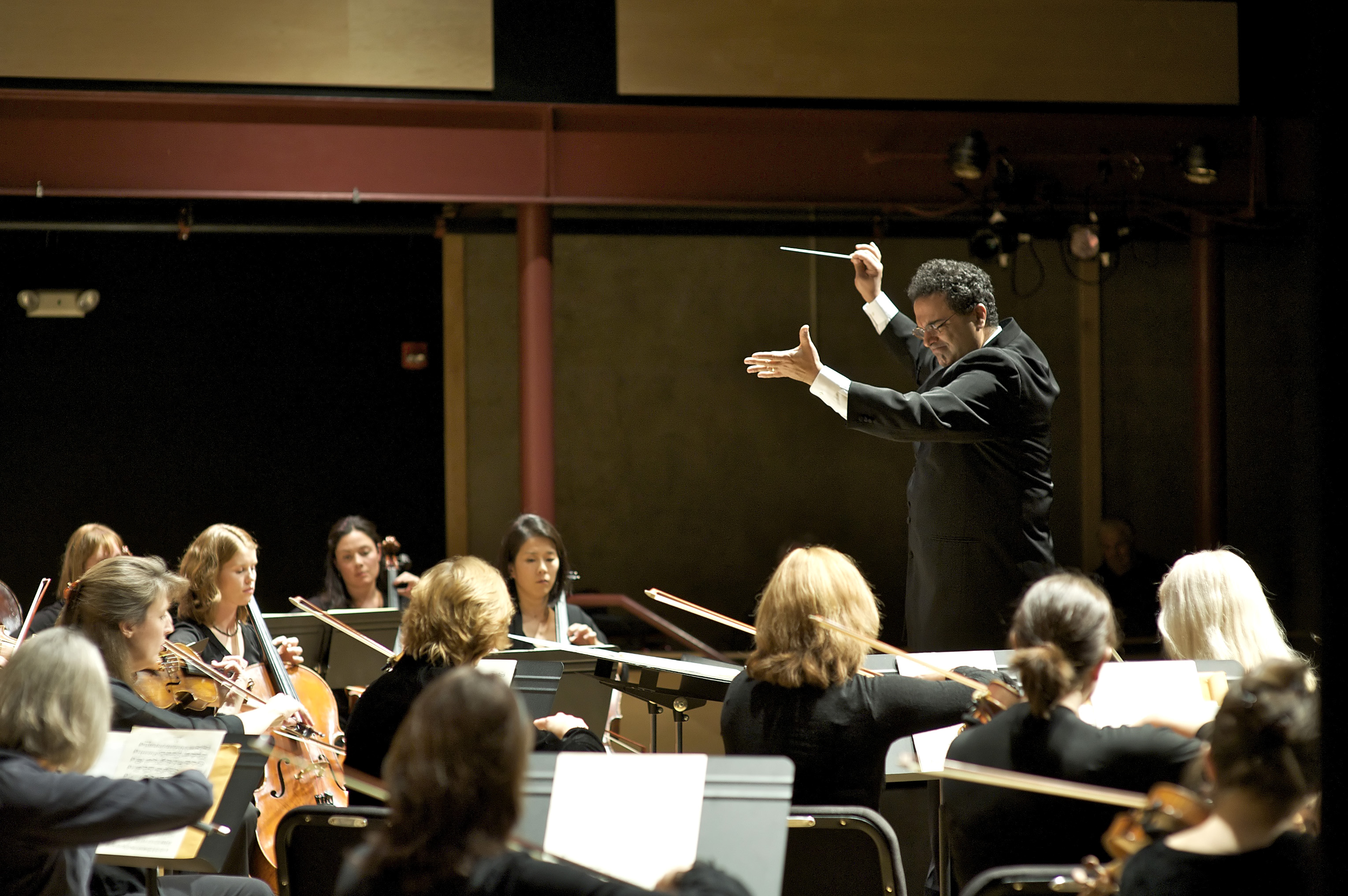
Bahman Saless leading the Boulder Chamber Orchestra

That successful idea, which became the Boulder Chamber Orchestra (BCO), celebrates its 20th anniversary this year, starting with a concert at the Boulder Adventist Church Sunday (7:30 p.m. Oct. 6; details below) and culminating with with a concert at Carnegie Hall in New York May 18 (7:30 p.m.; details HERE).

To open the anniversary year, Saless decided to write a piece celebrating Colorado, titled Ode to the Rocky Mountains. Although he has rarely programmed his own music before, he had several years of experience writing and scoring film music in Hollywood before he started the BCO.  “I did a lot of (uncredited) trailers for Hollywood films at Universal Studios,” he says.

To start the season, “I thought what’s better than something that celebrates Colorado?” Saless says. “I wrote a little piece that’s based on the two Colorado state songs, ‘Where the Columbine Grow’ and ‘Rocky Mountain High.’ It has five episodes that represent our own experience every time we go to the mountains.”

In the space of about five and half minutes, its five episode are: “Entering the Boulder Valley off Highway 36, heading West to the Mountains,” “Resting by the Brook in the Meadow,” “Playful Wildlife Amidst the Columbine,” “The Grand Landscape is to Behold,” and “Homeward Bound.”

The remainder of the opening concert program is all Beethoven: The Violin Concerto, featuring Edward Dusinberre of the Takács Quartet as soloist, and the Seventh Symphony. The concerto was chosen because Dusinberre had played with the orchestra before, and he suggested Beethoven for this concert. “He did the Brahms Concerto with us last year, and he did Mozart the previous year, so he’s going through the concerti,” Saless says.

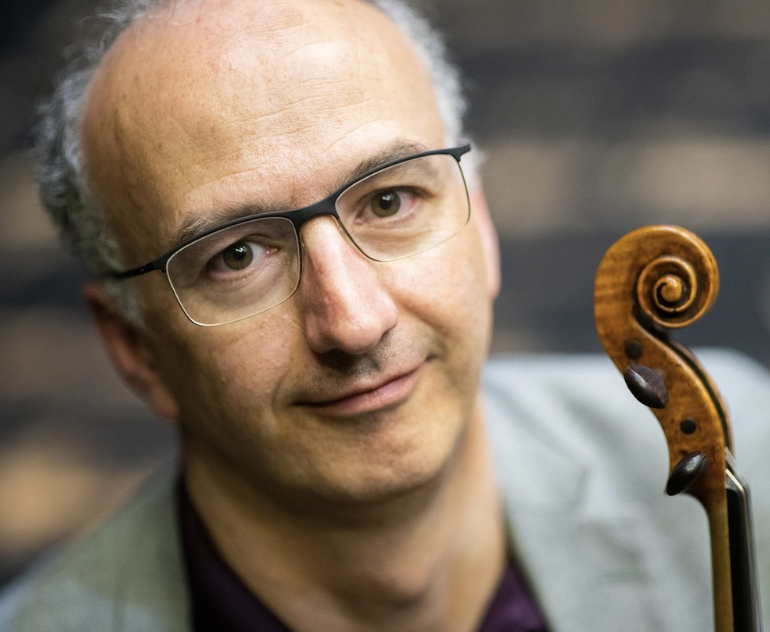
Violinist Edward Dusinberre

Saless is especially thrilled to perform the Beethoven Concerto with Dusinberre. “It’s one of these pieces that I am very picky about who I would perform it with,” he says. “I think it requires a certain amount of maturity, no matter how good technically someone is. To play it with Ed is like a dream come true!”

As for the Seventh Symphony, Saless selected it to go on the Carnegie Hall program and then decided to open the season with it as well. “I wanted to do something (in New York) that I thought we could do really well, and would fit the programming (for the opening concert),” he says. “I thought, what could we do that I would feel comfortable, because I connect to it. If I’m going to go to Carnegie Hall and my legs are going to be shaking of nervousness, I need something that I could literally do in my sleep. So I picked Seven.”

He also wants the players to be comfortable. “If you’re going to perform in Carnegie Hall, you want a piece that you’ve already done during that season,” he says. “(That means) a smaller amount of preparation (later), and everybody feels less nervous.”

He also thinks you have to be a little bit crazy to perform the Seventh Symphony, but, he says, “I qualify!” Often noted for its dance-like rhythms, the Seventh Symphony is almost obsessive in repeating those rhythms. Saless calls it “borderline personality disorders in music, obsessive and frenetic.”

The powerful slow movement alternates a series of chords that underlay a mournful melody in a minor key with a bright theme in major. “It’s like (Beethoven) is trying to write a piece that is not a funeral march but sounds like one,” Saless says. “It’s kind of conflicted, and I find that very interesting.”

Saless faced a logistical complication in planning the season. As much as possible, he wanted to have the same players during the season as in New York. But he had to schedule around rehearsals and performance of the Colorado Ballet, because so many of his best players were also in their orchestra. 

“I have to literally set up my schedule based on Colorado Ballet,” he says. BCO’s musicians, like all orchestras in Boulder, are free-lance players and Colorado Ballet pays very well. And every ballet production has numerous rehearsals and performances, all of which had to be scheduled around.

The New York appearance was made possible by a sponsor who was willing to underwrite both the orchestra and piano soloist Adam Żukiewicz playing in New York. Żukiewicz, who appeared on one of the BCO’s Mini-Chamber Concerts in January, and returns for another chamber concert Nov. 23 (7:30 p.m.; see the BCO season schedule HERE) will play a concerto with the orchestra in Carnegie Hall.

# # # # #

“Titanic Journey”
Boulder Chamber Orchestra, Bahman Saless, conductor
With Edward Dusinberre, violin

  • Bahman Saless: Ode to the Rocky Mountains
  • Beethoven: Concerto in D major for violin and orchestra
    —Symphony No. 7 in A major

7:30 p.m. Sunday, Oct. 6
Boulder Adventist Church, 345 Mapleton Ave.

TICKETS

Boulder Symphony presents “America-Centric” concerts

Symphony by Florence Price is the “American anchor” of programs Saturday and Sunday

By Peter Alexander Sept. 25 at 11:25 a.m.

The Boulder Symphony opens a new season this weekend with what conductor Devin Patrick Hughes calls “a very America-centric concert.” Performances at the Gordon Gamm Theater of the Dairy Arts Center will be at 2 and 7:30 p.m. Saturday and 2 p.m. Sunday (full program and details below).

Boulder Symphony and conductor Devin Patrick Hughes

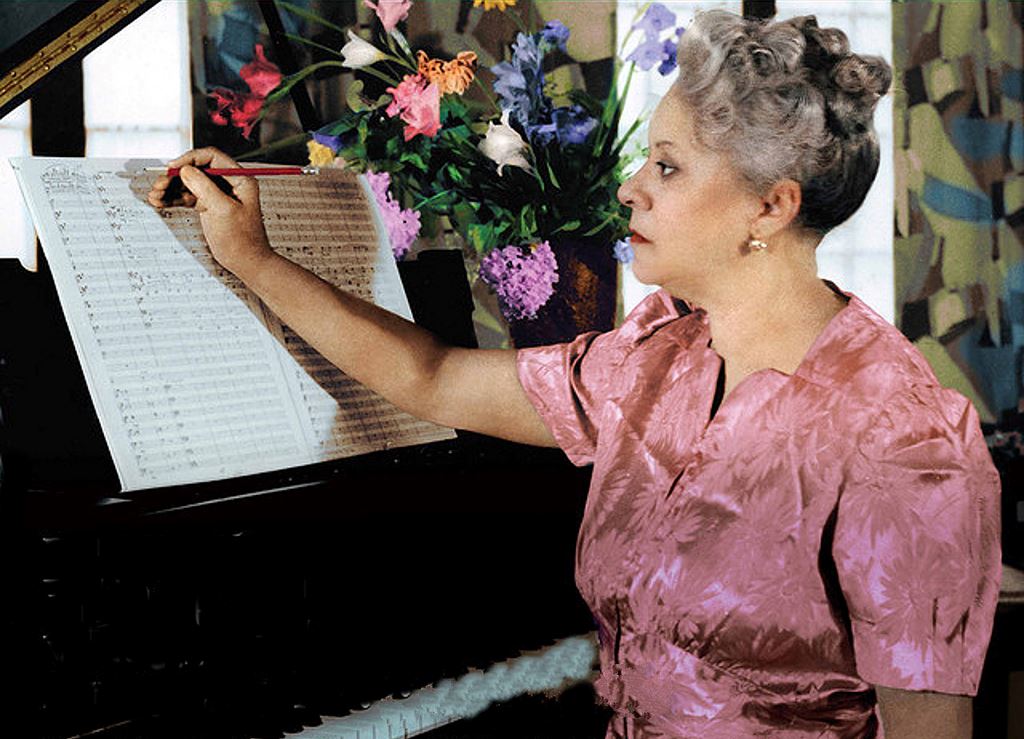
The most obviously American work on the program—in effect the American anchor to the concert—is the Symphony No. 1 by Florence Price. A prodigy who gave her first piano performance at the age of four and later attended the New England Conservatory, Price was the first African American woman to have music played by a major symphony.

Completing the program are two works by European composers with American connections: The Slavonic Dance No. 1 by Dvořák, who lived in the United States in the 1890s and whose “New World” Symphony inspired Price and other African American composers at the turn of the 20th century; and Tchaikovsky’s Piano Concerto No. 1, which was premiered in the U.S.

Soloist for the concerto will be Artem Kuznetsov, 2024 winner of the the International Keyboard Odyssiad & Festival in Ft. Collins. The Boulder Symphony has maintained a close relationship with the competition for a number of years by annually presenting the winner on one of their concerts.

Born in Arkansas, Price moved north during the “great migration” of the 1920s and settled in Chicago. She studied composition and organ and worked as an organist for silent films. In 1933 her First Symphony was premiered by the Chicago Symphony at the Century of Progress World’s Fair. 

Florence Price (photo colorized)

“Florence Price is the quintessential American composer,” Hughes wrote in an email. “Her music takes from the melting pot of our culture, from spirituals and gospel, and blends them with the great European masters to create a unique American voice.”

Her total output includes four symphonies, a piano concerto, two violin concertos, and other works for orchestra, in addition to choral, vocal and piano pieces. In 2009 dozens of works by Price were discovered at her summer home, which had been abandoned for many years. Among this collection were the two violin concerto and the Fourth Symphony—works that would have been lost had the manuscripts not been found.

The First Symphony is in the traditional four movements. Price drew on her African-American heritage with pentatonic, spiritual-like melodies and a lively, syncopated third movement. Titled “Juba Dance,” it evokes a dance and rhythmic accompaniment performed by African slaves throughout the New World.

Another important influence is Dvořák’s Ninth Symphony, “From the New World.” Not only are both works in E minor, Price scholar Rae Linda Brown wrote that “an examination of Price’s symphony reveals that she had thoroughly studied Dvorak’s score.”

Among the most popular of Dvořák’s works, the two sets of Slavonic Dances were originally composed for piano four hands and later set for orchestra by the composer. It was the publication of the first set for piano four hands in 1878, facilitated by Brahms, that established Dvořák as an important and recognized composer. The first dance is a Furiant, an energetic Bohemian dance marked by shifting accents and alternating duple and triple time.

Dvořák’s connection to the American theme of the concert is through his years living in New York and his 1893 visit to the Czech village of Spillville in Iowa. His interest in African American and other American musical styles was very influential at the time.

As Hughes wrote, “Dvořák is at the crossroads of European and American voices. His symphonic work and educational initiatives in America in the 1890s paved the way for a new American school that recognized the importance of African American folk music as the future of an American school.”

Pianist Artem Kuznetsov

Tchaikovsky wrote his First Piano Concerto in 1874-75. He hoped that the great Russian virtuoso Anton Rubinstein would play the premiere, but Rubinstein criticized the score when he saw it. As a result the premiere was played by the German pianist Hans von Bülow in Boston. Rubinstein later took back his criticism of the concerto and promoted it through performances. Today it is one of the best known piano concertos.

Continuing the American connection among the composers, Tchaikovsky came to the United States and conducted on four concerts in Carnegie Hall, including the hall’s opening night May 5, 1891—shortly before Dvořák arrived in the U.S.

A native of Balashov, Russia, Kuznetsov has won several international competitions in addition the International Keyboard Odyssiad. He holds Master of Music degree and Artist Diploma from the Shepherd School of Music at Rice University. He has performed across the United States, in Russia, Germany and the Netherlands.

The weekend’s concerts are the first in a series of three orchestral programs to be performed by the Boulder Symphony at the Dairy Arts Center, each including a work by an American composer. The season culminates in May with performances of Beethoven’s Ninth Symphony, presented in collaboration with Kim Robards Dance; you may see details on the orchestra’s Web page, along with information on their Curiosity Concerts for young people.

The Boulder Symphony also offers a music academy that is open to all talented students regardless of ability to pay. “Boulder Symphony created our Music Academy so every child could have access to musical instruments and instruction,” Hughes wrote. “Those who contribute to our scholarship program give the dream and promise of a lifetime of music-making to all kids in Boulder County.”

# # # # #

Boulder Symphony, Devin Patrick Hughes, conductor
With Artem Kuznetsov, piano

  • Dvořák: Slavonic Dance No. 1 in C major, op. 46 no. 1, “Furiant”
  • Tchaikovsky: Piano Concerto No. 1 in B-flat minor
  • Florence Price: Symphony No. 1 in E minor

2 and 7:30 p.m. Saturday, Sept. 28
2 p.m. Sunday, Sept. 29
Gordon Gamm Theater, Dairy Arts Center
TICKETS

CORRECTION: The first concert on Saturday, Sept. 28, is at 2 p.m., not 4 p.m. as originally posted.

Grace Notes: Bach, Timbres, Sphere and a Groove

Programs outside the norm, from the 18th to the 21st centuries

By Peter Alexander Sept. 18 at 10:05 p.m.

The Boulder Bach Festival (BBF) and guest artists will take audiences back to 18th-century Venice in a program entitled “Anonimo Veneziano” (Anonymous Venetian) 4 p.m. Saturday, Sept. 21, at the Dairy Arts Center in Boulder.
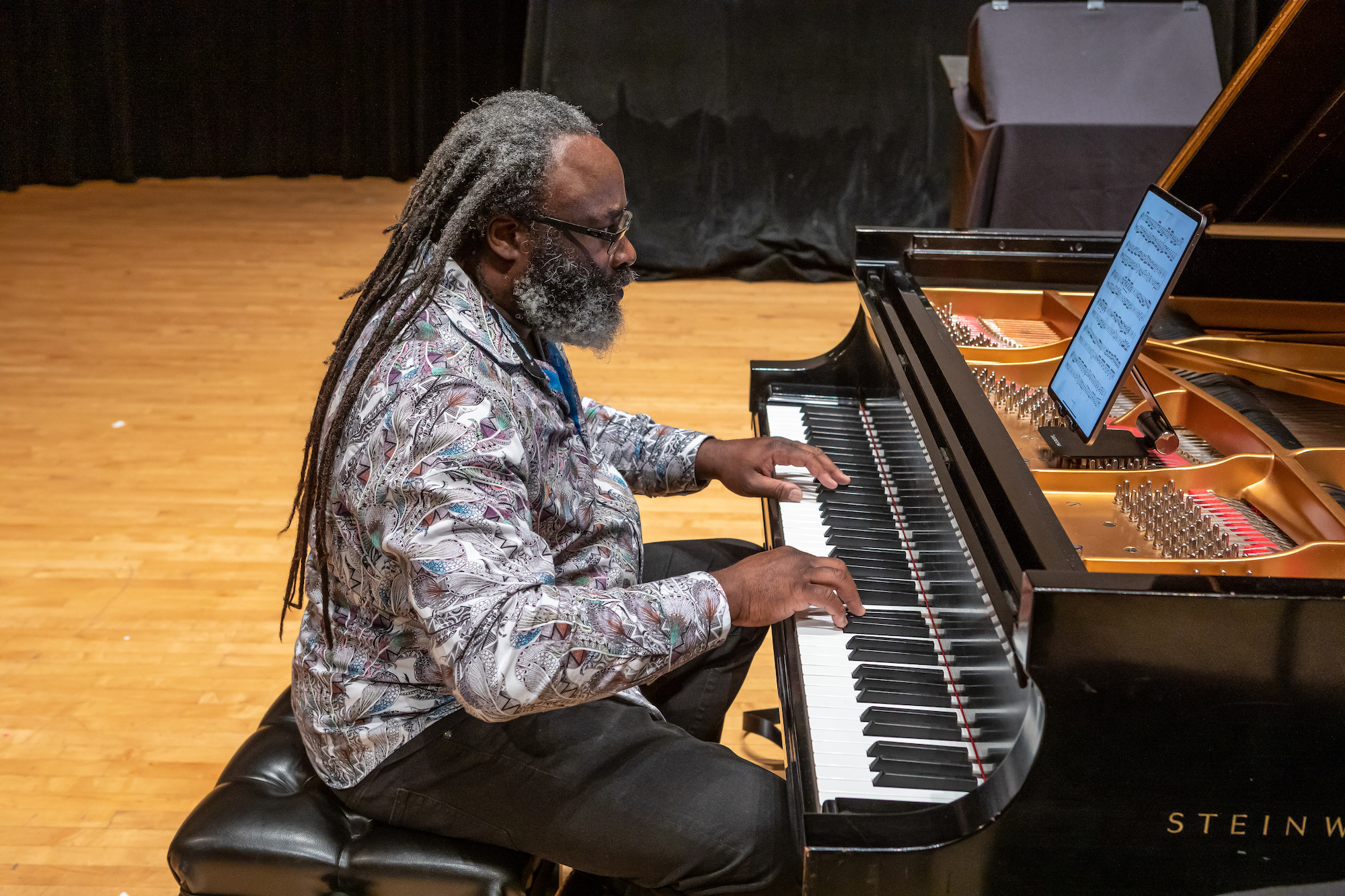
The program, with the BBF’s music director/violinist Zachary Carretin and the COmpass REsonance ensemble (CORE Ensemble), will feature violinist Nurit Pacht from NewYork, harpsichordist Chris Holman from Cincinnati, and theorbist Keith Barnhart, an historical plucked instruments specialist who is also the BBF’s educational coordinator.

Nurit Pacht

The program opens with the famous Adagio attributed to 18th-century Italian composer Tomaso Albinoni and featured in many film scores. In fact, the Adagio was composed by 20th-century Italian musicologist Remo Giazotto. A scholar of Albinoni’s music Giazotto claimed that the Adagio was based on a fragment of an Albononi trio sonata that he found on a manuscript that has since mysteriously disappeared. 

The remainder of the program will be filled out with genuine Albinoni works, the complete Sinfonie e Concerti a cinque (Sinfonias and concertos for five instruments), op. 2, that were published in Venice in 1700. This important collection is rarely performed complete. The BBF performance, which will  be played without intermission, is expected to take approximately 75 minutes.

 Pacht holds a degree in historical performance from the Juilliard school and is known as a specialist in both music by living composers, including works written for her, and music of the Baroque. She was a top prize winner in the Irving Klein International Music Competition in California, the Tibor Varga International Violin Competition in Switzerland, and the Kingsville International Music Competition in Texas. She has toured widely in Europe and the United States. She teaches privately in New York City.

# # # # #

Anonimo Veneziano
Boulder Bach Festival CORE Ensemble, Zachary Carrettin, conductor/violinist
With Nurit Pracht, violin, Chris Holman, harpsichord, and Keith Barnhart, theorbo

  • Remo Giazotto: “Adagio in G minor by Tomaso Albononi”
  • Tomaso Albinoni: Sinfonie e Concerti, op. 2

4 p.m. Saturday, Sept. 21
Dairy Arts Center Gordon Gamm Theater
TICKETS

# # # # #

The Boulder Chamber Orchestra’s (BCO)chamber concert titled “Mixed Timbres,” postponed from last April due to the power outage caused by high winds, will be presented at 7:30 p.m. Saturday, Sept. 21, in the Boulder Seventh-Day Adventist Church.
The concert will feature the BCO’s 2023-24 artist-in-residence, pianist Hsing-ay Hsu, performing with two members of the orchestra—cellist Julian Bennett and clarinetist Kellan Toohey. All four works on the program use the ensemble of piano, clarinet and cello, a mix of timbres that has a limited but interesting repertoire.

Hsing-ay Hsu

Beethoven’s Op. 11 is one of the earliest works for the combination. It is sometimes known as the “Gassenhauer Trio,” taken from the popularity of the theme that Beethoven uses for variations in the final movement. In Vienna, a Gassenhauer (from Gasse, an alleyway) referred to a simple song that was so popular that it was heard all over town. The theme Beethoven used was taken from a popular music theater work, L’amor marinaro (Seafaring love) by Joseph Weigl.

Brahms’s Trio op. 114 is one of four chamber works the composer wrote for the clarinetist Richard Mühlfeld in the last years of his life. Brahms’s admiration for Mühlfeld’s playing was reflected in the comment of one of the composer’s friends who wrote that in the Trio, “it is as though the instruments were in love with each other.”

Like Brahms’s Trio, Fauré’s D minor Trio was one of his last compositions. Although Fauré originally planned the Trio for piano, clarinet and cello, it was published as a traditional piano trio, with violin in place of the clarinet. The BCO performance of the first movement restores the instrumentation that Fauré first imagined for the trio.

Emily Rutherford’s “Morning Dance” for piano, clarinet and cello was commissioned by Toohey in 2017. A native of Colorado, Rutherford is a graduate of Westmont College in Santa Barbara, Calif., and the Longy School of Music in Los Angeles.

# # # # #

“Mixed Timbres”
Hsing-ay Hsu, BCO Artist in residence, piano
With Boulder Chamber Orchestra members Kellan Toohey, clarinet, and Julian Bennett, cello

  • Gabriel Fauré: Piano Trio in D minor, I. Allegro ma non troppo
  • Beethoven: Trio in B-flat major for piano, clarinet and cello, op. 11
  • Brahms: Trio in B-flat for piano, clarinet and cello, op. 114
  • Emily Rutherford: Morning Dances

7:30 p.m. Saturday, Sept. 21
Boulder Seventh-Day Adventist Church, 345 Mapleton Ave.

TICKETS

# # # # #

The Sphere Ensemble, a 14-member string ensemble, will celebrate the 100th anniversary of the premiere of Gershwin’s Rhapsody in Blue in 1924 with performances of their own all-strings arrangement of the Rhapsody.

The program, presented Saturday in Boulder and Sunday in Denver (Sept. 21 and 22; details below), will also include works by other jazz musicians including James P. Johnson, Hazel Scott and Winton Marsalis. Also on the program are arrangements of music from the Squirrel Nut Zippers, The Turtles and Andrew Bird; and pieces by Shostakovich, Stephen Foster and the classical-era composer Christoph Willibald Gluck, among others. 

Sphere Ensemble

In addition to the live performances, a live stream will be available from 7:30 p.m. Saturday, Sept. 21 through 10 p.m. Sunday, Sept. 29. 

This kind of eclectic programming, mixing sources and genres, is typical of the Sphere Ensemble, often in arrangements made by members of the ensemble. The “About” page on their Website explains, “We prioritize music by composers that are often overlooked in classical music programs. . . . From classical to classic rock, from baroque to hip hop, Sphere always chooses music that excites us.”

# # # # #

“Bridges”
Sphere Ensemble

  • Aldemaro Romero: Fuga con Pajarillo
  • Dmitri Shostakovich: Prelude and Fugue in D-flat Major (arr. Chris Jusell)
  • Stephen Foster: “Jeanie with the Light Brown Hair” (arr. Alex Vittal)
  • Squirrel Nut Zippers: The Ghost of Stephen Foster (arr. Sarah Whitnah)
  • Andrew Bird: Orpheo Looks Back (arr. Sarah Whitnah)
  • C.W. Gluck: Orfée et Eurydice, Danses des Ombres Heureuses
  • Brenda Holloway: You’ve Made Me So Very Happy (arr. David Short)
  • The Turtles: Happy Together (arr. Dave Short)
  • James Price Johnson: Charleston (arr. Alex Vittal)
  • Hazel Scott: “Idyll” (arr. Sarah Whitnah)
  • Wynton Marsalis: “At the Octoroon Balls”
    —“Rampart St. Rowhouse Rag”
  • George Gershwin: Rhapsody in Blue (arr. Alex Vittal)

7:30 p.m. Saturday, Sept. 21
Nomad Playhouse, 1410 Quince Ave., Boulder

3 p.m. Sunday, Nov. 22
Truss House, 3400 Atkins Ct., Denver

Livestream: 7:30 p.m. Saturday, Sept. 21–10 p.m. Sunday, Sept. 29

In-person and livestream TICKETS

# # # # #

The Boulder Philharmonic Orchestra will have a new series of intimate performances during the 2024-25 season, designed to bring their musicians into more informal spaces and give audiences the opportunity to hear them in smaller groups.

The repertoire will be a little different from the Macky concerts, too, featuring music by pop sensations from Lizzo to Taylor Swift alongside pieces by living composers including Philip Glass and Jessie Montgomery. And just for fun, they might throw in some Vivaldi as well.

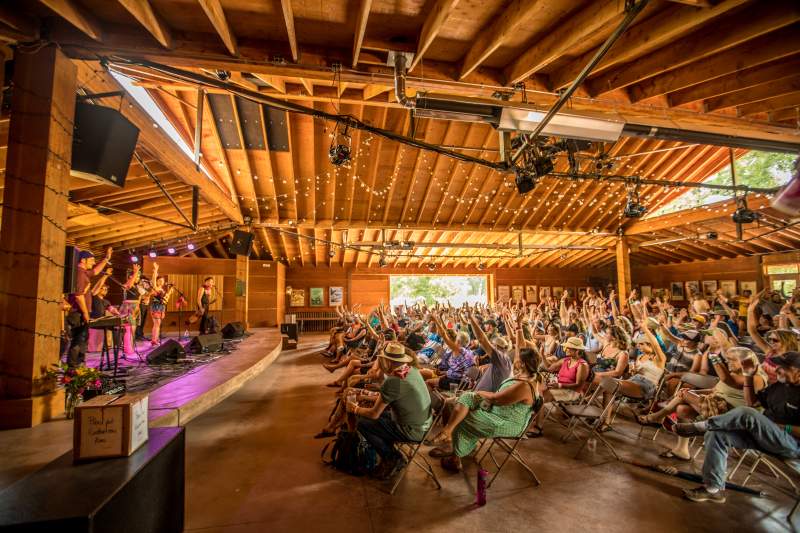
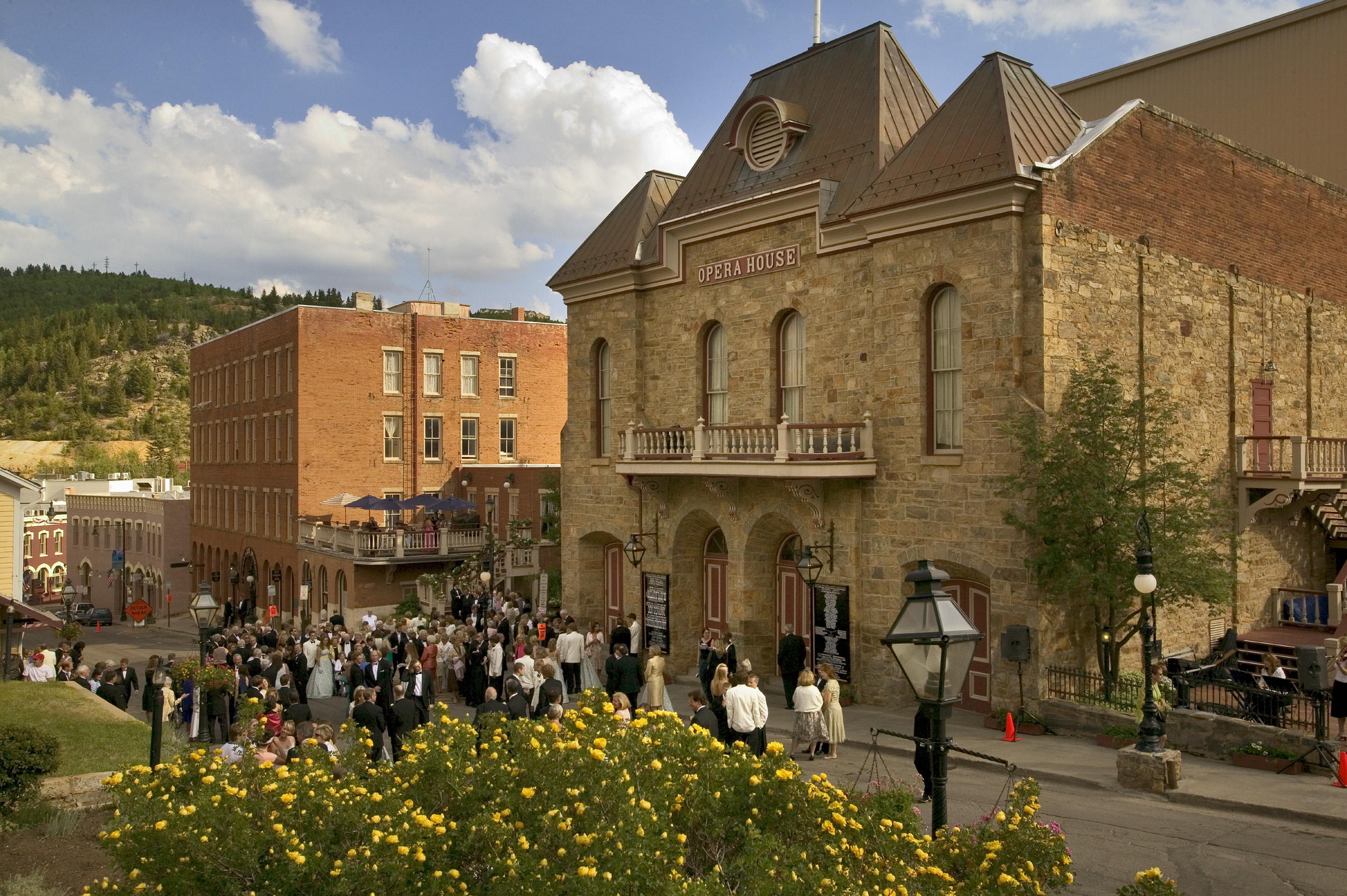
These concerts, collectively the “Shift” series, will feature several different programs, each presented first at Planet Bluegrass in Lyons and then taken to small venues in Longmont and Boulder. The first program, played by a string quartet of principal players from the orchestra, opens next Wednesday at Planet Bluegrass (7 p.m. Sept. 25; details below). Titled “Groove,” it will be repeated at the Dickens Opera House in Longmont at 6:30 p.m.Monday, Nov. 25.

Wildflower Pavilion at Planet Bluegrass, Lyons

The second program, also for string quartet, is titled “Americana: Redefined” and will be presented in October and February. A third program featuring a brass quintet from the orchestra, “Brass & Brews,” will be presented in October and April;  see the Boulder Phil Web page for details on all currently scheduled performances.

Mimi Kruger, the Boulder Phil’s executive director, said, “The idea is that people can get to know our musicians and these composers and connect in a different way. These are obviously smaller venues, but also a little bit more casual.”

She said that discussions about ways to showcase the individual musicians of the orchestra led them to look for new venues. “The idea came up to launch it through Planet Bluegrass (because) they have a series at the Wildflower Pavilion,” she said. “We’re doing all three there, but we also wanted to take them to other venues, so the first two will get repeated at Dickens Opera House in Longmont—that’s a great little place!”

The Phil’s Web page says pretty much the same thing, in more promotional language: “The Shift Series lifts the facade of the stereotypical orchestral concert . . . in unique venues along the Front Range.”

Kruger recommends watching for future announcements, as further performances are under consideration, featuring the orchestra’s woodwind players. 

# # # # #

“GROOVE”
Boulder Philharmonic string players: Ryan Jacobsen and Hilary Castle-Green, violin; Stephanie Mientka, viola; and Amanda Laborete, cello

  • Takashi Yoshimatsu: Atomic Hearts Club Quartet, Movement I
  • Justin Bieber: “Peaches” (arr. Alice Hong) 3’
  • Dinuk Wijeratne:Two Pop Songs on Antique Poems: “Letter from the afterlife”
  • Carlos Simon: Loop
  • Michael Begay: “Forest Fires”
  • Lizzo: “ Good As Hell” (arr. Alice Hong)
  • Jessie Montgomery: “VooDoo Dolls
  • Philip Glass: String Quartet No. 3: VI “Mishima/Closing” 4’
  • Taylor Swift: All Too Well” (arr. Alice Hong)
  • Wijeratne: Two Pop Songs on Antique Poems: “I will not let you go
  • Ed Sheeran: “Shape of You” (arr. Alice Hong)
  • Due Lipa: “Dance the Night” (arr. Zack Reaves)
  • Jessica Meyer: “Get into the NOW”: III. “Go Big or Go Home”
  • Vivaldi: Summer: Moment III (arr. Naughtin)

7 p.m. Monday, Sept. 25
Planet Bluegrass, Lyons, Colo.

TICKETS

6:30 Monday, Nov. 25
Dickens Opera House, Longmont Como.

TICKETS

Takács String Quartet celebrates its 50th season

Mutual respect, love of music and supportive audiences inspire the players

By Peter Alexander Sept. 12 at 9:14 p.m.

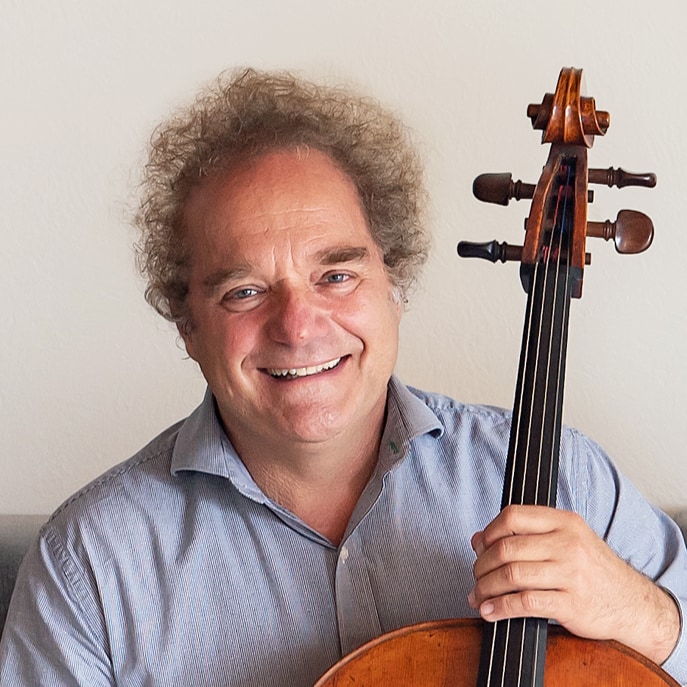
Fifty years is a long time in any job, but that is the landmark that András Fejér, cellist of the world renowned Takács Quartet, is approaching as the quartet enters its fiftieth season, 

András Fejér

The Takács String Quartet was founded in Budapest in September 1975—49 years ago—and has been in residence at the CU College of Music since 1983. The only original member of the quartet still with the group, Fejér is now 70, but he shows no sign of seeking a quiet retirement.

“I’m loving it,” he says about playing in the quartet and continuing the group’s busy concert schedule around the world. “I feel passionate about it, and I cannot imagine doing anything else.”

Fejér and the other members of the quartet—first violinist Edward Dusinberre, second violinist Harumi Rhodes and violist Richard O’Neill—will take the stage at Grusin Music Hall Sunday and Monday (4 p.m. Sept. 15 and 7:30 p.m. Sept. 16) for a standard string quartet program—a 20th century quartet by Leoš Janáček, sandwiched between classical-era works by Joseph Haydn and Beethoven (see full program below). This is a standard Takács program, and Fejér says they have no special plans for the half-century celebration.

“We just do what we are trying to do—classics nicely mixed with contemporary pieces,” he says. “We try to play them as much as we can. It’s a heartwarming mission.”

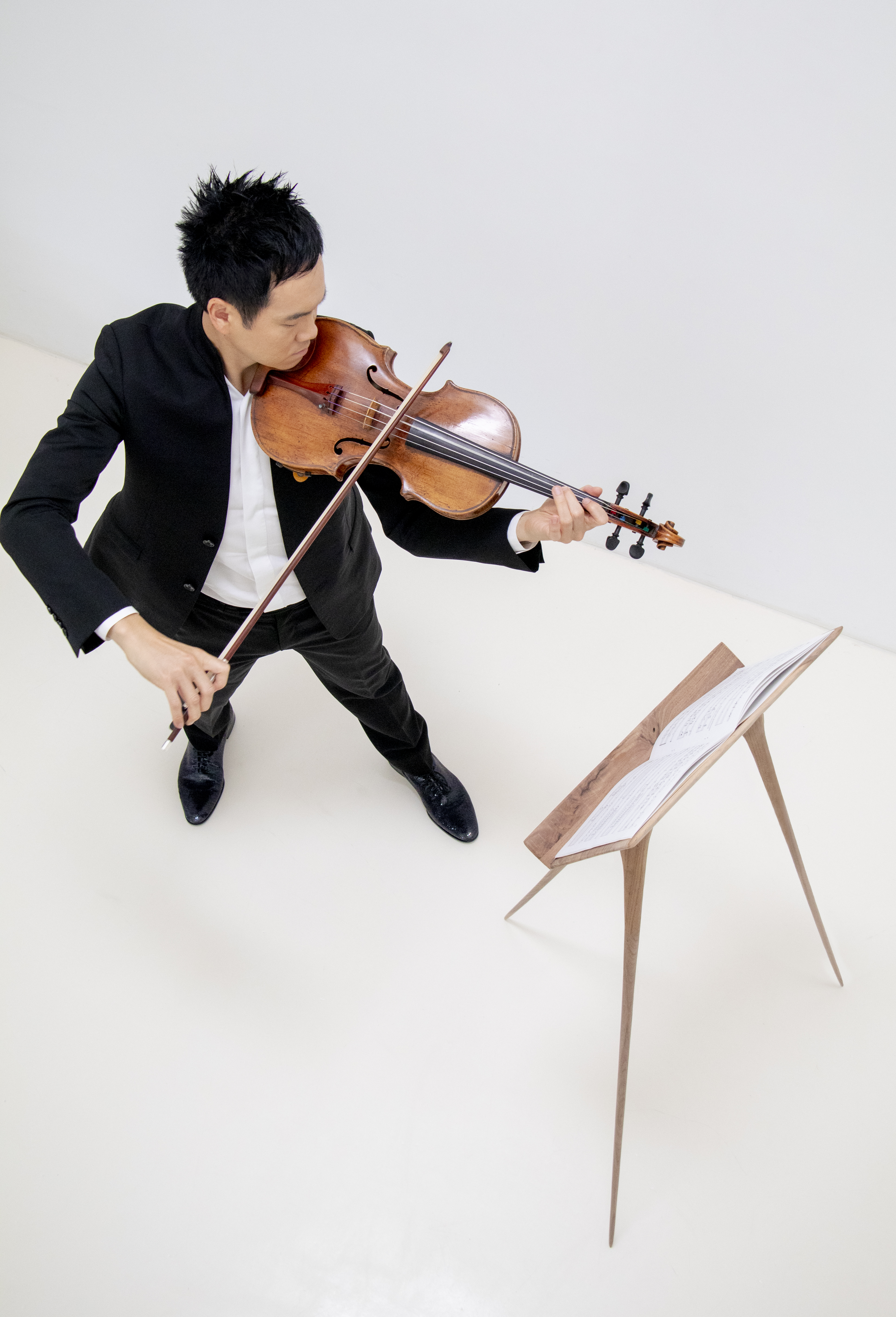
Richard O’Neill

The newest member of the quartet, O’Neill feels the same way about the busy life in a world-traveling quartet. “The greatest luxury is getting to do what we do,” he says. “I really love travel, even in the worst scenarios. There are things that can go wrong nowadays, but I still get excited to pack my suitcase and go out the door.”

If he likes anything more than travel, it’s playing for the Boulder audience. “The community here is such a unique community and (Boulder is) such an incredibly beautiful place,” he says. “Every concert we’re backstage at Grusin I really like hearing all the people (in the audience) excited to be together.”

O’Neill noticed the musicians’ connection with their audience from his very first Boulder home concerts with the Takács in 2021, but the relationship has not changed over Fejér’s years in the quartet. “We found it extremely supportive here (in 1983), with a wonderfully enthusiastic audience, and that’s how we feel until this day,” he says. “We got the support and the love of the audience, and the way it makes you feel, it’s a wonderful reaction with the audience.”

With all the personnel changes over 50 years—two first violinists, two second violinists, now three violists with the one cellist—the Takács has maintained its place among the top quartets in the world. That’s not because they have one authoritative way of doing things. Fejér identifies their defining quality more in the integrity of their approach to the music. 

“The quality is the combination of expressivity, character and technique,” he says. “There are many ways to interpret the same phrase, many ways to interpret any page of any piece. We are listening to new ideas, because we feel it keeps the process fresh. As our wonderful teacher in Budapest put it, nobody has a letter from Haydn or Beethoven.

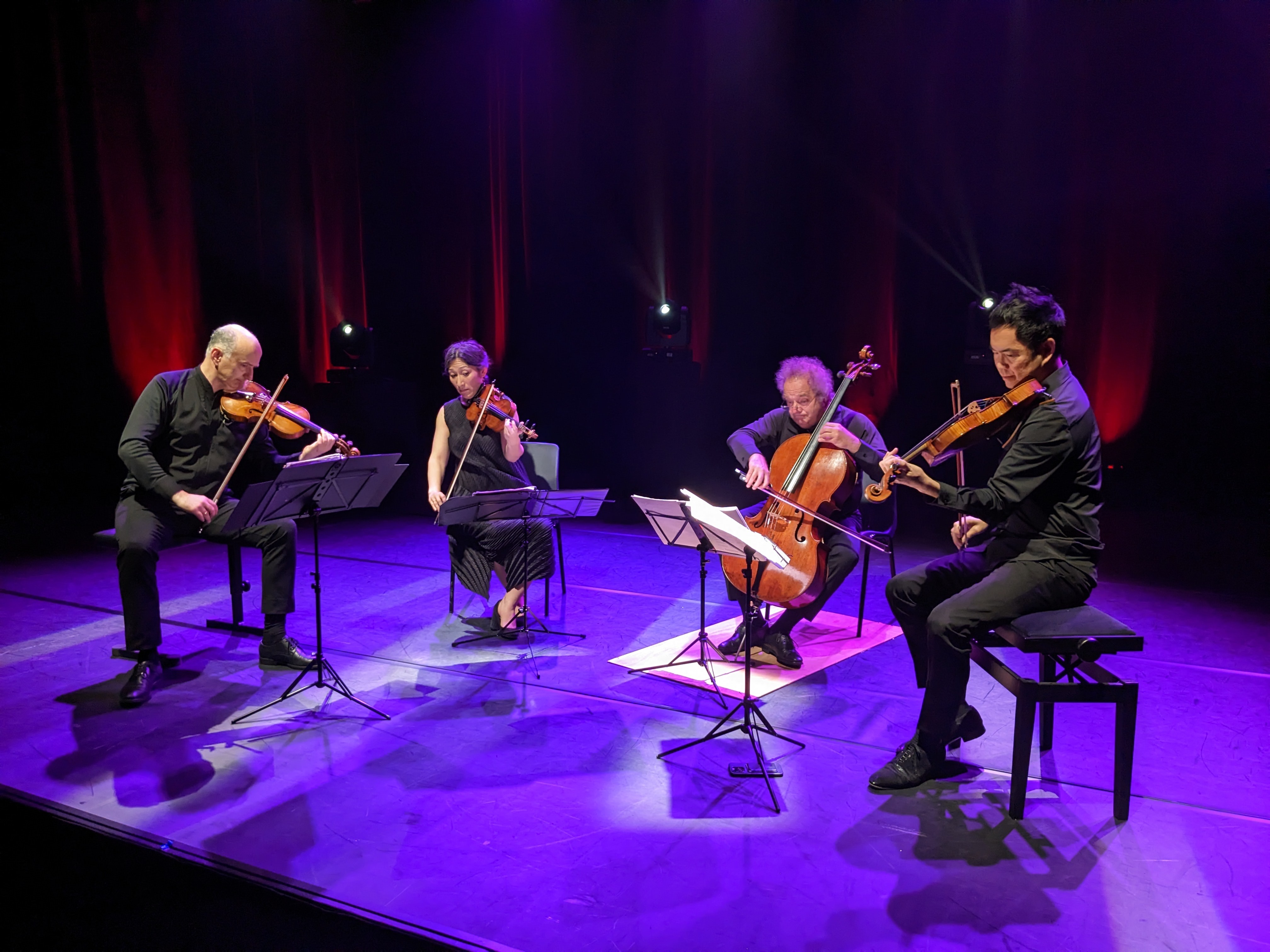
Takács String Quartet. Photo by Ian Malkin.

“We are honest, and being honest gives you a major conviction. As long as the message rings true, the audience is happy and immersed in the performance.”

That does not mean that the players always agree. “We had our fair share of arguments, especially when we were young and unwise,” he says. “But the moment we realized that there are many ways, what we can do is (say) ‘OK, in New York we try your idea, and then at Berkeley we will try my idea,‘ and then we will settle down with something. Everybody‘s happy, and then we all have a good giggle afterwards. It‘s great fun.”

O’Neill learned from the outset that every member is included in those conversations, no matter how long they have been with the group. “András could probably pull the seniority card on me, (but) he never does that,” he says.

“What I really love about the Takács is that if any one of us have a reservation, musical or personal about something that we’re doing, the quartet won’t do it. I really respect that. We’re all very distinct individuals, and of course we have our differences, but we respect each other. I think that‘s the magic combination.

“There‘s nothing like being in a group where you really get to know everyone like family,” he says. So whenever the Takács “family” walks onstage, you know they are doing what they love doing together. 

And they love the music. Of the first piece on the current program, Haydn’s Quartet in C Major, op. 54 no. 2, O’Neill says, “I have never played (the piece before), but it’s like vaudeville for music. The humor is so palpable and overt, and I love it. With Mozart, humor is either tinged with sadness or hidden in refinement, but with Haydn it’s unabashed. It’s just flat out funny. It‘s an amazing work.”

Janáček’s Quartet No. 1, however, is not humorous. Known as “The Kreutzer Sonata,” it is based on the Tolstoy novella of that name about a man who kills his wife for having an affair with a violinist with whom she plays Beethoven’s “Kreutzer” Sonata. Written by a composer of many great operas, the quartet is almost operatic in its drama and intensity.

“We adore both quartets (by Janáček),” Fejér says. “The language, the harmonies, the technical realization is so specific to Janáček. You can recognize his music right away. We are talking about murder and jealousy and seemingly idyllic music. We have everything in between idyllic and ‘I’ll kill you!’”

The final piece is one of the most loved works for string quartet, Beethoven’s Quartet in F Major, op. 59 no. 1, one of three quartets Beethoven wrote for the Russian ambassador in Vienna, Count Razumovsky. Originally regarded as audaciously long and difficult, all three are now accepted in the standard repertoire and loved by audiences.

The first of the set is in the key of F major, which in works like the Pastoral Symphony, the Symphony No. 8 and the Romance for violin, inspired some of Beethoven’s most lyrical and melodic music. That quality is evident from the very beginning of the quartet, with a long theme from the cello playing in its richest register. 

“When you start with a cello solo, how can you go wrong?” O’Neill says. “I love the piece very much.”

But equal to the music on the program is the survival of the Takács Quartet over the past 49 years, which few chamber music ensembles have matched and for which the Boulder audience shows its appreciation every year and every concert. Fejér gives what may be the best explanation for that when he says “We are like kids on the playground, enjoying the toys. 

“We are totally involved and just enjoying ourselves.”

# # # # #

Takács String Quartet

  • Haydn: String Quartet in C Major, op. 54 no. 2
  • Leoš Janáček: String Quartet No. 1, (“The Kreutzer Sonata”)
  • Beethoven: String Quartet in F Major, op. 59 no. 1 (“Razumovsky”)

4 p.m. Sunday, Sept 15 and 7:30 p.m. Monday, Sept. 16
Grusin Music Hall
Live Stream: 4 p.m Sunday, Sept. 15 until 11 p.m. Monday, Sept.

In-person and livestream TICKETS

Other fall concerts

Takács String Quartet

  • Beethoven: String Quartet in A minor, op. 132
  • Other works TBA

4 p.m. Sunday, Oct. 13 and 7:30 p.m. Monday, Nov. 4
Live Stream: 4 p.m. Sunday, Oct. 13 through Monday, Oct. 21

In-person and livestream TICKETS

Quartet Integra

4 p.m. Sunday, Nov. 3 and 7:30 p.m. Monday, Oct. 14
Live Stream: 4 p.m. Sunday, Nov. 3 through Monday, Nov. 11

In-person and livestream TICKETS

Boulder Phil opens season with guest conductor

Boulder native Francesco Lecce-Chong subs for Michael Butterman

By Peter Alexander Sept. 5 at 9 p.m.

The Boulder Philharmonic opens its 2024–25 season Sunday afternoon in Macky Auditorium (4 p.m. Sept. 8) with music by Tchaikovsky and Mendlessohn. Sixteen-year-old rising musical star Amaryn Olmeda will be the soloist for Tchaikovsky’s Violin Concerto. 

The concert will be led by guest conductor Francesco Lecce-Chong, substituting for an indisposed Michael Butterman. In addition to the concerto, Lecce-Chong will lead the orchestra in Mendelssohn’s “Reformation” Symphony, Vaughan Williams’ Fantasia on a Theme of Thomas Tallis, and English Renaissance composer John Dowland’s Lachrimae antiquae (Ancient tears).

Francesco Lecce-Chong

A familiar presence to the Philharmonic’s audience, Butterman was scheduled to conduct the program. However, he was diagnosed with lymphoma, and in a recently posted YouTube video says “I’m going to have to watch my energy (and) stay away from crowds.”

He has had to curtail his activities with all four orchestras he conducts, in Boulder; Shreveport, La., where he lives; Williamsburg, Va.; and Lancaster, Penn. Nevertheless, he says “I feel very good, my doctors are optimistic (and) I hope to be back as soon as it’s practical—hopefully later on this fall.”

Growing up in Boulder County, Lecce-Chong was extremely active in the local youth classical music scene, both as violinist and pianist. He is returning to Colorado for his first opportunity to conduct the Boulder Phil. The program he will lead was selected by Butterman as the season opener, except for one piece that was selected by a vote of the orchestra’s season subscribers, the Fantasia on a Theme of Thomas Tallis by Ralph Vaughan Williams.

Also on the program is Lachrimae antiquae (Antique tears) by the English Renaissance composer John Dowland. Written around 1600 as “Flow my Tears,” a song with lute accompaniment, it was arranged by Dowland for viol consort (an ensemble of string instruments) in a set of seven versions of which the Lachrimae antiquae is the first.

Each of the seven settings represents a different kind of tear, including sighing tears, sad tears, insincere tears and lover’s tears. As an expression of deep melancholy, the collection is considered one of Dowland’s most personal expressions. Another piece he wrote around the same time has the punning title “Semper Dowland, semper dolens” (always Dowland, always mournful). The Phil will play a transcription of the music for viol consort for modern strings.

The centerpiece of the concert will be Tchaikovsky’s Violin Concerto. As popular as it is, the concerto has not been presented by the Boulder Phil in many seasons. The concerto was composed in 1878. Tchaikovsky was in Switzerland, where he went to recover from the emotional damage from his brief marriage. 

The concerto was initially dedicated to the Hungarian virtuoso Leopold Auer, who however refused to perform it. The premiere was given instead by Russian violinist Adolph Brodsky, to whom Tchaikovsky later dedicated the work. In spite of mixed initial reviews, it eventually became one of the most popular staples of the violin repertoire. 

Amaryn Olmeda

At only 16, Olmeda has already started building an impressive musical resume. Born in Melbourne, Australia, she won the Sphinx Competition at 13, a national competition for string players. She currently studies at the New England Conservatory of Music. In addition to performances with the Sphinx Virtuosi chamber ensemble, she has appeared as soloist with the Philadelphia Orchestra, Seattle Symphony and Buffalo Philharmonic, among other major groups.

The final work on the program is Mendelssohn’s “Reformation” Symphony in D major/minor. It was comprised in 1830 for the 300th anniversary of the Augsburg Confession, one of the foundational documents of the Lutheran church. The second symphony Mendelssohn wrote, it was not published until 1868, 21 years after the composer’s death, leading to its numbering as his Fifth Symphony.

The symphony includes themes familiar to Lutheran congregations. The slow introduction makes use of the so-called “Dresden Amen,” a seven-note cadence sung by Lutheran choirs in Dresden and the German state of Saxony. Symbolic of the Protestant movement, it has been used by Wagner, Bruckner and other composers.

The final movement of the symphony is based on the chorale “Ein feste Burg ist unser Gott” (A mighty fortress is our God), composed by Martin Luther. In spite of the widespread popularity of Mendelssohn’s orchestral music, the Fifth Symphony is not as well known as either the Third (“Scottish) or Fourth (“Italian”) symphonies.

Growing up in the Boulder area, Lecce-Chong played in the  Longmont Youth Symphony and was an assistant to the the conductor of the Boulder Youth Symphonies. In 2002 he won first prize in the PeakArts Young Soloist Competition. After leaving Colorado he attended the Curtis Institute of Music, the Mannes College of Music, and Accademia Musicale Chigiana in Italy. 

He served as associate conductor of the Pittsburgh and Milwaukee symphonies, and is currently conductor of the Santa Rosa Symphony in California and artistic partner with the Eugene, Oregon, Symphony. He has appeared with orchestras around the U.S. including the San Francisco Symphony, New York Philharmonic, Seattle Symphony, Baltimore Symphony, Detroit Symphony and Saint Paul Chamber Orchestra.

# # # # #

“Tchaikovsky & Mendelssohn”
Boulder Philharmonic Orchestra, Francesco Lecce-Chong, guest conductor
With Amaryn Olmeda, violin

Ralph Vaughan Williams: Fantasia on a Theme of Thomas Tallis
John Dowland: Lachrimae antiquae (Antique tears)
Tchaikovsky: Violin Concerto
Mendelssohn: Symphony No. 5 in D major/minor (“Reformation”)

4 p.m. Sunday, Sept. 8
Macky Auditorium

TICKETS

Colorado Music Festival continues July 23 to August 4

Guest soloists and a Mahler symphony bring 2024 festival to a close

By Peter Alexander July 18 at 3:20 p.m.

The remaining two weeks of the Colorado Music Festival (CMF) will see a series of guest artists—soloists, conductors and chamber musicians—and culminate with a Mahler symphony.

Peter Oundjian, artistic director of the Colorado Music Festival. Photo by Geremy Kornreich.

Ending the summer with Mahler has become a tradition at CMF. “It’s quite conscious,” artistic director and conductor Peter Oundjian says. “We did the Third (Symphony), we did the Fifth. The season of ’21 we ended with Beethoven, because couldn’t have a Mahler symphony”—due to onstage seating restrictions during COVID—but otherwise, Oundjian has made Mahler the preferred festival finale.

Before the season-ending concert Aug. 4, CMF still has intriguing programs of both orchestral and chamber music. Next Tuesday (7:30 p.m. July 23; full programs listed below), the Robert Mann Chamber Music Series continues with a concert by members of the Festival Orchestra. The program will include one of the most loved pieces by Mendelssohn, his String Octet in E-flat, written when the composer was only 16.

Danish String Quartet. Photo by Caroline Bittencourt.

One week later on July 30, the guest chamber group the Danish String Quartet closes the chamber music series with a diverse program of pieces and movements both familiar and unfamiliar. The Danish Quartet, known for creative programming, was originally scheduled in 2021, but due to COVID restrictions had to wait for the 2022 festival.

This summer’s program opens with the minuet from Joseph Haydn’s late quartet Op. 77 no. 2, followed by Three Pieces for String Quartet by Stravinsky and Three Melodies by the 17th-century blind Celtic harpist Turlough O’Carolan. An early divertimento by Mozart and the Third String Quartet by Shostakovich complete the program.

Awadagin Pratt

Pianist Awadagin Pratt will be the guest soloist for the Festival Orchestra concerts July 25 and 26. The first African-American pianist to win the Naumburg International Piano Competition, Pratt has had a protean career, performing with most major American orchestras, appearing on six continents, at the White House by invitation from presidents Clinton and Obama, and on Sesame Street.

Described in the Washington Post as “one of the great and distinctive pianists of our time,” Pratt is known for highly individual artistry and concert dress. A pianist of prodigious technique, he plays a wide ranging repertoire. For his appearance with Oundjian and the Festival Orchestra, Pratt will play a Keyboard Concerto by J.S. Bach and Rounds for piano and string orchestra by Jessie Montgomery. The program will also feature a staple of the large orchestra repertoire, Rimsky-Korsakov’s Scheherazade.

Gemma New. Photo by Anthony Chang.

Two guest artists and a guest conductor will be featured on the Chamber Orchestra concert July 28. Conductor Gemma New, hailed as “one of the brightest rising stars in the conducting firmament” by the St. Louis Post Dispatch, is a native of New Zealand where she leads the New Zealand Symphony. She comes to Colorado on her way to conduct the BBC Proms in London Aug. 16.

The program will feature the piano duo of Christina and Michelle Naughton as guest soloists, performing Mozart’s Concerto in E-flat Major for Two Pianos, K365. Other works on the all-Mozart program are Eine kleine Nachtmusik and the “Haffner” Symphony, No. 35 in D major.

The next Festival Orchestra concert brings another outstanding soloist to Chautauqua: violinist Augustin Hadelich, who has become a CMF favorite since his first appearance at the festival in 2018. He appeared from Oundjian’s home by live stream during the COVID-canceled 2020 season, and returned as artist-in-residence in 2021.

Augustin Hadelich. Photo by Suxiao Yang.

This season he will play the Tchaikovsky Violin Concerto (Aug. 1 and 2) on a program that also includes Two Mountain Scenes by Kevin Puts and Dvořák’s Symphony No. 7 in D minor. The latter, Oundjian says, “is for a lot of people Dvořák’s true masterpiece.

“Obviously the Ninth Symphony (the ‘New World’) is fantastic and the Eighth is so exquisitely beautiful, but Seven is the piece that made him famous. The premiere in London (1885) was kind of an epic moment for him. I have conducted it in a lot of different places, and orchestras love to play it. They know how magnificent it is.”

Puts’s Two Mountain Scenes was commissioned by the New  York Philharmonic and Bravo Vail! “It’s a real showpiece for orchestra, quite original but not forbidding,” Oundjian says. “You’d think living in Colorado it would be performed more often. It’s a wonderful piece!”

The final concert of the 2024 festival, Sunday, Aug 6, features the final guest artist, soprano Karina Gauvin.  A Canadian soprano who has performed with orchestras from San Francisco to Rotterdam, she will sing Ravel’s Shéhérazade and the final movement of the festival-closing Fourth Symphony of Mahler. And in another form of delight, the concert will open with Johann Strauss Jr.s spirited Overture to Die Fledermaus.

Karina Gauvin. Photo by Michael Slobodian.

Following the pattern of ending the festival with Mahler, it was the Fourth that  generated the rest of the program. Oundjian says that work “is in some ways the most fascinating narrative of all (of Mahler’s) symphonies. It’s like poetry. It also has a chamber quality that is very different from all the other Mahler symphonies.

“There’s something both playful and heavenly about the first movement, and something devilish about the second movement, with its falsely tuned violin that represents the devil. And typical of Mahler scherzo movements, where you have trio sections that are very beautiful and elegant. And then a slow movement, you think, ‘OK, this is the most beautiful music that’s ever been written’!”

The finale the gives the whole symphony the character of childish delight. A setting of a poem describing life in heaven, with everyone living “in sweetest peace” and enjoying endless banquets, it is one of Mahler’s most beguiling movements. It is, Oundjian says, a “wonderful image of heaven in this child-like voice, speaking to us from another place.

“I wanted to put (Ravel’s) Scheherazade with the Fourth Symphony. I think Scheherazade is staggering, with orchestration, the colors, harmonies, the way he uses the vocal line and shapes the vocal line. It’s just magnificent. And then to start it with Fledermaus is pure heaven!”

# # # # #

Colorado Music Festival, Peter Oundjian, music director
Remaining concerts, July 23–Aug. 4, 2024
All performances in Chautauqua Auditorium

Robert Mann Chamber Music Series
Colorado Music Festival musicians

  • Joseph Haydn, String Quartet in C Major, op. 20 no. 
  • Claude Debussy, Sonata for flute, viola and harp
  • Felix Mendelssohn, String Octet in E-flat Major, op. 20

7:30 p.m. Tuesday, July 23

Festival Orchestra Concert
Festival Orchestra, Peter Oundjian, conductor
With Awadagin Pratt, piano

  • J.S. Bach: Keyboard Concerto in A major, S1055 
  • Jessie Montgomery: Rounds for piano and string orchestra (2022)
  • Rimsky-Korsakov: Scheherazade

7:30 p.m. Thursday, July 25
6:30 p.m. Friday, July 26

Festival Chamber Orchestra Concert
Chamber Orchestra, Gemma New, conductor
With Christina and Michelle Naughton, piano duo

  • Mozart: Eine kleine Nachtmusik, K525
    —Concerto in E-flat Major for Two Pianos, K365
    —Symphony No. 35 in D major, K385 (“Haffner”)

6:30 p.m. Sunday, July 28

Robert Mann Chamber Music Series
Danish String Quartet 

  • Joseph Haydn: String Quartet, op. 77 no. 2: III, Andante
  • Stravinsky: Three Pieces for String Quartet
  • Turlough O’Carolan: Three Melodies
  • Mozart: Divertimento in F major, K138
  • Shostakovich: String Quartet No. 3 in F major, op. 73

7:30 p.m. Tuesday, July 30

Festival Orchestra Concert
Festival Orchestra, Peter Oundjian, conductor
With Augustin Hadelich, violin

  • Kevin Puts: Two Mountain Scenes (2007)
  • Tchaikovsky: Violin Concerto in D Major, op. 35
  • Dvořák: Symphony No. 7 in D minor, op. 70 

7:30 p.m. Thursday, Aug. 1
6:30 p.m. Friday, Aug. 2

Festival Finale Concert
Festival Orchestra, Peter Oundjian, conductor
With Karina Gauvin, soprano

  • Johann Strauss: Overture to Die Fledermaus
  • Ravel: Shéhérazade
  • Mahler: Symphony No. 4 in G major

6:30 p.m. Sunday, Aug. 4

Tickets for individual concerts can be purchased from the Chautauqua Box Office.

Colorado Music Festival opens 2024 summer season Friday

Commissioned premiere and birthday celebrations are early highlights

By Peter Alexander July 1 at 6:27 p.m.

Peter Oundjian at Chautauqua.

Peter Oundjian, artistic director of the Colorado Music Festival (CMF), is brimming with excitement for the coming summer concert season.

“I love every program because I programmed them all!” he says. Nevertheless, when pressed he points to two concerts in the first weeks of the CMF season as especially interesting for audiences.

“One is the world premier of the Gabriela Lena Frank string quartet concerto with the Takács Quartet (6:30 p.m. Sunday, July 21; see full programs July 5–12 below). On that program we’re also playing what I consider to be one of the great American masterpieces of the past five years, the Concerto for Orchestra by Joan Tower.

“The other one is the week before, where I am celebrating the birthdays of Schoenberg and Bruckner with arguably the most beautiful piece that either of them ever wrote (Schoenberg’s Verklärte Nacht and Bruckner’s Fourth Symphony; 6:30 pm. Sunday, July 14). On a Sunday evening, to listen to these two glorious pieces will be beautiful and also a healing experience.”

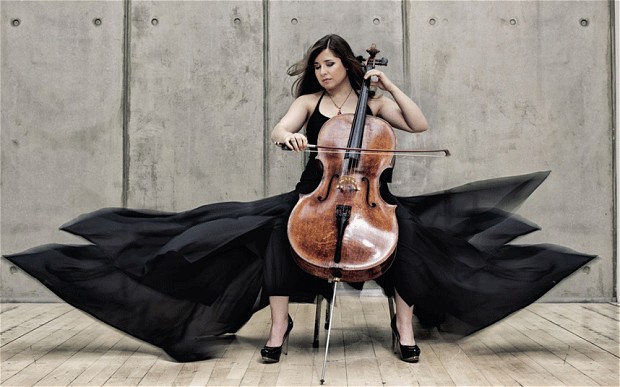
The festival opens Friday and Sunday (July 5 and  7) with three pieces selected for variety and compatibility. The opening piece, Anna Clyne’s Masquerade was written for the BBC Symphony and premiered at the Last Night of the Proms in London in 2013. That will be followed by Dvořák’s Cello Concerto, one of the pieces the Czech composer wrote while living in the United States.

Alisa Weilserstein

Featured soloist for the concerto will be cellist Alisa Weilerstein, whom Oundjian calls “one of the great cellists in the history of the instrument, and an amazing musician. . . . Her Dvořák is spectacular,” he says. “It’s maybe (Dvořák’s) most profound work, because it’s so moving.”

To close the program Oundjian wanted something that would not compete with the intensity of the concerto. “I wanted to have a celebration in the second half,” he says. “I wanted everyone to feel great,” and for that he chose Mendelssohn’s “Italian” Symphony, certainly one of the most cheerful and ebullient pieces in the orchestral repertoire.

The opening week also features the CMF’s annual Family Concert Sunday morning at 10:30 a.m. (July 7), with some light orchestral pieces mixed with some fun, including a piece based on Dr. Seuss’s Green Eggs and Ham. Tuesday sees the first of the summer’s Robert Mann Chamber Music Series concerts, named for the late violinist and founding member of the Juilliard String Quartet. The series will continue the following three Tuesdays at 7:30 p.m.

Festival Orchestra Thursday and Friday pairs, at 7:30 and 6:30 p.m. respectively, start the first week with violinist Vadim Gluzman playing Prokofiev’s Second Violin Concerto, and the iconic 20th-century masterpiece, The Rite of Spring by Stravinsky (July 11 and 12). The program will open with the exhilarating Short Ride in a Fast Machine by the American composer John Adams, who was CMF composer-in-residence in 2022.

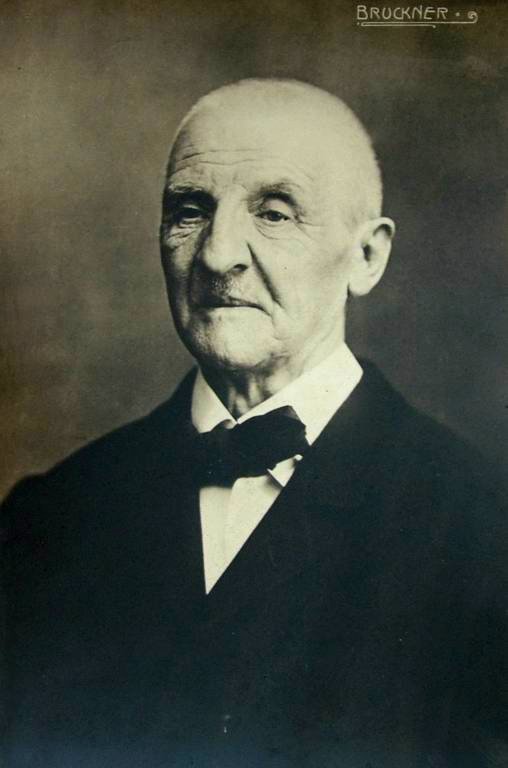
Anton Bruckner

“I did the (July 14) program because it’s the 150th birthday of Schoenberg and the 200th of Bruckner, and I wanted to acknowledge that,” Oundjian says. “I decided, let’s do it in one evening and make it a beautiful experience for everybody! The music is very spiritual (and) both pieces are fantastic to play, in that gorgeous acoustic at Chautauqua.”

The two composers took Wagner’s music and turned in different directions—Bruckner more conservatively by putting Wagner’s sound into the traditional form of the symphony, Schoenberg, born 50 years later, by pushing beyond Wagner’s harmonic freedom and the limits of tonality. 

Arnold Schoenberg

“Bruckner’s Fourth Symphony is probably the most accessible (of his nine symphonies), because it’s fairly compact,” Oundjian says. “It has stunning themes and glorious horn solos, and you really hear the power of the orchestra. I find the music exquisitely beautiful and contemplative. It’s almost surreal in its staggering beauty, to me.”

If you think of Schoenberg only as a thorny modernist, you are missing the earlier works that followed much closer to Wagner than his later works. “Verklärte Nacht is basically like late Wagner, with its glorious string sound,” Oundjian says. “It’s a beautiful string orchestra piece.”

Pianist Olga Kern returns to CMF for concerts July 18 and 19. She will play Rachmaninoff’s Piano Concerto No. 2, which she played at CMF in 2013. The concert, under the direction of Norwegian guest conductor Rune Bergmann, will also feature Prayer by Canadian composer Vivian Fung—a work that had its premiere with a “virtual orchestra” of Canadian musicians during the COVID-19 pandemic—and Edvard Grieg’s Suites from music for the play Peer Gynt, narrated by Kabin Thomas.

Gabriela Lena Frank

When he was looking for a new work to commission for the 2024 festival, Oundjian thought of a concerto for the Takács Quartet. “I said to (the quartet members), if we were to have a quartet concerto, who would you be interested in approaching, and without hesitation Gabriela’s name came up,” he says. “She  is a wonderful composer, Peruvian-American, and a very particular voice.”

Frank will be present for the July 21 premiere, as will Joan Tower, whose Concerto for Orchestra is on the same program.

Frank has written in her program notes, “Kachkanaraqmi, or ‘I still exist’ in the indigenous Quechua language of my Peruvian forbearers, speaks to the resilience, even insistence, of a racial soul through the generations. In this four-movement work, a brief pastoral Andean prelude, a moody mountain soliloquy, a romp of thieving winds, and a lyrical child’s wake utilize the sonorous possibilities of a concerto grosso for string quartet and string orchestra . . . Throughout, re-imaginings of age-old indigenous motifs and rhythms proliferate.”

Joan Tower

The premiere will be part of a concert of all-women composers, opening with Adoration by Florence Price, an early-20th-century African American composer whose works were forgotten for many years but recently have been rediscovered. Written in 1951, Adoration was originally for organ solo but has been arranged posthumously for various ensembles..

Joan Tower’s Concerto for Orchestra was commissioned jointly by the Chicago, St. Louis and New York orchestras, all of whom gave premieres but never played it again. “They always say this about compositions: Getting a commission is hard enough, but try to get second performances,” Oundjian says. “It’s one of those things that has really intrigued me, over my entire career: Let’s find out what’s just premiered in the last few years but has been undeservedly ignored.”

He discovered Tower’s Concerto for Orchestra when he was asked to conduct it in Iceland. “I said, ‘I don’t know that piece!’ I just loved it. It is so dramatic and so beautiful. There are two passages that are some of the most stunning contrapuntal harmony that I know in contemporary music. 

“It has tremendous drive and brilliance, and it demands everything from the orchestra.”

# # # # #

Colorado Music Festival, Peter Oundjian, music director
July 5–21, 2024
All performances in Chautauqua Auditorium

Opening Night
Festival Orchestra, Peter Oundjian, conductor
With Alisa Weilerstein, cello

  • Anna Clyne: Masquerade (2013)
  • Dvořák: Cello Concerto in B minor
  • Mendelssohn: Symphony No. 4 in A major (“Italian”)

6:30 p.m. Friday and Sunday, July 5 and 7

Family Concert: Green Eggs and Ham
Festival Orchestra, Jacob Joyce, conductor 
With Really Inventive Stuff and Jennifer DeDominici, mezzo-soprano

  • Glinka: Overture to Ruslan and Ludmilla
  • Daniel Dorff: Three Fun Fables
  • Mendelssohn: Overture to A Midsummer Night’s Dream
  • Rob Kapilow: Green Eggs and Ham

10:30 a.m. Sunday, July 7

Robert Mann Chamber Music Series
Colorado Music Festival musicians 

  • Ernst von Dohnányi: Sextet in C Major
  • Beethoven: “Duet with two Obligato Eyeglasses” in E-flat major for viola and cello, WoO 32
  • Schumann: Piano Quartet in E-flat Major, op. 47

7:30 p.m. Tuesday, July 9

Festival Orchestra Concert
Festival Orchestra, Peter Oundjian, conductor
With Vadim Gluzman, violin

  • John Adams: Short Ride in a Fast Machine
  • Prokofiev: Violin Concerto No. 2 
  • Stravinsky: Rite of Spring

7:30 p.m. Thursday July 11
6:30 p.m. Friday, July 12 

Bruckner Bicentennial Concert
Festival Orchestra, Peter Oundjian, conductor

  • Arnold Schoenberg: Verklärte Nacht (“Transfigured night”), op. 4
  • Anton Bruckner: Symphony No. 4 (“Romantic”)

6:30 p.m. Sunday, July 14

Robert Mann Chamber Music Series
Colorado Music Festival musicians

  • Carl Nielsen: Wind Quintet, op. 43
  • Schubert: String Quintet in C Major, D956

7:30 p.m. Tuesday, July 16

Festival Orchestra Concert
Festival Orchestra, Rune Bergmann, conductor
With Olga Kern, piano, and Kabin Thomas, narrator

  • Vivian Fung: Prayer
  • Rachmaninoff: Piano Concerto No. 2, op. 18
  • Edvard Grieg: Suites from Peer Gynt

7:30 p.m. Thursday, July 18
6:30 p.m. Friday, July 19

Festival Chamber Orchestra Concert
Festival Orchestra, Peter Oundjian, conductor
With the Takács Quartet and Gabriela Lena Frank, composer 

  • Florence Price: Adoration
  • Gabriela Lena Frank: Kachkanaraqmi (“I still exist”; world premiere)
  • Joan Tower: Concerto for Orchestra

6:30 p.m. Sunday, July 21

Tickets for individual concerts are available through the Chautauqua Box Office Web page.

Central City offers three works first performed in New York

Pirates of Penzance, Girl of the Golden West and Street Scene on this summer’s bill

By Peter Alexander June 25 at 4:02 p.m.

Central City Opera opens its 2024 festival season Saturday with a staple, not of the grand opera house, but of the English light-opera stage: Gilbert and Sullivan’s delightful and sometimes silly Pirates of Penzance (7:30 p.m. June 29; full summer schedule below).

Opening Night at Central City Opera. Featured in Central City Opera’s 75th anniversary book, “Theatre of Dreams, The Glorious Central City Opera- Celebrating 75 Years.”

The fifth collaboration between author Sir Willam Gilbert and composer Sir Arthur Sullivan, Pirates surprisingly had its official premiere at the Fifth Avenue Theater in New York City Dec. 31, 1879. The show, known for its bumbling police, its only slight less inept pirate gang, and its often parodied Major General’s patter song, has long been one of the most popular of the G&S operettas. 

A 1980 production in Central Park, part of the “Shakespeare in the Park” summer series, was so successful that it was transferred to Broadway. In 1983 it was made into a film with original cast members Linda Ronstadt (Mabel), Kevin Kline (the Pirate King) and Rex Smith (Frederic), plus Angela Lansbury (Ruth). 

At Central City this summer, Pirates shares the rotating repertory bill with two other works also premiered in New York, neither of which is truly part of the core operatic canon: Kurt Weill’s Street Scene, premiered at New York’s Adelphi Theater in 1947; and Puccini’s La fanciulla del West (Girl of the Golden West), premiered at the Metropolitan Opera Dec. 10, 1910.

* * * 

Pirates of Penzance is a typical G&S operetta in the way that it satirizes British habits. The pirates are goofily sentimental, the Major General is preposterously pompous, the police are ridiculously hapless, and Frederic takes his very British devotion to duty to comic extremes. The whole plot turns on two ridiculous misunderstandings: That Frederic was apprenticed by his near-deaf nursemaid to nautical pirates rather than pilots; and that he was apprenticed not for 21 years but until his 21st birthday—which, because he was born on Feb. 29, means not until he is in his 80s.

That he and his chaste bride-to-be Mabel accept this delay with unnaturally bright composure is just one of many implausible turns of plot—as one expects from Gilbert and Sullivan. In addition to the patter song “I Am the very Model of a Modern Major General,” the score contains several memorable songs, including Mabel’s “Poor Wandering One,” which pairs alluring sentiment with brilliant coloratura; and the pirate chorus’s “With Cat Like Tread,” in which they noisily proclaim their intent to creep silently into the Major General’s household. 

* * *

Also written for the popular stage, Kurt Weill’s Street Scene is a different matter entirely. With lyrics by Langston Hughes and a book by Elmer Rice, it is a gritty tale of tenement dwellers on Manhattan’s east side. Among a mix of residents of Swedish, Italian, German and Jewish background there is an abusive husband, an alcoholic, a radical intellectual, gossipy neighbors, a sleazy boss, an adulterous milkman, a birth, an eviction and a double murder.

And of course a pair of young lovers, who survive but are forced apart by the violent events around them.

Weill came to the United States in 1935, after a successful career in his native Germany—particularly works created with playwright Bertolt Brecht including their Dreigroschenoper (Threepenny Opera). In this country Weill wrote several works for the Broadway stage, including Knickerbocker Holiday, Lady in the Dark and Lost in the Stars, but he was always aiming to create a form that combined serious opera with popular theater and song.

The work that came closest to that goal might be Street Scene, which freely mixes operatic elements, such as the aria “Lonely House” sung by the male romantic lead Sam Kaplan, with Broadway entertainment including dance numbers and a lively number for graduating students, “Wrapped in a Ribbon and Tied in a Bow.” Other notable numbers in the score are the “Ice Cream Sextet,” the duet by nursemaids gawking at the scene of the murders, and the dreamy aria “What Good Would the Moon Be,” sung by the female lead, Rose Maurrant.

It is the operatic aspects that have left their mark on Street Scene, which has been performed by opera companies but never returned to Broadway. Even operatic performances are infrequent today, due in part to the large cast that Weill requires—more than 30 named roles.

* * *

The closest thing to a repertoire item this summer, Puccini’s Fanciulla del West has that rarest of serious opera features, a happy ending. No one dies in the course of the opera, and the leading soprano is neither a naive innocent nor a victim; in fact, she is about the strongest character in the opera, who even cheats at cards to reach the opera’s happy end.

The plot features Minnie (soprano), who owns the Polka Saloon; the sheriff Jack Rance (baritone) who hopes in vain to marry Minnie; and the romantic tenor lead, the outlaw Ramerrez, who under the name Dick Johnson becomes Minnie’s true love.

Very much part of the action, Minnie forges her own destiny, first by owning the saloon in a mining camp, and then by playing cards for her lover’s life. Production stage director Fenlon Lamb observes that this is very different from other Puccini soprano roles.

Fenlon Lamb

“Other Puccini heroines are stuck in what society allowed them to be,” she says. “When you transfer things to the Wild West, the rules are gone. All bets are off! And she’s freer to be one of the guys. She’s the girl of the camp, but they all respect her, right to the end.”

The plot is fairly simple: Minnie’s bar is the favorite place for the men of a mining camp to find solace. The arrival of a stranger alarms the sheriff and the Wells Fargo agent, who are looking for the outlaw Ramerrez. Minnie recognizes him from a previous meeting as Johnson and the two fall in love. Later in her cabin Minnie and the sheriff play cards for the outlaw’s life. 

She wins by pulling cards out of her boot, but Johnson/Ramerrez is later captured and brought back to town to be hanged. Just as the noose it put around his neck, Minnie contrives to create a happy ending—but you will have to buy a ticket to know the details.

As a woman, Lamb acknowledges that she might approach female characters differently than men might. “I give a little bit more understanding and support to the female characters,” she says. “I love working with singers, but I especially support the women in my productions. We spend more time figuring out what the heroine is trying to say, through her singing and her actions.”

Another way that Fanciulla differs from most Puccini operas is that there are no big arias. The music has the same lush melodies and Romantic impulses—“it is gorgeous!” Lamb says—but unlike most grand opera, the action never pauses for a stand-alone aria.

Appropriately, the Central City production has moved the setting from the California Gold Rush to Colorado 10 years later. “We’re not the ’49ers, we’re the ’59ers out here” in Central City, Lamb explains. “It gives us the opportunity to use actual pieces and parts from Central City. In doing that, we’ve only changed one word—instead of ‘addio California’ (goodbye California) Minnie says ‘andiamo a California’ (let’s go to California)” before riding into the sunset.

Puccini had never been to the American West, so his knowledge was taken from popular stereotypes and the original story, so not all of his characters ring true. The miners are heavily romanticized and cleaned up for the stage, the Wells Fargo agent is a typical stage villain, but the most difficult characters are Minnie’s Native American servants, Wowkle and Billy Jackrabbit.

They are often treated as crude stereotypes, but compared to many productions, Lamb says, “you can give these characters real depth. We’ve decided that Billy Jackrabbit is a white trader (who) goes into different native camps and understands some of the language, (who) might marry a native woman. It’s getting into what happened at the time and finding ways to tell the story that are not stereotyped.”

Having spent some time in Central City and visited some of the actual mines in the area, Lamb sees a larger picture than the love story at the heart of the opera. “Everybody’s proud of the mining tradition here,” she says.

“The focus [of the production] is on these guys in a mining camp. And there’s a focus on the fragility of this mass of humans, and how are they getting along together. In the end, it’s forgiveness that really saves the day, it’s being able to connect and understand the other person, and their needs, and forgive.

“I think it’s an opportunity to see the strength juxtaposed with fragility of the community, and then forgiveness is pretty much the answer.”

# # # # #

Central City Opera
2024 season
(performances in Central City Opera House)

Sir Willam Gilbert and Sir Arthur Sullivan: Pirates of Penzance
Sung in English with English supertitles

7:30 p.m. Saturday, June 29; Saturday, July 20; Saturday, July 27; 
2 p.m. Wednesday, July 3; Friday July 5; Sunday, July 7; Saturday, July 13; Tuesday, July 16; Wednesday, July 24; Friday, Aug. 2

Single tickets

Giacomo Puccini: La fanciula del West (Girl of the golden West)
Sung in Italian with English supertitles

7:30 p.m. Saturday, July 6; Saturday, Aug. 3
2 p.m. Wednesday, July 10; Friday, July 12; Sunday, July 14; Friday, July 19; Saturday, July 21; Tuesday, July 23; Saturday, July 27; Wednesday, July 31

Single tickets

Kurt Weill: Street Scene
Sung in English with English supertitles

7:30 p.m. Saturday, July 12
2 p.m. Wednesday, July 17; Saturday, July 20; Friday, July 26; Sunday, July 28; Tuesday, July 30; Saturday, Aug. 3

Single tickets

Season Subscription tickets for all three productions

NOTE: Casts and other creative contributors to the productions of Pirates of Penzance, Street Scene and La fanciulla del West are all listed on the Central City Opera Web page.

“Popular Entertainment” anchors 2024 CU NOW

Gene Scheer and Bill Van Horn conjure a musical play from an 18th-century sequel

By Peter Alexander June 12 at 11:50 p.m.

“If it’s a success, write a sequel!”

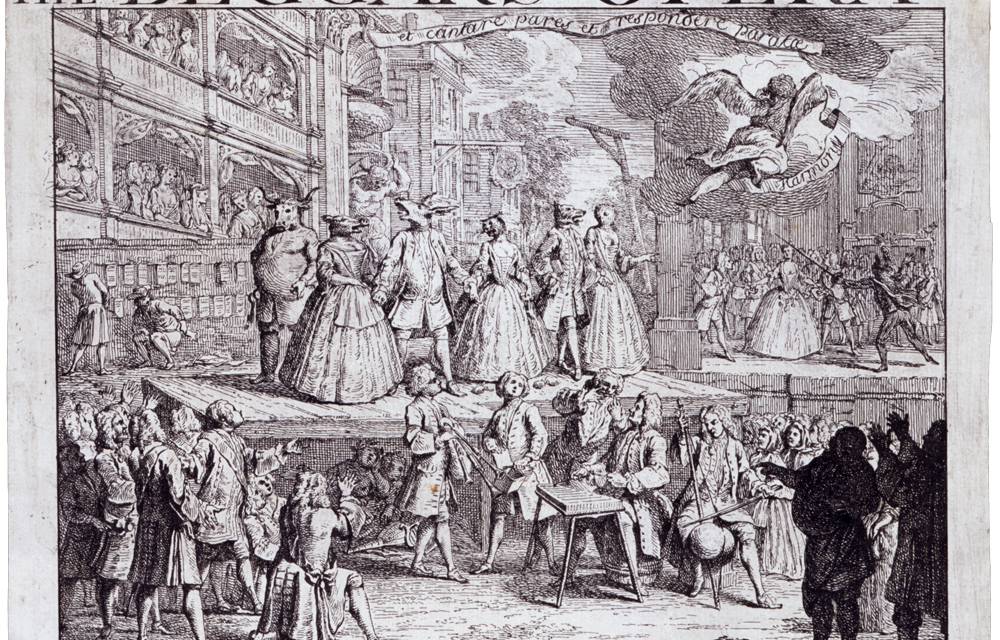
That’s the commentary of theater veteran Bill Van Horn, who is helping turn just such a sequel from the 18th century into a modern-day operetta—or “popular entertainment about history,” as he describes it. The work in question brings together Van Horn as librettist with Gene Scheer as song writer. Their Polly Peachum, based on the sequel that English dramatist John Gay wrote to his own hugely successful Beggar’s Opera of 1728, will be presented by the CU New Opera Workshop (CU NOW) Friday and Sunday (June 14 and 16; details below)

18th-century outdoor performance of Gay’s Beggar’s Opera, engraving by William Hogarth

Between the two performances of Polly Peachum CU NOW will present operatic scenes by composition students Alan Mackwell, Holly McMahon and Joshua Maynard. As part of CU NOW they have participated in the Composer Fellows’ Initiative (CFI), working on their own operatic works with composer Tom Cipullo.

Gene Scheer (l) and Jake Heggie (r) at CU NOW, 2018 (Photo by Glenn Asakawa/University of Colorado)

Scheer and Van Horn are both widely experienced in the theater. Scheer has been at CU NOW before, working on new operas as librettist with composer Jake Heggie (Wonderful Life, If I Were You, Intelligence). He has also written librettos for other works by Heggie (Two Remain, Radio Hour) and other composers including Jennifer Higdon (Cold Mountain), and he has written songs and other musical works of his own.

Although he has never been to Colorado before, Van Horn has done almost everything in the theater except, he says, “count money.” As he tells the story, “I started just showing up at theaters saying ‘Is there anything you need to be done?’ Eventually you get asked to be in a play, and I’d sort of take up residence in different theaters.” From that unconventional start, he has gone on to translating plays and operettas, writing plays, adapting plays and directing plays.

The idea for the modern Polly Peachum arose more than 30 years ago, when Scheer was playing the central role of Macheath—aka “Mack the Knife”—in Kurt Weill’s Threepenny Opera, a 20th-century adaptation of Gay’s Beggar’s Opera. His mother gave him a book of The Beggar’s Opera, where he learned that Gay had written a sequel titled Polly Peachum, named for a character in both works.

Bill Van Horn (Photo by Mark Garvin)

“The problem is that the play Polly is not that good,” Scheer says. “I got the idea of doing a prequel. I showed this to (Van Horn), and we developed the idea together, the making of The Beggar’s Opera, in which the world of government intrigue, ham actors, and Jonathan Wild, who was the inspiration for Macheath,” are blended.

Leigh Holman, the director of CU NOW and CU’s Ecklund Opera Program, says that “(Scheer) told me about this piece two or three years ago, and we’ve been trying to find the right time to bring him here. This was the right time, so we’re so excited for him do this. It’s been amazing so far. This piece has been great for (the students).”

Both Scheer and Van Horn praise the contributions the students have made in rehearsals. “They’re extraordinary,” Scheer says. “They’re teaching us as we teach them. They are all extraordinary singers, they’re extraordinarily well trained.”

“They’re going to be indelibly on my mind as the characters, forever, because they’re the first ones to do it,” Van Horn adds. “It’s in the best tradition of old-school summer stock, where everybody does a little bit of everything. That’s the best kind of theater!”

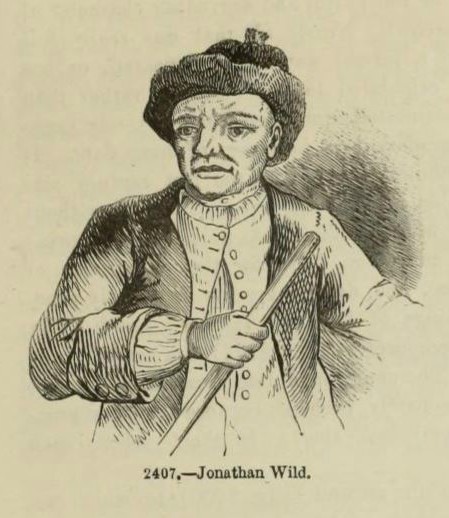
Johnathan Wild, book illustration

In Scheer and Van Horn’s Polly fictional characters, such as Polly Peachum, are combined with real-life characters, including the dramatist Gay and Wild. Of these, it is Wild who is the most outlandish and theatrical character.

“Wild was the ‘thieftaker general’,” Van Horn explains. “He bought things that people stole and then told the owner, ‘I can get this back for you.’” He charged the true owners what seemed like a small portion of the items’ actual value, but the thieves were all working for him and he accumulated an enormous fortune.

“The thieves of London would bring the stolen goods to his warehouse,” Scheer says. “Wild would publish what he had, and people would come and buy possessions that had been stolen from them.”

In the end, Wild got cocky and careless. He was eventually arrested, convicted and sentenced to be hanged in Tyburn Square in London. His hanging in 1725 was a sensational public event that attracted thousands, but Wild drugged himself before the hanging. Although he did not succeed in killing himself, he was in a coma when hanged—which is one way the stage plot diverges from history.

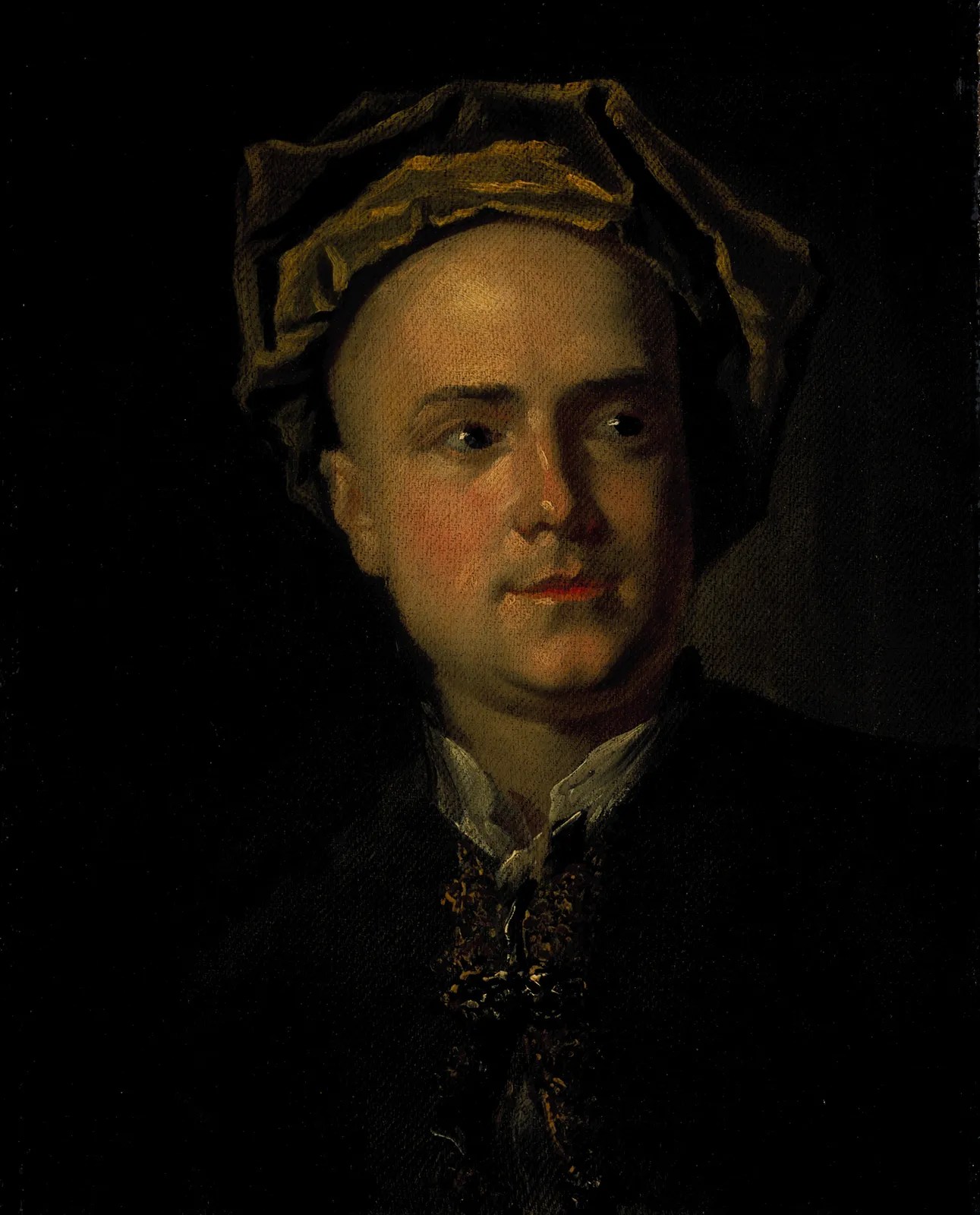
John Gay, oil painting by William Aikman in the Scottish National Portrait Gallery, Edinburgh

In Scheer and Van Horn’s version, the fictional Polly Peachum works for the historical Wild, and the two are lovers. When Wild is arrested, his gang is pursued and Polly hides out in the warehouse. Meanwhile Gay’s manuscript for The Beggar’s Opera is stolen and he goes to the warehouse to purchase it back. Instead he meets Polly, who joins his theater company as a way of hiding from the police. She becomes Gay’s muse as he completes The Beggar’s Opera and they fall in love.

In the meantime, Wild is supposed to be hanged, but instead of taking laudanum, as history has it, he gives it to the minister who comes to administer the last rites. The minister is hanged in his place, and Wild escapes. Polly thinks he is dead until he shows up at the theater. His sudden appearance creates a conventional love triangle, with Polly forced to choose between Wild, the fugitive, and Gay, the theater manager. 

If that sounds familiar, it’s still the same old story. Or as Van Horn says, “If you recognize any parallels with Casablanca, it’s intentional.”

And performances are free.

# # # # #

CU New Opera Workshop (CU NOW)  2024

Polly Peachum
Music by Gene Scheer, book and lyrics by Bill Van Horn and Gene Scheer

7:30 Friday, June 14
2 p.m. Sunday, June 16

Composer Fellows’ Initiative (CFI): Scenes
7:30 p.m. Saturday, June 15

All performances in the Music Theater, Imig Music Building.
Admission is FREE.