Seicento introduces new director with Handel oratorio

Coreen Duffy will conduct ‘Judas Maccabeus’ Friday-Sunday

By Peter Alexander Nov. 13 at 5:55 p.m.

Seicento Baroque Ensemble is starting the concert season with a new conductor and a Handel oratorio that is likely new for many in the audience.

Coreen Duffy, newly hired as Seicento’s artistic director and as director of choral activities at the CU College of Music, is a specialist in Jewish choral music. She will conduct the singers of Seicento and an orchestra of Baroque period instruments in a performance of Handel’s oratorio Judas Maccabeus. Performances will be Friday through Sunday in Longmont, Boulder and Denver (Nov. 15–17; details below).
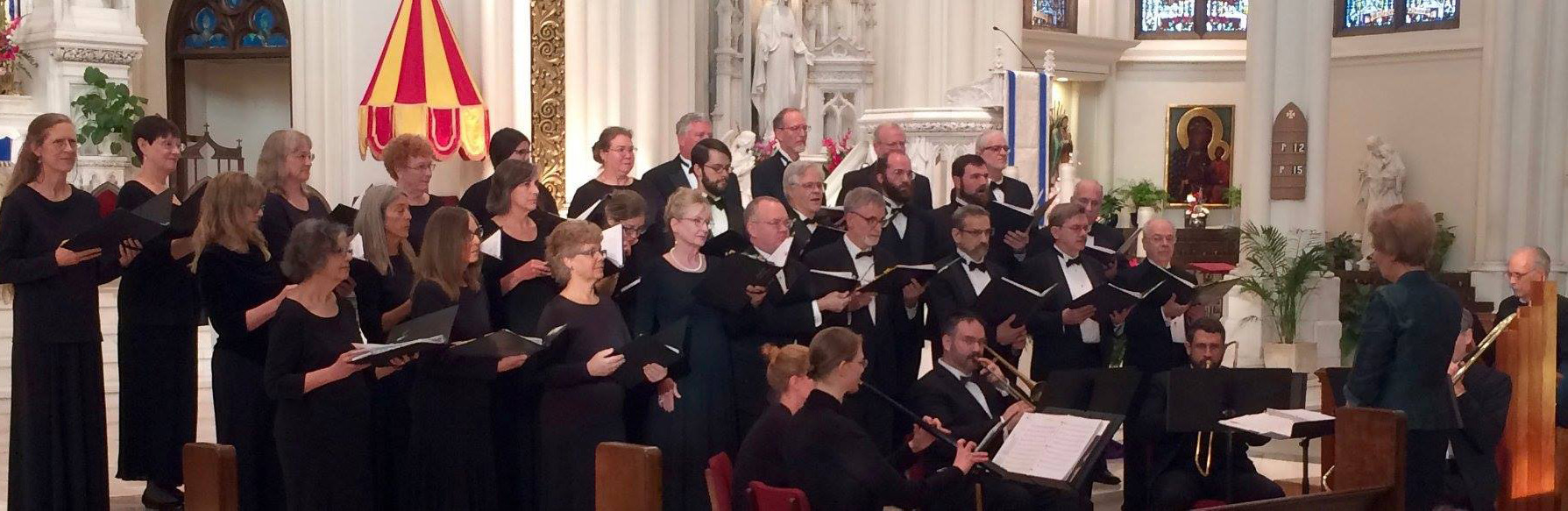
Seicento in 2022 with founding director Evanne Browne

Handel’s Judas Maccabeus was composed in 1746, the 18th of the composer’s remarkable output of 18 or 19 oratorios, depending on how you count them. Based on the historical event of the rebellion of the Jewish people against the Greek Seleucid Empire in the years 170–160 BCE, the libretto was written by Thomas Morell who wrote several oratorio texts for Handel.

The story of Judas Maccabeus is tied to the Jewish holiday of Hanukkah, which celebrates the return of Jewish worship to the Second Temple in Jerusalem during the revolt. Eventually the revolt led to victory over the Greeks and their expulsion from Judea.
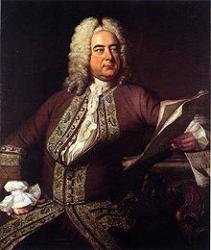
George Frideric Handel

Handel wrote Judas Maccabeus at a time that his oratorios were losing their popularity. To revive his success, he wrote Judas Maccabeus to celebrate the 1746 victory of the English over the Scots at Culloden. To appeal to the British audience, the libretto stresses the military victory of the Jewish people, rather than the “The Festival of Lights” and the Hanukkah story of lamps that miraculously burned for eight days. The premieretook place at in London on April 1, 1747, nearly a year after the battle of Culloden.

The oratorio comprises 68 separate musical numbers organized in three acts, much like Messiah. It includes 17 choruses, as well as arias for the soloists who portray Judas Maccabeus, his brother Simon, a messenger and other characters in the story.

Because it never achieved the broad popularity of Handel’s Messiah, Judas Maccabeus is often regarded as secondary to the more famous work. However, it does contain one of Handel’s most popular choruses, “See, the Conqu’ring Hero Comes!” This chorus has been adapted several times, including a set of variations for cello and piano by Beethoven, a hymn tune, and a movement of Henry Wood’s Fantasia on British Sea Songs.

A performance of Judas Maccabeus is a major undertaking. Seicento will feature its full choir, four soloists—Alice Del Simone, soprano; Alexandra Colaizzi, mezzo-soprano; Javier Abreu, tenor; and James Robinson, bass—and an orchestra with local Baroque-instrument string players and a number of period wind-instrument specialists, most brought in from outside Boulder. 

Duffy links the oratorio firmly to the celebration of Hannukah. She has written of the upcoming performance, “The Jewish High Holy Day season (is) a time of intense contemplation, when we consider the past year in retrospect, make amends with each other and set goals for the coming year.

“This year, the Seicento Baroque Ensemble has set an exciting performance goal . . . one of Handel’s greatest—yet under-performed—oratorios, Judas Maccabaeus. This Chanukah oratorio tells the story of the Maccabees’ fight for religious tolerance and freedom from persecution. Handel’s music soars over the conflict, desolation, and joy, lifting the Chanukah story up for new generations.”
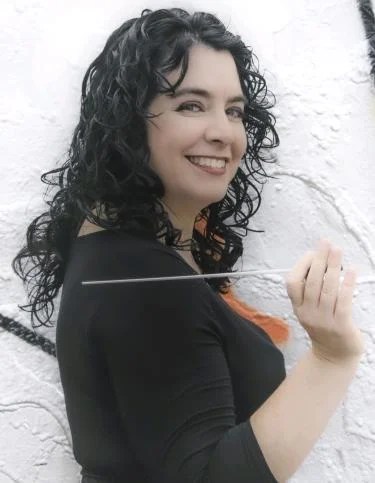
Coreen Duffy

Duffy replaces the founding director of Seicento, Evanne Browne. Her duties at the College of Music include leading the graduate program in choral conducting at both the master’s and doctoral levels. She earned degrees from the University of Michigan (bachelors degree with honors in English), the University of Michigan Law School (Juris Doctor), the University of Miami Frost School of Music (masters in conducting) and the USC Thornton School of Music (doctorate in choral music).

Before coming to CU-Boulder, Duffy was on the faculty of the University of Montana and the University of Miami Frost School of Music, and practiced law in California. She is excited to join the faculty at CU, saying “it’s a legacy program . . . the envy of the country in terms of the gold standard for choral literature studies.”

At Seciento, she says, “it’s a wonderful opportunity to continue the amazing work that Evanne Browne had done. We’re taking on the enormous project from the get-go this fall, with Judas Maccabeus. Next spring the title of the concert is “Renaissance women.” It will be all women composers of the Renaissance and Baroque.

“That will be really fun to do—music that doesn’t get done very often.”

# # # # #

Seicento Baroque Ensemble, Coreen Duffy, director
With Alice Del Simone, soprano; Alexandra Colaizzi, mezzo-soprano; Javier Abreu, tenor; and James Robinson, bass
Orchestra of Baroque-era period instrumentalists

  • Handel: Judas Maccabeus

7 p.m. Friday, Nov. 15, Stewart Auditorium, Longmont
7 p.m. Saturday, Nov. 116, Congregational Nevei Kodesh, Boulder
3 p.m. Sunday, Nov. 17, St. Thomas Episcopal Church, Denver

TICKETS (Students under 18 free)

CORRECTION: The name of bass soloist is James Robinson. It was originally incorrectly listed as James Robins.
“Guitar Masterworks” program comes to Boulder

Spanish virtuoso Pablo Sáinz-Villegas plays at Macky Saturday

By Peter Alexander Nov. 7 at 2:25 p.m.

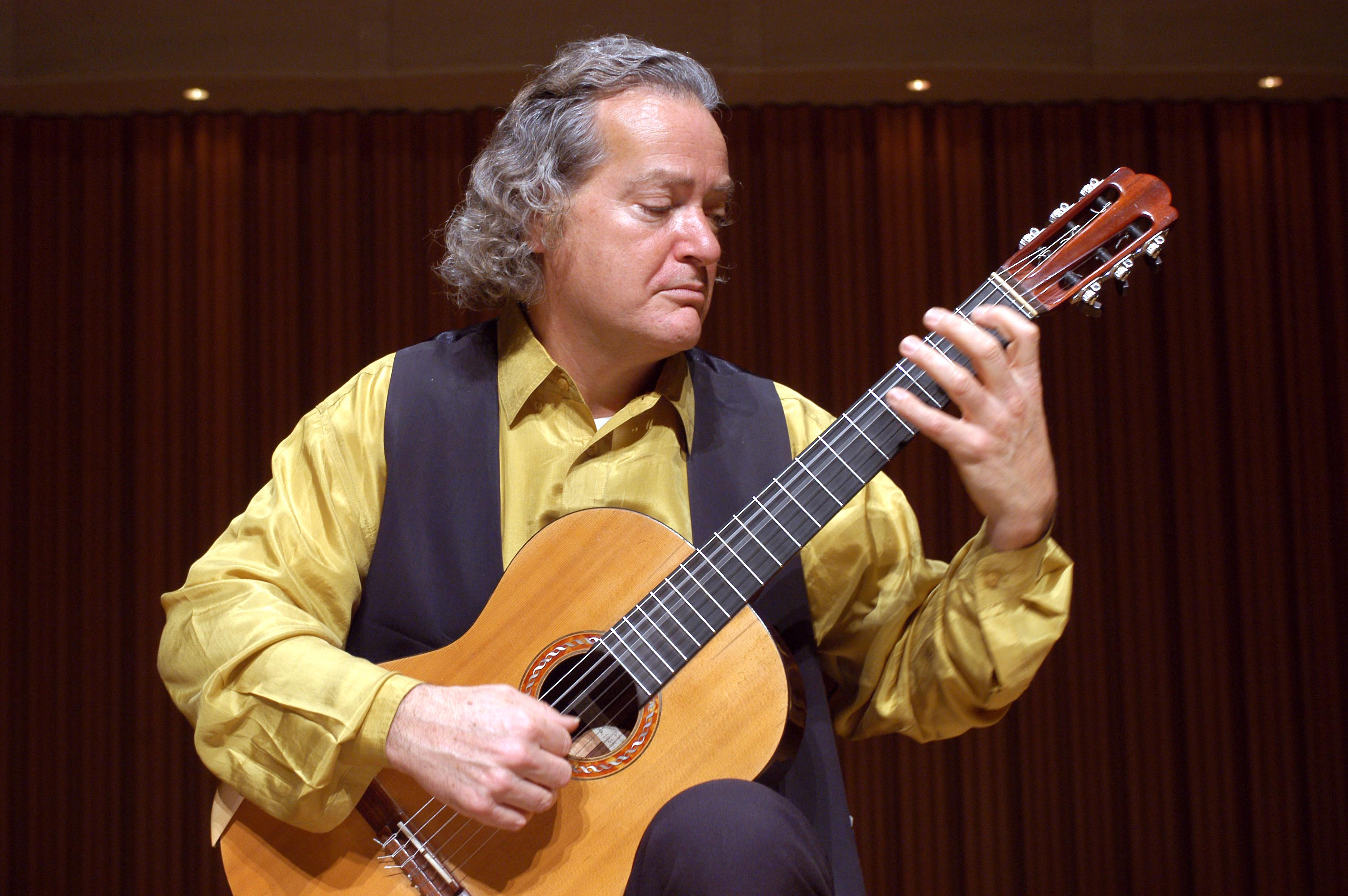
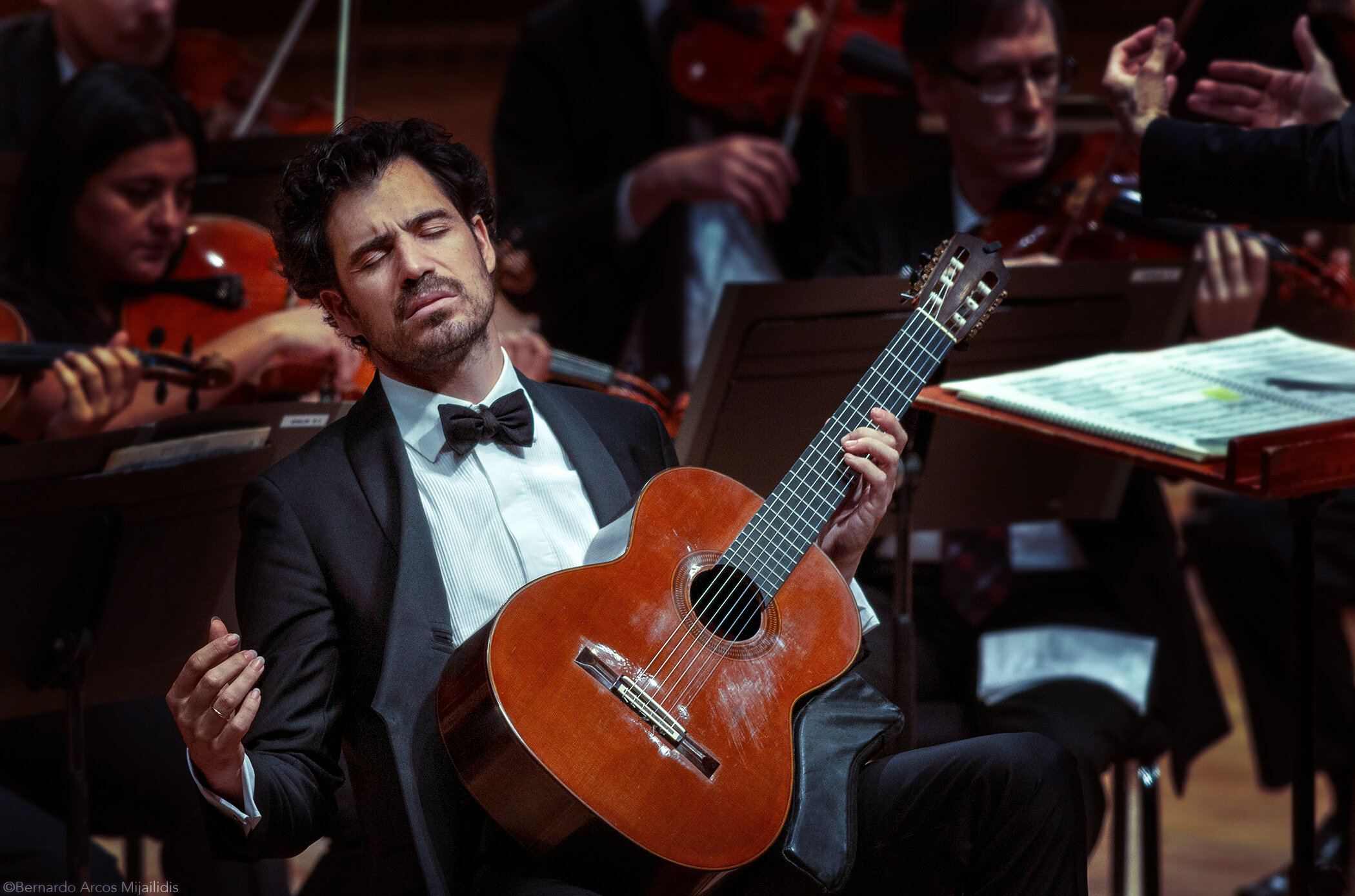
Pablo Sáinz-Villegas, a classical guitarist from Logroño, La Roja, near the Basque Country in Northeastern Spain, will perform a program of “Guitar Masterworks” as part of the CU Presents Artist Series in Macky Auditorium at 7:30 p.m. Saturday (Nov. 9; details below).

Pablo Sáinz-Villegas. Photo by Bernardo Arcos Mihailidis.

His program will feature his own arrangement of the Chaconne from Bach’s Partita in D minor for solo violin, as well as works by Vila-Lobos, Albéniz, Agustín Barrios-Mangoré and Carlo Domeniconi.

The Five Preludes are the last of many works that Brazilian composer Heitor Villa-Lobos wrote for guitar. Each of the five preludes is titled as an homage. The third is an homage to Bach, but the others recognize aspects of Brazilian life and culture: “The Brazilian Backcountry,” “The Scoundrel from Rio,” “The Brazilian Indians” and “The Social Life.”

The instantly recognizable piece by Isaac Albeniz known as Asturias is one of the most popular works for classical guitar. However, it was originally written for piano and titled simply “Prelude.” The title Asturias (Leyenda) was applied after Albeniz’s death by the German publisher Friedrich Hofmeister when he published it in 1911. Hofmeister also included Asturias in what he called the “complete version” of the Suite española, although Albeniz had not included it as part of a larger work at all.

The piano piece was written to imitate the sound of flamenco guitar, and it has been transcribed for guitar several times, including by the great Spanish guitarist Andrés Segovia. In addition to its wide popularity among classical guitarists, it has also been used in by rock and pop groups, including The Doors and Iron Maiden.

Agustín Barrios-Mangoré

The other composers on the program are well known to guitarists but may not be familiar to classical audiences in this country. Agustín Barrios-Mangoré was a guitarist and composer from Paraguay who lived in the first half of the 20th century. Also known as Nitsuga (Augustin spelled backwards!) Mangore and Augstín Pío Barrios, he began university studies in music and other fields when he was only 15.

He was known for both his brilliantly virtuosic performances on guitar and for his poetry. He had numerous students, including 12 that he taught while living in El Salvador who were known as “The Twelve Mangoreanos.”

Many of his works for guitar were influenced by South and Central American folk music. Un sueño en la floresta (A dream in the forest) is known for its extensive use of complex tremolos and its ending on a high C that requires one more fret than are found on most guitars.

Carlo Domeniconi

Italian guitarist and composer Carlo Domeniconi spent many years living in Istanbul, Turkey. That experience led to Koyunbaba, a suite inspired by Turkish music. The title refers to a region of Turkey, and also means “shepherd.” Domeniconi’s best known work, Koyunbaba uses “scordatura” (an alternative tuning of the strings) to create exotic effects and evoke the Turkish origin of the music.

After musical studies in his native province of La Roja, Sáinz-Villegas has lived and managed his career in New York. Since his debut with the New York Philharmonic with conductor Rafael Frühbeck de Burgos, he has played in more than 40 countries with orchestras including the Berlin Philharmonic, Chicago Symphony, Philharmonic of Israel, Los Angeles Philharmonic, and the National Orchestra of Spain. Most memorably, he has performed before members of the Spanish Royal Family as well as other heads of state and international leaders.

# # # # #

CU Presents Artist Series: Guitar Masterworks
Pablo Sáinz-Villegas, guitar

  • Heitor Villa-Lobos: Five Preludes
  • J.S. Bach: Chaconne from the Partita in D minor for solo violin (arr. Sáinz-Villegas)
  • Isaac Albéniz: Asturias (Leyenda) from Suite Española
  • Agustín Barrios-Mangoré: Un sueño en la floresta (A dream in the forest)
  • Carlo Domeniconi: Koyunbaba

7:30 p.m. Friday, Nov. 9
Macky Auditorium

TICKETS

Moons and planets in Macky Auditorium

Boulder Phil to premiere a new work about the solar system Sunday

By Peter  Alexander Nov. 6 at 2:55 p.m.

Gustav Holst’s seven-movement orchestral suite The Planets is one of the best known and most popular pieces in the orchestral repertoire. But did you know there is a new piece about the moons in our solar system to go with it?

That new piece, Moons of the Giants by Colorado composer John Heins, will receive its world premiere from the Boulder Philharmonic on a program that includes Holst’s score at 4 p.m. Sunday (Nov. 10; details below). The performance will be led by guest conductor Scott O’Neil, who is staff orchestrator and conductor for the Colorado Symphony. He replaces the Boulder Phil’s music director Michael Butterman, who will be out for the remainder of 2024 for health reasons.
John Heins

Heins wrote the piece without a commission, just from his own inspiration, and then hoped to find an orchestra that would play it. Butterman said he liked the score as soon as he took a look at it, and even though he won’t be able to conduct in it Boulder he plans to perform it with the Shreveport Symphony in Louisiana, which he also directs, in January. 

“I’m just sorry that I won’t get to conduct the premiere,” he wrote in an email.

In an online interview, Heins said “I’ve always been really interested in astronomy and space exploration. The Holst (Planets) is one of my favorite pieces, and I’ve thought about writing some type of piece like that. I came up with the idea to write about some of the moons of some of the planets.
“I narrowed it down to the so-called ‘gas-giant’ planets—Neptune, Uranus, Jupiter and Saturn—and picked one or two moons of each of these planets. . . . I picked six of the moons. Each one has a different character and mood. (The score is) pretty programmatic and moody, just trying to bring across the impression that the moons had on me when I researched them.”
In his written communication, Butterman noted that “Heins’ work will be presented along with video prepared by CU’s Fiske Planetarium.”

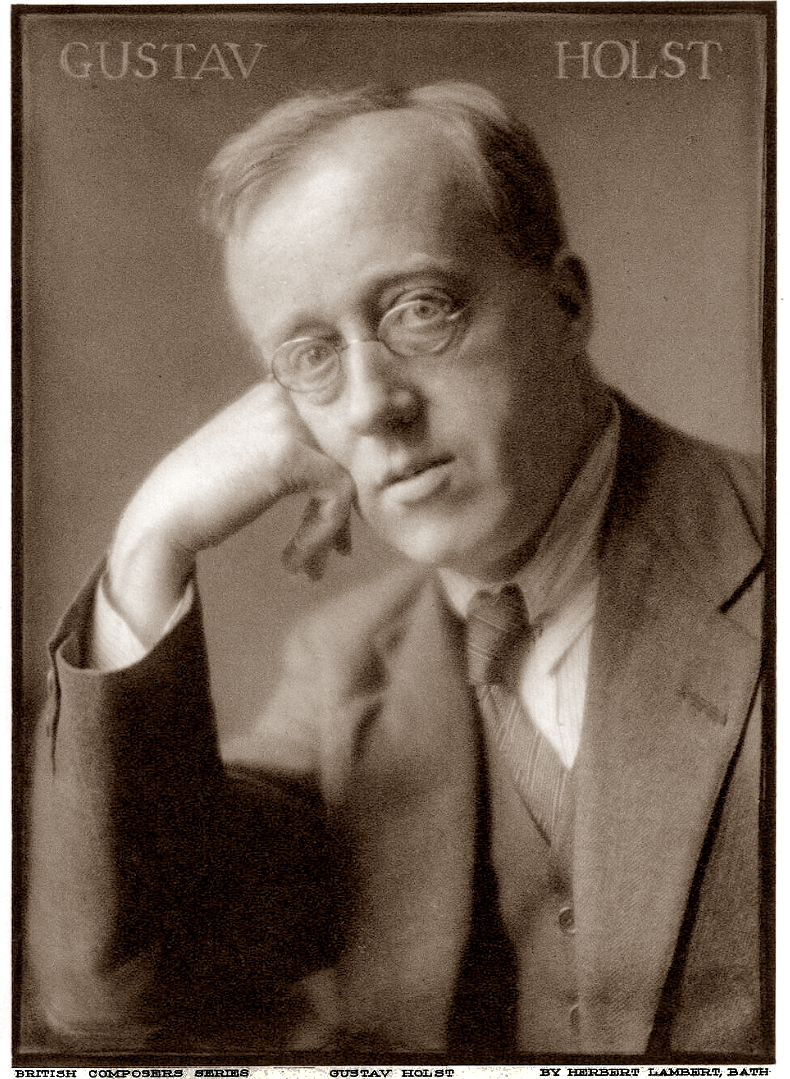
Gustav Holst

The second half of the program, comprising Holst’s Planets, is presented in honor of the 150th anniversary of the composer’s birth. Holst wrote The Planets over a three-year span from 1914 to 1917. Each movement describes not the physical nature of the planet but its astrological significance and the mythological character for which it is named. 

The first performance, given in London in 1918, was initially met with hostility from some critics, due to Holst’s imaginative use of color and harmony. Nevertheless, the suite quickly gained popularity with audiences. Today it is one of Holst’s most widely performed pieces, and has been recorded more than 80 times.

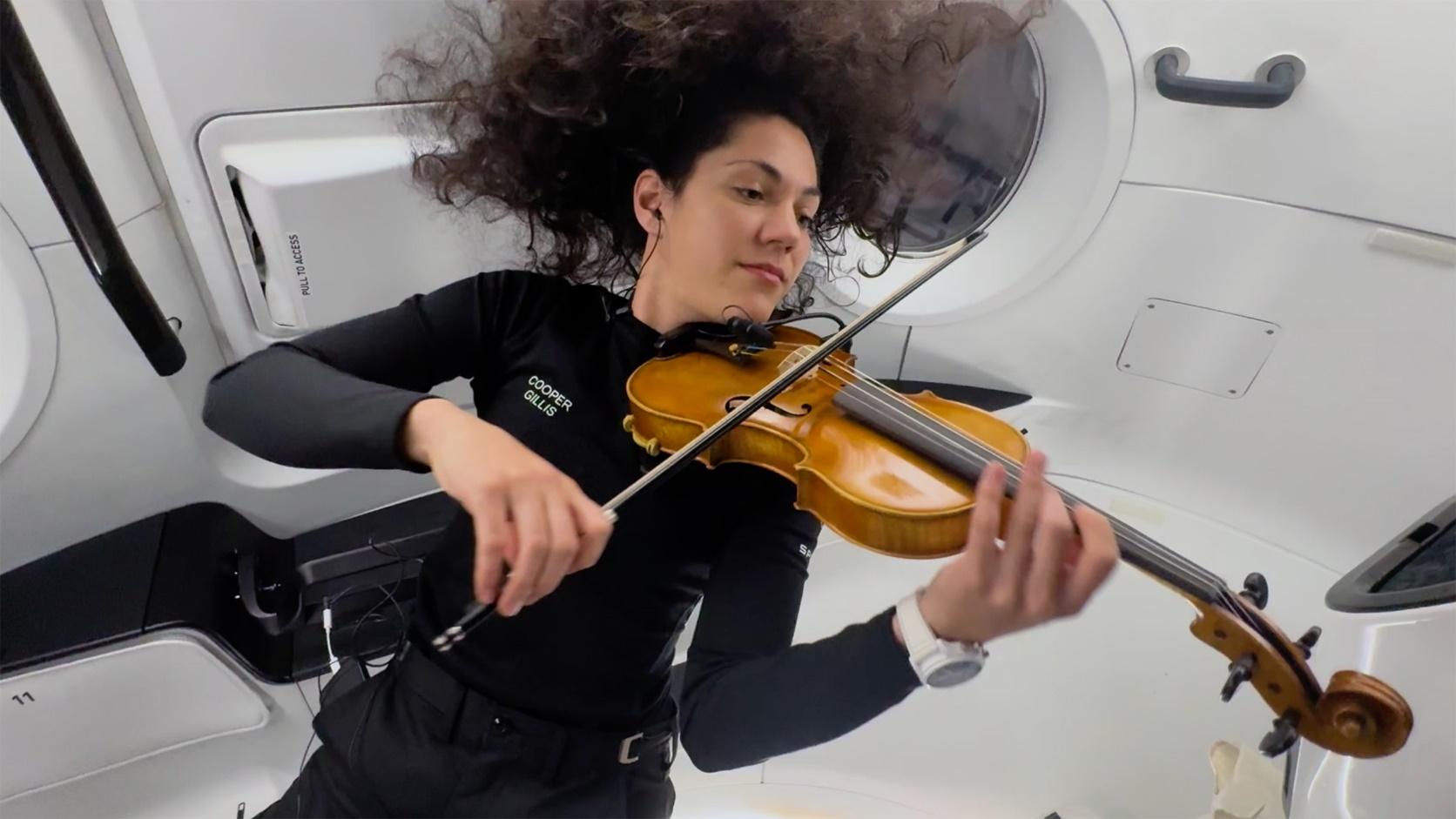
Sarah Gillis and violin on the Polaris Dawn spaceship

The concert will be preceded by a pre-performance talk starting at 3 p.m. featuring SpaceX astronaut Sarah Gillis who is a Boulder native. She studied Suzuki violin and played in the Youth Orchestra in Boulder, went to CU-Boulder, and even babysat for Butterman’s daughter during his first years with the orchestra. 

While on the recent Polaris Dawn mission, Gillis played her violin in orbit and completed a space walk. She will be onstage with conductor Scott O’Neil, and will be joined virtually by Butterman from Shreveport. 

Guest conductor Scott O’Neill

O’Neil recently completed a nine-year tenure as Resident Conductor with the Colorado Symphony in Denver. During his time there he performed with renowned soloists, including Itzhak Perlman, Joshua Bell, Nadja Salerno-Sonnenberg, Pinchas Zukerman and Van Cliburn. O’Neil has also created and developed a series of educational concerts titled “Inside the Score” that combined art, entertainment and enlightenment to engage audiences.

As an arranger/orchestrator, O’Neil has created and orchestrated numerous works for the Colorado Symphony. He continues to guest conduct and to lead his own ensemble, the Rosetta Music Society, in Denver.

Heins’s compositions have been performed throughout the United States, Canada and Europe. His works include music for symphonic band and orchestra as well as solo piano works and chamber music. He received a bachelor’s degree from the University of Montana and a master’s degree from the University of Colorado, Boulder. He has taught at Rocky Mountain College in Billings, Montana.

# # # # #

“Moons and Planets”
Boulder Philharmonic Orchestra, Scott O’Neil, guest conductor

  • John Heins: Moons of the Giants (world premiere)
  • Gustav Holst: The Planets

4 p.m. Sunday, Nov. 10
Macky Auditorium

3 p.m.: Pre-performance discussion in the Macky Auditorium with O’Neill and SpaceX astronaut Sarah Gillis

TICKETS 

GRACE NOTE: Boulder Phil’s “Brass and Booze” at Planet Bluegrass

Orchestra’s “Shift” series of informal concerts continues Wednesday

By Peter Alexander Nov. 4 at 1:32 p.m.

The Boulder Philharmonic will present  “Brass and Booze,” their third “Shift” concert presenting their musicians in unusual venues and smaller groups, at 7 p.m. Wednesday, Nov. 6, at Planet Bluegrass in Lyons.

“We wanted to reach out into some new areas,” the Phil’s executive director Mimi Kruger says. “The idea is that people can get to know our musicians and connect in a different way.”

Wednesday’s program presents members of the Boulder Phil brass section playing music with jazz and Afro-Cuban influences. It will include new pieces as well as Duke Ellington’s “Do Nothin’ until You Hear from Me” and Freddie Mercury’s “Bohemian Rhapsody.”

Each of the Shift programs opens at Planet Bluegrass in Lyons, and will be repeated in another venue. Wednesday’s “Brass and Booze” program will be repeated at Wild Provisions Beer Project in Boulder April 22, 2025. The first two programs featuring string ensembles—“Groove” and “Americana Redefined”—will be repeated at the Dickens Opera House in Longmont Monday, Nov. 25, and Sunday, Feb. 9, 2025, respectively.

# # # # #

“Brass and Booze”
Players from the Boulder Philharmonic

  • Informal program includes Ellington, “Bohemian Rhapsody,” Afro-Cuban influenced music

7 p.m. Wednesday, Nov. 6
Planet Bluegrass, Lyons, Colo.

7 p.m. Tuesday, April 22, 2025
Wild Provisions, 2209 Central Ave., Boulder, Colo.

TICKETS

Quartet Integra will perform on Takács series at CU

Prize-winning quartet from Japan will play Haydn, Ligeti and Brahms

By Peter Alexander Oct. 30 at 4:55 p.m.

Quartet Integra, the 2024 guest ensemble on the Takács Quartet’s campus concert series at CU Boulder, will perform in Grusin Music Hall Sunday afternoon and Monday evening (4 p.m. Nov. 3 and 7:30 p.m. Nov. 4; details below).

Following a traditional program format of classical-contemporary-Romantic works, they will perform Haydn’s String Quartet in B minor, op. 33 no. 1, György Ligeti’s String Quartet No. 2 and Brahms’s String Quartet No. 3 in B-flat major. Tickets are available for both in-person and online attendance.

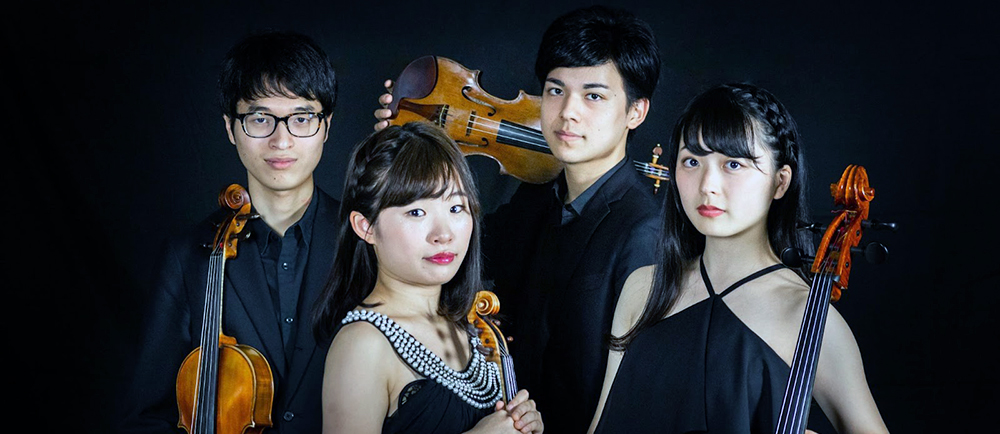
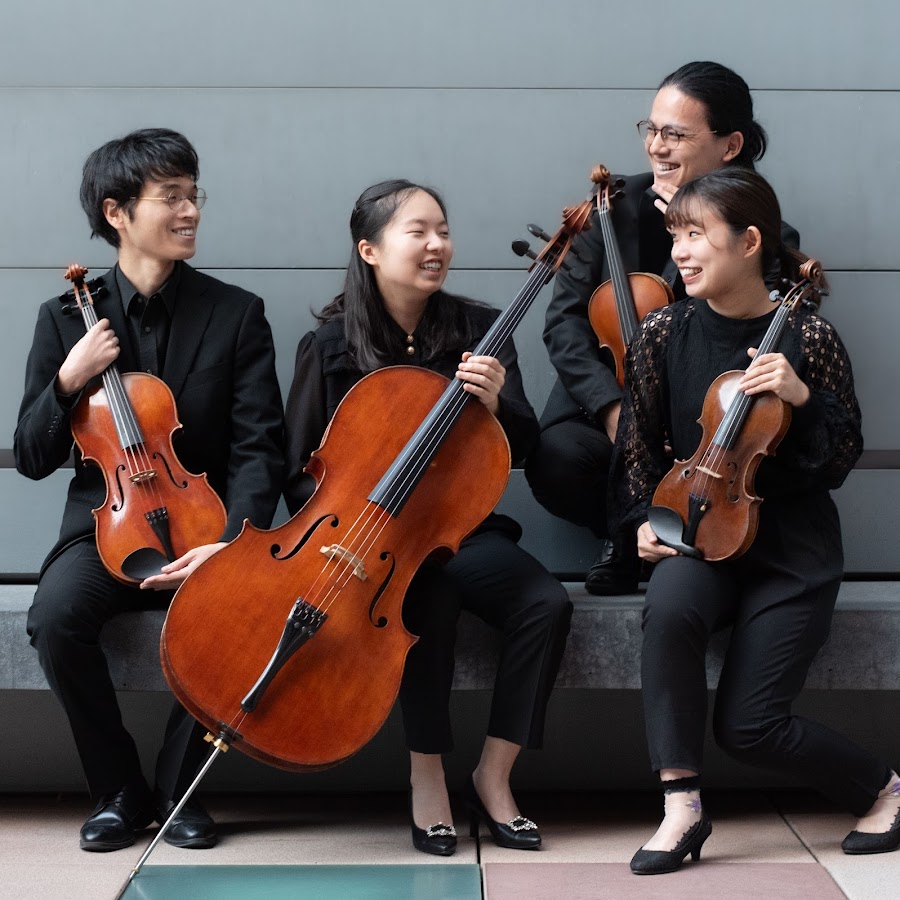
Quartet Integra

The Quartet Integra—violinists Kyoka Misawa and Rinato Kikuno, violist Itsuki Yamamoto and cellist Ye Un Park—formed in 2015 and began their studies at the Toho Gakuen School of Music in Tokyo. They continued their academic work as a quartet as Fellows at the Suntory Hall Chamber Music Academy. They are currently enrolled in the Chamber Ensemble-in-Residence Program at the Colburn School in Los Angeles.

The Quartet won Second Prize and the Audience Award at the 2022 ARD International Music Competition, First Prize at the 2021 Bartók World Competition, and First Prize, the Prize of Beethoven and Grand Prix Award at the 2019 Akiyoshidai Music Competition. Upcoming performances include a New York debut at the Schneider Concert series at the New School, a contemporary recital at Boston Court, a recital as part of the Discovery Series at the La Jolla Music Society and the ECHO Chamber Music Series in El Cajon, California, among others. 

Past festival performances include the Suntory Chamber Music Garden Festival, the Kanazawa, Hukuyama and Takefu International Festivals. Quartet Integra has commissioned many new works from Japanese composers and given more than a dozen world premieres.

In 1779 Haydn’s employer, Prince Nicolaus Esterhazy, granted the composer the right to sell his works to publishers. One of the first sets of works where Haydn took advantage of that freedom was his set of six string quartets, composed in 1781 and known as Op. 33. Haydn wrote to a number of amateur musicians inviting them to subscribe to manuscript copies of the quartets, which he said were written “von einer Neu, gantz besonderer Art” (a new and entirely special way).

There is disagreement whether the six quartets truly represent a “new way” of composition, or the phrase was just salesmanship by Haydn. Either way, the set is regarded as one of Haydn’s major works defining the classical style. In addition to the manuscript parts Haydn offered, the quartets were published separately in Vienna, Berlin and London. Consequently, they were widely known, and may have been the inspiration for the six quartets Mozart wrote 1782–85 and dedicated to Haydn.

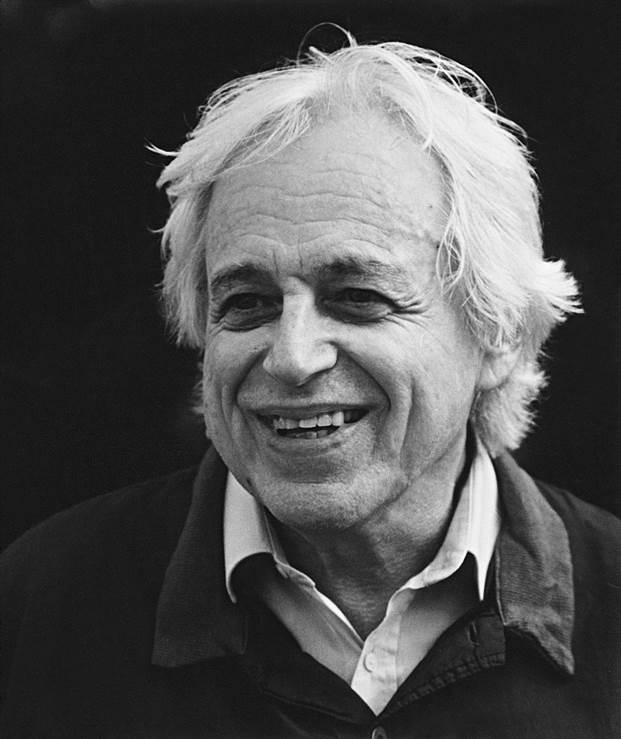
György Ligeti

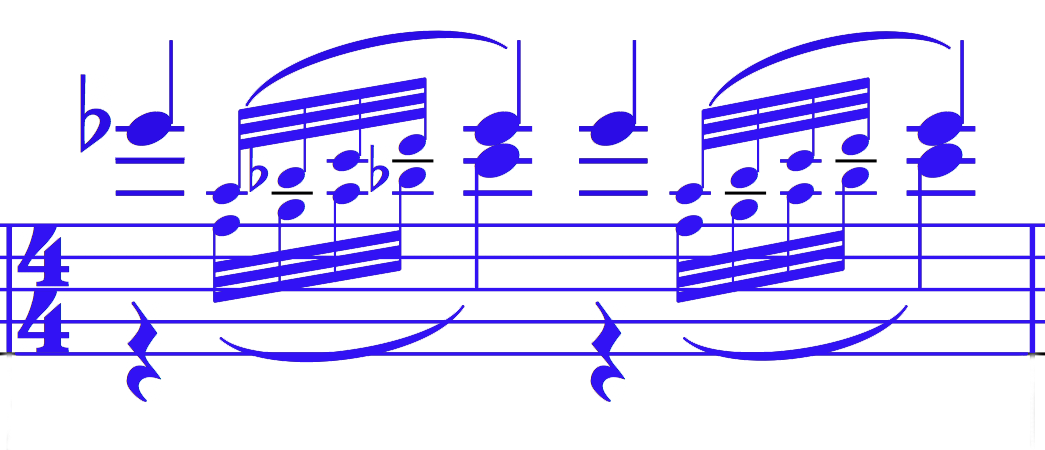
The second of Hungarian composer György Ligeti’s four string quartets was written in 1968 and dedicated to the La Salle Quartet, who played in the premiere in 1969. The five movements share related material but represent five different styles of musical motion, from gentle lyricism to mechanical pizzicato to fast and aggressive, and other stops in between.

Brahms composed three string quartets that have survived, as well as a large number of early quartets that he destroyed. The one known as his Third Quartet, composed in 1875, was dedicated to Theodor Wilhelm Engelmann, an amateur cellist, in spite of which it contains no major themes or solos for the cello. Later Brahms wrote to Engelmann, “This quartet rather resembles your wife—very dainty but brilliant.”

It is one of Brahms’s most animated and cheerful works. The first and fourth movements are particularly playful, full of bouncing, propulsive rhythms. The central movements—a wistful slow movement and an agitated waltz movement—are move serious in mood.

# # # # #

Quartet Integra

  • Haydn: String Quartet in B minor, op. 33 no. 1
  • György Ligeti: String Quartet No. 2
  • Brahms: String Quartet No. 3, op. 67

4 p.m. Sunday, Nov. 3 and 7:30p.m. Monday, Nov. 4
Grusin Music Hall

In-person and streaming tickets HERE

GRACE NOTES: Curiosity entertains while the Baroque blooms

Boulder Symphony celebrates Día de los Muertos; BCO presents Vivaldi and Pergolesi

By Peter Alexander Oct. 29 at 9:40 p.m.

“The Creative Spirit,” the Fall Curiosity Concert of the Boulder Symphony, will be presented Saturday (3 p.m. Nov. 2) at Grace Commons.

The Boulder Symphony and director Devin Patrick Hughes will present two Curiosity Concerts as part of their 2024–25 season, one each in the fall and the spring. Curiosity Concerts are designed as interactive, educational experiences for family audiences. They typically use humorous characters, trivia and original stories to entertain as well as educate the audiences.

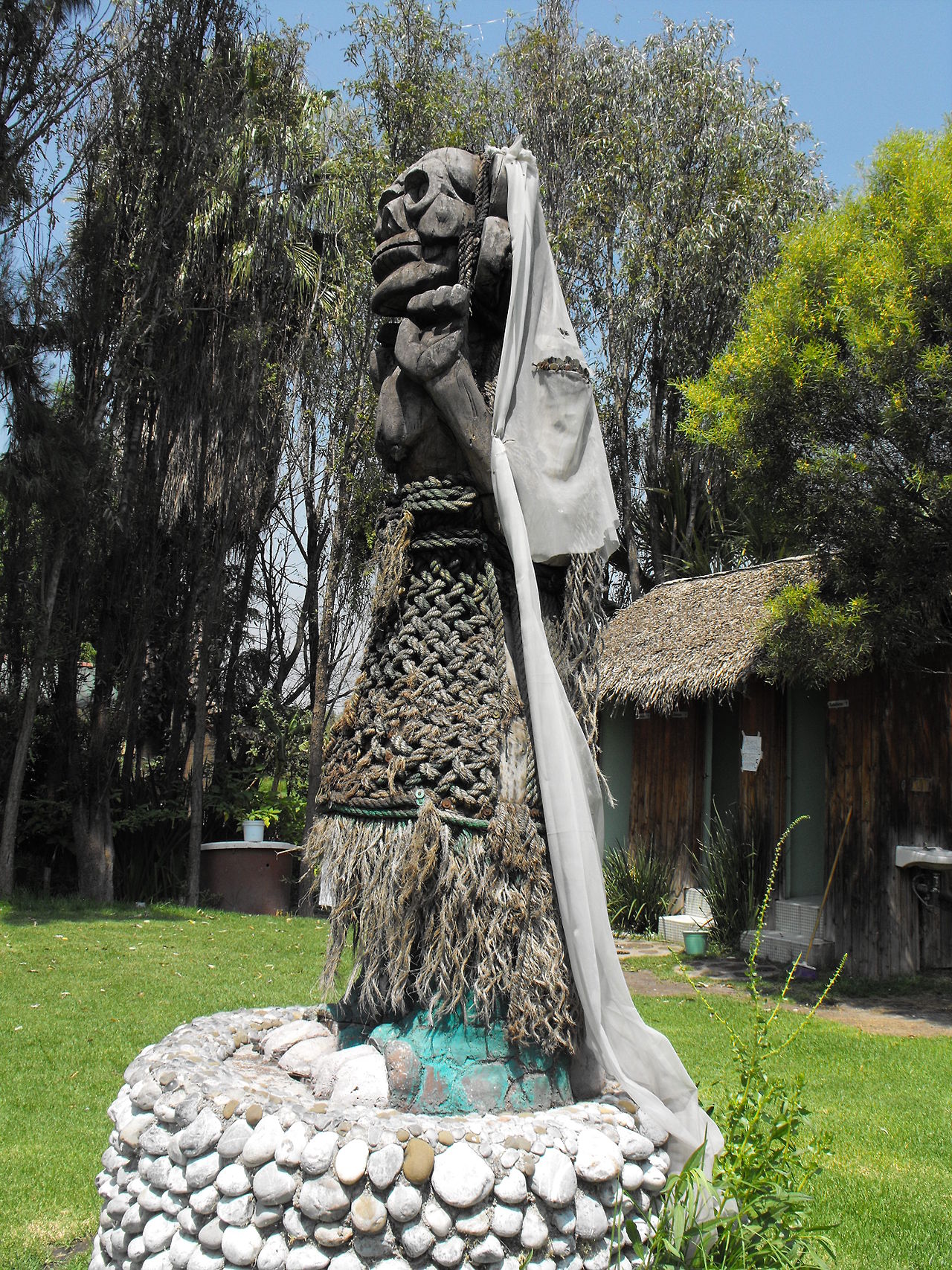
Statue of La Llorana at Xochimilco, Mexico. Photo by KatyaMSL.

The Fall Curiosity Concert, lasting 45 minutes, will celebrate La Día de los Muertos (Day of the Dead). Joining the Symphony for portions of the concert will be the Niwot High School Mariachi Ensemble and the Longmont Youth Symphony. 

The performance will tell the tale of a ghostly composer who reunites with a musical partner for the premiere of their final composition, only to discover that the piece was never finished. They turn to the audience for help completing the song before the ghostly composer vanishes again. 

The program will feature not only the imaginary composer’s new work but also familiar tunes including Radiohead’s “Creep,” Kate Bush’s “Running up the Hill” and “La Llorana” (The weeping woman), a Mexican folk song based on the legend of a woman weeping over the loss of her children, or her lover. The song has often been used for Día de los Muertos festivities.

The performance will also include music from the standard classical orchestra repertoire, including Beethoven’s Seventh Symphony and Arturo Márquez’s Dánzon No. 2.

# # # # #

Fall Curiosity Concert: The Creative Spirit
Boulder Symphony, Devin Patrick Hughes, conductor
With the Niwot High School Mariachi Ensemble and Longmont Youth Symphony

3 p.m. Saturday, Nov. 2, Grace Commons

TICKETS

# # # # #

The Boulder Chamber Orchestra (BCO) will present an all-Baroque program Saturday featuring violinist Zachary Carrettin, director of the Boulder Bach Festival playing concertos by Vivaldi, for violin solo and with other strings (7:30 p.m. Nov. 2 at the Boulder Adventist Church; details below). Other soloists for two of the concertos will be members of the BCO.

Also featured on the program are soprano Jennifer Ellis Kampani and mezzo-soprano Gabrielle Razafinjatovo performing the Stabat Mater of Giovanni Battista Pergolesi. The concert will be conducted by Bahman Saless, music director of the BCO.

Published as Op. 3, L’estro armonico is a set of 12 concertos by Vivaldi for stringed instruments. The set was published in Amsterdam in 1711, making it the first set of Vivaldi’s concertos to be printed. The concertos are organized in four sets of three concertos each, with each set containing first a concerto for four violins with strings; second for two violins, cello and strings; and third for solo violin and strings. 

Zachary Carrettin

The concertos were probably written for performance by students at the Ospedale della Pietà, the orphanage/music school where Vivaldi was employed as music teacher. Later the published edition was widely circulated in Europe and the concertos were performed as both church music and secular chamber pieces. At least six of the concertos were arranged in various settings by J.S. Bach.

The BCO performance will present two of the solo violin concertos with Carrettin as soloist, as well as one each for two violins and cello, and for four violins, with Carrettin joined by members of the orchestra as additional soloists. 

Pergolesi wrote his Stabat Mater in 1736, weeks before his untimely death at the age of only 26. The manuscript was preserved at the Benedictine Abbey of Monte Cassino in Italy, which was the site of brutal battles in World War II. After being nearly destroyed, the abbey was rebuilt after the war.

While many works attributed to Pergolesi were in fact written by others, due to the survival of the original manuscript the Stabat Mater is known to be his. The title literally means “The mother was standing.” The text is a 13th-century hymn to the Virgin Mary, describing her suffering during the crucifixion of Jesus. The hymn has been set by many European composers from the 15th century to the current day.

# # # # #

L’estro armonico
Boulder Chamber Orchestra, Bahman Saless, conductor
With Zachary Carrettin, violin; Brune Macary, Annamaria Karacson, Kina Ono, and Ava Pacheco, violins; Joey Howe, cello; Jennifer Ellis Kampani, soprano; and Gabrielle Razafinjatovo, mezzo-soprano

  • Vivaldi: Four concertos from L’estro armonico (The harmonic inspiration)
    Concerto No. 9 in D major for violin, RV230
    —Concerto No. 11 in D minor two violins and cello, RV565
    —Concerto  No. 6 in A minor for violin, RV 356
    —Concerto No. 10 in B minor for 4 violins, RV580
  • Pergolesi: Stabat Mater

7:30 p.m. Saturday, Nov. 2, Boulder Adventist Church

TICKETS

GRACE NOTES: Peace and Halloween fun on the program

Boulder Concert Chorale and Boulder Phil perform weekend concerts

By Peter Alexander Oct. 24 at 2 p.m.

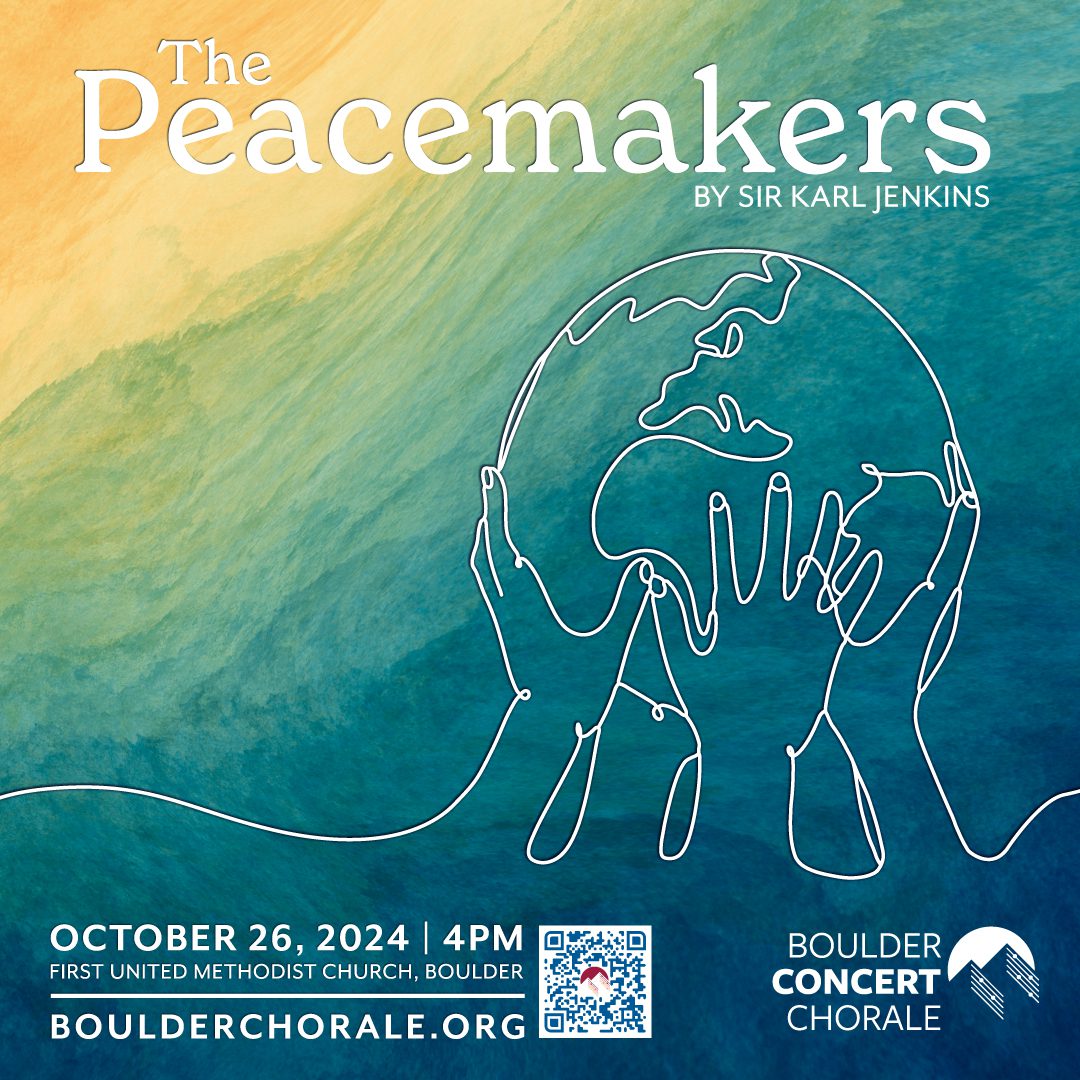
The Boulder Concert Chorale will present a work celebrating peace, with texts from more than a dozen authors, to start its 2024–25 season.

The concert, at 4 p.m. Saturday, Oct. 26, at the First United Methodist Church in Boulder, will feature The Peacemakers by Sir Karl Jenkins, a Welsh composer whose music is widely performed. Authors of texts for the 17 movements of The Peacemakers include Percy Bysshe Shelley, Gandhi, the Dalai Lama, Terry Waite, Mother Teresa, Albert Schweitzer, St. Francis of Assisi, Rumi, Nelson Mandela and Anne Frank.

Known principally as a jazz and jazz-rock musician, Jenkins plays baritone and soprano saxophones, keyboards and oboe. He has written music for advertising, winning prizes for work in that field, as well as a series of crossover albums under the title Adiemus. Originally written for a Delta Airlines advertisement, the original song Adiemus and the subsequent albums contributed to the growth of Jenkins’s recognition as a composer.

The Peacemakers was premiered in Carnegie Hall in 2012. Jenkins dedicated the score “to the memory of all those who lost their lives during armed conflict: in particular innocent civilians.” The composer has written that one line from Rumi summarizes the underlying idea of the piece: “All religions, all singing one song: Peace be with you.”

# # # # #

Boulder Concert Chorale
Vicki Burrichter, artistic director and conductor

  • Sir Karl Jenkins: The Peacemakers

4 p.m. Saturday, Oct. 26
First United Methodist Church, Boulder

TICKETS

# # # # #

The Boulder Philharmonic Orchestra presents “Bewitching,” a Halloween Extravaganza, Saturday in Northglenn and next Wednesday in Macky Auditorium (Oct. 27 and 30; details below).

Aiming to start “a new tradition,” the Boulder Phil added the Halloween concert this season to their usual schedule of masterworks concerts and special events including the annual Holiday performances of The Nutcracker. Along with the “Shift” series of informal concerts featuring players in unique venues, “Bewitching” represents a populist trend in programming running parallel to the more traditional orchestral concerts.

Billed as “a spine-tingling evening filled with haunting melodies and thrilling orchestral arrangements, perfect for audiences of all ages,” “Bewitching” features film music along with light classical music with magical or eerie associations. Concertgoers are encouraged to wear costumes. 

# # # # #

“Bewitching: Halloween Extravaganza”
Boulder Philharmonic Orchestra, Gary Lewis, conductor

Program includes:

  • Danny Elfman: “This is Halloween”
  • Edvard Grieg: “In the Hall of the Mountain King”
  • Klaus Nadelt: Music from Pirates of the Caribbean
  • John Williams: Harry Potter Suite
  • Alan Menken: Music from Beaty and the Beast
  • Paul Dukas: The Sorcerer’s Apprentice
  • Joe Hisaishi: “Merry-Go-Round of Life”

2 p.m. Sunday, Oct. 27
Parsons Theatre, Northglenn

6 p.m. Wednesday, Oct. 30
Macky Auditorium

TICKETS 

Eklund Opera presents renewed, colorful Hansel and Gretel

Fairytale opera takes the stage at Macky Friday and Sunday

By Peter Alexander Oct. 23 at 1:50 p.m.

In 1890, the German composer Englebert Humperdinck was asked by his sister, Adelheid Wette, to write some folk-style songs for a Christmas play she was creating for her children.

Their little family play was performed at Christmas, but over the next two years Humperdinck, with Wette’s help, turned those simple songs into one of the most popular full-scale German operas, one that is still produced annually at Christmas time at theaters across Germany. The subject of that opera—and of Wette’s original family entertainment—was the Brothers Grimm’s fairytale Hansel and Gretel.

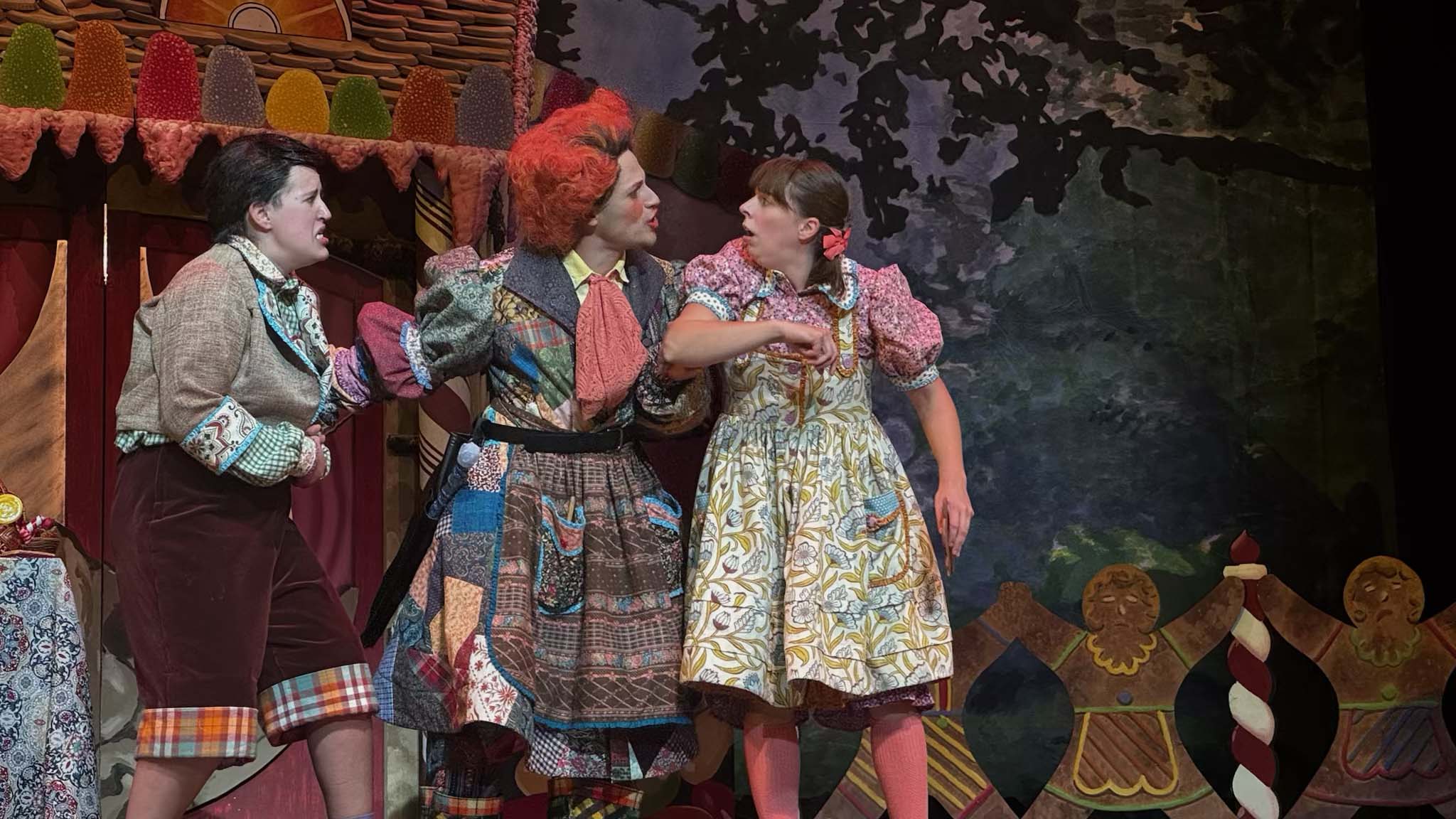
L to R: Salleigh Harvey as Hänsel, Thomas Bocchi as the Witch, Kristina Butler as Gretel in the CU Eklund Opera production of Hansel and Gretel

Humperdinck’s Märchenoper (fairy-tale opera) will be the next production of CU-Boulder’s Eklund Opera Program. And even if it’s a little early to get out the Holiday decorations, it will be given a festive production over the coming weekend (7:30 p.m. Friday and 2 p.m. Sunday, Oct. 25 and 27) in Macky Auditorium. (See ticket information below.)

The musical performance with full orchestra and student singers will be conducted by Nicholas Carthy and stage directed by Leigh Holman, director of the Eklund Opera Program. The sets by Peter Dean Beck, which CU Opera have used before, have been dressed up with new, colorful costume designs by Ann Piano and lighting effects by Jonathan Dunkle. It will be performed in German with English titles.

The story of Hansel and Gretel, which was originally a dark tale of malice and danger, was made milder over a series of transformations, through several editions of the Grimm story and then Wette’s libretto for Humperdinck’s opera. The original evil stepmother who sends the children into peril is turned into, as Carthy puts it, a beleaguered “mother with two children and a headache,” who simply sends the children out to gather strawberries. 

There are lighthearted moments in the opera—the children squabbling at the beginning of the first act, and their father cheerfully returning home after selling all of his brooms—and even in the forest the children are looked over by the Sandman, the Dew Fairy and the 14 angels of the beautiful Dream Pantomime. Even when accosted by the witch, Hansel and Gretel easily evade her evil designs. In the end, the witch is vanquished and all the gingerbread children are returned to life.

Musically, Humperdinck’s score has many folk-like tunes and simple melodies, but it is also full of musical challenges. As Carthy explains, the libretto uses “slightly archaic language, words that have fallen out of use and some of them are very difficult to pronounce. Hansel and Gretel are onstage for most of it, and the witch is a very big part. And then Act III suddenly gets more difficult—all of a sudden the music becomes more difficult to sing, much more difficult to play, much more difficult to conduct.”

The witch’s part can be a particular challenge, Holman says. “I think the Witch’s part is really, really difficult. The timing and the notes are kind of disjointed. It’s hard to find the pitches—seriously!”

Humperdinck worked as an assistant with Wagner, particularly on the late music drama Parsifal, and so his harmonic language and orchestration reflect late Wagner. That too can be a problem, Carthy says, especially when the orchestral sound becomes heavier and darker. “Balance (among the parts) is a problem, keeping it all together is a problem, keeping it transparent is a problem,” he says.

And “it’s a great challenge for the players, because it’s a massive piece,” he adds. “It never stops, as far as the players are concerned, (so it’s) quite an exercise in concentration and stamina. Three fourths of them have never played in a pit, so they are coming in without the experience of playing a long piece and concentrating for that amount of time. It’s invaluable for (the students), but as the conductor you have to know the piece backwards.”

The production uses sets that were designed by Peter Dean Beck and that have been used in previous CU productions of Hansel and Gretel. But this time there will be new costumes by Piano and other touches to bring more color to the stage. 

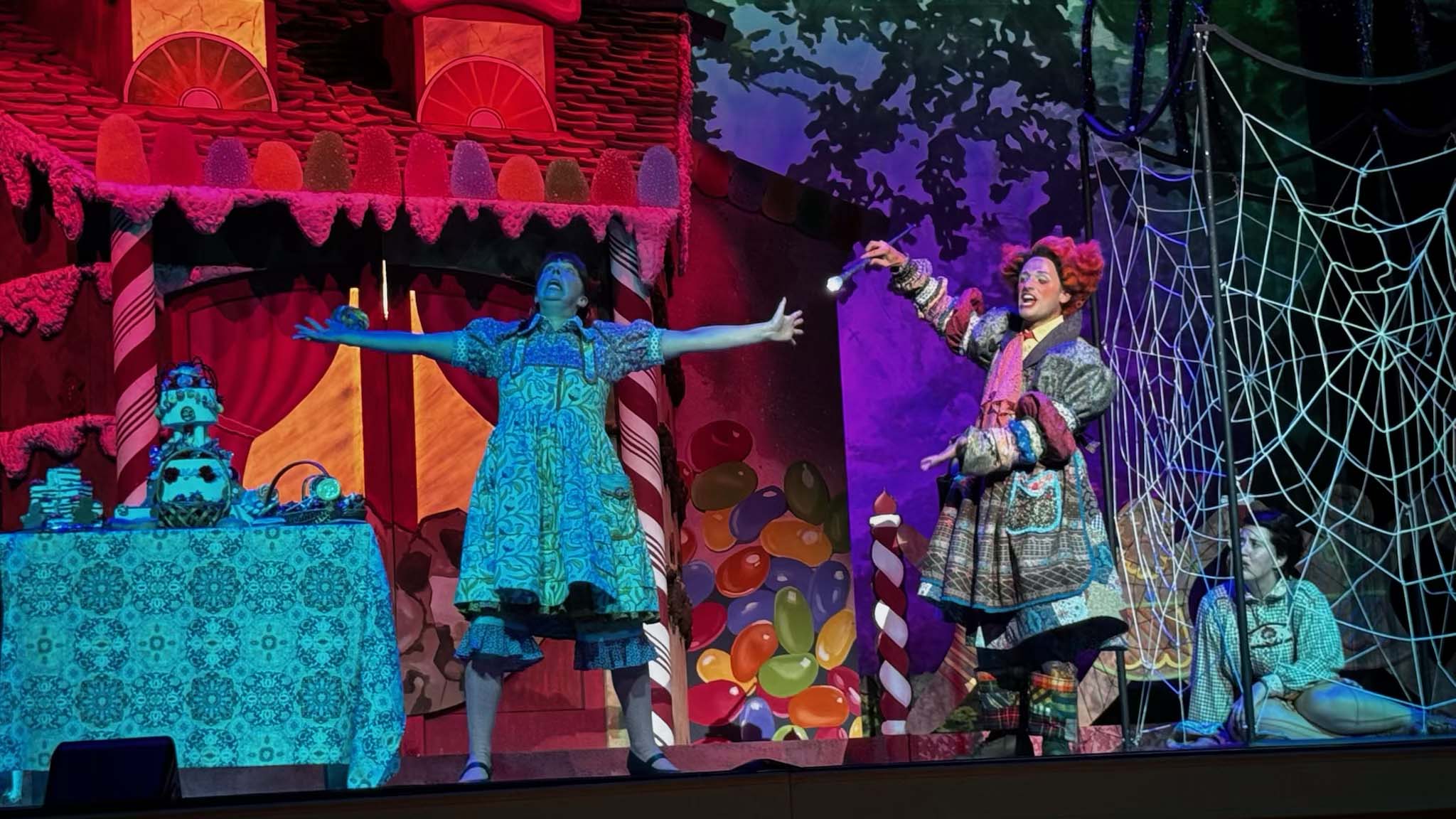
Kristina Butler as Gretel, Thomas Bocchi as the Witch, Salleigh Harvey as Hänsel (on the ground)

“I asked for a change in this production,” Holman says. “I asked that it not be so literal, a little bit more fantastical. And so we have lots of colors in it, in the costumes but also in other little elements. Even the brooms are colored, red ones and blue ones, so it kind of takes us out of reality and goes back to a storybook.

“We have a new lighting designer, Johnathan Dunkle, and we’re doing some new and interesting things with that. With the witch’s ride we have some lighting effects that we’re working on.”

Another new feature of this production that Holman is excited about is choreography for the 14 angels. “Laura Malpass is the choreographer, and she’s fantastic,” she says. “She teaches in the dance department, and she pulled together 14 trained ballet dancers to portray the 14 angels. It’s less than six minutes and it’s gorgeous.”

In fact, she and Carthy are looking forward to the entire opera. “We’re so excited about this piece,” Holman says. “The music is gorgeous, the orchestra is rich and full and the look of it—the visuals and brand new costumes and what you’re going to see onstage—is beautiful. 

“And it’s short! People are going to get out in two hours and 15 minutes.”

# # # # #

Eklund Opera Theater, Leigh Holman, director
Nicholas Carthy, music director

  • Hansel und Gretel by Englebert Humperdinck
    Libretto by Adelheid Wette

Performed in German with English titles

7:30 p.m. Friday, Oct. 25 and 2 p.m. Sunday, Oct. 27
Macky Auditorium

TICKETS

GRACE NOTES: Chamber music from the Baroque to 20th century

Events presented by The Academy, Boulder Bach and Boulder Chamber Orchestra

By Peter Alexander Oct. 16 at 10:33 a.m.

The Academy, University Hill will present pianist Eugene Gaub and violinist Nancy McFarland Gaub performing in their Chapel Hall Friday evening (7 p.m. Oct. 18; details below).

Their performance of works by Beethoven and César Franck will be free, but audience members are asked to RSVP in advance. Eugene Gaub will perform Beethoven’s late Piano Sonata No. 28 in A major op. 101, and together they will perform Franck’s Sonata in A major for violin and piano. 

Eugene Gaub is emeritus professor of music at Grinnell College in Iowa, where he taught music theory and courses in music history from 1995 to 2022. A graduate of the Juilliard School, he holds a doctorate and performer’s certificate from the Eastman School of Music.

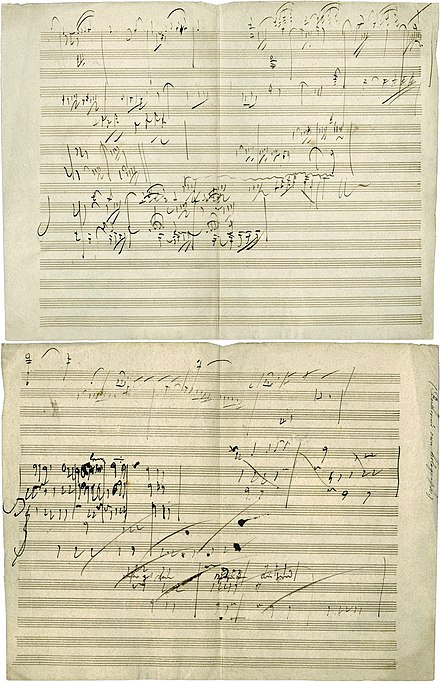
The manuscript of Beethoven’s Piano Sonata No. 28

Throughout her career, violinist and composer Nancy McFarland Gaub has performed as a soloist, chamber and orchestral musician in the U.S., Europe and Africa. She also was an artist-in-residence and taught violin and chamber music at Grinnell College for 25 years.

Composed in 1816, Beethoven’s Piano Sonata No. 28 is considered the beginning of his third and final period of composition. The composer himself called the sonata “a series of impressions and reveries.” When he wrote the sonata he was almost totally deaf, only able to communicate with friends through the notebooks that he kept for the remainder of his life. This isolation may be the reason that, like the other late sonatas, No. 28 creates a sense of intimacy.

Franck wrote his Violin Sonata in 1886 as a wedding gift for the violinist Eugène Ysaÿe. The public premiere of the sonata, given by Ysaÿe with the pianist Marie-Léontine Bordes-Pène has become something of a legend. It was the last piece on a long program given at the Museum of Modern Painting in Brussels. By the time the performers started the Sonata, it was already dusk, but the museum did not allow artificial light. Ysaÿe and Bordes-Pène had to complete the performance from memory in the darkened room. 

From that auspicious beginning, the Sonata has become one of the most revered sonatas for violin and piano, and one of Franck’s best known works.

# # # # #

Eugene Gaub, piano, and Nancy McFarland Gaub, violin

  • Beethoven: Piano Sonata No. 28 in A major, op. 101
  • César Franck: Sonata in A major for violin and piano

7 p.m. Friday, Oct. 18
Chapel Hall, The Academy University Hill, Boulder

Free; RSVP HERE

# # # # #

The Boulder Bach Festival will present its COmpass REsonance (CORE) ensemble and guest artists in a program of music by relatively little known Baroque composers Saturday at the Dairy Arts Center (4 p.m. Oct. 19 in the Gordon Gamm Theater; details below).

Featured artists will be the festival’s director, violinist Zachary Carrettin and 10-string guitarist Keith Barnhart, a member of the CORE ensemble. They will be joined by Chris Holman, harpsichord; Joseph Howe, cello; and guest artist soprano Mara Riley.

With little known composers, the program provides an opportunity to explore an intriguing and idiosyncratic segment of music history. The performers will play and sing music of the early Baroque period, in a style known as the stile moderno (modern style) that represented a striking departure from the music of the late Renaissance. 

Many of the composers included on the program were themselves virtuoso performers, and their works expanded the possibilities of both instrumental and vocal music. The composers on the program are Alessandro Stradella, Nicola Matteis, Marco Uccellini, Johann Heinrich Schmelzer, Giuseppi Maria Jacchini, Silvia Leopold Weiss and Tarquinio Merula.

# # # # #

“Passion and Poetry“
Boulder Bach Festival CORE Ensemble, Zachary Carrettin, music director/violinist
With Keith Barnhart, 10-string guitar; Chris Holman, harpsichord; Joseph Howe, cello; and Mara Riley, soprano

  • Works by Alessandro Stradella, Nicola Matteis, Marco Uccellini, Johann Heinrich Schmelzer, Giuseppi Maria Jacchini, Silvia’s Leopold Weiss and Tarquinio Merula

4 p.m. Saturday, October 19
Gordon Gamm Theater, Dairy Arts Center

TICKETS

# # # # #

Boulder Chamber Orchestra’s Mini-Chamber I, their first concert of chamber music for the 2024–25 season, will feature music by Beethoven, British composer Frank Bridge, and French composer Lili Boulanger Saturday (7:30 p.m. Oct. 19 at the Boulder Adventist Church; details below).

The program is the first in a series of four Mini-Chamber performances that will be presented by the Boulder Chamber Orchestra (BCO). Three of the performances, including Oct. 19, will feature the BCO’s artist in residence for the current season, pianist Jennifer Hayghe. For the first program she will be joined by orchestra members Sarah Whitnah, violin, and Andrew Brown, cello, for a program of music for piano trio. 

English composer Frank Bridge is remembered today mostly as the teacher of Benjamin Britten, who honored the older composer with his “Variations on a Theme of Frank Bridge” for strings. Bridge wrote three sets of miniatures for piano trio, from which Hayghe has chosen four pieces for this program. They were written for one of Bridge’s violin students, but critics have suggested that they are too sophisticated to be considered “student works.” 

The younger sister of the music teacher Nadia Boulanger, Lili died at the tragically young age of 24. The first female winner of the Prix de Rome composition prize, Lili showed precocious musical talent as young as four, when she accompanied her older sister to classes at the Paris Conservatoire. Her music has recently become better known.

Jennifer Hayghe

Written in 1918, D’un matin de printemps (Of a spring morning) was one of the last works she completed. It was written in versions for solo violin, flute, and piano, for piano trio, and for orchestra. 

One of the most tuneful and frequently performed of Beethoven’s works, the Piano Trio Op. 97 is known as the “Archduke Trio.” It was dedicated to Archduke Rudolph of Austria, later the Archbishop of Olomouc (Olmütz) and a Catholic Cardinal. An amateur pianist, Rudolph was a patron and composition student of Beethoven, who dedicated several major works to him, including his Piano Concerto No. 5 (“Emperor”) and the Missa Solemnis.

The Trio was composed 1810–11, toward the end of Beethoven’s so-called “heroic” middle period of compositions. Written at a time when the composer was in unusually good spirits, the Trio has none of the angst or fierce drive of his Fifth Symphony and other music we associate with the more rebellious aspect of his character. It is composed in a traditional but expansive four-movement sonata form.

# # # # #

Mini-Chamber I
Jennifer Hayghe, piano, with members of the BCO

  • Frank Bridge: Miniatures for Piano Trio, Nos. III–IV–V–VIII
  • Lili Boulanger: D’un matin de printemps (Of a spring morning)
  • Beethoven: Piano Trio in B-flat major, op. 97 (“Archduke”)

7:30 p.m. Saturday, Oct. 19
Boulder Adventist Church

TICKETS

GRACE NOTES: Two quartets and Americana Redefined

Piano Quartet has new violinist, Takács has surprise pieces and Boulder Phil has a new series

By Peter Alexander Oct. 8 at 11 a.m.

The Boulder Piano Quartet returns to The Academy in Boulder for a concert featuring the music of Mozart alongside the much less familia Russian-Swiss composer Paul Juon.

The concert at 7 p.m. Friday, Oct. 11, in Chapel Hall at the Academy University Hill will be free, but audience members are asked to RSVP here before the performance. The works on the program are the Quartet in G minor, K478 by Mozart and Juon’s Piano Quartet No. 1 in F major, titled Rhapsodie

Violinist Igor Pikayzen, now with the Boulder Piano Quartet

The concert will introduce the quartet’s new violinist, Igor Pikayzen, who teaches violin at the Lamont School of Music at the University of Denver. A graduate the Juilliard School and Yale, Pikayzen joins violist Matthew Dane, cellist Thomas Heinrich and pianist David Korevaar in the quartet, taking the position that was vacated by the untimely death of Charles Wetherbee in 2023.

Juon had a successful career as a teacher and composer before falling into obscurity. Born in Russia to Swiss parents, he was educated in Moscow and Berlin, and spent most of his professional life in the latter city. A relatively conservative late-Romantic composer, his music is associated with an earlier generation; during his lifetime, he was called “the Russian Brahms.”

His First Piano Quartet was in spired by an unusual first novel, The Saga of Gösta Berling by the Swedish Nobel Prize-winning writer Selma Lagerlöf. The plot concerns a defrocked Lutheran priest who is eventually redeemed after many wild adventures.

# # # # #

Boulder Piano Quartet: Igor Pikayzen, violin; Matthew Dane, viola; Thomas Heinrich, cello; and David Korevaar, piano

  • Mozart: Piano Quartet in G minor, K478
  • Paul Juon: Piano Quartet No. 1, “Rhapsody” 

7 p.m. Friday, Oct. 11
Chapel Hall, Academy University Hill

Free; RSVP HERE

# # # # #

Members of the Takács Quartet didn’t give the full program for their next upcoming CU concerts—until now.

The performances Sunday afternoon and Monday evening (4 p.m. Oct. 13 and 7:30 p.m. Oct. 14 in Grusin Music Hall) will feature Beethoven’s String Quartet in A minor, op. 132, for the second half of the program. But originally, the program only stated that the first half would be announced at the performance.

In a recent email, first violinist Ed Dusinberre solved the mystery. “We needed some extra flexibility for this concert,“ he wrote, “but have just now decided that the first half with be Mozart (String Quartet in D minor) K421 and (Benjamin) Britten String Quartet No.2.“ In the absence of program notes at the concert, he will talk about both pieces from the stage.

The program is the second in the Takács Quartet’s annual series of campus concerts. Remaining concert dates for the 2024–25 season, including a guest appearance by the Quartet Integra from the Colburn School in Los Angeles, are listed on the CU Presents Web page.

Beethoven’s Quartet in A minor, op. 132, is traditionally known as the Quartet No. 15 based on the order of publication of his quartets, although it was no. 13 in order of composition. Planned with the traditional four movements, the A minor quartet ended up with five movements when Beethoven decided to add a central movement as an expression of thanks for his recovery from illness. 

Titled “Heiliger Dankgesang eines Genesenen an die Gottheit” (Song of thanksgiving to the Deity from a convalescent), the central movement is a haunting movement written in the Lydian mode, evoking sacred music of the Middle Ages and Renaissance. The movement includes three principal elements: a brief fragment of counterpoint, a hymn-like passage, and a suddenly more energetic passage labelled “Feeling of new strength.” These programmatic and devout elements have made this one of the composer’s most recognized and popular movements. 

# # # # #

Takács Quartet

  • First Half to be announced form the stage
  • Beethoven: String Quartet in A minor, op. 132

4 p.m. Sunday, Oct. 13
7:30 p.m. Monday Oct. 14
Grusin Music Hall

Both in-person and live-stream TICKETS

# # # # #

The Boulder Philharmonic will present  “Americana Redefined,” the second in their Shift Series of informal concerts presenting their musicians in unusual venues and smaller groups, at 7 p.m. Wednesday, Oct. 16, at Planet Bluegrass in Lyons.

There will be two repetitions of the program’s ideas, the first in the Parsons Theater in Northglenn Feb. 9 featuring guest five-string violinist Enion Pelta-Tiller, the second in the Dickens Opera House Feb. 19 (details below).

Promotional materials describe “Americana Redefined” as combining music from diverse elements of America’s musical heritage, including gospel, jazz, blues and country. For this program, the Boulder Phil will be represented by a quartet of string section leaders, plus Pelta-Tiller for the Northglenn performance.

Boulder Phil executive director Mimi Kruger says the idea for the Shift Series is to showcase the orchestra’s musicians in unusual venues that are less formal than their usual home in Macky Auditorium on the CU campus. The programming will also show their flexibility outside of the standard classical repertoire.

“The idea is that they can be a little bit more eccentric with the programming,” Kruger says. “The programs focus on contemporary composers, and (are) also more cross-genre. The idea is that people can get to know our musicians and these programs and composers and connect in a different way.”

The series represents a partnership with Planet Bluegrass in Lyons. All of the planned programs will be presented there, and then go on to performances at the Dickens Opera House in Longmont and other venues in the area. The full Shift Series is listed HERE.

# # # # #

“Americana Redefined”
Musicians of the Boulder Philharmonic

7 p.m. Wednesday, Oct. 16
Wildflower Pavilion, Planet Bluegrass, Lyons, Colo.

With guest artist Enion Pelta-Tiller
2 p.m. Sunday, Feb. 9, 2025
Parsons Theatre Northglenn, Colo.

6:30 p.m. Wednesday, Feb. 19, 2025
Dickens Opera House, Longmont, Colo.

Information and TICKETS