Central City Opera moves 2021 mainstage productions to Hudson Gardens

Outdoor venue will host socially-distanced RigolettoCarousel

By Peter Alexander March 19 at 1:50 p.m.

Central City Opera has announced that due to COVID precautions, their 2021 mainstage productions—Verdi’s Rigoletto and Rogers and Hammerstein’s Broadway hit Carousel—will not be performed in their intimate theater in Central City.
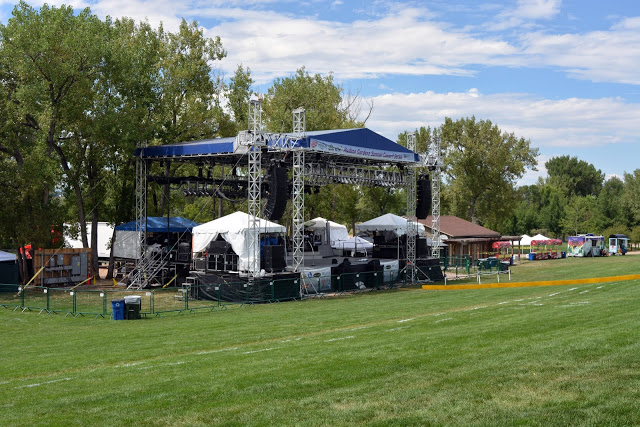
Hudson Gardens Concert Amphitheater

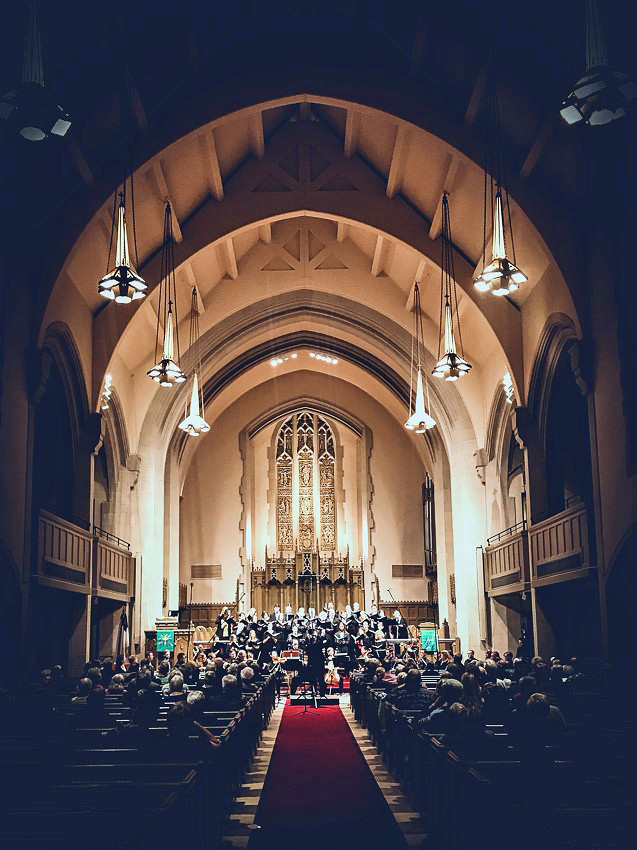
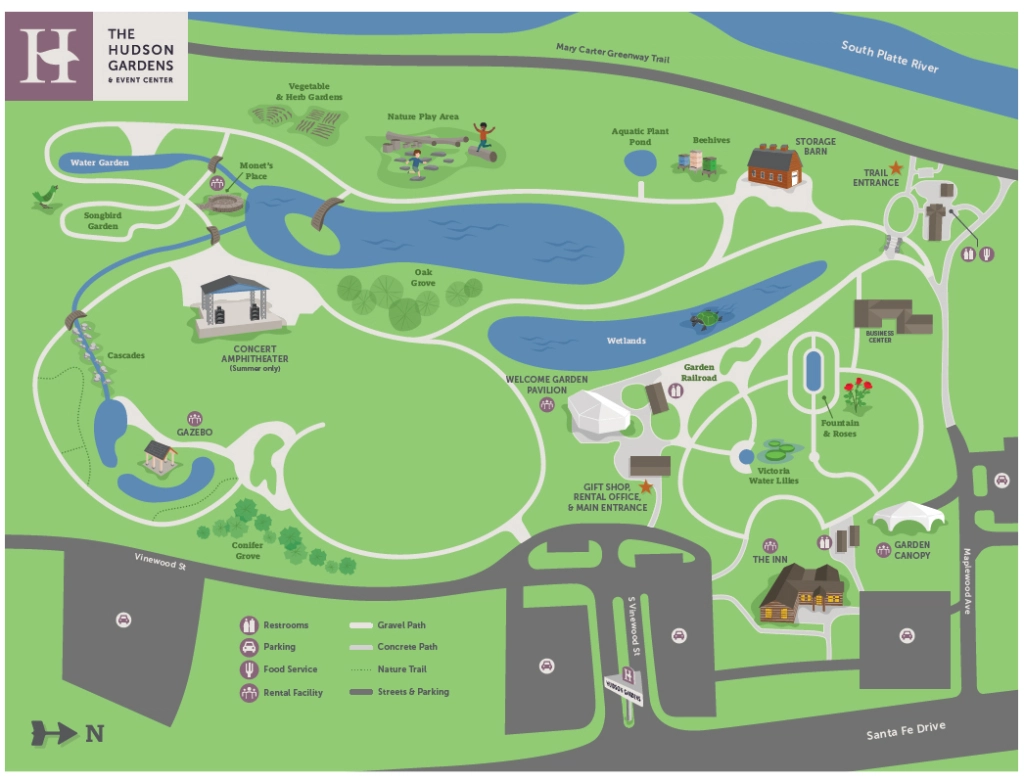
Instead, CCO has partnered with Hudson Gardens in Littleton to present both productions in an open-air theater. The summer’s third production, Henry Purell’s Dido and Aeneas, will be presented outdoors in Central City, in the Opera House Gardens, as will the CCO AL Fresco concert series. All three operas were postponed from the planned 2020 season, which was canceled.

In a media release sent out in early March, Central City Opera’s general/artistic director Pelham “Pat” Pearce was quoted saying, “We had hoped that by now it would be safe to return to the Opera House and resume normal operations.

“In order to prioritize the health and safety of our patrons, performers and company members, we determined it was necessary to secure an outdoor venue in order to return to live, in-person performances this summer. We are thrilled to partner with Hudson Gardens to host our 2021 Festival in their beautiful outdoor amphitheater.”

CCO will release tickets in phases, in accordance with the State of Colorado and CDC guidelines for capacity in the Hudson Gardens Concert Amphitheater. Subscribers to the 2020 season will be contacted b the CCO Box Office about tickets options for the 2021 season. Single tickets will go on sale in late April. Free parking will be available at Hudson Gardens, and subscribers will have priority access to purchase reserved parking. Other policies for the summer—including weather policies and the opera bus—are currently under review and will be announced in coming days. For more information, access CCOs 2021 Festival Frequently Asked Questions here

# # # # #

Central City Opera
Summer Festival 2021
Carousel
Music by Richard Rogers, book by Oscar Hammerstein

7 p.m. Saturday, July 3; Friday, July 9; Tuesday, July 13; Thursday, July 15; Saturday, July 17; Friday, July 23; Tuesday, July 27; Thursday, July 29
3 p.m. Wednesday July 7; Sunday, July 11; Sunday, July 25; Thursday, July 29; Sunday, August 1

Hudson Gardens, Littleton, Colo.

Rigoletto
Music by Giuseppe Verdi, libretto by Francesco Maria Piave

7 p.m. Saturday, July 10; Friday, July 16; Tuesday, July 20; Thursday, July 22; Saturday, July 24; Wednesday, July 28; Friday, July 30
3 p.m. Wednesday, July 14; Sunday, July 18; Tuesday, July 27

Hudson Gardens, Littleton, Colo.

Dido and Aeneas
Music by Henry Purcell, libretto by Nahum Tate

1 p.m. Saturday, July 17; Tuesday, July 20; Thursday, July 22; Wednesday, July 28

Central City Opera House Gardens
Information and tickets

“A CELLO-BRATION”: THE CELLO TAKES THE SPOTLIGHT

Soloist Zuill Bailey joins the Boulder Phil for an intimate, cello-centric program. 

By Izzy Fincher March 11 at 9:35 p.m.

“Why write for violin when there is cello?” Rachmaninov asked. 

There is something particularly captivating about the cello, with its sonorous tenor and subtle grandeur. It is wildly expressive—lyrical, passionate and romantic, yet also mournful and solemn, and profound in a way that captures the heart and soul.

Zuill Bailey

To celebrate this instrument, the Boulder Phil will present “A Celebration of Cello” with soloist Zuill Bailey, streamed from 7:30 p.m., on Saturday, March 13.

The cello-centric program includes a reduced instrumentation of Schumann’s Cello Concerto and a double-cello concerto by contemporary Italian composer Giovanni Sollima. Other works on the program are a violin trio by the Phil’s own Paul Trapkus, plus works by Debussy and Wagner.

Bailey, a Grammy-award winning cellist, will lead the “cello-bration.” He will appear on two contrasting concertos, which displays the cello’s multifaceted personality. In Schumann’s Concerto in A minor, the cello’s sensitive lyricism is shown, while Sullima’s double- concerto, to be performed with Boulder Phil principal cellist Charles Lee, exhibits more of the cello’s boldness and virtuosity.

“In Schumann’s concerto, the cello is refined and elegant,” Boulder Phil conductor Michael Butterman says. “Whereas in Sollima’s (double concerto), the cello is an outgoing, extroverted rebel. The cadenza feels like rock’n’roll—it shreds. It’s crazy, with a lot of flash, energy and edginess.”

Lee believes the energetic double-cello concerto, titled “Violencelles, Vibrez!” (Cellos, vibrate!), will be a highlight of the program. Sollima, an Italian cellist and post-minimalist composer, juxtaposes the cello’s different moods, moving from brooding, dark echoes to a sweet, lyrical duet to a brisk, vivacious cadenza. 

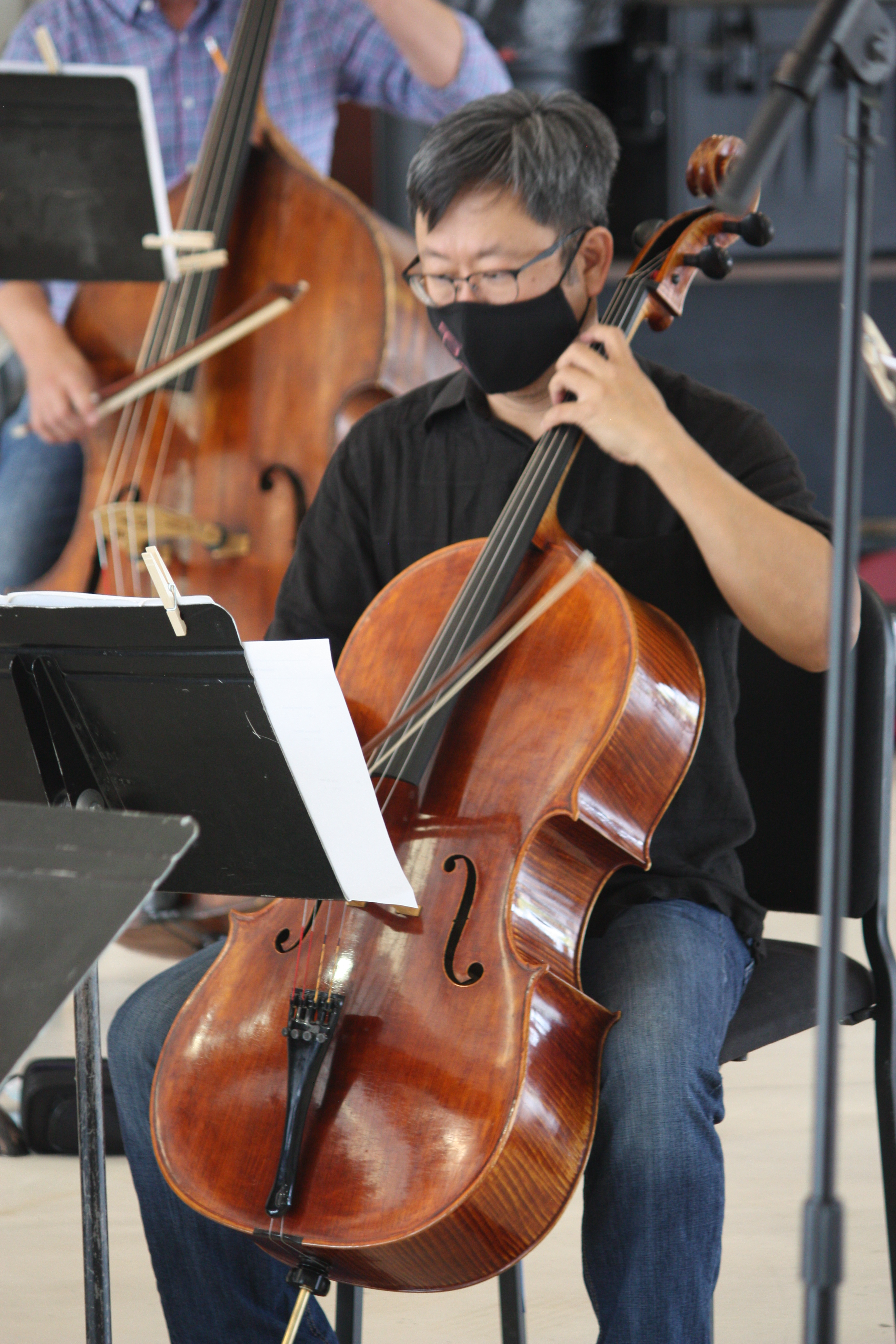
Charles Lee at rehearsal with the Boulder Phil

“It starts very mysterious and lyrical with long, romantic lines, using lots of vibrato, sustaining sounds,” Lee says. “The added element of two cellists alternating gives it a special effect, like an echoing cave.” 

In the opening, the two cello lines weave together, nearly indistinguishable from each other. “At first, it’s not so striking that there are two cellos when you don’t focus on the visuals,” Lee says.

Later, the distinct cello parts emerge in captivating musical dialogue, riffing off each other’s energy in a virtuosic display. Lee described the cadenza with Bailey as exciting but very challenging to play. 

The rest of the program focuses on orchestral works, adapted for a smaller chamber setting, including Debussy’sPrelude to the Afternoon of a Faun and Wagner’s Siegfried Idyll,” an intimate musical love letter to his wife Cosima. 

Prelude to the Afternoon of a Faun has been arranged for chamber orchestra, created by Schoenberg’s student Benno Sachs during World War I. It was first played for Schoenberg’s Society for Private Musical Performances, a chamber concert series held in Vienna from 1918 to 1921. 

During the war and the 1918 Flu Pandemic, chamber series like this one were popular in Europe due to limited financial resources and available musicians. Now, in our current pandemic, the reorchestration is once again ideal for a smaller, socially-distanced orchestra. 

Though the cello isn’t directly in the spotlight in either work, it still plays a more prominent role than usual. “When you adapt a large work for a smaller ensemble, the cellos become even more noticeable and exaggerated,” Lee says.

“We usually aren’t the go-to melody instrument (in larger works). When the cellos take the melody, it’s a treat.”

The violin, however, does snatch back the orchestral spotlight with Trapkus’ Trio for 3 Violins. Trapkus, a former violinist for the Boulder Phil, is also an active composer, who has written four works for string quartet and string ensemble. “Trio for 3 Violins,” written in 2012, features the three violins as equal soloists, and its energetic, minimalistic aesthetic is similar to Sullima’s Violencelles, Vibrez!.  

Paul Trapkus

Butterman is excited for the Boulder Phil to perform Trapkus’s trio for the first time. He believes the Boulder Municipal Airport’s hangar, where the concert was filmed last fall, is an ideal setting for the trio, far more intimate than Macky Auditorium.  

“(The trio) is a work that I found interesting, tuneful and appealing on first hearing,” Butterman says. “It uses a lot of repeated, minimalistic patterns. There’s a lot of interplay, exchanges of ideas and taking turns between the three equal violin parts.”

Despite the brief violin interlude, the concert is still a “cello-bration” through and through. For cello lovers, it should be a special treat—a musical extravaganza with two talented soloists.

As Bailey comments, “I always say the only thing better than a cello is two cellos.”

# # # # #

“A Celebration of Cello”
The Boulder Philharmonic, Michael Butterman, conductor. with
Zuill Bailey and Charles Lee, cellos

Debussy, arr. Schoenberg: Prelude to the Afternoon of a Faun
Schumann, arr. Philip Lasser: Cello Concerto in A minor, Op. 129
Paul Trapkus: Trio for 3 Violins
Giovanni Sollima: Violencelles, Vibrez!
Wagner: Siegfried Idyll

Tickets can be purchased for $40 here. The concert can be streamed starting at 7:30 p.m., on Saturday, March 13. 

‘Exploring Cultural Identities’: Mosaic or Melting Pot?

March 9 CU Faculty Tuesday performance takes a look at identity in music

By Izzy Fincher March 4 at 11:55 p.m.

Is our cultural identity more of a mosaic or a melting pot?

With a cultural mosaic, individuals retain their distinct ethnic identities, while coexisting as a greater whole. With a melting pot, ethnic identities mix together, assimilating to create a singular culture.

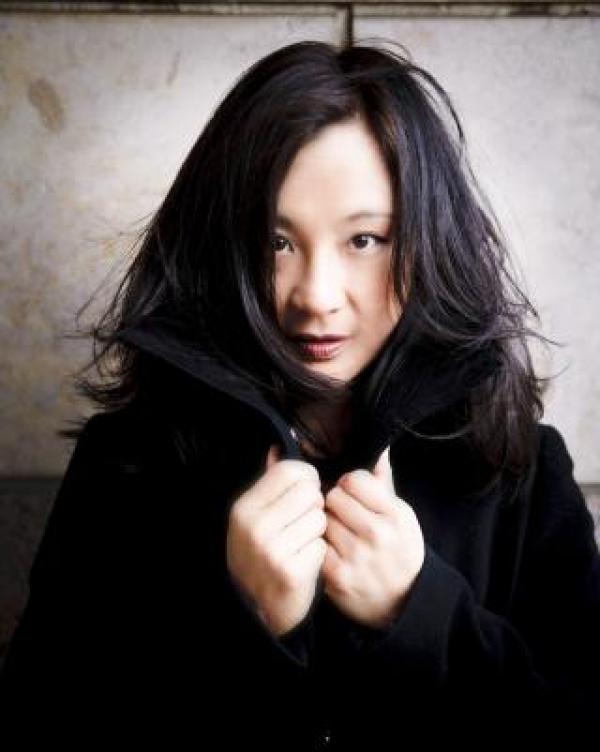
Alexandra Nguyễn

In “Exploring Cultural Identities,” three CU Boulder professors, pianist Alexandra Nguyen, violinist Claude Sim and cellist David Requiro, will tackle this dichotomy of cultural representation versus assimilation by exploring Asian and Slavic cultural identities in classical music. The program will include compositions by Zoltan Kodaly from Hungary, Alexina Louie from Canada and Antonín Dvořák from Bohemia (present-day Czech Republic).

“Exploring Cultural Identities” will be streamed on CU Presents at 7:30 p.m. on Tuesday, March 9, as part of CU Boulder’s Faculty Tuesday concert series.

“Presenting music through the lens of cultural identity is a fascinating exploration,” Sim says. “I believe that we truly play as we are. In other words, our artistry is a result of our diverse backgrounds, heritage and upbringing.”

Nguyen curated the program for “Exploring Cultural Identities” to pay tribute to her diverse heritage, later choosing her collaborators Sim and Requiro. As a Vietnamese Canadian, Nguyen often doesn’t see her identity reflected in the music she plays. 

“As an Asian woman, I am playing music by dead white men a majority of the time,” Nguyen says. “How can I relate to this music?”

To represent her own cultural identity, Nguyen has decided to champion Asian composers, particularly Louie, a Chinese Canadian. She feels very connected to Louie, who shares her Asian-Canadian heritage.

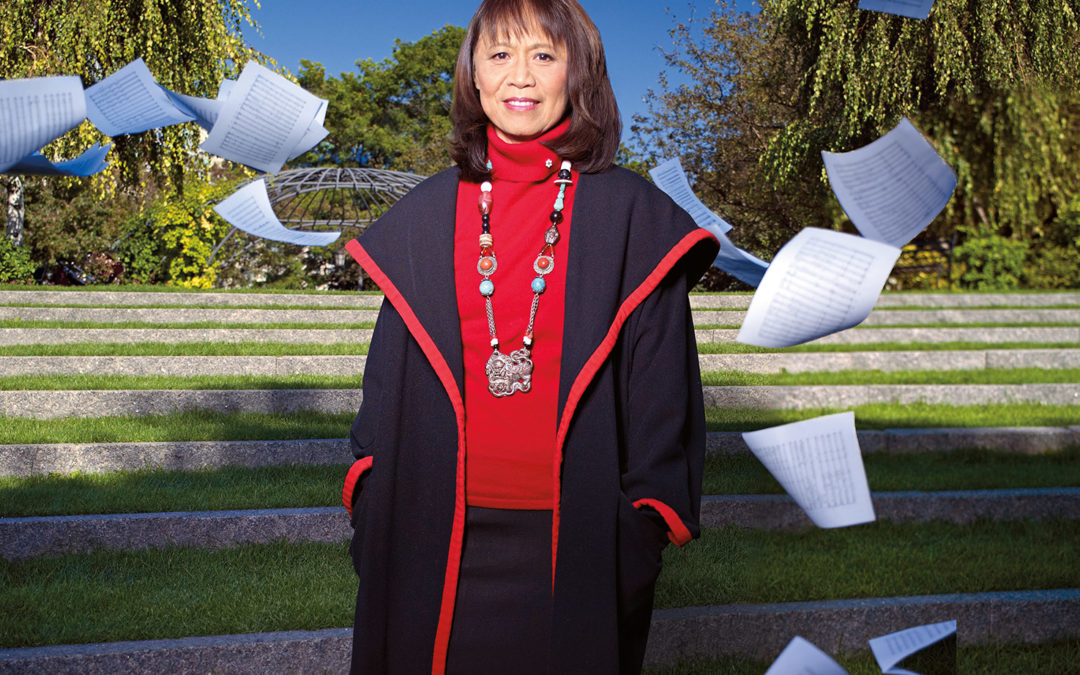
Alexina Louie

“In Canada, your heritage is a substantial part of your identity,” Nguyen says. “But in the U.S., the approach is very different. You want to blend in. No one wants to be the ‘other’.”

Nguyen will be playing Louie’s most famous work for solo piano, Scenes from a Jade Terrace, written in 1988, as the second piece on the program. The suite is filled with references to Chinese culture and folklore, while the harmonic language is colorful and complex, similar to contemporary composers George Crumb and Olivier Messiaen. 

David Requiro

Overall, the suite is aggressive in its texture and timbre. The first movement, “Warrior,” depicts the ghost of an ancient warrior and combines aggressive virtuosity with vulnerability. The second movement, ”Memories in an Ancient Garden,” feels eerily peaceful. Louie’s written direction on the score reflects this poetic, dreamy feeling, as she tells the performer “to play as if intoxicated by the scent of a thousand blossoms.” In the final movement, “Southern Sky,” the music depicts a dynamic starry night, as fast notes explode from the piano with sudden dynamic changes and intense dissonances. 

To complement Louie’s suite, Nguyen wanted to pivot toward exploring cultural identity through a European lens. She decided to program chamber music written by two Slavic composers, Kodaly and Dvořák, and to explore the role of Slavic nationalism in 19th and 20th century classical music. “Kodaly and Dvořák are two composers who felt strongly about their cultural identity and national heritage and (wanted to) reflect it in their music,” Nguyen says. 

Claude Sim

The program will begin with Nguyen and Requiro performing Kodaly’s Sonata for Cello and Piano, Op. 4, which incorporates harmonies and dance forms from Hungarian folk music. To finish the concert, Requiro and Sim join Nguyen for Dvořák’s Piano Trio No. 4, Op. 90, nicknamed the “Dumky.” The trio uses elements of Bohemian folk music. The six-movement work is a “dumka,” a form used by Slavic composers to indicate a brooding, contemplative lament interspersed with cheerful, rhythmic, dance-like moments.

For her next Faculty Tuesday concert, Nguyen aims to go even further with her exploration of cultural identities with an all-Asian program with Asian performers. She wants to represent distinct cultural mosaics in CU Boulder’s concert hall, as her personal contribution to more diversity and inclusivity in classical music.  

“If we want to represent all voices, then we have to perform all those voices,” Nguyen says. “If we want to respect all voices, then we have to hear them all.” 

# # # # #

“Exploring Cultural Identities”
Alexandra Nguyen, piano; Claude Sim, violin; and David Requiro, cello 

Zoltan Kodaly: Sonata for Cello and Piano, Op. 4
Alexina Louie: Scenes from a Jade Terrace
Dvořák: Piano Trio No. 4, Op. 90 (“Dumky Trio”)

Streamed here at 7:30 p.m. Tuesday, March 9 

Free or pay what you can.

Boulder Phil will stream concert with pianist Simone Dinnerstein Saturday

“Mozart and Mendelssohn” program includes “a perfect piece of music”

By Peter Alexander Feb. 11 at 9:10 p.m.

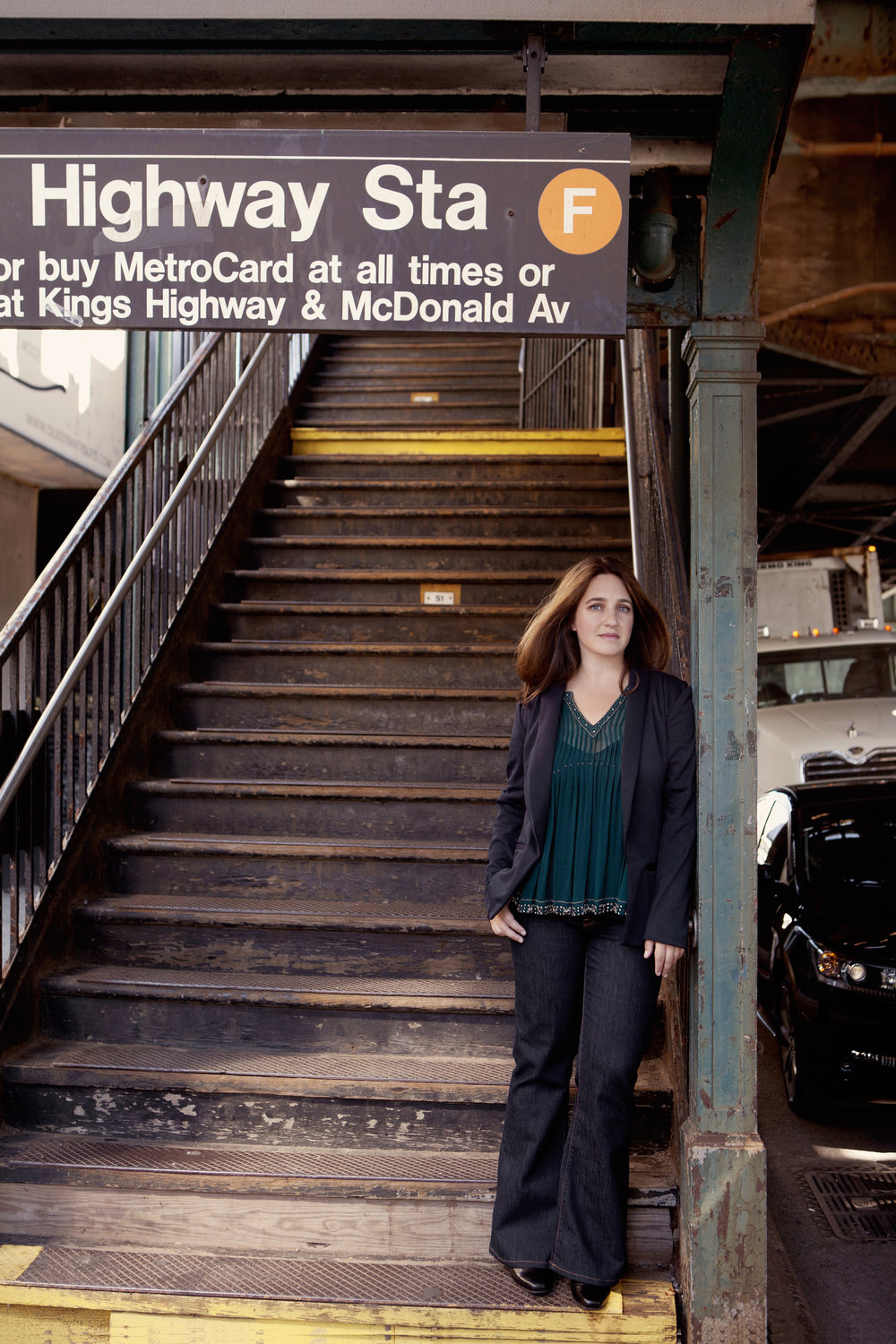
Dinnerstein, near her home in Brooklyn. Photo by Lisa Marie Mazzucco

Pianist Simone Dinnerstein was in Boulder last September, but since then she has hardly left her home in Brooklyn. A prisoner of COVID, she has had to cancel planned trips for concerts and recordings. 

“I’ve gone to New Jersey,” she says. “That’s about as far as I’ve gone, and that was a big trip!”

Fortunately for us, she recorded two concerts with members of the Boulder Philharmonic when she was here. The first was streamed in November, and the second will be streamed starting Saturday (Feb. 13) at 7:30 p.m., remaining available through Saturday, Feb. 27. Titled “Mozart and Mendelssohn,” the program features the former’s Piano Concerto in C major, K467, in a COVID-friendly arrangement for strings and piano, as supplemented by Dinnerstein and members of the orchestra; and the latter’s joyous Octet for Strings.

The concert also features Dinnerstein playing two works by Scott Joplin. The Boulder Phil asked her if she would play something for solo piano to complete the program. She picked two of her favorite pieces by Joplin, both in order to include a composer from an under-represented group, and as an opportunity to add some Joplin to her repertoire.

“Scott Joplin was one of the great 20th-century American composers,” she says. “I’ve read it for myself but I’ve never performed it.”

The pieces she picked are not the usual rags that Joplin is best known for. “Solace, a Mexican Serenade” has been part of the Joplin revival that began with the 1973 film The Sting, but “Bethena, a Concert Waltz” remains less known. Both pieces are tinged with melancholy, which seems to be fine with Dinnerstein.

“I’ve always loved these two pieces,” she says. “I do tend to like things that are a little bit gloomy.”

In spite of the chronological, geographic and cultural distances involved, she sees a connection between Joplin and the other two composers on the program. “There is a kind of freshness to [Joplin’s] music,” she says. “The music has more layers to it than you first hear, and I think that’s true of Mozart and Mendelssohn. In that way these three composers do relate to each other.”

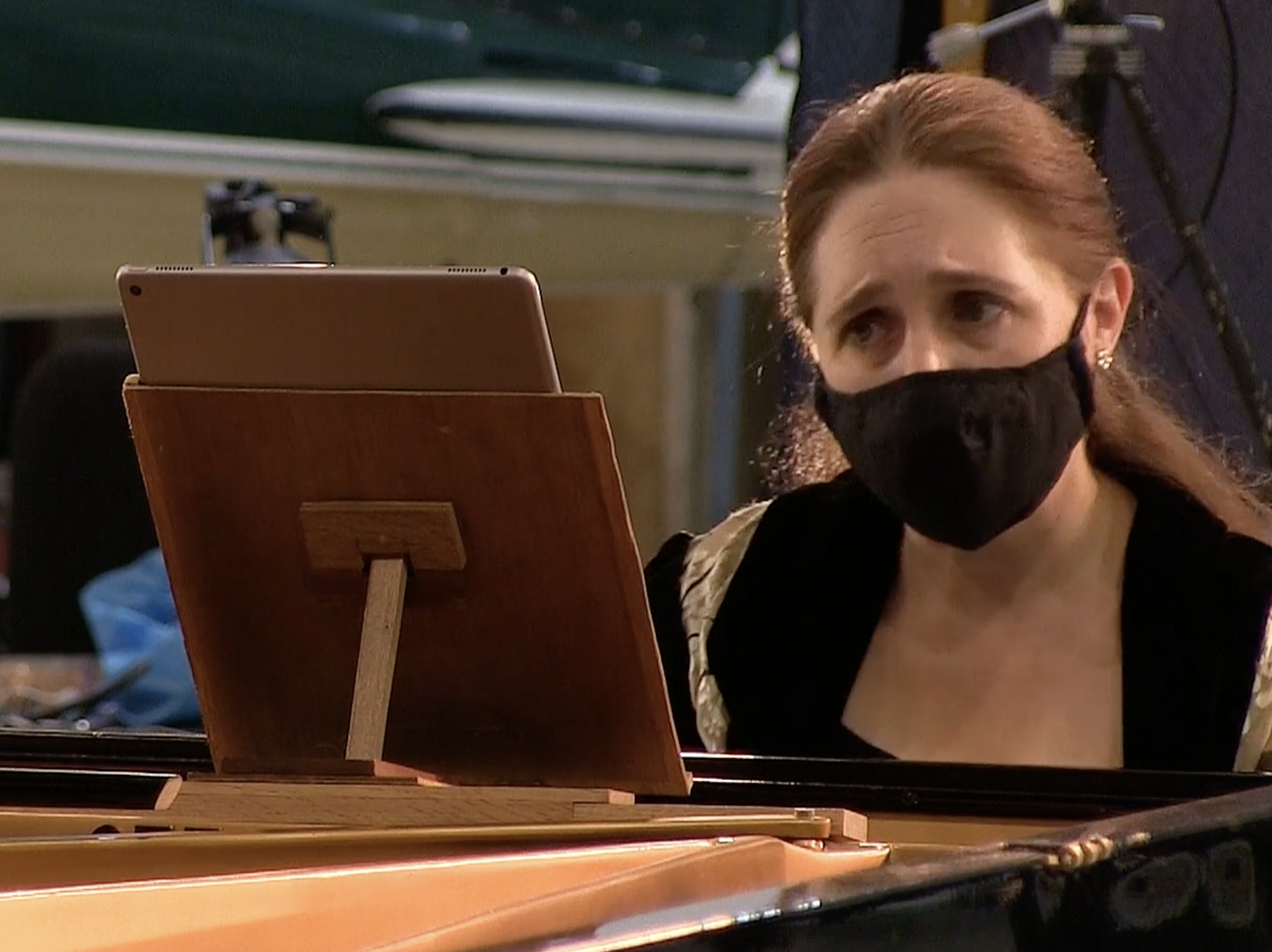
Dinnerstein during a recording session with the Boulder Philharmonic at Brungard Aviation, Boulder Municipal Airport. (Screenshot)

Neither the Mozart nor Mendelssohn pieces could remotely be considered gloomy. Mozart’s Piano Concerto K467 is in the sunny key of C major, and sunny it remains. “It’s been one of my favorite concertos since I was a teenager,” Dinnerstein says, adding thoughtfully, “I don’t normally relate much to music that is straightforwardly joyful.”

The version she and members of the Phil will perform was arranged for sting quintet by German composer Franz Lachner, probably to make the music available for home music making. But Dinnerstein discovered in rehearsal that Lachner’s arrangement was incomplete.

“There was no score , only the individual parts, which was slightly confusing,” she says. “When we started rehearsing I realized that certain lines were missing, and [the orchestra players] were very accommodating and wrote in some extra parts for themselves.”

The Concerto opens with a jolly march that has the usual proliferation of Mozartian themes from the very beginning. There are march rhythms, fanfares, lyrical moments, and a pervading sense of delight. 

The concerto is best known for its dreamy slow movement, which was used in the 1967 Swedish film Elvira Madigan. The movement, Dinnerstein says, “has the sense of romance to it, which may be colored by having seen the film when I was a teenager.

“Basically, the concerto is just effervescent and yet it has a weight to it as well. It’s just a perfect piece of music.”

The final piece on the program, Mendelssohn’s Octet for Strings was chosen by Boulder Philharmonic music director Michael Butterman. As Butterman has pointed out in the orchestra’s promotional materials, Mendelssohn is one of the few composers who ranked with Mozart as a youthful musical prodigy.

The Octet was written when he was 16, as a birthday present for his violin teacher. Today it is one of the composer’s most loved pieces. 

Its sheer exuberance is enjoyed by players and audiences alike. It is filled with the kind of sprightly music that Mendelssohn used to characterize the Shakespearian fairies in his music for A Midsummer Night’s Dream. Beneath the dazzling surface, however, Mendelssohn demonstrates his precocious mastery of counterpoint, especially in the eight-part fugue that opens the finale.

Paralleling Dinnerstein’s characterization of the Mozart Concerto, Scottish music critic Conrad Wilson wrote that the Octet’s “youthful verve, brilliance and perfection make it one of the miracles of 19th-century music.”

# # # # #

“Mozart and Mendelssohn”
Members of the Boulder Philharmonic Orchestra with
Simone Dinnerstein, piano

Scott Joplin: Solace, a Mexican Serenade and Bethena, Concert Waltz
Mozart, arr. Franz Lachner: Piano Concerto in C major, K467
Mendelssohn: Octet for Strings, op. 20

Streamed starting at 7:30 p.m. Saturday, Dec. 13, through Saturday, Feb. 27
Tickets available HERE

Pro Musica Colorado to stream 2019 Bach performance with conductor Katsarelis

B-minor mass, performed with St. Martin’s Chamber Choir and soloists

By Peter Alexander Feb. 4 at 7:15 p.m.

The COVID pandemic has left huge gaps in the classical musical calendar

Conductor Cynthia Katsarelis and the Pro Musical Colorado Chamber Orchestra, unable to gather for the concerts they had hoped to present this month, decided to fill the gap with a streamed performance from their archives: a performance of J.S. Bach’s monumental Mass in B minor originally presented live in October, 2019. 

Pro Musica and St. Martins’ Chamber Choir performing Bach’s B-minor Mass

The performance features Katsarelis with the Pro Musica orchestra, St. Martin’s Chamber Choir, and a quartet of soloists: soprano  Jennifer Bird-Arvidsson, mezzo Julie Simson, tenor Derek Chester and bass-baritone Jeffrey Seppala.

A release announcing the broadcast explains, “The audio engineering is radio broadcast quality, however, the video is pre-pandemic archival. The video from the first half offers a view from the chorus and the second half offers a view from the balcony in audience.”

In a separate written announcement, Katsarelis stated that “Sharing the Bach seemed like a nice thing to do for a number of reasons, but most of all because of its capacity to bring healing. In addition to the terrible losses of people to COViD-19, I felt deeply traumatized by the event of January 6. For a week afterwards, about all I could do was play Bach on violin. Given that the February concert couldn’t proceed as planned, the Bach B-Minor Mass is our offering to healing and peace in this world.”

The streamed performance will be preceded by a pre-concert talk by Rebecca Maloy, a professor of musicology at CU, Boulder.

Anyone who purchased a ticket to the cancelled Feb. concert will have access to this performance from 7 p.m. Friday, Feb. 12, through Sunday, Feb. 14. Tickets may be purchased HERE.

# # # # #

Special Online Broadcast
Pro Musica Colorado Chamber Orchestra, Cynthia Katsarelis, conductor
St. Martin’s Chamber Choir
Jennifer Bird-Arvidsson, soprano; Julie Simson, mezzo-soprano; Derek Chester, tenor; and Jeffrey Seppala, bass-baritone

Pre-concert talk by CU Professor of Music Rebecca Malloy

J.S. Bach: Mass in B Minor

Original performance from Oct., 2019
Streamed performance available from 7 p.m. Friday, Feb. 12, through Sunday, Feb. 14
Tickets HERE.

Musical Adventures 3: American music, mostly from the mid-20th century

Pianist Andrew Cooperstock will feature music by George Walker

By Peter Alexander Feb. 1 at 5:05 p.m.

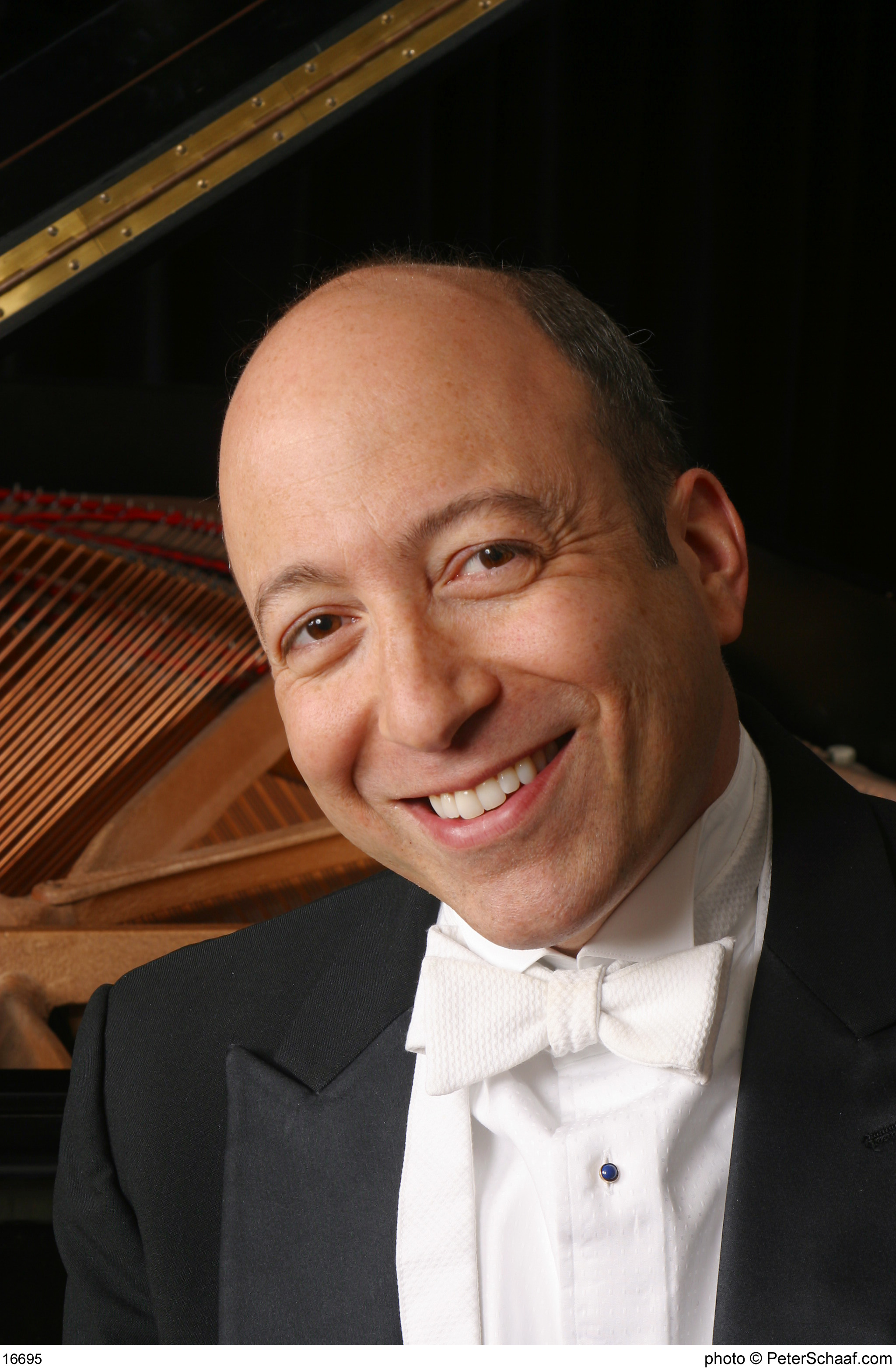
Andrew Cooperstock. Photo by Peter Schaaf.

Pianist Andrew Cooperstock is drawn to American music.

“I have enjoyed exploring 20th-century American music that speaks to me as an American and somebody born in the 20th century,” he says. “I’m interested in how composers express themselves. For Americans it’s especially interesting because there’s such a diversity of backgrounds.”

The CU music faculty member will explore some of the diverse voices in American music in this week’s online Faculty Tuesday recital (streamed starting at 7:30 p.m. Tuesday, Feb. 2). Anchoring the program is music by George Walker (1922-2018), the first African-American composer to win a Pulitzer Prize for classical music, who taught at CU in the 1960s.

Cooperstock became interested in Walker through his own piano teacher, who was a close friend and classmate of the composer. Walker taught at CU 1968–69, and his son, violinist/composer Gregory Walker, still lives and teaches violin in Boulder.

But Cooperstock had in mind more than a recital of Walker’s works. “I thought it might be nice to put his music into context with some other American composers who were writing around the [middle of the century],” he says. In addition to the three sets by Walker, Cooperstock’s program will include pieces of pure Americana by his contemporaries Aaron Copland and Samuel Barber. 

And just because he likes to play them there will be two pierces written in 2003, two Improvisations on Hassidic Melodies by Paul Schoenfield.

Cooperstock made it a point to play Walker’s most approachable works. “I choose his early music,” he says. “His music from that period is beautiful and lyrical and lush, but still with some modern twists.”

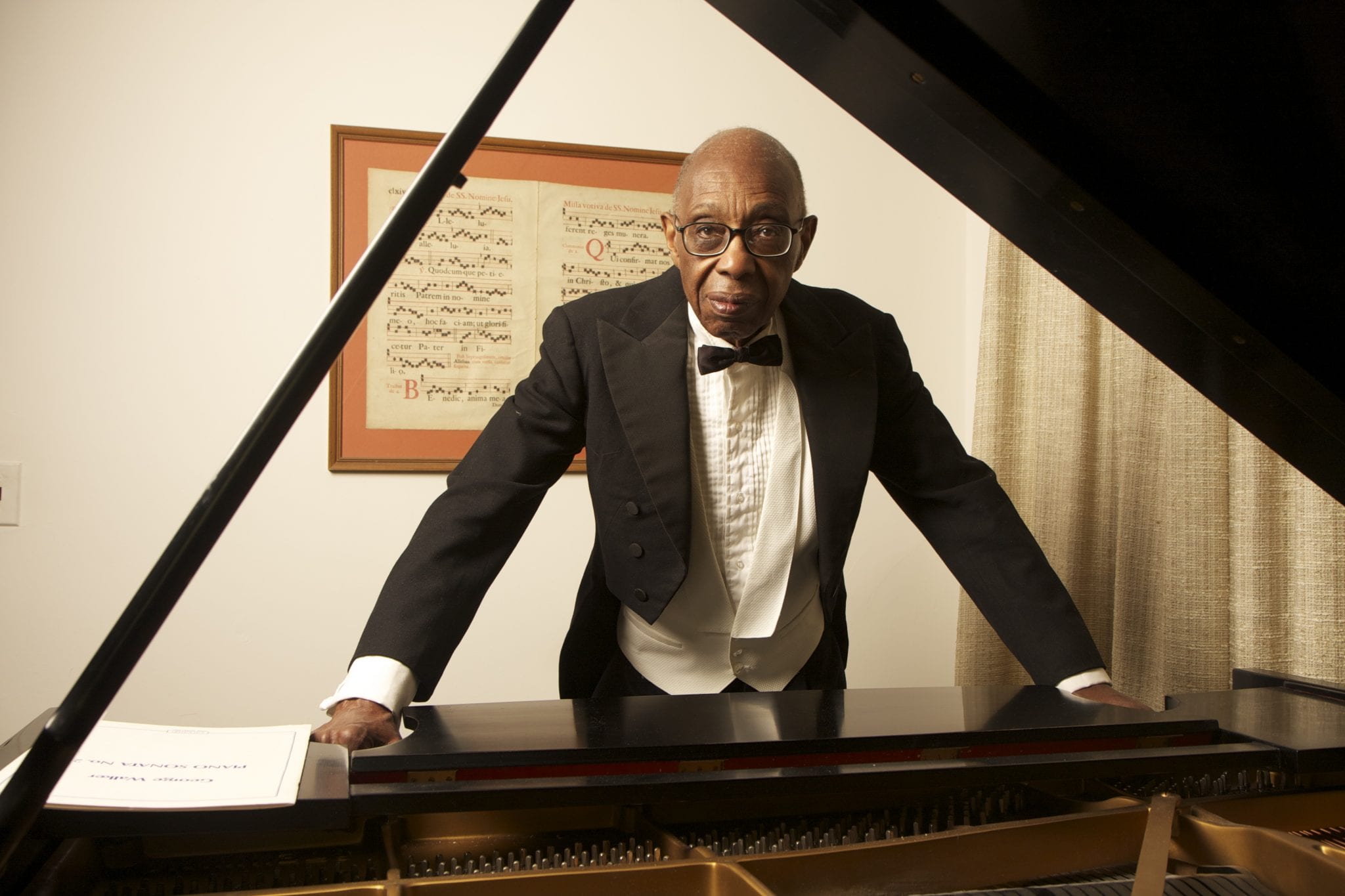
George Walker

The program opens with Walker’s “Variations on a Kentucky Folk Song,” a movement from his First Piano Sonata that has been published and played separately. The original song, “O Bury Me Beneath the Old Willow Tree,” has a long history in American folk music.

“I love what George Walker does with this piece,” Cooperstock says. “The theme’s a beautiful arrangement, and then he writes six short variations that are imaginative and exuberant. I really enjoy playing them.”

The centerpiece of the recital will be Walker’s Second Piano Sonata, written in 1956. “It’s virtuosic and it’s difficult, but it’s also lyrical and attractive at the same time,” Cooperstock says. He also notes that the music is especially virtuosic in recordings by the composer. “He does play his music so fast!”

Closing the program will be two short, contrasting pieces by Walker, a lyrical Prelude that he wrote for his own New York debut recital in 1945, and a more energetic Caprice that was one of his first efforts as a composition student in 1941. ”They’re short pieces,” Cooperstock says. “I thought that would be a nice ending.”

Barber‘s four-movement Excursions for piano is a kind of musical Cook’s Tour through various American musical idioms. “The first movement is a boogie-woogie with a walking bass, and the second movement is a blues,” Cooperstock explains. 

The third movement, which starts with a dreamy recall of the cowboy song “The Streets of Laredo,” is the hardest of the set. “It’s got very complicated rhythms, but you won’t hear that in the performance because it sounds improvised,” Cooperstock says. ”And then the whole piece ends with a square dance. Those are a lot of fun!”

Copland is represented on the program by two pieces. The first is a piano arrangement of music he wrote for the film Our Town. “I just love these pieces,” Cooperstock says. “They’re beautiful and calming. There’s this sense of old-fashioned simplicity and security. One of my students is playing the piece, and I thought, ‘I want to play this, too.’”

Cooperstock admits that the other Copland piece is less cozy. “I paired [Our Town] with a thorny work, because I thought we needed the other side of Copland,” he says. “[Night Thoughts] has some dissonances, but Copland was a very lyrical composer. Even in the middle of all this, some beautiful melody comes through.”

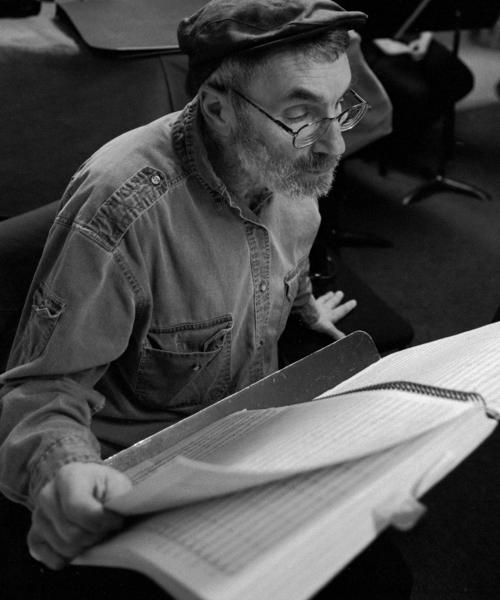
Paul Schoenfield

The final pieces added to the program came out of an experience Cooperstock had during the pandemic of playing for the daily meditation at the Jewish Community Center. For that, he picked two from a set of Six Improvisations on Hasidic Melodies by Paul Schoenfield. “I thought these Hasidic melodies would be perfect, and I picked two that were slower and lyrical and dreamy,” he says.

Cooperstock embraces the fact that he has programmed music that will not be familiar to his audience. “What it comes down to,” he says, “if somebody will be attracted to tune in to the program, that the music is good and it speaks to the audience, maybe they’ll try something new.”

He sees 2020 as a turning point, with the attention that has been directed to Walker and other composers of color. “I’m glad that composers who we didn’t know before are coming to light. This is a good time to be exploring different kinds of literature, and I hope that the trend will stay with us.”

Above all, he hopes his playing will reach people who have been dealing with so much in the past year. “I’ve thought a lot about the purpose of music, especially this year, and how music can bring us comfort,” he says. 

“Maybe this program can do that in some way.”

# # # # #

Faculty Tuesday: “George Walker, Underneath the Willow Tree”
Andrew Cooperstock, piano

George Walker: Variations on a Kentucky Folk Song (“O Bury Me Beneath the Willow Tree”), from Piano Sonata No. 1
Samuel Barber: Excursions
Paul Schoenfield: “Achat Sha’alti” “and “Nigun” from Six Improvisations on Hassidic Melodies
George Walker: Piano Sonata No. 2 
Aaron Copland: Three Excerpts from Our Town
Aaron Copland: Night Thoughts (Homage to Ives)
George Walker: Prelude and Caprice 

Streamed HERE and HERE at 7:30 p.m. Tuesday, Feb. 2
Free or pay what you can

TO LEARN MORE about George Walker, watch this interview from PBS’ “State of the Arts.”

Musical Adventures 2: David Korevaar’s Faculty Tuesday

Jan. 26 recital includes works by Frescobaldi, CPE Bach and Margaret Bonds

By Peter Alexander Jan. 25 at 4:25 p.m

David Korevaar is an adventurous pianist.

“I’ve always been interested in music that’s off the beaten track,” he says. And the shutdown from the COVID pandemic has given him an opportunity to do more music off the beaten track than ever. “This has been an amazing experience, quickly learning a lot of repertoire,” he says.

David Korevaar off the beaten track

His latest explorations will be revealed Tuesday on Korevaar’s latest online CU Faculty Tuesday recital (Jan. 26, livestream at 7:30 p.m.). Titled “Variations Fantastiques,” the program brings together composers that are not on the well worn path: 17th-century Italian composer Girolamo Frescobaldi; J.S. Bach’s son Carl Philipp Emanuel; Clara Schumann, the wife or Robert; and African-American composer Margaret Bonds.

Two other works are from more familiar composers: a Rondo by Mozart, and the Symphonic Etudes by Robert Schumann. “The Schumann Symphonic Etudes is the only thing on this program I had played before, and it’s been a long, long time,” Korevaar says. “That was a major act of resuscitation of a very difficult piece.”

Translation: Korevaar put a lot of work into this recital. 

David Korevaar at the piano (but still off the beaten track)

The opening piece gets right to the variations idea, Frescobaldi’s Partite sopra l’Aria della Romanesca—a set of variations over a standard Renaissance bass line known as Romanesca. Many composers wrote pieces based on the Romanesca bass, but don’t be embarrassed if you have not heard them before, unless you pay unusually close attention to the music played in church.

“Frescobaldi is not often played, period,” Korevaar says. “Organists play his music, and harpsichordists do. Frescobaldi was a native of the keyboard, he understood how to put notes together on a keyboard with hands.”

Frescobaldi’s music comes out of his experience improvising. “All of his toccatas and the variation sets represent a kind of frozen improvisation,” Korevaar says. “It’s fascinating— he manages to combine the traditions of renaissance vocal writing with keyboard improvisation. He transfers the kind of affective language of the Renaissance madrigal to this keyboard medium.”

The next work on the program, C.P.E. Bach’s Rondo in G Major, grows from the same soil as Frescobaldi’s Partite. “When C.P.E. Bach writes for keyboard, he’s writing again as an improvisor,” Korevaar says. “These rondos are particularly peculiar. This one has always fascinated me, because while there is a larger-scale structure, it works in four-bar bits that keep repeating the same material in various embellishments and modulations. And it’s like early Beethoven in the use of silence.”

Schumann’s Symphonic Etudes does not resemble traditional variation sets. “[Schumann] does say it’s etudes in the form of variations, but you’ve got to search a little bit,” Korevaar says. “Every now and then he’ll throw in the head motive to remind you where he started, but several have little to do with the theme. This is typical of Schumann’s transformative techniques.”

The piece actually began as an explicit set of variations on a theme by a friend of the Schumann family, plus a Finale that may be based on an entirely different theme from an opera by Heinrich Marschner. It is this original version of a later much-revised work that Korevaar will perform.

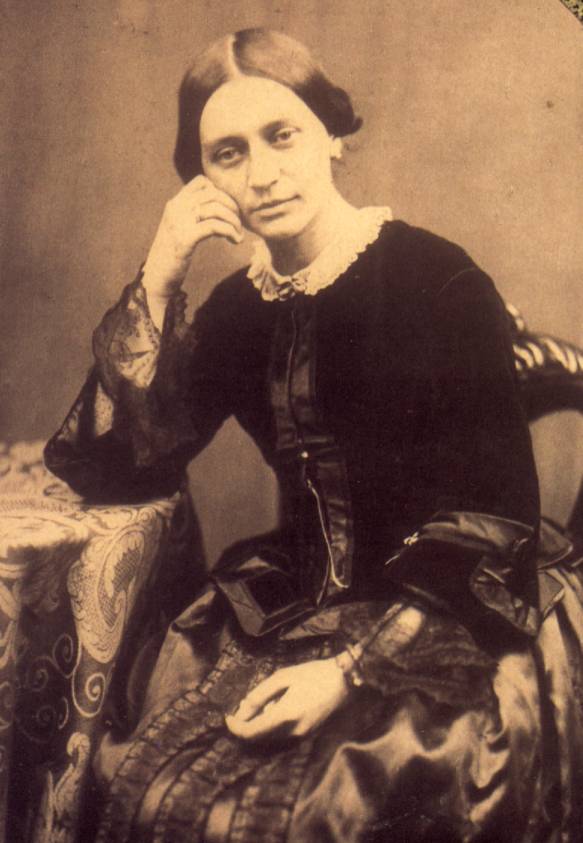
Clara Schumann. Daguerrotype by Franz Hanfstaengl (1854)

Even in that form, not all the etudes are related to the theme. Schuman’s approach is more one of transformation, as Korevaar says, than variation. At least three do not include the theme at all. “Thinking about it as variations, you realize how loose [Schumann] is with that term,” Korevaar says.

Both Clara Schumann and Brahms wrote a set of variations on the same theme by Robert Schumann. Both sets were published together in 1854, after Robert had been confined to a mental asylum. In both sets, Clara’s and Brahms’s, the variations on the theme are clearly delineated.

“It’s a remarkable piece because it’s a fully mature composition by a fully mature composer, with her own voice,” Korevaar says. “We forget that. We say, ‘Oh, she’s a woman who clearly did not get the opportunities.’ She played this piece throughout her career.

“It’s pianistically not friendly—she must have had a phenomenal technique! It’s a remarkable piece. This is a composer who was very much influenced by Robert Schumann, influenced by Chopin, influenced by Mendelssohn, and she has her own brand of virtuosity.”

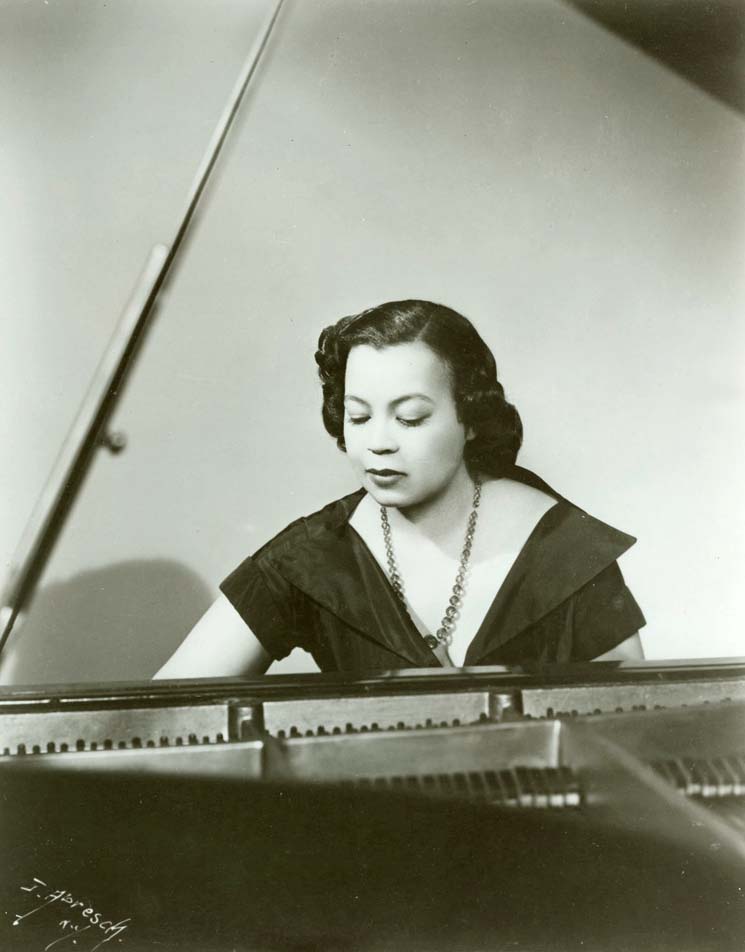
Margaret Bonds

Bonds’s Spiritual Suite comprises three movements, each derived from a spiritual or traditional African-American song, each a set of variations or embellishments of the theme. Korevaar compares the middle movement, based on “Peter Go Ring them Bells,” to a Bach chorale prelude. “She introduces this descant first before we get the tune. It’s quite fun what she does: nesting in the middle of it is this wonderful waltz. It’s a wonderful piece.

The third movement, “Troubled Water,” has been published separately and is performed more often that the other two. The recent interest in African-American composers this year has resulted in the whole suite being played more, Korevaar says. “A lot of people have started taking it on, which is nice. It’s a good piece. It deserves to be played and heard.”

Korevaar enjoyed building a program with so many pieces that are new to him and likely to his audience. “I had more fun putting this program together than I’ve had in a long time,” he says. 

“It’s liberating to do stuff that I don’t know!”

# # # # #

“Variations Fantastiques”
David Korevaar, piano

Girolamo Frescobaldi: Partite sopra l’Aria della Romanesca
Carl Philipp Emanuel Bach: Rondo in G Major
Wolfgang Amadeus Mozart: Rondo in A minor, K511
Robert Schumann: Symphonic Etudes
Clara Schumann: Variations on a Theme by Robert Schumann
Margaret Bonds: Spiritual Suite

Streamed here or here at 7:30 p.m. Tuesday, Jan. 26

Free or pay what you can

CORRECTION: One quote by David Korevaar corrected 1.25 to state that we think of Clara Schumann as “a woman who clearly did not get the opportunities.” The original post omitted the word “not.”

Longmont Symphony announces spring-summer concerts

Performances include guest artists, small orchestra and full symphony

By Peter Alexander Jan. 8, 2021, at 10:10 p.m.

The Longmont Symphony has announced a spring and summer season of six virtual concerts, featuring solo guest artists, small orchestra ensembles, and the full orchestra.

Tickets for the spring–summer season, Jan. 16–Aug. 7, are on sale, both individually and a discounted package for the full season. All performances will be streamed starting at 7 p.m. Saturdays.

Guest artists will be percussionist Cameron Leach, who was engaged for a concert last spring that was cancelled, Jan. 16; duo pianists Yuki and Tomoko Mack, March 20; and cellist Clancy Newman, Aug. 7. Performances by the LSO will a program of music for strings, including Vivaldi’s Four Seasons, Feb. 27; an all Mozart program for small orchestra, including the Clarinet Concerto performed by Colorado Symphony principal clarinetist Jason Shafer, April 17; and a full orchestra program June 19.

LSO director Eliot Moore

For the audience, it will be good to see a varied series of programs, but you might miss the most significant feature of the season. “There’s something that’s noteworthy [about the season] and it’s not really about the music at all,” LSO music director Elliot Moore says. “It’s this pivot that the LSO had made during the time of COVID, from presenting an orchestra to becoming a presenting organization.”

Moore is referring to the solo guest artists that the orchestra has presented during the fall and will present during the coming spring and summer. “That is a way that we can keep the level the audience has expected from the Longmont Symphony organization,” he says. “We’ve been able to have unbelievable guest artists that are so engaging that people buy tickets.

“The thing that has been amazing is keeping our commitment to excellence during this time. We’ve done it and I’m proud of it.”

Moore admits that he wasn’t sure what the audience response would be to essentially a hybrid season, including both small orchestra performances and solo artists, all of it online. Today, he is thrilled that the response was so enthusiastic. “Our audience gave us way more than we expected,” he says. “We have a following now for these guest artists.”

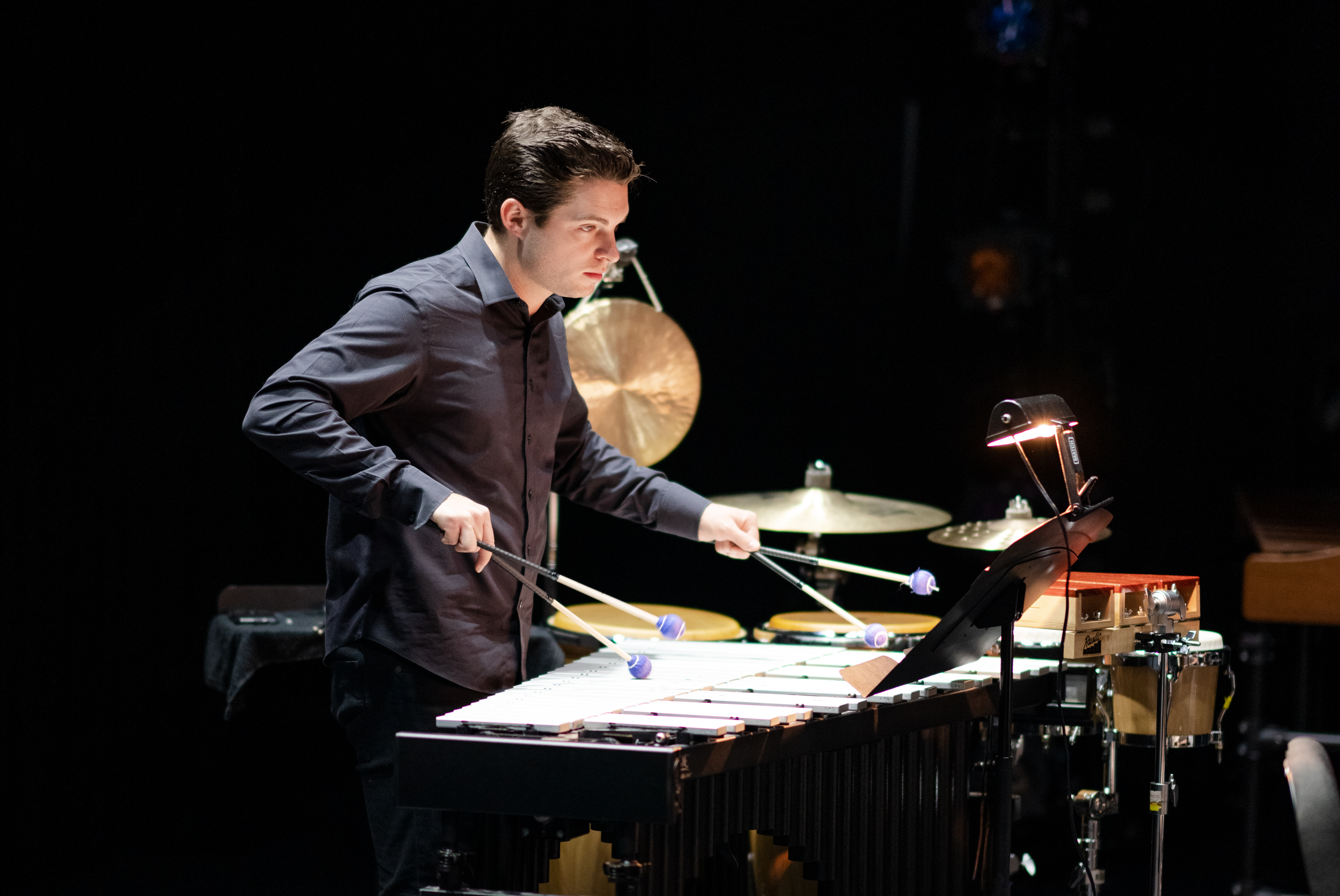
Percussionist Cameron Leach. Photo by Joshua Jorel Gutierrez

Each of the three guest performances during the spring and summer offers something unique, Moore says. Percussionist Cameron Leach “is phenomenal,” he says. “He commissions pieces from all kinds of composers. And one of the things he’s been investigating during the pandemic has been technology—how can he purchase equipment, making a space in his home where can record and have a product to market.”

Concerning duo pianists Yuki and Tomoko Mack, “my thought was it’s really hard to have two pianos here, onstage with the LSO,” Moore says. “There’s not a venue I know of where we could do that. I was thinking, how do I create a season that we wouldn’t always be able to have?”

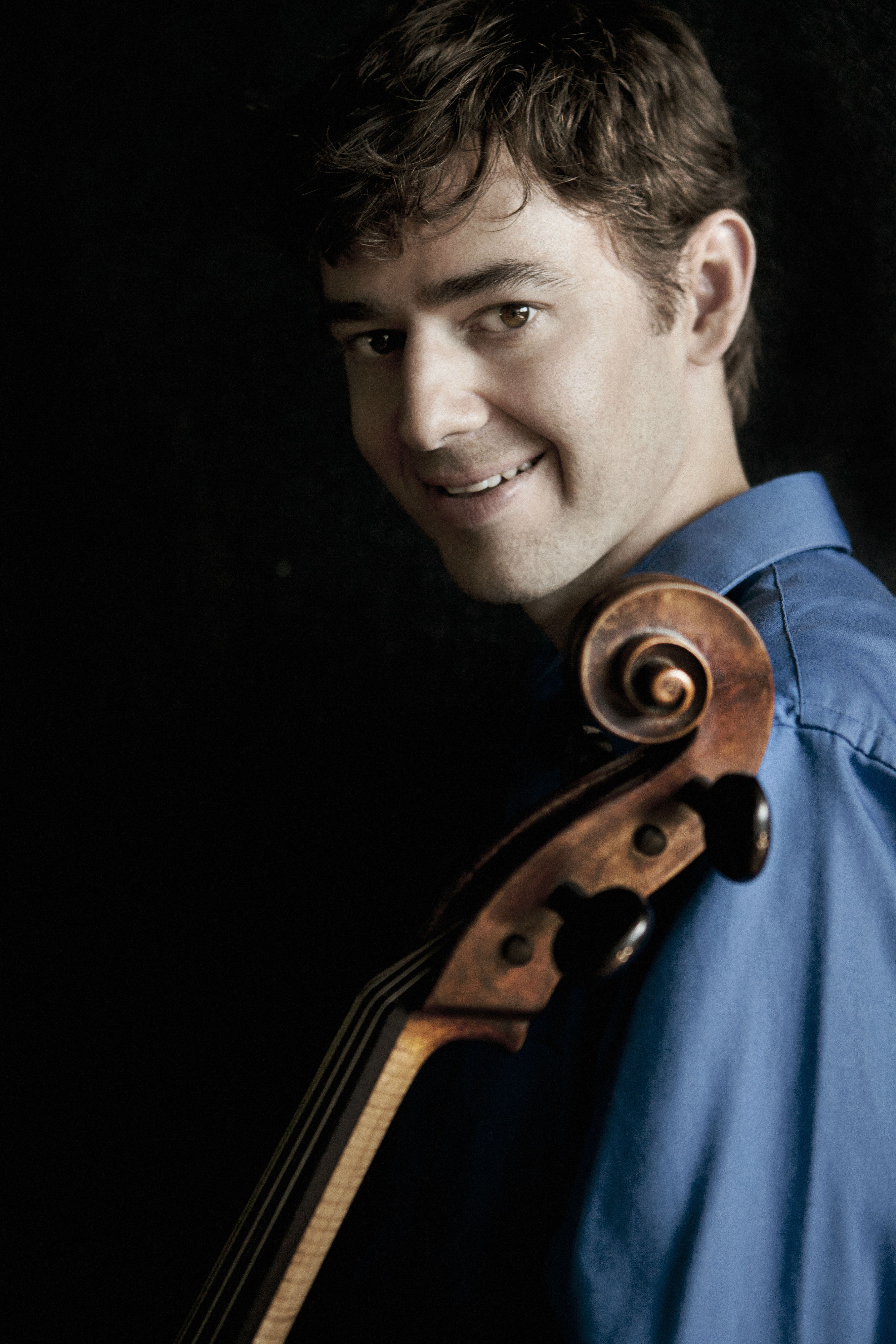
Himself a cellist, Moore is especially excited to have Clancy Newman as a guest artist “When he was a freshman at Juilliard he beat out undergrads, graduate, doctoral cellists to win the Juilliard Cello Competition— when he was getting a double degree in cello performance and in English at Columbia,” he says.

Clancy Newman. Photo by Lisa-Marie Mazzucco

One thing Newman is known for is writing cello pieces based popular music. “He would every month look at the number-one pop song and create a solo cello caprice that’s like wickedly impossible to perform,” Moore explains. “So he’s going to play a couple of his own cello caprices, based on pop songs.”

The three programs played by the LSO were planned to gradually increase the numbers of performers, in the hopes that recovery from the pandemic will parallel the planed programming. “The idea is, let’s stay safe, in terms of where we are currently,” Moore says.

That meant starting with a program where everyone could be masked, which meant an orchestra of only strings [see full programs below]. Following that is a concert with small orchestra, which in this case is all music by Mozart. 

“I have had different ideas about how can I focus on a single composer,” Moore says. “This portrait of Mozart is a good way to pave the path, whether it would be a festival where our community can delve deeper into the works of a specific composer, really get into what was going on in the composer’s lifetime. That’s been on my mind for several years.”

The last of the LSO’s performances will be a program for full orchestra, to be recorded outside and presented in June. “This is the first time we’ve had a summer season, so that’s a new aspect for the Longmont Symphony,” Moore says. 

“That will be our first time as an orchestra to get back into rehearsing and performing together. So that really is one of the big points of this season.”

# # # # #

LSO 2021 Spring and Summer

7 p.m. Saturday, Jan. 16, 2021
Cameron Leach, percussion: solo concert

7p.m., Saturday, Feb. 27, 2021 -Vivaldi: Four Seasons
Grieg: Holberg Suite
George Walker: Lyric for Strings
Vivaldi: Four Seasons

Yuki and Tomoko Mack

7 p.m. Saturday, March 20, 2021
Yuki and Tomoko Mack, duo pianists

7 p.m. Saturday, April 17, 2021 –A Portrait of Mozart
Overture to La finta semplice, K.51 (46a)
Concerto for clarinet and orchestra, Jason Shafer, soloist
Symphony No. 25

7 p.m. Saturday, June 19, 2021 –Mendelssohn’s Reformation Symphony
Borodin: Polovtsian Dances
Mendelssohn: Symphony No. 5 (“Reformation”)

7 p.m. Saturday, Aug 7, 2021
Clancy Newman, cello: solo concert 

Individual and season tickets

NB: Minor typos corrected 1/9

Opera in a time of pandemic

Following strict health protocols, CU stages Hansel and Gretel for streaming

By Peter Alexander Dec. 9 at 4:15 p.m.

Putting on a staged opera during a pandemic is challenge.

There are many restrictions: distancing of performers, at least 12 feet because of the spread of aerosols by singers; no orchestra in the pit; rehearsal and performance space having to be aired out every 30 minutes; and of course no audience.

Leigh Homan

All of those challenges and more have been met by CU Eklund Opera director Leigh Holman and music director Nicholas Carthy. Fully staged, streamed performances of Engelbert Humperdinck’s Hansel and Gretel will be available online starting at 7:30 p.m. Friday, Dec. 11, through 11 p.m. Monday, Feb. 15, 2021.

The pandemic has had a major effect on the CU opera program. But the students depend on their experiences at CU to prepare for their careers, and Holman and Carthy were not willing to lose a full year of students’ educations.

The pandemic arrived in March just as the opera program was preparing Mozart’s Marriage of Figaro. “When we got in dress rehearsal for Figaro and that turned into nothing, the outpouring of both grief and love was enormous,” Carthy says.

The opera planned for the late spring was Beatrice and Benedict by Hector Berlioz. Unwilling to let it drop, Carthy and Holman found a way to record individual musical numbers with singers performing separately. Holman worked over the summer with a videographer to make those numbers available online (see the final product here.) 

After that, they turned their attention to the fall production. As it turns out, Hansel and Gretel is the ideal opera to produce at this time: the cast is small, the opera is fairly short, which made it easier to observe time limits singing together, and it is a Christmas tradition in many opera houses. And another benefit: CU produces the opera every few years, so there was a complete set and costumes in storage.

Nicholas Carthy

But obstacles remained, including the orchestra. “We were told by the College of Music in no uncertain terms that we could not have the orchestral members to do it,” Carthy says. But rather than deny the students the opportunity of singing with an orchestra, he entered the entire score into a music writing program and sampled the score through a symphonic sound library. The result is a sampled orchestra, using real players and instruments.

Carthy set the tempos throughout. The performance tempos are not rigid—there are ritardandos and accelerandos—but they will be the same each time. “My role changed from somebody whose sole object in the pit is to be with the singers, to somebody who has to force the singers to be with me,” Carthy explains.

Holman had her own obstacles. “We had quite a list of protocols that we needed to follow (to stay safe),” she says. “When we practiced the staging all of the singers wore masks.”

They had to limit the singing in rehearsals, Holman says, because “even if you sing through the mask it starts the clock, and you can only sing for 30 minutes before you have to leave the room for 15 minutes.”

For the early staging rehearsals, no one sang—a rehearsal pianist would play the score while the singers spoke their lines in rhythm. “Once we had a scene ready to sing through, they would take their masks off,” Holman says. “We sang for 30 minutes and then left the room.”

Linsey Duca, Tommy Bocchi and Kely Riordan observing social distancing in CU’s Hansel and Gretel

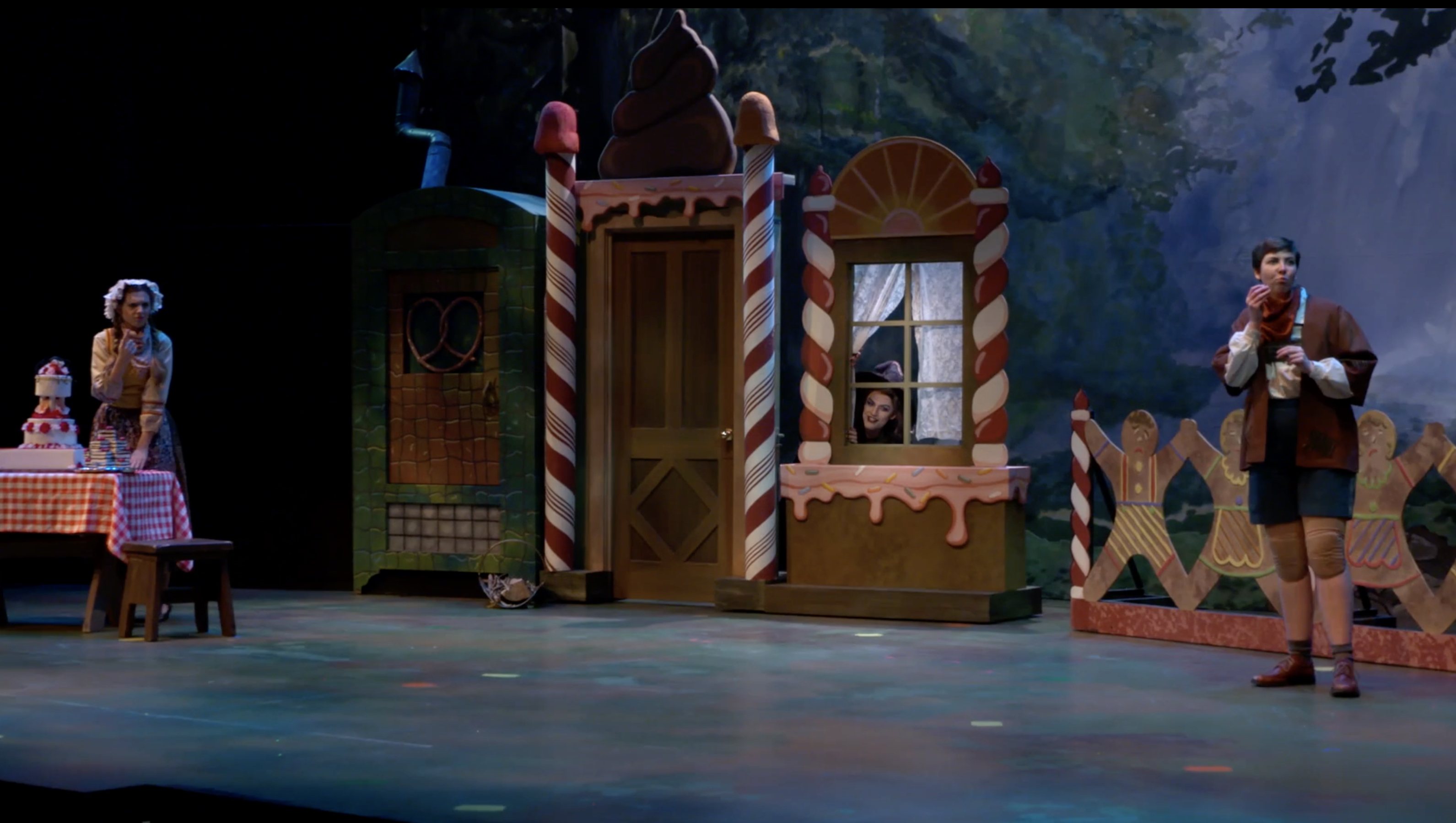
The staging too had to observe the protocols. The singers had to stay 12 feet apart. ”Our technical director Ron Mueller was so helpful in marking out the stage so that we knew exactly where 12 feet was,” Holman says.

“We tried to make it as active as possible but stay 12 feet apart——a lot of circles around the stage. There’s a sword fight with brooms but the brooms are six feet long, and we used little bandanas that they could use when they weren’t singing, or when (Hansel and Gretel) were asleep under the trees.”

The stored sets for Hansel and Gretel were designed for Macky Auditorium, but the rehearsals and recordings took place in the much smaller Music Theater. This meant individual set pieces had to be combined on the small stage; scenic artist Jennifer Melcher Galvin hand painted a backdrop that other set elements could fit into. “It is one of the stars of the show!” Holman says. “It really brings it all together.”

The performances will feature three different casts, two singing the original German and one singing an abridged version of the opera in English, designed for school outreach, that lasts about an hour. Purely orchestra material—the overture and the Witch’s Ride—are cut from both versions. All the performances were taped the weekend of Oct. 24–25.

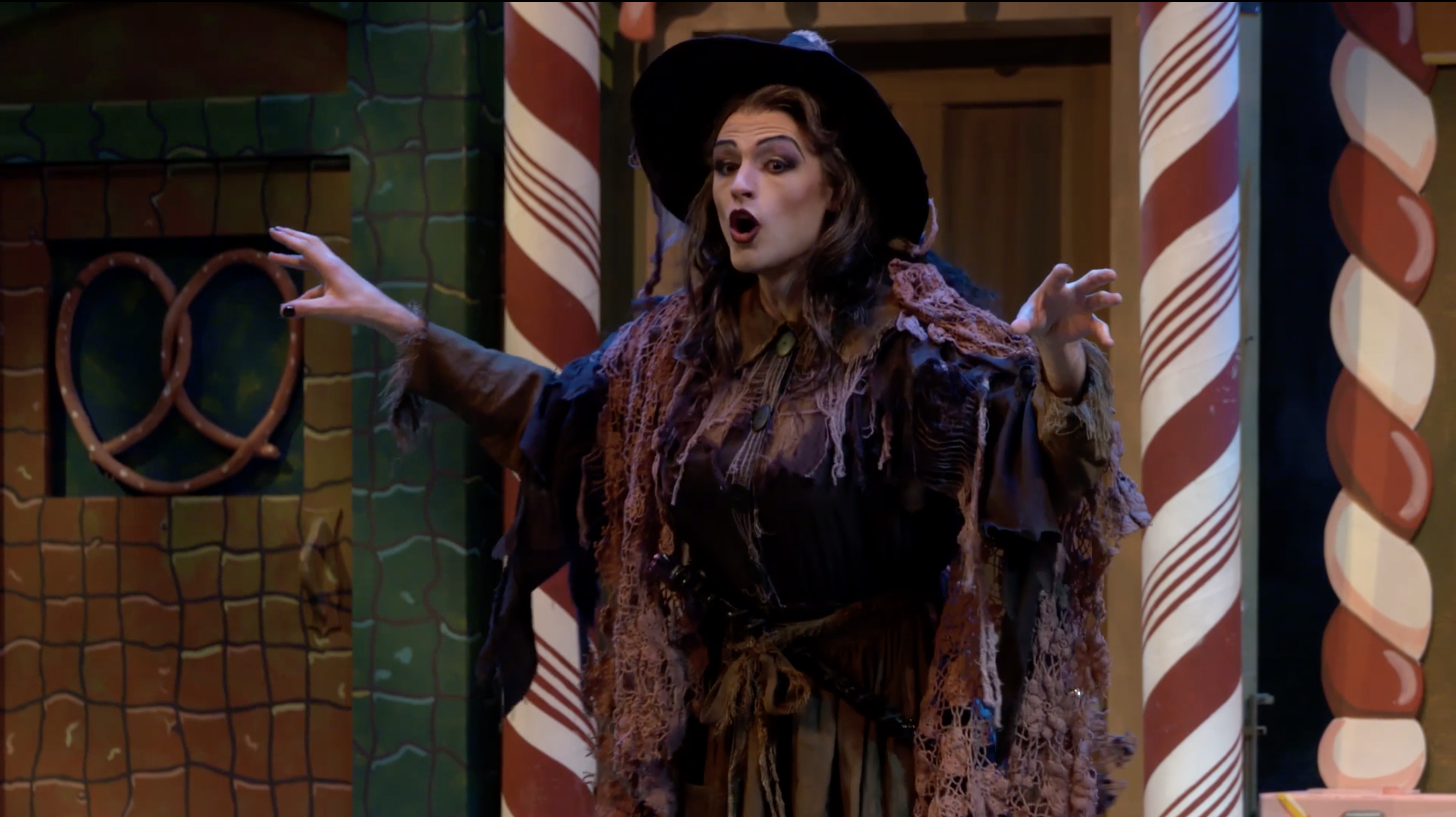
Tenor Tommy Bocchi as the Witch

You will notice that in all three casts, the witch is sung by a male tenor. This is often done in opera houses, to give the witch an additional bit of humor and to add a man’s voice to a cast dominated by women. In CU’s case, there is another reason: a male witch gives more male students the opportunity to be cast. 

Although the origin of the Hansel and Gretel fairy tale is quite dark, Carthy and Holman point out that the opera is more humorous than scary. In the opera, Carthy says, “It wasn’t an evil stepmother, it was a mother with two boisterous children and a headache. And the witch has to be so funny!”

Holman agrees. “This is a story about a real family who love each other but they are going through hard times,” she says.

It is overcoming the challenges of presenting opera at all that Holman keeps coming back to. “We really paid attention and stressed the protocols that our epidemiologist gave to us,” she says.

“Our singers were very, very serious about these protocols. I did want to make that point, because when people see the video of people on stage together, that can make them nervous. Everybody did take it so seriously. And we’re really proud of them about that.”

# # # # #

Hansel and Gretel by Engelbert Humperdinck
CU Eklund Opera
Nick Carthy, conductor
Leigh Holman, stage director

Stream available from 7:30 p.m. Friday, Dec. 11, through 11 p.m. Monday, Feb. 15

Detailed program information and stream access available here.

NOTE: Edited for clarity 12/9/20

HOLIDAY CONCERTS TO STREAM AT HOME

Celebrate the holidays virtually this year with local festive concerts.

By Izzy Fincher and Peter Alexander December 3 at 10:45 a.m.

Relax with a hot cocoa, a warm blanket and your favorite holiday tunes, all from the comfort of your own home.

This year, holiday music on Boulder’s classical scene will not be the same without the decked-out concert halls and communal holiday spirit. However, the holiday celebrations will continue virtually in Boulder with CU-Boulder’s Holiday Fest and festive concerts from Pro Musica, the Boulder Phil and the Longmont Symphony. 

Holiday Festival 2020 Dec. 4

The 2013 Holiday Concert in Macky Auditorium. (Photo by Casey A. Cass/University of Colorado)

This year CU-Boulder’s Holiday Festival won’t be the usual grand event at Macky, where the auditorium is filled with students, faculty, family and other fans. Instead, 2020’s scaled-down online broadcast of the Holiday Fest will have pre-recorded performances of seasonal favorites and traditional selections from the fall semester. The holiday spirit of a festive Macky continues on from the comfort of home.

“Holiday Festival 2020”
CU-Boulder College of Music students and faculty
Available from 7:30 p.m. Friday, Dec. 4
Tickets

“Holiday Moods” Dec. 5 and 6

Under the direction of Cynthia Katsarelis, Pro Musica will present “Holiday Moods,” featuring both traditional and diverse holiday tunes. Earlier this year, Katsarelis planned to collaborate with the Boulder Chorale to perform Handel’s Messiah, but due to COVID-19 restrictions she decided on an all-strings program instead. 

Yumi Hwang-Williams

The program will feature soloist Yumi Hwang-Williams, concertmaster of the Colorado Symphony. The two performances of “Holiday Moods” with a limited in-person audience at the Broomfield Auditorium and First United Methodist Church have been canceled and moved to an online broadcast, available for up to 48 hours after the concert times, 7:30 p.m. Saturday, Dec. 5, and 3 p.m. Sunday, Dec. 6.

“Holiday Moods” continues Pro Musica’s season theme of diversity and healing. The program opens with Novellette No. 1 by Samuel Coleridge-Taylor, a Black composer and conductor active in England in the early 20th century. The rest of the program is composed of traditional repertoire, to offer healing and comfort to listeners, according to Katsarelis.

The second work is Corelli’s Christmas Concerto, which was composed for Christmas night (Fatto per la notte di Natale) in 1690, likely for Corelli’s patron, Cardinal Pietro Ottoboni, in Rome. Next, Hwang-Williams takes center stage for “Fall” and “Winter” from Vivaldi’s Four Seasons, another Baroque classic. To end the program, Pro Musica will play Dvořák’s Serenade for Strings, one of the composer’s most popular orchestral works.

“Holiday Moods”
Pro Musica Colorado Chamber Orchestra
Cynthia Katsarelis, conductor, with Yumi Hwang-Williams, violinist
Available from 7:30 p.m. Saturday, Dec. 5, and 3 p.m. Sunday, Dec. 6
Tickets

“Happy Holidays from the Phil” Dec. 13

Michael Butterman rehearsing in the Brungard Aviation hangar at Boulder Municipal Airport

With conductor Michael Butterman, the Boulder Phil’s brass and percussion sections will present a selection of carols and other holiday tunes. Like the rest of the Boulder Phil’s fall 2020 season, this concert was recorded in a hangar at Boulder Municipal Airport, on a tight 48-hour rehearsal and recording schedule. 

The wide-ranging program is a mix of holiday favorites, including “Carol of the Bells,” “Deck the Halls,” “Have Yourself a Merry Little Christmas,” “God Rest Ye Merry Gentlemen” (mashed up with the French carol “Patapan”). The program also features lesser-known carols, including “Wassail Song” and “Tomorrow Shall Be My Dancing Day”; modern holiday music, Dan Forrest’s “Jubilate Deo”; and a Hanukkah observation, “A Celebration of Hanukkah.”

“Happy Holidays from the Phil”
Boulder Philharmonic Brass and Percussion, Michael Butterman, conductor
Available from 3 p.m. Sunday, Dec. 13, through Sunday, Dec. 27
No tickets required; contributions welcomed

Vocal Concert will substitute for Messiah Dec. 13

The Longmont Symphony Orchestra (LSO) will present a Holiday Concert Sunday, Dec. 13—but not the one they had originally planned. 

The LSO previously announced pared-down selections from Handel’s Messiah with four soloists but no chorus as their seasonal offering. That performance was to have been recorded in the Longmont Museum’s Stewart Auditorium and streamed starting at 4 p.m. Sunday, Dec. 13.

With the recent announcement that Boulder County has reached COVID Dial “Red Level: Severe Risk,” Stewart Auditorium became unavailable, and no other acceptable venue for the recording was found.An announcement from the LSO states, “The restrictions made it difficult to find a venue and to safely film the performance with our musicians.”

Consequently, the LSO reluctantly decided Tuesday (Dec. 1) to cancel the performance. Instead, the LSO will present a Holiday Concert featuring pianist Spencer Myer and baritone Mario Diaz-Moresco, from their home in New York City. The performance will include classical song selections by Handel and Schubert, as well as holiday favorites.

Their performance will be streamed at the same time as was announced for Messiah—4 p.m. Sunday, Dec. 13. Season tickets for the LSO fall 2020 season and tickets purchased separately for Messiah will be honored for the Myer/Diaz-Moresco concert. For more information, see the LSO Web page

“Holiday Concert, New York—Longmont”
Spencer Myer, piano, and Mario Diaz-Moresco, baritone
Available from 4 p.m. Sunday, Dec. 13
Tickets