Seicento presents music from a lavish 16th-century wedding

Musical interludes from La Pellegrina were unmatched for splendor

By Peter Alexander Nov. 1 at 3:30 p.m.

It was the wedding of the century.

The marriage of Fernando I de Medici, the Grand Duke of Tuscany, with Christina of Lorraine was celebrated in Florence, Italy, in 1589 with all the pomp and splendor of which only the Medici were capable. And they made sure everyone knew it, too.
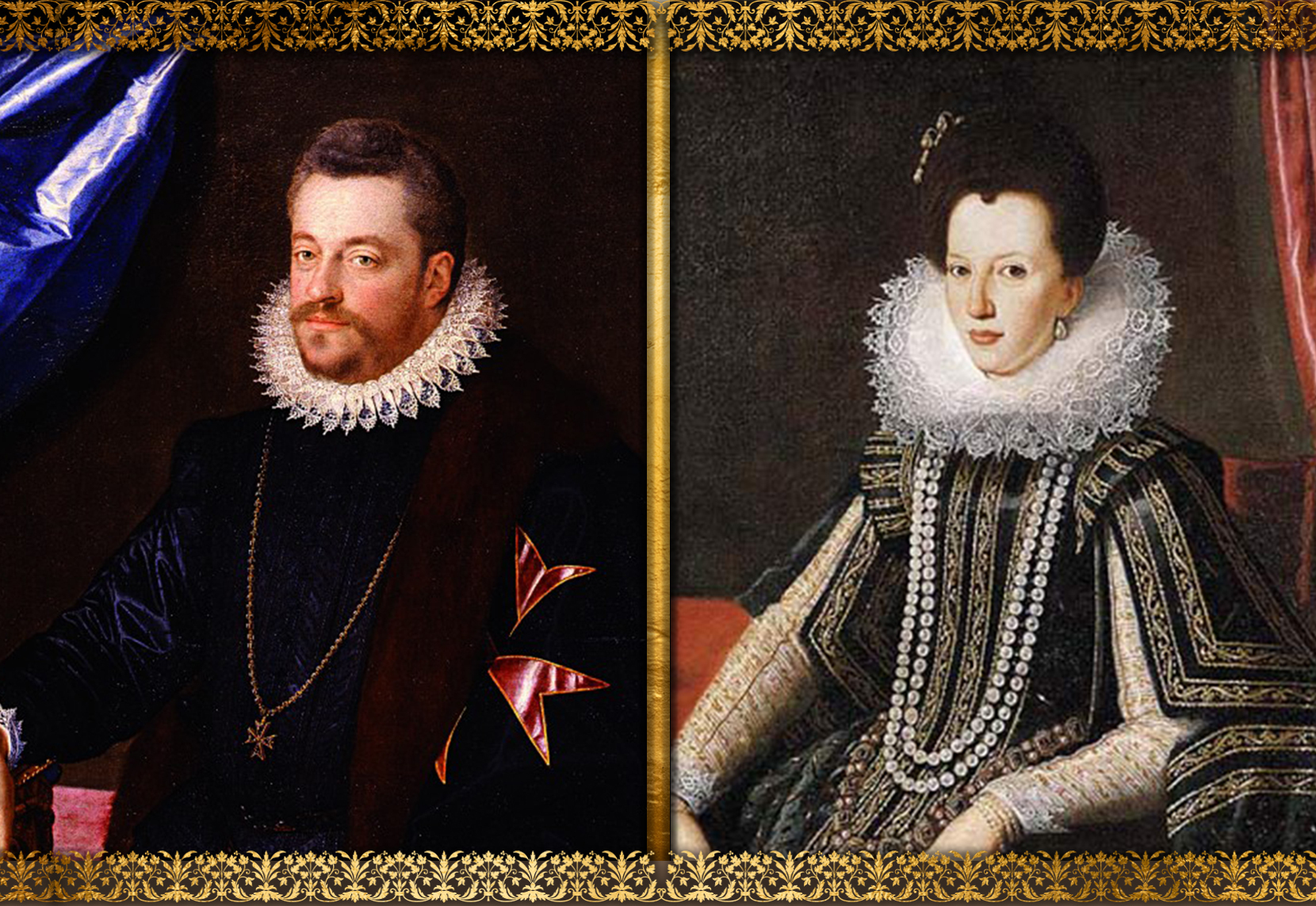
Fernando I de Medici, Grand Duke of Tuscany, and Christina of Lorraine

One of the grandest events of the month-long celebration was La Pellegrina (The pilgrim woman), a five-act play that was embellished by six elaborate intermedii—musical interludes—with music by by six different composers. Placed before, after, and between the acts of the  play, these interludes featured extravagant sets and costumes and virtuosic music, all designed to demonstrate the wealth and power of the Medici family.

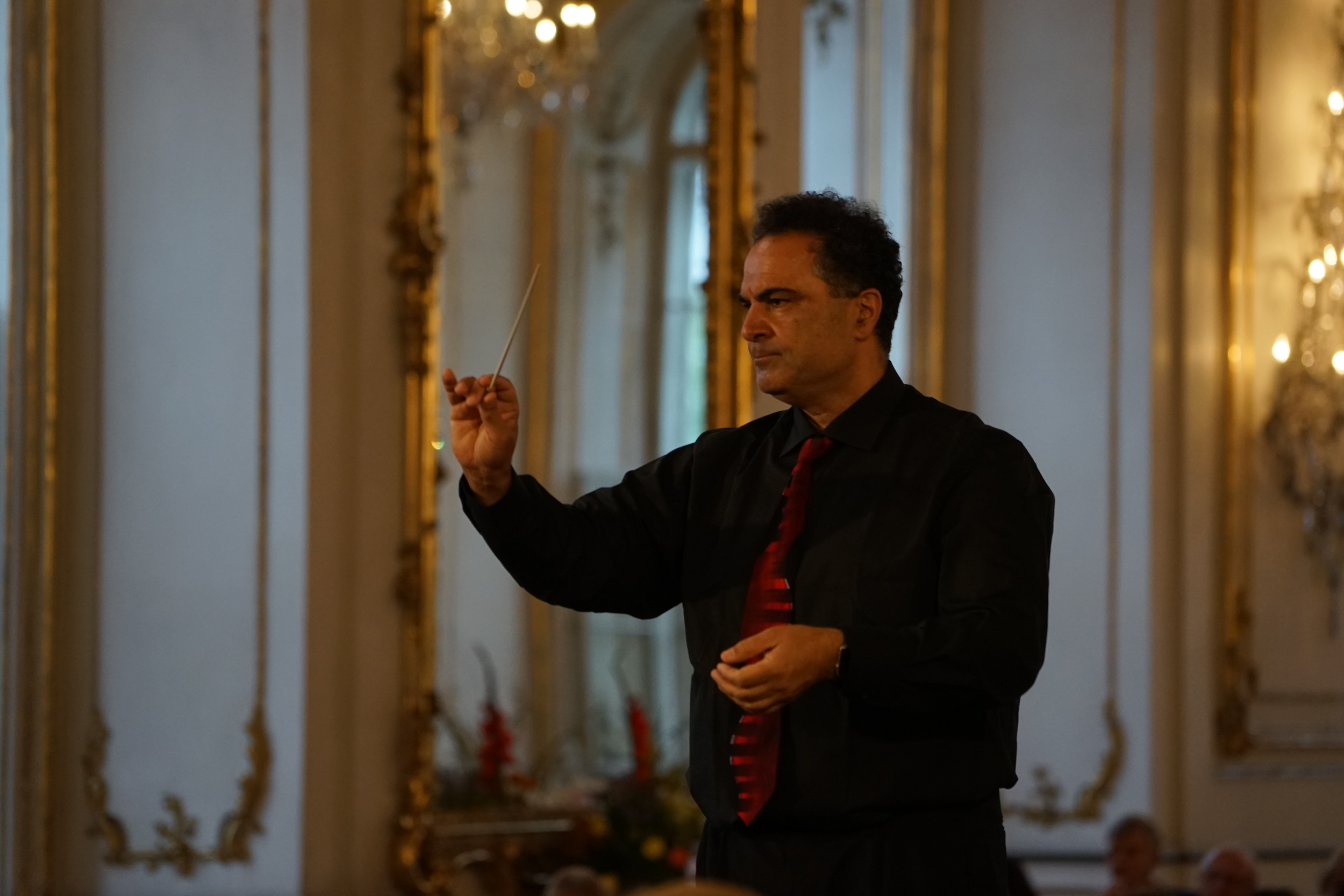
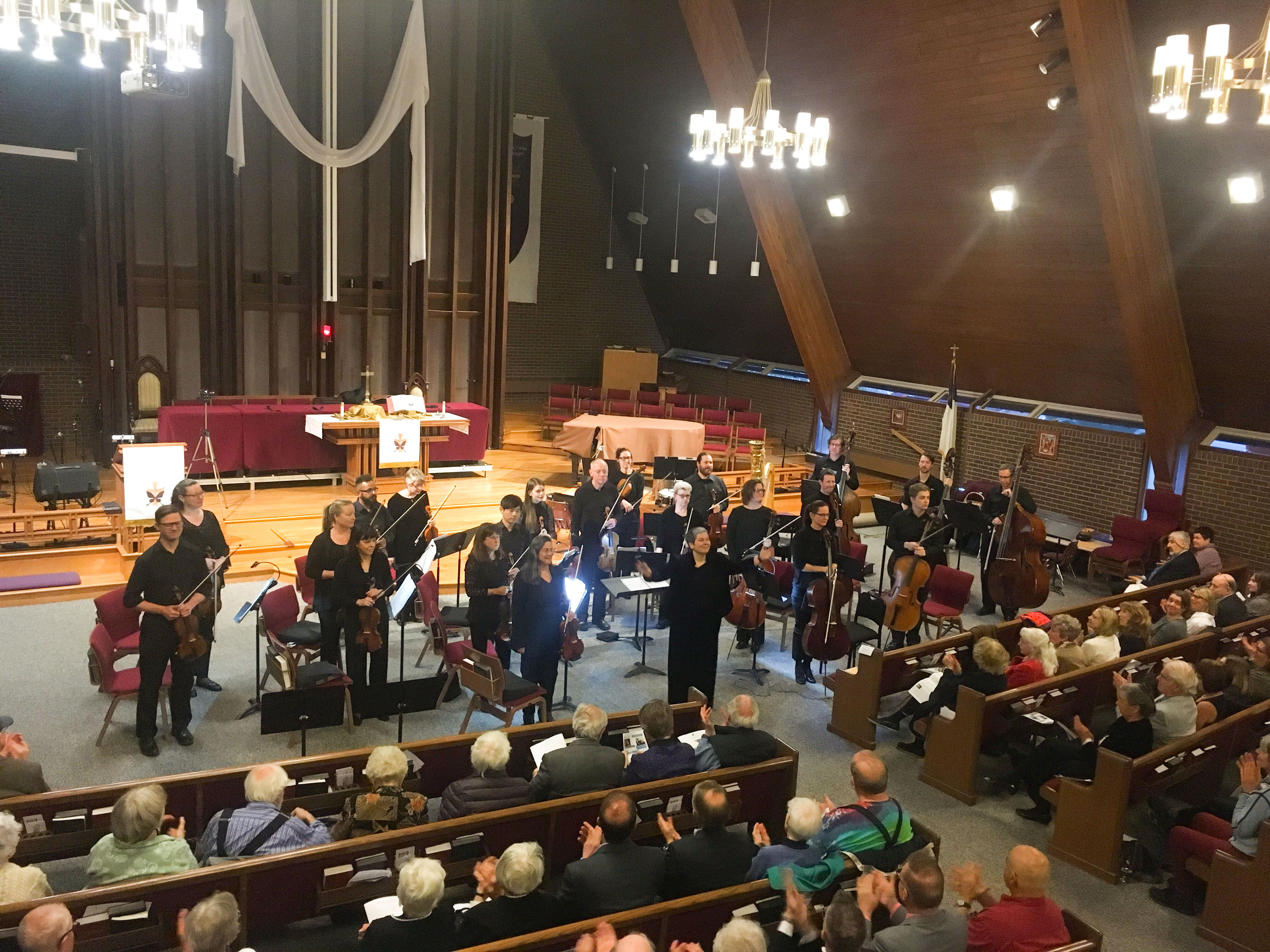
The musical interludes have been recorded but are rarely performed live—and as far as research can tell, never in Boulder until now. Selections from five of the six intermedii will form the next program by Seicento Baroque Ensemble, with performances Friday through Sunday in Boulder, Arvada and Longmont (times and locations below), under the direction of Seicento’s artistic director, Amanda Balestrieri.
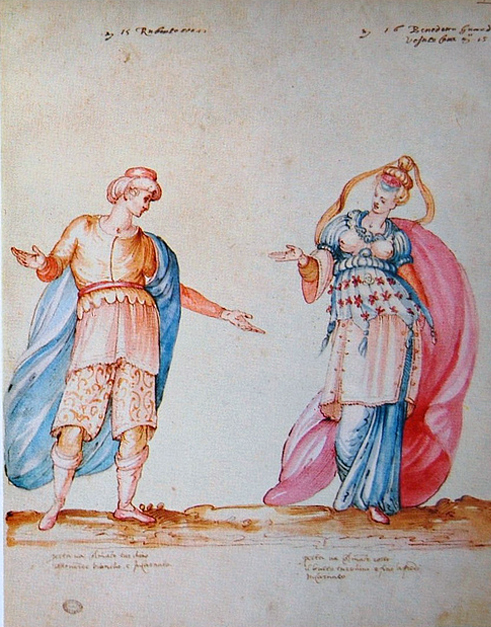
Bernardo Buontalenti, costume design for La Pellegrina

For this performance, Seicento will only have 12 singers rather than the usual 25, due to COVID, but this core group will be supplemented by an additional paid singer and a solo octet, plus two violins, two violas da gamba, a theorbo/lute/Baroque guitar player and harpsichord. Proof of vaccination and masks will be required of all audience members. Both in-person and virtual tickets are available through the Seicento Web page.

It would be hard to exaggerate the impact of the wedding celebration, which was more than a year in planning, and especially the intermedii. While La Pellegrina the play made no great impression then or since, the musical interludes were clearly the most brilliant star of the event, which included banquets, balls, and even a mock naval battle. 

For the play and its attendant interludes an entire new theater was constructed, offering the latest in theatrical capabilities. The elaborate settings were designed by Bernardo Buontalenti, who set the standards for late renaissance stage spectacles. Music was commissioned from the best known Italian composers of the time, including the Florentine court composer Luca Marenzio, plus the early pioneers of Baroque opera Giulio Caccini, Jacopo Peri and Emilio de Cavalieri—names all prominent in music history if not in most listeners’ experience. 
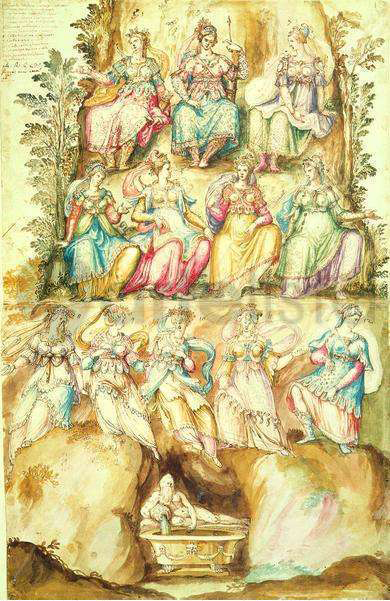
Bernardo Buontalenti, costume design for La Pellegrina

So successful was the theatrical spectacle of La Pellegrina that it became the model in both musical and theatrical style for early Baroque opera, which for many years excelled as a means for courts and kings to display their wealth. The splendor of the intermedii remains unsurpassed by any stage music of the era, and they represent one original source of the entire artform of opera.

Balestrieri chose these pieces specifically for Seicento’s post-Covid return to the stage. Not only is the resumption of live performances a cause for celebration, the year also marks the ensemble’s tenth anniversary season. “I wanted a grand piece of great beauty that is less well-known,” she wrote in a description of the program. “[I wanted the concert] to stand out and offer some relief from the funereal music performances emerging in late pandemic programming.”

In an intriguing coincidence, Seicento’s founding 10 years ago grew from another Colorado premiere, of music written only a few years after La Pellegrina. That performance of the Vespers composed in 1610 by Monteverdi led directly to the current Seicento ensemble.

Balestrieri explains how she arrived at the singers who will perform the music from La Pellegrina. “Our chorus is a volunteer chorus,” she writes. “Many singers decided to wait until the spring to sing with us again because of COVID, either for their own health or their children’s, since some have young children not yet eligible for the vaccine.

“Anticipating this, I hired one additional chorus tenor, making 13 total singers (for) the full chorus, plus eight chorister/soloists to make up the solo octet that will sing everything. A few of the full chorus will join the octet for a few numbers, the full chorus sings about four choruses, and the octet sings the rest of the numbers.”

She decided not to attempt the entire musical score, which runs more than 90 minutes, both because one venue asked Seicento to limit its performance to 60 minutes as a COVID precaution, and also because of limited rehearsal time for the singers. With a total time of about 50 minutes for the music, Balestrieri expects the entire performance to finish in about an hour, with no intermission.

Both the subjects and the social milieu of the intermedii are likely unfamiliar to most modern listeners, but Balestrieri has taken that fact into account. “The intermedii were originally elaborately costumed and staged tableaux representing both mythological stories well-known to the original audience and homage to the royal couple,” she writes in her notes to the performance. 
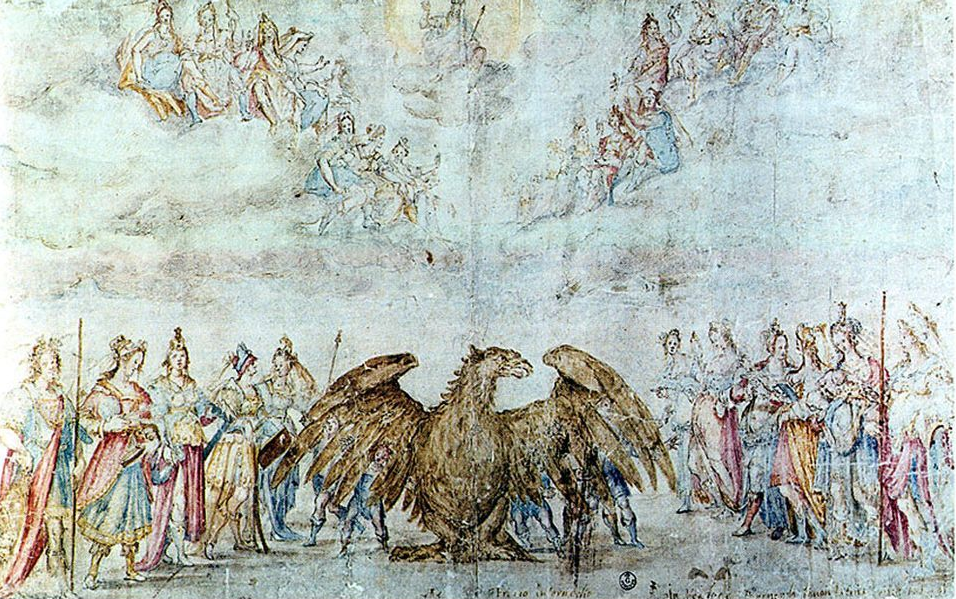
Bernardo Buontalenti, design for the final scene of La Pellegrina

 “The context will be explained in the program, and the texts and translations should do the rest.”

And so for the Seicento performance, there will be no royal couple. And no elaborate costumes, much less the lavish stage machinery of the original. But much of the splendor resides in the music, and that will be very much present.

# # # # #

La Pellegrina: “An Italian Intermezzo” 
Music performed at the wedding of the Grand Duke of Tuscany in Florence in 1589
Seicento Baroque Ensemble and guests
Amanda Balestrieri, conductor

7:30 p.m. Friday, Nov. 5, First United Methodist Church, Boulder
7 p.m. Saturday, Nov. 6, United Methodist Church, 6750 Carr St., Arvada
3 p.m. Sunday, Nov. 7, Stewart Auditorium, Longmont Museum

In person and virtual tickets available here.
Grace Notes: Reminders of two concerts this coming weekend

By Peter Alexander Oct. 28 at 9:50 p.m.

Boulder Phil presents “The Art of Jazz” Saturday at Mountain View Methodist

The Boulder Philharmonic will perform the second of their two short concerts scheduled for the month of October at 4 p.m Saturday, Oct. 30, in the Mountain View United Methodist  church in Boulder.

Tickets are available through the Boulder Phil Web page. Audience members will be required to present proof of vaccination and wear masks throughout the concert. The short program will be presented without intermission, to reduce interaction among audience members. You may read the orchestra’s full, up-to-date COVID protocols here.  

The program features three pieces for small orchestra that were influenced by American jazz: the Jazz Suite No. 1 by Shostakovich, Darius Milhaud’s Creation of the World, and Little Threepenny Music, an orchestral suite arranged from the music for Kurt Weill’s Threepenny Opera. Michael Butterman will conduct. You may read more about this performance in an earlier post on this blog.

# # # # #

Takacs Quartet performs music by Mozart, Henri Dutilleux and Smatana

The Takacs Quartet will present the second of their 2021-22 campus concerts at 4 p.m. Sunday and 7:30 p.m. Monday, Oct. 31 and Nov. 1, in Grusin Music Hall of the CU Imig Music Building.

Masks must be worn inside all buildings on the CU campus. Please note that online streaming tickets for Sunday’s performance are also available, and the stream will remain available for a full week following the Monday performance. Tickets for both in-person attendance at the streamed performance are available through CU Presents.

The quartet will play three works on the concert. One is a familiar part of the standard string quartet repertoire: Mozart’s String Quartet in D minor, K421/417b. The others are less familiar: Ainsi la suit by the French composer Henri Dutilleux, and the String Quartet No. 1 in E minor, “From my Life,” by Smetana. You may read more about this performance in an earlier post on this blog.

Eklund Opera presents ‘the perfect Verdi Opera’

CU production of La traviata will be in Macky Auditorium Oct. 22–24

By Peter Alexander Oct. 22 at 11:43 a.m.

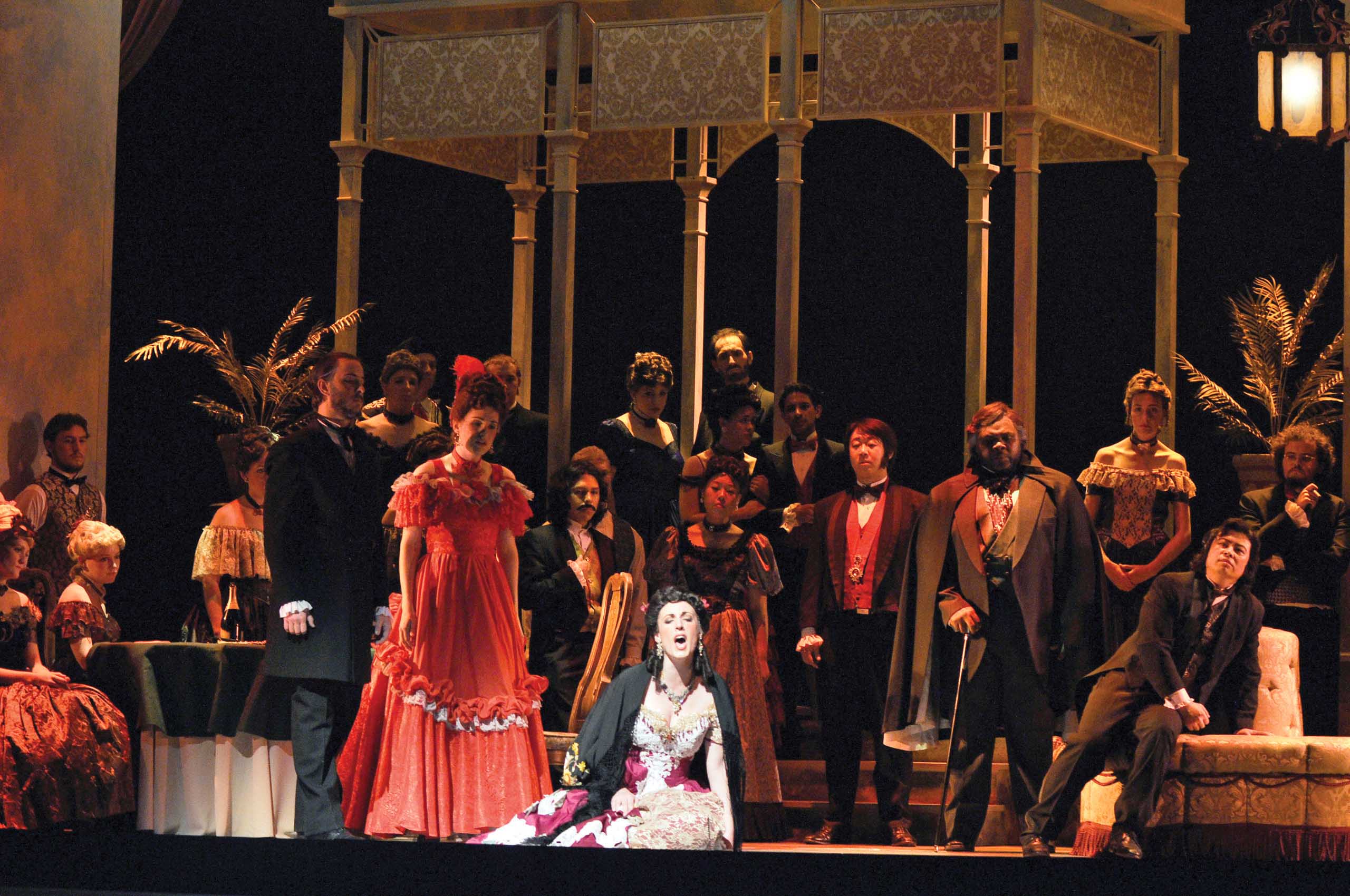
Nicholas Carthy describes La traviata as “the perfect Verdi opera.”

Certainly one of the best known and most loved operas, La traviata is a production of the CU Eklund Opera, to be presented in Macky Auditorium at 7:30 p.m. Friday and Saturday, Oct. 22-23 and 4 p.m. Sunday, Oct. 24. As music director, Carthy will conduct the performances by student singers and the CU orchestra. Leigh Holman, director of Eklund Opera, is the stage director. 

The performances will be sung in Italian with projected titles in English. Tickets for all performances are available from the CU Presents Web page. Masks are required in all public indoor spaces on the CU Boulder campus, regardless of vaccination status.

The performances will be sung in Italian with projected titles in English. Tickets for all performances are available from cupresents.org/performances. Masks are required in all public indoor spaces on the CU Boulder campus, regardless of vaccination status.

Photo courtesy of Eklund Opera

Based on the 1848 novel by Alexandre Dumas the younger La Dame aux camélias (The lady of the camelias), La traviata tells the tragic story of Violetta, a high-society courtesan who falls in love with Alfredo, a young man from a respectable family. Alfredo and Violetta move together to the country in search of a quiet life together. 

Because of Violetta’s status as a social outcast, Alfredo’s father demands that she leave Alfredo, to clear the way for his younger daughter to have a respectable marriage. Under pressure, Violetta returns to her prior life in Paris, but she is suffering from tuberculosis, which took the lives of a quarter of the adult population of Europe in the 19th century.

The social issues of 19th-century Paris may seem remote, but Carthy says they are easy for today’s students to understand. “The idea of a disease that kills, and a family that disapproves is not terribly far away,” he says. 

Read more in Boulder Weekly.

All-Beethoven concert will celebrate the heroes battling COVID

Boulder Chamber Orchestra will present the “Eroica” Symphony Saturday

By Peter Alexander Oct. 21 at 4:40 p.m.

Bahman Saless says that performing Beethoven is like reciting Shakespeare. 

“There are so many ways to say something that it never ends,” he says. “You can say it 50 different ways, and the way you phrase everything will make it a little bit different.” In other words, Beethoven is so protean that every performance reveals something new.

Jennifer Hayghe will play Beethoven/ Fourth Piano Concerto Oct. 23

Saless is talking about the next concert he will conduct as music director of the Boulder Chamber Orchestra. At 7:30 p.m. Saturday (Oct. 23), he and the orchestra will perform an all-Beethoven concert at the Boulder Seventh Day Adventist Church. Pianist Jennifer Hayghe from the CU Boulder College of Music will be the soloist for Beethoven‘s Fourth Piano Concerto, and the orchestra will perform the Third Symphony, known as the “Eroica.”

The in-person audience will be required to show either proof of vaccination, or a negative COVID test in the past 72 hours before the concert. All audience members 2 and older will be required to wear a mask; children 2 to 12 will be admitted with proof of a negative COVID test. (See details here.) Tickets are available on the BCO Web page.

Saless said that Beethoven, and particularly the “Eroica” Symphony, were chosen to honor the heroes of the past year who worked on the front lines of the battle against COVID. The comparison to Shakespeare certainly illustrates the composer’s iconic stature: his music is often chosen for special occasions, such as the return to the stage after a pandemic.

Beethoven’s Fourth Piano Concerto is not as well known as his Fifth—the “Emperor” Concerto—but it is equally esteemed by pianists and other musicians. “It is definitely the most intimate of Beethoven’s concertos, especially the first movement,” Saless says.

That intimacy is signaled at the very beginning as the concerto begins, not with the traditional orchestral introduction, but with a gentle chordal gesture by the piano that is answered by the orchestra, creating a pattern of intimate dialog for the rest of the concerto.

Bahman Saless

“Beethoven sets up a conversation, and literally the entire movement is the dialog between the orchestra and piano,” Saless says. “It’s very personal. It’s his softest first movement, I would say gentlest, and absolutely just gorgeous.

“The slow movement is the most intriguing movement of the three. It starts with the orchestra dominating the scene, and the piano has the meeker answer. Then gradually the piano takes over. It’s really an amazing piece of music.”

The “Eroica” is one of the best known works in the orchestral repertoire. But Saless wants you to know that this performance will have its own individual character. “You’re going to hear a chamber orchestra version, rather than a full symphonic version,” he says. 

He points out two things to listen for in the chamber orchestra performance. The first is that the winds will be more prominent than with a larger string section. “They will be a lot more prominent, and they have a much bigger role,” he says. Where they “have the really important parts, we’re going to make sure that you can hear all the detail.”

The other is that as a smaller and more agile orchestra, the BCO can come closer to the fast tempos that Beethoven marked in his score. Those tempos are regarded as so extreme that they are rarely observed, but “we’re going to try to take the first movement close to Beethoven’s tempo marking,” Saless says. 

“It’s going to be really fun. And it’s scary! It’s very scary to do this symphony. The ‘Eroica’ is a Titanic, but [the players and I] have a bond when it comes to Beethoven. I know the orchestra is looking forward to it, and they are aware of what it means to me.”

Saless is happy to be returning to live performances after the past two years. In fact, the experience of the pandemic has led him, like many musicians, to be reflective about returning to the music he loves. 

“After COVID, you know that we could be dead tomorrow,” he says. “When you’re doing the Beethoven Third, you have to realize this could be the last time you’re dong it. You need to be really thankful that you can be up there and present this work of art to the public. There’s nothing like it. It’s the ultimate experience.

“I’m the luckiest person alive.”

# # # # #

Boulder Chamber Orchestra
Bahman Saless, music director
Fall 2021 concerts

“Celebrating the Heroes:” All-Beethoven Concert

  • Beethoven: Symphony No. 3 in E-flat major, op. 55 (“Eroica”)
  • —Concerto for Piano No. 4 in G major, op. 58
    Jennifer Hayghe, piano

7:30 p.m. Saturday, Oct. 23, 2021
Boulder Seventh-Day Adventist Church

TICKETS

“A Gift of Music:” Celebrating the Season with BCO Stars.

  • Maxime Goulet: Symphonic Chocolates
  • Tchaikovsky: Variations on a Rococo Theme
    Joey Howe, cello
  • Mozart: Concerto in A for clarinet and orchestra
    Kellan Toohey, clarinet

7:30 p.m. Saturday, Dec.11
Boulder Seventh-Day Adventist Church

TICKETS 

Ars Nova Singers present music “Made Perfect” Oct. 15–16

Concert features music of Renaissance composer Palestrina

By Peter Alexander Oct. 14 at 5:35 p.m.

The music of Renaissance composer Giovanni Perluigi da Palestrina was regarded as having been “made perfect” by the generations that followed him.

Giovanni Perluigi da Palestrina

Boulder’s Are Nova Singers will present a concert devoted largely to Palestrina’s perfectly made music, along with a piece by the contemporary English composer John Tavener, at 7:30 p.m. Friday, Oct. 15 at St. Pauls’ Community of Faith in Denver, and 7:30 p.m. Saturday, Oct. 16, in First United Methodist Church in Boulder. Tickets are available for both in-person attendance, and also for an online audience for the Oct. 15 performance, on the Ars Nova Web page.

Proof of vaccination must be shown for admission, and masks must be worn indoors throughout the concert.

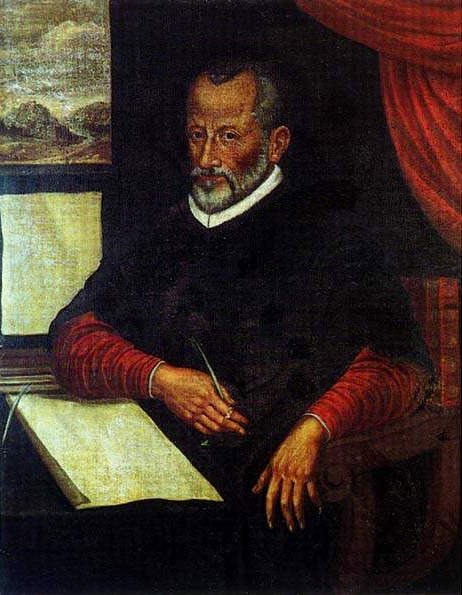
The leading composer of sacred music in the 16th century, Palestrina spent his entire life in or near Rome, having been born just outside the city. He served for many years as director of the Capella Giulia, the papal choir at St. Peter’s Basilica. His reputation then and later was so great that he was long and falsely credited with having “saved” polyphonic (multi-voice) sacred choral music during the Council of Trent, which was tasked with purging and clarifying church doctrine as part of the 16th-century Counter-Reformation.

It was Palestrina’s mastery of counterpoint that was so widely admired by musicians and theorists. The teaching of counterpoint for several generations after was based on his works, which were characterized by the smooth movement of voices, with very few leaps between notes, and careful control of dissonance. In fact, his style is still taught today as “Renaissance polyphony.” It has been the verdict of history that he was the greatest composer of sacred music of his generation.

Palestrina wrote at least 104 polyphonic settings of the mass, more than 300 motets, 35 magnificats, and 140 madrigals, among other works. From this vast output, Are Nova will perform a Missa Brevis (short mass), a movement from another setting of the mass, and three motets. 

John Tavener

Twentieth/twenty-first century composer John Tavener (1944-2013) was also known for his extensive output of sacred choral music. His “Song for Athene” became particularly well known when it was performed in 1997 at the funeral for Diana, Princess of Wales. The “Exhortation” is written for double chorus. It was commissioned for the 2003 Festival of Remembrance in London’s Royal Albert Hall and is based on the poem “For the Fallen” by Laurence Binyon, which begins “They shall not grow old, as we that are left grow old.”

Like much of Tavener’s music, “Exhortation” conveys both serenity and a mystical quality that seems related to his extensive spiritual exploration by means of Russian and Greek orthodox Christianity, Buddhism, Hinduism and Islam. Tavener described himself as “essentially Orthodox,” which became an important aspect of his musical identity.

# # # # #

Ars Nova Singers
Thomas Morgan, director
2021–22 Season

“Made Perfect”

  • Palestrina: Missa Brevis
  • Surge amica mea
  • Diffusa est gratis
  • Accepit Jesus calicem
  • Agnus Dei (Missa Benedicta es)
  • John Tavener: Exhortation

7:30 p.m. Friday, Oct. 15
St. Paul’s Community of Faith
1600 Grant St, Denver

7:30 p.m. Saturday, Oct. 16
First United Methodist Church,
1421 Spruce St, Boulder

In-person and livestream TICKETS

“Made Merry”

7:30 p.m. Friday, Dec. 10
St. Paul’s Community of Faith, Denver

4 p.m. Sunday, Dec. 12
United Church of Christ, Longmont

7:30 p.m. Thursday, Dec. 16
St. John’s Episcopal Church, Boulder

7:30 p.m. Friday Dec. 17
First United Methodist Church, Boulder

“Made Fragile”

7:30 p.m. Saturday, Jan. 29, 2022
St. Paul’s Community of Faith, Denver

4 p.m. Sunday, Jan. 30, 2022
First United Methodist Church, Boulder

“Made Light”
With Sandra Wong, nyckelharpa and violin; Ann Marie Morgan, viola da gamba

Regional tour: March 24, Pueblo, Colo.
March 25, Albuquerque, N.M.
March 26, Santa Fe, N.M.

April 1: Central Presbyterian Church, Denver
April 2: First United Methodist Church, Boulder

Longmont Symphony visits Stewart Auditorium for concerts Oct. 16 & 17

Reduced orchestra will play works of Haydn, Tchaikovsky, Richard Strauss and Jessie Montgomery

By Peter Alexander Oct. 13 at 4 p.m.

Elliot Moore spent the pandemic listening to music. Many of us did, but Moore’s listening wasn’t just a way to pass the lonely hours. As conductor of the Longmont Symphony Orchestra (LSO), he was listening to symphonies by Joseph Haydn—not quite all 108 of them, but enough that he found the one that spoke to him.

That symphony—No. 96 in D major, known as “The Miracle”—will anchor the LSO’s next program, a concert for smaller orchestra to be presented in the Stewart Auditorium of the Longmont Museum at 7 p.m. Saturday, Oct. 16, and 4 p.m. Sunday, Oct. 17. In addition to Haydn’s symphony, the program will feature cellist Matthew Zalkind playing Tchaikovsky’s Variations on a Rococo Theme, “Starburst” by Jessie Montgomery, and Richard Strauss’ Serenade for 13 Winds. Tickets for the concert can be purchased here

Haydn’s Symphony “just grabbed me,” Moore says. “I listened to countless of Haydn’s symphonies, just getting to know them, getting to know his orchestral world. First of all, I love it. What a creative symphonist! His level of creativity for the genre was astronomical. It blew me away.”

The Symphony No. 96 was given the name “Miracle” on the mistaken belief that it was the work by Haydn that was being played when a chandelier collapsed onto the floor during a concert the composer presented in London in 1791. It was actually another symphony, during a performance in 1795, where the audience dodged the chandelier when they all pressed forward to the edge of the stage. The name “Miracle” has stuck, and so Moore plans to celebrate a miracle of another sort with the performance.

Matthew Zalkind Courtesy photo

“When you’re just getting back to in-person performances—to me, that’s the miracle,” he says.

The other major anchor piece on the program will be Tchaikovsky’s Variations on a Rococo Theme, usually known as the Rococo Variations, for solo cello and orchestra. A graceful and lyrical piece, the variations are not really Rococo in style. As Moore explains it, Tchaikovsky “takes the Rococo, the gestalt of it, and puts it in a very Romantic, Russian sort of way.” In other words, there are subtle nods to the highly decorated Rococo style of the 18th century in the theme, but the overall feeling of the piece is pure 19th-century Romanticism.

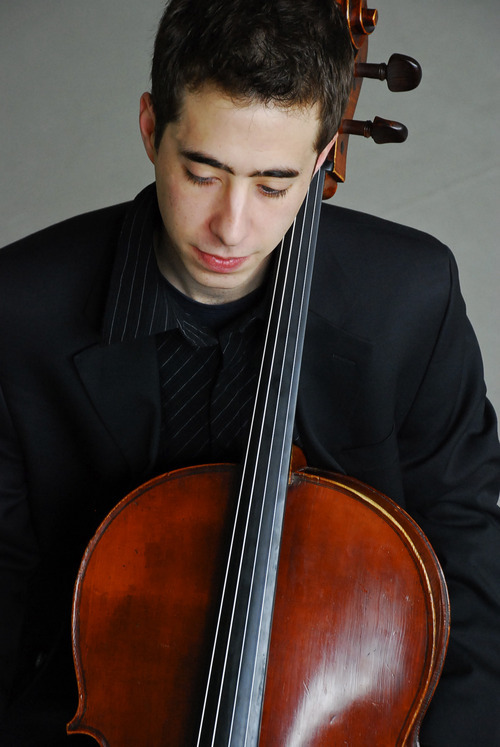
Zalkind teaches cello at the Lamont School of Music in Denver. A graduate of Juilliard and the University of Michigan, he is co-artistic director of the Denver Chamber Music Festival. He was awarded First Prize in the Washington International Competition, as well as top prizes in the Beijing International Cello Competition and Korea’s Isang Yun Gyeongnam International Competition.  

The concert will open with Montgomery’s “Starburst.” A violinist and composer, Montgomery has found her compositions for string orchestra featured in numerous performances over the past year. Written for a small ensemble, they proved ideal for streamed performances during the pandemic, and they have been popular with both players and audiences1.

“She’s a string player, and she writes for strings very well,” Moore says. “Starburst is something I’m looking forward to, something that’s got high energy [to] open the performance.” 

To balance the program by featuring the SLO’s winds as well as the strings, Moore chose Strauss’ Serenade for 13 Wind Instruments. Written when the composer was just 17, it is one of his earliest works. The score calls for four horns, reflecting the influence of the composer’s father, a noted horn player in the Munich court orchestra. The tuneful and generally lyrical single-movement Serenade also reflects the senior Strauss’ conservative musical tastes, which scarcely went beyond mid-period Beethoven.

# # # # #

Longmont Symphony, Elliot Moore, director
With Matthew Zalkind, cello

  • Jessie Montgomery: “Starburst”
  • Tchaikovsky: Variations on a Rococo Theme, Op. 33
  • Richard Strauss: Serenade for 13 Winds
  • Joseph Haydn: Symphony No. 96 (“The Miracle”)

7 p.m. Saturday, Oct. 16, and 4 p.m. Sunday, Oct. 17
Stewart Auditorium, Longmont Museum
TICKETS

Pro Musica Colorado opens 2021–22 season

Both in-person and streaming options are available for the 2021-22 season

By Peter Alexander Oct. 6 at 12 noon

The Pro Musica Colorado Chamber Orchestra returns to the stage with “Rainbow Strings! A Concert of Hope,” Thursday, Oct. 7, in Longmont and Saturday, Oct. 9, in Boulder.

For their first in-person concert post-pandemic, music director Cynthia Katsarelis and the orchestra will be joined by violinist Harumi Rhodes for the Violin Concerto in G major of Joseph Bologne, Chevalier de Saint Georges, the 18th-century mixed-race French-Caribbean violinist and fencing master sometimes referred to as “the Black Mozart.” Also on the program will be Dance Card by American composer Jennifer Higdon, and the much loved Serenade for Strings by Tchaikovsky.

Cynthia Katsarelis with the Pro Music Colorado Chamber Orchestra

Thursday’s performance will be at 7:15 p.m. in Stewart Auditorium at the Longmont Museum, with tickets available from the museum. Saturday’s performance will be at 7:30 p.m. at the First United Methodist Church in downtown Boulder. Tickets for the concert are available through the Pro Musica Web page. Proof of vaccination and masks will be required for both in-person performances. Like other concerts in Boulder this fall, the program will be about an hour in length, with no intermission.

Digital access will also be available for anyone who prefers not to attend in person. Thursday’s performance in Stewart Auditorium will be recorded and streamed for digital access at 7:30 p.m. Saturday, at the time of the Boulder performance. Access to digital streams of this and other Pro Musica concerts in the coming year is available here.

Like other conductors this fall, Katsarelis thought seriously about how she wanted to begin live performances after such a long layoff. One consideration is that she wanted music that connected to Pro Musica’s mission. “We really believe in celebrating great music, and bringing forth voices that deserve to be heard,” Katsarelis says. That specifically means lifting up composers and music from under-represented groups, she says, listing BIPOC (Saint Georges), women (Higdon), and members of the LGBTQ+ community (Higdon and Tchaikovsky) for this program.

Jennifer Higdon. Photo by J.D. Scott

“Maybe you can’t hear [the color or sexual identity of the composer], but we can celebrate it,” she says. “I think that diversity, inclusion is about the tapestry of humanity. We want to experience all the parts of this tapestry and celebrate the difference, celebrate the identity, and celebrate the great music.”

Higdon’s Dance Card is particularly effective as a place to start because it is a fun and energetic piece. “It’s about the joy of being a string player,” Katsarelis says. “It has that rhythmic vitality that we associate with American music. Her music is very colorful in general, but her slow movements are impressionistic in an American way.

“It’s a fun piece to play. It’s a difficult piece, it’s a very tricky piece, but I think our players will sink their teeth deeply into it.”

Saint Georges is one of the most interesting composers of the 18th century. He was born in the French colony of Guadeloupe, the child of a wealthy planter and a slave. He was educated in France, becoming both a virtuoso violinist and an accomplished swordsman. He played in and conducted an orchestra in Paris that commissioned and premiered the six “Paris” Symphonies of Joseph Haydn. After the revolution he fought for the French Republic as a colonel in the first all-Black regiment in Europe.

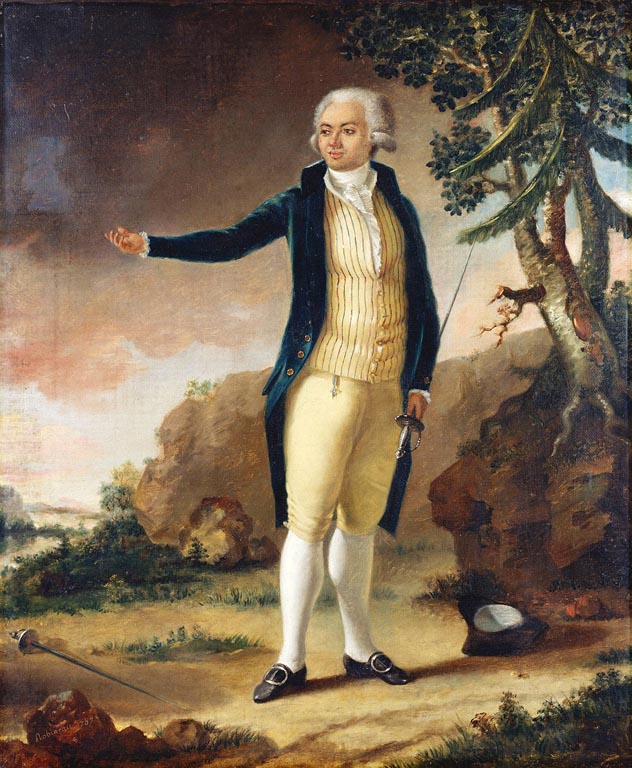
Chevalier de Saint Georges. Painting by Auguste Robineau.

Katsarelis and Rhodes had first planned to perform the concerto more than a year ago, but that performance was postponed due to COVID. “We didn’t want to cancel it, we really loved the piece,” Katsarelis says. “It’s got a lot of that style that you kind of expect around Mozart. It’s definitely that classical style, with a sort of French twist. And the virtuosity of string writing! I mean, it goes way up into the stratosphere. You can tell he was quite the virtuoso.

“When I hear his music, you can really see the Chevalier de Saint Georges with his sword. There’s a whole series of gestures that come with that. I can not hear that he’s black, but I believe that I can hear that he’s a champion fencer.”

The final work on the program was also chosen for this particular time, because it is a well loved and comforting piece for many listeners. The Serenade for strings is “a really heartfelt piece, one of Tchaikovsky’s favorites himself,” Katsarelis says. “He wrote it in the style of Mozart in terms of the form, but the emotional content is his. And the deeper I look into it [I find] how he goes from one place to another is not only genius and not only beautiful, but he’s found the way to be beautiful and at the same time his harmonies pull at the heart strings. 

“We call the concert ’Rainbow Strings,’ but it really could be ‘Heart Strings.’ The emotional content is really rich, deeply heartfelt, and I think very authentic. I thought it would be a great piece to hear, to experience, and for the players to play after the last year and a half of loss. 

“I think it’s going to be cathartic for us all.”

# # # # #

“Rainbow Strings! A Concert of Hope”
Pro Musica Colorado Chamber Orchestra
Cynthia Katsarelis, Music Director and Conductor
Harumi Rhodes, violin 

  • Jennifer Higdon: Dance Card
  • Joseph Bologne, Chevalier de Saint Georges: Violin Concerto in G Major
    Harumi Rhodes, violin
  • Tchaikovsky: Serenade for Strings 

7:15 p.m. Thursday, Oct. 7
Stewart Auditorium at the Longmont Museum
(Tickets available from the Longmont Museum)

7:30 p.m. Saturday, Oct. 9
First United Methodist Church, Boulder
In person and digital access tickets

Longmont Symphony returns to live in-person performances Saturday

Program of music by Brahms, Mozart and Schumann launches 2021–22 season

By Peter Alexander Sept. 30 at 9:45 p.m.

The Longmont Symphony Orchestra (LSO) will return to the Vance Brand Auditorium stage for its first live, in-person performance in 20 months at 7:30 p.m. Saturday (Oct. 2). The program will feature music by three of the most loved classical composers: Brahms, Mozart and Schumann.

Elliot Moore and the Longmont Symphony onstage at Vance Brand Auditorium

“This is an exceptional opportunity for the musicians of the Longmont Symphony to come together again,” LSO music director Elliot Moore says. “It’s an amazing thing we are able to gather and have a live audience. And it’s another amazing thing that we’re able to have a venue to rehearse in, and to perform in. 

“When you combine all of these elements, I think it’s really going to be a celebration that we are able to continue lifting people up through music.”

Securing Vance Brand Auditorium for the series of rehearsals and full orchestra concerts this year was complicated by several factors. For one, there were shifting COVID protocols that the St. Vrain Valley School District, who control the use of the facility, had to consider. Then there was new staff for both the school district and the LSO working together for the first time to make the schedule work. “I’d like to take my hat off to our new executive director, Catherine Beeson, for the exceptional work she did,” Moore says.

In addition to Saturday’s concert, the LSO will present a second Masterworks Concert during the fall, at 7:30 p.m. on Saturday, Nov. 13, also in Vance Brand Auditorium. In between, there will be a concert for smaller orchestra in Stewart Auditorium at the Longmont Museum Saturday and Sunday, Oct. 16 and 17. The fall portion of the season will conclude with “A Baroque Christmas” Sunday, Dec. 19 (see full schedule and programs below).

LSO music director Elliot Moore

Moore wanted to select just the right piece to open the first concert after the pandemic. When he selected Brahms’s Academic Festival Overture he had two thoughts, one whimsical and one serious. “I did happen to think the Academic Festival Overture is really about drinking songs,” he admits, then adds more seriously that “it uses the largest orchestra that Brahms ever used. It gives us the most possibility to use all of our musicians, so that everybody plays together. This (program) is about being together and offering something to our community that is uplifting, engaging, fun, and creates a common experience.”

The overture, written for a German university that gave Brahms an honorary degree, uses a variety of spirited student songs of the time, ending with one that is treated in appropriately academic counterpoint. Whether or not one recognizes the songs, the mood is clearly one of good cheer.

Mozart began his career in Vienna as a piano virtuoso. Consequently, his piano concertos were mostly written for the composer himself to play. A few however were written with an eye to possible sales to the public as well, particularly three that were written in 1782, soon after Mozart had moved to the imperial capital. The Concertos K413, 414 and 415 were written so that they could be performed either with full orchestra or, in private homes with only a string quartet accompaniment. 

In a famous letter to his father, Mozart wrote that the concertos “are a happy medium between too heavy and too light. They are very brilliant, pleasing to the ear, and natural, without being insipid. There are parts here and there from which connoisseurs alone can derive satisfaction, but these passages are written in such a way that the less learned cannot fail to be pleased, albeit without knowing why.”

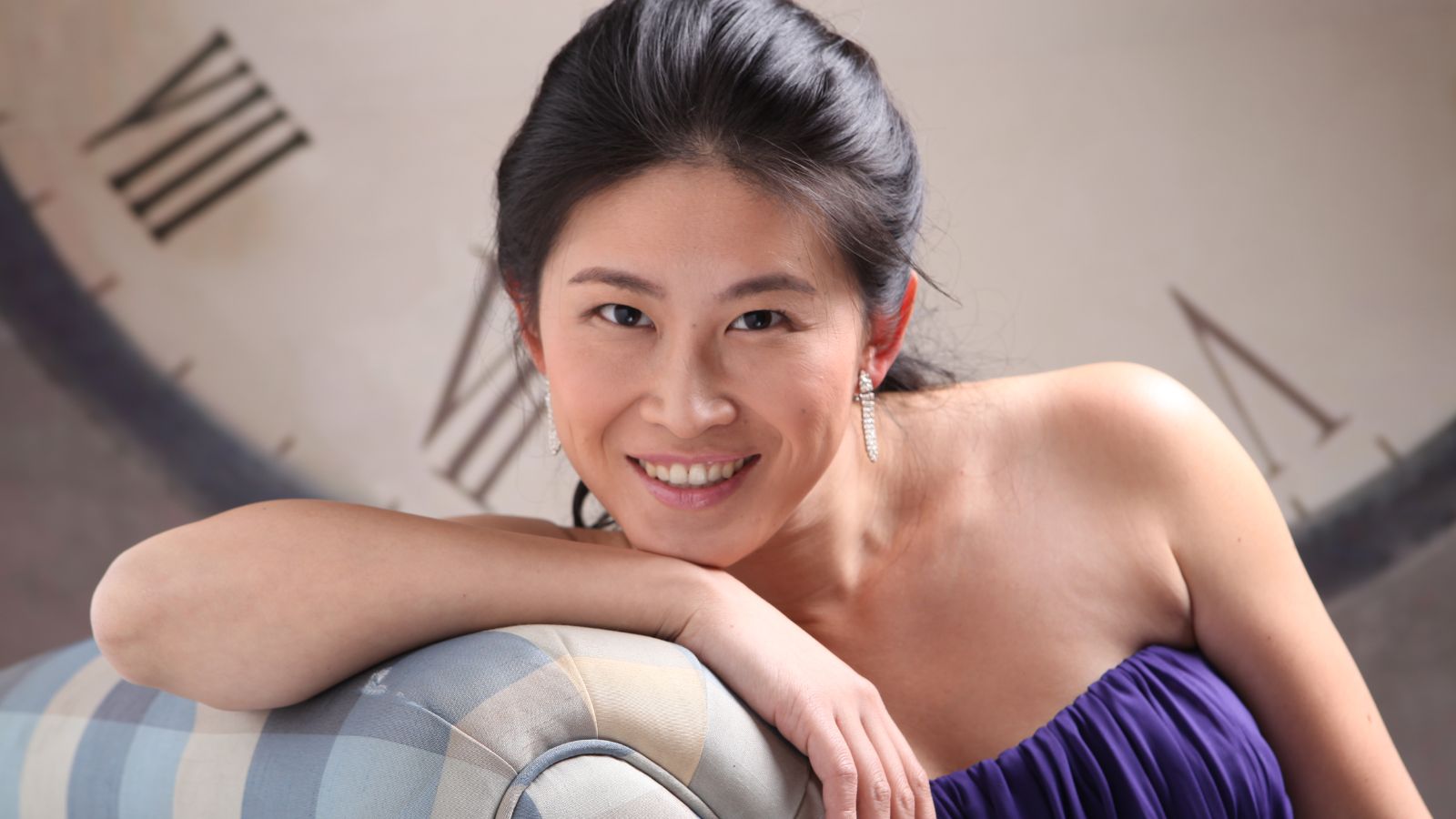
Pianist Hsing-ay Hsu

Soloist for the Mozart concerto will be pianist Hsing-ay Hsu, a Steinway Artist and winner of the William Kapell International Piano Competition, among other awards. A former member of the CU College of Music faculty, Hsu was also director of the Pendulum New Music Series at the college.

The concluding piece on Saturday’s concert will be Schumann’s Symphony No. 4 in D minor. First completed in 1841, it was revised by the composer ten years later. That later version was published and is the form in which the symphony is usually performed today. However, that version has been criticized as too heavily orchestrated, even though it was preferred by Schumann’s widow Clara. Because Schumann was first of all pianist and not an orchestral player, conductors and others have often revised the scoring of his symphonies, aiming to make them lighter.

Moore admits that he too will make some slight changes. “I do alter a couple of things,” he says. “I change a couple of dynamics. I do it in the spirit of hopefully clarifying the musical discourse, not to put my own stamp on it.”

Moore also notes that while it numbered fourth among Schumann’s symphonies, based on the revised version, it was originally the second to be written. “His first symphony is glorious, (but) this one has darker overtones,” he says. “At the same time, to me, it still ends in joy and exuberance.

“Right now, I’m OK with a symphony that has some darkness in it and takes us into the light.”

# # # # #

Longmont Symphony Orchestra
Elliot Moore, music director
2021 fall season of concerts

7:30 p.m. Saturday, Oct. 2
Vance Brand Auditorium

Hsing-ay Hsu, piano

  • Brahms: Academic Festival Overture
  • Mozart: Piano Concerto in A major, K414
  • Schumann: Symphony No. 4

7 p.m. Saturday, Oct. 16, and 4 p.m. Sunday, Oct. 17
Stewart Auditorium, Longmont Museum

Matthew Zalkind, cello

  • Jessie Montgomery: Starburst
  • Tchaikovsky: Variations on a Rococo Theme, Op. 33
  • Richard Strauss: Serenade for 13 Winds
  • Joseph Haydn: Symphony No. 96 “The Miracle”

7:30 Saturday, Nov. 13
Vance Brand Auditorium

Leberta Lorál, mezzo-soprano

  • Samuel Barber: Knoxville: Summer of 1915
  • Dvořák: Symphony No. 9, “From the New World”

Candlelight: A Baroque Christmas
4 p.m. Sunday, Dec. 19
Westview Presbyterian Church, Longmont

  • Archangelo Corelli: Concerto Grosso Op. 6. No. 8. (“Christmas Concerto”)
  • Gustav Holst: “Christmas Day”
  • J.S. Bach: Brandenburg Concerto No. 3
  • Jesu, Joy of Man’s Desiring”
  • Ottorino Respighi: “Adoration of the Magi” from Trittico Botticelliano (Three Botticelli pictures)

Season and individual LSO concert tickets are available through the LSO webpage

Boulder Phil “together again” for two short concerts in October

Performances at Mountain View Methodist will be played without intermission

By Peter Alexander Sept. 29 at 3:40 p.m.

The Boulder Philharmonic Orchestra will be “together again,” as their first in-person concert since the pandemic is titled.

Two concerts for a reduced orchestra have been scheduled for October, both in the intimate Mountain View United Methodist Church in Boulder. Concerts in Macky Auditorium are scheduled to resume in 2022.

The Boulder Phil’s last pubic performances were recorded for online streaming during 2020-21.

The two October concerts will be “Together Again” at 4 p.m Sunday, Oct. 3, featuring music by Haydn and the Swiss composer Frank Martin; and “The Art of Jazz” at 4 p.m. Sunday, Oct. 30, featuring music of Shostakovich, Darius Milhaud and Kurt Weill. (Full programs are listed below.) Tickets for both concerts may be purchased at the Boulder Phil Webpage.

For safety reasons, both programs will be approximately one hour in length and will be played without intermission. In keeping with current COVID protocols in Boulder County, everyone attending these performances must be fully vaccinated, and must wear masks at all times. Consequently, children under the age of 12 cannot be admitted. 

The Boulder Philharmonic’s COVID-19 Health & Safety protocols are listed here

The first October concert, “Together Again,” features intriguing but little known works for small orchestra. Haydn’s Symphony No. 1 in D major was written in 1759 for Karl Joseph Count Morzin, a member of the Austrian nobility, before Haydn went to work for his better known employer Count Esterhazy. The symphony has three movements and lasts only about 12 minutes, making it a miniature precursor of the larger form that Haydn subsequently established over this career. 

The other two pieces on the program are sinfonias concertante, works similar to concertos with multiple soloists. The Sinfonia Concertante by Haydn, composed in London in 1792, features two soprano-bass instrument pairs: violin and cello, oboe and bassoon. Written on short notice near the end of Haydn’s first visit to London, the score treats the soloists as chamber musicians more than virtuoso soloists, and was a hit with English audiences. 

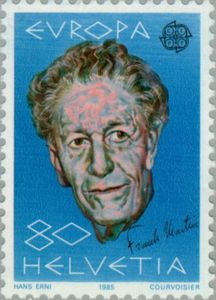
Composer Frank Martin, featured on a Swiss postage stamp

The second such work on the program is Martin’s Petite symphonie concertante (little sinfonia concertante). Composed at the end of World War II, it is scored for double string orchestra and a solo group that loosely corresponds to the Baroque continuo: harpsichord, piano and harp. This unusual combination creates a unique sound world that Boulder Phil music director Michael Butterman describes as “Bach and Stravinsky meet the Addams Family.”

The second concert in October, “The Art of Jazz,” shifts gears fully into the 20th century for three pieces by European composers that reflect, in different ways, the world-wide influence of American jazz. The least serious jazz influence is heard in the Jazz Suite No. 1 by Shostakovich, written in 1934 for a Leningrad dance band. The light and tuneful score, with a waltz, a polka and a foxtrot, is as much central European as jazzy, likely because at the time genuine jazz was either unknown or forbidden in the Soviet Union. 

However, French composer Darius Milhaud was certainly exposed to authentic jazz, during a 1922 trip to the United States that took him into Harlem nightclubs. A year later he wrote a ballet for the modernist Swedish dance company Ballets Suédois titled La Création du monde (The creation of the world) in which he refracted the jazz he had heard in Harlem through his own very French sensibility to create a work that is sui generis

Milhaud was especially impressed with the jazz drummers he heard, playing what he called “a complicated percussion section played by just one man.” He includes a full drum set in the score of Création du monde, as well as a saxophone that takes the place of viola in a string quartet and at times emerges as a soloist. Other echoes of Harlem can be heard in the brass-heavy scoring and the writing for clarinet, string bass and trombone.

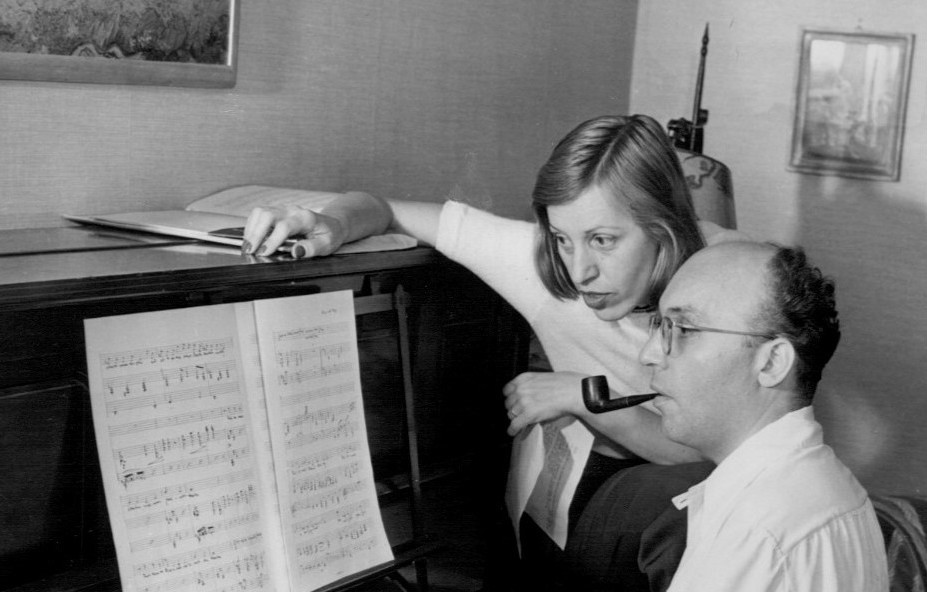
Kurt Weill and Lotte Lenya in New York in 1942

The final piece on the program refracts American jazz through the decadent cabaret scene in Berlin during the 1920s. Kurt Weill’s Dreigroschenoper (Threepenny Opera), a free translation into German by Marxist playwright Bertolt Brecht of the 18th-century Beggar’s Opera, was premiered in 1928. By the time it was banned by the Nazis in 1933, it had been translated in 18 languages and had been performed at least 10,000 times in Europe.

Weill’s music for the Dreigroschenoper was written for a small pit band of doubling players, much like modern Broadway shows. Weill easily made a transition to Broadway when the rise of the Nazis forced him to leave Germany. Among his subsequent American theatrical hits was the posthumous 1956 off-Broadway production of The Threepenny Opera, which earned a Tony Award for the singer Lotte Lenya. Songs from that version, including “Mack the Knife” and “Pirate Jenny,”  became well known in the United States through numerous pop covers.

The orchestral suite from the original show, Little Threepenny Music, was compiled in 1929, capturing the acerbic sound of Weill’s music without the bitter cynicism of Brecht’s lyrics.

# # # # #

Boulder Philharmonic Orchestra
Michael Butterman, music director

Together again
4 p.m. Sunday, Oct. 3
Featuring soloists from the orchestra

  • HAYDN  Symphony No. 1 in D Major
  • HAYDN  Sinfonia concertante in B-flat Major
  • MARTIN  Petite symphonie concertante, Op. 54

The Art of Jazz
4 p.m. Saturday, Oct. 30

  • SHOSTAKOVICH  Jazz Suite No. 1
  • MILHAUD  The Creation of the World, Op. 81a
  • WEILL  Little Threepenny Music

Bother performances at Mountain View United Methodist Church
355 Ponca Place, Boulder

TICKETS

NOTE: The second concert listing was corrected 10/28. Oct. 30 is Saturday, not Sunday.

Takács Quartet opens 2021–22 campus concert series Sunday

Performances will be available for in-person attendance and streaming

By Peter Alexander Sept. 10 at 4:30 p.m.

The CU College of Music and the resident Takács Quartet go into the 2021–22 academic year with a full schedule of on-campus concerts.

Naturally, this marks a change from last year, when COVID-19 and construction in the Imig Music Building prevented the usual activities in the college from taking place in person. What effect the emergence of the Delta Variant of COVID-19 will have remains unknown, but for now the live series gets under way at 4 p.m. Sunday (Sept. 12) in Grusin Music Hall with a full concert program. The Takács series also includes guest performances by the Parker Quartet from Harvard University.

Takács Quartet— Amanda Tipton, Photographer

At this time, masks are required in public indoor spaces on the CU Boulder campus regardless of vaccination status. Furthermore, an order from Boulder County Public Health also mandates masks indoors in public spaces throughout Boulder County. This order applies, regardless of vaccination status, to all persons age two and up. Dates in the future remain subject to any changes in university policy. 

As in past years, all Sunday Takács programs are scheduled to be repeated on Monday evenings. Each concert will also be available through a ticketed live stream Sunday afternoon that will remain available up to one week after the Monday performances. Details and tickets to live performances and the streams are available through CU Presents.

In addition to familiar works from the standard repertoire—quartets by Haydn, Mozart and Schubert—the Takács Quartet will play two important works by Czech composers that are heard less often. These are the String Quartet No. 2 by Leoš Janáček, titled “Intimate Letters” by the composer (Sept. 12 & 13); and the String Quartet No. 1 by Smetana, titled ”From My Life” (Oct. 31 & Nov. 1).

Written in 1928, Janáček’s Quartet No. 2 was inspired by the composer’s unrequited love for a married woman nearly 40 years his junior. The title refers to the more than 700 letters between Janáček and the woman, Kamila Stösslová, who remained emotionally distant but was with the composer when he died. Janáček wrote to Stösslová, “You stand behind every note” of the quartet.

One of his last works, the quartet was premiered a month after Janáček’s death.

Smetana’s quartet was also written relatively late in the composer’s life and is also autobiographical. The name “From My Life” was provided by the composer, making the quartet, and along with Janáček’s Quartet No. 2, one of the few deliberately programmatic chamber works. 

The first three movements refer to different stages in Smetana’s life—his youthful romanticism, his love for dancing as a young man, and his love for his wife. The final movement dramatizes the persistent ringing that developed in the composer’s ears in his later years, represented by a sustained high E, and his subsequent loss of hearing.

The quartet was composed in 1876 and given its official public premiere in 1879. For an earlier private performance the viola part, which has a prominent solo at the beginning of the first movement, had been played by the young Dvořák.

Another lesser known work will be performed during the fall, Henri Dutilleux’s Aini la nuit (“Thus the night”) Oct. 31 and Nov. 1. Composed over period of years 1973–76, Dutilleux’s quartet was inspired in part by the quartets of Beethoven, Bartók and the 12-tone works of Anton Webern.

A meticulous composer who has a relatively small output, Dutilleux was not a strict adherent of serialism, although he does make use of pitch series. The quartet, aimed at evoking a sense of the night, is in seven strongly contrasting movements with four very short interludes he called “parentheses” serving as transitions between movements.

Though performed relatively infrequently, Ainsi la nuit is regarded as one of the most important works for string quartet from the late 20th century.

Parker Quartet. Photo by Luke Ratray.

The Parker Quartet, whose members are Blodget Artsists-in-Residence at Harvard University’s College of Music, will complete the fall series with guest performances Nov. 21–22. Their program has not yet been announced.

# # # # #

Takács Quartet
Fall 2021 concert series

Takács Quartet

  • Haydn: String Quartet in F minor, Op. 20 No. 5 
  • Leoš Janáček: String Quartet No. 2, “Intimate Letters” 
  • Schubert: String Quartet No. 14 in D minor, “Death and the Maiden”

4 p.m. Sunday, Sept. 12; 7:30 p.m. Monday, Sept. 13
Grusin Music Hall 

Takács Quartet

  • Mozart: String Quartet in D minor, K421
  • Henri Dutilleux: Ainsi la Nuit
  • Smetana: String Quartet No. 1 “From My Life”

4 p.m. Sunday, Oct. 31; 7:30 p.m. Monday, Nov. 1
Grusin Music Hall 

Parker Quartet

  • Program TBA

4 p.m. Sunday, Nov. 21; 7:30 p.m. Monday, Nov. 22
Grusin Music Hall 

In addition to live performances, each concert will be streamed live on  Sundays, and each stream will remain available until one week following the Monday performances. Details and tickets to both live performances and the streams are available through CU Presents.