Meeting held Tuesday morning, June 18; name removed from Web page
By Peter Alexander July 18 at 5:55 p.m.
The Central City Opera Company (CCO) called all members of the company, administrative staff and festival personnel, to meetings held simultaneously at the Teller House in Central City and the company’s office in Wheat Ridge at 9:30 a.m. this morning (July 18).
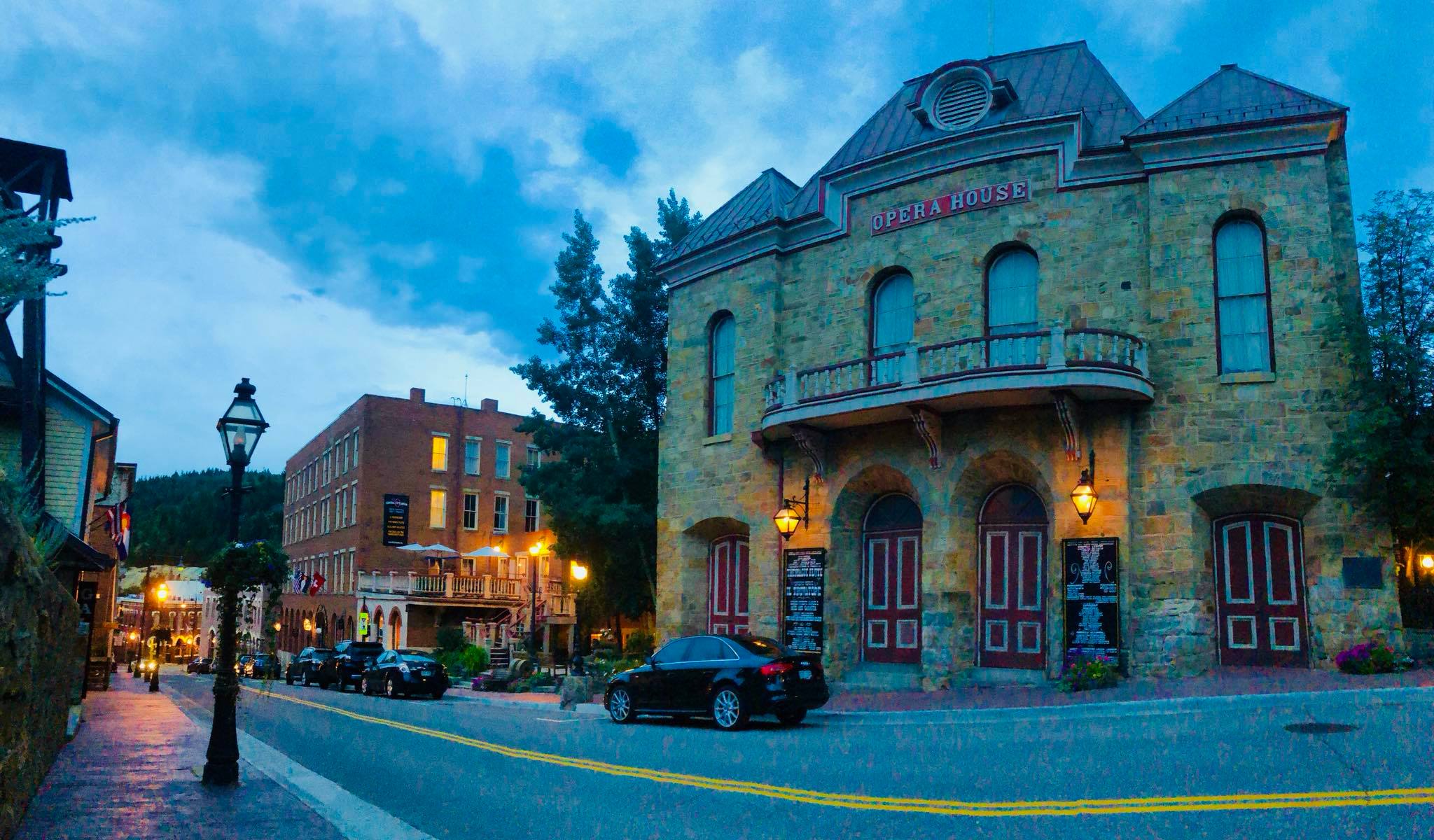
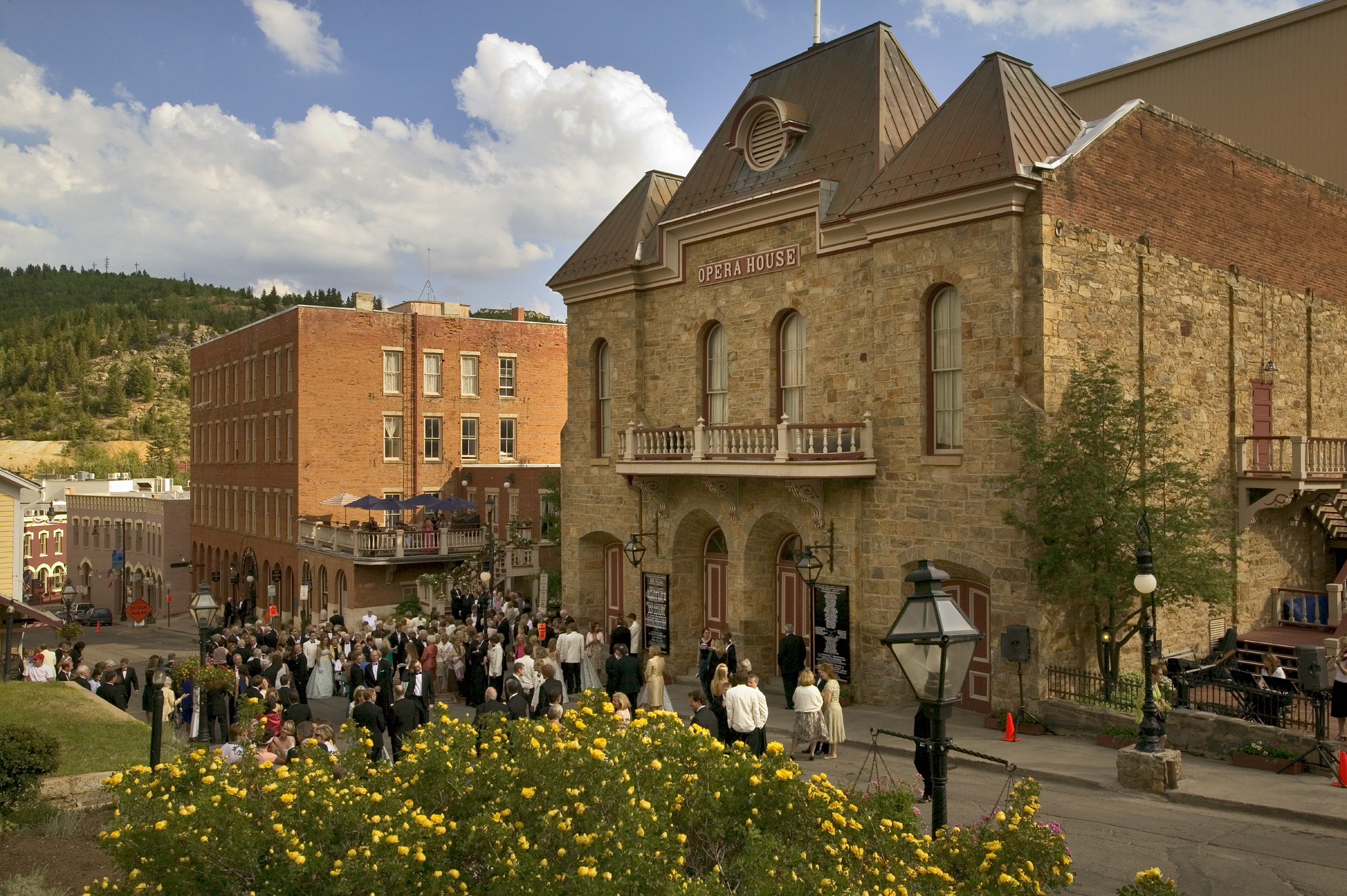
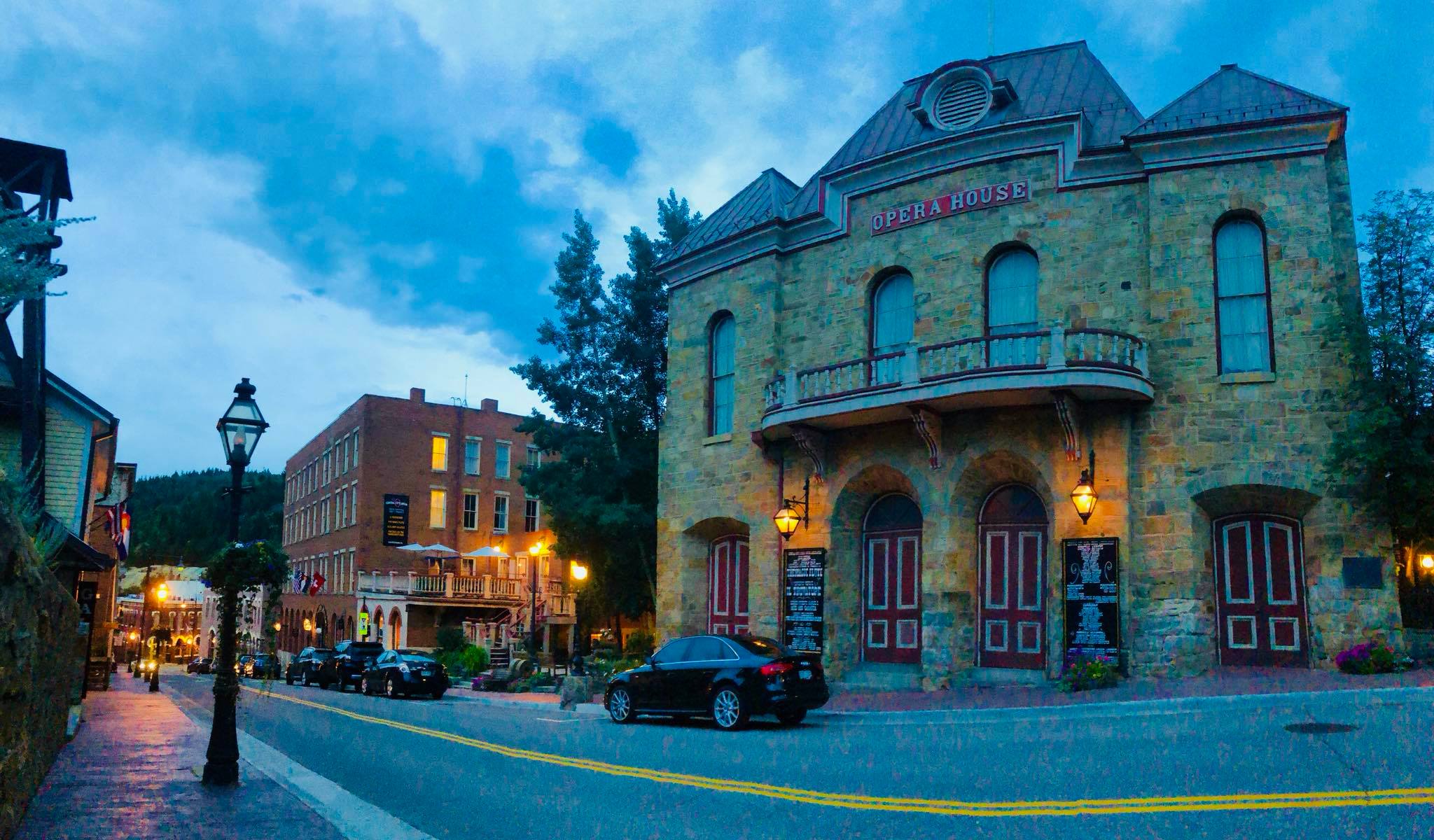
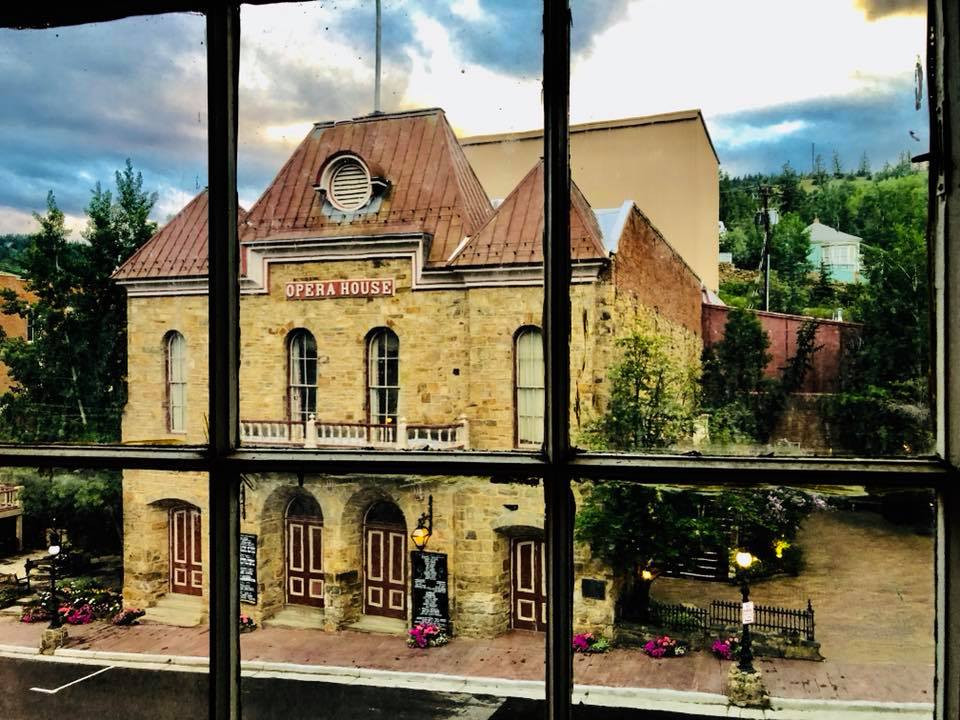
Central City Opera House. Photo by Ashraf Sewailam
According to the internal message that was passed to Sharpsandflatirons anonymously, board co-chairs Roopesh Aggarwal and Heather Miller had the following update for all CCO personnel: “Effective immediately, Pamela Pantos’ employment with the Opera has ended and we thank her for her work. We wish her the best in her future endeavors and will begin a search immediately for a new President and CEO.“
The announcement comes in the middle of the company’s summer season of three operas in the Central City Opera House. The three productions—Cole Porter’s Kiss Me, Kate, Charles Gounod’s Roméo et Juliette and Rossini’s Otello—will continue in rotating repertory through the originally announced final date, Sunday, Aug. 6.
The board’s announcement indicates that members of the administrative staff will take on additional duties. Scott Finlay will be Chief External Affairs Officer and Margaret Williams will be Interim Operations Officer. Both will report directly to the board of directors.
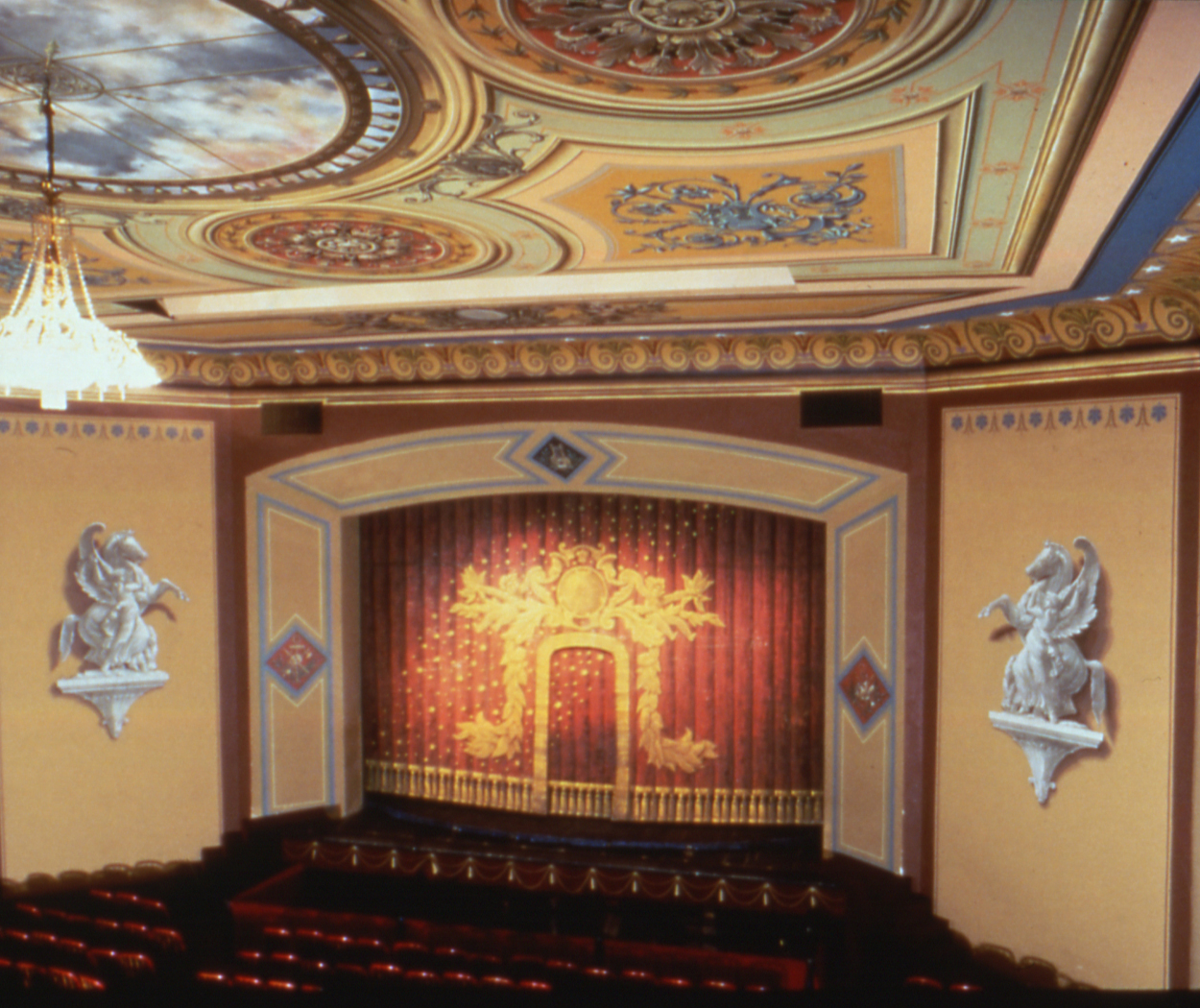
Opera House interior
Pantos’ name has been removed from the “Who Are We” listing on Central City Opera’s Web page, and the updated assignments have been posted.
Although no one said so on the record, it was widely believed that the previously reported dispute between the opera company and the American Guild of Performing Artists (AGMA) was a result of Pantos’ administrative style and reflected her wishes. Central City Opera and AGMA subsequently signed a contract that resolved the dispute.
Tickets for remaining performances this summer may be purchased here. Three productions have been announced for summer 2024—Gilbert & Sullivan’s Pirates of Penzance, Puccini’s La fanciula del West and Kurt Weill’s Street Scene. Menotti’s Amahl and the Night Visitors will be presented in Denver Dec. 23 and 24.
NOTE: The original version of this story said that upcoming seasons had not yet been announced for Central City Opera. In fact, the listing in the final paragraph above is correct.
All comments on this article must be approved before they will be posted. Personal attacks and name calling against anyone currently or formerly employed at Central City Opera will not be allowed. There are varying opinions on what has unfolded at CCO, but in this context personal attacks serve no purpose.
Michael Christie is looking forward to being back at Chautauqua this week.
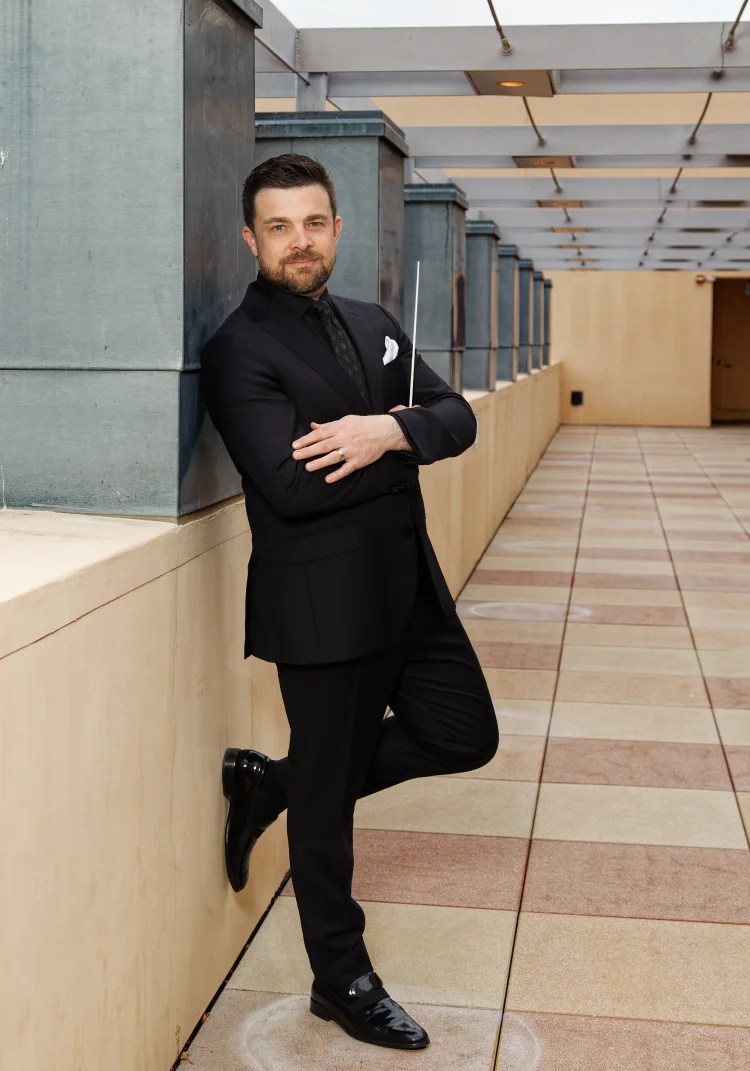
Michael Christie
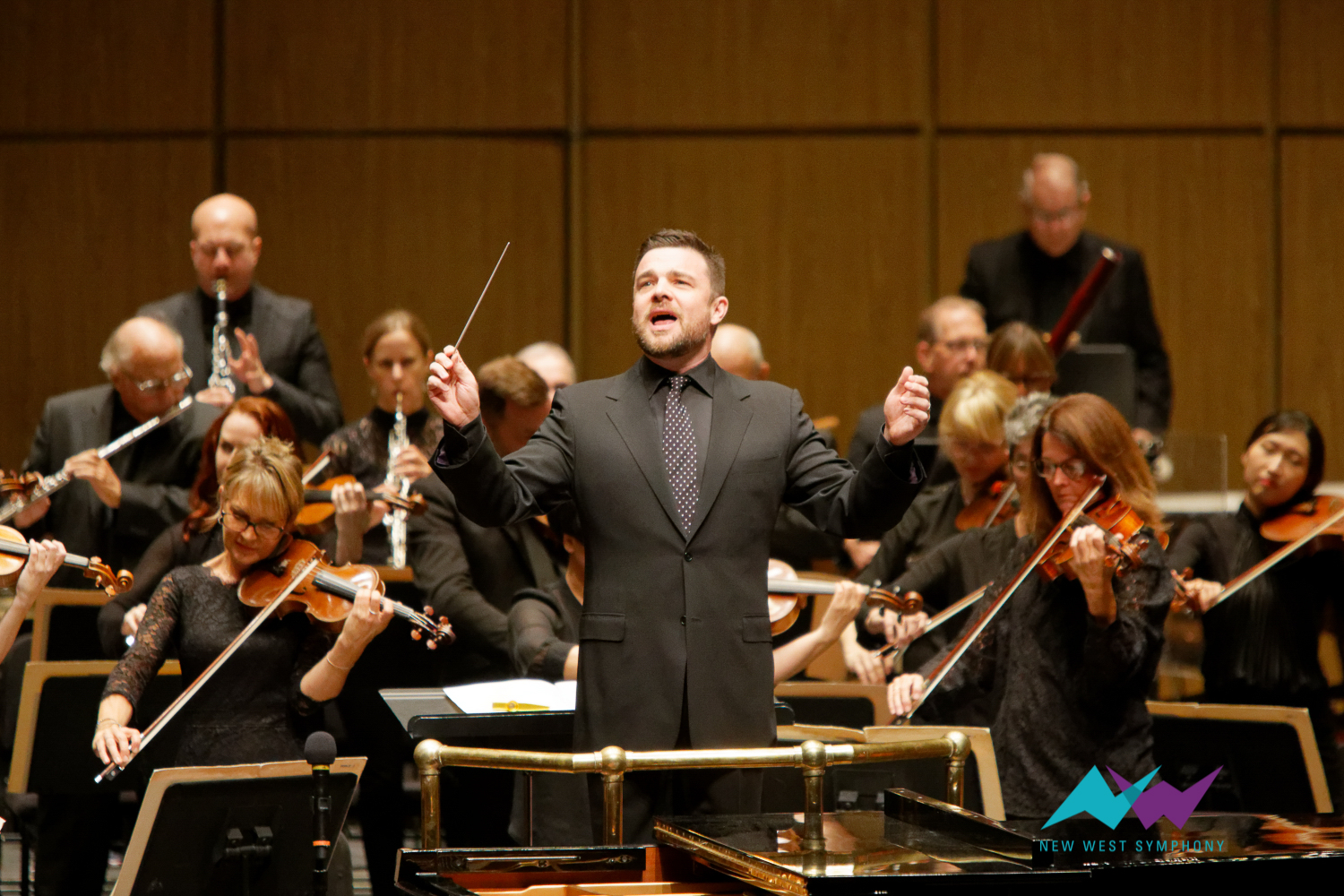
Christie, who was music director of the Colorado Music Festival (CMF) 2000–13, will lead the Festival Orchestra in a pair of concerts Thursday and Friday (7:30 and 6:30 p.m. respectively in the Chautauqua Auditorium; see program below). Since leaving CMF at the end of the 2013 festival, Christie spent eight years at the Minnesota Opera, conducted at the Santa Fe Opera, and is now music director of the New West Symphony in Los Angeles.
Among other world premieres, he has conducted Manchurian Candidate by Kevin Puts and Mark Campbell, and The Shining by Paul Moravec and Campbell at Minnesota Opera; The Gospel of Mary Magdalene by Mark Adamo at San Francisco Opera; and The ( R)evolution of Steve Jobs by Mason Bates and Campbell at the Santa Fe Opera.
Now designated CMF Music Director Laureate, Christie returned as guest conductor once before, in the summer of 2016. “It was really wonderful to see all those faces again and inhabit that space,” he says. The Chautauqua Auditorium “is so unique and full of so many memories and such a great place to have a musical experience.
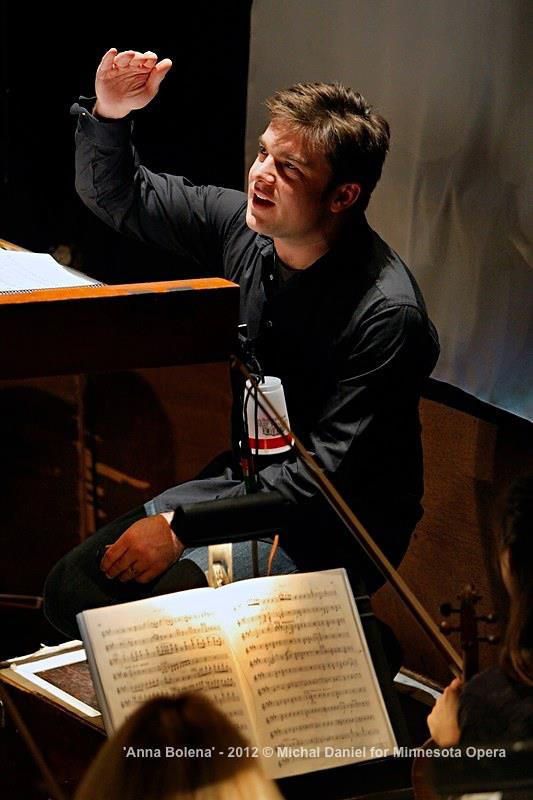
Michael Christie at the Minnesota Opera. Photo by Michael Daniel
“(The hall) is one of the truly great aspects of the CMF—the enduring part that transcends all of us, audience members or performers. There’s still that auditorium—it’s just always there.”
One of his most recent appearances around the world was as a conductor for the 2023 “Singer of the World” contest in Cardiff, Wales. A biennial contest for classical singers that was established in 1983, the Singer of the World has launched many great careers including those of Finnish soprano Karita Mattila, Welsh baritone Bryn Terfel and Russian baritone Dmitri Hvorostovsky.
You may see Christie conducting the final concert with this year’s prize winner on the OperaVision Website.
The diversity of his career post-CMF, including both opera and symphonic performances, is not an accident. “I have been working very hard to escape the pigeon holing that can happen to people,” Christie says. “I love both opera and symphonic music, and they speak to each other so clearly.
“I feel strongly that to conduct a symphonic work when a composer has also composed a lot of ballet or a lot of opera, and not to have done those pieces, you’re missing a huge part of the story. There is a different kind of emotion that composers are able to express with the voice.”
The New West Symphony is a regional orchestra, equivalent in size and scheduling to the Boulder Philharmonic. It has the advantage of drawing on the pool of freelance musicians in Los Angeles, but Christie chose that job for another reason. “I thought it would be a wise choice to have an orchestra that had a lean schedule, so that I could take the longer periods for opera,” he says. “That’s worked out quite well.”
Working over a period of years with a smaller orchestra has also been an educational experience. “With smaller orchestras, the conductor really has to be way more involved,” he says. “I have learned a huge amount.
Michael Christie with the New West Symphony
“The conductor is much more hand-on about community engagement that in bigger orchestras is handled by the general manager. I found with the smaller orchestra that I’m having way more specific conversations about what (community partners’) needs are. It’s been really eye-opening and very immediately engaging every day.”
Christie has a list of favorite things about Chautauqua concerts that he’s looking forward to. “I’m looking forward to how the audience spills out of the hall afterward, and that moment where folks are sharing with each other and talking to the musicians. I’m looking forward to seeing that.
“I love the auditorium just before the concert starts. People are milling about, there’s this lovely energy that happens—a very friendly energy that happens among everybody in the hall. The musicians gathering near the green room, standing around and chatting before the concert starts—there’s always a special human easiness about things before and after those concerts.
“I always treasure those moments.”
# # # # #
COLORADO MUSIC FESTIVAL
Festival Orchestra, Music Director Emeritus Michael Christie, conductor With Michelle Cann, piano
Ravel: Piano Concerto in G Major
Florence Price: Piano Concerto in One Movement
Tchaikovsky: Symphony No. 4 in F Minor, op. 36
7:30 p.m. Thursday, July 20, and 6:30 p.m. Friday, July 21 Chautauqua Auditorium
AGMA announces the five-year agreement; summer season opens June 24
By Peter Alexander May 21 at 10:15 p.m.
The American Guild of Musical Artist (AGMA), a union representing singers, dancers and others who perform in musical productions, has announced that they have reached an agreement with Central City Opera that will allow the pending 2023 summer season to proceed.
Opening Night at Central City Opera. Featured in Central City Opera’s 75th anniversary book, Theatre of Dreams, The Glorious Central City Opera—Celebrating 75 Years.
According to AGMA’s release, dated May 18, “The American Guild of Musical Artists (AGMA) and Central City Opera (CCO) reached a new five-year collective bargaining agreement, beginning May 19, 2023, and running through September 1, 2027.” Significantly, the release also states that “AGMA was also able to insist that the agreement cover this season, rather than starting in September.”
This means that the current summer festival season, running from June 24 through Aug. 6, will proceed as scheduled. As of this date, CCO has not made an announcement concerning the agreement, nor have they responded to requests for comment. Information on the 2023 summer festival and access to single ticket sales may be found HERE; summer subscriptions are available HERE.
As reported earlier, CCO and AGMA have been in negotiations for a new contract since Nov. 1, 2022. The previous contract expired near the end of last season, in August 2022. Since then the company and union have traded accusations, but in the past week both sides agreed to meet with professional mediators from the Federal Mediation and Conciliation Service.
On May 8, CCO offered a four-year contract that did not include the current summer. The next day, May 9, AGMA’s Board of Governors authorized a possible strike that would have interrupted or canceled the summer season. On May 11, the two sides held a 14-hour negotiating session with federal mediators. A week later, May 18, AGMA announced the new five-year collective bargaining agreement (CBA).
AGMA’s announcement quotes their national executive director, Sam Wheeler: “This was a long and challenging negotiation, but, in the end, we were able to reach an agreement that protects the welfare of artists working at CCO.” You may read the full statement from AGMA HERE.
Negotiations with AGMA under mediation as season approaches
By Peter Alexander May 12 at 5:45 p.m.
Negotiations between Central City Opera (CCO) and the American Guild of Musical Artists (AGMA) that started in November of last year appear to have achieved a breakthrough.
Central City Opera House. Photo by Ashraf Sewailam.
In response to the latest 14-hour negotiating session, held Thursday (May 11) and into the morning hours today, AGMA issued a public statement: ”We are pleased to report that we are in agreement with CCO on the main issues that had served as an impediment to an agreement. AGMA and CCO are meeting with federal mediators again on Monday, May 15, and anticipate finalizing contract language for a new CBA (Collective Bargaining Agreement) at that time.”
Unlike arbitration, federal mediation is not binding. It is a way to bring a neutral third party to the table who can provide perspective and address the interests of both sides.
This latest development would seem to make moot the accusations that have been exchanged between CCO and AGMA. As such, it would seem to clear the way for the summer season to proceed as planned. Ken Cazan, a stage director with a long association with CCO who is scheduled to direct a production this summer, writes by email that “There is great hope that the season will now move forward.”
This comes only six weeks before the scheduled opening of the summer festival on June 24, and only days before rehearsals are scheduled to start on the summer productions. The opening night is slated for a performance of Gounod’s Roméo et Juliette. The summer’s other productions will open July 1 (Cole Porter’s Kiss me Kate) and July 15 (Rossini’s Otello).
There appear to have been two developments this week that precipitated the sudden breaking of the logjam that had existed between CCO and AGMA since last year. First, CCO issued a statement Monday (May 8) that they “presented a complete four-year contract today to (AGMA) for signature.”
Critically, the statement also said “Should the labor union (AGMA) choose not to sign the contract . . . the two organizations will engage in federal mediation to reach resolution before the Summer Festival.” It was at that point that the negotiations could move forward with a mediator, as they did this week.
The day after CCO’s statement, AGMA did not issue a public statement, but sent a letter to all members with the news that the Board of Governors and the membership had authorized the organization’s executive director to call a strike. As noted in the letter, this does not mean that a strike has actually been called, merely that it is a step that AGMA is prepared to take. Other steps preceding a potential strike were also taken at this time. The letter also clarified some of the issues regarding the contract proposal from CCO—issues that appear to no longer be pertinent with the latest progress in negotiations.
Dates of the planned 2023 summer season, and access to ticket purchases can be found on the Central City Opera Web page.
Summer 2023 festival season in question due to ongoing contract disputes
By Peter Alexander May 1 at 2:05 p.m.
Note: This article goes into some detail about the ongoing and contentious conflict between the Central City Opera and the American Guild of Musical Artists, which threatens the upcoming 2023 summer festival season of the opera. I believe that it is important for the true extent of the dispute to be known and understood by musicians, potential audience members, and other interested people. For full clarity, issues at stake are presented here as objectively as possible. However, it should be noted that representatives of the union and artists who have appeared at Central City Opera spoke to me freely and on the record; to date the opera company has not made anyone available for an interview. This article reflects the information I have been given.
Disclosure: Several of the artists quoted below are personal friends. While I was on a friendly footing with Pelham Pearce, artistic director of Central City Opera until last June, I do not have a personal relationship with any of the current CCO media representatives or administrative staff.
CENTRAL CITY OPERA (CCO) announced its planned 2023 summer festival season of three operas on Nov. 15, 2022. This was a return to the more ambitious summer festival that CCO had abandoned after 2012 due to declining income, and later COVID. All three operas planned for the coming season are based on Shakespeare: Gounod’s Roméo et Juliette, Rossini’s Othello and Cole Porter’s classic musical Kiss Me Kate.
Now the entire season may be in jeopardy due to a contract dispute between the opera company and the American Guild of Musical Artists (AGMA), representing both leading singers and the apprentice artists at CCO.
Central City Opera House. Photo by Ashraf Sewailam.
No one is saying that the season is likely to be canceled, but it’s hard to find optimism among the artists and the leadership at AGMA, who admit to being prepared for a possible work stoppage. I am still awaiting comments from CCO management, but with rehearsals slated to start late this month, the timeline is short.
In the words of AMGA’s national executive director Sam Wheeler, from a video message released April 18, “If we’re going to reach a deal, the clock is ticking.” And he stated in an interview the same day, “at the moment we’re nowhere near an agreement.”
The previous contract between AGMA and CCO expired in August, 2022, toward the end of the summer festival season. Prior to that, the CCO Board of Directors had hired Pamela Pantos as president and chief executive officer of the company. At that time, longtime director of the company Pelham Pearce remained as artistic director.
Just before the 2022 season opened, Pearce suddenly resigned via a statement on his personal Facebook page that said only “I have resigned as Artistic Director of the Central City Opera.” Pearce has made no further comment, and there has been no clarification from any source of his reasons for leaving the company where he had worked since 1996. Whatever his reasons, there had been a complete change of management before the AGMA contract expired in August.
# # # # #
HERE IS HOW the dispute between CCO and AGMA has played out since then: The two parties began negotiations for a new contract Nov. 1, 2022. On Dec. 6, AGMA published on their Web page a letter that they had sent to the CCO Board of Directors. It claimed that “prior to contract expiration, CCO management committed several violations of the CBA (Collective Bargaining Agreement) that resulted in the company not paying more than $12,000 to Apprentice Artists.”
The letter also claimed that “several artists have come forward detailing disturbing conduct ranging from public body shaming to sexual harassment, to overt threats of retaliation for union activity.” The letter further noted that CCO had retained Littler Mendelson P.C., which was described as “a notorious union-busting law firm.” Finally, the letter listed several proposals from CCO that were described as “unprecedented and draconian.” (You may read the entire letter here.)
Central City Opera responded on Dec. 14 by releasing “Facts About Our Ongoing Collective Bargaining Negotiations,” in which they expressed their disappointment at “unfounded assertions being made by some AGMA leaders and members.” None of the specific points raised by AGMA were directly answered, except to state that CCO has “policies and reporting procedures to protect everyone on staff from harassment and discrimination.” (This notice may be read here.)
The next day—Dec. 15, 2022—AGMA released a brief statement of their own. “Central City Opera’s latest statement is nothing more than a transparent attempt to distract from their own misconduct,” it stated (posted on the Web here).
Ken Cazan, a stage director with longtime association with CCO, had been engaged to direct the summer 2023 production of Kiss Me Kate. Near the end of the year Cazan wrote a letter to Pantos as executive director of CCO in which he stated his unwillingness to work on the summer productions until the issues had been resolved.
At his invitation, the summer’s other two directors, Dan Wallace Miller (Roméo) and Ashraf Sewailam (Othello) also signed the letter, which was posted publicly Dec. 20. This is meaningful because the three directors have very different stakes in the coming season. While Cazan is a senior stage director with a safe faculty position at the University of Southern California Thornton School of Music, Miller works for a small opera company and Othello is Sewailam’s first contract as stage director. (Read their letter here.)
After more negotiations, the next public exchange between the parties was in April. On April 14, while negotiations were ongoing, CCO issued a new 14-paragraph statement headed “Update on the Ongoing Negotiations with AGMA.” The document contests several previous statements from AGMA.
Two issues in particular have been vigorously contested. First, the statement reads, “AGMA claims publicly that CCO owes money to artists using the phrase ‘Pay Your Artists.’ There are no legal or contractual grounds for these claims regarding payments owed; CCO honors its contracts and pays its artists.”
Second, the company raises what appears to be a new issue, claiming that “AGMA has requested that all CCO artists become AGMA members and pay AGMA’s initiation fee and dues, effectively denying CCO artists the right to choose whether or not to join AGMA.”
Finally, the “Update” includes a series of statements preceded by the heading “FACT”. These essentially are statements of CCO’s position on the disputed issues with AGMA, which AGMA contends are not facts. Since no supporting document are included, it is difficult to verify the factual nature of the statements. (The full “Update” is online here.)
The following Tuesday, April 18, AGMA placed a video online responding to CCO’s “Update.” The “Video Message Regarding the Ongoing Labor Dispute with Central City Opera” was recorded by Wheeler, speaking from notes but without a visible script. This is the most detailed statement released by either side, and therefore some portions need to be quoted directly. In his opening, Wheeler says bluntly, “There is a lot in (CCO’s “Update”) that is either false, misleading, or completely out of context.”
He quotes written statements from several of AGMA’s negotiators calling into question CCO’s sincerity. For example, one negotiator reported “they have been confrontational . . . and purposely wasted our time repeatedly over the last six months.” Another statement reads, “Central City’s negotiating team repeatedly speaks to our staff in a haranguing and dismissive manner, and it is clear that their lawyers have little knowledge of how the opera industry actually works.”
Wheeler talks at some length about the $12,000 AGMA claims is owed to apprentice artists. He covers one of the specific sources of the $12,000, fees to apprentice artists for performances “outside of the regular opera season.” He reads directly from the contract in support of AGMA’s position, adding that “Central City said in their statement last week that there is ‘no basis’ in the contract that they owe any money to anybody.” Outside of the specific language in the contract quoted by AGMA, I have seen no specific documentation supporting either side’s position.
The “Video Message” continues with more details about the issues of union membership and fees, among other contractual specifics. It also refers to one of the basics of most performing artists’ union contracts, what is known as “pay or play.” This is the proposition that once an artist has been given a contract, if their appearance were cancelled capriciously the payment must still be made.
Wheeler says “Central City is trying to destroy pay-or-play. What does that mean practically? It means that if Central City were to get rid of an artist for a bad reason or a discriminatory reason and not pay out their contract, AGMA would not be able to do anything about it.” (You may watch Wheeler’s entire “Video Message” here.)
# # # # #
I HAVE SPOKEN directly with people from AGMA, artists who have appeared at Central City Opera, and attorneys with knowledge of labor law. Based on those conversations I will attempt to clarify some of the disputed topics.
First, it should be noted that there are two issues still in disputefrom AGMA’s previous contract with CCO. One is the $12,000 that AGMA says is owed to apprentice artists. AGMA’s justification is laid out in Wheeler’s “Video Message.” Wheeler also notes that five arbitrations of those payments are pending through the not-for-profit American Arbitration Association. In the meantime, Wheeler says “we’re going to keep pursuing these grievances under the contract to make sure that the artists who were there last summer get what they’re entitled to.”
Most of the $12,000 is for performances that the apprentices gave outside the schedule of performances in the opera house proper. Wheeler and AGMA say that the contract requires the company to pay each apprentice “an honorarium of $60 per performance, in addition to all other compensation.” This would cover events such a donor events, community events, and other occasions that come up every year over the course of the season. As Wheeler explains the union’s view, “we negotiated this in 2019 and in 2022. Central City simply did not pay this honorarium.”
The company has only said “CCO has always paid its artists and production staff in full,” with no further details. The word that is circulating, with no attribution, is that the company stopped honoring that clause when the previous contract ran out. AGMA says the company is obligated to observe the contract beyond that original term, so long as negotiations are ongoing, a position that appears to be supported by law.
The other issue from the past season is the complaints of sexual harassment and body shaming. These reported incidents are apparently being investigated, and until a conclusion has been reached, neither side can comment.
The issue of union membership deserves careful explanation. As stated, CCO’s claim that AGMA wants all artists to become union members is hard to reconcile with the union’s position that it is by contract an “agency shop” in every state that does not have “right to work” laws, which includes Colorado.
“Agency shops” are workplaces covered by union contract where the employees may either join the union or pay an “agency fee” that covers the union’s costs for negotiating and defending the contract that applies to all workers, both union members and non-members. By law, an agency shop cannot require employees to join the union, although they can and do require them to pay the agency fee. In other words, AGMA could not legally require artists to join the union.
In other words, when CCO says “AGMA is attempting to expand its representation to its artists who are currently not subject to its membership rules and who have never before been required to pay AGMA initiation fees or dues,” they are claiming something that AGMA denies, that they say they have never demanded in their contracts, and that could potentially be illegal.
I have talked to union members who work in non right-to-work states—stage hands, musicians, and others—and they all agree that paying the agency fee is routine. Many people choose to join the union, since they are paying the fee anyway, but others do not. And as far as AGMA specifically is concerned, Miller calls AGMA’s dues “more reasonable than any other entertainment union in the business. . . . It’s not a lot of money.”
Another serious sticking point for the artists is “pay-or-play.” As explained above, this is contract language requiring the company to pay artists for all scheduled performances. This prevents artists from being dropped from a performance at a late moment or for capricious reasons. Wheeler says “Central City is currently trying to undermine pay-or-play, and that’s really one of the bedrocks of the AGMA contracts across the country. It’s what allows our members to be secure.”
“We have to have pay-or-play protection,” Cazan says. “Otherwise they can fire us on a whim.” Every professional opera singer I know has confirmed that this is standard practice across the industry, and it is essential for their financial wellbeing in a business where contracts are signed years in advance. If a singer is dismissed or a contract is cancelled soon before a performance, the singer has no possibility of finding another engagement for the time period of the canceled contract.
Another issue raised by Wheeler in the “Video Message” is new demands that were raised by the company at the last minute. According to Wheeler, the “Update” from CCO was actually released while talks were ongoing on April 14. “[W]hile we were in talks, they released (a) statement, in the middle of the bargaining session,” he says. “They came back . . . and proposed for the first time cutting paragraph after paragraph after paragraph of long existing contract language. They called these their ‘additional initial proposals,’ which is not anything I had ever heard of before. Once you’ve been at the table for six months, you don’t add more proposals.”
In their December letter to CCO board members, AGMA referred to Littler Mendelson as a “union busting” law firm. So far as I know neither the CCO board nor administration have commented. But you don’t have to look far to find the firm’s reputation. They have become well known as the firm representing Starbucks in their fight against unionization, and they have represented other major corporations—including MacDonalds, Apple, Delta Airlines and Nissan—in their anti-union battles.
John Logan, director of labor and employment studies at San Francisco State University and a visiting scholar at the Berkeley Labor Center, has written that “Littler is now the nation’s largest law firm specializing in union avoidance activities.” Littler’s own Web page states explicitly that they “excel in union avoidance,” and “for unionized clients, we bargain tenaciously.” If CCO did not know that they were engaging a notoriously anti-union law firm, they had not done their research.
I keep hearing one question from people I talk with: Where is the CCO board in all of this? The answer is “mostly silent.” And “nobody knows for sure.”
As noted above, AGMA had approached the board with a letter early in the negotiating process (Dec. 6, 2022). As Wheeler explained, “early on in this process we had a suspicion that maybe the board was not aware of this approach that would be taken at the table, because it was such a departure from what we’ve done over the last 80 years. So very early on in the process in November, our bargaining committee wrote a letter to the board.
“The board did not respond to that letter of our committee, which is why we went public in December. . . . So we have not had any substantive discussion with the board.”
As a veteran approaching his 21st year with CCO, Cazan is more emphatic when he says “I’m very concerned that the board is backing the opera company 100% and hasn’t contacted any of us who have been involved in that company for years to ask us what we’re feeling, or what we’re thinking. And it seems as if what the artists think and feel simply doesn’t matter.”
Likewise, Sewailam says “The board’s silence is deafening.” He sees this as the continuation of an old tradition in the arts. “Artists were always considered the help by patronage,” he says. “I wonder if nothing has changed over the past 200, 300 years. Are artists still the help and should know their places, and just be grateful?”
# # # # #
AT THIS TIME, the status of the 2023 season remains unclear. Central City Opera is going ahead with plans and promotions, and the stage directors continue to work on their respective productions. “We’re having our meetings and having our discussions,” Sewailam says. “Everybody’s keeping a very quote-unquote ‘polite’ decorum.” But as for prospects for the summer season, “I really don’t know.”
“I would like to think it will happen,” Cazan says. But, “I’m not holding my breath.” He’s also concerned what the mood will be if the season goes forward as planned. “All of us are dreading what the mentality will be this summer,” he says. “This is a very frightening situation to be walking back into.”
AGMA executive director Wheeler shares Cazan’s hopes. “I am an optimist by nature,” he says. “Central City Opera is a jewel of the opera world. It would be a real shame if we were not able to reach an agreement. And so we are hopeful that we can change course and get on the track to have a deal before folks show up to work, but at the moment we have to prepare for the worst, given where things are.”
Clearly, many uncertainties remain about the future at CCO. But in the midst of the tense negotiations and difficult relationships, Sewailam is certain of a few things. For one, “It’s all about standing together,” he says. “If we stand together, the season can’t go.”
As for the demands that he sees coming from the company, he does not believe that they are compatible with the historical positions of AGMA and its artists. “I don’t think the company can have their way and continue being an AGMA signatory,” he says.
“That’s what I’m sure of.”
NOTE: Comments on this post require prior approval by the site administrator. Comments with egregious personal attacks will not be approved. I am happy to host a discussion of the issues, but not the trading of insults. Thank you for your understanding.
Correction: The original post said April 18 was a Monday. It was a Tuesday, as the corrected post indicates. There have also been corrections to minor typos.
NOTE: Further developments in the dispute will be followed here as they occur. That includes any events in the negotiating process, any new statements from either side, and the final disposition of the 2023 season.
Bass/baritone Ashraf Sewailam, writer/guitarist Izzy Fincher honored by the College of Music
By Peter Alexander April 27 at 7:01 p.m.
The University of Colorado College of Music recently announced honors for students and alumni. Two of the honorees—bass/baritone Ashraf Sewailam and writer/guitarist Izzy Fincher—may be familiar to readers of the Sharpsandflatirons blog, as their names have appeared here many times.
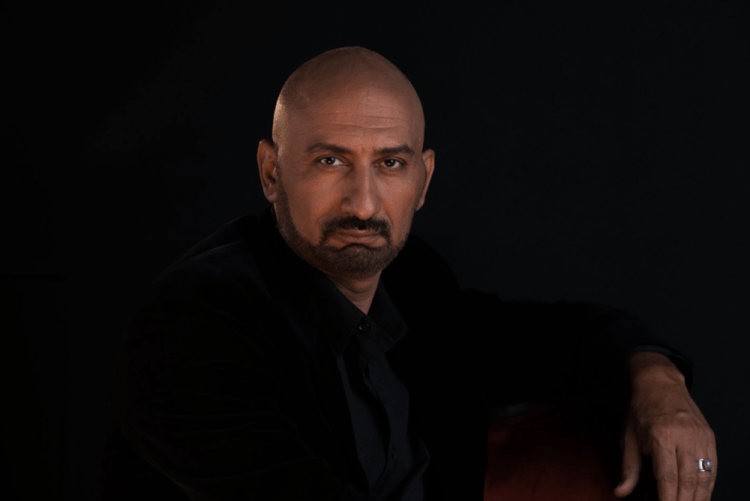
Ashraf Sewailam (CU-Boulder BM ’94, MM ’96, DMA ’08) has been selected to receive the College of Music’s 2023 Distinguished Alumnus Award. As a freelance operatic bass/baritone, Sewailam has appeared around the United States at the Minnesota Opera, Seattle Opera, Washington Concerto Opera and the Metropolitan Opera, among others. His international career has taken him to New Zealand and Australia, and he was a member of the Cairo Opera Company in his native Egypt for eight years.
Ashraf Sewailam
In announcing the award, the College of Music wrote that Sewailam is “an internationally recognized and prize-winning opera star (whose) extensive travels . . . include roles on the world’s most prestigious stages. . . . Sewailam’s stunning career stands out for its range. From serving as a voiceover actor for Disney when he was still living in Cairo . . . to winning over audiences around the world, Sewailam is ‘one of our most successful voice alums,’ according to associate professor of opera Leigh Holman.”
The announcement also states, “Sewailam credits his career accomplishments and accolades directly to the education, professional connections and personal relationships he gained while studying at the College of Music. ‘I couldn’t have started my professional career without having been situated at CU Boulder,’ he says.”
Sewailam first appeared in Sharpsandflatirons in January 2017, when he appeared in a performance of the Pro Musica Chamber Orchestra singing the music of Shostakovich. He has since been noted for performances with the Boulder Bach Festival and at Central City Opera, including roles in The Magic Flute and Il Trovatore.
Most recently, Sewailam was reviewed here in Seattle Opera’s world premiere production of Sheila Silver’s A Thousand Splendid Suns, where I wrote that he “sang beautifully, using his resonant bass to create contrast with the violence that surrounds his family.” He is scheduled to direct Central City Opera’s production of Rossini’s Othello this summer.
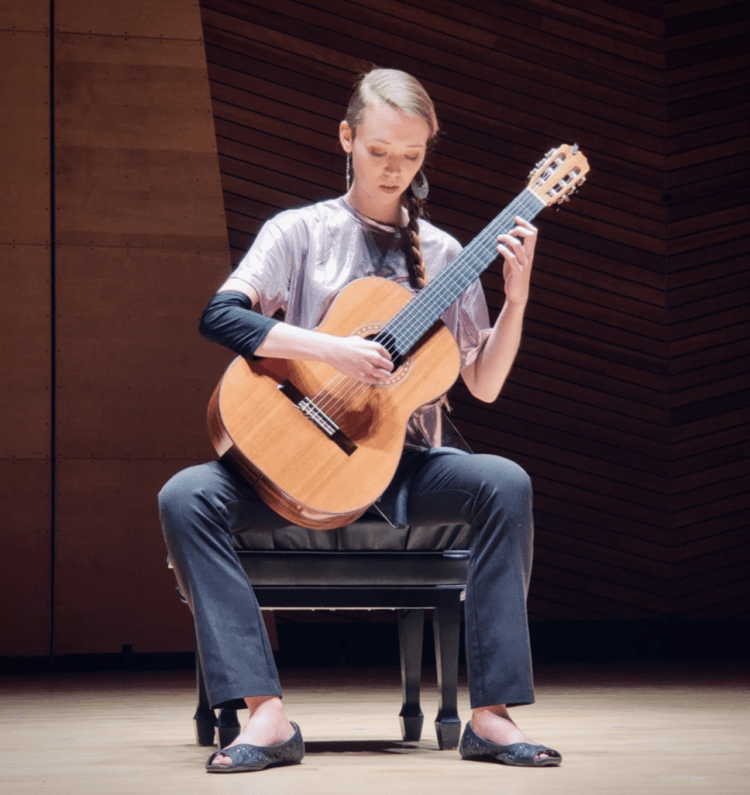
Izzy Fincher
Among current undergraduate students, the College of Music singled out Izzy Fincher as their outstanding graduating senior. Fincher will graduate with a BM in classical guitar performance, a BA in journalism and a business minor, and has also been named outstanding graduate of the CU College of Media, Communications and Information.
Outstanding students in the College of Music are selected each semester based on academic merit, a strong record of musicianship and a record of service and leadership. Fincher will be recognized and deliver a speech at the College of Music commencement ceremony on May 11.
Fincher served an internship with Sharpsandflatirons in the fall of 2020, writing both news articles on the limited events taking place during the COVID shutdown, and opinion pieces on “The White Male Frame” in classical music and “Reflections of a Female, Japanese-American Classical Guitarist.” Since then she has continued to write occasional preview articles and reviews, and she served as both a reporter and editor for the CU Independent. Her senior guitar recital April 23 reflected her research work on female composers of music for guitar.
After graduation, Fincher will attend the University of Wisconsin-Milwaukee to pursue a master’s degree in classical guitar performance under René Izquierdo. An outstanding and insightful writer, her presence at Sharpsandflatirons will be missed.
CU Boulder’s College of Music presents concert March 21 at Grusin Hall
By Peter Alexander March 18 at 5:45 p.m.
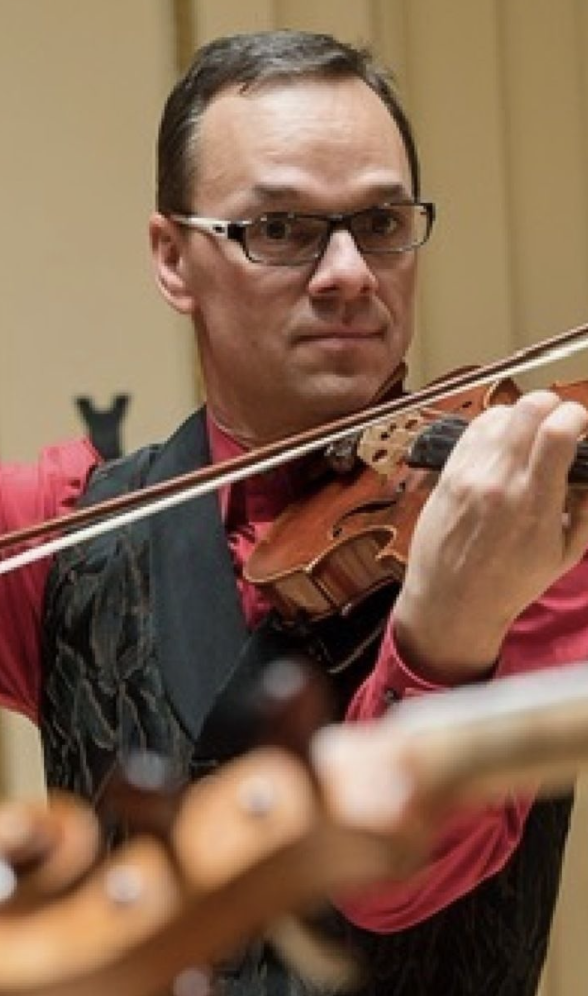
Charles Wetherbee
Violinist and CU music faculty member Charles Wetherbee touched people deeply—those he performed with, those he taught, and those who knew him only as audience members.
Wetherbee died at the age of 56 Jan. 9, 2023, following a battle with cancer. The College of Music will dedicate a faculty recital to his memory Tuesday, March 21 (7:30 p.m. in Grusin Music Hall and by live stream; details below).
In addition to his teaching and performing duties at the College of Music, Wetherbee was first violinist of the Carpe Diem String Quartet and concertmaster of the Boulder Philharmonic Orchestra, who dedicated a performance to his memory Jan. 22. He was a frequent collaborator with faculty colleagues and other musicians in chamber concerts on and off campus.
His faculty colleague, pianist David Korevaar described Wetherbee as “the best colleague anyone can have.” Korine Fujiwara, violist of the Carpe Diem Quartet, described him as “my best and most trusted friend . . . and a beautiful example of all that is good in the world.”
In announcing the memorial concert, CU College of Music Dean John Davis wrote, “Chas Wetherbee was a beloved colleague and friend whose influence and inspiration reached far beyond the College of Music. With his passing in January, we lost a deeply valued and cherished member of our community.”
# # # # #
“A Musical Celebration to the Life and Legacy of Charles ‘Chas’ Wetherbee”
CU Boulder College of Music faculty, students, alumni, and guest artists, including members of the Carpe Diem String Quartet, Boulder Piano Quartet and Lírios Quartet
Program includes works by J.S. Bach, Antonín Dvořák, Brahms, Richard Strauss, Schubert, John Gunther and Korine Fujiwara.
7:30 p.m. Tuesday, March 21 Grusin Music Hall, Imig Music Building Free
Joshua Bell as artist-in-residence, John Corigliano composer-in-residence
By Peter Alexander Jan. 25 at 11 a.m.
The Colorado Music Festival (CMF) has announced their 2023 summer season at Chautauqua.
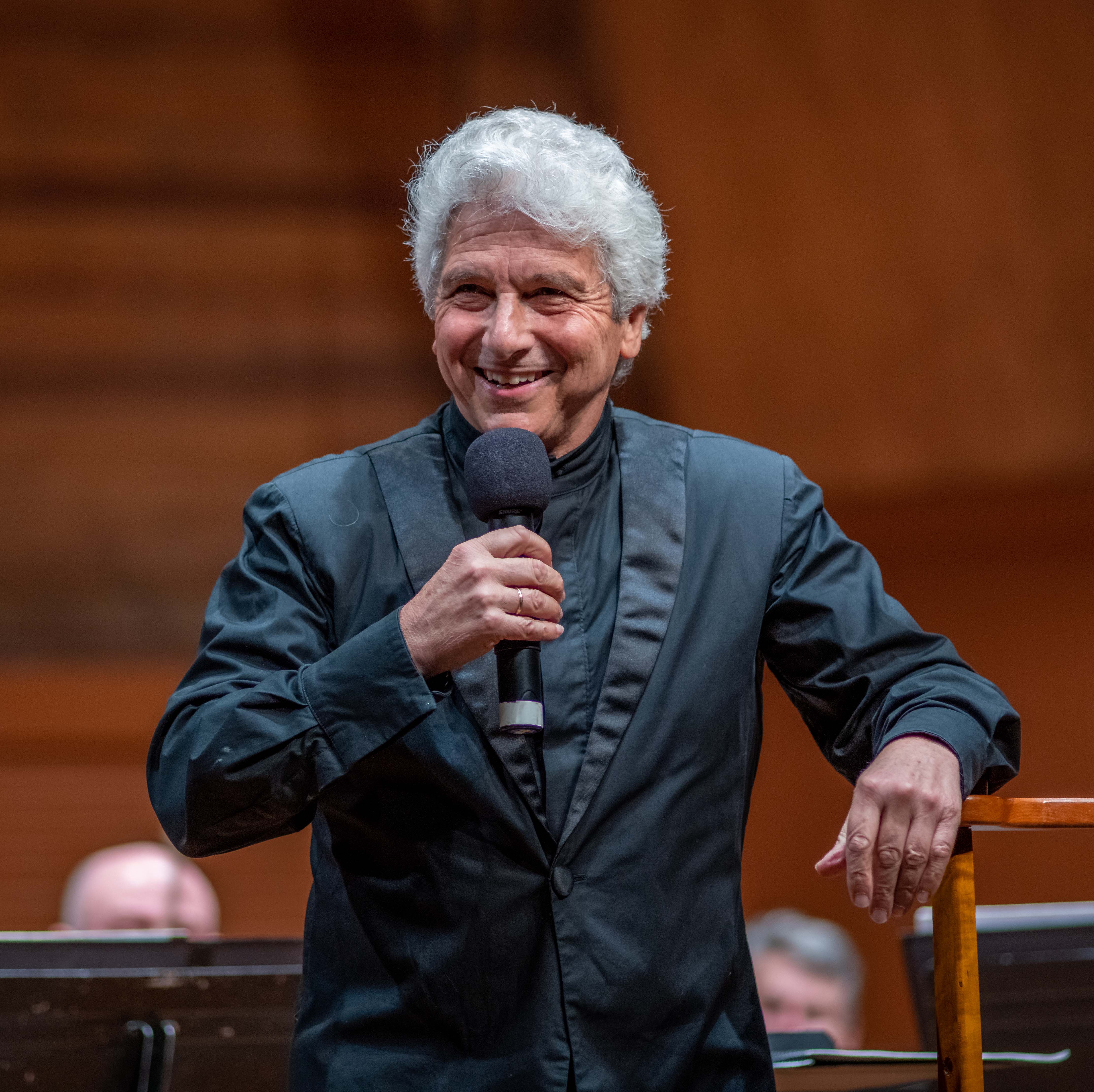
Peter Oundjian. Photo by Geremy Kornreich
The formal announcement of the season was made last night (Jan, 24) at the Center for Musical Arts in Lafayette, which is the sister organization of the CMF. The event was live streamed to the public.
Before the introduction of the concerts by music director Peter Oundjian, executive director Elizabeth McGuire announced that the CMF’s 2022 world premiere performance of Flying On the Scaly Backs of Our Mountains by Wang Jie had reached more than a million listeners world-wide through radio—“more than doubling the reach of the festival over its history with one performance,” she said.
Oundjian has written of the 2023 season, “We are so fortunate to bring to you some of the greatest performers alive today, including artist-in-residence Joshua Bell, along with the extraordinary talents of eight of today’s brilliant composers. It is such a thrill to hear today’s voices alongside—and interacting with—groundbreaking voices from the past, giving us a unique window into centuries of the greatest in creativity.”
John Corigliano. Photo by J. Henry Fair
Since his appointment as music director in 2018, Oundjian has made the music of today a focus of the festival. Among the living composers whose music will be performed this summer is John Corigliano, winner of the Pulitzer Prize, four Grammies and an Academy Award. As composer-in-residence, Corigliano will be present at the festival for a concert devoted entirely to his music on July 13 (see full programs below).
Premieres will be presented of works by Jordan Holloway, CU faculty member Carter Pann, and Adolphus Hailstork. All three will be performed on July 16, as the culmination of a week of “Music of Today.” A preview of music by five other living composers will be offered by Bell, who has commissioned a five-movement suite for violin and orchestra from five different composers.
Joshua Bell. Photo by Phillip Knott
The suite, titled Elements, will have its official premiere later, but all five movements will be previewed over two concerts at CMF—the final two concerts of the season (Aug. 3 and 6). The composers who have contributed to Elements are among the most important composers working today: Jake Heggie, Jessie Montgomery, Edgar Meyer, Jennifer Higdon and Kevin Puts.
Bell will also be at CMF for the first week of the festival and will play Max Bruch’s Violin Concerto in G minor on the opening program, June 29 and 30.
A highlight of the 2023 festival will be two programs celebrating the 150th anniversary of the birth of composer Sergei Rachmaninoff (July 6–7 and July 9). Oundjian said that it seemed appropriate in 2023 to perform works composed outside Russia, many of them in the United States which was Rachmaninoff’s home in the later years of his life. These works include the Third and Fourth piano concertos, the beloved Rhapsody on a Theme of Paganini, and the rarely performed Symphony No. 3.
Michael Christie. Photo by Bradford Rogne
Another feature of the 2023 festival of which Oundjian is particularly proud is the continuation of the Robert Mann Chamber Music Series, named for the founding first violinist of the Juilliard String Quartet. In addition to performances by members of the Festival Orchestra, the four-concert series will also feature guest performances by the JACK Quartet, renowned for their performances of contemporary music, and the Brentano String Quartet.
The 2023 festival will also see the return of Music Director Emeritus Michael Christie to conduct concerts on July 20 and 21. Christie was the CMF music director 2000–13.
“Not only does the 2023 season promise to be artistically stunning, I know our audiences will appreciate the way the programming weaves so many diverse, timely, and relevant voices into the fabric of classical music,” executive director Elizabeth McGuire wrote.
Performances this summer will be at 7:30 p.m. on Tuesdays and Thursdays, and 6:30 p.m. Fridays and Sundays. As in past years, Tuesdays will be devoted to chamber music, other days to Festival Orchestra performances. In response to comments from patrons, the Family Concert on Sunday, July 2, has been moved earlier in the day, to 10:30 a.m. Other updates to the festival this year include a new ticketing system through the Chautauqua Box Office, and meals available for pre-order through the ticketing system.
Subscription tickets for the 2023 festival are available here. Single-concert tickets go on sale March 7 through the CMF Web page, or by phone at the Chautauqua Box Office at 303-440-7666. New for 2023, CMF is offering $10 tickets for youth (ages 18 and under) and students with current school identification. More information can be found HERE.
# # # # #
COLORADO MUSIC FESTIVAL 2023 Performance Schedule All performances at Chautauqua Auditorium
7:30 p.m. Thursday June 29 and 6:30 p.m. Friday, June 30: Festival Opening Program Festival Orchestra, Peter Oundjian, conductor With Joshua Bell, violin
Carlos Simon: “Motherboxx Connection” from Tales: A Folklore Symphony for orchestra
Max Bruch: Violin Concerto No. 1 in G minor
Mussorgsky: Pictures at an Exhibition (orchestrated by Ravel)
Family Concert: 10:30 a.m. Sunday, July 2 Festival Orchestra, Kalena Bovell, conductor With Jennifer Bird-Arvidsson, soprano, and Janae Burris, narrator
Bizet: Carmen Suite No. 1
Eric Whitacre: Goodnight Moon
Samuel Coleridge-Taylor: “Danse Nègre” from African Suite
Prokofiev: Peter and the Wolf
7:30 p.m. Thursday, July 6 and 6:30 p.m. Friday July 7 Festival Orchestra, Peter Oundjian, conductor With Nicolai Lugansky, piano
Rachmaninoff: Piano Concerto No. 3 in D Minor, —Symphony No. 3 in A Minor
6:30 p.m. Sunday, July 9 Festival Orchestra, Peter Oundjian, conductor With Nicolai Lugansky, piano
Rachmaninoff: Rhapsody on a Theme of Paganini —Piano Concerto No. 4 in G Minor —Symphonic Dances
7:30 p.m. Tuesday, July 11 Robert Mann Chamber Music Series: JACK Quartet
Morton Feldman: Structures for String Quartet (1951)
Caleb Burhans: Contritus (2010)
Philip Glass: String Quartet No. 5 (1991)
Caroline Shaw: Entr’acte (2011)
John Zorn: The Remedy of Fortune for String Quartet (2016)
7:30 p.m. Thursday, July 13 Festival Orchestra, Peter Oundjian, conductor With Timothy McAllister, saxophone
John Corigliano: Gazebo Dances (for orchestra) (1974) —One Sweet Morning for voice and orchestra (2010) —Triathlon for saxophone and orchestra (2020)
6:30 p.m. Sunday, July 16 World premieres: Festival Orchestra, Peter Oundjian, conductor With Janice Chandler-Eteme, soprano, and Eric Owens, narrator
Jordan Holloway: Flatiron Escapades (world premiere commission)
Carter Pann: Dreams I Must Not Speak (world premiere commission)
Adolphus Hailstork: JFK: The Last Speech (world premiere)
7:30 p.m. Tuesday, July 18 Robert Mann Chamber Music Series: Brentano String Quartet
Mozart: String Quartet in D Major, K499
James MacMillan: Memento for string quartet (1994) —For Sonny for string quartet (2011)
Beethoven, String Quartet No. 13 in B-flat Major, op. 130
7:30 p.m. Thursday, July 20, and 6:30 p.m. Friday, July 21 Festival Orchestra, Music Director Emeritus Michael Christie, conductor With Michelle Cann, piano
Ravel: Piano Concerto in G Major
Florence Price: Piano Concerto in One Movement
Tchaikovsky: Symphony No. 4 in F Minor, op. 36
6:30 p.m. Sunday, July 23 Festival Orchestra, François López-Ferrer, conductor With Grace Park, violin
Mozart: Overture to The Impresario K486 —Violin Concerto No. 3 in G Major, K216 —Adagio and Fugue in C Minor, K546 —Symphony No. 36 in C Major, (“Linz”) K425
7:30 p.m. Tuesday, July 25 Robert Mann Chamber Music Series: Members of the Colorado Music Festival Orchestra
Benjamin Britten: Phantasy Quartet for Oboe and Strings, op. 2
Francis Poulenc: Sextet in C Major for Piano and Winds
Brahms: String Sextet No. 2 in G Major, op. 36
7:30 p.m. Thursday, July 27, and 6:30 p.m. Friday, July 28 Festival Orchestra: Eun Sun Kim, conductor With Johannes Moser, cello
Mason Bates: The Rhapsody of Steve Jobs (2021)
Shostakovich: Cello Concerto No. 1 in E-flat Major, op. 107
Brahms: Symphony No. 2 in D Major, op. 73
6:30 p.m. Sunday, July 30 Festival Orchestra, Hannu Lintu, conductor, With Lise de la Salle, piano
Einojuhani Rautavaara: Cantus Arcticus (1974)
Schumann: Piano Concerto in A Minor
Haydn: Symphony No. 96 in D Major (“Miracle”)
7:30 p.m. Tuesday, Aug. 1 Robert Mann Chamber Music Series: Members of the Colorado Music Festival Orchestra
Beethoven: String Trio in C Minor, op. 9 no. 3
Debussy: Danses sacrée et profane (Sacred and profane dances)
Dvořák: Piano Quintet No. 2 in A Major, op. 81
7:30 p.m. Thursday, Aug. 3 Festival Orchestra, Peter Oundjian, conductor With Joshua Bell, violin
The Elements: Suite for Violin and Orchestra (commissioned by Joshua Bell) “Fire” by Jake Heggie “Ether” by Jessie Montgomery “Water” by Edgar Meyer
Debussy: La Mer
6:30 p.m. Sunday, Aug. 6: Festival Finale Concert Festival Orchestra, Peter Oundjian, conductor With Joshua Bell, violin
The Elements: Suite for Violin and Orchestra (commissioned by Joshua Bell) “Air” by Jennifer Higdon “Earth” by Kevin Puts
Violinist, CU faculty member, father of three dies after battle with cancer
By Peter Alexander Jan. 11 at 12:45 p.m.
Some few special musicians go beyond the ability to reach listeners with their performances, and touch people with their generous and kind personalities. One of those was Charles (Chas) Wetherbee, concertmaster of the Boulder Philharmonic Orchestra, first violinist of the Carpe Diem String Quartet, and faculty member of the University of Colorado, Boulder, College of Music.
Wetherbee died Monday (Jan. 9) following a battle with cancer. He was 56.
Many tributes have been stated for Wetherbee, and a common theme has been going beyond his his great musical skills to recognize his human qualities. Korine Fujiwara, violist of the Carpe Diem Quartet, described him as “my best and most trusted friend . . . and a beautiful example of all that is good in the world.” Pianist David Korevaar, with whom Wetherbee collaborated on CU faculty concerts and other chamber music performances, wrote “You were a generous, open-hearted, wise, and patient friend. You were the best colleague anyone can have.”
Announcing that the next concert of the Boulder Philharmonic on Jan. 22 would be dedicated to Wetherbee’s memory, conductor Michael Butterman wrote that Wetherbee “brought out the best in everyone. . . . He radiated generosity, kindness and a selfless spirit that anyone in his presence could feel. The impact of his legacy is impossible to overstate.”
CU College of Music dean John Davis noted that “Chas brought a wealth of expertise and experience from his varied career as a soloist, chamber musician, orchestral concertmaster, teacher, coach and collaborator. . . . He was also a consummate mensch, widely known and loved for his kindness, enthusiasm, unwavering optimism and overall graciousness.”
A GoFundMe campaign that was started in December to support Wetherbee’s family has raised more than $200,000 from 1,200 donors, indicating both the breath and the depth of affection Wetherbee had in the local community of music lovers. Donations have ranged from $20 to $15,000.
Charles Tyler Wetherbee was born in Buffalo, New York, July 14, 1966. He made his debut with the Buffalo Philharmonic Orchestra under Semyon Bychkov, and since then has performed with the National Symphony under Mstislav Rostropovitch, as well as the Japan Philharmonic, the Concerto Soloists of Philadelphia, the Philharmonic Orchestra of Bogota (Columbia), the National Repertory Orchestra, the Orquesta Sinfónica Nacional de Mexico, the Symphony Orchestra of the Curtis Institute, the Buffalo Philharmonic, and the Virginia Symphony, among others.
A devoted chamber musician, Wetherbee was first violinist of the Carpe Diem String Quartet and performed in recital with pianist David Korevaar of the CU College of Music faculty. Wetherbee’s first orchestral appointment was as principal second violin with the National Symphony Orchestra in Washington, D.C. Following five years at the NSO, he served as concertmaster of the Columbus Symphony for 16 years. He joined the faculty of the CU College of Music in 2012 and became concertmaster of the Boulder Philharmonic in 2014. He directed the Snake River Music Festival in Dillon, Colorado, for many years
Wetherbee is survived by his wife, Karina, a professional photographer and writer, and their three children, Tristan, Sebastian and Tessa. After Wetherbee’s death, Karina wrote on the GoFundMe page, “Chas composed his final note last night. . . . I know now that his life’s work was a symphony, of the most grand and sweeping and lyrical beauty, and each note of that music was made up of all the millions of interactions he had with every person who entered his life.”
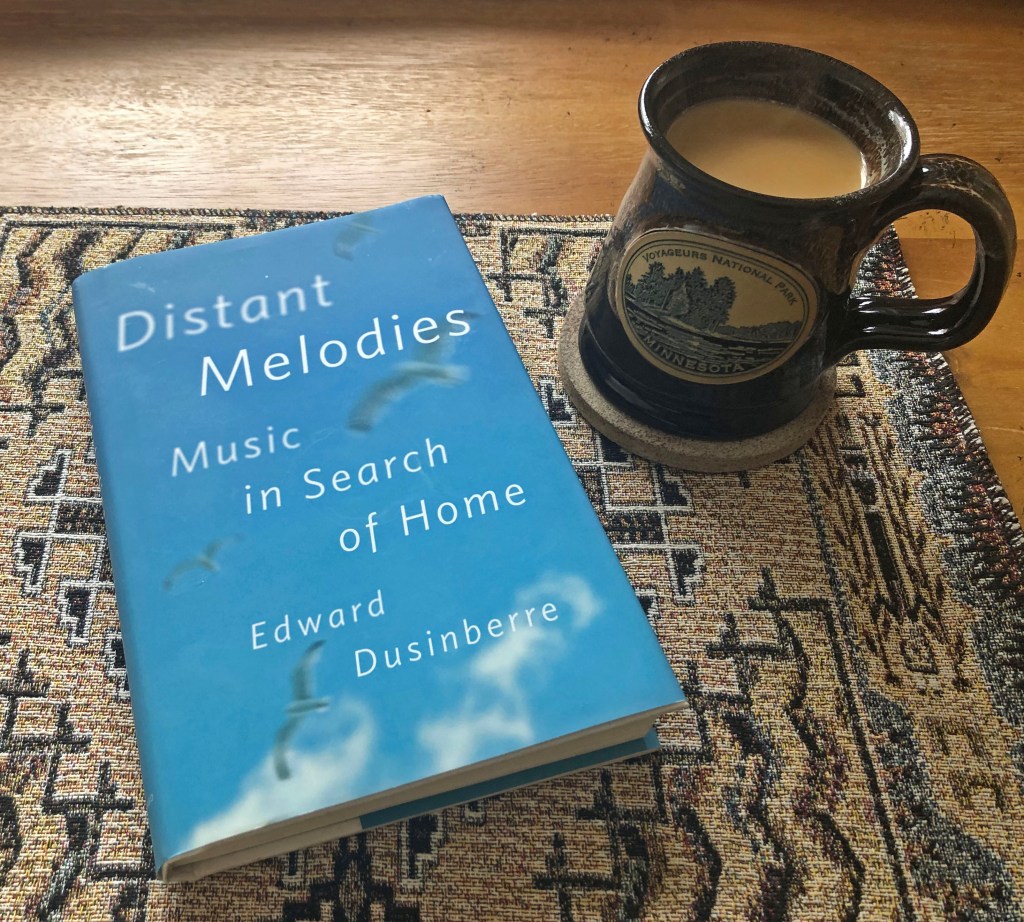
Distant Melodies: Music in Search of Home. By Edward Dusinberre. Chicago: University of Chicago Press, 2022. 233pp.
A lovely companion for your morning coffee, it is also unlike any other book on music I have read. But it is certainly one that lovers of chamber music and fans of the Takács Quartet will want to read.
Dusinberre focuses on just four composers—Edward Elgar, Antonín Dvořák, Béla Bartók and Benjamin Britten—and music by them that he has played and recorded as first violinist of the Takács. In each case, he discusses the composer’s life and what “home” might mean to them, and to him.
This interest on Dusinberre’s part grows out of his experience as a dual national who grew up in England but has lived many years in the United States. Like Dusinberre, three of the composers left their homes for the U.S. at some point in their careers: Dvořák, who lived in New York and Iowa 1892–95 before returning permanently to his homeland in Bohemia; Bartók, who was forced to flee Europe in 1940 and died in the United States in 1945; and Britten, who voluntarily moved to the US at the outbreak of war in 1939 but whose longing for home led him to return in 1942.
In contrast, Elgar lived his entire life in Britain, apart from tours in the U.S. and continental Europe, and he provided some of the most identifiably “British” music in the form of his “Pomp and Circumstance” marches and other works.
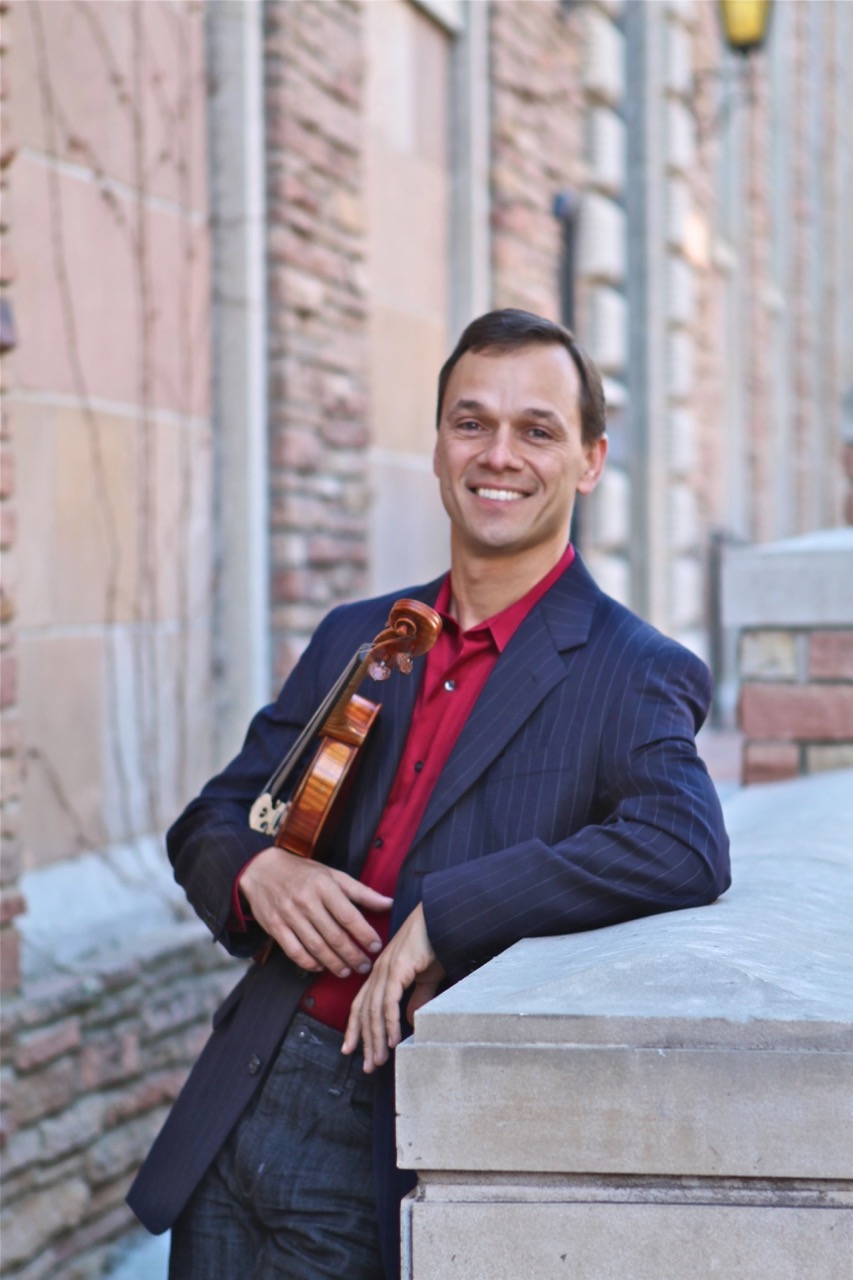
Edward Dusinberre
But the book is far more than an introduction to these composer’s biographies, because Dusinberre describes his own relationship with each work, both individually and as a member of a leading quartet. He begins in fact with his own childhood in Leamington Spa and his move to New York, followed by his rediscovery of Elgar, as it were, as acknowledgment of his own Englishness. That sets the theme of the connection between home and music.
The section on Elgar is best understood to those who are familiar with British geography, such as the Malvern Hills, which I had to look up. The rest is easily accessible to American readers, and it is great fun to read about life in a top string quartet—both in and out of rehearsals, which are both mundane work and distilled artistry. If you follow the Takács, these will be your favorite parts of the book. For others, it will be the insight into the specific works around which the book revolves—Elgar’s Piano Quintet, Dvořák’s “American” String Quartet, Bartók’s Sixth String Quartet and Britten’s Third String Quartet—and the related works that Dusinberre mentions.
Throughout the book, he connects the works he has played to other works of the same composer, to literary works, and to the times in which they were written. As I said at the outset, I know of no other book that manages this balancing act, combining personal experience with digressions without ever losing the thread.
In its scant 210 pages of text, I came to enjoy Dusinberre’s pleasurable company, I learned from his many insights into music, and ultimately I was sorry to put it down at the end.




 Sharps & Flatirons