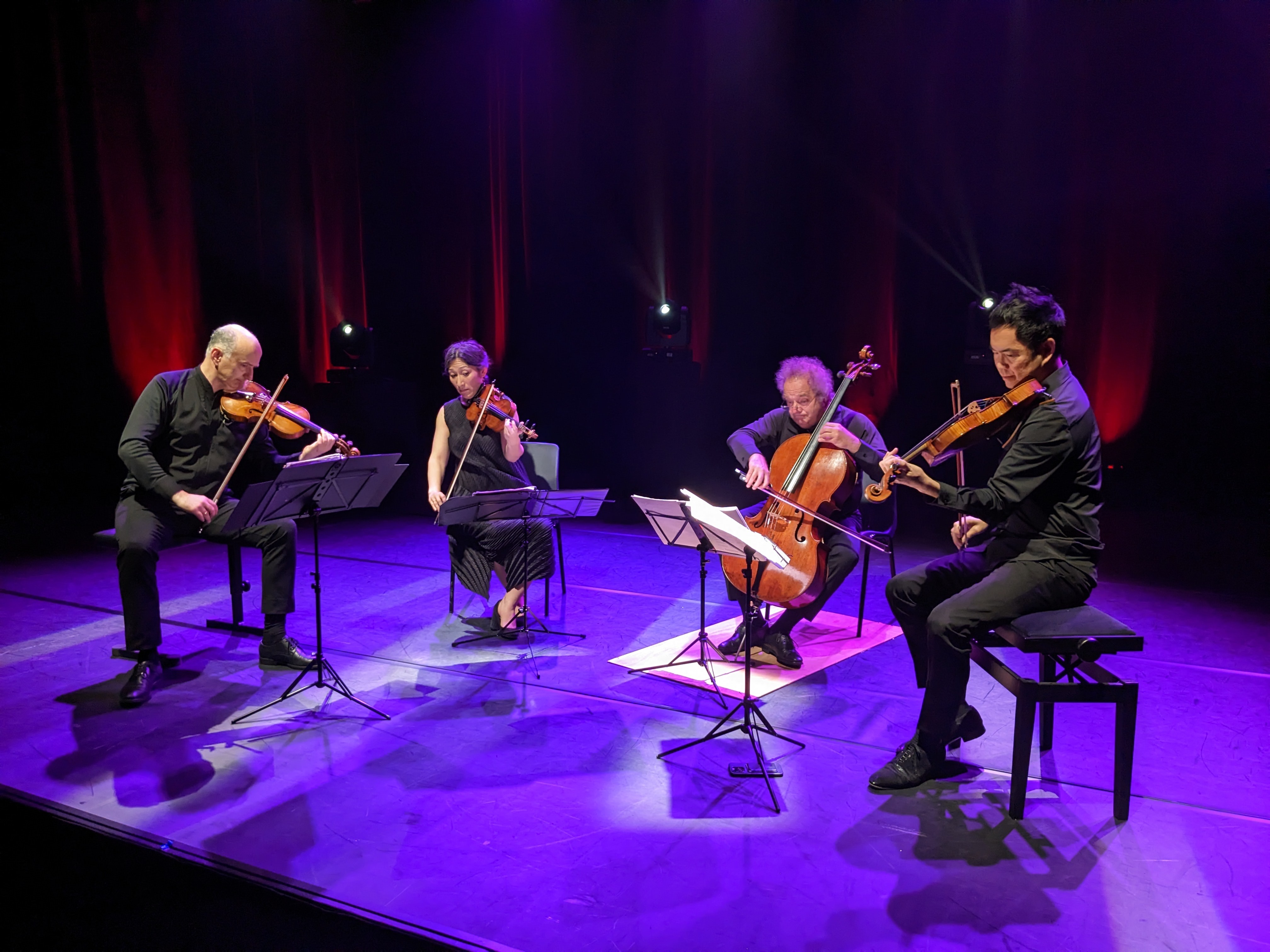
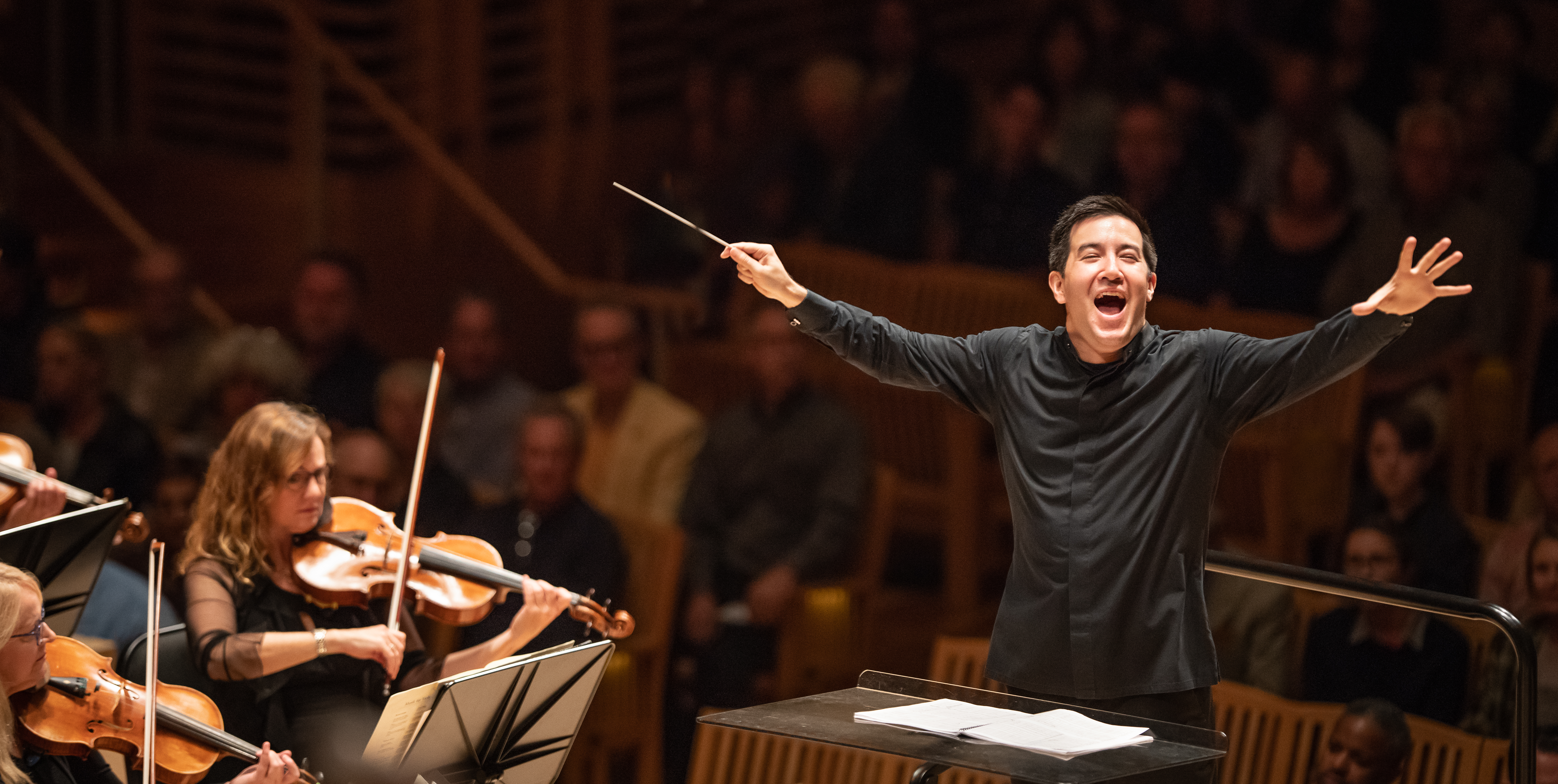
Eklund Opera presents renewed, colorful Hansel and Gretel

Fairytale opera takes the stage at Macky Friday and Sunday

By Peter Alexander Oct. 23 at 1:50 p.m.

In 1890, the German composer Englebert Humperdinck was asked by his sister, Adelheid Wette, to write some folk-style songs for a Christmas play she was creating for her children.

Their little family play was performed at Christmas, but over the next two years Humperdinck, with Wette’s help, turned those simple songs into one of the most popular full-scale German operas, one that is still produced annually at Christmas time at theaters across Germany. The subject of that opera—and of Wette’s original family entertainment—was the Brothers Grimm’s fairytale Hansel and Gretel.
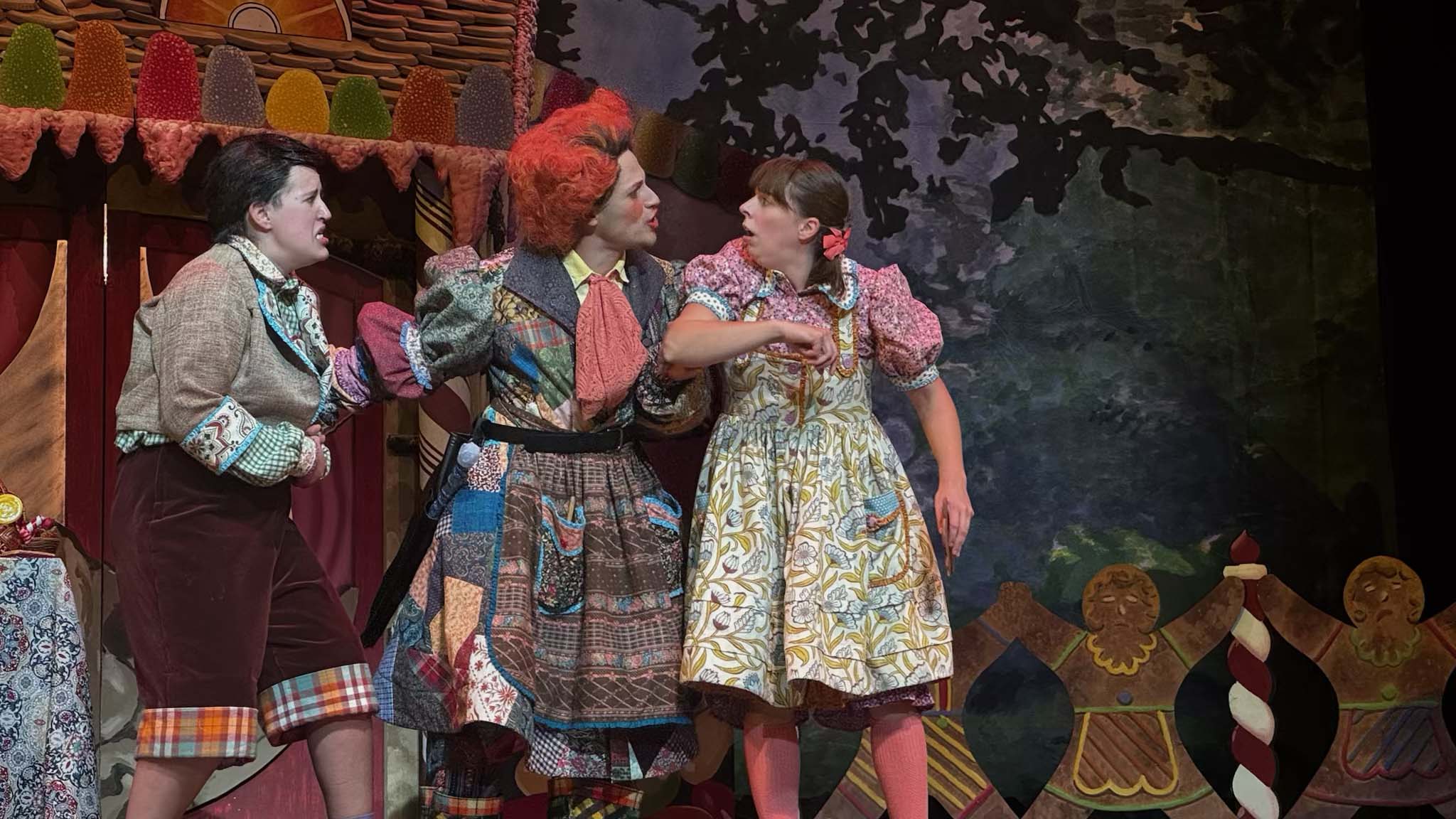
L to R: Salleigh Harvey as Hänsel, Thomas Bocchi as the Witch, Kristina Butler as Gretel in the CU Eklund Opera production of Hansel and Gretel

Humperdinck’s Märchenoper (fairy-tale opera) will be the next production of CU-Boulder’s Eklund Opera Program. And even if it’s a little early to get out the Holiday decorations, it will be given a festive production over the coming weekend (7:30 p.m. Friday and 2 p.m. Sunday, Oct. 25 and 27) in Macky Auditorium. (See ticket information below.)

The musical performance with full orchestra and student singers will be conducted by Nicholas Carthy and stage directed by Leigh Holman, director of the Eklund Opera Program. The sets by Peter Dean Beck, which CU Opera have used before, have been dressed up with new, colorful costume designs by Ann Piano and lighting effects by Jonathan Dunkle. It will be performed in German with English titles.

The story of Hansel and Gretel, which was originally a dark tale of malice and danger, was made milder over a series of transformations, through several editions of the Grimm story and then Wette’s libretto for Humperdinck’s opera. The original evil stepmother who sends the children into peril is turned into, as Carthy puts it, a beleaguered “mother with two children and a headache,” who simply sends the children out to gather strawberries. 

There are lighthearted moments in the opera—the children squabbling at the beginning of the first act, and their father cheerfully returning home after selling all of his brooms—and even in the forest the children are looked over by the Sandman, the Dew Fairy and the 14 angels of the beautiful Dream Pantomime. Even when accosted by the witch, Hansel and Gretel easily evade her evil designs. In the end, the witch is vanquished and all the gingerbread children are returned to life.

Musically, Humperdinck’s score has many folk-like tunes and simple melodies, but it is also full of musical challenges. As Carthy explains, the libretto uses “slightly archaic language, words that have fallen out of use and some of them are very difficult to pronounce. Hansel and Gretel are onstage for most of it, and the witch is a very big part. And then Act III suddenly gets more difficult—all of a sudden the music becomes more difficult to sing, much more difficult to play, much more difficult to conduct.”

The witch’s part can be a particular challenge, Holman says. “I think the Witch’s part is really, really difficult. The timing and the notes are kind of disjointed. It’s hard to find the pitches—seriously!”

Humperdinck worked as an assistant with Wagner, particularly on the late music drama Parsifal, and so his harmonic language and orchestration reflect late Wagner. That too can be a problem, Carthy says, especially when the orchestral sound becomes heavier and darker. “Balance (among the parts) is a problem, keeping it all together is a problem, keeping it transparent is a problem,” he says.

And “it’s a great challenge for the players, because it’s a massive piece,” he adds. “It never stops, as far as the players are concerned, (so it’s) quite an exercise in concentration and stamina. Three fourths of them have never played in a pit, so they are coming in without the experience of playing a long piece and concentrating for that amount of time. It’s invaluable for (the students), but as the conductor you have to know the piece backwards.”

The production uses sets that were designed by Peter Dean Beck and that have been used in previous CU productions of Hansel and Gretel. But this time there will be new costumes by Piano and other touches to bring more color to the stage. 
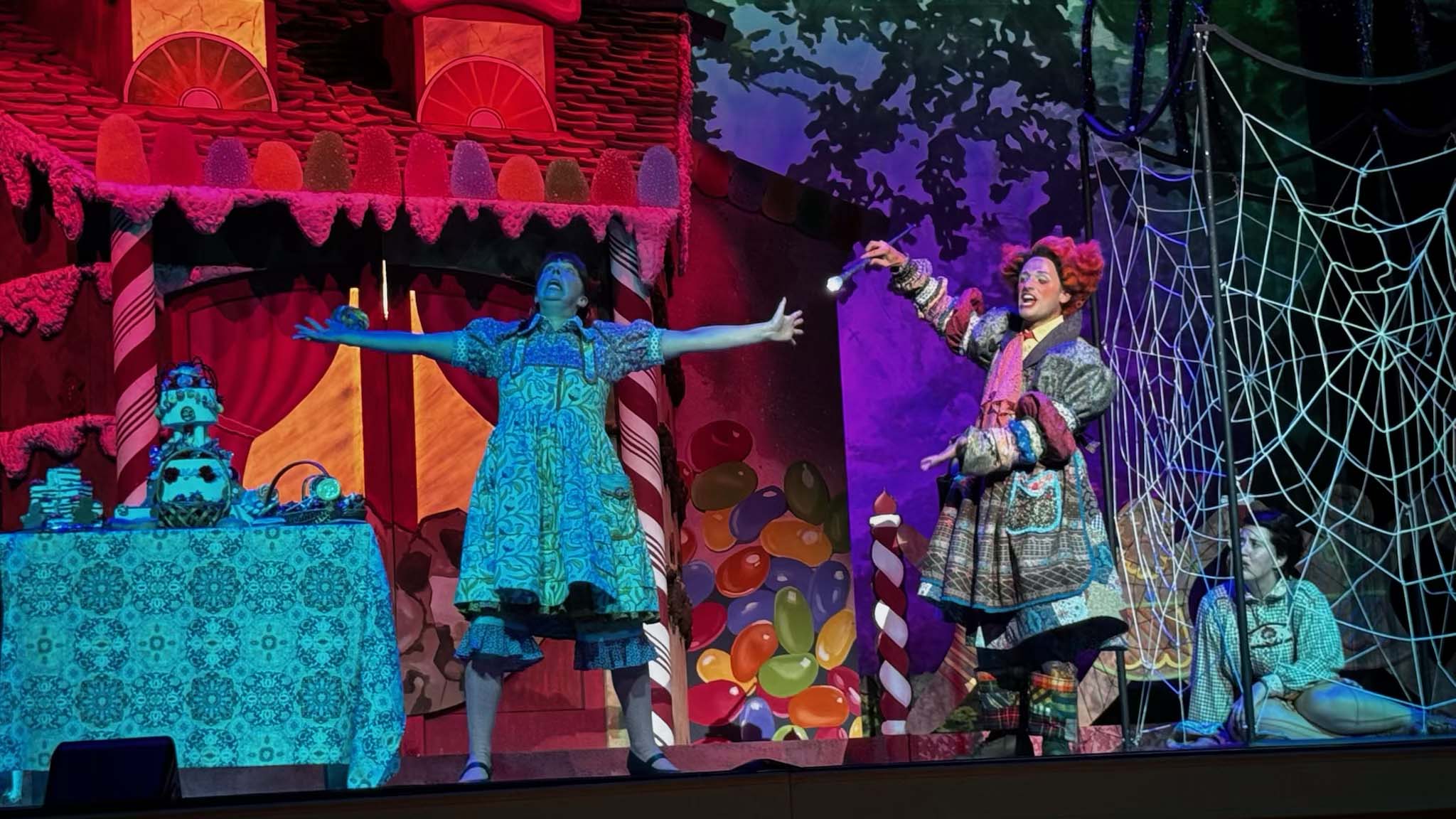
Kristina Butler as Gretel, Thomas Bocchi as the Witch, Salleigh Harvey as Hänsel (on the ground)

“I asked for a change in this production,” Holman says. “I asked that it not be so literal, a little bit more fantastical. And so we have lots of colors in it, in the costumes but also in other little elements. Even the brooms are colored, red ones and blue ones, so it kind of takes us out of reality and goes back to a storybook.

“We have a new lighting designer, Johnathan Dunkle, and we’re doing some new and interesting things with that. With the witch’s ride we have some lighting effects that we’re working on.”

Another new feature of this production that Holman is excited about is choreography for the 14 angels. “Laura Malpass is the choreographer, and she’s fantastic,” she says. “She teaches in the dance department, and she pulled together 14 trained ballet dancers to portray the 14 angels. It’s less than six minutes and it’s gorgeous.”

In fact, she and Carthy are looking forward to the entire opera. “We’re so excited about this piece,” Holman says. “The music is gorgeous, the orchestra is rich and full and the look of it—the visuals and brand new costumes and what you’re going to see onstage—is beautiful. 

“And it’s short! People are going to get out in two hours and 15 minutes.”

# # # # #

Eklund Opera Theater, Leigh Holman, director
Nicholas Carthy, music director

  • Hansel und Gretel by Englebert Humperdinck
    Libretto by Adelheid Wette

Performed in German with English titles

7:30 p.m. Friday, Oct. 25 and 2 p.m. Sunday, Oct. 27
Macky Auditorium
TICKETS

GRACE NOTES: Chamber music from the Baroque to 20th century

Events presented by The Academy, Boulder Bach and Boulder Chamber Orchestra

By Peter Alexander Oct. 16 at 10:33 a.m.

The Academy, University Hill will present pianist Eugene Gaub and violinist Nancy McFarland Gaub performing in their Chapel Hall Friday evening (7 p.m. Oct. 18; details below).

Their performance of works by Beethoven and César Franck will be free, but audience members are asked to RSVP in advance. Eugene Gaub will perform Beethoven’s late Piano Sonata No. 28 in A major op. 101, and together they will perform Franck’s Sonata in A major for violin and piano. 

Eugene Gaub is emeritus professor of music at Grinnell College in Iowa, where he taught music theory and courses in music history from 1995 to 2022. A graduate of the Juilliard School, he holds a doctorate and performer’s certificate from the Eastman School of Music.

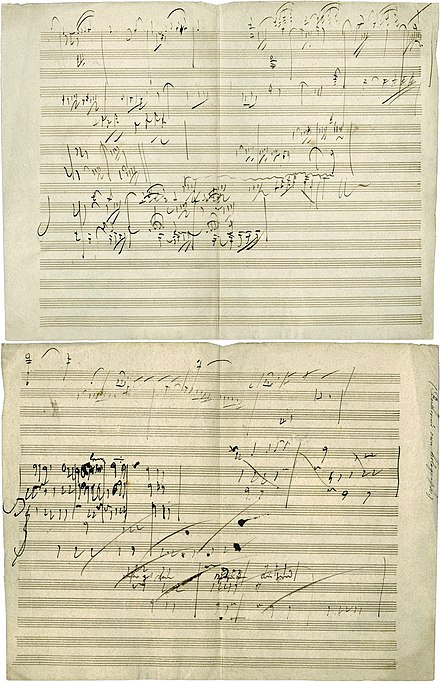
The manuscript of Beethoven’s Piano Sonata No. 28

Throughout her career, violinist and composer Nancy McFarland Gaub has performed as a soloist, chamber and orchestral musician in the U.S., Europe and Africa. She also was an artist-in-residence and taught violin and chamber music at Grinnell College for 25 years.

Composed in 1816, Beethoven’s Piano Sonata No. 28 is considered the beginning of his third and final period of composition. The composer himself called the sonata “a series of impressions and reveries.” When he wrote the sonata he was almost totally deaf, only able to communicate with friends through the notebooks that he kept for the remainder of his life. This isolation may be the reason that, like the other late sonatas, No. 28 creates a sense of intimacy.

Franck wrote his Violin Sonata in 1886 as a wedding gift for the violinist Eugène Ysaÿe. The public premiere of the sonata, given by Ysaÿe with the pianist Marie-Léontine Bordes-Pène has become something of a legend. It was the last piece on a long program given at the Museum of Modern Painting in Brussels. By the time the performers started the Sonata, it was already dusk, but the museum did not allow artificial light. Ysaÿe and Bordes-Pène had to complete the performance from memory in the darkened room. 

From that auspicious beginning, the Sonata has become one of the most revered sonatas for violin and piano, and one of Franck’s best known works.

# # # # #

Eugene Gaub, piano, and Nancy McFarland Gaub, violin

  • Beethoven: Piano Sonata No. 28 in A major, op. 101
  • César Franck: Sonata in A major for violin and piano

7 p.m. Friday, Oct. 18
Chapel Hall, The Academy University Hill, Boulder

Free; RSVP HERE

# # # # #

The Boulder Bach Festival will present its COmpass REsonance (CORE) ensemble and guest artists in a program of music by relatively little known Baroque composers Saturday at the Dairy Arts Center (4 p.m. Oct. 19 in the Gordon Gamm Theater; details below).

Featured artists will be the festival’s director, violinist Zachary Carrettin and 10-string guitarist Keith Barnhart, a member of the CORE ensemble. They will be joined by Chris Holman, harpsichord; Joseph Howe, cello; and guest artist soprano Mara Riley.

With little known composers, the program provides an opportunity to explore an intriguing and idiosyncratic segment of music history. The performers will play and sing music of the early Baroque period, in a style known as the stile moderno (modern style) that represented a striking departure from the music of the late Renaissance. 

Many of the composers included on the program were themselves virtuoso performers, and their works expanded the possibilities of both instrumental and vocal music. The composers on the program are Alessandro Stradella, Nicola Matteis, Marco Uccellini, Johann Heinrich Schmelzer, Giuseppi Maria Jacchini, Silvia Leopold Weiss and Tarquinio Merula.

# # # # #

“Passion and Poetry“
Boulder Bach Festival CORE Ensemble, Zachary Carrettin, music director/violinist
With Keith Barnhart, 10-string guitar; Chris Holman, harpsichord; Joseph Howe, cello; and Mara Riley, soprano

  • Works by Alessandro Stradella, Nicola Matteis, Marco Uccellini, Johann Heinrich Schmelzer, Giuseppi Maria Jacchini, Silvia’s Leopold Weiss and Tarquinio Merula

4 p.m. Saturday, October 19
Gordon Gamm Theater, Dairy Arts Center

TICKETS

# # # # #

Boulder Chamber Orchestra’s Mini-Chamber I, their first concert of chamber music for the 2024–25 season, will feature music by Beethoven, British composer Frank Bridge, and French composer Lili Boulanger Saturday (7:30 p.m. Oct. 19 at the Boulder Adventist Church; details below).

The program is the first in a series of four Mini-Chamber performances that will be presented by the Boulder Chamber Orchestra (BCO). Three of the performances, including Oct. 19, will feature the BCO’s artist in residence for the current season, pianist Jennifer Hayghe. For the first program she will be joined by orchestra members Sarah Whitnah, violin, and Andrew Brown, cello, for a program of music for piano trio. 

English composer Frank Bridge is remembered today mostly as the teacher of Benjamin Britten, who honored the older composer with his “Variations on a Theme of Frank Bridge” for strings. Bridge wrote three sets of miniatures for piano trio, from which Hayghe has chosen four pieces for this program. They were written for one of Bridge’s violin students, but critics have suggested that they are too sophisticated to be considered “student works.” 

The younger sister of the music teacher Nadia Boulanger, Lili died at the tragically young age of 24. The first female winner of the Prix de Rome composition prize, Lili showed precocious musical talent as young as four, when she accompanied her older sister to classes at the Paris Conservatoire. Her music has recently become better known.

Jennifer Hayghe

Written in 1918, D’un matin de printemps (Of a spring morning) was one of the last works she completed. It was written in versions for solo violin, flute, and piano, for piano trio, and for orchestra. 

One of the most tuneful and frequently performed of Beethoven’s works, the Piano Trio Op. 97 is known as the “Archduke Trio.” It was dedicated to Archduke Rudolph of Austria, later the Archbishop of Olomouc (Olmütz) and a Catholic Cardinal. An amateur pianist, Rudolph was a patron and composition student of Beethoven, who dedicated several major works to him, including his Piano Concerto No. 5 (“Emperor”) and the Missa Solemnis.

The Trio was composed 1810–11, toward the end of Beethoven’s so-called “heroic” middle period of compositions. Written at a time when the composer was in unusually good spirits, the Trio has none of the angst or fierce drive of his Fifth Symphony and other music we associate with the more rebellious aspect of his character. It is composed in a traditional but expansive four-movement sonata form.

# # # # #

Mini-Chamber I
Jennifer Hayghe, piano, with members of the BCO

  • Frank Bridge: Miniatures for Piano Trio, Nos. III–IV–V–VIII
  • Lili Boulanger: D’un matin de printemps (Of a spring morning)
  • Beethoven: Piano Trio in B-flat major, op. 97 (“Archduke”)

7:30 p.m. Saturday, Oct. 19
Boulder Adventist Church

TICKETS

GRACE NOTES: Two quartets and Americana Redefined

Piano Quartet has new violinist, Takács has surprise pieces and Boulder Phil has a new series

By Peter Alexander Oct. 8 at 11 a.m.

The Boulder Piano Quartet returns to The Academy in Boulder for a concert featuring the music of Mozart alongside the much less familia Russian-Swiss composer Paul Juon.

The concert at 7 p.m. Friday, Oct. 11, in Chapel Hall at the Academy University Hill will be free, but audience members are asked to RSVP here before the performance. The works on the program are the Quartet in G minor, K478 by Mozart and Juon’s Piano Quartet No. 1 in F major, titled Rhapsodie

Violinist Igor Pikayzen, now with the Boulder Piano Quartet

The concert will introduce the quartet’s new violinist, Igor Pikayzen, who teaches violin at the Lamont School of Music at the University of Denver. A graduate the Juilliard School and Yale, Pikayzen joins violist Matthew Dane, cellist Thomas Heinrich and pianist David Korevaar in the quartet, taking the position that was vacated by the untimely death of Charles Wetherbee in 2023.

Juon had a successful career as a teacher and composer before falling into obscurity. Born in Russia to Swiss parents, he was educated in Moscow and Berlin, and spent most of his professional life in the latter city. A relatively conservative late-Romantic composer, his music is associated with an earlier generation; during his lifetime, he was called “the Russian Brahms.”

His First Piano Quartet was in spired by an unusual first novel, The Saga of Gösta Berling by the Swedish Nobel Prize-winning writer Selma Lagerlöf. The plot concerns a defrocked Lutheran priest who is eventually redeemed after many wild adventures.

# # # # #

Boulder Piano Quartet: Igor Pikayzen, violin; Matthew Dane, viola; Thomas Heinrich, cello; and David Korevaar, piano

  • Mozart: Piano Quartet in G minor, K478
  • Paul Juon: Piano Quartet No. 1, “Rhapsody” 

7 p.m. Friday, Oct. 11
Chapel Hall, Academy University Hill

Free; RSVP HERE

# # # # #

Members of the Takács Quartet didn’t give the full program for their next upcoming CU concerts—until now.

The performances Sunday afternoon and Monday evening (4 p.m. Oct. 13 and 7:30 p.m. Oct. 14 in Grusin Music Hall) will feature Beethoven’s String Quartet in A minor, op. 132, for the second half of the program. But originally, the program only stated that the first half would be announced at the performance.

In a recent email, first violinist Ed Dusinberre solved the mystery. “We needed some extra flexibility for this concert,“ he wrote, “but have just now decided that the first half with be Mozart (String Quartet in D minor) K421 and (Benjamin) Britten String Quartet No.2.“ In the absence of program notes at the concert, he will talk about both pieces from the stage.

The program is the second in the Takács Quartet’s annual series of campus concerts. Remaining concert dates for the 2024–25 season, including a guest appearance by the Quartet Integra from the Colburn School in Los Angeles, are listed on the CU Presents Web page.

Beethoven’s Quartet in A minor, op. 132, is traditionally known as the Quartet No. 15 based on the order of publication of his quartets, although it was no. 13 in order of composition. Planned with the traditional four movements, the A minor quartet ended up with five movements when Beethoven decided to add a central movement as an expression of thanks for his recovery from illness. 

Titled “Heiliger Dankgesang eines Genesenen an die Gottheit” (Song of thanksgiving to the Deity from a convalescent), the central movement is a haunting movement written in the Lydian mode, evoking sacred music of the Middle Ages and Renaissance. The movement includes three principal elements: a brief fragment of counterpoint, a hymn-like passage, and a suddenly more energetic passage labelled “Feeling of new strength.” These programmatic and devout elements have made this one of the composer’s most recognized and popular movements. 

# # # # #

Takács Quartet

  • First Half to be announced form the stage
  • Beethoven: String Quartet in A minor, op. 132

4 p.m. Sunday, Oct. 13
7:30 p.m. Monday Oct. 14
Grusin Music Hall

Both in-person and live-stream TICKETS

# # # # #

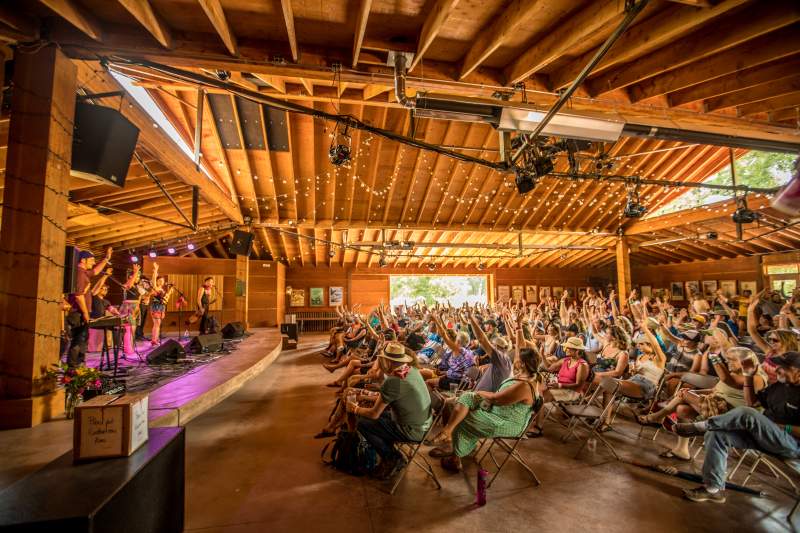
The Boulder Philharmonic will present  “Americana Redefined,” the second in their Shift Series of informal concerts presenting their musicians in unusual venues and smaller groups, at 7 p.m. Wednesday, Oct. 16, at Planet Bluegrass in Lyons.

There will be two repetitions of the program’s ideas, the first in the Parsons Theater in Northglenn Feb. 9 featuring guest five-string violinist Enion Pelta-Tiller, the second in the Dickens Opera House Feb. 19 (details below).

Promotional materials describe “Americana Redefined” as combining music from diverse elements of America’s musical heritage, including gospel, jazz, blues and country. For this program, the Boulder Phil will be represented by a quartet of string section leaders, plus Pelta-Tiller for the Northglenn performance.

Boulder Phil executive director Mimi Kruger says the idea for the Shift Series is to showcase the orchestra’s musicians in unusual venues that are less formal than their usual home in Macky Auditorium on the CU campus. The programming will also show their flexibility outside of the standard classical repertoire.
“The idea is that they can be a little bit more eccentric with the programming,” Kruger says. “The programs focus on contemporary composers, and (are) also more cross-genre. The idea is that people can get to know our musicians and these programs and composers and connect in a different way.”

The series represents a partnership with Planet Bluegrass in Lyons. All of the planned programs will be presented there, and then go on to performances at the Dickens Opera House in Longmont and other venues in the area. The full Shift Series is listed HERE.

# # # # #

“Americana Redefined”
Musicians of the Boulder Philharmonic

7 p.m. Wednesday, Oct. 16
Wildflower Pavilion, Planet Bluegrass, Lyons, Colo.

With guest artist Enion Pelta-Tiller
2 p.m. Sunday, Feb. 9, 2025
Parsons Theatre Northglenn, Colo.

6:30 p.m. Wednesday, Feb. 19, 2025
Dickens Opera House, Longmont, Colo.

Information and TICKETS

GRACE NOTES: Opening nights, orchestral and choral

Longmont Symphony, Ars Nova Singers launch 2024-25 seasons

By Peter Alexander Oct. 1 at 4:55 p.m.

The Longmont Symphony Orchestra (LSO)and conductor Elliot Moore open “Sound in Motion,” their 2024–25 concert season, Saturday evening (7 p.m. Oct. 5; details below) with two American works and a orchestral showpiece.

Breaking from the pattern of previous seasons, the opening night concert will be held at the Longmont High School Auditorium. An abbreviated version of the same program will be presented Sunday afternoon at 4 p.m. at Frederick High School. 

All remaining LSO concerts during the season, including the Christmas-season Nutcrackers, will be held in the usual venue of Vance Brand Civic Auditorium.

Pianist Spencer Myer

Soloist for the Longmont HS performance will be pianist Spencer Myer, a faculty member at the Indiana University Jacobs School of Music, who will play George Gershwin’s Concerto in F for piano. The program begins with the Overture to another American masterpiece, Bernstein’s musical stage work Candide. Ending the program is Ravel’s familiar orchestration of Mussorgsky’s Pictures at an Exhibition.

Bernstein’s Candide was originally composed in 1956 for Broadway, although today it is considered an operetta rather than a musical. The original show was not a success on dramatic grounds, in spite of the brilliant music Bernstein wrote, including the popular coloratura soprano aria “Glitter and Be Gay.” Various revisions of the original show have included textual contributions by lyricist Richard Wilbur plus Lillian Hellman, Stephen Sondheim, Dorothy Parker, John LaTouche and Bernstein himself. 

Today the operetta is gaining ground among opera companies, but regardless of its fluctuating fate, the Overture has been a popular program number from the beginning. Full of brilliant flourishes, delightful tunes and heady syncopations, it is the ideal concert opener.

Gershwin’s Piano Concerto was commissioned by the conductor Walter Damrosch, who attended the Feb. 12, 1924 premiere of Rhapsody in Blue. The very next day Damrosch contacted Gershwin to ask him for a piano concerto, which he was able to complete over a period of three months in the summer of 1925.

Audiences have always liked the concerto, which is today considered one of the essentials of the American music repertoire. The score incorporates jazz elements, but is much closer to the traditional format of a concerto with orchestra than is the Rhapsody. It appears on concert programs, has been featured in films, has been recorded by numerous pianists, and has even been featured in ice skating routines.

The program closes with the Mussorgsky/Ravel Pictures at at Exhibition, one of the best known and most loved showpieces for orchestra. 

The program for the performance in Frederick will include the Overture to Candide and Pictures at an Exhibition only. 

# # # # #

Opening Night
Longmont Symphony Orchestra, Elliot Moore, conductor
With Spencer Myer, piano

  • Leonard Bernstein: Overture to Candide
  • George Gershwin: Piano Concerto in F
  • Mussorgsky: Pictures at at Exhibition (arr. Ravel)

7 p.m. Saturday, Oct. 5
Longmont High School Auditorium

Encore performance: 4 p.m. Sunday, Oct. 6
Frederick High School Auditorium
(same program minus the Gershwin Concerto)

TICKETS

# # # # #

Boulder’s Ars Nova Singers embark on a season of “Contrasts” this weekend with a concert titled “Here/There.”

The opening concert, “Here/There,” will be presented Sunday at the Diary Arts Center in Boulder (4 p.m. Oct. 6; details below). The program features music from here and there not only geographically—that is, from different parts of the world—but also chronologically, from both the present (here) and the past (there). Featured composers include Henry Purcell, Anton Bruckner, Benjamin Britten, and György Ligeti, as well as contemporary women composers Sheena Phillips and Dale Trumbore. 

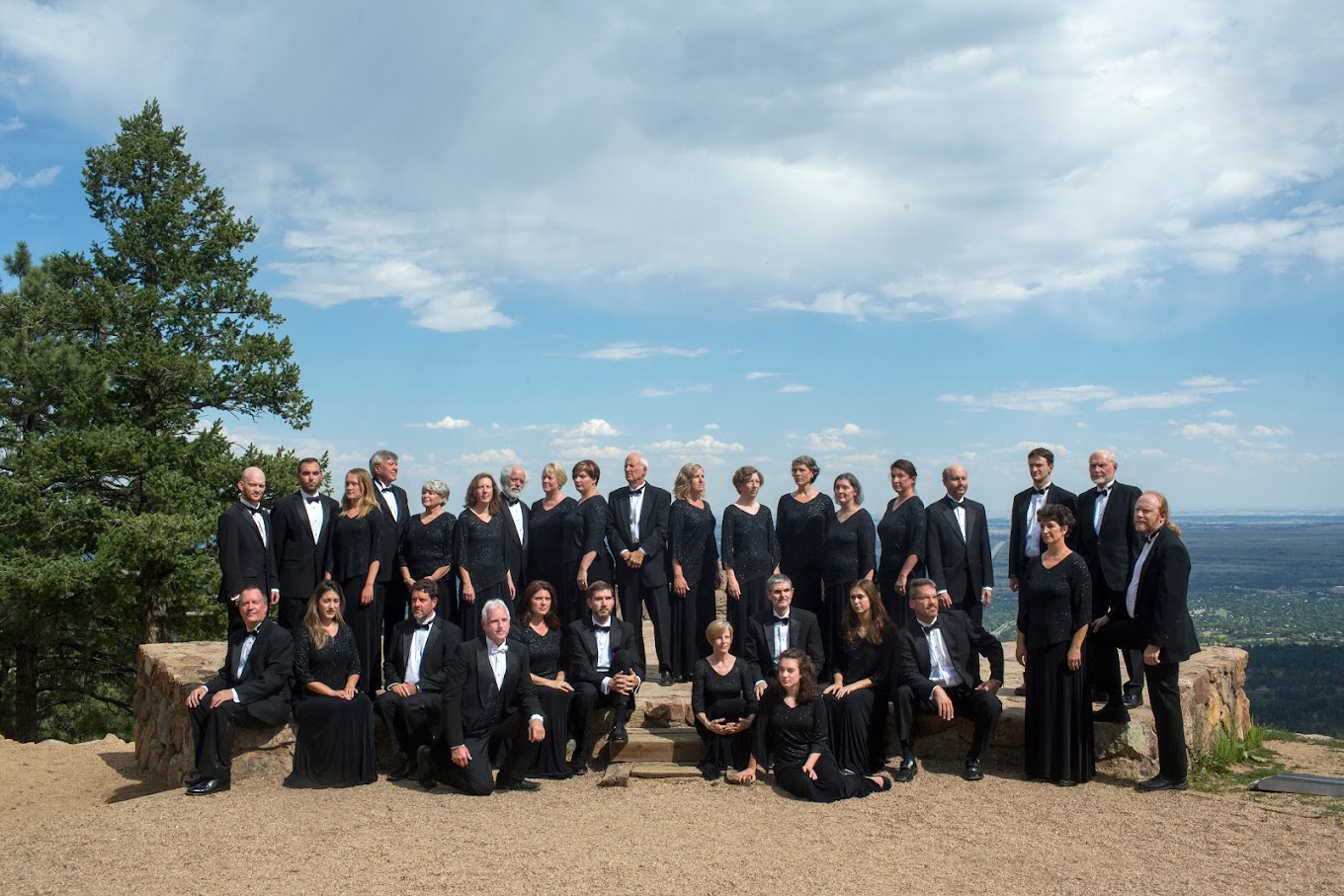
Ars Nova Singers. Conductor Thomas Morgan kneeling front left.

Conductor Tom Morgan wrote in a news release, “Dark and light, motion and stasis, intimate and universal, deeply familiar and refreshingly new—our season searches for the balance point in all of these.” In addition to “Here/There,” the season includes concerts titled “Light/Shadow,” “Lost/Found,” “Science/Fantasy” and “Time/Eternity” (see the full season HERE).

Although the choir’s name—Ars Nova, or “new art”—refers in history to a musical style from the 14th century, the group has specialized in a broader range of music, specifically the Renaissance and the 20th and 21st centuries. For this program there is no music from the Renaissance, but the old is represented by “Music for a While” by the English Baroque composer Henry Purcell (1659–1695).

There is a rare—for Ars Nova Singers—piece from the late Romantic period, Anton Bruckner’s Os justii (The mouth of the righteous) composed in 1879. A sacred motet setting of a text from Gregorian chant, it was written for the choirmaster at St. Florian Abbey, one of the largest monasteries in Austria.  

Other works on the program range from the early 20th century—Ravel’s Trois beaux oiseaux (Three beautiful birds)— right up to today with works by the living American composers Frank Ticheli, Jake Runestad and Dale Trumbore, among others (full program listed below).

The performance, a benefit celebrating the past and future of Ars Nova Singers, will be preceded by a 3 p.m. reception in the Dairy Arts Center lobby.

Ars Nova Singers bill themselves as “an auditioned vocal group specializing in a cappella music of the Renaissance and the 20th/21st centuries” that aims “to delight, inspire, and enlighten our audiences.”

# # # # #

Here/There
Ars Nova Singers, Thomas Morgan, conductor

  • Henry Purcell: “Music for a While”
  • Dale Trumbore: “Love is a sickness”
  • Bruckner: Os justi (The mouth of the righteous)
  • Ravel: Trois beaux oiseaux (Three beautiful birds)
  • Luigi Denza: “Call Me Back” (arr. Morgan)
  • György Ligeti: Lux aeterna (Eternal light)
  • Sam Henderson: “Moonswept”
  • Sheena Philips: “Circle of Life”
  • Sarah Quartel: “Sing, My Child”
  • Frank Ticheli: “Earth Song”
  • Jake Runestad: “Let My Love Be Heard”
  • Britten: “Advance Democracy”

4 p.m. Sunday, Oct. 6
Gordon Gamm Theater, Dairy Arts Center

TICKETS 

New and familiar works from the Boulder Chamber Orchestra

BCO launches 20th anniversary season that will take them to Carnegie Hall

By Peter Alexander Oct. 1 at 2:50 p.m.

About 20 years ago, Bahman Saless was standing in a church basement, getting ready to conduct his first concert ever.

“We started with just an idea, and I had never conducted before. We only had two professional players (in the orchestra) and didn’t know who was going to come. It was a complete surprise—it was standing room only!”

Bahman Saless leading the Boulder Chamber Orchestra

That successful idea, which became the Boulder Chamber Orchestra (BCO), celebrates its 20th anniversary this year, starting with a concert at the Boulder Adventist Church Sunday (7:30 p.m. Oct. 6; details below) and culminating with with a concert at Carnegie Hall in New York May 18 (7:30 p.m.; details HERE).

To open the anniversary year, Saless decided to write a piece celebrating Colorado, titled Ode to the Rocky Mountains. Although he has rarely programmed his own music before, he had several years of experience writing and scoring film music in Hollywood before he started the BCO.  “I did a lot of (uncredited) trailers for Hollywood films at Universal Studios,” he says.

To start the season, “I thought what’s better than something that celebrates Colorado?” Saless says. “I wrote a little piece that’s based on the two Colorado state songs, ‘Where the Columbine Grow’ and ‘Rocky Mountain High.’ It has five episodes that represent our own experience every time we go to the mountains.”

In the space of about five and half minutes, its five episode are: “Entering the Boulder Valley off Highway 36, heading West to the Mountains,” “Resting by the Brook in the Meadow,” “Playful Wildlife Amidst the Columbine,” “The Grand Landscape is to Behold,” and “Homeward Bound.”

The remainder of the opening concert program is all Beethoven: The Violin Concerto, featuring Edward Dusinberre of the Takács Quartet as soloist, and the Seventh Symphony. The concerto was chosen because Dusinberre had played with the orchestra before, and he suggested Beethoven for this concert. “He did the Brahms Concerto with us last year, and he did Mozart the previous year, so he’s going through the concerti,” Saless says.

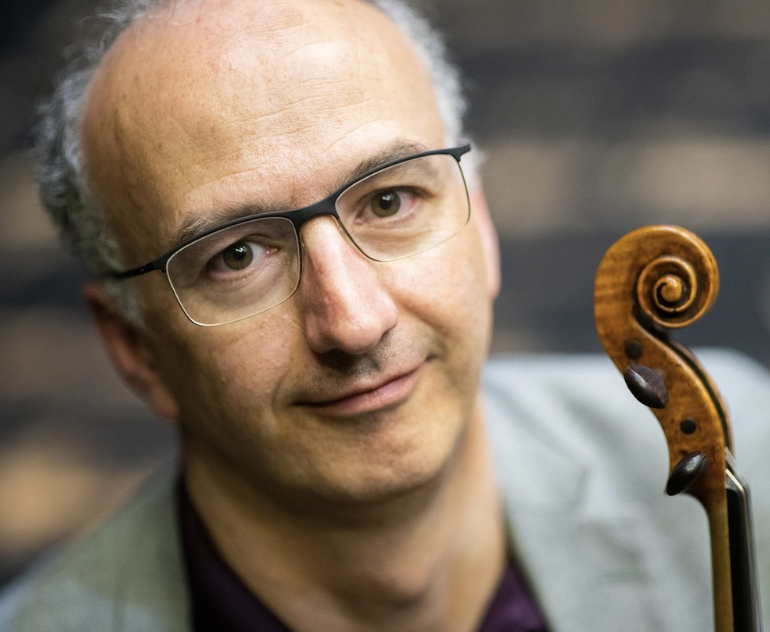
Violinist Edward Dusinberre

Saless is especially thrilled to perform the Beethoven Concerto with Dusinberre. “It’s one of these pieces that I am very picky about who I would perform it with,” he says. “I think it requires a certain amount of maturity, no matter how good technically someone is. To play it with Ed is like a dream come true!”

As for the Seventh Symphony, Saless selected it to go on the Carnegie Hall program and then decided to open the season with it as well. “I wanted to do something (in New York) that I thought we could do really well, and would fit the programming (for the opening concert),” he says. “I thought, what could we do that I would feel comfortable, because I connect to it. If I’m going to go to Carnegie Hall and my legs are going to be shaking of nervousness, I need something that I could literally do in my sleep. So I picked Seven.”

He also wants the players to be comfortable. “If you’re going to perform in Carnegie Hall, you want a piece that you’ve already done during that season,” he says. “(That means) a smaller amount of preparation (later), and everybody feels less nervous.”

He also thinks you have to be a little bit crazy to perform the Seventh Symphony, but, he says, “I qualify!” Often noted for its dance-like rhythms, the Seventh Symphony is almost obsessive in repeating those rhythms. Saless calls it “borderline personality disorders in music, obsessive and frenetic.”

The powerful slow movement alternates a series of chords that underlay a mournful melody in a minor key with a bright theme in major. “It’s like (Beethoven) is trying to write a piece that is not a funeral march but sounds like one,” Saless says. “It’s kind of conflicted, and I find that very interesting.”

Saless faced a logistical complication in planning the season. As much as possible, he wanted to have the same players during the season as in New York. But he had to schedule around rehearsals and performance of the Colorado Ballet, because so many of his best players were also in their orchestra. 

“I have to literally set up my schedule based on Colorado Ballet,” he says. BCO’s musicians, like all orchestras in Boulder, are free-lance players and Colorado Ballet pays very well. And every ballet production has numerous rehearsals and performances, all of which had to be scheduled around.

The New York appearance was made possible by a sponsor who was willing to underwrite both the orchestra and piano soloist Adam Żukiewicz playing in New York. Żukiewicz, who appeared on one of the BCO’s Mini-Chamber Concerts in January, and returns for another chamber concert Nov. 23 (7:30 p.m.; see the BCO season schedule HERE) will play a concerto with the orchestra in Carnegie Hall.

# # # # #

“Titanic Journey”
Boulder Chamber Orchestra, Bahman Saless, conductor
With Edward Dusinberre, violin

  • Bahman Saless: Ode to the Rocky Mountains
  • Beethoven: Concerto in D major for violin and orchestra
    —Symphony No. 7 in A major

7:30 p.m. Sunday, Oct. 6
Boulder Adventist Church, 345 Mapleton Ave.

TICKETS

Boulder Symphony presents “America-Centric” concerts

Symphony by Florence Price is the “American anchor” of programs Saturday and Sunday

By Peter Alexander Sept. 25 at 11:25 a.m.

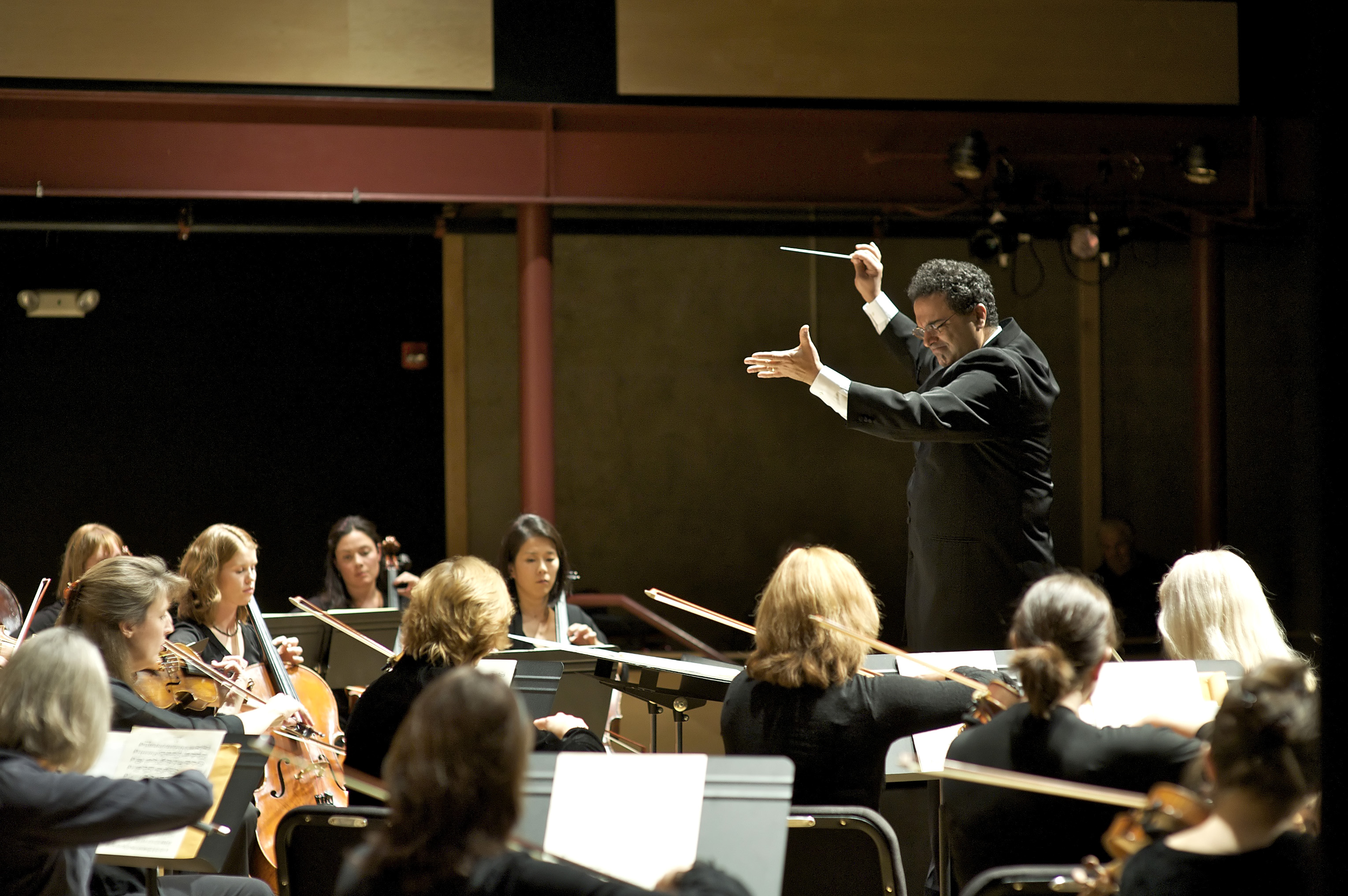
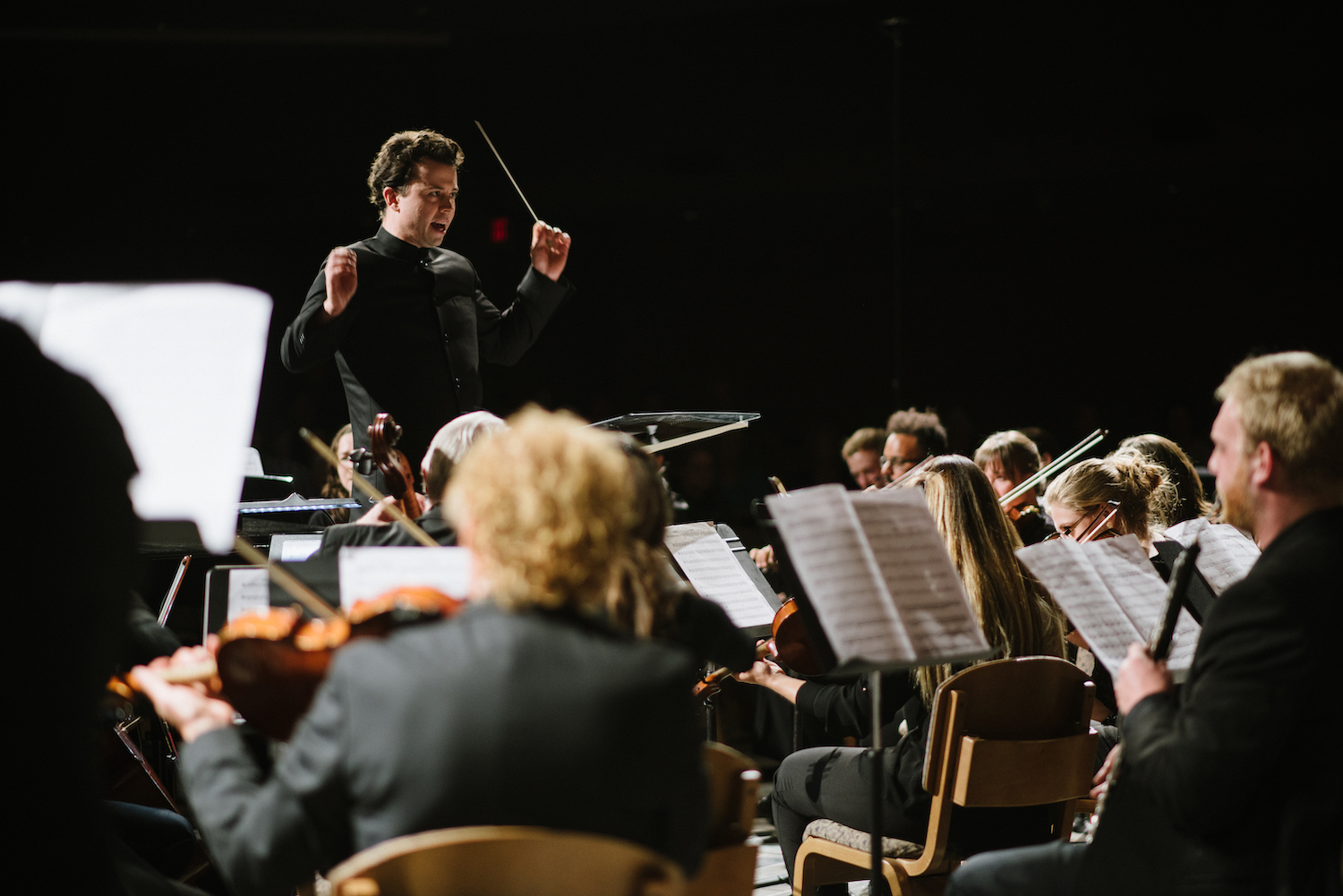
The Boulder Symphony opens a new season this weekend with what conductor Devin Patrick Hughes calls “a very America-centric concert.” Performances at the Gordon Gamm Theater of the Dairy Arts Center will be at 2 and 7:30 p.m. Saturday and 2 p.m. Sunday (full program and details below).

Boulder Symphony and conductor Devin Patrick Hughes

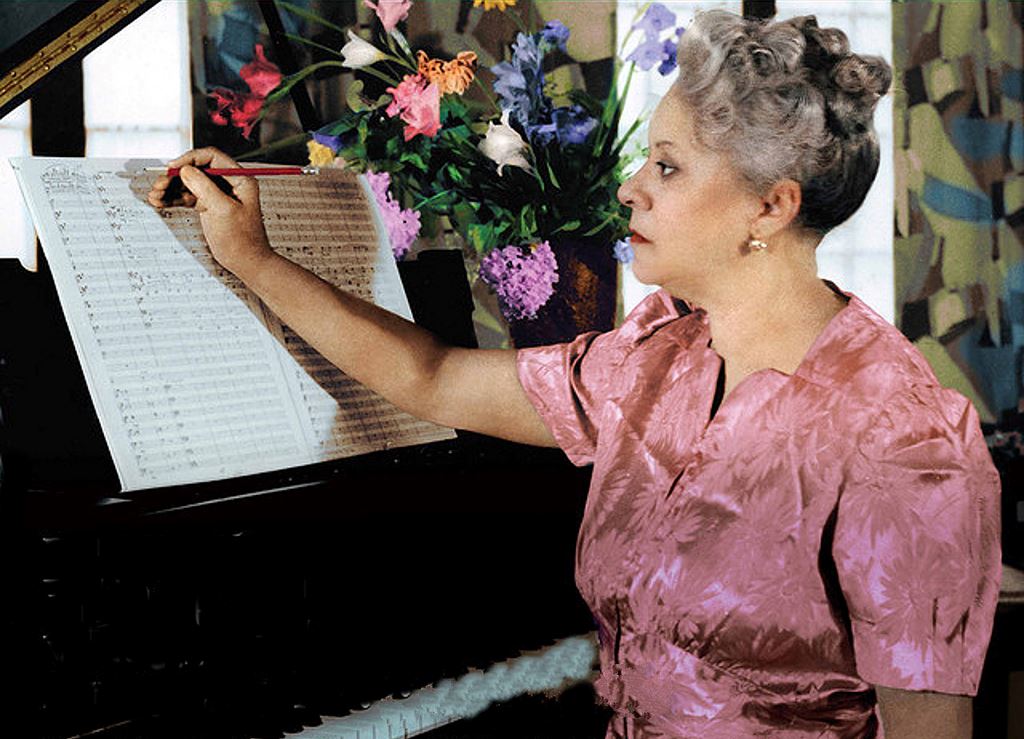
The most obviously American work on the program—in effect the American anchor to the concert—is the Symphony No. 1 by Florence Price. A prodigy who gave her first piano performance at the age of four and later attended the New England Conservatory, Price was the first African American woman to have music played by a major symphony.

Completing the program are two works by European composers with American connections: The Slavonic Dance No. 1 by Dvořák, who lived in the United States in the 1890s and whose “New World” Symphony inspired Price and other African American composers at the turn of the 20th century; and Tchaikovsky’s Piano Concerto No. 1, which was premiered in the U.S.

Soloist for the concerto will be Artem Kuznetsov, 2024 winner of the the International Keyboard Odyssiad & Festival in Ft. Collins. The Boulder Symphony has maintained a close relationship with the competition for a number of years by annually presenting the winner on one of their concerts.

Born in Arkansas, Price moved north during the “great migration” of the 1920s and settled in Chicago. She studied composition and organ and worked as an organist for silent films. In 1933 her First Symphony was premiered by the Chicago Symphony at the Century of Progress World’s Fair. 

Florence Price (photo colorized)

“Florence Price is the quintessential American composer,” Hughes wrote in an email. “Her music takes from the melting pot of our culture, from spirituals and gospel, and blends them with the great European masters to create a unique American voice.”

Her total output includes four symphonies, a piano concerto, two violin concertos, and other works for orchestra, in addition to choral, vocal and piano pieces. In 2009 dozens of works by Price were discovered at her summer home, which had been abandoned for many years. Among this collection were the two violin concerto and the Fourth Symphony—works that would have been lost had the manuscripts not been found.

The First Symphony is in the traditional four movements. Price drew on her African-American heritage with pentatonic, spiritual-like melodies and a lively, syncopated third movement. Titled “Juba Dance,” it evokes a dance and rhythmic accompaniment performed by African slaves throughout the New World.

Another important influence is Dvořák’s Ninth Symphony, “From the New World.” Not only are both works in E minor, Price scholar Rae Linda Brown wrote that “an examination of Price’s symphony reveals that she had thoroughly studied Dvorak’s score.”

Among the most popular of Dvořák’s works, the two sets of Slavonic Dances were originally composed for piano four hands and later set for orchestra by the composer. It was the publication of the first set for piano four hands in 1878, facilitated by Brahms, that established Dvořák as an important and recognized composer. The first dance is a Furiant, an energetic Bohemian dance marked by shifting accents and alternating duple and triple time.

Dvořák’s connection to the American theme of the concert is through his years living in New York and his 1893 visit to the Czech village of Spillville in Iowa. His interest in African American and other American musical styles was very influential at the time.

As Hughes wrote, “Dvořák is at the crossroads of European and American voices. His symphonic work and educational initiatives in America in the 1890s paved the way for a new American school that recognized the importance of African American folk music as the future of an American school.”

Pianist Artem Kuznetsov

Tchaikovsky wrote his First Piano Concerto in 1874-75. He hoped that the great Russian virtuoso Anton Rubinstein would play the premiere, but Rubinstein criticized the score when he saw it. As a result the premiere was played by the German pianist Hans von Bülow in Boston. Rubinstein later took back his criticism of the concerto and promoted it through performances. Today it is one of the best known piano concertos.

Continuing the American connection among the composers, Tchaikovsky came to the United States and conducted on four concerts in Carnegie Hall, including the hall’s opening night May 5, 1891—shortly before Dvořák arrived in the U.S.

A native of Balashov, Russia, Kuznetsov has won several international competitions in addition the International Keyboard Odyssiad. He holds Master of Music degree and Artist Diploma from the Shepherd School of Music at Rice University. He has performed across the United States, in Russia, Germany and the Netherlands.

The weekend’s concerts are the first in a series of three orchestral programs to be performed by the Boulder Symphony at the Dairy Arts Center, each including a work by an American composer. The season culminates in May with performances of Beethoven’s Ninth Symphony, presented in collaboration with Kim Robards Dance; you may see details on the orchestra’s Web page, along with information on their Curiosity Concerts for young people.

The Boulder Symphony also offers a music academy that is open to all talented students regardless of ability to pay. “Boulder Symphony created our Music Academy so every child could have access to musical instruments and instruction,” Hughes wrote. “Those who contribute to our scholarship program give the dream and promise of a lifetime of music-making to all kids in Boulder County.”

# # # # #

Boulder Symphony, Devin Patrick Hughes, conductor
With Artem Kuznetsov, piano

  • Dvořák: Slavonic Dance No. 1 in C major, op. 46 no. 1, “Furiant”
  • Tchaikovsky: Piano Concerto No. 1 in B-flat minor
  • Florence Price: Symphony No. 1 in E minor

2 and 7:30 p.m. Saturday, Sept. 28
2 p.m. Sunday, Sept. 29
Gordon Gamm Theater, Dairy Arts Center

TICKETS

CORRECTION: The first concert on Saturday, Sept. 28, is at 2 p.m., not 4 p.m. as originally posted.

Grace Notes: Bach, Timbres, Sphere and a Groove

Programs outside the norm, from the 18th to the 21st centuries

By Peter Alexander Sept. 18 at 10:05 p.m.

The Boulder Bach Festival (BBF) and guest artists will take audiences back to 18th-century Venice in a program entitled “Anonimo Veneziano” (Anonymous Venetian) 4 p.m. Saturday, Sept. 21, at the Dairy Arts Center in Boulder.

The program, with the BBF’s music director/violinist Zachary Carretin and the COmpass REsonance ensemble (CORE Ensemble), will feature violinist Nurit Pacht from NewYork, harpsichordist Chris Holman from Cincinnati, and theorbist Keith Barnhart, an historical plucked instruments specialist who is also the BBF’s educational coordinator.

Nurit Pacht

The program opens with the famous Adagio attributed to 18th-century Italian composer Tomaso Albinoni and featured in many film scores. In fact, the Adagio was composed by 20th-century Italian musicologist Remo Giazotto. A scholar of Albinoni’s music Giazotto claimed that the Adagio was based on a fragment of an Albononi trio sonata that he found on a manuscript that has since mysteriously disappeared. 

The remainder of the program will be filled out with genuine Albinoni works, the complete Sinfonie e Concerti a cinque (Sinfonias and concertos for five instruments), op. 2, that were published in Venice in 1700. This important collection is rarely performed complete. The BBF performance, which will  be played without intermission, is expected to take approximately 75 minutes.

 Pacht holds a degree in historical performance from the Juilliard school and is known as a specialist in both music by living composers, including works written for her, and music of the Baroque. She was a top prize winner in the Irving Klein International Music Competition in California, the Tibor Varga International Violin Competition in Switzerland, and the Kingsville International Music Competition in Texas. She has toured widely in Europe and the United States. She teaches privately in New York City.

# # # # #

Anonimo Veneziano
Boulder Bach Festival CORE Ensemble, Zachary Carrettin, conductor/violinist
With Nurit Pracht, violin, Chris Holman, harpsichord, and Keith Barnhart, theorbo

  • Remo Giazotto: “Adagio in G minor by Tomaso Albononi”
  • Tomaso Albinoni: Sinfonie e Concerti, op. 2

4 p.m. Saturday, Sept. 21
Dairy Arts Center Gordon Gamm Theater

TICKETS

# # # # #

The Boulder Chamber Orchestra’s (BCO)chamber concert titled “Mixed Timbres,” postponed from last April due to the power outage caused by high winds, will be presented at 7:30 p.m. Saturday, Sept. 21, in the Boulder Seventh-Day Adventist Church.

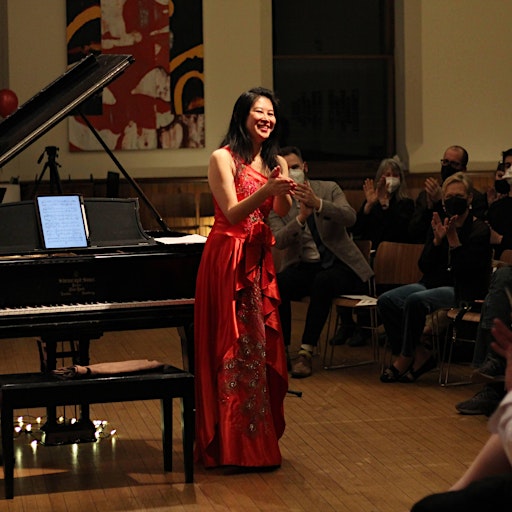
The concert will feature the BCO’s 2023-24 artist-in-residence, pianist Hsing-ay Hsu, performing with two members of the orchestra—cellist Julian Bennett and clarinetist Kellan Toohey. All four works on the program use the ensemble of piano, clarinet and cello, a mix of timbres that has a limited but interesting repertoire.

Hsing-ay Hsu

Beethoven’s Op. 11 is one of the earliest works for the combination. It is sometimes known as the “Gassenhauer Trio,” taken from the popularity of the theme that Beethoven uses for variations in the final movement. In Vienna, a Gassenhauer (from Gasse, an alleyway) referred to a simple song that was so popular that it was heard all over town. The theme Beethoven used was taken from a popular music theater work, L’amor marinaro (Seafaring love) by Joseph Weigl.

Brahms’s Trio op. 114 is one of four chamber works the composer wrote for the clarinetist Richard Mühlfeld in the last years of his life. Brahms’s admiration for Mühlfeld’s playing was reflected in the comment of one of the composer’s friends who wrote that in the Trio, “it is as though the instruments were in love with each other.”

Like Brahms’s Trio, Fauré’s D minor Trio was one of his last compositions. Although Fauré originally planned the Trio for piano, clarinet and cello, it was published as a traditional piano trio, with violin in place of the clarinet. The BCO performance of the first movement restores the instrumentation that Fauré first imagined for the trio.

Emily Rutherford’s “Morning Dance” for piano, clarinet and cello was commissioned by Toohey in 2017. A native of Colorado, Rutherford is a graduate of Westmont College in Santa Barbara, Calif., and the Longy School of Music in Los Angeles.

# # # # #

“Mixed Timbres”
Hsing-ay Hsu, BCO Artist in residence, piano
With Boulder Chamber Orchestra members Kellan Toohey, clarinet, and Julian Bennett, cello

  • Gabriel Fauré: Piano Trio in D minor, I. Allegro ma non troppo
  • Beethoven: Trio in B-flat major for piano, clarinet and cello, op. 11
  • Brahms: Trio in B-flat for piano, clarinet and cello, op. 114
  • Emily Rutherford: Morning Dances

7:30 p.m. Saturday, Sept. 21
Boulder Seventh-Day Adventist Church, 345 Mapleton Ave.

TICKETS

# # # # #

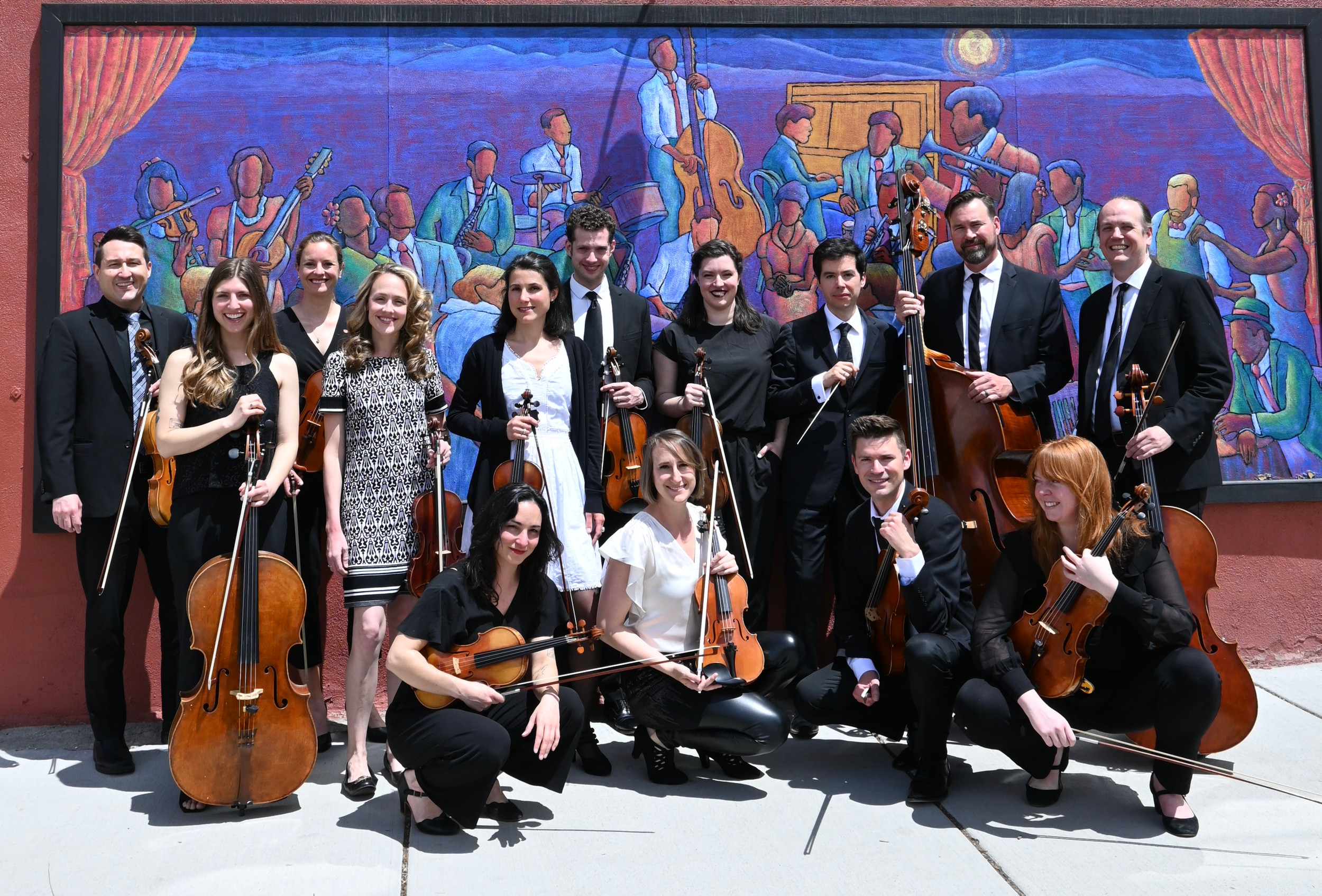
The Sphere Ensemble, a 14-member string ensemble, will celebrate the 100th anniversary of the premiere of Gershwin’s Rhapsody in Blue in 1924 with performances of their own all-strings arrangement of the Rhapsody.

The program, presented Saturday in Boulder and Sunday in Denver (Sept. 21 and 22; details below), will also include works by other jazz musicians including James P. Johnson, Hazel Scott and Winton Marsalis. Also on the program are arrangements of music from the Squirrel Nut Zippers, The Turtles and Andrew Bird; and pieces by Shostakovich, Stephen Foster and the classical-era composer Christoph Willibald Gluck, among others. 

Sphere Ensemble

In addition to the live performances, a live stream will be available from 7:30 p.m. Saturday, Sept. 21 through 10 p.m. Sunday, Sept. 29. 

This kind of eclectic programming, mixing sources and genres, is typical of the Sphere Ensemble, often in arrangements made by members of the ensemble. The “About” page on their Website explains, “We prioritize music by composers that are often overlooked in classical music programs. . . . From classical to classic rock, from baroque to hip hop, Sphere always chooses music that excites us.”

# # # # #

“Bridges”
Sphere Ensemble

  • Aldemaro Romero: Fuga con Pajarillo
  • Dmitri Shostakovich: Prelude and Fugue in D-flat Major (arr. Chris Jusell)
  • Stephen Foster: “Jeanie with the Light Brown Hair” (arr. Alex Vittal)
  • Squirrel Nut Zippers: The Ghost of Stephen Foster (arr. Sarah Whitnah)
  • Andrew Bird: Orpheo Looks Back (arr. Sarah Whitnah)
  • C.W. Gluck: Orfée et Eurydice, Danses des Ombres Heureuses
  • Brenda Holloway: You’ve Made Me So Very Happy (arr. David Short)
  • The Turtles: Happy Together (arr. Dave Short)
  • James Price Johnson: Charleston (arr. Alex Vittal)
  • Hazel Scott: “Idyll” (arr. Sarah Whitnah)
  • Wynton Marsalis: “At the Octoroon Balls”
    —“Rampart St. Rowhouse Rag”
  • George Gershwin: Rhapsody in Blue (arr. Alex Vittal)

7:30 p.m. Saturday, Sept. 21
Nomad Playhouse, 1410 Quince Ave., Boulder

3 p.m. Sunday, Nov. 22
Truss House, 3400 Atkins Ct., Denver

Livestream: 7:30 p.m. Saturday, Sept. 21–10 p.m. Sunday, Sept. 29

In-person and livestream TICKETS

# # # # #

The Boulder Philharmonic Orchestra will have a new series of intimate performances during the 2024-25 season, designed to bring their musicians into more informal spaces and give audiences the opportunity to hear them in smaller groups.

The repertoire will be a little different from the Macky concerts, too, featuring music by pop sensations from Lizzo to Taylor Swift alongside pieces by living composers including Philip Glass and Jessie Montgomery. And just for fun, they might throw in some Vivaldi as well.

These concerts, collectively the “Shift” series, will feature several different programs, each presented first at Planet Bluegrass in Lyons and then taken to small venues in Longmont and Boulder. The first program, played by a string quartet of principal players from the orchestra, opens next Wednesday at Planet Bluegrass (7 p.m. Sept. 25; details below). Titled “Groove,” it will be repeated at the Dickens Opera House in Longmont at 6:30 p.m.Monday, Nov. 25.

Wildflower Pavilion at Planet Bluegrass, Lyons

The second program, also for string quartet, is titled “Americana: Redefined” and will be presented in October and February. A third program featuring a brass quintet from the orchestra, “Brass & Brews,” will be presented in October and April;  see the Boulder Phil Web page for details on all currently scheduled performances.

Mimi Kruger, the Boulder Phil’s executive director, said, “The idea is that people can get to know our musicians and these composers and connect in a different way. These are obviously smaller venues, but also a little bit more casual.”

She said that discussions about ways to showcase the individual musicians of the orchestra led them to look for new venues. “The idea came up to launch it through Planet Bluegrass (because) they have a series at the Wildflower Pavilion,” she said. “We’re doing all three there, but we also wanted to take them to other venues, so the first two will get repeated at Dickens Opera House in Longmont—that’s a great little place!”

The Phil’s Web page says pretty much the same thing, in more promotional language: “The Shift Series lifts the facade of the stereotypical orchestral concert . . . in unique venues along the Front Range.”

Kruger recommends watching for future announcements, as further performances are under consideration, featuring the orchestra’s woodwind players. 

# # # # #

“GROOVE”
Boulder Philharmonic string players: Ryan Jacobsen and Hilary Castle-Green, violin; Stephanie Mientka, viola; and Amanda Laborete, cello

  • Takashi Yoshimatsu: Atomic Hearts Club Quartet, Movement I
  • Justin Bieber: “Peaches” (arr. Alice Hong) 3’
  • Dinuk Wijeratne:Two Pop Songs on Antique Poems: “Letter from the afterlife”
  • Carlos Simon: Loop
  • Michael Begay: “Forest Fires”
  • Lizzo: “ Good As Hell” (arr. Alice Hong)
  • Jessie Montgomery: “VooDoo Dolls
  • Philip Glass: String Quartet No. 3: VI “Mishima/Closing” 4’
  • Taylor Swift: All Too Well” (arr. Alice Hong)
  • Wijeratne: Two Pop Songs on Antique Poems: “I will not let you go
  • Ed Sheeran: “Shape of You” (arr. Alice Hong)
  • Due Lipa: “Dance the Night” (arr. Zack Reaves)
  • Jessica Meyer: “Get into the NOW”: III. “Go Big or Go Home”
  • Vivaldi: Summer: Moment III (arr. Naughtin)

7 p.m. Monday, Sept. 25
Planet Bluegrass, Lyons, Colo.

TICKETS

6:30 Monday, Nov. 25
Dickens Opera House, Longmont Como.

TICKETS

Takács String Quartet celebrates its 50th season

Mutual respect, love of music and supportive audiences inspire the players

By Peter Alexander Sept. 12 at 9:14 p.m.

Fifty years is a long time in any job, but that is the landmark that András Fejér, cellist of the world renowned Takács Quartet, is approaching as the quartet enters its fiftieth season, 

András Fejér

The Takács String Quartet was founded in Budapest in September 1975—49 years ago—and has been in residence at the CU College of Music since 1983. The only original member of the quartet still with the group, Fejér is now 70, but he shows no sign of seeking a quiet retirement.

“I’m loving it,” he says about playing in the quartet and continuing the group’s busy concert schedule around the world. “I feel passionate about it, and I cannot imagine doing anything else.”

Fejér and the other members of the quartet—first violinist Edward Dusinberre, second violinist Harumi Rhodes and violist Richard O’Neill—will take the stage at Grusin Music Hall Sunday and Monday (4 p.m. Sept. 15 and 7:30 p.m. Sept. 16) for a standard string quartet program—a 20th century quartet by Leoš Janáček, sandwiched between classical-era works by Joseph Haydn and Beethoven (see full program below). This is a standard Takács program, and Fejér says they have no special plans for the half-century celebration.

“We just do what we are trying to do—classics nicely mixed with contemporary pieces,” he says. “We try to play them as much as we can. It’s a heartwarming mission.”

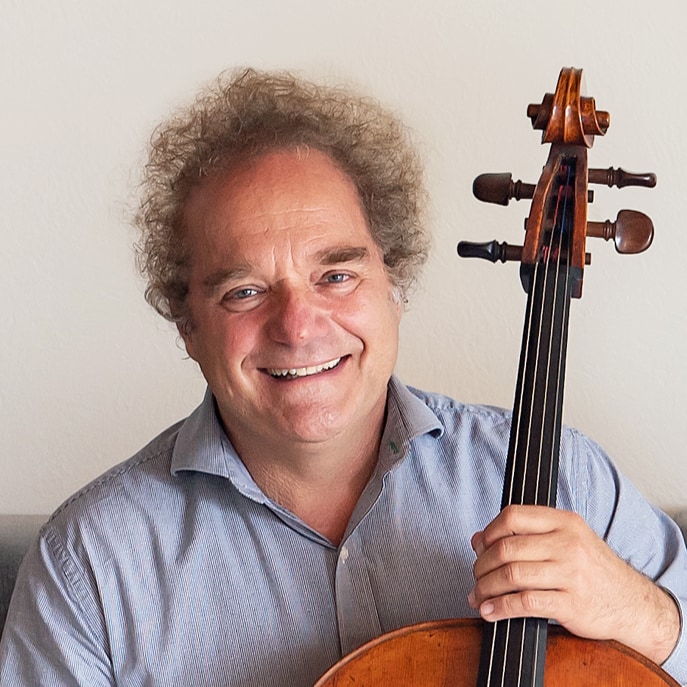
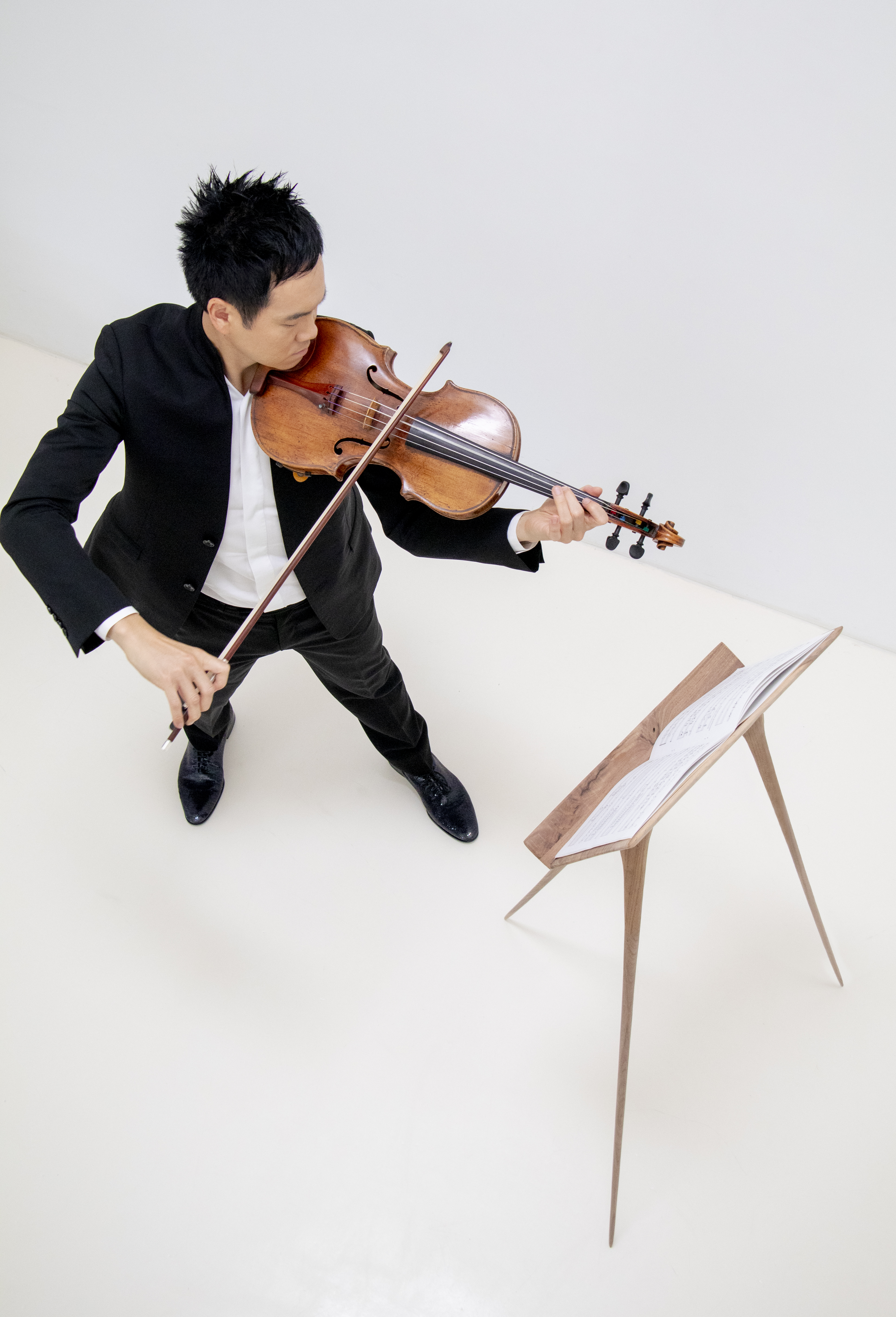
Richard O’Neill

The newest member of the quartet, O’Neill feels the same way about the busy life in a world-traveling quartet. “The greatest luxury is getting to do what we do,” he says. “I really love travel, even in the worst scenarios. There are things that can go wrong nowadays, but I still get excited to pack my suitcase and go out the door.”

If he likes anything more than travel, it’s playing for the Boulder audience. “The community here is such a unique community and (Boulder is) such an incredibly beautiful place,” he says. “Every concert we’re backstage at Grusin I really like hearing all the people (in the audience) excited to be together.”

O’Neill noticed the musicians’ connection with their audience from his very first Boulder home concerts with the Takács in 2021, but the relationship has not changed over Fejér’s years in the quartet. “We found it extremely supportive here (in 1983), with a wonderfully enthusiastic audience, and that’s how we feel until this day,” he says. “We got the support and the love of the audience, and the way it makes you feel, it’s a wonderful reaction with the audience.”

With all the personnel changes over 50 years—two first violinists, two second violinists, now three violists with the one cellist—the Takács has maintained its place among the top quartets in the world. That’s not because they have one authoritative way of doing things. Fejér identifies their defining quality more in the integrity of their approach to the music. 

“The quality is the combination of expressivity, character and technique,” he says. “There are many ways to interpret the same phrase, many ways to interpret any page of any piece. We are listening to new ideas, because we feel it keeps the process fresh. As our wonderful teacher in Budapest put it, nobody has a letter from Haydn or Beethoven.

Takács String Quartet. Photo by Ian Malkin.

“We are honest, and being honest gives you a major conviction. As long as the message rings true, the audience is happy and immersed in the performance.”

That does not mean that the players always agree. “We had our fair share of arguments, especially when we were young and unwise,” he says. “But the moment we realized that there are many ways, what we can do is (say) ‘OK, in New York we try your idea, and then at Berkeley we will try my idea,‘ and then we will settle down with something. Everybody‘s happy, and then we all have a good giggle afterwards. It‘s great fun.”

O’Neill learned from the outset that every member is included in those conversations, no matter how long they have been with the group. “András could probably pull the seniority card on me, (but) he never does that,” he says.

“What I really love about the Takács is that if any one of us have a reservation, musical or personal about something that we’re doing, the quartet won’t do it. I really respect that. We’re all very distinct individuals, and of course we have our differences, but we respect each other. I think that‘s the magic combination.

“There‘s nothing like being in a group where you really get to know everyone like family,” he says. So whenever the Takács “family” walks onstage, you know they are doing what they love doing together. 

And they love the music. Of the first piece on the current program, Haydn’s Quartet in C Major, op. 54 no. 2, O’Neill says, “I have never played (the piece before), but it’s like vaudeville for music. The humor is so palpable and overt, and I love it. With Mozart, humor is either tinged with sadness or hidden in refinement, but with Haydn it’s unabashed. It’s just flat out funny. It‘s an amazing work.”

Janáček’s Quartet No. 1, however, is not humorous. Known as “The Kreutzer Sonata,” it is based on the Tolstoy novella of that name about a man who kills his wife for having an affair with a violinist with whom she plays Beethoven’s “Kreutzer” Sonata. Written by a composer of many great operas, the quartet is almost operatic in its drama and intensity.

“We adore both quartets (by Janáček),” Fejér says. “The language, the harmonies, the technical realization is so specific to Janáček. You can recognize his music right away. We are talking about murder and jealousy and seemingly idyllic music. We have everything in between idyllic and ‘I’ll kill you!’”

The final piece is one of the most loved works for string quartet, Beethoven’s Quartet in F Major, op. 59 no. 1, one of three quartets Beethoven wrote for the Russian ambassador in Vienna, Count Razumovsky. Originally regarded as audaciously long and difficult, all three are now accepted in the standard repertoire and loved by audiences.

The first of the set is in the key of F major, which in works like the Pastoral Symphony, the Symphony No. 8 and the Romance for violin, inspired some of Beethoven’s most lyrical and melodic music. That quality is evident from the very beginning of the quartet, with a long theme from the cello playing in its richest register. 

“When you start with a cello solo, how can you go wrong?” O’Neill says. “I love the piece very much.”

But equal to the music on the program is the survival of the Takács Quartet over the past 49 years, which few chamber music ensembles have matched and for which the Boulder audience shows its appreciation every year and every concert. Fejér gives what may be the best explanation for that when he says “We are like kids on the playground, enjoying the toys. 

“We are totally involved and just enjoying ourselves.”

# # # # #

Takács String Quartet

  • Haydn: String Quartet in C Major, op. 54 no. 2
  • Leoš Janáček: String Quartet No. 1, (“The Kreutzer Sonata”)
  • Beethoven: String Quartet in F Major, op. 59 no. 1 (“Razumovsky”)

4 p.m. Sunday, Sept 15 and 7:30 p.m. Monday, Sept. 16
Grusin Music Hall
Live Stream: 4 p.m Sunday, Sept. 15 until 11 p.m. Monday, Sept.

In-person and livestream TICKETS

Other fall concerts

Takács String Quartet

  • Beethoven: String Quartet in A minor, op. 132
  • Other works TBA

4 p.m. Sunday, Oct. 13 and 7:30 p.m. Monday, Nov. 4
Live Stream: 4 p.m. Sunday, Oct. 13 through Monday, Oct. 21

In-person and livestream TICKETS

Quartet Integra

4 p.m. Sunday, Nov. 3 and 7:30 p.m. Monday, Oct. 14
Live Stream: 4 p.m. Sunday, Nov. 3 through Monday, Nov. 11

In-person and livestream TICKETS

Boulder Phil opens season with guest conductor

Boulder native Francesco Lecce-Chong subs for Michael Butterman

By Peter Alexander Sept. 5 at 9 p.m.

The Boulder Philharmonic opens its 2024–25 season Sunday afternoon in Macky Auditorium (4 p.m. Sept. 8) with music by Tchaikovsky and Mendlessohn. Sixteen-year-old rising musical star Amaryn Olmeda will be the soloist for Tchaikovsky’s Violin Concerto. 
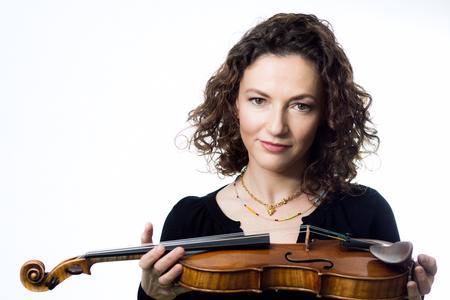
The concert will be led by guest conductor Francesco Lecce-Chong, substituting for an indisposed Michael Butterman. In addition to the concerto, Lecce-Chong will lead the orchestra in Mendelssohn’s “Reformation” Symphony, Vaughan Williams’ Fantasia on a Theme of Thomas Tallis, and English Renaissance composer John Dowland’s Lachrimae antiquae (Ancient tears).

Francesco Lecce-Chong

A familiar presence to the Philharmonic’s audience, Butterman was scheduled to conduct the program. However, he was diagnosed with lymphoma, and in a recently posted YouTube video says “I’m going to have to watch my energy (and) stay away from crowds.”

He has had to curtail his activities with all four orchestras he conducts, in Boulder; Shreveport, La., where he lives; Williamsburg, Va.; and Lancaster, Penn. Nevertheless, he says “I feel very good, my doctors are optimistic (and) I hope to be back as soon as it’s practical—hopefully later on this fall.”

Growing up in Boulder County, Lecce-Chong was extremely active in the local youth classical music scene, both as violinist and pianist. He is returning to Colorado for his first opportunity to conduct the Boulder Phil. The program he will lead was selected by Butterman as the season opener, except for one piece that was selected by a vote of the orchestra’s season subscribers, the Fantasia on a Theme of Thomas Tallis by Ralph Vaughan Williams.

Also on the program is Lachrimae antiquae (Antique tears) by the English Renaissance composer John Dowland. Written around 1600 as “Flow my Tears,” a song with lute accompaniment, it was arranged by Dowland for viol consort (an ensemble of string instruments) in a set of seven versions of which the Lachrimae antiquae is the first.

Each of the seven settings represents a different kind of tear, including sighing tears, sad tears, insincere tears and lover’s tears. As an expression of deep melancholy, the collection is considered one of Dowland’s most personal expressions. Another piece he wrote around the same time has the punning title “Semper Dowland, semper dolens” (always Dowland, always mournful). The Phil will play a transcription of the music for viol consort for modern strings.

The centerpiece of the concert will be Tchaikovsky’s Violin Concerto. As popular as it is, the concerto has not been presented by the Boulder Phil in many seasons. The concerto was composed in 1878. Tchaikovsky was in Switzerland, where he went to recover from the emotional damage from his brief marriage. 

The concerto was initially dedicated to the Hungarian virtuoso Leopold Auer, who however refused to perform it. The premiere was given instead by Russian violinist Adolph Brodsky, to whom Tchaikovsky later dedicated the work. In spite of mixed initial reviews, it eventually became one of the most popular staples of the violin repertoire. 

Amaryn Olmeda

At only 16, Olmeda has already started building an impressive musical resume. Born in Melbourne, Australia, she won the Sphinx Competition at 13, a national competition for string players. She currently studies at the New England Conservatory of Music. In addition to performances with the Sphinx Virtuosi chamber ensemble, she has appeared as soloist with the Philadelphia Orchestra, Seattle Symphony and Buffalo Philharmonic, among other major groups.

The final work on the program is Mendelssohn’s “Reformation” Symphony in D major/minor. It was comprised in 1830 for the 300th anniversary of the Augsburg Confession, one of the foundational documents of the Lutheran church. The second symphony Mendelssohn wrote, it was not published until 1868, 21 years after the composer’s death, leading to its numbering as his Fifth Symphony.

The symphony includes themes familiar to Lutheran congregations. The slow introduction makes use of the so-called “Dresden Amen,” a seven-note cadence sung by Lutheran choirs in Dresden and the German state of Saxony. Symbolic of the Protestant movement, it has been used by Wagner, Bruckner and other composers.

The final movement of the symphony is based on the chorale “Ein feste Burg ist unser Gott” (A mighty fortress is our God), composed by Martin Luther. In spite of the widespread popularity of Mendelssohn’s orchestral music, the Fifth Symphony is not as well known as either the Third (“Scottish) or Fourth (“Italian”) symphonies.

Growing up in the Boulder area, Lecce-Chong played in the  Longmont Youth Symphony and was an assistant to the the conductor of the Boulder Youth Symphonies. In 2002 he won first prize in the PeakArts Young Soloist Competition. After leaving Colorado he attended the Curtis Institute of Music, the Mannes College of Music, and Accademia Musicale Chigiana in Italy. 

He served as associate conductor of the Pittsburgh and Milwaukee symphonies, and is currently conductor of the Santa Rosa Symphony in California and artistic partner with the Eugene, Oregon, Symphony. He has appeared with orchestras around the U.S. including the San Francisco Symphony, New York Philharmonic, Seattle Symphony, Baltimore Symphony, Detroit Symphony and Saint Paul Chamber Orchestra.

# # # # #

“Tchaikovsky & Mendelssohn”
Boulder Philharmonic Orchestra, Francesco Lecce-Chong, guest conductor
With Amaryn Olmeda, violin

Ralph Vaughan Williams: Fantasia on a Theme of Thomas Tallis
John Dowland: Lachrimae antiquae (Antique tears)
Tchaikovsky: Violin Concerto
Mendelssohn: Symphony No. 5 in D major/minor (“Reformation”)

4 p.m. Sunday, Sept. 8
Macky Auditorium
TICKETS

A notice to readers

A much needed two-week vacation

By Peter Alexander Aug. 19 at 11:20 a.m.

This has been a busy summer.

I don’t know how it was at your house, but for me, the combination of family events, summer performances to play and attend, and the unexpected home repairs to attend to has filled my days.

Filled to overflowing in fact.

So I am going to take a couple of weeks off to take care of all the unfinished business staring me in the face and maybe get some rest. And see some opera streams I’ve been wanting to see, some British mysteries, maybe even go to a movie! Such luxury.

I apologize for the early-season events I will miss—the Takács Quartet has already started their 2024–25 season—but I will be back in September. And isn’t that when fall events should start, anyway?

So enjoy your dog days, think of me lying on the couch (not the beach, sadly) happily sipping beverages, and I’ll see you again in September!