Boulder Chamber Orchestra features “Boulder Celebrities”

Violinist Ed Dusinberre and violist Richard O’Neill will play Mozart

By Peter Alexander Feb. 27 at 5:15 p.m.

The Boulder Chamber Orchestra (BCO) traces the history of classical music on their next concert (7:30 p.m. Saturday, March 1; details below), with a concerto grosso from the Baroque era, music from the heart of the classical style, and a symphony pointing the way to the early Romantic era.

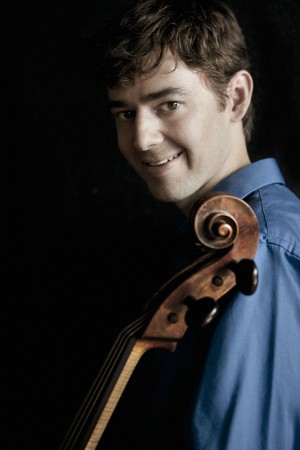
The concert under conductor Bahman Saless will feature violinist Edward Dusinberre and violist Richard O’Neill from the Takács Quartet playing Mozart’s exquisite Sinfonia Concertante for violin and viola with orchestra. Two of the superstars of the classical music world, Dusinberre and O’Neill are hailed in the concert’s title as “Boulder Celebrities.”
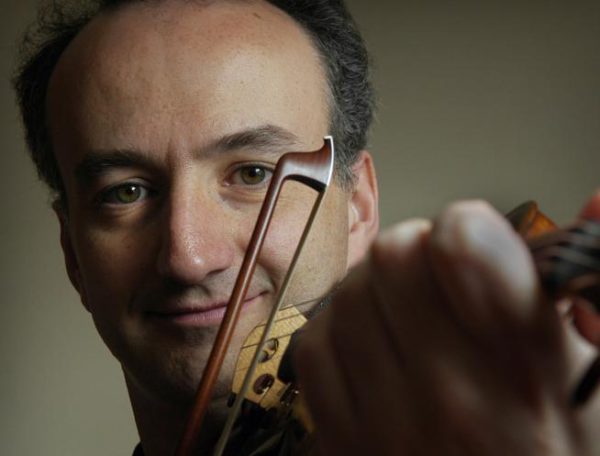
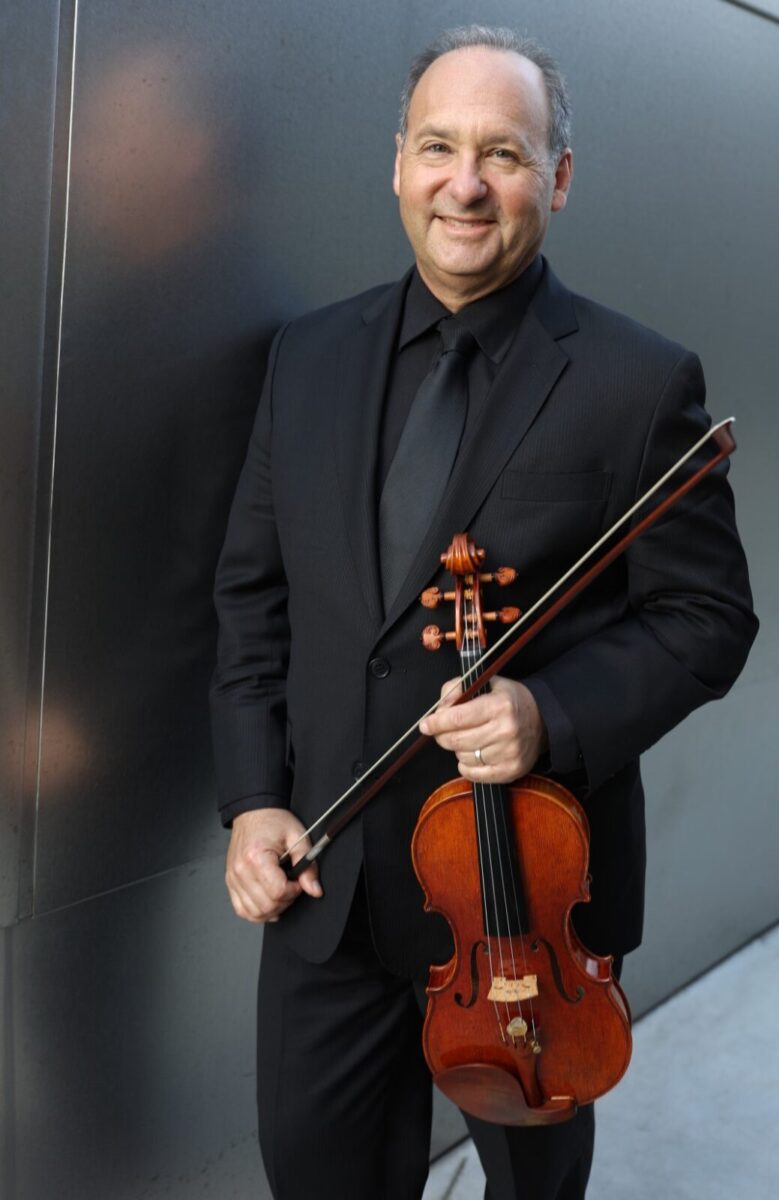
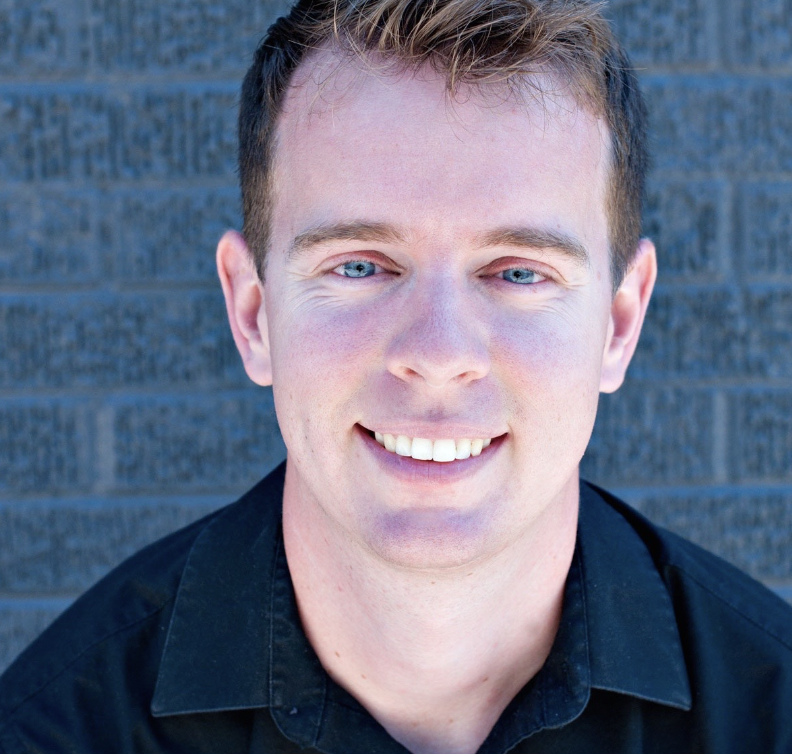
Edward Dusinberre

Works framing the Mozart are the Concerto Grosso in F major attributed to Handel, and Schubert’s Symphony No. 5 in B-flat major. All three are bright and cheerful works, giving the entire concert an uplifting spirit.

With its two soloists, the Mozart stands as the centerpiece of the program. Dusinberre and O’Neill know each other well, having played together in the Takács since the latter joined the group five years ago. In addition to their work in the quartet, they both have concert and recording careers as soloists and both have won a classical music Grammy. 

Mozart’s Sinfonia Concertante is one of the composer’s most loved pieces, and one that O’Neill has played many times. “For some violists it’s the reason they play the viola,” he says. “It’s such an amazing work, and it has been a lifetime dream for me, visiting it through different stages of my life. (There is) the joy of playing it over the years with different orchestras and different violinists, each having their own distinct views on the piece.”

He says he learns from every violinist he plays it with, but this is his first time with Dusinberre. And it’s a special experience playing with someone he knows so well from their work together in the Takács. 

“Part of the magic of being in a string quartet is that you spend so much time with your colleagues, and you get to know them under many different circumstances,” O’Neill says. “I’ve played (the Mozart) with brilliant soloists, but this time with Ed we’ve been able to dig into the more psychological aspects of the music, because we already know each other’s playing pretty well.”
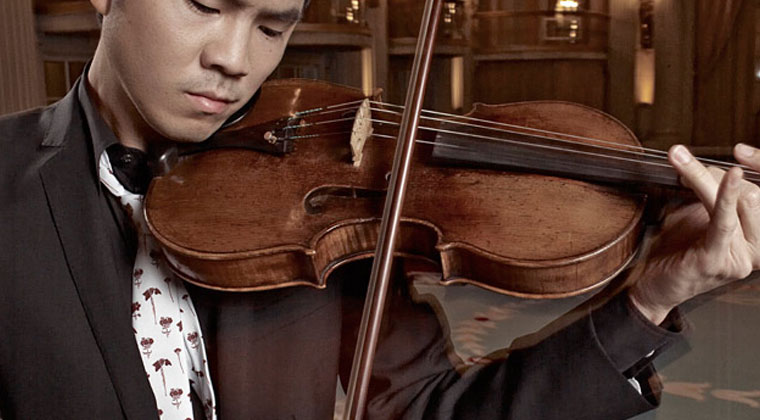
Richard O’Neill

In other words, O’Neill and Dusinberre were able to skip past the early stages of getting to know a musical partner and get down to details right away. The quartet just returned to Boulder from a tour, but they were able to rehearse Mozart together on the road, O’Neill says. Now, “I’m really looking forward to working with the orchestra and Bahman (Saless),” he says.

One thing he urges the audience to tune into with the Sinfonia Concertante is how the two solo parts relate to one another. “Mozart pairs the violin and viola like they’re operatic characters,” he explains. “It’s like a conversation.

“The person that talks first often frames the way the conversation will go. In the first movement,  the violin says, then the viola says, and then the violin says and the viola says. There’s a lot of playful discussion, and then in the recapitulation—the viola says it first!”

The concerto grosso was a form common in the Baroque period, featuring a small group of soloists with orchestra. The Concerto Grosso in F features two oboes with a string orchestra. The soloists will be guest artist Ian Wisekal and BCO member Sophie Maeda. 

The Concerto is “attributed to Handel” because publishers of the time often printed and sold works that had been pirated, or changed the name of the composer, making authenticity uncertain. In the case of this concerto—which is certainly an authentic representative of the Baroque style—it has appeared under Handel’s name and as an anonymous composition.

Schubert wrote his Fifth Symphony in 1816, when he was 19 years old. It is the most classical of Schubert’s symphonies, having been written for a smaller orchestra, with one flute and no clarinets, trumpets or timpani. Schubert was infatuated with Mozart’s music, and wrote in his diary ”O Mozart, immortal Mozart!”

At the time he was unemployed, hanging out with a group of young artists, poets and musicians. The first reading of the symphony was given by this circle of friends in a private apartment, with the first public performance occurring 13 years after Schubert’s death.

The music of the symphony is often described as “Mozartian” in its gracefulness and melodiousness. It conforms closely to the standard four-movement structure of the classical period, with a minuet movement in third place. At the same time, the harmonic palette suggests the Romantic style to come, particularly in Schubert’s works of the remaining 12 years of his life.

But regarding the program’s title, the question of classical musicians being genuine “celebrities” might be debatable—but if it’s possible it would be in Boulder, where the Takács Quartet routinely sells out two performances of every program. 

Superstars or celebrities, Grammy winners both, Dusinberre and O’Neill are always worth hearing.

# # # # #

“Boulder Celebrities”
Boulder Chamber Orchestra, Bahman Saless, conductor
With Edward Dusinberre, violin, and Richard O’Neill, viola

  • Handel: Concerto Grosso in F major, op. 3 no. 4
  • Mozart: Sinfonia Concertante in E-flat major for violin and viola with orchestra, K364
  • Schubert: Symphony No. 5 in B-flat major, D485

7:30 p.m. Saturday, March 1
Boulder Adventist Church, 345 Mapleton Ave.
TICKETS

Boulder’s Starkland has three new albums

Electric guitar, accordion, and piano at the frontier of musical creativity

By Peter Alexander Feb. 20 at 10:30 p.m.

In the about the past two years—specifically since April, 2023—Starkland, a record label located in Boulder, has released three diverse new albums.

In keeping with the label’s stated goal of promoting “alternative classical, experimental, and avant-garde music through the production of high-quality recordings,” these albums feature new music that will appeal to the adventurerous listener. If you want to explore the current frontier of musical creativity, all three albums are worth your time.

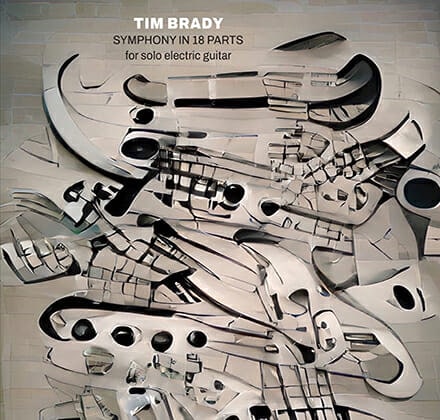
Symphony in 18 Parts for solo electric guitar
Tim Brady, composer, electric guitar
Starkland ST237
Released April 28, 2023

Symphony in 18 parts presents 18 short pieces composed and played by Tim Brady. Ranging from 1’34” to 4’47”, they loosely comprise a single composite work, or “symphony.” With so many short pieces, it offers variety rather than the kind of unity that past composers sought in their symphonies, and that is its strength as well as its weakness.

Brady acknowledged the diversity of his music when he wrote that “each movement (of the Symphony in 18 Parts) has its own world, its own unique way of proceeding, but together they are kaleidoscopic. This is a piece that is designed to feel that it can hold everything within it. That sounds symphonically ambitious to me.”

Indeed it does, and it echoes a well known remark of the Romantic symphonist Gustav Mahler, who wrote that a symphony “must be like the world. It must contain everything.”

One of the most intriguing aspects of Brady’s Symphony is the titles given to the individual movements. The relationship between title and musical content is not always clear, spurring thought and imaginings as one listens to the album, track by track. 

A few examples: The first track is titled “minor revolutions.” The music sounds like a post-modern/Baroque prelude, exploring sounds and chords up and down the fingerboard. The Prelude-ish style fits an opening movement, but what is revolutionary? You will have to listen and decide.

Track 6, “only the necessary equipment,” sound like background music for a teen slasher/horror film that could have been titled “entering the basement.” This might lead you to wonder, what IS the necessary equipment?

Particularly provocative is the title of Track 15, “lies beneath the surface.” Here the music suggests an opaque surface that might conceal something beneath. But is “lies” a noun or a verb? Again, that is for you to decide.

My favorite is Track 16, “noise: or who decides what and why.” The aggressive sounds here remind us that the line between noise and music has moved over the centuries. The movement opens with separated masses of sound, gradually developing musical rhythms, and then notes rushing up and down. This is a perfect musical demonstration of a truth I find all encompassing: every dispute can be reduced to two questions: Where do you draw the line, and, as Brady asks, who decides? 

The entire album demonstrates a very sensuous approach to musical sound. You won’t find tunes to recall, but you will find lots of evocative soundscapes, each different from the others. And much to think about as you ponder the relationship of titles to music.

Available from Bandcamp.

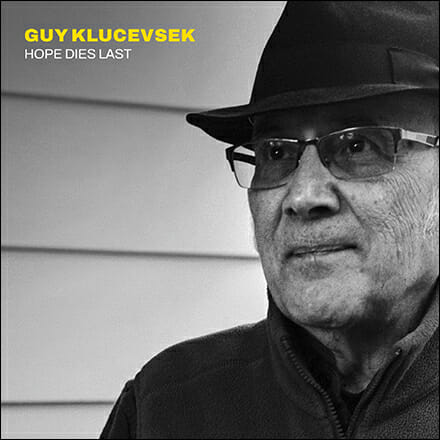
Guy Klucevsek: Hope Dies Last
Starkland ST238
Guy Klucevsek, Alan Bern, Nathan Koci, Will Holshouser, accordions
Bachtopus acccordion quartet: Robert Duncan, Peter Flint, Mayumi Miyaoka and Jeanne Velonis
Jenny Lin, piano, toy piano and celeste
Todd Reynolds and Jeff Gauthier, violins
Margaret Perkins, cello and whistling
Released Dec. 1, 2023

Hope Dies Last is a new collection of music by accordionist Guy Klucevsek, who has been accused by the Village Voice of writing “the world’s most abnormal ‘normal’ music.” I would describe the album as neither “normal” nor “abnormal,” but it is unusual, highly diverse and always intriguing. It joins my collection of favorite Starkland offerings.

Many of the tracks are creative versions of divergent dance types, including the opening “Slango,” a delightfully unbalanced 7/8 version of the tango. That is followed by “Feel the Bern,” a spirited hora written for and performed by Klucevsek’s long-time duo partner Alan Bern.

Several of the tracks are some version of a slow waltz, including the melancholy and stormy title track “Hope Dies Last” and the gently swaying “Seesaw Song.” The “Hornpipe” is exactly that, a carnivalesque dance that if not quite graceful, successfully evokes robust merrymaking. 

The final six tracks comprise a suite of pieces that Klucevsek wrote for Industrious Angels, a “hand-crafted-story-spinning-shadow-puppet-memory-play-with-music” created by actor/director Laurie McCants. Her script and Klucevsek’s music were in part inspired by Emily Dickinson’s poetry.

My favorite track—and not just for its unforgettable title—might be the jig-ish “Flying Vegetables of the Apocalypse.” Arranged for the violinist Todd Reynolds from music Klucevsek recorded in 1991, this version calls for both pre-recorded and live violin. 

“Flying Vegetables” offers what the liner notes calls three “gnarly bits:” a fast 3/4 section over a 3/4 ostinato, a canon for two violins three beats apart over an ostinato in 5/4, and a canon for three violins one beat apart over an ostinato in 7/4. These delightfully weird sections are followed by a more lyrical section in a  relaxed 6/8 meter, all adding up to one of those pieces where you never know what will come at you next.

If you are not familiar with Klucevsek’s “abnormal ‘normal’ music,” I suggest you unpack your curiosity and explore this album. With its remarkable variety of moods and styles, it can keep you engaged from beginning to end. 

Download available from Bandcamp.

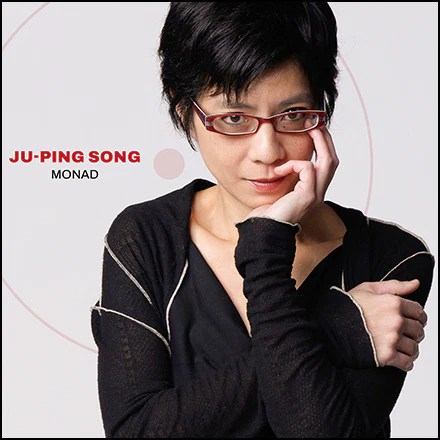
Monad
Ju-Ping Song, prerecorded and live piano
Starkland ST239
Released Dec. 6, 2024

Starkland’s most recent release, Monad, is not quite like the previous albums. Rather than numerous varied, evocative pieces that invite exploration, it is an immersive plunge into four very different sonic worlds. 

The album’s four tracks, all performed by pianist Ju-Ping Song, feature pieces by four different composers: Lois V Vierk, Molly Joyce, Kate Moore and Rahilia Hasanova. In different ways, they share a penchant for extreme pianism. As musically and technically challenging as they are, Song rises to meet the demands of all four. 

Vierk’s “Spin 2” takes its name from subatomic particles that have the same orientation 180 degrees apart—an image that suggested two grand pianos facing each other with a pianist at each keyboard. Composed for Ursula Oppens and Frederic Rzewski, it was revised by the composer in 2018. For this album, Song recorded both parts.

The score is an exploration of rhythm and sonority that begins with thudding rhythms articulated on the very lowest notes of the piano, contrasted with wispy inside-the-piano strumming of strings. Irregularly accented chords will remind some listeners of Stravinsky’s Rite of Spring. The pounding rhythms gradually fade into chords leaping across the full breadth of the keyboard, and finally into rippling scales and shimmering glissandi. 

Divided into sections defined by sonority, “Spin 2” creates a clear shape and sense of momentum as it shifts from one sonority to the next. In no sense “pretty” or melodic, it is a well crafted and intriguing sonic adventure.

Joyce’s “Rave” features a combination of live piano with prerecorded electronic sounds. It begins with long electronic tones overlaying widely separated notes in the piano that are almost indistinguishable from the electronics. Moving almost imperceptibly at the beginning, the music gradually speeds up over the course of the piece. As the piano fragments come faster, the two parts switch roles from foreground to background in ever inventive ways. 

The piece ends with strong chords in the piano, now definitively the foreground. This then was the goal all along: full, concluding chords in the piano, a resolution vaguely hinted by the piano part throughout. 

Moore describes her “Bestiary” for live piano and recorded soundtrack as a “sonic compilation of grotesque imaginary beasts,” but it is not the kind of literally descriptive music that occurs in Saint-Saëns’s Carnival of the Animals. I could not separate one beast from another in the unchanging musical texture that Song describes accurately as “endlessly repeating and changing chords.”

This is like much of the new music I have heard recently: exploration of an original and creative idea that goes on just too long. I prefer more spice and stronger sonic shapes, but that is personal taste. If you are a listener who can use “endlessly and repeating chords”—Song’s words—to enter a space of contemplation and reverie, you will be rewarded. Taste aside, it should said that this is an attentive performance that brings out the shifting rhythms and tempi of Moore’s detailed score.

Hasanova was born in Baku, Azerbaijan, where she witnessed the brutal “Black January” military attacks on hundreds of civilians by the Russian army in 1990. In her program notes, she writes of the “monad” as a basic unit underlying everything. “All diversity of the Universe and Beyond,” she writes, “is the multiplication of the monad.”

The music tells a more complicated and ominous tale. Written for a single pianist, “Monad” is a piece of powerful intensity nearly 20 minutes long that grows from a single rapid line of detached notes through ever faster and more complex patterns, reaching a point of wild passion and fury, before fading into deep, barely audible tones. Here one senses an expression of the horror Hasanova experienced during Black January.

Song gives a performance of great virtuosity, taking the listener on a compelling journey into bleak places. Here there is musical spice aplenty and a clear profile, but it is a journey without comfort or balm. I admire both the piece and the performance, even while finding the journey daunting.

CD and download available from Bandcamp.

NOTE: Minor typos and grammatical erros corrected 2/21/24.

GRACE NOTES: Brahms 2nd twice and drummers, all on Saturday

Boulder and Longmont symphonies at home, Kodo at Mackey

By Peter Alexander Feb. 12 at 11:15 a.m.

The Boulder Symphony joins with the Niwot High School Symphony Orchestra for a performance of the spirited Danzón No. 2 of Arturo Márquez Saturday and Sunday (Jan. 15 and 16; details below) at the Dairy Arts Center.

Other works on the program, performed by the Boulder symphony, will be a Concerto for Violin titled “Paths to Dignity” by Lucas Richman, featuring violinist Mitchell Newman; and Brahms’s Symphony No. 2 in D major. Devin Patrick Hughes will conduct.

Richman has had an extensive career as a conductor. He currently leads the Bangor Symphony Orchestra in Bangor, Maine, and was previously music director of the Knoxville Symphony in Tennessee. He has also conducted scores for a number of films, including the Grammy-nominated score for The Village

Mitchell Newman

As a composer, he wrote Behold the Bold Umbrellaphant based on poetry by Jack Prelutsky, which the Longmont Symphony presented with Prelutsky in 2018. His Violin Concerto “Paths to Dignity” was inspired by the lives of homeless people and composed for Newman, a longtime advocate for the homeless and member of the violin section of the Los Angeles Philharmonic. 

The concerto has four movements that share a seven-note motive representing the word “DIGNITY.” The first movement, titled “Our Stories,” uses various instruments to represent homeless persons who are answered in turn by the violin. The second movement, “Fever Dreams/Move,” describes the disturbed dreams of a veteran suffering from PTSD who is living on the streets.

The third movement, “Shelter for My Child,” uses a musical representation of the Hebrew word “Tzadek,” which means “justice.” The finale, “Finding Home,” reiterates the “Tzadek” motive and concludes with variations on the “DIGNITY” theme.

An activist in bringing music to underserved communities, Newman was named a mental health hero by the California State Senate, and founded “Coming Home to Music,” a program that brings classical music to the homeless. He retired from the L.A. Phil in 2020 and currently teaches at Temple University.

# # # # #

“Harmony for Humanity”
Boulder Symphony, Devin Patrick Hughes, conductor
With Mitchell Newman, violin
Featuring the Niwot High School Symphony Orchestra

  • Arturo Márquez: Danzón No. 2
  • Lucas Richman: “Paths to Dignity” Concerto for Violin
  • Brahms: Symphony No. 2 in D major

7:30 p.m. Saturday Feb. 15, and 2 p.m. Sunday, Feb. 16
Dairy Arts Center

TICKETS

# # # # #

Also on Saturday, the Longmont Symphony Orchestra (LSO) offers a program titled “The Light after the Storm” (7 p.m. Feb. 15, details below) in which a vivid musical storm, the last of the Four Sea Interludes from the opera Peter Grimes by Benjamin Britten, leads to the sunny skies of Brahms’s Second Symphony.

Clancy Newman. Photo by Lisa-Marie Mazzucco

Between these two contrasting works on the program is the Cello Concerto of Sir Edward Elgar, which will be performed by Clancy Newman. The LSO will be conducted by Elliot Moore.

Britten was inspired to write Peter Grimes while he was in exile from England as a conscientious objector living in the United States during World War II. While in the U.S., he read George Crabbe’s narrative poem The Borough, which describes a village on the east coast of England and its colorful inhabitants. The poem inspired Britten not only to write an opera based on the solitary Grimes, one of Crabbe’s most distinctive characters, but also to return to England. He finished the opera after his return, in 1943.

Peter Grimes was premiered to great acclaim in June 1945, shortly after the end of the war in Europe. The Four Sea Interludes—“Dawn,” “Sunday Morning,” “Moonlight” and “Storm”—are taken from the interludes Britten wrote to fill scene changes during the opera, and they contain some of the most vividly descriptive music he ever composed.

Written shortly after World War I, the Cello Concerto was Elgar’s last completed major work. The first performance was under-rehearsed and considered a failure, but later the Concerto became one of the staples of the cello repertoire. It achieved a higher level of popularity when it was famously recorded by cellist Jacqueline du Prè in 1965.

A composer and a cellist, Newman has appeared with the LSO once before, in November, 2023.  The winner of the International Naumburg Competition in 2001 and an Avery Fisher Career Grant in 2004, he has performed as a soloist, with the Chamber Music Society of Lincoln Center and Musicians from Marlboro.

# # # # #

“The Light after the Storm”
Longmont Symphony, Elliot Moore, conductor
With Clancy Newman, cello

  • Benjamin Britten: Four Sea Interludes from Peter Grimes
  • Elgar: Cello Concerto
  • Brahms: Symphony No. 2 in D major

7 p.m. Saturday, Feb. 15
Vance Brand Civic Auditorium, Longmont

TICKETS

# # # # #

Kodō, the renowned taiko drumming ensemble from Japan, will present a program from their current “One Earth Tour 2025” at 7:30 p.m. Saturday, Feb. 15, at Macky Auditorium.

The performance is part of the Artist Series from CU Presents. Limited seats are available.

The Japanese word “kodo” has a double meaning that reflects the group’s ethos. It can mean “heartbeat,” which suggests the primal role of rhythm, but as written with different characters, it means both “drum” and “child.” The program title “Warabe” also refers to a child or children, or can refer to children’s songs. Or as the group’s program notes state, the performers are “forever children of the drum at heart.”

The “Warabe” program refers back to the repertoire and the aesthetics of the earliest incarnation of Kodō, when they were first formed out of another drumming ensemble in the 1980s. After several years of touring, they founded a village on Sado Island, off the west coast of Japan near the city of Niigata. Since their three sold-out performances at the 1984 Olympic Arts Festival in Los Angeles, Kodō has been recognized as a global phenomenon.

Today Kodō has its own cultural foundation and a North American organization known as  Kodō Arts Sphere America. In addition to their world-wide performances, they present workshop tours that open the world of taiko drumming to ever larger audiences.

# # # # # 

Kodō: One Earth Tour 2025
“Warabe”
Kodō, Yuichiro Funabashi, director
Dance arrangements by Koki Miura

  • Yuta Sumiyoshi: Koe
  • Miyake (arr. by Kodō)
  • Masayasu Maeda: Niwaka
  • Motofumi Yamaguchi: Hae
  • Sumiyoshi: Uminari
  • Koki Miura: Shinka
  • Maeda: Okoshi|Reo Kitabayashi: Dokuso
  • Ryotaro Leo Ikenaga: Inochi
  • Kenta Nakagome: O-daiko (arr. Kodō)
  • Yatai-bayashi (traditional, arr. Kodō)

7:30 p.m. Saturday, Feb. 15
Macky Auditorium

TICKETS (Limited seats available)

Rare and familiar Puccini double bill at the Dairy

Boulder Opera pairs brutal tragedy with effervescent comedy

By Peter Alexander Feb. 6 at 3:00 p.m.

Boulder Opera Company (BOC) will present a double bill of two operas by Puccini at the Dairy  Arts Center this weekend (Friday, Saturday and Sunday, Feb. 7–9; details below).

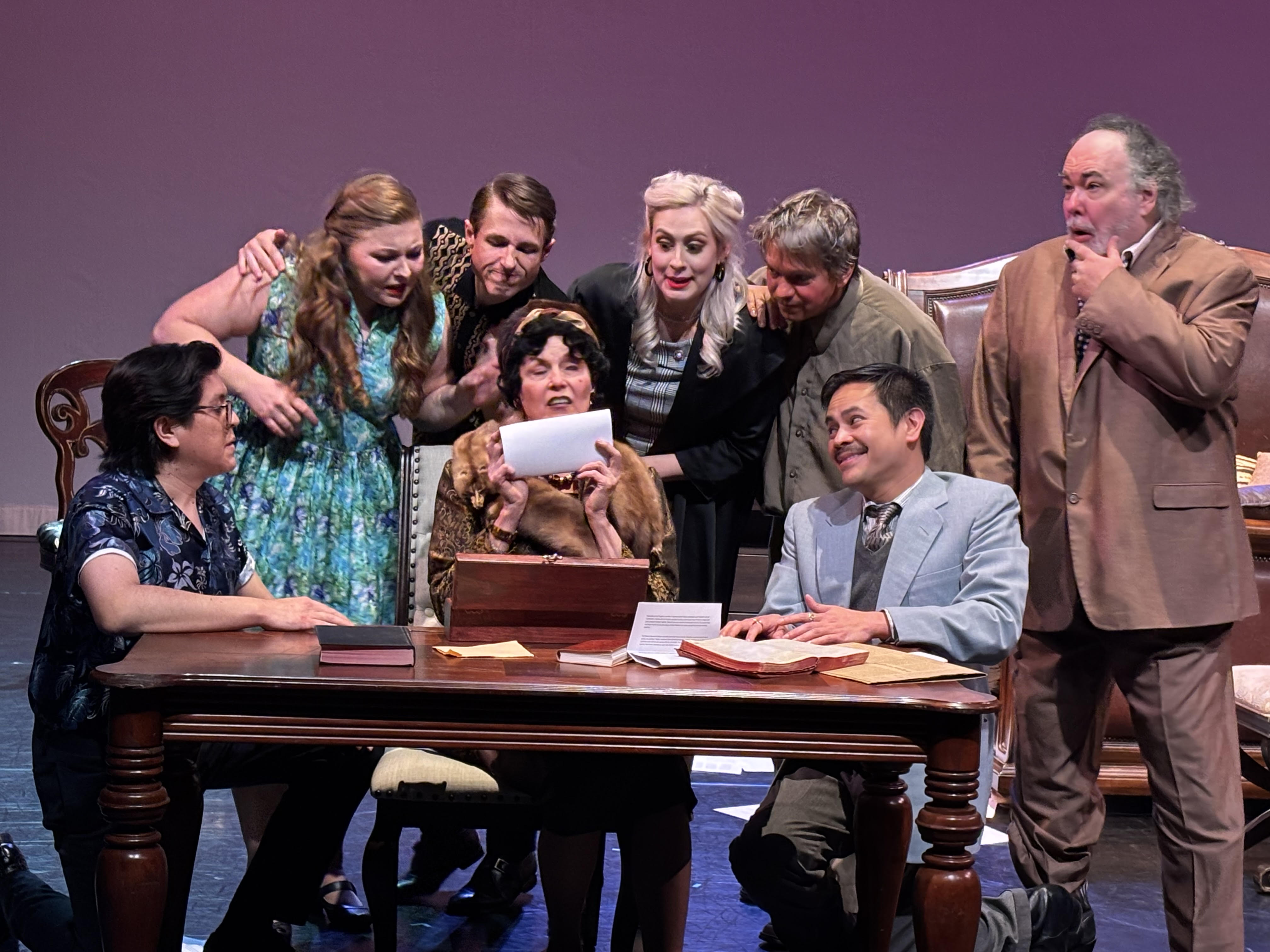
Two more contrasting operas could hardly be imagined. Il Tabarro is a rarely performed, gritty and brutal tragedy of betrayal and murder; and Gianni Schicchi is a popular, frothy burlesque of a comedy contrasting avarice with young love. They are two thirds of a triptych of one-act operas known in Italian as Il Trittico

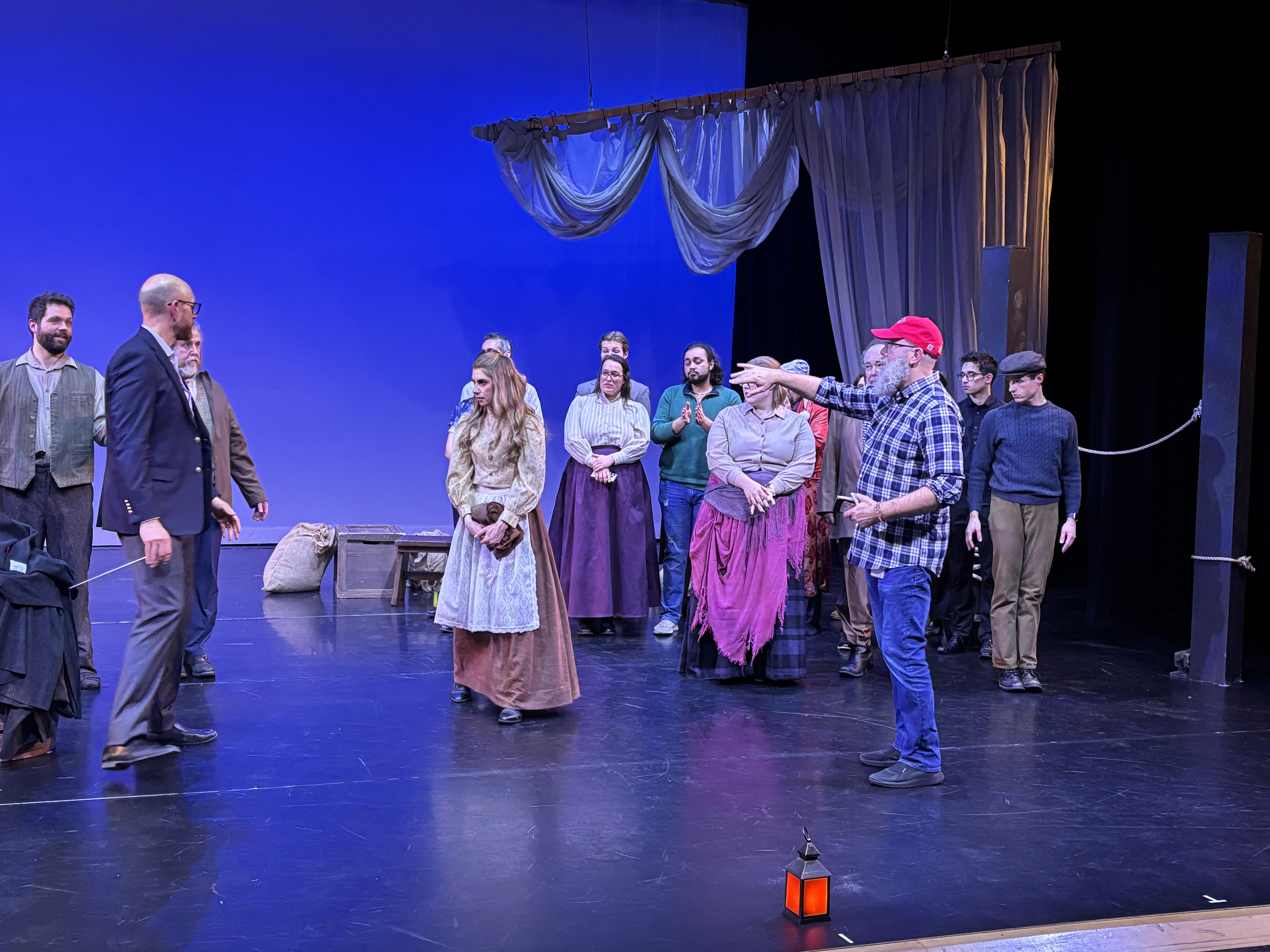
BOC dress rehearsal of Il Tabarro. Conductor Brandon Matthews (left, with baton) and stage director Gene Roberts (right, in red hat)

The triptych also includes Suor Angelica, a tender tale of faith and redemption. All three operas were first performed by the Metropolitan Opera in 1918.

BOC’s productions of Il Tabarro and Gianni Schicchi will be stage directed by Gene Roberts, who returns to Boulder having directed several of the company’s recent productions. An ensemble orchestra will be conducted by Brandon Matthews.

“We get to experience quite a landscape of emotion,” Roberts says of the pairing of two such disparate stories. These two operas are not usually heard together, he adds. “(Il Tabarro) is a treat to see, because unless it’s performed with all three of the operas, it is very rarely done. 

“They’re all wonderful works but you need a trio of dramatic voices to do Il Tabarro. The soprano, the tenor and the baritone need to have quite a bit of heft to their voices.”

Il Tabarro is the story of Michele and Giorgetta, who have lost a child before the opera opens. They operate a barge that has just arrived in Paris, where the stevedores are unloading their cargo. Over the course of the evening, Michele and Giorgetta argue, and it becomes clear that Giorgetta is having an affair with Luigi, one of the stevedores. When Giorgetta leaves, Michele confronts Luigi, and during a fight strangles him. 

Michele conceals Luigi’s body under his cloak. When Giorgetta returns hoping to reconcile, Michele opens his cloak, and Luigi’s body falls at her feet.

“It’s truly a tragedy that leaves us with emotional whiplash, because it all happens so fast,” Roberts says. “In this relatively short piece, boy is there some dramatic singing! All three of (the leads)—you could hear them in any opera house in the world! 

“There are big, meaty arias for the tenor and the baritone. When he has realized that his wife is having an affair, Michele just pours out his heart in a beautiful aria. The baritone doesn’t often get arias in Puccini operas, so that’s a wonderful treat.”

BOC production of Gianni Schicchi

The story of Gianni Schicchi is both simpler and more chaotic. Busoso Donati, a rich man living in Florence—the location is central to the plot—has died, and his relatives arrive at his apartment to learn who has inherited his riches. When it turns out that he has left everything to a monastery, they start on a wild effort to change the will before anyone learns that Donati has died. 

In the end, Gianni Schicchi, a neighbor whose daughter Lauretta is in love with Donati’s young cousin Rinuccio, arrives and saves the day by impersonating Donati and changing the will before a notary. But instead of rewarding the greedy relatives, Schicchi leaves the best items to himself, to be passed on to the young lovers who can now get married. The greedy relatives go on a frantic whirlwind, grabbing everything they can as they rush out of the apartment.

“There are moments throughout this where you are taken along in the chaos that the greed of this family brings on in a delightful way,” Roberts says. When suddenly “everyone remembers they’re supposed to be sad about it, you hear the crying in the orchestra, way overdone. They’re all sobbing and crying and then when they find out they’ve been disinherited, the big explosions (and the) chaos of looking for the will takes us up and down like the world’s largest roller coaster.”

Gianni Schicchi is an ensemble opera, with give and take among the characters as they argue and fight over Donati’s riches, but there is a moment of calm when you will hear one of the most loved of all Puccini’s arias. Lauretta persuades her father to help the family, in order to enrich Rinuccio, singing “O mio babino caro” (Oh my dear daddy)—an aria beloved of all sopranos and opera audiences worldwide.

Both operas will receive realistic productions, with no extra interpretations added. “(Puccini’s) verismo style was all about the realism of life,” Roberts says. “Il Tabarro was originally set in 1910, and that’s where we’ve got it. Gianni Schicchi was originally written to be in the year 1299, and we updated that one to 1955, but it’s still about avarice and greed at the death of a wealthy relative.”

With a reduced orchestra and simple scenery, BOC productions are produced inexpensively, but Roberts is excited about the singers. “Come to the Dairy Center,” he says after a rehearsal.  

“I can’t believe I just heard that level of singing, right here in Boulder!”

# # # # #

Puccini Double Bill
Boulder Opera Company, Brandon Matthews, conductor
Gene Roberts, stage director

Puccini: Il Tabarro (The cloak)
Gianni Schicchi

7 p.m. Friday, Feb. 7 and Saturday, Feb. 8
3 p.m. Sunday, Feb. 9
Dairy Arts Center

TICKETS

Ars Nova welcomes pianist David Korevaar

“Lost/Found” features forgotten work by Enrique Granados

By Peter Alexander Feb. 4 at 6:15 p.m.

David Korevaar is an adventurer, in the mountains and on the piano.

Cases in point: A photo of Korevaar on the summit of 13,088-ft. Paiute Peak in the Indian Peaks Wilderness (below); and his performances with the Ars Nova Singers and conductor Tom Morgan this weekend. Friday and Saturday (Feb. 7 and 8, in Boulder and Cherry Hills Village; details below) he will play three pieces that are new for him and that you likely have not heard before.

David Korevaar on the summit of Paiute Peak. Photo courtesy of the pianist.

One piece on the program is virtually unknown: Cant de les estrelles (Song of the stars) by the  Spanish composer Enrique Granados, written for the unusual combination of piano with organ and choir. In fact, it is unusual enough that Ars Nova was only able to find two venues with a suitable piano and organ that were in tune with one another: Mountain View Methodist Church in Boulder (7:30 p.m. Friday) and Bethany Lutheran Church in Cherry Hills Village (7:30p.m. Saturday).

Cant de les estrelles had its premiere in Barcelona in 1911 on a concert Granados presented of his own music, and then disappeared for nearly a century. The manuscript suffered damage from fire, water and mold, but the music was re-discovered and performed in New York in 2007. When Morgan saw a score, he programmed the Cant de les estrelles on a program titled “Lost/Found,” along with other pieces that were never totally lost but that are obscure today.

One of those is by American composer Dominick Argento, a setting of the Wallace Stevens poem “Peter Quince at the Clavier,” a complex meditation on the power of music and the meaning of beauty. Once one of the leading modernist composers, Argento has fallen from fashion, and “Peter Quince at the Clavier” is not often performed today.

The third choral piece is Renouveau (Renewal) by Lili Boulanger, a celebration of spring that opens with the joyful words “Ladies and gentlemen, it is me—me, Springtime!”—a thought that is always welcome in February. Korevaar will play the piano parts on all three choral works, and add two of Granados’ solo piano pieces from Goyescas, a suite of pieces inspired by Goya’s paintings. The inclusion of the solo piano works is a bow to the 1911 concert that included the premieres of both the Cant de les estrelles and the Goyescas.

Enrique Granados

“The music is really gorgeous,” Korevaar says of Cant de les estrelles. “One of the reasons to come hear it live, is (that) it’s written for three separate mini choirs, essentially. You get antiphonal stuff happening between the piano in one place, the organ sound coming from somewhere else, and then singers in various places. You get sound from everywhere. It’s pretty spectacular.”

While Korevaar plays and records a highly varied repertoire, he claims no credit for discovering the Granados. “Tom Morgan gets full credit for this one,” he says.

Of the other works on the program, Korevaar calls particular attention to Argento’s piece. “There are not that many real concert works (composed specifically) for piano and choir,” he says. “Peter Quince at the Clavier is a real masterpiece. It’s a really marvelous piece.

“The poem itself is fascinating and complex. It has at its center a kind of gloss on the story of Susana and the elders, but it’s also a reflection on the power and meaning of music. Elissa Guralnick is going to be providing some commentary on the poem before we perform the piece.”

Argento called the piece a “sonatina for mixed chorus and piano concertante,” which describes the role of the piano part but also refers to the fact that the music is structured in four movements. The separate movements correspond to four separate sections in the poem, and also fit the outline of a small sonata, with an opening movement in a medium tempo, followed by a slow movement, a faster scherzo and a closing slow movement.

Lili Boulanger

Lili Boulanger was the younger sister of the famed French music teacher Nadia Boulanger and member of a musical family. The first woman to win the Prix de Rome composition award, she died tragically at only 24 and left relatively few finished compositions.

 “It’s  lovely little piece,” Korevaar says of Renouveau, composed when Boulanger was 17. “It’s a very charming poem about spring, and it’s kind of nice to have it in the middle of winter, because we get to have this moment of celebration of all the wonderful things about spring.” 

As a musical adventurer, Korevaar is excited about playing with Ars Nova. “The whole program is fascinating,” he says. “I want to call out Tom (Morgan), because he dreamed this up. I came into it with great enthusiasm and excitement because the music is so wonderful.

“It’s going to be a treat.”

# # # # #

“Lost/Found”
Ars Nova Singers, Tom Morgan, conductor
With David Korevaar, piano

  • Dominick Argento: Peter Quince at the Clavier
  • Lili Boulanger: Renouveau
  • Enrique Granados: Goyescas: Fandango de candil (Fandango by candlelight)
    —Goyescas: La Maja y el ruisenor (The maiden and the nightingale)
    Cant de les estrelles (Song of the stars)

7:30 p.m. Friday, Feb. 7
Mountain View United Methodist Church, 355 Ponca Place, Boulder

7:30 p.m. Saturday, Feb. 8
Bethany Lutheran Church, 4000 E.Hampden Blvd., Cherry Hills Village

In-person and Livestream tickets HERE.

Boulder Chamber Orchestra changes Saturday’s program

Edvard Grieg’s Holberg Suite replaces Gerald Finzi Clarinet Concerto Jan. 25

By Peter Alexander Jan. 24 at 9:40 a.m.

The Boulder Chamber Orchestra has changed the planned program for their concert tomorrow (7:30 p.m. Saturday, Jan. 25).

The program as originally announced included the Gerald Finzi Clarinet Concerto performed by the orchestra’s principal clarinet player, Kellan Toohey. However, the orchestra has just announced that the Concerto has beed dropped from the program and replaced by the Holberg Suite by Edvard Grieg. The announcement states that “Kellan Toohey will not be performing on Saturday due to illness.”

# # # # #

“Strings Sensational”
Boulder Chamber Orchestra strings, Bahman Saless, conductor
With Kellan Toohey, clarinet

  • Grieg: Holberg Suite, op. 40
  • Dag Wirén: Serenade for Strings
  • Dvořák: Serenade for Strings

7:30 p.m. Saturday, Jan. 25
Boulder Adventist Church, 345 Mapleton Ave.
TICKETS

CORRECTION: The original post stated that no reason had been given for the change of program. After that was posted, a delayed email arrived in my inbox noting that Toohey would not appear “due to illness.” We apologize for the inaccurate earlier notice on this site.

Renée Fleming presents a musical tribute to the natural world

“Voice of Nature” will feature songs and a film from National Geographic

By Peter Alexander Jan. 22 at 5:50 p.m.

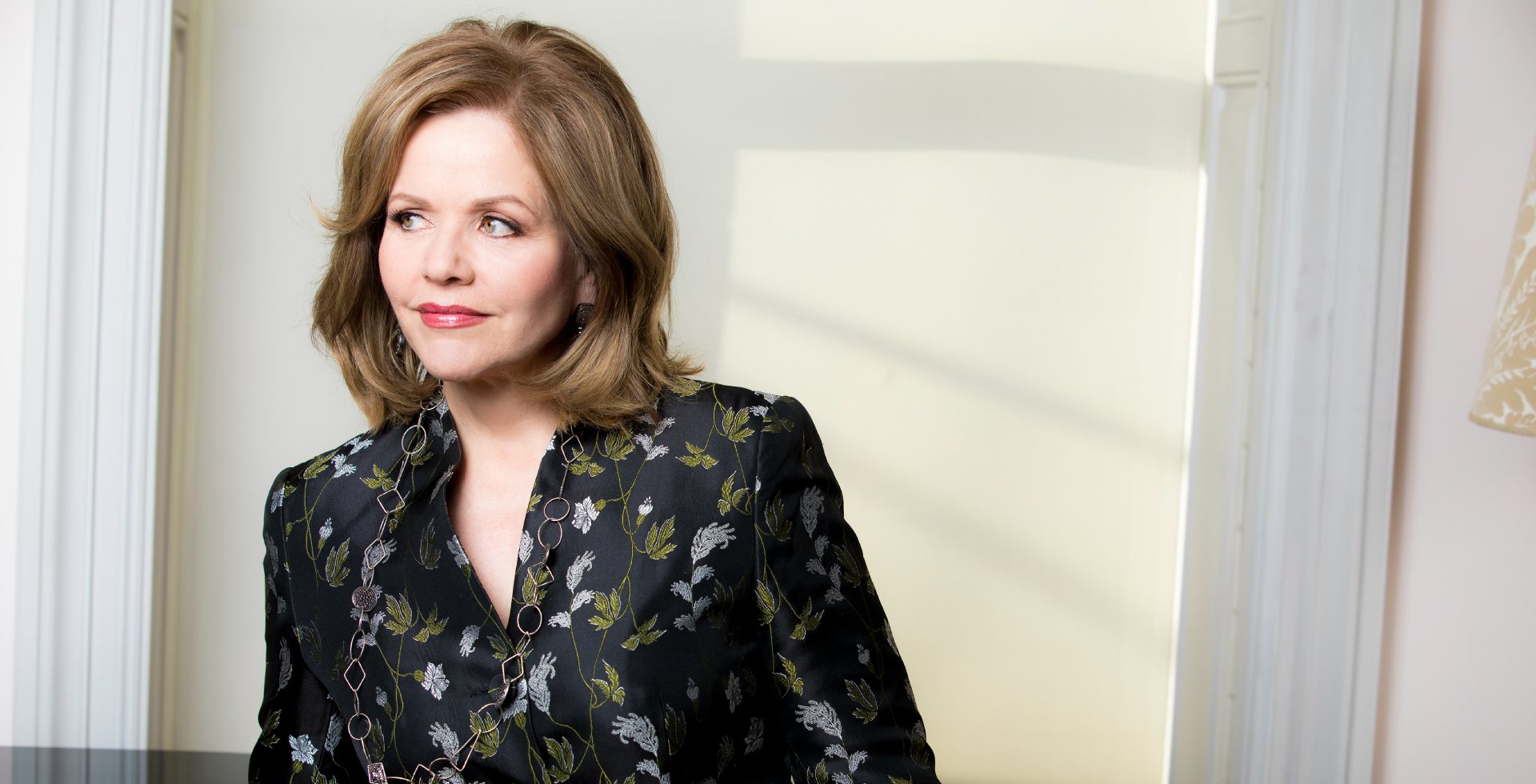
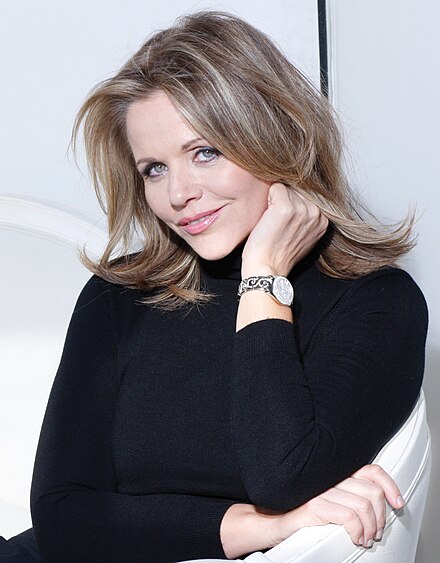
Soprano Renée Fleming

Soprano Renée Fleming will come to Macky Auditorium next week (7:30 p.m. Friday, Jan. 31) to present a program that she developed while cut off from her professional life during the COVID pandemic of 2020–21.

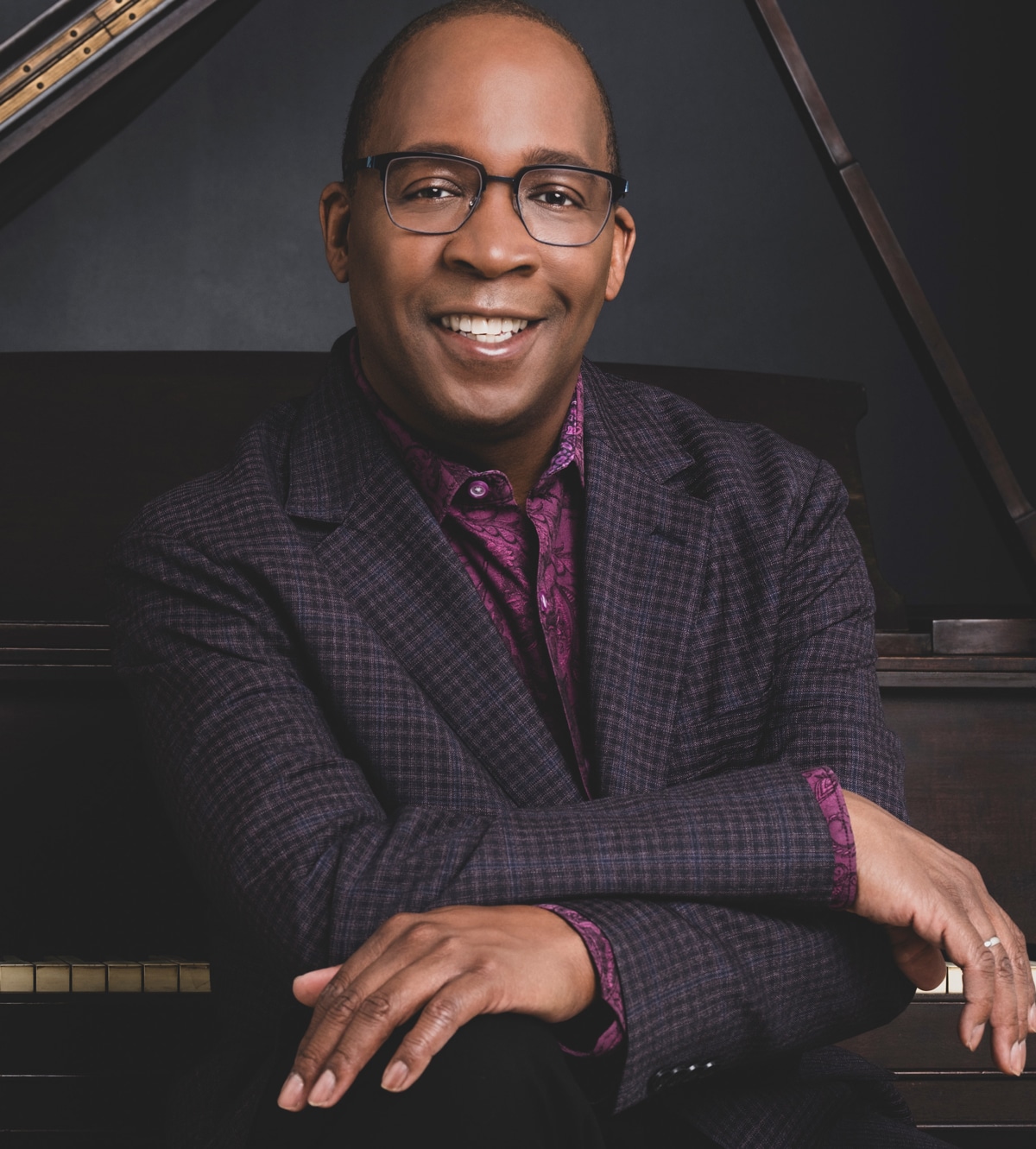
Collaborative pianist Howard Watkins

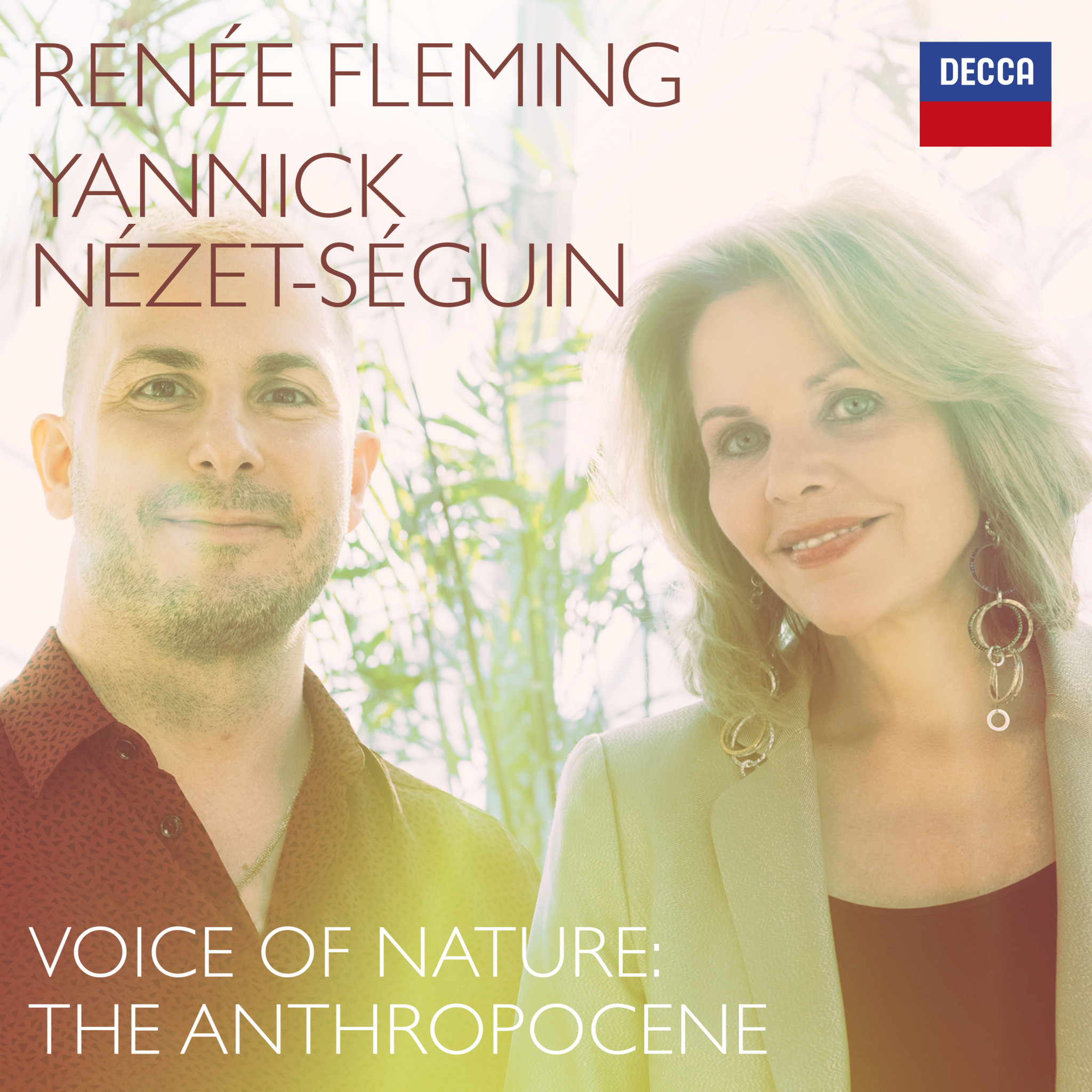
Titled “Voice of Nature: The Anthropocene,” the concert features Fleming and pianist Howard Watkins. The repertoire draws on a Grammy-winning album of the same title that Fleming recorded in 2023 with Yannick Nézet-Séguin, music director of the Metropolitan Opera, as pianist, and features songs that mention or reflect on the natural world. Part of the program will be accompanied by a film produced by the National Geographic Society.

“During the pandemic, the most comforting and healing activity for me was just being outside,” Fleming says. “Walking every day, gardening—to the point that I didn’t even want to come in. I always found it interesting that art song, especially the 19th century, also the 18th century and early 20th century, uses poetry that brought nature into the conversation about any aspect of the human condition. I found that interesting, in comparison with new works, which very often never mention nature.”

In that context, she worked with Nézet-Séguin to put together an album of songs that celebrate the consoling and healing power of nature. She decided to commission new songs from three living composers—Kevin Puts, Nico Muhly and Caroline Shaw—to bring the program up to today, and combine them with selected pieces from the extant song literature.

Yannick Nézet-Séguin and Renée Fleming on their album cover

“It was really fun to put the program together,” Fleming says. For the 19th-century art songs, “obviously I had to find things I thought would suit Yannick (Nézet-Séguin), give him enough of an interesting program that he would want to play it. And also because Yannick is French-Canadian, (the French) language works beautifully for him.”

The result is an album that features some very lovely but unfamiliar songs by Gabriel Fauré and Reynaldo Hahn, both French composers of the early 20th century, and also songs by Liszt and the Norwegian composer Edvard Grieg. “I just chose beautiful music that has powerful poetry and stuff I hadn’t performed before,” Fleming says. “I had performed Grieg, I had not performed Hahn at all, and I was thrilled to put Fauré” on the program.

The next step occurred when the album won a Grammy. Fleming decided to take a version of the program on tour, but with some additions. “Rather than just doing ‘Voice of Nature,’ the album, I added some more popular things that I’ve recorded and never perform, like a Björk song and a selection from Lord of the Rings,” Fleming explains. She also added songs by Burt Bacharach and Jerome Kern, and one of the most popular operatic arias in her repertoire, “O mio babbino caro” from Puccini’s Gianni Schicchi.

The final musical addition is a recording Fleming made of Jackson Browne’s “Before the Deluge” together with the Grammy winning folk singer/fiddler and opera composer Rhiannon GIddens, multi-Grammy winning bluegrass singer/fiddler Alison Krauss, and Nézet-Séguin, in an arrangement by composer Caroline Shaw. The recording will be played about halfway through the concert intermission.

Once she committed to the tour, Fleming had another idea: “I thought, let’s take this on the road but I’d like to have film with it,” she says. “I said, I’d really like to do something that shows the planet and encourages us to protect it.

“I happened to meet someone who worked with National Geographic at a dinner party. I was telling him about it and he said ‘I can introduce you to the head of National Geographic.’ So I had a two minute Zoom call with the CEO (Michael Ulica), and he said, ‘We’re looking for influencers and we’ll make your film.’ They did it in about three weeks and I’ve been touring it ever since, because it’s a beautiful piece.”

Fleming says that her devotion to nature and the planet dates back a long way. “When I was a teenager I saw a film that had a huge impact on me,” she says. “The film came out in the ‘70s, Soylent Green. 

“The scene that really had a powerful effect on me was the one in which Edward G. Robinson, who was dying of cancer, (played a scientist who) had signed up for end of life care, and was looking at beautiful pictures of earth, and none of that existed anymore. I thought, ‘How could that possibly ever happen?’ And here we are, later in my life—if we don’t get a handle on this, I think we’re ultimately talking about the destruction of us on the planet.”

In an artist’s statement on the “Voice of Nature” program, Fleming writes: “Thankfully, the stunning natural world depicted in (the National Geographic) film still exists, unlike that movie scene so upsetting to my younger self. In blending these beautiful images with music, my hope is, in some small way, to rekindle your appreciation of nature, and encourage any efforts you can make to protect the planet we share.”

# # # # #

“Voice of Nature: The Anthropocene”
Renée Fleming, soprano, and Howard Watkins, piano

  • Hazel Dickens: “Pretty bird” 
  • Handel: “Care Selve” from Atalanta 
  • Nico Muhly: “Endless Space” 
  • Joseph Canteloube: “Bailero” from Songs of the Auvergne 
  • Maria Schneider: “Our Finch Feeder” from Winter Morning Walks 
  • Björk: “All is Full of Love”
  • Heitor Villa-Lobos: “Epílogo” from Floresta do Amazonas (piano solo) 
  • Howard Shore: “Twilight and Shadow” from Lord of the Rings 
  • Kevin Puts: “Evening” 
  • Curtis Green: “Red Mountains Sometimes Cry” 
  • Burt Bacharach: “What the World Needs Now” 
    To be played halfway through the intermission—:
  • Recording of Jackson Browne: “Before the Deluge” (arr. by Caroline Shaw) by Rhiannon Giddens, Alison Krauss, Renée Fleming; with Yannick Nézet-Séguin, piano 
  • Gabriel Fauré: “Au Bord De L’eau” 
    —“Les Berceaux” 
  • Edvard Grieg: “Lauf Der Welt” 
    —“Zur Rosenzeit” 
  • Puccini: “O mio babbino caro” from Gianni Schicchi 
  • Jerome Kern: “All the Things You Are” 
  • Andrew Lippa: “The Diva” 

7:30 p.m. Friday, Jan. 31
Macky Auditorium

NOTE: Very few tickets are left for this performance. You can check availability HERE.

Colorado Music Festival announces summer 2025 season

Two ninth symphonies among highlights

By Peter Alexander Jan 22 at 11:25 a.m.

The Colorado Music Festival (CMF) has announced its summer schedule of concerts at the Chautauqua Auditorium in Boulder. 

Chautauqua Auditorium. Photo by Geremy Kornreich

The season of 19 concerts will culminate with performances of two different ninth symphonies: Beethoven’s masterpiece, featuring the “Ode to Joy” finale, July 31 and August 1; and Mahler’s Ninth Aug. 3. Both are their composer’s last completed symphony, which has given a special mystique to the number of the “Ninth Symphony.”

Other highlights during the summer include appearances by outstanding solo artists, including pianist Hélène Grimaud playing the Gershwin Concerto in F on the opening night concert July 3 and 6; saxophonist Steven Banks playing the world premiere of Joan Tower’s Love Returns for saxophone and orchestra; and violinist Anne Akiko Meyers playing Eric Whitacre’s Murmur, a CMF co-commission written for her. 

Two birth anniversaries will be celebrated during the summer: Ravel’s 150th, with performances of  Daphinis et Chloé, Suite No. 2 and Bolero on the opening concert program, and Aaron Copland’s 125th with a performance of Appalachian Spring on July 17 and 18 and An Outdoor Overture on July 11.

Some younger, rising artists will be featured this summer. Classical guitarist Xuefei Yang will perform Rodrigo’s popular Concierto de Aranjuez July 27. Violinist Benjamin Beilman and conductor Chloé van Soeterstède will appear on an all-Mozart program July 13. Cellist Hayoung Choi and conductor Maurice Cohn will perform July 20, and pianist Yeol Eum Son will appear with conductor Ryan Bancroft July 24 and 25.

This year’s Family Concert, presented at 10:30 a.m. July 6, will be an orchestral mystery, “Sherlock Holmes and the Case of the Missing Maestro.” Shira Samuels-Shragg will conduct the program, in which all of the musicians are suspects and Sherlock Holmes must investigate each of the instrument families.

All of the CMF’s summer concerts and programs are listed below. Tickets to the 2025 Festival will be available for purchase beginning March 4. For information or to purchase tickets for the 2025 festival, visit the CMF Web page, or call the Chautauqua box office at 303-440-7666.

# # # # #

Colorado Music Festival, Peter Oundjian, music director
2025 Summer Season
All performances in Chautauqua Auditorium

Peter Oundjian and the CMF Orchestra. Photo by Geremy Kornreich, 2023

Opening Night
Festival Orchestra, Peter Oundjian, conductor
With Hélène Grimaud, piano

  • Stravinsky: Feu d’artifice (Fireworks)
  • Gershwin: Piano Concerto in F
  • Ravel: Daphnis et Chloé, Suite No. 2
    Bolero

7:30 p.m. Thursday, July 3
6:30 p.m. Sunday, July 6

Family Concert
Festival Orchestra, Shira Samuels-Shragg, conductor

  • Sherlock Holmes and the Case of the Missing Maestro

10:30 a.m. Sunday, July 6

Chamber Music Concert
Colorado Music Festival musicians

  • Schubert: String Trio in B-flat major, D471
  • Prokofiev: Quintet in G minor, op. 39
  • Brahms: Piano Quartet No. 3 in C minor, op. 60

7:30 p.m. Tuesday, July 8

Festival Orchestra Concert
Peter Oundjian, conductor
With Steven Banks saxophone

  • Copland: An Outdoor Overture
  • Joan Tower: Love Returns for saxophone and orchestra (world premiere)
  • Brahms: Symphony No. 1 in C minor, op. 68

7:30 p.m. Thursday, July 10
6:30 p.m. Friday, July 11

An Evening of Mozart
Festival Orchestra, Chloé van Soeterstède, conductor
With Benjamin Beilman, violin

  • Mozart: Overture to Don Giovanni
    —Violin Concerto No. 5 in A major, K219 (“Turkish”)
    —Overture to Le Nozze di Figaro (The Marriage of Figaro)
    —Symphony no. 34 in C major, K338

6:30 p.m. Sunday, July 13

Chamber Music Concert
Brentano String Quartet

  • Schubert: Quartet in A minor, D804 (“Rosamunde”)
  • Anton Webern: Five Movements for String Quartet, op. 5
  • Brahms: String Quartet No. 3 in B-flat major, op. 67

7:30 p.m. Tuesday, July 15

Festival Orchestra Concert
Peter Oundjian, conductor
With Anne Akiko Meyers, violin

  • Copland: Appalachian Spring
  • Eric Whitacre: Murmur (CMF co-commission)
  • Ravel: Tzigane
  • Berlioz: Overture to Béatrice et Bénédict
  • Tchaikovsky: Romeo and Juliet Fantasy Overture

7:30 p.m. Thursday, July 17
6:30 p.m. Friday, July 18

Festival Orchestra Concert
Maurice Cohn, conductor
With Hayoung Choi, cello

  • Respighi: Gli uccelli (The birds)
  • Tchaikovsky: Variations on a Rococo Theme, op. 33
  • Beethoven: Symphony No. 1 in C major, op. 21

6:30 p.m. Sunday, July 20

Chamber Music Concert
Colorado Music Festival musicians

  • Nico Muhly: Doublespeak (2012)
  • Mozart: Quintet for piano and winds in E-flat major, K452
  • Dvořák: String Quintet No. 3 in E-flat major, op. 97

7:30 p.m. Tuesday, July 22

Festival Orchestra Concert
Ryan Bancroft, conductor
With Yeol Eum Son, piano

  • Sofia Gubaidulina: Fairytale Poem (Märchenpoem, 1971)
  • Beethoven: Piano Concerto No. 3 in C minor, op. 37
  • Shostakovich: Symphony No. 10

7:30 p.m. Thursday, July 24

6:30 P.M. Friday, July 25

Festival Orchestra Concert
Peter Oundjian, conductor
With Xuefei Yang, guitar

  • Zoltán Kodály: Dances of Galánta
  • Joaquin Rodrigo: Concerto de Aranjuez
  • Schubert: Symphony No. 5 in B-flat major, D485

6:30 p.m. Sunday, July 27

Chamber Music Concert
Dover Quartet

  • Leoš Janáček: String Quartet No. 1 (“Kreutzer Sonata”)
  • Schumann: String Quartet No. 1 in A minor, op. 41
  • Tchaikovsky: String Quartet No. 1 in D major, op. 11

7:30 p.m. Tuesday, July 29

Festival Orchestra Concert
Colorado Music Festival orchestra and the St. Martin’s Festival Singers
Peter Oundjian, conductor
With Lauren Snouffer, soprano; Abigail Nims, mezzo-soprano; Issachah Savage, tenor; and Benjamin Taylor, baritone

  • Michael Abels: Amplify (CMF co-commission)
  • Beethoven: Elegischer Gesang (Elegiac song), op. 118
    —Symphony No. 9 in D minor, op. 125

7:30 p.m. Thursday, July 31
6:30 p.m. Friday, Aug. 1

Festival Finale
Colorado Music Festival Orchestra, Peter Oundjian, conductor

Mahler: Symphony No. 9

6:30 p.m. Sunday, Aug. 3

Boulder Chamber Orchestra presents string serenades

Clarinetist Kellan Toohey plays Concerto by Gerald Finzi

By Peter Alexander Jan. 21 at 11:12 p.m.

The Boulder Chamber Orchestra will present a concert Saturday featuring their string section (7:30 p.m. Jan. 25; details below), playing one of the great masterworks for strings, Dvořák’s Serenade for Strings.

The concert, under the direction of Bahman Saless, will also feature clarinetist Kellan Toohey playing the Concerto for clarinet and strings by British composer Gerald Finzi. The program also includes the Serenade for Strings by 20th-century Swedish composer Dag Wirén. 

Kellan Toohey

Known mostly as a composer of songs and choral music, Finzi also wrote concertos for clarinet and cello, a Grand Fantasia and Toccata for piano and orchestra, and other instrumental pieces. 

The Clarinet Concerto was written in 1949 for the Three Choirs Festival located in turn in the English cities of Gloucester, Hereford and Worcester, with which Finzi had a long association. The concerto is in three movements, of which the Adagio second movement is the expressive core. The quick rondo finale incorporates an English folk song. Finzi himself conducted the premiere, performed in Hereford by the London Symphony strings and clarinetist Frederick Thurston.

Wirén studied at the Stockholm Conservatory 1926–31, and won a state award that allowed him to live and study in Paris for several years. He wrote a number of orchestral works, including five symphonies and other concert works. His music is generally accessible to audiences, mixing traditional elements with modernist and innovative impulses. 

His Serenade for Strings, composed just after his return to Sweden from Paris in 1937, is his most widely performed work. The composer wrote in his notes for the score, “The purpose of this little Serenade is simply to amuse and entertain, and if the listener, when the last note has faded, feels cheerful and happy, then I have reached my goal.”

Dvořák won the Austrian State Prize in music in 1875—the first of three times that he received that award and the support it offered young composers. It was those awards that gave Dvořák the freedom to purse his work as a composer. One of the judges of the competition was Brahms, who later became an important champion of Dvořák and introduced him to the German publisher N. Simrock. 

In the months after winning the award, Dvořák composed his Fifth Symphony, several pieces of chamber music, and the Serenade for Strings. The Serenade was completed in only 12 days in May, 1875, but not performed until December 1876. One of his most tuneful and cheerful works, the Serenade has remained popular since the first performances. Dvořák was proud enough of the work that he included it with his application for his third state award in 1877.

In addition to performing as the principal clarinetist of the BCO, Toohey also plays with the Fort Collins Symphony, the Wyoming Symphony and the Cheyenne Symphony. He holds a doctorate from CU Boulder and has recorded a CD of music for clarinet and piano by Colorado composers, Scenes from Home

# # # # #

“Strings Sensational”
Boulder Chamber Orchestra strings, Bahman Saless, conductor
With Kellan Toohey, clarinet

  • Dag Wirén: Serenade for Strings
  • Gerald Finzi: Concerto for Clarinet and string orchestra, op. 31
  • Dvořák: Serenade for Strings

7:30 p.m. Saturday, Jan. 25
Boulder Adventist Church, 345 Mapleton Ave.
TICKETS

GRACE NOTES: Piano quintets and and a family concert

Little known Quintet by Louise Farrenc and Prokofiev’s much loved Peter and the Wolf

By Peter Alexander Jan. 16 at 12:10 a.m.

The Boulder Piano Quartet will be joined by bassist Susan Cahill, a member of the Colorado Symphony, for a program of piano quintets Friday (7 p.m. Jan. 17; details below) at the Academy, University Hill.

The concert, to be held in the Academy’s Chapel Hall, will be free. Audience members are asked to RSVP HERE prior to the concert. All the works on the program are for a quintet of piano with with one each violin, viola, cello and string bass, whereas most piano quintets are set for piano with a string quartet of two violins, viola and cello.

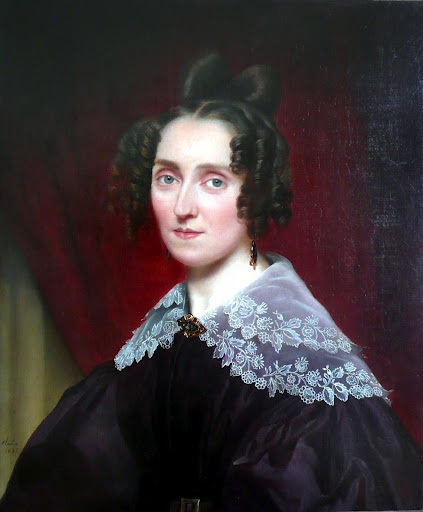
Louise Farrenc, portrait by Luigi Rubio (1835)

The performance will open with a quintet by Louise Farrenc, a 19th-century French composer who seems to be having a “moment” now. Though not widely known to American audiences, she has had several recent performances. Her Sextet for piano and winds was performed last Saturday (Jan. 11) on a Boulder Chamber Orchestra Mini Chamber concert, and her Third Symphony was performed in May on the Colorado Pro Musica’s farewell concert. Many of her works have recently been recorded, including music for piano, chamber music and symphonies (see listing HERE). 

A pioneer among women pianists and composers, Farrenc was a successful concert pianist. She became the first woman appointed to the permanent faculty of the Paris Conservatory in 1842, a position she held for 30 years.

The Piano Quintet in C minor by Vaughan Williams is one of his least known works, largely because the composer removed it from his catalogue of compositions after World War I, presumably because he was no longer satisfied with it. It remained unperformed for more than 80 years until the composer’s widow allowed a performance, and subsequent publication, to honor the 50th anniversary of the composer’s death.

Schubert’s “Trout” Quintet is the best known of the piano quintets with string bass. It takes its name from the fourth movement, a set of variations on the theme from Schubert’s song “Die Forelle” (The trout). The performance Friday will only feature that one movement, ending the program on a familiar and cheerful note.

# # # # #

Boulder Piano Quartet
Igor Pikayzen, violin; Matthew Dane, viola; Thomas Heinrich, cello; and David Korevaar, piano|With Susan Cahill, bass

  • Louise Farrenc: Piano Quintet No. 2 in E major, op. 31|
  • Ralph Vaughan Williams: Piano Quintet in C minor
  • Schubert: Piano Quintet in A major (“Trout”): 4. Andantino

7 p.m. Friday, Jan. 17
Chapel Hall, Academy University Hill

Free: RSVP HERE

# # # # #

The Longmont Symphony Orchestra will present its annual Family Concert, featuring Prokofiev’s masterful setting of the Russian folk tale Peter and the Wolf, Saturday afternoon (4 p.m. Jan. 18; details below) in Vance Brand Auditorium.

The concert will be led by the LSO music director, Elliot Moore. Cameron A. Grant will narrate. In addition to the Prokofiev score, the program features selections from The Carnival of the Animals by Saint-Saëns.

Subtitled “A symphonic tale for children,” Prokofiev’s Peter and the Wolf illustrates the tale of a young boy who evades the dangerous wolf, with characteristic themes for each character in the story, including Peter, his grandfather, Peter’s animal friends, the hunters and of course, the wolf. 

Prokofiev wrote an explanatory note for the score: “Each character of this tale is represented by a corresponding instrument in the orchestra: the bird by a flute, the duck by an oboe, the cat by a clarinet playing staccato in a low register, the grandfather by a bassoon, the wolf by three horns, Peter by the string quartet, the shooting of the hunters by the kettle drums and bass drum.”

Grant is a prominent attorney in Longmont, where he is a managing shareholder in the firm Lyons & Gaddis, but he is also familiar with the performing world. He holds an undergraduate degree in English and vocal music performance from Colorado College, and attended the Aspen Opera Theater Center. He has appeared with the Longmont Symphony as narrator for family concerts in the past, most recently in January, 2024.

# # # # #

Family Concert: Peter and the Wolf
Longmont Symphony Orchestra, Elliot Moore, conductor
With Cameron A. Grant, narrator

  • Saint-Saëns: Selections from Carnival of the Animals
  • Prokofiev: Peter and the Wolf

4 p.m. Saturday, Jan. 18
Vance Brand Auditorium

TICKETS