World premiere from Boulder Symphony, chamber music from BCO
By Peter Alexander Jan. 12 at 3:10 p.m.
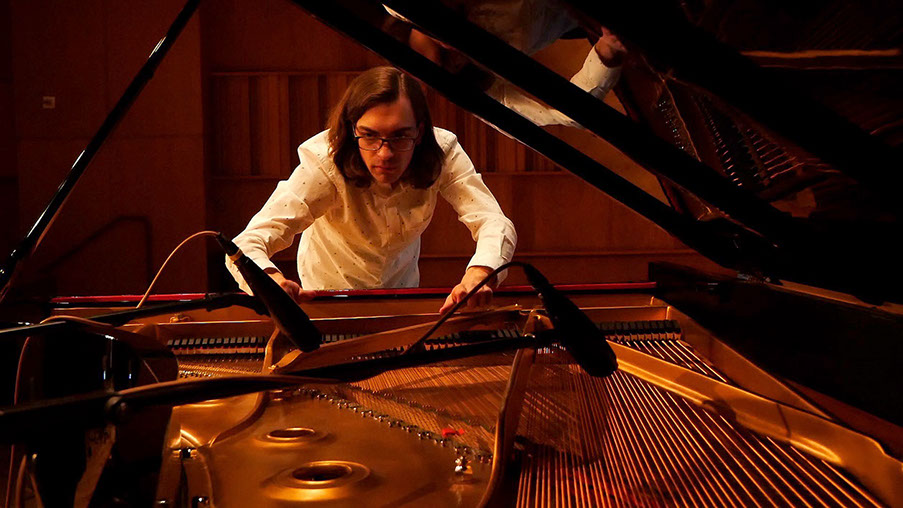
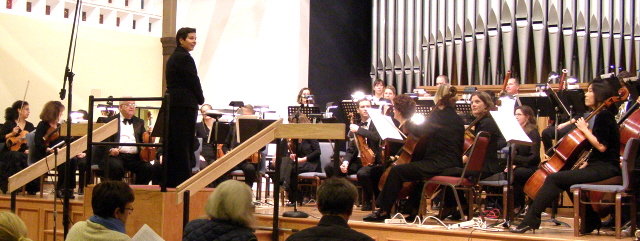
The Boulder Symphony and conductor Devin Patrick Hughes will start the new year with a new piece—the world premiere of the Oboe Concerto by CU graduate John Clay Allen.
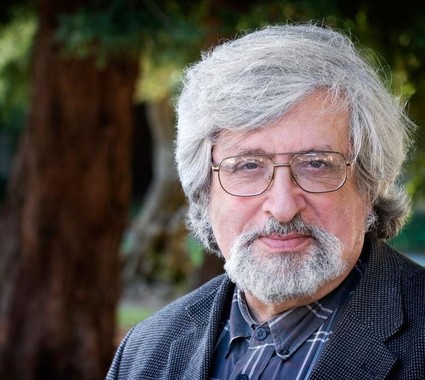
John Clay Allen
The premiere will be included on concerts at 7:30 p.m. Friday and Saturday (Jan. 13 and 14) in the Gordon Gamm Theater of the Dairy Arts Center. Other works on the same program are the much loved “New World” Symphony of Dvořák, the Overture to The Song of Hiawatha by Samuel Coleridge-Taylor, and music from the film Jurassic Park by John Williams.
Allen, who received his DMA in composition in 2019, has been active as a pianist and conductor in addition to his work as a composer. The soloist for the concerto will be the Boulder Symphony’s principal oboist, Ingrid Anderson.
One of the most familiar works in the symphony repertoire, the “New World” Symphony includes music inspired by Longfellow’s epic poem The Song of Hiawatha. The poem was familiar to Dvořák, who once planned an opera on the subject. That connection is highlighted by the inclusion of Coleridge-Taylor’s Overture to his trio of cantatas, The Song of Hiawatha.
# # # # #
Boulder Symphony, Devin Patrick Hughes, conductor With Ingrid Anderson, oboe
John Clay Allen: Oboe Concert (World premiere)
John Williams: Themes from Jurassic Park
Samuel Coleridge-Taylor: Overture to The Song of Hiawatha
Dvořák: Symphony No. 9 in E minor (“From the New World”)
7:30 p.m. Friday and Saturday, Jan. 13 and 14 Gordon Gamm Theater, Dairy Arts Center
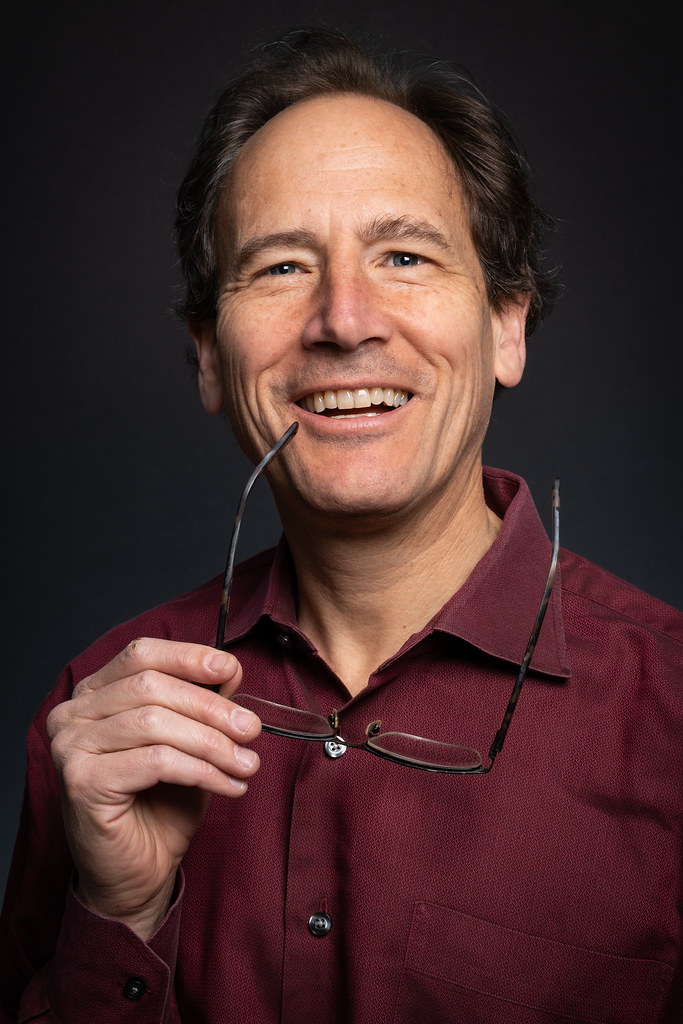
Pianist David Korevaar returns for the second of two chamber music concerts with members of the Boulder Chamber Orchestra (BCO) at 7:30 p.m. Saturday (Jan. 14) at the Seventh Day Adventist Church in Boulder.
The program comprises two sextets for piano and woodwind quintet, one by the obscure composer Ludwig Thuille and one by the much more familiar Francis Poulenc. The third and final concert of Korevaar’s chamber series with the BCO, comprising quintets for piano with winds, will be April 8.
Thuille “is even more obscure than (his teacher) Rheinberger, which is saying something,” Korevaar says. Apart from the Sextet, his music is very rarely performed.
“The piece is wonderful, but it sounds very much of its time and place. (It represents) a nice late-Romantic idiom, with some occasional adventurous harmonies, (but) it doesn’t push boundaries in any way.
Poulenc’s Sextet is very popular with players and audiences alike. “It’s a classic,” Korevaar says. “If you think of one piece for piano and wind quintet, this is the piece you’ll think of. it’s very popular for good reason, filled with good infectious Poulenc-ey tunes, and the writing is brilliant for all the instruments. It’s just a marvelous, successful piece.”
# # # # #
David Korevaar, piano, with members of the Boulder Chamber Orchestra
Ludwig Thuille: Sextet in B-flat major for piano and wind quintet, op 6
Francis Poulenc: Sextet for piano and wind quintet
Violinist, CU faculty member, father of three dies after battle with cancer
By Peter Alexander Jan. 11 at 12:45 p.m.
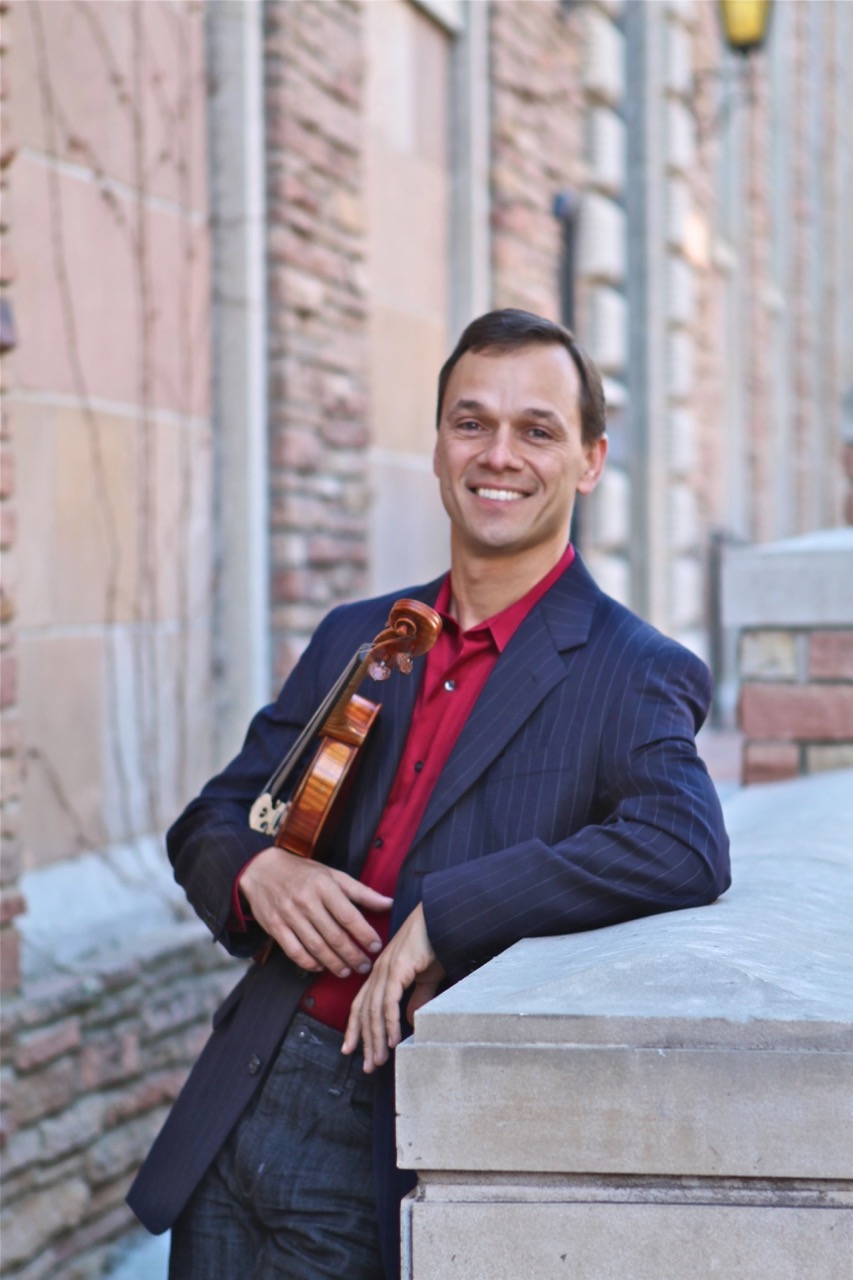
Some few special musicians go beyond the ability to reach listeners with their performances, and touch people with their generous and kind personalities. One of those was Charles (Chas) Wetherbee, concertmaster of the Boulder Philharmonic Orchestra, first violinist of the Carpe Diem String Quartet, and faculty member of the University of Colorado, Boulder, College of Music.
Wetherbee died Monday (Jan. 9) following a battle with cancer. He was 56.
Many tributes have been stated for Wetherbee, and a common theme has been going beyond his his great musical skills to recognize his human qualities. Korine Fujiwara, violist of the Carpe Diem Quartet, described him as “my best and most trusted friend . . . and a beautiful example of all that is good in the world.” Pianist David Korevaar, with whom Wetherbee collaborated on CU faculty concerts and other chamber music performances, wrote “You were a generous, open-hearted, wise, and patient friend. You were the best colleague anyone can have.”
Announcing that the next concert of the Boulder Philharmonic on Jan. 22 would be dedicated to Wetherbee’s memory, conductor Michael Butterman wrote that Wetherbee “brought out the best in everyone. . . . He radiated generosity, kindness and a selfless spirit that anyone in his presence could feel. The impact of his legacy is impossible to overstate.”
CU College of Music dean John Davis noted that “Chas brought a wealth of expertise and experience from his varied career as a soloist, chamber musician, orchestral concertmaster, teacher, coach and collaborator. . . . He was also a consummate mensch, widely known and loved for his kindness, enthusiasm, unwavering optimism and overall graciousness.”
A GoFundMe campaign that was started in December to support Wetherbee’s family has raised more than $200,000 from 1,200 donors, indicating both the breath and the depth of affection Wetherbee had in the local community of music lovers. Donations have ranged from $20 to $15,000.
Charles Tyler Wetherbee was born in Buffalo, New York, July 14, 1966. He made his debut with the Buffalo Philharmonic Orchestra under Semyon Bychkov, and since then has performed with the National Symphony under Mstislav Rostropovitch, as well as the Japan Philharmonic, the Concerto Soloists of Philadelphia, the Philharmonic Orchestra of Bogota (Columbia), the National Repertory Orchestra, the Orquesta Sinfónica Nacional de Mexico, the Symphony Orchestra of the Curtis Institute, the Buffalo Philharmonic, and the Virginia Symphony, among others.
A devoted chamber musician, Wetherbee was first violinist of the Carpe Diem String Quartet and performed in recital with pianist David Korevaar of the CU College of Music faculty. Wetherbee’s first orchestral appointment was as principal second violin with the National Symphony Orchestra in Washington, D.C. Following five years at the NSO, he served as concertmaster of the Columbus Symphony for 16 years. He joined the faculty of the CU College of Music in 2012 and became concertmaster of the Boulder Philharmonic in 2014. He directed the Snake River Music Festival in Dillon, Colorado, for many years
Wetherbee is survived by his wife, Karina, a professional photographer and writer, and their three children, Tristan, Sebastian and Tessa. After Wetherbee’s death, Karina wrote on the GoFundMe page, “Chas composed his final note last night. . . . I know now that his life’s work was a symphony, of the most grand and sweeping and lyrical beauty, and each note of that music was made up of all the millions of interactions he had with every person who entered his life.”
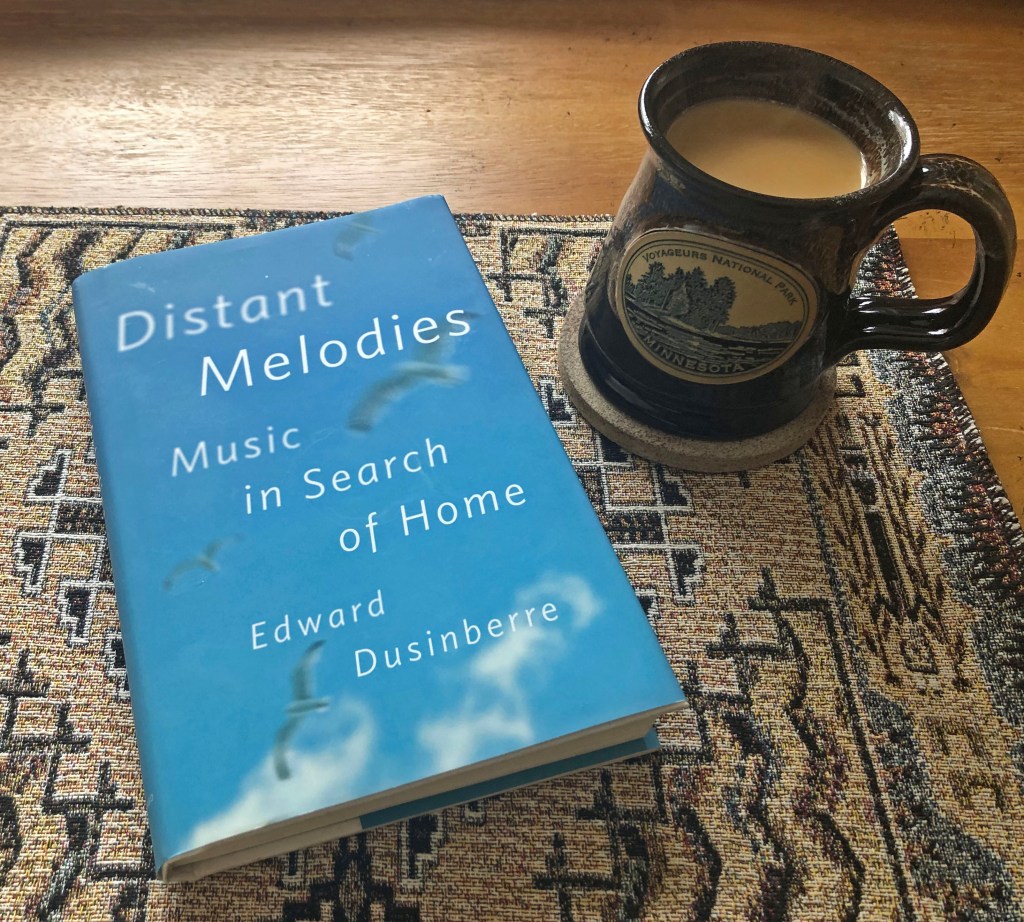
Distant Melodies: Music in Search of Home. By Edward Dusinberre. Chicago: University of Chicago Press, 2022. 233pp.
A lovely companion for your morning coffee, it is also unlike any other book on music I have read. But it is certainly one that lovers of chamber music and fans of the Takács Quartet will want to read.
Dusinberre focuses on just four composers—Edward Elgar, Antonín Dvořák, Béla Bartók and Benjamin Britten—and music by them that he has played and recorded as first violinist of the Takács. In each case, he discusses the composer’s life and what “home” might mean to them, and to him.
This interest on Dusinberre’s part grows out of his experience as a dual national who grew up in England but has lived many years in the United States. Like Dusinberre, three of the composers left their homes for the U.S. at some point in their careers: Dvořák, who lived in New York and Iowa 1892–95 before returning permanently to his homeland in Bohemia; Bartók, who was forced to flee Europe in 1940 and died in the United States in 1945; and Britten, who voluntarily moved to the US at the outbreak of war in 1939 but whose longing for home led him to return in 1942.
In contrast, Elgar lived his entire life in Britain, apart from tours in the U.S. and continental Europe, and he provided some of the most identifiably “British” music in the form of his “Pomp and Circumstance” marches and other works.
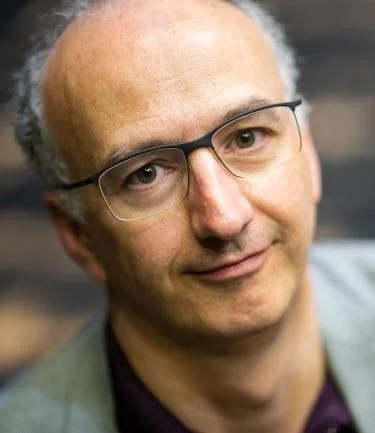
Edward Dusinberre
But the book is far more than an introduction to these composer’s biographies, because Dusinberre describes his own relationship with each work, both individually and as a member of a leading quartet. He begins in fact with his own childhood in Leamington Spa and his move to New York, followed by his rediscovery of Elgar, as it were, as acknowledgment of his own Englishness. That sets the theme of the connection between home and music.
The section on Elgar is best understood to those who are familiar with British geography, such as the Malvern Hills, which I had to look up. The rest is easily accessible to American readers, and it is great fun to read about life in a top string quartet—both in and out of rehearsals, which are both mundane work and distilled artistry. If you follow the Takács, these will be your favorite parts of the book. For others, it will be the insight into the specific works around which the book revolves—Elgar’s Piano Quintet, Dvořák’s “American” String Quartet, Bartók’s Sixth String Quartet and Britten’s Third String Quartet—and the related works that Dusinberre mentions.
Throughout the book, he connects the works he has played to other works of the same composer, to literary works, and to the times in which they were written. As I said at the outset, I know of no other book that manages this balancing act, combining personal experience with digressions without ever losing the thread.
In its scant 210 pages of text, I came to enjoy Dusinberre’s pleasurable company, I learned from his many insights into music, and ultimately I was sorry to put it down at the end.
Programs in January, March and April cover repertoire from 18th to 21st centuries
By Peter Alexander January 4 at 3:05 p.m.
The Takács Quartet has announced their spring series of concerts on the University of Colorado campus in Boulder. As usual, each of the three concerts will be played twice, on a Sunday afternoon at 4 p.m. and the following Monday at 7:30 p.m.: Jan. 8 and 9, March 12 and 13; and April 16 and 17 (see full programs below). All performances will be in Grusin Hall of the Imig Music Building.
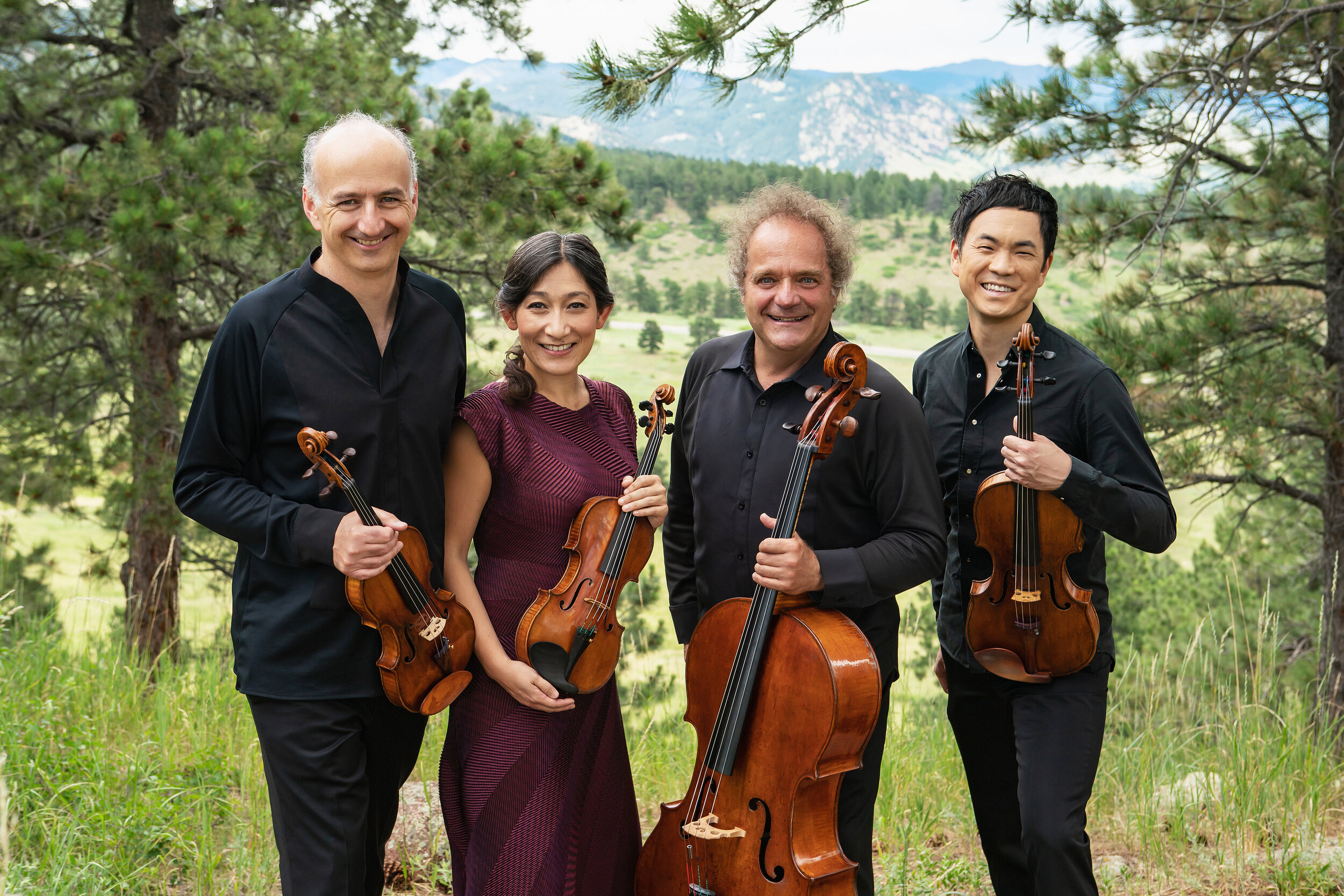
Takács Quartet. Image by Amanda Tipton Photography
Each concert includes at least one piece that is outside what is regarded as the core repertoire for string quartet. The first concert of the series, scheduled for the coming weekend (Jan. 8 and 9) includes the String Quartet in E-flat major by Fanny Mendelssohn, programmed together with quartets by Haydn and Beethoven.
Fanny Mendelssohn was the sister of the better known composer and an accomplished musician in her own right. The Quartet in E-flat was performed only once during Mendelssohn’s life, largely because her brother disapproved of it.
The second program features two quartets by Schubert—the early Quartet in B-flat major, written when the composer was 17, and his last quartet, composed 12 years later. Completing the program is Summa by Estonian composer Arvo Pärt. Originally written as a choral work, Summa has been subsequently arranged by the composer for strings, and has been performed alike by quartets and string orchestras.
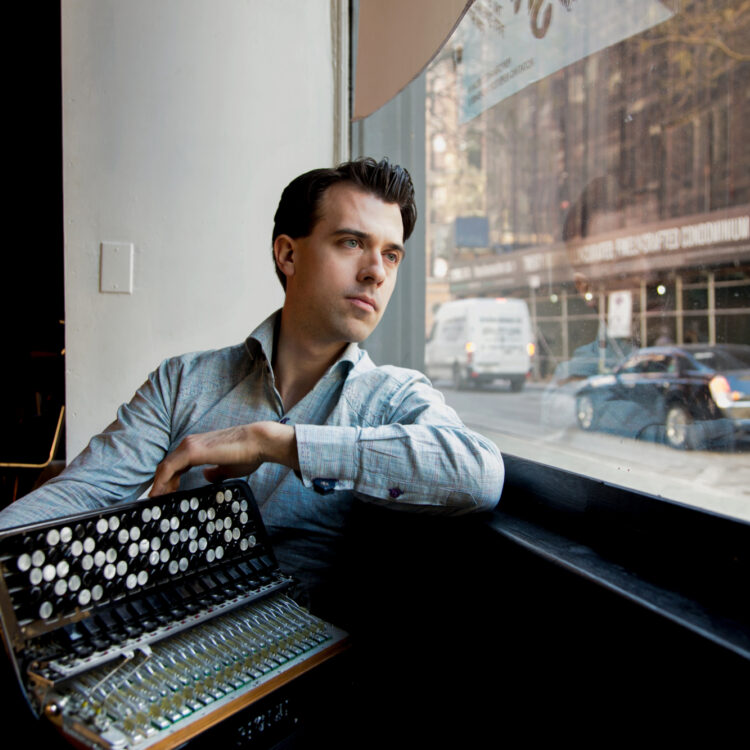
The final program of the spring series will feature the Takács with guest artist Julien Labro performing on bandoneon, the Argentinian cousin of the accordion, and accordina, a mouth-blown harmonicon with a keyboard of a button accordion. The program will feature music by Labron, Bryce Desner, Dino Saluzzi and Clarice Assad, as well as the String Quartet in F major by Ravel.
# # # # #
Takács Quartet
Haydn: String Quartet in F major, op.77 no. 2
Fanny Mendelssohn: String Quartet in E-flat major
Beethoven: String Quartet in A minor, op.132
4 p.m. Sunday, Jan. 8 7:30 p.m. Monday, Jan. 9 Grusin Hall, Imig Music Building
Here is a partial list of musicians who passed away during the past year. Of course the list is never complete, and it reflects my own personal experience and interests. Readers are always welcome to add the names of people that you will miss that I did not include.
Dec. 19, 2021: Judith Davidoff, trained first as a cellist and later master of Renaissance and Baroque stringed instruments, particularly the viola da gamba, as a member of ensembles including the Boston Camerata and New York Pro Musica, and founder of the New York Consort of Viols, a leader of the early-music movement, 94
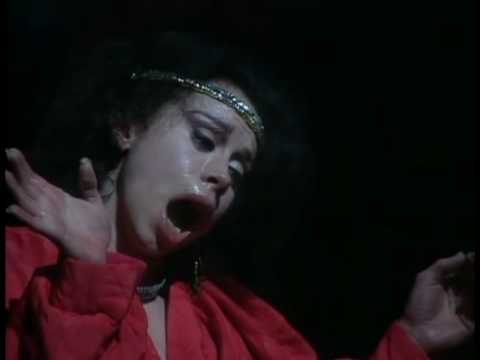
Maria Ewing as Salome
Jan. 5: Dale Clevenger, principal horn of the Chicago Symphony for 47 years, member of the famed Chicago brass section working with a number of other renowned brass players, known for his ability to overcome the greatest challenges on his instrument, 81
Jan. 9: Maria Ewing, soprano/mezzo-soprano who appeared at the Metropolitan Opera, Glyndebourne, The Royal Opera in London and other major houses, known for her performances as Carmen, Salome, Cherubino and Marie in Berg’s Wozzeck, among other roles, and the ex-wife of Sir Peter Hall who directed her in several roles, 71
Jan. 12: Everett Lee, African-American conductor who broke racial barriers as the music director of Leonard Bernstein’s On the Town on Broadway in 1945, and the first Black conductor to lead a white orchestra in the South (Louisville, 1953) and the New York City Opera (1955), who later pursued a career in Europe, and returned to the U.S. to conduct the New York Philharmonic on Martin Luther King Jr.’s birthday in 1976, 105
Roger Tapping
Jan. 15: Beverly Ross, one of the first female songwriters of the rock ‘n’ roll era, known for songs with a bright beat and soft-core romantic themes including “Dim, Dim the Lights,” one of the first hits for Bill Haley and the Comets, and the ubiquitous “Lollipop” (1958), 87
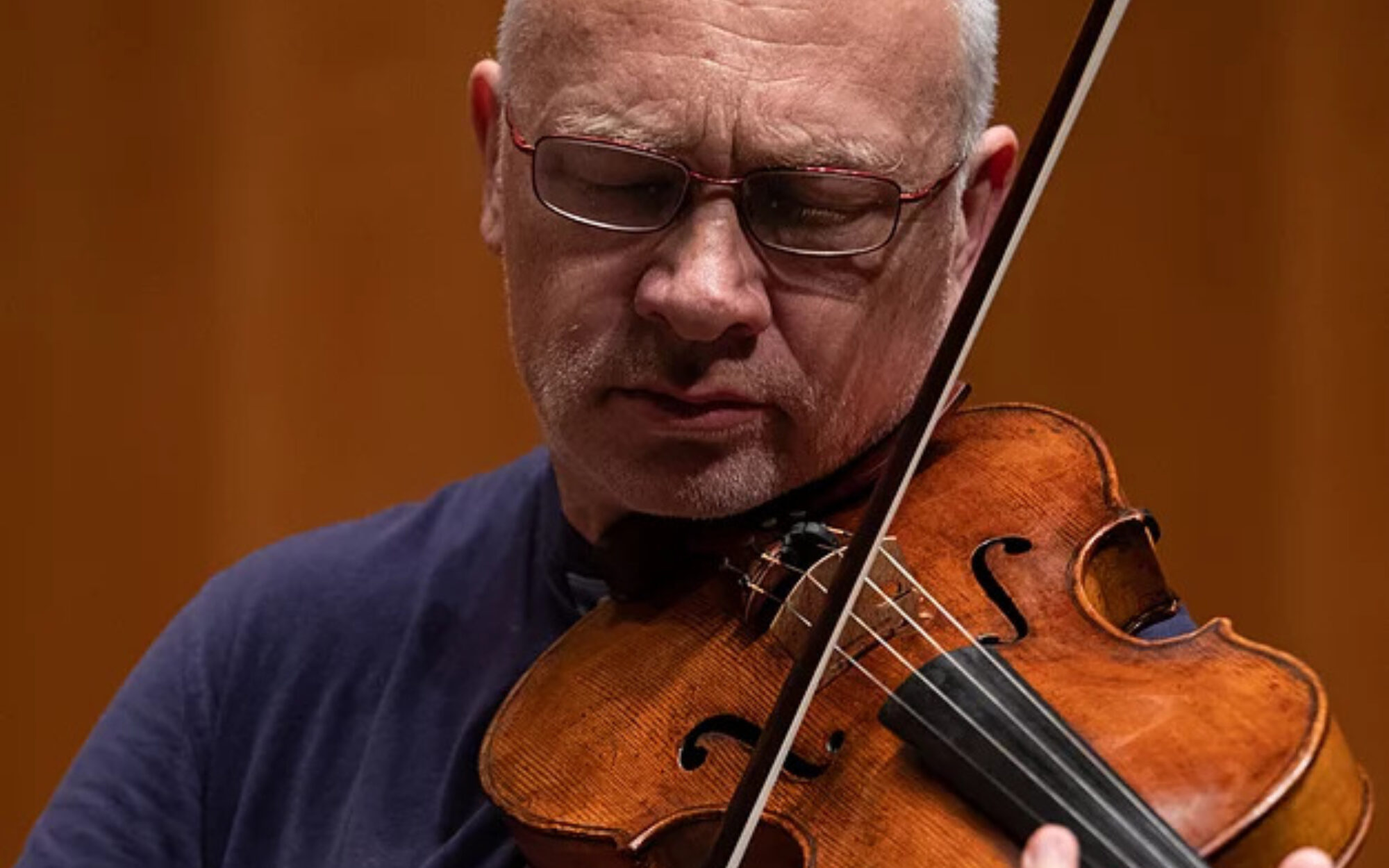
Jan. 18: Roger Tapping, violist, former member of the Takács Quartet and the CU College of Music faculty, who also played with the Allegri Quartet in the UK and in 2013 succeeded Samuel Rhodes in the Juilliard Quartet, 61
Jan. 20: Meat Loaf, born Marvin Lee Aday, rock singer and film actor whose 1977 debut, “Bat Out of Hell,” became a best seller and later spawned several sequels, and who appeared in The Rocky Horror Picture Show as well as Fight Club, Wayne’s World and other films, 74
Feb. 1: Leslie Parnas, American cellist and silver medalist at the 1962 Tchaikovsky competition who returned to Russia to perform and teach, and later as a jurist for the Tchaikovsky competition, a highly expressive player who was also a frequent performer at the Marlboro festival and with the Chamber Music Society of Lincoln Center; 90
William Kraft
Feb. 6: George Crumb, stunningly original American composer of works requiring careful listening and deep attention to sound, running an astonishing gambit from a nightmarish protest of the Vietnam War (Black Angels, 1970), to eerie (Ancient Voices of Children, 1970), to mysteriously evocative (Vox Balaenae, 1971), to beguiling (Music for a Summer Evening, 1974), whose scores were often visually as well as musically artistic, 92
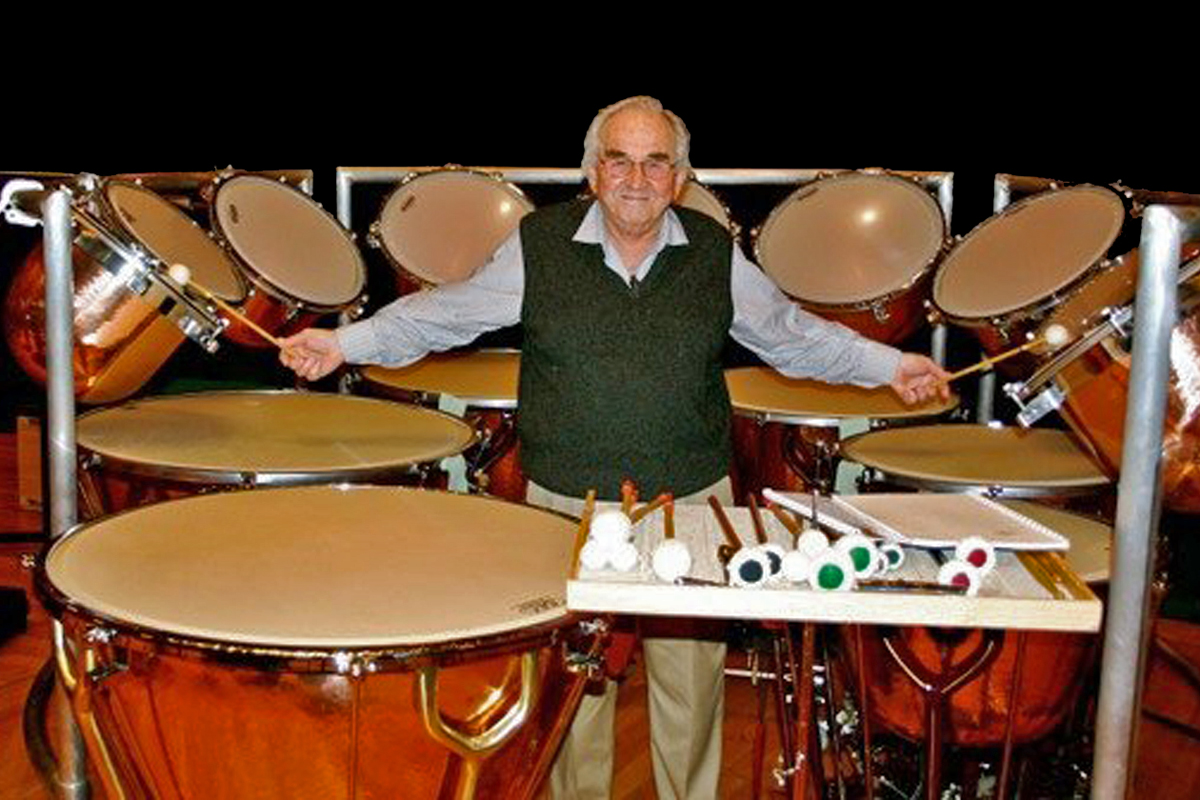
Feb, 12: William Kraft, principal timpanist of the Los Angeles Philharmonic for 18 years and a composer who aimed to elevate percussion section above what he called “rat-a-tat, boom-boom” music, who worked with Igor Stravinsky, founded performing ensembles and taught at UC Santa Barbara, 98
Feb. 19: Gary Brooker: singer/pianist with Procol Harum who co-wrote “Whiter Shade of Pale,” the group’s first and greatest hit in 1967, and nearly all of the music that sustained their remarkable five-decade recording career that lasted until 2017, staying with the band as de-facto leader through other personnel changes, 76
March 8: Ron Miles, jazz cornet player who formed a trio with fellow Denver natives Rudy Royston and Bill Frisell and maintained a major career while remaining in Colorado and teaching at Metropolitan State University, of a rare blood dis order, 58
Harrison Birtwhistle
March 31: Joseph Kalichstein, Israeli-American pianist, Leventritt Competition winner, Juilliard graduate and later professor, best known as a chamber musician, particularly as a member of the Kalichstein-Laredo-Robinson Trio throughout its 45 years of performing and recording together, 76
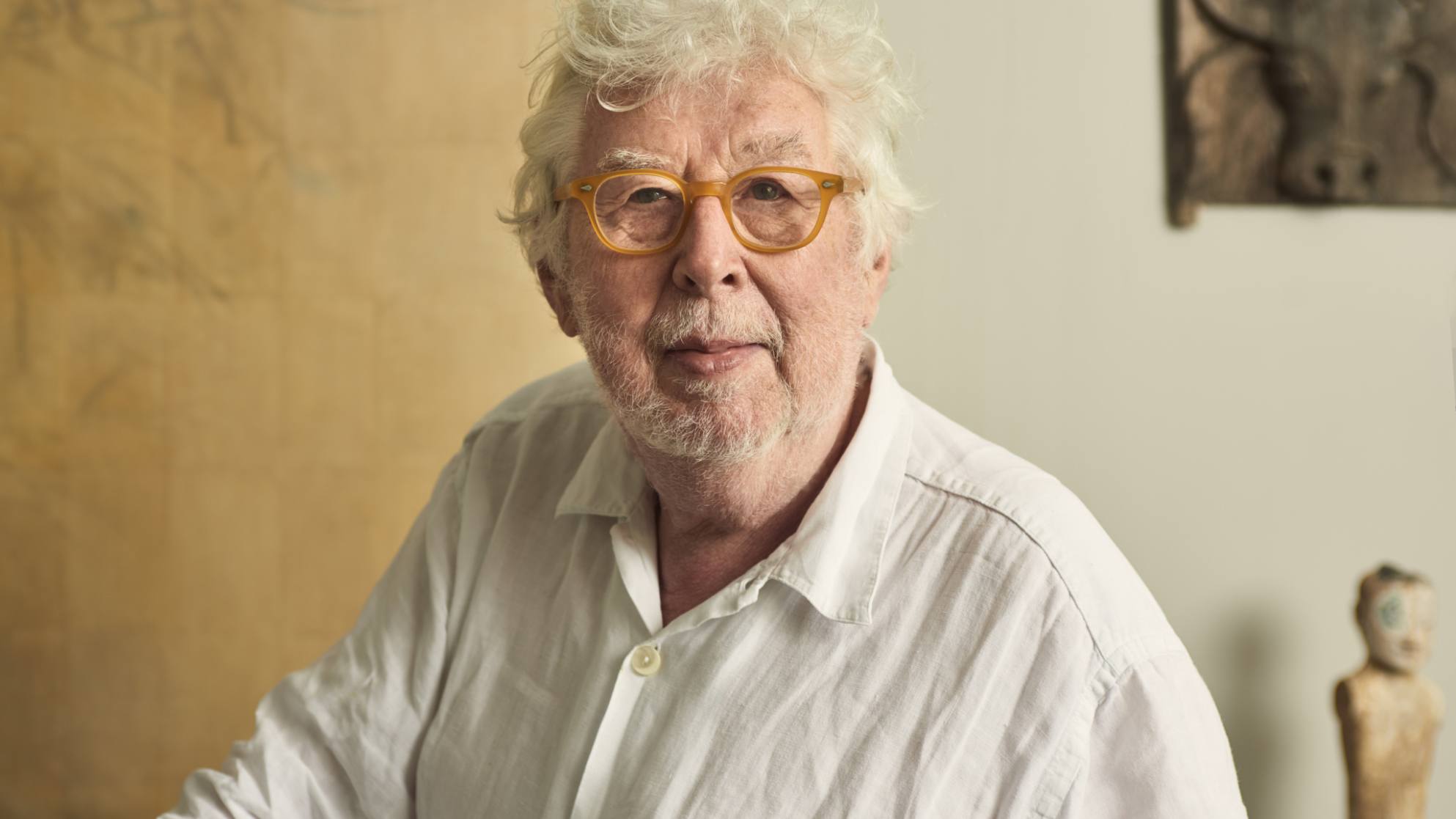
April 18: Harrison Birtwhistle, an evocatively-named British composer known for music of uncompromising modernism and complex structures, a high degree of dissonance, and often intense theatricality, a one-time fellow student with Peter Maxwell Davies, 87
April 18: Nicholas Angelich, American-born pianist, winner of the Gina Bachauer International Piano Competition in 1994, who performed mostly in Europe, and primarily German repertoire, and whose American appearances garnered admiring reviews; 51
April 17: Radu Lupu, Romanian-born pianist known for his eccentric and meditative performances and his avoidance of publicity, who launched his career with wins at the Van Cliburn, George Enescu and Leeds International piano competitions but largely avoided showy repertoire, saying he would have liked a career “playing nothing but slow movements,” 76
May 11: Alexander Toradze, Georgian-American pianist who won the silver medal at the Van Cliburn competition in 1977 and defected from the Soviet Union to the U.S. in 1983, known for idiosyncratic performances of Russian repertoire, 69
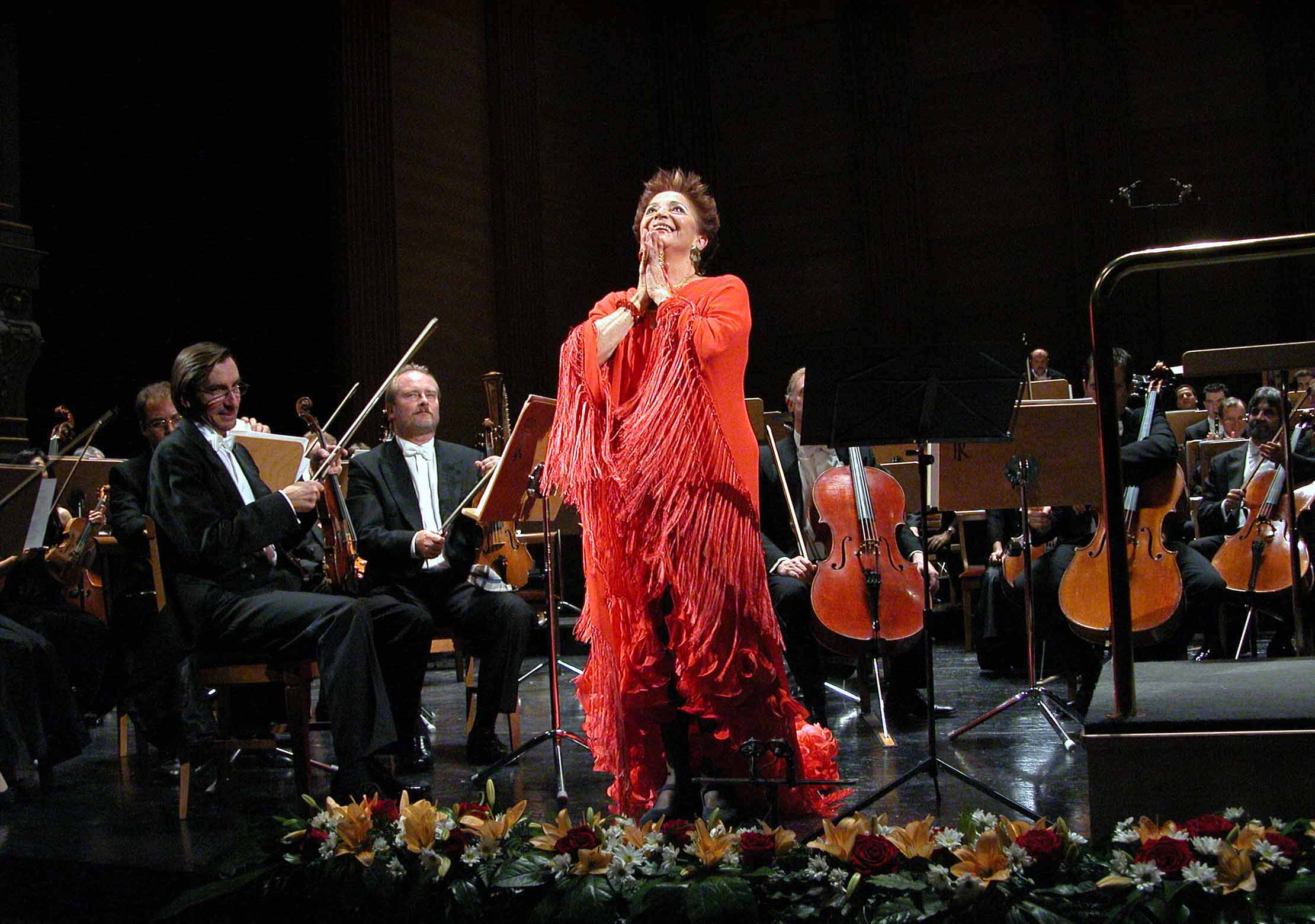
Teresa Berganza
May 13: Teresa Berganza, Spanish mezzo and alto known for her performances as Carmen in Bizet’s opera and Rosina in Rossini’s Barber of Seville, who sang her debut at the Metropolitan Opera in 1967 as Cherubino in Le Nozze di Figaro, and gained acclaim in other Rossini and Mozart roles, 89
May 13: Simon Preston, English organist, conductor and composer who served at organist and choir director at Westminster Abbey 1981–87, who was first appointed organist at Westminster Abbey in 1962 and also served at St. Alban’s Cathedral and Christ Church Oxford, ad memorably directed the music for the wedding of Prince Andrew and Sarah Ferguson in 1986; 83
May 13: Rosmarie Trapp, the last surviving daughter of Baron Georg and Maria Augusta von Trapp and a member of the Trapp Family Singers, who often held sing-alongs for guests at the Trapp Family Lodge in Stowe, Vt., 93
May 17: Richard Best, American bass who sang 545 performances at the Met, including the Met premieres of Berlioz’s Les Troyens and Berg’s Lulu; he also sang at the San Francisco Opera, the Santa Fe Opera, Lyric Opera of Chicago and the Paris Opéra, and taught at Southern Illinois University after retiring from the stage, 87
May 17: Vangelis, self-taught Greek composer of the Academy-Award winning scores for the 1981 film Chariots of Fire, which made him internationally famous and was followed by scores for Blade Runner and other films, 79
May 18: Anne Howells, English mezzo-soprano who came up through the ranks at Glyndebourne from chorus member to Dorabella and Meg Page, among other roles; she also sang at Covent Garden, the Lyric Opera of Chicago and the Met, and later taught at the Royal Academy of Music, 81
Richard Taruskin
June 6: Jim Seals, half of the soft-rock duo Seals and Croft with Dash Crofts, whose Baha’i faith lead them away from the harsh and loud sound of 1960s hard rock to a gentler style characterized in hits such as 1972’s “Summer Breeze” and 1973’s “We May Never Pass This Way (Again),” 79
July 1: Richard Taruskin, a musicologist and scholar of Russian music who ascended to the level of pubic intellectual through the pages of the New York Times, who was the author of the magisterial six-volume Oxford History of Western Music (2005), and who was known for his contentious style of argument on topics from performance practice to the politics of Soviet music—most famously the honesty or dishonesty of the putative Shostakovich memoir Testimony—and just about anything else to which he turned his attention; emeritus professor at UC Berkeley, 77
July 2: Peter Brook, creative English stage director who directed works in several genres, including numerous landmark Shakespeare production; Truman Capote and Harold Arlen’s House of Flowers on Broadway in 1955; a nine-hour stage adaptation of The Mahabharata in 1985; and several operatic productions including the condensed Tragédie de Carmen in 1983 and Magic Flute in 2011; 97
July 22: Stefan Soltesz, an Austrian conductor who collapsed on the podium during a performance of Richard Strauss’ Schweigsame Frau at the Bayerische Staatsoper (Bavarian State Opera) in Munich, and died later at a hospital, 73
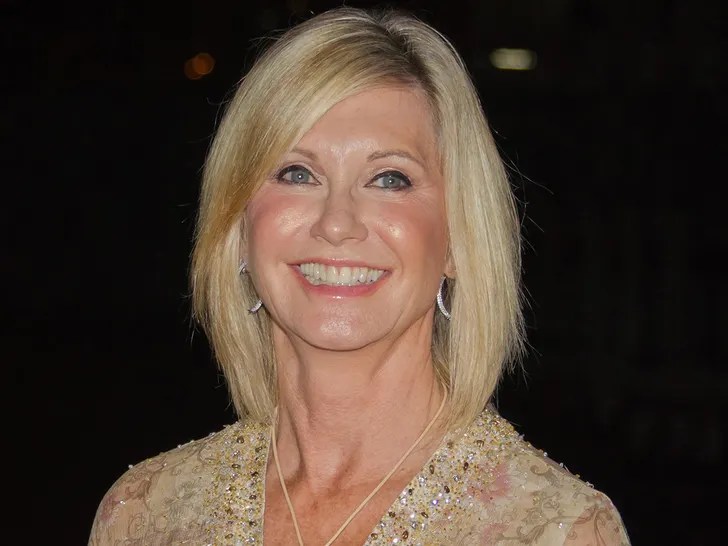
Olivia Newton-John
Aug. 8: Olivia Newton-John, star of the mega-hit pop musical Grease and much-loved singer of amiable pop music, including seven top-10 hits on the country chart and four records that sold more than two million copies each in the 1970s and ‘80s, and who was known in recent years for her long battle with breast cancer; 73
Aug. 25: Joey DeFrancesco, a jazz organist and the son of a jazz organist, credited with reviving jazz organ in the 21st century, who toured with Miles Davis while still a teenager and who also played trumpet, saxophone and piano, but preferred the Hammond B3 organ, 51
Sept. 5: Lars Vogt, German pianist and conductor known for his solo performances, his recitals with singers Thomas Quasthoff and Ian Bostridge, and the chamber music festival he founded in Heimbach, Germany; he was appointed music director of the Orchestre de Chambre de Paris in 2020, and was scheduled to be artist-in-residence with the Deutsche Radio Philharmonie Saarbrücken Kaiserslautern for 2022-23, 51
Sept 9: Jorja Fleezanis, American violinist, the daughter of Greek immigrants, who served as concertmaster of the Minnesota Orchestra for 20 years before joining the faculty of the Jacobs School of Music at Indiana University in 2009, and also played the premiere of Johan Adams’s Violin Concerto in 1994, 70
Sept. 10: Paul T. Kwami, longtime director of the Fisk Jubilee singers, the choral group from the historically Black Fisk University that was formed a year after the end of the Civil War and that was known for its performance of African American spirituals, 70
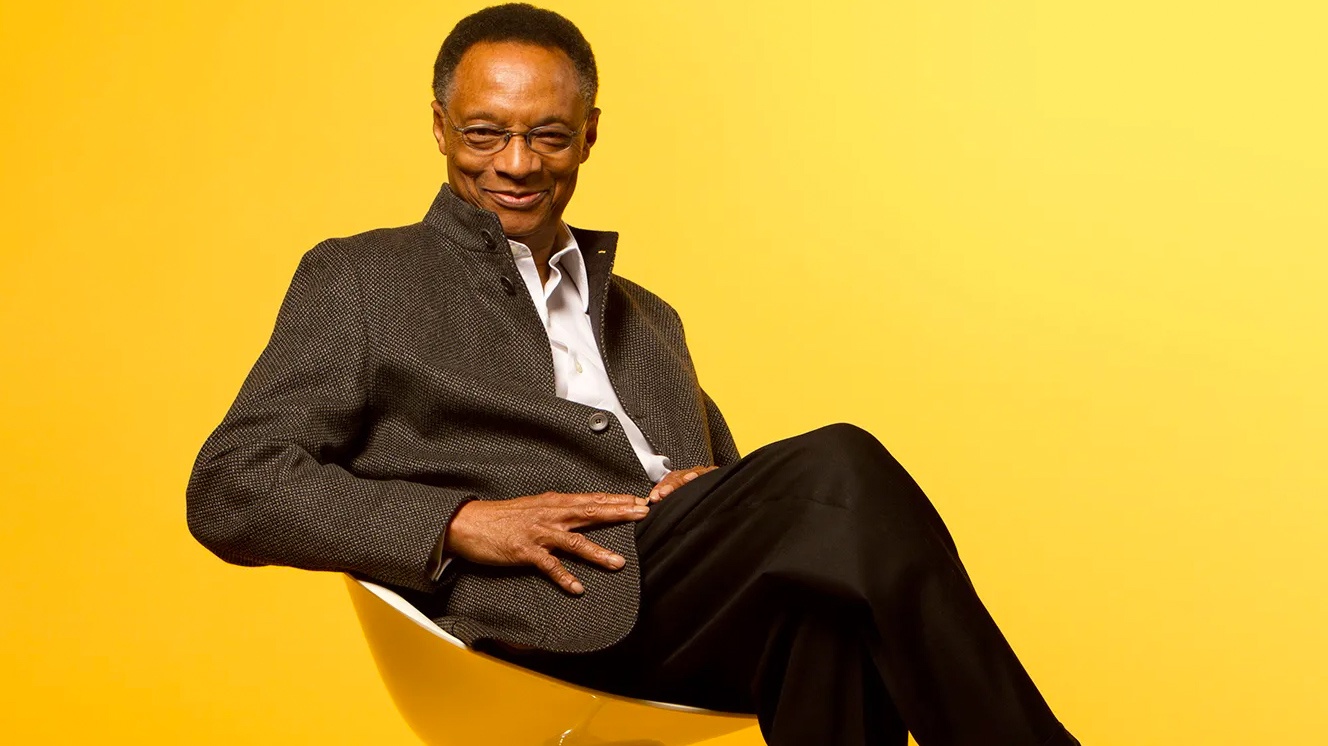
Ramsey Lewis
Sept. 12: Ramsey Lewis, jazz pianist whose professional life spanned more than 50 years, leader of the Ramsey Lewis Trio and later the Urban Knights, who unexpectedly broke into the pop music Top 10 in 1965 with “The ‘In’ Crowd,” and was named a Jazz Master by the NEA 2007, 87
Sept. 24: Pharoah Sanders, American saxophonist and composer who played with Ornette Coleman, Sun Ra and John Coltrane and was known for playing highly individual, spiritual free jazz as well as jazz standards and Caribbean-inflected music, 81
Oct. 4: Loretta Lynn, the “coal miner’s daughter” who became one of the most beloved country singers on the basis of both her powerful voice and her life story that was chronicled in her autobiography and the Oscar-winning film based on it; 90
Oct. 19: Joanna Simon, American mezzo-soprano, oldest sister to Lucy (see below) and Carly Simon, whose operatic career took her to the New York City Opera as well as “The Dick Cavett Show” and “The Ed Sullivan Show,” and who occasionally sang backup for her sisters, with whom she remained close throughout her career; 85
Oct. 20: Lucy Simon, sister of Joanna and Carly Simon, with the latter of whom she sang in a duo as the Simon Sisters in the 1960s folk revival, later released her own solo albums and also wrote the Tony-nominated score for the musical The Secret Garden, 82
Elayne Jones (Don Jones/San Francisco Symphony Archives)
Oct. 28: Jerry Lee Lewis, rockabilly singer and pounding pianist whose hits in the 1950s, including “Great Balls of Fire,” shot to the top of the charts, but whose personal life including his marriage to a 13-year-old cousin, cut short his rock stardom until he was able to revive his career as a country musician in the late ‘60s and ‘70s; 87
Nov. 6: Don Lewis, electronic music pioneer who in the 1970s created and performed with the Live Electronic Orchestra from his collection of keyboards, synthesizers and drum machines all joined together, the only one of its kind, which offered a remarkable choice of sounds in one package before the later invention of the MIDI keyboard; 81
Nov. 18: Ned Rorem, Pulitzer prize-winning composer noted for his art songs and other vocal works, as well as one-act operas, chamber music and three symphonies; whose published diaries gave insight into the gay musical and artistic circles from the 1960s onward; 99
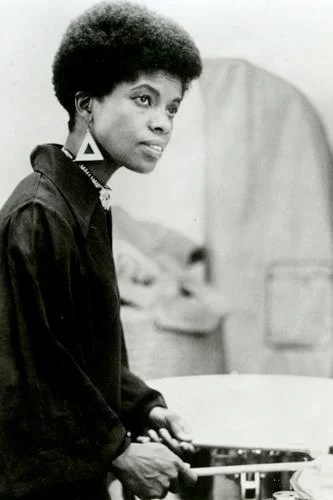
Dec. 18: Elayne Jones, a timpanist who joined the San Francisco Symphony under Seiji Ozawa in 1972 as the first black principal player in a major US orchestra but had to fight a legal battle over racial and sexual discrimination when she was denied tenure by the orchestra, in spite of rave reviews from critics and public, and who continued to play in the orchestra of the San Francisco Opera until 1998; 94
Dec. 19: Stanley Drucker, orchestral clarinetist who played with the New York Philharmonic under five of its music directors, from Leonard Bernstein to Lorin Maazel and for more than 60 years, 1948–2009, and taught at the Juilliard School for 30 years; 98
Performances in tonight in Boulder, Denver Dec. 16–18
By Izzy Fincher Dec. 15 at 11:12 a.m.
A grand procession of extravagantly dressed kings moved through the church.
King Balthazar took the lead, dressed in a crimson robe and headdress covered with gold. Then, came King Kaspar, clad head-to-toe in gold and jewels, and finally King Melchior, with a silky, turquoise and plum colored cape and plumed warrior’s helmet. They each carried luxurious gifts intended for the baby Jesus, including gold, frankincense and myrrh.
This scene took place during Central City Opera’s performance of Amahl and the Night Visitors by Gian Carlo Menotti last night (Dec. 13) at Boulder’s First United Methodist Church. The performance, directed by Iliana Lucero Barron and conducted by John Baril, offered a heart-warming interpretation of the seasonal classic, filled with the magic of the holiday spirit.
Aside from the luxurious Magi’s costumes, the production took a minimalistic approach, letting Menotti’s masterfully written music shine through as the central storytelling element. The performance will be repeated in Boulder tonight before heading to Denver for three shows, Dec. 16–18.
Originally commissioned by NBC as the first opera for television in 1951, Menotti’s Amahl and the Night Visitors has since become a beloved Christmas tradition. It tells the story of Amahl, a poor shepherd boy with a disability who lives with his widowed mother. One fateful night, the three Magi stop at Amahl’s house to rest on their way to Bethlehem, leading to a miraculous encounter that changes the young boy’s life.
Over the past 70 years, the opera is said to have been performed more than 2,500 times—in a wide variety of settings from professional opera houses to amateur church and school performances. Over the years, the brief one-hour opera in English, originally intended for children, has proved accessible and enjoyable for diverse audiences of all ages.
For this traveling production, Baron wanted to keep the props and sets to a minimum, to more easily adapt to different venues and offer creative flexibility to the performers. This approach resulted in a rather bare-bones aesthetic. Onstage, the main set piece for Amahl’s house consisted of a wooden door frame, surrounded by stacks of firewood and topped with a hanging sheet. Nearby, stood a few makeshift wooden chairs. This simple set left the stage looking almost too empty, though the church’s massive wooden overhanging cross and towering pipe organ filled out the space.
In the opening scene, Kason Nicholas, a boy soprano from the Colorado Children’s Chorale, established himself as a charming Amahl. Though he seemed a bit hesitant at first, his excitement and well-placed comedic timing soon proved endearing. With his light, clear voice, Nicholas required amplification in the large chapel, especially singing alongside the powerful mezzo-soprano Jennifer DeDominici as his mother. During their duets, their voices sounded well-balanced for the most part, though a few times Nicholas’ higher notes clipped slightly with the mic.
DeDominici delivered a convincing, nuanced interpretation of Amahl’s mother, realistically portraying her struggle as a single impoverished mother trying to care for a mischievous son with a disability. Her powerful, expressive voice projected through the chapel, commanding Amahl’s and the audience’s attention as her patience wore thin.
Yet, in brief moments, she showed glimpses of tender love for her son, such as in “Have You Seen a Child” when the three Magi’s descriptions of the holy Christ Child remind her of Amahl. In the final scene, DeDominici shined during one of the opera’s few deeper moments, as she grappled with her inner turmoil and feelings of desperation, love and greed before attempting theft for the sake of her son.
Accompanying these strong soloist performances, Baril’s orchestra, sprawled across the front section of the church pews, sounded wonderful. As the conductor, Baril took full advantage of Menotti’s adept score writing, exploring the different colors and personalities within the music for each character and perfectly timing the comedic musical interchanges with the singers’ lyrics and blocking. In addition, the shepherds chorus and the First United Methodist Church choir sang skillfully and with passion, aiding in the collaborative effort.
The three Magi, played by Paul Griggsby, Javier Abreu and Jonathan Hays, and their page, Jerome Síbulo, gave solid performances as well. In stark contrast to the humble lives of Amahl and his mother, the kings stood out as symbols of opulence, with their lavish costumes and props as the most eye-catching part of the show. They embodied the grace of nobility, singing clearly and powerfully with a beautiful blend as a cohesive unit. Throughout the opera, they played their crucial role well.
Despite bringing splendor into Amahl’s simple world, the Magi show him and his mother that the true meaning of the Christmas miracle lies not in wealth but in forgiveness, grace and love.
# # # # #
Gian Carlo Menotti: Amahl and the Night Visitors Central City Opera, John Baril conductor and Iliana Lucero Barron, director
Remaining performances:
7:30 p.m. Wednesday, 14 First United Methodist Church, Boulder TICKETS
7:30 p.m. Friday and Saturday, Dec. 17 and 18 2 p.m. Sunday, Dec. 18 Trinity Methodist Church, Denver TICKETS
Performances in Colorado Springs, Boulder and Denver, Dec. 11–18
By Izzy Fincher Dec. 9 at 2:05 p.m.
Gian Carlo Menotti’s Amahl and the Night Visitors, which Central City Opera brings to Colorado Springs, Boulder and Denver Dec. 11–18, has become a beloved Christmas operatic classic over the past 70 years. But it almost didn’t happen.
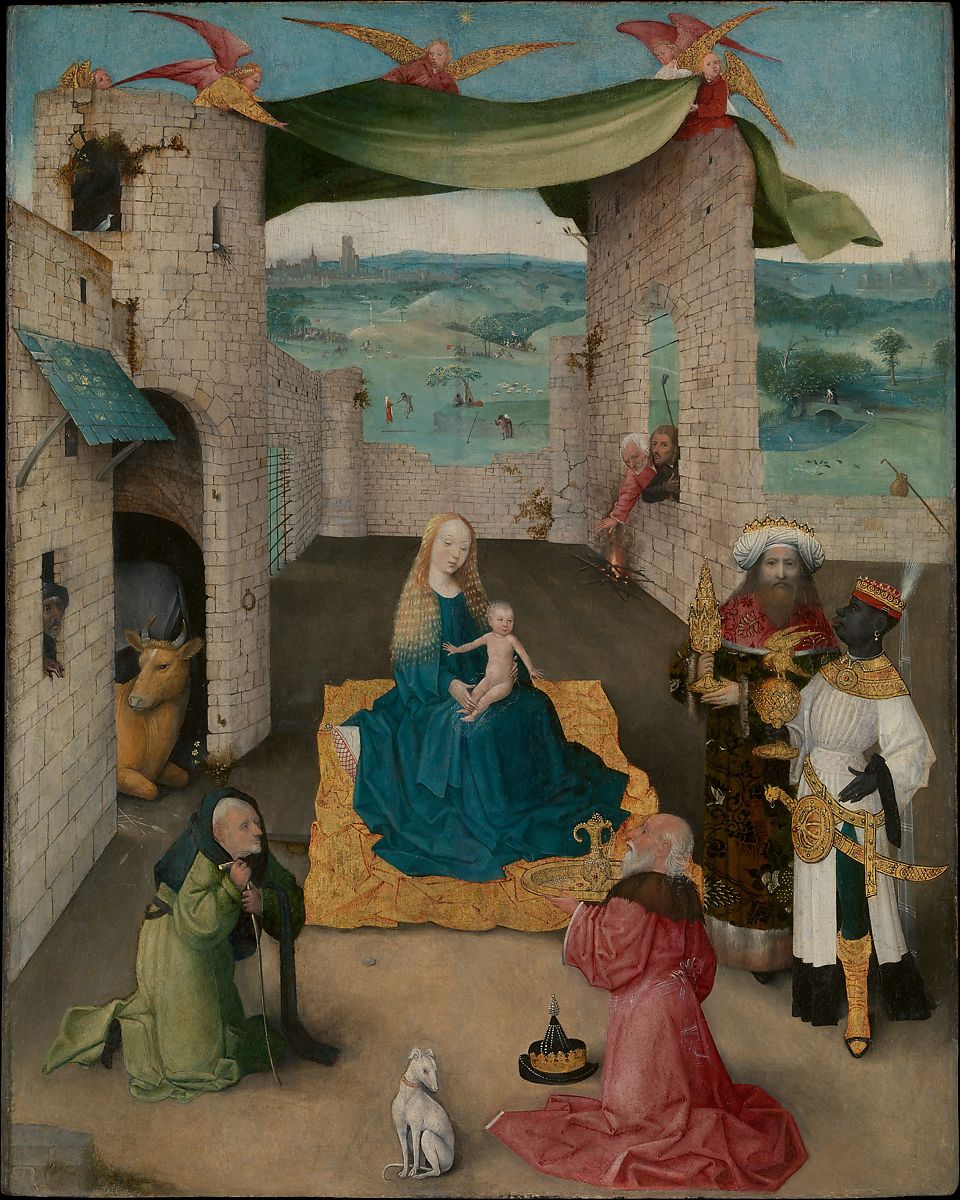
Hieronymus Bosch: The Adoration of the Magi, ca. 1475. The Metropolitan Museum of Art, New York.
In 1951, NBC commissioned Menotti to compose the first opera for television, to be shown during the holiday season. But as the Christmas deadline approached, Menotti struggled to find inspiration for his opera. Then one day at the Metropolitan Museum of Art, he was struck by Hieronymus Bosch’s nativity scene painting, “Adoration of the Magi.”
“I was looking at it, suddenly I heard again, coming from the distant blue hills, the weird song of the Three Kings,” Menotti wrote in the opera’s performance notes. “I then realized they had come back to me and had brought me a gift.”
The painting reminded him of his childhood in Italy, where traditionally the Magi, or the three kings, brought presents for children for Christmas, instead of Santa Claus. He had finally found the inspiration for his NBC opera, a creative retelling of the story of the Magi from the perspective of the disabled shepherd boy Amahl.
This holiday season, Central City Opera will take their traveling production of Amahl and the Night Visitors, conducted by John Baril and directed by Iliana Lucero Barron, on the road. The company will perform in Boulder at 7:30 p.m. Tuesday and Wednesday, Dec. 13 and 14, at the First United Methodist Church (ticket information below).
“In the past couple of years with COVID-19, people have missed holiday traditions,” Pamela Pantos, president and CEO of Central City Opera, says. “So, we wanted to bring this production that people of all ages can enjoy to different communities in the greater Denver-Boulder area.”
Amahl and Night Visitors, a one-hour-long opera in English, is intended to be accessible for a wider audience, including first-time opera goers and younger people. Telling the story from the perspective of the boy Amahl specifically helps to connect with children.
“This is an opera for children because it tries to recapture my own childhood,” Menotti wrote.
The story takes place near Bethlehem, where Amahl and his widowed mother live in poverty. One night, the three Magi, regal foreigners from the East, stop by their humble home on their journey to bring gifts to the baby Jesus. As Amahl and his mother host the noble guests for the night, they face several personal and moral challenges, which eventually lead them to discover the power of forgiveness and healing.
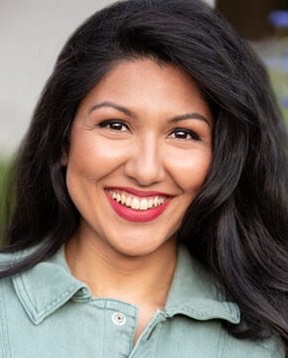
Jennifer DeDominici
“Amahl’s mother is the most realistic character with the biggest arc,” says Jennifer DeDominici, who plays the mother. “Like her, many of us will have cared deeply about someone, so deeply that it made us question our choices and our priorities. Hopefully that person we love will be able to inspire us to be better and keep going, like Amahl does.”
For Central City’s production, the creative team wanted to stay true to the spirit of the opera, while also updating it to be more inclusive for modern audiences.
Iliana Lucero Barron
“We’re definitely paying attention to what we need to change [in the opera] to make it current and to honor all the changes in regards to social justice for the different communities in our world,” Barron says.
Barron made several changes to the lyrics, including replacing the word “crippled” with “disabled” when referring to Amahl’s physical condition and avoiding the use of the word “gypsy,” which has historically been used as a racial slur for Romani people. In addition, Barron wanted to incorporate American Sign Language (ASL) in a few key moments throughout the performance for King Caspar, who is deaf.
To highlight Menotti’s beautiful music and storytelling, Barron aims to take a minimalistic approach to the props and sets. This offers greater flexibility for the traveling production in different locations, while also encouraging the audience to use their own creativity to fill in the gaps, she says.
“This opera really lends itself to the imagination,” Barron says. “We are trusting the audience to suspend their disbelief and use their imagination to come into the world we have built.”
Though the story has roots in biblical scripture, Barron hopes the audience will still be able to connect to the overarching themes of generosity and hope, regardless of their religious beliefs.
“The opera shows us the importance of hope, community and powering through the hard times,” DeDominici says. “It reminds that connecting with each other and banding together can give us a sense of abundance.”
# # # # #
Gian Carlo Menotti: Amahl and the Night Visitors Central City Opera, John Baril conductor and Iliana Lucero Barron, director
Boulder performances: 7:30 p.m., Tuesday and Wednesday, Dec. 13 and 14 First United Methodist Church
Additional dates, full cast and ticket information HERE.
CORRECTIONS: On Dec. 14, dates in the subhead were corrected to show the performances will be Dec. 11–18, and the spelling of Colorado Springs was corrected in the lead paragraph.
Holiday favorite will be abridged for younger audiences and sung in English
By Izzy Fincher Dec. 6 at 12 noon
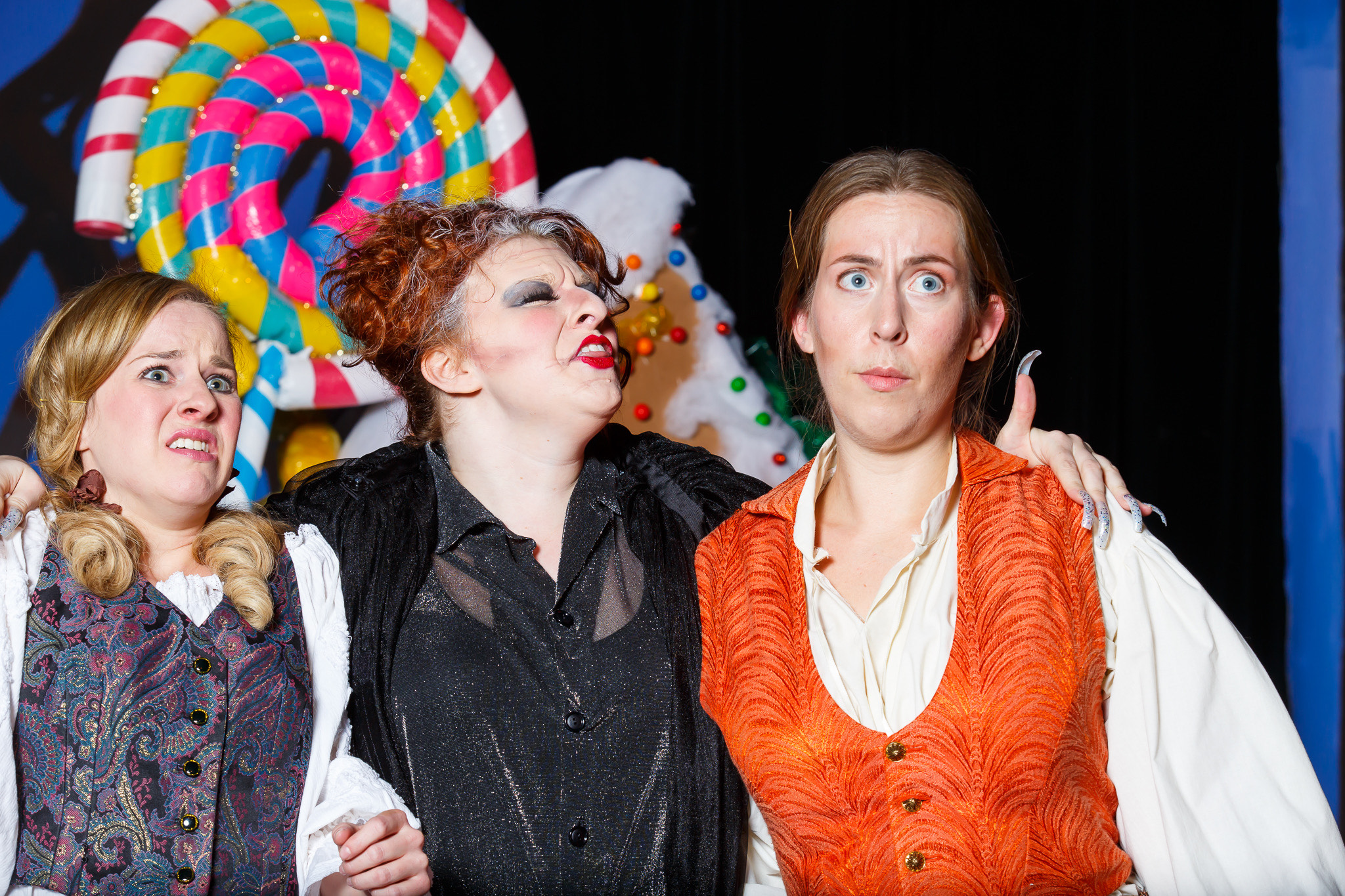
Engelbert Humperdinck’s Hansel and Gretel has been a beloved Christmas-time opera for more than a century. Based on the Brothers Grimm classic fairytale, the opera tells an uplifting story of overcoming hardships and the importance of family.
This December, Boulder Opera will present an abridged, hour-long production of Hansel and Gretel, sung in English. The singers will be accompanied by pianist Aric Vihmeister and cellist Mathieu D’Ordine.
Boulder Opera’s 2014 production of Hansel & Gretel, with Lindsay French (Gretel), Corinne Denny (the Witch) and Genevieve Baglio (Hansel).
The performance will be followed by a Q&A session, hosted by director Brandon Tyler Padgett. As a part of their Family Series, Boulder Opera aims to make this interactive, shorter performance more accessible and engaging for younger audiences.
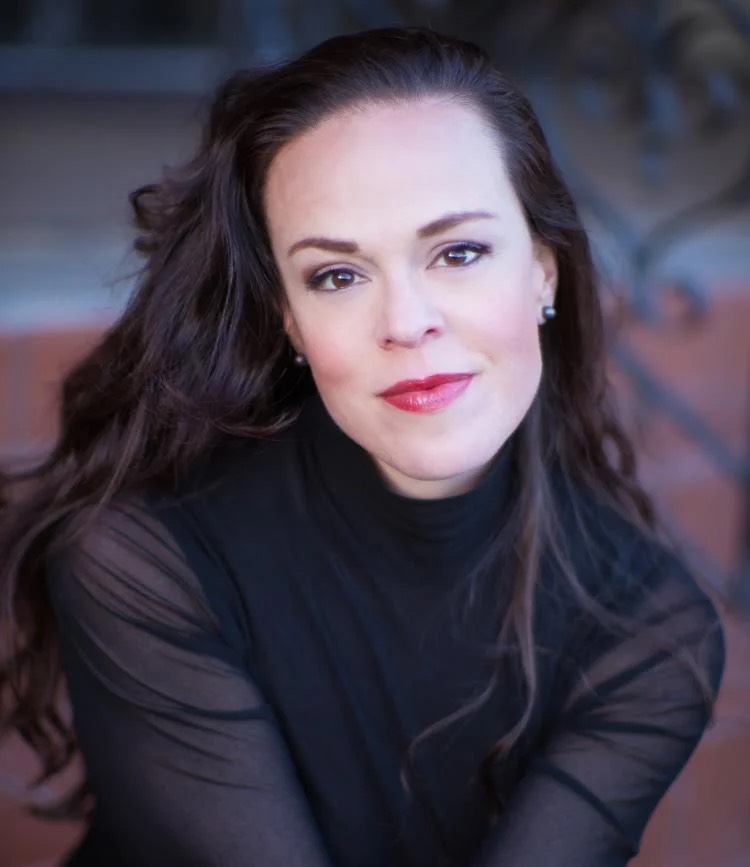
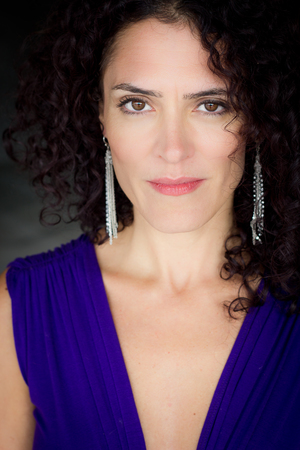
Boulder Opera executive director Dianela Acosta also plays the Witch in the opera
“We want to give young children access to classical music as a stepping stone to engage with this craft,” says Padgett, who will also be playing the role of Hansel and Gretel’s father.
“We want to develop the next generation of opera lovers,” Dianela Acosta, the executive artistic director of Boulder Opera, says. “The best way to do this is to start at an early age, so [attending operas] becomes a habit.”
To be more family-friendly, the production will highlight the light-hearted, magical aspects of Humperdinck’s fairytale opera, while deemphasizing the darker, more mature themes of poverty and domestic abuse.
“Our focus is on the overarching positive themes within the story—the familial bond of Hansel and Gretel and the natural elements in the world that have benevolent or caring features and want good people to prosper,” Padgett says. “We want to (bring out) the aspects of hope and good over evil.”
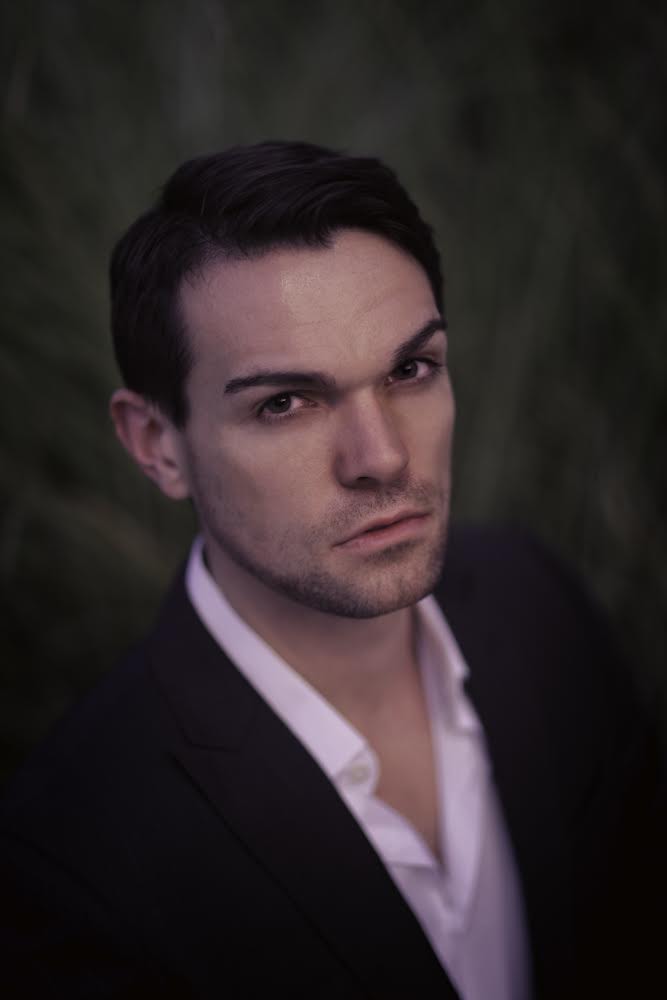
Director Brandon Tyler Padgett also plays the role of the Father
Padgett’s goals for Boulder Opera’s production align with the original purpose of the opera, as a small-scale holiday show for children. In 1889, the composer’s sister Adelheid Wette commissioned him to write a few songs for her children’s show, based loosely on the Brothers Grimm fairytale. Following the public’s enthusiastic response, Humperdinck and Wette decided to expand the show into a full two-hour-long opera, which premiered in Weimar in 1893 under the baton of Richard Strauss.
To appeal to children, Wette decided on a more optimistic adaptation of the Grimm fairytale for her libretto, incorporating additional elements of German folklore. For example, in the forest, Hansel (portrayed here by Leslie Ratner) and Gretel (Melaina Mills) meet the gentle Sandman (Sabino Balsamo), a mythical character in European folklore who sends children to sleep by placing a grain of sand into their eyes and creates beautiful dreams.
After they fall asleep, Hansel and Gretel dream of being protected by 14 angels, which will be portrayed by a teen chorus from the Denver-Boulder area in flowing white costumes. The next morning, the sparkling, elegant Dew Fairy (Balsamo) appears, sprinkling magical dew to awaken the siblings from their peaceful slumber.
With these fantastical elements, Padgett aims to bring out the childlike wonder of Hansel and Gretel as they embark on their adventure, a feeling he hopes will draw the audience into their magical world.
“Hansel and Gretel are always wondering,” Padgett says. “They’re always asking questions. They’re not only hungry for food but they’re also hungry for knowledge and for excitement. They want to be enchanted.”
Despite the fairytale elements, the opera does explore the darker themes of the Brothers Grimm fairytale, although in a less disturbing way. In the original fairytale, due to the shortage of food and the family’s poverty, the children’s stepmother persuades their father to leave Hansel and Gretel in the woods to die, so the couple don’t starve to death. Later, after being abandoned in the woods by their parents, the siblings, hungry and afraid, wander into the bloodthirsty witch’s magical gingerbread house.
In Humperdinck’s opera, the mother (Lauren Bumgarner) is presented as a more likable, yet complicated character. Filled with despair and frustration as her family starves, the mother sends Hansel and Gretel to the haunted forest to pick strawberries. Realizing her mistake, the mother and father later set off into the forest to save their children.
“One of the themes that children tend to have trouble with in this opera is that the parents have fault in this story,” Padgett says. “It’s not because they’re bad people — they are just humans in a desperate situation. So we try to show how desperate their situation is.”
After the performance, Padgett says this issue will be addressed further in the interactive Q&A session, which will offer children an opportunity to engage with the storyline and the music.
“We want to be able to start a dialogue with kids—not only about the beauty of classical music but also how it reflects real life and its problems,” Padgett says. “This can be a real starting place for a lot of human empathy.”
# # # # #
Engelbert Humperdinck: Hansel and Gretel Boulder Opera, Brandon Tyler Padgett, director
A listing of Holiday performances by area musical organizations
By Peter Alexander
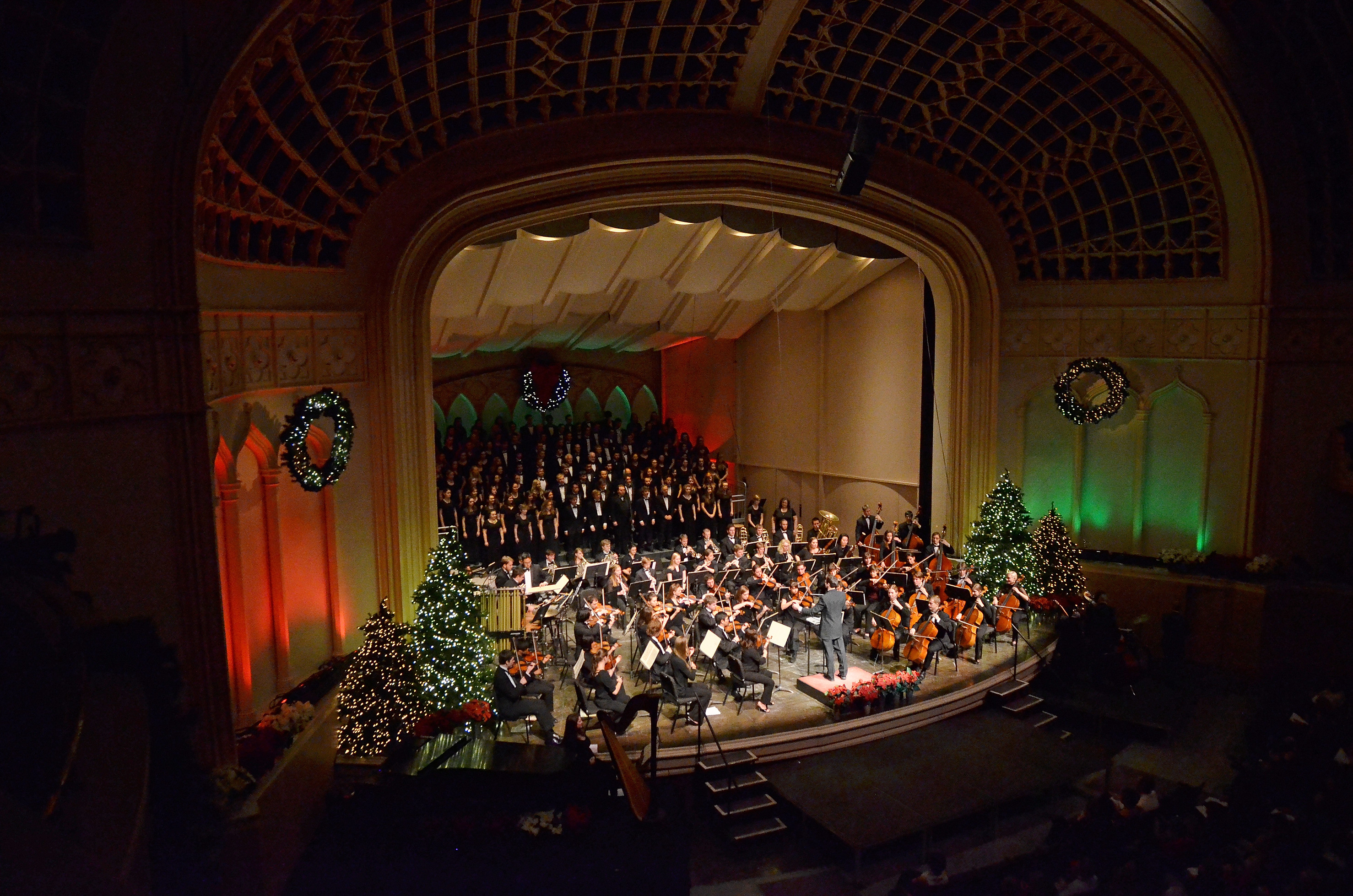
‘Tis the season, and the halls are alive with the sounds of Christmas.
The 2013 Holiday Festival by the College of Music in Macky Auditorium (Photo by Casey A. Cass/University of Colorado)
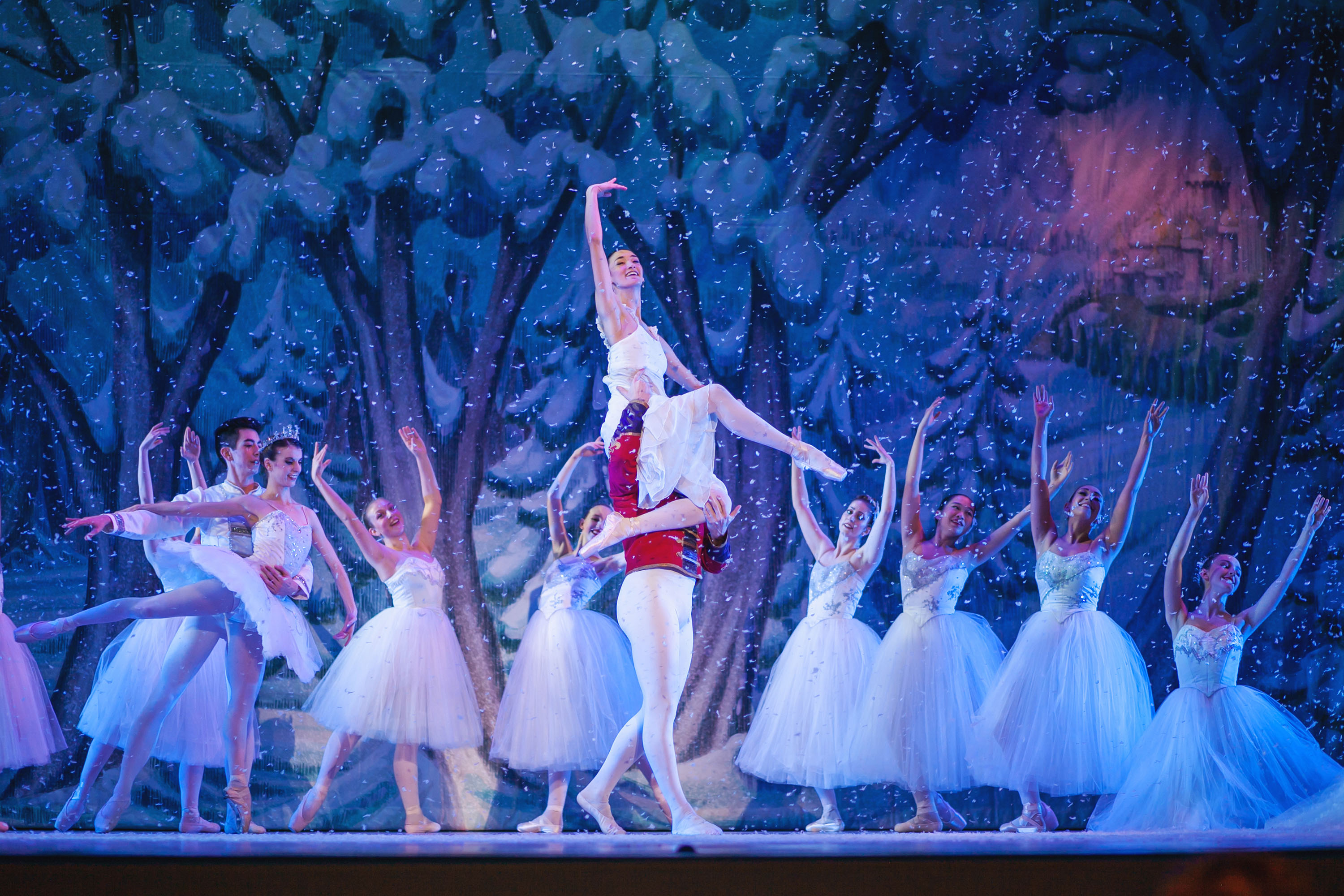
In the coming weeks, area musical organizations will offer performances ranging from The Nutcracker to Messiah, from Gregorian chant to Judy Collins, and from the Bach Christmas Oratorio to A Charlie Brown Christmas.
In fact, the first Nutcrackers have already been completed, with more performances coming this weekend in Longmont (Dec. 3–4 with the Longmont Symphony and Boulder Ballet; see below for details, including links for tickets for all performances mentioned in this article). The Longmont performances include a “gentle Nutcracker,” an abridged, “sensory friendly” performance that welcomes neurodiverse audience members, their families and caregivers.
Boulder Ballet Nutcracker. Image by Amanda Tipton Photography
Other dance companies in the area offer The Nutcracker well into December and can easily be found on the Web; here I am listing the many musical groups in our area. This weekend the very popular CU Holiday Festival, with CU orchestras, bands and choirs starts the festivities on Friday at 7:30 in Macky Auditorium, with additional performances Saturday and Sunday (Dec 2–4). Check the Web page soon; some performances are close to selling out.
If you get enough “Rudolph” and “White Christmas” in the mall, several organizations offer alternative Holiday fare. Seicento Baroque Ensemble will present ”Noel: Christmas in the late Renaissance and early Baroque” over the coming weekend, Friday through Sunday (Dec. 2–4), in Denver, Boulder and Longmont. Ars Nova Singers will present their usual eclectic fare in the same cities over the following week (Dec. 9 & 11, 15 & 16). Their program, titled “Solstice,” includes Gregorian chant, Renaissance music based on chant, contemporary works for the time of solstice, and the premiere of director Tom Morgan’s own arrangement of the French carol “Un Flambeau, Jeanette, Isabella” (“Bring a torch, Jeanette, Isabella”).
The most wide-ranging program is surely that of The Boulder Bach Festival’s CORE (COmpass REsonance) Chamber Choir. Their “Christmas Across the Ages” program (Dec. 16 in the Broomfield Auditorium) offers exactly that, with selections from J.S. Bach’s Christmas Oratorio and Vince Guaraldi’s Charlie Brown Christmas, music by early American composer William Billings and songs by John Denver and Judy Collins.
With their familiar penchant for embracing musical cultures around the world, the Boulder Chorale and conductor Vicki Burrichter will present “A Celtic Winter,” a program of traditional music performed with a Celtic ensemble led by Jessie Burns. The Boulder Chamber Orchestra offers “The Gift of Music” Dec. 17 (Boulder’s Seventh Day Adventist Church), including Handel arias sung by soprano Szilvia Schranz. Instrumental pieces will include Bach’s “Double” Violin Concerto in D minor, and Holiday selections.
If you wanted to hear Handel’s Messiah in Longmont, you will have to bring a score and sing along. The Longmont Symphony’s performance Dec. 17 is already sold out, but the Sing-Along Messiah Dec. 18 still has tickets available. The Boulder Philharmonic Brass will perform traditional songs of Christmas and Hanukkah at Mountain View Methodist Dec. 18. And with that, the musicians that I know about will pack up their cases and likely enjoy some eggnog. There are surely other events out there that have not come to my attention. With a little enterprise you can find those performances online, too.
# # # # #
CU Holiday Festival CU College of Music orchestras, bands and choirs
“Noel: Christmas in the late Renaissance an early Baroque” Seicento Baroque Ensemble, Evanne Browne, artistic director With Wesley Leffingwell, organ; and Joseph Howe, Baroque cello
Program includes music by Palestrina, Victoria, Sweelinck and Rossi.
7:30 p.m. Friday, Dec. 2, St. Paul, Lutheran Church, Denver 7:30 p.m. Saturday, Dec. 3. First United Methodist Church, Boulder 3 p.m. Sunday, Dec. 4, First Congregational Church, Longmont
Folkish new piece by UC grad Ben Morris, “utterly enjoyable” concerto by Florence Price
By Peter Alexander Nov. 20 at 12:15 a.m.
Last night (Nov. 19) conductor Cynthia Katsarelis and the Pro Musical Colorado Chamber Orchestra opened their 2022-23 concert season in the newly-renovated sanctuary of the Mountain View Methodist Church in Boulder.
Cynthia Katsarelis and the Pro Musica Colorado Chamber Orchestra
Venue renovations often bring gains and losses, and this was no exception. This is worth noting, because the Mountain View church is being used more as a concert venue. It is a visually attractive space, and offers about the best parking of any venue in Boulder.
The carpet has been removed and replaced with a hard wood floor, and the pews have been replaced with reasonably comfortable chairs, which is all to the good. The sound is much more lively than before, and it may take performers a while to adjust to the new acoustic. Balance is problematic, as the strings had a hard time being heard over the boosted wind sounds. The wood floor certainly beefed up the bass, although not always in a helpful way. In time performers will likely adjust to the increased resonance.
Ben Morris
The concert opened with the world premiere of The Hill of Three Wishes by Ben Morris, winner of the 2021 CU composition Competition. Reflecting the legend of Helgafell , a magical hill in Iceland that grants three wishes to anyone who can walk to the top without looking back, the score has an attractive folkish quality. It is written in a modal style that avoids harsh dissonance and welcomes listeners.
Morris makes great use of instrumental sounds to create a mythic quality that Katsarelis compared to The Lord of the Rings. Opening brass gestures establish the setting. An ancient Icelandic folk song adds a sense of timelessness, and at the end the music drifts atmospherically into silence. From the score I couldn’t tell if Morris was granted his wishes—did he, like Orpheus, submit to the temptation to look back?—but the hike is clearly a pleasant one. The brief score should find willing performers and audience enjoyment.
Another rare adventure was provided by the Piano Concerto in One Movement by Florence Price, whose music from the early 20th century was once forgotten but is being rediscovered. The first African American woman to have her music performed by a major orchestra when her First Symphony was premiered by the Chicago Symphony in 1933, Price was a skilled and accomplished composer. The concerto is symbolic of her fate: the full orchestral setting was lost and only rediscovered in 2019. Pro Musica is among the first to perform it as originally written.
The concerto is, however, misnamed as it is not truly in one movement. There is a clear cadence and break between the first and second movements, and the dramatic transition from the slow movement to the lively finale parallels many classical concertos. Like many of Price’s works, the score draws on her African American heritage, from the bluesy trumpet and trombone riffs at the outset, to the slow movement that channels dozens of great spirituals, and the juba dance finale that could easily be mistaken for a Joplinesque rag. This is a unique and valuable part of our country’s musical history.
Jennifer Hayghe
Pianist Jennifer Hayghe gamely tackled the difficult solo part—Price herself was a virtuoso pianist—but while she started with a resounding first entrance, at other times balance issues prevented her playing from being clearly heard. Moments of lighter orchestration, with the piano against one or two winds, worked best. As well as I could hear, Hayghe carried off the solo part handily. Special notice should go to flutist Michelle Stanley, oboist Miriam Kapner and cellist Carole Whitney (if the program is to be trusted) for their solos in the second movement.
The finale had compelling energy, but as performed it was essentially an orchestral dance movement with the piano playing along. This is an utterly enjoyable movement, whether it shows off the pianist to full advantage or not. Katsarelis, Hayghe and the Pro Musica deserve our gratitude for bringing a valuable but rarely heard piece to the Boulder audience. Now that the original score has been reassembled, others should take up this concerto.
The concert concluded with a spirited reading of Beethoven’s powerful, popular Seventh Symphony. Audiences are used to hearing it played by larger ensembles, but a smaller orchestra like Pro Musica can bring a welcome muscularity and clarity to this and other classical scores. Once again, however, the lively acoustic was sometimes problematic. The fast rhythmic figures of the first movement and rapid passages in the strings were sometimes obscured by the punctuating chords or lost in the general resonance of the space.
Katsarelis followed all the road signs of Beethoven’s score, outlining both the structure and the drama of the piece. While some dynamic differences were swallowed in the overall resonance, she kept the tempo and maintained the thrust all the way to the end. That’s just what Beethoven calls for, and it provided a rousing culmination for the concert.




 Sharps & Flatirons