Festival-opening concert ends with a crashing wave of sound
By Peter Alexander July 4 at 12:30 a.m.
It was July 3, and the fireworks started early at Chautauqua.
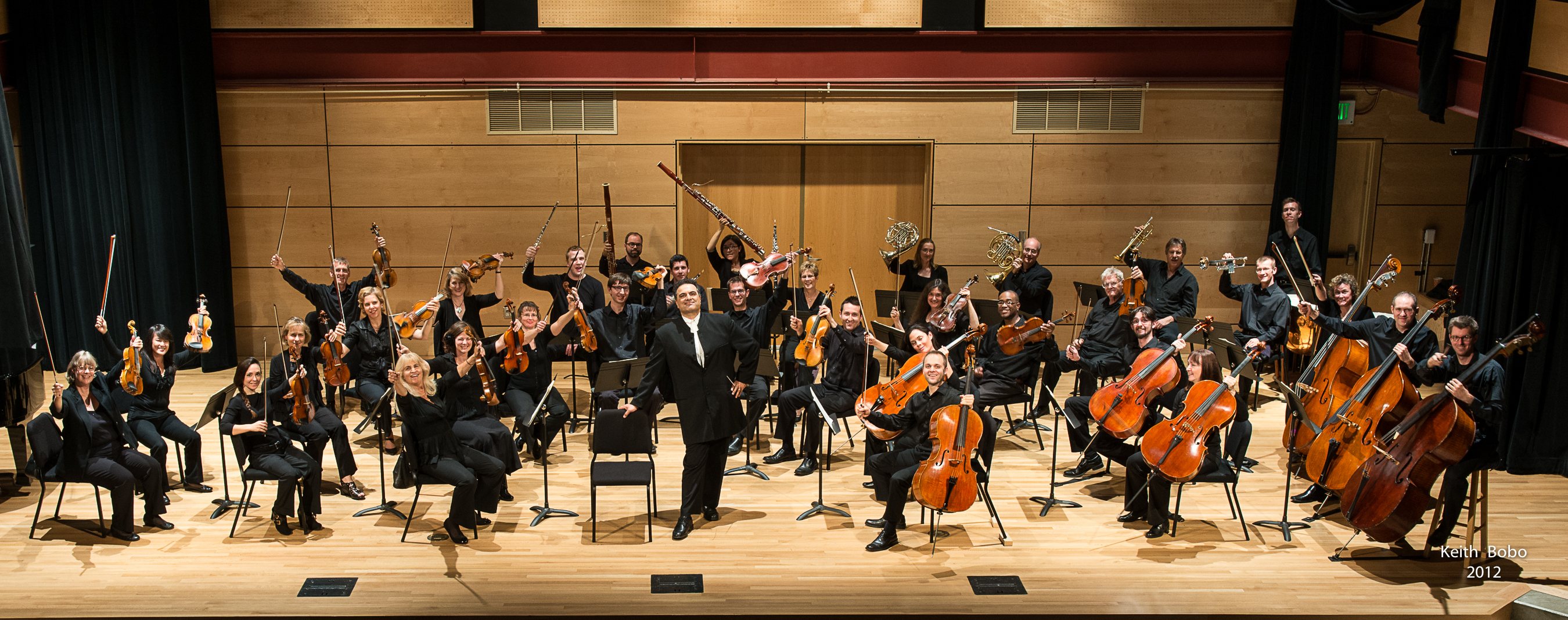
They were musical fireworks, as the 49th Colorado Music Festival (CMF) got underway last night with music by Russian composer Igor Stravinsky, literally titled “Fireworks” (Feu d’artifice). CMF music director Peter Oundjian conducted the Festival Orchestra in a fleet, bright performance of Stravinsky’s sparkling showpiece for orchestra.
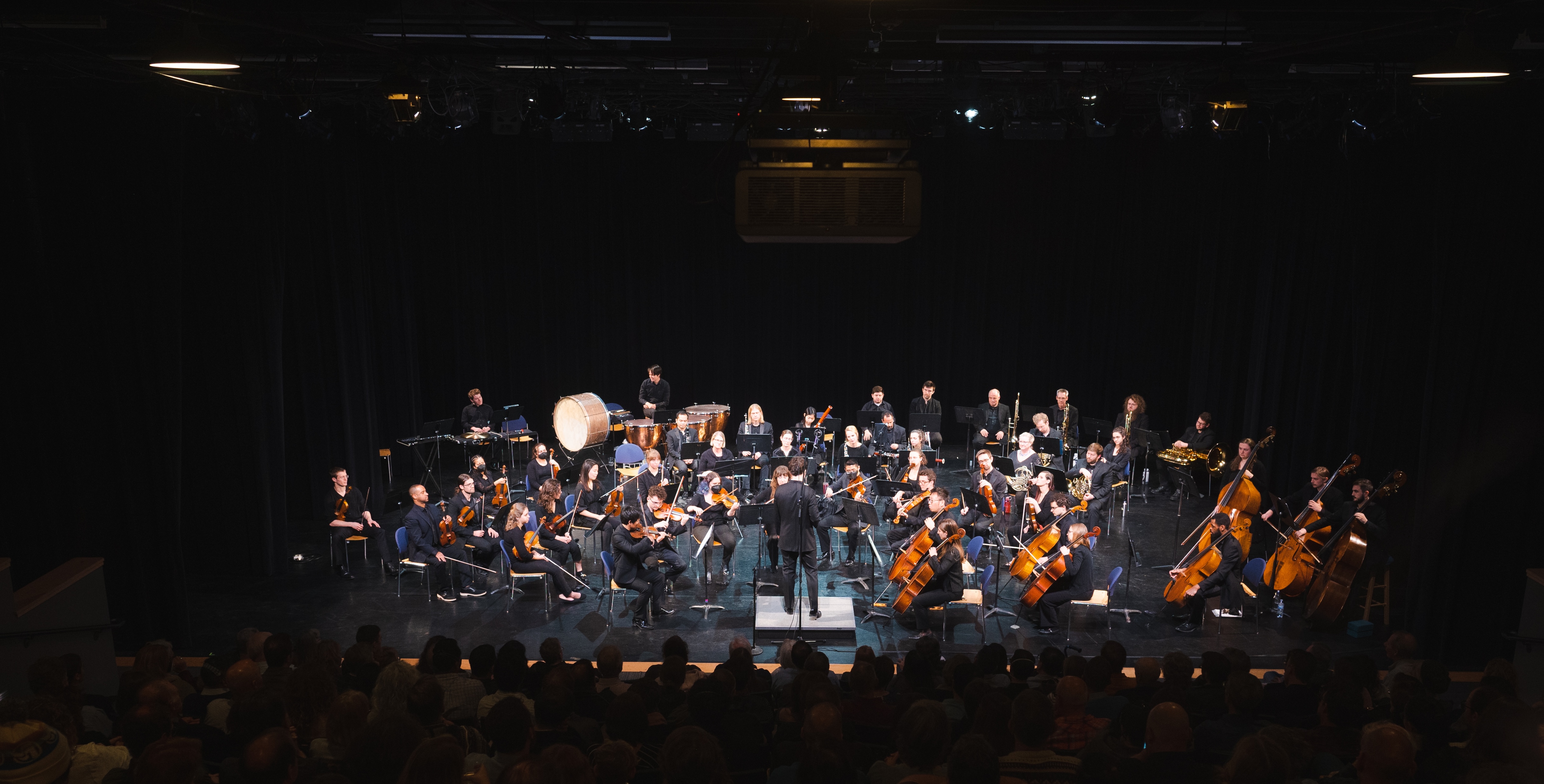
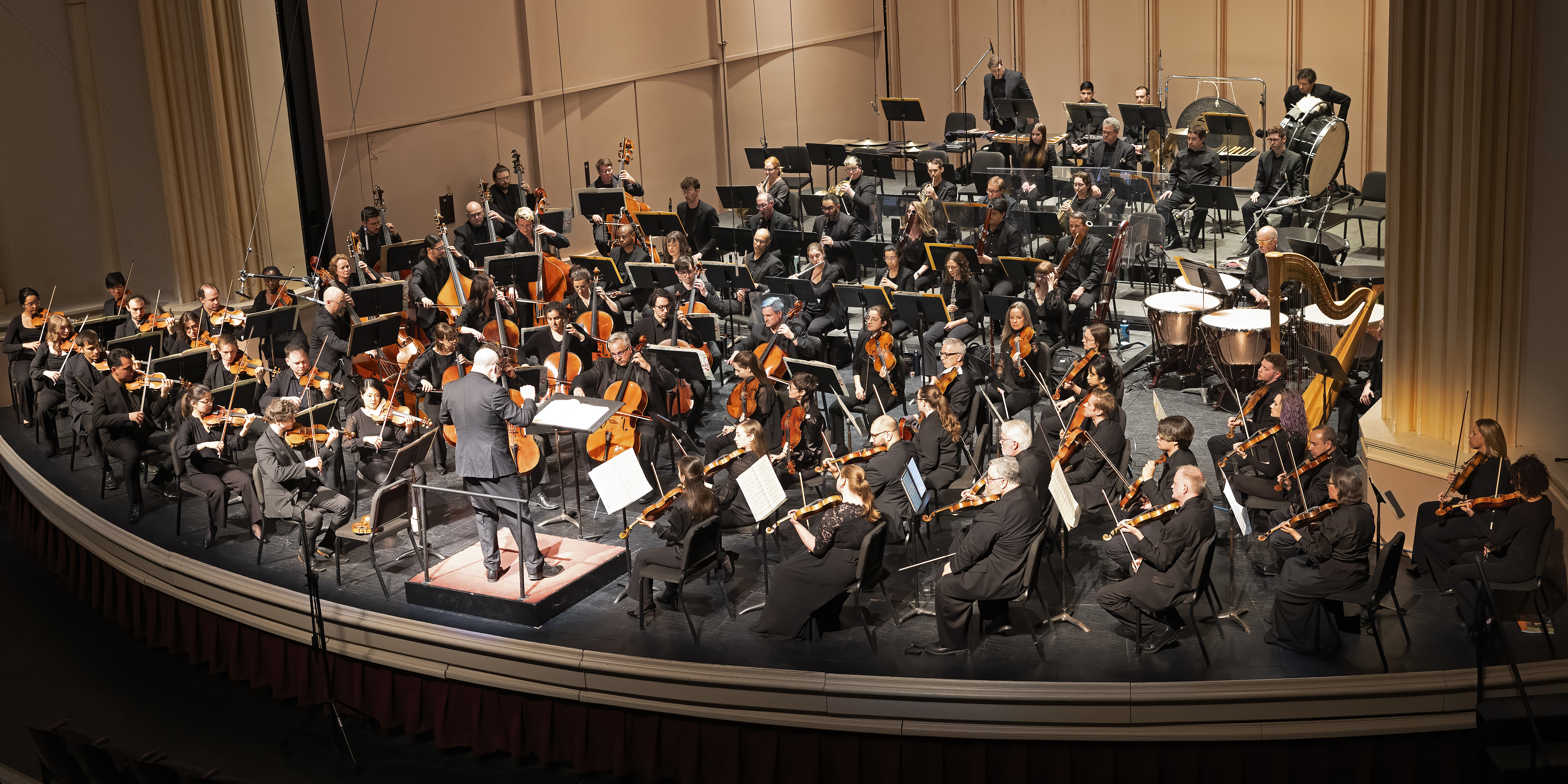
Music director Peter Oundjian with the Festival Orchestra. Photo by Geremy Kornreich
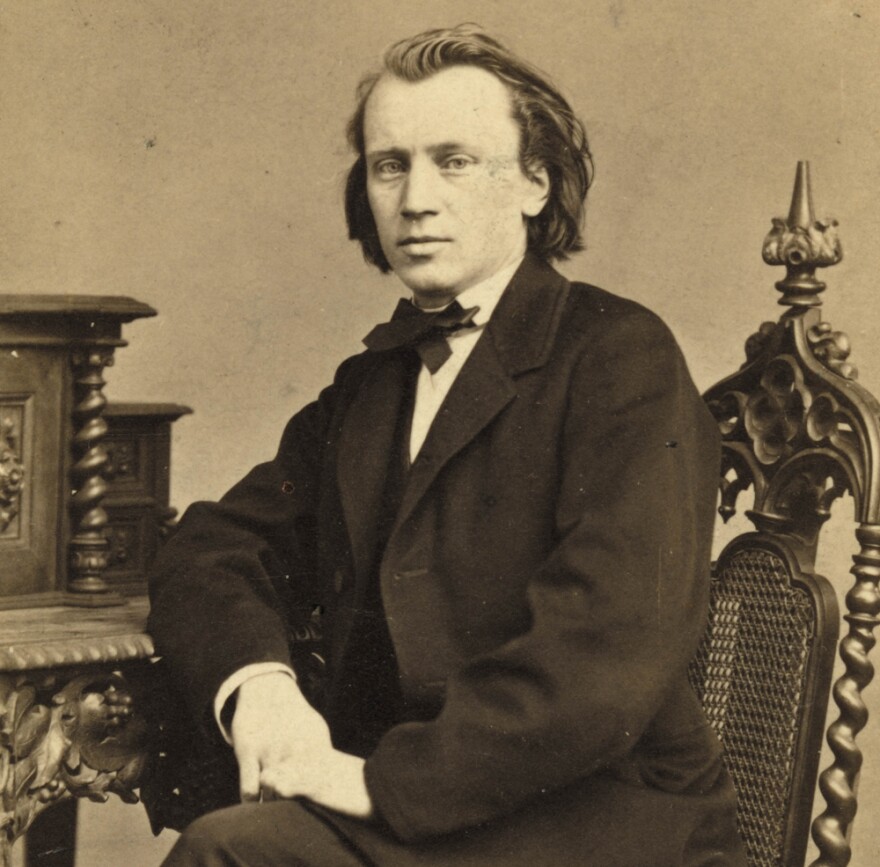
The brief opener was followed by soloist Hélène Grimaud performing Brahms’s First Piano Concerto. Before the performance, Oundjian said that the performance would represent the young Brahms—he was 21 when he started it—rather than the older, bearded Brahms we often see in photographs. I suppose he meant that the more muscular passages were imbued with youthful energy and strongly contrasted with the more tender passages.
The acoustics in the Chautauqua Auditorium flatter the orchestra more than the soloist, whose detailed, expressive playing was not always clearly heard. Here the pianist’s case is not helped by the fact that the piece went through several iterations, including a symphony. Consequently, the solo part does not always stand apart from the orchestra.
No live performance can match the balance of a carefully engineered recording, but it’s too bad Grimaud could not always overcome the orchestral sound. What I heard of her playing was forceful and arresting. The contrasts within the music were well delineated, providing a firm sense of form and movement to the performance.
The first movement was marked by the bright clarity of the woodwinds and the rich warmth of strings. Grimaud provided a well controlled profile of the lines and passages of the expressive slow movement, and took hold of the finale’s boisterous rondo theme from the very first. Even when the balance was less than ideal, you had the sense that she was in control of the music’s momentum. The audience, as CMF audiences do, responded with effusive enthusiasm.
The second half of the concert was devoted to music by Ravel, who this year celebrates the 150th anniversary of his birth. A great orchestrator, Ravel understood the orchestra so well that his music almost plays itself. That is, if you can play it—which Festival Orchestra can.
The two pieces presented last night, Suite No. 2 from Daphnis and Chloé and Bolero, are essentially about sound. The orchestra created magic from the very first gentle, rippling sounds in the woodwinds at the start of the Suite. The music surged to a strong climax in the full orchestra, followed by several evocative scenes of a more placid nature.The solo flute, Viviano Cuplido Wilson played her extensive solos with a warm, controlled sound and received individual recognition by Oundjian during the ovation.
Bolero is a piece that is heard not enough and too much. We don’t hear it often enough as written, but we hear it too often in cheesy arrangements that don’t honor the carefully calculated shape composed by Ravel.
Ravel’s score is about two things: an unchanging tempo as the theme is repeated, and a crescendo that reaches its climax at the very end. The CMF performance started as softly as any I have heard, to the point that I wasn’t actually sure when the first notes were played.
Once the piece starts, it is entirely in the hands of the players to control both the tempo—mainly the responsibility of the snare drummer—and the crescendo. With Oundjian’s careful attention, the Festival Orchestra created a steady, growing wave that crashed over the audience with the very final note.
NOTE: The opening concert will be repeated at 6:30 p.m. Sunday (July 6). The full schedule and tickets are available on the CMF Web page.
Hélène Grimaud plays Brahms, Steven Banks premieres sax concerto by Joan Tower
By Peter Alexander July 1 at 11:34 a.m.
The 2025 Colorado Music Festival (CMF) does NOT open with Scheherazade or the Russian Easter Overture, but fans of composer Rimsky-Korsakov should be pleased anyway.
Music director Peter Oundjian says that the first piece on Thursday’s Opening Night concert (7:30 p.m. July 3), Stravinsky’s Feu d’artifice (Fireworks), “sounds like Rimsky-Korsakov on slight uppers.”
CMF music director Peter Oundjian at Chautauqua
That’s intriguing but not surprising: Stravinsky studied with Rimsky-Korsakov, and wrote Feu d’artifice in 1908 as a wedding present for his teacher’s daughter. Calling it “a short orchestral fantasy,” Stravinsky piled on all the brilliant orchestral colors he could muster.
“It’s a fun, wonderful, four-and-a half-minute opening to a season,” Oundjian says. The “Opening Night” Concert will be repeated Sunday at 6:30 (July 6).
Pianist Hélène Grimaud
After all the musical rockets have been fired, the program continues in a more serious vein with Brahms’s First Piano Concerto in D minor, performed by French virtuoso Hélène Grimaud. The second half of the program is given over to Ravel, honoring the 150th anniversary of his birth, with the Suite No. 2 from Daphnis et Chloé and Bolero.
Like all of the CMF concerts this summer, both performances will be in the Chautauqua Auditorium. The full schedule for the first two weeks is listed below.
Grimaud was originally scheduled to play Gershwin’s Piano Concerto, but Oundjian was happy when she said she would rather play Brahms. “I’ve conducted her with that piece several times, and it’s absolutely extraordinary,” he says. “When she said she’d prefer to play the Brahms, I thought OK, it adds real weight, and it’s not a long program anyway.
“(Grimaud) is a very strong musical personality (who plays) with unbelievable color and the most excellent sense of rubato and expressive freedom. I have always thought her playing deeply moving, so I’m thrilled.”
It’s a stretch from the somber weight of the Brahms to the orchestral brilliance of Ravel, but to Oundjian that is part of the plan. “We always want to create wider contrasts,” he says.
“Ravel’s Second Suite (from Daphnis and Chloe) is lush and beautiful and unique to Ravel. And then to do Bolero—it’s a lesson in orchestration, which is just phenomenal. The use of the saxophone and the trombone—it’s an amazing piece!”
Joan Tower
The second Festival Orchestra concert, Thursday and Friday, July 10 and 11, features the world premiere of Love Returns for saxophone and orchestra by Joan Tower. A long-time personal friend of Oundjian, Tower has been featured at CMF before, including the premiere of A New Day for cello and orchestra in 2021 and a performance of her Concerto for Orchestra last summer.
Steven Banks
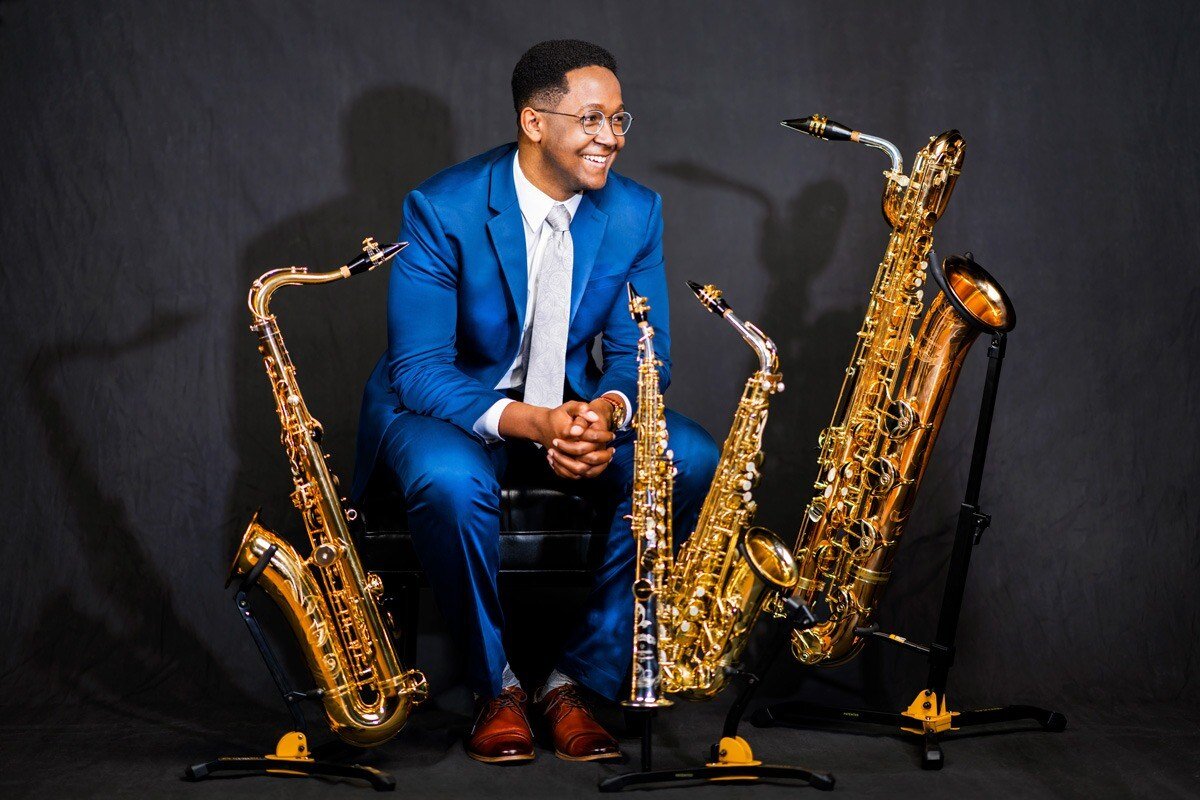
Love Returns was written for saxophonist Steven Banks, whom Oundjian describes as “one of the most exquisite musicians I’ve ever met. He’s got so many colors—he makes the saxophone sounds like a flute, like a trombone. And he has impeccable musical taste and limitless technique.”
The score was inspired by a piano piece that Tower wrote in memory of her late husband. “It’s a very important piece for her,” Oundjian says. “It’s very exciting, but also very tender. She and (Banks) have become fast friends.”
The program opens with Copland’s Outdoor Overture, written as part of a campaign called “American Music for American Youth,” which aimed to generate new music for use in schools. Copland’s music is included this summer in honor of the 125th anniversary of his birth.
Brahms at the time of his First Symphony
The final piece on the program will be Brahms again, in this case his First Symphony. “The Symphony is exquisite, so powerful—probably the greatest First Symphony ever written,” Oundjian says. He also observes that it was written by a composer who was “young, very handsome, blue-eyed, blond-ish—not the Brahms we imagine as this bearded, sedate individual.”
The symphony has a special place in Oundjian’s life. When he was a student, the imposing German conductor Herbert van Karajan “came to give a masterclass at Juilliard,” he explains. “I was concertmaster of the orchestra and he made me conduct. He was two feet from me!
“I knew that he had asked me to conduct because he wanted to demonstrate that less is more. Conducting students were really trying to show what they had, and he knew that I would not over conduct. He was very complimentary about my conducting. Karajan encouraging me at a very young age was important to me when I was 39 and I couldn’t play the violin any more”—the point in his career when Oundjian turned to conducting
There are tickets available for two other concerts in the first weeks of CMF: a chamber music concert at 7:30 Tuesday, July 8, featuring CMF musicians, and an all-Mozart program under guest conductor Chloé van Soeterstède with violinist Benjamin Beilman at 6:30 the following Sunday, July 13 (full programs below). The annual Family Concert, part of the opening weekend, is sold out.
# # # # #
Colorado Music Festival, Peter Oundjian, music director Thursday, July 3–Sunday, July 13 All performances in Chautauqua Auditorium
Opening Night Festival Orchestra, Peter Oundjian, conductor With Hélène Grimaud, piano
Stravinsky: Feu d’artifice (Fireworks)
Brahms: Piano Concerto No. 1 in D minor
Ravel: Daphnis et Chloé, Suite No. 2 —Bolero
7:30 p.m. Thursday, July 3 6:30 p.m. Sunday, July 6
Family Concert—SOLD OUT Festival Orchestra, Shira Samuels-Shragg, conductor
Sherlock Holmes and the Case of the Missing Maestro
10:30 a.m. Sunday, July 6
Chamber Music Concert Colorado Music Festival musicians
Schubert: String Trio in B-flat major, D471
Prokofiev: Quintet in G minor, op. 39
Brahms: Piano Quartet No. 3 in C minor, op. 60
7:30 p.m. Tuesday, July 8
Festival Orchestra Concert Peter Oundjian, conductor With Steven Banks saxophone
Copland: An Outdoor Overture
Joan Tower: Love Returns for saxophone and orchestra (world premiere)
Brahms: Symphony No. 1 in C minor, op. 68
7:30 p.m. Thursday, July 10 6:30 p.m. Friday, July 11
An Evening of Mozart Festival Orchestra, Chloé van Soeterstède, conductor With Benjamin Beilman, violin
Mozart: Overture to Don Giovanni —Violin Concerto No. 5 in A major, K219 (“Turkish”) —Overture to Le Nozze di Figaro (The Marriage of Figaro) —Symphony no. 34 in C major, K338
6:30 p.m. Sunday, July 13
Tickets to all concerts except the Family Concert available through the CMF Web page.
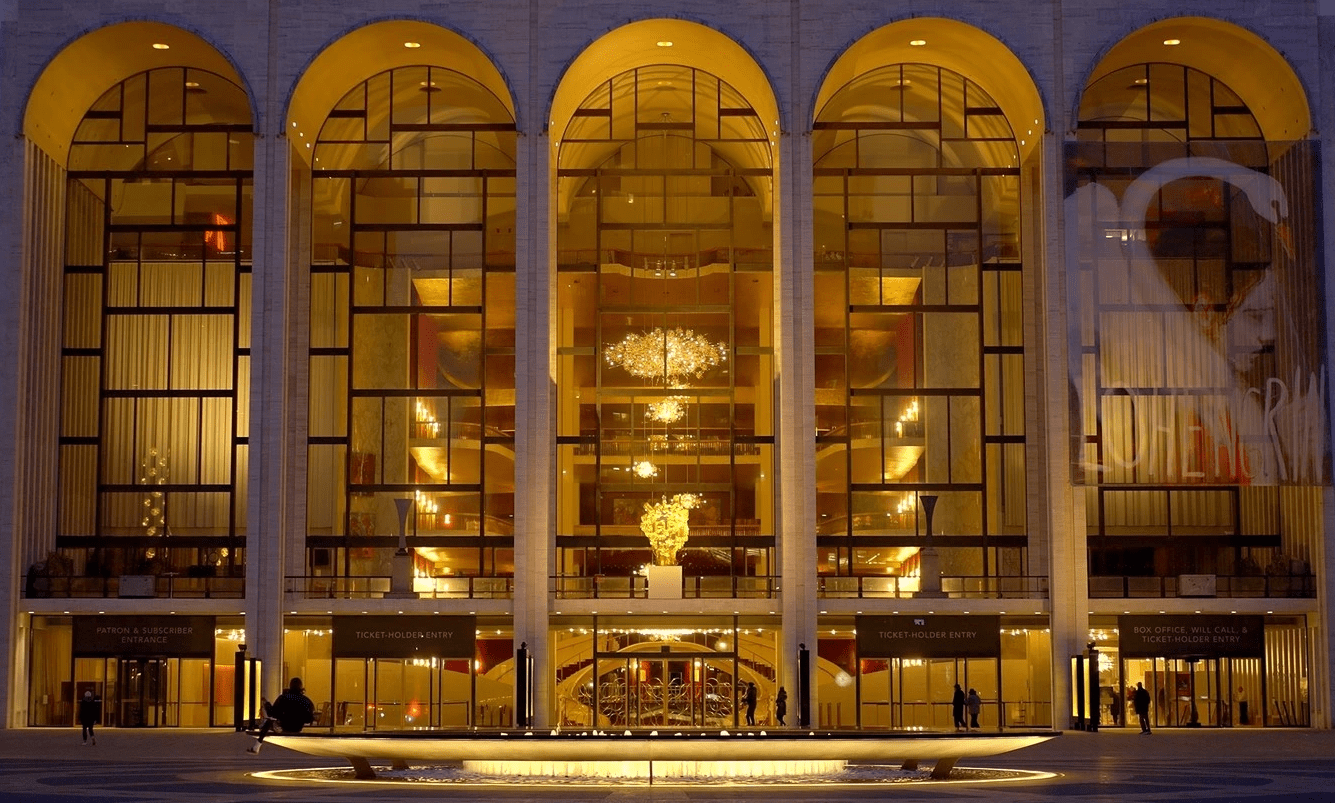
I was in New York recently. While there, I took the opportunity to meet a friend at the Metropolitan Opera, where we saw the new production of Salome by Richard Strauss.
The production, starring Elza van den Heever in the title role and Peter Mattei as Jochanaan (John the Baptist) has attracted considerable attention, particularly for van den Heever’s performance. The singing I heard on May 24 ranged from solid to outstanding. Colorado native Michelle de Young, who has appeared at the Colorado Music Festival (2017 and ’18), was especially strong as Herodias. Conductor Derrick Inouye did not always manage to keep the orchestra under the singers, especially when they were singing from the back of the Met’s deep stage.
The Metropolitan Opera House at Lincoln Center, New York
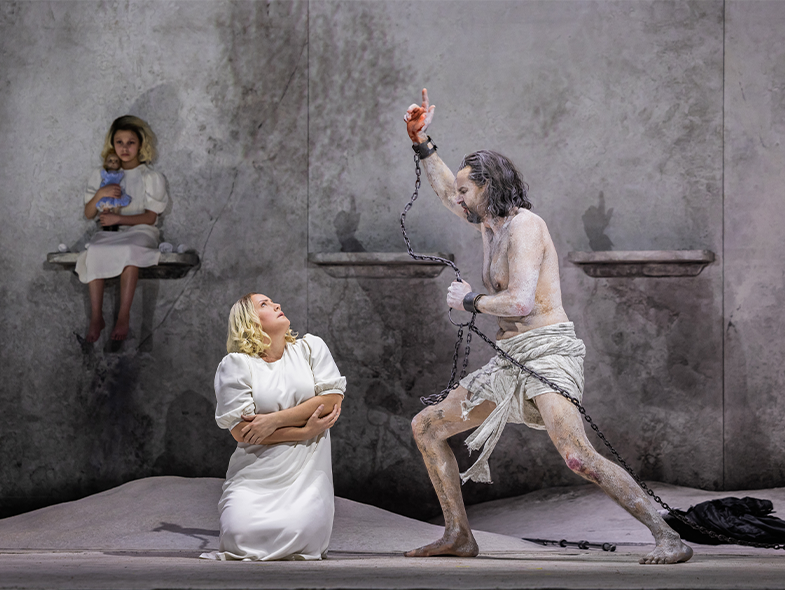
The production by director Claus Guth was in some ways a mess. Transferred to the Victorian era, it featured six young Salomes, all dressed like van den Heever in black velvet with a white collar, ranging in age from about 6 to early teens (the operatic character is supposed to be about 16). These young Salomes entered at various times during the opera, representing the abuse that Saolme has endured throughout her childhood, which explains her perverse sexual obsession with John the Baptist.
The child Salomes enter separately throughout the infamous “Dance of the Seven Veils,” each in turn having a simple black veil removed from her head before exiting. There is no seductive dance before Herod, which subverts the powerful music of the dance. In other mystifying additions, there are ram’s heads worn by members of the court, and a distracting scene of a near-nude woman surrounded by fondling courtiers played out on a raised area at the rear of the stage. The entire opera is placed in a sterile Victorian mansion.
All of which shows us that Herod’s court was degenerate and Salome is a damaged adolescent, which is pretty clear without directorial signposts. These ideas are often needlessly demonstrated in productions I have seen, from Santa Fe to Berlin. (Unsolicited advice for stage directors: Both the text and the music tell us that far better than your ideas will. Trust the music.)
But my purpose here is not writing a review of this production, which offers much scope for commentary. It is rather with a single question: to what extent should a production (and presumably therefore a stage director) honor the written text of the opera?
This is not an idle question, and in one sense Salome provides a good case study. The text of both Oscar Wilde’s English-language play and Strauss’s libretto, which is mostly a straightforward German translation of the play, are clear about one thing: in the confrontation between Salome and John the Baptist, he avoids looking directly at her. “I will not look on you,” he sings. “You are accursed!” And later, as she holds his decapitated head in her hands, she sings “If you had seen me, you would have loved me!”
For some directors, this is apparently just a line that is sung, and they feel free to play the relationship between Salome and John the Baptist as they want you to see it. If they want Salome to be a depraved teen seductress when she confronts John, they may have her writhing all over and around him; I have seen it done that way. Or if they want John to be tormented by her, they will have him grasping her, looking directly into her face, perhaps even twisting in agony with close physical contact; I have seen it played that way, too.
Elsa van den Heever (Salome) and Peter Mattei (John the Baptist) at the Met
I would maintain that both of these stagings contradict the clear text that Strauss set. I believe that to respect the work, the director should honor the text’s clear indication that John turned away from Salome. Perhaps he saw her from the corner of his eye; perhaps she passed in front of him; perhaps he saw her figure when he first came into her presence. But he did not look directly into her face or deliberately interact with her.
That does not rule out interpretations in which he sees her but rejects her, or is in some way aware of her presence and her impact as a seductress. There are many ways to convey what is indicated in the text. But contradicting the text, in order to impose a single interpretation of the characters is unfaithful to the work.
Finally, “Depraved teen seductress” is certainly one way of understanding Salome, but there are others. Bored, spoiled adolescent living in a corrupt society; victim of abuse by a depraved stepfather; a tool in the hands of a scheming mother: any one or all of these are legitimate ways of understanding Salome.
For myself, I prefer a production that allows you to see many possibilities, rather than insisting on only one. But we live in a time of regie-theater, director’s theater, where unique and original interpretations are highly valued. But I still believe that original productions can and should stay faithful to the text of the work being presented.
Opera producer/conductor Sarah Caldwell as Greek tragedy
By Peter Alexander June 11 at 10:15 p.m.
Mark Adamo knows his Greek mythology.
The composer/librettist is known not only for having written an opera on Aristophanes’s Lysistrata, but also having linked Bram Stoker’s Dracula with the Greek myth of the Bacchae as librettist for John Corigliano’s 2021 opera The Lord of Cries. And now Adamo is in Boulder workshopping his opera-in-progress Sarah in the Theater at the University of Colorado New Opera Workshop (CU NOW).
And once again he has found a Greek connection. “This is what happens when you give a 10-year-old Greek mythology to read,” he says.
Mark Adamo. Photo by Daniel Welch
With the first act mostly done, Adamo’s new opera about the opera conducting and producing legend Sarah Caldwell will have semi-staged workshop performances of excerpts this weekend (Friday and Sunday, June 13 and 15; details below). Nick Carthy, music director of the CU Eklund Opera Program will conduct. The performance will cover the first act, but “there will be a surprise,” Adamo says cryptically.
Adamo discovered a parallel between Caldwell’s career and a Greek myth when he first undertook work on the opera. “As I’m sketching out (the opera), I had a sense of what I wanted to do with her as a character,” he says. “I’m asking the question, is there some kind of narrative template that’s going to make sense of the themes in her character, which is that she’s extremely ambitious but she doesn’t see limits. Whatever happens in the theatre is the only thing that matters.
“(I thought) there has to be some kind of pre-existing trope that I can pull from. I don’t know—Icarus! I said, that’s it!”
In the opera, the story of Icarus, who flew too close to the sun and fell to his death, is the subject of an opera within the the opera. It becomes both an opera that Caldwell is rehearsing, revealing her relentlessly focused work ethic, and a symbol of her own high-flying career and ultimate crash.
Caldwell founded the Boston Opera Group, which became the Opera Company of Boston. Against all odds and considerable financial difficulties, she presented a wide range of operas and developed a reputation for producing remarkable results with limited means. Because of her intense focus on her work, she was known both for attracting ardent admirers and for driving others away under duress.
Sarah Caldwell
A synopsis of the opera released by the commissioning organization, Odyssey Opera, states: “Over one sleepless day and night: haunting the theater she created, made legendary, and now, by morning, may lose; the director, conductor, and impresario Sarah Caldwell—brilliant, obsessed, intractable—inspires her artists, fends off creditors, relives her triumphs, and battles with ghosts as we wait to learn if she will be given one final chance to continue the work she lives for or whether demons of self-sabotage have, at last, outrun her luck.”
Adamo is returning to Boulder for his second workshop with CU NOW, following a successful reworking of his opera The Gospel of Mary Magdalen in 2017. “(CU NOW) is the perfect balance of seriousness about the work, and un-seriousness about ego,” Adamo says.
“Nick (Carthy) and our pianists know it cold, but part of the point of the workshop is that you want the flexibility to change things. The magic here is that people came in with a base knowledge of the score, and also not only the ability but the imagination to get it better. I am ‘directing’ this, (but) in real life this is a co-production of me and the singers. Half the ideas on the stage will come from them.”
For all of her impact in the opera world Caldwell might not occur to most composers as the subject of an opera. The original idea came from Gil Rose, conductor of the Boston Modern Orchestra Project and founder of Odyssey Opera, who commissioned Sarah in the Theatre. But make no mistake, Adamo sees her as a great subject for drama. “She’s like Orson Wells,” he says. “It’s a race between the genius and the demons.”
Taking on the roles of both librettist and composer might seem dangerous, because the history of opera is littered with legendary battles between composers and librettists. Adamo sidesteps any conflict between the two parts of his creative mind by starting with an outline of the various characters’ motives and the emotional arc of the story. The emotional development suggests in turn the musical demands of the finished piece.
“By the time you do the first draft of the libretto, it’s coming to the first draft of the score, because you’ve got these musical requirements that you’re trying to write around,” he says. “And then by the time you get to that libretto and by the time you’re setting it, ideally you avoid the composer-librettist clash, because the composer has been there from the beginning.”
The final word on any new opera belongs to the performers who bring it to life. After several weeks of intensive work, Carthy knows where he stands on Sarah in the Theatre. “It’s a great work,” he says.
“It’s really a greek tragedy.”
# # # # #
CU New Opera Workshop (CU NOW) Nick Carthy, conductor
Mark Adamo: Sarah in the Theatre (Act I excerpts with two pianos)
7:30 p.m. Friday, June 13 and 2 p.m. Sunday, June 15 Music Theatre, Imig Music Building Free
BCO celebrates an anniversary, Ars Nova celebrates eternity
By Peter Alexander May 20 at 8:35 p.m.
NOTE: The following post covers events for the next two weeks. I will be traveling with the Longmont Concert Band for a performance in Carnegie Hall May 25 and not back in Colorado until June 1. —Ed.
The Boulder Chamber Orchestra (BCO) and their conductor, Bahman Saless, wrap up their 20th-anniversary 2024–25 season with a “Grand Finale” in Macky Auditorium Saturday (7:30 p.m. May 24; details below).
Fresh back from a performance at Carnegie Hall’s Zankel Hall venue, the BCO will be joined by pianist Adam Zukiewicz and soprano Sylvia Schranz in a varied program, selected to celebrate the group’s anniversary. The program will be anchored by Saint-Saëns’ Piano Concerto No. 5 (“Egyptian’), which Zukewicz played a week ago in New York.
Boulder Chamber Orchestra and conductor Bahman Saless
A review of the New York concert said that BCO “could hold its own with any orchestra, anywhere,” and praised Zukiewicz’s “lively rendering” of the Concerto. Other works on Saturday’s program reflect the BCO’s eclectic programming over the past 20 years, ranging from Strauss waltzes to dances by Dvořák and Shostakovich, and a patriotic romp based on the National Anthem by the largely forgotten American composer Dudley Buck.
Saint-Saëns’ “Egyptian” Piano Concerto is a suitable choice for the BCO’s celebration, as it was written as a celebration of the composer’s own 50th-anniversary in 1896. Saint-Saëns wrote the concerto in Egypt, where he often spent his winter vacations. It features various exotic elements, particularly the slow movement that includes a song the composer heard sung by Nile boatmen.
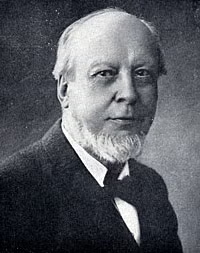
Dudley Buck
Trained as a pianist in Germany, Buck was a classmate of Edvard Grieg, Leoš Janáček and Arthur Sullivan. His Festival Overture on The American National Air began life as a set of Concert Variations on “The Star Spangled Banner” for solo organ. Though largely forgotten today, Buck was widely known in the late 19th century as a composer, organist and composer, and as the author of Buck’s New and Complete Dictionary of Musical Terms.
The Strauss waltzes recall the years that the BCO performed concerts during the Holidays that included music familiar from the popular Vienna Philharmonic New Year’s concert. On Saturday, these works will be the Overture to Die Fledermaus, the Emperor Waltz and Frühlingstimme (Voices of Spring) by Johann Strauss II. The program concludes with two Slavonic Dances by Dvořák (see full program below).
# # # # #
“Grand Finale” Boulder Chamber Orchestra, Bahman Saless, conductor With Adam Zukiewicz, piano, and Sylvia Schranz, soprano
Dudley Buck: Festival Overture on the American National Air
Saint-Saëns: Piano Concerto No. 5 in F major (“Egyptian”)
Johann Strauss II: Overture to Die Fledermaus
Khachaturian: Waltz from Masquerade
Strauss: Emperor Waltz
Shostakovich: Waltz No. 2 from Suite for Jazz Orchestra
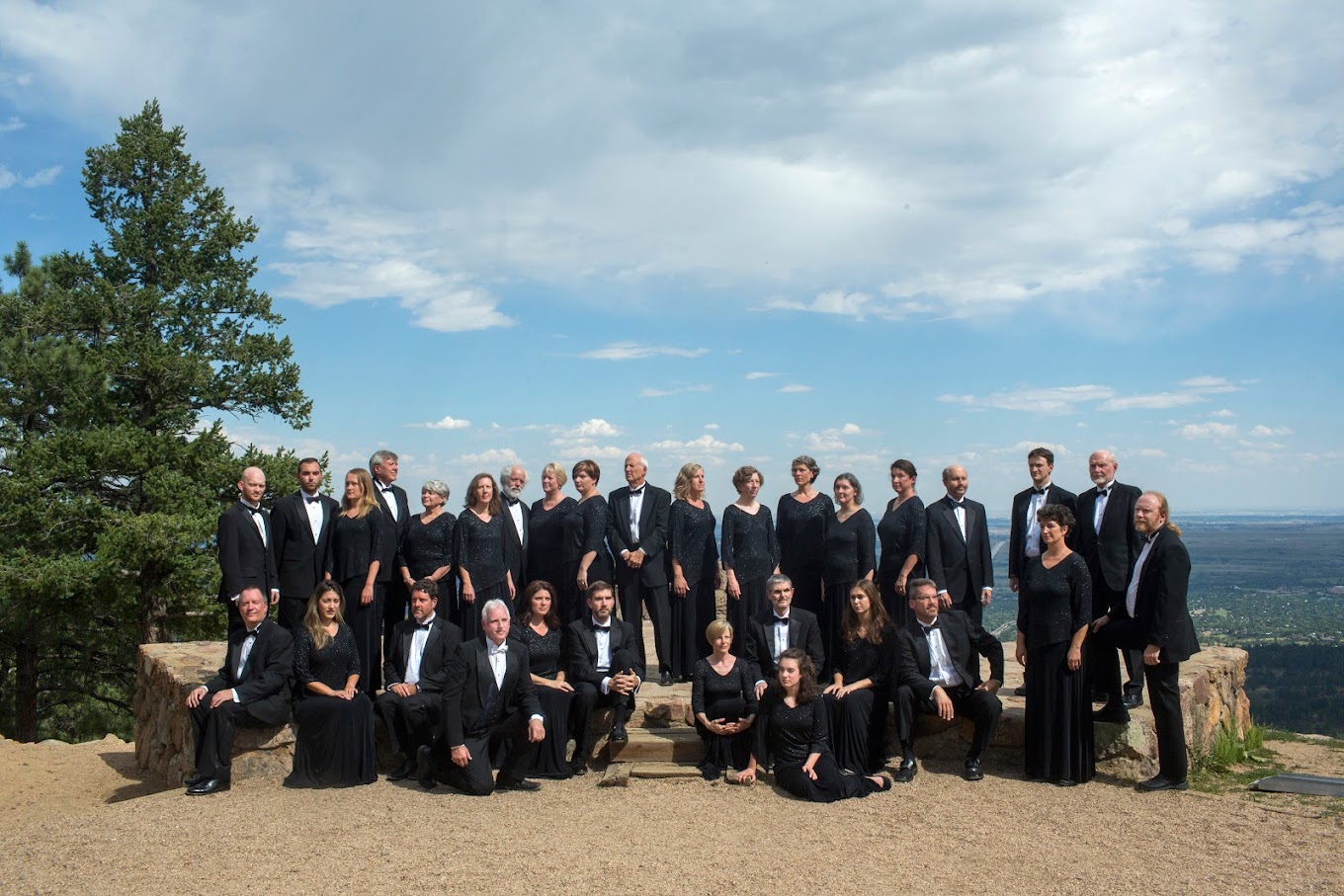
Boulder’s ever adventurous Ars Nova Singers will present the last of their 2024–25 season concerts at the end of the month, with performances of significant a cappella works from the 20th century (Friday, May 30 in Longmont, Saturday, May 31 in Denver, and Sunday June 1 in Boulder; see times and concert details below).
Titled “Time/Eternity,” the program concludes a season characterized by programs that have embraced contrasts: “Here/There,” “Light/Shadow,” “Lost/Found” and “Science/Fantasy.” In each case, Ars Nova’s director Tom Morgan has found a creative and fun way to realize the two conflicting concepts in music, from pieces that were literally lost and and later rediscovered for “Lost/Found,” to a Victorian-era steampunk-inspired program for “Science/Fantasy.”
Ars Nova Singers with conductor Tom Morgan (kneeling, fourth from left)
For the current program, “Time/Eternity,” the program features two contemporary works modeled on church music dating back to at least the Renaissance, thus representing both eternity and modern time in each work. The first of these is the Mass for Double Chorus by Swiss composer Frank Martin. Written in 1922 and 1926, the Mass is a setting of the traditional five movements of the ordinary of the liturgical mass—that is, the texts that are sung at nearly every mass and not subject to variation across liturgical seasons.
Composer Frank Martin
The Mass combines techniques typical of Renaissance mass settings, such as the use of a double chorus, fugal passages and imitative techniques across the choruses, together with modern stylistic elements that Martin was exploring. After he completed the Mass, Martin put the score away, considering it an early attempt at composition. He later consented to a performance in the 1960s, and today it is considered one of the most significant choral works of the 20th century.
The English composer Herbert Howells’ Requiem, written in 1932, is likewise based on traditional liturgical texts, in this case combined with other sacred texts from the Psalms and other sources. Although written for a single a cappella chorus, the Requiem sometimes divides the full chorus into two separate choirs. While using texts with a long liturgical history, the Requiem clearly has a musical style from the mid-20th century, using polytonality and chord clusters.
John Bawden, an active choral director and author of A Directory of Choral Music, wrote that “Howells’ music is much more complex than other choral music of the period. . . Long, unfolding melodies are seamlessly woven into the overall textures; the harmonic language is modal, chromatic, often dissonant and deliberately ambiguous. The overall style is free-flowing, impassioned and impressionistic, all of which gives Howells’ music a distinctive visionary quality.”
# # # # #
“Time/Eternity” Ars Nova Singers, Tom Morgan, conductor
Frank Martin: Mass for Double Choir
Herbert Howells: Requiem
7:30 p.m. Friday, May 30 United Church of Christ, Longmont
7:30 p.m. Saturday, May 31 St. Paul Lutheran Church, Denver, and Livestream
7:30 p.m. Sunday, June 1 Mountain View United Methodist, Boulder
Beethoven’s Ninth Symphony, with or without choreography
By Peter Alexander May 15 at 5:48 p.m.
The end of the concert season is prime time for orchestras to tackle the big works.
Boulder Symphony with conductor Devin Patrick Hughes
Toward the end of the 2024–25 season, in Boulder County we’ve had the Longmont Symphony presenting J.S. Bach’s Mass in B minor with the Boulder Chamber Chorale, and the Boulder Philharmonic with the full Boulder Chorale presenting Beethoven’s Missa Solemnis. And now conductor Devin Patrick Hughes and the Boulder Symphony step up with their own choral forces for Beethoven’s Ninth Symphony on the weekend.
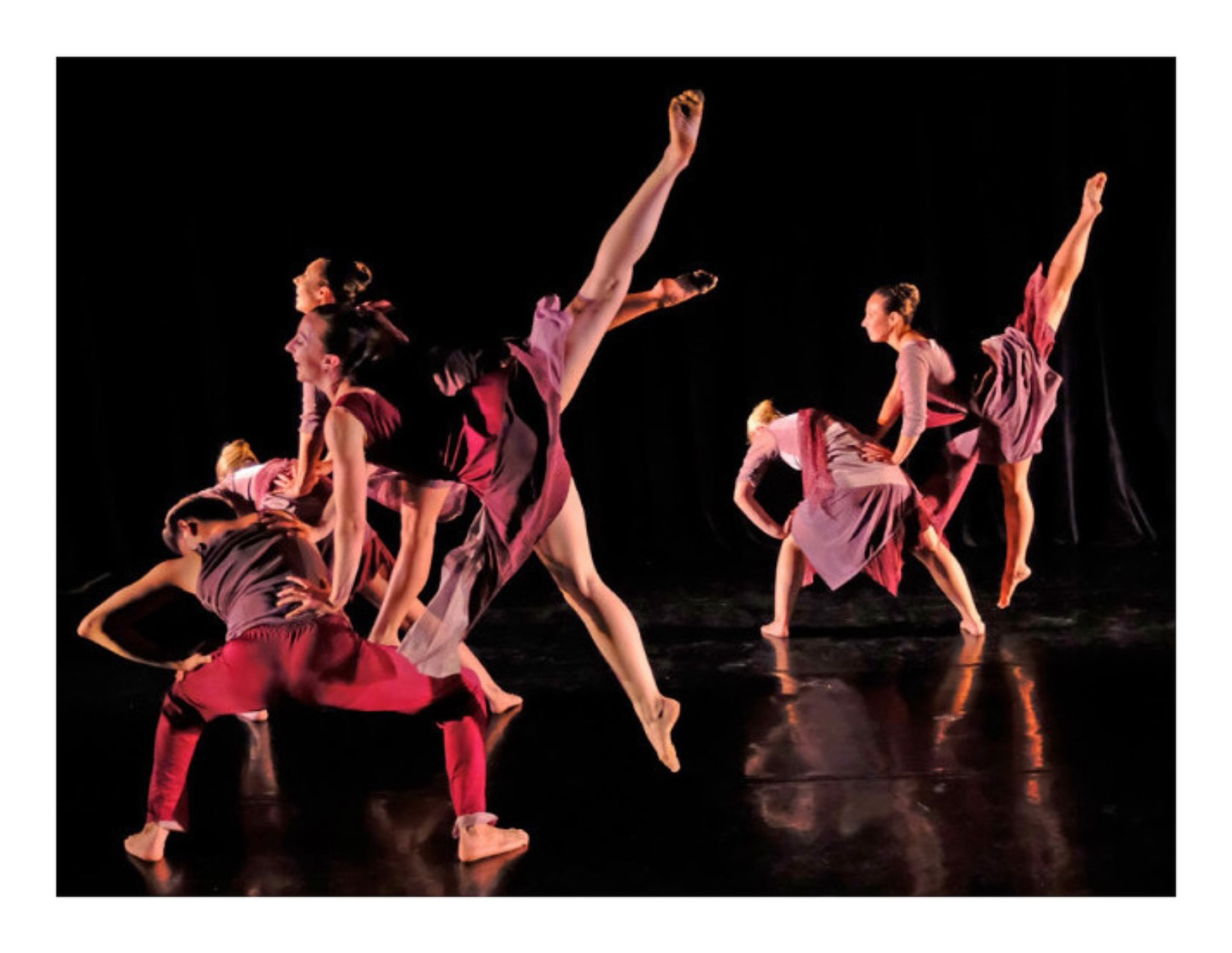
Kim Robards Dance
You can have your performance with or without choreography. The Ninth Symphony will be presented in partnership with Kim Robards Dance in a performance titled “Unstruck Sound” on Saturday (7:30 p.m. May 17 at the Waymire Dome in Brighton; details below). A second performance of the music alone will be presented by the orchestra and chorus Sunday (4 p.m. May 18 at Grace Commons in Boulder; details below).
Both performances will be conducted by Hughes, who is Boulder Symphony’s music director. Soloists for the symphony’s finale are Kyrie Laybourn, soprano; Kristin Gornstein, alto; Cody Laun, tenor; and Graham Anduri, bass. The performances will open with the Overture in E minor of the 19th-century French composer Louise Farrenc.
The last symphony that Beethoven completed, the Ninth was written over two years, 1822–24. Both its length—an hour or a little more—and the fact that it includes a chorus in the final movement marked it as a unique and radical work from its every first performance in Vienna. The concluding choral movement, based on Schiller’s poem “Ode to Joy,” has made it a first choice for celebrations around the globe.
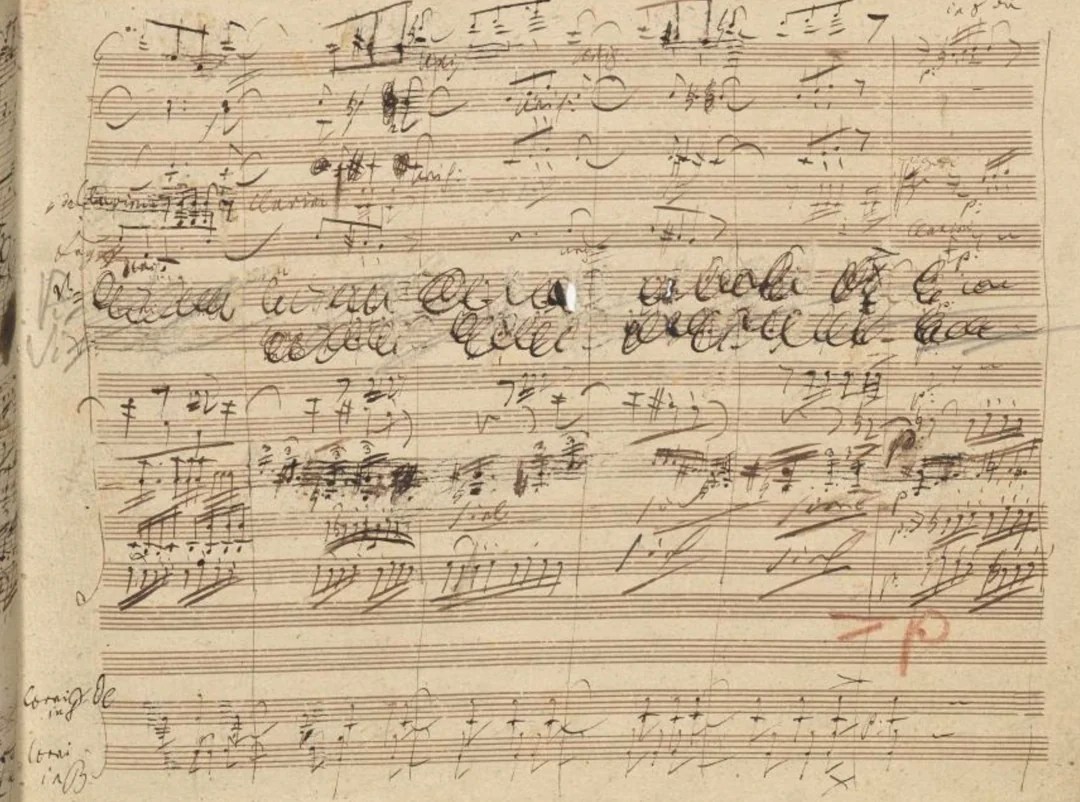
The manuscript of Beethoven’s 9th Symphony
It is also regarded as the culminating work in Beethoven’s career. The composer had expressed an interest in setting the “Ode to Joy” as early as 1792, an idea that can therefore be said to have occupied his thoughts for most of his life. Set in the somber key of D minor, that symphony progresses from a mysterious and powerful first movement, to a turbulent and disquieting scherzo, a beautiful and placid slow movement and the joyous choral finale in D major.
The work’s premiere in May of 1824 is one of the most famous performances in history. The nearly totally deaf Beethoven stood next to the conductor, watching the players and indicating tempos. At the end of the performance, the composer was unable to hear the tumultuous applause from the audience, and the alto soloist had to come forward and lead him to the edge of the stage so that he could see the response.
The Symphony was perhaps most famously performed by in Berlin with Leonard Bernstein conducting on Christmas Day 1989, with the text of the finale altered to an “Ode to Freedom” as a celebration of the removal of the Berlin Wall. That was an international event, but the Ninth Symphony is selected for all kinds of major occasions, because of the text that celebrates the brotherhood of man. As such, it is also viewed as the ideal piece for the end of a season.
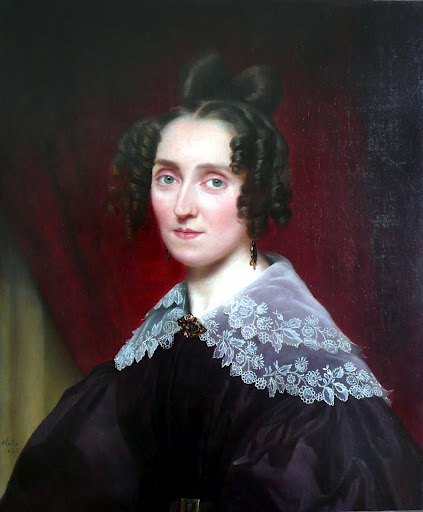
Louise Farrenc. Portrait (1835) by Luigi Rubio
Farrenc studied composition at the Paris Conservatory in the early 19th century, at a time when women had to study privately as they were not allowed to enroll in composition classes. Equally accomplished as a virtuoso pianist and composer, she became the first women teaching at the Conservatory, when she was appointed professor of piano in 1842. She held that position for 30 years. As a composer she wrote works for piano and chamber music, as well as three symphonies and two concert overtures.
Kim Robards Dance describe themselves as a “professional, multi-generational modern dance company.” The company was founded in Denver in 1987. A performance in New York was praised in the Times for “old-fashioned virtues, like a strong sense of craft and an affinity for lyrical movement and big musical scores.” There are fewer bigger scores than Beethoven’s Ninth, which has rarely if ever been danced.
# # # # #
Boulder Symphony, Devin Patrick Hughes, conductor Chorus directed by Dana Vachharajani With Kyrie Laybourn, soprano; Kristin Gornstein, alto; Cody Laun, tenor; and Graham Anduri, bass
Louise Farrenc: Overture in E minor, op. 23
Beethoven: Symphony No. 9 in D minor, op. 125
7:30 p.m. Saturday, May 17 Waymire Dome, 9755 Henderson Rd., Brighton Performance with Kim Robards Dance, Kim Robards, choreographer
Programs are filled with music of defiance, resistance and remembrance, May 14–18
By Peter Alexander May 12 at 8:08 p.m.
It all starts with the symphony.
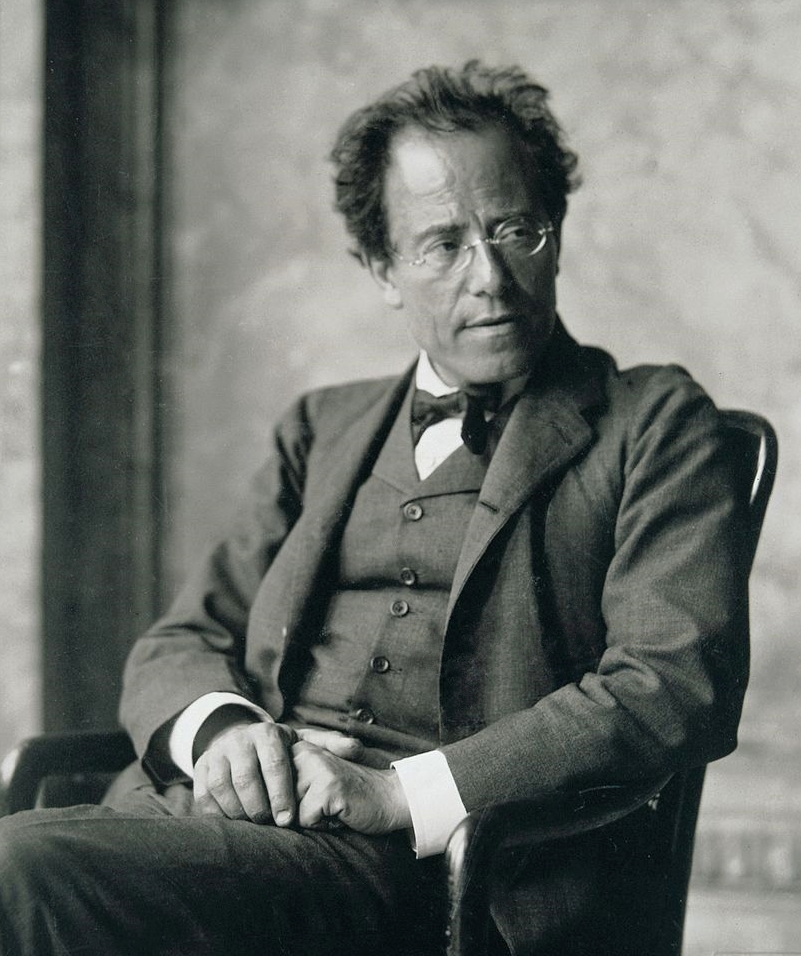
Every year, the Colorado MahlerFest presents one of the symphonic works of composer Gustav Mahler—one of the ten symphonies, or another large-scale symphonic work such as the Lied von der Erde (Song of the earth). For the 38th MahlerFest taking place this week (May 14–18; see programs and other details below), that central work is the Symphony No. 6 in A minor. According to MahlerFest artistic director Kenneth Woods, everything else on the program is chosen to harmonize with the symphony.
Director Kenneth Woods with the MahlerFest Orchestra. Photo by Mark Bobb.
“It always starts with the Mahler symphony,” Woods says. “Mahler’s Sixth is his only tragic symphony—it’s the only one that ends in a minor key. His late works end slowly and softly, (but) they end with some hint of consolation, where the end of the Sixth is totally and utterly bleak.
The final movement famously includes “hammer blows”—explosive thuds that represent the blows of fate. These loud, dull sounds are traditionally related to events in Mahler’s life: the death of his oldest daughter, the diagnosis of the heart condition that would hasten his death at age 50, and his dismissal from the Vienna State Opera.
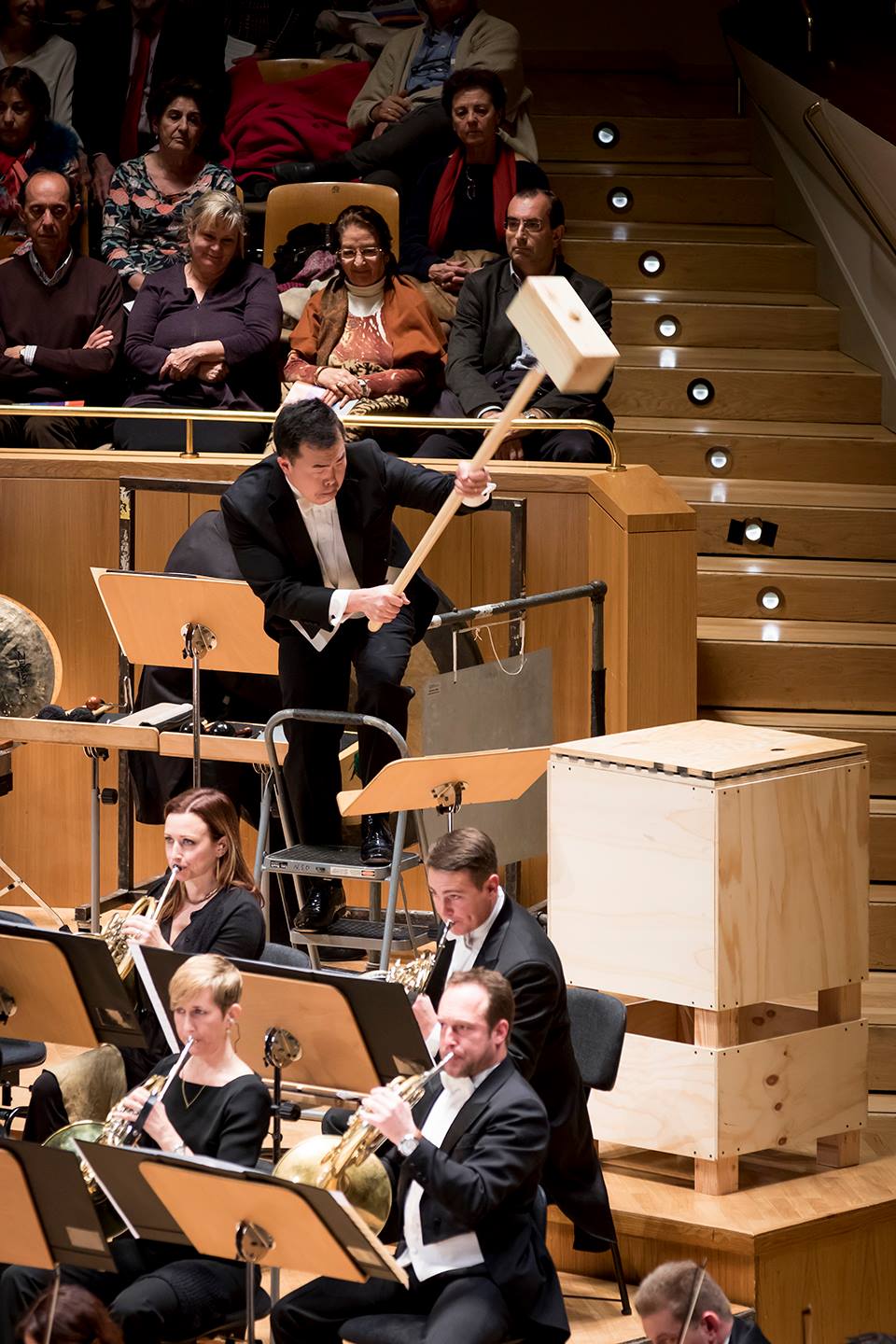
Acting Principal Percussion Eric Shin plays a Mahler Box with the National Symphony Orchestra. Photo by Scott Suchman.
The hammer blows are unique in the symphonic repertoire, and getting the right combination of loud and dull is tricky. Most orchestras have their own custom-made “Mahler Boxes” for the Sixth. They are usually a wooden box that is struck dramatically by a percussionist with a large wooden hammer.
Mahler contemplated as many as five hammer blows. Some scores include three, the same number as the blows in Mahler’s life. But in the end, Mahler settled on two, perhaps feeling that the third blow was symbolically fatal and should be avoided.
Performances vary, but MahlerFest will include only two. “His final decision was two hammer blows,” Woods says. “Maybe in a more pessimistic era you want to include more, but we decided to do what he wrote, rather than us decide what’s best.”
For Woods, the hammer blows and the bleak ending make the Sixth Symphony even more heroic. “These hammer blows announce the inevitability of destruction and defeat, but the hero fights on ever more bravely,” he says.
He explains the symphony’s ultimate meaning with a pop culture analogy from the film Saving Private Ryan. “When Tom Hanks’s character has finally found Private Ryan, he’s dying and he says to Ryan, ‘earn this.’ I think Mahler’s Sixth is not far away from that in spirit. Mahler takes us through the life of a character who is fighting for a better world—not because he’s going to benefit from it, but we might.
The music that Woods selected for other programs come out of times of struggle and suffering. The titles of the individual programs—“Songs of Protest and Defiance,” “Determination and Defiance”—reflect that perspective. Many of the pieces directly reflect their composer’s experience during the violence of the 20th century, especially the two world wars.
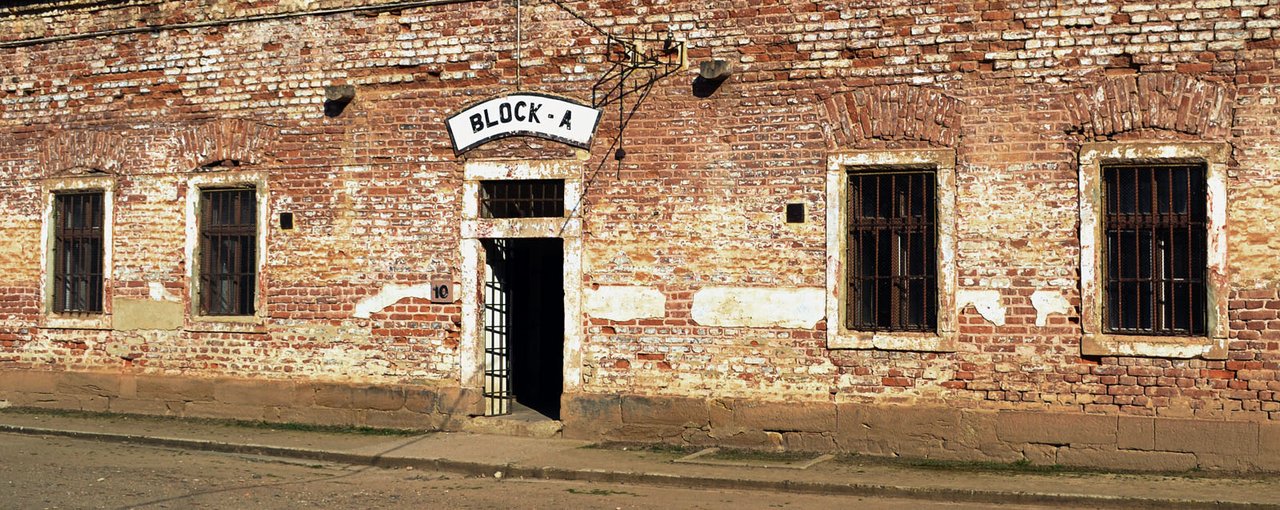
The Terezín Concentration Camp, where Viktor Ullmann wrote Der Kaiser von Atlantis
The festival’s opening night performance Wednesday (7:30 p.m. May 14 at Mountain View United Methodist Church) will present a piece actually written in the Terezín concentration camp in Austria during World War II. Although it was rehearsed in 1944, the Nazi authorities did not allow its performance, and both the composer, Viktor Ullmann, and the librettist, Peter Kien, were murdered at Auschwitz.
Titled Der Kaiser von Atlantis, oder Die Tod-Verweigerung (The Emperor of Atlantis, or The disobedience of death), it is a one-act opera about a power-mad dictator, Kaiser Überall (Emperor Overall) and Death, an overworked soldier who goes on strike. A biting, cynical piece, with the Kaiser an obvious satire of Hitler, it was a courageous statement during wartime.
“Here you have Ullmann in a camp, knowing he’s destined for Auschwitz,” Woods says. “His response was not to say, ‘oh, well,’ but to write incredibly sharp, multi-layered political satire. And dare I say, give the finger to Hitler, who was the model for the Kaiser. Ullmann is a challenge to us, because if he can set a story (mocking) Hitler in a concentration camp, then we shouldn’t feel like we can’t express ourselves directly, about music, or politics, or society.”
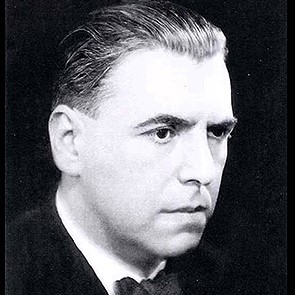
Erwin Schulhoff
Other works during the festival are worthy of attention. On the chamber music program “Determination and Defiance” (7 p.m. May 16 at the Roots Music Project), Erwin Schulhoff was a greatly gifted and widely recognized composer who emerged from serving in World War I with deep emotional scars. “Schulhoff is a particularly poignant case because the music is really touched by genius,” Woods says.
“Everything I’ve done of his has been a huge discovery. Some of his stuff is biting, satirical, some of it is angular, and the Sextet is a tumultuous, fiery piece.”
On the same chamber program, Shostakovich’s Seventh String Quartet was written in 1959–60, at a particularly difficult time in the composer’s life. “To me, the Shostakovich (String Quartet) is an expression of what it is like to see the clouds on the horizon,” Woods says. “He’s hinting at a world of threats and shadows and whispers.”
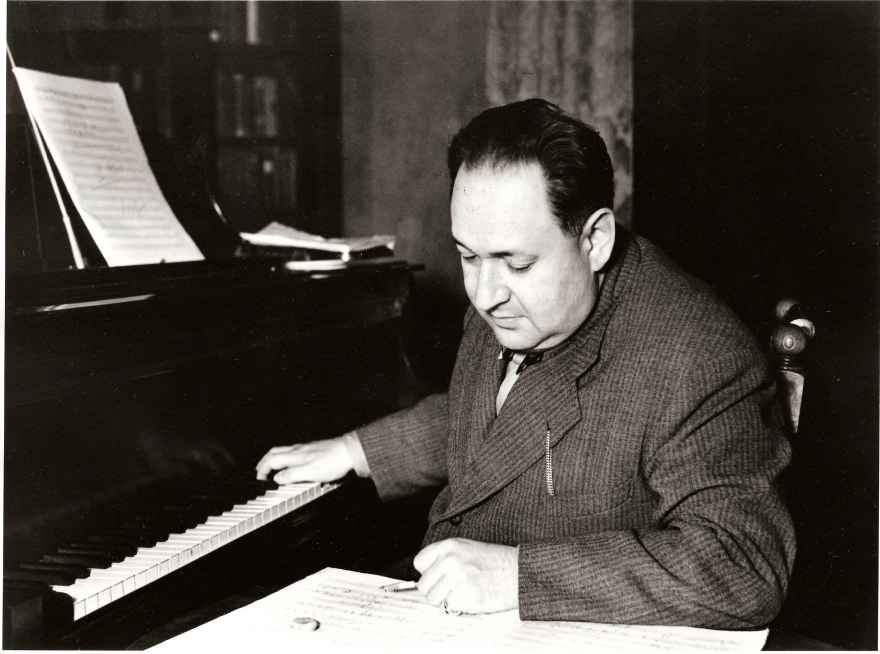
Erich Wolfgang Korngold
Saturday’s orchestral program (7:30 p.m. May 17 in Macky Auditorium) features the Symphony in F-sharp by Erich Wolfgang Korngold, whose career was shaped by World War II. “That’s a fantastic work,” Woods says. “Korngold became a hugely successful opera and concert music composer, and when Hitler came to power, he had to flee.”
Korngold came to the U.S. in 1934. He moved to Hollywood, where he was a film composer, virtually inventing the modern film score in such films as Captain Blood, The Sea Hawk and The Adventures of Robin Hood.
“He felt that he could not write music for the concert hall as long as Hitler was alive,” Woods explains. “Following World War II he began to return to the concert hall. In 1948 he wrote his one and only symphony, which does seem to trace a historical arc of those difficult years.
“We’ve got a first movement that’s very forbidding and violent, a second movement that seems full of frantic activity, then a mournful, soulful adagio like a great lament for the losses of the war, and a finale that is a celebration of peace.”
Finally, Woods singles out the two works on the culminating Sunday concert with the Mahler Sixth (3 p.m. May 18 in Macky Auditorium), Bohuslav Martinů’s Memorial to Lidice and Dismal Swamp by American composer William Grant Still. “On one level (Dismal Swamp) is about the actual Great Dismal Swamp in Virginia, quite a forbidding one,“ Woods says. “But it becomes a pathway to freedom for enslaved people during the Civil War.”
Bohuslav Martinů
One of the most direct and poignant expressions of loss and resistance is Memorial to Lidice by the Czech composer Bohuslav Martinů. In June, 1942, the Nazis obliterated Lidice, a small Czech village outside Prague, in retaliation for the assassination of Reinhard Heydrich, one of the most cruel overseers of the Holocaust. All the men of Lidice were killed, the women and children sent to concentration camps, and the town burned to the ground.
Martinů, who was living in the U.S. heard of the atrocity and wrote an orchestral memorial to the town. “It’s an amazing work,” Woods says.
“You might ask why Martinů thought writing a short piece for orchestra was going to make any difference in the middle of a world war, but the piece has outlived Hitler. (Martinů thought) I’m going to do it because it’s the right thing to do.
“I’m going to write a piece about this atrocity so at least I did something to commemorate it.”
# # # # #
Colorado MahlerFest XXXVIII “Defiance, Protest, Remembrance” Kenneth Woods, artistic director
Wednesday, May 14 “Death Goes on Strike” Colorado MahlerFest Chamber Orchestra, Kenneth Woods, conductor
Viktor Ullmann: Der Kaiser von Atlantis, oder Die Tod-Verweigerung (The emperor of Atlantis, or The disobedience of death)
7:30 p.m., Mountain View United Methodist Church, Boulder
Thursday, May 15 Songs of Protest and Defiance Jennifer Hayghe, piano, with Alice Del Simone, soprano; Hannah Benson, mezzo-soprano; Brennen Guillory, tenor; Andrew Konopak, baritone; Ryan Hugh Ross, baritone; and Gustav Andreassen, bass;.
Mahler: “Revelge” (Reveille)
Philip Sawyers: Songs of Loss and Regret
Mahler: “Der Tamboursg’sell” (The drummer boy) —“Wo die schönen Trompeten blasen” (Where the fair trumpets sound)
Piano Quartet at the Academy, Bassoon Quartet with Cantabile, BCO with competition winners
By Peter Alexander May 7 at 4:40 p.m.
The Boulder Piano Quartet—pianist David Korevaar with violinist Igor Pikayzen, violist Matthew Dane and cellist Thomas Heinrich—will present a free concert in Chapel Hall at the Academy University Hill Friday (7 p.m. May 9; details below).
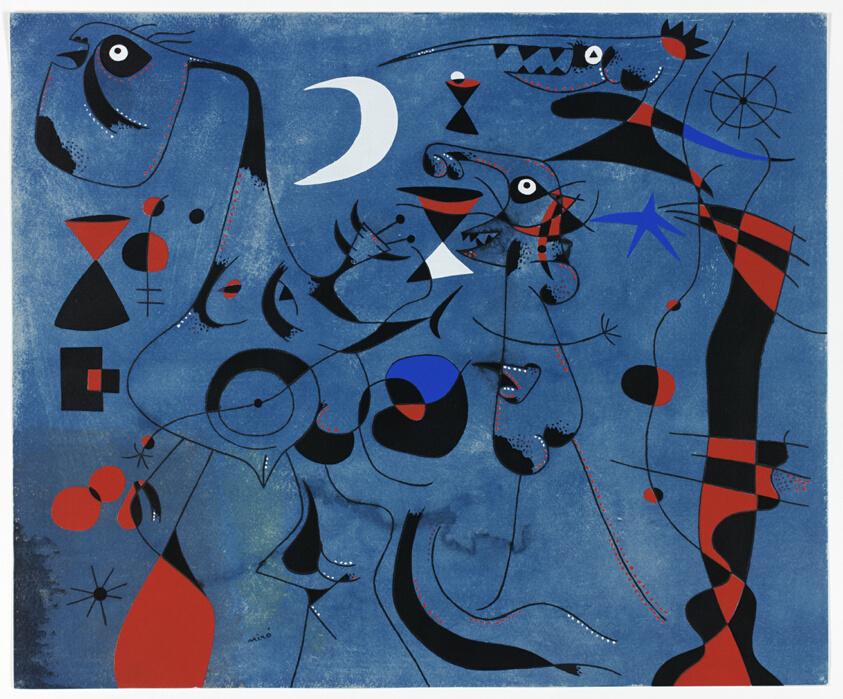
The central work on the program is the five-movement King of the Sun by Stephen Hartke, who is chair of composition at the Oberlin Conservatory. Written for the Los Angeles Piano Quartet, The King of the Sun was inspired by a series of five paintings by the Spanish painter Joan Miró.
Miró: Characters in the night guided by the phosphorescent tracks of snails, Art Institute of Chicago
The five major movements of Hartke’s score are titled after the titles of the paintings: “Personages in the night guided by the phosphorescent tracks of snails,” “Dutch interior,” “Dancer listening to the organ in a gothic cathedral,” “The flames of the sun make the desert flower hysterical,” and “Personages and birds rejoicing at the arrival of night.” The third and fourth movements are separated by a brief “Interlude,” leading Hartke to describe the piece as comprising “five and a half” movements.
The title of the work, The King of the Sun, is a mistranslation of a 14th-century canon that is quoted in the second and fourth movements of Hartke’s score. The actual title of the canon is Le ray au soleil, which means the sun’s ray. The change of one letter—Le rey instead of Le ray—changes “The sun’s ray” into “The king of the sun.”
The program opens with Phantasy for Piano Quartet, written in 1910 by English composer Frank Bridge. It was commissioned by Walter Wilson Cobbett, who worked to promote the composition of British chamber pieces in the style of Fantasy, or Phantasy, a type of work that had flourished in Elizabethan times. Bridge was one of 11 British composers Cobbett commissioned to write a phantasy in 1910.
The final piece on the program is the Piano Quartet in E-flat major of Robert Schumann. It was composed in the summer of 1842, which became known as Schumann’s “year of chamber music.” He had mostly written piano music until 1840, a year in which he wrote 120 songs. The following year he wrote two symphonies, and then in 1842 he completed three string quartets, a piano trio, a piano quintet, and the Piano Quartet.
# # # # #
Boulder Piano Quartet Igor Pikayzen, violin; Matthew Dane, viola; Thomas Heinrich, cello; and David Korevaar, piano
Frank Bridge: Phantasy for Piano Quartet
Stephen Hartke: The King of the Sun
Schumann: Piano Quartet in E-flat major, op. 47
7 p.m. Friday, May 9 Chapel Hall, The Academy University Hill, Boulder
Free
# # # # #
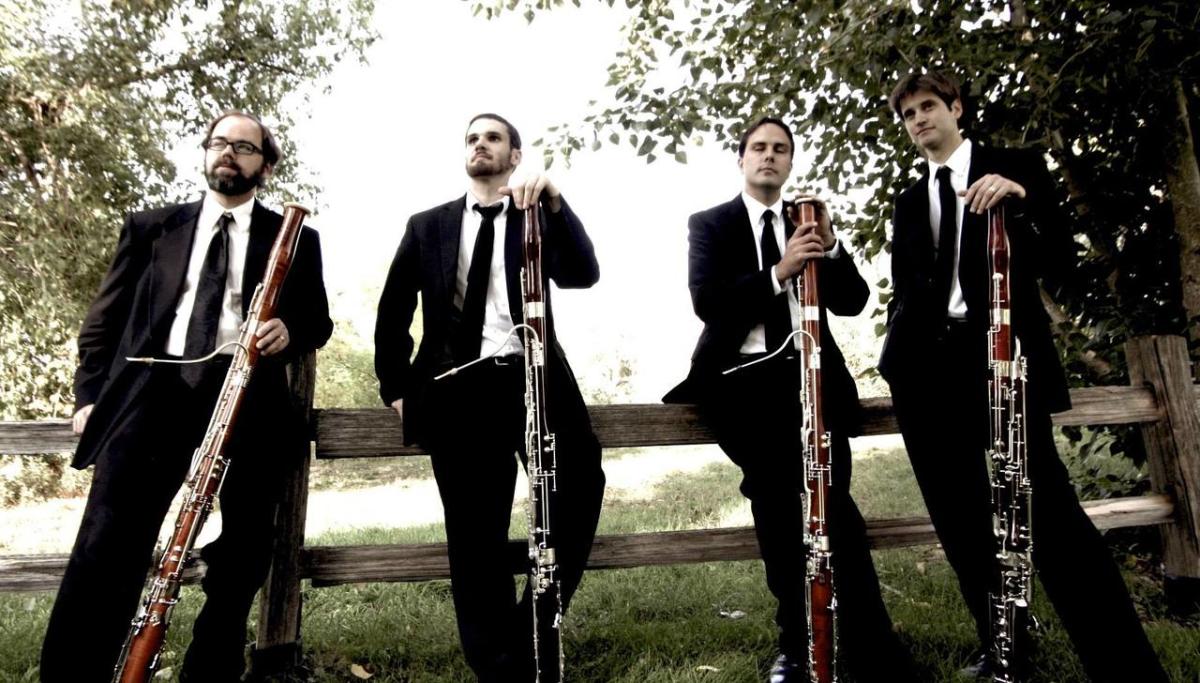
Quartets of all bassoons are a musical rarity—except in Boulder.
The Boulder Bassoon Quartet will present an unusual program of music for bassoon and chorus on a concert shared with Boulder’s Cantabile Singers, directed by Brian Stone, Friday and Sunday at the First Congregational Church (May 9 and 11; details below).
Boulder Bassoon Quartet
The program will be repeated at 3 p.m. Sunday, June 1, at the Boulder Bandshell
A centerpiece of the program will be the newly commissioned “I Shall Raise My Lantern” by Greg Simon. That work for chorus and bassoon quartet will be paired with “Three Earth Songs” by Bill Douglas. Other works on the program are a capella works for chorus by Ralph Vaughan Williams, Benjamin Britten, Craig Hella Johnson and Shawn Kirchner.
The Sunday performance will be available online by a free live stream.
# # # # #
“The Beauty Around Us” Cantabile Singers, Brian Stone, director, with the Boulder Bassoon Quartet
Greg Simon: “I Shall Raise My Lantern”
Bill Douglas: “Three Earth Songs”
Works by Ralph Vaughan Williams, Benjamin Britten, Craig Hella Johnson and Shawn Kirchner
7:30 p.m. Friday, May 9 3 p.m. Sunday, May 11 First Congregational Church, Boulder
The Boulder Chamber Orchestra (BCO) will present the winners of the 2025 Colorado State Music Teachers Association (CSMTA) Concerto Competition as soloists on a concert program Saturday (8 p.m. May 10; details below).
The winners in four categories—Piano Elementary, Piano Junior, Piano Senior, and Strings/Harp—will each play the concerto movement that was required for the competition, with the orchestra (see the concert program below). BCO music director Bahman Saless will conduct.
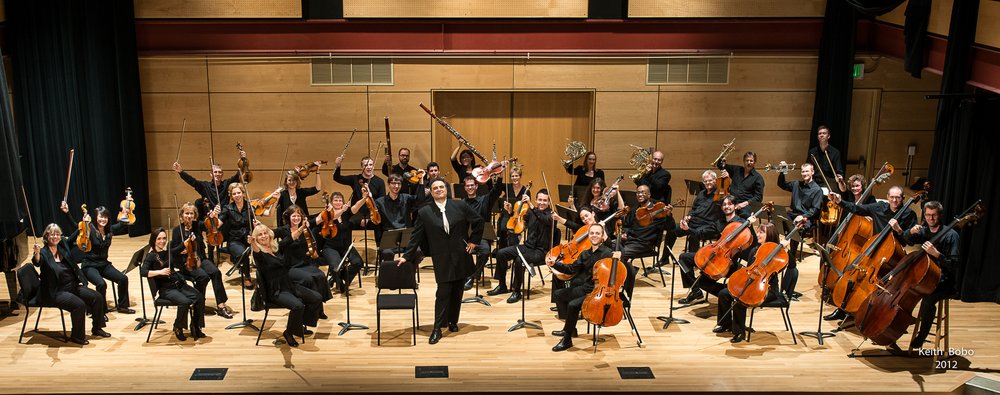
Boulder Chamber Orchestra with conductor Bahman Saless
An annual event, the CSMTA Concerto Competition has three piano categories that are held every year: elementary, junior and senior. There are vocal and instrumental categories in alternating years: strings/harp and voice in odd-numbered years, and winds/percussion in even-numbered years. The competition is for pre-college students up to age 19.
This year’s competition was held in March, and had violin, cello and harp contests in the strings/harp category. Every instrument has one concerto movement specified as its competition repertoire. The judges for the 2025 competition were Saless; Mary Beth Rhodes-Woodruff, artistic director of the Santa Barbara (Calif.) Strings; and Kate Boyd, professor of piano at Butler University.
The winners who will appear with the BCO are: —Piano elementary: Natalie Ouyang —Piano, junior: Lucy (Yuze) Chen —Piano, senior: Bobby Yuan —Strings/Harp: Sadie Rhodes Han (violin)
This is the second year that the BCO has presented the CSMTA Concerto Competition winners as concert soloists.
MIssa Solemnis, “Magnum Opus” of great extent and significance, May 4
By Peter Alexander April 30 at 5:50 p.m.
Beethoven was a few years years late.
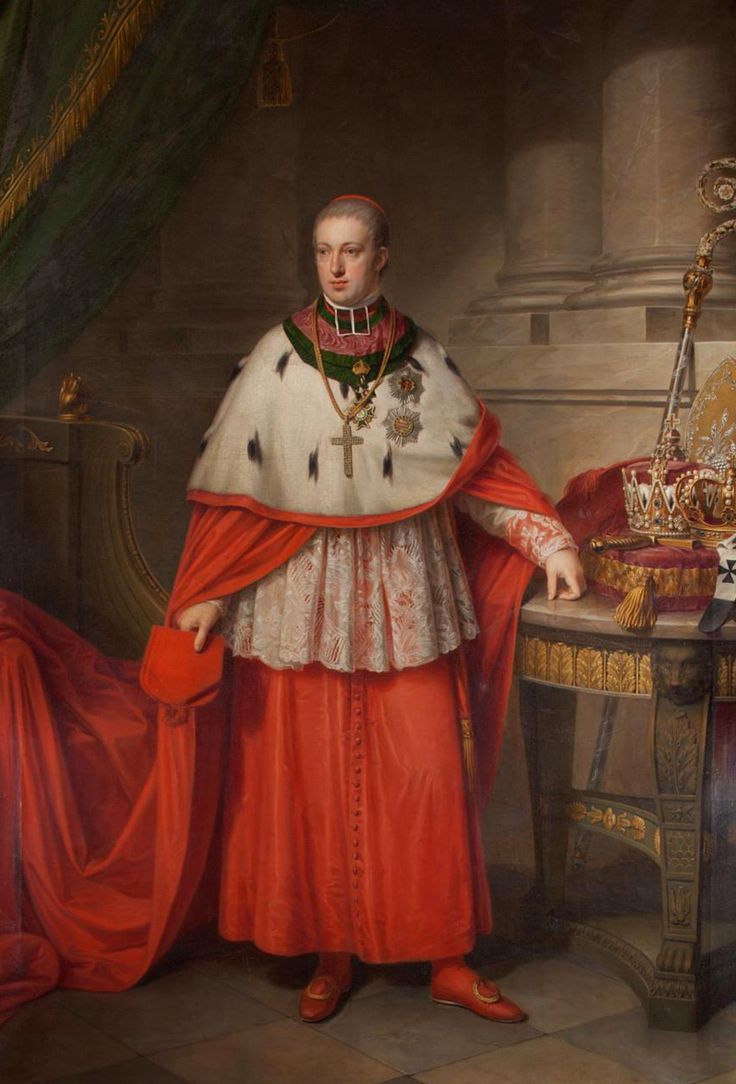
He promised his friend, pupil and patron Archduke Rudolf that he would write a solemn mass—Missa Solemnis—for the latter’s investiture in 1820 as the Archbishop of Olomouc. But the massive score was not finished in time. In fact, it was not performed until April 7, 1824—in St. Petersburg, under the sponsorship of another of Beethoven’s patrons, Russian Prince Gallitsin.
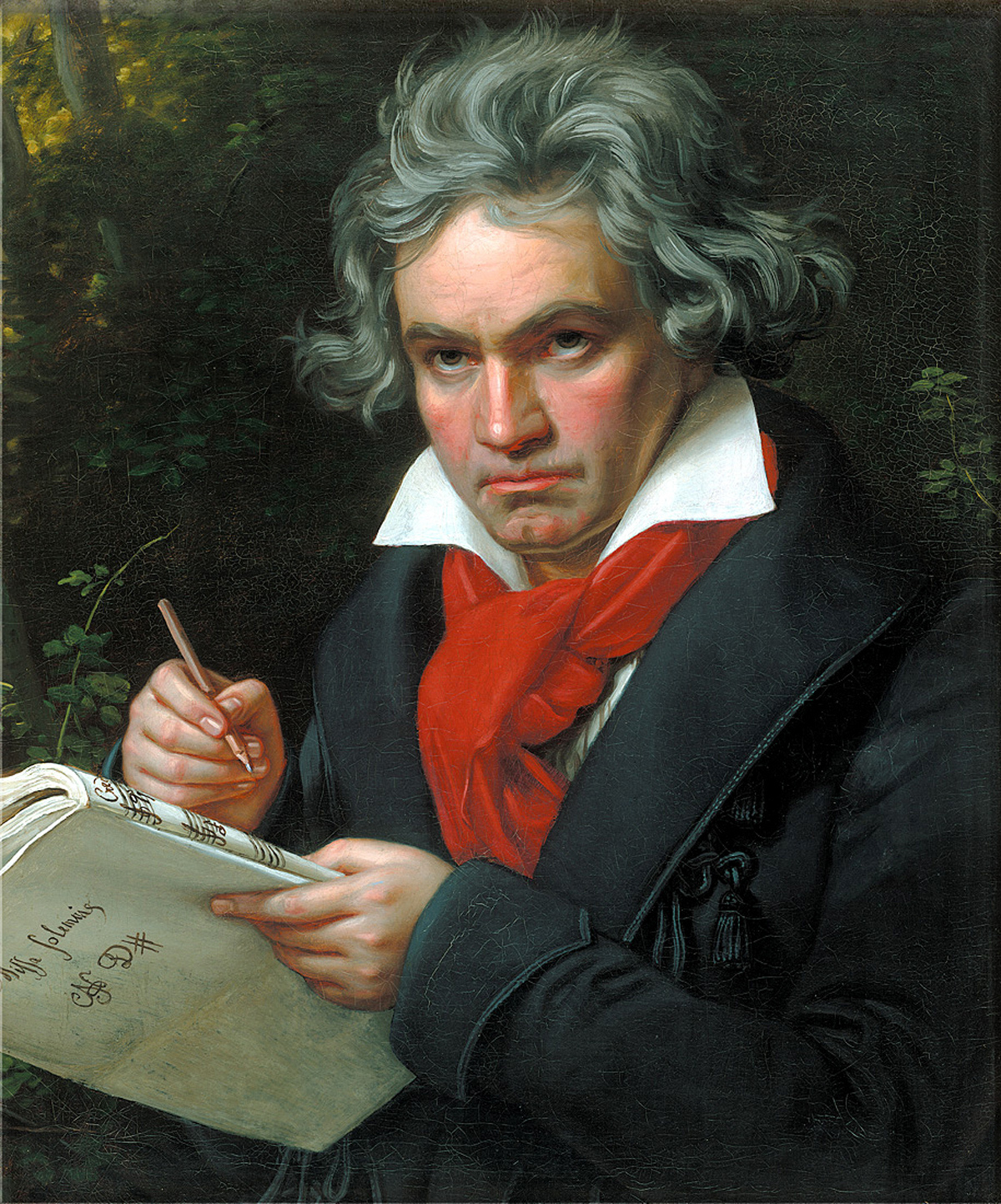
Portrait of Beethoven with the score to the Missa Solemnis
The size of the work, which takes 80 minutes to perform, and the difficulty of the choral parts remain obstacles to performances. So it is a noteworthy event that the Boulder Philharmonic and Boulder Chorale will join forces to present the Missa Solemnis Sunday at Macky Auditorium (4 p.m. May 3; details below).
Michael Butterman, music director of the Boulder Phil, will conduct. The full 130-member Boulder Chorale has been rehearsed by director Vicki Burrichter. Soloists will be Tess Altiveros, soprano; Abigail Nims, mezzo soprano; Kameron Lopreore, tenor; and Pectin Chen, bass.
This is the first time either Butterman or Burrichter have presented the work. “I have personally wanted to do it for years and years,” Butterman says. “It’s a huge lift for (the chorus), so you have to have a partner that is up to it and is willing to take it on.
“I’ve been in touch with Vicki at the Boulder Chorale through the years, and this came up when she and I were talking. She said ‘I think we can do it. I want to do it!’”
For her part, Burrichter says that the Chorale is now ready for the challenge. “I wouldn’t have done this piece with them even five years ago,” she says, “but they are now at a place where they are very highly trained up. This is my 10th year with the Chorale, and we’ve been working very hard to get to an even higher level than when I started.”
Several aspects of the music present challenges to the chorus. They sing almost nonstop, with no breaks for solo arias or duets. Their parts cover a wide range from very high to low, with difficult, angular melody lines. The fugues are often difficult to sing, especially when each part has to project the theme independently of the others.
Burrichter identifies other challenges as well. “Yes, the tessituras (voice ranges) are high, especially for the sopranos,” she says. “But the constant change in dynamics (loud to very soft and vice versa) is probably the hardest thing. You have to always look ahead. I think also the hardest thing is getting the flow of the piece, because it is dramatically different from Bach or Mozart. Understanding why (Beethoven) wrote what he did, what he was trying to say—those are things that take a long time (for the singers) to integrate.”
Beethoven’s pupil and friend, Archduke Rudolf of Austria, as Cardinal
“It is one of the most daunting works that I’ve ever put my mind to,” Butterman says. “I’m truly humbled by this piece. It seems so incredibly detailed, so dense, so masterful that I’m really in awe of this—written by someone who was probably profoundly deaf. It’s just staggering. The contrapuntal mastery that he displays over and over again, throughout the work, is astonishing.”
The use of counterpoint shows that Beethoven knew the traditions established in the mass settings by earlier composers. Other traditional gestures that he incorporated into the score include the use of fugue for certain texts, starting the Gloria with ascending joyful lines in the chorus, the use of traditional church modes, and the use of solo flute to represent the Holy Spirit.
In other ways Beethoven added his own original ideas. One that is particularly powerful is the insertion of trumpets and drums suggesting military music right before the text Dona nobis pacem (Give us peace). Beethoven lived during a time of extended warfare across Europe, including the occupation of Vienna by French troops, giving the plea for peace special force.
Burrichter sees a relevance for that passage still. “Listen to how Beethoven changes the Dona nobis pacem, and how this relates to what’s happening in the world right now,” she says. “The message that Beethoven was trying to send in 1827 is just as relevant today.”
She also says “I think this piece has an unfair reputation as unsingable and an assault on the senses. What great composers do is demand great things of singers and instrumentalists. Beethoven was reaching for transcendence.”
She advises the audience to “enter into the experience that Beethoven is trying to create. Enter into Beethoven’s world in the same way that you would one of his symphonies.”
But the last word on the Missa Solemnis should go to the composer. On the copy that he presented to his pupil and friend the Archbishop, Beethoven wrote “Von Herzen—Möge es wieder—Zu Herzen gehn!”
“From the heart—may it return to the heart!”
# # # # #
“Beethoven’s Magnum Opus” Boulder Philharmonic, Michael Butterman conductor With the Boulder Chorale, Vicki Burrichter, director Tess Altiveros, soprano; Abigail Nims, mezzo soprano; Kameron Lopreore, tenor; and Pectin Chen, bass
Longmont Symphony Pops Concert features musical portraits of the West
By Peter Alexander April 29 at 5:22 p.m.
The Longmont Symphony and conductor Elliot Moore will end the 2024-25 concert season with their annual Pops Concert, Saturday at the Vance Brand Civic Auditorium (7 p.m. May 3; details below).
The program offers what the orchestra calls “an exciting trip out west”—or, since we are in Colorado, you might think of it as a musical step out the door and into the wide open spaces around us. Included are fiddle tunes, musical descriptions of the Grand Canyon and an 1878 cattle drive, and music to a cowboy ballet.
Richard Hayman, for many years chief musical arranger or the Boston Pops Orchestra, contributes Pops Hoedown. A collection of well known fiddle tunes including “The Devil’s Dream,” “Chicken Reel,” “Turkey in the Straw,” “Rakes and Mallow” and others, Pops Hoedown evokes the high spirits of a Saturday night barn dance.
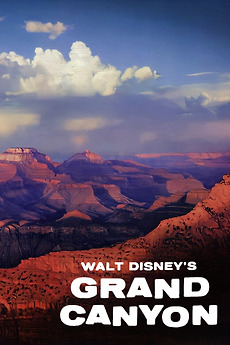
Disney’s 1958 film Grand Canyon won the Academy Award for best short film. The music written for the film by composer/arranger Ferde Grofé lived on long past the film itself in the form of the Grand Canyon Suite. Of the five movements of the full suite, the LSO will play the most familiar: “On the Trail,” describing the steady gait of donkeys into the canyon and their race back to the barn; and a movement depicting an afternoon “Cloudburst.”
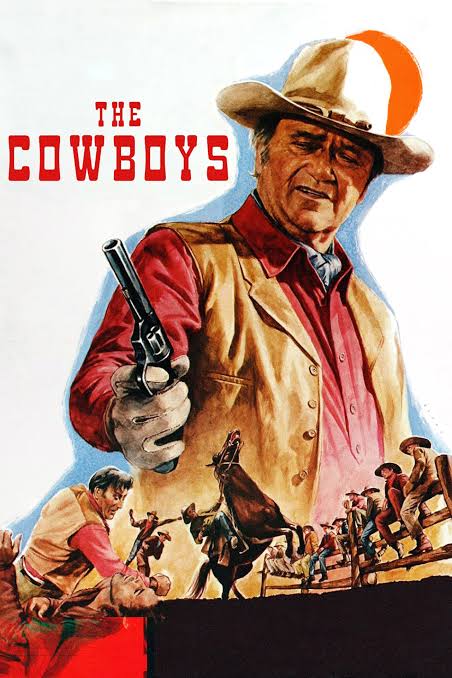
The 1972 Western film The Cowboys starred John Wayne, Bruce Dern, Colleen Dewhurst and Slim Pickens. The music for the film was one of John Williams’s earlier film scores, and the Overture Williams wrote drawn from the film creates an intense, uptempo portrayal of a cattle drive and the young cowboys who are the film’s subjects.
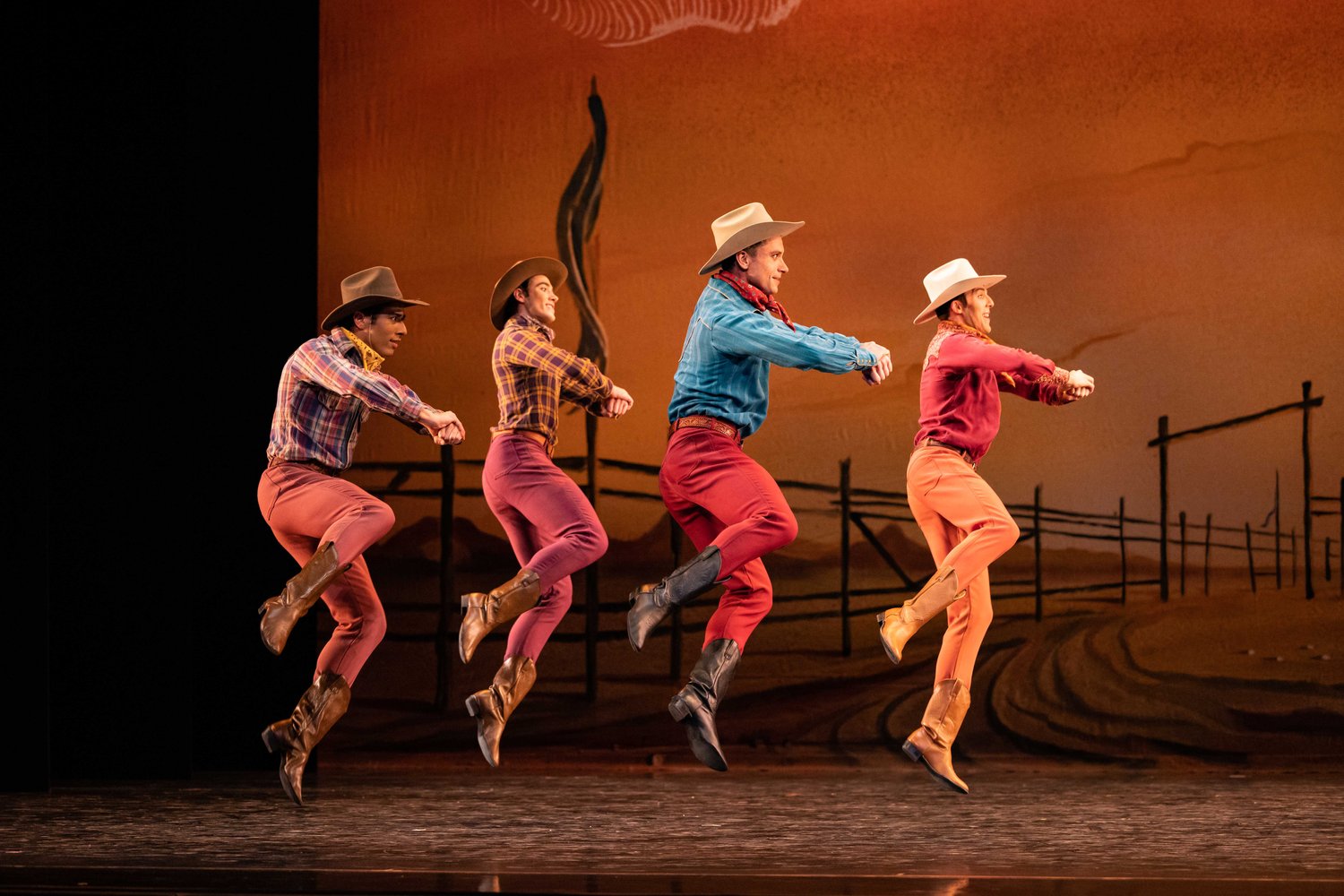
Agnes de Mille’s ballet Rodeo had its premiere in 1942 at the Metropolitan Opera House, receiving 22 curtain calls. The success was due not only to de Mille’s inventive choreography—which led to her selection to choreograph Rogers and Hammerstein’s Broadway hit Oklahoma—but also the music by Aaron Copland. Subtitled “The Courting at Burnt Ranch,” the ballet tells the story of the romance between the Cowgirl and the Champion Roper.
Vinicius Lima, Joseph Lynch, Brian Waldrep (“Head Wrangler”) and Tyler Gum (“Champion Roper”) in “Buckaroo Holiday” from Aaron Copland’s and Agnes de Mille’s Rodeo. Photo by Beau Pearson.
From its use in the orchestral suite and television commercials, Copland’s “Hoedown” from Rodeo has become instantly recognizable as musical Americana. Copland incorporates several fiddle tunes into the “Hoedown,” including “Bonaparte’s Retreat” and “Miss McLeod’s Reel.” The LSO will play the full ballet score, including sections titled “Buckaroo Holiday,” “Corral Nocturne,” “Ranch House Party” and “Saturday Nigh Waltz.”
In addition to these popular pieces inspired why the American West, the LSO Pops program includes Leroy Anderson’s Fiddle Faddle,The American Frontier by Calvin Custer and Cowboy Rhapsody by Morton Gould.
# # # # #
“Pops: A Western Hoedown“ Longmont Symphony Orchestra, Elliot Moore, conductor
Leroy Anderson: Fiddle Faddle
Richard Hayman: Pops Hoedown
Ferde Grofé: Grand Canyon Suite
Calvin Custer: The American Frontier
John Williams: Overture to The Cowboys
Morton Gould: Cowboy Rhapsody
Aaron Copland: Rodeo
7 p.m. Saturday, May 3, Vance Brand Civic Auditorium

 Sharps & Flatirons