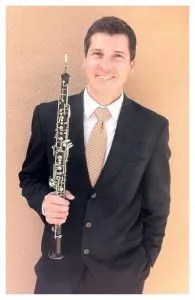
GRACE NOTES: Prominent violinists and a sold-out Ugly Duckling

Vadim Gluzman, Ray Chen and the Colorado Symphony in Boulder and Longmont 

By Peter Alexander March 19 at 4:06 p.m.
The Boulder Bach Festival (BBF) will present the Ukrainian-Israeli violinist Vadim Guzman in a program that spans centuries, from J.S. Bach to Arvo Pärt.

The final concert of BBF’s 2023–24 season, Gluzman’s performance occurs on Bach’s birthday, at  4 p.m. Thursday, March 21 (Dairy Arts Center; details below). He will perform with the BBF CORE (COmpass Resonance Ensemble) and be joined by BBF music director Zachary Carrettin for Bach’s Double Violin Concerto.

Known for his wide repertoire, Gluzman has premiered works by Sofia Gubaidulina, Michael Daugherty and Pēteris Vasks, among others. His recordings have won numerous awards, including Gramophone magazine’s Editor’s Choice, and Disc of the Month from The Strad, BBC Music Magazine and other publications. He is currently distinguished artist-in-residence at the Peabody Conservatory. He performs on the 1690 ‘ex-Leopold Auer’ Stradivari, on extended loan through the Stradivari Society of Chicago.

# # # # #

“Old and New Dreams”
Boulder Bach Festival CORE with Vadim Gluzman and Zachary Carretttin, violin

Program includes:

  • J.S. Bach: Violin Concerto in A minor, S1040
  • Arvo Pärt: Passacaglia
  • J.S. Bach: Concerto in D minor for two violins, S1043

4 p.m. Thursday, March 21
Gordon Gamm Theater, Dairy Arts Center

TICKETS

# # # # #

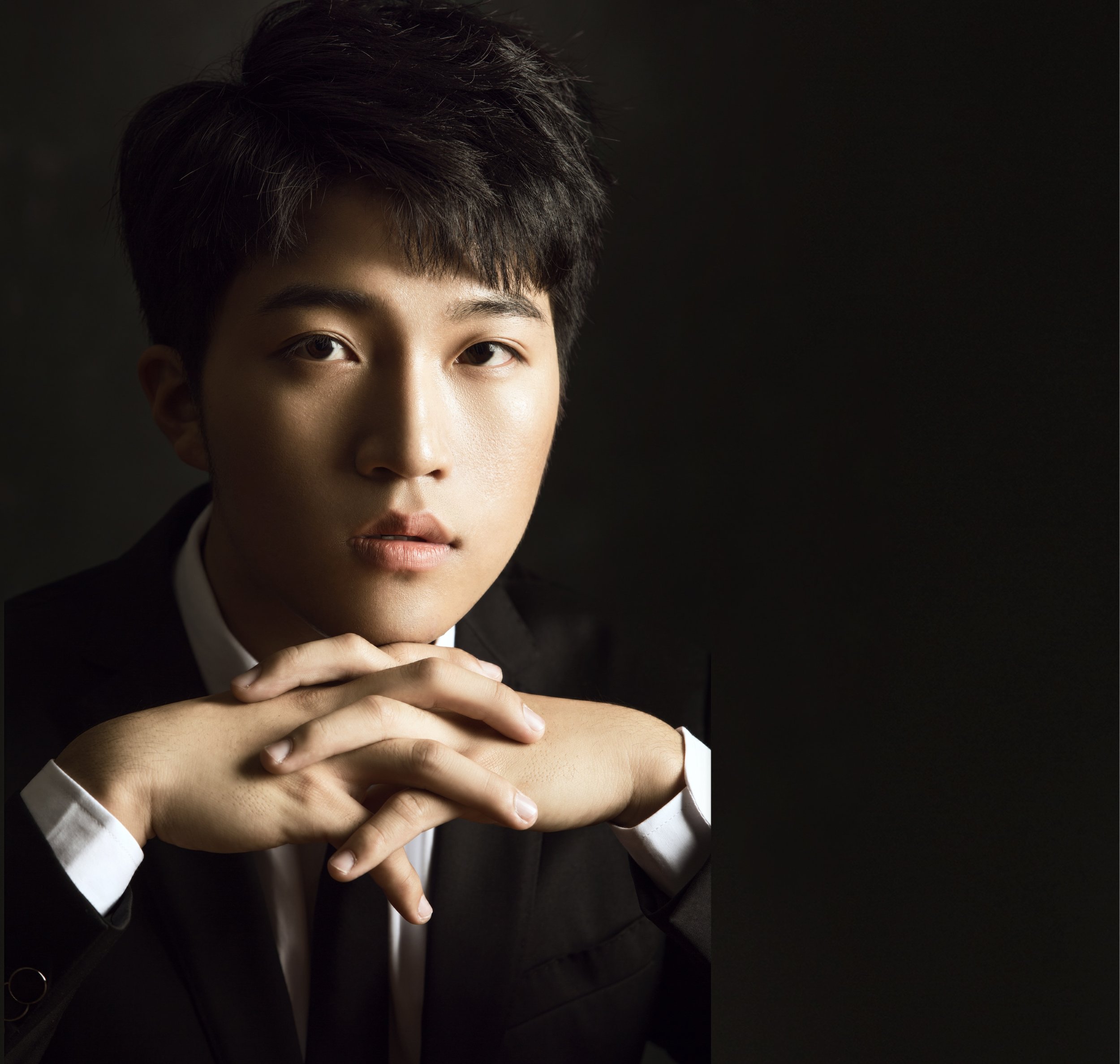
The CU Presents Artist Series will feature violinist Ray Chen, who is billed as “redefining what it means to be a classical musician in the 21st century,” together with Hispanic-American pianist Julio Elizalde in a concert program combining serious and lighter works Thursday ( 7:30 p.m. March 21 in Macky Auditorium; details below).

The major works on the program are Beethoven’s Violin Sonata No. 7 in C minor, op. 30 no. 2, and J.S. Bach’s Partita No. 3 in E major for solo violin, S1006. Filling out the program are encore material pieces, starting with Tartini’s showpiece the “Devil’s Trill” Sonata. After the two heavier works, Chen and Elizalde will wrap up the program with Antonio Bazzini’s brilliant “Dance of the Goblins,”  Fritz Kreisler’s arrangement of Dvořák’s Slavonic Dance No. 2, and their own arrangement of “Spain” by Chick Corea.

Beethoven’s Violin Sonata No. 7 is part of a set published in 1803 as “Sonatas for the pianoforte with the accompaniment of violin.” This label reflects an earlier time, when domestic music-making often featured female pianists, who were expected to have more time to practice than their male partners on violin, and who therefore could master more difficult parts. In the case of this Sonata, each movement opens with the piano and the violin part, while it is not insignificant, often follows the lead of the piano. Unusually for a piece named “sonata,” the Sonata No. 7 is in four movements, and the key of C minor marks it as an often dramatic and stormy work.

Bach’s Third Partita is a suite of dances, preceded by a Preludio. It is the last of his set of Six Sonatas and Partitas for solo violin, one of the pinnacles of the solo violin repertoire. In the bright key of E major, it is one of the most cheerful of the set. That is particularly true of the Preludio, a perpetual-motion movement that is one of Bach’s most familiar pieces. Apparently Bach was himself fond of this movement, which he re-used in a version for organ and orchestra in his Cantata No. 29.
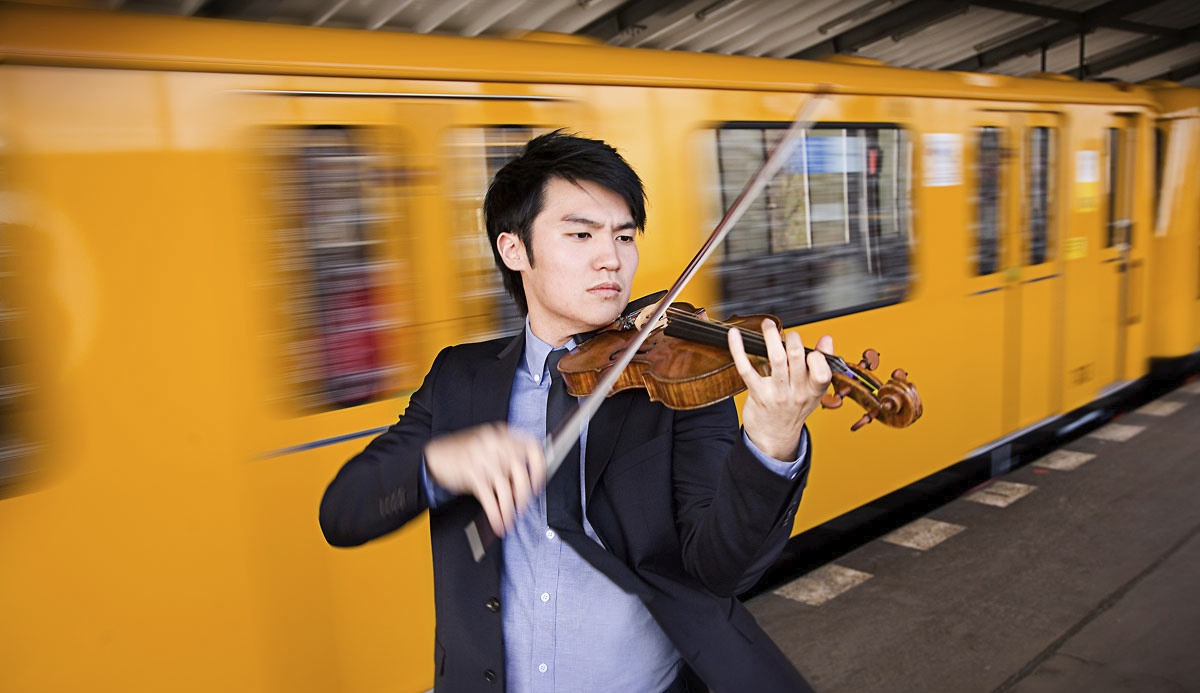
Violinist Ray Chen

Chen came to wide attention in the music world when he won first prize in both the Yehudi Menuhin and Queen Elizabeth violin competitions, in 2008 and ’09 respectively. He is known for his use of social media to reach a wider audience, including as a co-founder of the Tonic Website that allows young musicians to practice and learn together.

Born in Taiwan and raised in Australia, he was accepted at Philadelphia’s Curtis Institute at the age of 15. He plays the 1714 “Dolphin” Stradivarius violin on loan from the Nippon Music Foundation and once owned by Jascha Heifetz. 

Pianist Julio Elizalde has been performing as a recital partner with Chen and violinist Sarah Chang for nearly ten years. A native of the San Francisco Bay area, he is a graduate of the San Francisco Conservatory of Music, where he is currently on the faculty, and the Juilliard School. He has collaborated with several living composers including Osvaldo Golijov, Stephen Hough and Adolphus Hailstork.

# # # # #

Ray Chen, violin, and Julio Elizalde, piano

  • Giuseppe Tartini: Sonata in G minor (“Devil’s Trill”; arr. Fritz Kreisler)
  • Ludwig van Beethoven: Violin Sonata No. 7 in C minor, op. 30 no. 2
  • J.S. Bach: Partita No. 3 in E major for solo violin, S1006
  • Antonio Bazzini: La Ronde des Lutins (“Dance of the Goblins”), op. 25
  • Dvořák: Slavonic Dance No. 2 in E minor, op. 72 (arr. Fritz Kreisler)
  • Chick Corea: “Spain” (arr. Elizalde and Chen)

TICKETS

# # # # #

Members of the Colorado Symphony will visit the Longmont Museum’s Stewart Auditorium Saturday (March 23) of present a bilingual concert that tells the story of “The Ugly Duckling.”

The interactive performance in English and Spanish, dubbed a “Mini Música,” will incorporate storytelling, singing and dance. It will be accompanied by a 16-piece orchestra made up of members of the Colorado Symphony.

The performances at 10 and 11:30 a.m. are free, but both are already full with advance reservations.

# # # # #

“The Ugly Duckling” Mini Música
Members of the Colorado Symphony

10 and 11:30 a.m. Saturday, March 23
Stewart Auditorium, Longmont Museum

SOLD OUT

CORRECTION on March 19: the word ”Música,” which had inadvertently dropped out, was restored in the penultimate paragraph of the story about Colorado Symphony’s performance of “The Ugly Duckling.”
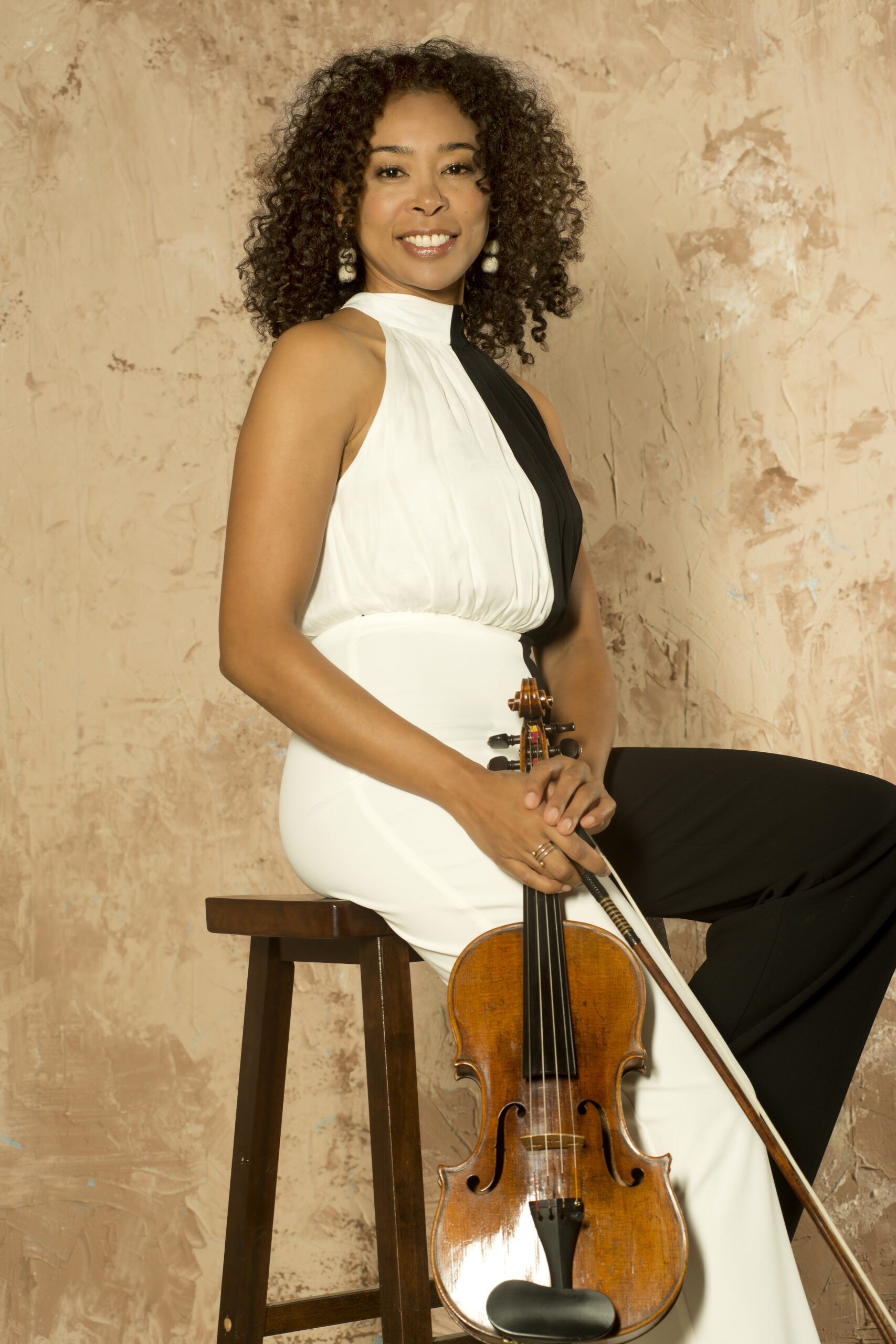
Longmont Symphony’s Mahler performance is SOLD OUT

“Mahler at the Museum,” Saturday, March 16

By Peter Alexander March 13 at 5:25 p.m.

The Longmont Symphony and conductor Elliot Moore will present the last of their concerts at the Longmont Museum’s Stewart Auditorium for the 2023–24 season, a sold-out “Mahler at the Museum” performance, Saturday (March 16).

The program features a chamber version of Mahler’s Das Lied von der Erde for orchestra with alto (or baritone) and tenor soloists. Based on German translations of Chinese poems, the score was completed in 1909, near the end of the composer’s life. Although Mahler called it “A Symphony for Tenor, Alto (or baritone) Voice and Orchestra,” he did not give it a number as a symphony, supposedly because he feared that when he wrote his Ninth it would be his last symphony, as had been the case with Beethoven. 

Ironically, his next symphony, Number 9, was in fact the last symphony he completed.

# # # # #

“Mahler at the Museum”
Longmont Symphony, Elliot Moore, conductor
With Abigail Nims, mezzo-soprano, and Matthew Plenk, tenor

  • Mahler: Das Lied von der Erde (chamber version)

7 p.m. Saturday, March 16
Stewart Auditorium, Longmont Museum

SOLD OUT

Takács Quartet features music by Zimbabwean/ Japanese composer Nokuthula Ngwenyama

Haydn and Dvořák complete program for March 10 and 11

By Peter Alexander March 5 at 5:08 p.m.

The violist and composer Nokuthula Ngwenyama burst onto the classical musical scene in 1993, when she won the Primrose International Viola Competition at the age of 16.

Nokuthula Ngwenyama

Ngwenyama followed that distinction by winning the Young Concert Artist International Auditions the following year, and later an Avery Fisher Career Grant. An American of Ndebele (Zimbabwean) and Japanese descent, she attended the Coburn School of Performing Arts in Los Angeles and the Curtis Institute in Philadelphia. She later attended the Paris Conservatory as a Fulbright Scholar.

With concerts Sunday and Monday (March 10 and 11; details below), the Takács Quartet brings her Flow to Boulder audiences on a program that also includes works by Haydn and Dvořák. The performance will be presented for an in-person audience and by streaming with tickets available here.

The Takács presented the premiere of Flow in Berkeley last fall and have made it a part of their touring repertoire since. Flow was commissioned by the Takács and the presenter Cal Performances after their second violinist, Harumi Rhodes, got to know Ngwenyama at the Marlboro Music Festival in Vermont.

The quartet’s request was for a piece “inspired by the natural world.” Taking the request very seriously, Ngwenyama writes in her program notes that she “researched a wide array of subjects,” including “the life cycle, carbon reclamation, environmental protection, animal communication, starling murmurations, our last universal common ancestor (LUCA), black hole collisions and the sub-atomic realm.”

In conclusion, she writes, “Everything in nature flows and develops through time. Flow can be expressed mathematically, psychologically, physically, visually, and, now, via string quartet.  . . . Enjoy and go with the flow, we only know what we know.” Her extensive notes include NASA diagrams of the expansion of the universe over 13.77 billion years.

Flow is in four movements, arranged in an essentially traditional order: Prelude, Lento, Quark Scherzo, and Finale. The progression of movements is loosely linked in Ngwenyama’s notes to the development of the universe through time.

Takács Quartet. Image by Amanda Tipton Photography

Haydn’s “Sunrise” Quartet is among the composer’s last works in a genre that he created and defined. It was published in 1797, the fourth in a set of six quartets, opus 76. The title comes from the beginning of the first movement, with a sustained chord and a rising line in the first violin that suggests the sun rising above the horizon. That musical idea is developed throughout the movement, which is followed by the usual slow movement, a minuet and an energetic finale.

Sometimes called the “Slavonic Quartet,” Dvořák’s Quartet in E-flat major was written for and dedicated to violinist Jean Becker and the Florentine Quartet, a professional ensemble active in the composer’s time. Dvořák had attracted attention with the publication of his Slavonic Dances for two pianos, and Becker specifically asked for a quartet in the same style, based on folk-dance idioms. 

The most conspicuously “Slavonic” elements are heard in the second movement which is labelled “Dumka,” a type of movement derived from Ukrainian folk music that alternates between melancholy and exuberant sections; and the finale, which uses a rapid Czech dance called the skočná.

* * * * *

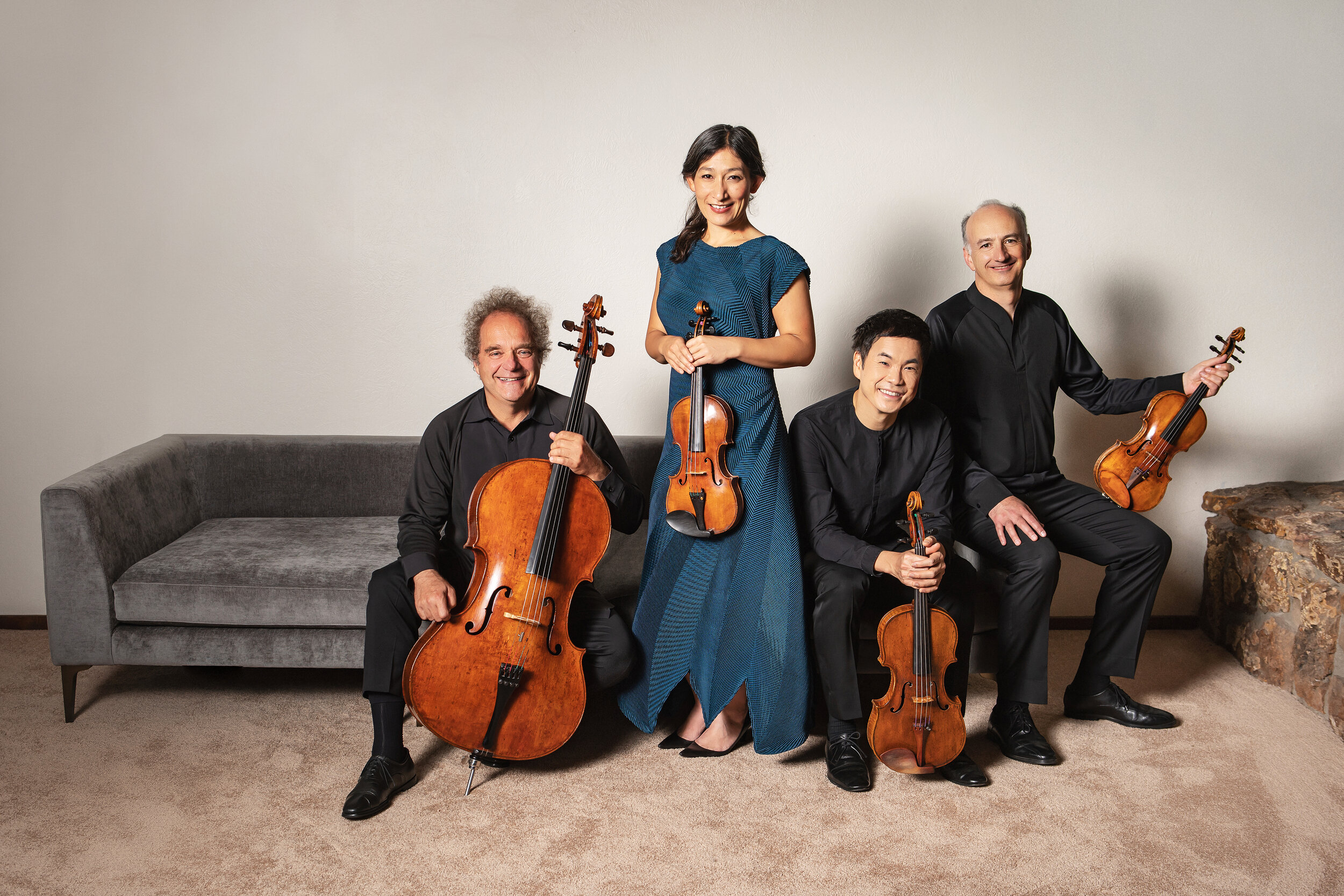
Takács Quartet

  • Haydn: String Quartet in B-flat major, op. 76 no. 4 (“Sunrise”) 
  • Nokuthula Ngwenyama: String Quartet Flow 
  • Dvořák: String Quartet No. 10 in E-flat major, op. 51

4 p.m. Sunday, March 10
7:30 p.m. Monday, March 11
Grusin Music Hall

In-person and streaming TICKETS HERE

NOTE: Minor typos corrected March 7.

Boulder Chamber Orchestra strings present “Virtuosity!” with Richard O’Neill

Takács Quartet violist plays music by Telemann and Piazzolla Saturday

By Peter Alexander Feb. 29 at 11:07 p.m.

Violist Richard O’Neill has a wide-ranging background, both geographically and musically.

Richard O’Neill

For example, when he plays as soloist with the Boulder Chamber Orchestra Saturday (7:30 p.m. March 2; details below), he polished one of his pieces by playing with members of Germany’s distinguished early-music ensemble Musica Antiqua Köln, and the other he researched near the docks in Buenos Aires, Argentina.

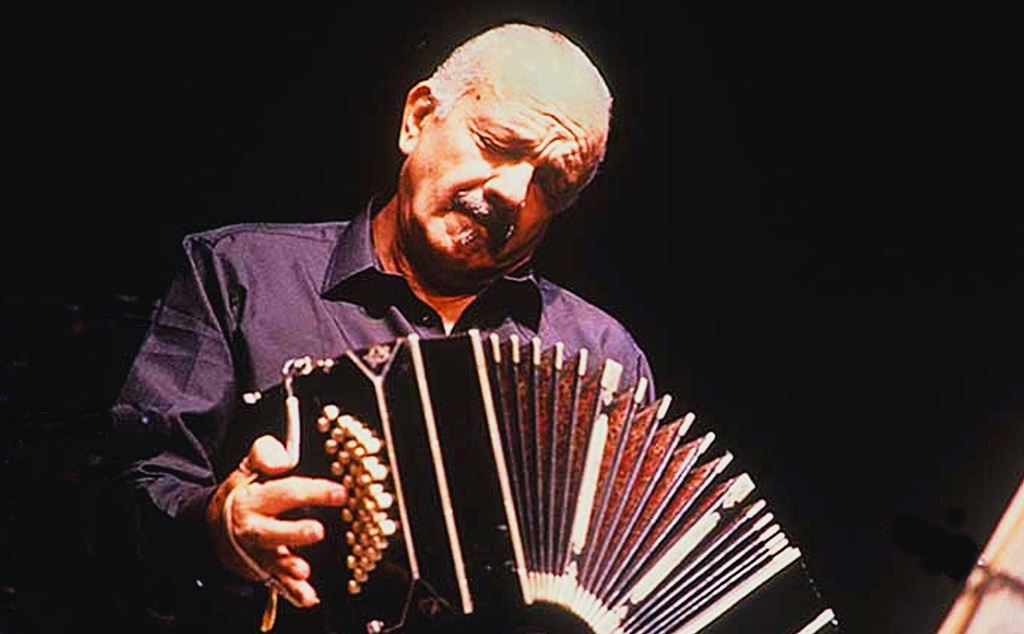
The first would be the Concerto in G major for viola by the prolific Baroque composer Georg Philipp Telemann; the other is the “Grand Tango,” originally for cello, by Argentine bandoneon player and band leader Astor Piazzolla. Other works on the program, featuring the BCO strings under music director Bahman Saless, are Valse Triste by early 20th-century Czech composer Oskar Nedbal, and Beethoven’s Grosse Fuge (Great fugue), originally the finale of the composer’s String Quartet in B-flat, op. 130.

Two more different composers than Telemann and Piazzolla would be hard to imagine. And yet, O’Neill says, they are not incompatible. “They’re very contrasting, probably on polar opposite ends of the musical timeline,” O’Neill says. “But they share some commonalities—most of all the spirit of the dance.”

The Telemann is the first known true viola concerto, and it is a piece that O’Neill plays often. “I think it’s a gorgeous, amazing piece,” he says.

Georg Philipp Telemann

O’Neill recorded the concerto in 2008 when he was asked to make a recording with members of Musica Antiqua Köln. It was definitely a learning experience for O’Neill, giving him an opportunity to work with a Baroque-style bow that has much less tension on the bow hairs, and to improvise in Baroque music. 

The latter did not come naturally, he admits. “I remember them asking me, ‘play a cadenza, be free! Do whatever you like!’” O’Neill says. “I did something, and it was free for sure! I was stopped and it was like, ‘Who are you, Yo-Yo Ma?’ But it was all said with a smile.

“One thing I learned, things were a lot different when performers and composers were the same person. And it was amazing how prolific (Telemann) was. A lot of times you look at the score and it’s very bare, but in some ways it has everything you need—you just have to understand what you’re going to do.”

His approach to Piazzolla’s music was very different. O’Neill first heard Piazolla’s music when he was a 15-year-old student in Las Vegas, and the Cuarteto Latinoamericano played Piazzolla’s “Four, for Tango.” “I was completely blown away!” he says.

“I had never heard anything like this. It was so rhythmic, so fun, the instruments were doing all of these cool, weird effects like percussive effects and (playing) behind the bridge. I was, ‘what is going on there?’ I found the Kronos (Quartet) recording and listened to it all the time. I fell in love with Piazzolla.”

Astor Piazzolla

Later he had the chance to study Piazzolla’s musical origins up close. He was in Buenos Aires, and saw an opportunity to learn more. “I wanted to see what the tango was about,” he says.

“I went down to the docks (in Buenos Aires), where the Argentinian tango was originally from. I was shocked to find out it wasn’t the Parisian version of tango, which is Romantic and dignified. It was actually really rough.  I went to a few tango shows in cafes, but it was mainly the vibe of Buenos Aires that changed me.”

Piazzolla originally wrote the “Grand Tango” for the cellist Mstislav Rostropovich, but the viola arrangement that O’Neill plays fits the instrument very well. “Piazzolla wrote a lot of the (original cello) part very high,” he explains—meaning he can play it at the same pitch on the viola. 

O’Neill loves both pieces he is playing on BCO’s program, but it is the Piazzolla that gets him excited. “The music is just so incredible and evocative,” he says. “It’s almost like it’s so rhythmic that you can’t help being swept away by it.”

Nedbal’s Valse triste is from the ballet Pohadka o Honzov (known in English as the Tale of Simple Johnny). It was composed in 1902 for orchestra, but Nedbal later arranged the Valse for string quartet, in which form it has become especially popular. Trained as a violinist and a composition student of Dvořák, Nedbal was principal conductor of the Czech Philharmonic 1896–1906. 

When Beethoven wrote his String Quartet in B-flat in 1825, he provided an unusual finale: an extensive double fugue that takes up to 16 minutes in performance. That movement was criticized at the time for its complexity and for being “a confusion of Babel.” Since then, however, its standing has risen, to the point that Stravinsky famously said that it “will be contemporary forever.”

Beethoven’s publisher was afraid that such a difficult finale would hinder sales of the quartet, so Beethoven wrote a shorter movement that appeared with the String Quartet in B-flat. He then published the Grosse Fuge separately in 1827. Today it is hailed as one of the composers greatest compositions.

# # # # #

“Virtuosity!”
Boulder Chamber Orchestra, Bahman Saless, conductor
With Richard O’Neill, viola

  • Oskar Nedbal: Valse Triste
  • Telemann: Concerto in G for viola and orchestra
  • Astor Piazzolla: Grand Tango
  • Beethoven: Grosse Fugue, op. 133

7:30 p.m. Saturday, March 2
Seventh-Day Adventist Church, 345 Mapleton, Boulder

TICKETS

Baroque music and jazz brought together by Seicento

“Improvisation in Baroque and Jazz,” March 1 and 2

By Peter Alexander Feb. 28 at 10:45 a.m.

Evanne Browne, conductor of Boulder’s Seicento Baroque Ensemble, is the daughter of jazz musicians—“jazz pianist mom and a bass player dad,” she says. “There was a lot of American songbook music going on in our house all the time.”

Evanne Browne

It might seem like a long way from jazz and the American songbook to Bach, Monteverdi, and the other specialities of Seicento. But as a trained early music performer, Browne believes the two musical styles are closer than you might think. And her next concert with Seicento will demonstrate that.

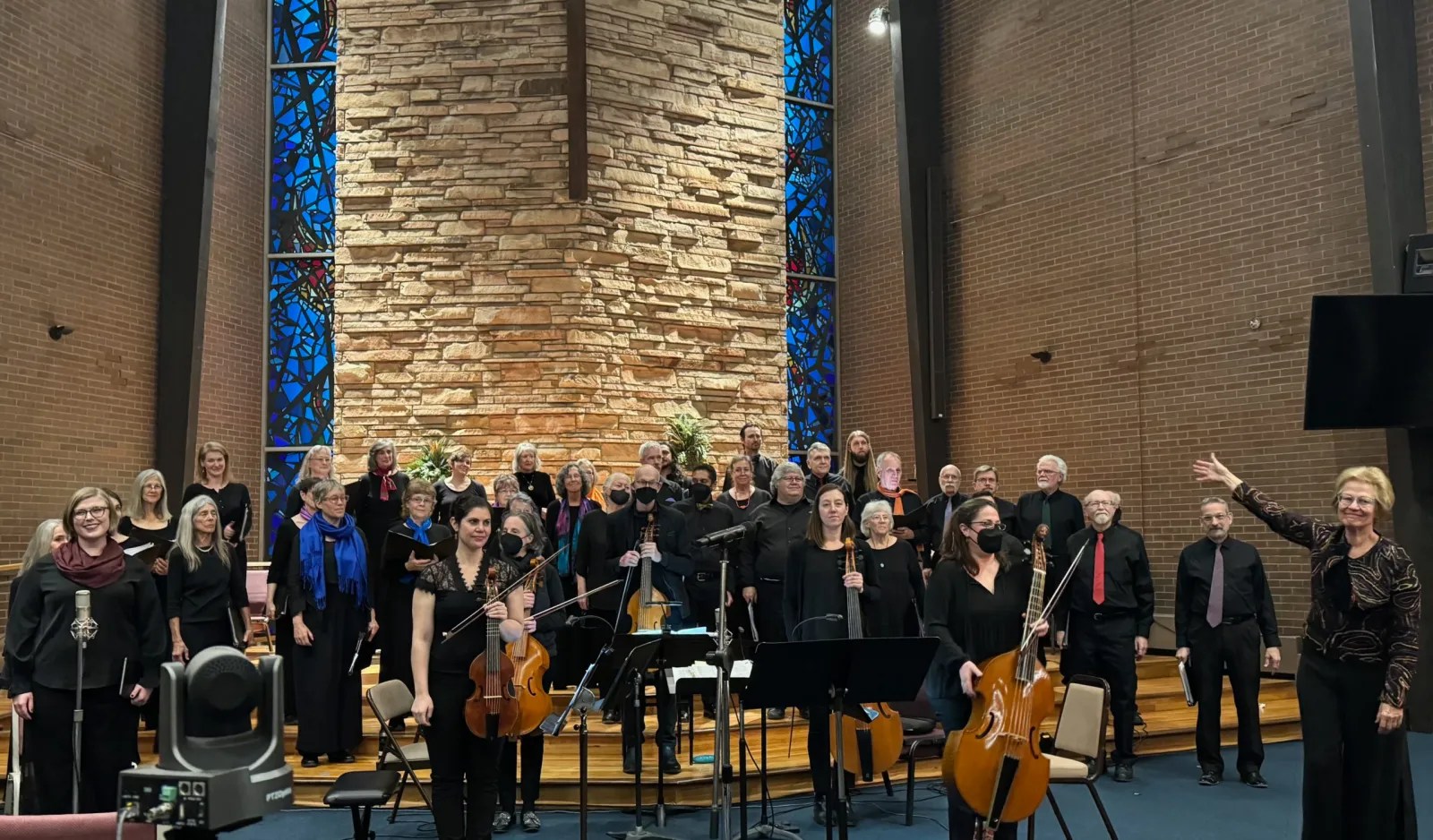
The concert, titled “Embellish! Improvisation in Baroque and Jazz” (7:30 p.m. Friday in Longmont and Saturday in Golden; details below), features Baroque music by Couperin, Monteverdi and others, mixed together with jazz by Duke Ellington and Charlie Parker, and even some pops and Broadway numbers (see full program below). In addition to the Seicento choir, performers will be violin and gamba player Tina Chancey, a jazz ensemble led by bassist Mark Diamond, and Seicento apprentice artists.

The inspiration for the program comes from the fact that in the early Baroque a lot of written music was sketchy, often only a bass part and one or two melody lines. Performances could vary, much as performances of jazz standards very from one artist or combo to another. There were traditional bass lines and chord progressions for dances that were filled in differently by different composers, much as the traditional 12-bar blues can be filled in differently by different performers.

“I’ve been thinking for a long time that when you look at charts for jazz and there’s melody and chords, and when you look at a basso continuo part for keyboard (in Baroque music) and there’s a bass line and chords, those things are similar,” Browne explains. “I just kind of started going down the list of what else was similar.”

Since jazz charts and Baroque scores—especially for the early operas by Monteverdi and others—left a lot to be filled in by performers, in both cases fans of the music distinguish between different versions, or realizations, of specific pieces. Another parallel that Browne found was that rhythms are often not played exactly as they are written, but are made more “swingy,” especially for dance music.

Seicento Baroque Ensemble and conductor Evanne Browne. Photo by Emily Bowman.

In the Baroque era, there was a convention in France called “notes inegales” (unequal notes), where notes on the beat were lengthened and the notes between the beats were shortened, to make the rhythms more pointed. This is not unlike the jazz tradition of “swinging” what are written as even notes. In jazz, Browne says, “you don’t play them ‘straight.’ People would think you were crazy if you did that. It’s exactly what notes inegales are in French.

“In dance music, the need for movement is something that turns duple into triplets and makes that more universally pleasing to us as listeners or performers.”

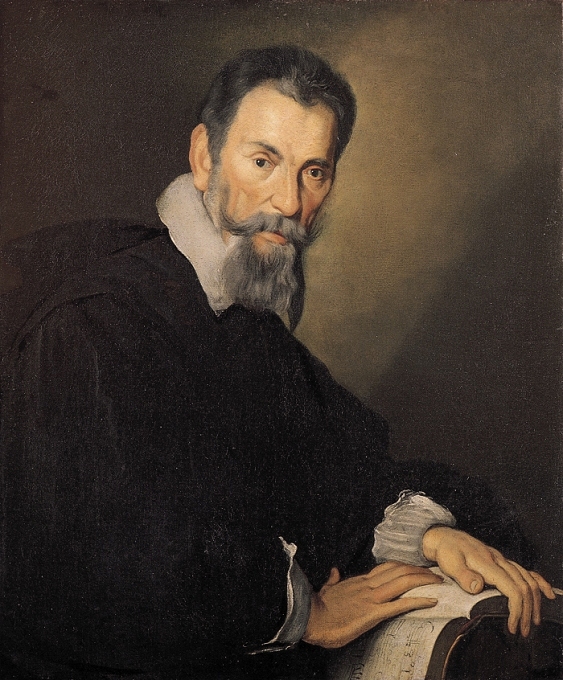
Claudio Monteverdi

As the music from the Baroque period and from jazz and popular idioms alternate on the program, there is one pairing that Browne particularly likes. “The Lamento della ninfa by Monteverdi and ‘Hit the Road, Jack’ are striking together,” she says. In Monteverdi, “we have this four-note bass line that is repeated, and this beautiful lament. Then going right into ‘Hit the Road Jack,’ it’s the same bass line—it’s interesting how that chord progression can be used expressively to emote what is being said.”

Browne has selected other pieces that demonstrate similarities in the structure of Baroque arias and jazz songs, with a slower and explanatory introduction that sets up the situation, followed by the main tune that expresses emotions. They both represent turning points in music, one the rise of dramatic music and opera in early 16th century Italy, and the other the rise of jazz and widely available popular dance music recordings in early 20th-century America.

In addition to examples that have a serious point to make, Browne also selected some parings on the program just because they are fun. Among the latter would be Monteverdi’s duet Bel Pastor dalcui bel guardo (Beautiful shepherd from whose beautiful gaze), which is a conversation between a shepherdess who keeps asking a shepherd if he really loves her, and that is paired with a song from Fiddler on the Roof where Tevye asks his wife Golde, “Do you love me?”

“So here’s these two (pieces)—we haven’t recovered from two centuries of learning about humanity,” Browne says. “We’re still insecure in love! So I thought that was a fun one.”

In fact, the word Browne uses most in describing the program is fun. “It’s a fun program,” she says. more than once.

“I think the audience will be laughing and tapping their toes.”

# # # # #

“Embellish! Improvisation in Baroque and Jazz”
Seicento Baroque Ensemble, Evanne Browne, director
With Tina Chancey, viola da gamba and violin, and jazz ensemble led by Mark Diamond

  • Louis Couperin: Prélude non mesuré (Unmeasured prelude)
  • Billy Strayhorn and Duke Ellington: “Take the A Train” (arr. Gordon Prugh)
  • Marin Marais: Fantasie from the Suite in A minor, Book III
  • Anon: Madre, non mi far monaca (Mother, don’t make me a nun)
  • Giralamo Frescobaldi: Missa sopra Aria della Monaca, Kyrie (Mass on La monaca)
  • Thomas “Fats” Waller: “Honeysuckle Rose”
  • Charlie Parker: “Scrapple from the Apple”
  • Frescobaldi: Così mi disprezzate (So you despise me?)
  • Diego Ortiz: Recercada segunda (Second ricrercar)
  • Claudio Monteverdi: Lamento della ninfa (The nymph’s lament)
  • Percy Mayfield: “Hit the Road, Jack”
  • Monteverdi: Come dolce oggi l’auretta (How sweet is the breeze today)
  • Don Raye and Hughie Prince” “Boogie Woogie Bugle Boy”
  • Monteverdi: Si dolce è’l tormento (The torment is so sweet) (choir, solo and jazz)
    —Bel Pastor dalcui bel guardo (Beautiful shepherd from whose beautiful gaze)
  • Jerry Bock: “Do You love me?” from Fiddler on the Roof
  • Jimmy McHugh: “On the Sunny Side of the Street”

7:30 p.m. Friday, March 1
First Congregational Church, Longmont

 7:30 p.m. Saturday March 2
Calvary Church, Golden

TICKETS  

NOTE: The spelling of conductor Evanne Browne’s name was corrected 2/28. The correct spelling of her last name is Browne.

Alison Moritz appointed artistic director of Central City Opera

An experienced stage director, Moritz will direct one production per season

By Peter Alexander Feb. 20 at 6:10 p.m.

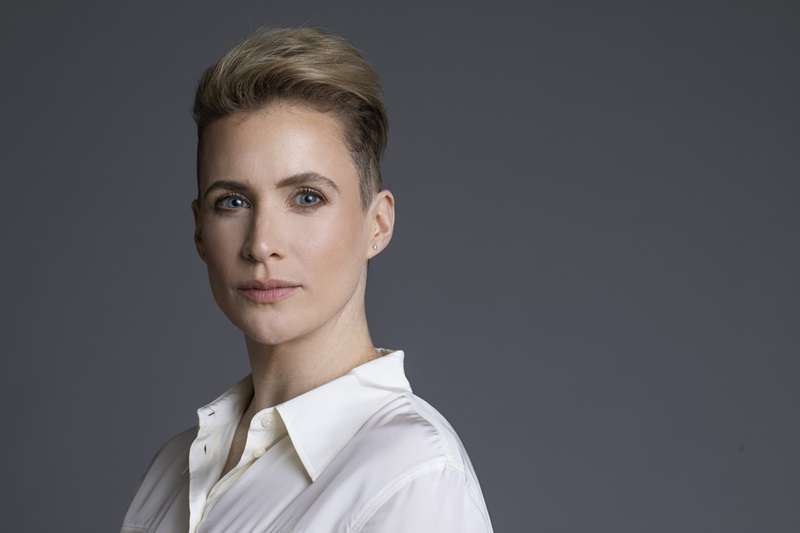
The Central City Opera has announced the appointment of the accomplished stage director Alison Moritz as their new artistic director.

Alison Moritz

Moritz was selected after a national search led by Jonathan West, on behalf of Management Consultants for the Arts and CCO’s volunteer search committee, chaired by Joshua Navarro from the CCO board of directors. The position had been open since the summer of 2023.

In a written announcement, Moritz commented “I am deeply honored to join Central City Opera as the new artistic director. My previous experiences with the company have been incredibly rewarding, and I am excited to build upon that foundation as we embark on this new chapter together.”

CCO president and CEO Scott Finlay stated, “I’m thrilled to welcome Alison Moritz to Central City Opera as our new Artistic Director! Her talent and vision align perfectly with our goals, and I couldn’t be more excited to have her on board.”

Moritz has previously appeared as stage director at CCO, including the 2019 production of Puccini’s Madama Butterfly. As AD she will oversee the company’s artistic and production staff for the upcoming 2024 Festival (June 29–Aug. 4; see the CCO Web page for more information), and will direct one production per season starting with the 2025 Festival. 

Moritz’s recent productions have been described as “enchantingly cheeky” (Washington Post), “elegantly sexy” and “raw, funny, surreal, and disarmingly human” (Opera News). She has recently directed productions for Washington National Opera, Lyric Opera of Kansas City, the Glimmerglass Festival, Opera Omaha, Ravinia, Tanglewood, Bard Music Festival, and Portland Opera. Previous engagements have been on the directing staffs at Santa Fe Opera, Seattle Opera, Opera Theatre of St. Louis, Minnesota Opera, Atlanta Opera, and Wolf Trap Opera.

Moritz succeeds former AD Pamela Pantos, who was released from the position in July 2023, and Pelham (Pat) Pearce, who had been AD for 26 years when he left the post in 2022.

Opera Colorado to present Wagner’s ‘Flying Dutchman’

Legendary ghost ship will sail into Denver Feb. 24, for four performances

By Peter Alexander Feb. 20 at 5:30 p.m.

Never mind the forecast; there will be stormy seas in Denver the end of February and early March.

At least there will be on the stage of the Ellie Caulkins Opera House, where Opera Colorado will present Richard Wagner’s Fliegende Holländer (Flying Dutchman) for a total of four performances opening Feb. 24 (7:30 pm. Saturday; subsequent performances Feb. 27, March 1 and 3 are listed below). Performances under the musical direction of Ari Pelto will feature Norwegian baritone Olafur Sigurdarson in the title role and American soprano Marcy Stonikas as Senta.

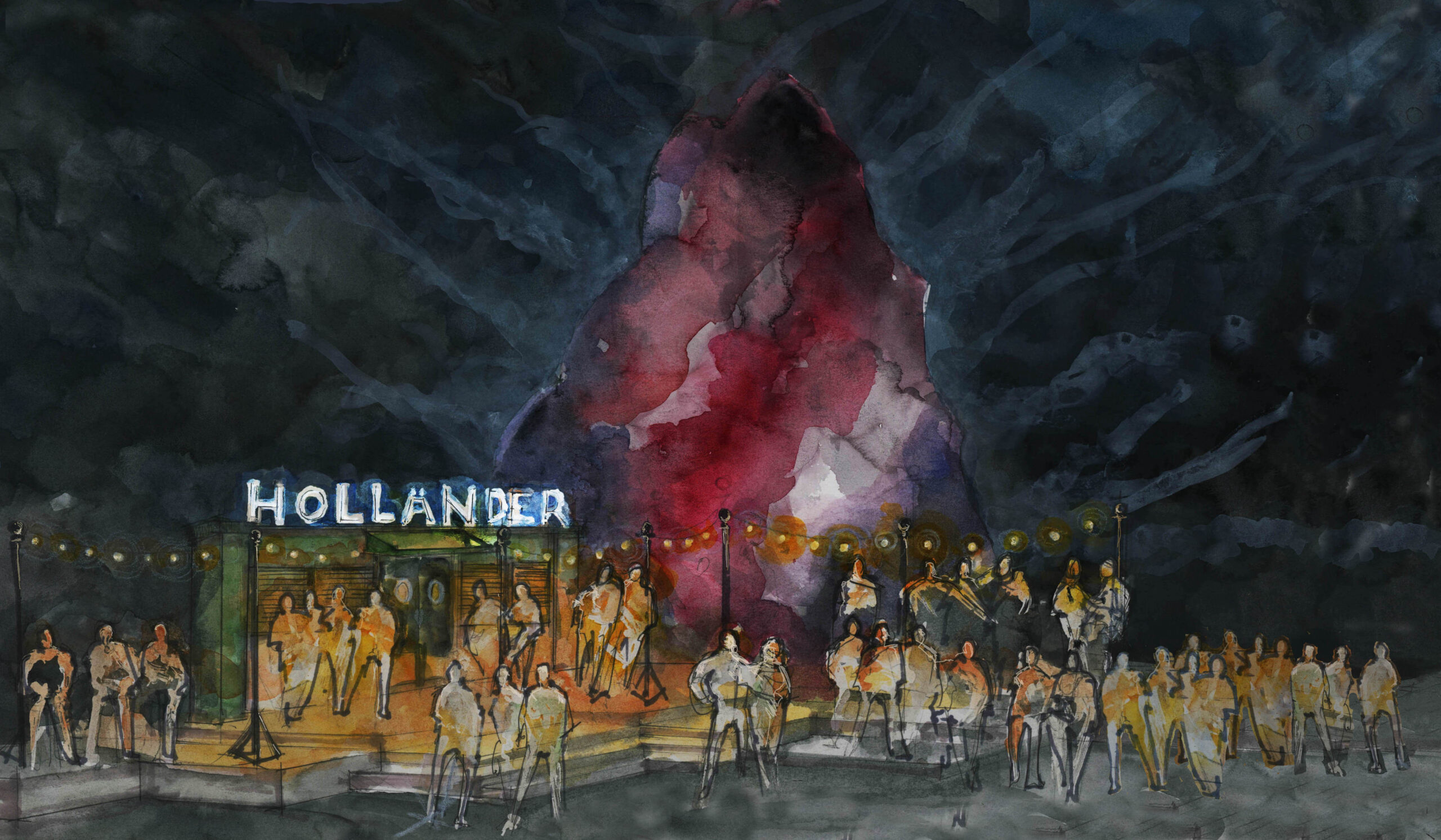
Color sketch of Opera Colorado production of Fliegende Holländer. Courtesy of Opera Colorado.

Wagner wrote The Flying Dutchman in 1840 and ’41 while he was living in Paris. He wrote the text, based on a story by Heinrich Heine, and the music, setting a pattern that he would follow in his subsequent music dramas. Afterwards he wrote to his friends, “From here begins my career as poet, and my farewell to the mere concoctor of opera-texts.”

The 1843 premiere in Dresden was conducted by Wagner himself. Modestly successful at the first performance, The Flying Dutchman is generally regarded as Wagner’s first mature work. It is considered an opera, while his later works are classified as music dramas, a more thorough synthesis of music, text, setting and other dramatic elements.

Fliegende Holländer set under construction. Courtesy of Opera Colorado.

The opera enacts the tale of a ship’s captain who is condemned to sail the seas for eternity, until he is redeemed by the love of a woman. Allowed to land only once every seven years, the Dutchman encounters an avaricious Norwegian sea captain, Daland, and his dreamy daughter Senta, who has long been fascinated by a portrait of the Dutchman hanging in her home. For different reasons, both are eager to make the wealthy Dutchman part of the family through marriage, and in the end Senta makes the ultimate sacrifice, freeing the Dutchman from his curse.

The music that opens the opera was inspired by a stormy voyage Wagner had taken from Riga to London. This powerful opening has made the Overture to The Flying Dutchman a popular staple of the orchestral repertoire.

Opera Colorado has assembled an appealing cast for their production. Sigudarson has sung Wagner roles at Bayreuth and the Metropolitan Opera, among other houses, and other major roles throughout Europe. Stonikas has won several vocal competitions and sung leading roles at Seattle Opera. Cast as Daland, bass Harold Wilson has extensive Metropolitan Opera roles to his credit, and sang at Deutsche Opera Berlin for five seasons. Another Met veteran, Chad Shelton takes the leading tenor role of Erik.

# # # # #

Opera Colorado, Ari Pelto, conductor
Kathleen Smith Belcher, stage director; Alan E. Muraoka, set designer

  • Richard Wagner: Der fliegende Holländer (The Flying Dutchman)

7:30 p.m. Saturday, Feb. 24, Tuesday, Feb, 27, and Friday, March 1
2 p.m. Sunday, March 3
Ellie Caulkins Opera House, Denver Performing Arts Complex

Sung in German with English and Spanish subtitles at each seat.

TICKETS

Quartet named for a national park in Canada will perform Sunday and Monday at CU

Jasper Quartet will play lyrical pieces by Dvorak, Schumann and Grażyna Bacewicz

By Peter Alexander Feb. 15 at 4:30 p.m.

The Takács Quartet concert series will feature a guest ensemble Sunday and Monday (4 p.m. Feb. 18 and 7 :30 p.m. Feb. 19; details below) that is named for a place none of them have ever visited.

Jasper String Quartet

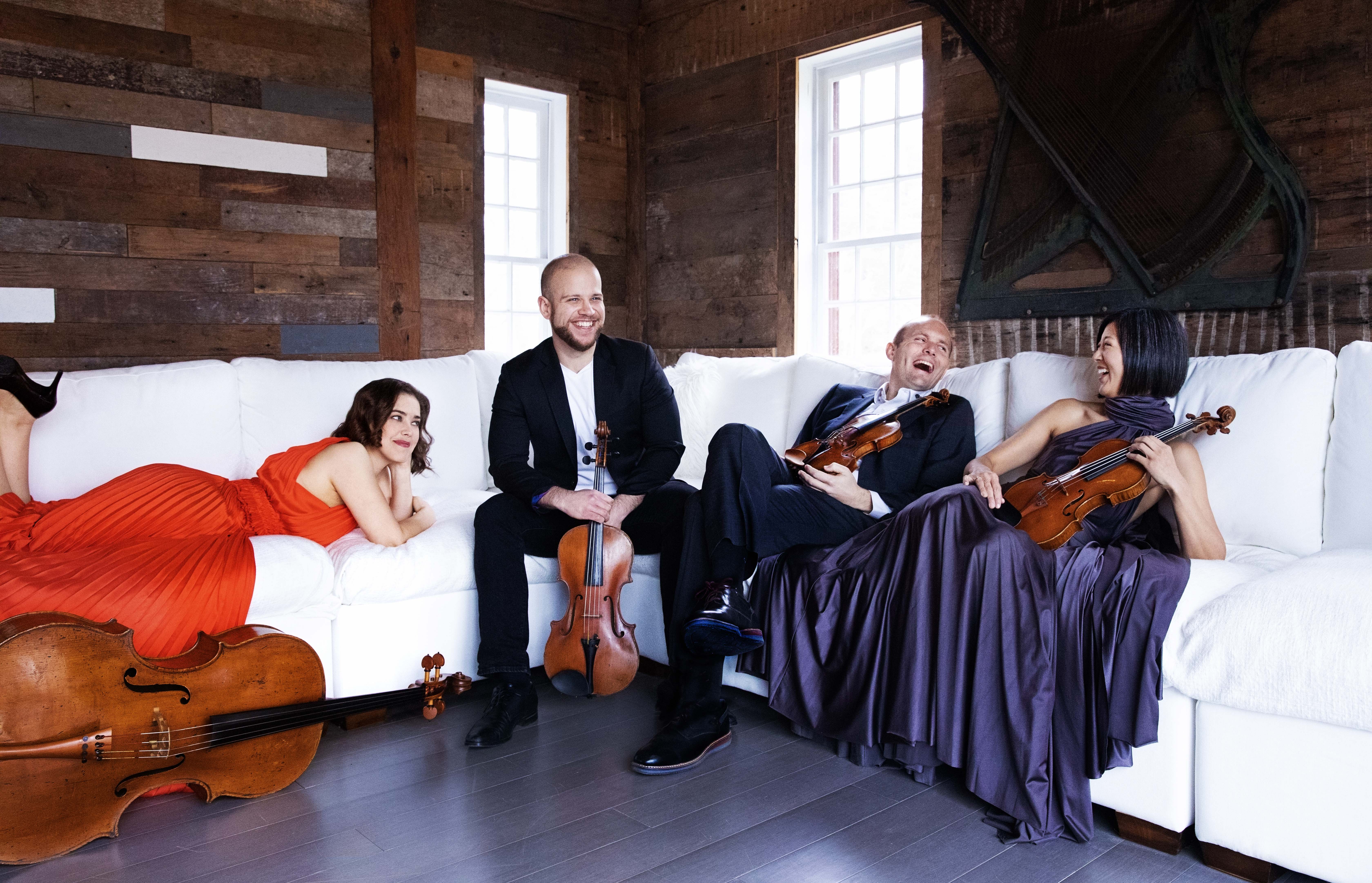
The Jasper String Quartet is named for the national park in Canada that they have only seen in photos—and a poster in at least one of their homes. “When we started the quartet it was quite difficult to think of a good name,” explains cellist Rachel Henderson Freivogel.

Spirit Island in Jasper National Park, Canada, the most celebrated view in the park. Photo by Peter Alexander

“We thought about things that we really liked to do, and one was being outside in a beautiful place. Our violist at the time said ‘What about Jasper? That’s a really beautiful place!’ And we loved the name, and we wanted to evoke natural beauty. It was easy to pronounce and just felt right to us. The closest we have been is Banff (about 180 miles south of Jasper)—although we do have a big poster of Jasper in my house.”

It is likely they haven’t had time to get to the Canadian park because they are too busy with their music. The professional quartet-in-residence at Temple University’s Center for Gifted Young Musicians, they have released eight albums. Earlier they were graduate quartet-in-residence at Rice University and Yale University with the Tokyo String Quartet, they have won top prizes and numerous chamber music competitions, and were the first ensemble chosen for Yale School of Music’s Horatio Parker Memorial Prize. They are currently in the eighth season of Jasper Chamber Concerts, a performance series founded by the quartet that is currently live-streamed from Philadelphia.

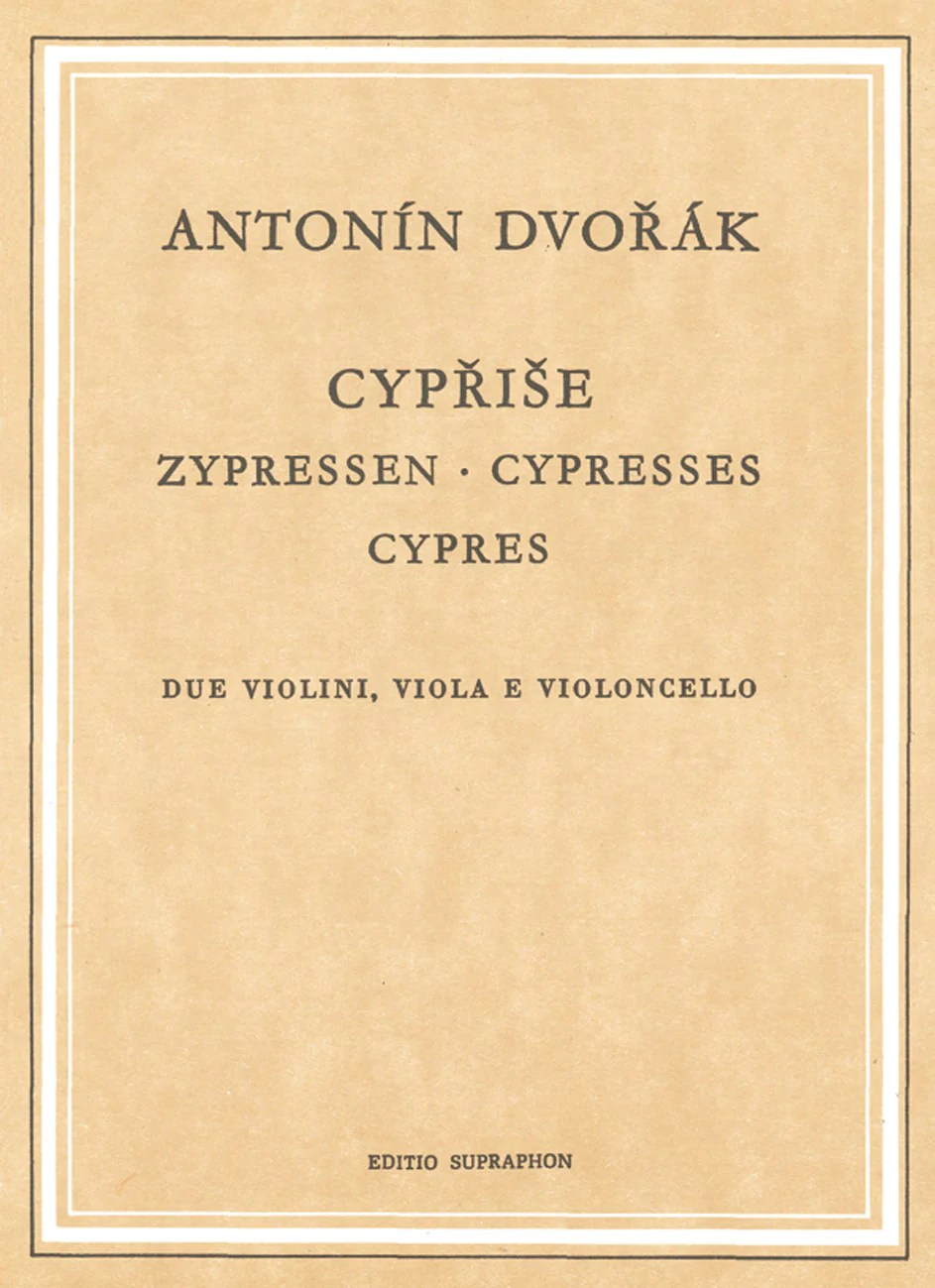
Their program in Boulder exemplifies the Jasper Quartet’s creative approach to programming. It opens with selections from Dvořák’s Cypresses, a set of love songs that the composer set for string quartet. That will be followed by the Quartet No. 4 by the Lithuanian/Polish composer Grażyna Bacewicz, and Schumann’s Quartet No. 1 in A minor.

This specific program evolved from the idea of a concert centered on lyricism, or an expression of love in music. “The Cypresses fit very well into that, since they’re settings of love songs,” Freivogel says. “The Bacewicz string quartet is based somewhat on folk tunes. The second  movement is incredibly lyrical, and I think there’s love there, also. And the third movement [of Schumann’s quartet] is just a beautiful love song.

“We try to pick pieces that really speak to each other in an interesting way. And [these pieces] all work together really well.”

Dvořák arranged 12 out of 18 songs in the original Cypresses cycle for string quartet. Of those 12, the Jasper will play six movements. “It made sense for us to play six of them because of the length of the other pieces,” Freivogel says. “We wanted to create a set that went together and had some contrast in it, because all of them are very, very beautiful. The ones that we selected have a natural flow. Some are very smooth and slow, and others are more exciting.”

Grażyna Bacewicz

Bacewicz is likely the least known composer on the program. “We’ve been wanting to play her music for quite a long time,” Freivogel says. “This is the first program that we constructed with her music, but we would really like to play more of it.

“The first quartet is a piece that our quartet teaches a lot. We got to know this piece by working on it with some great students, and really loved the piece and wanted to play it. It’s very approachable, and there’s a lot of lyricism in the first and second movements. And then the third movement is a very exciting kind of neo-classic dance that goes and goes.”

Schumann wrote three string quartets in 1841–42, a time when he was devoting himself to writing chamber music. The Op. 41 set of three quartets was dedicated to Mendelssohn, but was given as a birthday present to Schumann’s wife, Clara.

“In addition to the slow movement—and I speak for the quartet—I just love Schumann’s style of writing and the beauty in it,” Freivogel says. “You can hear in the first movement how the conversation flows around the quartet. It’s done in such a beautiful way. And seeing it live in person, there’s an energy in the room. You see how we are communicating with each other and having this conversation, and the language is about human feelings.

“I think that that comes through in a joyful and wonderful way.”

# # # # #

Jasper String Quartet
J Freivogel and Karen Kim, violins; Andrew Gonzalez, viola; and Rachel Henderson Freivogel, cello

  • Dvořák: Selections from Cypresses
    I. “I Know that on My Love to Thee”
    II. “Death Reigns in Many a Human Breast”
    III. “When Thy Sweet Glances Fall on Me”
    IX. “Thou Only, Dear One”
    XI. “Nature Lies Peaceful in Slumber and Dreaming” 
    XII. “You Ask Why My Songs”
  • Grażyna Bacewicz: String Quartet No. 4 (1951)
  • Schumann: String Quartet No. 1 in A minor, op. 41 no. 1

4 p.m., Sunday, Feb. 18 and 7:30 p.m., Monday, Feb. 19
Grusin Music Hall

In-person and streaming tickets HERE

Grace Notes: Chamber Music in Boulder, Tchaikovsky in Boulder and Longmont

Piano trios, Tchaikovsky 5 and two Romantic piano concertos on programs

By Peter Alexander Feb. 13 at 2:38 p.m.

The Boulder Symphony will be the first of two area orchestras to perform Tchaikovsky’s Fifth Symphony this weekend, as part of a program Friday and Saturday (Feb. 16 and 17; details below) that also features Rachmaninoff’s Third Piano Concerto played by Chinese pianist Jialin Yao.

The program opens with Conga del Fuego Nuevo (“New fire” conga) by Mexican composer Arturo Marquez. The son of a Mexican mariachi musician, Marquez studied in Mexico and the United States, where he earned an MFA in composition at the California Institute of Fine Arts. A Cuban carnival dance, the conga was the source of the “conga line” made popular in the U.S. by Xavier Cougat and other bandleaders.

Jialin Yao

Currently a student at the Juilliard School of Music, Yao won the 2023 International Keyboard Odyssiad® and Festival Competition. Boulder Symphony’s conductor, Devin Patrick Hughes, was quoted in the concert press release: “Jialin is a rockstar! He plays the Rachmaninoff 3 . . .  with ease, soulfulness, and a virtuosity that rivals any of the great pianists.”

Rachmaninoff wrote his Third Piano Concerto, considered one of the most virtuosic and challenging piano concertos, in 1909 and played the first performance in New York later that year. The initial reception was mixed at best, but Rachmaninoff gave a more successful second performance the following January conducted by Gustav Mahler. Today the concerto is widely accepted as one of the greatest and most demanding works in the piano repertoire. 

The work that audiences can hear twice this weekend, Tchaikovsky’s Fifth Symphony, was composed over the summer of 1888. In spite of powerful emotional currents, the composer did not give the symphony any program or explicit personal meaning. After the first performances, he wrote in a letter “I have come to the conclusion that [the symphony] is a failure. There is something repellent in it . . . which the public instinctively recognizes.”

In spite of that conclusion, the Fifth Symphony has become on of Tchaikovsky’s most performed orchestra works. The coincidence of two performances, by two different orchestras on the front range in a single weekend, is an indication of how successful the symphony has been with both conductors and audiences. 

The Boulder Symphony will also play the Symphony on Sunday as part of its GLOW Project, free concerts designed for people with dementia, neurological and developmental disabilities. That performance will consist of only the symphony, played with no intermission and lasting approximately 45 minutes. 

* * * * *

Boulder Symphony, Devin Patrick Hughes, conductor
With Jialin Yao, piano

  • Arturo Marquez: Conga del Fuego Nuevo (“New fire” conga)
  • Rachmaninoff: Piano Concerto No. 3 in D minor
  • Tchaikovsky: Symphony No. 5 in E minor

7:30 p.m. Friday and Saturday, Feb. 16 and 17
Gordon Gamm Auditorium, Dairy Arts Center

TICKETS

GLOW Concert
Boulder Symphony, Devin Patrick Hughes, conductor

  • Tchaikovsky: Symphony No. 5 in E minor

2 p.m. Sunday, Feb. 18
Gordon Gamm Auditorium, Dairy Arts Center

REGISTRATION

* * * * *

The weekend’s second performance of Tchaikovsky’s Fifth Symphony will be provided by the Longmont Symphony (LSO)and conductor Elliot Moore (7 p.m. Saturday, Feb. 17; details below).

The program, which includes Tchaikovsky’s Fantasy Overture Romeo and Juliet and the Piano Concerto No. 1 in B-flat minor played by Marika Bournaki, is billed as “Portrait of a Composer.” This is an annual series for the LSO and Moore, providing an opportunity to focus on the life and works of a single composer who is part of the orchestral tradition.

Marika Bournaki

Bournaki teaches piano as a faculty member of Shenandoah University in Winchester, Va. She was born in Montreal—leading to her being dubbed “the Celine Dion of classical”—and received bachelor’s and master’s degrees from the Juilliard School of Music. She was the subject of an award-winning documentary film, “I Am Not a Rockstar,” that covered her musical studies, staring when she was 12 and first took lessons at Juilliard, through the age of 20.

She has performed extensively with regional orchestras in the United States and Canada as well as in Switzerland, Russia and Romania. She is also an active chamber musician who has performed at Bargemusic in Brooklyn and the Cape Cod music festival, among other venues. Her educational activities have included programs that bring music to underserved populations in Canada.

Tchaikovsky’s First Piano Concerto had its premiere in 1875 in Boston played by Hans von Bülow. Nikolai Rubinstein, for whom it had been written, was first critical of the piece leading to the first performance being given outside of Russia. Rubinstein later changed his mind about the concerto, and performed it widely. 

Today it is one of the most popular piano concertos. In addition to frequent appearances on orchestral programs, it was used as the sporting anthem for the Russian Olympic Committee at the Beijing Winter Olympics in 2022, during the time that Russian athletes were banned from appearing under the Russian national flag. American pianist Van Cliburn famously won the 1958 Tchaikovsky Competition in Moscow playing the concerto.

Almost as popular as the Piano Concerto, Tchaikovsky’s Romeo and Juliet is one of several works by the composer inspired by Shakespeare. After a stormy beginning, the music breaks into a soaring love theme that has been used in films and television, from The Three Musketeers to SpongeBob SquarePants

The concert concludes with the Fifth Symphony, one of four by two different organizations over the weekend—yet another testament to Tchaikovsky’s place in the orchestral repertoire and in the hearts of audiences.

* * * * *

Tchaikovsky: A Portrait
Longmont Symphony Orchestra, Elliot Moore, conductor
With Marika Bournaki, piano

  • Tchaikovsky: Romeo and Juliet Fantasy-Overture
    Piano Concerto No. 1 in B-flat minor
    —Symphony No. 5 in E minor

7 p.m. Saturday, Feb. 17
Vance Brand Civic Auditorium

TICKETS

* * * * *

The Boulder Chamber Orchestra (BCO) will present their current artist-in-residence, pianist Hsing-Ay Hsu, in a program of piano trios, played with members of the orchestra.

The concert, Saturday at 7:30 p.m. (Feb. 17; details below), is the third in the BCO’s series of mini-chamber concerts of the 2023–24 concert season. The fourth mini-chamber concert, featuring works including trios for clarinet, cello and piano, will be at 7:30 pm. April 6. (See the BCO Web Page for details.)

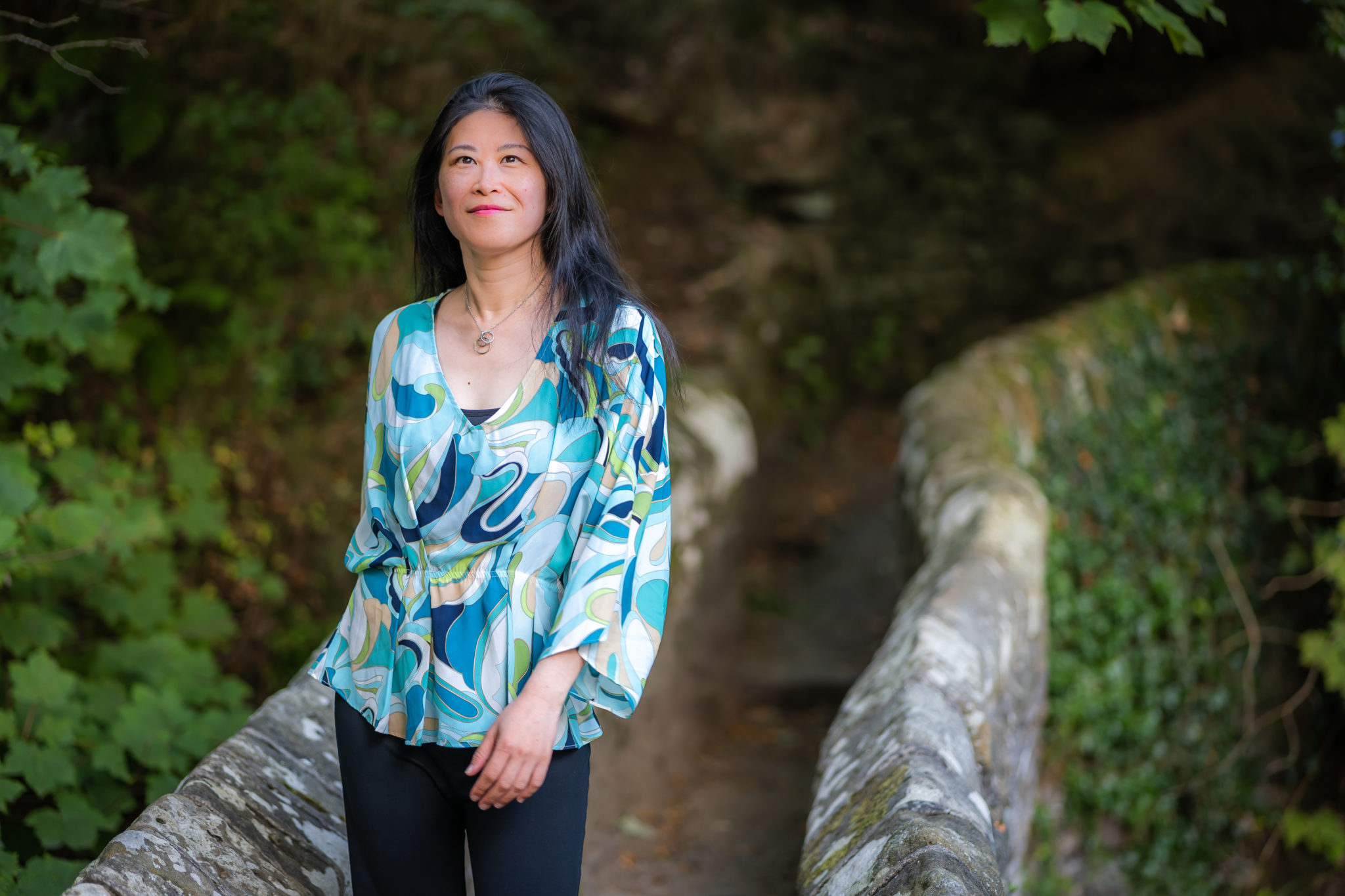
Hsing-Ay Hsu

Born in China, Hsu has studied at Juilliard, the Yale School of Music, the Ravinia Steans Music Institute, and the Aspen and Tanglewood festivals. A Steinway artist, she won the silver medal of the William Kapell International Piano Competition and first prize of the Ima Hogg National Competition, as well as several artist grants and fellowships. She taught at the CU College of Music, where she was artistic director of the Pendulum New Music Series.

The piano trio emerged as a distinct genre out of domestic music-making in the early classical era, when it was known as an “accompanied piano sonata.” Originally, the piano part was written for women, who were thought to have time for practice, with men—who were not expected to master instruments—playing violin and cello parts to reinforce the melody and bass line of the piano part. 

It was Mozart who first created piano trios with three equal parts, starting around 1780, followed by Beethoven. By the time that Brahms wrote his second and third piano trios, in the late 19th century, it had become a recognized chamber music genre.

* * * * *

Mini-Chamber Concert 3: Triptych of Trios
Hsing-Ay Hsu, piano, and members of the BCO

  • J.S. Bach: Trio Sonata in G major, S1039 (arr. from trio sonata for two flutes and continuo)
  • Mozart: Piano Trio in G major, K564
  • Brahms: Piano Trio No. 3 in C minor, op. 101

7:30 p.m. Saturday, Feb. 17
Boulder Seventh-Day Adventist Church, 345 Mapleton Avenue

TICKETS

NOTE: Corrections were made on Feb. 13, clarifying details of the performances and correcting typos in the original story.

Boulder Phil presents “The Best of Boulder”

Cellist David Requiro, oboists Sarah Bierhaus and Max Soto featured Sunday

By Peter Alexander Feb. 8 at 8:10 p.m.

The Boulder Philharmonic Orchestra often brings renowned soloists to Macky Auditorium.

In recent years, their guests have included pianists Angela Cheng, Simone Dinnerstein and Garrick Ohlsson; violinists Rachel Barton Pine, Anne Akiko Meyers and Hilary Hahn; cellists Astrid Schween and Zuill Bailey; and the Marcus Roberts Trio. Local artists have not been ignored—the late concertmaster Charles Wetherbee was a repeat soloist, and Grammy-winning violist, CU faculty and Takács Quartet member Richard O’Neill played with the orchestra in 2022.

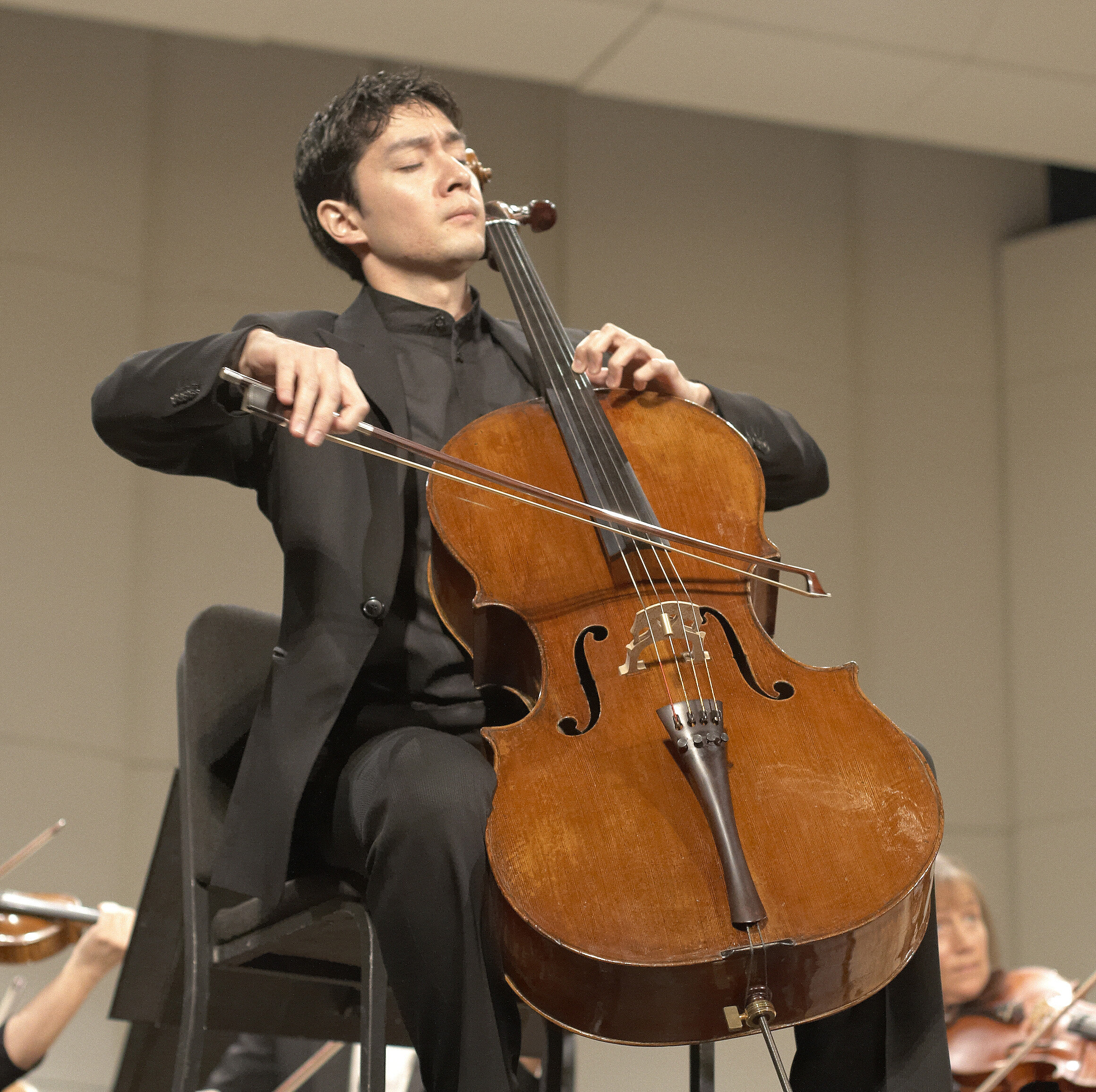
Cellist David Requiro

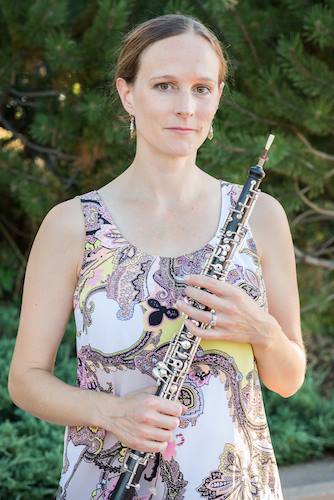
But now conductor Michael Butterman and the orchestra have devoted their next concert to presenting local artists as soloists. Under the title “The Best of Boulder,” the performance at 7 p.m. Sunday (Feb. 11 in Macky Auditorium; details below) will feature cellist David Requiro from the CU College of Music playing Tchaikovsky’s Variations on a Rococo Theme; and oboists Sarah Bierhaus—the Phil’s principle oboist—and Max Soto in composer Viet Cuong’s Extra(ordinarily) Fancy. 

Other works on the program are Caroline Shaw’s Entr’acte as the opener, and Mozart’s “Jupiter” Symphony—his last and one of his most celebrated works—as the concert’s finale.

Sarah Bierhaus

Cuong was born in California and grew up in Georgia. He has written in program notes that Extra(ordinarily) Fancy, a concerto for two oboes and orchestra, was partly inspired by Baroque-era oboe concertos by Vivaldi and Albinoni.

Max Soto

“After a short Vivaldi-esque introduction that establishes the main melodic ideas of the piece, the oboists go at it,” he wrote. “They mock each other, squawk at each other, and even talk over each other. The orchestra observes and joins in as the oboists continually bicker back and forth, all culminating in a reconciliation where the once-hesitant oboist learns (and even enthusiastically performs) a few multiphonics [a distorted sound that produces more than one pitch] alongside the other oboist.”

Tchaikovsky drew both inspiration and comfort from Mozart. He once wrote in a letter, “I not only love Mozart, I worship him . . . It is to Mozart that I am obliged for the fact that I have dedicated my life to music.” His orchestral Suite No. 4 was written as a tribute to Mozart, and came to be known as “Mozartiana.”

Another work that shows his reverence for Mozart and the classical style is his Variations on a Rococo Theme, composed in 1876 with the assistance of cellist Wilhelm Fitzenhagen. In fact, Fitzenhagen made numerous changes in the piece, including changing the order of variations and adding details in the solo part. It was Fitzenhagen’s version that was ultimately published.

The theme is not from the Rococo period, but is one that Tchaikovsky wrote in the style of that period, roughy 1740–70 between the Baroque and Classical eras. After the theme there are seven variations (excluding one that Fitzenhagen cut out) in varying moods, but all in a graceful and loosely classical style. More genial than some of Tchaikovsky’s music, this has proven one of his most popular pieces. 

Caroline Shaw

One of the most successful composers today, Caroline Shaw became the youngest winner of the Pulitzer Prize in music in 2013, and she is a member of the Grammy-winning vocal ensemble Roomful of Teeth. Also a violinist, she has written a number of works for string quartet, including Entr’acte. Although the inspiration may not be obvious to the listener, she wrote Entr’acte after hearing one of Haydn’s quartets, and later arranged it for string orchestra. She wrote of Haydn’s quartet, “I love the way some music suddenly takes you to the other side of Alice’s looking glass, in a kind of absurd, subtle, Technicolor transition.”

Mozart wrote his last three symphonies—Nos. 39, 40 and 41—potentially for a concert series during the summer of 1788, although there is no definite evidence that the Symphony No. 41 was played at that time. By the early 19th century, it was known as the “Jupiter Symphony”—perhaps so named by the English impresario Johann Peter Salomon but definitely not by Mozart.

The four movements follow the standard classical structure of Haydn, Mozart and Beethoven. The most striking movement is the finale, a quintuple fugue that is both a vivid demonstration of the composer’s mastery of counterpoint and a brilliant ending to the symphony—and any concert.

# # # # #

“The Best of Boulder”
Boulder Philharmonic Orchestra, Michael Butterman, conductor
With David Requiro, cello; Sarah Bierhaus, oboe; and Max Soto, oboe

  • Caroline Shaw: Entr’acte
  • Viet Cuong: Extra(ordinarily) Fancy
  • Tchaikovsky: Variations on a Rococo Theme
  • Mozart: Symphony No. 41 in C major, K551 (“Jupiter)

7 p.m. Sunday, Feb. 11
Macky Auditorium

TICKETS

NOTE: A correction was made on Feb. 9. An earlier version of this story misspelled two names. It is Caroline Shaw, not Carolyn, and Wilhelm Fitzenhagen, not William Fitzhagen.