Valkyrie’s ride high in the Santa Fe air

Santa Fe Opera continues its exploration of Wagner’s music dramas

By Peter Alexander Aug. 11 at 5:35 p.m.

Editor’s Note: This is one of several posts covering four of the five operas presented this year at the Santa Fe Opera.

Die Walküre, the last of the Santa Fe Opera productions I saw this summer (Aug. 8), continues the company’s exploration of Wagner’s music dramas, following the 2022 production of Tristan und Isolde previously reviewed here

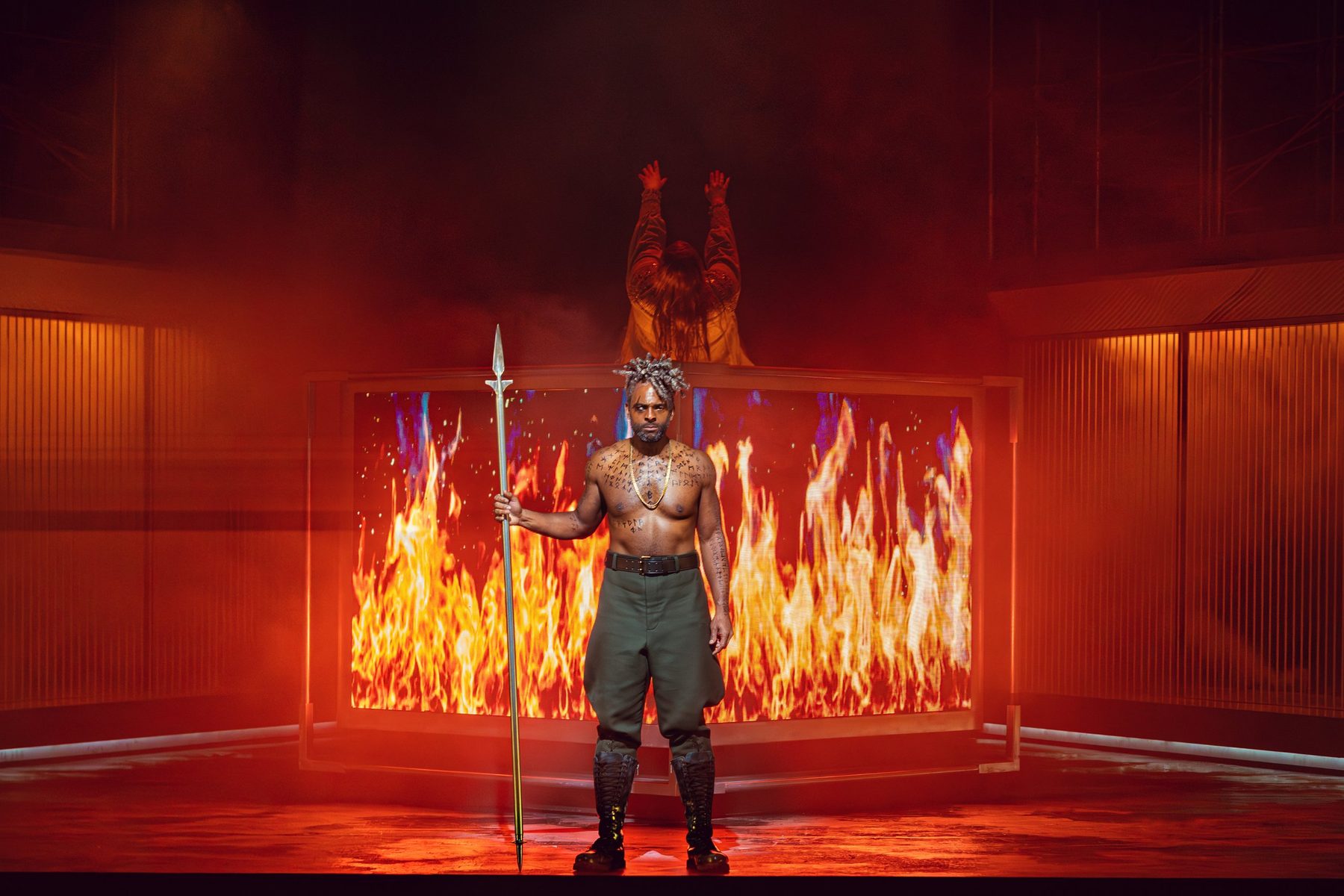
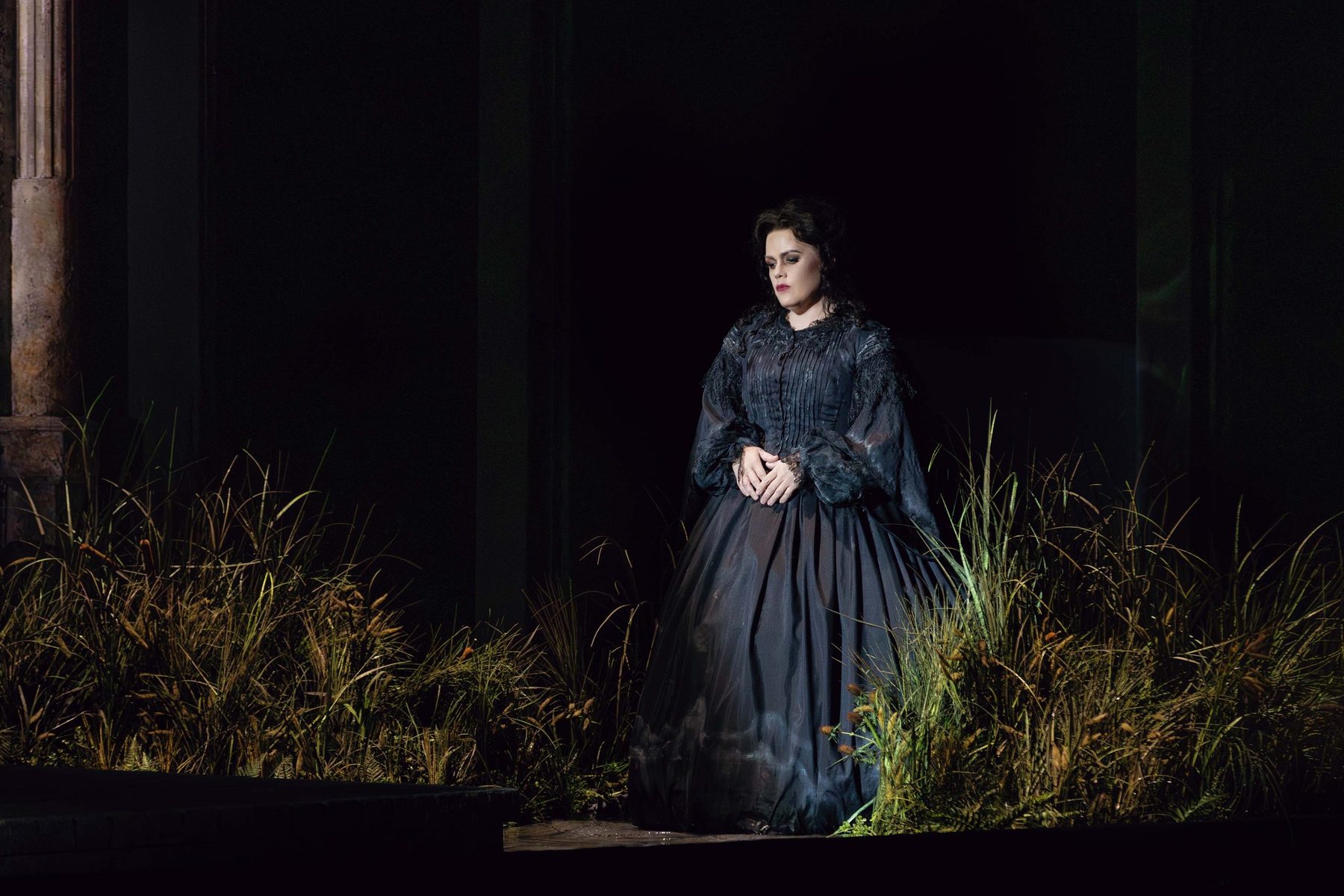
Ryan Speedo Green (Wotan); Back: Tamara Wilson (Brüunhilde); photo by Curtis Brown
for the Santa Fe Opera

The performance was marked by excellent singing, flexible but ultimately meaningless settings, and costumes that ranged from impressive to silly. The stage direction was busy, filled with ideas but no overriding concept.
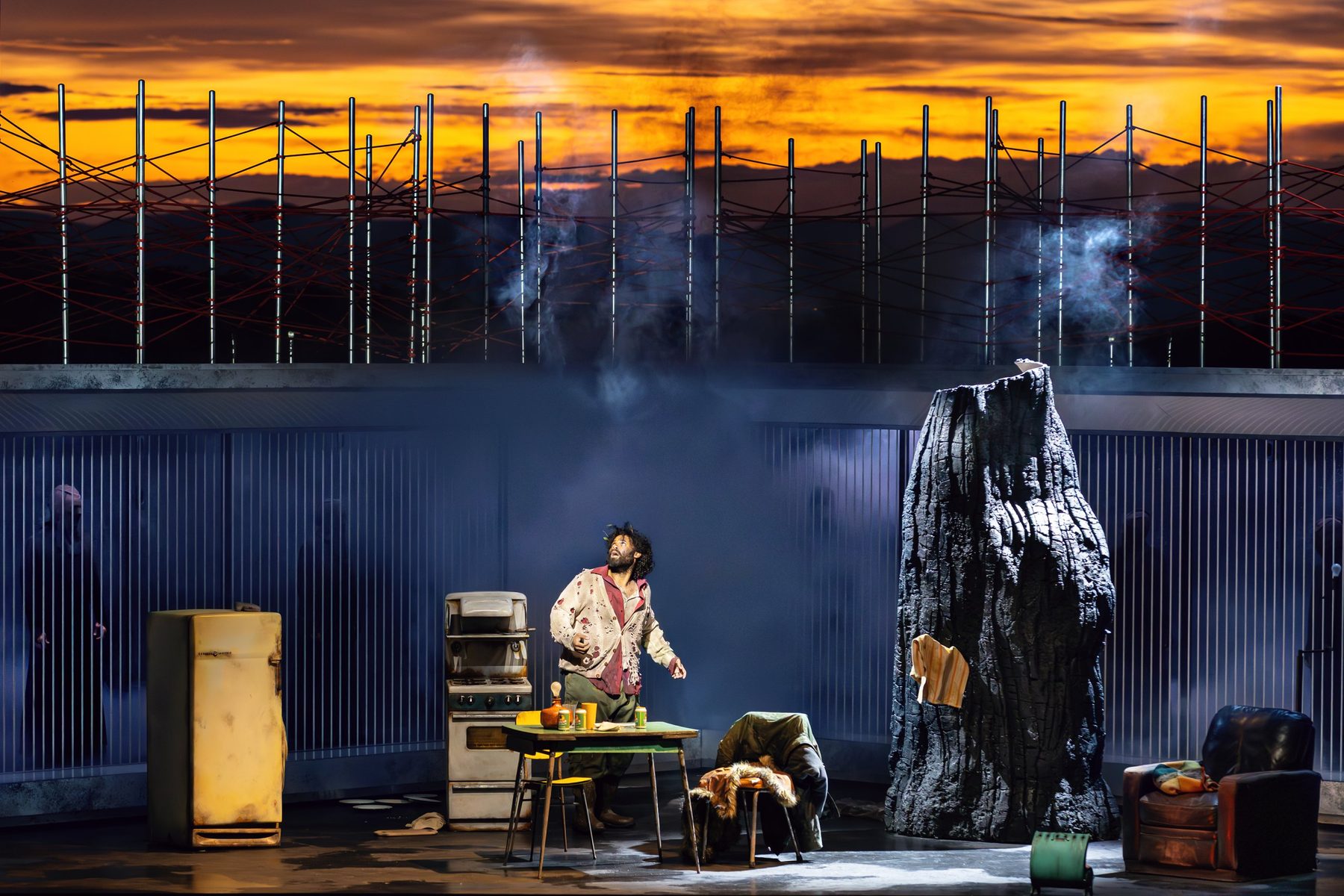
Jamez McCorkle (Siegmund); photo by Curtis Brown for the Santa Fe Opera

Many operas today are time shifted; I have reviewed several of these at Santa Fe in the past (La Traviata and Don Giovanni, Rosenkavalier and L’elisir d’amore, Tosca). Die Walküre, based in legend, has no set era, but Santa Fe’s current production proposes many different historical time slots for the story. The opening act took place in an abstract space filled with 1950s appliances, Sieglinde wore a contemporary dress, Brünnhilde was clad in generic old-norse gear, and the Valkyries wore different military uniforms from across the globe and representing the middle ages to the 20th century.
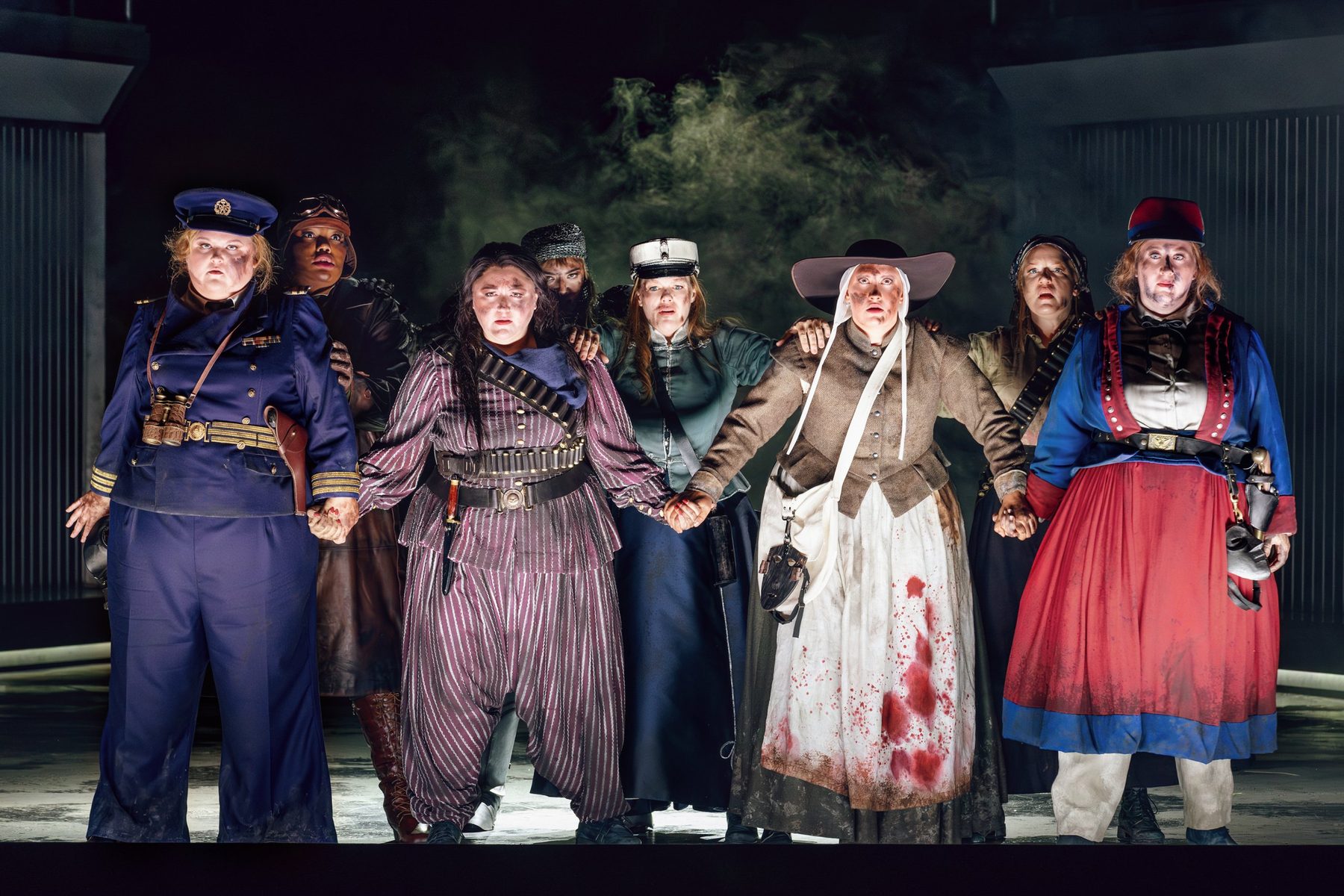
L-R: Valkyries Gretchen Krupp, Jasmin Ward, Jessica Faselt, Lauren Randolph, Wendy Bryn Harmer, Deanna Ray Eberhart, Jennifer Johnson Cano, Aubrey Odle; photo by Curtis Brown for the Santa Fe Opera

The set remained abstract throughout—two horizontal panels filled with vertical, elastic cables that characters reach and enter through, that meet mid-stage to open or close as the staging requires. These panels are topped by a walkway with a railing of entangled red ropes, a symbol used throughout to represent marriage—literal ”ties that bind”—as enforced by Fricka. The upper walkway is used by Wotan, Fricka and others, as a viewpoint on the stage action below. As a setting, this is suggestive of nothing at all.

Various non-singing characters appear throughout. There are mysterious figures in black body suits who enter and leave the stage, handle Siegmund’s sword, Brünnhilde’s shield, and move set pieces around. There are actors representing Alberich, who is referred to but not present in the plot; Grimhilde, the Gibichung who will be mother to Alberich’s son Hagen later in the story; Erda, Siegmund’s, Sieglinde’s and the Valkyries’ earth-spirit mother; and other shadowy figures from Ring mythology.
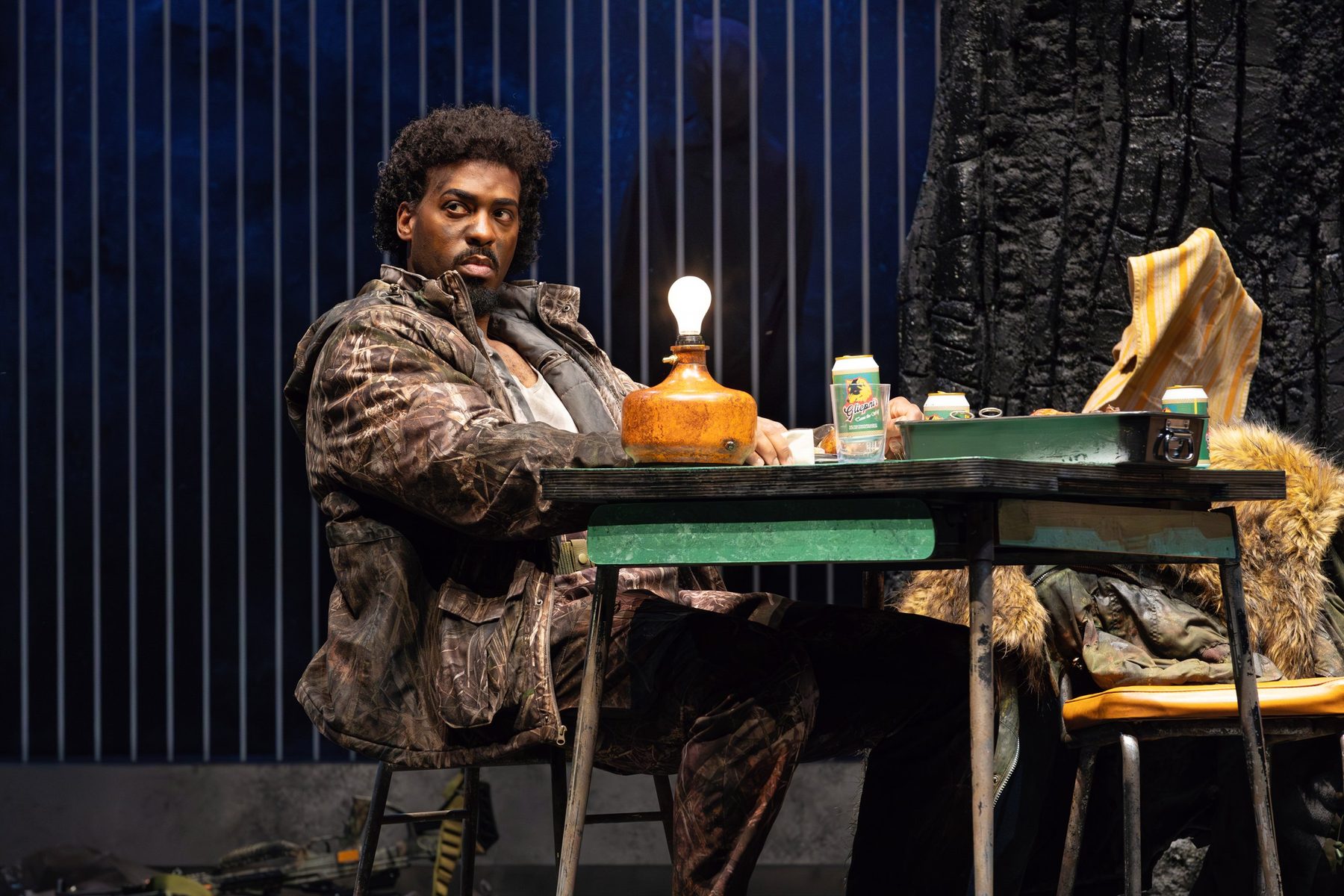
Solomon Howard (Hunding); photo by Curtis Brown for the Santa Fe Opera

None of this clarifies the plot. Clearly, director Melly Still has many ideas about how to present Die Walküre within the Ring Cycle, but her disparate ideas do not add up. At it’s core Die Walküre tells a simple story—Siegmund runs off with his sister Sieglinde and they conceive a child; Sieglinde’s betrayed husband Hunding tracks them down and kills Siegmund. 

But there is no story so simple that Wagner and stage directors cannot make it more complicated, which is what happens in Santa Fe. Wagner’s role, having written the libretto based on the Nordic myths, lies with meddling gods and magical weapons. 

The stage director takes credit for the rest, starting with the black-clad figures, who only obfuscate the plot. While the basic action is clear, one is distracted by dark figures posing mysteriously behind the elastic bands, reaching through them, entering and leaving the stage, handling props. There is broader symbolism at work, but none of this helps to tell the story of Die Walküre. Another intrusion that seemed gratuitous was Wotan’s cadre of “enforcers,” military police characters dressed like Star Wars extras or World War I impersonators.

One moment in particular stands out as a missed opportunity. The first act ends with the walls of Hunding’s hut flying open and spring bursting over the twins/lovers Sieglinde and Siegmund, blessing—as Wotan later argues to Fricka—their incestuous love. Wagner’s music is powerful, soaring and blooming. It is expressing something that needs to be shown. But in Santa Fe, the panels open up and the lovers occupy a bare space on the stage. Of spring there is not the slightest visual sign.
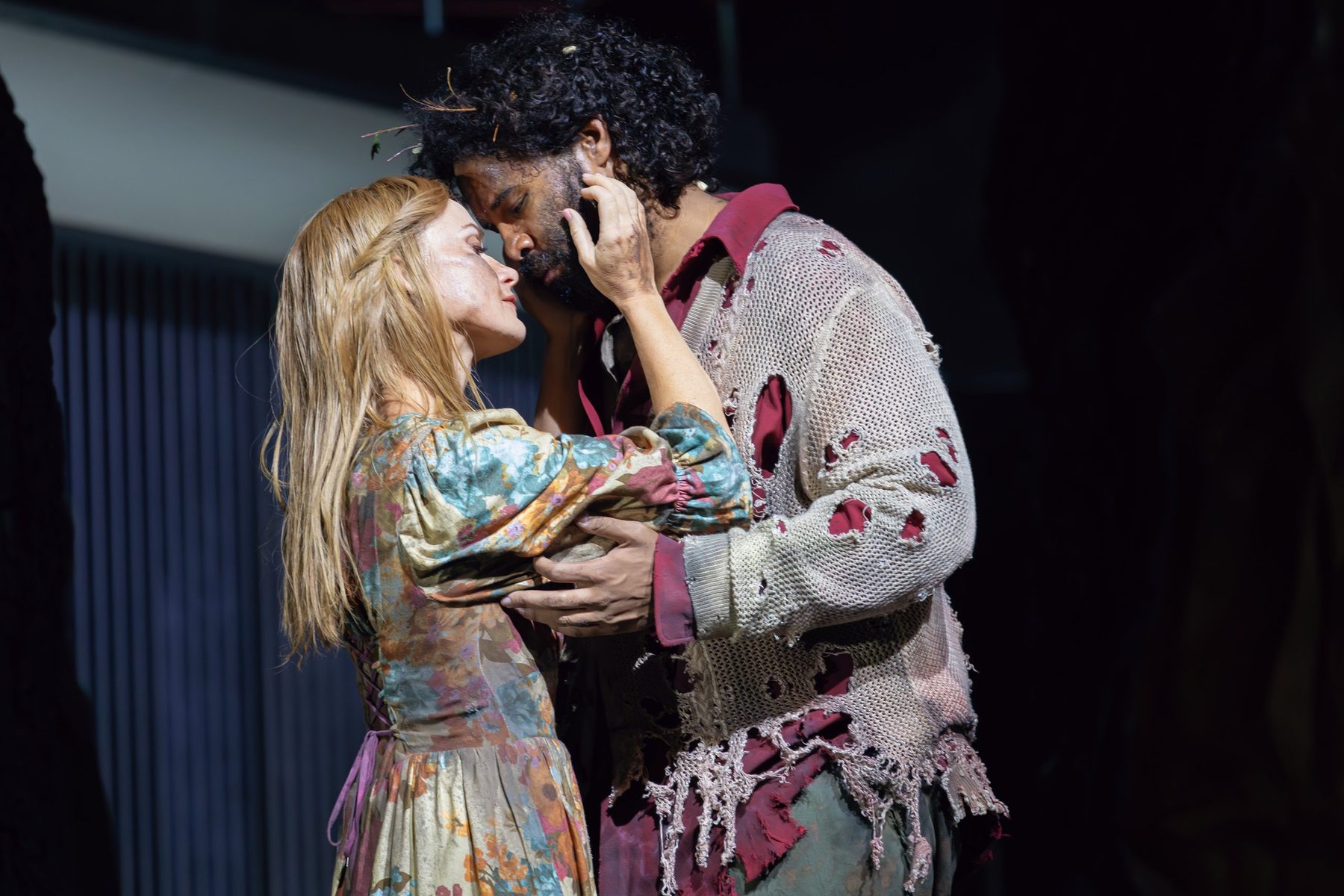
Vida Miknevičiūtė (Sieglinde), Jamez McCorkle (Siegmund); photo by Curtis Brown for the Santa Fe Opera

In the role of Siegmund, Jamez McCorkle reached all of his notes, sang with strong feeling, but allowed a slight bleat enter his voice at crucial moments. This rough edge pushed his voice out, but as often with strained Wagner singers, it did not add beauty to the sound.

Vida Miknevičiūtė portrayed a slight Sieglinde, vulnerable and frightened by her rising feelings. Although light for Wagner, her voice was precise, employed carefully, only occasionally a little wobbly. She sang forcefully through the love duet with Siegmund, rising to steely heights, and melting into her gentler moments.

As Wotan, Ryan Speedo Green was struggling with altitude, or the dry mountain air, or both. While onstage he was handed water through the elastic bands in both acts II and III, and his voice sounded worn by the end of each act. At his best, he was a gruff, confrontational Wotan, consumed by his growing anger at being caught in his own trap. He easily commanded the stage in every appearance. Whatever his struggle, it did not diminish his presence.
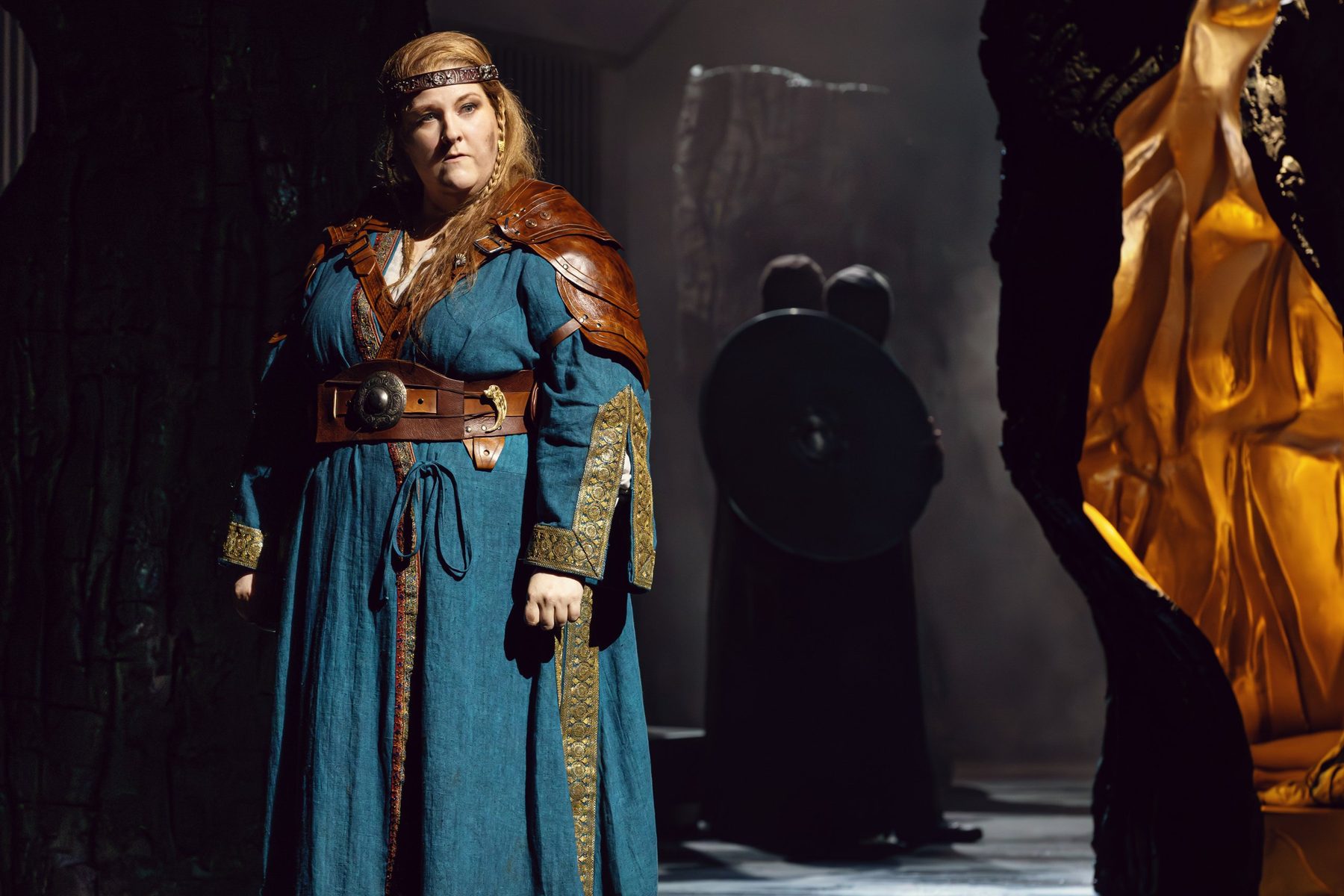
Tamara Wilson (Brüunhilde), photo by Curtis Brown for the Santa Fe Opera

Tamara Wilson’s entrance as Brünnhilde was greeted with cheers. She was a solid member of the cast, singing with force and power, if not quite dominance. Her interactions with Green’s Wotan near the end was a forceful turning point, in both the opera and for the cycle beyond Walküre

Sarah Saturnino provided a secure vocal element as Fricka. Her long Act II argument with Wotan—for me one of the most interesting portions of a long evening—was deeply engaging. Saturnino sang with genuine depth and expression.

Solomon Howard brought his big, resonant bass voice to the role of Hunding, filling the house with strong tones. His military-fatigue costuming lent an appropriately menacing air, although I hard a hard time getting past his resemblance to Jimi Hendrix. Contemporary costuming has its perils. 
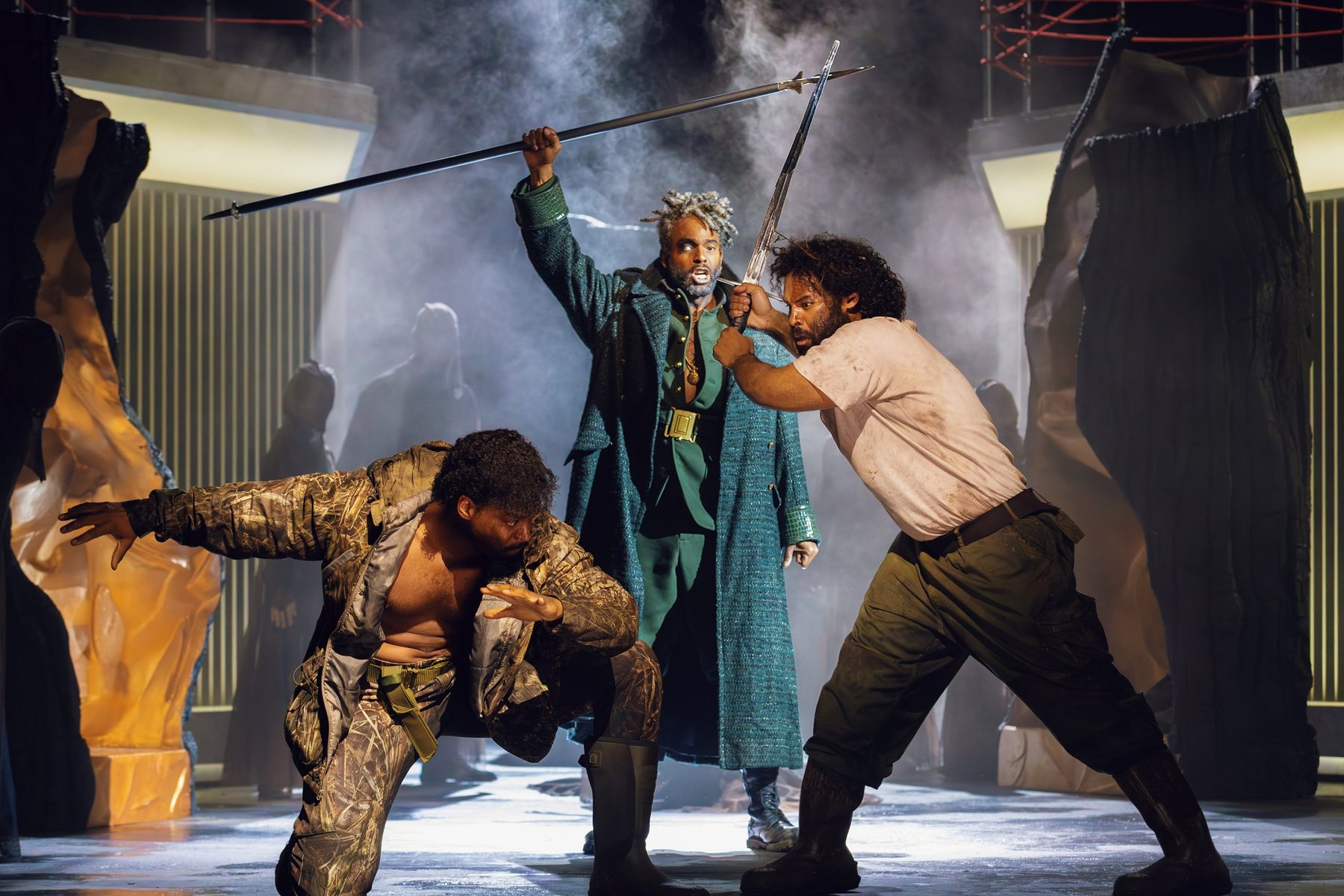
Soloman Howard (Hunding), Ryan Speedo Green (Wotan), Jamez McCorkle (Siegmund); photo by Curtis Brown for the Santa Fe Opera

The Valkyrie’s calls rang resoundingly over the orchestra, calling their warrior band together. All were potent contributors to the performance. With Brünnhilde, they displayed an infectious joy of companionship. James Gaffigan conducted with a sure hand, leading a performance steeped in experience and understanding of the score. The orchestra, and especially the expanded brass section so crucial to Wagner, played tirelessly over the music drama’s long duration, providing powerful heights as well as more intimate moments of sensitivity.

The Aug. 8 audience I take to have been about 75% Wagnerphiles—two gentlemen in front of me wore horned helmets of felt—who loved every minute of Wagner’s music. They know the story backwards and forwards, and so could recognize all the references and the crucial turns of the plot. They deservedly cheered the singers. 

For those less familiar with the story, it must at times have been a mystery.

Die Walküre will be repeated at the Santa Fe Opera twice more, Aug. 13 and 21. Remaining tickets, if any, are available HERE.
“Musically gripping” Rigoletto

Santa Fe Opera presents carnivalesque production of Verdi’s masterpiece

By Peter Alexander Aug. 11 at 1:45 p.m.

Editor’s Note: This is one of several posts covering four of the five operas presented this year at the Santa Fe Opera.

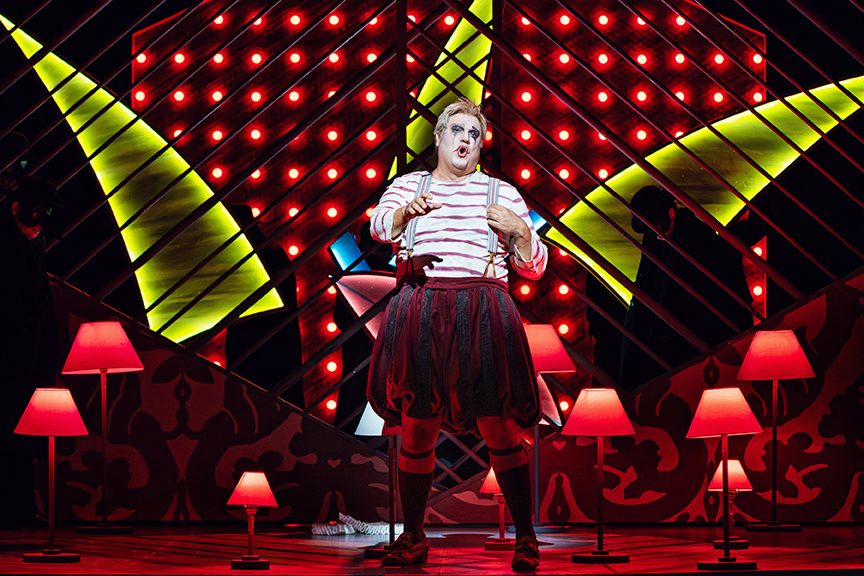
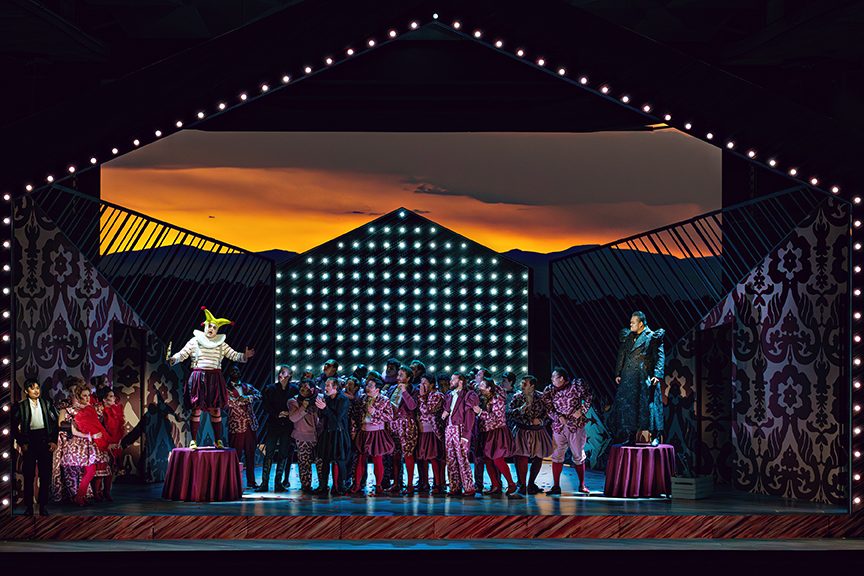
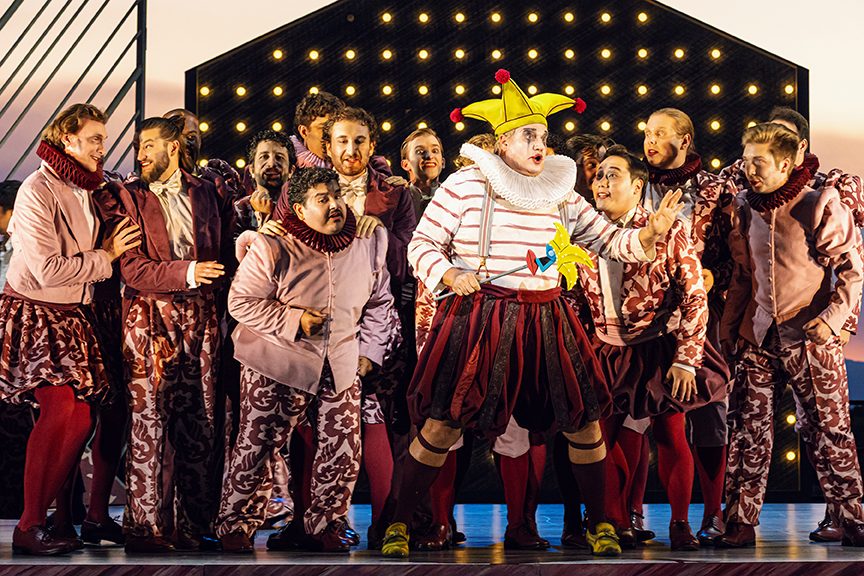
Santa Fe’s new production of Verdi’s Rigoletto opens on a carnivalesque scene: a chorus of courtiers dressed in stylized theatrical garb of mixed styles and periods, including Spanish breeches, Landsknecht jackets with slit sleeves, as well as shirts and pants of no discernible period. A few women sported Marie Antoinette gowns. 

Front L-R: Duke Kim (Duke), Michael Chioldi (Rigoletto), Le Bu (Count Monterone), the Santa Fe Opera Chorus; photo by Curtis Brown for the Santa Fe Opera

The dark violet color patterns of the essentially anonymous courtiers all match, while named characters—Merullo, Ciprano and the Duke of Mantua—are dressed in black and white. Some jackets clearly have zippers. Rigoletto wears garters with his socks and a stylized jester’s cap. In short, everything catches the eye, nothing pertains to any one period.

Rigoletto (Michael Child) with the decadent tribe of courtiers (The Santa Fe Opera Chorus); photo by Curtis Brown for the Santa Fe Opera

This eclectic mix in Jean-Jacques Delmotte’s costumes is matched by Julien Chavaz’s inventive stage direction where the opera’s high drama and tragedy is mixed with comic touches that lighten some scenes, but sometimes distract from the real business of the singers. The chorus of courtiers are not only dressed alike, they move in lockstep conformity. They move as a pack, sometimes going into silly choreographic moves, showing their inability to break from the decadent tribe at court.

Chavez goes so far as to lightly mock operatic conventions, as when Giovanna mugs to the audience during Gilda and the Duke’s amply repeated goodbyes. There quiet chuckles are welcome, as in the well considered interplay between the assassin Sparafucille and his sister Magdalena in the final act.

On the other hand, the silly choreography for the chorus while the Duke sings his praise of love in the second act is an unnecessary indulgence. The Duke’s aria represents a critical moment, revealing that he has discovered a kind of love from Gilda he has never seen at court. It does not redeem him, but makes him a more rounded person, and should not be downplayed for easy entertainment, whatever the symbolic depth. The same principle could have been applied elsewhere.

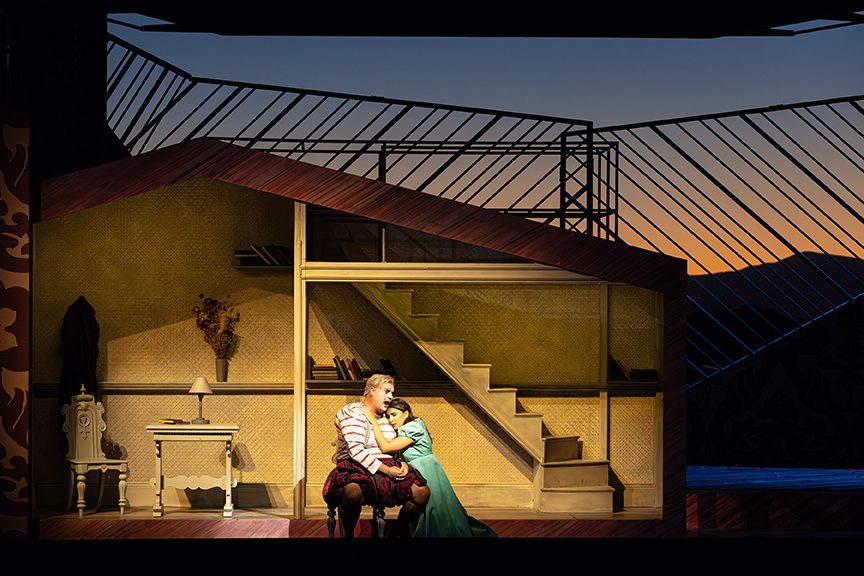
Designer Jaime Vartan’s set for the Duke’s court is abstract, with abstractly decorated mobile flats that are moved around the stage. Scattered among them are colorfully lit pieces that come together at the end to briefly outline the jester’s hat and face, and then disintegrate as the tragedy destroys Rigoletto. The interiors of Rigoletto’s home and Sparafucile’s “tavern” roll on from the wings. Their well designed contrast with the rest of the stage creates a space of warmth and safety in one case, danger and decadence in the other.

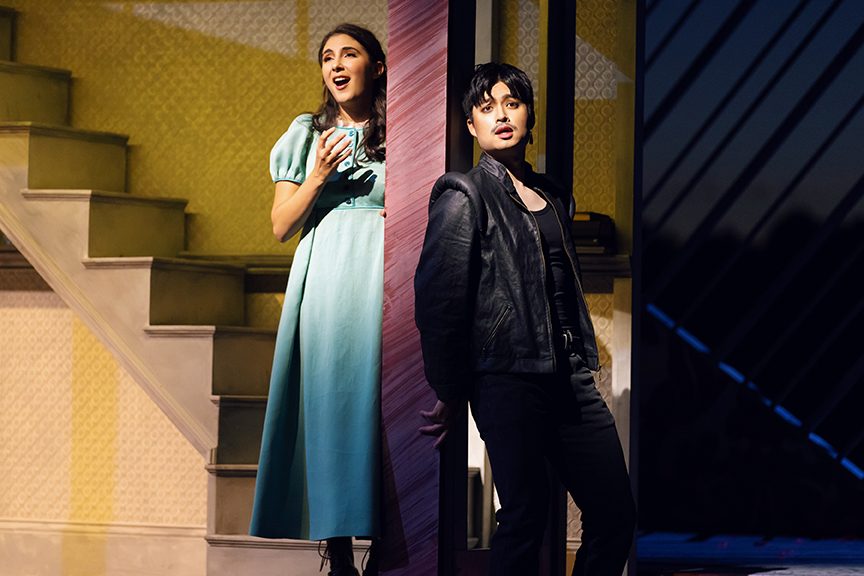
Michael Chioldi (Rigoletto), Elena Villalón (Gilda); photo by Curtis Brown for the Santa Fe Opera

Portable lamps are sometimes used realistically, as light for Gilda’s reading, but also abstractly, carried about by the courtiers representing—who knows, enlightenment? The meaning was not clear to me. Why, for example, is Gilda discovered at court after her abduction, upstage, surrounded by lamps that are then moved downstage when Rigoletto orders the courtiers out of the room?

If the design and direction are a mixed bag, the music definitely is not. From the very first notes on Aug. 7, conductor Carlo Montanaro and the Santa Fe Opera orchestra take the drama in their teeth. Beyond the ferocity of the opening and all references to the curse invoked on Rigoletto and the Duke, Montanaro led with consistent flexibility and expressivity in supporting the singers. Musically, this was one of the most gripping Rigolettos I have seen.

Duke Kim’s light tenor warmed and strengthened over the evening, reaching a high level of passion by the end. His Donna e mobile in the last act was exciting, and his duets with Gilda were wonderful. His portrayal of the privileged, devil-may-care nobleman was winning (or fittingly vile, if you will), both musically and dramatically. 

Elena Villalón (Gilda), Duke Kim (Duke); photo by Curtis Brown for the Santa Fe Opera

The star of the evening, as she should be, was the Gilda of Elena Villalón. Caro Nome was a moment of true beauty, and in every powerful duet—with Rigoletto and the Duke—she drove the drama to powerful heights. She carried a warm sound into the softest moments, beautifully holding out the longest phrases. Her acting was first rate, establishing her loving and confused relationship with her father. I particularly liked the touch of showing her reading, making her a full person, a young woman of genuine curiosity and thoughtfulness as well as innocence.

Michael Chioldi (Rigoletto); photo by Curtis Brown for the Santa Fe Opera

A late switch in the cast, Michael Chioldi as Rigoletto used his mature voice to establish a character of great experience and many woes. He mustered the power when needed to convey the depth of Rigoletto’s anguish; every exclamation of the curse was grim and powerful. His closing scene with the dying Gilda was chilling.

Stephano Park made a superb Sparafucile, summoning terror with his deep bass to the lowest note of his name. Marcela Rahal was equally telling as Magdalena, adding a flirtatiousness that fits the character and helps round out the final act. The interactions between brother and sister were more than just singing the notes; there was a touch of teasing in their bother-sister interactions that elicited a few light chuckles.

Le Bu sang the condemned Count Monterone “like thunder.” The named courtiers—Ryan Wolfe and Marcello, Korin Thomas-Smith as Count Ceprao, Mary Beth Zara’s as the perky page, and Ryan Bryce Johnson as Borja, all filled their smaller roles well.

The Santa Fe Opera production of Rigoletto will repeat Aug. 15 and 20. Tickets, if available, can be purchased HERE.

Young love in the 1920s

Thoroughly enjoyable Bohème at the Santa Fe Opera

By Peter Alexander Aug. 11 at 10:35 a.m.

Editor’s Note: This is one of several posts covering four of the five operas presented this year at the Santa Fe Opera.

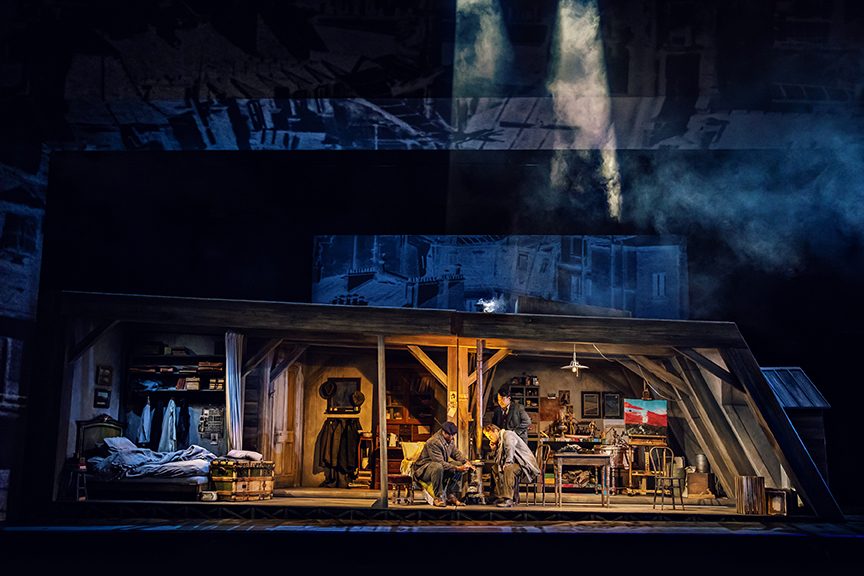
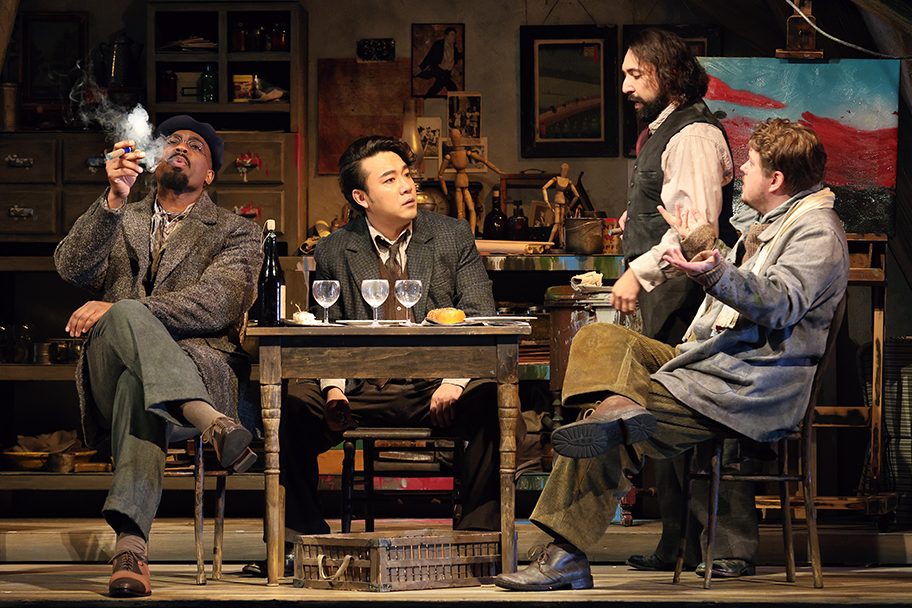
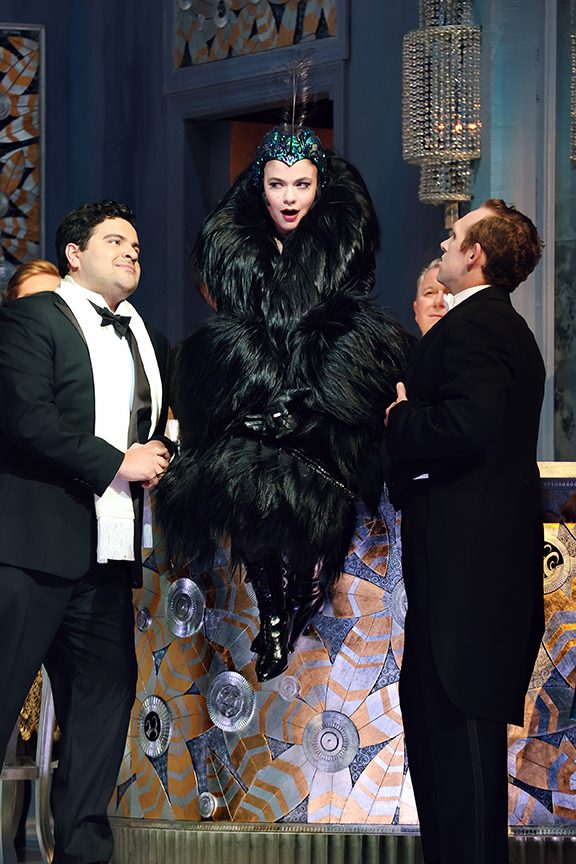
Santa Fe Opera’s production of Puccini’s La Bohème (seen Aug. 6) opens on a standard first-act set: a dingy apartment of Bohemian squalor with views of the Parisian rooftops, here created by projections. Two young men are at work.

L-R: Soloman Howard (Colline), Long Long (Rodolfo), Szymon Mechliński (Marcello); photo by Curtis Brown for the Santa Fe Opera

The first sign that something is up is when the poet Rudolfo starts pounding on a typewriter. This is not 1830s Paris, and when Mimi enters later in the act, her hair style shows that we are in the 1920s. In many ways this is a good choice: Paris in the ‘20s was a center of the avant garde, young artists were flourishing (think Hemingway and Picasso), and the free lifestyle of the operatic Bohemians was common.

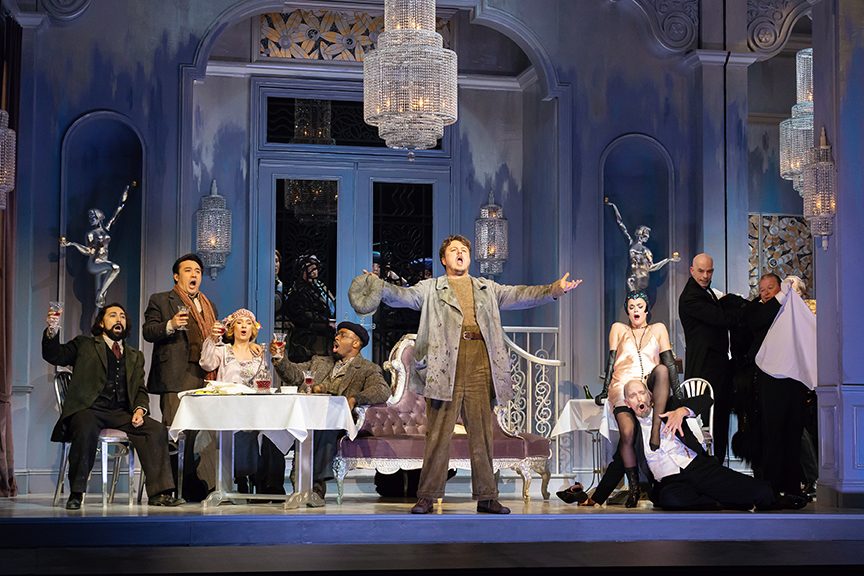
L-R: Efraín Solís (Schaunard), Long Long (Rodolfo), Sylvia D’Eramo (Mimì), Soloman Howard (Colline), Szymon Mechliński (Marcello), Emma Marhefka (Musetta) Kevin Burdette (Alcindoro); photo by Curtis Brown for the Santa Fe Opera

For the most part, the temporal transposition works well, and it provides great opportunities for the costume designs of Costance Hoffman. Indeed, the second act in the streets of Montmatre and inside the Café Momus (transformed from a neighborhood bistro to a five-star restaurant) is a 1920s fashion pageant. The incongruity of grubby Bohemians in such surroundings, with plain people gaping through the windows, becomes part of the humor of the scene. It is good fun, if it does stretch credibility.

The third act continues the time shift: there is a motorized ambulance (doubling as a spot for a streetwalker’s hookups) outside the police post at the gates of the City. The fourth act returns to the first set, through a very clever scenery shift that earned applause. Colline’s overcoat has a definite ‘20s vibe, as does Musetta’s attire.

This visually engaging production replaces one that was presented in Santa Fe in 2019. It is a great improvement, with all the pieces fitting well together. 

This is not to say that there are no issues with Allen Moyer’s set. In the second act, the elegant Cafe Momus and its crystal chandeliers require so much space that all the rest of the action—bustling crowds, busy children, the toy seller Parpignol, the act-ending parade—are pushed into narrow margins of the stage. If there is a meaning to the Bohemians being just more Parisians on the street, swallowed up by the Christmas Eve revelries, it is lost here.

L-R: Solomon Howard (Colline), Long Long (Rodolfo), Efraín Solís (Schaunard), Szymon Mechliński (Marcello); photo by Curtis Brown for the Santa Fe Opera

James Robinson’s stage direction meets the vital standard of telling the story. The camaraderie of the Bohemians is well portrayed, and all critical moments of the story are clear. He always handles the movements of actors in confined spaces comfortably.

In the name of realism—or so I assume—there are a few crude touches. Schaunard turns his back to the audience and then takes the chamber pot and throws its liquid contents out the garret window. After the third-act fight between Marcelo and Musetta, Marcelo angrily retreats into the ambulance with a friendly protstitue. Is it my age? I don’t see what these touches add to the opera.

Conductor Iván López Reynoso charged into the opening chords. Brusque and brisk, they propelled a quick tempo that thankfully stretched to accommodate the vocal lines, but for long periods did not let up. At times Reynoso allowed the brass free reign, and the orchestra sometimes covered the singers or pushed them to full volume. Otherwise, he controlled the musical flow well and kept the music moving.

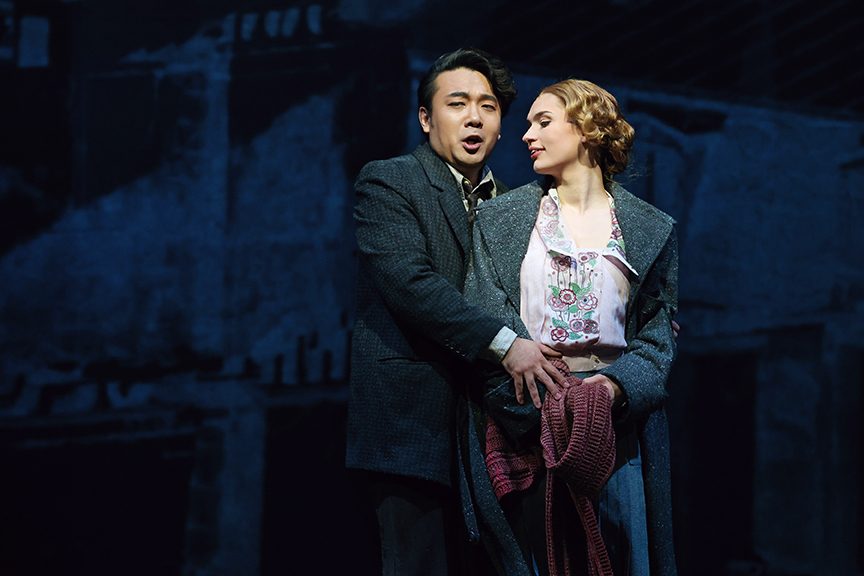
Long Long (Rodolfo), Sylvia D’Eramo (Mimì); photo by Curtis Brown for the Santa Fe Opera

The success of any Bohème depends on the two leading roles, Rudolfo and Mimi. Both Long Long and Sylvia D’Eramo handled their assignments handsomely. Long Long sang with a ringing, Italianate tone, but the sound lacked a sense of freedom and comfort at the margins. Every phrase was delineated and sung with expression, but I did not sense a progression from one act to another. Rudolfo of Act IV was Rudolfo of Act I.

D’Eramo conveyed Mimi’s fragile state from her first entrance. In the softest moments she floated her pianissimos beautifully, and she used her voice well to convey the character’s declining health. I especially enjoyed her transformation from a shy neighbor to a young woman who is warming to the dawn of love in Act I. A blooming orchestra sound sometimes covered her lines, but she was always able to soar above the sound at climactic moments. 

As Marcello, Szymon Mechliński sang with a booming if sometimes rough-edged baritone. This suits Marcello, a more rough-edged character than Rudolfo. His was a dominant character among the four artists, at his best in confrontations and combat with Musetta.

Emma Marhefka (Musetta); photo by Curtis Brown for the Santa Fe Opera

In the latter role, Emma Marhefka played the coquette to the nth degree. No character was more vivid throughout, justifying the bystanders who are delighted to spy her in the second act crowd scene. The famous Waltz was more languid than usual, but none the less effective with her rich voice.

Bass Solomon Howard made Colline a strong presence, singing with a resounding quality that only occasionally hit rough spots in the “Overcoat Aria” of Act IV. Efraín Solís was solid in the less prominent role of Schaunard, always part of the happy company of Bohemians. Santa Fe veteran Kevin Burdette brought the supporting roles of Benoît and Alicindoro to comic life, singing as well as ever. 

In spite of any reservations, this is a thoroughly enjoyable Bohème. The cast is strong, the sets intriguing, the orchestra excellent, as always. And Santa Fe nights lend themselves perfectly to this drama of bohemian companionship, young love and loss.

Bohème repeats at the Santa Fe Opera Aug. 14, 19 and 23. Tickets are available HERE.

Maybe a ghost story in Santa Fe

Britten’s The Turn of the Screw in a hauntingly ambiguous production

By Peter Alexander Aug. 10 at 1:15 p.m.

Editor’s Note: This is one of several posts covering four of the five operas presented this year at the Santa Fe Opera.

Benjamin Britten’s The Turn of the Screw is a challenging opera to produce.

Based on the short story by Henry James, it is a ghost story about a governess who cares for two children living on a remote estate. The children, Miles and Flora, are haunted, and lured into mischief or worse, by the spirits of deceased previous caretakers.

Or are they? 

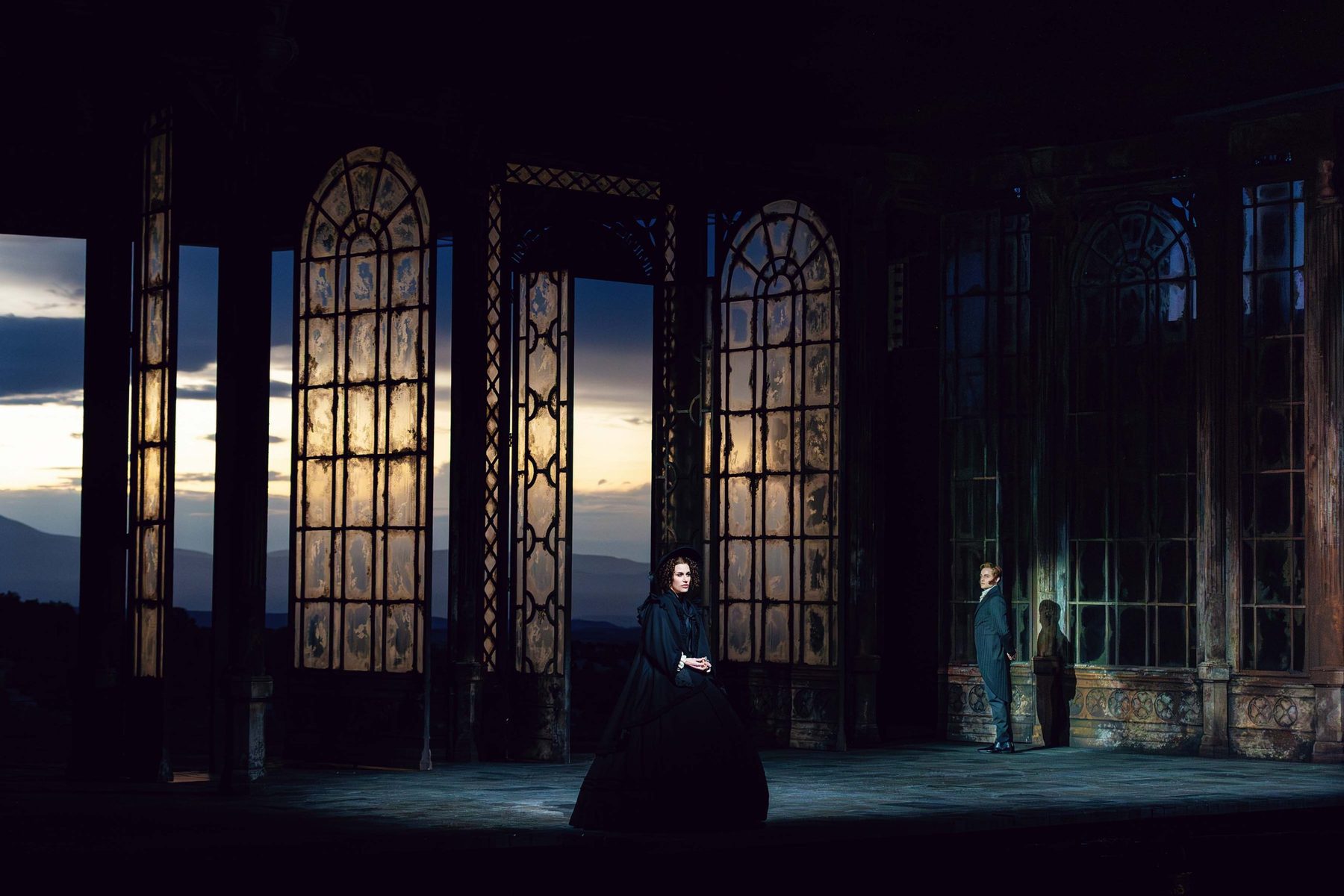
Jacquelyn Stucker (The Governess), Brenton Ryan (Prologue), photo by Curtis Brown for the Santa Fe Opera

As James’ story and the opera both make clear, the question is whether the ghosts are real presences, haunting the house and the children, or the products of the governess’ delusions, phantoms of an unbalanced mind. Whole books have been written on this issue; any production that fails to recognize the question has failed.

Jacquelyn Stucker (The Governess), Brenton Ryan (Peter Quint), photo by Curtis Brown for the Santa Fe Opera

In that respect, the current Turn in Santa Fe is the most successful I have seen. The relationships among the governess, the children, and the ghosts of Peter Quint and Miss Jessel, are adeptly handled. The problem is that Quint and Jessel sing, so it is necessary to have living actors onstage. How can they remain figments of the Governess’ imagination, when we, the audience, can see them?

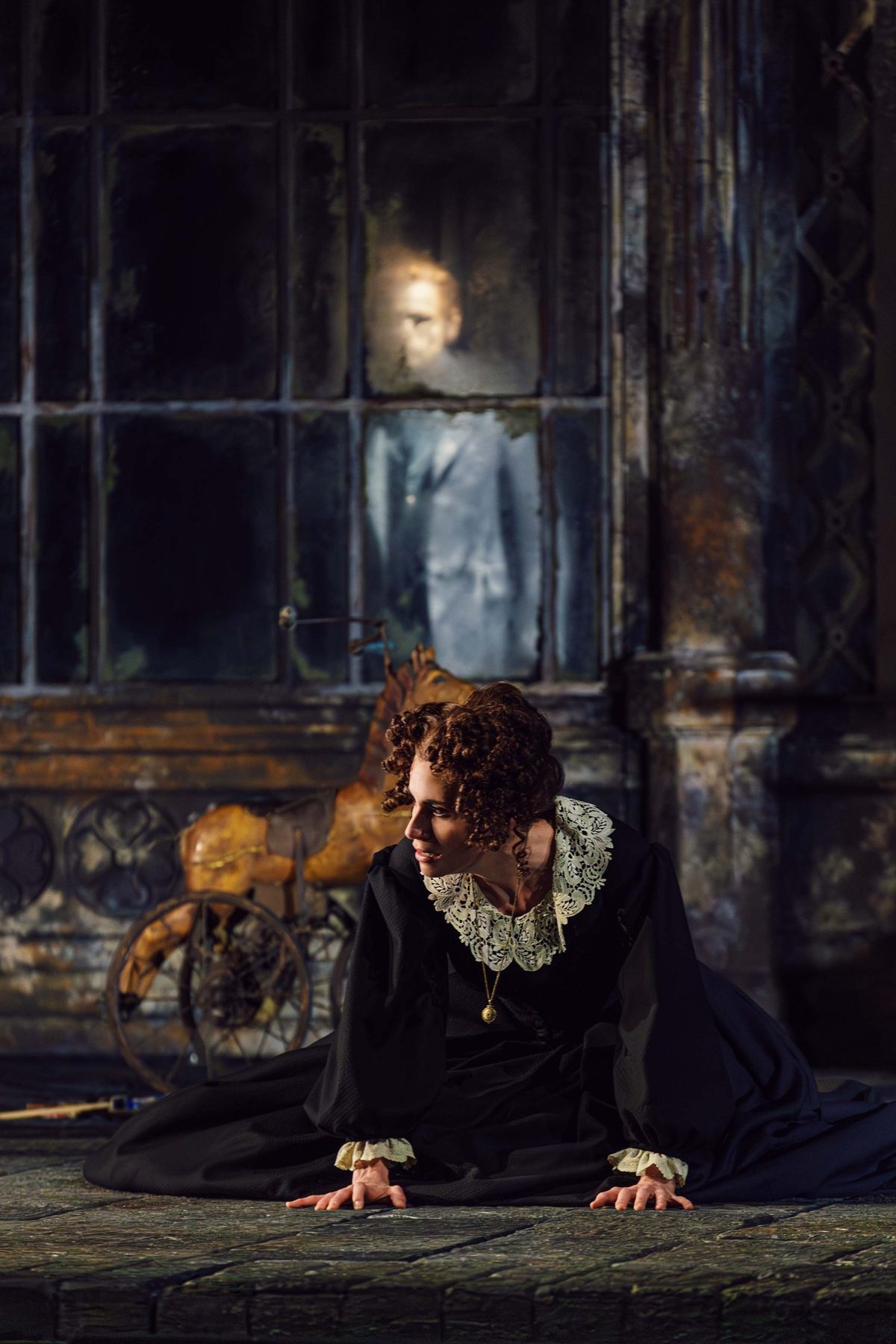
A full description of all the astute choices in the Santa Fe production would require a separate essay, but several critical points illuminate the care taken by stage director Louisa Miller. In his first appearance Quint is only a vague apparition, seen though the window. But after Mrs. Grose, the housekeeper, gives names to what has happened in the past, who Peter Quint and former governess Miss Jessel were, suddenly they are seen more clearly, appearing onstage with the governess. This suggests that Mrs. Grose has stimulated the young governess’ overactive, and possibly paranoid, imagination. 

Another telling point is that the children never see the ghosts. When Quint and Jessel are onstage, the children never turn to look at them, in spite of being called by name. Only the governess seems to see and hear the ghosts, and only she speaks to them. So the ghosts, if such they are, remain suggestions more than characters. Anything else can be explained by the fact that Quint and Jessel did interact with—and possibly lead astray—the children in the past. When Quint tells Miles to steal a letter, it could just as reasonably be a young boy’s naughty impulse pushing him to mischief. His later explanation—“I wanted to know what you wrote about us”—rings true.

Annie Blitz (Flora), Everett Baumgarten (Miles), Jacqulyn Stucker, photo by Curtis Brown for the Santa Fe Opera

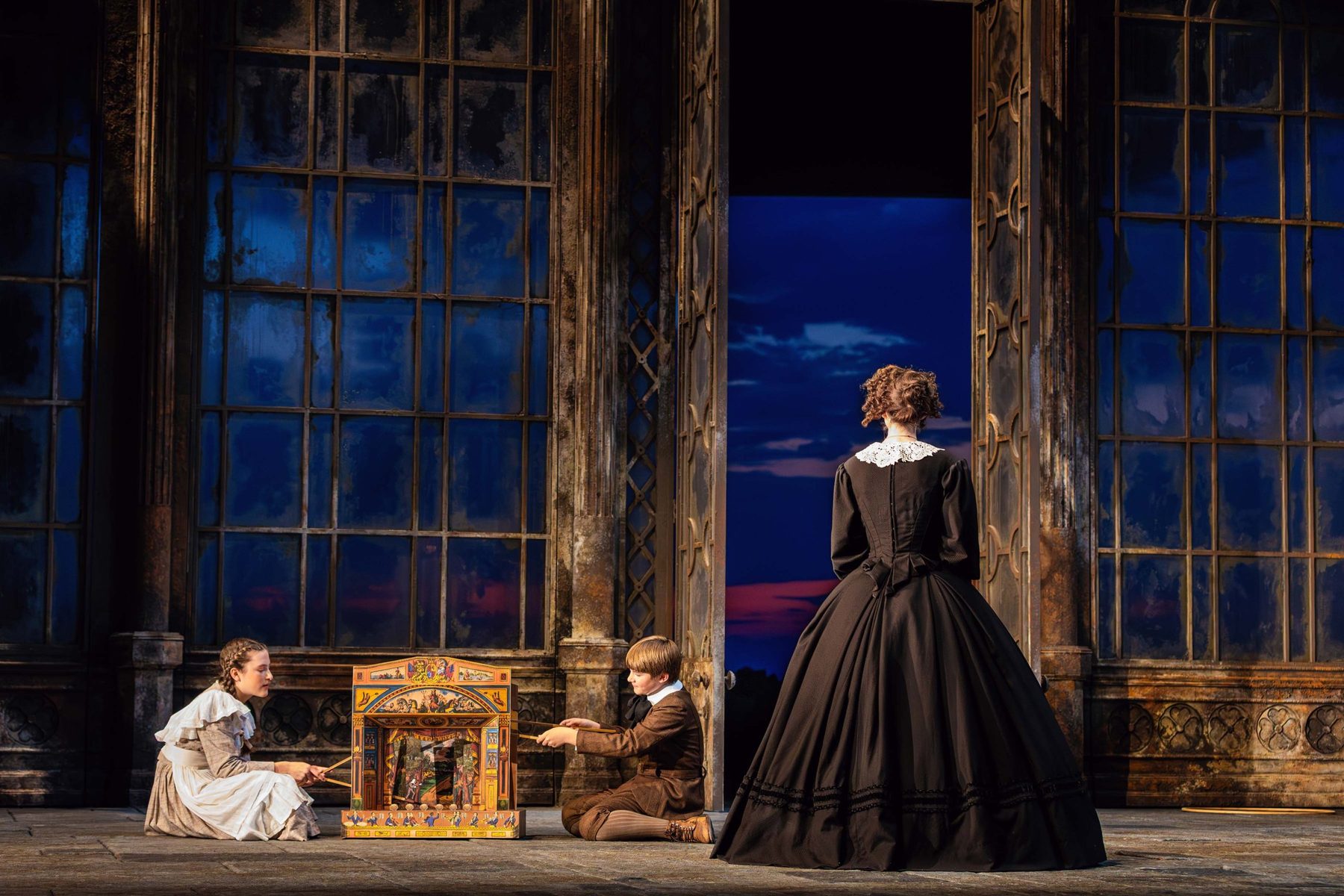
It would be a mistake to overlook one innovation of this production. Britten’s score is divided into scenes and and purely orchestral interludes between them. Miller makes use of the interludes—usually played without action—for symbolic events, or to show the children playing (and kudos for the delightful period play, from hoop trundling to a play theater) with the governess joining in. The plot focuses on the descent to tragedy, ignoring the rest of the children’s lives and their happier interactions with the governess. These pantomime sequences add depth to all of of the characters.

In short, Miller’s direction carefully treads the line between ghost story and psychological case study. (It is useful to recall that Henry James’ brother William is one of the founders of modern psychology). She correctly leaves it to the audience to decide which version of the story is true—or to leave it undecided.

The scenic design is credited to Christopher Oram, as a Canadian Opera Company production that originated at the Garsington Opera in England. It has effectively been fit onto Santa Fe’s stage, where lighting by Malcolm Rippeth successfully adds to the suggestive, murky ambience of the setting.

The Aug. 5 cast was uniformly strong in presenting both music and character. The diction was always clear and understandable, a testament to both Britten’s care in scoring the opera and the singers’ efforts. Brenton Ryan brought a bright tenor voice to both the prologue and the role of Peter Quint. His alluring roulades, tailored for the original Quint of Peter Pears, were unexceptionable. In one of the more telling touches, the staging of the prologue briefly conflates Quint and the absent guardian, raising more questions of motive and reality.

Jacquelyn Stucker was an ideal Governess, with a clear and delicate sound at the outset. She gave a well considered performance; as the opera progressed, she became more unstable and desperate in her characterization, and her tone more brittle and biting in quality. In voice and presence, Jennifer Johnson Cano portrayed a stolid and sometimes baffled housekeeper. She sang with security, blending into the ensemble and never dominating the musical texture.

The two young characters were beautifully performed by treble Everett Baumgarten as Miles and young soprano Annie Blitz as Flora. Baumgarten’s pure sound was always audible, and was alluring in his eerie “Malo, malo.” Blitz’s voice was focused, consistently on pitch but at times piercing.

Wendy Bryn Harmer (Miss Jessel), photo by Curtis Brown for the Santa Fe Opera

Wendy Bryan Harper provided a brooding presence as Miss Jessel. Her slightly pushed tone suggested a character under pressure, never quite at ease. Otherwise, little acting was required, as she drifted phantom-like on and off the stage, usually through the onstage pond that represented both the estate’s lake, and its symbolism as a boundary space between the real and unreal.

It would be hard to overpraise the orchestral players in the pit. Britten’s virtuoso score for an ensemble of 13 players was ably led by conductor Gemma New, who convincingly knit the various musical elements together, from scene to interlude to scene, and brought out the shifting moods of the evocative score. While all the players mastered the virtuoso demands of their parts, special notice should be taken of prominent percussion passages throughout.

NOTE: The 2025 performances of Turn of the Screw have come to an end.