OPINION: Honoring the text in opera productions

Who wins—the director or the librettist?

By Peter Alexander June 18 at 11:18 a.m.

I was in New York recently. While there, I took the opportunity to meet a friend at the Metropolitan Opera, where we saw the new production of Salome by Richard Strauss.

The production, starring Elza van den Heever in the title role and Peter Mattei as Jochanaan (John the Baptist) has attracted considerable attention, particularly for van den Heever’s performance. The singing I heard on May 24 ranged from solid to outstanding. Colorado native Michelle de Young, who has appeared at the Colorado Music Festival (2017 and ’18), was especially strong as Herodias. Conductor Derrick Inouye did not always manage to keep the orchestra under the singers, especially when they were singing from the back of the Met’s deep stage.
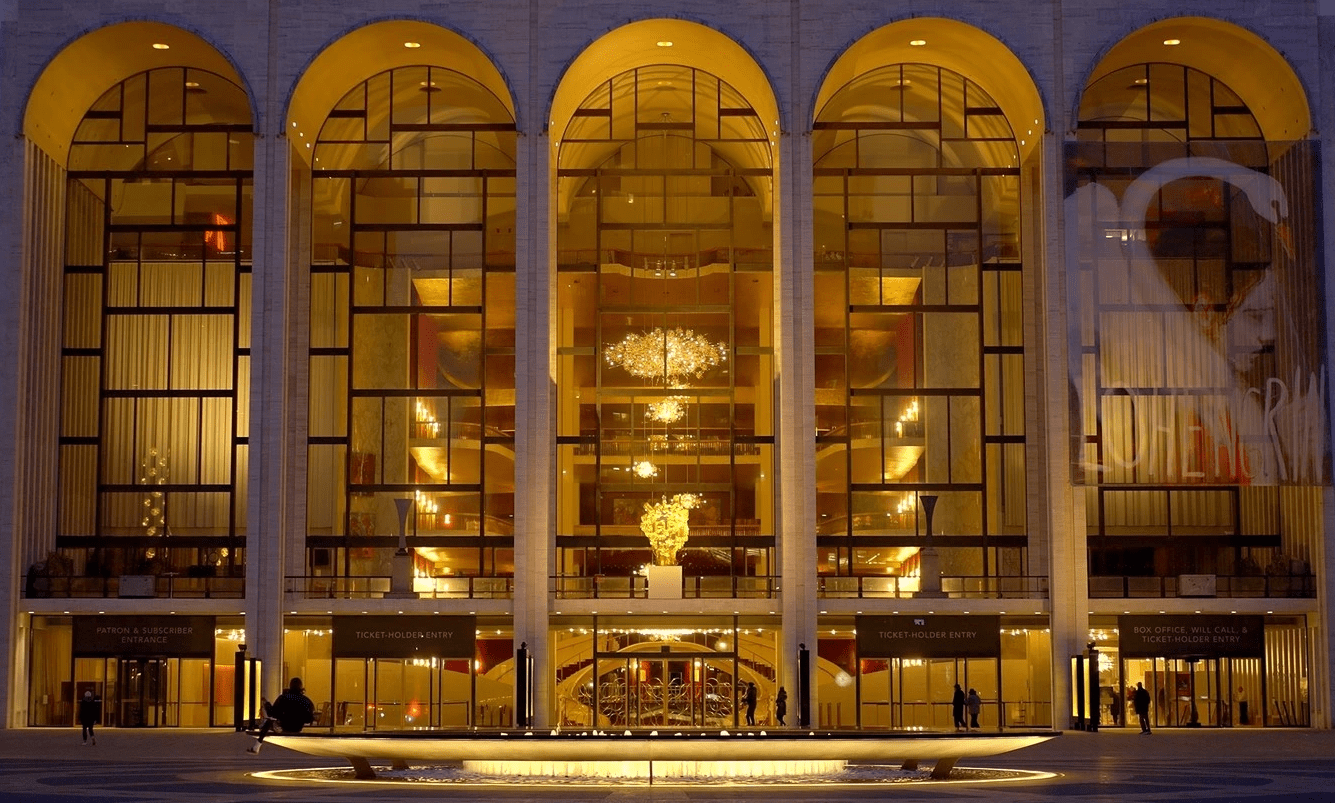
The Metropolitan Opera House at Lincoln Center, New York

The production by director Claus Guth was in some ways a mess. Transferred to the Victorian era, it featured six young Salomes, all dressed like van den Heever in black velvet with a white collar, ranging in age from about 6 to early teens (the operatic character is supposed to be about 16). These young Salomes entered at various times during the opera, representing the abuse that Saolme has endured throughout her childhood, which explains her perverse sexual obsession with John the Baptist.

The child Salomes enter separately throughout the infamous “Dance of the Seven Veils,”  each in turn having a simple black veil removed from her head before exiting. There is no seductive dance before Herod, which subverts the powerful music of the dance. In other mystifying additions, there are ram’s heads worn by members of the court, and a distracting scene of a near-nude woman surrounded by fondling courtiers played out on a raised area at the rear of the stage. The entire opera is placed in a sterile Victorian mansion.

All of which shows us that Herod’s court was degenerate and Salome is a damaged adolescent, which is pretty clear without directorial signposts. These ideas are often needlessly demonstrated in productions I have seen, from Santa Fe to Berlin. (Unsolicited advice for stage directors: Both the text and the music tell us that far better than your ideas will. Trust the music.)

But my purpose here is not writing a review of this production, which offers much scope for commentary. It is rather with a single question: to what extent should a production (and presumably therefore a stage director) honor the written text of the opera?

This is not an idle question, and in one sense Salome provides a good case study. The text of both Oscar Wilde’s English-language play and Strauss’s libretto, which is mostly a straightforward German translation of the play, are clear about one thing: in the confrontation between Salome and John the Baptist, he avoids looking directly at her. “I will not look on you,” he sings. “You are accursed!” And later, as she holds his decapitated head in her hands, she sings “If you had seen me, you would have loved me!”

For some directors, this is apparently just a line that is sung, and they feel free to play the relationship between Salome and John the Baptist as they want you to see it. If they want Salome to be a depraved teen seductress when she confronts John, they may have her writhing all over and around him; I have seen it done that way. Or if they want John to be tormented by her, they will have him grasping her, looking directly into her face, perhaps even twisting in agony with close physical contact; I have seen it played that way, too.
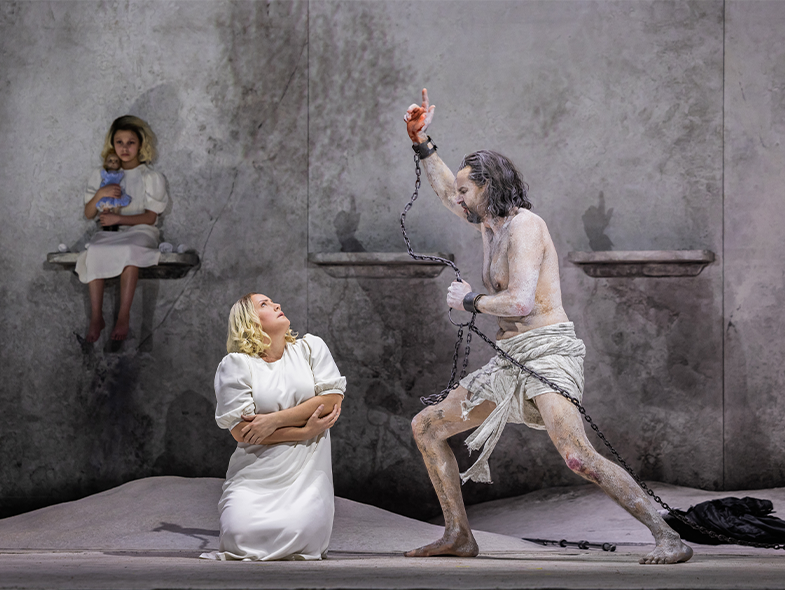
Elsa van den Heever (Salome) and Peter Mattei (John the Baptist) at the Met

I would maintain that both of these stagings contradict the clear text that Strauss set. I believe that to respect the work, the director should honor the text’s clear indication that John turned away from Salome. Perhaps he saw her from the corner of his eye; perhaps she passed in front of him; perhaps he saw her figure when he first came into her presence. But he did not look directly into her face or deliberately interact with her.

That does not rule out interpretations in which he sees her but rejects her, or is in some way aware of her presence and her impact as a seductress. There are many ways to convey what is indicated in the text. But contradicting the text, in order to impose a single interpretation of the characters is unfaithful to the work.

Finally, “Depraved teen seductress” is certainly one way of understanding Salome, but there are others. Bored, spoiled adolescent living in a corrupt society; victim of abuse by a depraved stepfather; a tool in the hands of a scheming mother: any one or all of these are legitimate ways of understanding Salome. 

For myself, I prefer a production that allows you to see many possibilities, rather than insisting on only one. But we live in a time of regie-theater, director’s theater, where unique and original interpretations are highly valued. But I still believe that original productions can and should stay faithful to the text of the work being presented.

What do you think?
CU NOW explores new opera by Mark Adamo

Opera producer/conductor Sarah Caldwell as Greek tragedy

By Peter Alexander June 11 at 10:15 p.m.

Mark Adamo knows his Greek mythology.

The composer/librettist is known not only for having written an opera on Aristophanes’s Lysistrata, but also having linked Bram Stoker’s Dracula with the Greek myth of the Bacchae as librettist for John Corigliano’s 2021 opera The Lord of Cries. And now Adamo is in Boulder workshopping his opera-in-progress Sarah in the Theater at the University of Colorado New Opera Workshop (CU NOW).

And once again he has found a Greek connection. “This is what happens when you give a 10-year-old Greek mythology to read,” he says.

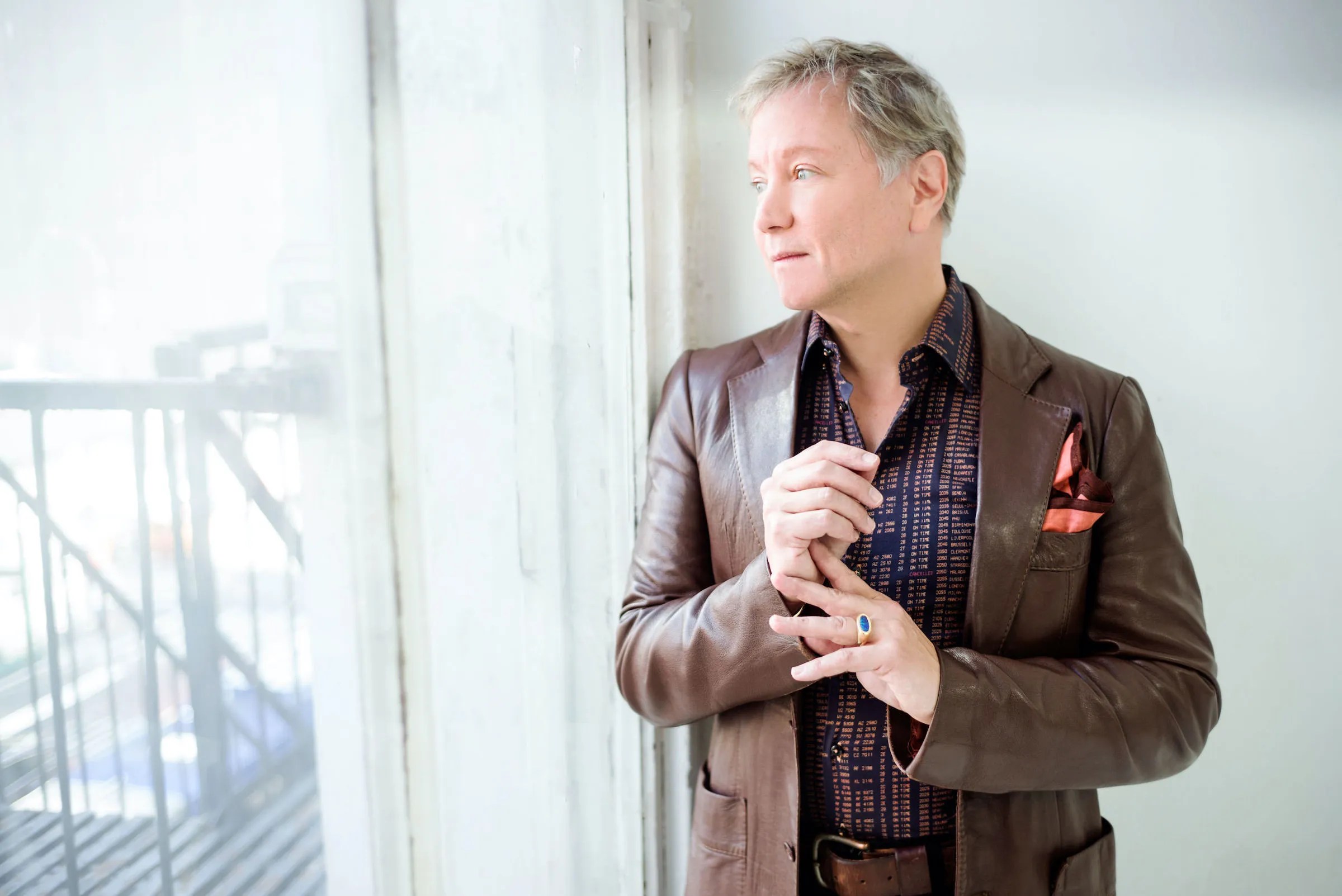
Mark Adamo. Photo by Daniel Welch

With the first act mostly done, Adamo’s new opera about the opera conducting and producing legend Sarah Caldwell will have semi-staged workshop performances of excerpts this weekend (Friday and Sunday, June 13 and 15; details below). Nick Carthy, music director of the CU Eklund Opera Program will conduct. The performance will cover the first act, but “there will be a surprise,” Adamo says cryptically.

Adamo discovered a parallel between Caldwell’s career and a Greek myth when he first undertook work on the opera. “As I’m sketching out (the opera), I had a sense of what I wanted to do with her as a character,” he says. “I’m asking the question, is there some kind of narrative template that’s going to make sense of the themes in her character, which is that she’s extremely ambitious but she doesn’t see limits. Whatever happens in the theatre is the only thing that matters.

“(I thought) there has to be some kind of pre-existing trope that I can pull from. I don’t know—Icarus! I said, that’s it!”

In the opera, the story of Icarus, who flew too close to the sun and fell to his death, is the subject of an opera within the the opera. It becomes both an opera that Caldwell is rehearsing, revealing her relentlessly focused work ethic, and a symbol of her own high-flying career and ultimate crash.

Caldwell founded the Boston Opera Group, which became the Opera Company of Boston.  Against all odds and considerable financial difficulties, she presented a wide range of operas and developed a reputation for producing remarkable results with limited means. Because of her intense focus on her work, she was known both for attracting ardent admirers and for driving others away under duress.

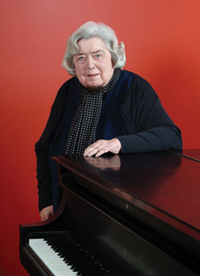
Sarah Caldwell

A synopsis of the opera released by the commissioning organization, Odyssey Opera, states: “Over one sleepless day and night: haunting the theater she created, made legendary, and now, by morning, may lose; the director, conductor, and impresario Sarah Caldwell—brilliant, obsessed, intractable—inspires her artists, fends off creditors, relives her triumphs, and battles with ghosts as we wait to learn if she will be given one final chance to continue the work she lives for or whether demons of self-sabotage have, at last, outrun her luck.”

Adamo is returning to Boulder for his second workshop with CU NOW, following a successful reworking of his opera The Gospel of Mary Magdalen in 2017. “(CU NOW) is the perfect balance of seriousness about the work, and un-seriousness about ego,” Adamo says.

“Nick (Carthy) and our pianists know it cold, but part of the point of the workshop is that you want the flexibility to change things. The magic here is that people came in with a base knowledge of the score, and also not only the ability but the imagination to get it better. I am ‘directing’ this, (but) in real life this is a co-production of me and the singers. Half the ideas on the stage will come from them.”

For all of her impact in the opera world Caldwell might not occur to most composers as the subject of an opera. The original idea came from Gil Rose, conductor of the Boston Modern Orchestra Project and founder of Odyssey Opera, who commissioned Sarah in the Theatre. But make no mistake, Adamo sees her as a great subject for drama. “She’s like Orson Wells,” he says. “It’s a race between the genius and the demons.”

Taking on the roles of both librettist and composer might seem dangerous, because the history of opera is littered with legendary battles between composers and librettists. Adamo sidesteps any conflict between the two parts of his creative mind by starting with an outline of the various characters’ motives and the emotional arc of the story. The emotional development suggests in turn the musical demands of the finished piece.

 “By the time you do the first draft of the libretto, it’s coming to the first draft of the score, because you’ve got these musical requirements that you’re trying to write around,” he says. “And then by the time you get to that libretto and by the time you’re setting it, ideally you avoid the composer-librettist clash, because the composer has been there from the beginning.”

The final word on any new opera belongs to the performers who bring it to life. After several weeks of intensive work, Carthy knows where he stands on Sarah in the Theatre. “It’s a great work,” he says.

“It’s really a greek tragedy.”

# # # # #

CU New Opera Workshop (CU NOW)
Nick Carthy, conductor

Mark Adamo: Sarah in the Theatre (Act I excerpts with two pianos)

7:30 p.m. Friday, June 13 and 2 p.m. Sunday, June 15
Music Theatre, Imig Music Building
Free