
Boulder Opera pairs brutal tragedy with effervescent comedy
By Peter Alexander Feb. 6 at 3:00 p.m.
Boulder Opera Company (BOC) will present a double bill of two operas by Puccini at the Dairy Arts Center this weekend (Friday, Saturday and Sunday, Feb. 7–9; details below).
Two more contrasting operas could hardly be imagined. Il Tabarro is a rarely performed, gritty and brutal tragedy of betrayal and murder; and Gianni Schicchi is a popular, frothy burlesque of a comedy contrasting avarice with young love. They are two thirds of a triptych of one-act operas known in Italian as Il Trittico.
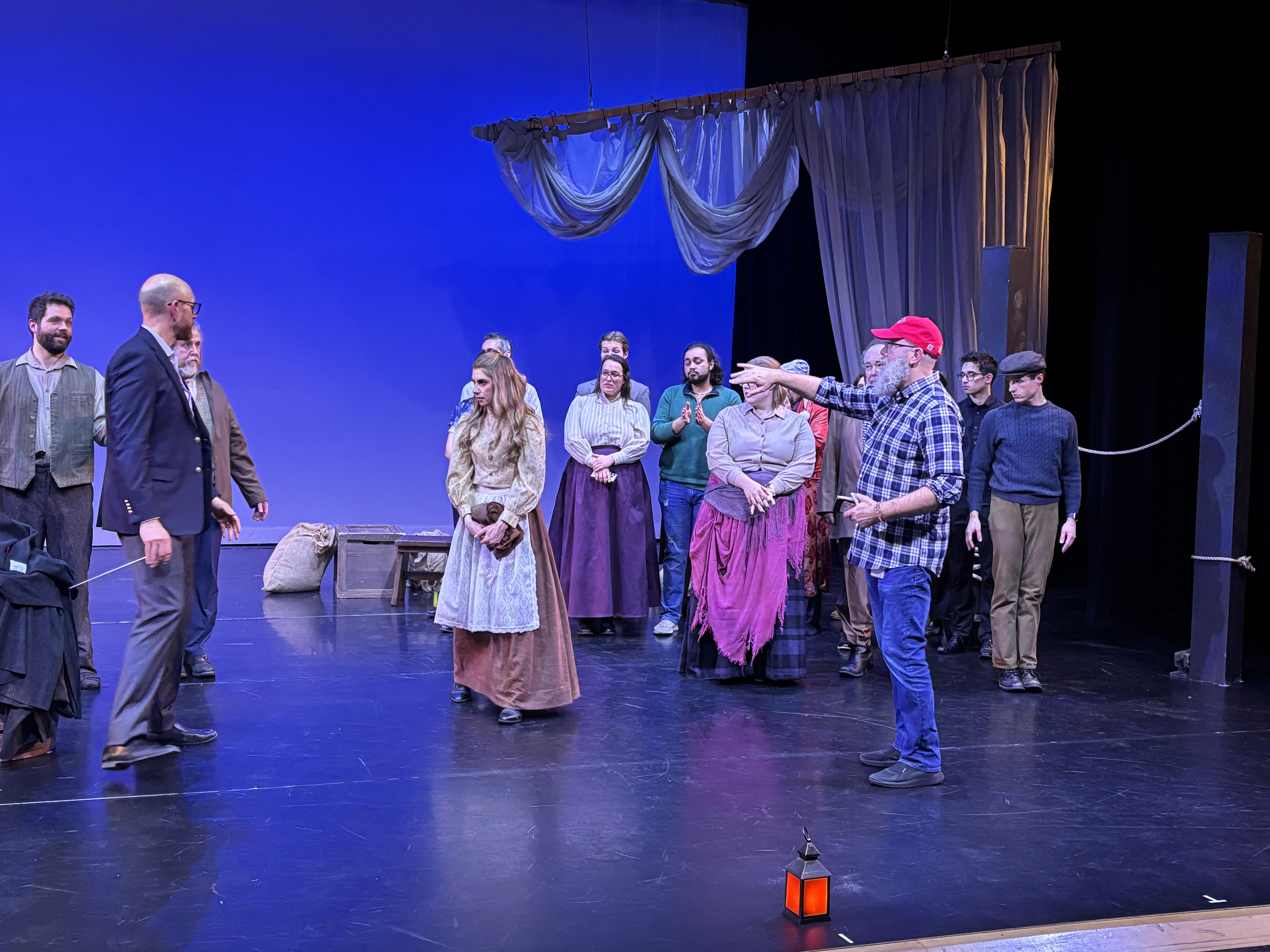
The triptych also includes Suor Angelica, a tender tale of faith and redemption. All three operas were first performed by the Metropolitan Opera in 1918.
BOC’s productions of Il Tabarro and Gianni Schicchi will be stage directed by Gene Roberts, who returns to Boulder having directed several of the company’s recent productions. An ensemble orchestra will be conducted by Brandon Matthews.
“We get to experience quite a landscape of emotion,” Roberts says of the pairing of two such disparate stories. These two operas are not usually heard together, he adds. “(Il Tabarro) is a treat to see, because unless it’s performed with all three of the operas, it is very rarely done.
“They’re all wonderful works but you need a trio of dramatic voices to do Il Tabarro. The soprano, the tenor and the baritone need to have quite a bit of heft to their voices.”
Il Tabarro is the story of Michele and Giorgetta, who have lost a child before the opera opens. They operate a barge that has just arrived in Paris, where the stevedores are unloading their cargo. Over the course of the evening, Michele and Giorgetta argue, and it becomes clear that Giorgetta is having an affair with Luigi, one of the stevedores. When Giorgetta leaves, Michele confronts Luigi, and during a fight strangles him.
Michele conceals Luigi’s body under his cloak. When Giorgetta returns hoping to reconcile, Michele opens his cloak, and Luigi’s body falls at her feet.
“It’s truly a tragedy that leaves us with emotional whiplash, because it all happens so fast,” Roberts says. “In this relatively short piece, boy is there some dramatic singing! All three of (the leads)—you could hear them in any opera house in the world!
“There are big, meaty arias for the tenor and the baritone. When he has realized that his wife is having an affair, Michele just pours out his heart in a beautiful aria. The baritone doesn’t often get arias in Puccini operas, so that’s a wonderful treat.”
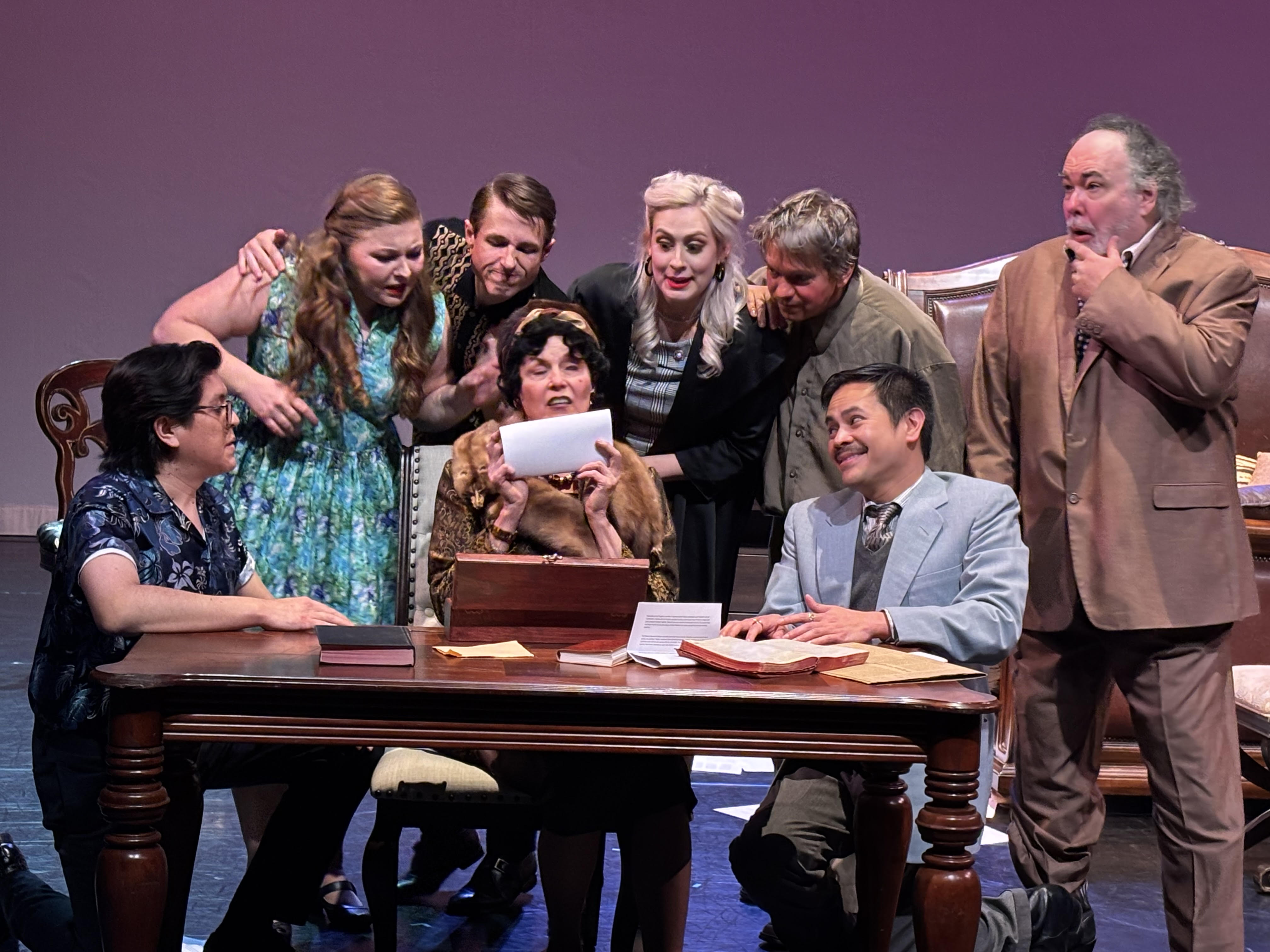
The story of Gianni Schicchi is both simpler and more chaotic. Busoso Donati, a rich man living in Florence—the location is central to the plot—has died, and his relatives arrive at his apartment to learn who has inherited his riches. When it turns out that he has left everything to a monastery, they start on a wild effort to change the will before anyone learns that Donati has died.
In the end, Gianni Schicchi, a neighbor whose daughter Lauretta is in love with Donati’s young cousin Rinuccio, arrives and saves the day by impersonating Donati and changing the will before a notary. But instead of rewarding the greedy relatives, Schicchi leaves the best items to himself, to be passed on to the young lovers who can now get married. The greedy relatives go on a frantic whirlwind, grabbing everything they can as they rush out of the apartment.
“There are moments throughout this where you are taken along in the chaos that the greed of this family brings on in a delightful way,” Roberts says. When suddenly “everyone remembers they’re supposed to be sad about it, you hear the crying in the orchestra, way overdone. They’re all sobbing and crying and then when they find out they’ve been disinherited, the big explosions (and the) chaos of looking for the will takes us up and down like the world’s largest roller coaster.”
Gianni Schicchi is an ensemble opera, with give and take among the characters as they argue and fight over Donati’s riches, but there is a moment of calm when you will hear one of the most loved of all Puccini’s arias. Lauretta persuades her father to help the family, in order to enrich Rinuccio, singing “O mio babino caro” (Oh my dear daddy)—an aria beloved of all sopranos and opera audiences worldwide.
Both operas will receive realistic productions, with no extra interpretations added. “(Puccini’s) verismo style was all about the realism of life,” Roberts says. “Il Tabarro was originally set in 1910, and that’s where we’ve got it. Gianni Schicchi was originally written to be in the year 1299, and we updated that one to 1955, but it’s still about avarice and greed at the death of a wealthy relative.”
With a reduced orchestra and simple scenery, BOC productions are produced inexpensively, but Roberts is excited about the singers. “Come to the Dairy Center,” he says after a rehearsal.
“I can’t believe I just heard that level of singing, right here in Boulder!”
# # # # #
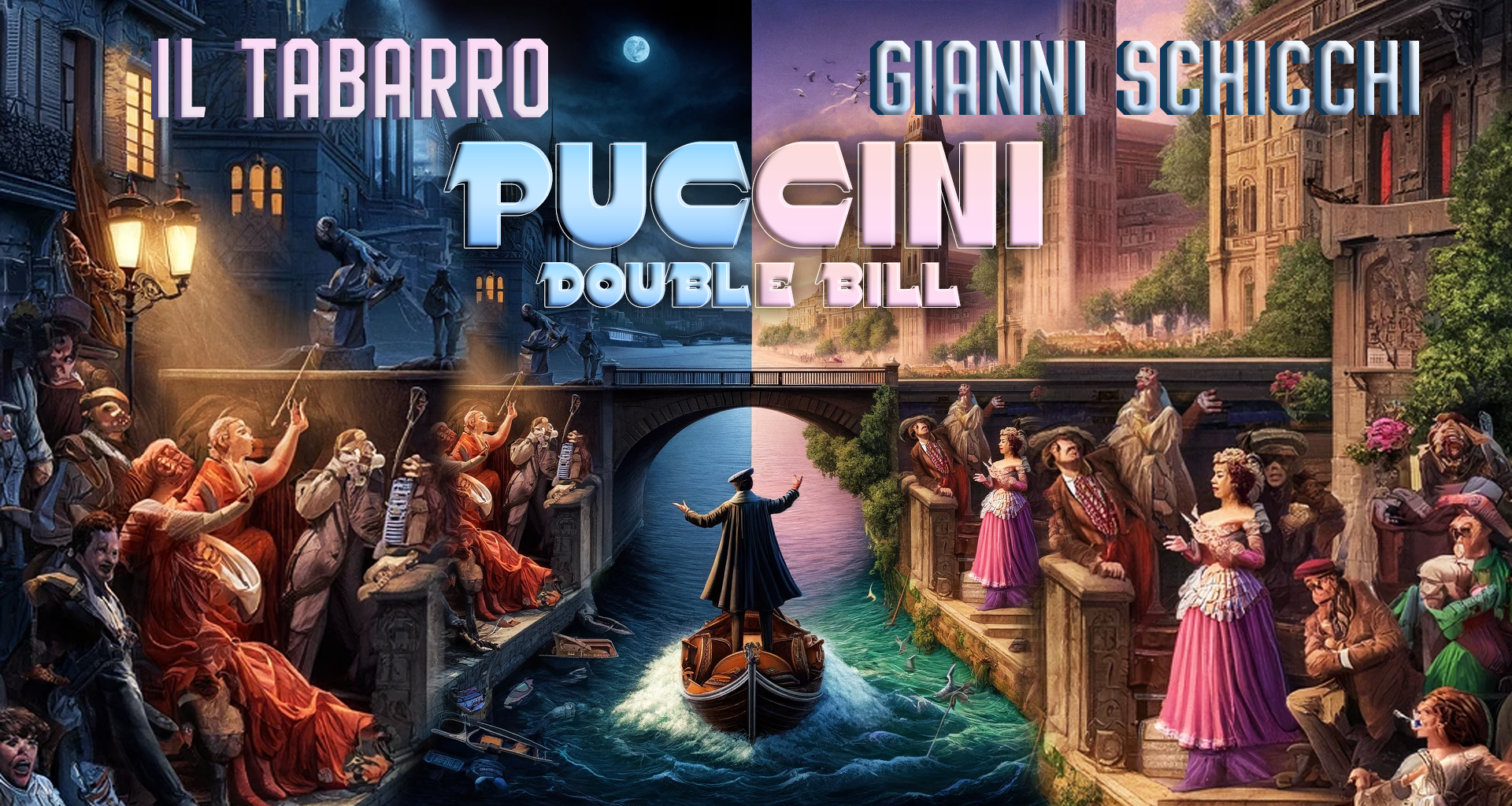
Puccini Double Bill
Boulder Opera Company, Brandon Matthews, conductor
Gene Roberts, stage director
Puccini: Il Tabarro (The cloak)
—Gianni Schicchi
7 p.m. Friday, Feb. 7 and Saturday, Feb. 8
3 p.m. Sunday, Feb. 9
Dairy Arts Center
 Sharps & Flatirons