Edvard Grieg’s Holberg Suite replaces Gerald Finzi Clarinet Concerto Jan. 25
By Peter Alexander Jan. 24 at 9:40 a.m.
The Boulder Chamber Orchestra has changed the planned program for their concert tomorrow (7:30 p.m. Saturday, Jan. 25).
The program as originally announced included the Gerald Finzi Clarinet Concerto performed by the orchestra’s principal clarinet player, Kellan Toohey. However, the orchestra has just announced that the Concerto has beed dropped from the program and replaced by the Holberg Suite by Edvard Grieg. The announcement states that “Kellan Toohey will not be performing on Saturday due to illness.”
CORRECTION: The original post stated that no reason had been given for the change of program. After that was posted, a delayed email arrived in my inbox noting that Toohey would not appear “due to illness.” We apologize for the inaccurate earlier notice on this site.
“Voice of Nature” will feature songs and a film from National Geographic
By Peter Alexander Jan. 22 at 5:50 p.m.
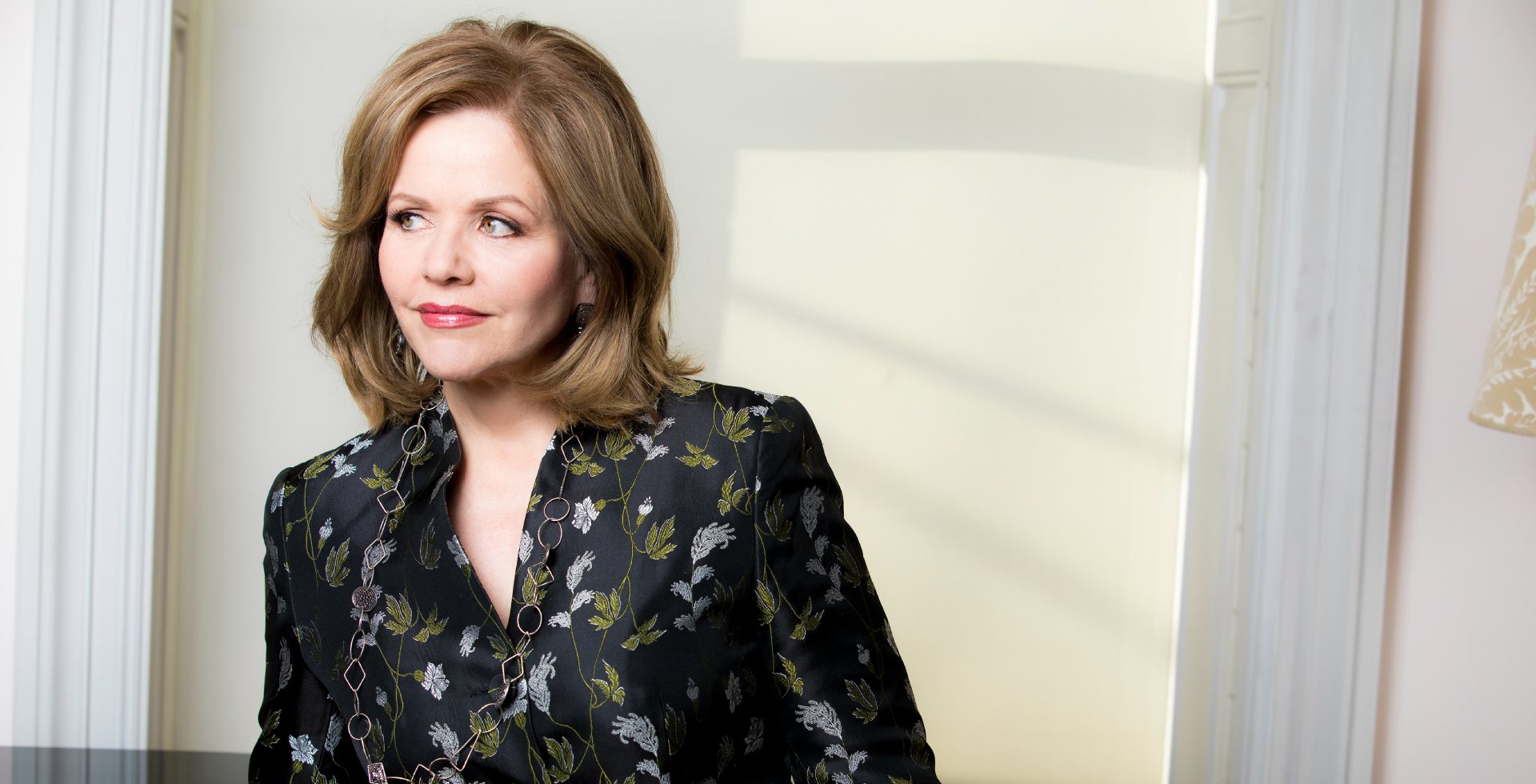
Soprano Renée Fleming
Soprano Renée Fleming will come to Macky Auditorium next week (7:30 p.m. Friday, Jan. 31) to present a program that she developed while cut off from her professional life during the COVID pandemic of 2020–21.
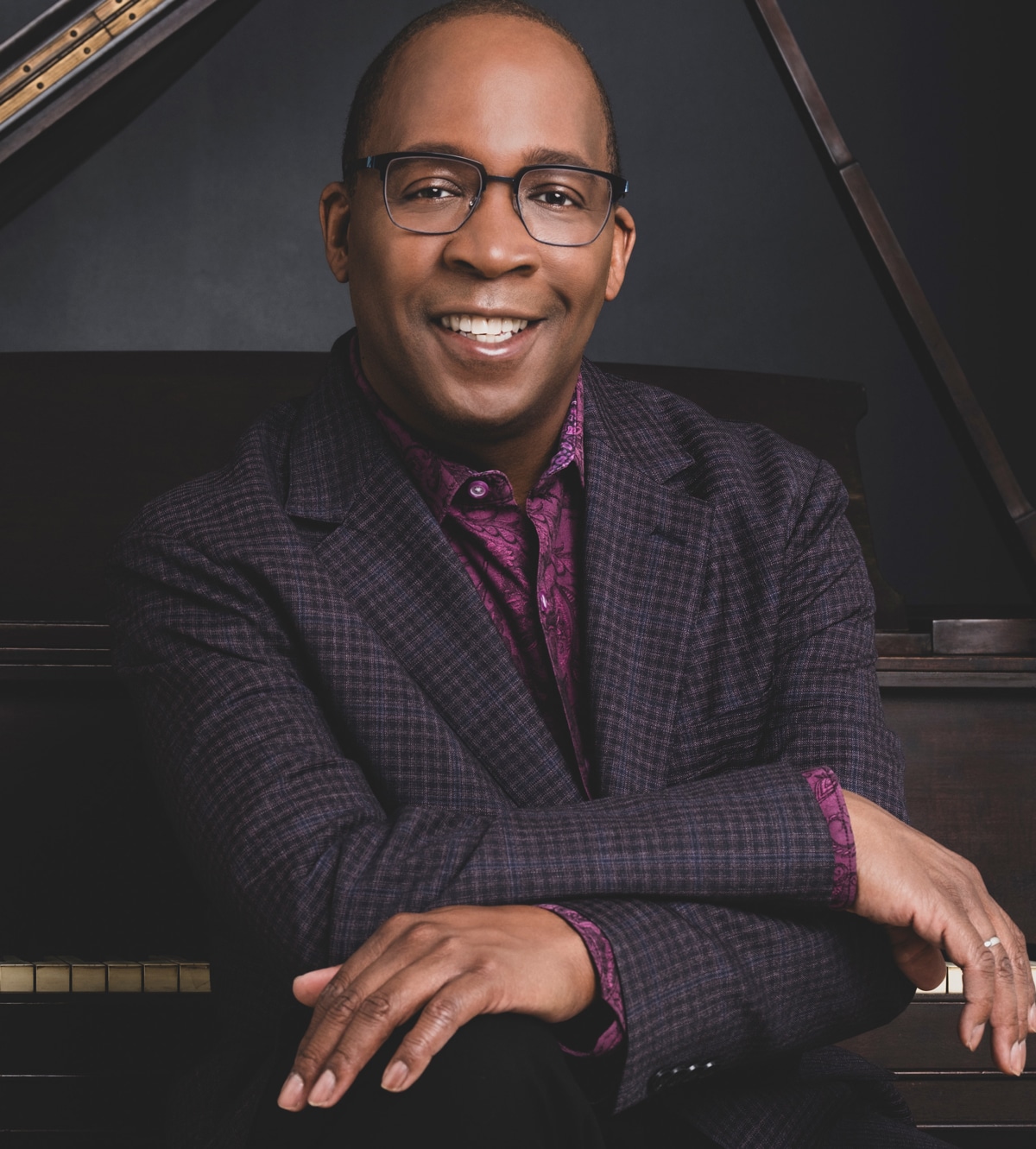
Collaborative pianist Howard Watkins
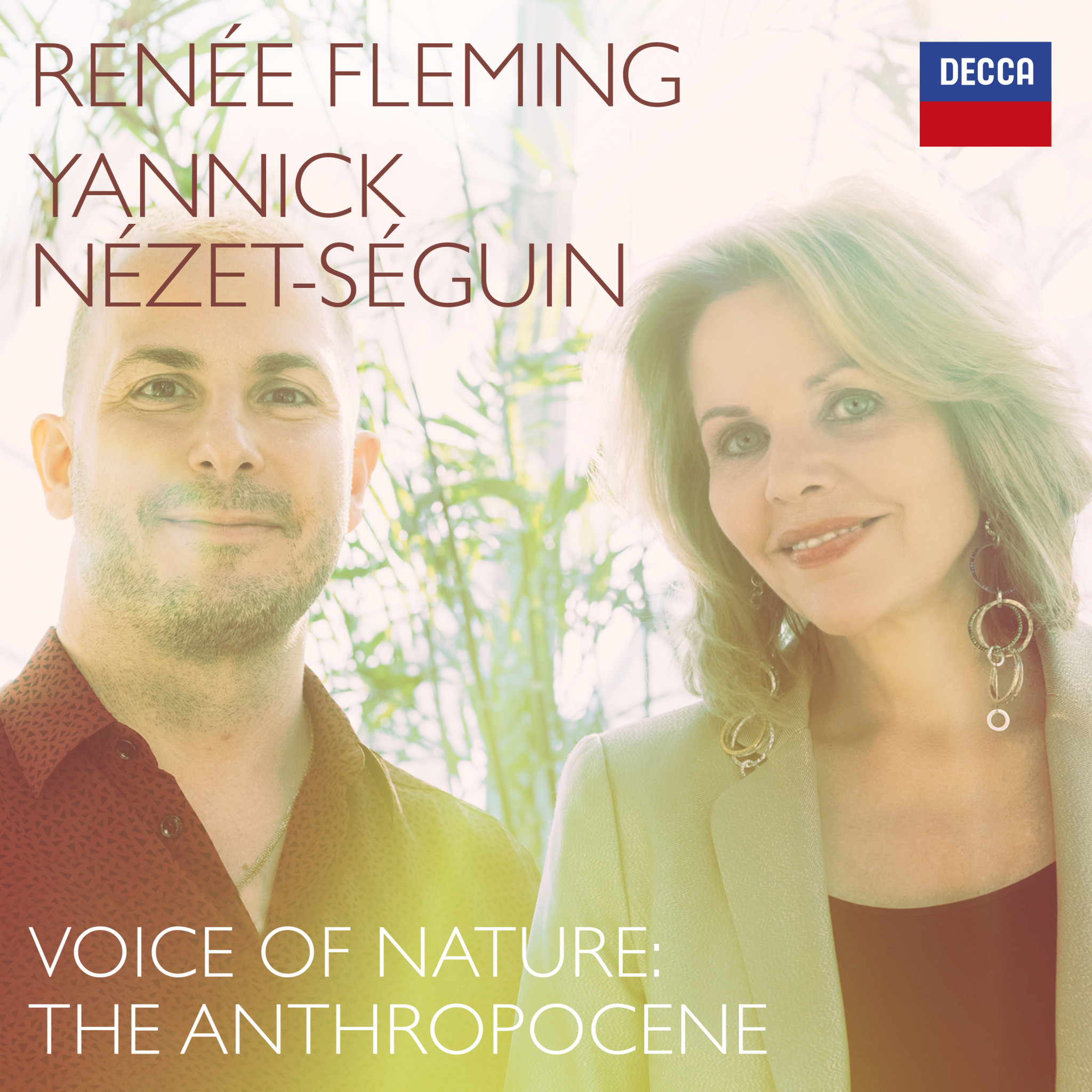
Titled “Voice of Nature: The Anthropocene,” the concert features Fleming and pianist Howard Watkins. The repertoire draws on a Grammy-winning album of the same title that Fleming recorded in 2023 with Yannick Nézet-Séguin, music director of the Metropolitan Opera, as pianist, and features songs that mention or reflect on the natural world. Part of the program will be accompanied by a film produced by the National Geographic Society.
“During the pandemic, the most comforting and healing activity for me was just being outside,” Fleming says. “Walking every day, gardening—to the point that I didn’t even want to come in. I always found it interesting that art song, especially the 19th century, also the 18th century and early 20th century, uses poetry that brought nature into the conversation about any aspect of the human condition. I found that interesting, in comparison with new works, which very often never mention nature.”
In that context, she worked with Nézet-Séguin to put together an album of songs that celebrate the consoling and healing power of nature. She decided to commission new songs from three living composers—Kevin Puts, Nico Muhly and Caroline Shaw—to bring the program up to today, and combine them with selected pieces from the extant song literature.
Yannick Nézet-Séguin and Renée Fleming on their album cover
“It was really fun to put the program together,” Fleming says. For the 19th-century art songs, “obviously I had to find things I thought would suit Yannick (Nézet-Séguin), give him enough of an interesting program that he would want to play it. And also because Yannick is French-Canadian, (the French) language works beautifully for him.”
The result is an album that features some very lovely but unfamiliar songs by Gabriel Fauré and Reynaldo Hahn, both French composers of the early 20th century, and also songs by Liszt and the Norwegian composer Edvard Grieg. “I just chose beautiful music that has powerful poetry and stuff I hadn’t performed before,” Fleming says. “I had performed Grieg, I had not performed Hahn at all, and I was thrilled to put Fauré” on the program.
The next step occurred when the album won a Grammy. Fleming decided to take a version of the program on tour, but with some additions. “Rather than just doing ‘Voice of Nature,’ the album, I added some more popular things that I’ve recorded and never perform, like a Björk song and a selection from Lord of the Rings,” Fleming explains. She also added songs by Burt Bacharach and Jerome Kern, and one of the most popular operatic arias in her repertoire, “O mio babbino caro” from Puccini’s Gianni Schicchi.
The final musical addition is a recording Fleming made of Jackson Browne’s “Before the Deluge” together with the Grammy winning folk singer/fiddler and opera composer Rhiannon GIddens, multi-Grammy winning bluegrass singer/fiddler Alison Krauss, and Nézet-Séguin, in an arrangement by composer Caroline Shaw. The recording will be played about halfway through the concert intermission.
Once she committed to the tour, Fleming had another idea: “I thought, let’s take this on the road but I’d like to have film with it,” she says. “I said, I’d really like to do something that shows the planet and encourages us to protect it.
“I happened to meet someone who worked with National Geographic at a dinner party. I was telling him about it and he said ‘I can introduce you to the head of National Geographic.’ So I had a two minute Zoom call with the CEO (Michael Ulica), and he said, ‘We’re looking for influencers and we’ll make your film.’ They did it in about three weeks and I’ve been touring it ever since, because it’s a beautiful piece.”
Fleming says that her devotion to nature and the planet dates back a long way. “When I was a teenager I saw a film that had a huge impact on me,” she says. “The film came out in the ‘70s, Soylent Green.
“The scene that really had a powerful effect on me was the one in which Edward G. Robinson, who was dying of cancer, (played a scientist who) had signed up for end of life care, and was looking at beautiful pictures of earth, and none of that existed anymore. I thought, ‘How could that possibly ever happen?’ And here we are, later in my life—if we don’t get a handle on this, I think we’re ultimately talking about the destruction of us on the planet.”
In an artist’s statement on the “Voice of Nature” program, Fleming writes: “Thankfully, the stunning natural world depicted in (the National Geographic) film still exists, unlike that movie scene so upsetting to my younger self. In blending these beautiful images with music, my hope is, in some small way, to rekindle your appreciation of nature, and encourage any efforts you can make to protect the planet we share.”
# # # # #
“Voice of Nature: The Anthropocene” Renée Fleming, soprano, and Howard Watkins, piano
Hazel Dickens: “Pretty bird”
Handel: “Care Selve” from Atalanta
Nico Muhly: “Endless Space”
Joseph Canteloube: “Bailero” from Songs of the Auvergne
Maria Schneider: “Our Finch Feeder” from Winter Morning Walks
Björk: “All is Full of Love”
Heitor Villa-Lobos: “Epílogo” from Floresta do Amazonas (piano solo)
Howard Shore: “Twilight and Shadow” from Lord of the Rings
Kevin Puts: “Evening”
Curtis Green: “Red Mountains Sometimes Cry”
Burt Bacharach: “What the World Needs Now” —To be played halfway through the intermission—:
Recording of Jackson Browne: “Before the Deluge” (arr. by Caroline Shaw) by Rhiannon Giddens, Alison Krauss, Renée Fleming; with Yannick Nézet-Séguin, piano
Gabriel Fauré: “Au Bord De L’eau” —“Les Berceaux”
Edvard Grieg: “Lauf Der Welt” —“Zur Rosenzeit”
Puccini: “O mio babbino caro” from Gianni Schicchi
Jerome Kern: “All the Things You Are”
Andrew Lippa: “The Diva”
7:30 p.m. Friday, Jan. 31 Macky Auditorium
NOTE: Very few tickets are left for this performance. You can check availability HERE.
The Colorado Music Festival (CMF) has announced its summer schedule of concerts at the Chautauqua Auditorium in Boulder.
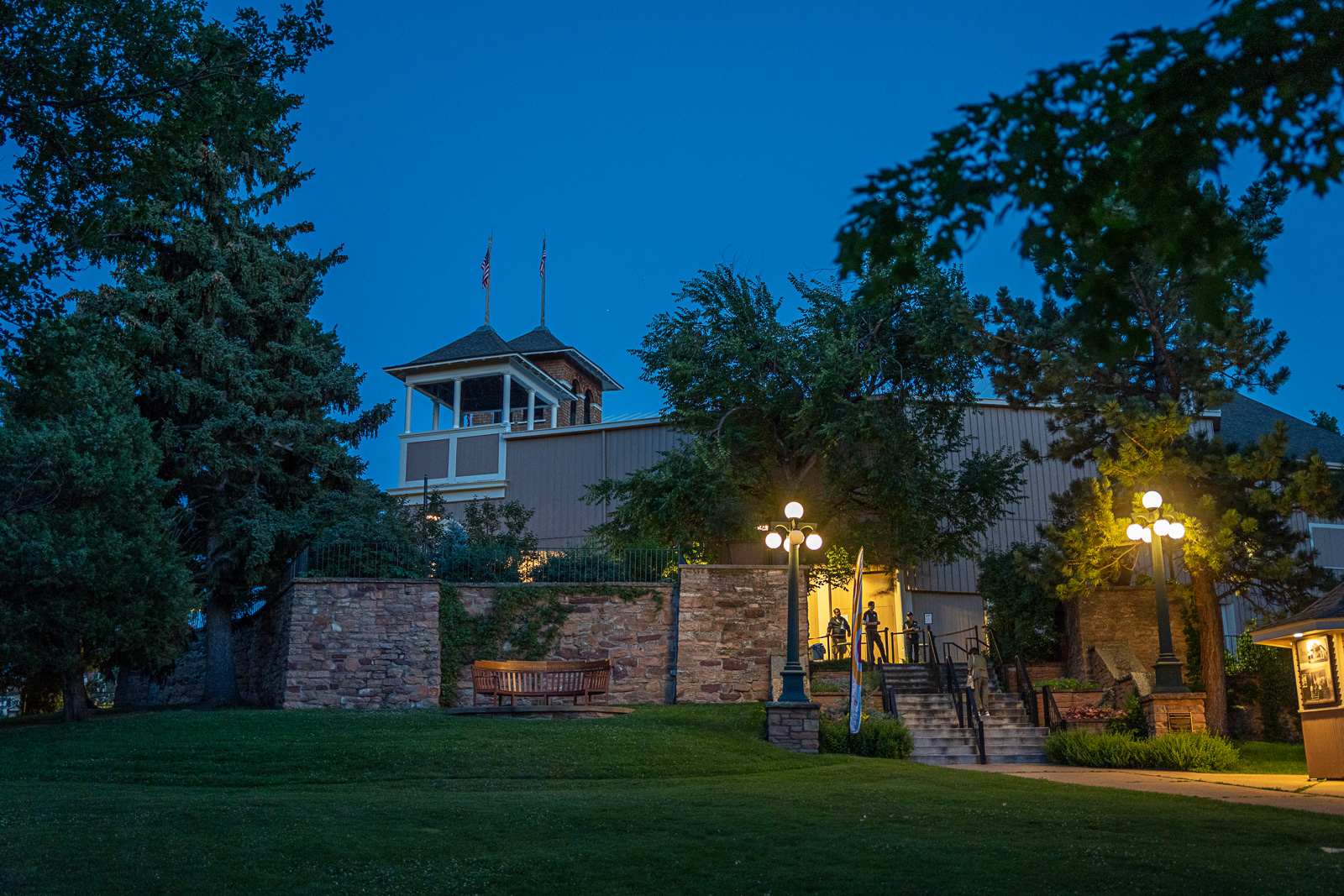
Chautauqua Auditorium. Photo by Geremy Kornreich
The season of 19 concerts will culminate with performances of two different ninth symphonies: Beethoven’s masterpiece, featuring the “Ode to Joy” finale, July 31 and August 1; and Mahler’s Ninth Aug. 3. Both are their composer’s last completed symphony, which has given a special mystique to the number of the “Ninth Symphony.”
Other highlights during the summer include appearances by outstanding solo artists, including pianist Hélène Grimaud playing the Gershwin Concerto in F on the opening night concert July 3 and 6; saxophonist Steven Banks playing the world premiere of Joan Tower’s Love Returns for saxophone and orchestra; and violinist Anne Akiko Meyers playing Eric Whitacre’s Murmur, a CMF co-commission written for her.
Two birth anniversaries will be celebrated during the summer: Ravel’s 150th, with performances of Daphinis et Chloé, Suite No. 2 and Bolero on the opening concert program, and Aaron Copland’s 125th with a performance of Appalachian Spring on July 17 and 18 and AnOutdoor Overture on July 11.
Some younger, rising artists will be featured this summer. Classical guitarist Xuefei Yang will perform Rodrigo’s popular Concierto de Aranjuez July 27. Violinist Benjamin Beilman and conductor Chloé van Soeterstède will appear on an all-Mozart program July 13. Cellist Hayoung Choi and conductor Maurice Cohn will perform July 20, and pianist Yeol Eum Son will appear with conductor Ryan Bancroft July 24 and 25.
This year’s Family Concert, presented at 10:30 a.m. July 6, will be an orchestral mystery, “Sherlock Holmes and the Case of the Missing Maestro.” Shira Samuels-Shragg will conduct the program, in which all of the musicians are suspects and Sherlock Holmes must investigate each of the instrument families.
All of the CMF’s summer concerts and programs are listed below. Tickets to the 2025 Festival will be available for purchase beginning March 4. For information or to purchase tickets for the 2025 festival, visit the CMF Web page, or call the Chautauqua box office at 303-440-7666.
# # # # #
Colorado Music Festival, Peter Oundjian, music director 2025 Summer Season All performances in Chautauqua Auditorium
Peter Oundjian and the CMF Orchestra. Photo by Geremy Kornreich, 2023
Opening Night Festival Orchestra, Peter Oundjian, conductor With Hélène Grimaud, piano
Stravinsky: Feu d’artifice (Fireworks)
Gershwin: Piano Concerto in F
Ravel: Daphnis et Chloé, Suite No. 2 —Bolero
7:30 p.m. Thursday, July 3 6:30 p.m. Sunday, July 6
Family Concert Festival Orchestra, Shira Samuels-Shragg, conductor
Sherlock Holmes and the Case of the Missing Maestro
10:30 a.m. Sunday, July 6
Chamber Music Concert Colorado Music Festival musicians
Schubert: String Trio in B-flat major, D471
Prokofiev: Quintet in G minor, op. 39
Brahms: Piano Quartet No. 3 in C minor, op. 60
7:30 p.m. Tuesday, July 8
Festival Orchestra Concert Peter Oundjian, conductor With Steven Banks saxophone
Copland: An Outdoor Overture
Joan Tower: Love Returns for saxophone and orchestra (world premiere)
Brahms: Symphony No. 1 in C minor, op. 68
7:30 p.m. Thursday, July 10 6:30 p.m. Friday, July 11
An Evening of Mozart Festival Orchestra, Chloé van Soeterstède, conductor With Benjamin Beilman, violin
Mozart: Overture to Don Giovanni —Violin Concerto No. 5 in A major, K219 (“Turkish”) —Overture to Le Nozze di Figaro (The Marriage of Figaro) —Symphony no. 34 in C major, K338
6:30 p.m. Sunday, July 13
Chamber Music Concert Brentano String Quartet
Schubert: Quartet in A minor, D804 (“Rosamunde”)
Anton Webern: Five Movements for String Quartet, op. 5
Brahms: String Quartet No. 3 in B-flat major, op. 67
7:30 p.m. Tuesday, July 15
Festival Orchestra Concert Peter Oundjian, conductor With Anne Akiko Meyers, violin
Copland: Appalachian Spring
Eric Whitacre: Murmur (CMF co-commission)
Ravel: Tzigane
Berlioz: Overture to Béatrice et Bénédict
Tchaikovsky: Romeo and Juliet Fantasy Overture
7:30 p.m. Thursday, July 17 6:30 p.m. Friday, July 18
Festival Orchestra Concert Maurice Cohn, conductor With Hayoung Choi, cello
Respighi: Gli uccelli (The birds)
Tchaikovsky: Variations on a Rococo Theme, op. 33
Beethoven: Symphony No. 1 in C major, op. 21
6:30 p.m. Sunday, July 20
Chamber Music Concert Colorado Music Festival musicians
Nico Muhly: Doublespeak (2012)
Mozart: Quintet for piano and winds in E-flat major, K452
Dvořák: String Quintet No. 3 in E-flat major, op. 97
7:30 p.m. Tuesday, July 22
Festival Orchestra Concert Ryan Bancroft, conductor With Yeol Eum Son, piano
Sofia Gubaidulina: Fairytale Poem (Märchenpoem, 1971)
Beethoven: Piano Concerto No. 3 in C minor, op. 37
Shostakovich: Symphony No. 10
7:30 p.m. Thursday, July 24
6:30 P.M. Friday, July 25
Festival Orchestra Concert Peter Oundjian, conductor With Xuefei Yang, guitar
Tchaikovsky: String Quartet No. 1 in D major, op. 11
7:30 p.m. Tuesday, July 29
Festival Orchestra Concert Colorado Music Festival orchestra and the St. Martin’s Festival Singers Peter Oundjian, conductor With Lauren Snouffer, soprano; Abigail Nims, mezzo-soprano; Issachah Savage, tenor; and Benjamin Taylor, baritone
Michael Abels: Amplify (CMF co-commission)
Beethoven: Elegischer Gesang (Elegiac song), op. 118 —Symphony No. 9 in D minor, op. 125
7:30 p.m. Thursday, July 31 6:30 p.m. Friday, Aug. 1
Festival Finale Colorado Music Festival Orchestra, Peter Oundjian, conductor
Clarinetist Kellan Toohey plays Concerto by Gerald Finzi
By Peter Alexander Jan. 21 at 11:12 p.m.
The Boulder Chamber Orchestra will present a concert Saturday featuring their string section (7:30 p.m. Jan. 25; details below), playing one of the great masterworks for strings, Dvořák’s Serenade for Strings.
The concert, under the direction of Bahman Saless, will also feature clarinetist Kellan Toohey playing the Concerto for clarinet and strings by British composer Gerald Finzi. The program also includes the Serenade for Strings by 20th-century Swedish composer Dag Wirén.
Kellan Toohey
Known mostly as a composer of songs and choral music, Finzi also wrote concertos for clarinet and cello, a Grand Fantasia and Toccata for piano and orchestra, and other instrumental pieces.
The Clarinet Concerto was written in 1949 for the Three Choirs Festival located in turn in the English cities of Gloucester, Hereford and Worcester, with which Finzi had a long association. The concerto is in three movements, of which the Adagio second movement is the expressive core. The quick rondo finale incorporates an English folk song. Finzi himself conducted the premiere, performed in Hereford by the London Symphony strings and clarinetist Frederick Thurston.
Wirén studied at the Stockholm Conservatory 1926–31, and won a state award that allowed him to live and study in Paris for several years. He wrote a number of orchestral works, including five symphonies and other concert works. His music is generally accessible to audiences, mixing traditional elements with modernist and innovative impulses.
His Serenade for Strings, composed just after his return to Sweden from Paris in 1937, is his most widely performed work. The composer wrote in his notes for the score, “The purpose of this little Serenade is simply to amuse and entertain, and if the listener, when the last note has faded, feels cheerful and happy, then I have reached my goal.”
Dvořák won the Austrian State Prize in music in 1875—the first of three times that he received that award and the support it offered young composers. It was those awards that gave Dvořák the freedom to purse his work as a composer. One of the judges of the competition was Brahms, who later became an important champion of Dvořák and introduced him to the German publisher N. Simrock.
In the months after winning the award, Dvořák composed his Fifth Symphony, several pieces of chamber music, and the Serenade for Strings. The Serenade was completed in only 12 days in May, 1875, but not performed until December 1876. One of his most tuneful and cheerful works, the Serenade has remained popular since the first performances. Dvořák was proud enough of the work that he included it with his application for his third state award in 1877.
In addition to performing as the principal clarinetist of the BCO, Toohey also plays with the Fort Collins Symphony, the Wyoming Symphony and the Cheyenne Symphony. He holds a doctorate from CU Boulder and has recorded a CD of music for clarinet and piano by Colorado composers, Scenes from Home.
Little known Quintet by Louise Farrenc and Prokofiev’s much loved Peter and the Wolf
By Peter Alexander Jan. 16 at 12:10 a.m.
The Boulder Piano Quartet will be joined by bassist Susan Cahill, a member of the Colorado Symphony, for a program of piano quintets Friday (7 p.m. Jan. 17; details below) at the Academy, University Hill.
The concert, to be held in the Academy’s Chapel Hall, will be free. Audience members are asked to RSVP HERE prior to the concert. All the works on the program are for a quintet of piano with with one each violin, viola, cello and string bass, whereas most piano quintets are set for piano with a string quartet of two violins, viola and cello.
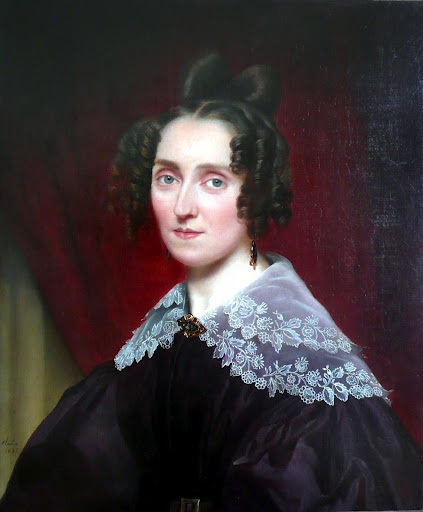
Louise Farrenc, portrait by Luigi Rubio (1835)
The performance will open with a quintet by Louise Farrenc, a 19th-century French composer who seems to be having a “moment” now. Though not widely known to American audiences, she has had several recent performances. Her Sextet for piano and winds was performed last Saturday (Jan. 11) on a Boulder Chamber Orchestra Mini Chamber concert, and her Third Symphony was performed in May on the Colorado Pro Musica’s farewell concert. Many of her works have recently been recorded, including music for piano, chamber music and symphonies (see listing HERE).
A pioneer among women pianists and composers, Farrenc was a successful concert pianist. She became the first woman appointed to the permanent faculty of the Paris Conservatory in 1842, a position she held for 30 years.
The Piano Quintet in C minor by Vaughan Williams is one of his least known works, largely because the composer removed it from his catalogue of compositions after World War I, presumably because he was no longer satisfied with it. It remained unperformed for more than 80 years until the composer’s widow allowed a performance, and subsequent publication, to honor the 50th anniversary of the composer’s death.
Schubert’s “Trout” Quintet is the best known of the piano quintets with string bass. It takes its name from the fourth movement, a set of variations on the theme from Schubert’s song “Die Forelle” (The trout). The performance Friday will only feature that one movement, ending the program on a familiar and cheerful note.
# # # # #
Boulder Piano Quartet Igor Pikayzen, violin; Matthew Dane, viola; Thomas Heinrich, cello; and David Korevaar, piano|With Susan Cahill, bass
Louise Farrenc: Piano Quintet No. 2 in E major, op. 31|
Ralph Vaughan Williams: Piano Quintet in C minor
Schubert: Piano Quintet in A major (“Trout”): 4. Andantino
7 p.m. Friday, Jan. 17 Chapel Hall, Academy University Hill
The Longmont Symphony Orchestra will present its annual Family Concert, featuring Prokofiev’s masterful setting of the Russian folk tale Peter and the Wolf, Saturday afternoon (4 p.m. Jan. 18; details below) in Vance Brand Auditorium.
The concert will be led by the LSO music director, Elliot Moore. Cameron A. Grant will narrate. In addition to the Prokofiev score, the program features selections from The Carnival of the Animals by Saint-Saëns.
Subtitled “A symphonic tale for children,” Prokofiev’s Peter and the Wolf illustrates the tale of a young boy who evades the dangerous wolf, with characteristic themes for each character in the story, including Peter, his grandfather, Peter’s animal friends, the hunters and of course, the wolf.
Prokofiev wrote an explanatory note for the score: “Each character of this tale is represented by a corresponding instrument in the orchestra: the bird by a flute, the duck by an oboe, the cat by a clarinet playing staccato in a low register, the grandfather by a bassoon, the wolf by three horns, Peter by the string quartet, the shooting of the hunters by the kettle drums and bass drum.”
Grant is a prominent attorney in Longmont, where he is a managing shareholder in the firm Lyons & Gaddis, but he is also familiar with the performing world. He holds an undergraduate degree in English and vocal music performance from Colorado College, and attended the Aspen Opera Theater Center. He has appeared with the Longmont Symphony as narrator for family concerts in the past, most recently in January, 2024.
# # # # #
Family Concert: Peter and the Wolf Longmont Symphony Orchestra, Elliot Moore, conductor With Cameron A. Grant, narrator
Saint-Saëns: Selections from Carnival of the Animals
Concert features world premiere, Bluegrass violin concerto, “New World” Symphony
By Peter Alexander Jan. 13 at 12:30 a.m.
Michael Butterman returned to the Boulder Philharmonic Orchestra yesterday (Jan. 12) to conduct an interesting and worthwhile program, having missed the fall season due to cancer treatments.
Newly bald from chemo therapy, Butterman was welcomed by the Macky Auditorium audience with cheers and applause. He led the full program with his usual energy.
First was the world premiere of Wind, Water, Sand by Stephen Lias, inspired by Colorado’s Great Sand Dunes National Park. It is the third national park-inspired piece by Lias premiered by the Phil, after Gates of the Arctic (2014) and All the Songs that Nature Sings (Rocky Mountain, 2017). Unlike those works, Wind, Water, Sand does not have images to accompany the score. Lias has explained that he wanted this work to spur the listener’s imagination, instead of being linked to specific images of the park.
He also said the music expresses the flow of the three elements that created the park—the wind, the water, and the sand. There are closely related musical ideas that flow at various speeds, just as the three elements flow at different rates within the park.
The score opens with energetic ideas that are wonderfully evocative of motion. The intricate, rippling quality of these opening gestures suggest the wind flowing over the dunes, or the ripples of the stream that runs alongside the dunes. Thereafter, the orchestral sound is colorful and suggestive, but rarely specific enough to signal wind or water.
The bustling opening gives way to a greater stillness, punctuated by outbursts of sound that I found evocative more of a summer storm than any of the three elements. Exciting contributions from the percussion animate this section, along with dramatic gestures from the brass that evolve into something that seems grander than sand dunes.
Whatever one imagines, the piece is well structured from beginning to end. With its busy opening, its central section that grows in grandeur, and a return to the opening soundscape, it creates a satisfying whole.
People around me talked of the score having a cinematic quality—I heard mentions of Indiana Jones and Studio Ghibli; clearly the music struck home. On the basis of its musical qualities alone, Wind, Water, Sand deserves a future in concert halls.
Next Butterman introduced violinist Tessa Lark, who performed a piece written for her by Michael Torke. Titled Sky: Violin Concerto, it combines the structure and musical drama of the classical concerto with musical styles that reflect Lark’s fiddling skills from her native Kentucky.
Lark occupied the concerto’s unique sound world like it was home—which in a way it is. She played the dazzling first movement with fire and a Bluegrass virtuosity that elicited spontaneous applause between movements. The wistful second movement—as it is labelled in the score—presents a series of meditative ideas skillfully knit together. And the final movement, now “spirited,” gave Lark the chance to play flashy fiddling licks with energy and bravura.
The performance was not always ideally balanced in Macky’s uneven acoustic, but that seemed not to detract from the listeners’ enjoyment. Lark’s energetic body language, including bends and emphatic stomps, added to the overall excitement. The audience called Lark back for an encore that combined her country singing skills with down-home fiddling.
The concert concluded with another piece from America, if not by a living American: Dvořák’s Symphony No. 9, “From the New World.” Butterman and the orchestra gave an expressive performance, marked by strategic variations of tempo. If a little more than I would like, these touches marked out the expressive contours of the familiar symphony.
The best moment was provided by the brass chorale at the outset of the second movement, resonant and reverent. The movement also featured an eloquent English horn solo on the famous “Goin’ Home” theme that was later adopted into a pseudo-spiritual by one of Dvořák’s pupils. Butterman tore into the final movement at a speedy pace, but again used strategic variations of tempo to outline the expressive contours.
The winds played strongly throughout, giving the symphony a muscular core, but occasionally overpowering the strings. All the wind solos were well played, including the treacherous horn solos and lovely contributions from the flute and clarinet.
CORRECTION 1/13: The composer Stephen Lias’ name was incorrectly listed as Michael in the first version of this review.
Music for winds from the BCO, quartets and quintet from the Takács Quartet
By Peter Alexander Jan. 10 at 1:45 p.m.
The Boulder Chamber Orchestra (BCO) will present a program of French music for piano and winds for its third Mini-Chamber program of the season Saturday (7:30 p.m. Jan. 11; details below).
The orchestra’s current artist-in-residence, pianist Jennifer Hayghe, will be joined by members of the BCO to perform works by Vincent d’Indy, Albert Roussel, Francis Poulenc, Florent Schmitt and Louise Farrenc.
BCO artist in residence Jennifer Hayghe
The program that was curated by Hayghe offers an opportunity to hear pieces and composers that are little known to American audiences. French music in particular is less often programmed here than German and Austrian works. The least familiar, and the earliest of the composers is Farrenc, who lived in the 19th century. A successful concert pianist, she became the first woman to hold a permanent position at the Paris Conservatory, which she maintained for 30 years, from 1842 to 1872.
All the other composers lived and worked in the 20th century. The most familiar is probably Poulenc, who died in 1963. Known for his opera Dialogues des Carmélites (Dialogue of the Carmelites), his Organ Concerto and his choral Gloria, he also wrote a large number of pieces for chamber ensembles.
The other three composers—d’Indy, Roussel and Schmitt—were active in the first half of the 20th century. Offering a rare taste of a time and place that rarely shows up in concert programs in the U.S., Mini-Chamber 3 is a welcome opportunity for the chamber music audience to expand their horizons beyond the routine.
# # # # #
Boulder Chamber Orchestra Mini-Chamber 3 Jennifer Hayghe, artist in residence, piano With Rachelle Crowell, flute; Brittany Bonner, one; Kellan Toohey, clarinet; Kaori Uno-Jack, bassoon; and Devon Park, horn
The Takács Quartet will be joined by pianist Margaret McDonald to present one of the preeminent chamber works of the 19th century, Brahms’s Quintet in F minor for piano and strings.
The program will also feature Beethoven’s early String Quartet No. 1 in F major, op. 18 no. 1—actually the second quartet of the set to be written—and the String Quartet no. 1 by Stephen Hough, which was written for the Takács.
Hough’s quartet was first written to be heard alongside the Ravel String Quartet and Ainsi la nuit (Thus the night), a string quartet by the French composer Henri Dutilleux. Hough subtitled the quartet “Les Six Rencontres” (The six re-encountered), a reference to a group of early 20th-century composers active in France that did not include either Ravel or Dutilleux. Hough wrote that the subtitle “has in it a pun and a puzzle: the six movements as an echo of ‘Les Six,’ although there are no quotes or direct references from those composers; and ‘encounters’ which are unspecified.”
Margaret McDonald, guest pianist with the Takács Quartet
The six movements of the quartet have titles that indicate places, presumably in the Montparnasse district of Paris, where an encounter with a composer from “The Six” might have occurred: On the boulevard, in the park, at the hotel, at the theater, in the church and at the market. The Takács Quartet premiered “Les Six Rencontres” in Costa Mesa, Calif., Dec. 8, 2021.
One of the best known major pieces of chamber music from the 19th century, Brahms F minor Piano Quintet evolved through several forms before being finished as a quintet. It was first written as string quintet, a version that the composer later destroyed, and then as a duet for two pianos, and finally as a quintet for string quartet with piano. All of this stretched over six years, prior to the Quintet’s premiere in 1868.
# # # # #
Takács Quartet With Margaret McDonald, piano
Beethoven: String Quartet in F Major, op. 18 no. 1
Stephen Hough: String Quartet No. 1, “Les Six Rencontres” (The six re-encountered)
Johannes Brahms: Piano Quintet in F Minor, op. 34
4 p.m. Sunday, Jan. 12 7:30 p.m. Monday, Jan. 13 Grusin Music Hall
Conductor will lead premiere of new work by Stephen Lias on program “From the New World”
By Peter Alexander Jan. 8 at 12 noon
Michael Butterman, music director of the Boulder Philharmonic, returns to the Macky Auditorium stage to conduct the orchestra’s concert Sunday (4 p.m. Jan. 12; details below) after an absence of several months while he underwent cancer treatments at his home in Shreveport, La.
In addition to Butterman’s return, the concert is noteworthy in featuring two works by living composers, one of them a world premiere, and the much loved Symphony “From the New World” by Antonín Dvořák. The world premiere, Wind, Water, Sand by Stephen Lias, is a musical tribute to Colorado’s Great Sand Dunes National Park—his third national park-based score to be premiered by the Phil. Violinist Tessa Lark, who combines her Grammy-nominated skills as a classical soloist with prowess as a bluegrass fiddler, will play Michael Torke’s Sky: Violin Concerto, which was written for her.
Michael Butterman with the Boulder Phil, before his recent illness
Butterman is eager to return. “I want to get back to making music,” he says. “I’ve completed the chemo therapy regimen with good results. My immune system is going to be subpar for a few months and I have to be cautious, (but) other than that, I can go about my business.”
Noting the visible effects of his chemo treatments, he names some famous bald conductors. “It’s a different look,” he says. “I pass the mirror every now and then, and I’m like, ‘who was that person?’”
Lias, whose Web page identifies him as an “adventurer-composer,” has written more than 20 concert works inspired by America’s national parks. Two that have been premiered by the Boulder Phil—Gates of the Arctic (2014), inspired by a residency in that Alaskan park, and All the Songs that Nature Sings (2017), inspired by Colorado’s Rocky Mountain National Park—were accompanied by visual images of the respective parks.
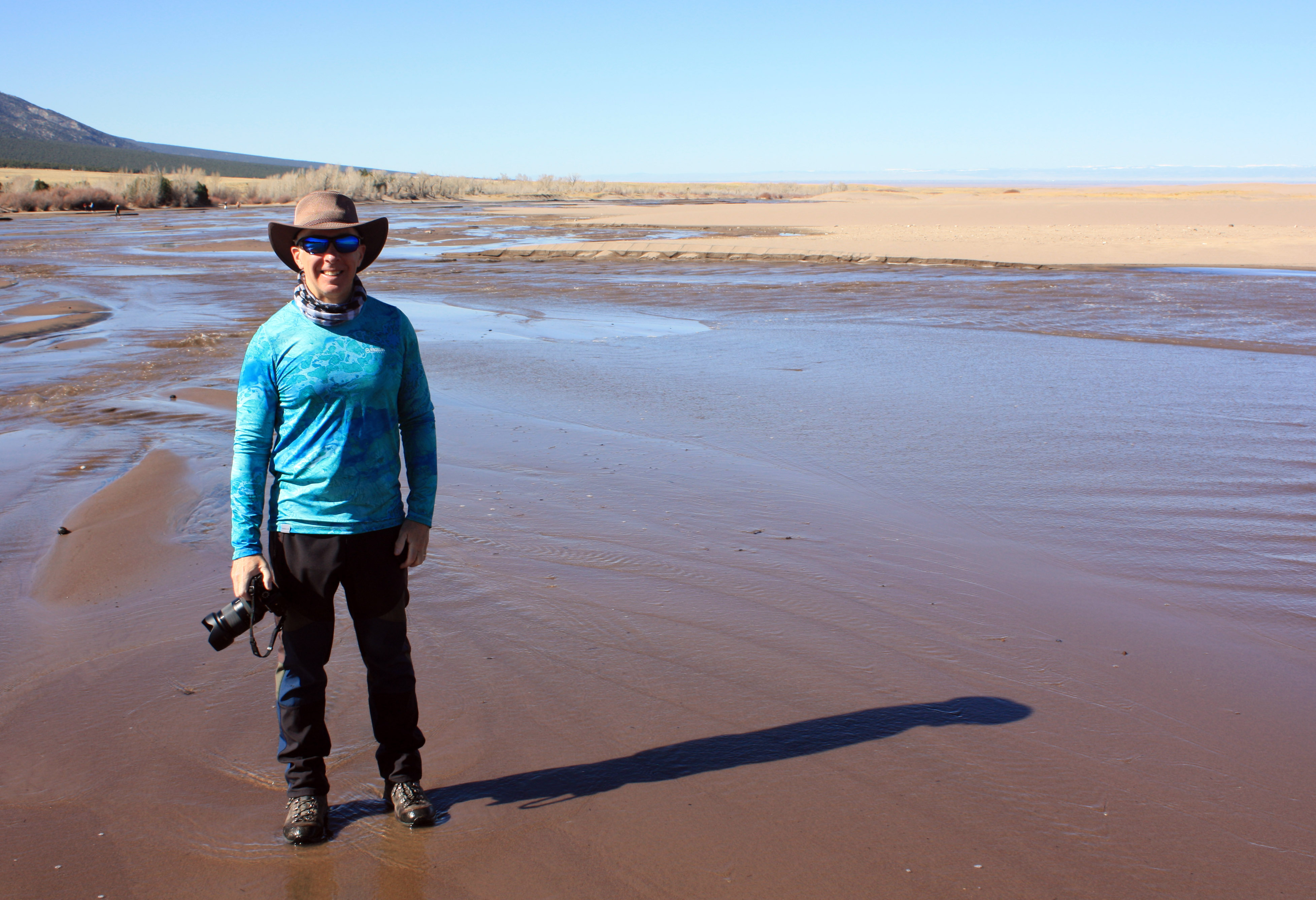
Stephen Lias at Great Sand Dunes N.P. in 2023 Photo by Peter Alexander
Wind, Water, Sand, however, does not have accompanying photos or videos. “I enjoy writing music that has imagery synchronized to it,” Lias says. “But Michael (Butterman) agreed at my request that this piece would not have imagery.
“In this case, both because of the location and because of the musical challenge, I wanted to tap into the audience’s imagination, which is what we do when we listen to Beethoven’s ‘Pastoral’ Symphony or the Strauss Alpine Symphony. We allow our imagination to provide the imagery, and that was the direction that I wanted to go in this piece.”
Lias spent more than a week as a guest of Great Sand Dunes National Park in the spring of 2023. This was not a residency, but a one-time project between Lias, the park and the Boulder Philharmonic. Park officials “were very generous in allowing me access to the park, the museum and the staff there,” he says.
“What I wanted was to be completely open to the place (and) the experience there,” he said during his 2023 visit to the park. “I’m creating what I think of as ‘idea soup‘. I’m letting it stir, and we’ll see what it turns into.”
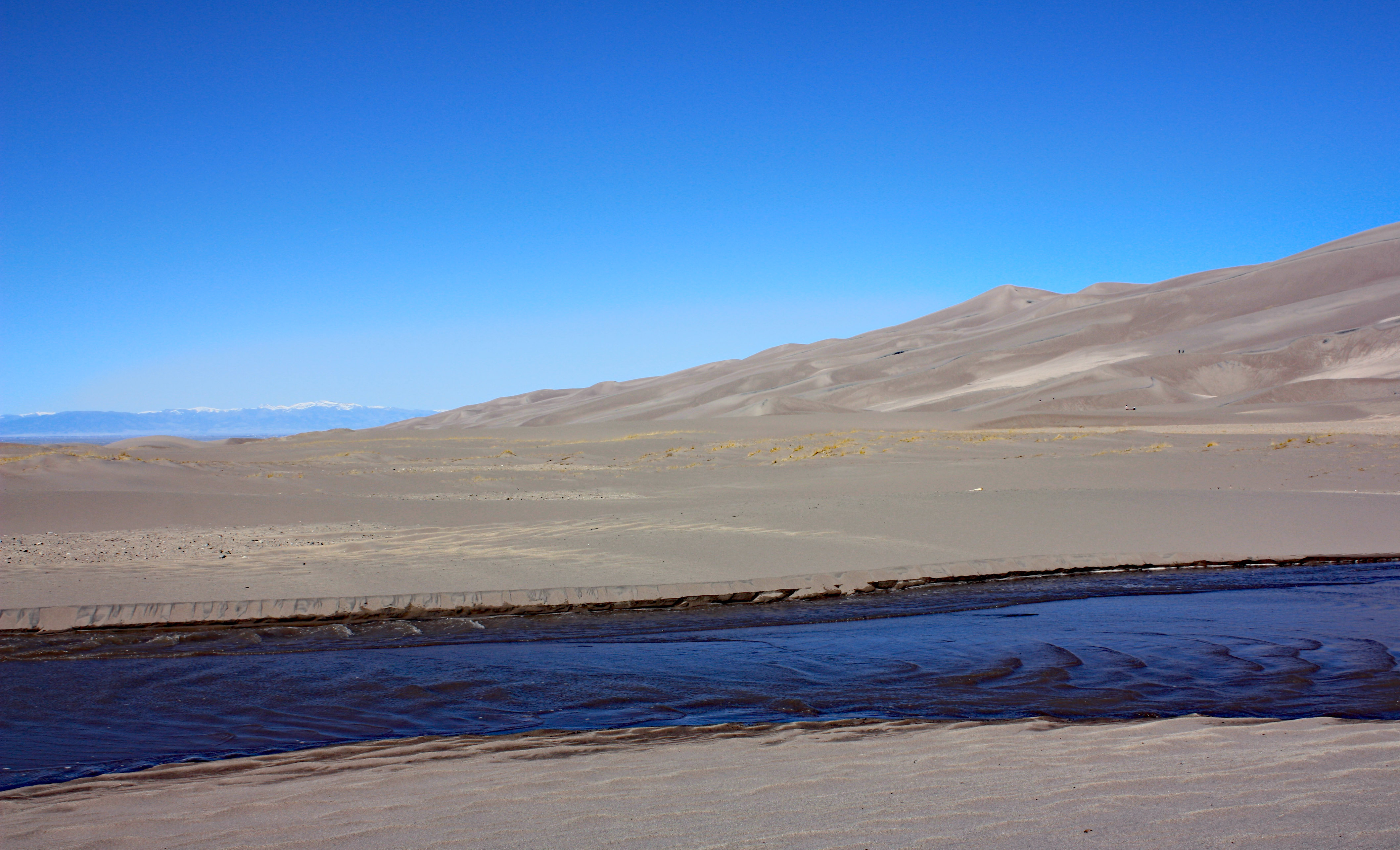
The flow of sand and water at Great Sand Dunes N.P. Photo by Peter Alexander
What turned into the basis of his score was the flowing motion of the wind across the dunes, of the water that runs beside the dunes, and of the sand as it forms the dunes—hence the title, Wind, Water, Sand. “All of those are doing the same thing at different paces and at different scales, from the very slow to the very fast, from the microscopic to the gargantuan,” Lias says.
While those are separate elements in nature, they are not represented by separate musical ideas. “Rather than make a wind theme and a water theme and a sand theme,” Lias explains, “I focused on a group of ideas that go both slow and fast. There are little ornate, intricate elements in certain parts of the music that are re-used as whole notes as bass lines for other places in the piece.They are all participating in the same dance.”
An eclectic composer, Torke has written music influenced by minimalism, operas influenced by rap and disco, a rock opera version of Monteverdi’s L’incoronazione de Poppea (The Coronation of Poppea), music inspired by his synesthetic experiences of music and color—and now a Bluegrass concerto. Sky was commissioned in 2018 by a consortium of 11 orchestras around the country, including the Albany Symphony, with whom Lark played the premiere. “Tessa just owns that piece,“ Butterman says.
Lark grew up in Kentucky, where she studied the Suzuki method and performed with her father’s Bluegrass band. She later studied at the New England Conservatory and Juilliard, and while playing a Stradivari violin on loan she was inspired to record an album titled Stradgrass Sessions combining her classical and Bluegrass skills.
Tessa Lark
In his program notes, Torke writes “The inspiration for this concerto came from Tessa Lark . . . Banjo-picking technique given to the solo violin was the departure point in the first movement. For the second movement my source material was Irish reels, the forerunner of American Bluegrass. The template for the third movement was fiddle licks with a triplet feel. In each case I wrote themes of my own in these styles, and developed the ideas into a standard ‘composed’ violin concerto.”
Butterman describes Sky as having “a great deal of complexity in terms of the way the parts work with one another. It’s a workout for the orchestra, no question, but very successful with the audience.”
In the context of the two newer pieces, Butterman thought that Dvořák’s “New World” was the perfect compliment. “All of these pieces are American in one way or another,” he says. “The closest connection is between Torke and Dvořák. Dvořák was looking to show Americans how to celebrate our cultural richness through development of the spiritual, and also what he thought were native American elements. And in the Torke we have a Bluegrass influence.
“The Torke and the Dvorak, in spite of them being a hundred and however many years apart, come from similar motivations. And (Lias’s) piece is inspired by a beautiful slice of our American landscape (that) people in Colorado will appreciate and understand.”
# # # # #
“From the New World” Boulder Philharmonic Orchestra, Michael Butterman, conductor With Tessa Lark, violin
Stephen Lias: Wind, Water, Sand WORLD PREMIERE
Michael Torke: Sky: Violin Concerto
Dvořák: Symphony No. 9 in E minor, “From the New World”
Broadway show Once Upon a Mattress added to the 2025 schedule
By Peter Alexander Jan. 5 at 5:45 p.m.
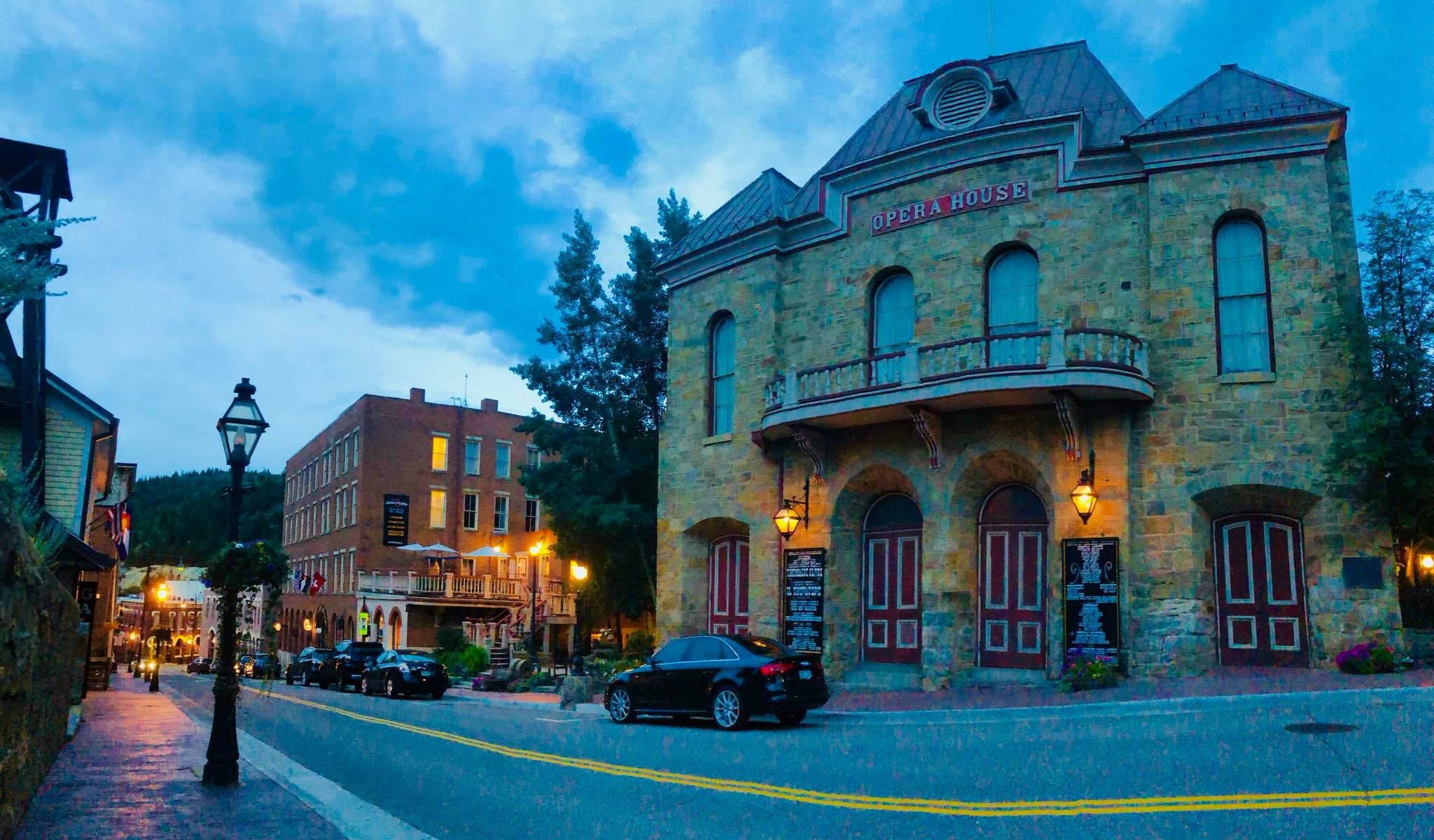
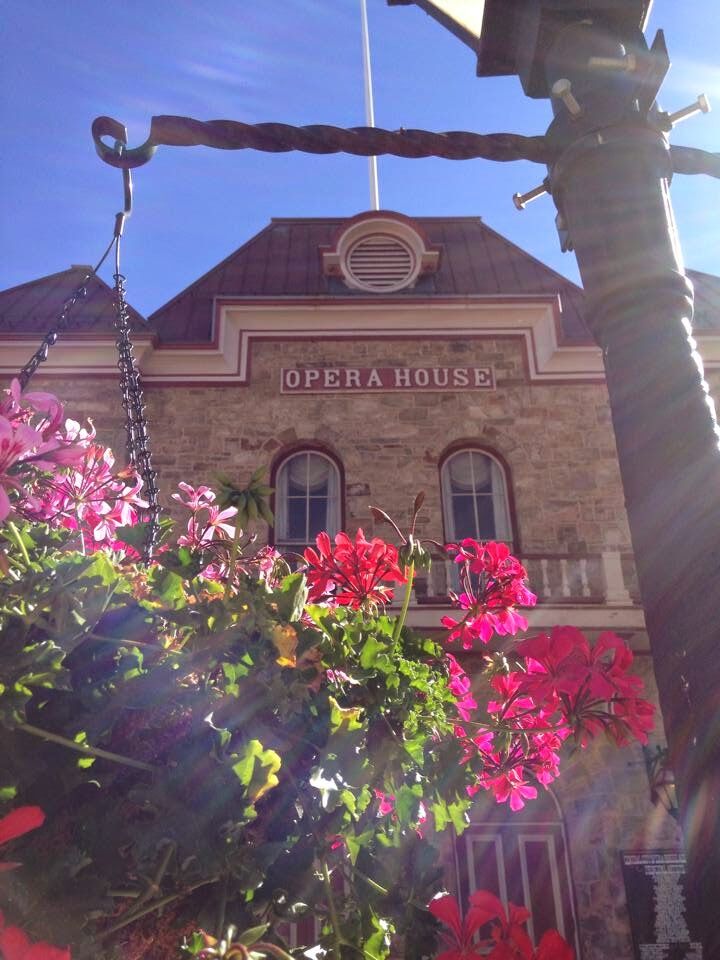
Central City Opera House. Photo by Ashraf Sewailam.
Central City Opera has announced their full summer 2025 season, adding the Mary Rodgers musical comedy Once Upon a Mattress to the two operas previously announced.
The season will open June 28 with Rossini’s comic masterpiece The Barber of Seville. Always a favorite with audiences, Barber returns to the Central City stage for the first time in 12 years.
The second opera of the summer will be the one-act opera The Knock by composer Aleksandra Vrebalov and librettist Deborah Brevoort. Named for the expression military families use for notifications of soldiers’ deaths, this patriotic opera explores feelings of hope and heartache during the Iraq war. The Knock was commissioned by the Glimmerglass Festival and Cincinnati Opera through a grant from the Mellon Foundation.
The Cincinnati Opera production in the summer of 2023, directed by CCO’s artistic director Alison Moritz, sold out five performances and an added matinee.
Based on the Hans Christian Andersen fairy tale “The Princess and the Pea,” Once Upon a Mattress opened off Broadway in May, 1959, and moved to Broadway later the same year. The musical score is by Mary Rodgers, with lyrics by Marshall Barer and book by Barer, Jay Thompson and Dean Fuller. A novelist as well as screenwriter and composer, Mary Rodgers is the daughter of the famed Broadway composer Richard Rodgers.
That original production starred Carol Burnett in her first Broadway role, and received Tony Award nominations for Best Musical and Best Actress in a Musical (Burnett). A recent popular revival starring Sutton Foster and Michael Urie played on Broadway July 31 to Nov. 30, 2024, with additional performances at the Ahmanson Theatre in Los Angles in December and January.
All three shows will be performed in repertory at the Central City Opera house between June 28 and Aug. 3 (see the full schedule below). They open with 7:30 p.m. performances on successive Saturdays, starting June 28. Most successive performances are 2 p.n. matinees, as listed in the schedule below. All performances will be in the historic Central City Opera House.
Subscription renewals are currently available for prior subscribers, and the Central City Box Office is taking requests for new subscriptions. Ticket sales to single performances will begin at a later date.
# # # # #
Central City Opera Summer 2025 Festival Schedule All performances in the Central City Opera House
Gioachino Rossini: The Barber of Seville
7:30 p.m. Saturday, June 28, Saturday, July 19 2 p.m. Wednesday, July 2; Friday, July 4; Sunday, July 6; Saturday, July 12; Tuesday, July 15; Friday, July 25; Sunday, July 26; Wednesday, July 30; Sunday, Aug. 3
Aleksandra Vrebalov and Deborah Brevoort: The Knock
7:30 p.m. Saturday, July 5; Saturday, Aug. 2 2 p.m. Wednesday, July 9; Friday, July 11; Sunday, July 13; Saturday, July 19; Tuesday, July 22
Mary Rodgers and Marshall Barer: Once Upon a Mattress
7:30 p.m. Saturday, July 12; Saturday, July 26 2 p.m. Wednesday, July 16; Friday, July 18; Sunday, July 20; Wednesday, July 23; Saturday, July 27; Tuesday, July 29; Friday, Aug. 1; Saturday, Aug. 2
Subscription renewals are currently available HERE, and new subscribers can join a waiting list. Sales of tickets to single performances will open later.


 Sharps & Flatirons