
Fairytale opera takes the stage at Macky Friday and Sunday
By Peter Alexander Oct. 23 at 1:50 p.m.
In 1890, the German composer Englebert Humperdinck was asked by his sister, Adelheid Wette, to write some folk-style songs for a Christmas play she was creating for her children.
Their little family play was performed at Christmas, but over the next two years Humperdinck, with Wette’s help, turned those simple songs into one of the most popular full-scale German operas, one that is still produced annually at Christmas time at theaters across Germany. The subject of that opera—and of Wette’s original family entertainment—was the Brothers Grimm’s fairytale Hansel and Gretel.
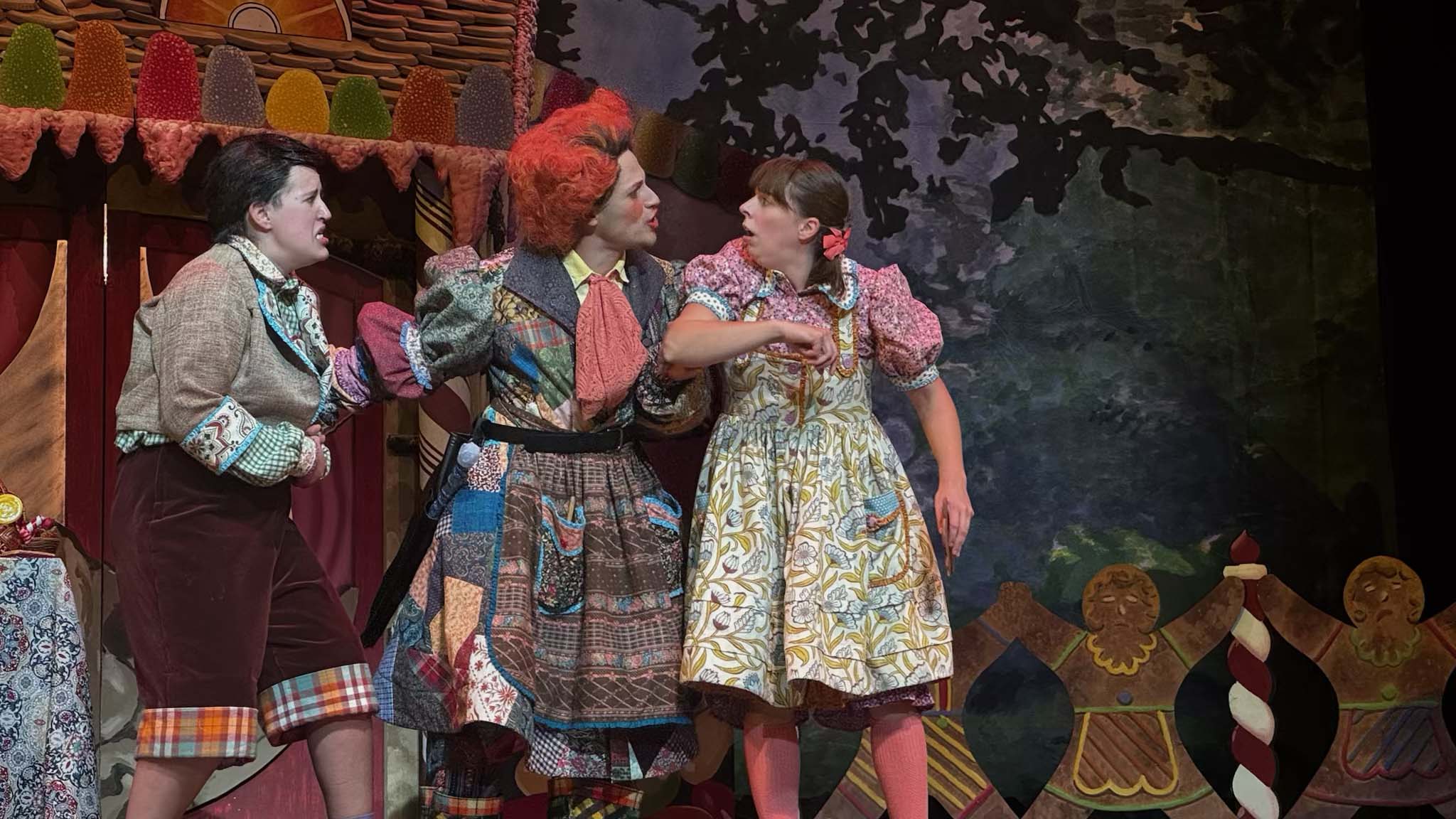
Humperdinck’s Märchenoper (fairy-tale opera) will be the next production of CU-Boulder’s Eklund Opera Program. And even if it’s a little early to get out the Holiday decorations, it will be given a festive production over the coming weekend (7:30 p.m. Friday and 2 p.m. Sunday, Oct. 25 and 27) in Macky Auditorium. (See ticket information below.)
The musical performance with full orchestra and student singers will be conducted by Nicholas Carthy and stage directed by Leigh Holman, director of the Eklund Opera Program. The sets by Peter Dean Beck, which CU Opera have used before, have been dressed up with new, colorful costume designs by Ann Piano and lighting effects by Jonathan Dunkle. It will be performed in German with English titles.
The story of Hansel and Gretel, which was originally a dark tale of malice and danger, was made milder over a series of transformations, through several editions of the Grimm story and then Wette’s libretto for Humperdinck’s opera. The original evil stepmother who sends the children into peril is turned into, as Carthy puts it, a beleaguered “mother with two children and a headache,” who simply sends the children out to gather strawberries.
There are lighthearted moments in the opera—the children squabbling at the beginning of the first act, and their father cheerfully returning home after selling all of his brooms—and even in the forest the children are looked over by the Sandman, the Dew Fairy and the 14 angels of the beautiful Dream Pantomime. Even when accosted by the witch, Hansel and Gretel easily evade her evil designs. In the end, the witch is vanquished and all the gingerbread children are returned to life.
Musically, Humperdinck’s score has many folk-like tunes and simple melodies, but it is also full of musical challenges. As Carthy explains, the libretto uses “slightly archaic language, words that have fallen out of use and some of them are very difficult to pronounce. Hansel and Gretel are onstage for most of it, and the witch is a very big part. And then Act III suddenly gets more difficult—all of a sudden the music becomes more difficult to sing, much more difficult to play, much more difficult to conduct.”
The witch’s part can be a particular challenge, Holman says. “I think the Witch’s part is really, really difficult. The timing and the notes are kind of disjointed. It’s hard to find the pitches—seriously!”
Humperdinck worked as an assistant with Wagner, particularly on the late music drama Parsifal, and so his harmonic language and orchestration reflect late Wagner. That too can be a problem, Carthy says, especially when the orchestral sound becomes heavier and darker. “Balance (among the parts) is a problem, keeping it all together is a problem, keeping it transparent is a problem,” he says.
And “it’s a great challenge for the players, because it’s a massive piece,” he adds. “It never stops, as far as the players are concerned, (so it’s) quite an exercise in concentration and stamina. Three fourths of them have never played in a pit, so they are coming in without the experience of playing a long piece and concentrating for that amount of time. It’s invaluable for (the students), but as the conductor you have to know the piece backwards.”
The production uses sets that were designed by Peter Dean Beck and that have been used in previous CU productions of Hansel and Gretel. But this time there will be new costumes by Piano and other touches to bring more color to the stage.
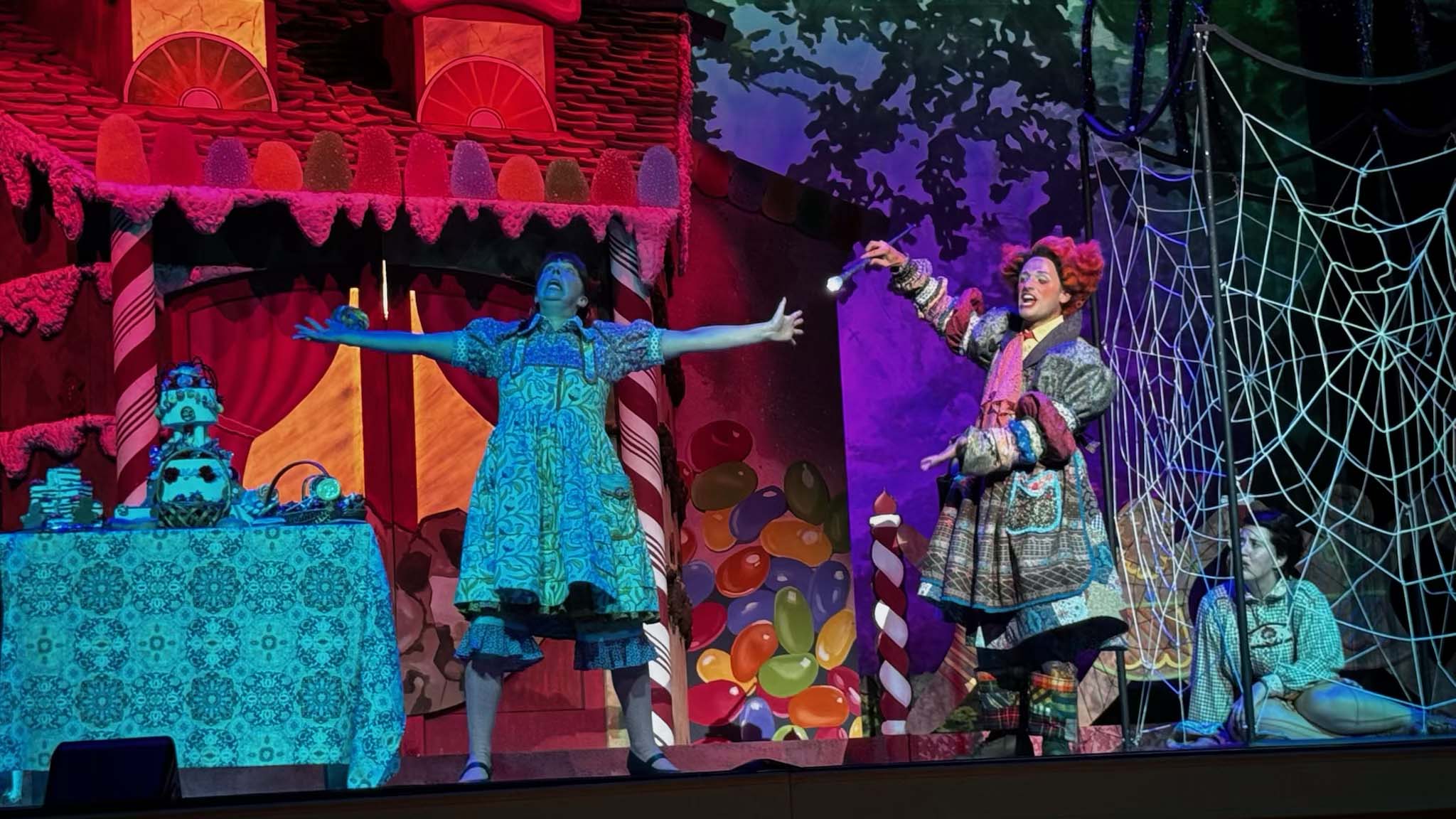
“I asked for a change in this production,” Holman says. “I asked that it not be so literal, a little bit more fantastical. And so we have lots of colors in it, in the costumes but also in other little elements. Even the brooms are colored, red ones and blue ones, so it kind of takes us out of reality and goes back to a storybook.
“We have a new lighting designer, Johnathan Dunkle, and we’re doing some new and interesting things with that. With the witch’s ride we have some lighting effects that we’re working on.”
Another new feature of this production that Holman is excited about is choreography for the 14 angels. “Laura Malpass is the choreographer, and she’s fantastic,” she says. “She teaches in the dance department, and she pulled together 14 trained ballet dancers to portray the 14 angels. It’s less than six minutes and it’s gorgeous.”
In fact, she and Carthy are looking forward to the entire opera. “We’re so excited about this piece,” Holman says. “The music is gorgeous, the orchestra is rich and full and the look of it—the visuals and brand new costumes and what you’re going to see onstage—is beautiful.
“And it’s short! People are going to get out in two hours and 15 minutes.”
# # # # #

Eklund Opera Theater, Leigh Holman, director
Nicholas Carthy, music director
- Hansel und Gretel by Englebert Humperdinck
Libretto by Adelheid Wette
Performed in German with English titles
7:30 p.m. Friday, Oct. 25 and 2 p.m. Sunday, Oct. 27
Macky Auditorium
 Sharps & Flatirons