Boulder Symphony presents “America-Centric” concerts

Symphony by Florence Price is the “American anchor” of programs Saturday and Sunday

By Peter Alexander Sept. 25 at 11:25 a.m.

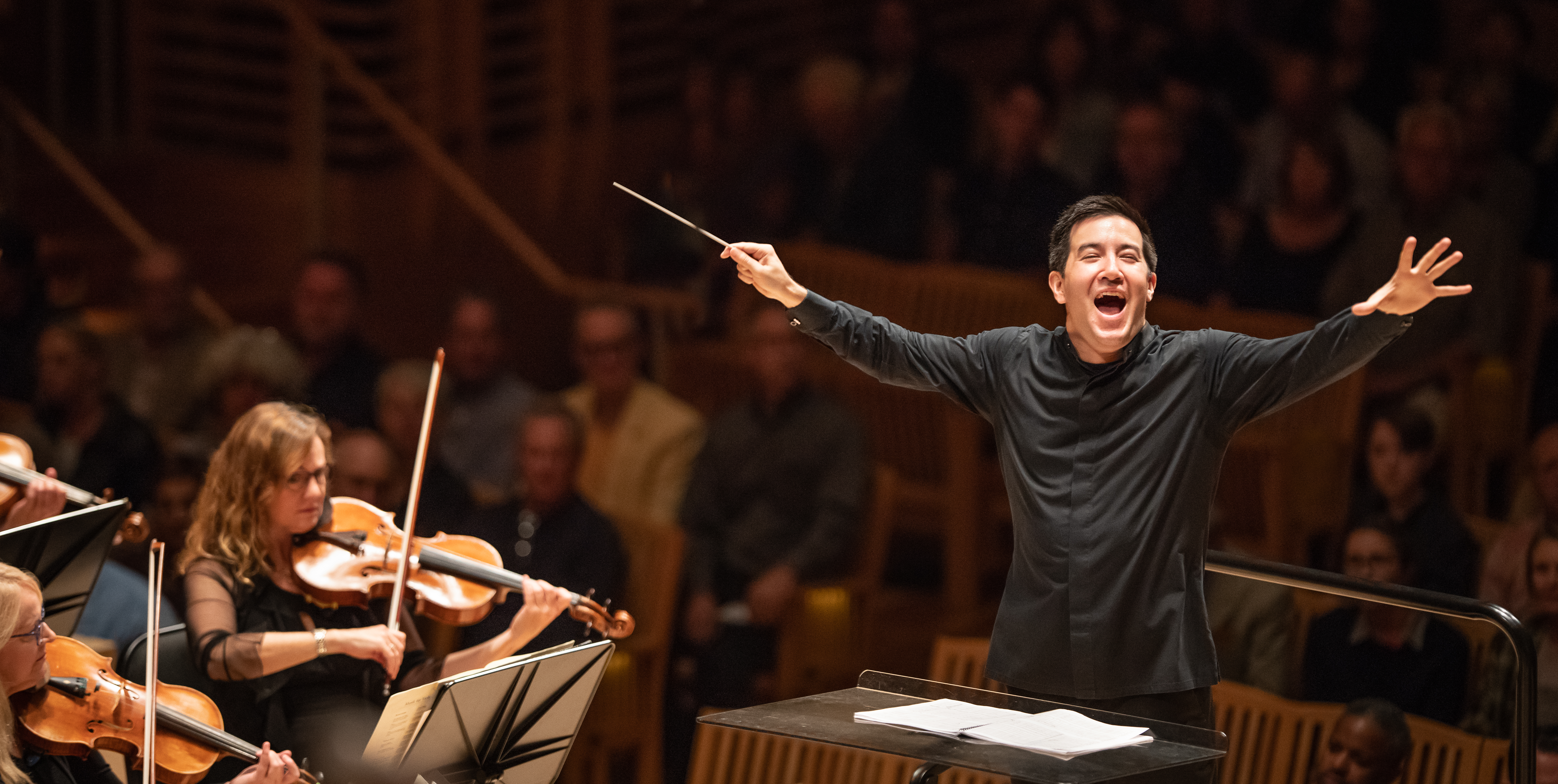
The Boulder Symphony opens a new season this weekend with what conductor Devin Patrick Hughes calls “a very America-centric concert.” Performances at the Gordon Gamm Theater of the Dairy Arts Center will be at 2 and 7:30 p.m. Saturday and 2 p.m. Sunday (full program and details below).
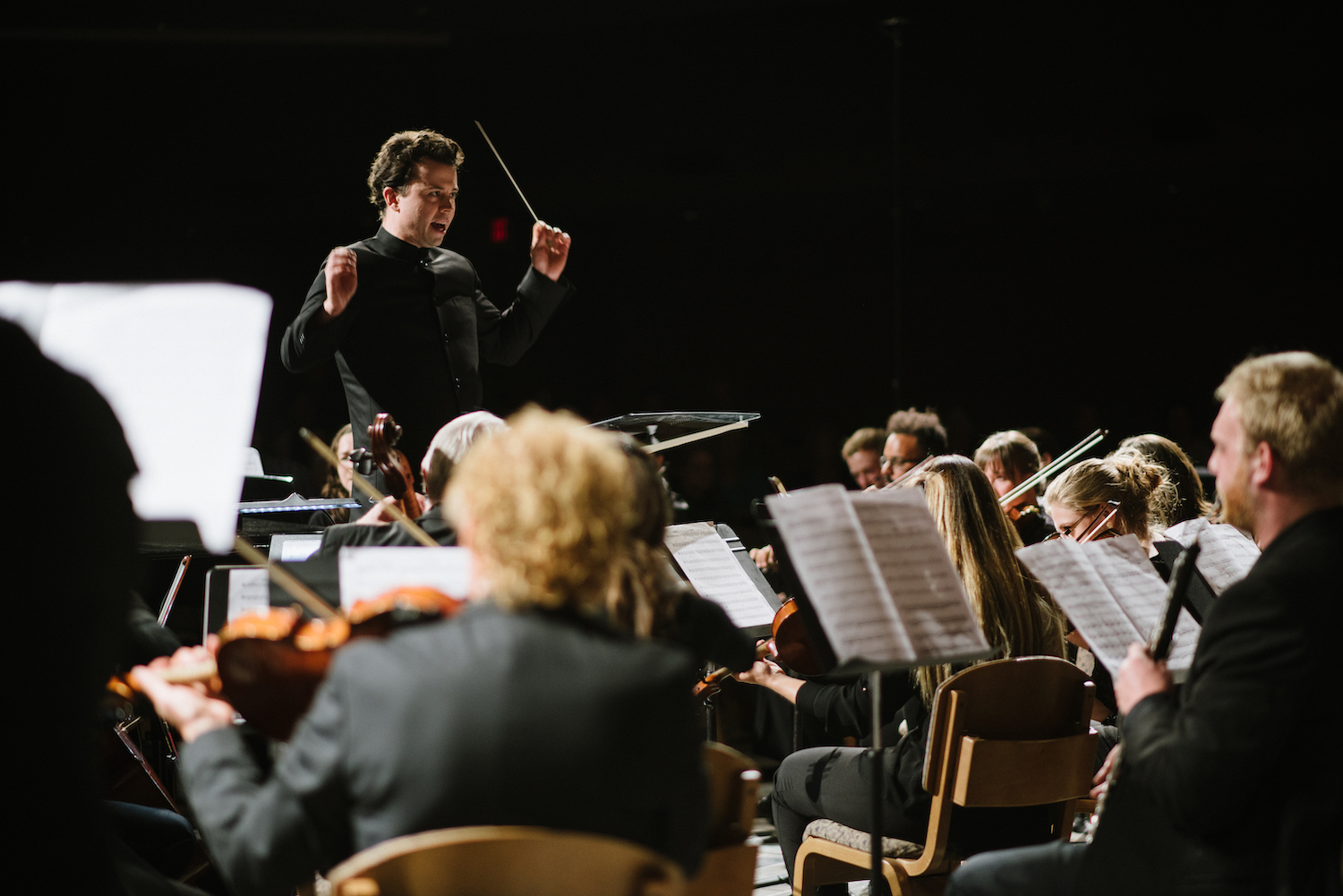
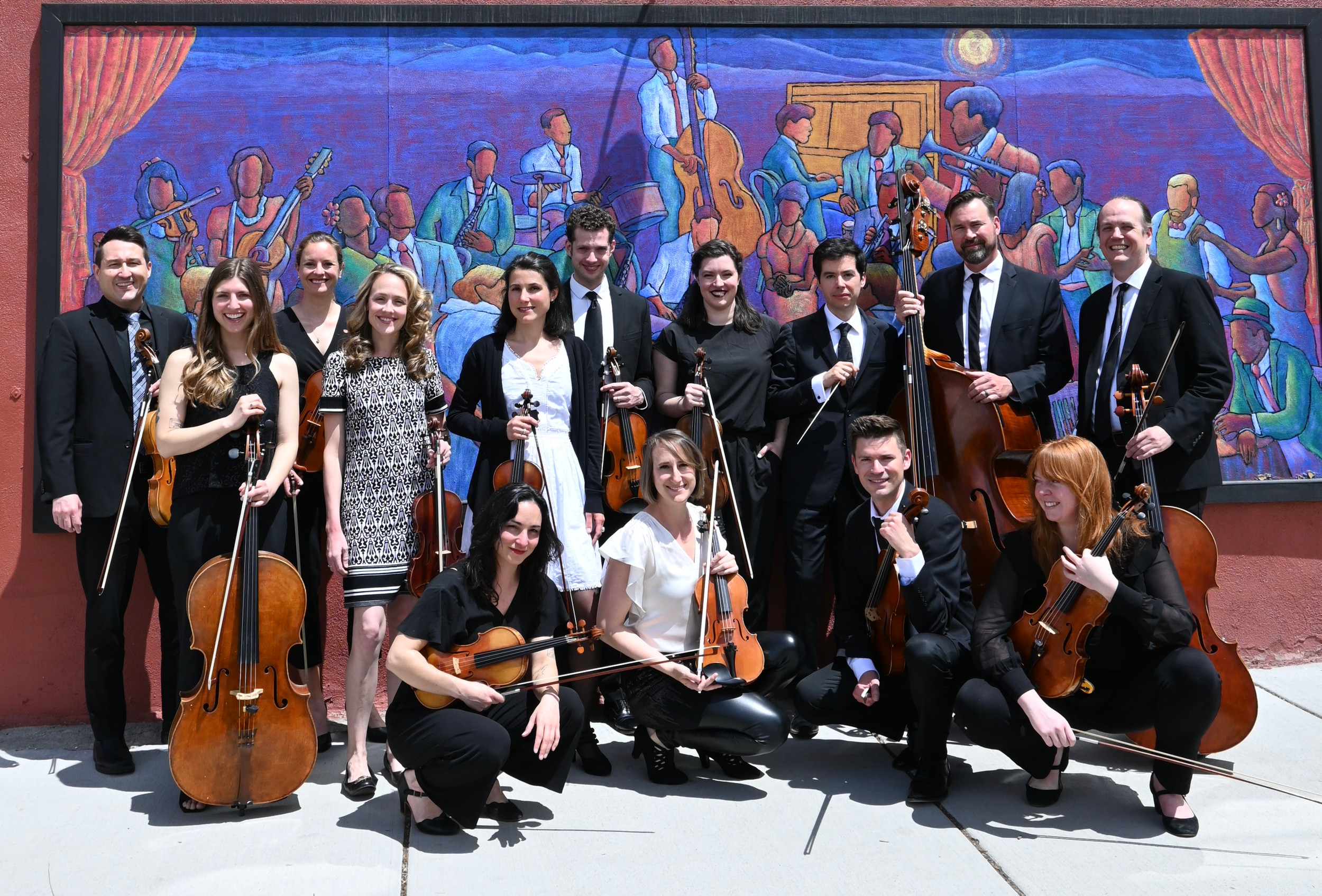
Boulder Symphony and conductor Devin Patrick Hughes

The most obviously American work on the program—in effect the American anchor to the concert—is the Symphony No. 1 by Florence Price. A prodigy who gave her first piano performance at the age of four and later attended the New England Conservatory, Price was the first African American woman to have music played by a major symphony.

Completing the program are two works by European composers with American connections: The Slavonic Dance No. 1 by Dvořák, who lived in the United States in the 1890s and whose “New World” Symphony inspired Price and other African American composers at the turn of the 20th century; and Tchaikovsky’s Piano Concerto No. 1, which was premiered in the U.S.

Soloist for the concerto will be Artem Kuznetsov, 2024 winner of the the International Keyboard Odyssiad & Festival in Ft. Collins. The Boulder Symphony has maintained a close relationship with the competition for a number of years by annually presenting the winner on one of their concerts.

Born in Arkansas, Price moved north during the “great migration” of the 1920s and settled in Chicago. She studied composition and organ and worked as an organist for silent films. In 1933 her First Symphony was premiered by the Chicago Symphony at the Century of Progress World’s Fair. 
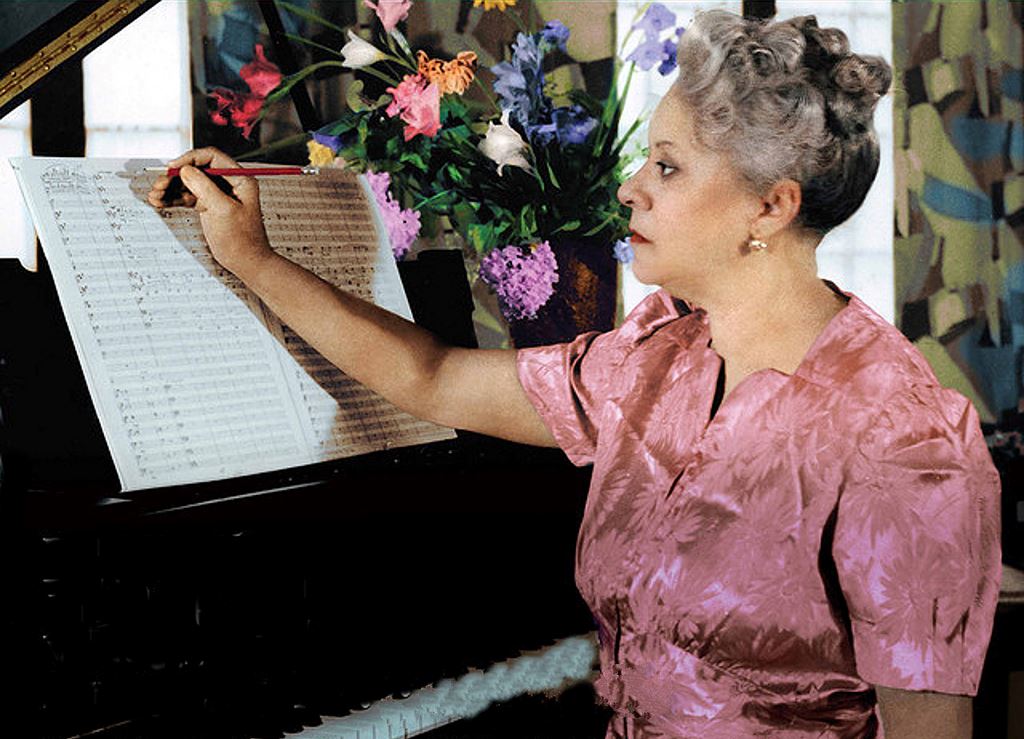
Florence Price (photo colorized)

“Florence Price is the quintessential American composer,” Hughes wrote in an email. “Her music takes from the melting pot of our culture, from spirituals and gospel, and blends them with the great European masters to create a unique American voice.”

Her total output includes four symphonies, a piano concerto, two violin concertos, and other works for orchestra, in addition to choral, vocal and piano pieces. In 2009 dozens of works by Price were discovered at her summer home, which had been abandoned for many years. Among this collection were the two violin concerto and the Fourth Symphony—works that would have been lost had the manuscripts not been found.

The First Symphony is in the traditional four movements. Price drew on her African-American heritage with pentatonic, spiritual-like melodies and a lively, syncopated third movement. Titled “Juba Dance,” it evokes a dance and rhythmic accompaniment performed by African slaves throughout the New World.

Another important influence is Dvořák’s Ninth Symphony, “From the New World.” Not only are both works in E minor, Price scholar Rae Linda Brown wrote that “an examination of Price’s symphony reveals that she had thoroughly studied Dvorak’s score.”

Among the most popular of Dvořák’s works, the two sets of Slavonic Dances were originally composed for piano four hands and later set for orchestra by the composer. It was the publication of the first set for piano four hands in 1878, facilitated by Brahms, that established Dvořák as an important and recognized composer. The first dance is a Furiant, an energetic Bohemian dance marked by shifting accents and alternating duple and triple time.

Dvořák’s connection to the American theme of the concert is through his years living in New York and his 1893 visit to the Czech village of Spillville in Iowa. His interest in African American and other American musical styles was very influential at the time.

As Hughes wrote, “Dvořák is at the crossroads of European and American voices. His symphonic work and educational initiatives in America in the 1890s paved the way for a new American school that recognized the importance of African American folk music as the future of an American school.”

Pianist Artem Kuznetsov

Tchaikovsky wrote his First Piano Concerto in 1874-75. He hoped that the great Russian virtuoso Anton Rubinstein would play the premiere, but Rubinstein criticized the score when he saw it. As a result the premiere was played by the German pianist Hans von Bülow in Boston. Rubinstein later took back his criticism of the concerto and promoted it through performances. Today it is one of the best known piano concertos.

Continuing the American connection among the composers, Tchaikovsky came to the United States and conducted on four concerts in Carnegie Hall, including the hall’s opening night May 5, 1891—shortly before Dvořák arrived in the U.S.

A native of Balashov, Russia, Kuznetsov has won several international competitions in addition the International Keyboard Odyssiad. He holds Master of Music degree and Artist Diploma from the Shepherd School of Music at Rice University. He has performed across the United States, in Russia, Germany and the Netherlands.

The weekend’s concerts are the first in a series of three orchestral programs to be performed by the Boulder Symphony at the Dairy Arts Center, each including a work by an American composer. The season culminates in May with performances of Beethoven’s Ninth Symphony, presented in collaboration with Kim Robards Dance; you may see details on the orchestra’s Web page, along with information on their Curiosity Concerts for young people.

The Boulder Symphony also offers a music academy that is open to all talented students regardless of ability to pay. “Boulder Symphony created our Music Academy so every child could have access to musical instruments and instruction,” Hughes wrote. “Those who contribute to our scholarship program give the dream and promise of a lifetime of music-making to all kids in Boulder County.”

# # # # #

Boulder Symphony, Devin Patrick Hughes, conductor
With Artem Kuznetsov, piano

  • Dvořák: Slavonic Dance No. 1 in C major, op. 46 no. 1, “Furiant”
  • Tchaikovsky: Piano Concerto No. 1 in B-flat minor
  • Florence Price: Symphony No. 1 in E minor

2 and 7:30 p.m. Saturday, Sept. 28
2 p.m. Sunday, Sept. 29
Gordon Gamm Theater, Dairy Arts Center

TICKETS

CORRECTION: The first concert on Saturday, Sept. 28, is at 2 p.m., not 4 p.m. as originally posted.
Grace Notes: Bach, Timbres, Sphere and a Groove

Programs outside the norm, from the 18th to the 21st centuries

By Peter Alexander Sept. 18 at 10:05 p.m.

The Boulder Bach Festival (BBF) and guest artists will take audiences back to 18th-century Venice in a program entitled “Anonimo Veneziano” (Anonymous Venetian) 4 p.m. Saturday, Sept. 21, at the Dairy Arts Center in Boulder.

The program, with the BBF’s music director/violinist Zachary Carretin and the COmpass REsonance ensemble (CORE Ensemble), will feature violinist Nurit Pacht from NewYork, harpsichordist Chris Holman from Cincinnati, and theorbist Keith Barnhart, an historical plucked instruments specialist who is also the BBF’s educational coordinator.

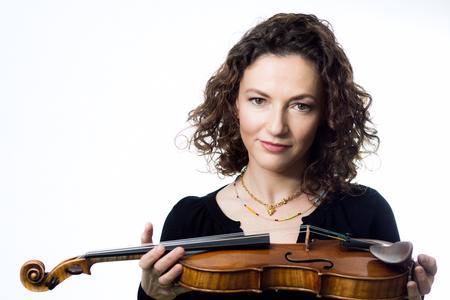
Nurit Pacht

The program opens with the famous Adagio attributed to 18th-century Italian composer Tomaso Albinoni and featured in many film scores. In fact, the Adagio was composed by 20th-century Italian musicologist Remo Giazotto. A scholar of Albinoni’s music Giazotto claimed that the Adagio was based on a fragment of an Albononi trio sonata that he found on a manuscript that has since mysteriously disappeared. 

The remainder of the program will be filled out with genuine Albinoni works, the complete Sinfonie e Concerti a cinque (Sinfonias and concertos for five instruments), op. 2, that were published in Venice in 1700. This important collection is rarely performed complete. The BBF performance, which will  be played without intermission, is expected to take approximately 75 minutes.

 Pacht holds a degree in historical performance from the Juilliard school and is known as a specialist in both music by living composers, including works written for her, and music of the Baroque. She was a top prize winner in the Irving Klein International Music Competition in California, the Tibor Varga International Violin Competition in Switzerland, and the Kingsville International Music Competition in Texas. She has toured widely in Europe and the United States. She teaches privately in New York City.

# # # # #

Anonimo Veneziano
Boulder Bach Festival CORE Ensemble, Zachary Carrettin, conductor/violinist
With Nurit Pracht, violin, Chris Holman, harpsichord, and Keith Barnhart, theorbo

  • Remo Giazotto: “Adagio in G minor by Tomaso Albononi”
  • Tomaso Albinoni: Sinfonie e Concerti, op. 2

4 p.m. Saturday, Sept. 21
Dairy Arts Center Gordon Gamm Theater

TICKETS

# # # # #

The Boulder Chamber Orchestra’s (BCO)chamber concert titled “Mixed Timbres,” postponed from last April due to the power outage caused by high winds, will be presented at 7:30 p.m. Saturday, Sept. 21, in the Boulder Seventh-Day Adventist Church.

The concert will feature the BCO’s 2023-24 artist-in-residence, pianist Hsing-ay Hsu, performing with two members of the orchestra—cellist Julian Bennett and clarinetist Kellan Toohey. All four works on the program use the ensemble of piano, clarinet and cello, a mix of timbres that has a limited but interesting repertoire.

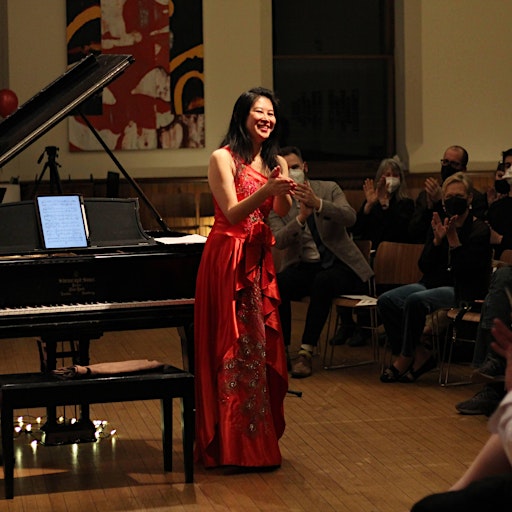
Hsing-ay Hsu

Beethoven’s Op. 11 is one of the earliest works for the combination. It is sometimes known as the “Gassenhauer Trio,” taken from the popularity of the theme that Beethoven uses for variations in the final movement. In Vienna, a Gassenhauer (from Gasse, an alleyway) referred to a simple song that was so popular that it was heard all over town. The theme Beethoven used was taken from a popular music theater work, L’amor marinaro (Seafaring love) by Joseph Weigl.

Brahms’s Trio op. 114 is one of four chamber works the composer wrote for the clarinetist Richard Mühlfeld in the last years of his life. Brahms’s admiration for Mühlfeld’s playing was reflected in the comment of one of the composer’s friends who wrote that in the Trio, “it is as though the instruments were in love with each other.”

Like Brahms’s Trio, Fauré’s D minor Trio was one of his last compositions. Although Fauré originally planned the Trio for piano, clarinet and cello, it was published as a traditional piano trio, with violin in place of the clarinet. The BCO performance of the first movement restores the instrumentation that Fauré first imagined for the trio.

Emily Rutherford’s “Morning Dance” for piano, clarinet and cello was commissioned by Toohey in 2017. A native of Colorado, Rutherford is a graduate of Westmont College in Santa Barbara, Calif., and the Longy School of Music in Los Angeles.

# # # # #

“Mixed Timbres”
Hsing-ay Hsu, BCO Artist in residence, piano
With Boulder Chamber Orchestra members Kellan Toohey, clarinet, and Julian Bennett, cello

  • Gabriel Fauré: Piano Trio in D minor, I. Allegro ma non troppo
  • Beethoven: Trio in B-flat major for piano, clarinet and cello, op. 11
  • Brahms: Trio in B-flat for piano, clarinet and cello, op. 114
  • Emily Rutherford: Morning Dances

7:30 p.m. Saturday, Sept. 21
Boulder Seventh-Day Adventist Church, 345 Mapleton Ave.

TICKETS

# # # # #

The Sphere Ensemble, a 14-member string ensemble, will celebrate the 100th anniversary of the premiere of Gershwin’s Rhapsody in Blue in 1924 with performances of their own all-strings arrangement of the Rhapsody.

The program, presented Saturday in Boulder and Sunday in Denver (Sept. 21 and 22; details below), will also include works by other jazz musicians including James P. Johnson, Hazel Scott and Winton Marsalis. Also on the program are arrangements of music from the Squirrel Nut Zippers, The Turtles and Andrew Bird; and pieces by Shostakovich, Stephen Foster and the classical-era composer Christoph Willibald Gluck, among others. 

Sphere Ensemble

In addition to the live performances, a live stream will be available from 7:30 p.m. Saturday, Sept. 21 through 10 p.m. Sunday, Sept. 29. 

This kind of eclectic programming, mixing sources and genres, is typical of the Sphere Ensemble, often in arrangements made by members of the ensemble. The “About” page on their Website explains, “We prioritize music by composers that are often overlooked in classical music programs. . . . From classical to classic rock, from baroque to hip hop, Sphere always chooses music that excites us.”

# # # # #

“Bridges”
Sphere Ensemble

  • Aldemaro Romero: Fuga con Pajarillo
  • Dmitri Shostakovich: Prelude and Fugue in D-flat Major (arr. Chris Jusell)
  • Stephen Foster: “Jeanie with the Light Brown Hair” (arr. Alex Vittal)
  • Squirrel Nut Zippers: The Ghost of Stephen Foster (arr. Sarah Whitnah)
  • Andrew Bird: Orpheo Looks Back (arr. Sarah Whitnah)
  • C.W. Gluck: Orfée et Eurydice, Danses des Ombres Heureuses
  • Brenda Holloway: You’ve Made Me So Very Happy (arr. David Short)
  • The Turtles: Happy Together (arr. Dave Short)
  • James Price Johnson: Charleston (arr. Alex Vittal)
  • Hazel Scott: “Idyll” (arr. Sarah Whitnah)
  • Wynton Marsalis: “At the Octoroon Balls”
    —“Rampart St. Rowhouse Rag”
  • George Gershwin: Rhapsody in Blue (arr. Alex Vittal)

7:30 p.m. Saturday, Sept. 21
Nomad Playhouse, 1410 Quince Ave., Boulder

3 p.m. Sunday, Nov. 22
Truss House, 3400 Atkins Ct., Denver

Livestream: 7:30 p.m. Saturday, Sept. 21–10 p.m. Sunday, Sept. 29

In-person and livestream TICKETS

# # # # #

The Boulder Philharmonic Orchestra will have a new series of intimate performances during the 2024-25 season, designed to bring their musicians into more informal spaces and give audiences the opportunity to hear them in smaller groups.

The repertoire will be a little different from the Macky concerts, too, featuring music by pop sensations from Lizzo to Taylor Swift alongside pieces by living composers including Philip Glass and Jessie Montgomery. And just for fun, they might throw in some Vivaldi as well.

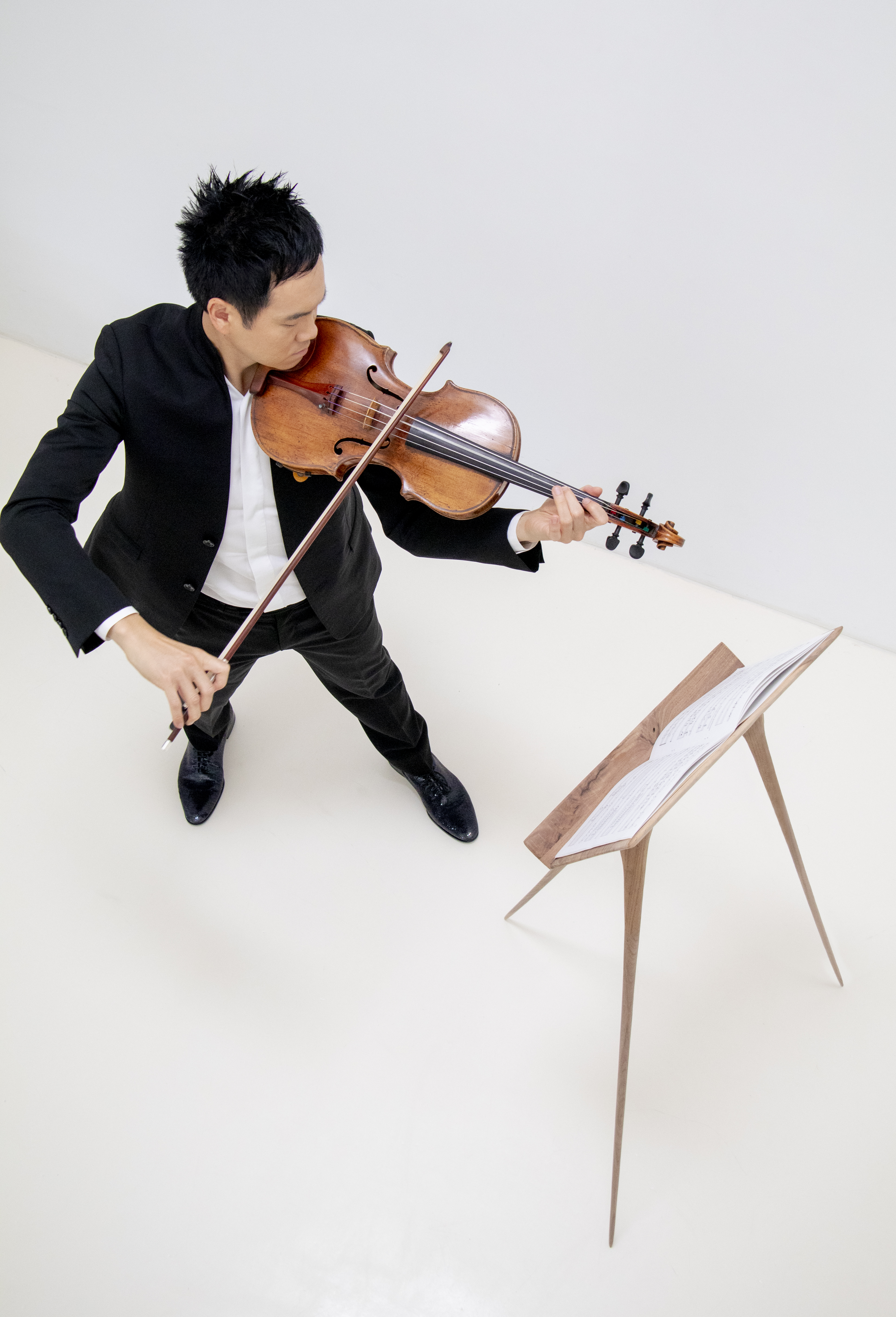
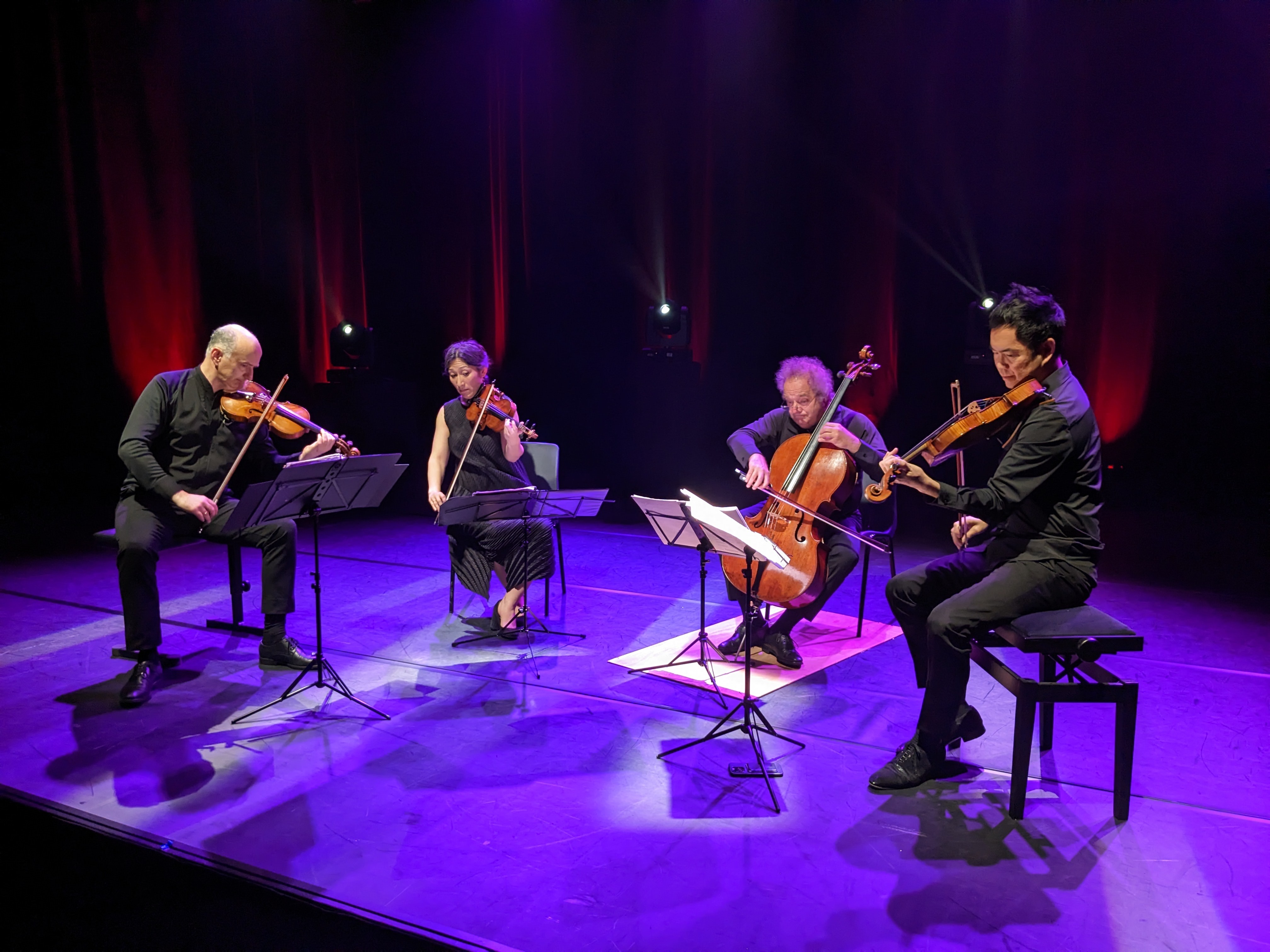
These concerts, collectively the “Shift” series, will feature several different programs, each presented first at Planet Bluegrass in Lyons and then taken to small venues in Longmont and Boulder. The first program, played by a string quartet of principal players from the orchestra, opens next Wednesday at Planet Bluegrass (7 p.m. Sept. 25; details below). Titled “Groove,” it will be repeated at the Dickens Opera House in Longmont at 6:30 p.m.Monday, Nov. 25.

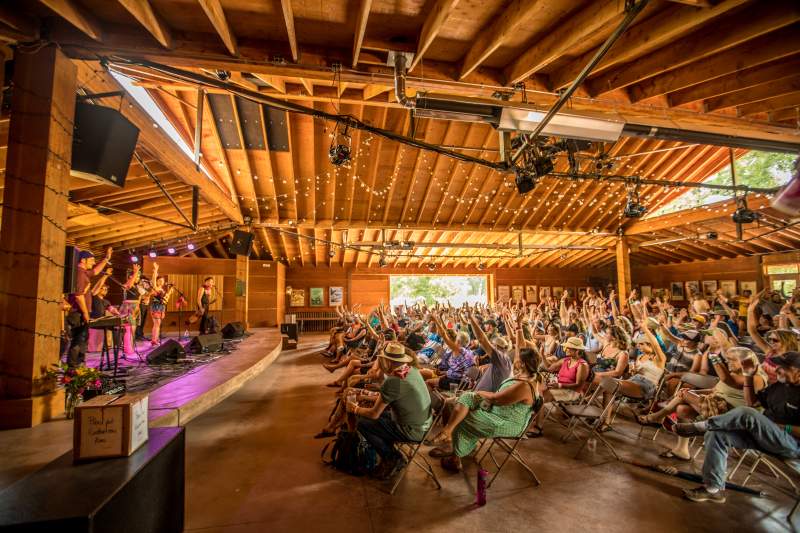
Wildflower Pavilion at Planet Bluegrass, Lyons

The second program, also for string quartet, is titled “Americana: Redefined” and will be presented in October and February. A third program featuring a brass quintet from the orchestra, “Brass & Brews,” will be presented in October and April;  see the Boulder Phil Web page for details on all currently scheduled performances.

Mimi Kruger, the Boulder Phil’s executive director, said, “The idea is that people can get to know our musicians and these composers and connect in a different way. These are obviously smaller venues, but also a little bit more casual.”

She said that discussions about ways to showcase the individual musicians of the orchestra led them to look for new venues. “The idea came up to launch it through Planet Bluegrass (because) they have a series at the Wildflower Pavilion,” she said. “We’re doing all three there, but we also wanted to take them to other venues, so the first two will get repeated at Dickens Opera House in Longmont—that’s a great little place!”

The Phil’s Web page says pretty much the same thing, in more promotional language: “The Shift Series lifts the facade of the stereotypical orchestral concert . . . in unique venues along the Front Range.”

Kruger recommends watching for future announcements, as further performances are under consideration, featuring the orchestra’s woodwind players. 

# # # # #

“GROOVE”
Boulder Philharmonic string players: Ryan Jacobsen and Hilary Castle-Green, violin; Stephanie Mientka, viola; and Amanda Laborete, cello

  • Takashi Yoshimatsu: Atomic Hearts Club Quartet, Movement I
  • Justin Bieber: “Peaches” (arr. Alice Hong) 3’
  • Dinuk Wijeratne:Two Pop Songs on Antique Poems: “Letter from the afterlife”
  • Carlos Simon: Loop
  • Michael Begay: “Forest Fires”
  • Lizzo: “ Good As Hell” (arr. Alice Hong)
  • Jessie Montgomery: “VooDoo Dolls
  • Philip Glass: String Quartet No. 3: VI “Mishima/Closing” 4’
  • Taylor Swift: All Too Well” (arr. Alice Hong)
  • Wijeratne: Two Pop Songs on Antique Poems: “I will not let you go
  • Ed Sheeran: “Shape of You” (arr. Alice Hong)
  • Due Lipa: “Dance the Night” (arr. Zack Reaves)
  • Jessica Meyer: “Get into the NOW”: III. “Go Big or Go Home”
  • Vivaldi: Summer: Moment III (arr. Naughtin)

7 p.m. Monday, Sept. 25
Planet Bluegrass, Lyons, Colo.

TICKETS

6:30 Monday, Nov. 25
Dickens Opera House, Longmont Como.

TICKETS

Takács String Quartet celebrates its 50th season

Mutual respect, love of music and supportive audiences inspire the players

By Peter Alexander Sept. 12 at 9:14 p.m.

Fifty years is a long time in any job, but that is the landmark that András Fejér, cellist of the world renowned Takács Quartet, is approaching as the quartet enters its fiftieth season, 

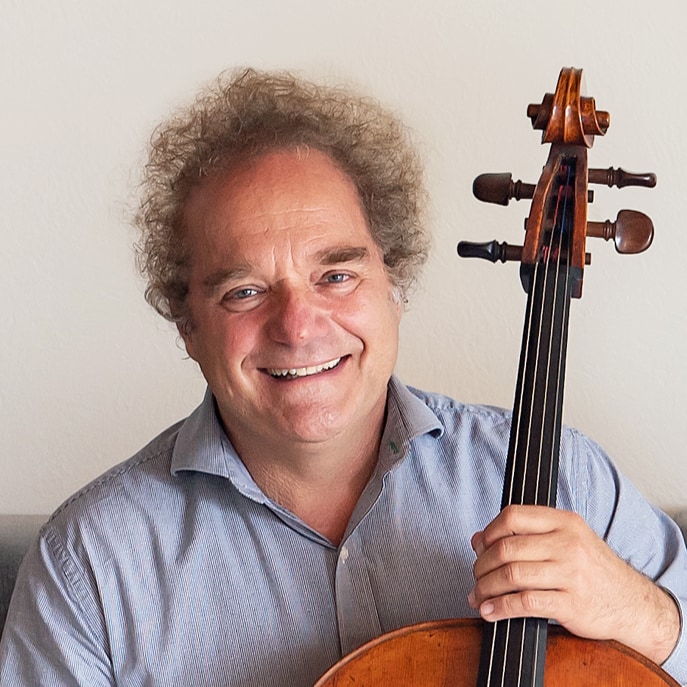
András Fejér

The Takács String Quartet was founded in Budapest in September 1975—49 years ago—and has been in residence at the CU College of Music since 1983. The only original member of the quartet still with the group, Fejér is now 70, but he shows no sign of seeking a quiet retirement.

“I’m loving it,” he says about playing in the quartet and continuing the group’s busy concert schedule around the world. “I feel passionate about it, and I cannot imagine doing anything else.”

Fejér and the other members of the quartet—first violinist Edward Dusinberre, second violinist Harumi Rhodes and violist Richard O’Neill—will take the stage at Grusin Music Hall Sunday and Monday (4 p.m. Sept. 15 and 7:30 p.m. Sept. 16) for a standard string quartet program—a 20th century quartet by Leoš Janáček, sandwiched between classical-era works by Joseph Haydn and Beethoven (see full program below). This is a standard Takács program, and Fejér says they have no special plans for the half-century celebration.

“We just do what we are trying to do—classics nicely mixed with contemporary pieces,” he says. “We try to play them as much as we can. It’s a heartwarming mission.”

Richard O’Neill

The newest member of the quartet, O’Neill feels the same way about the busy life in a world-traveling quartet. “The greatest luxury is getting to do what we do,” he says. “I really love travel, even in the worst scenarios. There are things that can go wrong nowadays, but I still get excited to pack my suitcase and go out the door.”

If he likes anything more than travel, it’s playing for the Boulder audience. “The community here is such a unique community and (Boulder is) such an incredibly beautiful place,” he says. “Every concert we’re backstage at Grusin I really like hearing all the people (in the audience) excited to be together.”

O’Neill noticed the musicians’ connection with their audience from his very first Boulder home concerts with the Takács in 2021, but the relationship has not changed over Fejér’s years in the quartet. “We found it extremely supportive here (in 1983), with a wonderfully enthusiastic audience, and that’s how we feel until this day,” he says. “We got the support and the love of the audience, and the way it makes you feel, it’s a wonderful reaction with the audience.”

With all the personnel changes over 50 years—two first violinists, two second violinists, now three violists with the one cellist—the Takács has maintained its place among the top quartets in the world. That’s not because they have one authoritative way of doing things. Fejér identifies their defining quality more in the integrity of their approach to the music. 

“The quality is the combination of expressivity, character and technique,” he says. “There are many ways to interpret the same phrase, many ways to interpret any page of any piece. We are listening to new ideas, because we feel it keeps the process fresh. As our wonderful teacher in Budapest put it, nobody has a letter from Haydn or Beethoven.

Takács String Quartet. Photo by Ian Malkin.

“We are honest, and being honest gives you a major conviction. As long as the message rings true, the audience is happy and immersed in the performance.”

That does not mean that the players always agree. “We had our fair share of arguments, especially when we were young and unwise,” he says. “But the moment we realized that there are many ways, what we can do is (say) ‘OK, in New York we try your idea, and then at Berkeley we will try my idea,‘ and then we will settle down with something. Everybody‘s happy, and then we all have a good giggle afterwards. It‘s great fun.”

O’Neill learned from the outset that every member is included in those conversations, no matter how long they have been with the group. “András could probably pull the seniority card on me, (but) he never does that,” he says.

“What I really love about the Takács is that if any one of us have a reservation, musical or personal about something that we’re doing, the quartet won’t do it. I really respect that. We’re all very distinct individuals, and of course we have our differences, but we respect each other. I think that‘s the magic combination.

“There‘s nothing like being in a group where you really get to know everyone like family,” he says. So whenever the Takács “family” walks onstage, you know they are doing what they love doing together. 

And they love the music. Of the first piece on the current program, Haydn’s Quartet in C Major, op. 54 no. 2, O’Neill says, “I have never played (the piece before), but it’s like vaudeville for music. The humor is so palpable and overt, and I love it. With Mozart, humor is either tinged with sadness or hidden in refinement, but with Haydn it’s unabashed. It’s just flat out funny. It‘s an amazing work.”

Janáček’s Quartet No. 1, however, is not humorous. Known as “The Kreutzer Sonata,” it is based on the Tolstoy novella of that name about a man who kills his wife for having an affair with a violinist with whom she plays Beethoven’s “Kreutzer” Sonata. Written by a composer of many great operas, the quartet is almost operatic in its drama and intensity.

“We adore both quartets (by Janáček),” Fejér says. “The language, the harmonies, the technical realization is so specific to Janáček. You can recognize his music right away. We are talking about murder and jealousy and seemingly idyllic music. We have everything in between idyllic and ‘I’ll kill you!’”

The final piece is one of the most loved works for string quartet, Beethoven’s Quartet in F Major, op. 59 no. 1, one of three quartets Beethoven wrote for the Russian ambassador in Vienna, Count Razumovsky. Originally regarded as audaciously long and difficult, all three are now accepted in the standard repertoire and loved by audiences.

The first of the set is in the key of F major, which in works like the Pastoral Symphony, the Symphony No. 8 and the Romance for violin, inspired some of Beethoven’s most lyrical and melodic music. That quality is evident from the very beginning of the quartet, with a long theme from the cello playing in its richest register. 

“When you start with a cello solo, how can you go wrong?” O’Neill says. “I love the piece very much.”

But equal to the music on the program is the survival of the Takács Quartet over the past 49 years, which few chamber music ensembles have matched and for which the Boulder audience shows its appreciation every year and every concert. Fejér gives what may be the best explanation for that when he says “We are like kids on the playground, enjoying the toys. 

“We are totally involved and just enjoying ourselves.”

# # # # #

Takács String Quartet

  • Haydn: String Quartet in C Major, op. 54 no. 2
  • Leoš Janáček: String Quartet No. 1, (“The Kreutzer Sonata”)
  • Beethoven: String Quartet in F Major, op. 59 no. 1 (“Razumovsky”)

4 p.m. Sunday, Sept 15 and 7:30 p.m. Monday, Sept. 16
Grusin Music Hall
Live Stream: 4 p.m Sunday, Sept. 15 until 11 p.m. Monday, Sept.

In-person and livestream TICKETS

Other fall concerts

Takács String Quartet

  • Beethoven: String Quartet in A minor, op. 132
  • Other works TBA

4 p.m. Sunday, Oct. 13 and 7:30 p.m. Monday, Nov. 4
Live Stream: 4 p.m. Sunday, Oct. 13 through Monday, Oct. 21

In-person and livestream TICKETS

Quartet Integra

4 p.m. Sunday, Nov. 3 and 7:30 p.m. Monday, Oct. 14
Live Stream: 4 p.m. Sunday, Nov. 3 through Monday, Nov. 11

In-person and livestream TICKETS

Boulder Phil opens season with guest conductor

Boulder native Francesco Lecce-Chong subs for Michael Butterman

By Peter Alexander Sept. 5 at 9 p.m.

The Boulder Philharmonic opens its 2024–25 season Sunday afternoon in Macky Auditorium (4 p.m. Sept. 8) with music by Tchaikovsky and Mendlessohn. Sixteen-year-old rising musical star Amaryn Olmeda will be the soloist for Tchaikovsky’s Violin Concerto. 

The concert will be led by guest conductor Francesco Lecce-Chong, substituting for an indisposed Michael Butterman. In addition to the concerto, Lecce-Chong will lead the orchestra in Mendelssohn’s “Reformation” Symphony, Vaughan Williams’ Fantasia on a Theme of Thomas Tallis, and English Renaissance composer John Dowland’s Lachrimae antiquae (Ancient tears).

Francesco Lecce-Chong

A familiar presence to the Philharmonic’s audience, Butterman was scheduled to conduct the program. However, he was diagnosed with lymphoma, and in a recently posted YouTube video says “I’m going to have to watch my energy (and) stay away from crowds.”

He has had to curtail his activities with all four orchestras he conducts, in Boulder; Shreveport, La., where he lives; Williamsburg, Va.; and Lancaster, Penn. Nevertheless, he says “I feel very good, my doctors are optimistic (and) I hope to be back as soon as it’s practical—hopefully later on this fall.”

Growing up in Boulder County, Lecce-Chong was extremely active in the local youth classical music scene, both as violinist and pianist. He is returning to Colorado for his first opportunity to conduct the Boulder Phil. The program he will lead was selected by Butterman as the season opener, except for one piece that was selected by a vote of the orchestra’s season subscribers, the Fantasia on a Theme of Thomas Tallis by Ralph Vaughan Williams.

Also on the program is Lachrimae antiquae (Antique tears) by the English Renaissance composer John Dowland. Written around 1600 as “Flow my Tears,” a song with lute accompaniment, it was arranged by Dowland for viol consort (an ensemble of string instruments) in a set of seven versions of which the Lachrimae antiquae is the first.

Each of the seven settings represents a different kind of tear, including sighing tears, sad tears, insincere tears and lover’s tears. As an expression of deep melancholy, the collection is considered one of Dowland’s most personal expressions. Another piece he wrote around the same time has the punning title “Semper Dowland, semper dolens” (always Dowland, always mournful). The Phil will play a transcription of the music for viol consort for modern strings.

The centerpiece of the concert will be Tchaikovsky’s Violin Concerto. As popular as it is, the concerto has not been presented by the Boulder Phil in many seasons. The concerto was composed in 1878. Tchaikovsky was in Switzerland, where he went to recover from the emotional damage from his brief marriage. 

The concerto was initially dedicated to the Hungarian virtuoso Leopold Auer, who however refused to perform it. The premiere was given instead by Russian violinist Adolph Brodsky, to whom Tchaikovsky later dedicated the work. In spite of mixed initial reviews, it eventually became one of the most popular staples of the violin repertoire. 

Amaryn Olmeda

At only 16, Olmeda has already started building an impressive musical resume. Born in Melbourne, Australia, she won the Sphinx Competition at 13, a national competition for string players. She currently studies at the New England Conservatory of Music. In addition to performances with the Sphinx Virtuosi chamber ensemble, she has appeared as soloist with the Philadelphia Orchestra, Seattle Symphony and Buffalo Philharmonic, among other major groups.

The final work on the program is Mendelssohn’s “Reformation” Symphony in D major/minor. It was comprised in 1830 for the 300th anniversary of the Augsburg Confession, one of the foundational documents of the Lutheran church. The second symphony Mendelssohn wrote, it was not published until 1868, 21 years after the composer’s death, leading to its numbering as his Fifth Symphony.

The symphony includes themes familiar to Lutheran congregations. The slow introduction makes use of the so-called “Dresden Amen,” a seven-note cadence sung by Lutheran choirs in Dresden and the German state of Saxony. Symbolic of the Protestant movement, it has been used by Wagner, Bruckner and other composers.

The final movement of the symphony is based on the chorale “Ein feste Burg ist unser Gott” (A mighty fortress is our God), composed by Martin Luther. In spite of the widespread popularity of Mendelssohn’s orchestral music, the Fifth Symphony is not as well known as either the Third (“Scottish) or Fourth (“Italian”) symphonies.

Growing up in the Boulder area, Lecce-Chong played in the  Longmont Youth Symphony and was an assistant to the the conductor of the Boulder Youth Symphonies. In 2002 he won first prize in the PeakArts Young Soloist Competition. After leaving Colorado he attended the Curtis Institute of Music, the Mannes College of Music, and Accademia Musicale Chigiana in Italy. 

He served as associate conductor of the Pittsburgh and Milwaukee symphonies, and is currently conductor of the Santa Rosa Symphony in California and artistic partner with the Eugene, Oregon, Symphony. He has appeared with orchestras around the U.S. including the San Francisco Symphony, New York Philharmonic, Seattle Symphony, Baltimore Symphony, Detroit Symphony and Saint Paul Chamber Orchestra.

# # # # #

“Tchaikovsky & Mendelssohn”
Boulder Philharmonic Orchestra, Francesco Lecce-Chong, guest conductor
With Amaryn Olmeda, violin

Ralph Vaughan Williams: Fantasia on a Theme of Thomas Tallis
John Dowland: Lachrimae antiquae (Antique tears)
Tchaikovsky: Violin Concerto
Mendelssohn: Symphony No. 5 in D major/minor (“Reformation”)

4 p.m. Sunday, Sept. 8
Macky Auditorium

TICKETS