Pianist Awadagin Pratt, Scheherazade make an impression with CMF Orchestra
By Peter Alexander July 26 at 12:15 a.m.
The Colorado Music Festival orchestra presented an intriguing program last night (July 25), combining a new piece for piano and strings, played by a striking individual soloist, and a dramatic reading of Rimsky-Korsakov’s colorful tone poem, Scheherazade.
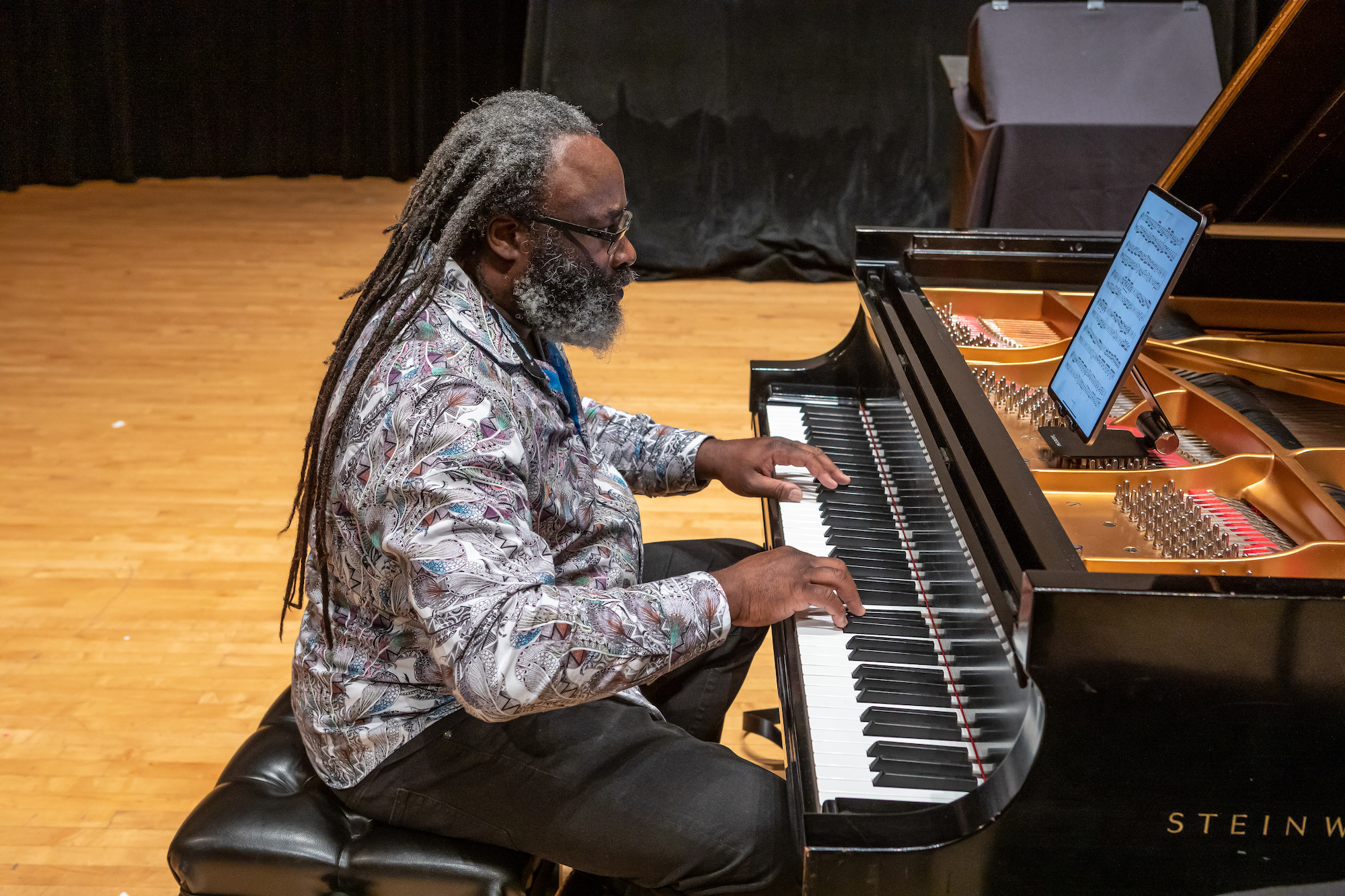
The soloist, Awadagin Pratt, has earned a reputation as committed musician who devotes himself fully to the programs he plays. The piece that formed the focus of his performance with the orchestra and conductor Peter Oundjian was Rounds by Jessie Montgomery, one of the leading young American composers today.
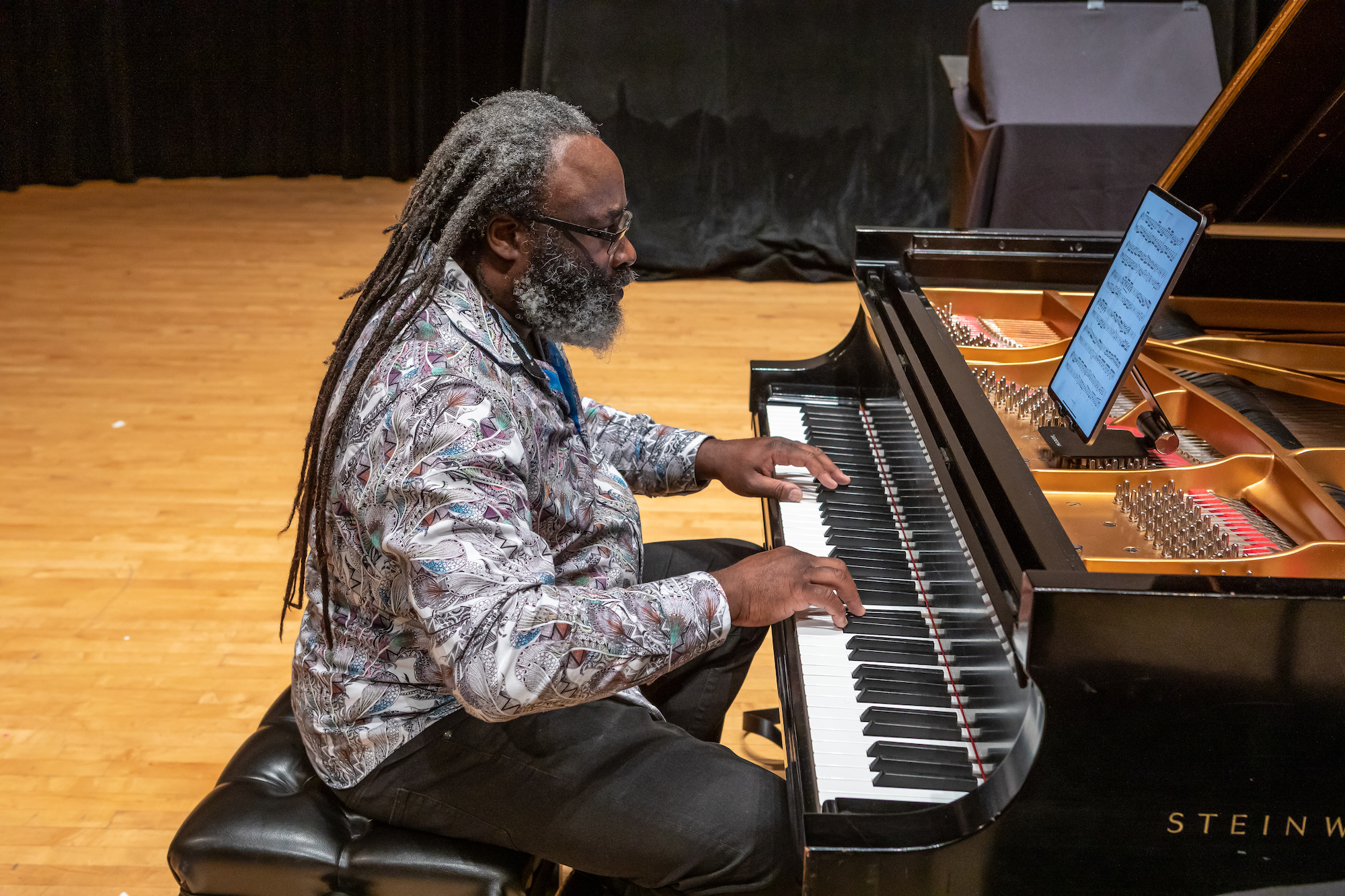
Pianist Awadagin Pratt
Rounds was part of the Still Point project, in which six composers including Montgomery were commissioned to write a new piece to be inspired by T.S. Eliot’s Four Quartets. Pratt was one of the performers in the project, along with the vocal group Roomful of Teeth and the self-conducted orchestra A Far Cry. The six works were released on an album titled Still Point, taken from the poem: “At the still point of the turning world. . . . there is only the dance.”
The album was released by New Amsterdam Records in 2023. Pratt has played Rounds with several different orchestras since then, including the Colorado Symphony, which was one of the co-commissioners.
Rounds opens with a rushing figure that, in different forms, recurs in-between and after other episodes. In about 15 minutes, the music carries the listener into different places and moods, from the rapidly pulsing opening to moments of stillness, to moments of great force.
This is clearly a piece that Pratt enters with great enthusiasm.His playing embraced wispy chords and thundering outbursts, and he navigated the partly-written cadenza that allows improvisation with confidence. All the sudden contrasts emerged clearly and cleanly in a riveting performance that evoked an enthusiastic response. After several curtain calls, Pratt came back for a gently touching encore by French composer Françoise Couperin.
The concert had opened with a performance by Pratt, Oundjian and the CMF strings of J.S. Bach’s Keyboard Concerto in A major, S1055. In spite of Pratt’s tidy technique and expressive playing, the performance was an example of the problems of playing Baroque music on the modern concert grand. The balance was not consistent, with inner voices often lost in the thick sound. Nevertheless, the performers showed an elegant grasp of Baroque phrasing, and the performance was never less than enjoyable.
A masterfully written score, Scheherazade is one of the most popular of orchestral potboilers. I don’t mean to denigrate the work, which contains gems of orchestration and great orchestral effects from beginning to end, but the pot does indeed boil in the best performances.
You might say that it not only boiled, it exploded last night on the Chautauqua stage. The orchestra demonstrated an extreme dynamic range, which really means that the soft passages were wonderfully, lean-forward-to-hear soft. Any orchestra with a brass section can play loud, but not all can play as softly as the Festival Orchestra did without ever losing intonation or fullness of tone. And you will never hear a softer, or cleaner, snare drum solo than accompanying woodwind solos in the third section of the score.
Oundjian clearly knows how to find the drama in a piece that is bursting with it. He also knows when to trust the musicians and let them take the lead, as he did with the robust trombone solos in the second section, and also some of the delicate woodwind solos. All of the soloists played with finesse and an alluring tone, especially the clarinet and flute. Of the winds, the bassoon, oboe, horn and trumpet soloists also shone.
The largest share of solos in Scheherazade goes to the concertmaster, Jonathan Carney from the Baltimore Symphony, who lent a gentle, sweet tone to the portrayal of the heroine, Scheherazade herself. In places, you could imagine you were hearing a violin concerto, which Carney executed eloquently.
Once again the audience stood and cheered. Oundjian made it a point to recognize all of the individual soloists, including the harpist who has much to do.
This attractive program will be repeated at 6:30 p.m. tonight (Friday, July 26) in the Chautauqua Auditorium. Tickets are available from the Chautauqua Box Office.
Kurt Weill’s seldom seen Street Scene has it all—music, dance, drama
By Peter Alexander July 23 at 3:20 p.m.
Anyone who loves Broadway theater, drama, bluesy musical numbers and zippy dance routines needs to go into the mountains.
Central City Opera’s production of Street Scene by the German-American composer Kurt Weill has all that and more. A thoroughly strong cast brings the drama to life, and the direction and choreography by Daniel Pelzig hits all the right notes. A realistic setting with no revisionist points to make captures the essence of the 1946 original, a gritty portrait of life in a Manhattan tenement building, with gossipy neighbors, a bullying husband and cheating wife, idealistic young lovers yearning to escape, and a potpourri of ethnicities.
Weill had one of the most remarkable and diverse careers of any 20th-century composer. Following his sensational success in Berlin working with playwright Bertolt Brecht on the jazzy Dreigroschenoper (Threepenny opera) and other works he fled Nazi Germany in 1933 and came to New York in 1935. From that point on, he wrote musicals for Broadway and aimed to create an American opera that combined popular styles with grand opera.
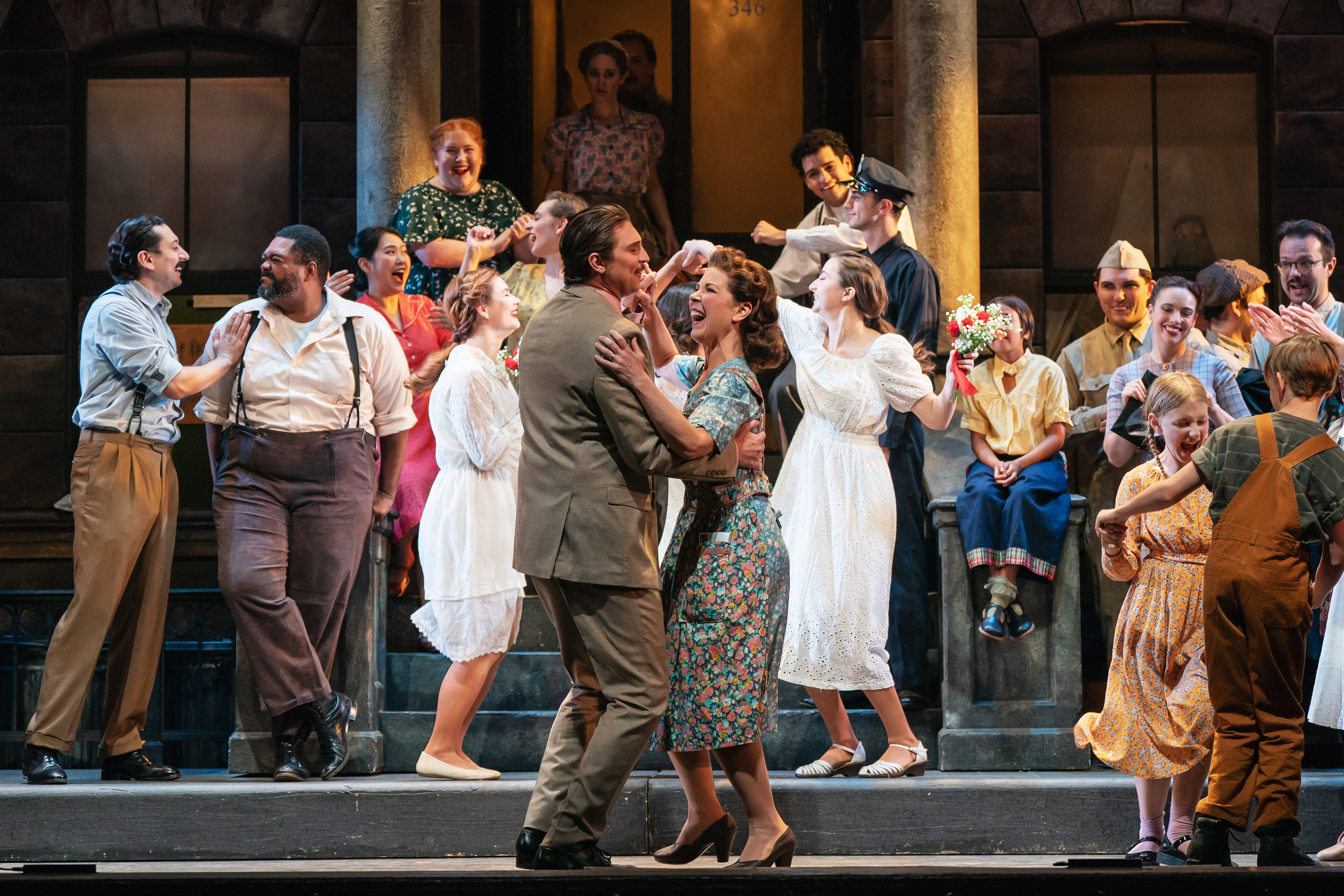
Tenement house neighbors in Street Scene. Image by Amanda Tipton Photography
Street Scene, which opened on Broadway in 1946, may be the closest he came to that goal, and it is certainly one of this finest works. It has an ideal American pedigree, with lyrics by Langston Hughes and a story based on the Pulitzer-prize winning play of the same title by Elmer Rice, who also wrote the book for the opera.
The music is appealing, combining Broadway set pieces like the ensemble for graduating students “Wrapped in a Ribbon and Tied in a Bow” and the dance number “Moon-faced, Starry-eyed,” with blues-tinged arias, like “Lonely House” sung by the young hero Sam Kaplan, and Puccini-esque arias like “Somehow I could Never Believe” sung by Anna Maurrant.
As great as it is, Street Scene is not often performed—another reason to travel to Central City this summer. Among reasons for its rarity are the challenges it presents, including a cast with more than 30 named roles, each with their own story to tell. Without care, a performance can become loosely episodic. A similar danger is that the most appealing Broadway-style numbers are extraneous to the plot, and can easily seem tacked on.
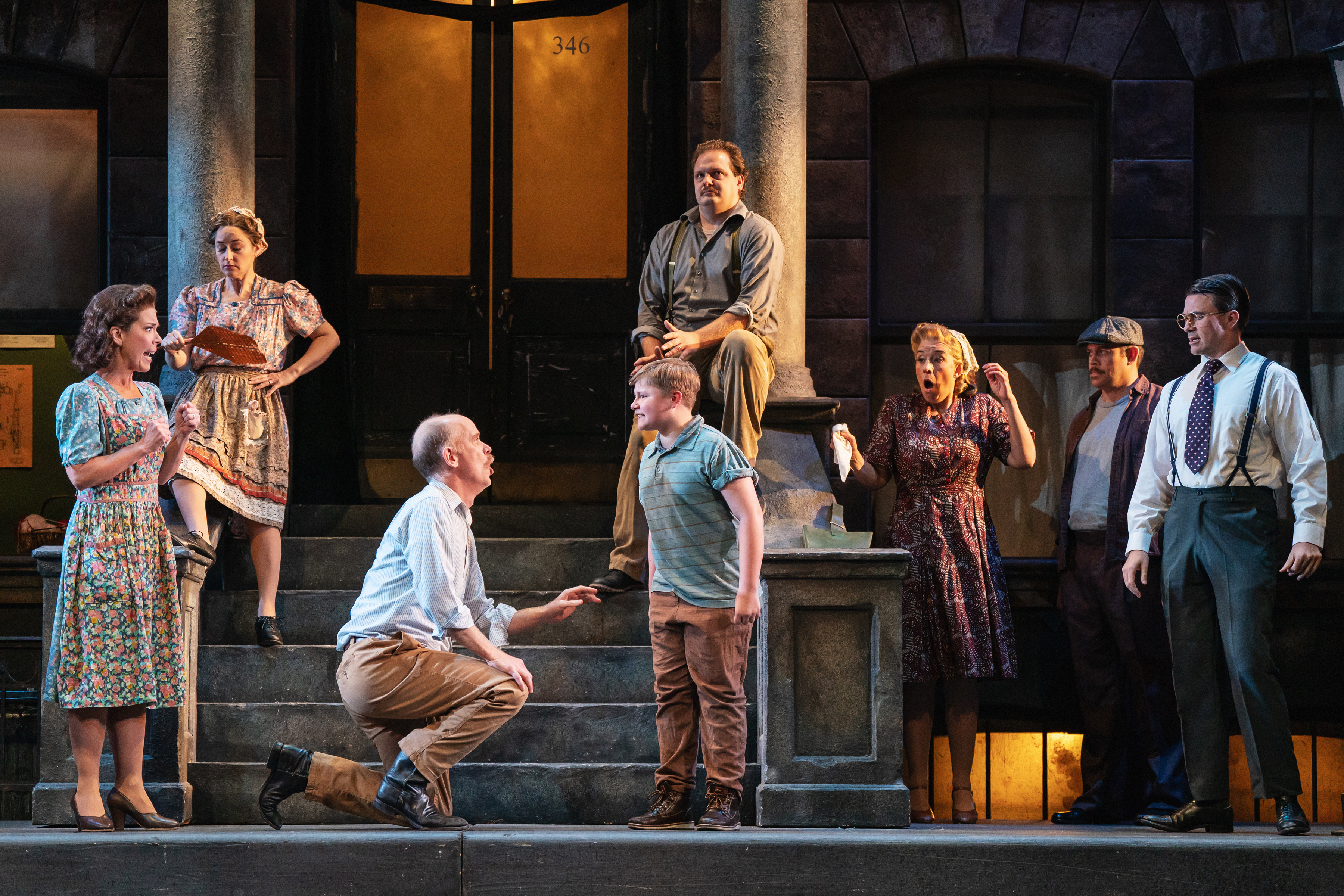
Front steps of the tenement building. Design by David Harwell. Kevin Burdette (Frank Maurant) and Brian Erickson (Willie Maurant). Image by Amanda Tipton Photography
Fortunately, Pelzig’s direction met these difficulties head on. He created a fast-moving show, where the diversity of the tenement community is part of the story, and the numbers were pulled into the musical flow. David Harwell’s set was traditional, with realistic tenement steps and apartment windows on two floors looking out to the street, but it suits the show perfectly. Once again, the gritty realism is part of the plot.
With so many singers, it is not possible to recognize all of the many cast members who made a strong contribution to the show. Of the leading roles, Katherine Pracht in the role of Anna Maurant, the wayward but kindly wife of the building bully, gave a good portrayal of a fragile woman with romantic dreams while living on the brink of disaster. She sang with great expression, but with a strong vibrato that occasionally threatened to obscure the text.
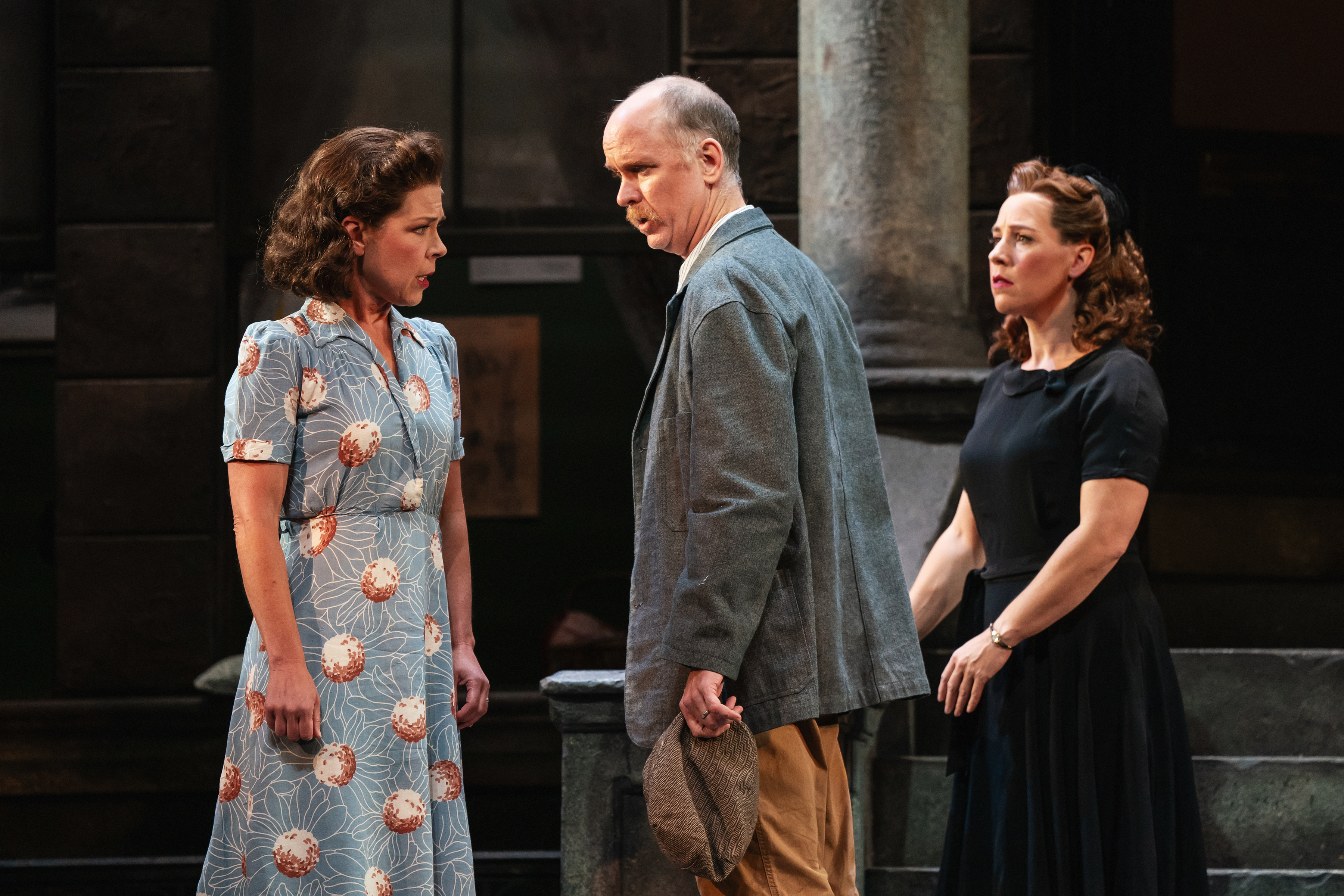
Katherine Pracht (Anna Maurant), Kevin Burdette (Frank Maurant) and Christie Conniver (Rose Maurant) in Street Scene. Image by Amanda Tipton Photography
As her abusive husband, Frank Maurant, Kevin Burdette used a rough edge to his voice to convey the character’s menace. A veteran of bad guy roles, including Claggert in Billy Budd in Central City and Sweeney Todd in Dallas, he softened his portrayal in the final scenes, creating a whole character. If his sudden tenderness seems less than convincing, that is the script and not the performance, which was heartfelt.
Christie Conover was endearing as Rose, the Maurants’ daughter who is pursed by a number of undesirable suitors as well as by Sam, the shy young male romantic lead who cannot quite express his love. She sang with a poised and polished sound that stood out from the more rough-hewn characters. As Sam, Christian Sanders had to reach for some of the high notes, but sang an appealing and well shaped aria in “Lonely House.” Their gradually blooming romantic duet, “Remember that I Care,” offered the opera’s tenderest moments.
I enjoyed the gossiping neighbor ensembles, which become a latter-day Greek chorus commenting on the action. The cast embraced the ethnic types written into the score, rarely overdoing it. Apprentice singer James Mancuso produced a definitively Italian sound as Lippo Fiorentino, the most strongly stereotyped of the neighbors.
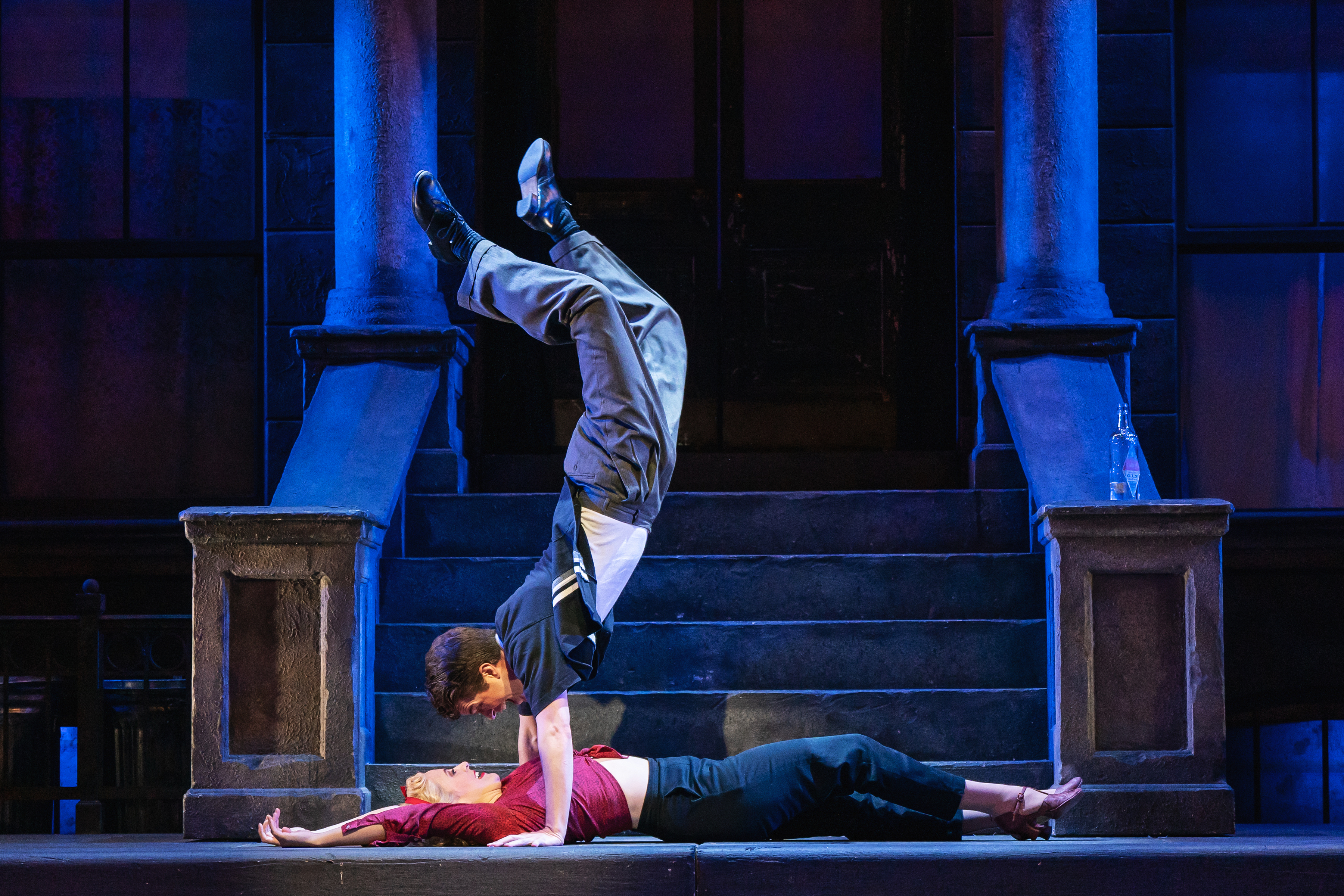
Lauren Gemelli and Jeffrey Scott Parsons in the dance routine “Moon-faced, Starry-eyed.” Image by Amanda Tipton Photography
Bernard Holcomb brought a big, robust voice and a friendly demeanor to the role of Henry Davis, the building janitor. As the overheated lovers in the big dance number, “Moon-faced, Starry-eyed,” Lauren Gemelli and Jeffrey Scott Parsons nearly stole the show with their saucy dialog and athletic dancing.
Members of the Colorado Children’s Chorale sang strongly and conveyed a rowdy sense of fun in their teasing game at the beginning of the second act. Brian Erickson acted strongly in the role of Willie Maurant, Rose’s rowdy little brother.
Conductor Adam Turner led the Central City orchestra in a stylish performance, getting the Broadway idioms right and supporting the singers well. A few times they covered the spoken dialog, but the big musical numbers were all outstanding. In short: this production of Street Scene is a rare opportunity to see an important work of American musical theater done well.
Premiere by Gabriela Lena Frank, Concerto by Joan Tower showcase the Festival Orchestra
By Peter Alexander July 22 at 12:15 a.m.
The Colorado Music Festival Orchestra and conductor Peter Oundjian hit the jackpot last night (July 21) with a program of three pieces by women composers.
All three works, by Florence Price, Gabriela Lena Franck and Joan Tower, were performed memorably. Both living composers—Frank and Tower—were present and spoke to the audience.
The concert opened with Price’s Adoration, a piece that she originally wrote for organ in 1951 and that here was performed in a setting for string orchestra. Played tenderly by the Festival Orchestra strings, it is almost too soothing and gentle to serve as an opener. Oundjian and the players thoroughly embraced the mood, creating a comforting start to a program that soon turned adventurous.
Frank’s Kachkaniraqmi (“I still exist” in the Quechua language of her Peruvian forebears) was commissioned by CMF as a concerto for string quartet and string orchestra, written for Boulder’s Takács Quartet and the CMF Orchestra. As an introduction by Oundjian, Frank and Takács violinist Harumi Rhodes spelled out, the commission emerged from a suggestion by CMF contributor and long-time patron Chris Christoffersen for a concerto for the Takács, and then from a friendship between Frank and Rhodes.
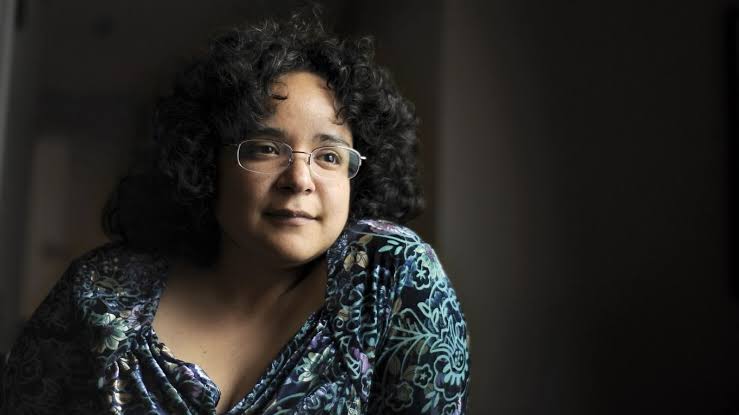
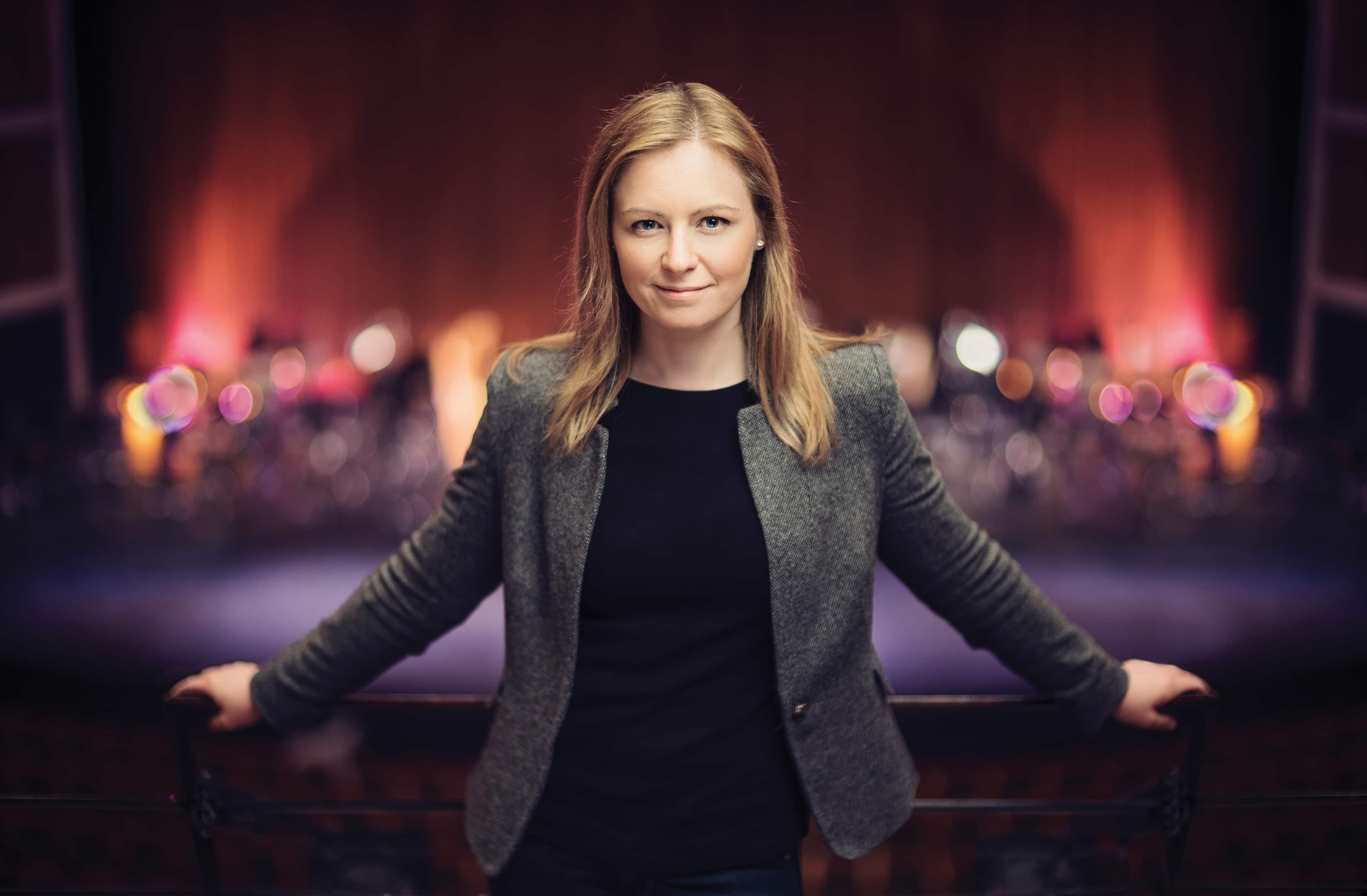
Gabriela Lena Frank
Kachkaniraqmi is a piece of great imagination and creativity. Frank refuses to cozy up to the listener with easy tunes and catchy ideas. In fact, Kachkaniraqmi sounds like no other piece I have heard, but it makes great use of string timbres and textures. It opens with highly individual, sometimes quirky gestures for the solo violist and orchestral violas before moving into a fuller texture. At places, the strings sound like a single instrument, leaping across a large range from top to bottom, and at other times like a large organ moving in full orchestral chords.
The middle section, or second movement, presents a rushing, incessant forward drive. All texture and motion, this portion of the concerto is not hummable, but identifiable musical ideas can be followed as they are passed from section to section over an unrelenting rhythmic foundation. This driven middle section settles into a more contemplative final portion that explores different techniques of string playing to create a startling range of sounds and gentling moods as the music moves toward silence.
Kachkaniraqmi is a remarkable creation, an intriguing piece that I expect will reveal more and more as one listens to it again and again. I hope that the Takács will take the score well beyond Boulder and introduce it to the wider musical world.
The concert concluded with a stunningly complex and difficult piece, Joan Tower’s Concerto for Orchestra. Composed in 1991 for the New York Philharmonic, Chicago Symphony and St. Louis Symphony, it has had modest success in the intervening 33 years. “This piece should be played everywhere!” Oundjian said in his introductory comments, standing onstage with the composer.
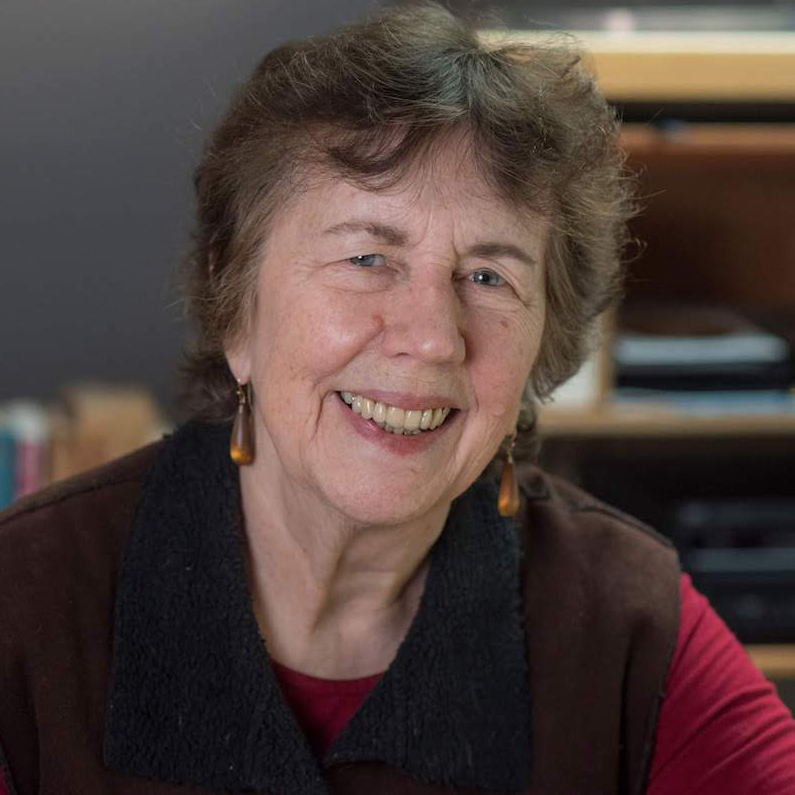
Joan Tower
Tower noted that it is a difficult piece to conduct—on top of being very difficult to play—which may be one barrier, but the CMF Orchestra’s performance showed what musical fireworks it sets off when played at the highest level. Clearly, Oundjian had mastered all the shifting meters and tricky rhythms, and the CMF players responded with a virtuoso display.
As expected, there are many solos in the course of the score’s 25+ minutes, for horn, for English horn, for tuba, but more stunning are the intricate passages for whole sections—trumpets, woodwinds, a tricky motive passed up and down from trumpets to horns and back. Often played at a breakneck pace, these are the most virtuosic passages of the concerto, and they were played with precision and confidence by the CMF orchestra.
Other noteworthy moments included a cello section solo that gives a lyrical contrast to the more driving and excitable portions of the score, with the cellos at times divided into parts to create full chords, and at other times reduced to two eloquent solo players. A later softening and lowering of temperature allows two violinists to come forward, before the rhythmic frenzy starts again.
As Tower promised, the percussion players are kept busy, running from instrument to instrument, culminating with a viciously fast running beat by several drums that requires extreme concentration to keep together. This exciting moment, played with perfect precision, leads to a final crashing chord—and inevitably, wild enthusiasm from the audience.
They were still cheering as I gathered my things and snuck out the side door.
Under Oundjan’s leadership, the CMF has established itself as a forward-looking summer festival that all Boulder should support. His thoughtful programming, his embrace of living composers, and the commissioning of new pieces are admirable and exciting. A concert of works by three women, two of them present for the performance, is a perfect illustration of his vision of the festival. On this occasion, it was brilliantly realized.
Correction: Misspellings of string as “sting“ in paragraph six and viciously as “viscously” in paragraph 12 corrected 7/22.
Guest soloists and a Mahler symphony bring 2024 festival to a close
By Peter Alexander July 18 at 3:20 p.m.
The remaining two weeks of the Colorado Music Festival (CMF) will see a series of guest artists—soloists, conductors and chamber musicians—and culminate with a Mahler symphony.
Peter Oundjian, artistic director of the Colorado Music Festival. Photo by Geremy Kornreich.
Ending the summer with Mahler has become a tradition at CMF. “It’s quite conscious,” artistic director and conductor Peter Oundjian says. “We did the Third (Symphony), we did the Fifth. The season of ’21 we ended with Beethoven, because couldn’t have a Mahler symphony”—due to onstage seating restrictions during COVID—but otherwise, Oundjian has made Mahler the preferred festival finale.
Before the season-ending concert Aug. 4, CMF still has intriguing programs of both orchestral and chamber music. Next Tuesday (7:30 p.m. July 23; full programs listed below), the Robert Mann Chamber Music Series continues with a concert by members of the Festival Orchestra. The program will include one of the most loved pieces by Mendelssohn, his String Octet in E-flat, written when the composer was only 16.
Danish String Quartet. Photo by Caroline Bittencourt.
One week later on July 30, the guest chamber group the Danish String Quartet closes the chamber music series with a diverse program of pieces and movements both familiar and unfamiliar. The Danish Quartet, known for creative programming, was originally scheduled in 2021, but due to COVID restrictions had to wait for the 2022 festival.
This summer’s program opens with the minuet from Joseph Haydn’s late quartet Op. 77 no. 2, followed by Three Pieces for String Quartet by Stravinsky and Three Melodies by the 17th-century blind Celtic harpist Turlough O’Carolan. An early divertimento by Mozart and the Third String Quartet by Shostakovich complete the program.
Awadagin Pratt
Pianist Awadagin Pratt will be the guest soloist for the Festival Orchestra concerts July 25 and 26. The first African-American pianist to win the Naumburg International Piano Competition, Pratt has had a protean career, performing with most major American orchestras, appearing on six continents, at the White House by invitation from presidents Clinton and Obama, and on Sesame Street.
Described in the Washington Post as “one of the great and distinctive pianists of our time,” Pratt is known for highly individual artistry and concert dress. A pianist of prodigious technique, he plays a wide ranging repertoire. For his appearance with Oundjian and the Festival Orchestra, Pratt will play a Keyboard Concerto by J.S. Bach and Rounds for piano and string orchestra by Jessie Montgomery. The program will also feature a staple of the large orchestra repertoire, Rimsky-Korsakov’s Scheherazade.
Gemma New. Photo by Anthony Chang.
Two guest artists and a guest conductor will be featured on the Chamber Orchestra concert July 28. Conductor Gemma New, hailed as “one of the brightest rising stars in the conducting firmament” by the St. Louis Post Dispatch, is a native of New Zealand where she leads the New Zealand Symphony. She comes to Colorado on her way to conduct the BBC Proms in London Aug. 16.
The program will feature the piano duo of Christina and Michelle Naughton as guest soloists, performing Mozart’s Concerto in E-flat Major for Two Pianos, K365. Other works on the all-Mozart program are Eine kleine Nachtmusik and the “Haffner” Symphony, No. 35 in D major.
The next Festival Orchestra concert brings another outstanding soloist to Chautauqua: violinist Augustin Hadelich, who has become a CMF favorite since his first appearance at the festival in 2018. He appeared from Oundjian’s home by live stream during the COVID-canceled 2020 season, and returned as artist-in-residence in 2021.
Augustin Hadelich. Photo by Suxiao Yang.
This season he will play the Tchaikovsky Violin Concerto (Aug. 1 and 2) on a program that also includes Two Mountain Scenes by Kevin Puts and Dvořák’s Symphony No. 7 in D minor. The latter, Oundjian says, “is for a lot of people Dvořák’s true masterpiece.
“Obviously the Ninth Symphony (the ‘New World’) is fantastic and the Eighth is so exquisitely beautiful, but Seven is the piece that made him famous. The premiere in London (1885) was kind of an epic moment for him. I have conducted it in a lot of different places, and orchestras love to play it. They know how magnificent it is.”
Puts’s Two Mountain Scenes was commissioned by the New York Philharmonic and Bravo Vail! “It’s a real showpiece for orchestra, quite original but not forbidding,” Oundjian says. “You’d think living in Colorado it would be performed more often. It’s a wonderful piece!”
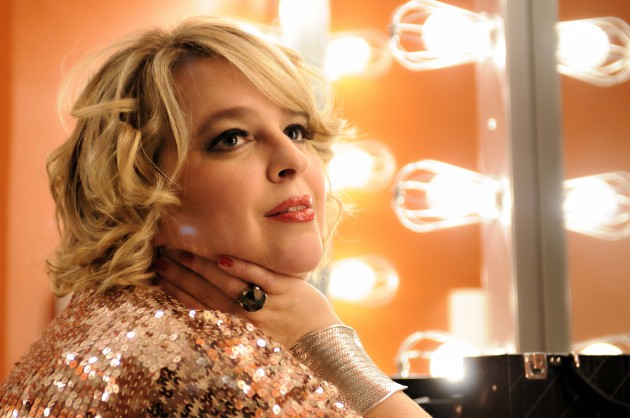
The final concert of the 2024 festival, Sunday, Aug 6, features the final guest artist, soprano Karina Gauvin. A Canadian soprano who has performed with orchestras from San Francisco to Rotterdam, she will sing Ravel’s Shéhérazade and the final movement of the festival-closing Fourth Symphony of Mahler. And in another form of delight, the concert will open with Johann Strauss Jr.s spirited Overture to Die Fledermaus.
Karina Gauvin. Photo by Michael Slobodian.
Following the pattern of ending the festival with Mahler, it was the Fourth that generated the rest of the program. Oundjian says that work “is in some ways the most fascinating narrative of all (of Mahler’s) symphonies. It’s like poetry. It also has a chamber quality that is very different from all the other Mahler symphonies.
“There’s something both playful and heavenly about the first movement, and something devilish about the second movement, with its falsely tuned violin that represents the devil. And typical of Mahler scherzo movements, where you have trio sections that are very beautiful and elegant. And then a slow movement, you think, ‘OK, this is the most beautiful music that’s ever been written’!”
The finale the gives the whole symphony the character of childish delight. A setting of a poem describing life in heaven, with everyone living “in sweetest peace” and enjoying endless banquets, it is one of Mahler’s most beguiling movements. It is, Oundjian says, a “wonderful image of heaven in this child-like voice, speaking to us from another place.
“I wanted to put (Ravel’s) Scheherazade with the Fourth Symphony. I think Scheherazade is staggering, with orchestration, the colors, harmonies, the way he uses the vocal line and shapes the vocal line. It’s just magnificent. And then to start it with Fledermaus is pure heaven!”
# # # # #
Colorado Music Festival, Peter Oundjian, music director Remaining concerts, July 23–Aug. 4, 2024 All performances in Chautauqua Auditorium
Robert Mann Chamber Music Series Colorado Music Festival musicians
Joseph Haydn, String Quartet in C Major, op. 20 no.
Claude Debussy, Sonata for flute, viola and harp
Felix Mendelssohn, String Octet in E-flat Major, op. 20
7:30 p.m. Tuesday, July 23
Festival Orchestra Concert Festival Orchestra, Peter Oundjian, conductor With Awadagin Pratt, piano
J.S. Bach: Keyboard Concerto in A major, S1055
Jessie Montgomery: Rounds for piano and string orchestra (2022)
Rimsky-Korsakov: Scheherazade
7:30 p.m. Thursday, July 25 6:30 p.m. Friday, July 26
Festival Chamber Orchestra Concert Chamber Orchestra, Gemma New, conductor With Christina and Michelle Naughton, piano duo
Mozart: Eine kleine Nachtmusik, K525 —Concerto in E-flat Major for Two Pianos, K365 —Symphony No. 35 in D major, K385 (“Haffner”)
6:30 p.m. Sunday, July 28
Robert Mann Chamber Music Series Danish String Quartet
Joseph Haydn: String Quartet, op. 77 no. 2: III, Andante
Stravinsky: Three Pieces for String Quartet
Turlough O’Carolan: Three Melodies
Mozart: Divertimento in F major, K138
Shostakovich: String Quartet No. 3 in F major, op. 73
7:30 p.m. Tuesday, July 30
Festival Orchestra Concert Festival Orchestra, Peter Oundjian, conductor With Augustin Hadelich, violin
Kevin Puts: Two Mountain Scenes (2007)
Tchaikovsky: Violin Concerto in D Major, op. 35
Dvořák: Symphony No. 7 in D minor, op. 70
7:30 p.m. Thursday, Aug. 1 6:30 p.m. Friday, Aug. 2
Festival Finale Concert Festival Orchestra, Peter Oundjian, conductor With Karina Gauvin, soprano
Quintets by Nielsen and Schubert on chamber series
By Peter Alexander July 17 at 12:15 a.m.
Last night’s chamber music concert at the Colorado Music Festival (July 16) offered the kind of program that makes the festival such a valuable cultural asset.
The program comprised two quintets, both treasures of the chamber repertoire, one of them a rarity in concert, the other a deeply loved and profound gem. The first was the Quintet for Winds by the Danish composer Carl Nielsen, the other the Quintet in C major for strings by Schubert. The opportunity to hear both on the same program is most unusual. It is what CMF, with its deep roster of top professional players, can offer its audiences that few other venues can match.
Nielsen’s Wind Quintet is a quirky and delicious piece that is seldom heard in concert. Indeed, one of the joys of the concert was hearing a piece live that is rarely found outside recordings, and it is a testament to the quality of the players from the CMF Orchestra that a genuinely tricky piece seemed, not quite easy but comfortable to play. As an amateur clarinetist I was blown away by Louis DeMartino’s rich, warm clarinet sound, but the other players—Vivian Cumplido Wilson, flute; Zac Hammond, oboe and English horn; Wenmin Zhang, bassoon; and Roy Femenella, horn—were also consistently terrific.
The performance was marked by impeccable precision within the ensemble. The give and take between the parts, within a changeable texture marked by frequent imitation between instruments, was handled brilliantly. Such a level of ensemble is not easily reached with an informal group assembled for a single concert.
One of the challenges of the wind quintet genre is finding the right balance with five very different instruments. Matching a flute with a horn, or a clarinet with an oboe, requires careful listening, and it is a challenge that the CMF players consistently overcame. Not once did I hear a player covered, or obscured by a different tone quality.
String players face a different challenge, especially when they have a limited time to form an ensemble. While they can match each others’ sounds more easily than the winds, and thereby create a unified tone quality, much like an organ, within that harmonized sound small deviations of style become more perceptible. Indeed, there are elements of style that can only be polished when players have known each other over time. (Boulder audiences know this quality from the resident Takács Quartet, who will be featured on Sunday’s CMF Orchestra concert; see the CMF calendar for details and tickets.)
There were occasional smudged passages, and moments of interpretive uncertainty in last night’s Schubert, both signs of a temporary ensemble. Likewise, the dance-like third movement seemed briefly to be pulling ever so slightly apart, and the thick chords at the movement’s opening were not always ideally balanced.
But it is the positive side of the ledger that dominated. The long slow crescendo at the start of the slow movement built beautifully, and the Finale had great unity of ensemble and well executed group rubato, creating a deeply expressive musical flow and a strong ending. The individual players—Kevin Lin and Kate Arndt, violin; DJ Cheek, viola; Austin Huntington and Britton Riley, cello—all performed beautifully, and the audience showed appreciation with a standing ovation at concert’s end.
Finally, I have to note that the Chautauqua Auditorium was well under half full. The audience, while appreciative, was far less than the delightful and fulfilling program deserved. Do yourself a favor: look up the chamber concerts on the CMF calendar. You will find rare and rich rewards among them.
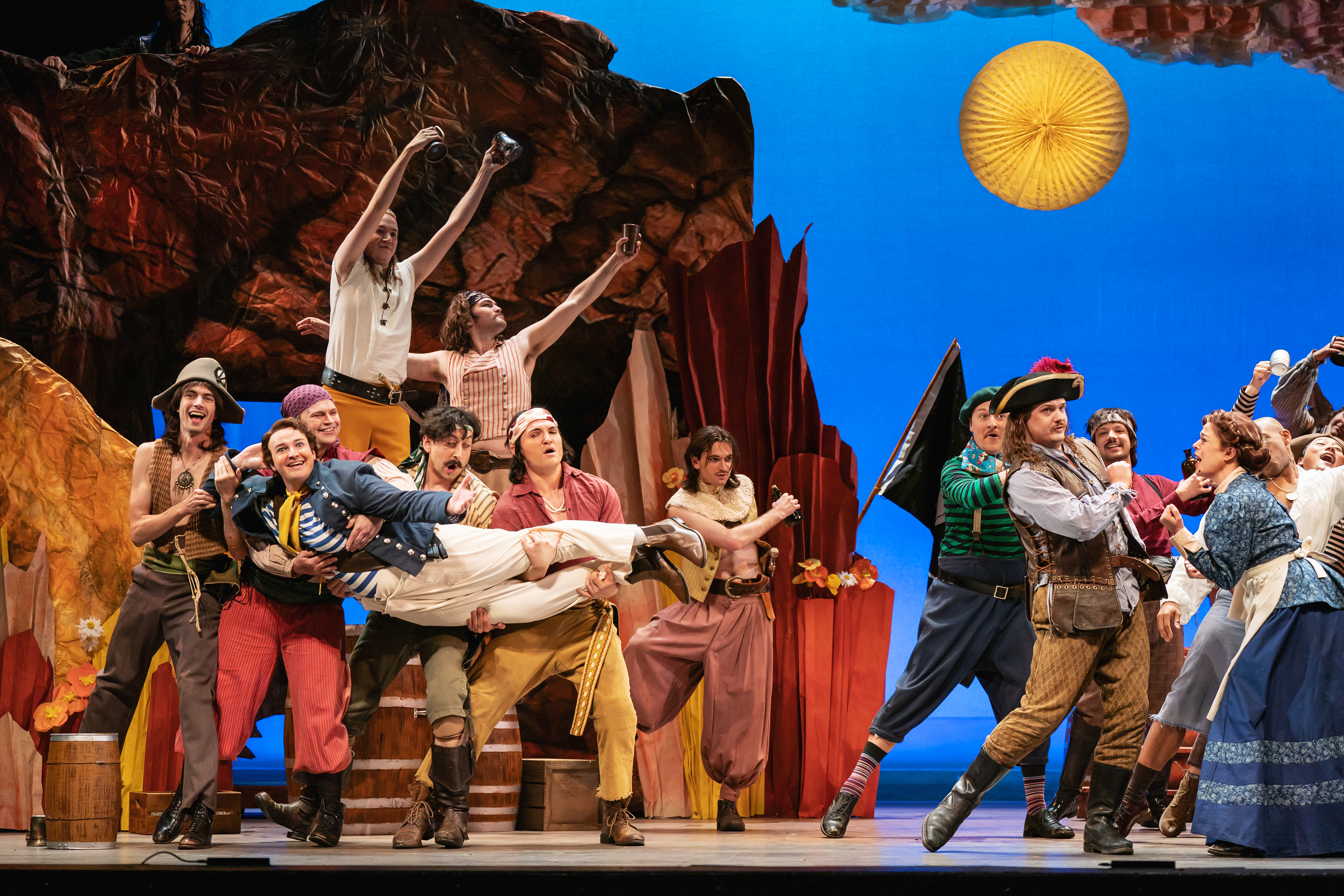
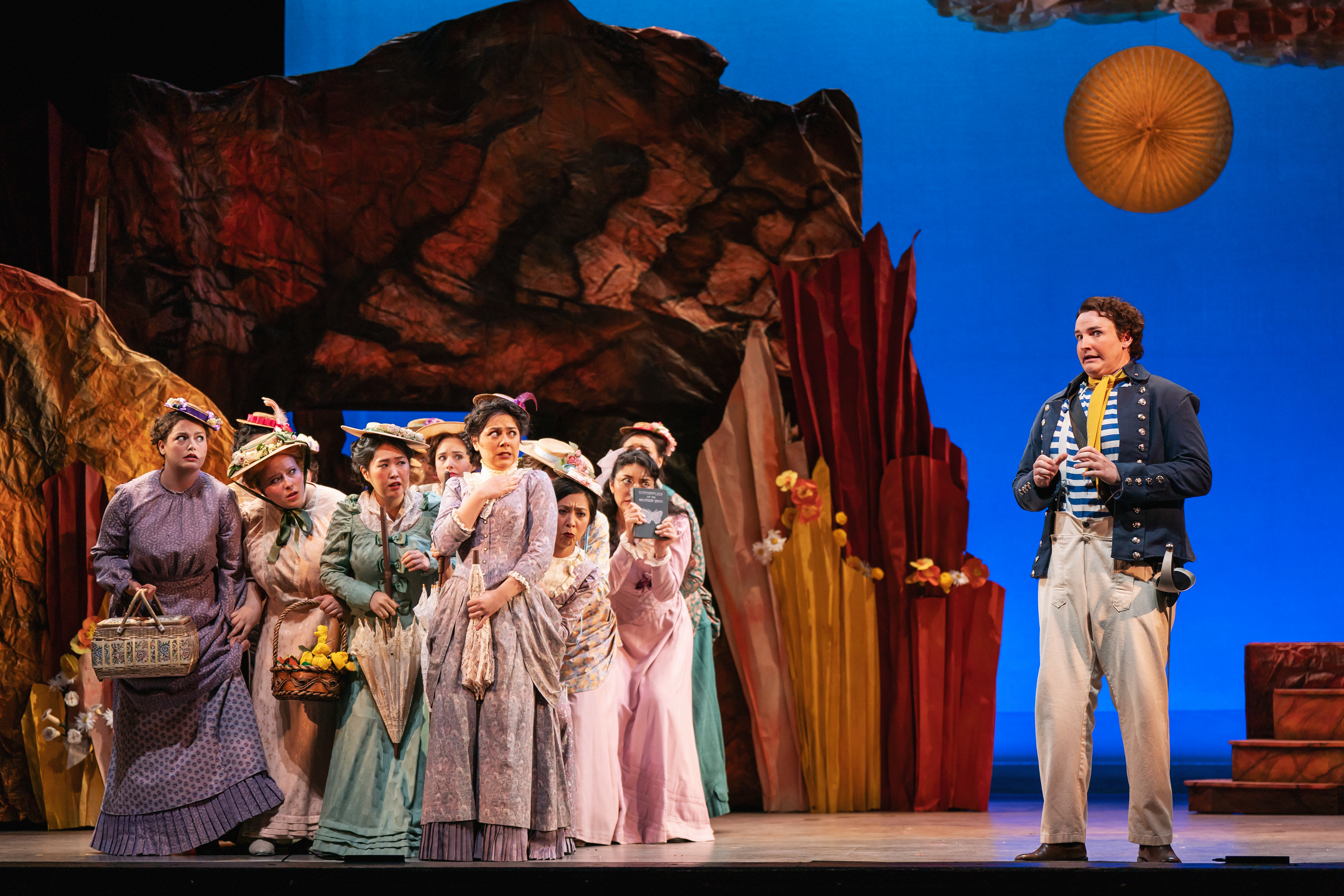
Central City Opera’s performance of Gilbert & Sullivan’s Pirates of Penzance (July 13) started with a delightful, well nuanced reading of the Overture, and from there went from one entertaining moment to another.
The Pirates of Penzance holding Frederic, the heartthrob hero. Image by Amanda Tipton Photography
The cast conveyed the silly and satirical spirit of the popular G&S operetta. Even 145 years later, their soft-hearted pirates, ineffectual police, sentimental lovers and ridiculous misunderstandings—all delightful skewerings of British stereotypes in 1879—can still delight audiences, even as far removed from Albion as in a Colorado mining town that was barely 20 years old when Pirates premiered in New York City.
The attractive and practical stage settings from Papermoon Opera Productions, known for their creative use of paper in building scenery, worked well on Central City’s small stage, leaving space for pirates, police and Major General Stanley’s many daughters to move about. Direction by Kyle Lang both honored and departed appropriately from the traditions of G&S comedy. Some of the shtick preserved in traditional English productions was replaced by more up to date shtick—such as young women competing to provide CPR and mouth-to-mouth on the heatthrob hero.
The Major General daughters and Frederic (Chris Mosz) in Pirates of Penzance. Image by Amanda Tipton Photography
Lang handled the three groups of characters well, including enjoyable moments when the chorus burst off the stage into the audience or entered through the back of the house. There was a little too much of the daughters moving here and there in a tight clump, a consequence of the small stage at CCO, but otherwise the handling of the the different groups contributed well to the comedy.
If at times the humor was overacted, it never crossed the line into gross parody—quite. The greatest flaw was the uneven adoption of a British accent, noticeable only on certain words. Especially ripe for modification was the vowel sound “o” as “eeow” as in “Altheeow” or “You may geeow.” Even this simplified Biritishism was unevenly applied, with some actors (Jennifer DeDominici as the nursemaid Ruth) applying it thicker than others (Alex DeSocio as the Pirate King). Used consistently it might have been a useful class distinction (working class vs. nobility, as the pirates turn out to be), but English class accents are more varied than non-English casts are likely to convey. It was noticeable, but distracted little from enjoyment of the comedy.
The cast was full of strong comic-opera voices. Pirate King DeSocio has a robust voice and, like most of the cast and chorus, sang with clear diction. His stage movements were fluid, no doubt due to Lang’s choreography as well as stage direction.
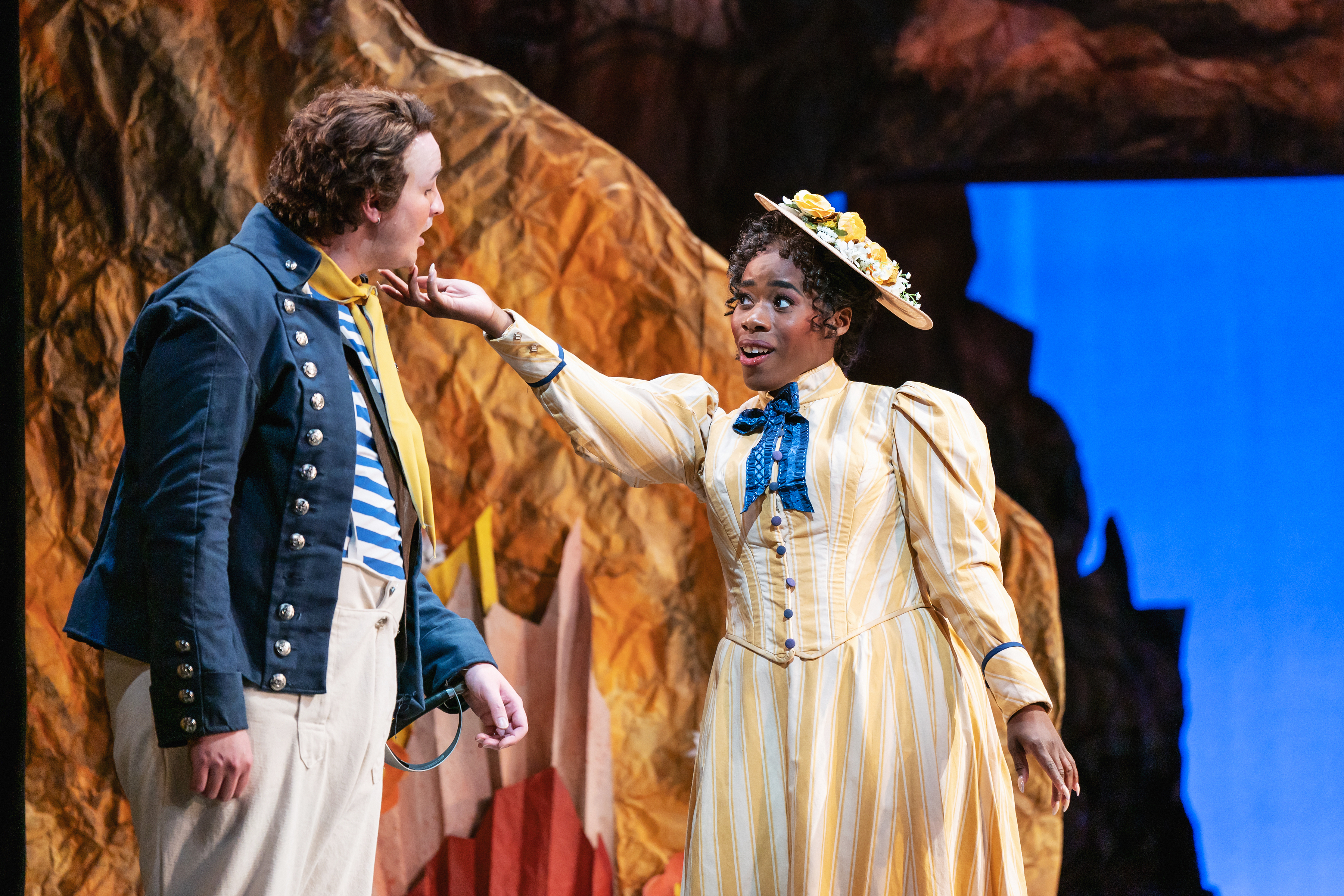
Frederic (Chris Mosz) and Mabel (Jasmine Habersham). Image by Amanda Tipton Photography
As the romantic lead Frederic, Chris Mosz sang with a strong but edgy tenor sound and a rapid vibrato that cut through orchestra and chorus. His voice was more than powerful enough for the small Central City house, but more tenderness would be welcome.
Jasmine Habersham handled Mabel’s coloratura flights with firm accuracy. Her bright, clear voice came on a little too forcefully at first, but in the second act melted nicely into the warm, lyrical passages. Her “Poor Wand’ring One,” one of the highlights of any performance, was especially lovely, first smooth then popping the top notes.
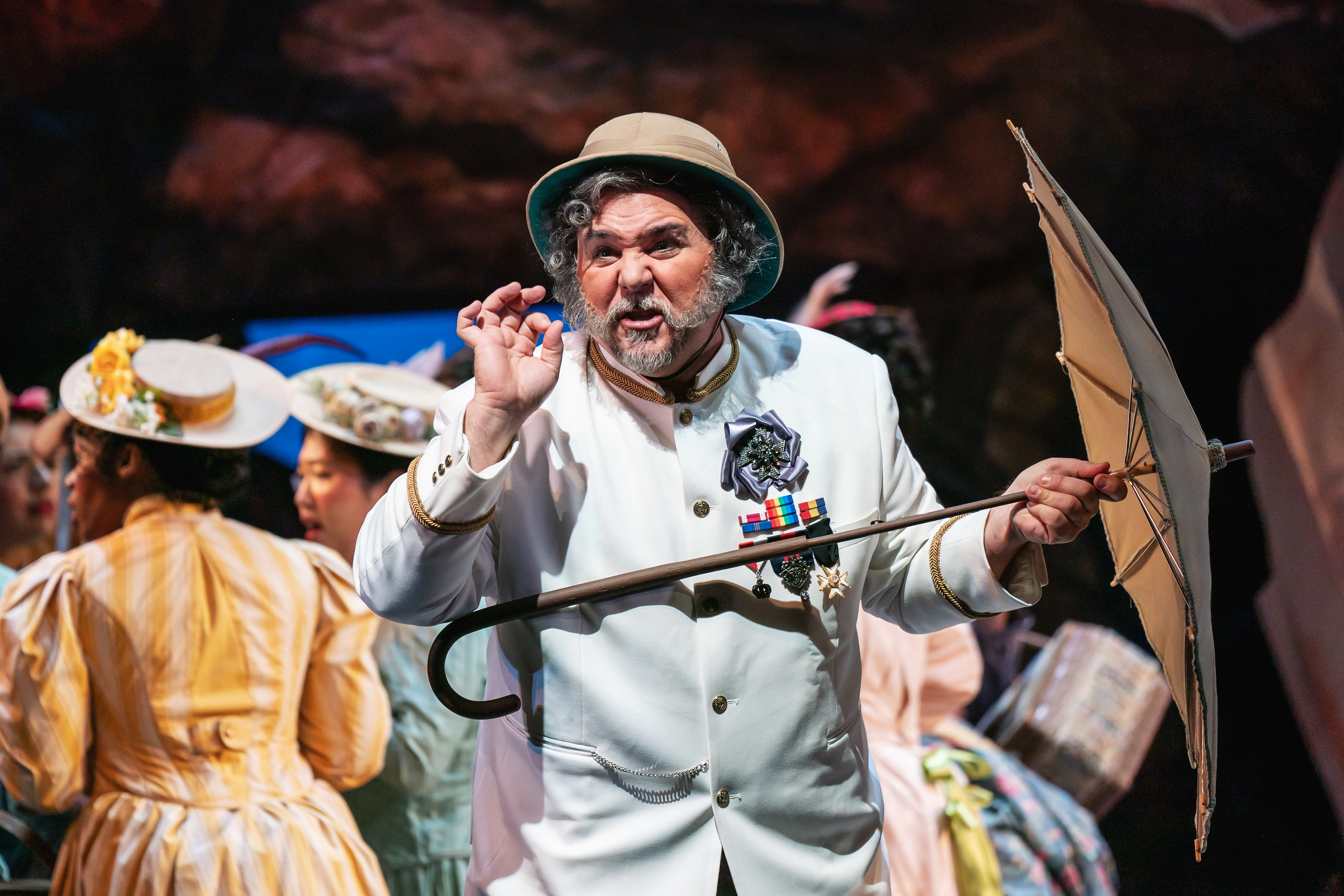
Adelmo Guidarelli as the pompous Major General. Image by Amanda Tipton Photography
As Ruth, DeDominici is fairly young, and as presented onstage far too attractive, for the joke about her age (supposedly 47) to work. When Frederic first sees the General’s daughters, he exclaims that she misled him in saying she was attractive (“I’ve been told so,” she says coyly). Otherwise, she was effective and funny as the hard-of-hearing nursemaid whose error in apprenticing Frederic to a pirate rather than a nautical pilot launches the whole plot.
Baritone Adelmo Guidarelli was an appropriately self-important Major General. He was first-rate at everything the role requires: pomposity, patter song and comic timing. Milking it for all it was worth, he breezed through the accelerated reprise of his well known patter song (“I am the Very Model of the Modern Major General”; one cannot complain about dropped final consonants at that speed!), and weeped equally comically in the second act.
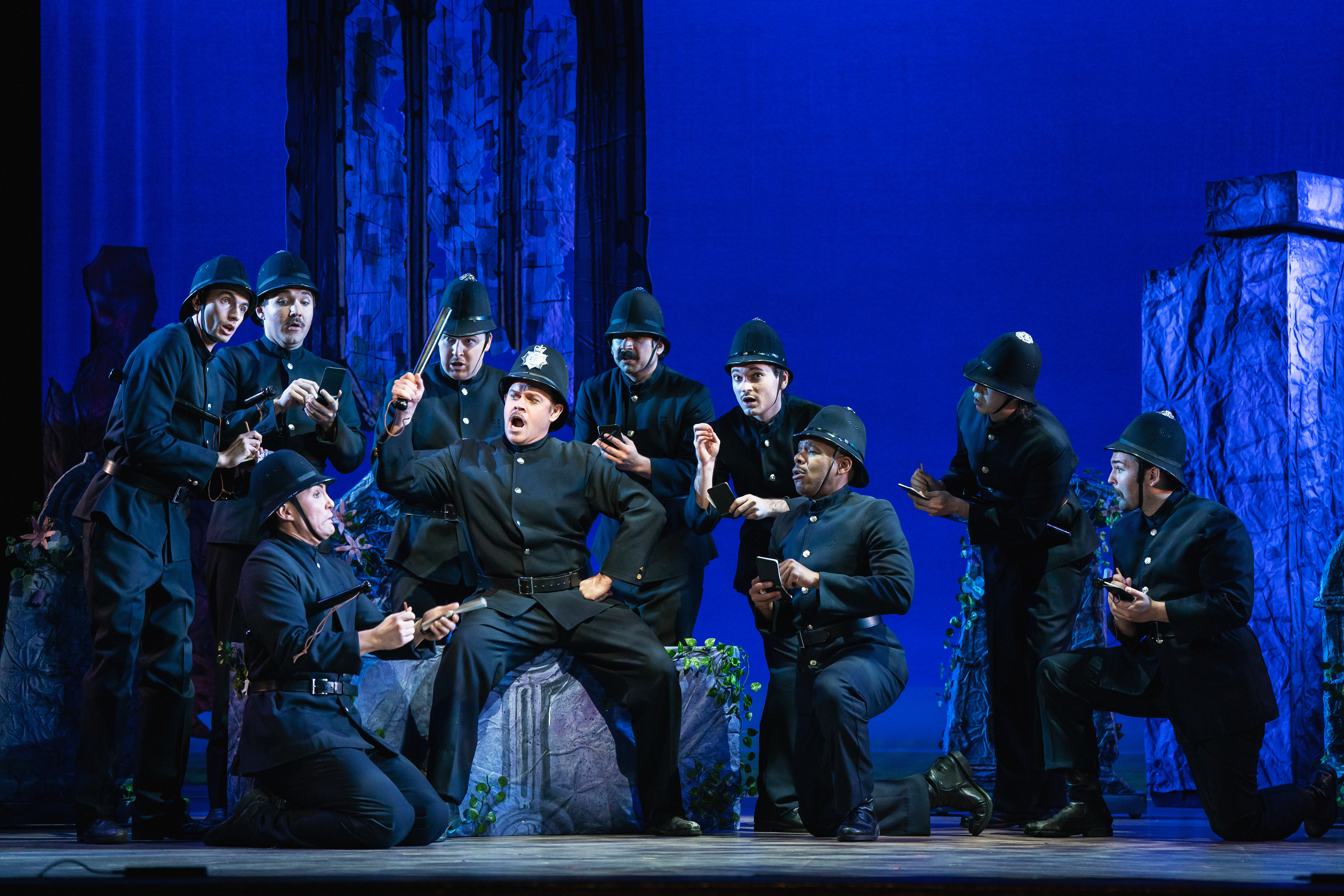
Andrew Harris and his bumbling bobbies. Image by Amanda Tipton Photography
Andrew Harris’s booming bass made a powerful effect as the bombastic, if less than dauntless Sargeant of Police. The policeman’s chorus added their own touch of humor, waddling in and out and about, singing as forcefully as required. The entire chorus—pirates, daughters and police—deserve mention for their musical performance filling the house at times, or dissolving into softer moments.
The small orchestra under Brandon Eldredge was excellent from the overture on, supporting but never drowning the singers. Tempos were brisk, but only in the Major General’s encore breakneck.
If you are a fan of light opera, you will want to see CCO’s Pirates of Penzance. You can’t do better than to see Gilbert & Sullivan in an opera house built in their lifetimes. But if you go, be warned: repairs on I-70 create massive slowdowns and outright stoppages between Denver and Idaho Springs. Choose another route into the mountains.
# # # # #
Gilbert and Sullivan’s hapless pirates are tenderhearted, and as it turns out so are the gritty goldminers in Puccini’s Fanciulla del West (Girl of the Golden West).
The romanticized story, based on wild west myths and set in a location Puccini never saw, has the miners singing sentimental songs about home and wanting to see “mama” again, and in the end forgiving the outlaw Ramerrez, removing the noose from his neck and allowing him to walk away with Minnie, the love of his life—and theirs.
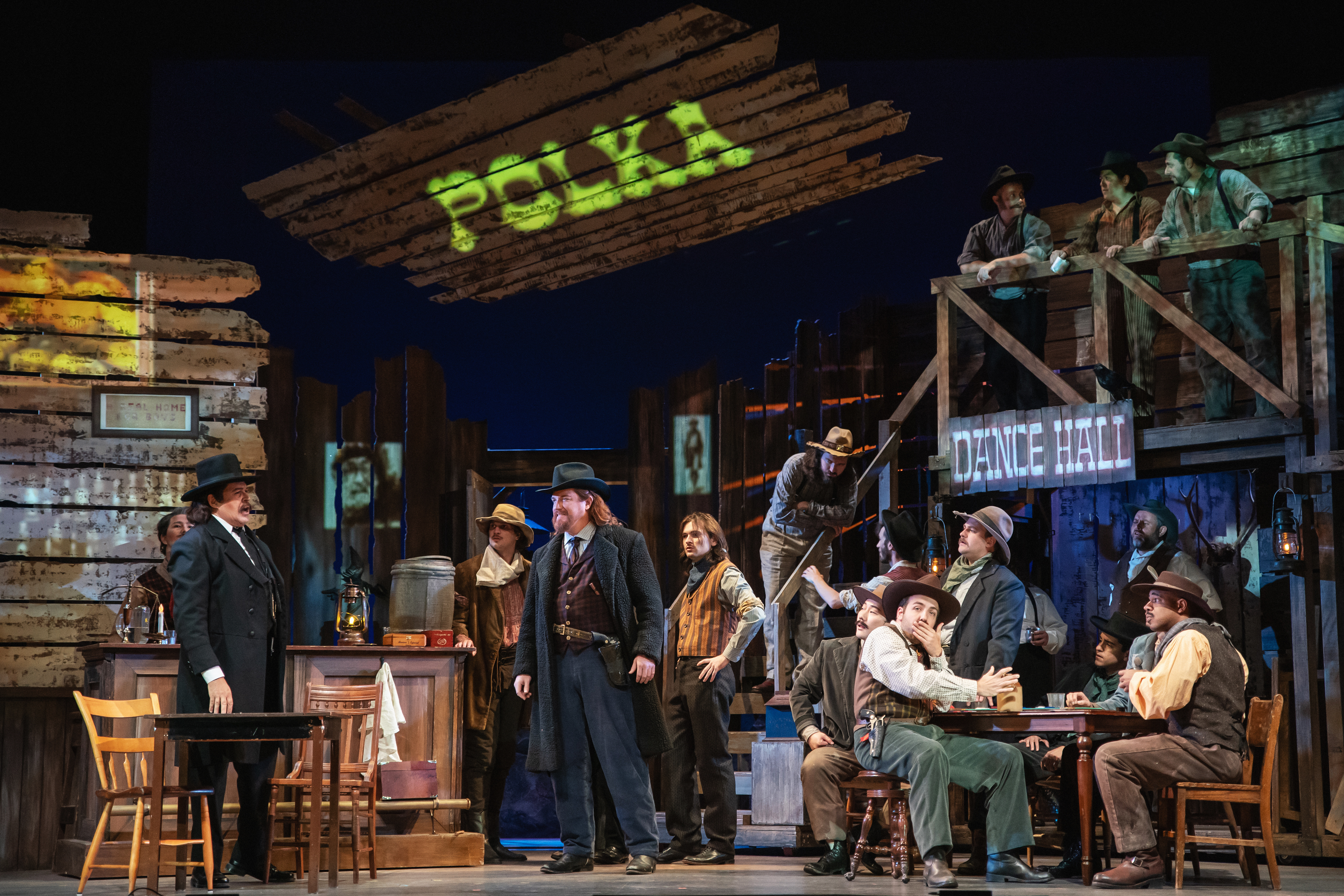
Jack Rance (Grant Youngblood, L) and Wells Fargo agent Ashby (Christopher Job, R) in the Polka Saloon. Image by Amanda Tipton Photography
With a strong cast and thoughtful production, CCO’s Fanciulla is well worth the trip into the mountains. Transferred from the California gold fields to Central City in the 1860s, the revised setting makes perfect sense with only the slightest of changes in the text (Ramerrez and Minnie are “returning to California” instead of “leaving California” at the end). Occasional projections suggest the Central City location.
The sets by Papermoon Opera Production are refreshingly downscale and simple, much closer to the reality of a mining camp than the large-scale sets major opera companies often choose to provide. Made largely with paper and cardboard, the sets are evocative of a time and place the people in Central City know well, having models right outside the theater. Minnie’s Polka saloon is appropriately ramshackle, as is her cabin, and the final scene is placed, as written, in a forest. The simplified sets, based in goldfield reality, helped bring the drama to the fore.
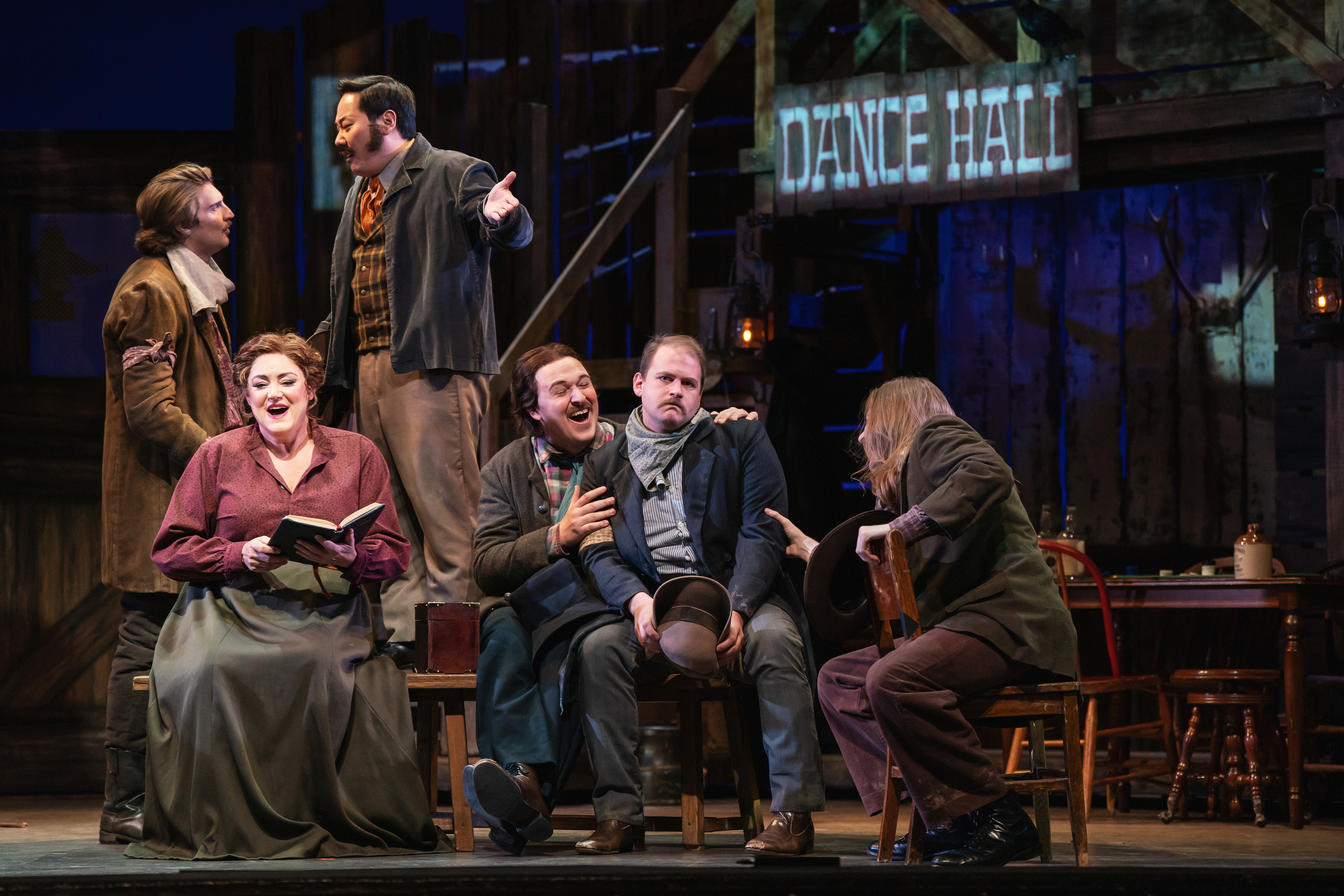
Minnie (Kara Shay Thomson) reading the Bible to the miners. Image by Amanda Tipton Photography
In the title role of Minnie, the “Fanciulla” who commands the Polka saloon, Kara Shay Thomson offered a large, powerful voice. Hers is the critical role, controlling the plot throughout; she is the one Puccini heroine who is never a victim but survives by being the strongest character in town. She was superb throughout.
At her best Thomson produced a bright, shining soprano, only occasionally sliding into the top notes. Her Bible-reading scene with the miners was well modulated, gentle or soaring as needed. In Act II she was girlish with her lover Ramerrez and defiant before the Sheriff Jack Rance, always in control musically and dramatically. Her brief scene in the final act, when she faces down Rance again and persuades the miners to release the outlaw Ramerrez for her, she continued to dominate the action.
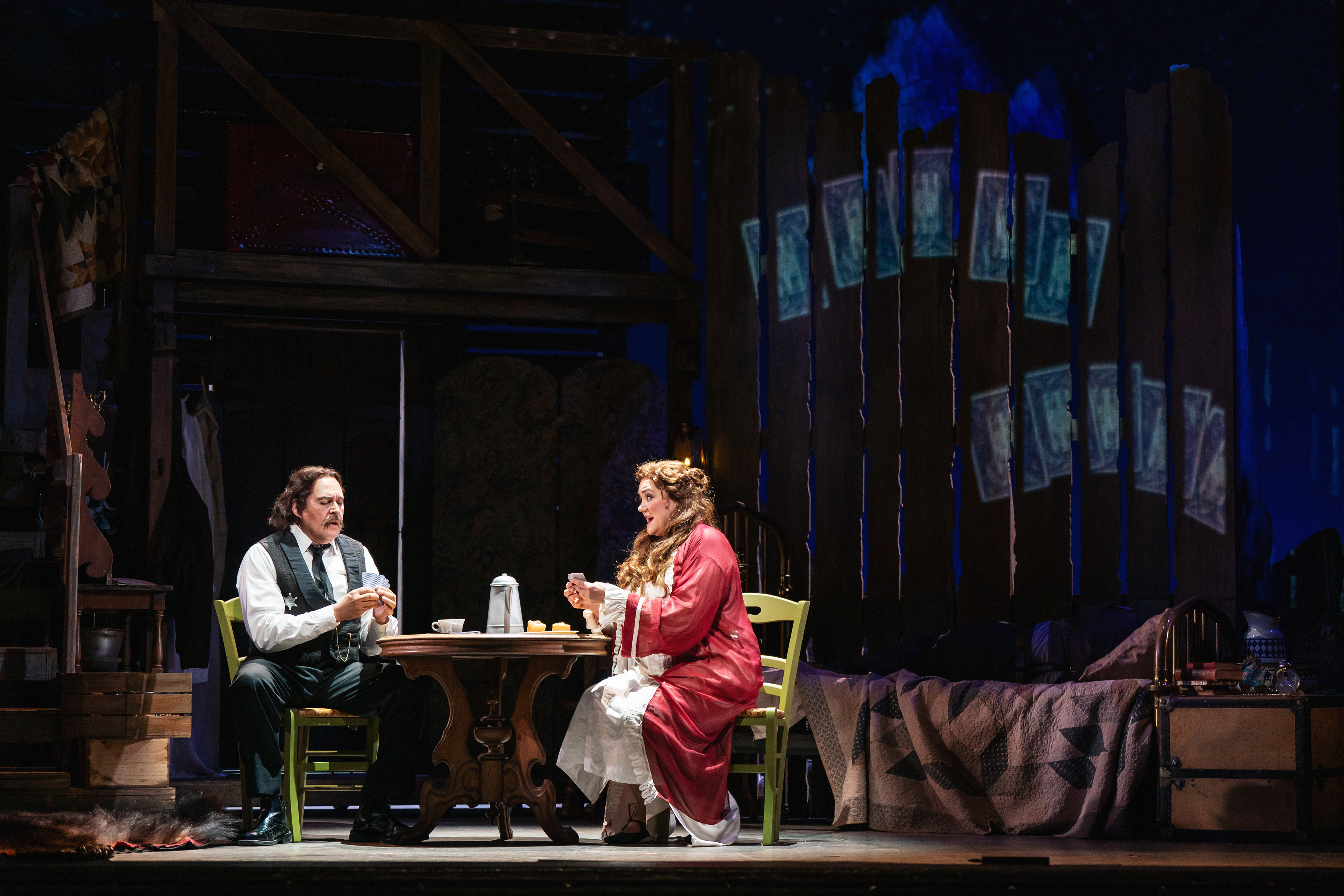
The fatal card game: Rance (Grant Youngblood) and Minnie (Kara Shay Thomson). Image by Amanda Tipton Photography
As Rance, baritone Grant Youngblood filled the stock role—spurned lover, blustering villain—effectively. In the standard black hat and suit he was every inch the bullying lawman, showing his obsession with Minnie any time he was onstage. He made the second act showdown a dramatic highpoint, and sang solidly throughout.
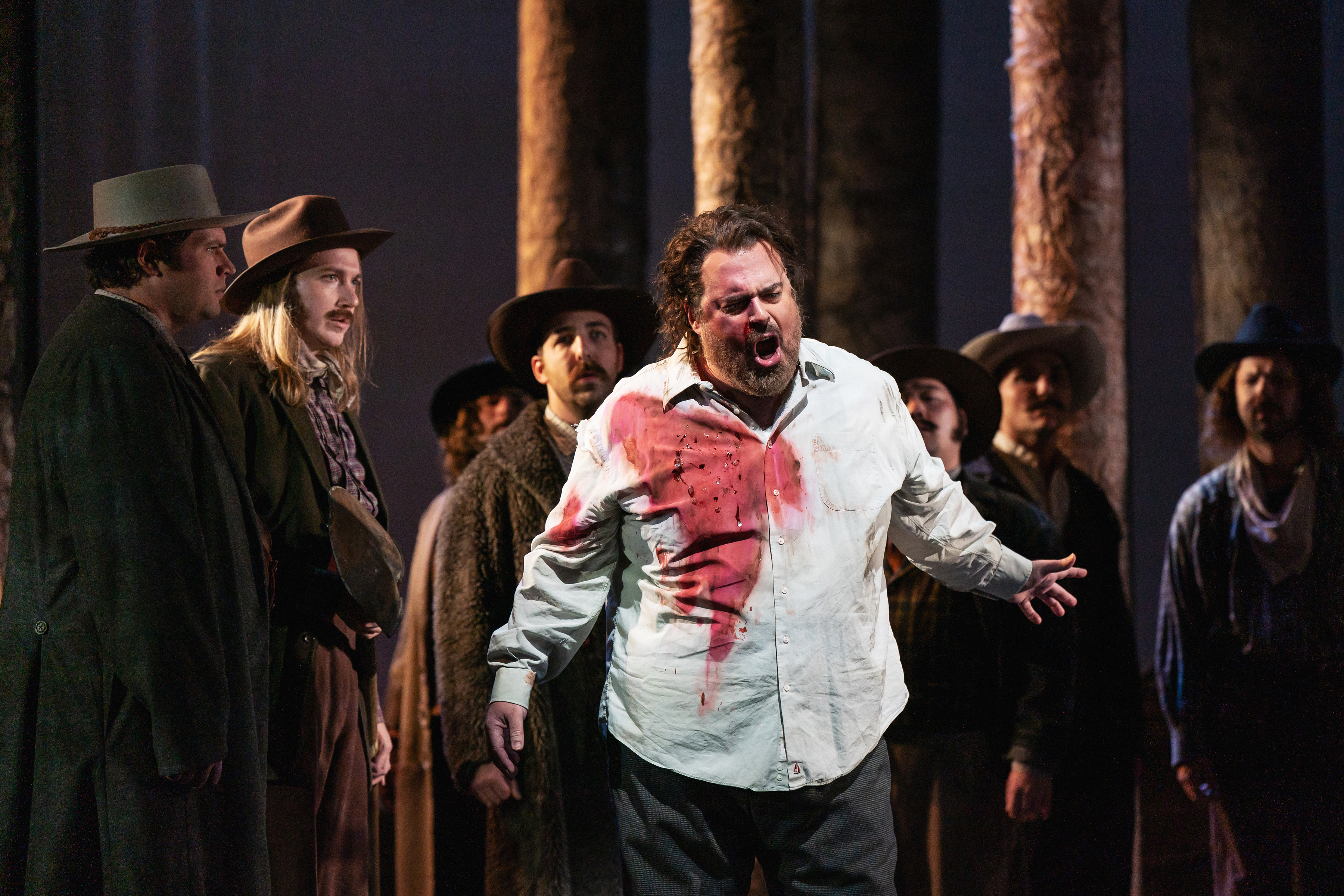
As lead tenor Dick Johnson/Ramerrez—the last of the three corners of the love triangle to enter the stage—Jonathan Burton expressed more with this singing than his acting. He was able to belt out the soaring climaxes of his individual numbers with a ringing tone, and conveyed musically his growing love for Minnie. His one aria, “Che’lla mi creda libero e lontano,” the keystone of the final act, was warmly received. His stage presence was not always assured, however, and he relied too often on an artless grin to make himself look guiltless.
Supporting roles were all filled ably. At the performance I saw (July 14), apprentice artist Nicholas Lin filled in capably as Nick, the bartender-of-all-trades. Christopher Job used his deep bass and a gritty sound to create the menacing character of Ashby, the Wells Fargo agent who only wants to catch the bandit. Matthew Cossack sang expressively as Sonora, the most sympathetic of the miners.
Jonathan Burton as Johnson/Ramerrez, singing his final-act aria. Image by Amanda Tipton Photography
A special word should go to Steele Fitzwater and apprentice artist Xochitl Hernandez as the couple Billy Jackrabbit and Wowkle. Too often portrayed as racist, native American stereotypes, here they were characters with dignity. In this production directed by Fenlon Lamb, Billy is a white man who has had a child by an Indian woman, an historically viable and interesting choice that puts a more subtle spin on characters traditionally based on narrow, hidebound notions of the American Indian. Both sang well.
Lamb’s direction made good use of the space available, like Pirates expanding briefly into the house. The action was clear, and the second act conveyed the rising tension powerfully. The card game—one of Puccini’s greatest moments of suspense, created with the simplest of musical means—was exquisitely melodramatic. The chorus—all men, naturally—generated excitement in the final act, filling the hall with sound. Conductor Andrew Bisantz led the outstanding CCO orchestra with a fine feeling for the ebb and flow of Puccini’s flexible musical fabric.
__________
Both Pirates of Penzance and Fanciulla del West continue in repertory through the remainder of the Central City Opera summer season, which ends August 4. The calendar is listed HERE, and tickets may be purchased through the CCO Web page.
The production of Kurt Weill’s Street Scene, originally scheduled to open July 13, will open Wednesday, July 17. A review will appear next week.
Saturday’s opening night of Kurt Weill’s Street Scene canceled due to illness
By Peter Alexander July 10 at 5:20 p.m.
Central City Opera has announced that Saturday’s opening of their production of Kurt Weill’s “American Opera” Street Scene (July 13) would be canceled due to illness.
A statement released by the company today (July 10) stated:
“Due to a number of our artists testing positive for respiratory illness, we are canceling the Saturday, July 13 performance of Street Scene and all opening night activities. Our top priority is always the well-being of our cast, crew, and audience, and this decision was made in consultation with our artists, unions, and local officials in order to ensure everyone’s health and safety.”
The company offers three option to persons who hold tickets for Saturday:
Reschedule your tickets for another date;
Turn the value of your tickets into a tax-deductible gift to the Central City Opera; and
In case neither of the options above are suitable, receive a full refund.
In order to choose one of the three options, the Central City box office is asking patrons to fill out an online form that can be accessed HERE.
The remainder of the Central City Opera season is not affected by the cancellation, including all regularly scheduled performances of Street Scene during the remainder of the summer. You can see the full summer schedule on the Central City Opera calendar page.
You can read more about Central City Opera’s 2024 season HERE.
Commissioned premiere and birthday celebrations are early highlights
By Peter Alexander July 1 at 6:27 p.m.
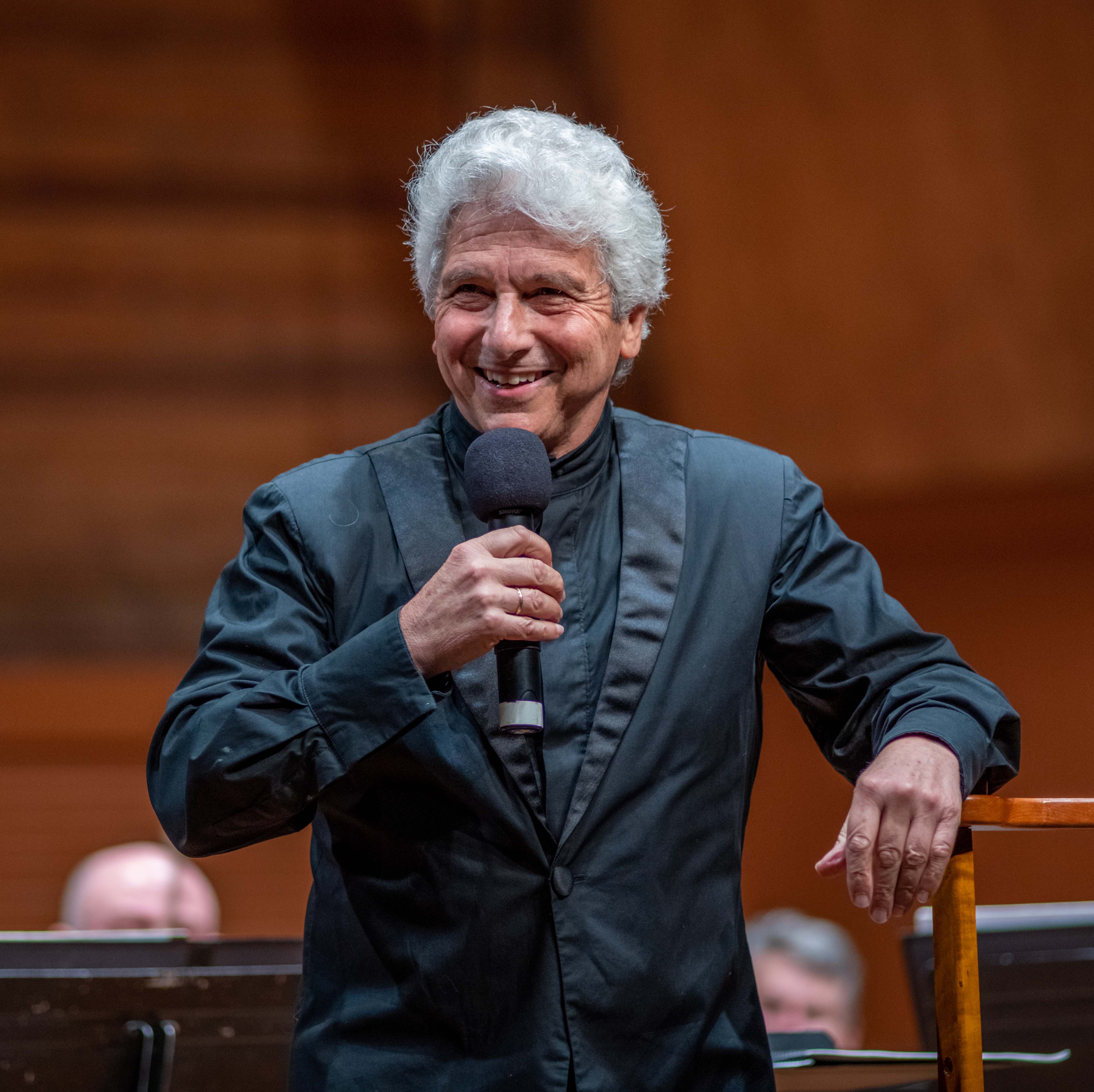
Peter Oundjian at Chautauqua.
Peter Oundjian, artistic director of the Colorado Music Festival (CMF), is brimming with excitement for the coming summer concert season.
“I love every program because I programmed them all!” he says. Nevertheless, when pressed he points to two concerts in the first weeks of the CMF season as especially interesting for audiences.
“One is the world premier of the Gabriela Lena Frank string quartet concerto with the Takács Quartet (6:30 p.m. Sunday, July 21; see full programs July 5–12 below). On that program we’re also playing what I consider to be one of the great American masterpieces of the past five years, the Concerto for Orchestra by Joan Tower.
“The other one is the week before, where I am celebrating the birthdays of Schoenberg and Bruckner with arguably the most beautiful piece that either of them ever wrote (Schoenberg’s Verklärte Nacht and Bruckner’s Fourth Symphony; 6:30 pm. Sunday, July 14). On a Sunday evening, to listen to these two glorious pieces will be beautiful and also a healing experience.”
The festival opens Friday and Sunday (July 5 and 7) with three pieces selected for variety and compatibility. The opening piece, Anna Clyne’s Masquerade was written for the BBC Symphony and premiered at the Last Night of the Proms in London in 2013. That will be followed by Dvořák’s Cello Concerto, one of the pieces the Czech composer wrote while living in the United States.
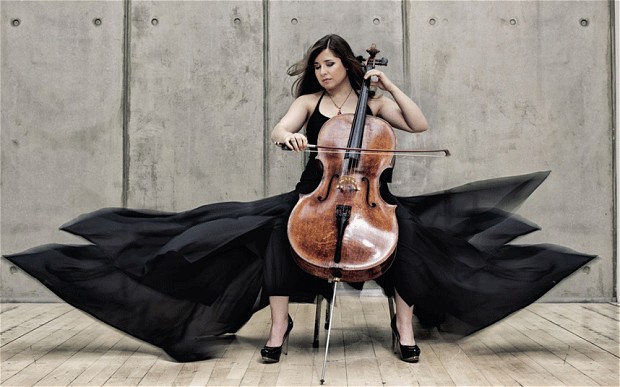
Alisa Weilserstein
Featured soloist for the concerto will be cellist Alisa Weilerstein, whom Oundjian calls “one of the great cellists in the history of the instrument, and an amazing musician. . . . Her Dvořák is spectacular,” he says. “It’s maybe (Dvořák’s) most profound work, because it’s so moving.”
To close the program Oundjian wanted something that would not compete with the intensity of the concerto. “I wanted to have a celebration in the second half,” he says. “I wanted everyone to feel great,” and for that he chose Mendelssohn’s “Italian” Symphony, certainly one of the most cheerful and ebullient pieces in the orchestral repertoire.
The opening week also features the CMF’s annual Family Concert Sunday morning at 10:30 a.m. (July 7), with some light orchestral pieces mixed with some fun, including a piece based on Dr. Seuss’s Green Eggs and Ham. Tuesday sees the first of the summer’s Robert Mann Chamber Music Series concerts, named for the late violinist and founding member of the Juilliard String Quartet. The series will continue the following three Tuesdays at 7:30 p.m.
Festival Orchestra Thursday and Friday pairs, at 7:30 and 6:30 p.m. respectively, start the first week with violinist Vadim Gluzman playing Prokofiev’s Second Violin Concerto, and the iconic 20th-century masterpiece, The Rite of Spring by Stravinsky (July 11 and 12). The program will open with the exhilarating Short Ride in a Fast Machine by the American composer John Adams, who was CMF composer-in-residence in 2022.
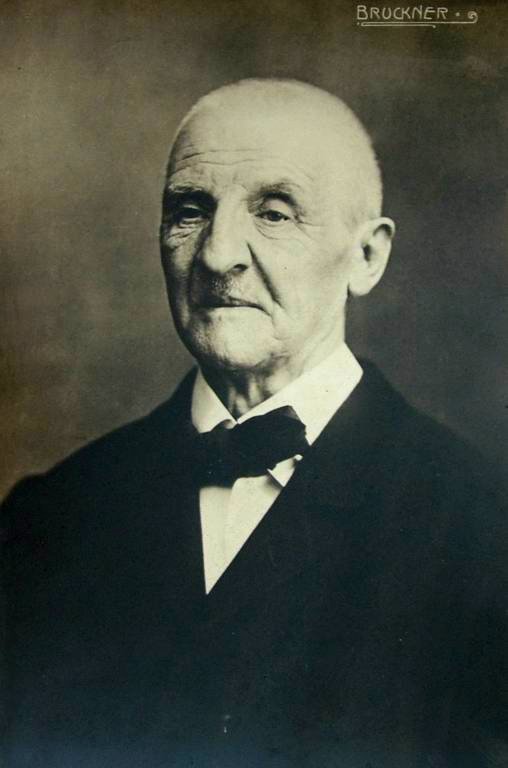
Anton Bruckner
“I did the (July 14) program because it’s the 150th birthday of Schoenberg and the 200th of Bruckner, and I wanted to acknowledge that,” Oundjian says. “I decided, let’s do it in one evening and make it a beautiful experience for everybody! The music is very spiritual (and) both pieces are fantastic to play, in that gorgeous acoustic at Chautauqua.”
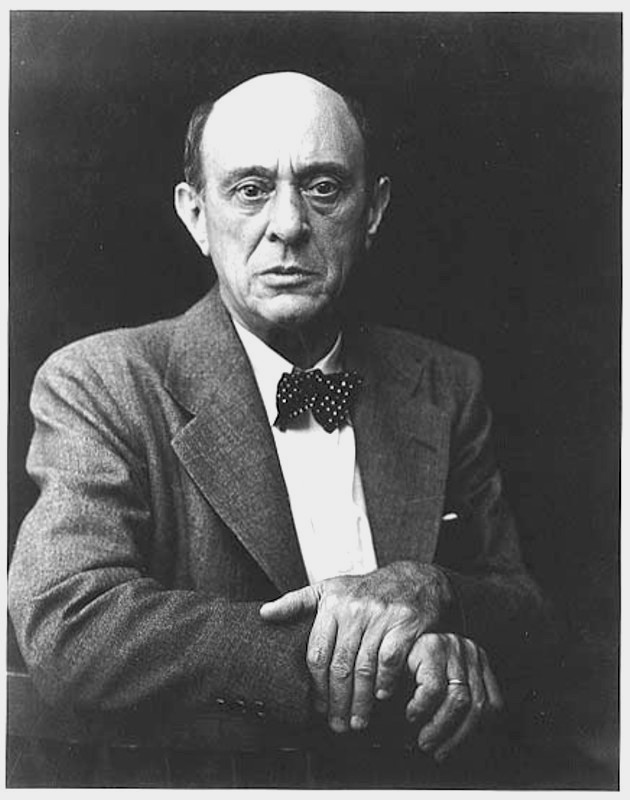
The two composers took Wagner’s music and turned in different directions—Bruckner more conservatively by putting Wagner’s sound into the traditional form of the symphony, Schoenberg, born 50 years later, by pushing beyond Wagner’s harmonic freedom and the limits of tonality.
Arnold Schoenberg
“Bruckner’s Fourth Symphony is probably the most accessible (of his nine symphonies), because it’s fairly compact,” Oundjian says. “It has stunning themes and glorious horn solos, and you really hear the power of the orchestra. I find the music exquisitely beautiful and contemplative. It’s almost surreal in its staggering beauty, to me.”
If you think of Schoenberg only as a thorny modernist, you are missing the earlier works that followed much closer to Wagner than his later works. “Verklärte Nacht is basically like late Wagner, with its glorious string sound,” Oundjian says. “It’s a beautiful string orchestra piece.”
Pianist Olga Kern returns to CMF for concerts July 18 and 19. She will play Rachmaninoff’s Piano Concerto No. 2, which she played at CMF in 2013. The concert, under the direction of Norwegian guest conductor Rune Bergmann, will also feature Prayer by Canadian composer Vivian Fung—a work that had its premiere with a “virtual orchestra” of Canadian musicians during the COVID-19 pandemic—and Edvard Grieg’s Suites from music for the play Peer Gynt, narrated by Kabin Thomas.
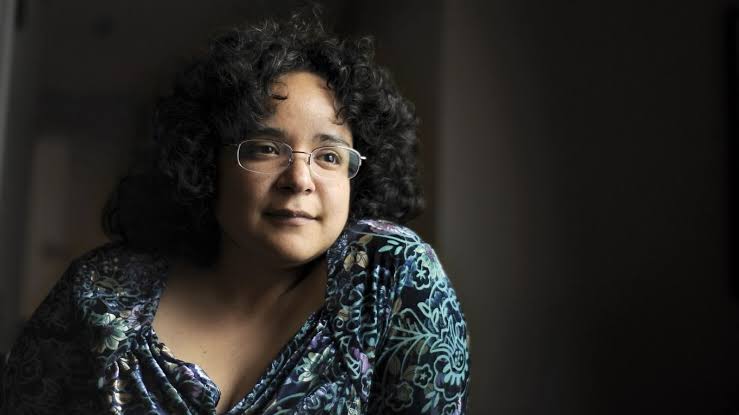
Gabriela Lena Frank
When he was looking for a new work to commission for the 2024 festival, Oundjian thought of a concerto for the Takács Quartet. “I said to (the quartet members), if we were to have a quartet concerto, who would you be interested in approaching, and without hesitation Gabriela’s name came up,” he says. “She is a wonderful composer, Peruvian-American, and a very particular voice.”
Frank will be present for the July 21 premiere, as will Joan Tower, whose Concerto for Orchestra is on the same program.
Frank has written in her program notes, “Kachkanaraqmi, or ‘I still exist’ in the indigenous Quechua language of my Peruvian forbearers, speaks to the resilience, even insistence, of a racial soul through the generations. In this four-movement work, a brief pastoral Andean prelude, a moody mountain soliloquy, a romp of thieving winds, and a lyrical child’s wake utilize the sonorous possibilities of a concerto grosso for string quartet and string orchestra . . . Throughout, re-imaginings of age-old indigenous motifs and rhythms proliferate.”
Joan Tower
The premiere will be part of a concert of all-women composers, opening with Adoration by Florence Price, an early-20th-century African American composer whose works were forgotten for many years but recently have been rediscovered. Written in 1951, Adoration was originally for organ solo but has been arranged posthumously for various ensembles..
Joan Tower’s Concerto for Orchestra was commissioned jointly by the Chicago, St. Louis and New York orchestras, all of whom gave premieres but never played it again. “They always say this about compositions: Getting a commission is hard enough, but try to get second performances,” Oundjian says. “It’s one of those things that has really intrigued me, over my entire career: Let’s find out what’s just premiered in the last few years but has been undeservedly ignored.”
He discovered Tower’s Concerto for Orchestra when he was asked to conduct it in Iceland. “I said, ‘I don’t know that piece!’ I just loved it. It is so dramatic and so beautiful. There are two passages that are some of the most stunning contrapuntal harmony that I know in contemporary music.
“It has tremendous drive and brilliance, and it demands everything from the orchestra.”
# # # # #
Colorado Music Festival, Peter Oundjian, music director July 5–21, 2024 All performances in Chautauqua Auditorium
Opening Night Festival Orchestra, Peter Oundjian, conductor With Alisa Weilerstein, cello
Anna Clyne: Masquerade (2013)
Dvořák: Cello Concerto in B minor
Mendelssohn: Symphony No. 4 in A major (“Italian”)
6:30 p.m. Friday and Sunday, July 5 and 7
Family Concert: Green Eggs and Ham Festival Orchestra, Jacob Joyce, conductor With Really Inventive Stuff and Jennifer DeDominici, mezzo-soprano
Glinka: Overture to Ruslan and Ludmilla
Daniel Dorff: Three Fun Fables
Mendelssohn: Overture to A Midsummer Night’s Dream
Rob Kapilow: Green Eggs and Ham
10:30 a.m. Sunday, July 7
Robert Mann Chamber Music Series Colorado Music Festival musicians
Ernst von Dohnányi: Sextet in C Major
Beethoven: “Duet with two Obligato Eyeglasses” in E-flat major for viola and cello, WoO 32
Schumann: Piano Quartet in E-flat Major, op. 47
7:30 p.m. Tuesday, July 9
Festival Orchestra Concert Festival Orchestra, Peter Oundjian, conductor With Vadim Gluzman, violin
John Adams: Short Ride in a Fast Machine
Prokofiev: Violin Concerto No. 2
Stravinsky: Rite of Spring
7:30 p.m. Thursday July 11 6:30 p.m. Friday, July 12
Bruckner Bicentennial Concert Festival Orchestra, Peter Oundjian, conductor
Arnold Schoenberg: Verklärte Nacht (“Transfigured night”), op. 4
Anton Bruckner: Symphony No. 4 (“Romantic”)
6:30 p.m. Sunday, July 14
Robert Mann Chamber Music Series Colorado Music Festival musicians
Carl Nielsen: Wind Quintet, op. 43
Schubert: String Quintet in C Major, D956
7:30 p.m. Tuesday, July 16
Festival Orchestra Concert Festival Orchestra, Rune Bergmann, conductor With Olga Kern, piano, and Kabin Thomas, narrator
Vivian Fung: Prayer
Rachmaninoff: Piano Concerto No. 2, op. 18
Edvard Grieg: Suites from Peer Gynt
7:30 p.m. Thursday, July 18 6:30 p.m. Friday, July 19
Festival Chamber Orchestra Concert Festival Orchestra, Peter Oundjian, conductor With the Takács Quartet and Gabriela Lena Frank, composer
Florence Price: Adoration
Gabriela Lena Frank: Kachkanaraqmi (“I still exist”; world premiere)
Joan Tower: Concerto for Orchestra
6:30 p.m. Sunday, July 21
Tickets for individual concerts are available through the Chautauqua Box Office Web page.




 Sharps & Flatirons