
A Web page packed with info, and a music camp for kids
By Peter Alexander June 20 at 2:20 p.m.
Stephanie Bonjack wanted to support her son’s interest in music.
“I wanted to know what are the opportunities for my son, and for kids in general in this region,” she says. “And I’m not the only one who was curious about these things.”
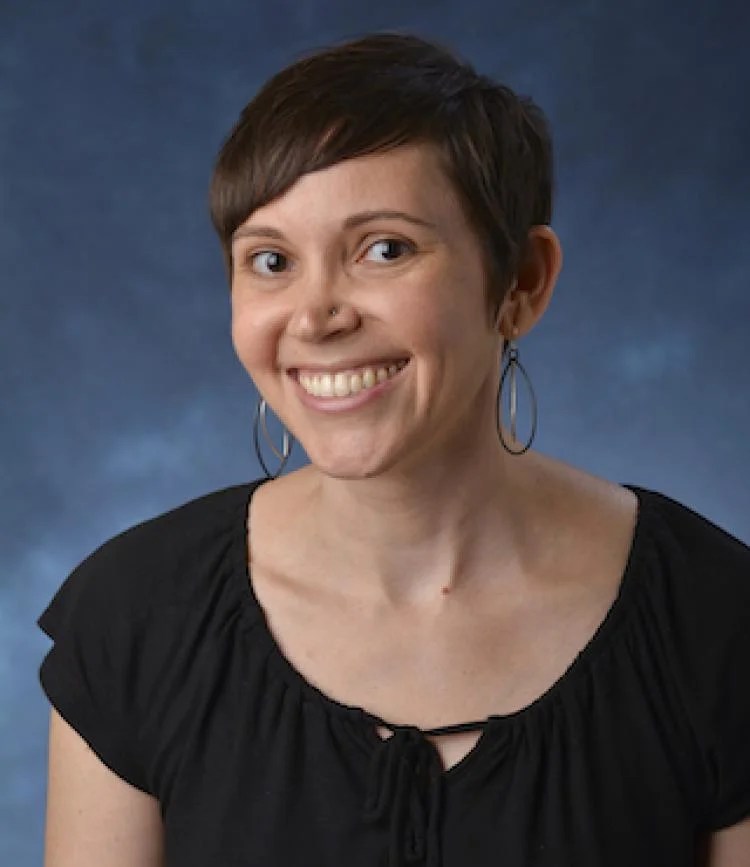
As the music librarian at the CU College of Music, she had plenty of contacts in the music world, “but it frustrates me when the only reliable source is word of mouth,” she says. She had also recently joined the chorus of Boulder’s Seicento Baroque Ensemble and was interested in knowing about other Baroque and early music performing groups in the area.
“After the pandemic I got it in my head that I would really like to go hear all of the major performing ensembles in the region, and experience them in their major performance venues” she says. “The question is, ‘What are they?’ I have friends who are professional musicians and they can rattle off a few things, but being a librarian, I want to see the list!”
Not finding a reliable list, she decided to make her own, “Music on the Front Range,” which now appears on the Web page of the CU University Libraries. Links are provided to a wide variety of styles and types of performing groups, from opera to barbershop and from professional orchestras to community groups, in addition to a list of “Local Classical News” sources (including this blog) on the home page.
This listing serves both as a resource for finding groups of different levels that you might wish to join, and also groups whose performances you might wish to attend, The full list of performing categories included on the site comprises opera, choirs, orchestras, bands, early music, chamber groups, youth, barbershop, community singing and community playing.
Bonjack admits that she was surprised, not only by the number of performing groups, but by the popularity of some specific areas. “I was really surprised by the pervasiveness of barbershop ensembles,” she says. There are no fewer than 13 barbershop groups for men and women, in addition to nine student-run groups at CU.
Among the other things that stood out to Bonjack, she says, “I was impressed by how many specific ensembles there are for LGBTQ members of the community. (Nine groups are listed on the “Community Singing” page.) I love that there is a professional handbell ensemble in Denver, the Rocky Mountain Ringers. I also found it fascinating under the community singing sections, how many sacred ensembles exist that are not attached to places of worship.
While Bonjack was making her list, Katarina Pliego was also thinking about young musicians—in her case, about the music training she got when she started playing cello, and the relative deficiencies of music education in this country.
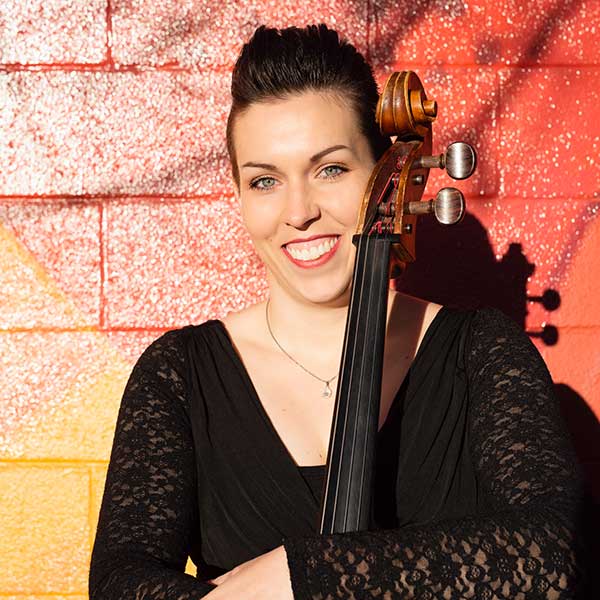
Pliego grew up in Slovenia, where she had two cello lessons, orchestra and two music theory classes every week, all provided by the state. “Everyone plays and has really good music education,” she says.
After she left Slovenia, she came to the United Sates and studied cello at the University of Northern Colorado in Greeley. “I came here, and I was like, how do undergrads not know music theory?” she asks. “How are you not learning about what the relative minor scale is? I knew that when I was twelve. Oh my gosh, am I so grateful for that now!”
Like Bonjack, Pliego decided to fill the gap she saw, at least for a few young students in the Northern Colorado area. “I saw a need,” Pliego says. “I taught music at Front Range Community College for seven years, and I saw how some students don’t realize everything that they should know to be musicians.
“I started thinking, we really need to teach kids music theory, we need to teach them more about music history. There are all of these camps that are orchestra camps, but there’s nothing like the camp that I grew up going to. (We) need to have music theory for kids, to understand why they’re playing scales, how the scales are working. So I just went for it.”
This year’s edition of the camp, “LoCo Music Lab,” concluded June 8, but Pliego plans to continue the camp in future years. Described as a “musicianship camp,” LoCo Music Lab included lessons, ensembles, music theory, music history, masterclasses and other workshops, including a presentation on performance anxiety.
For this first year, the camp was available to a limited number of students, and was open on a first-come, first-served basis without audition. It was offered to three groups: Grades 1–6 violin, viola, cello and guitar; Grades 1–6 choir; and Grades 7–12 violin, viola, cello and guitar (see the full schedule of this year’s camp on the LoCo Music Lab Web page.)
“I reached out to my friends and explained what my vision is, and they were like, absolutely, this sounds great,” Pliego says. “I wanted to start smaller, see how it goes and take it from there.”
 Sharps & Flatirons