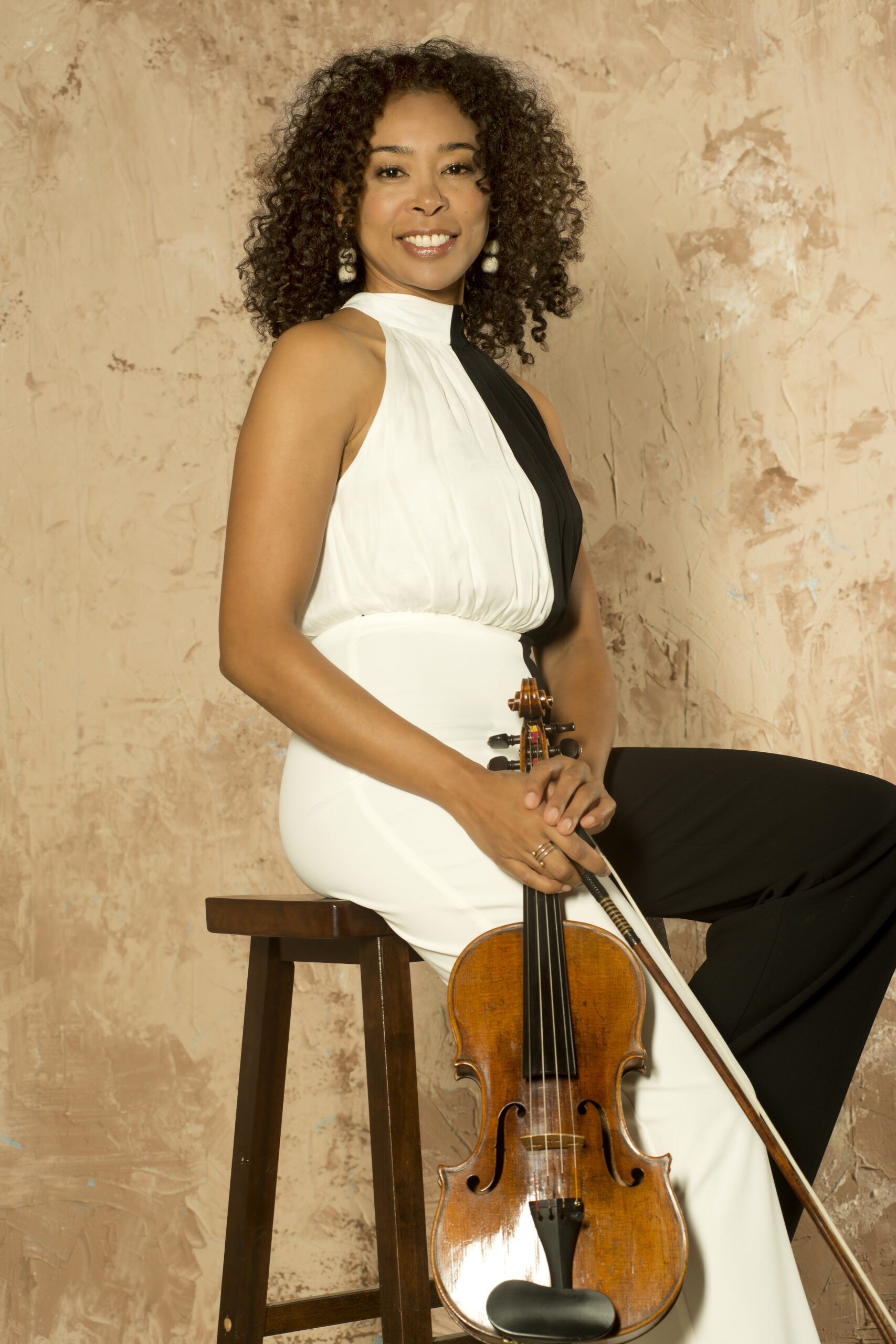
Alison Moritz looks back and ahead

New artistic director at Central City has experience and hopes for CCO

By Peter Alexander March 22 at 6:20 p.m.

Alison Moritz’s career in opera started with a hot-air balloon.

The new artistic director of Central City Opera (CCO), Moritz saw her first opera in St. Louis when she was nine. It was Offenbach’s La belle Hélène, a very Parisian spoof of the the story of Helen of Troy. At nine, the innuendo did not make much of an impression. 

“I think the sexual politics went over my head,” she says. “I was just impressed by the hot-air balloon onstage!”

Alison Moritz: Destined for opera?

Balloon or no balloon, she might have been destined for a career in opera. That first experience really clicked with someone who says she was “an indoor kid [who] loved everything artistic. I was really obsessed with story and picture and music.”

Her first ambition was to be a film animator. “I did see an opera when I was nine, and the whole world just made sense to me,” she explains. “It just felt so magical and exceptional, but also incredibly familiar.”

That early sense of familiarity soon led to a near obsession with opera. “When I was in 8th grade I saw my first production of Traviata and I went back and saw it five times! My parents went with me to the first two performances, and after that they would drop me off in the parking lot and say, ’See you three and a half hours.’ 

“I used to say I had to work in opera because I couldn’t afford to see opera as much as I wanted to. I had to find a way to sit in—I never get tired of it.”

Her path into directing was not something that she saw from the outset, however. “Initially, it was not clear what my contribution [to opera] could be,” she says. “When you’re not a singer, at the time I was growing up, there were fewer roles for women in production, there were fewer roles for women in leadership.”

Moritz attended Washington University in St. Louis, where she studied music and art history. She did some work in art administration, and production work backstage, but she thought that might be a hobby and she would work in another field. An internship with Opera America gave her insight into the American opera scene, and while living in New York she attended all the opera and theater that she could afford in standing room.

A turning point came when a friend who went to some performances with her, but did not work in opera, told Moritz, “The way you think about this is someone’s job.”

“That was the first time that I thought maybe I could do this,” she says. “I was really lucky—I went back to school to get  a degree in opera stage direction at the Eastman School of Music. When I arrived there I knew a lot about opera but I had very little experience. And I’m proudly grateful that they saw potential in me, and fostered that.”

From Eastman her career as a stage director has only grown. Today, she can claim directing credits from Lyric Opera of Kansas City, the Glimmerglass Festival, Opera Omaha, Ravinia, Tanglewood, Portland Opera and Opera Colorado, among many others. 

Moritz says that she approaches her work principally through the music. “My job as a director is to really help contemporary audiences see what’s so special about the music,” she says. “It’s really key for the director to bring the story and the visuals and the relationships amongst people and ideas together, so that we’re making a case for these beautiful documents. That’s always been my approach.”

She believes that growing up a Midwesterner—“in a flyover state,” she says—affects her perspective on opera. “I’ve never had the point of view that the only great opera in America is in the largest coastal companies. They’re incredibly important, but to be able to produce things locally and regionally I think is important, and fundamental to what makes Central City such an exciting place to work and to watch opera.

“The other Midwestern thing about me is I’ve always been creative, but through the lens of pragmatism. I know the cost of wood when we’re building the set. We’ve got to make some nitty-gritty decisions in order to be able to make great art. The Midwesterner in me is always looking to see how long will this take to rehearse, how many days do we need to do X, Y and Z, and that keeps me pretty grounded.”

For the coming summer, Moritz already has long established engagements at Cincinnati and Glimerglass in upstate New York, but after this year her new job will mean she has to forego summer directing jobs outside Central City. “This year there’s a little bit of a time-share, [but] I’m really confident that I’ll be able to spend meaningful time with the audiences at the top of the mountain,” she says. “For future seasons, I will be at Central City the entire summer.”
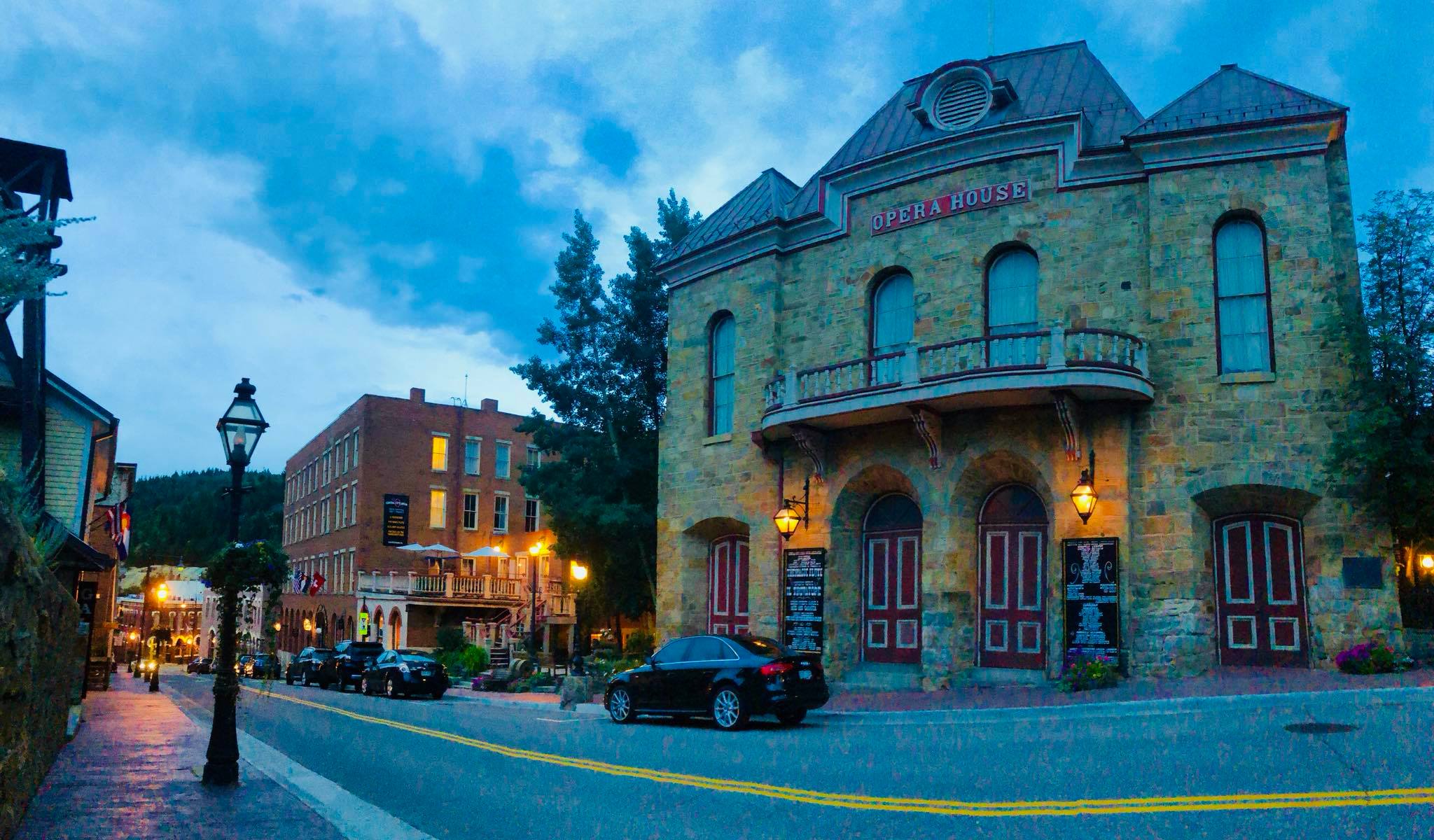
Central City Opera House. Photo by Ashraf Sewailam.

Looking ahead, Mortiz envisions creating cooperative relationships with other opera companies where she might have directing work outside of the Central City season. “I’m excited about the prospect of creating more co-productions [with other companies] and being able to bring the best of American opera here to Central City,” she says. “I’m really optimistic and excited about the future. I’m really happy to have my boots on the ground and to get to work. 

“We’re all very excited to re-imagine and to dream and continue creating a great atmosphere at Central City for both artists and audiences.”

NOTE: Information Central City Opera’s summer 2024 festival season can be found on the CCO Web page.


GRACE NOTES: Prominent violinists and a sold-out Ugly Duckling

Vadim Gluzman, Ray Chen and the Colorado Symphony in Boulder and Longmont 

By Peter Alexander March 19 at 4:06 p.m.

The Boulder Bach Festival (BBF) will present the Ukrainian-Israeli violinist Vadim Guzman in a program that spans centuries, from J.S. Bach to Arvo Pärt.

The final concert of BBF’s 2023–24 season, Gluzman’s performance occurs on Bach’s birthday, at  4 p.m. Thursday, March 21 (Dairy Arts Center; details below). He will perform with the BBF CORE (COmpass Resonance Ensemble) and be joined by BBF music director Zachary Carrettin for Bach’s Double Violin Concerto.

Known for his wide repertoire, Gluzman has premiered works by Sofia Gubaidulina, Michael Daugherty and Pēteris Vasks, among others. His recordings have won numerous awards, including Gramophone magazine’s Editor’s Choice, and Disc of the Month from The Strad, BBC Music Magazine and other publications. He is currently distinguished artist-in-residence at the Peabody Conservatory. He performs on the 1690 ‘ex-Leopold Auer’ Stradivari, on extended loan through the Stradivari Society of Chicago.

# # # # #

“Old and New Dreams”
Boulder Bach Festival CORE with Vadim Gluzman and Zachary Carretttin, violin

Program includes:

  • J.S. Bach: Violin Concerto in A minor, S1040
  • Arvo Pärt: Passacaglia
  • J.S. Bach: Concerto in D minor for two violins, S1043

4 p.m. Thursday, March 21
Gordon Gamm Theater, Dairy Arts Center

TICKETS

# # # # #

The CU Presents Artist Series will feature violinist Ray Chen, who is billed as “redefining what it means to be a classical musician in the 21st century,” together with Hispanic-American pianist Julio Elizalde in a concert program combining serious and lighter works Thursday ( 7:30 p.m. March 21 in Macky Auditorium; details below).

The major works on the program are Beethoven’s Violin Sonata No. 7 in C minor, op. 30 no. 2, and J.S. Bach’s Partita No. 3 in E major for solo violin, S1006. Filling out the program are encore material pieces, starting with Tartini’s showpiece the “Devil’s Trill” Sonata. After the two heavier works, Chen and Elizalde will wrap up the program with Antonio Bazzini’s brilliant “Dance of the Goblins,”  Fritz Kreisler’s arrangement of Dvořák’s Slavonic Dance No. 2, and their own arrangement of “Spain” by Chick Corea.

Beethoven’s Violin Sonata No. 7 is part of a set published in 1803 as “Sonatas for the pianoforte with the accompaniment of violin.” This label reflects an earlier time, when domestic music-making often featured female pianists, who were expected to have more time to practice than their male partners on violin, and who therefore could master more difficult parts. In the case of this Sonata, each movement opens with the piano and the violin part, while it is not insignificant, often follows the lead of the piano. Unusually for a piece named “sonata,” the Sonata No. 7 is in four movements, and the key of C minor marks it as an often dramatic and stormy work.

Bach’s Third Partita is a suite of dances, preceded by a Preludio. It is the last of his set of Six Sonatas and Partitas for solo violin, one of the pinnacles of the solo violin repertoire. In the bright key of E major, it is one of the most cheerful of the set. That is particularly true of the Preludio, a perpetual-motion movement that is one of Bach’s most familiar pieces. Apparently Bach was himself fond of this movement, which he re-used in a version for organ and orchestra in his Cantata No. 29.

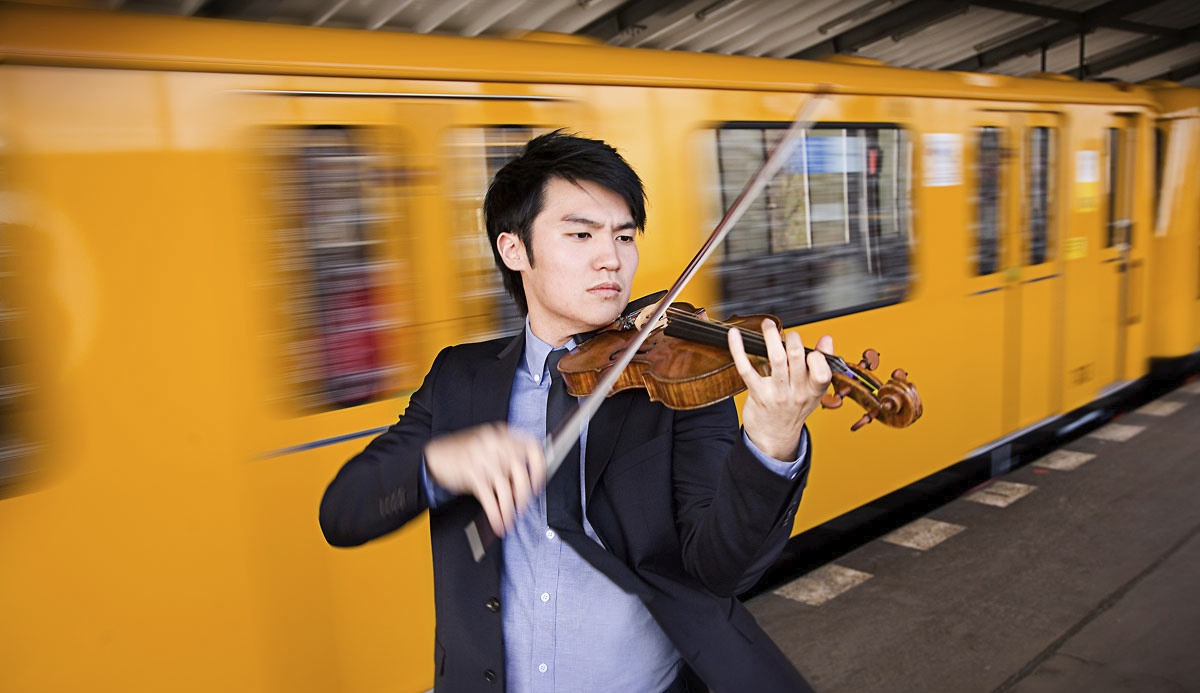
Violinist Ray Chen

Chen came to wide attention in the music world when he won first prize in both the Yehudi Menuhin and Queen Elizabeth violin competitions, in 2008 and ’09 respectively. He is known for his use of social media to reach a wider audience, including as a co-founder of the Tonic Website that allows young musicians to practice and learn together.

Born in Taiwan and raised in Australia, he was accepted at Philadelphia’s Curtis Institute at the age of 15. He plays the 1714 “Dolphin” Stradivarius violin on loan from the Nippon Music Foundation and once owned by Jascha Heifetz. 

Pianist Julio Elizalde has been performing as a recital partner with Chen and violinist Sarah Chang for nearly ten years. A native of the San Francisco Bay area, he is a graduate of the San Francisco Conservatory of Music, where he is currently on the faculty, and the Juilliard School. He has collaborated with several living composers including Osvaldo Golijov, Stephen Hough and Adolphus Hailstork.

# # # # #

Ray Chen, violin, and Julio Elizalde, piano

  • Giuseppe Tartini: Sonata in G minor (“Devil’s Trill”; arr. Fritz Kreisler)
  • Ludwig van Beethoven: Violin Sonata No. 7 in C minor, op. 30 no. 2
  • J.S. Bach: Partita No. 3 in E major for solo violin, S1006
  • Antonio Bazzini: La Ronde des Lutins (“Dance of the Goblins”), op. 25
  • Dvořák: Slavonic Dance No. 2 in E minor, op. 72 (arr. Fritz Kreisler)
  • Chick Corea: “Spain” (arr. Elizalde and Chen)

TICKETS

# # # # #

Members of the Colorado Symphony will visit the Longmont Museum’s Stewart Auditorium Saturday (March 23) of present a bilingual concert that tells the story of “The Ugly Duckling.”

The interactive performance in English and Spanish, dubbed a “Mini Música,” will incorporate storytelling, singing and dance. It will be accompanied by a 16-piece orchestra made up of members of the Colorado Symphony.

The performances at 10 and 11:30 a.m. are free, but both are already full with advance reservations.

# # # # #

“The Ugly Duckling” Mini Música
Members of the Colorado Symphony

10 and 11:30 a.m. Saturday, March 23
Stewart Auditorium, Longmont Museum

SOLD OUT

CORRECTION on March 19: the word ”Música,” which had inadvertently dropped out, was restored in the penultimate paragraph of the story about Colorado Symphony’s performance of “The Ugly Duckling.”

Longmont Symphony’s Mahler performance is SOLD OUT

“Mahler at the Museum,” Saturday, March 16

By Peter Alexander March 13 at 5:25 p.m.

The Longmont Symphony and conductor Elliot Moore will present the last of their concerts at the Longmont Museum’s Stewart Auditorium for the 2023–24 season, a sold-out “Mahler at the Museum” performance, Saturday (March 16).

The program features a chamber version of Mahler’s Das Lied von der Erde for orchestra with alto (or baritone) and tenor soloists. Based on German translations of Chinese poems, the score was completed in 1909, near the end of the composer’s life. Although Mahler called it “A Symphony for Tenor, Alto (or baritone) Voice and Orchestra,” he did not give it a number as a symphony, supposedly because he feared that when he wrote his Ninth it would be his last symphony, as had been the case with Beethoven. 

Ironically, his next symphony, Number 9, was in fact the last symphony he completed.

# # # # #

“Mahler at the Museum”
Longmont Symphony, Elliot Moore, conductor
With Abigail Nims, mezzo-soprano, and Matthew Plenk, tenor

  • Mahler: Das Lied von der Erde (chamber version)

7 p.m. Saturday, March 16
Stewart Auditorium, Longmont Museum

SOLD OUT

Takács Quartet features music by Zimbabwean/ Japanese composer Nokuthula Ngwenyama

Haydn and Dvořák complete program for March 10 and 11

By Peter Alexander March 5 at 5:08 p.m.

The violist and composer Nokuthula Ngwenyama burst onto the classical musical scene in 1993, when she won the Primrose International Viola Competition at the age of 16.

Nokuthula Ngwenyama

Ngwenyama followed that distinction by winning the Young Concert Artist International Auditions the following year, and later an Avery Fisher Career Grant. An American of Ndebele (Zimbabwean) and Japanese descent, she attended the Coburn School of Performing Arts in Los Angeles and the Curtis Institute in Philadelphia. She later attended the Paris Conservatory as a Fulbright Scholar.

With concerts Sunday and Monday (March 10 and 11; details below), the Takács Quartet brings her Flow to Boulder audiences on a program that also includes works by Haydn and Dvořák. The performance will be presented for an in-person audience and by streaming with tickets available here.

The Takács presented the premiere of Flow in Berkeley last fall and have made it a part of their touring repertoire since. Flow was commissioned by the Takács and the presenter Cal Performances after their second violinist, Harumi Rhodes, got to know Ngwenyama at the Marlboro Music Festival in Vermont.

The quartet’s request was for a piece “inspired by the natural world.” Taking the request very seriously, Ngwenyama writes in her program notes that she “researched a wide array of subjects,” including “the life cycle, carbon reclamation, environmental protection, animal communication, starling murmurations, our last universal common ancestor (LUCA), black hole collisions and the sub-atomic realm.”

In conclusion, she writes, “Everything in nature flows and develops through time. Flow can be expressed mathematically, psychologically, physically, visually, and, now, via string quartet.  . . . Enjoy and go with the flow, we only know what we know.” Her extensive notes include NASA diagrams of the expansion of the universe over 13.77 billion years.

Flow is in four movements, arranged in an essentially traditional order: Prelude, Lento, Quark Scherzo, and Finale. The progression of movements is loosely linked in Ngwenyama’s notes to the development of the universe through time.

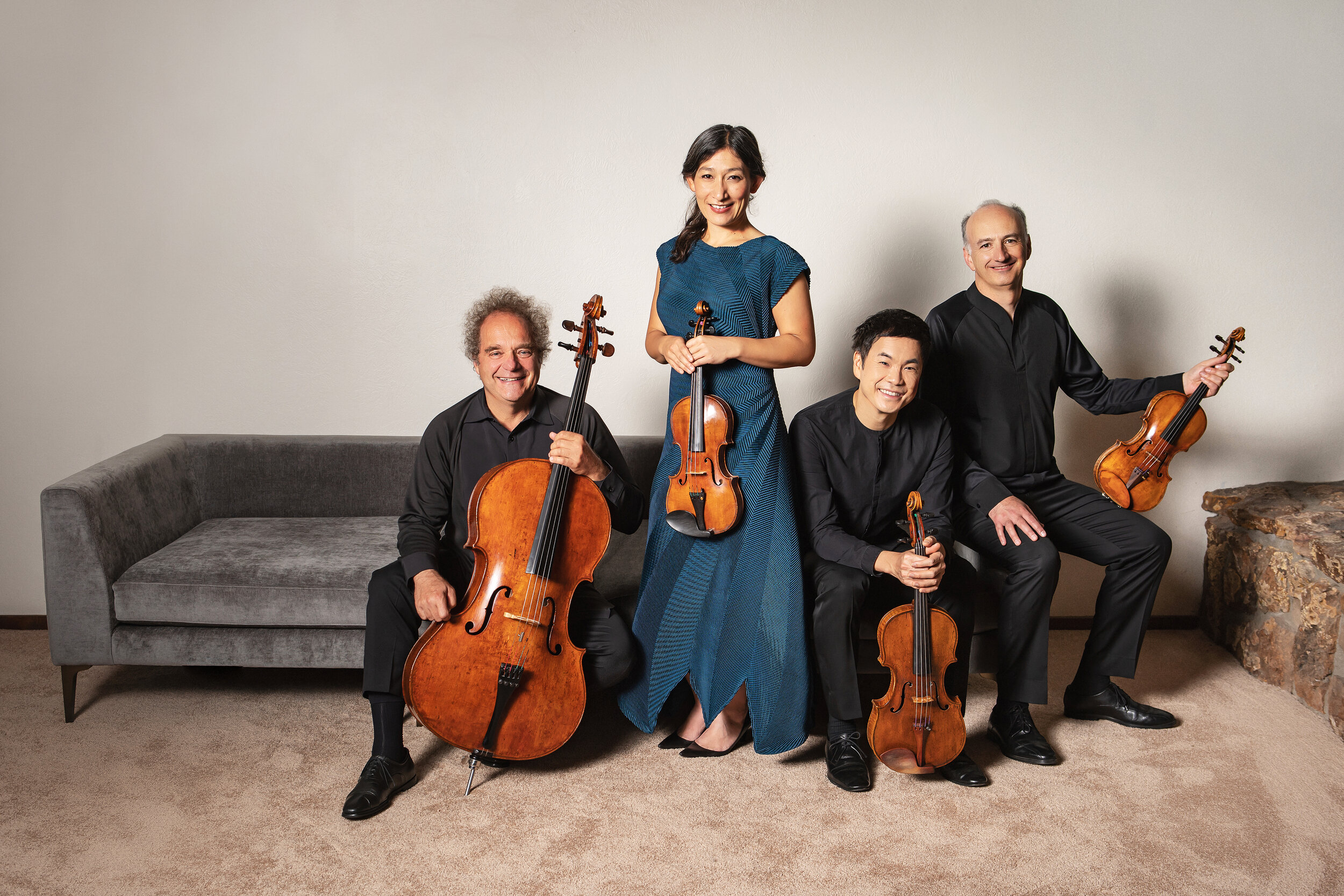
Takács Quartet. Image by Amanda Tipton Photography

Haydn’s “Sunrise” Quartet is among the composer’s last works in a genre that he created and defined. It was published in 1797, the fourth in a set of six quartets, opus 76. The title comes from the beginning of the first movement, with a sustained chord and a rising line in the first violin that suggests the sun rising above the horizon. That musical idea is developed throughout the movement, which is followed by the usual slow movement, a minuet and an energetic finale.

Sometimes called the “Slavonic Quartet,” Dvořák’s Quartet in E-flat major was written for and dedicated to violinist Jean Becker and the Florentine Quartet, a professional ensemble active in the composer’s time. Dvořák had attracted attention with the publication of his Slavonic Dances for two pianos, and Becker specifically asked for a quartet in the same style, based on folk-dance idioms. 

The most conspicuously “Slavonic” elements are heard in the second movement which is labelled “Dumka,” a type of movement derived from Ukrainian folk music that alternates between melancholy and exuberant sections; and the finale, which uses a rapid Czech dance called the skočná.

* * * * *

Takács Quartet

  • Haydn: String Quartet in B-flat major, op. 76 no. 4 (“Sunrise”) 
  • Nokuthula Ngwenyama: String Quartet Flow 
  • Dvořák: String Quartet No. 10 in E-flat major, op. 51

4 p.m. Sunday, March 10
7:30 p.m. Monday, March 11
Grusin Music Hall

In-person and streaming TICKETS HERE

NOTE: Minor typos corrected March 7.