Boulder Chamber Orchestra offers small-scale Wagner, Beethoven’s “Emperor”

Pianist Jennifer Hayghe performs the first piece she ever heard

By Peter Alexander Jan. 30 at 9:45 p.m.

Pianist Jennifer Hayghe returns to one of the first pieces of music she ever heard when she performs Beethoven’ “Emperor” Concerto with the Boulder Chamber Orchestra and conductor Bahman Saless Saturday (7:30 p.m. Feb. 3; details below).
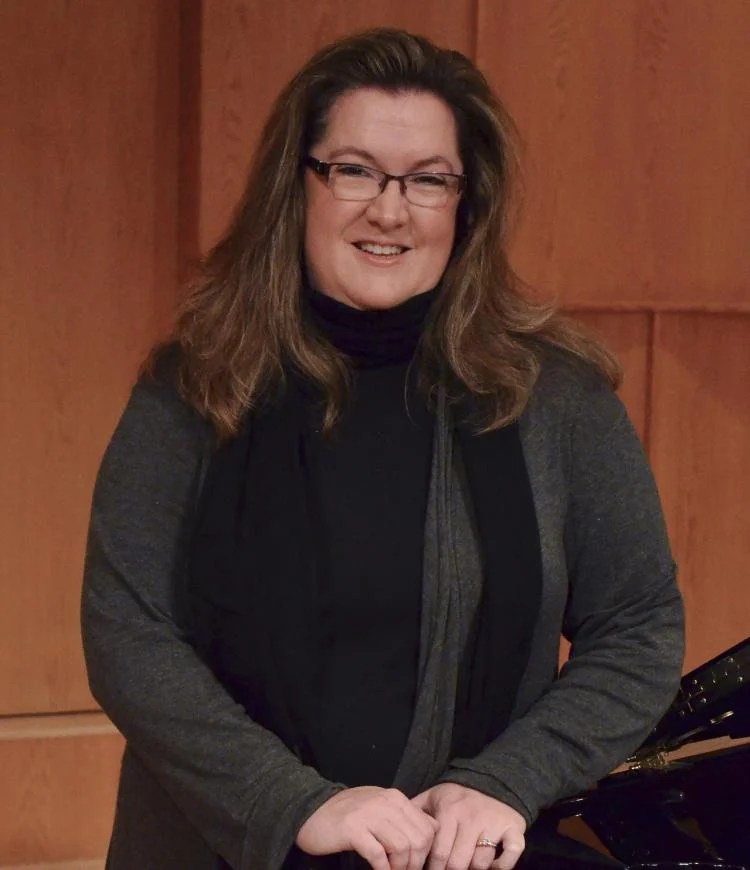
Jennifer Hayghe

“My mother was an artist and she would stay home and paint, and listen to records,” she says. “The record that she listened to the most was Arthur Rubinstein playing the ‘Emperor’ Concerto. I have know it since I was in utero!

In addition to the “Emperor”—Beethoven’s Piano Concerto No. 5 in E-flat major—the program features the Valse triste (Sad waltz) by Jean Sibelius, a melancholy piece that has often been used to create a mood for films and TV; and the only piece that Wagner wrote for small orchestra, his Siegfried Idyll.

While Hayghe admits that she doesn’t remember her earliest exposure to the concerto, she did study it in graduate school. “I think I’ve been playing this for over 30 years,” she says. “It’s very familiar to me, and it’s such a majestic piece. I’ve performed it both with chamber orchestra and with larger orchestras. I much prefer playing it with the smaller orchestra. It has a very different feel and a very different sound.

“As a pianist there are things that we have to do to project with full orchestra that you don’t have to do with chamber orchestra. So much of the piano part is really texture, as part of what the orchestra is doing. If you’re trying to create that texture with a larger orchestra, you’re playing very differently than you are if it’s a smaller orchestra and you’re able to blend in. I really enjoy playing it with the chamber orchestra.”
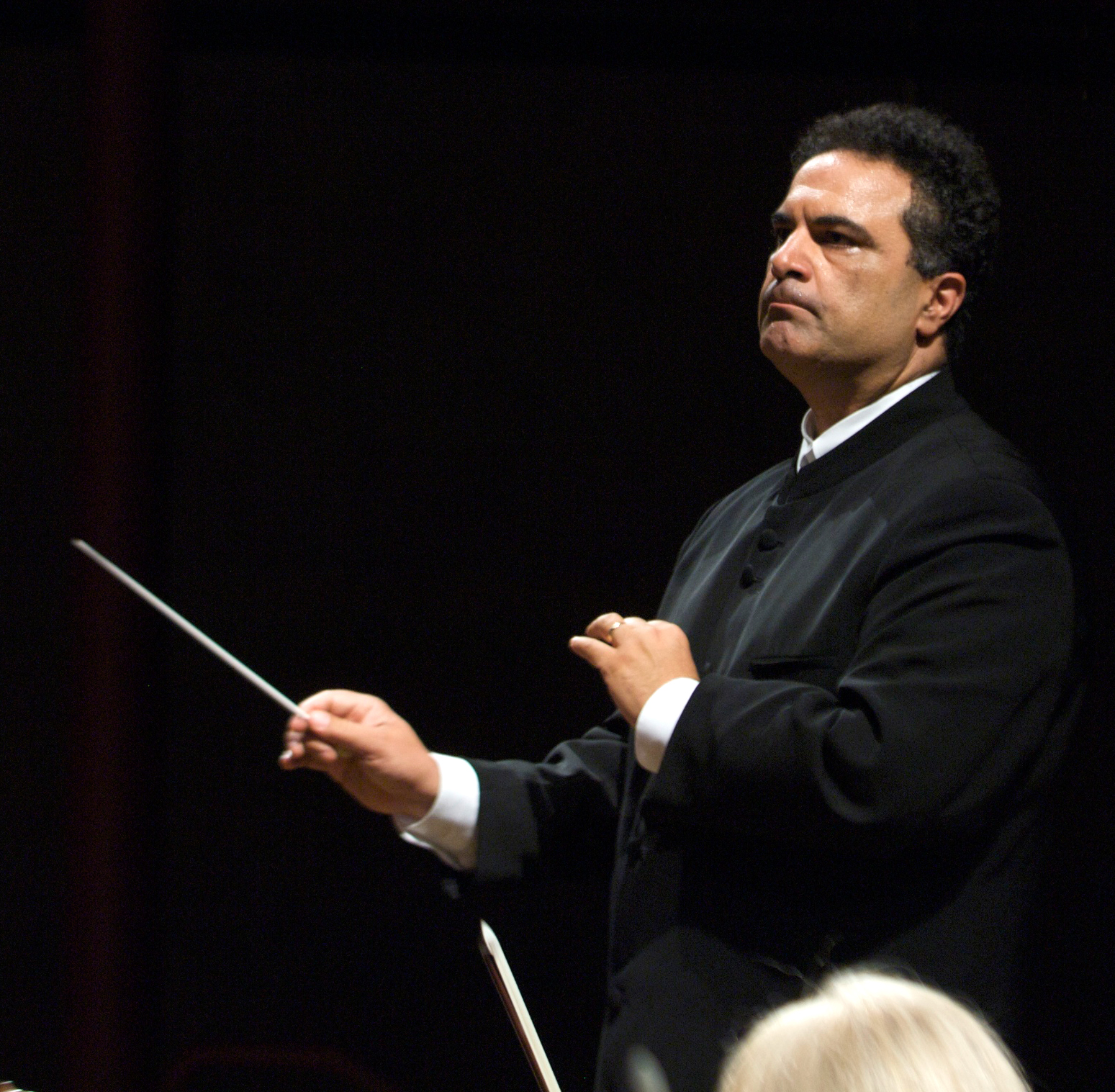
Bahman Saless. Photo by Keith Bobo

She particularly enjoys playing the concerto in Boulder, where she has so many friends. “I enjoy working with Bahman (Saless),” she says. “And the orchestra has lots of friends in it, so it will be a nice experience.”

One of Beethoven’s most popular pieces, the Fifth Piano Concerto has several unusual or unique aspects. “The remarkable thing in the first movement is that the piano starts, with fantastic virtuoso cadenzas, but never really gets to [play a cadenza] again,” Hayghe says. In most concertos, she explains, “the piano gets to do their big cadenza at the end of the first movement. But after [the opening cadenzas in the ‘Emperor’], the piano is reigned in, and much of the movement the piano is providing texture—all of that figuration up at the top of the piano.”

Continuing a description of the concerto, she points out that the second movement is a set of variations with some moments that sound improvised. It’s “very sublime,” she says, and “completely different from the first movement. Again, the piano is blending with the orchestra in this very textural way. The second movement then never really ends, it transitions with a half-step move into this joyful, joyous, energetic last movement.”

Finally, she says, “everybody has to watch out, and listen for that very unusual timpani and piano duet at the end of the last movement.

“I think one of the fantastic things about this piece is the way Beethoven deals with the dual nature of concerto, the fighting of the forces that concertos often are, and also the the ‘in concert’ part of it as well. You do hear a lot of moments of the piano and the orchestra playing against each other, and then those fantastic moments where they come together and the soloist is playing inside the orchestra, in a sense. I don’t think people are always aware of that.”
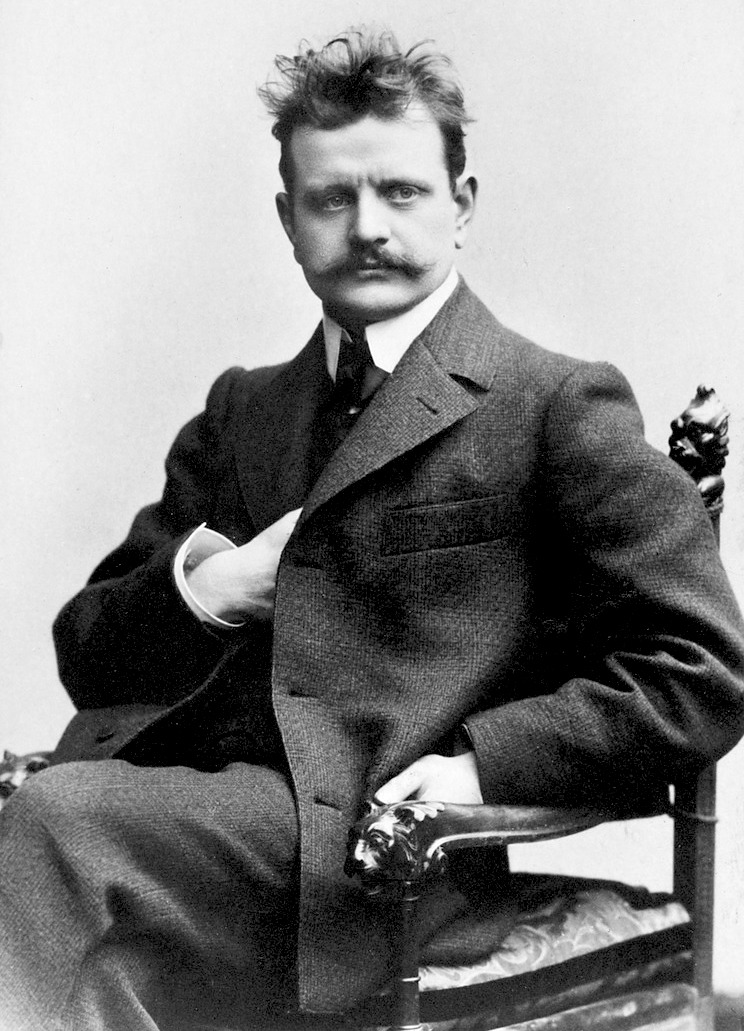
Jean Sibelius

Sibelius wrote Valse triste as part of music he wrote to accompany the play Kuolema (Death) by his brother-in-law, Arvid Järnefelt. In the play, it accompanies the last dance among spectral figures by a dying woman that ends when a door flies open and death stands on the threshold. This one piece proved more popular than the other movements written for the play, and has been performed alone in concert and used in film and TV, from Charlie Chaplin’s Great Dictator in 1940 to an episode of Twin Peaks in 1992.

Wagner wrote Siegfried Idyll as a birthday gift for his wife Cosima. It was first performed on the steps of their villa in Switzerland on Christmas morning, 1870. It was written as a celebration also of the birth of their son, named Siegfried, and the music was later used in part of Wagner’s 1876 music drama Siegfried. The score includes pieces of personal meaning to Wagner and Cosima, including the German lullaby “Schlaf, Kinder, schlaf” (Sleep little child, sleep) that was associated with their daughter. Originally scored for 13 players, Wagner later arranged it for a small orchestra of 35 players for publication. 

# # # # #

Boulder Chamber Orchestra, Bahman Saless, conductor
With Jennifer Hayghe, piano

  • Sibelius: Valse triste
  • Wagner: Siegfried Idyll
  • Beethoven: Piano Concerto No. 5 in E-flat major (“Emperor”)

7:30 p.m. Saturday, Feb. 3
Seventh Day Adventist Church, 345 Mapleton, Boulder
TICKETS

Boulder Opera children’s performance is sold out

Free Sunday performance at the Boulder Public Library is full

By Peter Alexander Jan. 24 at 3:10 p.m.

Chris Pratorius Gómez

Boulder Opera’s upcoming performance of the children’s opera Xochitl and The Flowers by Chris Pratorius Gómez is sold out.

That is, all of the tickets for this free performance have been claimed. One of three children’s operas Pratorius Gómez wrote for the Hands-On-Opera project of Opera Parallèle in San Francisco, Xochitl and The Flowers is a bilingual opera sung in both Spanish and English. The plot is based on true events that took place in San Francisco’s Mission neighborhood, about an immigrant family’s determination to put down roots while preserving their native heritage. 

The performance will include an explanation of opera and the plot and an art activity for children making cutout flowers. 

While this performance is already full, Boulder Opera has plans to tour Xochitl and The Flowers next season.

# # # # #

Boulder Opera—SOLD OUT

  • Chris Pratorius Gómez: Xochitl and The Flowers

3 p.m. Sunday, Jan. 28
Boulder Public Library Canyon Theater

SOLD OUT: Free tickets have all been claimed

GRACE NOTES: Children and Chamber Music

LSO family concert, BCO mini-chamber concert Saturday

By Peter Alexander Jan. 16 at 9:35 p.m.

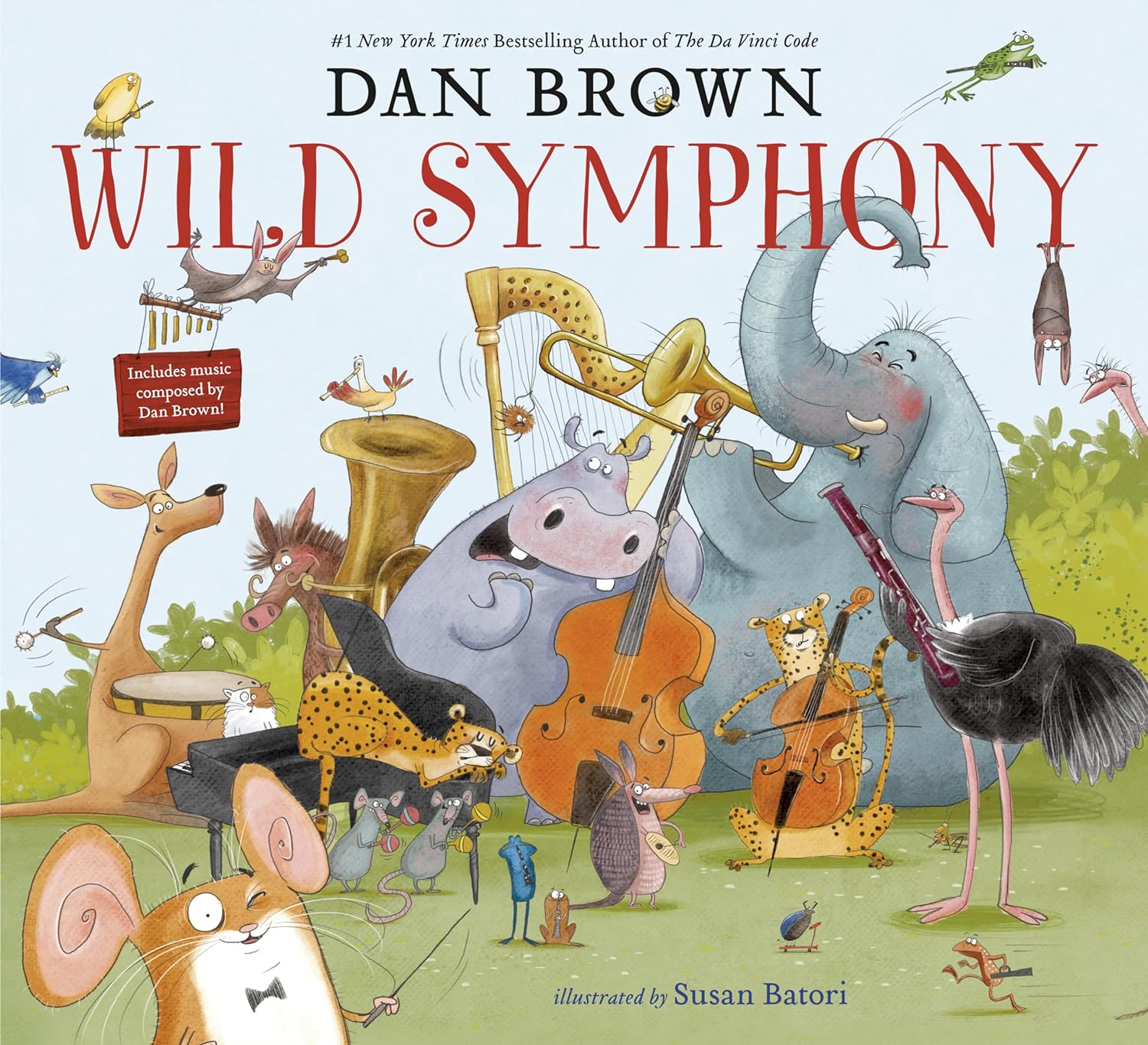
The Longmont Symphony Orchestra will introduce local families to musical animals including a bouncing kangaroo and a brilliant bat Saturday (4 p.m. Jan. 20) when they present the Wild Symphony by Dan Brown.

Yes, that’s the Dan Brown who wrote The da Vinci Code and other New York Times best-selling thrillers. The performance, under the direction of Elliot Moore, will feature Longmont native vocalist and attorney Cameron Grant as narrator. Wild Symphony has an accompanying children’s book, with colorful illustrations by Susan Batori.

The son of a math teacher and a church organist, Brown learned piano as a child and composed music before he wrote books. He says that he wrote the book to share his love of music with children. Each of the animals in the orchestra conducted by “Maestro Mouse” is associated with an instrument, and together they tell a story that includes portraits of the different animals and anagram puzzles on each page of the book. Among the 20 animals in the score are clumsy kittens, an anxious ostrich, dancing boars and busy beetles. 

A graduate of Niwot High School, Grant studied singing at Colorado College and sang with the Aspen Opera Theater, Colorado Symphony and Colorado Music Festival. After getting a law degree, he returned to Longmont where he practices in the field of real estate law.

# # # # #

Longmont Symphony Orchestra, Elliot Moore conductor,
with Cameron Grant, narrator

  • Dan Brown: Wild Symphony

4 p.m. Saturday, Jan 20
Vance Brand Civic Auditorium

TICKETS

The Boulder Chamber Orchestra (BCO) will present pianist Adam Żukiewicz, associate professor of piano at the University of Northern Colorado, in the second of their Mini-Chamber concerts of the 2023–24 season.

# # # # #

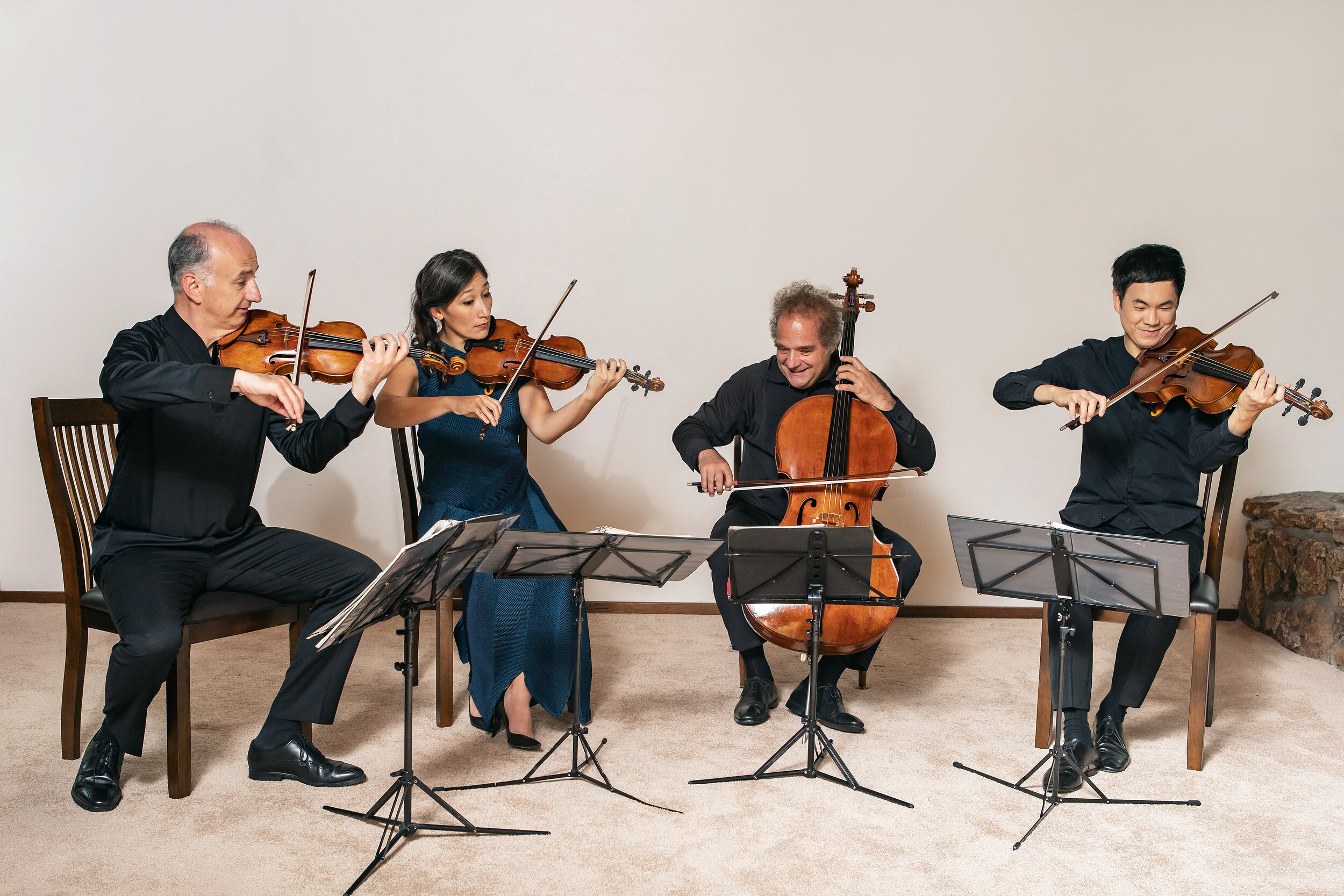
Titled “Adam Żukiewicz and Friends,” the concert will feature Żukiewicz playing quartets for piano and strings by Mozart and Brahms with members of the BCO, as well as Bartók’s popular Romanian Dances in their arrangement for piano and violin. The performance will be at 7:30 p.m. Saturday (Jan. 20) at the Boulder Seventh-Day Adventist Church. (See below for tickets.)

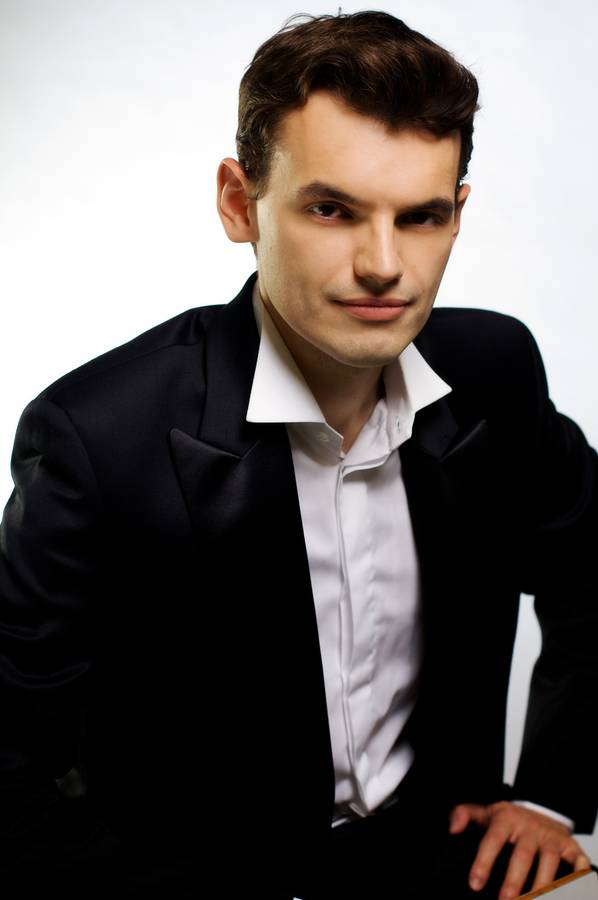
Adam Żukiewicz

A native of Poland, Żukiewicz has studied at the Royal Academy of Music in London and the Jacobs School of Music at Indiana University, and holds a doctorate from the University of Toronto, where he also served on the faculty. He won first prize both the 2011 Canada Trust Music Competition and the 2012 Shean Piano Competition in Canada, and was a medalist at several other contests. Since 2018 he has been a judge for the Steinway Piano Competition.

Mozart’s Piano Quartet in the turbulent key of G minor, one of the earliest works for that ensemble, was commissioned by the Viennese publisher Hoffmeister for sale to amateurs. Believing the work Mozart wrote was too difficult for amateur players, Hoffmeister canceled the rest of the order. Nevertheless, Mozart wrote another piano quartet several months later. 

When Brahms wrote his Piano Quartet in G minor nearly 100 years after Mozart’s Quartet in the same key, the quartet for piano and strings was a more established genre, even if not as common as string quartets and piano trios. The quartet is best known for its rousing “Rondo alla Zingarese” (Gypsy rondo) finale.

# # # # #

Boulder Chamber Orchestra Mini-chamber 2: Adam Żukiewicz and Friends
Members of the Boulder Chamber Orchestra with Adam Żukiewicz, piano

  • Mozart: Quartet in G minor for piano and strings, K478
  • Brahms: Quartet in G minor for piano and strings, op. 25
  • Bartók: Romanian Dances for piano and violin

7:30 p.m. Saturday, Jan. 20
Boulder Adventist Church

TICKETS

GRACE NOTES: Takács Quartet with guest pianists

Joyce Yang in Macky Friday, David Korevaar in Grusin Sunday and Monday

By Peter Alexander Jan. 10 at 3:10 p.m.

Pianist Joyce Yang, silver medalist at the Van Cliburn International Piano Competition at the age of 19, will be joined by the Takács Quartet for a concert at Macky Auditorium Friday (7:30 p.m. Jan. 12; details below).

Joyce Yang. Photo by K.T. Kim

The pairing of her solo performances and chamber music with the Takács recalls her appearance at the Cliburn Competition in 2005, when she won Best Performance of Chamber Music. In fact, she will play the same piece with the Takács they played together in Ft. Worth for her prize-winning performance: Dvořák’s Piano Quintet in A major—a work they also have played for the Lincoln Center Great Performers series.

Chamber music has been a large art of Yang’s career ever since the Cliburn competition. In addition to performances with the Takács, she has played with the Emerson Quartet on the Mostly Mozart Festival and has a standing partnership with the Alexander String Quartet, with whom she has recorded Mozart’s Piano Quartets.

Other works on Friday’s program include selections from Tchaikovsky’s Seasons and Rachmaninoff’s Preludes, op. 32. The first half of the program concludes with one of the great virtuoso showpieces of the piano repertoire, Guido Agosti’s arrangements of the “Infernal Dance,” “Berceuse” and “Finale” from The Firebird by Stravinsky. 

The least familiar of the solo piano pieces will be the selections from Tchaikovsky’s Seasons. A set of 12 pieces sketching each of the 12 months, the pieces were published monthly throughout 1876 in a St. Petersburg music journal. Each of the pieces has a subtitle that was provided by the publisher.

Dvořák’s Quintet forms the second half of the program. One of the composer’s most performed chamber works, the Quintet was actually the second such work Dvořák wrote. It began as an attempt at a revision of the earlier quintet, also in A major, written when the composer was 31. Unsatisfied with that work—which he had since discarded— Dvořák decided instead to write a completely new work. In the usual four-movement structure, the Quintet No. 2 features many hallmarks of the composer’s mature style including a Dumka—a movement alternating mournful and rapid, happy sections—and a Bohemian folk dance for the third movement.

# # # # #

Joyce Yang, piano, with the Takács  Quartet

  • Tchaikovsky: Selections from The Seasons
  • Rachmaninoff: Three Preludes
  • Stravinsky: Firebird Suite (arr. Guido Agosti)
  • Dvořák: Piano Quintet No. 2 in A major, op. 81

7:30 p.m. Friday, Jan. 12
Macky Auditorium

TICKETS

# # # # #

The Takács Quartet will kick off their spring concert series with another performance featuring a pianist joining them in a quintet.

This program—to be performed Sunday and Monday, Jan. 14 and 15 (details below)—will feature CU distinguished professor of piano and Helen and Peter Weil Faculty Fellow David Korevaar for the Piano Quintet in A minor of Florence Price. Other works to be performed by the Takács will be the Italian Serenade for string quartet by Hugo Wolf and Bartók’s String Quartet No. 1.

Takács Quartet. Image by Amanda Tipton Photography.

The early 20th-century African-American composer Florence Price has recently been rediscovered by orchestras and chamber music organizations across the U.S. The 2009 find of a trove of manuscripts in what had been her summer home in the village of St. Anne, Ill.,including previously unknown violin concertos and a symphony, has led to increased interest in her music. 

A native of Little Rock, Ark., Price studied at the New England Conservatory of Music and spent most of her life in Chicago, where she continued her education and worked as an organist for silent films. In 1933 her First Symphony was premiered to critical acclaim by the Chicago Symphony.

The Quintet in A minor was written in 1935, shortly after the premiere of the symphony. Price’s heritage is reflected in the third movement, titled “Juba”—a dance characterized by rhythmic hand-clapping that was associated with celebrations by enslaved Black people on Southern plantations.

Wolf’s Italian Serenade is often heard in its version for string orchestra but was originally written for quartet. Planned as part of a large, multi-movement work, the brief Serenade survives as a stand-alone work that is one of the most cheerful pieces by a composer whose largely unhappy life ended in an asylum. This is undoubtedly his best known chamber work, as most of his compositions were song collections by German poets from Goethe to Heine and Eichendorff.

The inspiration for Bartók’s first String Quartet, written in 1908, is often said to have been his rejection by the violinist Stefi Geyer,  as suggested by the mournful tone of the first movement. On the other hand, he got over the rejection well enough to marry someone else within a year.

The quartet is in three large, interconnected movements. Bartók had just stared collecting Hungarian folk songs by 1908, and other than the last movement, they had little influence on the First Quartet. In general the quartet is more Romantic in nature and less adventurous than his later quartets. The premiere of the First Quartet was given in 1910 by the Waldbauer-Kerpely Quartet, to whom Bartók dedicated his Second Quartet.

# # # # #

Takács Quartet with David Korevaar, piano

Hugo Wolf: Italian Serenade for string quartet
Bartók: String Quartet No. 1
Florence Price: Piano Quintet in A minor

4 p.m. Sunday, Jan. 14
7:30 p.m. Monday, Jan. 15
Grusin Hall

In person and digital TICKETS

Dreamy and jazzy world premiere by Boulder Philharmonic

Ricardo Morales played a new Clarinet Concerto by Aldo López-Gavilán

By Peter Alexander Jan 8 at 12:15 a.m.

The Boulder Philharmonic Orchestra and renowned clarinetist Ricardo Morales presented the world premiere of a concerto by Cuban composer Aldo López-Gavilán yesterday afternoon (Jan. 7) in Macky Auditorium. Michael Butterman conducted.

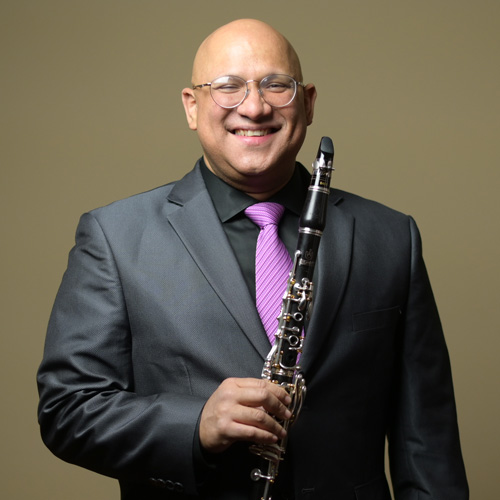
Ricardo Morales

Principal clarinet of the Philadelphia Orchestra, Morales is one of the most distinguished clarinet soloists today. His performance of López-Gavilán’s concerto—a work at times dreamy, quirky, playful and jazzy—had all the hallmarks of a top-rate performance. His fluid, resonant tone was captivating, and he was fully equal to the fiercely virtuosic passages of the scampering final movement. The Boulder Phil has a record of bringing notable soloists to Macky Auditorium, but none will exceed Morales for flair and artistry. (Disclosure: as a clarinetist I was delighted to hear Morales in person.)

The concerto unfolds in a traditional three-movement format. The first starts with pensive lines floating above the orchestra before settling into oddly off-beat rhythms in the orchestra. The movement proceeded energetically, even when the tumbling lines of the solo part were not clearly audible above the orchestra. These roulades colored the music without leaving a memorable imprint.

The second movement began as a mildly jazzy lullaby in which Morales’s velvety sound perfectly fit the music’s mood. Later, the soloist offered flitting, bird-like decoration over a gentle ebb and flow in the orchestral strings.

The final movement emerged suddenly with playful, romping rhythms that featured the clarinet at its best: brilliant, jaunty, scampering here and there with abandon. This frisky material was interrupted by a contrasting passage with a lazy clarinet line accompanied by pinging mallet percussion. As soon as the listener got into that calmer mood, the scampers began again, skipping to a breakneck finish. 

Under Butterman’s firm direction, the Phil made a strong case for López-Gavilán’s music. This is a concerto that should be welcomed by all clarinetists. It will please audiences with its varied moods and overall good nature, while the soloist has opportunities for both gentle expression and virtuoso flourishes.

Also López-Gavilán

The concerto was paired on the first half of the program with López-Gavilán’s three-movement piano concerto, titled Emporium, with the composer as soloist. A work that López-Gavilán and the Phil presented here in 2019, it was nevertheless welcome again. First begun as a birthday gift for López-Gavilán’s twin daughters’ ninth birthday, it is a gently ingratiating piece rather than a heroic concerto in the Romantic mold.

López-Gavilán was an ideal soloist, both in his command of the various classical, Afro-Cuban, jazz  and even church-hymn elements of the score, and in his evident devotion to the music. I particularly enjoyed the middle movement, which featured ominous drum rolls and eerie chords—a scary story for López-Gavilán’s girls?—that resolves safely into a hymn that almost sounds familiar before settling into sweet and comforting material. That benediction suddenly sweeps into full chords as the boisterous finale busts forth. Here I imagine that the children have awakened with energy.

It was in this movement that López-Gavilán showed his formidable technique. A cadenza-like passage leads to a grandiose finish. Once again the orchestra performed admirably, especially the solid, punctuating chords of the finale. Butterman apologized for bringing Emporium back to Macky again so soon, but the audience embraced the return enthusiastically.

The concert concluded with a somewhat subdued performance of Mussorgsky’s much-loved Pictures at an Exhibition in the familiar Ravel orchestration. After a brisk opening promenade in the solo trumpet, the character and mood of each picture—from the “Old Castle” with its saxophone minstrel, to the romping children of the “Tuileries,” to the lumbering oxcart “Bydlo, and on to the concluding “Great Gate of Kiev”—was carefully attended to.

Too carefully? The performance seemed restrained. The individual solos were generally well played by the Phil’s first-rate players, especially the woodwinds, and the contrasts between pictures were well delineated. I would single out the saxophone solo, and the flittering woodwinds in the “Tuileries” and “Unhatched Chicks” for special praise.

But the Macky stage cannot hold an orchestra large enough to provide the full impact of the “Great Gate,” even with strong brass and staunch percussion sections. “Baba Yaga’s Hut,” with its percussion blows and emphatic chords, was a fierce highpoint of the performance, but elsewhere more was wanted.

Boulder Philharmonic brings Caribbean spice to Macky Jan. 7

Recording of performances will be Phil’s first commercial release

By Peter Alexander Jan. 4 at 7:40 p.m.

The Boulder Philharmonic welcomes two guest artists from Caribbean islands for their concert Sunday (4 p.m. Jan. 7, Macky Auditorium)‚ composer/pianist Aldo López-Gavilán from Cuba and clarinetist Ricardo Morales from Puerto Rico.

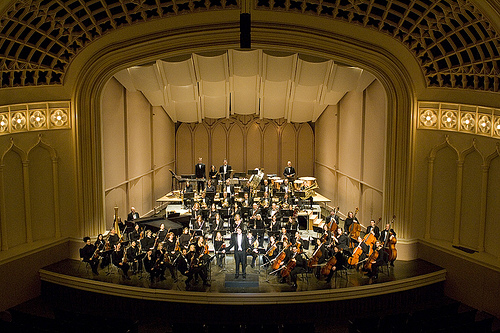
Boulder Philharmonic Orchestra in Macky Auditorium

Morales will play the world premiere of the Clarinet Concerto by López-Gavilán, who will also reprise his Emporium for piano and orchestra, which he played with the Phil in 2019. Completing the program will be Mussorgsky’s Pictures at an Exhibition in the familiar Ravel orchestration.

And in a first for the orchestra, portions of the program—the pieces by López-Gavilán—will be recorded for commercial release on the Reference Recordings label. Both the dress rehearsal and the performance will be recorded, with a make-up session afterward to patch any problems in the live recordings.

The full recording will feature both the Clarinet Concerto and Emporium, and additional solo performances by López-Gavilán. Conductor Michael Butterman says that “early fall of 2024 would be a likely target date” for the recording to be released.

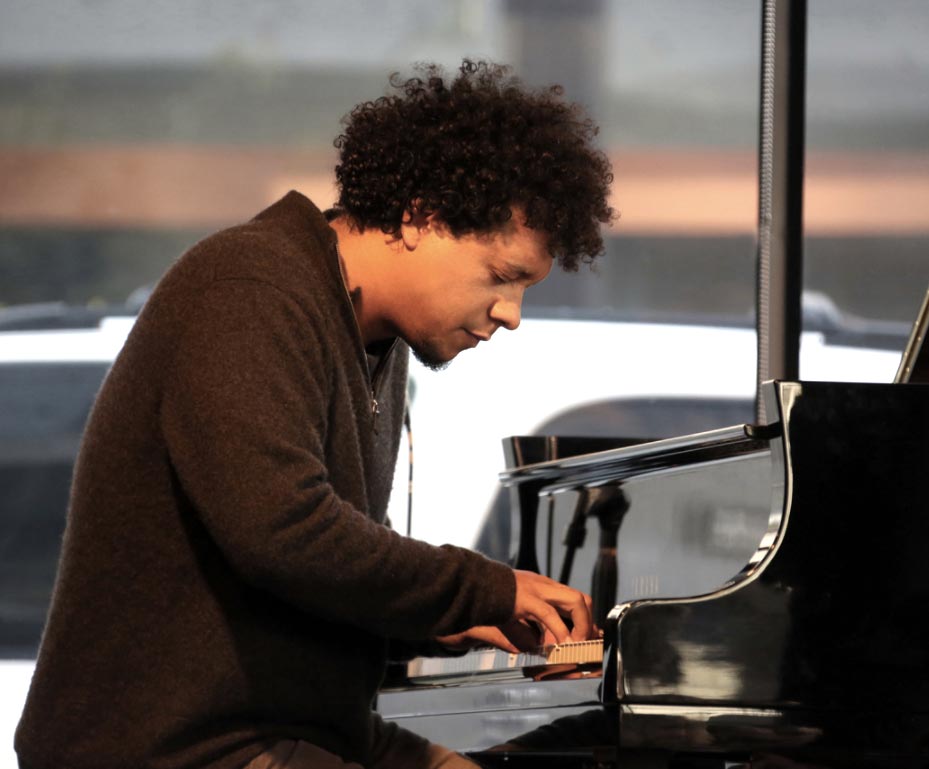
Aldo López-Gavilán

Butterman first encountered López-Gavilán’s music when he heard a performance of Emporium on the NPR program “Performance Today.” That show has been one of his favorite sources for music he might not otherwise hear. “If it were not for that radio program, I don’t know what I would ever conduct,” he says, laughing.

“In 2018 I heard this amazingly interesting (music). It was one of those moments where you get to where you’re going and well, ‘I’m not going in now because I have to figure out what this is!’” Once he learned the title and the composer, he contacted López-Gavilán’s US management and arranged for him to play Emporium with the Phil the very next season.

That performance was so successful that Butterman started thinking of other ways to promote López-Gavilán’s music. “As soon as we had that success in 2019, the then-executive director and I got together and said, ‘this is a piece that really deserves to be heard.’ (I asked) could we figure out a way to record it with him?

“I knew that he had been writing a clarinet concerto, for his cousin in Cuba, and so the idea of putting them together has been in my mind for at least three years now. And I’m glad that we’re finally able to do it!”

López-Gavilán brings an interesting mix of jazz and classical background to his music. The son of a conductor and pianist, he grew up surrounded by classical music, but he also was drawn to the Afro-Cuban jazz he heard in his homeland. He performs in both realms.

He began Emporium as a gift for his twin daughters. “The whole thing is based on a theme that I dedicated to my daughters for their birthday, when they were nine,” he wrote in program notes. “I improvised this theme in the middle of the night, just to give them a surprise. Later, I started to play what would be the first movement with my jazz trio.

“Later on, I decided to orchestrate it [as a concerto], because I was invited . . . to perform at Classical Tahoe. You find that main theme from the first movement throughout the entire work, but with variations.”

Butterman says that the title Emporium evokes “a retail establishment with little bit of everything. I think Aldo’s use of that title reflects  that he is drawing on all sorts of influences in his musical life—classical music, Afro-Cuban jazz, more traditional jazz, and so on. It has a great deal of organic unity, however. He has a theme that he presents near the beginning that is used throughout, and so while it is eclectic, it’s not without a binding thread.”

Ricardo Morales

The Clarinet Concerto is written for a chamber orchestra, rather than the full Romantic orchestra of Emporium: single winds, horn and trumpet, plus fairly extensive percussion. As Butterman describes the style, “the outer movements are rhythmically complex, and it gets jazzy. The second movement is more lyrical and starts slowly but gets quicker. 

“There’s lots of opportunities for the clarinetist to do pitch-bending [and] the sorts of jazz-derived inflections that you might expect in a concerto by somebody that has so much jazz background. It feels very Latin, very Cuban, especially the last movement.”

The soloist, Ricardo Morales is from a neighboring island to Cuba, Puerto Rico, but Butterman says that’s not why he is the guest for this concert. “He’s perhaps that best clarinetist in the world right now,” he says. “And he’s a charming guy, too!”

Mussorgsky’s Pictures at an Exhibition hardly needs an introduction to classical music audiences. It was written in 1874 as a piano piece to honor the artist and designer Viktor Hartmann, a friend of Mussorgsky who had died suddenly at the age of 39. Each movement was inspired by a painting by Hartmann included in a memorial show of his works. Later the highly virtuosic piano score was arranged for orchestra by Maurice Ravel, creating one of the most colorful and popular pieces in the symphonic repertoire.

# # # # #

“Vignettes and Promenades”
Boulder Philharmonic Orchestra, Michael Butterman, conductor
With Aldo López-Gavilán, piano, and Ricardo Morales, clarinet

  • López-Gavilán: Clarinet Concerto (world premiere)
    Emporium
  • Mussorgsky: Pictures at an Exhibition, arr. Ravel

4 p.m. Sunday, Jan. 7
Macky Auditorium
TICKETS