The Boulder Chamber Orchestra will present the first of four ”Mini-Chamber” concerts on their 2023–24 season schedule at 7:30 p.m. Saturday (Oct. 21, at the Boulder Adventist Church; ticket information below).
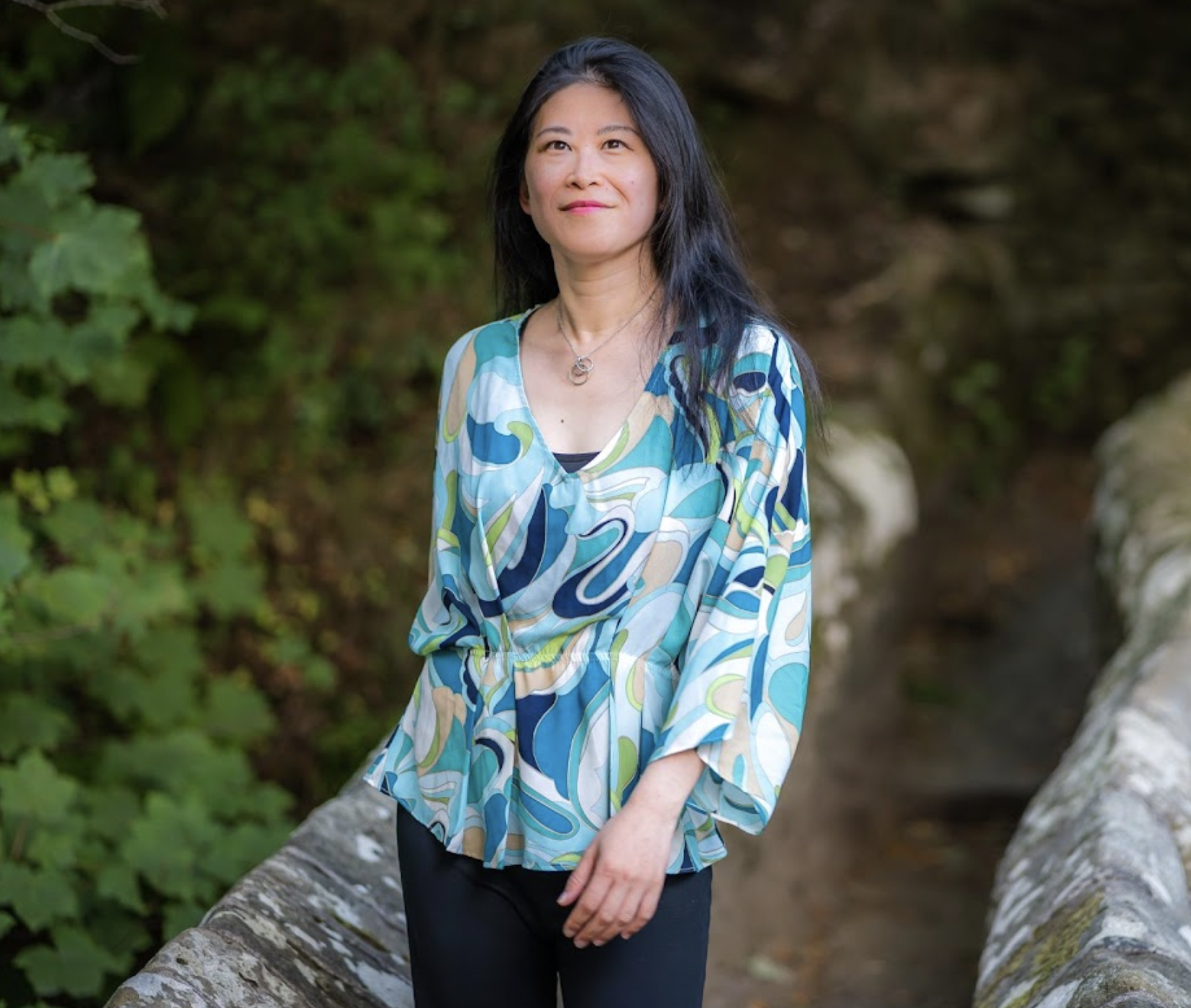
Three of the concerts—Saturday, and further performances Feb. 17 and April 6—will feature BCO’s artist-in-residence, pianist Hsing-Ay Hsu, performing chamber works with members of the orchestra. The other “Mini-Chamber” concert, Jan. 20, 2024, will feature pianist Adam Zukiewicz with members of the orchestra.
The ”Mini-Chamber” concerts are distinguished from the BCO’s other performances in that they feature pure chamber music—small, one-player-per-part ensembles—rather than the full chamber orchestra itself under director Bahmann Saless.
Saturday’s concert features three pieces with differing instrumentation. The first will be the violin-and-piano version of Bartók’s Romanian Folk Dances. A suite of six short pieces originally written for piano, based on Romanian tunes from the Transylvania—once part of Hungary and later part of Romania. Bartók himself wrote a version for small ensemble, and there have been arrangements for violin and other instruments with piano. It has been one of Bartók’s most popular pieces with performers.
The program also includes Dvořák’s Quintet for piano and string quartet in A major. Composed in 1887, it is considered one of the leading works for Piano Quintet. It comprises four movements indulging two that are based in Eastern European folk culture: Dumka, a movement that alternates between melancholy and exuberance with a title that derives from Ukranian; and Furiant, a fiery Bohemian folk dance.
Finally, Hsu alone will pay Brahms’s Klavierstücke (Piano pieces) op. 118, a set of six pieces that Brahms dedicated to Clara Schumann, widow of the composer Robert Schumann. Composed in 1893, they were the composer’s next-to-last completed work.
# # # # #
“Capturing the Folk Spirit”
Boulder Chamber Orchestra Mini-Chamber 1 Hsing-ay Hsu, piano, with members of the Boulder Chamber Orchestra
Bartók: Romanian Folk Songs for violin and piano
Dvořák: Quintet for piano and strings in A major
Brahms: Klavierstücke, op. 118 no. 3
7:30 p.m. Saturday, Oct. 21 Boulder Adventist Church
“Transcendence”: Bach’s Goldberg Variations at the Dairy Saturday
By Peter Alexander Oct. 19 at 2:25 p.m.
Bach’s Goldberg Variations is widely regarded as one of the great works of the European musical tradition, but pianist David Korevaar doesn’t want you to think of it that way.
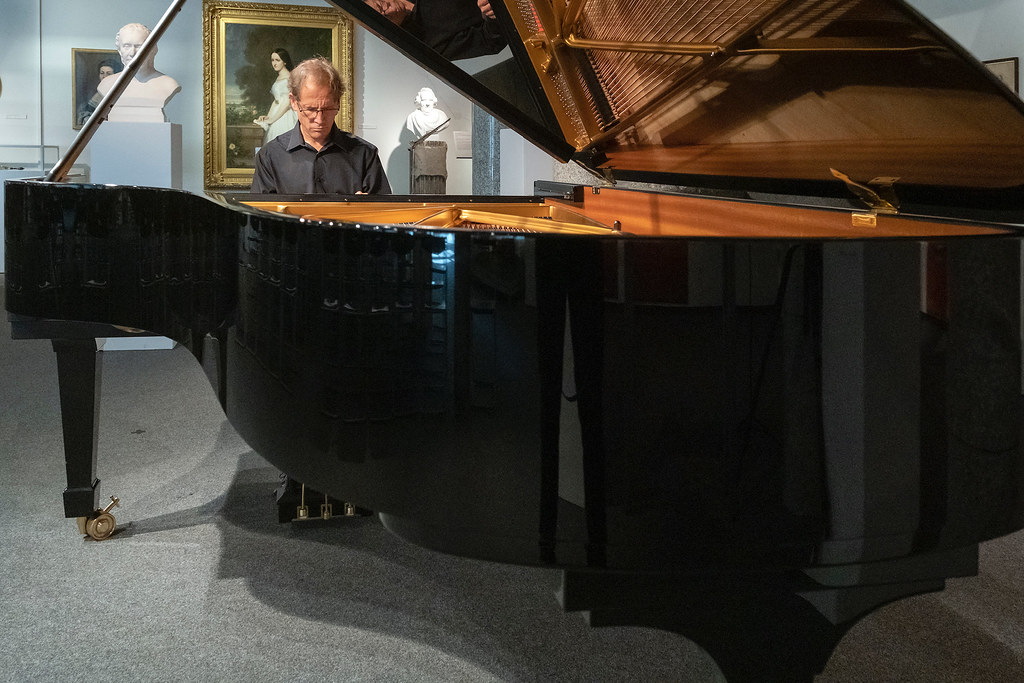
David Korevaar. Photo by Manfred Fuss.
Korevaar will play the Goldberg Variations Saturday at the Dairy Arts Center (4 p.m. in the Gordon Gamm Theater) on a program titled “Transcendence” that is part of the 2023–24 Boulder Bach Festival concert series. “Although the piece is an iconic masterpiece,” Korevaar says, “it should be a piece that is full of joy and dances and sings, rather than an object of worship.”
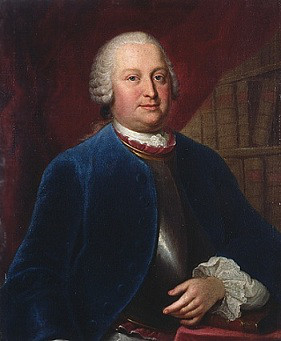
Johann Gottlieb Goldberg
The Variations were written around 1740 and are named after harpsichordist and organist Johann Gottlieb Goldberg. Goldberg was employed by Count Kayserling, the Russian ambassador to the Court of Saxony and may have been one of Bach’s pupils. A story of dubious authenticity has been told by Bach’s biographer Johann Nikolaus Forkel that Kayserling suffered from insomnia. To cheer him up on sleepless nights, Bach is supposed to have written the variations for Goldberg to play.
The completed score comprises an Aria and 30 variations, with the aria to be repeated at the end. Every third variation is a canon for two voices, with an increasing musical interval between the voices. In musical terms, Variation 3 is a canon at the unison, Variation 6 a canon at the second, and so forth to Variation 27, which is a canon at the ninth.
Scholars have found patterns in the layout of the other variations as well, with one Baroque movement type and one rapid free movement in every pair of variations between the canons. The final variation is a “Quodlibet” (Latin for “whatever you wish”) that combines several German folk songs.
Korevaar recorded the Goldberg Variations once about 18 years ago, but he has not gone back to re-listen to that recording because he wants to approach the music afresh. “That was the first time that I set my hands to that music” he says, suggesting that his understanding of the music has evolved over the intervening years.
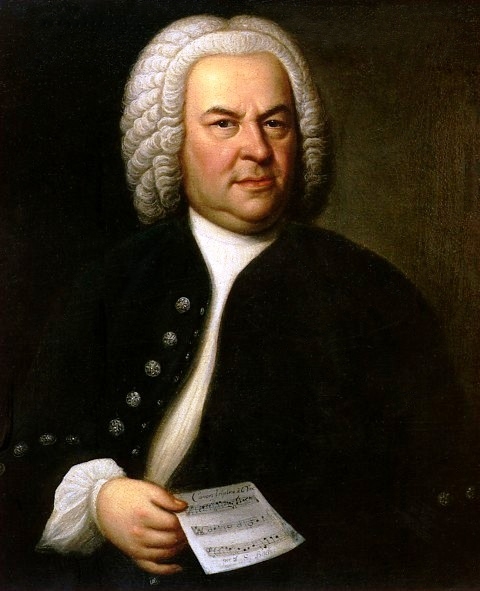
J.S. Bach
Because this is the first time he has played the full set with nothing else on the program, he has made the decision to take all of the repeats that Bach wrote into the score—something he did not do in his recording or in recital performances. “I do some embellishment with repeats,” he says, “but even in a case where I’m not doing embellishment, I think it’s worth hearing the music twice.”
“You also have to have the patience to accept the length of the piece. Isn’t it nice to slow down the pace of the world a little bit, and spend a little more time with some music?”
Korevaar believes that the time spent with the Goldberg Variations should be entertaining for the listeners. In spite of the complexity of Bach’s compositional stye, there is a lot of fun in the music. “I’m not going to say that there’s no profundity there, there’s plenty,” he says. “But most of the piece is in an emotional range from contentment to outright joy.
“What we can miss is the humor, and a certain amount of show-off-iness, which of course Bach did occasionally. I think he had a good time writing this piece.”
David Korevaar. Photo by Matthew Dine
If Bach is showing off as a composer, with his canons and widely varying styles of variations, the music also gives the performer space to show off, too. “There is a combination of compositional virtuosity and keyboard virtuosity here,” Korevaar says. “It would be silly to claim that there’s not an aspect of bravura to this music. This music actually is very difficult and sounds very difficult!”
Bach wrote the Goldberg Variations specifically for harpsichord, as the piano was not yet well developed in 1740. Korevaar is playing them on piano, but he is not averse to more historically accurate performances. “I love my modern piano, but I also love listening to a wonderful harpsichordist play,” he says.
The modern instrument has different expressive possibilities and parameters than the harpsichord. “Color, dynamics and shaping are an inevitable part of playing the piano” he says. “And those parameters are much less available to a harpsichordist.” In contrast, he explains, the harpsichord and other historical instrument depends much more on flexibility of time and tempo to create expression.
And that’s what Korevaar seeks above all in performing Bach’s music. “I believe very deeply that Bach was essentially an expressive composer,” he says.
“And so to understand that and to bring that music to life in a way that sings and dances and speaks—that’s what I admire and strive for.”
# # # # #
Boulder Bach Festival “Transcendence” David Korevaar, piano
J.S. Bach: Goldberg Variations, S988
4 p.m. Saturday, Oct. 21 Gordon Gamm Theater, Dairy Arts Center

 Sharps & Flatirons