“Community Focused” Boulder Symphony opens their season Friday

Programs include guitarist Trace Bundy, a live film soundtrack and a family concert

By Peter Alexander Sept. 28 at 2:40 p.m.

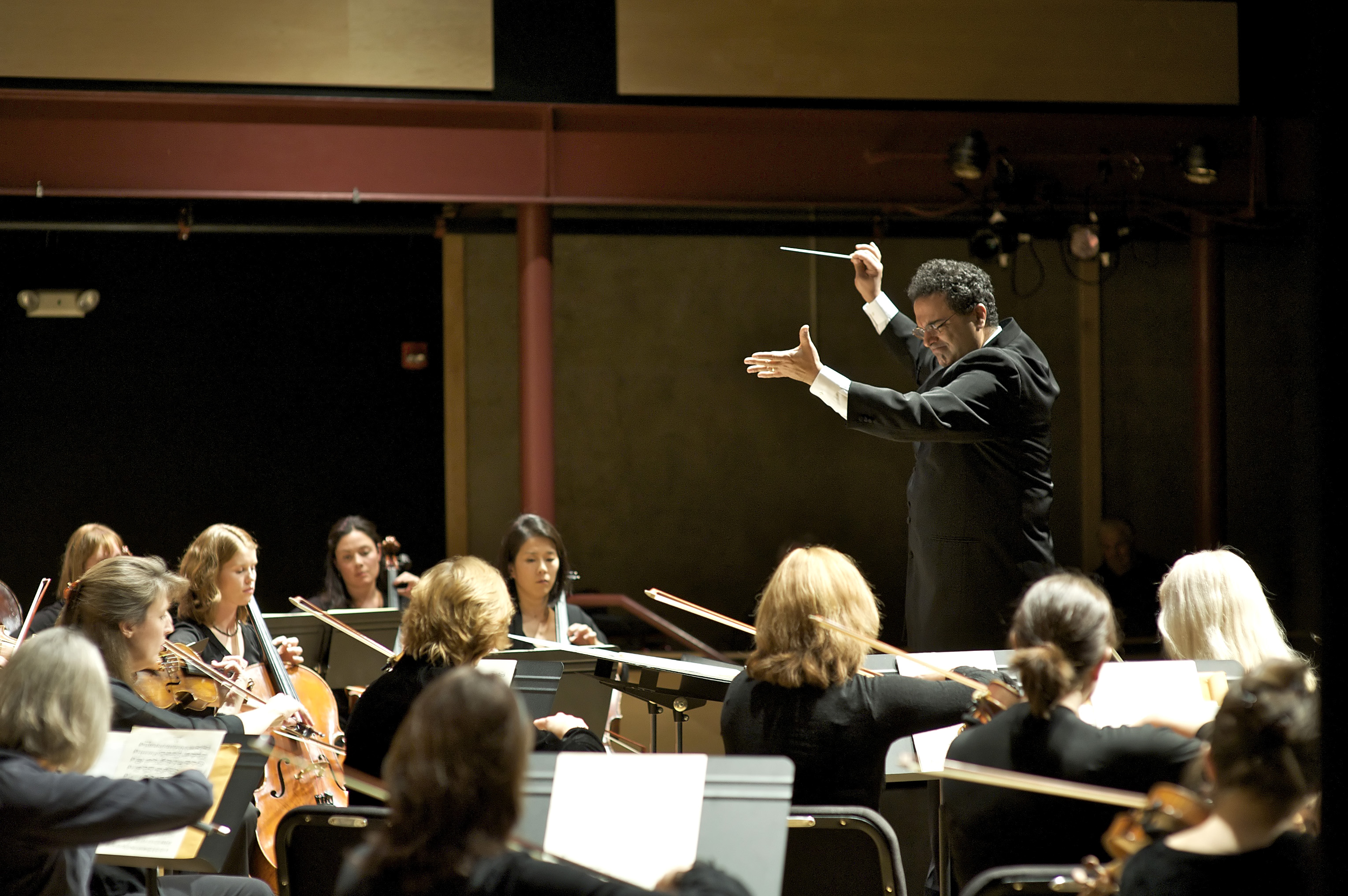
The Boulder Symphony, a self-described “community focused orchestra” that began as a community orchestra and has grown into a larger organization that includes a Music Academy for young students, opens its 2023–24 concert season Friday with a concert featuring guitarist Trace Bundy (7:30 p.m. at Boulder Theater; see ticket information below).
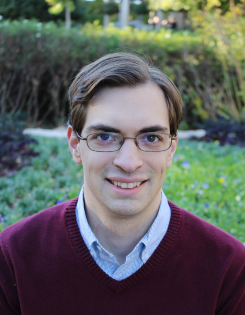
John Clay Allen

The program, under the direction of Devin Patrick Hughes, includes works from Bundy, the Beatles, Leonard Cohen and U2, among others, arranged for the orchestra by John Clay Allen. A member of the faculty at Metropolitan State University in Denver, Allen is also the composer-in-residence with the Boulder Symphony. The world premiere of his Eroica Forgotten is also part of the program for Friday’s concert.

The concert is sponsored by Suerte Tequila, an independent craft Tequila made in Jalisco, Mexico, with offices in Boulder. During the concert, Suerte Tequila will be sold at the Boulder Theater bar.

In October, the orchestra will present live music for the silent film The Covered Wagon and one of their “Curiosity Concerts,” short concerts designed for family attendance. The performance of music for The Covered Wagon (7:30 p.m. Saturday Oct. 14; details below) is presented in conjunction with the Northern Arapaho Eagle Society and in observance of the second week of October as Indigenous Peoples Week.
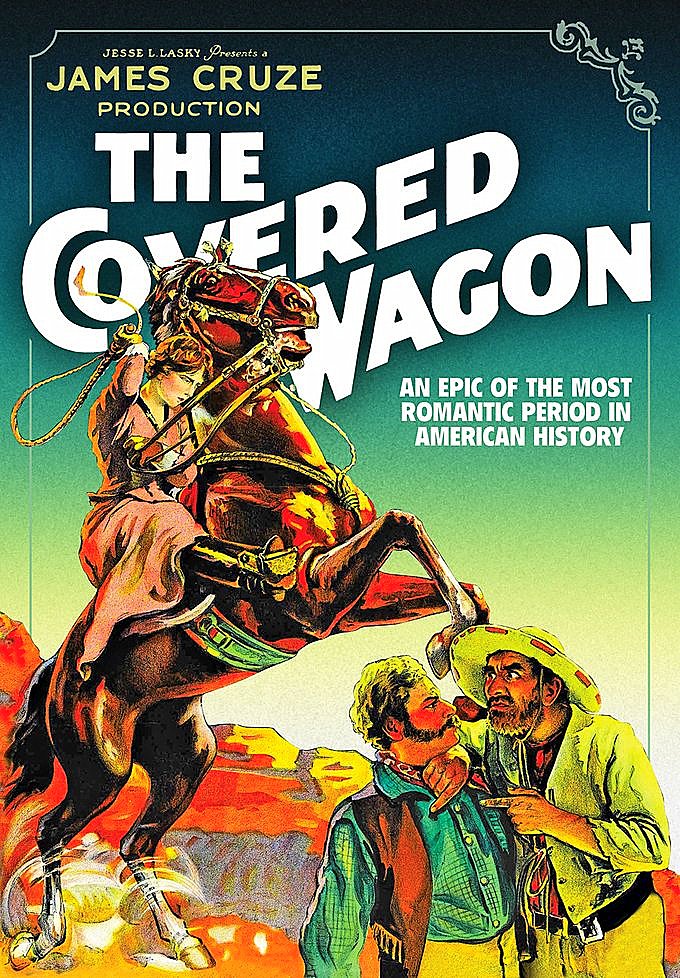
The Covered Wagon is a 97-minute 1923 silent film that included 500 Arapaho tribal members from the Wind River Reservation in the cast. The original film was premiered in New York City with a soundtrack score by Hugo Riesenfeld. University of Wyoming music prof. Anne Guzzo was commissioned to compile a new soundtrack, “Arapaho Covered Wagon Redux,” that aims to reverse negative Native American stereotypes and retell the story from a tribal perspective. Her compilation was arranged for orchestra and the Northern Arapaho drummers by Allen.

The performance is a combination concert presentation of the film and recording session. 

Later in the month, the Boulder Symphony presents their first “Curiosity Concert” of the season (3 p.m. Saturday, Oct. 28 in the orchestra’s primary home, Grace Commons Church in Boulder, which is called Grace Commons Concert Hall for performances). Titled “Perfectly Imperfect,” the performance is a program of the classical music education producer Extra Crispy Creatives.

With music ranging from Mozart to Billie Eilish, “Perfectly Imperfect” explores “what makes Earth’s music the best in the galaxy.” The performance with full orchestra and an alien named “Blip” will last approximately 45 minutes.
Erin Patterson

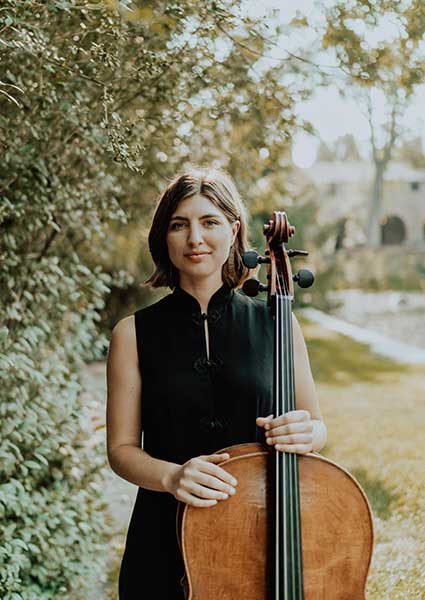
The fall’s full formal concert by the Boulder Symphony will take place at Grace Commons at 7:30 p.m. Friday, Nov. 17. Cellist Erin Patterson, a member of the Altius String Quartet, will be soloist in a performance of DANCE for cello and orchestra by Anna Clyne. Other works on the program, conducted by Hughes, will be Finlandia by Sibelius and the Symphony No. 2 of Rachmaninoff.

Clyne’s DANCE is effectively a five-movement concerto for cello, based on a five-line poem by Rumi. Each movement is titled after one line of the poem: 
Dance, when you’re broken open.
Dance, if you’ve torn the bandage off.
Dance in the middle of the fighting.
Dance in your blood.
Dance, when you’re perfectly free.

Composed in 1906–07, Rachmaninoff’s Second Symphony was an important milestone for the composer. The 1897 premiere of his First Symphony had been a failure. Rachmaninoff became depressed after the performance, and doubted his abilities as a composer. For his Second Symphony, he moved to Dresden, Germany, to have time for composing away from Russia, and after completing and extensive and revision of the score, he was able to present the symphony in St. Petersburg in January, 1908.

The performance was a great success, and the symphony won an award for the composer. This event restored Rachmaninoff’s confidence, and the Second Symphony, while subject to considerable later revisions, has remained one of his most popular compositions.

Tickets for performances by the Boulder Symphony are available on the organization’s Web page

# # # # #

Boulder Symphony
Fall Concerts in Boulder

7:30 p.m. Friday, Sept. 29
Boulder Symphony, Devin Patrick Hughes, conductor
With Trace Bundy, guitar

Program includes:

  • John Clay Allen: Eroica Forgotten (World premiere)
  • Trace Bundy: “Elephant King” (arr. by John Clay Allen)
  • Lennon/McCartney: “Dear Prudence” (arr. by John Clay Allen)
  • Leonard Cohen: “Hallelujah” (arr. by John Clay Allen)
  • The Edge/Bono: “Where the Streets Have no Name” (arr. by John Clay Allen)

Boulder Theater
Concert presented by Suerte Tequila

The Covered Wagon
Live Silent Film soundtrack recording session
7:30 p.m. Saturday, Oct. 14
Boulder Symphony, Devin Patrick Hughes, conductor, 
With the Northern Arapaho Eagle Society

  • Soundtrack compiled by Anne Guzzo; arranged by John Clay Allen

Pine Street Church, 1237 Pine St., Boulder

Fall Curiosity Concert
3 p.m. Saturday, Oct. 28
Boulder Symphony, Devin Patrick Hughes, conductor
Perfectly Imperfect, production of Extra Crispy Creatives

Program includes original music and arrangements from:

  • Sia: “Cheap Thrills”
  • Mozart: Symphony No. 40 in G minor
  • Rossini: Overture to William Tell
  • Richard Strauss: Also sprach Zarathustra
  • Billie Eilish: “Bad Guy”

Grace Commons Church, 1820 15th St.

7:30 p.m. Friday, No. 17
Boulder Symphony, Devin Patrick Hughes, conductor
With Erin Patterson, cello

  • Sibelius: Finlandia
  • Anna Clyne: DANCE for cello and orchestra
  • Rachmaninoff: Symphony No. 2 in E minor, op. 27

Grace Commons Church, 1820 15th St.

TICKETS and information for all Boulder Symphony performances on their Web page

CORRECTION: When originally posted, one of the paragraphs in this article was accidentally misplaced. Although it did not change the meaning, the error has been corrected and all parts of the story are in the correct order (11:15 p.m. 9/27/23).
Fall activities are coming to life at the CU College of Music

Takács Quartet, Faculty Tuesday concerts have begun for 2023–24

By Peter Alexander Sept. 14 at 10:30 p.m.

You may still be stuck in a Summer mood—I know I am—but on the CU campus and around the Imig music building, Fall is well under way.

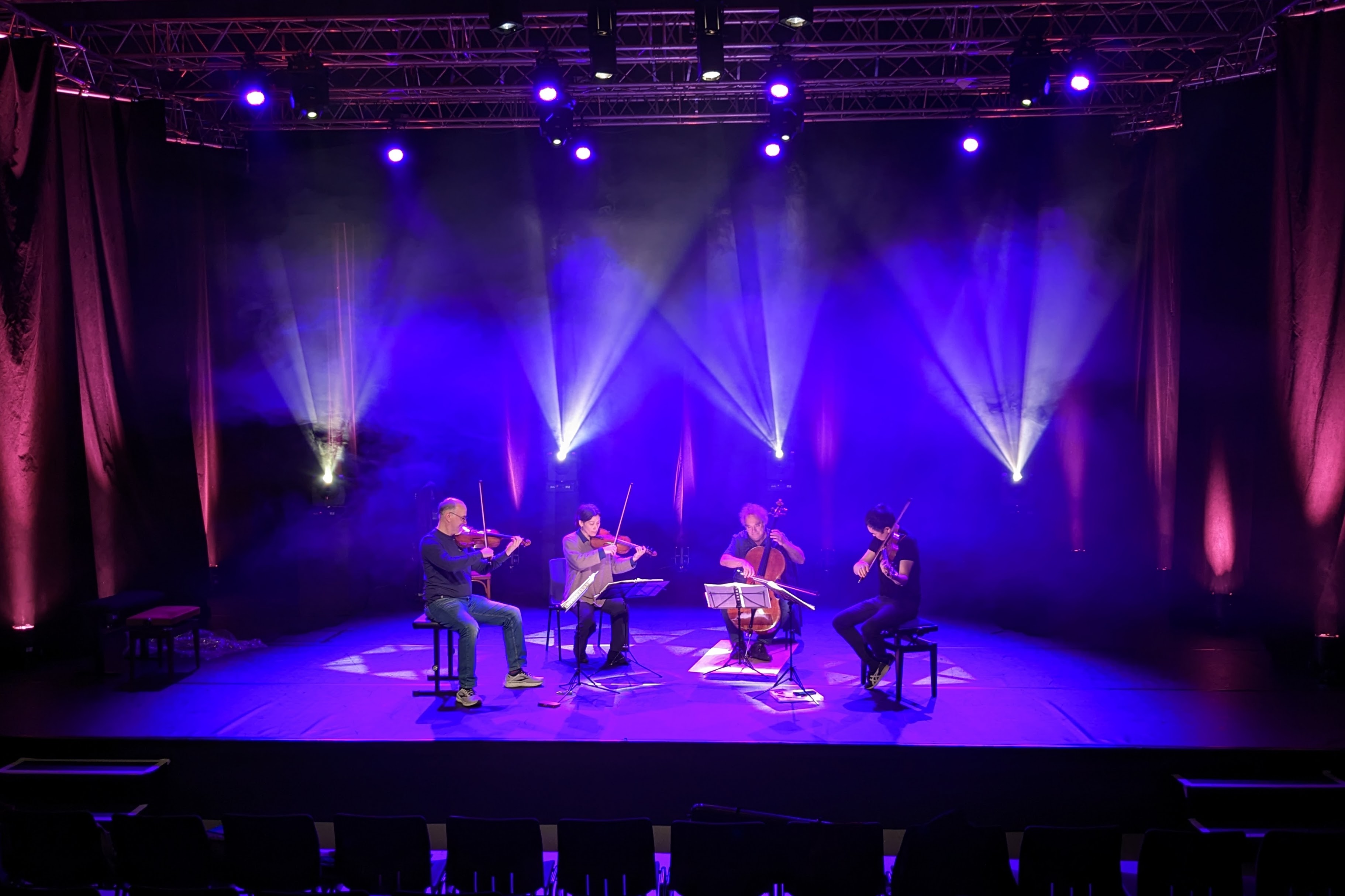
Even more reliable signs of the season than the turning of the leaves, the College of Music’s Faculty Tuesday series and the Takács Quartet’s campus concert series are already ongoing for the 2023-24 year. The Takács will play music of Haydn, Bartók and Beethoven Sunday afternoon and Monday evening (4 p.m. Sept. 17 and 7:30 pm. Sept. 18 in Grusin Hall), in their customary two-performance pairing. They have one more program during the fall (Nov. 5 and 6; program below) and more performances after the first of the year.

Takács Quartet. Photo by Ian Malkin.

Then next Tuesday (7:30 p.m. Sept. 19, also in Grusin), the quartet’s second violinist Harumi Rhodes and pianist Hsiao-Ling Lin will present the music of Robert Schumann and Beethoven on a faculty Tuesday recital titled “MEMORIA.” The centerpiece of the program features visual art by Michiko Theurer with three short pieces by Kaija Saariaho, performed with cellist Meta Weiss.

The Faculty Tuesday series continues nearly weekly for the remainder of the academic year; listings of all College of Music concerts can be found on the school’s Web page. All Faculty Tuesday performances are free and open to the public.

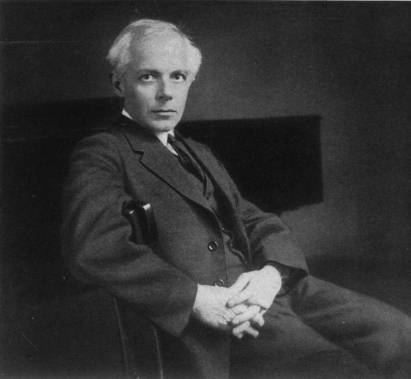
Béla Bartók

Both fall performances by the Takács will feature works by Hungarian composer Béla Bartók. The original membership of the Takács Quartet was entirely Hungarian: the quartet was founded in Budapest by students at the Franz Liszt Academy, and the music of their fellow-Hungarian Bartók was home territory for them. Cellist András Fejér, the one original member and one Hungarian in the Takács today says that is still the case, and has been through all changes in personnel in the group’s history.

“Absolutely,” Fejér says. “Ed (Dusinberre) was the first (new member) with us, and we learned and re-learned them together. And what we found with him, and also with all the new partners, was an immense hunger to enjoy and to interpret in a meaningful way.”

That does not mean that the Takács’s interpretation of Bartók’s quartets doesn’t change. “When we put them to rest for a while and then start practicing again, the questions we ask are completely different,” Fejér says. “Any given problem gets a different light, and we’ve been changing in the interim period. That’s what makes this whole process so fresh and alive and fascinating all of these decades.”

But one thing that remains consistent, he says, is their view of Bartók not as an aggressive modernist but as a Romantic composer. “In spite all the dissonance, we still feel he is a wonderfully Romantic composer,” he says. “Even when it sounds harsh, you realize it should’t sound harsh, it should sound like a village piece, or lonesome mourning. If we attack from that angle, one can discover millions of wonderful things!”

The other composer present in both concerts during the fall semester is Joseph Haydn. For two reasons, Haydn is also central to the Takács’s work. First, Haydn has his own Hungarian connections, having been born on the border between Austria and Hungary and spent long periods of his life in Hungary at the castle of Prince Esterhazy. And he is considered the creator of the string quartet, having written nearly 70 quartets starting before it was a recognized concert genre.

András Fejér

Fejér wants the audience to realize what a creative composer Haydn was. “Just because Haydn is often the first piece we are playing at our concerts, doesn’t mean that it’s a warm-up piece,” he says. “It’s extremely inventive, full of the most wonderful characters. I cannot emphasize (enough) the originality of the pieces, and we are just happy enjoying it. Sometimes even today I cannot quite believe how wonderfully dense—or densely wonderful—they are!”

The other composer represented in the fall programs is Beethoven, whose Quartet in E minor, op. 59 no. 2 is on the opening program Sunday and Monday. That is the second of the three “Rasumovsky” Quartets, written for the Russian Ambassador in Vienna around 1808. In his honor, it includes a Russian folk tune that also appears in Mussorgsky’s opera Boris Gudonov.

Information on the full Takács season and box office information can be found on the Takács Quartet listing through CU Presents. Tickets are available for both in-person attendance in Grusin Hall and for streaming access to the performances.

# # # # #

Takács  Quartet
Fall concert series, 2023
(All concerts in Grusin Hall)

4 p.m. Sunday, Sept. 17
7:30 p.m. Monday, Sept. 18

  • Joseph Haydn: String Quartet in D Major, Op. 71, No. 2
  • Béla Bartók: String Quartet No. 5
  • Ludwig van Beethoven: String Quartet in E Minor, Op. 59, No. 2

4 p.m. Sunday, Nov. 5
7:30 p.m. Monday, Nov. 6

  • Béla Bartók: String Quartet No. 1
  • Joseph Haydn: String Quartet in C Major, Op. 20 No. 2
  • Béla Bartók: String Quartet No. 4

TICKETS for Takács quartet concerts on the CU campus are available from CU Presents.

Boulder Chamber Orchestra opens 2023-24 season Saturday

Both violin and piano soloists featured Sept. 16

By Peter Alexander Sept. 12 at 4 p.m.

The Boulder Chamber Orchestra is first out of the gate of the city’s five orchestras that present a season every year.

Bahman Saless with the Boulder Chamber Orchestra. Photo by Keith Bobo.

Their opening concert for the fall of 2023–24, featuring music by Mozart, Beethoven and Dvořák, will be the coming Saturday (Sept. 16 at 8 p.m. at the Boulder Adventist Church; program below) and will feature solo appearances by violinist Jubal Fulks and pianist Petar Klasan. Music director Bahman Saless will conduct.

This is ahead of all other local orchestras—the Boulder Philharmonic, the Boulder Symphony, the Pro Musica Colorado Chamber Orchestra and the University Symphony—by two weeks or more.

If there is a theme to the season, it might be the presentation of three different piano concertos by Beethoven by three different soloists: Concerto No. 3 played by Petar Klasan Sept. 16; Concerto No. 2 played by Adam Zukiewicz Oct. 21; and the “Emperor” Concerto played by Jennifer Hayghe in 2024. There is also the usual mixture of very familiar composers (Beethoven! Mozart!) with quirky, unfamiliar composers (Jim Klein and Ian Jamison! Maxim Goulet!) that reflect Saless’ eclectic tastes.

December offers the world premiere of a flute concerto written for the BCO and principal flutist Cobus DuToit by Czech composer Sylvie Bodorova. Compiled from previous works, the concerto was suggested to Saless this past summer when he met Bodorova in a conducting workshop.

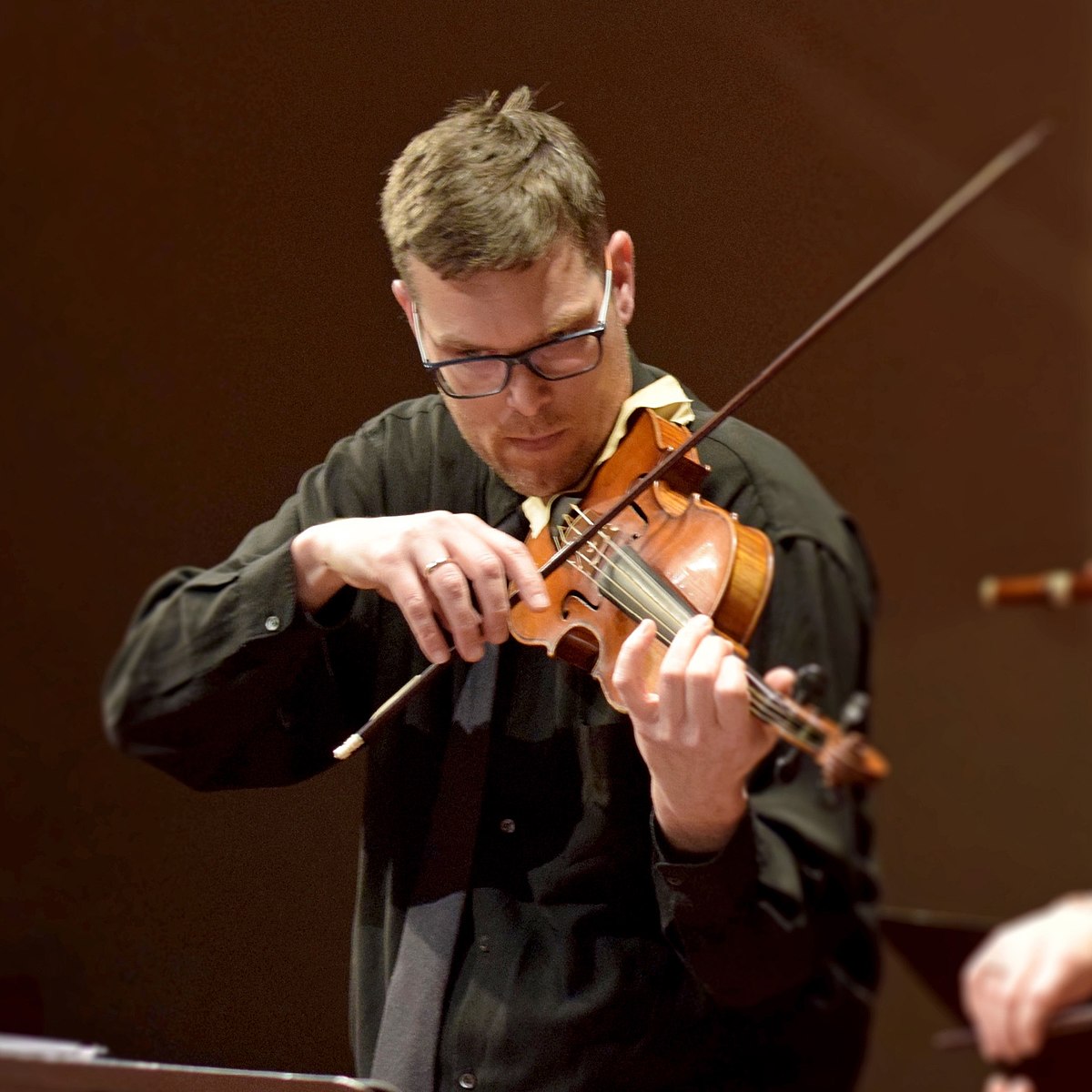
Jubal Fulks

The “Romance” in the title of Saturday’s opening concert comes from Dvořák’s Romance in F minor for violin and orchestra. A gently enchanting piece, it was derived from the slow movement of the composer’s String Quartet no. 5 in F minor. The soloist, Jubal Fulks, teachers violin and heads the string area at the University of Northern Colorado.

Mozart’s Symphony No. 35 has a somewhat complicated backstory, having been preceded by two different serenades Mozart wrote for the Haffner family of Salzburg. The first, written for a wedding in 1776, is known today as the “Haffner Serenade.” Portions of the second, commissioned for the ennoblement of Siegmund Haffner in 1782, became Symphony No. 35, first performed in Vienna in 1783.

Beethoven composed his Third Piano Concerto in or around 1800—the exact date is disputed—and gave the first performance on a concert in April 1803 on which he also presented first performances of his Symphony No. 2 in D major and his oratorio Christ on the Mount of Olives. Although the concerto was complete, at least in the composer’s head, he had not yet written it all down. Ignaz von Seyfried, a friend who turned pages at the performance, later reported that almost all the pages were blank! 

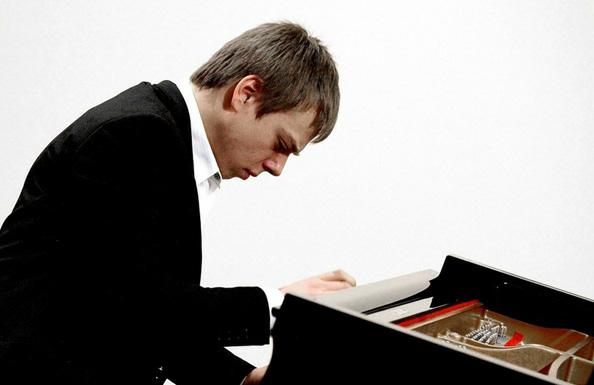
Petar Klasan

“He played nearly all the solo part from memory since, as was so often the case, he had not had time to set it all down on paper,” Seyfried wrote.

With BCO, the soloist will be Croatian pianist Petar Klasan, who fortunately has studied Beethoven’s completed score. A prize winner in several European competitions, Klasan, 21, is a fellow of the International Music Academy in the Principality of Liechtenstein. He currently lives in Vienna, where he continues his studies and performs with “Con Brio,” a concert series that he founded in 2018.

A full listing of the BCO’s 2023–24 season, and access to ticket purchases, can be found on the orchestra’s Web page.

# # # # #

Boulder Chamber Orchestra
2023 Fall Concert Schedule

“Romance and Intrigue”
Boulder Chamber Orchestra, Bahman Saless, conductor
With Petar Klasan, piano, and Jubal Fulks, violin

  • Dvořák: Romance in F minor for violin and orchestra
  • Mozart: Symphony No. 35 in D major (“Hefner”)
  • Beethoven: Piano Concerto No. 3 in C minor

8 pm. Saturday, Sep. 16
Boulder Adventist Church, 345 Mapleton Ave.

“Mozart Mass and  More”
Boulder Chamber Orchestra, Bahman Saless, conductor
Boulder Chamber Chorale, Vicki Burrichter, conductor

  • Jim Klein and Ian Jamison: Summation  for choir and orchestra
  • Mozart: Mass in C minor

7:30 p.m. Friday Oct. 6
First United Methodist Church, 1421 Spruce, St. Boulder

“Capturing the Folk Spirit”
Mini-Chamber Concert 1
Hsing-sa Hsu, piano, with members of the orchestra

  • Bartók: Romanian Folk Songs for violin and piano
  • Dvořák: Quintet for piano and strings in A major
  • Brahms: Klavietstücke, op. 118 no. 3

7:30 p.m. Sunday, Oct. 21
Boulder Adventist Church

Holidays Celebration
Boulder Chamber Orchestra, Bahman Saless, conductor
Nadia Artman, guest conductor
With Adam Zukiewicz, piano, and Cobus DuToit, flute

  • Mozart: Overture to Marriage of Figaro
  • Maxime Goulet: Chocolats Symphonique
  • Sylvie Bodorova: Concerto for Flute and Orchestra (2023; world premiere)
  • Beethoven: Piano Concerto No. 2 in B-flat, op. 19

7:30 p.m. Saturday, Dec. 16
Boulder Adventist Church

TICKETS for all concerts available at the Boulder Chamber Orchestra Web site.

NOTE: Correction of spell-corrector errors, 9/12: paragraph 2, the violin soloists name is Jubal Fulks, not Forks; paragraph 4 and penultimate paragraph, the soloists name for the Third Concerto is Petar Klasan, not Peter.