
Peter Oundjian led an all-Corigliano program by the CMF Festival Orchestra
By Peter Alexander Jan. 14 at 12:24 a.m.
There are several reasons that John Corigliano is an important composer, and many of them were on display last night (July 13) at the Colorado Music Festival.
The Festival Orchestra under music director Peter Oundjian played an all-Corigliano program—a rare honor for a living composer that Oundjian has made a feature of his annual “Music of Today” programming. The three pieces on the program spanned not only 50 years of Corigliano’s work, as Oundjian pointed out from the stage; they also displayed some of the breadth and diversity of his creativity.
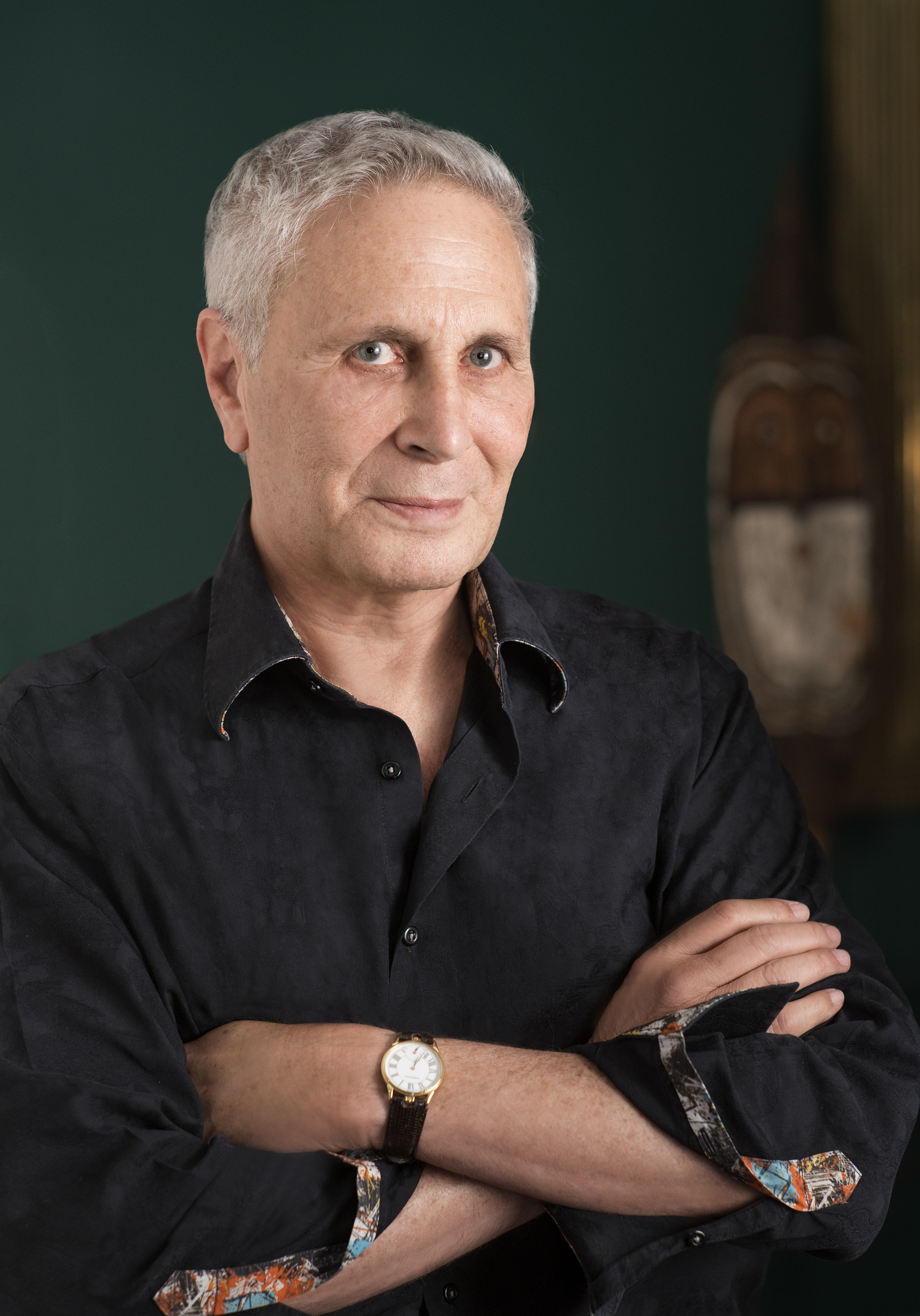
That breadth is certainly one of the reasons the Corigliano in important. For last night’s concert, the CMF Orchestra played two pieces that are great entertainment—the Gazebo Dances of 1974, and his recent Triathlon for saxophone and orchestra (2020), played by virtuoso saxophonist Timothy McAllister.
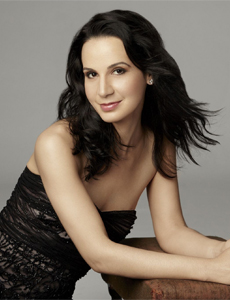
The third piece on the program, One Sweet Morning for voice and orchestra (2011), reaches for greatness, and find it though both texts and their settings. The expressive depth of this piece, commission for the 10th anniversary of the 9/11 attacks, clearly signals Corigliano’s importance. Grammy award winning mezzo-soprano Kelley O’Connor was the soloist.
Opening the program, Gazebo Dances seemed like a continuation of the Tuesday program by the JACK Quartet, titled “New York Stories.” The Dances come straight out of the 1970s New York and Broadway milieu that inspired Leonard Bernstein and others of the times.
Oundjian and the Festival Orchestra captured well the buoyant energy and sweet sentimentality of the Overture movement. The Waltz was just humorous enough, and the dreamy Adagio movement, played with careful attention to balance among the instruments, provided a comforting moment of relaxation before the jolly Tarantella.
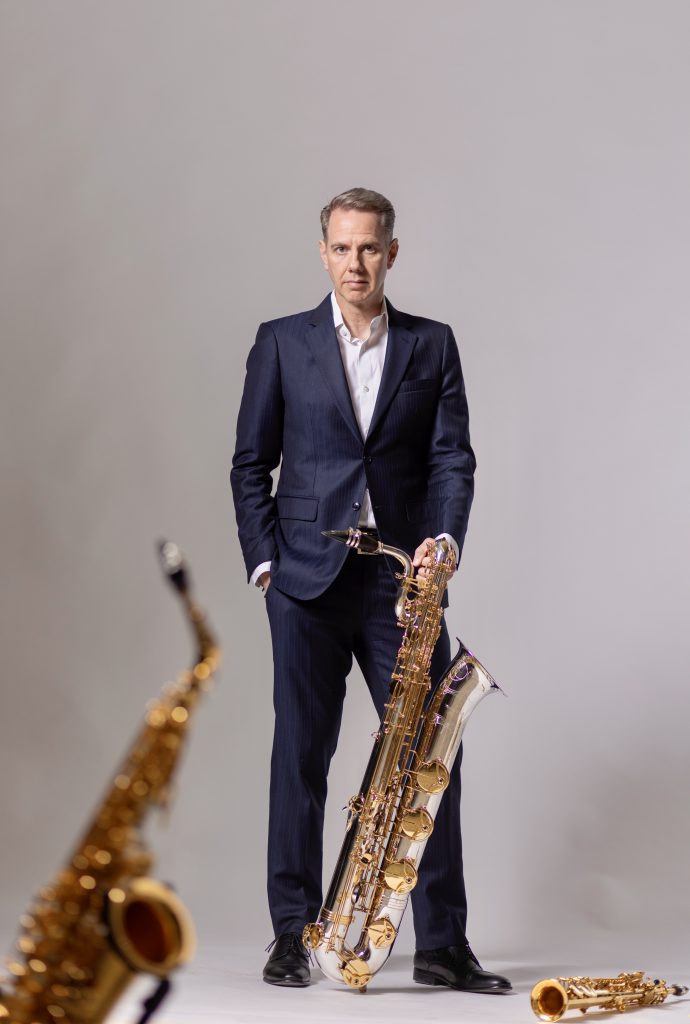
Triathlon requires a saxophonist who is a virtuoso on the soprano, alto and baritone saxes—the three events of the athletic triathlon the concerto represents—and the CMF certainly had that in McAllister. Apparently comfortable in every possible range—and some impossible ones, too—of each instrument, he was unquestionably the medalist of this Triathlon.
The first movement is filled with incredibly virtuosic passages all over the soprano sax. Sadly the balance was not always well judged, but when the soloist emerged from the brassy orchestral texture, blisteringly fast things were going on. McAllister played with silky smoothness on the alto sax for the second movement, even over passages of riverine rapids.
The baritone sax is the boisterous cousin of the other instruments, ideal for all kinds of playful hijinks—and all kind of playful hijinks is what Corigliano asks for and McAllister provided, from loudly slapped keys to slap-tongue blasts. The only thing missing was a return to the screaming heights of the soprano instrument, which is exactly what the score calls for at the end. With a soloist like that, who wouldn’t have fun at the concert?
But it is One Sweet Morning that provided the emotional depths of the evening. Corigliano made inspired decisions picking four poetic texts that lament the horrors of violence and hope for a world without war. The poets could not be more diverse—Polish poet Czesław Miłosz foreseeing the end of the world in 1944, Homer describing the man-to-man brutality of the Trojan War, 8th-century Chinese poet Li Po revealing the anguish of wives and mothers, and pop-song lyricist E.Y. “Yip” Harburg (“Wizard of Oz”) dreaming of a world when “the rose will rise . . . (and) peace will come.”
The texts make an eloquent progression from anguish to brutality to hope, and here is where Corigliano reaches for greatness. Not only has he selected deeply moving poems, he matches each with music that powerfully captures in turn the deep melancholy of Miłosz’s words, the concentrated barbarity described by Homer and Li Po, and the healing grace suggested by Harburg.
Oundjian has a profound grasp of this music, and brought it out through the players. O’Connor sang with control and expressive precision, with no audible strain from the lowest notes to the highest. If she could not be heard during the scenes of war, that was not her fault; the orchestral sound there was as loud as I have heard at Chautauqua, but never uncontrolled.
These three pieces—fun dances, a fervent memorial and a splashy concerto—made up an optimal concert program, and it is one that I will remember as one of my favorite evenings at CMF.
__________
NOTE: The title of John Corigliano’s piece was corrected in the 10th paragraph on 7/14. The correct title is One Sweet Morning, not One Fine Day. We apologize for the error.
 Sharps & Flatirons