
Opening weeks: Joshua Bell plays Bruch, Rachmaninoff turns 150
By Peter Alexander Jun. 27 at 11:25 p.m.
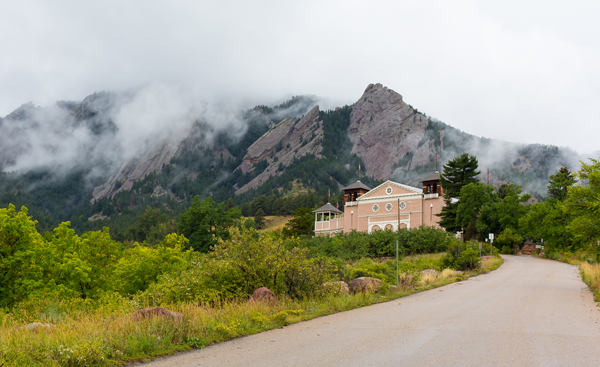
The 2023 Colorado Music Festival (CMF) gets under way at the Chautauqua Auditorium Thursday with what music director Peter Oundjian calls “a very welcoming kind of opening night” (7:30 p.m. June 29; details below).
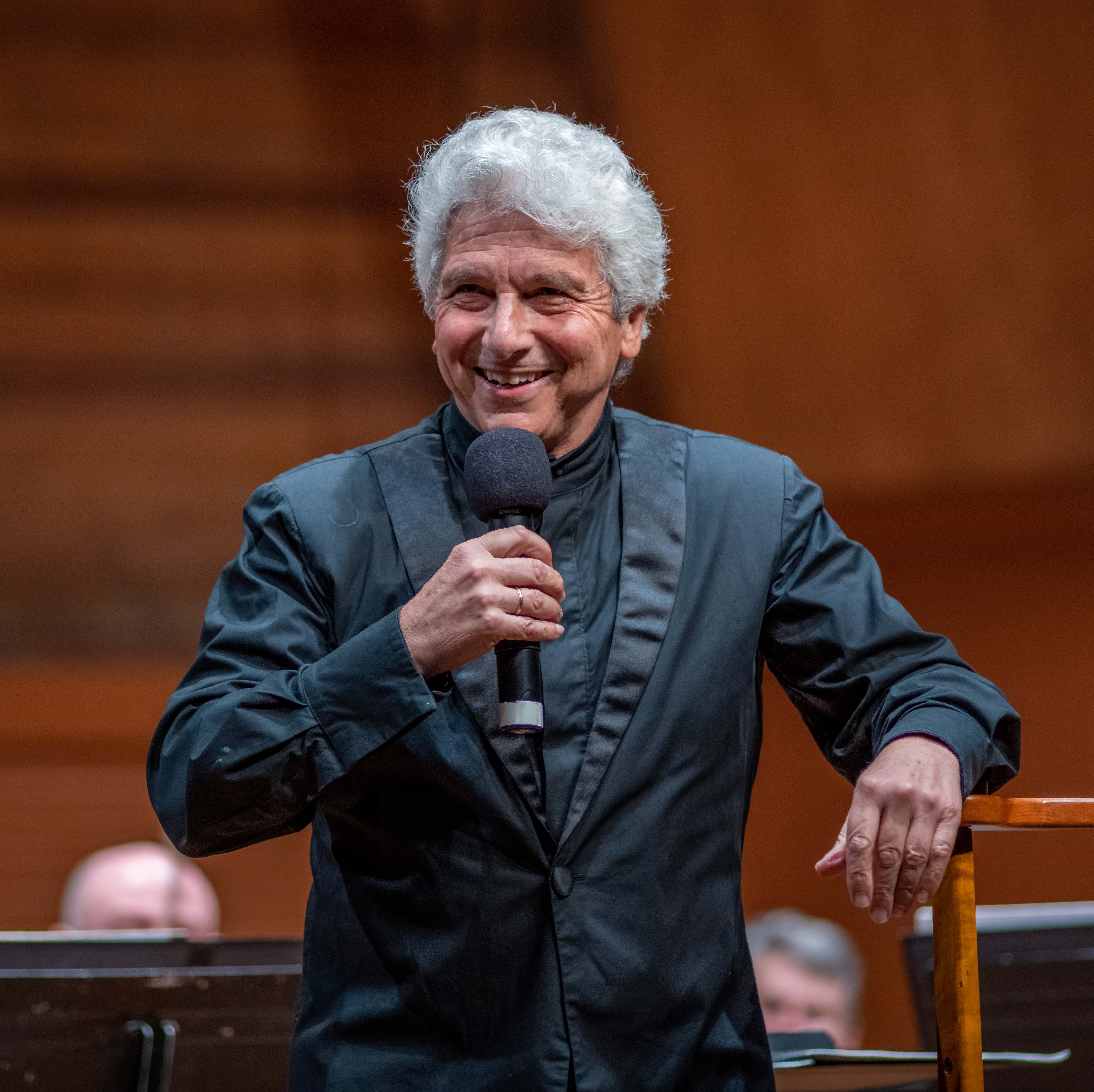
By welcoming, Oundjian probably means comfortable for the audience. Or as he says, “you don’t want to do something too insanely eclectic on the opening night.” And indeed opening night is only a little bit eclectic, with a new piece by American composer Carlos Simon nestled with superstar violinist Joshua Bell playing Max Bruch’s G minor Violin Concerto and Mussorgsky’s evergreen favorite Pictures at an Exhibition in the familiar Ravel orchestral arrangement.
That program will be repeated at 6:30 p.m. Friday. Other events in the opening weeks of the festival are a family concert featuring Peter and the Wolf at 10:30 a.m. Sunday, July 2; and a celebration of the 150th anniversary of Rachmaninoff’s birth Thursday and Friday July 6 and 7, and Sunday, July 9 (times and programs below).
As the 2023 CMF artist in residence, Bell will be featured for the opening night concert, June 29–30; and at the closing two concerts, Aug. 3 and 6, when he will play a pre-premiere read-through of a suite for violin and orchestra that he commissioned from five prominent American composers. While the later concerts explore Bell’s involvement in the music of our time, the opening night performance of the Bruch Concerto showcases his ability with Romantic music.
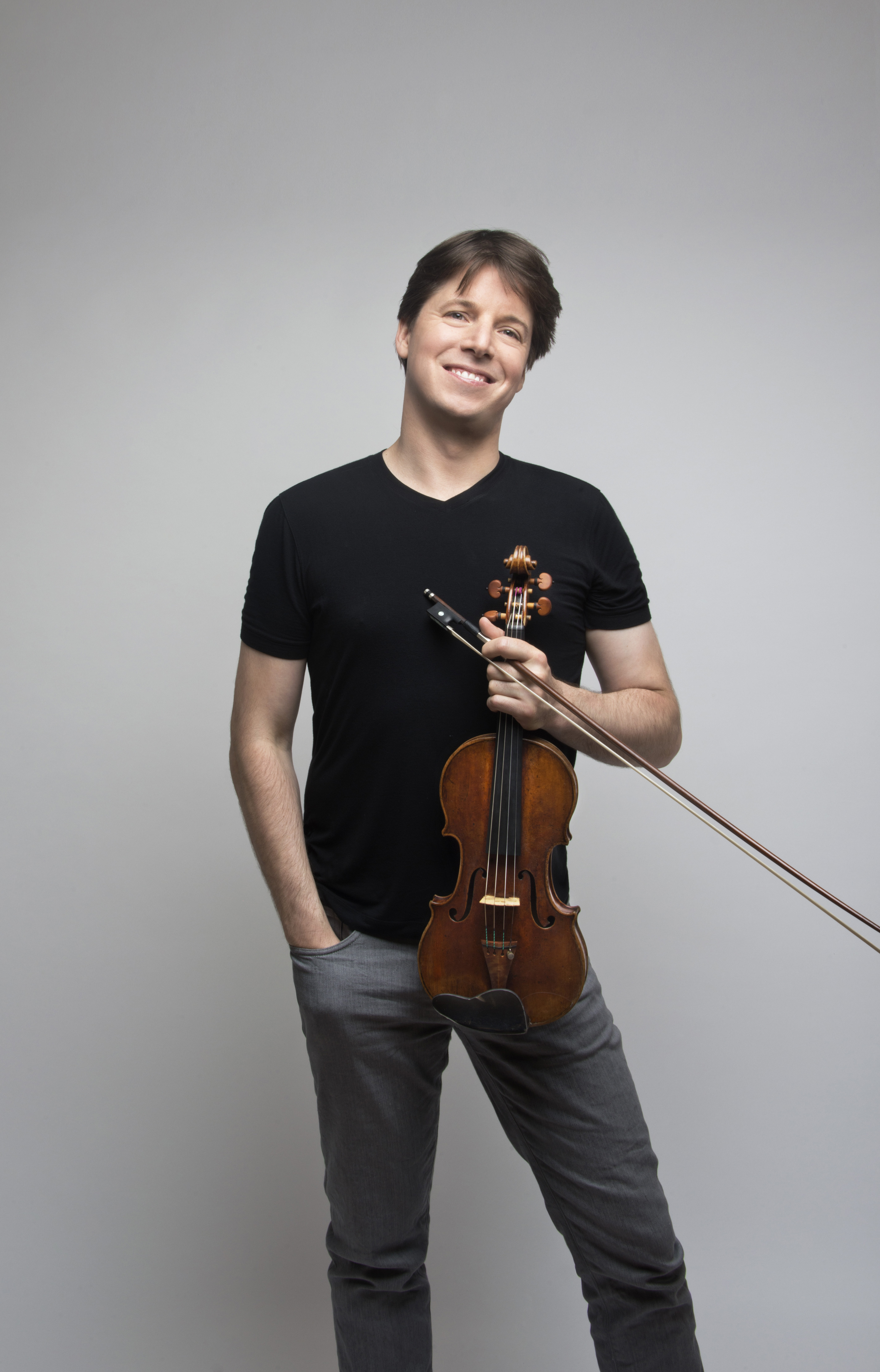
Oundjian has known Bell since he was 14 and values that ability. “He has always had this rare sort of skill, looking back to when people played in a Romantic fashion, with the repertoire that calls for it,” he says. Bell studied with legendary Russian-American violinist Josef Gingold, who was born in 1907 in Brest-Litovsk in what was then the Russian empire and who is considered one of the last links to the Romantic violin style.
“It was a beautiful old-school approach to the playing and the sound production,” Oundjian says of Gingold’s teaching. “The sound, the expressive fingering, finding a way to express like a singer would—that’s what’s so wonderful about Bell’s playing. He’s like a great singer.”
Bell has been unusually successful in the transition from prodigy at 14, and before, to a successful adult artist. “He’s very, very focused,” Oundjian says. “He’s very disciplined in terms of what his goals need to be, very clear I think in his career.”
The Bruch Concerto, written in 1866, is an ideal vehicle for the Romantic style that Bell represents. “It just never stops being stunningly beautiful,” Oundjian says. As for the rest of the opening program, “Carlos Simon is a great way to open it all up—it has drive and it’s surprising and it’s brand new.” And it’s programmed with Pictures at an Exhibition—”one of the most exciting orchestral pieces ever written.”
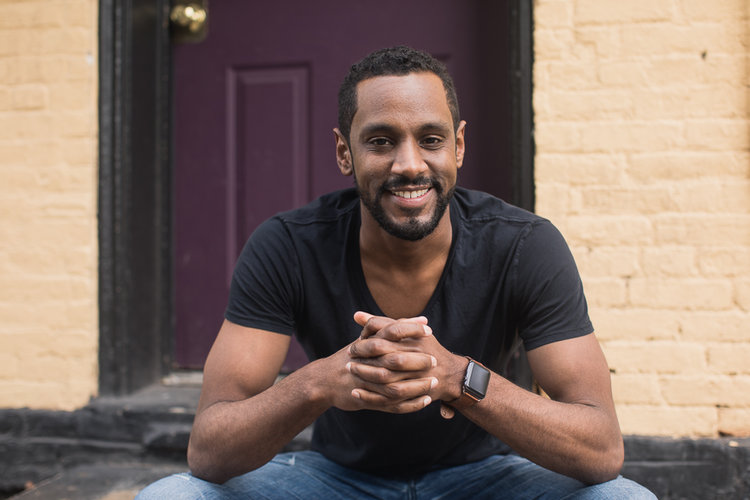
Simon is currently composer in residence at the John F. Kennedy Center for the Performing Arts in Washington, D.C., and faculty at Georgetown University. He received the 2021 Medal of Excellence recognizing outstanding classical Black and Latinx musicians from the Sphinx Organization, which also commissioned Motherboxx Connection. The title is derived from the work of the cartoonist duo known as Black Kirby, which in turn is a pun on pioneering cartoonist Jack Kirby’s motherbox, a living computer.
Simon writes in his program notes, “To represent the power and intelligence of the motherboxx, I have composed a short, fast-moving musical idea that constantly weaves in and throughout the orchestra. A majestic, fanfare-like motif also provides the overall mood of strength and heroism. I imagine the motherboxx as an all-knowing entity that is aware of the multi-faceted aspects of blackness.”
For the second week of the festival, Oundjian put together programs that recognize the 150th anniversary of the birth of the great Russian composer Sergei Rachmaninoff. Two different programs will be shared over three concerts, July 6–7 and July 9. “The idea of celebrating the 150th birthday is completely obvious,” Oundjian says. “But what was less obvious was how to celebrate this.”
He thought of two things he could bring to American audiences that they might not know. First was that Rachmaninoff lived in the U.S. many years and eventually gained American citizenship; and the second was the playing of Russian pianist Nicolai Lugansky.
“What I decided was to focus on the great orchestral music, which included piano concertos created or premiered in America,” Oundjian explains. “It felt important for everyone to realize that Rachmaninoff, yes he was of Russian descent, but he died in America. In fact he got his American citizenship just weeks before he died. I think it’s important that we realize that this was his country. And this was where he found the most success and, I wouldn’t say happiness, but lack of unhappiness, more like.”
Those American works include familiar audience favorites—the Third Piano Concerto and the Rhapsody on a Theme of Paganini—but also works that are not well known but that Oundjian wants to bring to people’s attention.
“You have his magnificent Third Symphony which is not often played and I so love it, and the Third Piano Concerto, which was premiered by the New York Philharmonic,” he says. “And you have the other pieces written while he was living in America, the Symphonic Dances, which is an absolute masterpiece, and the Fourth Piano Concerto, which you never hear and is stunningly beautiful and the Paganini Variations which we all know and love.
“It just seemed to make up a beautiful week of celebration of Rachmaninoff in America.”
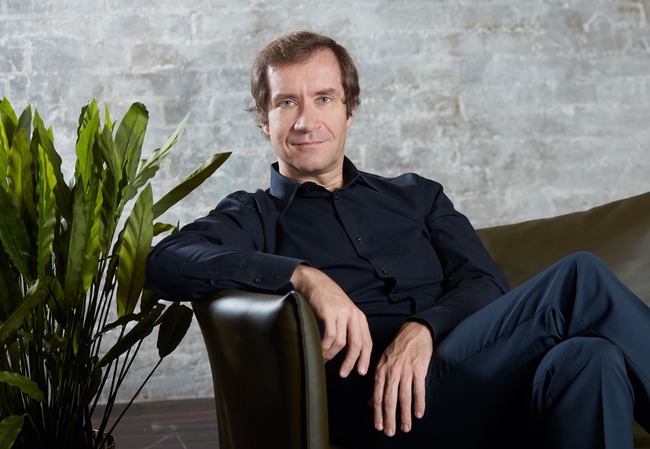
For the concertos, Oundjian chose a pianist he has worked with in the past, but who is not well known in the U.S. “Nikolai Luganski is not well known in America, which is a reason that I thought it would be wonderful to bring him here. People should know about him.
“He plays the Rachmaninoff concerti in a style which is in line with the character and the true soul of Rachmaninoff. Rachmaninoff’s music shouldn’t be overzealously expressed, and Luganski’s playing is so powerful, it’s so spiritual—and (he has) a unique approach to Rachmaninoff that has a purity about it that I wanted to emphasize, because Rachmaninoff was a profoundly sensitive person.”
Oundjian is as pleased with the rest of the scheduled festival as he is with the opening concerts. “I was very fortunate that almost everything that we wanted to present became a reality—which is not always the case,” he says.
“People were available, and wanted to do the repertoire, so it came into place quite smoothly.”
NOTE: The remainder of the 2023 Colorado Music Festival will be previewed in subsequent articles.
# # # # #
COLORADO MUSIC FESTIVAL
Performances June 29–July 9
All performances at Chautauqua Auditorium
7:30 p.m. Thursday June 29 and 6:30 p.m. Friday, June 30: Festival Opening Program
Festival Orchestra, Peter Oundjian, conductor
With Joshua Bell, violin
- Carlos Simon: “Motherboxx Connection” from Tales: A Folklore Symphony for orchestra
- Max Bruch: Violin Concerto No. 1 in G minor
- Mussorgsky: Pictures at an Exhibition (orchestrated by Ravel)
Family Concert: 10:30 a.m. Sunday, July 2
Festival Orchestra, Kalena Bovell, conductor
With Jennifer Bird-Arvidsson, soprano, and Janae Burris, narrator
- Bizet: Carmen Suite No. 1
- Eric Whitacre: Goodnight Moon
- Samuel Coleridge-Taylor: “Danse Nègre” from African Suite
- Prokofiev: Peter and the Wolf
7:30 p.m. Thursday, July 6 and 6:30 p.m. Friday July 7
Festival Orchestra, Peter Oundjian, conductor
With Nicolai Lugansky, piano
- Rachmaninoff: Piano Concerto No. 3 in D Minor
—Symphony No. 3 in A Minor
6:30 p.m. Sunday, July 9
Festival Orchestra, Peter Oundjian, conductor
With Nicolai Lugansky, piano
- Rachmaninoff: Rhapsody on a Theme of Paganini
—Piano Concerto No. 4 in G Minor
—Symphonic Dances
 Sharps & Flatirons