
The schedule also includes smaller works by Debussy and Poulenc
By Peter Alexander July 27 at 5:20 p.m.
While you were busy watching the operas, Central City Opera Company slipped some news into the program book.
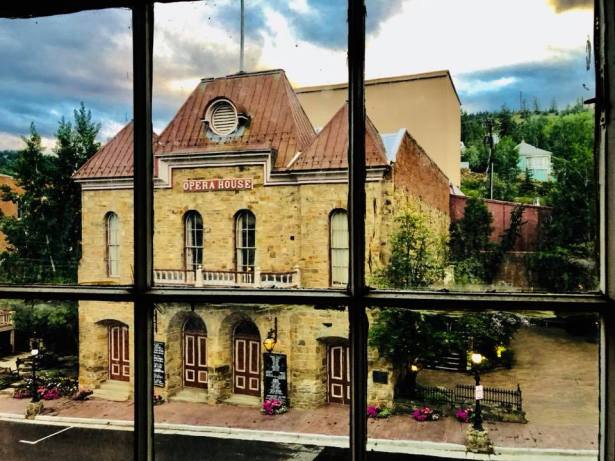
Central City Opera House (photo by Ashraf Sewailam)
Page 10 of the deluxe 2018 season book lists the 2019 season, which will offer the opportunity to hear one of the most popular operas ever, as well as three works that are genuine rarities in the opera house. The latter include two smaller works more often classified as oratorios, and one major opera by a truly great opera composer.
The season will follow the pattern of recent years, with two large-scale productions in the Central City Opera House, and two smaller one-act works in more intimate venues in Central City:
* Madama Butterfly by Giacomo Puccini
* Billy Budd by Benjamin Britten
* La Damoiselle élue (The blessed damozel) by Claude Debussy
* Litanies à la Vierge noire (Litanies to the Black Virgin) by Francis Poulenc
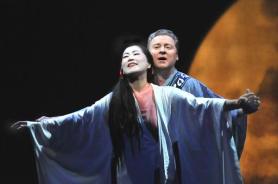
Yunah Lee and Chad Shelton in Madama Butterfly, Central City 2010
According to the Web site Operabase, Butterfly was the seventh most frequently performed opera in 2017–18, with 2,428 performances world wide. It was last performed by CCO in 2010. That production will be returning, but with a different director.
It was long been the ambition of CCO’s general/artistic director Pelham G. Pearce, Jr., to present all of the operas by Benjamin Britten in Central City. “Oh, I love Britten!” he says.
Of the Britten operas yet to be done at Central City, Billy Budd, which calls for a very large cast of all men and takes place on a British man-o’-war, would seem to pose the greatest challenge in the intimate Central City Opera House.
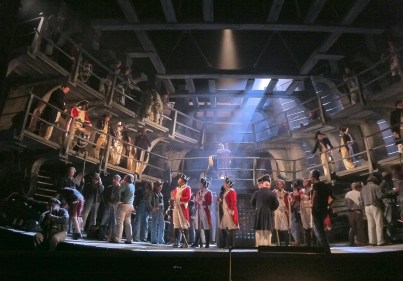
Billy Budd at the Glyndebourne Festival
“Billy Budd is at this point the biggest show we will ever have done inside the theater,” Pearce says. “I’m really excited about it. There are so many people in Billy Budd it’s just crazy, but it’s such a glorious work. I swear the roof is going to come off in that space!”
In contrast, the smaller works next year will feature female voices. “Because Billy Budd is all male, outside of the main stage we will be staging Debussy’s Blessed Damozel, which is all female” Pearce says. “And going along with that will be The Litany of the Black Virgin by Poulenc, also for all female voices.”
Offering two shorter works each year is a plan that Pearce has become attached to. “We do really well with these (shorter) shows,” he says. “And they provide a really great opportunity to show off young artists. So I’m pleased with them.
“It provides me the opportunity to play a little bit in areas of repertory that we normally don’t get into. There’s a whole lot of stuff that’s written that’s not a full evening in the theater, and that often gets neglected. So having the opportunity to play in that pond of work has been really a lot of fun for me.”

Pelham (Pat) Pearce
Pearce is especially happy to offer the two works for all female voices. “I have a thing about just women voices,” he says. “Blessed Damozel is a gorgeous piece that (Debussy) wrote when he was very young. He originally wrote it for just piano, which is how we’re going to do it. It’s glorious music, (and all) you’re going to have to do is walk into the church, sit down, and be immersed in the sound.”
He first heard Blessed Damozel years ago when he bought a recording. He had never heard it before, but, he says, “I put this on and said ‘My god, that’s the most beautiful thing I’ve heard in my life!’ So that’s been stuck in the back of my head for years. And now I have an opportunity to do it!”
Although the season has been announced, tickets are not yet available for 2019. Cast members and production details are generally announced in the fall, with subscriptions going on sale in December and single tickets in the spring preceding the summer season. Watch for further announcements on the CCO Web page.
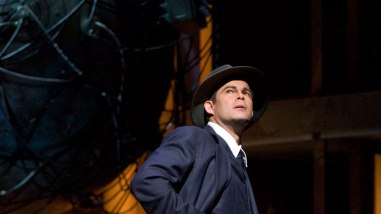
 I may be the last person in Colorado who has not seen Face on the Barroom Floor, but if you find yourself in the same category, it’s too late this year; remaining performances of this modest 25-minute work are all sold out. The opera is presented in the Williams’ Stables, an intimate theater space across the street from the main Central City Opera House. And that is both the joy and the one drawback of the performance.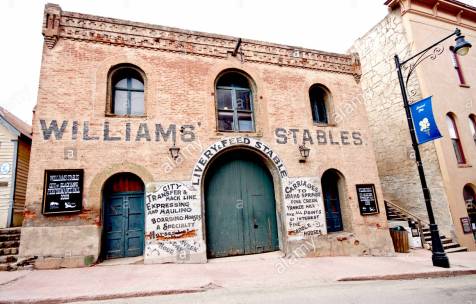
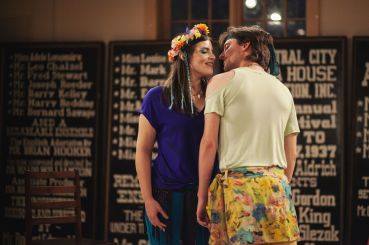
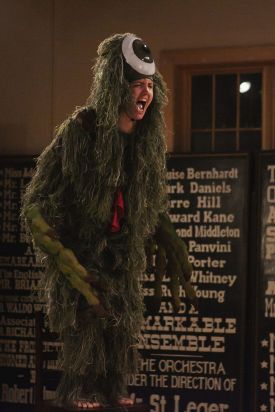
 Handel is a world away from the old West and Mollicone’s gritty barroom drama, but Acis and Galatea is another opera well suited to young singers. Populated by shepherds, nymphs and a monstrous cyclops from Greek mythology, it has the same central conflict as Face: two men fighting for a woman’s love. Performed before a house of 120 seats set up in an open rehearsal room of the Martin Foundry in Central City, Acis is as intimate as Face, with members of the audience invited the help during the performance.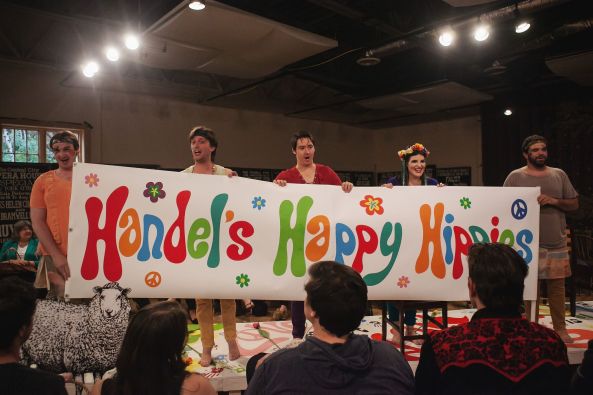


 Sharps & Flatirons